

The DOI matches its Crossref record; 26 of the 26 references it cites were found in a registry or an index.
Viewpoints on Factors for Successful Employment for Adults with Autism Spectrum Disorder
Open accessAbstract
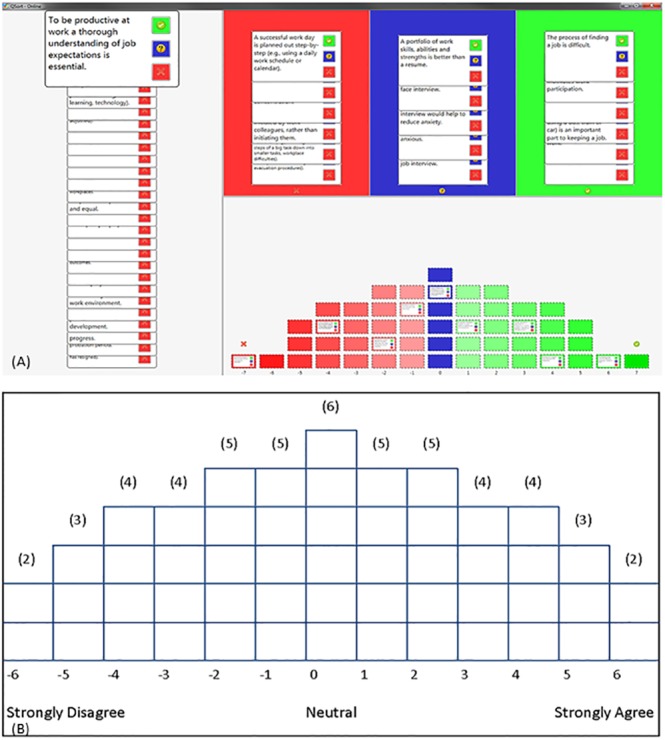
This article explores the key factors for successful employment from the viewpoints of adults with autism spectrum disorder (ASD) and employers. Two groups of individuals participated in this study, 40 adults with ASD and 35 employers. Q method was used to understand and contrast the viewpoints of the two groups. Data were analysed using by-person varimax rotation factor analysis. Results showed that although both groups appear committed to the employment process, the difference in their understanding regarding the type of workplace support required, job expectations and productivity requirements continues to hinder successful employment. These results highlight the need to facilitate communication between employees and employers to ensure a clear understanding of the needs of both groups are met. The use of an ASD-specific workplace tool may assist in facilitating the necessary communication between these two groups.
Overview
The claims and statistics of this paper haven’t been checked yet.
Run the check — free, no account needed. It reads the open-access text and checks the sources it cites.
Integrity signals
Registry
Cites
Statistics
Figures
Verification
Claims the paper makes
The claims and statistics of this paper haven’t been checked yet.
Run the check — free, no account needed. It reads the open-access text and checks the sources it cites.
Claims other papers make about this one
Each is checked against this paper’s own text: does it say what the citing paper says it does?
In the citing paper
“Indeed, evidence suggests that the implementation of workplace adjustments can support autistic people in accessing work and allow employers to make use of the unique skillset autistic people can offer [8].”
From Autistic adults’ views and experiences of requesting and receiving workplace adjustments in the UK (2022) · cites this paper as [8]
Self-check
Percentages, sums and reported differences re-computed from the paper’s own numbers.
The self-check needs the paper’s full text.
Citations
Cites
Book Review: Political Subjectivity: Applications of Q Methodology in Political Science
Balch, G. I., & Brown, S. R. (1982) · Journal of Marketing Research · doi:10.2307/3151542 · Cited by 1,958 · cited 1×
“The Q method provides an in-depth understanding of individuals’ perspectives, attitudes and beliefs regarding a specific topic [18, 19].”
MethodAdult outcome for children with autism
Howlin, P., Goode, S., Hutton, J., & Rutter, M. (2004) · Journal of Child Psychology and Psychiatry · doi:10.1111/j.1469-7610.2004.00215.x · Cited by 1,813 · cited 1×
“In Western countries, the labour force participation rate for adults with ASD is 34%, compared with 54% for all individuals with disabilities, and 83% for individuals without disabilities [5, 6].”
BackgroundRousseau, D. M. (1990) · Journal of Organizational Behavior · doi:10.1002/job.4030110506 · Cited by 1,811 · cited 3×
“This suggests that once employers have provided the opportunity to work it is the employee’s responsibility to meet the productivity requirements, in order to maintain their job [10, 28].”
BackgroundDoing Q Methodological Research: Theory, Method and Interpretation
Watts, S., & Stenner, P. H. D. (2012) · SAGE Publications Ltd eBooks · doi:10.4135/9781446251911 · Cited by 1,332
Taylor, J. L., & Seltzer, M. M. (2011) · Journal of Autism and Developmental Disorders · doi:10.1007/s10803-010-1070-3 · Cited by 735 · cited 2×
“In Western countries, the labour force participation rate for adults with ASD is 34%, compared with 54% for all individuals with disabilities, and 83% for individuals without disabilities [5, 6].”
BackgroundDoing Q Methodological Research: Theory, Method & Interpretation
Watts, S., & Stenner, P. H. D. (2012) · Cited by 700
Employment and adults with autism spectrum disorders: Challenges and strategies for success
Hendricks, D. (2010) · Journal of Vocational Rehabilitation · doi:10.3233/jvr-2010-0502 · Cited by 610 · cited 1×
“Using the ICF environmental component, employees require a supportive, structured and taskadapted work environment to perform their jobs successfully [7, 8, 31].”
MethodSCHNEIDERT, M., HURST, R., MILLER, J., & ÜSTÜN, B. (2003) · Disability and Rehabilitation · doi:10.1080/0963828031000137090 · Cited by 341
Employment and adults with Asperger syndrome
Hurlbutt, K., & Chalmers, L. (2004) · Focus on Autism and Other Developmental Disabilities · doi:10.1177/10883576040190040301 · Cited by 325 · cited 2×
“The employee and employer groups agreed on the importance of work productivity, however their understanding of the job expectations required to achieve this goal of productivity differed [28, 29].”
BackgroundPsychological Disorder in Adolescents and Adults with Asperger Syndrome
Tantam, D. (2000) · Autism · doi:10.1177/1362361300004001004 · Cited by 316 · cited 1×
“For individuals with ASD it is their ability to manage the social and communication aspects of work [12, 13], rather than their actual job performance that influences their success in finding and maintaining employment [7, 9].”
Background
Research works printed but not linked: 1
- S Corr, 2006
Cited by
Sorted by citations
Factors impacting employment for people with autism spectrum disorder: A scoping review
Scott, M., Milbourn, B., Falkmer, M., Black, M., Bӧlte, S., Halladay, A., Lerner, M., Taylor, J. L., & Girdler, S. (2019) · Autism · doi:10.1177/1362361318787789 · Cited by 278
“Common employment processes and practices such as traditional approaches to job advertising and interviewing (Scott et al., 2015; Strickland et al., 2013) and job descriptions requiring generic skills such as teamwork and social-communication skills that are not always essential to the job role, are also likely barrie…”
BackgroundSelf-citationScott, M., Jacob, A., Hendrie, D., Parsons, R., Girdler, S., Falkmer, T., & Falkmer, M. (2017) · PLOS ONE · doi:10.1371/journal.pone.0177607 · Cited by 197
Self-citationCompassionate pedagogy for neurodiversity in higher education: A conceptual analysis
Hamilton, L. G., & Petty, S. (2023) · Frontiers in Psychology · doi:10.3389/fpsyg.2023.1093290 · Cited by 185
“Nonetheless, the current disappointing reality for the majority of neurodivergent students is to expect lower likelihood of graduating, accessing postgraduate education, finding appropriate employment that matches their skills and abilities, and enjoying stability in employment (Scott et al., 2015; Gordon and Fabiano,…”
BackgroundTransition to work: Perspectives from the autism spectrum
Hedley, D., Cai, R. Y., Uljarević, M., Wilmot, M., Spoor, J. R., Richdale, A. L., & Dissanayake, C. (2017) · Autism · doi:10.1177/1362361316687697 · Cited by 203
“…barriers to gaining and maintaining successful employment faced by individuals with ASD are well described (Hendricks, 2010; Müller et al., 2003; Scott et al., 2015), there is limited research on their work experience, or identification of the factors that contribute to successful transition…”
BackgroundDisclosure and workplace accommodations for people with autism: a systematic review
Lindsay, S., Osten, V., Rezai, M., & Bui, S. (2021) · Disability and Rehabilitation · doi:10.1080/09638288.2019.1635658 · Cited by 176
Success factors enabling employment for adults on the autism spectrum from employers’ perspective
Dreaver, J., Thompson, C., Girdler, S., Adolfsson, M., Black, M. H., & Falkmer, M. (2020) · Journal of Autism and Developmental Disorders · doi:10.1007/s10803-019-03923-3 · Cited by 144
“2018), previous research (Scott et al. 2015) and a reference group comprising people with ASD, their families and relevant community and Table 1 Overview of the participants”
Pelton, M. K., & Cassidy, S. A. (2017) · Autism Research · doi:10.1002/aur.1828 · Cited by 135
“…needs regardless of depressive symptoms, such as unemployment, poor self-esteem, and caregiver burden [Hendricks, 2010; McDonough & Revell, 2010; Scott et al., 2015, Myers, Ladner, & Koger, 2011; Parsi & Elster, 2015; Ar an-Filippetti & Krumm, 2013; Bekhet, Johnson, & Zauszniewski, 2012; Cadman…”
Workplace accommodations for adults with autism spectrum disorder: a scoping review
Khalifa, G., Sharif, Z., Sultan, M., & Di Rezze, B. (2020) · Disability and Rehabilitation · doi:10.1080/09638288.2018.1527952 · Cited by 128
“However, there were also studies conducted in the UK [30], Australia [12,20], and Canada [17].”
BackgroundResultInfluentialBlack, M. H., Mahdi, S., Milbourn, B. T., Scott, M., Gerber, A. S., Esposito, C., Falkmer, M., Lerner, M. D., Halladay, A. K., Ström, E., et al. (2020) · Autism Research · doi:10.1002/aur.2288 · Cited by 111
“To examine key stakeholder perspectives on viewpoints for successful employment [Scott et al., 2015], frequencies of agreement and disagreement were calculated for each key stakeholder group for each statement.”
BackgroundMethodResultInfluentialSelf-citationAutism and Employment: A Review of the “New Frontier” of Diversity Research
Ezerins, M. E., Simon, L., Vogus, T. J., Gabriel, A. S., Calderwood, C. C., & Rosen, C. C. (2023) · Journal of Management · doi:10.1177/01492063231193362 · Cited by 124
“Research has also shown that external resources, such as job coaches, vocational rehabilitation representatives, and consultants, can increase managers ’ con fi dence in employing people on the autism spectrum (Albright et al., 2020; Scott, Falkmer, Girdler, & Falkmer, 2015).”
BackgroundLee, E. A. L., Black, M. H., Falkmer, M., Tan, T., Sheehy, L., Bölte, S., & Girdler, S. J. (2020) · Journal of Autism and Developmental Disorders · doi:10.1007/s10803-020-04411-9 · Cited by 101
Self-citationBlack, M. H., Mahdi, S., Milbourn, B. T., Thompson, C., D'Angelo, A., Ström, E., Falkmer, M., Falkmer, T., Lerner, M. D., Halladay, A. K., et al. (2019) · Autism Research · doi:10.1002/aur.2167 · Cited by 91
Self-citationWaisman-Nitzan, M., Gal, E., & Schreuer, N. (2019) · Journal of Management & Organization · doi:10.1017/jmo.2018.59 · Cited by 86
The experiences of adults with autism spectrum disorder: Self-determination and quality of life
Kim, S. Y. (2019) · Research in Autism Spectrum Disorders · doi:10.1016/j.rasd.2018.12.002 · Cited by 88
AMO perspectives on the well-being of neurodivergent human capital
Szulc, J. M., Davies, J., Tomczak, M. T., & McGregor, F.-L. (2021) · Employee Relations: The International Journal · doi:10.1108/er-09-2020-0446 · Cited by 83
Annabi, H., & Locke, J. J. (2019) · Journal of Management & Organization · doi:10.1017/jmo.2018.79 · Cited by 82
“…on pre-paring individuals with autism for the workplace and developing vocational training (e.g., Burke, Andersen, Bowen, Howard, & Allen, 2010; Müller et al., 2003; Seaman & Cannella-Malone, 2016) and supported employment (Keel, Mesibov, & Woods, 1997; Scott, Falkmer, Girdler, & Falkmer, 2015).”
BackgroundInfluentialJohnson, K. R., Ennis-Cole, D. L., & Bonhamgregory, M. (2020) · Human Resource Development Review · doi:10.1177/1534484320905910 · Cited by 81
“Although both employers and employees with ASD appear to be committed to the employment process, there are still misunderstandings of job expectations and performance requirements that serve as barriers to maintaining employment (Scott et al., 2015).”
BackgroundFrank, F., Jablotschkin, M., Arthen, T., Riedel, A., Fangmeier, T., Hölzel, L. P., & van Elst, L. T. (2018) · BMC Psychiatry · doi:10.1186/s12888-018-1645-7 · Cited by 84
“Furthermore, successful participation in the labour market can be hindered by differences with employers, for example regarding the understanding of productivity requirements or required support in work [10], and by possible ASD-related problems, for example prioritization and self-organization of work-tasks.”
Background“It’s like a ramp for a person in a wheelchair”: workplace accessibility for employees with autism
Waisman-Nitzan, M., Gal, E., & Schreuer, N. (2021) · Research in Developmental Disabilities · doi:10.1016/j.ridd.2021.103959 · Cited by 84
The experiences of autistic doctors: a cross-sectional study
Shaw, S. C. K., Fossi, A., Carravallah, L. A., Rabenstein, K., Ross, W., & Doherty, M. (2023) · Frontiers in Psychiatry · doi:10.3389/fpsyt.2023.1160994 · Cited by 76
Fong, C. J., Taylor, J. P., Berdyyeva, A., McClelland, A. M., Murphy, K. M., & Westbrook, J. D. (2021) · Campbell Systematic Reviews · doi:10.1002/cl2.1185 · Cited by 73
Autistic adults’ views and experiences of requesting and receiving workplace adjustments in the UK
Davies, J., Heasman, B., Livesey, A., Walker, A., Pellicano, E., & Remington, A. (2022) · PLOS ONE · doi:10.1371/journal.pone.0272420 · Cited by 65
“Indeed, evidence suggests that the implementation of workplace adjustments can support autistic people in accessing work and allow employers to make use of the unique skillset autistic people can offer [8].”
BackgroundTo be understood: Transitioning to adult life for people with Autism Spectrum Disorder
Thompson, C., Bölte, S., Falkmer, T., & Girdler, S. (2018) · PLOS ONE · doi:10.1371/journal.pone.0194758 · Cited by 61
Self-citationTomczak, M. T. (2021) · Journal of Disability Policy Studies · doi:10.1177/1044207320919945 · Cited by 59
“The differences concern the type of workplace support required, job expectations, productivity requirements and more (Scott et al., 2015).”
BackgroundJang, J., Moharana, S., Carrington, P., & Begel, A. (2024) · Proceedings of the CHI Conference on Human Factors in Computing Systems · doi:10.1145/3613904.3642894 · Cited by 64
Mahdi, S., Viljoen, M., Yee, T., Selb, M., Singhal, N., Almodayfer, O., Granlund, M., de Vries, P. J., Zwaigenbaum, L., & Bölte, S. (2017) · Autism Research · doi:10.1002/aur.1905 · Cited by 64
Pfeiffer, B., Brusilovskiy, E., Davidson, A. P., & Persch, A. C. (2018) · Journal of Vocational Rehabilitation · doi:10.3233/jvr-170915 · Cited by 57
Lee, E. A. L., Black, M. H., Tan, T., Falkmer, T., & Girdler, S. J. (2019) · Journal of Autism and Developmental Disorders · doi:10.1007/s10803-019-04024-x · Cited by 56
Self-citationDesigning a Serious Game for Youth with ASD: Perspectives from End-Users and Professionals
Tang, J. S. Y., Falkmer, M., Chen, N. T. M., Bölte, S., & Girdler, S. J. (2018) · Journal of Autism and Developmental Disorders · doi:10.1007/s10803-018-3801-9 · Cited by 53
Self-citationScott, M., Falkmer, M., Falkmer, T., & Girdler, S. J. (2018) · Journal of Autism and Developmental Disorders · doi:10.1007/s10803-018-3611-0 · Cited by 57
“In developing this relationship, effective employer management practices include a willingness to provide workplace accommodations, flexibility in modifying work tasks, providing regular supervision and fostering an organisational climate and culture of inclusivity and diversity (Erickson et al. 2014; Hendricks 2010;…”
BackgroundSelf-citationBuckley, E., Pellicano, E., & Remington, A. (2021) · Journal of Autism and Developmental Disorders · doi:10.1007/s10803-020-04517-0 · Cited by 49
Workplace adjustments for autistic employees: what is ‘reasonable?’
Petty, S., Tunstall, L., Richardson, H., & Eccles, N. (2023) · Journal of Autism and Developmental Disorders · doi:10.1007/s10803-021-05413-x · Cited by 48
“Further to unemployment, autistic adults tend to be underemployed, being in part-time work, experiencing frequent job switching or being employed in roles that require minimal expertise (Baldwin et al., 2014; Frank et al., 2018; Scott et al., 2015).”
BackgroundInfluentialTomczak, M. T., Szulc, J. M., & Szczerska, M. (2021) · International Journal of Environmental Research and Public Health · doi:10.3390/ijerph18094696 · Cited by 47
Shahin, S., Reitzel, M., Rezze, B. D., Ahmed, S., & Anaby, D. (2020) · International Journal of Environmental Research and Public Health · doi:10.3390/ijerph17072378 · Cited by 47
“Services, systems & policies • Settings that promote inclusion, fair workplace and high levels of interactions and support [49] • Flexible work demands (schedules, workload) [30] • Workplaces that value and recognize employee’s skills and contributions [49] • Availability of support services and training programs for…”
BackgroundInfluentialWen, B., van Rensburg, H., O’Neill, S., & Attwood, T. (2023) · Journal of Vocational Rehabilitation · doi:10.3233/jvr-230060 · Cited by 63
“Both groups are committed to employment processes, but their understanding of the required support, expectations and productivity requirements differ (Scott et al., 2015).”
BackgroundGoldfarb, Y., Gal, E., & Golan, O. (2019) · Journal of Autism and Developmental Disorders · doi:10.1007/s10803-019-04098-7 · Cited by 42
de Winter, L., Couwenbergh, C., van Weeghel, J., Bergmans, C., & Bond, G. R. (2020) · Social Psychiatry and Psychiatric Epidemiology · doi:10.1007/s00127-020-01890-0 · Cited by 43
Adults with autism spectrum disorders
Poon, K. K., & Sidhu, D. J. K. (2016) · Current Opinion in Psychiatry · doi:10.1097/yco.0000000000000306 · Cited by 42
The lived experience of autistic adults in employment: a systematic search and synthesis
Thorpe, D., McKinlay, M., Richards, J., Sang, K., & Stewart, M. E. (2024) · Autism in Adulthood · doi:10.1089/aut.2022.0114 · Cited by 43
Waisman-Nitzan, M., Schreuer, N., & Gal, E. (2020) · Research in Autism · doi:10.1016/j.rasd.2020.101643 · Cited by 45
Work-Related Communication Barriers for Individuals with Autism: A Pilot Qualitative Study
McKnight-Lizotte, M. (2018) · Australian Journal of Rehabilitation Counselling · doi:10.1017/jrc.2018.4 · Cited by 37
Gabriel, A. S., Arena, D. F., Calderwood, C. C., Campbell, J. T., Chawla, N., Corwin, E. S., Ezerins, M. E., Jones, K. P., Klotz, A. C., Larson, J. D., et al. (2022) · Emerald Group Publishing Limited eBooks · doi:10.1108/s0742-730120220000040007 · Cited by 48
Nicholas, D. B., Mitchell, W., Zulla, R. T., & Dudley, C. (2019) · Journal of Vocational Rehabilitation · doi:10.3233/jvr-191018 · Cited by 35
“Employers appeared to be more confident when they had assistance from disability/employment service personnel to assist with difficult situations, periods of transition, and job trials (Scott et al., 2015).”
Accessible and inclusive transportation for youth with disabilities: exploring innovative solutions
Lindsay, S. (2019) · Disability and Rehabilitation · doi:10.1080/09638288.2018.1517194 · Cited by 34
Rashid, M., Thompson‐Hodgetts, S., & Nicholas, D. B. (2017) · Review Journal of Autism and Developmental Disorders · doi:10.1007/s40489-017-0105-5 · Cited by 33
“As shown in Table 1, employee diagnosis varied across the included studies with two studies focusing on individuals with epilepsy (Cooper 1995; Holmes and McWilliams 1981), five studies focused on individuals with ASD, and the remaining eight studies included individuals with unspecified intellectual and/or DD. Study…”
BackgroundInfluentialCognitive strengths in neurodevelopmental disorders, conditions and differences: A critical review
Maw, K., Beattie, G. W., & Burns, E. J. (2024) · Neuropsychologia · doi:10.1016/j.neuropsychologia.2024.108850 · Cited by 33
Viewpoints on how students with autism can best navigate university
Thompson, C., Bölte, S., Falkmer, T., & Girdler, S. J. (2018) · Scandinavian Journal of Occupational Therapy · doi:10.1080/11038128.2018.1495761 · Cited by 30
“Q-methodology has demonstrated particular utility in ASD in examining viewpoints in relation to driving [29], public transport [30] and employment [31].”
BackgroundSelf-citationJohnson, K. R. (2022) · New Horizons in Adult Education and Human Resource Development · doi:10.1002/nha3.20321 · Cited by 29
Correction: Viewpoints on Factors for Successful Employment for Adults with Autism Spectrum Disorder
Scott, M., Falkmer, M., Girdler, S. J., & Falkmer, T. (2015) · PLoS ONE · doi:10.1371/journal.pone.0143674 · Cited by 26
Self-citationGriffiths, A. J., Hurley-Hanson, A. E., Giannantonio, C. M., Mathur, S. K., Hyde, K. K., & Linstead, E. J. (2020) · Brain Sciences · doi:10.3390/brainsci10090632 · Cited by 29
“Additionally, employees with ASD may demonstrate “above standard” workplace performance compared to their counterparts related to increased attention to detail, work ethic, and quality of work [9].”
BackgroundAlehagen, L., Bölte, S., & Black, M. H. (2024) · Autism · doi:10.1177/13623613241272044 · Cited by 20
“A majority of the studies emphasized the importance of examining the environment’s impact when understanding and improving employment for autistic individuals (Black et al., 2019; Dreaver et al., 2020; Khalifa et al., 2020; Scott et al., 2015).”
Francesco, C. D., Murahara, F., Martin, V., Flanagan, T. D., & Nadig, A. (2021) · Journal of Vocational Rehabilitation · doi:10.3233/jvr-211163 · Cited by 25
“The higher ratings among job coaches and employers make sense, given that employers value productivity in the workplace (Scott et al., 2015).”
InfluentialSupportive employment practices: perspectives of autistic employees
Hedley, D., Spoor, J. R., Cai, R. Y., Uljarević, M., Bury, S. M., Gal, E., Moss, S. A., Richdale, A. L., Bartram, T., & Dissanayake, C. (2021) · Advances in Autism · doi:10.1108/aia-09-2019-0029 · Cited by 18
Non-autistic employees’ perspectives on the implementation of an autism employment programme
Spoor, J. R., Bury, S. M., & Hedley, D. (2021) · Autism · doi:10.1177/13623613211012880 · Cited by 18
“Research has explored the reasons underlying these adverse employment outcomes (Hedley et al., 2018; Scott et al., 2015),”
BackgroundEmployment Practices with People with Autism Spectrum Disorder in the Digital Age
Mpofu, E., Tansey, T. N., Mpofu, N., Tu, W., & Li, Q. (2019) · Springer eBooks · doi:10.1007/978-3-030-28180-9_15 · Cited by 17
Virtanen, M., Lallukka, T. M., Mika Kivimaki, B., Alexanderson, K. A. E., Ervasti, J. M., & Mittendorfer‐Rutz, E. (2020) · Scandinavian Journal of Work Environment & Health · doi:10.5271/sjweh.3888 · Cited by 22
“Among high-functioning people with ASD, difficulties in communication and social interaction rather than their actual work performance have been suggested to be the greatest obstacles to employment (4).”
BackgroundPerspectives on Employer-Initiated Terminations Among Young Adults on the Autism Spectrum
Pezzimenti, F., Durrani, E., Zheng, S., Adams, R. E., Bishop, S. L., & Taylor, J. L. (2023) · Journal of Autism and Developmental Disorders · doi:10.1007/s10803-022-05884-6 · Cited by 21
“…extant literature suggests that open communication channels, clear expectations about duties and responsibilities, social supports, and inclusive environments are associated with positive employment outcomes for adults with autism (Harvery et al., 2021 ; Johnson et al., 2020; Scott et al., 2015 ).”
Schmidt, M., Glaser, N. J., Schmidt, C. T., Kaplan, R. L., Palmer, H., & Cobb, S. V. G. (2023) · Computers & Education X Reality · doi:10.1016/j.cexr.2023.100013 · Cited by 16
Autistic Perspectives on Employment: A Scoping Review
Southey, S., Morris, R., Nicholas, D. B., & Pilatzke, M. (2024) · Journal of Occupational Rehabilitation · doi:10.1007/s10926-023-10163-x · Cited by 21
“Challenges with organizational processes were described in eleven studies [34–36, 39, 42, 43, 46–48, 51, 57].”
Evans, K. L., Girdler, S. J., Falkmer, T., Richmond, J. E., Wagman, P., Millsteed, J., & Falkmer, M. (2016) · Scandinavian Journal of Occupational Therapy · doi:10.1080/11038128.2016.1250814 · Cited by 15
Self-citationProcess evaluation of an autism-specific workplace tool for employers
Scott, M., Falkmer, M., Kuzminski, R., Falkmer, T., & Girdler, S. J. (2020) · Scandinavian Journal of Occupational Therapy · doi:10.1080/11038128.2020.1820571 · Cited by 13
“While employment management practices such as flexibility in adjusting work tasks, providing practicable workplace accommodations, applying or withdrawing supports as needed and cultivating a workplace climate and culture for inclusion and diversity have been associated with improved employment outcomes [6,29,33,35],…”
BackgroundSelf-citationWhat does success mean for autistic men? A narrative exploration of self-determination
Webster, A. A., & Garvis, S. (2020) · Autism & Developmental Language Impairments · doi:10.1177/2396941520945522 · Cited by 12
“To date, researchers have primarily examined traditional outcomes experienced by autistic adults (Levy & Perry, 2011) in employment (Scott et al., 2015), relationships (Renty & Roeyers, 2007), and quality of life (Kim, 2019; Zalewska et al.”
BackgroundAshworth, M., Heasman, B., Crane, L., & Remington, A. (2024) · Neurodiversity · doi:10.1177/27546330241249266 · Cited by 21
“…areas of relative strength, and ways to make accommodations for autistic people in the working environment could improve employers ’ self-ef fi cacy and empower employers to feel more equipped to facilitate effective inclusion (Erickson et al., 2014; Hagner & Cooney, 2005; Scott et al., 2015).”
BackgroundNeurodiversity at Work: Challenges and Opportunities for Human Resource Management
Volpone, S. D., & Hennekam, S. (2025) · Human Resource Management · doi:10.1002/hrm.70032 · Cited by 11
Plunk, A., Amat, A. Z., Tauseef, M., Peters, R. A., & Sarkar, N. (2023) · Sensors · doi:10.3390/s23073524 · Cited by 9
“Therefore, it is essential to address deficits in social interactions as they cast a shadow on outstanding qualities, such as precise technical abilities, high tolerance for repetitive tasks, and reliability that autistic individuals can bring to companies [17,18].”
BackgroundChallenges Encountered by 17 Autistic Young Adults in Hong Kong
Wong, S. (2017) · Support for Learning · doi:10.1111/1467-9604.12181 · Cited by 9
Johnson, K. L. (2020) · Folia Phoniatrica et Logopaedica · doi:10.1159/000509836 · Cited by 9
D’Arcy, E., Girdler, S. J., Falkmer, M., Falkmer, T., Whitehouse, A., Wray, J. A., Eapen, V., & Evans, K. L. (2021) · Research in Autism · doi:10.1016/j.rasd.2021.101792 · Cited by 8
Self-citationMellifont, D. (2019) · Management and Labour Studies · doi:10.1177/0258042x19882519 · Cited by 9
Ashworth, M., Heasman, B., Crane, L., & Remington, A. (2023) · doi:10.31219/osf.io/heqws · Cited by 9
Understanding unique employability skill sets of autistic individuals: A systematic review
Griffiths, A. J., Torres, R. D., Delgado, R., Hurley-Hanson, A. E., Giannantonio, C. M., Walrod, W., Maupin, Z. D., & Brady, J. J. (2024) · Journal of Employment Counseling · doi:10.1002/joec.12223 · Cited by 8
van Rijswijk, J., Curșeu, P. L., & van Oortmerssen, L. A. (2025) · Team Performance Management · doi:10.1108/tpm-09-2024-0097 · Cited by 7
Employees with Asperger’s Syndrome and their Experiences within the Work Environment
Julian, A., & Barron, R. (2020) · DBS Business Review · doi:10.22375/dbr.v3i0.58 · Cited by 7
“Although Scott et al. (2015) found that both groups, employees and employers equally reported the importance of sufficient support within the workplace, they differed in understanding what such support would involve.”
BackgroundResultInfluentialBent, S., McDonald, M. G., Chen, Y., Widjaja, F., Wahlberg, J., Hossain, B., & Hendren, R. L. (2021) · Research in Autism · doi:10.1016/j.rasd.2021.101766 · Cited by 7
Horn, A. L., Chezan, L. C., Bobzien, J., Rock, M. L., Alturki, A., & Karadimou, O. (2023) · Career Development and Transition for Exceptional Individuals · doi:10.1177/21651434231198492 · Cited by 6
Argyriadis, A., Drakopoulou, O., Argyriadi, A., Mantsos, E., Katsarou, D. V., & Πατσιαούρας, Α. (2024) · Advances in psychology, mental health, and behavioral studies (APMHBS) book series · doi:10.4018/979-8-3693-4022-6.ch001 · Cited by 6
Disability Employment Policy in Australia: Barriers and Facilitators to Workforce Participation
Lawrence, K., Mellifont, D., & Bulkeley, K. (2025) · Social Policy and Administration · doi:10.1111/spol.13147 · Cited by 5
Generation A and Autism in the Workplace
Hurley-Hanson, A. E., Giannantonio, C. M., & Griffiths, A. J. (2019) · Palgrave explorations in workplace stigma · doi:10.1007/978-3-030-29049-8_1 · Cited by 5
Bualar, T. (2025) · Asia Pacific Journal of Human Resources · doi:10.1111/1744-7941.70054 · Cited by 4
Competitive Employment and Autism Spectrum Disorder: Employer Perspectives.
Stuckey, W. C. (2016) · Cardinal Scholar (Ball State University) · Cited by 4
Sim, A., Fristedt, S., Cordier, R., Vaz, S., Kuzminski, R., & Falkmer, T. (2019) · Research in Autism Spectrum Disorders · doi:10.1016/j.rasd.2019.04.008 · Cited by 5
Self-citationExamining subjective understandings of autistic burnout using Q methodology: A study protocol
Mantzalas, J., Richdale, A. L., & Dissanayake, C. (2023) · PLoS ONE · doi:10.1371/journal.pone.0285578 · Cited by 7
“This approach has previously been used to understand how to best support autistic people in employment and higher education [25,26].”
BackgroundAutism in the Workplace: The Role of Disclosure in Recruitment
Giannantonio, C. M., Hurley-Hanson, A. E., & Griffiths, A. J. (2024) · Palgrave studies in equity, diversity, inclusion, and indigenization in business · doi:10.1007/978-3-031-55072-0_8 · Cited by 4
Hurley-Hanson, A. E., Giannantonio, C. M., & Griffiths, A. J. (2019) · Palgrave explorations in workplace stigma · doi:10.1007/978-3-030-29049-8_10 · Cited by 4
Automated Task Extraction from Emails: Aiding Autistic Individuals in the Workplace
Gollasch, D., Branig, M., Dähne, H., & Weber, G. (2025) · Lecture notes in computer science · doi:10.1007/978-3-031-93848-1_23 · Cited by 3
Schuurmans, J. A., Wright, E. P., Bunders, J., & Regeer, B. J. (2024) · Neurodiversity · doi:10.1177/27546330241272232 · Cited by 4
“Challenges in securing and maintaining employment often stem from social and behavioral mismatches rather than skill-related de fi ciencies, which could manifest, for example, during job interviews (Scott et al., 2015).”
Dimov, S., Shields, M., Dickinson, H., Kavanagh, A. M., White, B., & Sutherland, G. A. (2024) · Journal of Child and Adolescent Mental Health · doi:10.2989/17280583.2024.2424198 · Cited by 3
“…disability, young people with IDD report experiencing more difficulties in accessing tertiary education (O’Brien et al., 2019), are underrepresented in the labour force (Scott et al., 2015; Wilson & Campain, 2020), and find it difficult to gain and maintain employment (Meltzer et al., 2016).”
Guastella, A. J., Hankin, L., Stratton, E., Glozier, N., Pellicano, E., & Gibbs, V. (2025) · JMIR Research Protocols · doi:10.2196/60806 · Cited by 5
“These factors include positive employer attitudes toward and awareness of autism, collaboration between the autistic employee and the workplace, and the provision of adequate support and accommodations, including mental health support [5,26,28,29].”
InfluentialThe Transition Needs of Young Adults with Autism
Hurley-Hanson, A. E., Giannantonio, C. M., & Griffiths, A. J. (2019) · Palgrave explorations in workplace stigma · doi:10.1007/978-3-030-29049-8_5 · Cited by 3
Finch, M. E. H., Trammell, B. A., Hulse, A. R., Finch, W. H., Wildrick, A., Floyd, E. F., Pittenger, J. M., & McIntosh, D. E. (2022) · Psychology in the Schools · doi:10.1002/pits.22755 · Cited by 5
A Systematic Review to Move Australian Disability Employment Forward for Autistic People
Hayward, S. M., & Flower, R. L. (2023) · Review Journal of Autism and Developmental Disorders · doi:10.1007/s40489-023-00388-0 · Cited by 3
“Also providing specific instructions that are direct and/or blunt (Scott et al., 2015).”
InfluentialAutistic Employees in Canadian Academic Libraries
Giles‐Smith, L., & Popowich, E. (2023) · Canadian Journal of Academic Librarianship · doi:10.33137/cjal-rcbu.v9.39994 · Cited by 3
Holc, S., Yailian, A., Pernon, É., & Baghdadli, A. (2024) · L Encéphale · doi:10.1016/j.encep.2024.02.012 · Cited by 3
Giles‐Smith, L., & Popowich, E. (2020) · Emerald Group Publishing Limited eBooks · doi:10.1108/s0732-067120200000041006 · Cited by 3
Plunk, A., Amat, A. Z., Wilkes, D. M., & Sarkar, N. (2023) · Lecture notes in computer science · doi:10.1007/978-3-031-37660-3_14 · Cited by 3
Griffiths, A. J., Hurley-Hanson, A. E., Giannantonio, C. M., Hyde, K., Linstead, E. J., Wiegand, R., & Brady, J. J. (2023) · Journal of Vocational Rehabilitation · doi:10.3233/jvr-230034 · Cited by 2
Flood, M. (2026) · Applied Psychology · doi:10.1111/apps.70116 · Cited by 3
School-Based Social Skills Programming to Increase Employment for Individuals with ASD
Lauderdale-Littin, S., & Haspel, M. (2021) · lnternational Electronic Journal of Elementary Education · doi:10.26822/iejee.2021.194 · Cited by 2
“Employees with ASD have many qualities that allow them to excel in the workplace including high levels of competency; however, when evaluated, employers often identify them as lacking flexibility and not being team players (Parr & Hunter, 2014; Scott et al., 2015).”
Background(2022) · Emerald Group Publishing Limited eBooks · doi:10.1108/9781800712560 · Cited by 2
Wheeler, K., Hamrick, J., Favela, A., & Hilbert, S. (2024) · Journal of Vocational Rehabilitation · doi:10.1177/10522263241283571 · Cited by 2
“Supporting autistic adults in obtaining and maintaining employment is a widely recognized need within the health fi eld (Nicholas et al., 2017; Scott et al., 2015) and all adults deserve meaningful and integrated employment (Hendricks, 2010).”
Metadata
- Authors
- Scott, M., Falkmer, M., Girdler, S., & Falkmer, T.
- Affiliations
- Curtin University (AU)
- Linköping University (SE)
- Corresponding author
- Falkmer, Torbjörn
- Venue
- PLOS ONE
- Publisher
- Public Library of Science (PLoS)
- Published
- 2015-10-13
- Volume
- 10
- Issue
- 10
- Pages
- e0139281
- ISSN
- 1932-6203 (ISSN-L)
- PMC
- PMC4603894
- OpenAlex
- W2151616761
- Cited by
- 133
- References
- 26
- Citations by year
- 2026: 8 · 2025: 9 · 2024: 20 · 2023: 17 · 2022: 10 · 2021: 13 · 2020: 15 · 2019: 20 · 2018: 9 · 2017: 6 · 2016: 5 · 2015: 1
- FWCI
- 20.26
- Type
- journal article
- Language
- en
- Update notices
- correction (2015-11-18)
- Open access
- gold
- doi.org
- Licence
- Locations
- PLoS ONE (publishedVersion, cc-by)
- Europe PMC (PubMed Central) (publishedVersion, cc-by)
- PubMed Central (publishedVersion, cc-by)
- PubMed (publishedVersion)
- Diva portal (Dalarna University Library) (submittedVersion, other-oa)
- KTH Publication Database DiVA (KTH Royal Institute of Technology) (submittedVersion, other-oa)
- RePEc: Research Papers in Economics (submittedVersion)
- DOAJ (DOAJ: Directory of Open Access Journals) (submittedVersion, cc-by-sa)
- eSpace (Curtin University) (submittedVersion, cc-by)
- Figshare (submittedVersion, cc-by)
- Funders
- Cooperative Research Centre for Living with Autism
- Australian Government
- Curtin University of Technology
- Topics
- Social Sciences › Education › Disability Education and Employment
- Life Sciences › Neuroscience › Cognitive Neuroscience › Autism Spectrum Disorder Research
- Health Sciences › Medicine › Public Health, Environmental and Occupational Health › Employment and Welfare Studies
- Keywords
- autism spectrum disorder, workplace support, employer perceptions, staff perspectives, employment expectations, employer-employee communication
- MeSH terms
- Autism Spectrum Disorder, Adult, Employment, Female, Humans, Male, Middle Aged
About these checks
Registry, retraction, Cites and statistics results are computed, not judged, with one exception: a printed reference that no index lists is read once by a model before it counts as a citation error. Claims are extracted by a model and kept only when their quote appears verbatim in the text; each cited source is then checked, with a model’s help, for whether it says what the claim relies on. Those verdicts can be wrong — read the claim’s quote and the cited source before relying on one.
Statistics and arithmetic are recomputed, not judged.
Confidence bands are shown only for fields calibrated on our annotated test set. None is calibrated yet, so no band is shown.
What counts as a claim ›How we measure confidence ›How we check this ›
Are you an author, or do you see a problem with this page? Request a review
