

The DOI matches its Crossref record; 60 of the 60 references it cites were found in a registry or an index.
The Effect of Diet and Exercise on Intestinal Integrity and Microbial Diversity in Mice
Open accessAbstract
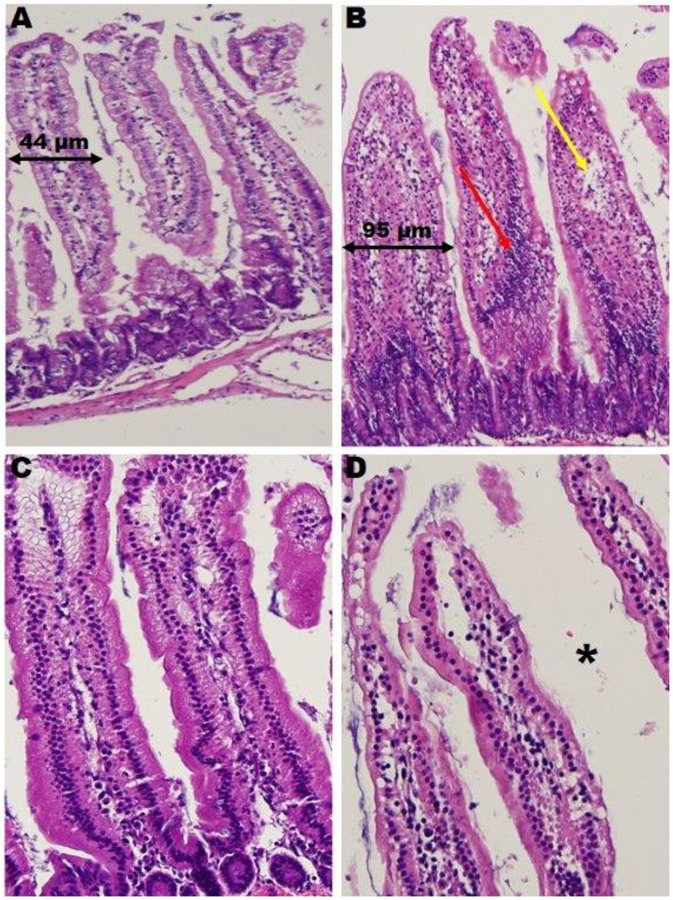
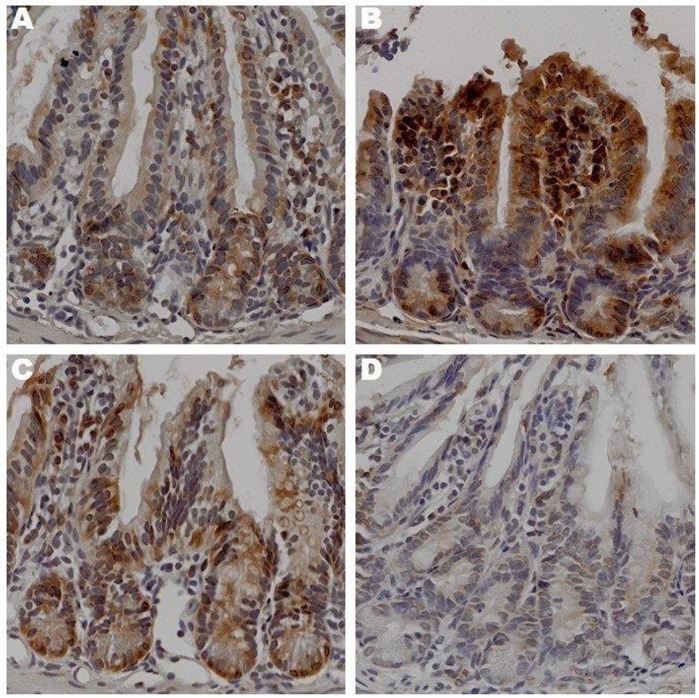
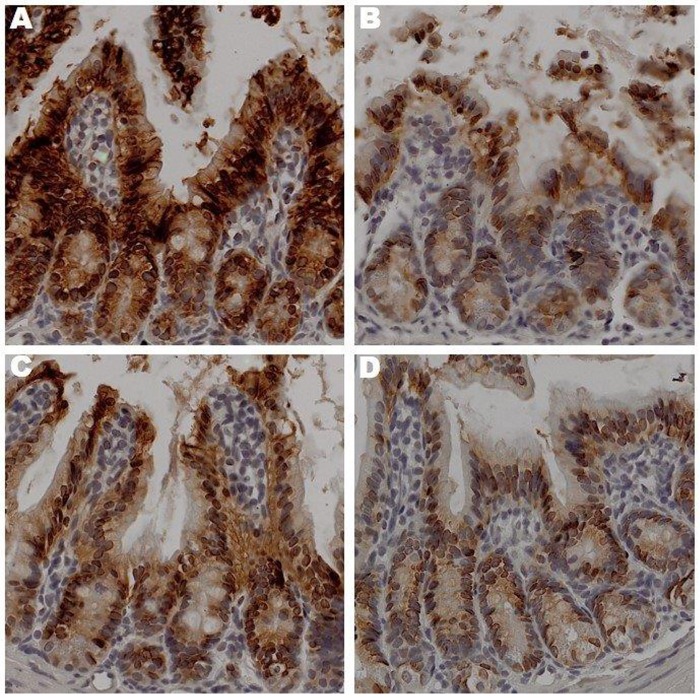
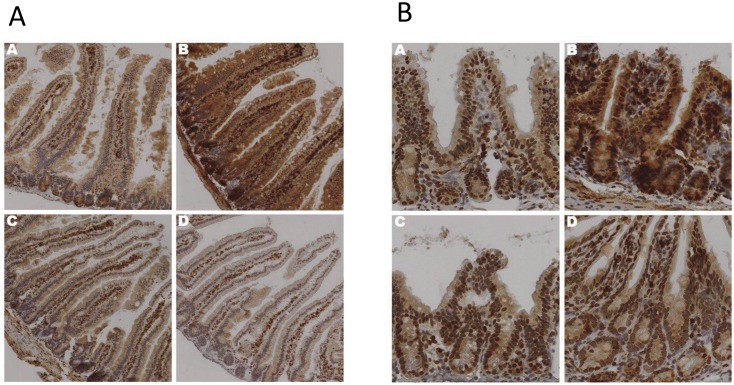
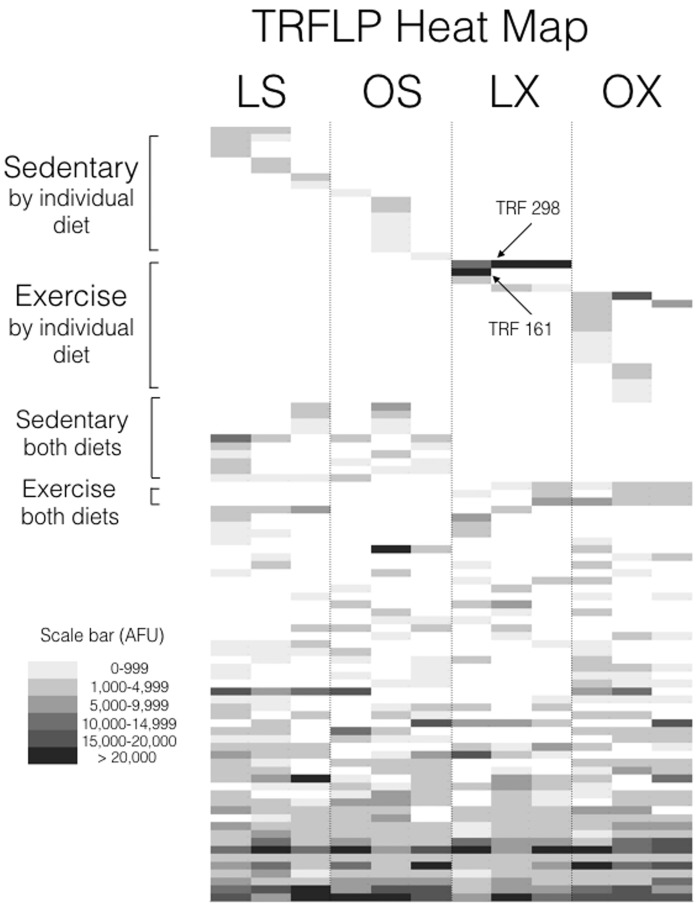
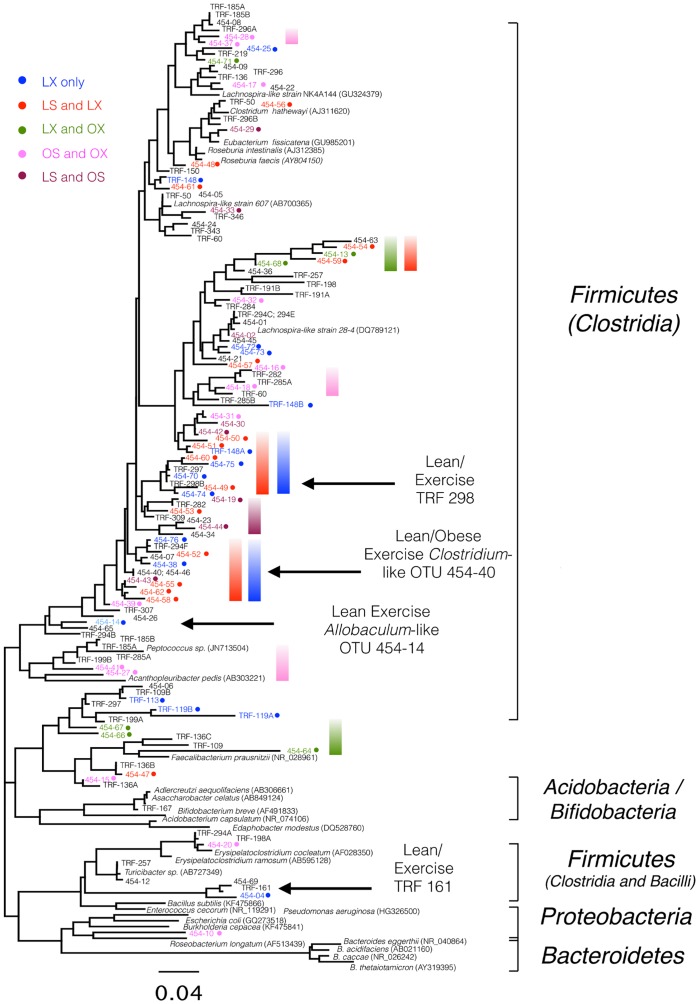
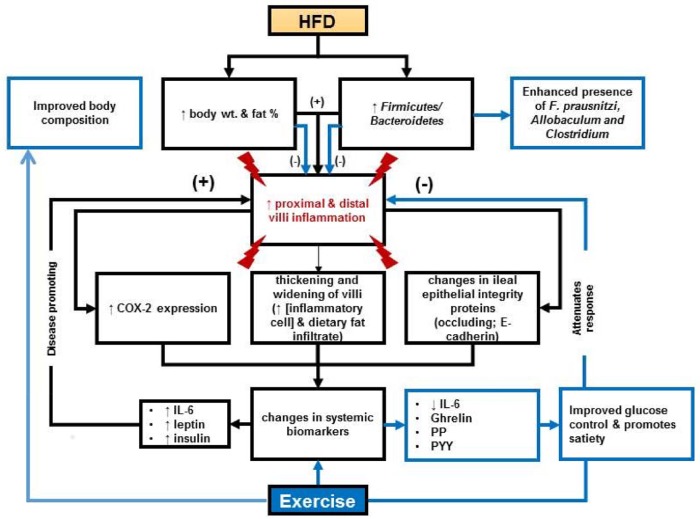
BACKGROUND: The gut microbiota is now known to play an important role contributing to inflammatory-based chronic diseases. This study examined intestinal integrity/inflammation and the gut microbial communities in sedentary and exercising mice presented with a normal or high-fat diet. METHODS: Thirty-six, 6-week old C57BL/6NTac male mice were fed a normal or high-fat diet for 12-weeks and randomly assigned to exercise or sedentary groups. After 12 weeks animals were sacrificed and duodenum/ileum tissues were fixed for immunohistochemistry for occludin, E-cadherin, and cyclooxygenase-2 (COX-2). The bacterial communities were assayed in fecal samples using terminal restriction fragment length polymorphism (TRFLP) analysis and pyrosequencing of 16S rRNA gene amplicons. RESULTS: Lean sedentary (LS) mice presented normal histologic villi while obese sedentary (OS) mice had similar villi height with more than twice the width of the LS animals. Both lean (LX) and obese exercise (OX) mice duodenum and ileum were histologically normal. COX-2 expression was the greatest in the OS group, followed by LS, LX and OX. The TRFLP and pyrosequencing indicated that members of the Clostridiales order were predominant in all diet groups. Specific phylotypes were observed with exercise, including Faecalibacterium prausnitzi, Clostridium spp., and Allobaculum spp. CONCLUSION: These data suggest that exercise has a strong influence on gut integrity and host microbiome which points to the necessity for more mechanistic studies of the interactions between specific bacteria in the gut and its host.
Overview
The claims and statistics of this paper haven’t been checked yet.
Run the check — free, no account needed. It reads the open-access text and checks the sources it cites.
Integrity signals
Registry
Cites
Statistics
Figures
Verification
Claims the paper makes
The claims and statistics of this paper haven’t been checked yet.
Run the check — free, no account needed. It reads the open-access text and checks the sources it cites.
Claims other papers make about this one
Each is checked against this paper’s own text: does it say what the citing paper says it does?
In the citing paper
“In accordance, animal studies by us and others have reported that high-intensity endurance training modified the gut microbiota (Campbell et al., 2016; Denou et al., 2016)”
From Six-Week Endurance Exercise Alters Gut Metagenome That Is not Reflected in Systemic Metabolism in Over-weight Women (2018) · cites this paper as Campbell et al., 2016
In the citing paper
“Campbell et al. [88] asserted that exercised mice have bacteria related to Faecalibacterium prausnitzii which may protect the digestive tract by producing butyrate and lowering the oxygen tension in the lumen by a flavin/thiol electron shuttle.”
From The athletic gut microbiota (2020) · cites this paper as [88]
Self-check
Percentages, sums and reported differences re-computed from the paper’s own numbers.
The self-check needs the paper’s full text.
Citations
Cites
An obesity-associated gut microbiome with increased capacity for energy harvest
Turnbaugh, P. J., Ley, R. E., Mahowald, M. A., Magrini, V., Mardis, E. R., & Gordon, J. I. (2006) · Nature · doi:10.1038/nature05414 · Cited by 12,444
Human gut microbes associated with obesity
Ley, R. E., Turnbaugh, P. J., Klein, S., & Gordon, J. I. (2006) · Nature · doi:10.1038/4441022a · Cited by 8,785
Obesity alters gut microbial ecology
Ley, R. E., Bäckhed, F., Turnbaugh, P., Lozupone, C. A., Knight, R. D., & Gordon, J. I. (2005) · Proceedings of the National Academy of Sciences · doi:10.1073/pnas.0504978102 · Cited by 6,176
Cani, P. D., Bibiloni, R., Knauf, C., Waget, A., Neyrinck, A. M., Delzenne, N. M., & Burcelin, R. (2008) · Diabetes · doi:10.2337/db07-1403 · Cited by 4,819
Cross-talk between Akkermansia muciniphila and intestinal epithelium controls diet-induced obesity
Everard, A., Belzer, C., Geurts, L., Ouwerkerk, J. P., Druart, C., Bindels, L. B., Guiot, Y., Derrien, M., Muccioli, G. G., Delzenne, N. M., et al. (2013) · Proceedings of the National Academy of Sciences · doi:10.1073/pnas.1219451110 · Cited by 4,511
Sokol, H., Pigneur, B., Watterlot, L., Lakhdari, O., Bermúdez-Humarán, L. G., Gratadoux, J.-J., Blugeon, S., Bridonneau, C., Furet, J.-P., Corthier, G., et al. (2008) · Proceedings of the National Academy of Sciences · doi:10.1073/pnas.0804812105 · Cited by 4,413
Inflammatory Mechanisms in Obesity
Gregor, M. F., & Hotamisligil, G. S. (2011) · Annual Review of Immunology · doi:10.1146/annurev-immunol-031210-101322 · Cited by 3,754
Mechanisms underlying the resistance to diet-induced obesity in germ-free mice
Bäckhed, F., Manchester, J. K., Semenkovich, C. F., & Gordon, J. I. (2007) · Proceedings of the National Academy of Sciences · doi:10.1073/pnas.0605374104 · Cited by 2,615
The gut microbiota and host health: a new clinical frontier
Marchesi, J. R., Adams, D. H., Fava, F., Hermes, G. D. A., Hirschfield, G. M., Hold, G., Quraishi, M. N., Kinross, J., Smidt, H., Tuohy, K. M., et al. (2016) · Gut · doi:10.1136/gutjnl-2015-309990 · Cited by 2,302 · cited 1×
“Microbiome dysbiosis has proven to be a major contributor to chronic gut inflammatory diseases, like Irritable Bowel Syndrome (IBS) and ulcerative colitis [1].”
BackgroundMetabolic Syndrome and Altered Gut Microbiota in Mice Lacking Toll-Like Receptor 5
Vijay-Kumar, M., Aitken, J. D., Carvalho, F. A., Cullender, T. C., Mwangi, S., Srinivasan, S., Sitaraman, S. V., Knight, R., Ley, R. E., & Gewirtz, A. T. (2010) · Science · doi:10.1126/science.1179721 · Cited by 2,068
Research works printed but not linked: 1
- WH Martin, 1993, Effect of endurance training on plasma FFA turnover and oxidation during exercise, Am. J. Physiol, 265, E708
Cited by
Sorted by citations
Exercise alters gut microbiota composition and function in lean and obese humans
ALLEN, J. M., MAILING, L. J., NIEMIRO, G. M., MOORE, R., COOK, M. D., WHITE, B. A., HOLSCHER, H. D., & WOODS, J. A. (2018) · Medicine & Science in Sports & Exercise · doi:10.1249/mss.0000000000001495 · Cited by 820
Exercise Modifies the Gut Microbiota with Positive Health Effects
Monda, V., Villano, I., Messina, A., Valenzano, A., Esposito, T., Moscatelli, F., Viggiano, A., Cibelli, G., Chieffi, S., Monda, M., et al. (2017) · Oxidative Medicine and Cellular Longevity · doi:10.1155/2017/3831972 · Cited by 654
Microbiome–host systems interactions: protective effects of propionate upon the blood–brain barrier
Hoyles, L., Snelling, T., Umlai, U.-K., Nicholson, J. K., Carding, S. R., Glen, R. C., & McArthur, S. (2018) · Microbiome · doi:10.1186/s40168-018-0439-y · Cited by 591
Anxiety, depression, and the microbiome: A role for gut peptides
Lach, G., Schellekens, H., Dinan, T. G., & Cryan, J. F. (2018) · Neurotherapeutics · doi:10.1007/s13311-017-0585-0 · Cited by 573
Effects of Psychological, Environmental and Physical Stressors on the Gut Microbiota
Karl, J. P., Hatch‐McChesney, A., Arcidiacono, S. M., Pearce, S., Pantoja-Feliciano, I. G., Doherty, L. A., & Soares, J. W. (2018) · Frontiers in Microbiology · doi:10.3389/fmicb.2018.02013 · Cited by 563
Metadata
- Authors
- Campbell, S. C., Wisniewski, P. J., Noji, M., McGuinness, L. R., Häggblom, M. M., Lightfoot, S. A., Joseph, L. B., & Kerkhof, L. J.
- Affiliations
- Rutgers, The State University of New Jersey (US)
- Corresponding author
- Campbell, Sara C.
- Venue
- PLOS ONE
- Publisher
- Public Library of Science (PLoS)
- Published
- 2016-03-08
- Volume
- 11
- Issue
- 3
- Pages
- e0150502
- ISSN
- 1932-6203 (ISSN-L)
- PMC
- PMC4783017
- OpenAlex
- W2295140408
- Cited by
- 268
- References
- 60
- Citations by year
- 2026: 18 · 2025: 18 · 2024: 33 · 2023: 24 · 2022: 33 · 2021: 34 · 2020: 33 · 2019: 25 · 2018: 16 · 2017: 26 · 2016: 8
- FWCI
- 12.99
- Type
- journal article
- Language
- en
- Open access
- gold
- doi.org
- Licence
- Locations
- PLoS ONE (publishedVersion, cc-by)
- Europe PMC (PubMed Central) (publishedVersion, cc-by)
- PubMed Central (publishedVersion, cc-by)
- PubMed (publishedVersion)
- Rutgers University Community Repository (Rutgers University) (submittedVersion)
- DOAJ (DOAJ: Directory of Open Access Journals) (submittedVersion)
- Figshare (submittedVersion, cc-by)
- Funders
- National Institutes of Health
- National Institute of Arthritis and Musculoskeletal and Skin Diseases (U54AR055073)
- Topics
- Life Sciences › Biochemistry, Genetics and Molecular Biology › Molecular Biology › Gut microbiota and health
- Health Sciences › Medicine › Gastroenterology › Gastrointestinal motility and disorders
- Life Sciences › Agricultural and Biological Sciences › Food Science › Probiotics and Fermented Foods
- Keywords
- gut microbiota, high-fat diet, physical activity, intestinal integrity, intestinal inflammation, cyclooxygenase-2, occludin, E-cadherin, villus morphology, Clostridiales, Faecalibacterium prausnitzii, Clostridium, Allobaculum, obesity, sedentary behavior, host-microbe interactions
- MeSH terms
- Animals, Animal Feed, Bacteria, Body Weight, Feces, Intestines, Male, Phylogeny, Physical Conditioning, Animal, RNA, Ribosomal, 16S, Biomarkers, Cadherins, Biodiversity, Mice, Metagenome, Occludin, Microbiota
About these checks
Registry, retraction, Cites and statistics results are computed, not judged, with one exception: a printed reference that no index lists is read once by a model before it counts as a citation error. Claims are extracted by a model and kept only when their quote appears verbatim in the text; each cited source is then checked, with a model’s help, for whether it says what the claim relies on. Those verdicts can be wrong — read the claim’s quote and the cited source before relying on one.
Statistics and arithmetic are recomputed, not judged.
Confidence bands are shown only for fields calibrated on our annotated test set. None is calibrated yet, so no band is shown.
What counts as a claim ›How we measure confidence ›How we check this ›
Are you an author, or do you see a problem with this page? Request a review
