

The DOI matches its Crossref record; 95 of the 99 references it cites were found in a registry or an index.
Relations between Nonsuicidal Self-Injury and Suicidal Behavior in Adolescence: A Systematic Review
Open accessAbstract
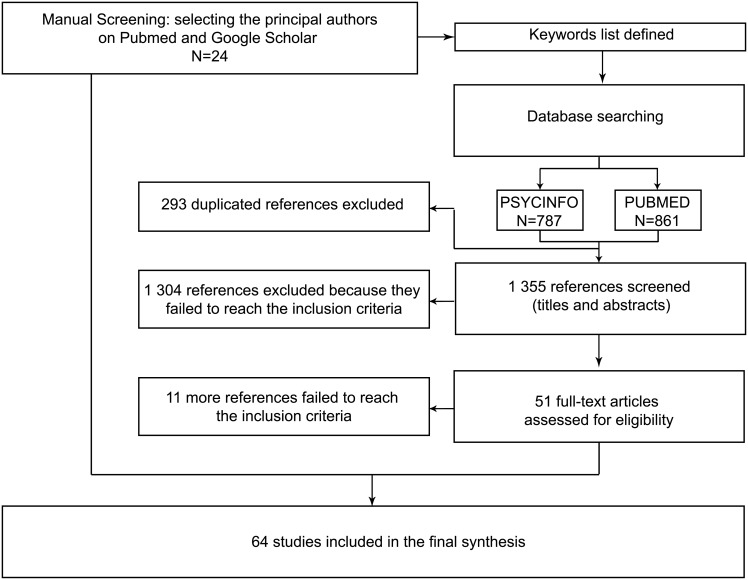
Nonsuicidal self-injury (NSSI) and suicidal behaviors, both important issues in adolescent health care, are frequently associated and possibly clinically related. Our objective was to explore the views of relations between nonsuicidal self-injury and suicidal behaviors during adolescence and young adulthood (11-25 years) expressed in the scientific (medical and psychological) literature. We adopted a textual approach to the process of synthesis to tell the story of the findings from the included studies. Our narrative systematic review of 64 articles found that they share the same risk factors. Integrated models envision nonsuicidal self-injury as a gateway enabling teens to acquire the capability for suicide. Because suicidal behavior short-circuits thought, it is difficult to conceive an intention to die during adolescents' acts of self-injury. Intention is constructed by the narrative of the act, influenced by numerous elements from the psychopathologic, cultural, religious, and philosophic context. Techniques of mentalizing-based treatments and work on the meaning that adolescents attribute to their behaviors might improve care.
Overview
The claims and statistics of this paper haven’t been checked yet.
Run the check — free, no account needed. It reads the open-access text and checks the sources it cites.
Integrity signals
Registry
Cites
Statistics
Figures
Verification
Claims the paper makes
The claims and statistics of this paper haven’t been checked yet.
Run the check — free, no account needed. It reads the open-access text and checks the sources it cites.
Claims other papers make about this one
Each is checked against this paper’s own text: does it say what the citing paper says it does?
The source backs part of the claim, not all of it — or backs it for a different population, condition or comparison.
In the citing paper
“regardless of intent, the risk of dying by suicide is elevated in those who engage in self-harm (Hawton 2015a; Grandclerc 2016).”
From Prevention of self-harm and suicide in young people up to the age of 25 in education settings (2024) · cites this paper as Grandclerc 2016
Experimental — accuracy not yet measured
Self-check
Percentages, sums and reported differences re-computed from the paper’s own numbers.
The self-check needs the paper’s full text.
Citations
Cites
The world report on violence and health
Krug, E. G., Mercy, J. A., Dahlberg, L. L., & Zwi, A. B. (2002) · The Lancet · doi:10.1016/s0140-6736(02)11133-0 · Cited by 9,110
The interpersonal theory of suicide.
Van Orden, K. A., Witte, T. K., Cukrowicz, K. C., Braithwaite, S. R., Selby, E. A., & Joiner, T. E. (2010) · Psychological Review · doi:10.1037/a0018697 · Cited by 5,292 · cited 1×
“Among them, drug or alcohol abuse and exposure to violence, such as combat experience, can also favor a gradient in self-injury [13,78].”
BackgroundNock, M. K., Borges, G., Bromet, E. J., Cha, C. B., Kessler, R. C., & Lee, S. (2008) · Epidemiologic Reviews · doi:10.1093/epirev/mxn002 · Cited by 2,897
Joiner, T. E. (2007) · Harvard University Press eBooks · doi:10.2307/j.ctvjghv2f · Cited by 2,891
Self-harm and suicide in adolescents
Hawton, K., Saunders, K. E., & O'Connor, R. C. (2012) · The Lancet · doi:10.1016/s0140-6736(12)60322-5 · Cited by 2,306
Psychological autopsy studies of suicide: a systematic review.
CAVANAGH, J. T. O., CARSON, A. J., SHARPE, M., & LAWRIE, S. M. (2003) · Psychological Medicine · doi:10.1017/s0033291702006943 · Cited by 2,207
Popay, J., Roberts, H., Sowden, A., Petticrew, M., Arai, L., Rodgers, M., Britten, N., Roen, K., & Duffy, S. (2006) · Lancaster University · doi:10.13140/2.1.1018.4643 · Cited by 2,070
Non-suicidal self-injury among adolescents: Diagnostic correlates and relation to suicide attempts
NOCK, M., JOINERJR, T., GORDON, K., LLOYDRICHARDSON, E., & PRINSTEIN, M. (2006) · Psychiatry Research · doi:10.1016/j.psychres.2006.05.010 · Cited by 1,617
A Functional Approach to the Assessment of Self-Mutilative Behavior.
Nock, M. K., & Prinstein, M. J. (2004) · Journal of Consulting and Clinical Psychology · doi:10.1037/0022-006x.72.5.885 · Cited by 1,564
International prevalence of adolescent non-suicidal self-injury and deliberate self-harm
Muehlenkamp, J. J., Claes, L., Havertape, L., & Plener, P. L. (2012) · Child and Adolescent Psychiatry and Mental Health · doi:10.1186/1753-2000-6-10 · Cited by 1,296
Research works printed but not linked: 3
- Heath N, Toste J, Beettam E. School counsellors’ experiences with self-injury in the schools. Paper presented at the Canadian Academy for Child and Adolescent Psychiatry annual conference, Montreal, Quebec; 2007.
- M Darche, 1990, Psychological factors differentiating self-mutilating and non self-mutilating adolescent inpatient families, J Fam Psychol, 21, 31
- JG Allen, 2003, Mentalizing as a compass for treatment, Bulletin of the Menninger Clinic, 67, 1
Cited by
Sorted by citations
Annual Research Review: Suicide among youth – epidemiology, (potential) etiology, and treatment
Cha, C. B., Franz, P. J., M. Guzmán, E., Glenn, C. R., Kleiman, E. M., & Nock, M. K. (2018) · Journal of Child Psychology and Psychiatry · doi:10.1111/jcpp.12831 · Cited by 602
The associations between non-suicidal self-injury and first onset suicidal thoughts and behaviors
Kiekens, G., Hasking, P. A., Boyes, M. E., Claes, L., Mortier, P., Auerbach, R. P., Cuijpers, P. J., Demyttenaere, K., Green, J. G., Kessler, R. C., et al. (2018) · Journal of Affective Disorders · doi:10.1016/j.jad.2018.06.033 · Cited by 467
Evidence-Based Psychosocial Treatments for Self-Injurious Thoughts and Behaviors in Youth
Glenn, C. R., Franklin, J. C., & Nock, M. K. (2015) · Journal of Clinical Child & Adolescent Psychology · doi:10.1080/15374416.2014.945211 · Cited by 288
Torok, M., Han, J., Baker, S., Werner-Seidler, A., Wong, I., Larsen, M. E., & Christensen, H. (2020) · The Lancet Digital Health · doi:10.1016/s2589-7500(19)30199-2 · Cited by 273
The Relationship between Childhood Maltreatment and Non-Suicidal Self-Injury: A Systematic Review
Serafini, G., Canepa, G., Adavastro, G., Nebbia, J., Murri, M. B., Erbuto, D., Pocai, B., Fiorillo, A., Pompili, M., Flouri, E., et al. (2017) · Frontiers in Psychiatry · doi:10.3389/fpsyt.2017.00149 · Cited by 254
Metadata
- Authors
- Grandclerc, S., De Labrouhe, D., Spodenkiewicz, M., Lachal, J., & Moro, M.-R.
- Affiliations
- Université Paris-Sud (FR)
- Venue
- PLoS ONE
- Publisher
- Public Library of Science (PLoS)
- Published
- 2016-04-18
- Volume
- 11
- Issue
- 4
- Pages
- e0153760
- ISSN
- 1932-6203 (ISSN-L)
- PMC
- PMC4835048
- OpenAlex
- W2340245259
- Cited by
- 332
- References
- 99
- Citations by year
- 2026: 24 · 2025: 41 · 2024: 35 · 2023: 37 · 2022: 29 · 2021: 46 · 2020: 40 · 2019: 26 · 2018: 35 · 2017: 12 · 2016: 5
- FWCI
- 3.86
- Type
- journal article
- Language
- en
- Open access
- gold
- doi.org
- Licence
- Locations
- PLoS ONE (publishedVersion, cc-by)
- PubMed Central (publishedVersion, cc-by)
- PubMed (publishedVersion)
- HAL (submittedVersion, cc-by)
- RePEc: Research Papers in Economics (submittedVersion)
- DOAJ (DOAJ: Directory of Open Access Journals) (submittedVersion, cc-by-sa)
- Figshare (submittedVersion, cc-by)
- Topics
- Social Sciences › Psychology › Clinical Psychology › Suicide and Self-Harm Studies
- Social Sciences › Sociology and Political Science › Homicide, Infanticide, and Child Abuse
- Social Sciences › Psychology › Clinical Psychology › Personality Disorders and Psychopathology
- Keywords
- non-suicidal self-injury, suicidal behavior, adolescents, young adults, suicide risk factors, suicidal intent, adolescent mental health
- MeSH terms
- Adolescent, Adolescent Behavior, Attitude to Death, Humans, Risk Factors, Suicide, Attempted, Self-Injurious Behavior, Suicidal Ideation
About these checks
Registry, retraction, Cites and statistics results are computed, not judged, with one exception: a printed reference that no index lists is read once by a model before it counts as a citation error. Claims are extracted by a model and kept only when their quote appears verbatim in the text; each cited source is then checked, with a model’s help, for whether it says what the claim relies on. Those verdicts can be wrong — read the claim’s quote and the cited source before relying on one.
Statistics and arithmetic are recomputed, not judged.
Confidence bands are shown only for fields calibrated on our annotated test set. None is calibrated yet, so no band is shown.
What counts as a claim ›How we measure confidence ›How we check this ›
Are you an author, or do you see a problem with this page? Request a review
