

The DOI matches its Crossref record; 64 of the 69 references it cites were found in a registry or an index; none of the 117 sources its claims cite is checked for support yet.
Molecular Genealogy of a Mongol Queen’s Family and Her Possible Kinship with Genghis Khan
Open accessAbstract
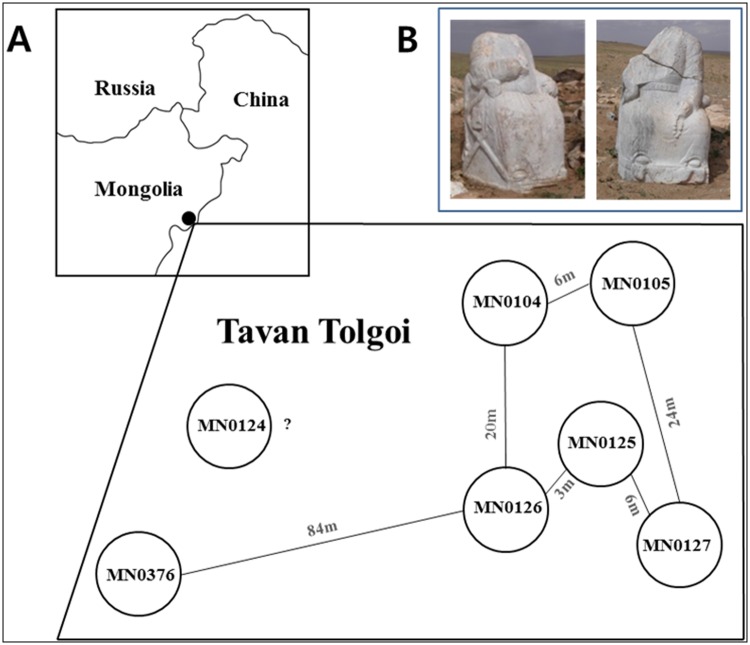
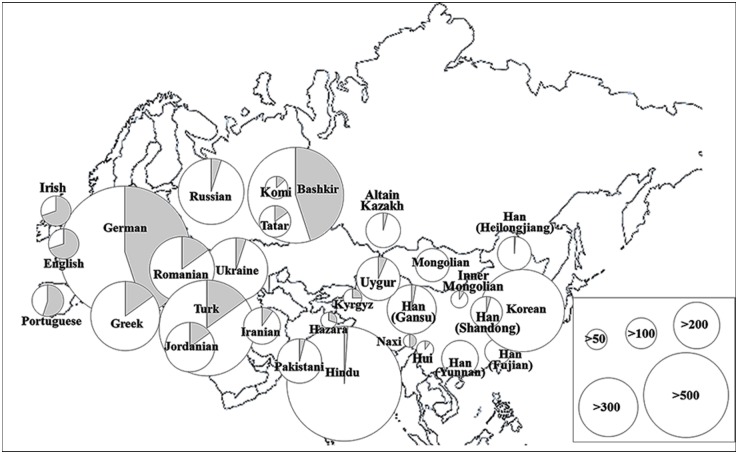
Members of the Mongol imperial family (designated the Golden family) are buried in a secret necropolis; therefore, none of their burial grounds have been found. In 2004, we first discovered 5 graves belonging to the Golden family in Tavan Tolgoi, Eastern Mongolia. To define the genealogy of the 5 bodies and the kinship among them, SNP and/or STR profiles of mitochondria, autosomes, and Y chromosomes were analyzed. Four of the 5 bodies were determined to carry the mitochondrial DNA haplogroup D4, while the fifth carried haplogroup CZ, indicating that this individual had no kinship with the others. Meanwhile, Y-SNP and Y-STR profiles indicate that the males examined belonged to the R1b-M343 haplogroup. Thus, their East Asian D4 or CZ matrilineal and West Eurasian R1b-M343 patrilineal origins reveal genealogical admixture between Caucasoid and Mongoloid ethnic groups, despite a Mongoloid physical appearance. In addition, Y chromosomal and autosomal STR profiles revealed that the four D4-carrying bodies bore the relationship of either mother and three sons or four full siblings with almost the same probability. Moreover, the geographical distribution of R1b-M343-carrying modern-day individuals demonstrates that descendants of Tavan Tolgoi bodies today live mainly in Western Eurasia, with a high frequency in the territories of the past Mongol khanates. Here, we propose that Genghis Khan and his family carried Y-haplogroup R1b-M343, which is prevalent in West Eurasia, rather than the Y-haplogroup C3c-M48, which is prevalent in Asia and which is widely accepted to be present in the family members of Genghis Khan. Additionally, Tavan Tolgoi bodies may have been the product of marriages between the lineage of Genghis Khan's Borjigin clan and the lineage of either the Ongud or Hongirad clans, indicating that these individuals were members of Genghis Khan's immediate family or his close relatives.
Overview
CoChat Summary
Written by AI from the paper’s full text.
TL;DR
Ancient DNA from five Tavan Tolgoi graves attributed to Genghis Khan’s Golden family shows four bodies sharing mtDNA haplogroup D4 and male members carrying Y-haplogroup R1b-M343, while a fifth Golden-family-associated body carried CZ and had no kinship with them. The authors propose that Genghis Khan’s male lineage may have carried R1b-M343 rather than the widely discussed C3c-M48, and that the Tavan Tolgoi bodies were either mother–sons or full siblings.
Key findings
- Of 7 Tavan Tolgoi bodies, 4 suspected Golden family members (MN0104, MN0125, MN0126, MN0127) had identical mtDNA sequences and were assigned to haplogroup D4; MN0105 carried CZ and showed no kinship with the other Golden family members.
- Male Golden family bodies MN0104 and MN0126 belonged to Y-haplogroup R1b-M343 and shared identical Y-STR haplotypes; the general-public warrior MN0376 belonged to R1a1a-M17 and differed from them.
- A-STR and Kinship Index analyses indicated MN0104, MN0125, and MN0126 were related as either mother and two sons or full siblings with nearly the same probability; the probability of a parent–child relationship between MN0104 and MN0126 was 0%, and full-sibling probability was 64.2%.
- Modern Y-STR matches to MN0104 were found mainly in West/Central Eurasia, including Kalmyk, Hui, Uzbek, Russian, and Tajik individuals; the authors report R1b-M343 at 0.0% (0/101) and R1a1a-M17 at 0.99% (1/101) in modern-day Mongolians across the Mongolian plateau.
Methods
- The study analyzed ancient DNA from 7 Tavan Tolgoi skeletons plus 122 contemporary buccal samples, using physical anthropological sex/age estimation and prior radiocarbon dating of the graves to 1130–1250 AD.
- mtDNA HVR1, HVR2, and coding regions were sequenced for haplogroup assignment; male bodies were typed for 10 Y-SNP markers and 16 Y-STR loci; autosomal STRs were typed at 8 loci plus amelogenin, with repeated extractions/PCRs in two independent laboratories and contamination controls including UDG treatment.
- Modern comparisons used neighbor-joining trees with 8,478 modern mtDNA sequences, YHRD searches of up to 154,329 individuals (searched August 25, 2015), published Y-STR datasets, and a Kinship Index Calculation program.
Limitations
- Stated by the paper: MN0127 could not be analyzed for Y-SNP, Y-STR, or A-STR because of insufficient DNA/PCR failure; MN0126 had only 4 definable Y-SNP markers and 8 of 16 Y-STR loci; exact identities of the Tavan Tolgoi bodies remain ambiguous.
- Stated by the paper: no human remains from Genghis Khan’s grave were available, so the proposed R1b-M343 link to Genghis Khan and his Borjigin clan is inferential, not directly proven.
- Evident from the text: kinship conclusions rest on a small number of A-STR loci and missing data, and the broader genealogical scenarios rely on historical/geographical interpretation plus modern reference databases rather than direct ancient pedigree evidence.
Model-written summary. Check it against the paper before relying on it.
Integrity signals
Registry
Cites
Statistics
Figures
Verification
Claims the paper makes
66 Own interpretation · 66 Own result · 30 Not checked yet · 29 Own method · 16 Check pending · 12 No full text of the sources
A result the paper reports from its own data — it cites no other source for it, so there is none to check. The quote shows it is in the paper.
In the paper
“Four of the 5 bodies were determined to carry the mitochondrial DNA haplogroup D4, while the fifth carried haplogroup CZ”
§ Molecular Genealogy of a Mongol Queen’s Family and Her Possible Kinship with Genghis Khan > Abstract
plain- Asserted: passes — The authors put it forward as true.
- Checkable: passes — It can be checked against evidence.
- Load-bearing: passes — The paper’s conclusions depend on it.
- Based: passes — The paper gives a reason why it holds.
A result the paper reports from its own data — it cites no other source for it, so there is none to check. The quote shows it is in the paper.
In the paper
“Particularly, MN0105 was more than 10 cm taller than other females of average height in the Mongolian era”
§ Molecular Genealogy of a Mongol Queen’s Family and Her Possible Kinship with Genghis Khan > Results > Archaeological and physical anthropological analyses of the Tavan Tolgoi bodies
plainSingle case- Asserted: passes — The authors put it forward as true.
- Checkable: passes — It can be checked against evidence.
- Load-bearing: unclear — It is unclear whether the paper’s conclusions depend on it.
- Based: passes — The paper gives a reason why it holds.
A result the paper reports from its own data — it cites no other source for it, so there is none to check. The quote shows it is in the paper.
In the paper
“All physical anthropological parameters indicate that the skulls of the Tavan Tolgoi graves were all anthropologically Mongoloid (S2 Table).”
§ Molecular Genealogy of a Mongol Queen’s Family and Her Possible Kinship with Genghis Khan > Results > Archaeological and physical anthropological analyses of the Tavan Tolgoi bodies
hedged- Asserted: passes — The authors put it forward as true.
- Checkable: passes — It can be checked against evidence.
- Load-bearing: unclear — It is unclear whether the paper’s conclusions depend on it.
- Based: passes — The paper gives a reason why it holds.
A result the paper reports from its own data — it cites no other source for it, so there is none to check. The quote shows it is in the paper.
In the paper
“Y-SNP and Y-STR profiles indicate that the males examined belonged to the R1b-M343 haplogroup.”
§ Molecular Genealogy of a Mongol Queen’s Family and Her Possible Kinship with Genghis Khan > Abstract
hedged- Asserted: passes — The authors put it forward as true.
- Checkable: passes — It can be checked against evidence.
- Load-bearing: passes — The paper’s conclusions depend on it.
- Based: passes — The paper gives a reason why it holds.
A result the paper reports from its own data — it cites no other source for it, so there is none to check. The quote shows it is in the paper.
In the paper
“Y chromosomal and autosomal STR profiles revealed that the four D4-carrying bodies bore the relationship of either mother and three sons or four full siblings with almost the same probability.”
§ Molecular Genealogy of a Mongol Queen’s Family and Her Possible Kinship with Genghis Khan > Abstract
plainstates an associationSingle case- Asserted: passes — The authors put it forward as true.
- Checkable: passes — It can be checked against evidence.
- Load-bearing: passes — The paper’s conclusions depend on it.
- Based: passes — The paper gives a reason why it holds.
- It may state two separate claims as one. 77
- Probably not a substantial claim. 39
- The quote only partly states this claim. 1
Create a free account to see these claims.
Create a free account to see these assumptions.
109 more claims
Create a free account to see all 219 claims and to verify the 72 references still open.
Claims other papers make about this one
Each is checked against this paper’s own text: does it say what the citing paper says it does?
In the citing paper
“However, based on all available data in the literature and the results reported in this study [4][5][6][7][8][9][10], none of the donors who carried C2*-ST can trace their genealogy to Genghis Khan, and none of the self-claimed direct descendants of Genghis Khan carry C2*-ST.”
From Whole-sequence analysis indicates that the Y chromosome C2*-Star Cluster traces back to ordinary Mongols, rather than Genghis Khan (2018) · cites this paper as [10]
In the citing paper
“As discussed by Zakharov et al. [4] some studies have opposed the connection between C2*-ST and Genghis Khan [5][6][7][8][9][10].”
From Whole-sequence analysis indicates that the Y chromosome C2*-Star Cluster traces back to ordinary Mongols, rather than Genghis Khan (2018) · cites this paper as [10]
In the citing paper
“The signature Y-chromosome haplotype of Genghis Khan and his male-line descendants remains elusive.”
From Genomes of the Golden Horde elites and their implications for the rulers of the Mongol Empire (2026) · cites this paper as [17]
In the citing paper
“Additionally, the original R1b hypothesis suffers from methodological limitations, including reliance on limited SNP and STR markers (17), and has not been corroborated by subsequent studies.”
From Genomes of the Golden Horde elites and their implications for the rulers of the Mongol Empire (2026) · cites this paper as [17]
Self-check
Percentages, sums and reported differences re-computed from the paper’s own numbers.
Each contradiction between two passages listed here was confirmed by an independent check.
Rated minor: it would not touch a result — a value no result rests on, a p-value that stays on the same side of the significance level, or a conflict that is clerical, resolved elsewhere in the paper, or outside its own findings.
In the paper
§ Molecular Genealogy of a Mongol Queen’s Family and Her Possible Kinship with Genghis Khan > Abstract
“Y chromosomal and autosomal STR profiles revealed that the four D4-carrying bodies bore the relationship of either mother and three sons or four full siblings with almost the same probability.”
§ Molecular Genealogy of a Mongol Queen’s Family and Her Possible Kinship with Genghis Khan > Discussion > Tavan Tolgoi bodies are members of a family with the relationship of mother-sons or full siblings
“Additional direct molecular evidence to determine his kinship with other members of Golden family could not be obtained due to failure of PCR amplification for Y-SNP, Y-STR, and A-STR.”
Rated minor: it would not touch a result — a value no result rests on, a p-value that stays on the same side of the significance level, or a conflict that is clerical, resolved elsewhere in the paper, or outside its own findings.
In the paper
§ Molecular Genealogy of a Mongol Queen’s Family and Her Possible Kinship with Genghis Khan > Results > Identification of Y-haplogroups and haplotypes of the Tavan Tolgoi bodies and their patrilineal origins
“MN0126 was also positive for the same biallelic markers (R-M207 and R1b-M343) as those carried by MN0104 and negative for O-M175 and C-RPS4Y”
§ Molecular Genealogy of a Mongol Queen’s Family and Her Possible Kinship with Genghis Khan > Results > Identification of Y-haplogroups and haplotypes of the Tavan Tolgoi bodies and their patrilineal origins
“Minus (-) and del indicate failure of PCR amplification and deletion of the indicated bases, respectively.”
Rated minor: it would not touch a result — a value no result rests on, a p-value that stays on the same side of the significance level, or a conflict that is clerical, resolved elsewhere in the paper, or outside its own findings.
In the paper
§ Molecular Genealogy of a Mongol Queen’s Family and Her Possible Kinship with Genghis Khan > Results > Identification of Y-haplogroups and haplotypes of the Tavan Tolgoi bodies and their patrilineal origins
“he carried R-M207, R1-M173, and R1a1a-M17 but not R1b-M343”
§ Molecular Genealogy of a Mongol Queen’s Family and Her Possible Kinship with Genghis Khan > Results > Identification of Y-haplogroups and haplotypes of the Tavan Tolgoi bodies and their patrilineal origins
“| MN0376 | TTCTC | C | G | T | T | C | G | C | G del | ND | R1a1a |”
Rated minor: it would not touch a result — a value no result rests on, a p-value that stays on the same side of the significance level, or a conflict that is clerical, resolved elsewhere in the paper, or outside its own findings.
In the paper
§ Molecular Genealogy of a Mongol Queen’s Family and Her Possible Kinship with Genghis Khan > Results > Identification of Y-haplogroups and haplotypes of the Tavan Tolgoi bodies and their patrilineal origins
“however, only 4 biallelic markers were definable in MN0126”
§ Molecular Genealogy of a Mongol Queen’s Family and Her Possible Kinship with Genghis Khan > Results > Identification of Y-haplogroups and haplotypes of the Tavan Tolgoi bodies and their patrilineal origins
“| MN0126 | TTCTC | - | - | - | T | C | G | - | - | A | R1b |”
Rated minor: it would not touch a result — a value no result rests on, a p-value that stays on the same side of the significance level, or a conflict that is clerical, resolved elsewhere in the paper, or outside its own findings.
In the paper
§ Molecular Genealogy of a Mongol Queen’s Family and Her Possible Kinship with Genghis Khan > Discussion > Tavan Tolgoi bodies are Golden family members from marriages between the lineage of Genghis Khan’s Borjigin clan and either the lineage of Ongud clan as guregen or the lineage of Hongirad clan as khatun
“Alaqai Beki had only one son and died approximately in her 50s”
§ Molecular Genealogy of a Mongol Queen’s Family and Her Possible Kinship with Genghis Khan > Discussion > Tavan Tolgoi bodies are Golden family members from marriages between the lineage of Genghis Khan’s Borjigin clan and either the lineage of Ongud clan as guregen or the lineage of Hongirad clan as khatun
“as successors of Alaqai Beki, who had no sons.”
Citations
Cites
The neighbor-joining method: a new method for reconstructing phylogenetic trees.
Saitou, N., & Nei, M. (1987) · Molecular Biology and Evolution · doi:10.1093/oxfordjournals.molbev.a040454 · Cited by 59,959
MEGA6: Molecular Evolutionary Genetics Analysis version 6.0.
Tamura, K., Stecher, G., Peterson, D., Filipski, A., & Kumar, S. (2013) · Molecular biology and evolution · doi:10.1093/molbev/mst197 · Cited by 41,174
Clustal W and Clustal X version 2.0
Larkin, M., Blackshields, G., Brown, N. P., Chenna, R., McGettigan, P., McWilliam, H., Valentin, F., Wallace, I. M., Wilm, A., López, R., et al. (2007) · Bioinformatics · doi:10.1093/bioinformatics/btm404 · Cited by 28,742
Sequence and organization of the human mitochondrial genome
Anderson, S., Bankier, A. T., Barrell, B. G., de Bruijn, M. H. L., Coulson, A. R., Drouin, J., Eperon, I. C., Nierlich, D. P., Roe, B. A., Sanger, F., et al. (1981) · Nature · doi:10.1038/290457a0 · Cited by 9,740
MEGA2: molecular evolutionary genetics analysis software
Kumar, S., Tamura, K., Jakobsen, I. B., & Nei, M. (2001) · Bioinformatics · doi:10.1093/bioinformatics/17.12.1244 · Cited by 6,063
Reanalysis and revision of the Cambridge reference sequence for human mitochondrial DNA
Andrews, R. M., Kubacka, I., Chinnery, P. F., Lightowlers, R. N., Turnbull, D. M., & Howell, N. (1999) · Nature Genetics · doi:10.1038/13779 · Cited by 3,337
Updated comprehensive phylogenetic tree of global human mitochondrial DNA variation
van Oven, M., & Kayser, M. (2009) · Human Mutation · doi:10.1002/humu.20921 · Cited by 1,810
Brothwell, D. R. (1972) · Medical Entomology and Zoology · Cited by 1,146
The human Y chromosome: an evolutionary marker comes of age
Jobling, M. A., & Tyler‐Smith, C. (2003) · Nature Reviews Genetics · doi:10.1038/nrg1124 · Cited by 988
New binary polymorphisms reshape and increase resolution of the human Y chromosomal haplogroup tree
Karafet, T. M., Mendez, F. L., Meilerman, M. B., Underhill, P. A., Zegura, S. L., & Hammer, M. F. (2008) · Genome Research · doi:10.1101/gr.7172008 · Cited by 710
A nomenclature system for the tree of human Y-chromosomal binary haplogroups
Consortium, T. Y. C. (2002) · Genome Research · doi:10.1101/gr.217602 · Cited by 640
The Genetic Legacy of the Mongols
Zerjal, T., Xue, Y., Bertorelle, G., Wells, R. S., Bao, W., Zhu, S., Qamar, R., Ayub, Q., Mohyuddin, A., Fu, S., et al. (2003) · The American Journal of Human Genetics · doi:10.1086/367774 · Cited by 563
The emerging limbs and twigs of the East Asian mtDNA tree
Kivisild, T., Tolk, H.-V., Parik, J., Wang, Y., Papiha, S. S., Bandelt, H.-J., & Villems, R. (2002) · Molecular Biology and Evolution · doi:10.1093/oxfordjournals.molbev.a003996 · Cited by 403
Pearson, K. (1899) · Philosophical Transactions of the Royal Society of London Series A Containing Papers of a Mathematical or Physical Character · doi:10.1098/rsta.1899.0004 · Cited by 373
Where west meets east: the complex mtDNA landscape of the southwest and Central Asian corridor
Quintana-Murci, L., Chaix, R., Wells, R. S., Behar, D. M., Sayar, H., Scozzari, R., Rengo, C., Al-Zahery, N., Semino, O., Santachiara-Benerecetti, A. S., et al. (2004) · The American Journal of Human Genetics · doi:10.1086/383236 · Cited by 338
Sengupta, S., Zhivotovsky, L. A., King, R., Mehdi, S. Q., Edmonds, C. A., Chow, C.-E. T., Lin, A. A., Mitra, M., Sil, S. K., Ramesh, A., et al. (2006) · The American Journal of Human Genetics · doi:10.1086/499411 · Cited by 334
Encyclopedia of Mongolia and the Mongol Empire
(2004) · Choice Reviews Online · doi:10.5860/choice.42-1303 · Cited by 255
Phylogeny of East Asian mitochondrial DNA lineages inferred from complete sequences
Kong, Q.-P., Yao, Y.-G., Sun, C., Bandelt, H.-J., Zhu, C.-L., & Zhang, Y.-P. (2003) · The American Journal of Human Genetics · doi:10.1086/377718 · Cited by 252
A major Y-chromosome haplogroup R1b Holocene era founder effect in Central and Western Europe
Myres, N. M., Rootsi, S., Lin, A. A., Järve, M., King, R. J., Kutuev, I., Cabrera, V. M., Khusnutdinova, E. K., Pshenichnov, A., Yunusbayev, B., et al. (2011) · European Journal of Human Genetics · doi:10.1038/ejhg.2010.146 · Cited by 242
Qi, X., Cui, C., Peng, Y., Zhang, X., Yang, Z., Zhong, H., Zhang, H., Xiang, K., Cao, X., Wang, Y., et al. (2013) · Molecular Biology and Evolution · doi:10.1093/molbev/mst093 · Cited by 196
Huddle, F., & Grousset, R. (1971) · The American Historical Review · doi:10.2307/1849340 · Cited by 195
Naming the Dead - Confronting the Realities of Rapid Identification of Degraded Skeletal Remains.
Edson, S. M., Jp, R., Coble, M. D., Tj, P., & Barritt, S. M. (2004) · PubMed · Cited by 186
Seeing the Wood for the Trees: A Minimal Reference Phylogeny for the Human Y Chromosome
van Oven, M., Geystelen, A. V., Kayser, M., Decorte, R., & Larmuseau, M. (2013) · Human Mutation · doi:10.1002/humu.22468 · Cited by 169
Keyser-Tracqui, C., Crubézy, E., & Ludes, B. (2003) · The American Journal of Human Genetics · doi:10.1086/377005 · Cited by 157
Separating the post-Glacial coancestry of European and Asian Y chromosomes within haplogroup R1a
Underhill, P. A., Myres, N. M., Rootsi, S., Metspalu, M., Zhivotovsky, L. A., King, R. J., Lin, A. A., Chow, C.-E. T., Semino, O., Battaglia, V., et al. (2010) · European Journal of Human Genetics · doi:10.1038/ejhg.2009.194 · Cited by 151
The Secret history of the Mongols: a Mongolian epic chronicle of the thirteenth century
de Rachewiltz, I. (2004) · Choice Reviews Online · doi:10.5860/choice.42-0485 · Cited by 149
Genghis Khan and the Making of the Modern World
Kaplonski, C. (2004) · Inner Asia · doi:10.1163/146481704793647063 · Cited by 147
The History of the Mongol Conquests
Saunders, J. J. (2023) · Routledge eBooks · doi:10.4324/9781003408093 · Cited by 137
Genghis Khan: his life and legacy
(1992) · Choice Reviews Online · doi:10.5860/choice.30-1086 · Cited by 125
Zhong, H., Shi, H., Qi, X.-B., Duan, Z.-Y., Tan, P.-P., Jin, L., Su, B., & Ma, R. Z. (2011) · Molecular Biology and Evolution · doi:10.1093/molbev/msq247 · Cited by 123
Genetic relationship of Chinese ethnic populations revealed by mtDNA sequence diversity
Yao, Y., Nie, L., Harpending, H., Fu, Y., Yuan, Z., & Zhang, Y. (2002) · American Journal of Physical Anthropology · doi:10.1002/ajpa.10052 · Cited by 122
Kayser, M., Lao, O., Anslinger, K., Augustin, C., Bargel, G., Edelmann, J., Elias, S., Heinrich, M., Henke, J., Henke, L., et al. (2005) · Human Genetics · doi:10.1007/s00439-005-1333-9 · Cited by 108
Developing criteria and data to determine best options for expanding the core CODIS loci
Ge, J., Eisenberg, A. J., & Budowle, B. (2012) · Investigative Genetics · doi:10.1186/2041-2223-3-1 · Cited by 102
Lee, H. Y., Song, I.-J., Ha, E., Cho, S., Yang, W. I., & Shin, K. (2008) · BMC Bioinformatics · doi:10.1186/1471-2105-9-483 · Cited by 91
Self-citationMousavi, S. A. (2018) · Routledge eBooks · doi:10.4324/9781315026930 · Cited by 85
Dulik, M. C., Osipova, L. P., & Schurr, T. G. (2011) · PLoS ONE · doi:10.1371/journal.pone.0017548 · Cited by 76
Comparisons of Familial DNA Database Searching Strategies
Ge, J., Chakraborty, R., Eisenberg, A. J., & Budowle, B. (2011) · Journal of Forensic Sciences · doi:10.1111/j.1556-4029.2011.01867.x · Cited by 69
Monitoring DNA contamination in handled vs. directly excavated ancient human skeletal remains
Pilli, E., Modi, A., Serpico, C., Achilli, A., Lancioni, H., Lippi, B., Bertoldi, F., Gelichi, S., Lari, M., & Caramelli, D. (2013) · PLoS ONE · doi:10.1371/journal.pone.0052524 · Cited by 64
Roewer, L., Willuweit, S., Krüger, C., Nagy, M., Rychkov, S., Morozowa, I., Naumova, O., Schneider, Y., Zhukova, O., Stoneking, M., et al. (2008) · International Journal of Legal Medicine · doi:10.1007/s00414-007-0222-2 · Cited by 49
Afghanistan's Ethnic Groups Share a Y-Chromosomal Heritage Structured by Historical Events
Haber, M., Platt, D. E., Ashrafian Bonab, M., Youhanna, S. C., Soria-Hernanz, D. F., Martínez-Cruz, B., Douaihy, B., Ghassibe-Sabbagh, M., Rafatpanah, H., Ghanbari, M., et al. (2012) · PLoS ONE · doi:10.1371/journal.pone.0034288 · Cited by 46
The secret history of the Mongols: A Mongolian epic chronicle of the thirteenth century
de Rachewiltz, I. (2006) · doi:10.1163/9789047418399 · Cited by 46
Genetic features of Mongolian ethnic groups revealed by Y-chromosomal analysis
Katoh, T., Munkhbat, B., Tounai, K., Mano, S., Ando, H., Oyungerel, G., Chae, G.-T., Han, H., Jia, G.-J., Tokunaga, K., et al. (2005) · Gene · doi:10.1016/j.gene.2004.10.023 · Cited by 45
The Hazaras of Afghanistan: an historical, cultural, economic and political study
(1998) · Choice Reviews Online · doi:10.5860/choice.36-0414 · Cited by 45
A western Eurasian male is found in 2000-year-old elite Xiongnu cemetery in Northeast Mongolia
Kim, K., Brenner, C. H., Mair, V. H., Lee, K., Kim, J., Gelegdorj, E., Batbold, N., Song, Y., Yun, H., Chang, E., et al. (2010) · American Journal of Physical Anthropology · doi:10.1002/ajpa.21242 · Cited by 39
Self-citationA Compendium of Chronicles: Rashid Al-Din's Illustrated History of the World
Blair, S., al-Dīn, R., & al-Ḥusayn, M. N. (1995) · Cited by 37
Further evaluation of the efficacy of contamination removal from bone surfaces
Barta, J. L., Monroe, C., & Kemp, B. M. (2013) · Forensic Science International · doi:10.1016/j.forsciint.2013.06.004 · Cited by 33
Y chromosome homogeneity in the Korean population
Kim, S. H., Han, M. S., Kim, W., & Kim, W. (2010) · International Journal of Legal Medicine · doi:10.1007/s00414-010-0501-1 · Cited by 33
Sex assessment of fragmentary skeletal remains.
NAKAHASHI, T., & NAGAI, M. (1986) · Journal of the Anthropological Society of Nippon · doi:10.1537/ase1911.94.289 · Cited by 31
Y-chromosomal STR haplotypes in Kalmyk population samples
Roewer, L., Krüger, C., Willuweit, S., Nagy, M., Rodig, H., Kokshunova, L., Rothämel, T., Kravchenko, S., Jobling, M. A., Stoneking, M., et al. (2007) · Forensic Science International · doi:10.1016/j.forsciint.2006.11.013 · Cited by 29
Fenner, J. N., Tumen, D., & Khatanbaatar, D. (2014) · Journal of Archaeological Science · doi:10.1016/j.jas.2014.03.017 · Cited by 24
Self-citationAfghanistan from a Y-chromosome perspective
Lacau, H., Gayden, T., Regueiro, M., Chennakrishnaiah, S., Bukhari, A., Underhill, P. A., Garcia-Bertrand, R. L., & Herrera, R. J. (2012) · European Journal of Human Genetics · doi:10.1038/ejhg.2012.59 · Cited by 24
The Medieval Expansion of Europe
Phillips, J. R. S. (1998) · doi:10.1093/acprof:oso/9780198207405.001.0001 · Cited by 24
Technical note: improved ancient DNA purification for PCR using ion-exchange columns
Kim, K., Kim, K., Jeon, E., Togloom, A., Cho, Y., Lee, M., Lkhagvasuren, G., Choi, J., Tumen, D., Ja Park, A., et al. (2008) · American Journal of Physical Anthropology · doi:10.1002/ajpa.20782 · Cited by 21
Self-citationParker, H. L. (1944) · Irish Journal of Medical Science (1971 -) · doi:10.1007/bf02948464 · Cited by 12
Croatian national reference Y-STR haplotype database
Mršić, G., Gršković, B., Vrdoljak, A., Popović, M., Valpotić, I., Anđelinović, Š., Stenzl, V., Ehler, E., Urban, L., Lacković, G., et al. (2012) · Molecular Biology Reports · doi:10.1007/s11033-012-1610-3 · Cited by 11
Maji, S., Krithika, S., & Vasulu, T. S. (2008) · International Journal of Human Genetics · doi:10.1080/09723757.2008.11886022 · Cited by 10
The Hazaras of Afghanistan: An Historical, Cultural, Economic and Political Study
Parkes, P., & Mousavi, S. A. (1999) · Journal of the Royal Anthropological Institute · doi:10.2307/2661209 · Cited by 10
Dating the Tavan Tolgoi Site, Mongolia: Burials of the Nobility from Genghis Khan's Era
Youn, M., Kim, J. C., Kim, H. K., Tumen, D., Navaan, D., & Erdene, M. (2007) · Radiocarbon · doi:10.1017/s0033822200042570 · Cited by 9
Self-citationWang, Y., Liu, C., Zhang, C., Li, R., LI, Y., Ou, X., & Sun, H. (2015) · ELECTROPHORESIS · doi:10.1002/elps.201500089 · Cited by 9
Mitochondrial DNA analysis of ancient human bones excavated from Nukdo island, S.Korea
Kim, A.-J., Kim, K., Choi, J., Choi, E. H., Jung, Y., Min, N. Y., Lkhagvasuren, G., Rhee, S., Kim, J. H., Noh, M., et al. (2010) · BMB Reports · doi:10.5483/bmbrep.2010.43.2.133 · Cited by 8
Self-citationSneath, D., & Kaplonski, C. (2010) · Cited by 4
(2007)
(2010)
(2004) · Dominican Scholar (Dominican University of California)
Research works printed but not linked: 6
- Z Batsaikhan, 2008, Is Tengeriin Ovoo a burial of Chinggis Khaan? Mongolian Great Khans tombs in Burkhan Khaldun Mountain, Mon J of Anthropol Archaeol and Ethnol, 4, 37
- D Tumen, 2006, Archaeology of the Mongolian period: A brief introduction, Silk Road, 4, 51
- D Navaan, 2006, Sukhbaatar aimag, Ongon Sum, Tavan Tolgoi site, grave 5 and the study of nobleman grave monuments from Mongolian period, Mon J of Anthropol Archaeol and Ethnol, 2, 10
- D Navaan, 2006, Tomb of Genghis Khan is still being found, Silk Road, 4, 55
- D Tumen, 2006, Paleoanthropology of ancient populations of Mongolia, Mon J of Anthropol Archaeol and Ethnol, 54, 90
- D Tumen, 2008, Anthropological of archaeological populations from Inner Asia, Mon J of Anthropol Archaeol and Ethnol, 4, 162
Cited by
Wei, L.-H., Yan, S., Lu, Y., Wen, S.-Q., Huang, Y.-Z., Wang, L.-X., Li, S.-L., Yang, Y.-J., Wang, X.-F., Zhang, C., et al. (2018) · European Journal of Human Genetics · doi:10.1038/s41431-017-0012-3 · Cited by 57
Keyser, C., Zvénigorosky, V., Gonzalez, A., Fausser, J., Jagorel, F., Gérard, P., Turbat, T., Duchesne, S., Crubézy, É., & Ludes, B. (2020) · Human Genetics · doi:10.1007/s00439-020-02209-4 · Cited by 33
Yu, X.-E., & Li, H. (2021) · Molecular Genetics and Genomics · doi:10.1007/s00438-021-01794-x · Cited by 31
Detecting past male-mediated expansions using the Y chromosome
Batini, C., & Jobling, M. A. (2017) · Human Genetics · doi:10.1007/s00439-017-1781-z · Cited by 29
Wen, S.-Q., Yao, H.-B., Du, P.-X., Wei, L.-H., Tong, X.-Z., Wang, L.-X., Wang, C.-C., Zhou, B.-Y., Shi, M.-S., Zhabagin, M., et al. (2019) · Journal of Human Genetics · doi:10.1038/s10038-019-0618-0 · Cited by 17
Metadata
- Authors
- Lkhagvasuren, G., Shin, H., Lee, S. E., Tumen, D., Kim, J.-H., Kim, K.-Y., Kim, K., Park, A. J., Lee, H. W., Kim, M. J., Choi, J., Choi, J.-H., Min, N. Y., & Lee, K.-H.
- Affiliations
- Chung-Ang University (KR)
- National University of Mongolia (MN)
- Dong-A University (KR)
- Chung-Ang University Hospital (KR)
- Corresponding author
- Lee, Kwang-Ho
- ORCID
- Venue
- PLOS ONE
- Publisher
- Public Library of Science (PLoS)
- Published
- 2016-09-14
- Volume
- 11
- Issue
- 9
- Pages
- e0161622
- ISSN
- 1932-6203 (ISSN-L)
- PMC
- PMC5023095
- OpenAlex
- W2520487819
- Semantic Scholar
- f7c77a55527ab9a21f949bef301637bbdb516d57
- Cited by
- 19
- References
- 69
- Citations by year
- 2026: 2 · 2025: 3 · 2024: 2 · 2022: 2 · 2021: 3 · 2020: 3 · 2019: 1 · 2018: 1 · 2017: 2
- FWCI
- 0.68
- Type
- journal article
- Language
- en
- Open access
- gold
- doi.org
- Licence
- Locations
- PLoS ONE (publishedVersion, cc-by)
- PubMed (publishedVersion)
- PubMed Central (publishedVersion, cc-by)
- DOAJ (DOAJ: Directory of Open Access Journals) (submittedVersion, cc-by-sa)
- Figshare (submittedVersion, cc-by)
- Funders
- National Research Foundation
- Chung-Ang University
- National Research Foundation of Korea
- Topics
- Life Sciences › Biochemistry, Genetics and Molecular Biology › Genetics › Forensic and Genetic Research
- Life Sciences › Biochemistry, Genetics and Molecular Biology › Genetics › Genetic diversity and population structure
- Social Sciences › Arts and Humanities › History › Eurasian Exchange Networks
- Keywords
- Genghis Khan, kinship analysis, Mongol khanates
- MeSH terms
- Archaeology, DNA, Mitochondrial, Family, Female, Genealogy and Heraldry, Genetics, Population, Haplotypes, Humans, Male, Molecular Biology, Mongolia, History, Medieval
About these checks
Registry, retraction, Cites and statistics results are computed, not judged, with one exception: a printed reference that no index lists is read once by a model before it counts as a citation error. Claims are extracted by a model and kept only when their quote appears verbatim in the text; each cited source is then checked, with a model’s help, for whether it says what the claim relies on. Those verdicts can be wrong — read the claim’s quote and the cited source before relying on one.
A language model drew the claims from the paper on 2026-11-12, under version 3 of the claim definition (model deepseek-v4.1-flash, prompt extract-v3).
A second model labelled each claim on 2026-11-12 (model jev-1.13-20260917, definition revision gold-guideline-v0.2).
Statistics and arithmetic are recomputed, not judged.
Confidence bands are shown only for fields calibrated on our annotated test set. None is calibrated yet, so no band is shown.
What counts as a claim ›How we measure confidence ›How we check this ›
Are you an author, or do you see a problem with this page? Request a review
