

The DOI matches its Crossref record; 65 of the 65 references it cites were found in a registry or an index.
On-Farm Diversity and Market Participation Are Positively Associated with Dietary Diversity of Rural Mothers in Southern Benin, West Africa
Open accessAbstract
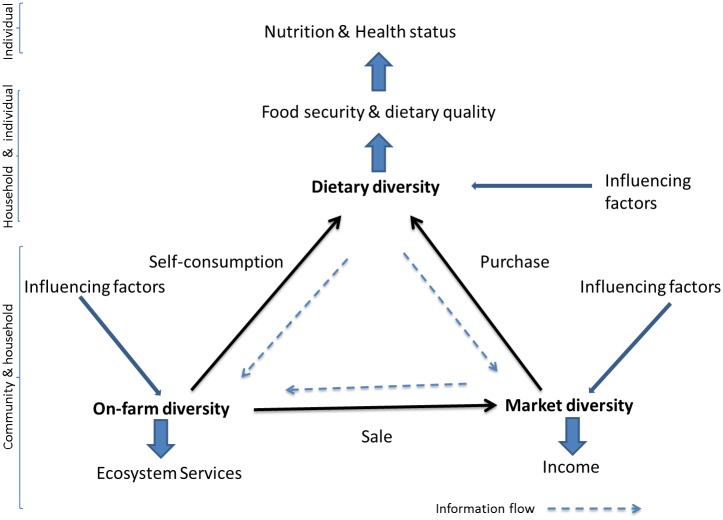
OBJECTIVE: The objective of this study is to test the extent to which, under different opportunities for market participation, the diversity of plant species rural households grow or collect (on-farm diversity), and the variety of foods mothers purchase (market diversity) are associated with their dietary diversity. METHODS: Rural households from three districts in southern Benin were interviewed during dry (n = 472) and wet (n = 482) seasons between 2011 and 2012. Villages within districts and their households were selected randomly according to market accessibility, with a mother selected from each household. Information on on-farm diversity was collected using a semi-structured questionnaire. Market diversity was obtained through a 7-day food frequency questionnaire that elicited if foods were purchased. Dietary diversity was derived from a quantitative 24-hour food recall. A system of three simultaneous equations via a Generalized Methods of Moments was estimated to address potential endogeneity between dietary diversity and on-farm diversity and market diversity. RESULTS: Results show rich on-farm diversity with more than 65 different edible plant species grown or collected by households. More than 70% of foods consumed by mothers were purchased in 55 market places. More than 50% of mothers met minimum dietary diversity with at least 5 food groups consumed. Diagnostic tests indicated the existence of endogeneity. Econometric results showed that on-farm and market diversities were positively associated with mothers' dietary diversity (p < 0.05) once market opportunities, seasonality and other socioeconomic factors were controlled for. CONCLUSION: Results provide evidence of a positive relationship between on-farm diversity and dietary diversity among participant mothers. They demonstrate the important contribution of market diversity to their dietary diversity. Links among these three facets of diversity suggest that production for self-consumption and food purchases complement rather than replace each other in their contribution to dietary diversity and thus dietary quality.
Overview
The claims and statistics of this paper haven’t been checked yet.
Run the check — free, no account needed. It reads the open-access text and checks the sources it cites.
Integrity signals
Registry
Cites
Statistics
Figures
Verification
Claims the paper makes
The claims and statistics of this paper haven’t been checked yet.
Run the check — free, no account needed. It reads the open-access text and checks the sources it cites.
Claims other papers make about this one
Each is checked against this paper’s own text: does it say what the citing paper says it does?
The cited source says what the claim attributes to it.
In the citing paper
“Numerous studies have found a positive relationship between diversified farming systems and human nutritional outcomes for smallholder farms (Jones et al., 2014;Powell et al., 2015;Bellon et al., 2016;Demeke et al., 2017).”
From Assessing Transitions to Sustainable Agricultural and Food Systems: A Tool for Agroecology Performance Evaluation (TAPE) (2020) · cites this paper as Bellon et al., 2016
Self-check
Percentages, sums and reported differences re-computed from the paper’s own numbers.
The self-check needs the paper’s full text.
Citations
Cites
Statistical power analyses using G∗Power 3.1: tests for correlation and regression analyses
Faul, F., Erdfelder, E., Buchner, A., & Lang, A.-G. (2009) · Behavior Research Methods · doi:10.3758/brm.41.4.1149 · Cited by 37,615
Microeconometrics: Methods and Applications
Cameron, A. C., & Trivedi, P. K. (2005) · doi:10.1017/cbo9780511811241 · Cited by 8,092 · cited 1×
“Diagnostic tests were carried out to determine the existence of endogeneity and to assess the validity of the instruments: Durbin–Wu–Hausman test for endogeneity, Sargan–Hansen test of overidentifying restrictions and the Weak Instrument test [61].”
MethodRegression Analysis of Count Data
Cameron, A. C., & Trivedi, P. K. (2013) · doi:10.1017/cbo9781139013567 · Cited by 6,640
The rise of supermarkets in Africa, Asia, and Latin America
Reardon, T., Timmer, C. P., Barrett, C. B., & Berdegué, J. (2003) · American Journal of Agricultural Economics · doi:10.1111/j.0092-5853.2003.00520.x · Cited by 1,346 · cited 1×
“Increased access and participation in markets present great opportunities, but also challenges, for rural societies [13, 14].”
BackgroundInstruments, Randomization, and Learning about Development
Deaton, A. (2010) · Journal of Economic Literature · doi:10.1257/jel.48.2.424 · Cited by 1,274 · cited 1×
“It should be stressed however, that while the variables we use as instruments are predetermined and we have argued for their exogeneity, there are neither statistical tests nor narrative justification to entirely insure that they are uncorrelated with all unobservable determinants of the final outcome, as good instrum…”
BackgroundSmallholder market participation: Concepts and evidence from eastern and southern Africa
Barrett, C. B. (2008) · Food Policy · doi:10.1016/j.foodpol.2007.10.005 · Cited by 1,246 · cited 3×
“Farmers will tend to specialize in the crops where they have a comparative advantage, due to more opportunities to sell agricultural products, while purchasing the foods they consume [15], particularly since markets provide more diverse foods than any individual HH can produce.”
BackgroundStructural Equations, Treatment Effects, and Econometric Policy Evaluation1
Heckman, J. J., & Vytlacil, E. (2005) · Econometrica · doi:10.1111/j.1468-0262.2005.00594.x · Cited by 1,220
Arimond, M., & Ruel, M. T. (2004) · The Journal of Nutrition · doi:10.1093/jn/134.10.2579 · Cited by 1,170 · cited 1×
“Indices of DD are considered good, simple, reliable indicators of nutritional quality and adequacy [5, 6, 7, 8].”
BackgroundIncreasing homogeneity in global food supplies and the implications for food security
Khoury, C. K., Bjorkman, A. D., Dempewolf, H., Ramirez-Villegas, J., Guarino, L., Jarvis, A., Rieseberg, L. H., & Struik, P. C. (2014) · Proceedings of the National Academy of Sciences · doi:10.1073/pnas.1313490111 · Cited by 1,114 · cited 1×
“Despite increasing homogenization of the crop species that contribute to global food supplies [1], at a local level millions of rural households (HHs) throughout the developing world continue to rely on a diversity of plant species to feed themselves and to support their livelihoods.”
BackgroundOperationalizing Dietary Diversity: A Review of Measurement Issues and Research Priorities
Ruel, M. T. (2003) · Journal of Nutrition · doi:10.1093/jn/133.11.3911s · Cited by 966 · cited 1×
“Dietary diversity (DD) is universally recognized as a key component of healthy diets and is strongly associated with nutrient adequacy [4, 5].”
Background
Cited by
Sorted by citations
Wezel, A., Herren, B. G., Kerr, R. B., Barrios, E., Gonçalves, A. L. R., & Sinclair, F. (2020) · Agronomy for Sustainable Development · doi:10.1007/s13593-020-00646-z · Cited by 926
“Application of the social values and dietary principle (9) impact nutrition directly, supported by maintaining and enhancing biodiversity (5) on fields and farms (Bellon et al. 2016; Bezner Kerr et al. 2019b; Demeke et al. 2017; Jones et al. 2014; Lachat et al. 2018; Powell et al. 2015).”
BackgroundSibhatu, K. T., & Qaim, M. (2018) · Food Policy · doi:10.1016/j.foodpol.2018.04.013 · Cited by 372
Can agroecology improve food security and nutrition? A review
Bezner Kerr, R., Madsen, S., Stüber, M., Liebert, J., Enloe, S., Borghino, N., Parros, P., Mutyambai, D. M., Prudhon, M., & Wezel, A. (2021) · Global Food Security · doi:10.1016/j.gfs.2021.100540 · Cited by 359
Jones, A. D. (2017) · Nutrition Reviews · doi:10.1093/nutrit/nux040 · Cited by 310
“This same trend was noted in Burkina Faso where local markets were observed to enhance agricultural biodiversity by providing an outlet for household production.(20) Furthermore, more highly diversified farms are commonly associated with higher household agricultural revenues, indicating the importance of diversificat…”
BackgroundResultInfluentialMottet, A., Bicksler, A., Lucantoni, D., De Rosa, F., Scherf, B., Scopel, E., López-Ridaura, S., Gemmil-Herren, B., Bezner Kerr, R., Sourisseau, J.-M., et al. (2020) · Frontiers in Sustainable Food Systems · doi:10.3389/fsufs.2020.579154 · Cited by 238
“Numerous studies have found a positive relationship between diversified farming systems and human nutritional outcomes for smallholder farms (Jones et al., 2014; Powell et al., 2015; Bellon et al., 2016; Demeke et al., 2017).”
BackgroundBellon, M. R., Kotu, B. H., Azzarri, C., & Caracciolo, F. (2019) · World Development · doi:10.1016/j.worlddev.2019.104682 · Cited by 211
Mining maize diversity and improving its nutritional aspects within agro‐food systems
Palacios‐Rojas, N., McCulley, L., Kaeppler, M. S., Titcomb, T. J., Gunaratna, N. S., López‐Ridaura, S., & Tanumihardjo, S. A. (2020) · Comprehensive Reviews in Food Science and Food Safety · doi:10.1111/1541-4337.12552 · Cited by 143
Nandi, R., Nedumaran, S., & Ravula, P. (2021) · Global Food Security · doi:10.1016/j.gfs.2020.100484 · Cited by 123
Food security outcomes in agricultural systems models: Current status and recommended improvements
Nicholson, C. F., Stephens, E. C., Kopainsky, B., Jones, A. D., Parsons, D., & Garrett, J. (2021) · Agricultural Systems · doi:10.1016/j.agsy.2020.103028 · Cited by 129
Usman, M. A., & Callo-Concha, D. (2021) · Agricultural and Food Economics · doi:10.1186/s40100-021-00190-8 · Cited by 98
Desta, M., Akibu, M., Tadese, M., & Tesfaye, M. (2019) · Journal of Nutrition and Metabolism · doi:10.1155/2019/3916864 · Cited by 101
“,is finding is supported by studies done in Southern United States [32–34], sub-Saharan Africa [35], Southern Benin [36], andMalawi [37].,ismight be due to the fact that those women who participated in the food shopping have higher chance to purchase different foods that are scarce or totally unavailable at home or in…”
ResultMarket access, household dietary diversity and food security: Evidence from Eastern Africa
Usman, M. A., & Haile, M. G. (2022) · Food Policy · doi:10.1016/j.foodpol.2022.102374 · Cited by 90
Verger, E. O., Ballard, T. J., Dop, M. C., & Martin‐Prével, Y. (2019) · Global Food Security · doi:10.1016/j.gfs.2019.02.004 · Cited by 84
Mitchodigni, I. M., Hounkpatin, W. A., Ntandou-Bouzitou, G. D., Avohou, H. T., Termote, C., Kennedy, G., & Hounhouigan, J. D. (2017) · Food Security · doi:10.1007/s12571-017-0722-y · Cited by 82
Adubra, L., Savy, M., Fortin, S., Kameli, Y., Kodjo, N. E., Fainke, K., Tanimoune, M., Port, A. L., & Martin‐Prével, Y. (2019) · Current Developments in Nutrition · doi:10.1093/cdn/nzz002 · Cited by 79
Boedecker, J., Oduor, F. O., Lachat, C. K., Damme, P. V., Kennedy, G., & Termote, C. (2019) · Maternal and Child Nutrition · doi:10.1111/mcn.12803 · Cited by 71
Subsistence production, markets, and dietary diversity in the Kenyan small farm sector
Muthini, D., Nzuma, J. M., & Qaim, M. (2020) · Food Policy · doi:10.1016/j.foodpol.2020.101956 · Cited by 70
“…found a positive relationship between farm production diversity and dietary diversity in the small farm sector of different developing countries (Ecker, 2018; Hirvonen and Hoddinott 2017; Koppmair et al., 2017; Bellon et al., 2016; Romeo et al., 2016; Sibhatu et al., 2015; Jones et al., 2014).”
BackgroundGitagia, M. W., Ramkat, R. C., Mituki, D., Termote, C., Covic, N. M., & Cheserek, M. J. (2019) · Food & Nutrition Research · doi:10.29219/fnr.v63.1553 · Cited by 67
“However, other reports (22, 26, 38, 55, 56) have shown a positive relationship between measures of agrobiodiversity and dietary diversity.”
BackgroundHomegarden diversity and food security in southern Mexico
Navarrete, J. C. (2021) · Food Security · doi:10.1007/s12571-021-01148-w · Cited by 66
Adaptive strategies enhance smallholders’ livelihood resilience in Bihar, India
Pagnani, T., Gotor, E., & Caracciolo, F. (2020) · Food Security · doi:10.1007/s12571-020-01110-2 · Cited by 64
“…of nat-ural and human capitals may enhance the diversification of farming activities, by increasing the types or varieties of crops in the field (Bellon et al. 2016; Douxchamps et al. 2016; McCord et al. 2015; Lin 2011; Yachi and Loreau 1999), the integration of crops and livestock (Lemaire et…”
Farm production diversity and its association with dietary diversity in Kenya
Muthini, D., Nzuma, J. M., & Nyikal, R. A. (2020) · Food Security · doi:10.1007/s12571-020-01030-1 · Cited by 62
Mulenga, B. P., Ngoma, H., & Nkonde, C. (2021) · Food Policy · doi:10.1016/j.foodpol.2021.102035 · Cited by 61
Does household participation in food markets increase dietary diversity? Evidence from rural Malawi
Matita, M., Chirwa, E. W., Johnston, D., Mazalale, J., Smith, R., & Walls, H. (2021) · Global Food Security · doi:10.1016/j.gfs.2020.100486 · Cited by 61
Ditzler, L., Komarek, A. M., Chiang, T.-W., Alvarez, S., Chatterjee, S. A., Timler, C. J., Raneri, J., Estrada-Carmona, N., Kennedy, G., & Groot, J. C. J. (2019) · Agricultural Systems · doi:10.1016/j.agsy.2019.02.008 · Cited by 58
Mulmi, P., Masters, W. A., Ghosh, S. A., Namirembe, G., Rajbhandary, R., Manohar, S., Shrestha, B., West, K. P., & Webb, P. (2017) · PLoS ONE · doi:10.1371/journal.pone.0186765 · Cited by 54
Waha, K., Accatino, F., Godde, C., Rigolot, C., Bogard, J., Domingues, J. P., Gotor, E., Herrero, M., Martin, G., Mason-D’Croz, D., et al. (2022) · Global Food Security · doi:10.1016/j.gfs.2022.100645 · Cited by 63
“Positive associations between agricultural diversity and MDD-W or WDDS were found in seven studies (Adubra et al., 2019; Bellon et al., 2016; Bellows et al., 2020; Boedecker et al., 2014; Jones et al., 2018; Murendo et al., 2018; Whitney et al., 2018).”
Gonzalez, D. L., & Sørensen, M. (2018) · Public Health Nutrition · doi:10.1017/s1368980018000617 · Cited by 53
“Some scholars showed that cultivated agrobiodiversity can enhance food self-suf fi ciency (34 – 36) and food security (37 – 39) , diversify diets and nutrient intakes (35,37,38,40 – 52) and increase agricultural revenues to purchase food (41,42,48,53,54) .”
Jones, A. D., Creed‐Kanashiro, H., Zimmerer, K. S., de Haan, S., Carrasco, M., Meza, K., García, G. S. C., Tello, M., Amaya, F. P., Marin, R. M., et al. (2018) · Journal of Nutrition · doi:10.1093/jn/nxy166 · Cited by 53
Fraval, S., Yameogo, V., Ayantunde, A. A., Hammond, J., de Boer, I. J. M., Oosting, S. J., & van Wijk, M. T. (2020) · Agriculture & Food Security · doi:10.1186/s40066-020-0255-z · Cited by 52
Franco, F. M., Chaw, L., Bakar, N., & Abas, S. N. H. (2020) · Journal of Ethnobiology and Ethnomedicine · doi:10.1186/s13002-020-0356-6 · Cited by 50
Pinto, A. D., Seymour, G., Bryan, E. M., & Bhandari, P. (2020) · Climatic Change · doi:10.1007/s10584-020-02925-w · Cited by 41
“…engage with local markets because of the greater variety of farm products (McCord et al. 2015; Keleman et al. 2013), a potential for greater dietary diversity (Fraval et al. 2019; Bellon et al. 2016), and reduced micronutrient deficiencies and malnutrition (Carletto et al. 2015; Islam et al. 2018).”
BackgroundSaaka, M., Osman, S. M., & Hoeschle‐Zeledon, I. (2017) · Food & Nutrition Research · doi:10.1080/16546628.2017.1391668 · Cited by 40
Onyeneke, R. U., Nwajiuba, C. A., Igberi, C. O., Amadi, M. U., Anosike, F. C., Oko-Isu, A., Munonye, J. O., Uwadoka, C. O., & Adeolu, A. I. (2019) · Sustainability · doi:10.3390/su11061688 · Cited by 38
“This promotes better farm and food production diversity, which is important in improving dietary diversity [69,73,74,87].”
BackgroundAgricultural commercialization and nutrition; evidence from smallholder coffee farmers
van Asselt, J., & Useche, P. (2022) · World Development · doi:10.1016/j.worlddev.2022.106021 · Cited by 38
Use and management of biodiversity by smallholder farmers in semi-arid West Africa
Félix, G. F., Diédhiou, I., Garff, M. L., Timmermann, C., Clermont‐Dauphin, C., Cournac, L., Groot, J. C. J., & Tittonell, P. A. (2018) · Global Food Security · doi:10.1016/j.gfs.2018.08.005 · Cited by 37
Koffi, C. K., Lourme-Ruiz, A., Djoudi, H., Bouquet, E., Dury, S., & Gautier, D. (2020) · The International Forestry Review · doi:10.1505/146554820828671490 · Cited by 37
“Empirical studies (Herforth 2010 in Kenya and Tanzania; Powell 2012 in Tanzania; M’Kaibi et al. 2015 in Kenya; Bellon et al. 2016 in Benin) found a positive correlation between agricultural biodiversity and individual dietary diversity.”
BackgroundMadzorera, I., Blakstad, M. M., Bellows, A. L., Canavan, C. R., Mosha, D., Bromage, S., Noor, R. A., Webb, P., Ghosh, S. A., Kinabo, J., et al. (2020) · Journal of Nutrition · doi:10.1093/jn/nxaa329 · Cited by 36
Pathways to Advance Agroecology for a Successful Transformation to Sustainable Food Systems
Niggli, U. A., Sonnevelt, M., & Kummer, S. (2023) · Springer eBooks · doi:10.1007/978-3-031-15703-5_18 · Cited by 35
Habtemariam, L. T., Gornott, C., Hoffmann, H., & Sieber, S. (2021) · Frontiers in Sustainable Food Systems · doi:10.3389/fsufs.2021.612341 · Cited by 32
“A positive association of production diversity and dietary diversity is in line with many previous findings (e.g., Jones et al., 2014; Pellegrini and Tasciotti, 2014; Bellon et al., 2016).”
BackgroundMethodResultInfluentialLourme-Ruiz, A., Koffi, C. K., Gautier, D., Bahya-Batinda, D., Bouquet, E., Dury, S., Martin‐Prével, Y., & Savy, M. (2021) · Public Health Nutrition · doi:10.1017/s1368980021004171 · Cited by 31
“In line with other studies(7,8,39), we highlighted that factors related to agricultural biodiversity—at similar farm size—such as orchard produc-”
BackgroundMethodFraval, S., Hammond, J., Lannerstad, M., Oosting, S. J., Sayula, G., Teufel, N., Silvestri, S., Poole, E. J., Herrero, M., & van Wijk, M. T. (2017) · Agricultural Systems · doi:10.1016/j.agsy.2017.10.013 · Cited by 30
“…either a) assess the relationship between rural household characteristics and food security (often limited to diet diversity) for one year (e.g. Bellon et al., 2016; Koppmair et al., 2016; Luckett et al., 2015; M'Kaibi et al., 2015; Sibhatu et al., 2015; Snapp and Fisher, 2015; and, Dillon et…”
BackgroundLeveraging farm production diversity for dietary diversity: evidence from national level panel data
Khandoker, S., Singh, A., & Srivastava, S. K. (2022) · Agricultural and Food Economics · doi:10.1186/s40100-022-00221-y · Cited by 29
Tobin, D., Jones, K., & Thiede, B. C. (2019) · Population and environment · doi:10.1007/s11111-019-00327-4 · Cited by 26
Ecological and Nutritional Functions of Agroecosystems as Indicators of Smallholder Resilience
Stratton, A. E., Kuhl, L., & Blesh, J. (2020) · Frontiers in Sustainable Food Systems · doi:10.3389/fsufs.2020.543914 · Cited by 34
“, 2016) and the diversity of foods purchased at markets (Bellon et al., 2016) are key contributors to diet diversity and nutrition at a household level.”
BackgroundGatto, M., de Haan, S., Laborte, A. G., Bonierbale, M., Labarta, R., & Hareau, G. (2021) · Frontiers in Sustainable Food Systems · doi:10.3389/fsufs.2021.626714 · Cited by 32
Farmers in the transition toward sustainability: what is the role of their entrepreneurial identity?
Rossi, E. S., Materia, V. C., Caracciolo, F., Blasi, E., & Pascucci, S. (2023) · Frontiers in Sustainable Food Systems · doi:10.3389/fsufs.2023.1196824 · Cited by 34
Estrada-Carmona, N., Raneri, J., Alvarez, S., Timler, C. J., Chatterjee, S. A., Ditzler, L., Kennedy, G., Remans, R., Brouwer, I. D., den Berg, K. J. B., et al. (2019) · Food Security · doi:10.1007/s12571-019-00985-0 · Cited by 27
“Assessing the agriculture-nutrition nexus is challenging since it is affected by complex, dynamic and scaledependent interlinkages among farms, markets, wild foods, diets, intra-household and gender dynamics (Bellon et al. 2016; Remans et al. 2015).”
BackgroundLinkages between dietary diversity and indicators of agricultural biodiversity in Burkina Faso
Lourme-Ruiz, A., Dury, S., & Martin‐Prével, Y. (2021) · Food Security · doi:10.1007/s12571-020-01137-5 · Cited by 27
“Bellon 2016 “On-farm diversity: number of cultivated, wild & semi-wild species grown and collected by a HH (mother and father).””
BackgroundInput Policies and Crop Diversification: Evidence from the Collines Region in Benin
Adjimoti, G. O., Kwadzo, G. T., Sarpong, D. B., & Onumah, E. E. (2017) · African Development Review · doi:10.1111/1467-8268.12286 · Cited by 26
Ambikapathi, R., Gunaratna, N. S., Madzorera, I., Passarelli, S., Canavan, C. R., Noor, R. A., Madzivhandila, T., Sibanda, S., Abdelmenan, S., Tadesse, A. W., et al. (2019) · Public Health Nutrition · doi:10.1017/s136898001900051x · Cited by 26
Blundo‐Canto, G., García, G. S. C., Talsma, E. F., Francesconi, W., Labarta, R., Sánchez-Choy, J., Pérez, L., Paz-Garcia, P., & Quintero, M. (2020) · Food Security · doi:10.1007/s12571-020-01022-1 · Cited by 27
“On-farm andmarket diversity have also been shown to be positively associated with mothers’ dietary diversity in Southern Benin (Bellon et al. 2016) and in Tanzania (Keding et al. 2012), and with higher odds of achieving a minimally diverse diet in the Peruvian Andes (Jones et al. 2018).”
BackgroundAlam, M. J., Begum, I. A., Mastura, T., Kishore, A., Woodhill, J., Chatterjee, K., & Jackson, T. M. (2023) · PLoS ONE · doi:10.1371/journal.pone.0287321 · Cited by 24
“This study also found that dietary diversity among household members, especially women and children, can be positively impacted by non-farm income, proximity to markets, and market participation in selling agricultural products [21, 80, 81].”
BackgroundAmeye, H., Hülsen, V., Glatzel, K., Laar, A., & Qaim, M. (2025) · Food Policy · doi:10.1016/j.foodpol.2025.102981 · Cited by 36
Lucantoni, D., & Domarle, J. (2023) · Agroecology and Sustainable Food Systems · doi:10.1080/21683565.2023.2230931 · Cited by 24
“…than specialization (Bellon et al. 2020) and agricultural diversity is positively associated with higher self-consumption of food crops (Bellon et al. 2016), and generation of income from the crops sold, while the presence of livestock is a crucial factor for increasing resilience…”
BackgroundNutrition as a driver and outcome of agroecology
van Zutphen, K. G., van den Berg, S., Gavin-Smith, B., Imbo, E., Kraemer, K., Monroy-Gomez, J., Pannatier, M., Prytherch, H., Six, J., Thoennissen, C., et al. (2022) · Nature Food · doi:10.1038/s43016-022-00631-7 · Cited by 22
“Out of the 13 principles, we propose that seven (2, 5, 7, 9, 10, 11, 13) could make a direct contribution to nutrition, whereas for six (1, 3, 4, 6, 8, 12) the relationship is less direct (Fig.”
BackgroundPace, N., Sebastian, A. R., Daidone, S., Prifti, E., & Davis, B. (2021) · Food Policy · doi:10.1016/j.foodpol.2021.102190 · Cited by 22
HUBUNGAN ANTARA KETERSEDIAAN PANGAN DENGAN KERAGAMAN PANGAN RUMAH TANGGA BURUH TANI
Prasetyaningtyas, D., & Nindya, T. S. (2018) · Media Gizi Indonesia · doi:10.20473/mgi.v12i2.149-155 · Cited by 22
Tamariz, G. (2020) · Geoforum · doi:10.1016/j.geoforum.2020.10.012 · Cited by 21
Kabir, M. R., Halima, O., Rahman, N., Ghosh, S., Islam, M. S., & Rahman, H. (2022) · Heliyon · doi:10.1016/j.heliyon.2022.e08755 · Cited by 23
Biodiversity and Ecosystem Services
Zhang, W., Dulloo, E., Kennedy, G., Bailey, A., Sandhu, H., & Nkonya, E. M. (2019) · Elsevier eBooks · doi:10.1016/b978-0-12-812134-4.00008-x · Cited by 24
Perceptions of agrodiversity and seed-saving practices in the northern Andes of Ecuador
Montúfar, R., & Ayala, N. M. (2019) · Journal of Ethnobiology and Ethnomedicine · doi:10.1186/s13002-019-0312-5 · Cited by 21
Hlatshwayo, S. I., Ojo, T. O., & Ngidi, M. S. C. (2023) · Frontiers in Sustainable Food Systems · doi:10.3389/fsufs.2023.1097465 · Cited by 19
Sinyolo, S., Murendo, C., Nyamwanza, A. M., Sinyolo, S. A., Ndinda, C., & Nwosu, C. O. (2021) · Sustainability · doi:10.3390/su131810325 · Cited by 19
Jordan, I., Röhlig, A., Glas, M. G., Waswa, L. M., Mugisha, J., Krawinkel, M. B., & Nuppenau, E. (2022) · Foods · doi:10.3390/foods11030344 · Cited by 19
“benefit from producing their own food, which enables them to avoid high expenditure on food, especially when prices are rising [58].”
BackgroundAgricultural insurance through the lens of rural household dietary diversity
Habtemariam, L. T., Will, M., & Müller, B. H. (2021) · Global Food Security · doi:10.1016/j.gfs.2020.100485 · Cited by 17
Farm production diversity and women’s dietary diversity: Evidence from central Tunisia
Gaillard, C., Verger, E. O., Dury, S., Dop, M. C., Ati, J. E., & on behalf of the MEDINA Study Group (2022) · PLoS ONE · doi:10.1371/journal.pone.0263276 · Cited by 17
“Second, the assessment of the capacity of a production system to improve the diet is influenced by the choice of indicator of production diversity [34] but most studies are based on only one [9,50–52] or two [43,53] indicators.”
BackgroundNeighbour home gardening predicts dietary diversity among rural Tanzanian women
Blakstad, M. M., Bellows, A. L., Mosha, D., Canavan, C. R., Mlalama, K., Kinabo, J., Kruk, M. E., Masanja, H., & Fawzi, W. W. (2019) · Public Health Nutrition · doi:10.1017/s1368980018003798 · Cited by 16
A systematic review of dietary data collection methodologies for diet diversity indicators
Mahal, S. S., Kucha, C. T., Kwofie, E. M., & Ngadi, M. O. (2024) · Frontiers in Nutrition · doi:10.3389/fnut.2024.1195799 · Cited by 15
Owoputi, I., Booth, N., Luginaah, I., Nyantakyi‐Frimpong, H., Shumba, L., Dakishoni, L., Lupafya, E., Hickey, C., & Kerr, R. B. (2022) · Food and Nutrition Bulletin · doi:10.1177/03795721221126787 · Cited by 15
Bacon, C. M., Gómez, M. E. F., Shin, V., Ballardo, G., Kriese, S., McCurry, E., Martinez, E., & Rivas, M. (2023) · Agroecology and Sustainable Food Systems · doi:10.1080/21683565.2023.2171172 · Cited by 20
Abioye, A. I., & Fawzi, W. W. (2020) · Elsevier eBooks · doi:10.1016/b978-0-12-818460-8.00027-7 · Cited by 15
Dietary diversity and associated factors among lactating women in Ethiopia: Cross sectional study
Molla, W., Mengistu, N., Madoro, D., Assefa, D. G., Zeleke, E. D., Tilahun, R., Bayisa, Y., Meshesha, M. D., Melaku, G., Kabthymer, R. H., et al. (2022) · International Journal of Africa Nursing Sciences · doi:10.1016/j.ijans.2022.100450 · Cited by 12
Issa, M. Y., Diagana, Y., Kari, K. E., Coulibaly, S. M., Gueye, A., Dehah, R. M. H., & Vall, O. E. K. M. (2024) · BMC Public Health · doi:10.1186/s12889-024-18211-8 · Cited by 13
“…influenced by the traditional idea that weight gain is associated with prestige and beauty, leading them to frequently adopt harmful measures to stimulate their appetite and increase their food intake, without necessarily diversifying it known their major role in food purchasing decisions [41].”
BackgroundDrivers of food and nutrition security during the lean period in southeastern Madagascar
Tojo-Mandaharisoa, S., Randrianarison, N., Jordan, I., Kubitza, C., Randriamampionona, D., Rasoarahona, F., Andriamaniraka, H., Sieber, S., Ulrichs, C., & Steinke, J. (2023) · Journal of Agriculture and Food Research · doi:10.1016/j.jafr.2023.100881 · Cited by 11
“Markets may not just increase the local availability of diverse food items, but also provide opportunities for farmers to generate income by selling their produce [71,72].”
Mitigating climate vulnerability: the crop diversification effect
Ferry, M., & de Montalembert, J. (2025) · Ecological Economics · doi:10.1016/j.ecolecon.2025.108568 · Cited by 13
Dietary diversity of women from soybean and non-soybean farming households in rural Zambia
Kapulu, N., Chomba, C., Nkonde, C., Holmes, M. J., Manda, S., Smith, H. E., Macdiarmid, J. I., & Orfila, C. (2023) · Frontiers in Sustainable Food Systems · doi:10.3389/fsufs.2023.1115801 · Cited by 11
“For example, women play an important role in making decisions about food purchases (Bellon et al., 2016).”
BackgroundMaintaining Diversity of Plant Genetic Resources as a Basis for Food Security
Dulloo, E. (2018) · Elsevier eBooks · doi:10.1016/b978-0-08-100596-5.22208-7 · Cited by 11
Greffeuille, V., Dass, M., Fanou‐Fogny, N., Nyako, J., Berger, J., & Wieringa, F. T. (2022) · Maternal and Child Nutrition · doi:10.1111/mcn.13453 · Cited by 10
“…could be regarded as typical for that age range and living area (urban/rural), based on data of food consumption surveys (Achigan‐Dako et al., 2011; Bellon et al., 2016; de Jager et al., 2018; Galbete et al., 2017; Gamor et al., 2015; Greffeuille & Mouquet, 2010; Issaka et al., 2015; Levesque et…”
BackgroundSheikhi, M., Omidvar, N., Tabatabaei, S. M., & Eini‐Zinab, H. (2022) · BMC Public Health · doi:10.1186/s12889-022-13134-8 · Cited by 10
Honfoga, B. G., Ntandou-Bouzitou, G. D., Vodouhè, R. S., Bellon, M. R., & Hounhouigan, J. D. (2018) · Agricultural and Food Economics · doi:10.1186/s40100-018-0097-1 · Cited by 10
“Villages within districts and their households were selected randomly according to market accessibility, with a mother selected for each household (Bellon et al. 2016).”
Prevost, D. E. O., Gurri, F. D., Méndez, R. M., & Vázquez, F. G. (2018) · Cuadernos de Desarrollo Rural · doi:10.11144/javeriana.cdr14-80.iaoa · Cited by 10
Kalid, M., Berglund, L., Flacking, R., Sulaiman, M., & Osman, F. A. (2024) · Maternal and Child Nutrition · doi:10.1111/mcn.13707 · Cited by 8
“Tailoring these strategies to community ‐ specific cultural, economic and social contexts may maximise their effectiveness (Bellon et al., 2016).”
Milner, D., Wolf, L. J., van Wijk, M. T., & Hammond, J. (2022) · Frontiers in Sustainable Food Systems · doi:10.3389/fsufs.2022.740485 · Cited by 8
“In apparent contradiction, several studies show the relationship between farm production diversity and dietary diversity to be positive, particularly when market access allows for high quality agricultural inputs to be purchased (Snapp and Fisher, 2015; Bellon et al., 2016).”
BackgroundMethodInfluentialBellon, M. R., Ntandou-Bouzitou, G. D., Lauderdale, J. E., & Caracciolo, F. (2022) · Food Security · doi:10.1007/s12571-022-01320-w · Cited by 8
“…of Naples Federico II, Portici (Na), Italy Keywords Production diversity · Market participation · Dietary diversity · Benin · West Africa 1 3 M. R. Bellon et al. 2016; Dillon et al., 2015; Ecker, 2018; Fraval et al., 2020; Jones et al., 2014; Jones, 2017b; Hirvonen & Hoddinott, 2017;…”
BackgroundMethodResultInfluentialIntegrated food-based multi-actor approach to combat malnutrition
Yazdanpanah, M., Löhr, K., Hoffmann, H., Welte, S., Klaus, L. M., Zobeidi, T., & Rybak, C. (2023) · Frontiers in Sustainable Food Systems · doi:10.3389/fsufs.2023.1179768 · Cited by 8
“Several studies note that diversified diets are positively associated with improved nutrition outcomes (Bellon et al., 2016; Islam et al., 2018; Luna-González and Sørensen, 2018; Murendo et al., 2019).”
BackgroundLivelihood implications of in situ-on farm conservation strategies of fruit species in Uzbekistan
Gotor, E., Bellon, M. R., Turdieva, M. K., Исаевич, Б. К., Nazarov, P., Dorohova-Shreder, E., Arzumanov, V., Dzavakyants, M., Abdurasulov, A., Chernova, G. M., et al. (2017) · Agroforestry Systems · doi:10.1007/s10457-017-0069-6 · Cited by 8
O'Malley, S. F., Ambikapathi, R., Boncyk, M., Mosha, D., Verissimo, C. K., Galvin, L., Mapendo, F., Lyatuu, I., Kieffer, M. P., Jeong, J., et al. (2024) · Maternal and Child Nutrition · doi:10.1111/mcn.13734 · Cited by 8
Verger, E. O., Gaillard, C., Jones, A. D., Remans, R., & Kennedy, G. (2021) · Agriculture · doi:10.3390/agriculture11080749 · Cited by 7
“Treatment of endogeneity requires a more extensive specification of econometric models and resolution by instrumental variables strategy [15,26,46], simultaneous systems of equations [22], or fixed effects in panel survey [36,41].”
BackgroundInfluentialEsaryk, E. E., Reynolds, S. A., Fernald, L. C. H., & Jones, A. D. (2021) · Public Health Nutrition · doi:10.1017/s1368980021003281 · Cited by 7
Bergau, S., Loos, T. K., & Sariyev, O. (2021) · European Journal of Development Research · doi:10.1057/s41287-021-00475-0 · Cited by 7
Curtin, I., Tobin, D., & Reynolds, T. W. (2024) · Sustainability · doi:10.3390/su16031040 · Cited by 7
Xinghua, L., Liu, C., & Chen, K. Z. (2023) · PLoS ONE · doi:10.1371/journal.pone.0287000 · Cited by 6
Measuring characteristics of wild and cultivated food environments: a scoping review
Farrell, P., Reeve, E., Johnson, E., Farmery, A. K., Patay, D., Thow, A. M., Wu, J., & Bogard, J. (2024) · BMC Medicine · doi:10.1186/s12916-024-03678-4 · Cited by 6
Factors influencing household and women’s dietary diversity in migrant households in central Nepal
Gartaula, H. N., Atreya, K., Kattel, K., & Rahut, D. B. (2024) · PLoS ONE · doi:10.1371/journal.pone.0298022 · Cited by 8
Effects of Risk and Time Preferences on Diet Quality: Empirical Evidence from Rural Madagascar
Shiratori, S., Abeysekara, M. D., Ozaki, R., Rafalimanantsoa, J., & Andrianjanaka, B. H. R. (2024) · Foods · doi:10.3390/foods13193147 · Cited by 3
“The market can provide farmers with not only increased access to diverse food items but also income opportunities [57].”
BackgroundNabakabya, D., Fungo, R., Tumwine, G., Muyonga, J. H., Kaaya, A. N., Keding, G. B., & Sarfo, J. (2023) · African Journal of Food Agriculture Nutrition and Development · doi:10.18697/ajfand.120.22600 · Cited by 5
Does adoption of agroforestry increase farm production and dietary diversity in the hills of Nepal?
Kattel, K., Byanju, R. M., & Atreya, K. (2021) · Archives of Agriculture and Environmental Science · doi:10.26832/24566632.2021.060208 · Cited by 5
“It was beyond this research scope to analyze market opportunities, seasonality and other socioeconomic factors that have complementing relationship with farm production diversity in determining household dietary diversity (Bellon et al., 2016).”
BackgroundDiverse crops and input subsidies: a village-scale analysis in Mali
Assima, A., Smale, M., & Koné, B. (2021) · International Journal of Agricultural Sustainability · doi:10.1080/14735903.2021.2016261 · Cited by 5
“More recently, Bellon et al. (2016) used GMM to test the linkages among crop diversity, diet diversity and market participation among rural households in Benin.”
MethodBalcha, T., Lahiff, E., Donnellan, T., & Chisholm, N. (2025) · Discover Food · doi:10.1007/s44187-025-00528-x · Cited by 4
“These socioeconomic factors are selected because they are repeatedly mentioned in literature as influencers of smallholder dietary diversity [9, 10, 52, 53].”
Isbell, C., Tobin, D., Thiede, B. C., Jones, K., & Reynolds, T. (2024) · Food Security · doi:10.1007/s12571-024-01458-9 · Cited by 5
“In addition to the direct links between local crop diversity and food consumption, crop diversification may also improve food and nutritional security at wider scales than the household through economic mechanisms (Bellon et al., 2016; Sibhatu & Qaim, 2018).”
Metadata
- Authors
- Bellon, M. R., Ntandou-Bouzitou, G. D., & Caracciolo, F.
- Affiliations
- Alliance Bioversity International - CIAT (IT)
- University of Naples Federico II (IT)
- Corresponding author
- Bellon, Mauricio R.
- Venue
- PLoS ONE
- Publisher
- Public Library of Science (PLoS)
- Published
- 2016-09-08
- Volume
- 11
- Issue
- 9
- Pages
- e0162535
- ISSN
- 1932-6203 (ISSN-L)
- PMC
- PMC5015832
- OpenAlex
- W2515600722
- Cited by
- 146
- References
- 65
- Citations by year
- 2026: 7 · 2025: 14 · 2024: 21 · 2023: 15 · 2022: 17 · 2021: 21 · 2020: 16 · 2019: 17 · 2018: 9 · 2017: 8
- FWCI
- 11.87
- Type
- journal article
- Language
- en
- Open access
- gold
- doi.org
- Licence
- Locations
- PLoS ONE (publishedVersion, cc-by)
- Europe PMC (PubMed Central) (publishedVersion, cc-by)
- PubMed Central (publishedVersion, cc-by)
- PubMed (publishedVersion)
- CGSPace A Repository of Agricultural Research Outputs (Consultative Group for International Agricultural Research) (submittedVersion, cc-by)
- DOAJ (DOAJ: Directory of Open Access Journals) (submittedVersion, cc-by-sa)
- Figshare (submittedVersion, cc-by)
- Funders
- Bill and Melinda Gates Foundation (OPP53227)
- Topics
- Health Sciences › Nursing › Nutrition and Dietetics › Child Nutrition and Water Access
- Life Sciences › Agricultural and Biological Sciences › General Agricultural and Biological Sciences › Agricultural Innovations and Practices
- Life Sciences › Agricultural and Biological Sciences › General Agricultural and Biological Sciences › Food Security and Socioeconomic Dynamics
- Keywords
- on-farm diversity, market diversity, dietary diversity, rural households, mothers, food purchasing, market participation, food security, self-consumption, endogeneity, seasonal variation, southern Benin
- MeSH terms
- Farms, Adolescent, Adult, Benin, Child, Preschool, Diet, Family Characteristics, Food Supply, Humans, Infant, Middle Aged, Models, Theoretical, Mothers, Rural Population, Models, Econometric, Marketing, Young Adult
About these checks
Registry, retraction, Cites and statistics results are computed, not judged, with one exception: a printed reference that no index lists is read once by a model before it counts as a citation error. Claims are extracted by a model and kept only when their quote appears verbatim in the text; each cited source is then checked, with a model’s help, for whether it says what the claim relies on. Those verdicts can be wrong — read the claim’s quote and the cited source before relying on one.
Statistics and arithmetic are recomputed, not judged.
Confidence bands are shown only for fields calibrated on our annotated test set. None is calibrated yet, so no band is shown.
What counts as a claim ›How we measure confidence ›How we check this ›
Are you an author, or do you see a problem with this page? Request a review
