

Increased Gamma Brainwave Amplitude Compared to Control in Three Different Meditation Traditions
Open accessThe DOI matches its Crossref record; 79 of the 82 references it cites were found in a registry or an index; 6 of the 20 sources its claims cite were checked for support.
Abstract
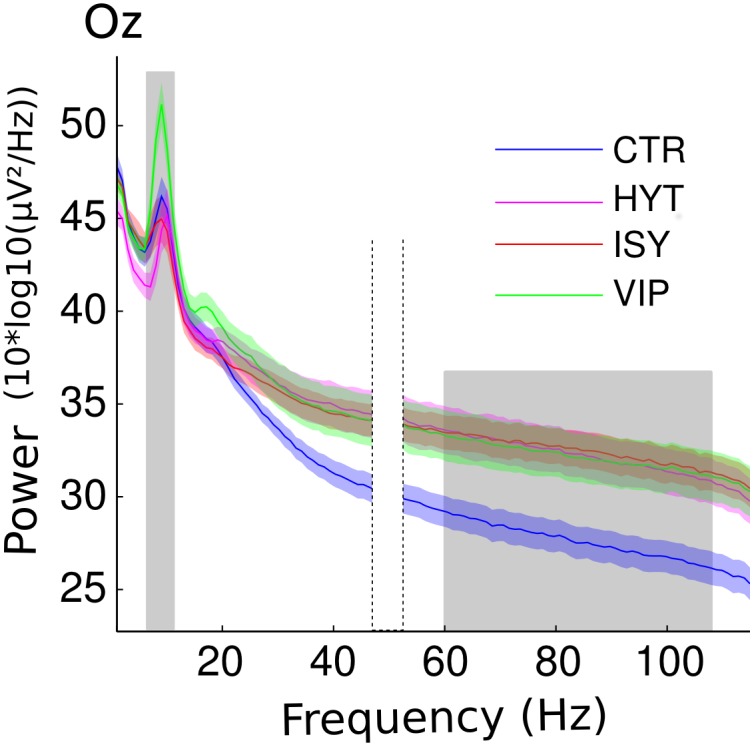
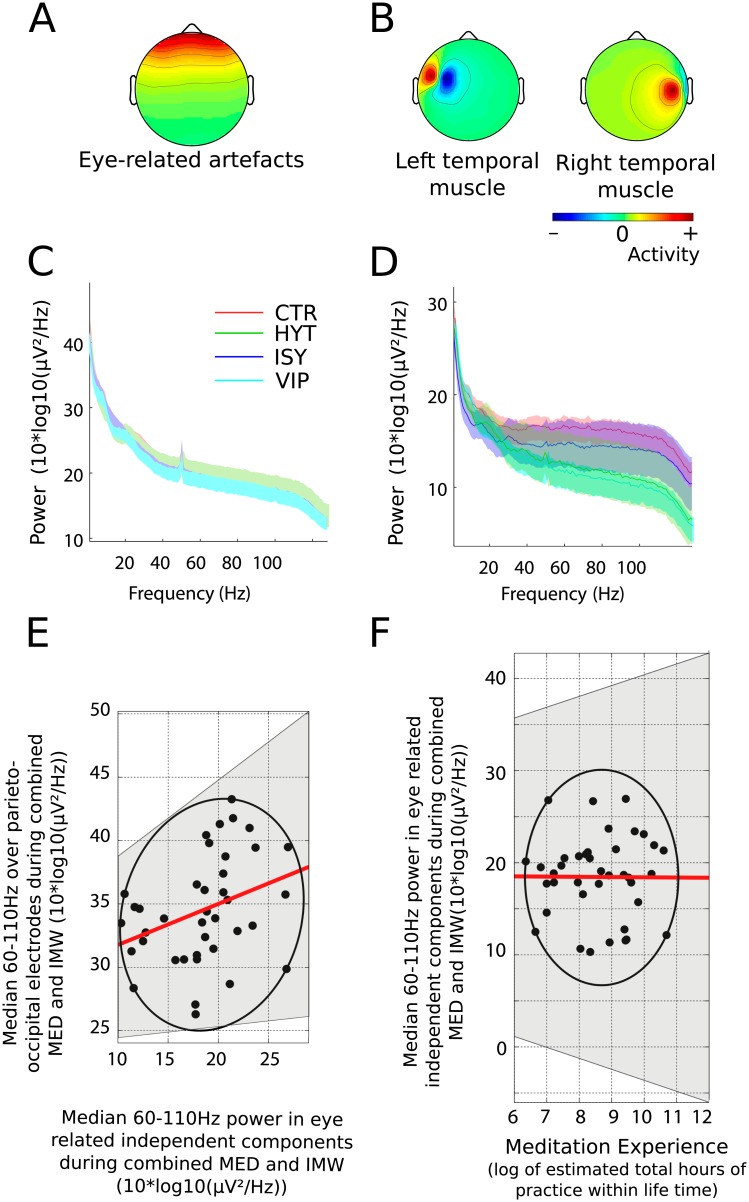
Despite decades of research, effects of different types of meditation on electroencephalographic (EEG) activity are still being defined. We compared practitioners of three different meditation traditions (Vipassana, Himalayan Yoga and Isha Shoonya) with a control group during a meditative and instructed mind-wandering (IMW) block. All meditators showed higher parieto-occipital 60-110 Hz gamma amplitude than control subjects as a trait effect observed during meditation and when considering meditation and IMW periods together. Moreover, this gamma power was positively correlated with participants meditation experience. Independent component analysis was used to show that gamma activity did not originate in eye or muscle artifacts. In addition, we observed higher 7-11 Hz alpha activity in the Vipassana group compared to all the other groups during both meditation and instructed mind wandering and lower 10-11 Hz activity in the Himalayan yoga group during meditation only. We showed that meditation practice is correlated to changes in the EEG gamma frequency range that are common to a variety of meditation practices.
Overview
CoChat Summary
TL;DR
This EEG study compared 20 Vipassana, 27 Himalayan Yoga, 20 Isha Shoonya practitioners, and 32 controls during meditation and instructed mind-wandering, and found higher high-gamma power in meditators as a trait effect. Vipassana practitioners also showed a specific alpha-band increase, while no clear meditation state effects were found.
Key findings
- When combining meditation and instructed mind-wandering, meditators from all 3 traditions showed higher 60–110 Hz gamma power over parieto-occipital electrodes than controls; the group effect was significant over parieto-occipital electrodes, with F(3,33) = 3, p = 0.03, effect size = 0.39.
- During meditation alone, meditators showed higher 60–110 Hz gamma power mainly over occipital sites, with additional frontal/midline effects reported less robustly; during instructed mind-wandering alone, the gamma difference was only a trend.
- Gamma power in the combined meditation + instructed mind-wandering conditions correlated positively with meditation experience (skipped Pearson’s r = 0.33, CI = [0.06, 0.53]); during instructed mind-wandering only the correlation was also positive (r = 0.31, CI = [0.01, 0.55]), but not during meditation only (r = 0.15, CI = [-0.12, 0.42]).
- Vipassana practitioners showed higher 7–11 Hz alpha power than all other groups; the alpha group effect was significant (F(3,60) = 3, p = 0.02), and the Vipassana vs. control comparison during meditation was p < 0.01.
Methods
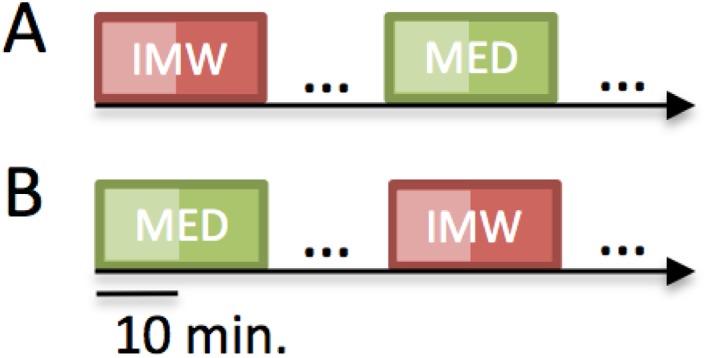
- Cross-sectional EEG comparison of expert meditators and meditation-naive controls, with 2 within-subject conditions: 20-minute Meditation (MED) and 20-minute Instructed Mind Wandering (IMW); the meditation block included 10 minutes breath focus followed by 10 minutes tradition-specific practice.
- Sample: 20 Vipassana, 27 Himalayan Yoga, 20 Isha Shoonya, and 32 controls initially; the analysis was later matched to 4 groups of 16 subjects each based on age and gender.
- EEG was recorded with a 64 + 8 channel Biosemi Active-Two system; analysis used EEGLAB/FieldTrip, including artifact rejection, ICA removal of eye/muscle components, permutation tests, ANOVA/mixed-effects ANOVA, and skipped Pearson correlations.
Limitations
- The paper states the study involved self-selection and was collected at one time point only, limiting causal interpretation; it says longitudinal, randomly selected training studies would be useful.
- The paper notes the control condition may still have recruited similar cognitive-control processes as meditation because it was instructed mind-wandering; it also says some meditators may have mind-wandered during meditation and vice versa.
- Evident from the text: the final analyzed groups were reduced to 16 per group by matching, which may limit power and generalizability.
Model-written summary. Check it against the paper before relying on it.
Integrity signals
Registry
Cites
Statistics
Figures



Verification
Claims the paper makes
6 Valid · 0 Not valid · 9 Not checked · 85 Own results and interpretations
Every source the paper cites for this claim was checked and supports it.
In the paper
“In line with previous findings [17], no significant differences were found between alpha amplitude during meditation and the control mind-wandering task in the Vipassana group.”
§ Increased Gamma Brainwave Amplitude Compared to Control in Three Different Meditation Traditions > Discussion > Alpha activity
What the sources say
- Supportedcites [17] Cahn BR, Delorme A, Polich J. Occipital gamma activation during Vipassana meditation. Cognitive Processing. 2009; 11(1): 39– 56. 10.1007/s10339-009-0352-1 20013298 PMC2812711 source
The Discussion (Meditation and neuroelectric measures; page not provided) says alpha power effects were absent when meditation and control states were compared in long-term Vipassana practitioners. It also notes an order effect, but not a meditation-versus-control state effect. (LLM, conf=0.92)
plain- Asserted: passes — The authors put it forward as true.
- Checkable: passes — It can be checked against evidence.
- Load-bearing: unclear — It is unclear whether the paper’s conclusions depend on it.
- Based: passes — The paper gives a reason why it holds.
- Supported
The sources with a verdict support this claim; the rest weren’t checked yet, have no full text we could read, or their verdicts aren’t rated yet.
In the paper
“As such, our study contrasts with other EEG studies finding state effects in the EEG power spectrum in various meditation practices [16–18, 72].”
§ Increased Gamma Brainwave Amplitude Compared to Control in Three Different Meditation Traditions > Discussion > Meditation state and trait effects No meditation state effects were found. As such, our study contrasts with other EEG studies finding state effects in the EEG power spectrum in various meditation practices [16–18, 72]. An explanation for this result might be important subject variability during the instructed mind-wandering task. Many other published studies used “rest” as a control state (see for example [16, 18, 36, 72, 73]). We attempted to use the instructed mind-wandering task as a control state in order to decrease variability during the control state but it is possible that this is not an effective method to do so. Our control task could have recruited similar brain mechanisms to monitor mental activity as did the meditation task. In fact, although spontaneous mind-wandering has been reported as linked to default-mode network (DMN) activation [74–77] while meditation is associated with DMN deactivation [78, 79], explicitely instructing participants to mind-wander through their autobiographical memory is likely to require conscious monitoring of one’s own mental activity, involving the same cognitive control networks as in meditation [78]. The difference might lie in the internal attitude subjects adopt towards thoughts: during meditation the participants are attempting to focus their awareness away from mind-wandering and autobiographical thoughts, towards the present moment awareness of the meditative object. During the instructed mind-wandering they are explicitly told to let their mind freely wander through their memories and autobiographical thoughts of the past. It is likely that during the instructed mind-wandering task some of our meditators kept a similar non judgmental attitude towards their experiences that they have when meditating. Another issue is that during meditation, even for experienced meditators, mind-wandering cannot be avoided. It is thus likely that some of our meditators had episodes of mind wandering during the meditation task and that some had episodes of meditation during the mind-wandering task. However, we are reporting a meditation trait effect in the high gamma 60–110 Hz frequency range over the parieto-occipital electrodes in all the three types of meditation we studied here. In addition, a trait effect in the alpha 7–11 Hz range is observed over all the scalp electrodes in the Vipassana group.
What the sources say
- Not checked — no full text of the sourcecites [16] Lutz A, Greischar LL, Rawlings NB, Ricard M, Davidson RJ. Long-term meditators self-induce high-amplitude gamma synchrony during mental practice. Proceedings of the National Academy of Sciences. 2004; 101(46): 16369– 16373. 10.1073/pnas.0407401101 15534199 PMC526201 source
- Supportedcites [17] Cahn BR, Delorme A, Polich J. Occipital gamma activation during Vipassana meditation. Cognitive Processing. 2009; 11(1): 39– 56. 10.1007/s10339-009-0352-1 20013298 PMC2812711 source
The Results > EEG passage reports significant meditation-state effects in spectral power during Vipassana meditation: frontal delta decreased and parieto-occipital gamma increased relative to the control state. This paper therefore serves as an example of the EEG studies cited in the sentence; it need not examine every meditation practice mentioned collectively. (LLM, conf=0.94)
- Not checked — no full text of the sourcecites [18] Berkovich-Ohana A, Glicksohn J, Goldstein A. Mindfulness-induced changes in gamma band activity—Implications for the default mode network, self-reference and attention. Clinical Neurophysiology. 2012; 123(4): 700– 710. 10.1016/j.clinph.2011.07.048 21940201 source
- Not checked — no full text of the sourcecites [72] Lagopoulos J, Xu J, Rasmussen I, Vik A, Malhi GS, Eliassen CF, et al Increased Theta and Alpha EEG Activity During Nondirective Meditation. The Journal of Alternative and Complementary Medicine. 2009; 15(11): 1187– 1192. 10.1089/acm.2009.0113 19922249 source
plain- Asserted: passes — The authors put it forward as true.
- Checkable: passes — It can be checked against evidence.
- Load-bearing: passes — The paper’s conclusions depend on it.
- Based: passes — The paper gives a reason why it holds.
A result the paper reports from its own data — it cites no other source for it, so there is none to check. The quote shows it is in the paper.
In the paper
“and lower 10–11 Hz activity in the Himalayan yoga group during meditation only.”
§ Increased Gamma Brainwave Amplitude Compared to Control in Three Different Meditation Traditions > Abstract
plain- Asserted: passes — The authors put it forward as true.
- Checkable: passes — It can be checked against evidence.
- Load-bearing: unclear — It is unclear whether the paper’s conclusions depend on it.
- Based: passes — The paper gives a reason why it holds.
A result the paper reports from its own data — it cites no other source for it, so there is none to check. The quote shows it is in the paper.
In the paper
“All meditators showed higher parieto-occipital 60–110 Hz gamma amplitude than control subjects as a trait effect observed during meditation and when considering meditation and IMW periods together.”
§ Increased Gamma Brainwave Amplitude Compared to Control in Three Different Meditation Traditions > Abstract
plainstates an association- Asserted: passes — The authors put it forward as true.
- Checkable: passes — It can be checked against evidence.
- Load-bearing: passes — The paper’s conclusions depend on it.
- Based: passes — The paper gives a reason why it holds.
A result the paper reports from its own data — it cites no other source for it, so there is none to check. The quote shows it is in the paper.
In the paper
“In addition, we observed higher 7–11 Hz alpha activity in the Vipassana group compared to all the other groups during both meditation and instructed mind wandering”
§ Increased Gamma Brainwave Amplitude Compared to Control in Three Different Meditation Traditions > Abstract
plain- Asserted: passes — The authors put it forward as true.
- Checkable: passes — It can be checked against evidence.
- Load-bearing: unclear — It is unclear whether the paper’s conclusions depend on it.
- Based: passes — The paper gives a reason why it holds.
59 more claims
Create a free account to see all 100 claims and to verify the 1 reference still open.
- Probably not a substantial claim. 20
- It may state two separate claims as one. 21
- The quote only partly states this claim. 1
Claims other papers make about this one
Each is checked against this paper’s own text: does it say what the citing paper says it does?
In the citing paper
“Other studies have reported higher baseline (trait) and state-related increases in gamma power in long-term Tibetan Buddhist practitioners,124 Vipassana meditators,146 as well as meditators in other traditions,150 which are indicative of a more highly alert and aware brain state.”
From Awakening is not a metaphor: the effects of Buddhist meditation practices on basic wakefulness (2014) · cites this paper as [150]
Statistics that don’t add up
Each reported p-value recomputed from its test statistic and degrees of freedom, each partial η² from its F, and each ratio, mean difference or B printed with a p checked against its own confidence interval.
Rated minor: it would not touch a result — a value no result rests on, a p-value that stays on the same side of the significance level, or a conflict that is clerical, resolved elsewhere in the paper, or outside its own findings.
In the paper
“F(3,60) = 1, p = 0.1”
§ Increased Gamma Brainwave Amplitude Compared to Control in Three Different Meditation Traditions > Results > Spectral analysis
Reported p = .1 · recomputed p = .399
Rated minor: it would not touch a result — a value no result rests on, a p-value that stays on the same side of the significance level, or a conflict that is clerical, resolved elsewhere in the paper, or outside its own findings.
In the paper
“F(1,60) = 0.6, p = 0.41”
§ Increased Gamma Brainwave Amplitude Compared to Control in Three Different Meditation Traditions > Results > Spectral analysis
Reported p = .41 · recomputed p = .442
Rated minor: it would not touch a result — a value no result rests on, a p-value that stays on the same side of the significance level, or a conflict that is clerical, resolved elsewhere in the paper, or outside its own findings.
In the paper
“F(3,60) = 0.7, p = 0.52”
§ Increased Gamma Brainwave Amplitude Compared to Control in Three Different Meditation Traditions > Results > Spectral analysis
Reported p = .52 · recomputed p = .556
Statistics recomputed
Every reported test result, recomputed from its test statistic and degrees of freedom. A result shows as not adding up only once an independent check has confirmed it.
- Doesn’t add upF(3, 60) = 1reported p = .1 · recomputed p = .399
“F(3,60) = 1, p = .1”
- Doesn’t add upF(1, 60) = 0.6reported p = .41 · recomputed p = .442
“F(1,60) = 0.6, p = .41”
- Doesn’t add upF(3, 60) = 0.7reported p = .52 · recomputed p = .556
“F(3,60) = 0.7, p = .52”
- ConsistentF(3, 33) = 3reported p = .03 · recomputed p = .044
“F(3,33) = 3, p = .03”
- ConsistentF(3, 33) = 1reported p = .36 · recomputed p = .405
“F(3,33) = 1, p = .36”
6 more recomputed tests
Create a free account to see every test the Stats check recomputed.
Self-check
Percentages, sums and reported differences re-computed from the paper’s own numbers.
Self-check results appear here once an independent check has confirmed them.
Citations
Cites
Delorme, A., & Makeig, S. (2004) · Journal of Neuroscience Methods · doi:10.1016/j.jneumeth.2003.10.009 · Cited by 24,371 · cited 2×
“We automatically removed portions of the signal presenting non-stereotyped artifacts using the pop_rejcont function of the EEGLAB software [44].”
Methodggplot2: Elegant Graphics for Data Analysis
Wickham, H. (2009) · doi:10.1007/978-0-387-98141-3 · Cited by 14,447
A default mode of brain function
Raichle, M. E., MacLeod, A. M., Snyder, A. Z., Powers, W. J., Gusnard, D. A., & Shulman, G. L. (2001) · Proceedings of the National Academy of Sciences · doi:10.1073/pnas.98.2.676 · Cited by 12,190
Oostenveld, R., Fries, P., Maris, E., & Schoffelen, J.-M. (2011) · Computational Intelligence and Neuroscience · doi:10.1155/2011/156869 · Cited by 10,323 · cited 1×
“Statistics for EEG data were performed on the log-transformed spectral power data across channels using the permutation tests implemented in the Fieldtrip toolbox [49].”
MethodNonparametric statistical testing of EEG- and MEG-data
Maris, E., & Oostenveld, R. (2007) · Journal of Neuroscience Methods · doi:10.1016/j.jneumeth.2007.03.024 · Cited by 8,496 · cited 3×
“Statistics for EEG data were performed on the log-transformed spectral power data across channels using the permutation tests implemented in the Fieldtrip toolbox [49].”
MethodInfluentialNeurophysiological investigation of the basis of the fMRI signal
Logothetis, N. K., Pauls, J., Augath, M., Trinath, T., & Oeltermann, A. (2001) · Nature · doi:10.1038/35084005 · Cited by 6,551
The brainweb: phase synchronization and large-scale integration
Varela, F., Lachaux, J.-P., Rodriguez, E., & Martinerie, J. (2001) · Nature Reviews Neuroscience · doi:10.1038/35067550 · Cited by 4,761 · cited 2×
“Interestingly, the EEG gamma frequency has been linked to diverse cognitive functioning, including a general neural correlate of the ongoing stream and contents of consciousness [21, 22], long-range neuronal communication underlying the “binding problem” [23, 24], visual”
BackgroundA mechanism for cognitive dynamics: neuronal communication through neuronal coherence.
Fries, P. (2005) · Trends in Cognitive Sciences · doi:10.1016/j.tics.2005.08.011 · Cited by 4,284 · cited 2×
“Interestingly, the EEG gamma frequency has been linked to diverse cognitive functioning, including a general neural correlate of the ongoing stream and contents of consciousness [21, 22], long-range neuronal communication underlying the “binding problem” [23, 24], visual”
BackgroundEEG alpha oscillations: The inhibition–timing hypothesis
Klimesch, W., Sauseng, P., & Hanslmayr, S. (2007) · Brain Research Reviews · doi:10.1016/j.brainresrev.2006.06.003 · Cited by 3,891 · cited 1×
“More recently, modulation of the alpha rhythm has been shown to play a part in selective attention processes by regulating thalamocortical sensory transmission [68] and thus participating in functional inhibition [69, 70].”
BackgroundShaping Functional Architecture by Oscillatory Alpha Activity: Gating by Inhibition
Jensen, O., & Mazaheri, A. (2010) · Frontiers in Human Neuroscience · doi:10.3389/fnhum.2010.00186 · Cited by 3,237 · cited 1×
“More recently, modulation of the alpha rhythm has been shown to play a part in selective attention processes by regulating thalamocortical sensory transmission [68] and thus participating in functional inhibition [69, 70].”
Background
Research works printed but not linked: 1
- Piron H. The meditation depth index (MEDI) and the meditation depth questionnaire (MEDEQ). Journal for Meditation and Meditation Research. 2001; 1(1): 69– 92.
Cited by
Review of the Neural Oscillations Underlying Meditation
Lee, D. J., Kulubya, E., Goldin, P., Goodarzi, A., & Girgis, F. (2018) · Frontiers in Neuroscience · doi:10.3389/fnins.2018.00178 · Cited by 243
“While the functional role of gamma activity is not yet clear, one hypothesis is that it induces neuroplasticity via repetition, as it continues to be seen in more experienced meditators across different practices (Braboszcz et al., 2017).”
BackgroundResultInfluentialThe neuroscience of meditation: classification, phenomenology, correlates, and mechanisms
(2019) · Progress in Brain Research · doi:10.1016/bs.pbr.2018.10.020 · Cited by 145
Self-citationAwakening is not a metaphor: the effects of Buddhist meditation practices on basic wakefulness
Britton, W. B., Lindahl, J. R., Cahn, B. R., Davis, J. H., & Goldman, R. E. (2014) · Annals of the New York Academy of Sciences · doi:10.1111/nyas.12279 · Cited by 134
Self-citationMeditation Increases the Entropy of Brain Oscillatory Activity
Vivot, R. M., Pallavicini, C., Zamberlán, F., Vigo, D. E., & Tagliazucchi, E. (2020) · Neuroscience · doi:10.1016/j.neuroscience.2020.01.033 · Cited by 130
An Integrated Approach to Neuro-development, Neuroplasticity and Cognitive Improvement
Drigas, A. S., Karyotaki, M., & Skianis, C. A. (2018) · International Journal of Recent Contributions from Engineering Science & IT (iJES) · doi:10.3991/ijes.v6i3.9034 · Cited by 171
The Impact of Mindfulness Meditation on the Wandering Mind: a Systematic Review
Feruglio, S., Matiz, A., Pagnoni, G., Fabbro, F., & Crescentini, C. (2021) · Neuroscience & Biobehavioral Reviews · doi:10.1016/j.neubiorev.2021.09.032 · Cited by 122
Mitsea, E., Drigas, A., & Skianis, C. (2023) · Behavioral Sciences · doi:10.3390/bs13121008 · Cited by 101
A Systematic Review of Transcendent States Across Meditation and Contemplative Traditions
Wahbeh, H., Sagher, A., Back, W., Pundhir, P., & Travis, F. T. (2017) · EXPLORE · doi:10.1016/j.explore.2017.07.007 · Cited by 120
“80 In two studies conducted by Beauregard and Paquette, 55,56 greater theta and gamma were observed when participants experienced union with God, but not when their transcen-dent experiences were related to another person.”
Rivest-Gadbois, E., & Boudrias, M. (2019) · Complementary Therapies in Medicine · doi:10.1016/j.ctim.2019.03.021 · Cited by 105
Breathing: a Powerfull Tool for Physical & Neuropsychological Regulation. The role of Mobile Apps
Drigas, A. S., & Mitsea, E. (2022) · Technium Social Sciences Journal · doi:10.47577/tssj.v28i1.5922 · Cited by 219
A Critical Analysis on Characterizing the Meditation Experience Through the Electroencephalogram
Deolindo, C. S., Ribeiro, M. W., Aratanha, M. A., Afonso, R. F., Irrmischer, M., & Kozasa, E. H. (2020) · Frontiers in Systems Neuroscience · doi:10.3389/fnsys.2020.00053 · Cited by 98
Nature of human intelligencePreprint
Dayathilake, K. L. S. (2022) · doi:10.33774/coe-2022-gq577 · Cited by 76
Neural and subjective effects of inhaled N,N-dimethyltryptamine in natural settings
Pallavicini, C., Cavanna, F., Zamberlán, F., de la Fuente, L. A., Ilksoy, Y. A., Perl, Y. S., Arias, M., Romero, C., Carhart-Harris, R. L., Timmermann, C., et al. (2021) · Journal of Psychopharmacology · doi:10.1177/0269881120981384 · Cited by 100
“Supporting this possibility, multiple studies have shown that states achieved by long-term meditators following certain traditions (e.g. non-dual awareness) (Berkovich-Ohana, 2017; Braboszcz et al., 2017; Lutz et al., 2004;)”
BackgroundRodriguez‐Larios, J., de, E. A. B. M., & Alaerts, K. (2021) · NeuroImage · doi:10.1016/j.neuroimage.2021.118669 · Cited by 88
Meditation and the Wandering Mind: A Theoretical Framework of Underlying Neurocognitive Mechanisms
Brandmeyer, T., & Delorme, A. (2021) · Perspectives on Psychological Science · doi:10.1177/1745691620917340 · Cited by 71
Self-citationNature of Human IntelligencePreprint
Dayathilake, K. L. S. (2017) · PsyArXiv (OSF Preprints) · doi:10.31234/osf.io/t8cqn · Cited by 63
Age-related memory decline, dysfunction of the hippocampus and therapeutic opportunities
Dahan, L., Rampon, C., & Florian, C. (2020) · Progress in Neuro-Psychopharmacology and Biological Psychiatry · doi:10.1016/j.pnpbp.2020.109943 · Cited by 108
Fucci, E., Abdoun, O., Caclin, A., Francis, A., Dunne, J. D., Ricard, M., Davidson, R. J., & Lutz, A. (2018) · Neuropsychologia · doi:10.1016/j.neuropsychologia.2018.07.025 · Cited by 52
Alpha and theta oscillations are inversely related to progressive levels of meditation depth
Katyal, S., & Goldin, P. R. (2021) · Neuroscience of Consciousness · doi:10.1093/nc/niab042 · Cited by 66
“There is growing evidence for the role of gamma-band activity in both traitand state-based differences with meditation training (Lutz et al. 2004; Braboszcz et al. 2017; Katyal and Goldin 2021).”
BackgroundTaheri, M. A., Semsarha, F., & Modarresi-Asem, F. (2020) · Preprints.org · doi:10.20944/preprints202009.0679.v1 · Cited by 54
“Braboszcz et al [26] in three different meditation traditions (Vipassana, Himalayan Yoga and Isha Shoonya) showed higher parieto-occipital 60–110 Hz gamma (High gamma) amplitude in specific condition.”
BackgroundNeural Correlates of the Shamanic State of Consciousness
Huels, E. R., Kim, H., Lee, U., Bel-Bahar, T., Colmenero, A. V., Nelson, A., Blain-Moraes, S., Mashour, G. A., & Harris, R. E. (2021) · Frontiers in Human Neuroscience · doi:10.3389/fnhum.2021.610466 · Cited by 52
Nature of Human IntelligencePreprint
Dayathilake, K. L. S. (2020) · PsyArXiv (OSF Preprints) · doi:10.31234/osf.io/nv98s · Cited by 47
Sadhasivam, S., Alankar, S., Maturi, R. K., Vishnubhotla, R. V., Mudigonda, M., Pawale, D., Narayanan, S., Hariri, S., Ram, C., Chang, T. F. H., et al. (2020) · Evidence-based Complementary and Alternative Medicine · doi:10.1155/2020/8438272 · Cited by 47
Nature of Human IntelligencePreprint
Dayathilake, K. L. S. (2017) · SSRN Electronic Journal · doi:10.2139/ssrn.3848408 · Cited by 47
Vishnubhotla, R. V., Radhakrishnan, R., Kveraga, K., Deardorff, R. L., Ram, C., Pawale, D., Wu, Y., Renschler, J. S., Subramaniam, B., & Sadhasivam, S. (2021) · Frontiers in Psychology · doi:10.3389/fpsyg.2021.745344 · Cited by 38
da Silva, M. R. D., Gonçalves, Ó. F., Branco, D., & Postma, M. (2022) · Consciousness and Cognition · doi:10.1016/j.concog.2022.103332 · Cited by 38
Jiao, D. (2025) · Frontiers in Digital Health · doi:10.3389/fdgth.2025.1552396 · Cited by 45
“Its integration with AI-driven biofeedback holds promise for the development of innovative and highly individualized therapeutic frameworks (5, 16, 17).”
BRAIN2DEPTH: Lightweight CNN Model for Classification of Cognitive States from EEG Recordings
Pandey, P., & Miyapuram, K. P. (2021) · Lecture notes in computer science · doi:10.1007/978-3-030-80432-9_30 · Cited by 33
“We used two open-access repositories consisting of Himalayan yoga meditators and controls [4,3].”
MethodBahi, C., Irrmischer, M., Franken, K., Fejer, G., Schlenker, A., Deijen, J. B., & Engelbregt, H. (2023) · Current Psychology · doi:10.1007/s12144-023-05119-6 · Cited by 35
“Likewise, several meditative practices (Braboszcz et al., 2017), acute response to psilocy-bin (Tyls et al., 2016), as well as the antidepressant response to ketamine all display an increase in gamma power (Gilbert & Zarate, 2020), as was observed in the experienced practitioners.”
The evolution of N, N-Dimethyltryptamine: from metabolic pathways to brain connectivity
Gupta, S., Bhatnagar, R. K., Gupta, D., Maharaj Kumari, K., & Chopra, A. (2025) · Psychopharmacology · doi:10.1007/s00213-025-06777-z · Cited by 32
“The brain oscillatory frequency ranges from gamma, (greater than 30 Hz linked with higher cognitive functions) (Braboszcz et al. 2017; Griffiths and Jensen 2023) beta, which is 13–30 Hz (associated with cognitive control, memory, and information processing); alpha, which is 8–13 Hz (also related to…”
Alimardani, M., Kemmeren, L., Okumura, K., & Hiraki, K. (2020) · IEEE RO-MAN · doi:10.1109/ro-man47096.2020.9223428 · Cited by 36
Bailey, N. W., Fulcher, B., Caldwell, B., Hill, A. T., Fitzgibbon, B. M., van Dijk, H., & Fitzgerald, P. B. (2023) · Neural Networks · doi:10.1016/j.neunet.2023.12.007 · Cited by 27
Reddy, J. S. K., & Roy, S. (2019) · Frontiers in Psychology · doi:10.3389/fpsyg.2019.01827 · Cited by 34
“In this connection, we have many studies aimed at tracing the neural patterns underpinning the effects caused by meditation practices (Ospina et al., 2007; Tang et al., 2015; Tomasino and Fabbro, 2015; Braboszcz et al., 2017).”
BackgroundYoga and Brain Wave Coherence: A Systematic Review for Brain Function Improvement
De, A., & Mondal, S. (2020) · Heart and Mind · doi:10.4103/hm.hm_78_19 · Cited by 38
Sadhasivam, S., Alankar, S., Maturi, R. K., Williams, A. E., Vishnubhotla, R. V., Hariri, S., Mudigonda, M., Pawale, D., Dubbireddi, S., Packiasabapathy, S., et al. (2021) · Frontiers in Psychology · doi:10.3389/fpsyg.2021.659667 · Cited by 36
Dobrakowski, P. P., Blaszkiewicz, M., & Skalski‐Bednarz, S. B. (2020) · International Journal of Environmental Research and Public Health · doi:10.3390/ijerph17249567 · Cited by 34
“We already have some knowledge about whether meditation can change the electrophysiological activity of the brain [2].”
BackgroundYoung, J. H., Arterberry, M. E., & Martin, J. P. (2021) · Frontiers in Human Neuroscience · doi:10.3389/fnhum.2021.628417 · Cited by 37
“Similarly, zazen and vipassana practitioners showed increases in alpha during meditation (Kasamatsu and Hirai, 1966; Braboszcz et al., 2017).”
BackgroundReasons, Years and Frequency of Yoga Practice: Effect on Emotion Response Reactivity
Mocanu, E., Möhr, C., Pouyan, N., Thuillard, S., & Dan‐Glauser, E. (2018) · Frontiers in Human Neuroscience · doi:10.3389/fnhum.2018.00264 · Cited by 39
“Yoga practice aims, for instance, to minimize mind wandering, which could be compared to enhanced focused attention (Braboszcz et al., 2017) as well as reduced rumination (Kinser et al.”
BackgroundIntrinsic neural timescales exhibit different lengths in distinct meditation techniques
Ventura, B., Çatal, Y., Wolman, A., Buccellato, A., Cooper, A. C., & Northoff, G. (2024) · NeuroImage · doi:10.1016/j.neuroimage.2024.120745 · Cited by 26
“1a for a visual depiction; Braboszcz et al., 2017, Martínez Vivot et al., 2020; Nash et al., 2013).”
BackgroundMethodResultInfluentialKaushik, M., Jain, A., Agarwal, P., Joshi, S. D., & Parvez, S. (2020) · Journal of Evidence-Based Integrative Medicine · doi:10.1177/2515690x20949451 · Cited by 38
Tackling the Electro-Topography of the Selves Through the Sphere Model of Consciousness
Paoletti, P., Leshem, R., PELLEGRINO, M. A., & Ben‐Soussan, T. D. (2022) · Frontiers in Psychology · doi:10.3389/fpsyg.2022.836290 · Cited by 23
Duda, A. T., Clarke, A. R., Barry, R. J., & Blasio, F. M. D. (2024) · International Journal of Psychophysiology · doi:10.1016/j.ijpsycho.2024.112465 · Cited by 36
Miyashiro, S., Yamada, Y., Muta, T., Ishikawa, H., Abe, T., Hori, M., Oka, K., Koshikawa, F., & Ito, E. (2021) · PLoS ONE · doi:10.1371/journal.pone.0247685 · Cited by 27
“Further, the EEG frequency varied with the type of meditation [68].”
BackgroundLuft, C. D. B., Ζιώγα, Ι., Banissy, M. J., & Bhattacharya, J. (2019) · Frontiers in Psychology · doi:10.3389/fpsyg.2019.00210 · Cited by 29
Cortical correlation structure of aperiodic neuronal population activity
Chaoul, A. I., & Siegel, M. (2021) · NeuroImage · doi:10.1016/j.neuroimage.2021.118672 · Cited by 26
“Non-invasively, EEG and MEG studes have shown that the slope of the aperiodic component is modulated y sleep ( Wen and Liu, 2016b ), meditation ( Braboszcz et al., 2017 ), rugs ( Muthukumaraswamy et al., 2013 ; Muthukumaraswamy and iley, 2018 ), anesthesia ( Colombo et al., 2019 ; Purdon et al.,…”
BackgroundDatta, K., Bhutambare, A., Mamatha, V. L., Narawade, Y., Srinath, R., & Kanitkar, M. (2023) · PLoS ONE · doi:10.1371/journal.pone.0294678 · Cited by 34
“A minimum of 30 participants for each of the objectives were considered for this pilot study.”
Do meditators and non-meditators have different HRV dynamics?
Goshvarpour, A., & Goshvarpour, A. (2018) · Cognitive Systems Research · doi:10.1016/j.cogsys.2018.11.010 · Cited by 21
Travis, F. T. (2020) · Medicina · doi:10.3390/medicina56120712 · Cited by 28
“Gamma is seen in any task that involves effortful thinking and control of the mind [63].”
BackgroundPsychoneuroimmunology of Meditation
Magan, D., & Yadav, R. K. (2022) · Annals of Neurosciences · doi:10.1177/09727531221109117 · Cited by 30
Kim, J., Kim, M., Jang, M., & Lee, J. (2022) · International Journal of Environmental Research and Public Health · doi:10.3390/ijerph19031721 · Cited by 21
“As a result of the review of previous studies, we found studies that did not use the data for the first few minutes of meditation for analysis because meditation is not performed immediately, only by maintaining a sitting position [6].”
BackgroundMethodResultInfluentialWang, C., Li, K., & Gaylord, S. A. (2019) · Complementary Therapies in Medicine · doi:10.1016/j.ctim.2019.02.004 · Cited by 21
The Function of Color and Structure Based on EEG Features in Landscape Recognition
Wang, Y., Wang, S., & Xu, M. (2021) · International Journal of Environmental Research and Public Health · doi:10.3390/ijerph18094866 · Cited by 21
“Gamma waves (>30 Hz) are associated with meditation and happiness [44], as well as high-level information processing [45,46].”
BackgroundEEG-Based Engagement Monitoring in Cognitive Games
Ahmed, Y. K., Ferguson-Pell, M., Adams, K. D., & Rincon, A. M. R. (2025) · Sensors · doi:10.3390/s25072072 · Cited by 32
“The following supporting information can be downloaded at https://www.mdpi.com/article/10.3390/s25072072/s1.”
InfluentialMindfulness meditation alters neural oscillations independently of arousal
Duda, A. T., Clarke, A. R., & Barry, R. J. (2024) · International Journal of Psychophysiology · doi:10.1016/j.ijpsycho.2024.112439 · Cited by 26
Jerath, R., Beveridge, C., & Jensen, M. A. (2019) · Frontiers in Human Neuroscience · doi:10.3389/fnhum.2019.00426 · Cited by 24
“, 2010), no consensus has yet been drawn on the distinct effects on the EEG by meditation (Braboszcz et al., 2017).”
BackgroundInfluentialCommentary: Patanjali and neuroscientific research on meditation
Reddy, J. S. K., & Roy, S. (2018) · Frontiers in Psychology · doi:10.3389/fpsyg.2018.00248 · Cited by 20
“That is the reason why each type of meditation involves different levels of coherence and neural patterns (Travis et al., 2010; Tomasino et al., 2014; Fingelkurts et al., 2016a; Braboszcz et al., 2017).”
BackgroundSkwara, A. C., King, B. G., Zanesco, A. P., & Saron, C. D. (2022) · Mindfulness · doi:10.1007/s12671-022-01974-9 · Cited by 21
Tap, S. C. (2024) · Addiction Biology · doi:10.1111/adb.13386 · Cited by 17
“136 The second neuroimaging study conducted single-photon emission computed tomography and found increases in brain perfusion in various regions of interest associated with AUD 3 days after 5-MeO-DMT.”
BackgroundSpontaneous eye movements during focused-attention mindfulness meditation
Matiz, A., Crescentini, C., Fabbro, A., Budai, R., Bergamasco, M., & Fabbro, F. (2019) · PLoS ONE · doi:10.1371/journal.pone.0210862 · Cited by 21
“As in the Braboszcz and colleagues’ study [38], we therefore derived ocular data from EEG signals instead of using a standard multipleelectrode EOG montage to monitor ocular data.”
BackgroundMethodResultInfluentialNeural and subjective effects of inhaled DMT in natural settingsPreprint
Pallavicini, C., Cavanna, F., Zamberlán, F., de la Fuente, L. A., Perl, Y. S., Arias, M., Romero, C., Carhart-Harris, R. L., Timmermann, C., & Tagliazucchi, E. (2020) · bioRxiv (Cold Spring Harbor Laboratory) · doi:10.1101/2020.08.19.258145 · Cited by 17
“…multiple studies have shown that states achieved by long-term meditators following certain traditions (e.g. non-dual awareness) (Lutz et al., 2004; Braboszcz et al., 2017; Berkovich-Ohana, 2017), share several defining features with the phenomenology of psychedelic-induced mystical-type…”
BackgroundDecoding Depth of Meditation: Electroencephalography Insights From Expert Vipassana Practitioners
Reggente, N., Kothe, C. A., Brandmeyer, T., Hanada, G., Simonian, N., Mullen, S., & Mullen, T. R. (2024) · Biological Psychiatry Global Open Science · doi:10.1016/j.bpsgos.2024.100402 · Cited by 25
“…(component B) as well as posterior parietal regions (component C), which corroborates research that has shown that trait-level mindfulness mediates parietal activity during meditation (120) and is consistent with fi ndings of occipitoparietal alpha power modulation in Vipassana meditators (52).”
Kummar, A. S., Correia, H., & Fujiyama, H. (2019) · Brain Sciences · doi:10.3390/brainsci9100258 · Cited by 17
“…right hemisphere theta MPC • ↓ trait, left hemisphere gamma MPC among long-term meditators • Negative correlation between trait, left gamma MPC, and meditation expertise Braboszcz et al. (2017) [76] 20 Vipassana/20 Himalayan Yoga/27 Isha Shoonya/32 Control Vipassana, Himalayan Yoga, Isha…”
BackgroundMeditation and the Brain in Health and Disease
Fox, K. C. R., & Cahn, B. R. (2020) · Oxford University Press eBooks · doi:10.1093/oxfordhb/9780198808640.013.23 · Cited by 17
Self-citationCurrent trends and challenges in EEG research on meditation and mindfulness
Barrows, P. D., Gordon, W. V., & Gilbert, P. (2024) · Discover Psychology · doi:10.1007/s44202-024-00269-5 · Cited by 18
Classifying Oscillatory Signatures of Expert vs NonExpert Meditators
Pandey, P., & Miyapuram, K. P. (2020) · International Joint Conference on Neural Networks (IJCNN) · doi:10.1109/ijcnn48605.2020.9207340 · Cited by 19
“Contemplative studies have produced a significant body of knowledge on the positive effects of meditation in enhancing various cognitive skills [1]–[3].”
BackgroundHernández, S. P. (2022) · Physiology & Behavior · doi:10.1016/j.physbeh.2022.113784 · Cited by 17
Beyond mindfulness: Arousal-driven modulation of attentional control during arousal-based practices
Kozhevnikov, M., Strasser, A., McDougal, E., Dhond, R. P., & Samuel, G. B. (2022) · Current Research in Neurobiology · doi:10.1016/j.crneur.2022.100053 · Cited by 23
The Mindful Brain at Rest: Neural Oscillations and Aperiodic Activity in Experienced Meditators
McQueen, B., Murphy, O. W., Fitzgerald, P. B., & Bailey, N. W. (2024) · Mindfulness · doi:10.1007/s12671-024-02461-z · Cited by 17
“…previous studies investigating gamma activity (both at rest and during tasks or meditation), the present study demonstrated that meditation experience is associated with enhanced resting gamma power (Berkovich-Ohana et al., 2011; Braboszcz et al., 2017; Hauswald et al., 2015; Lutz et al., 2004).”
Meditation and Cognitive Enhancement: A Machine Learning Based Classification Using EEG
Singh, S., Gupta, V., Reddy, T. K., Bhushan, B., & Behera, L. (2022) · Conference proceedings/Conference proceedings - IEEE International Conference on Systems, Man, and Cybernetics · doi:10.1109/smc53654.2022.9945131 · Cited by 17
“…of practitioners of three different meditation disciplines ( Himalayan Yoga, Vipassana yoga, and Isha Shoonya) during an instructed mind wandering and contemplative session demonstrated a higher gamma wave amplitude (60-110Hz) in the parieto-occipital region as compared to the control group [7].”
BackgroundMalipeddi, S., Sasidharan, A., Ravindra, P. N., Mehrotra, S., John, J. P., & Kutty, B. M. (2024) · Mindfulness · doi:10.1007/s12671-024-02466-8 · Cited by 13
“Finally, an emerging body of literature shows greater gamma power only in experienced meditators, indicating greater attention, moment-to-moment awareness, and perceptual clarity (Braboszcz et al., 2017; Cahn et al., 2010; Fell et al., 2010; Lutz et al., 2004; Sylapan et al., 2020).”
InfluentialFu, H., Garrett, B., Tao, G., Cordingley, E., Ofoghi, Z., Taverner, T., Sun, C., & Cheung, T. P. L. (2021) · JMIR Biomedical Engineering · doi:10.2196/26332 · Cited by 15
“The increase in γ power may also have been due to the activation of attentional networks and visual processing of the meditative VR environment [75].”
BackgroundUsing Neurofeedback and Mindfulness Pedagogies to Teach Open Listening
Schaefer, E. E. (2018) · Computers & composition/Computers and composition · doi:10.1016/j.compcom.2018.07.002 · Cited by 17
Meditation and the brain in health and diseasePreprint
Fox, K. C. R., & Cahn, B. R. (2018) · MindRxiv (OSF Preprints) · doi:10.31231/osf.io/m2sez · Cited by 15
Self-citationMatiz, A., Crescentini, C., Bergamasco, M., Budai, R., & Fabbro, F. (2021) · Consciousness and Cognition · doi:10.1016/j.concog.2021.103210 · Cited by 15
Short-term meditation modulates EEG activity in subjects with post-traumatic residual disabilities
Hata, M., Hayashi, N., Ishii, R., Canuet, L., Pascual-Marqui, R. D., Aoki, Y., Ikeda, S., Sakamoto, T., Iwata, M., Kimura, K., et al. (2019) · Clinical Neurophysiology Practice · doi:10.1016/j.cnp.2019.01.003 · Cited by 13
Effect of meditation on intracerebral EEG in a patient with temporal lobe epilepsy: A case report
Delorme, A., Grandchamp, R., Curot, J., Barragan‐Jason, G., Denuelle, M., Sol, J., & Valton, L. (2020) · EXPLORE · doi:10.1016/j.explore.2020.11.005 · Cited by 14
Self-citationPlaying under pressure: EEG monitoring of activation in professional tennis players.
Pineda, S. (2022) · Physiology and Behavior · doi:10.1016/j.physbeh.2022.113723 · Cited by 10
Exploration of Brain Network Measures Across Three Meditation Traditions
Pandey, P., Gupta, P., & Miyapuram, K. P. (2022) · NeuroRegulation · doi:10.15540/nr.9.3.113 · Cited by 12
Mitsea, E., Drigas, A. S., & Skianis, C. A. (2023) · Research Society and Development · doi:10.33448/rsd-v12i3.40247 · Cited by 15
“8 Effects of mindfulness practices on brain activity Recent studies reveal that contemplative practices have an immediate and visible impact on practitioners’ brainwaves providing new knowledge about the impact of mind-training practices on brain activity (Braboszcz et al., 2017; Lutz et al., 2004). Mindfulness interv…”
BackgroundInfluentialPain, S., Chatterjee, S., Sarma, M., & Samanta, D. (2024) · Computers & Electrical Engineering · doi:10.1016/j.compeleceng.2024.110005 · Cited by 11
Neurophysiological mechanisms of focused attention meditation: A scoping systematic review
Lieberman, J. M., McConnell, P. A., Estarellas, M., & Sacchet, M. D. (2025) · Imaging Neuroscience · doi:10.1162/imag.a.14 · Cited by 25
“…& Kozhevnikov, 2014; Irrmischer et al., 2018; Kakumanu et al., 2018; Milz et al., 2014; Ś liwowski et al., 2023), a control condition (n = 2) ( Braboszcz et al., 2017; Ś liwowski et al., 2023), other meditation techniques (n = 4) ( Amihai & Kozhevnikov, 2014; Fucci et al., 2018; Walter &…”
InfluentialPossible Role of Parvalbumin Interneurons in Meditation and Psychiatric Illness
Thippaiah, S. M., Pradhan, B., Voyiaziakis, E., Shetty, R., Iyengar, S., Olson, C., & Tang, Y. (2022) · Journal of Neuropsychiatry · doi:10.1176/appi.neuropsych.21050136 · Cited by 14
Lardone, A., Liparoti, M., Sorrentino, P., Minino, R., Polverino, A., Lopez, E. T., Bonavita, S., Lucidi, F., Sorrentino, G., & Mandolesi, L. (2022) · AIMS neuroscience · doi:10.3934/neuroscience.2022013 · Cited by 10
“In fact, alpha oscillations regulated by the thalamus arise from increased internal attention [55,56], which is expected in EMs.”
Pascarella, A., Thölke, P., Meunier, D., O’Byrne, J., Lajnef, T., Raffone, A., Guidotti, R., Pizzella, V., Marzetti, L., & Jerbi, K. (2025) · Neuroscience of Consciousness · doi:10.1093/nc/niaf047 · Cited by 19
“…to probe the neural correlates of meditation (Amihai and Kozhevnikov 2014; Hinterberger et al. 2014; Marzetti et al. 2014; Vy ˇ sata et al. 2014; Braboszcz et al. 2017; Kakumanu et al. 2018; Vivot et al. 2020; Yordanova et al. 2020; Calvetti et al. 2021; Young et al. 2021; Walter and…”
Majeed, U., Aftab, M. F., Baloch, D. M., Ahmed, S., Yusuf, I. M., Hasan, M. A., & Qureshi, M. S. (2021) · Journal of Religion and Health · doi:10.1007/s10943-021-01431-2 · Cited by 13
Zemla, K., Wójcik, G. M., Postepski, F., Wróbel, K., Kawiak, A., & Sędek, G. (2023) · Applied Sciences · doi:10.3390/app13074472 · Cited by 16
Pagni, B. A., Williams, C., Abrams, G., Blais, C., Brewer, G. A., & Braden, B. B. (2023) · Mindfulness · doi:10.1007/s12671-023-02195-4 · Cited by 10
Malipeddi, S., Mehrotra, S., John, J. P., & Kutty, B. M. (2024) · Frontiers in Public Health · doi:10.3389/fpubh.2024.1280859 · Cited by 12
Brahmi, M., Soni, D., & Kumar, J. (2025) · Annals of Neurosciences · doi:10.1177/09727531241308701 · Cited by 11
“The results indicate that improved accuracy in BC is linked to higher gamma oscillatory activity, 46,47 indicating enhanced cognitive processing and attentional focus during meditation.”
Brahmi, M., Soni, D., Sarkar, S., Desai, A., Sahni, P., & Kumar, J. (2025) · Annals of Neurosciences · doi:10.1177/09727531251326302 · Cited by 13
Fucci, E., Poublan‐Couzardot, A., Abdoun, O., & Lutz, A. (2022) · International Journal of Psychophysiology · doi:10.1016/j.ijpsycho.2022.03.010 · Cited by 20
Intracranial substrates of meditation-induced neuromodulation in the amygdala and hippocampus
Maher, C., Tortolero, L., Jun, S., Cummins, D. D., Saad, A. E., Young, J., Martinez, L. N., Schulman, Z., Marcuse, L. V., Waters, A. C., et al. (2025) · Proceedings of the National Academy of Sciences · doi:10.1073/pnas.2409423122 · Cited by 12
“Meditation, perhaps independent of practice type, induces scalp EEG increases in γ activity ( 11 ).”
InfluentialAttar, E. T. (2025) · Frontiers in Human Neuroscience · doi:10.3389/fnhum.2025.1616456 · Cited by 11
Meditative State Classification Using Neuronal Multi-IMF Band Power and Complexity Features
Singh, S., Gupta, V., Reddy, T. K., et al. (2023) · National Conference on Communications · doi:10.1109/ncc56989.2023.10067947 · Cited by 9
“A significant increase in the gamma Sample Entropy was observed for HKT meditation tradition in line with [7].”
BackgroundQuantifying and Analyzing Brainwave Electroencephalography with Welch’s Method
Chiu, C.-A., Lu, M.-C., Zhong, Y.-L., Tsai, T.-Y., Liu, C., & Ho, M. (2023) · Sensors and Materials · doi:10.18494/sam4065 · Cited by 19
Aviad, N., Moskovich, O., Orenstein, O., Benger, E., Delorme, A., & Bernstein, A. (2024) · Biological Psychiatry Global Open Science · doi:10.1016/j.bpsgos.2024.100423 · Cited by 11
“In the original analysis of these data, Braboszcz et al. (11) found that elevated gamma waves were linked to trait mind-fulness when looking at EEG activity across meditation and mind-wandering conditions.”
InfluentialSelf-citationCalvetti, D., Johnson, B., Pascarella, A., Pitolli, F., Somersalo, E., & Vantaggi, B. (2021) · Brain Topography · doi:10.1007/s10548-021-00874-w · Cited by 15
Merlet, I., Guillery, M., Weyl, L., Hammal, M., Mălîia, M. D., Maliia, S., Biraben, A., Ricordeau, C., Drapier, D., & Nica, A. (2024) · Revue Neurologique · doi:10.1016/j.neurol.2024.02.387 · Cited by 10
Goshvarpour, A., & Goshvarpour, A. (2019) · Physica A Statistical Mechanics and its Applications · doi:10.1016/j.physa.2019.04.198 · Cited by 8
Brain activity during meditation in first-time meditators
Śliwowski, M., Jastrzębska, P., Holas, P., Żygierewicz, J., & Suffczyński, P. (2021) · International Journal of Neuroscience · doi:10.1080/00207454.2021.1909010 · Cited by 11
“Additionally during focused attention meditation increase of gamma power has been often observed [16, 17].”
Background
Metadata
- Authors
- Braboszcz, C., Cahn, B. R., Levy, J., Fernandez, M., & Delorme, A.
- Affiliations
- Centre National de la Recherche Scientifique (FR)
- University of Southern California (US)
- Corresponding author
- Braboszcz, Claire
- Venue
- PLoS ONE
- Publisher
- Public Library of Science (PLoS)
- Published
- 2017-01-24
- Volume
- 12
- Issue
- 1
- Pages
- e0170647
- ISSN
- 1932-6203 (ISSN-L)
- PMC
- PMC5261734
- OpenAlex
- W2582691757
- Cited by
- 225
- References
- 82
- Citations by year
- 2026: 28 · 2025: 35 · 2024: 31 · 2023: 22 · 2022: 29 · 2021: 27 · 2020: 23 · 2019: 15 · 2018: 11 · 2017: 3
- FWCI
- 17.60
- Type
- journal article
- Language
- en
- Open access
- gold
- doi.org
- Licence
- Locations
- PLoS ONE (publishedVersion, cc-by)
- Europe PMC (PubMed Central) (publishedVersion, cc-by)
- PubMed Central (publishedVersion, cc-by)
- PubMed (publishedVersion)
- PEARL (University of Plymouth) (submittedVersion)
- HAL (submittedVersion, cc-by)
- DOAJ (DOAJ: Directory of Open Access Journals) (submittedVersion, cc-by-sa)
- Funders
- Fundação Bial (162/08)
- Mind and Life Institute Varela grant
- Centre National de la Recherche Scientifique
- Fondation pour la Recherche Médicale
- Topics
- Social Sciences › Psychology › Clinical Psychology › Mindfulness and Compassion Interventions
- Life Sciences › Neuroscience › Cognitive Neuroscience › Neural dynamics and brain function
- Life Sciences › Neuroscience › Cognitive Neuroscience › Mind wandering and attention
- Keywords
- meditation, gamma oscillations, EEG, vipassana, alpha activity, meditation experience
- MeSH terms
- Adult, Alpha Rhythm, Attention, Awareness, Cerebral Cortex, Eye Movements, Female, Humans, India, Male, Middle Aged, Muscle Contraction, Psychometrics, Respiration, Sensation, Signal Processing, Computer-Assisted, Spectrum Analysis, Yoga, Artifacts, Meditation, Gamma Rhythm
About these checks
Registry, retraction, Cites and statistics results are computed, not judged, with one exception: a printed reference that no index lists is read once by a model before it counts as a citation error. Claims are extracted by a model and kept only when their quote appears verbatim in the text; each cited source is then checked, with a model’s help, for whether it says what the claim relies on. Those verdicts can be wrong — read the claim’s quote and the cited source before relying on one.
A language model drew the claims from the paper on 2026-10-10, under version 3 of the claim definition (model deepseek-v4.1-flash, prompt extract-v3).
A second model labelled each claim on 2026-10-10 (model jev-1.13-20260917, definition revision gold-guideline-v0.2).
Cited sources are checked with a language model’s help (gpt-6-sol).
Statistics and arithmetic are recomputed, not judged.
Confidence bands are shown only for fields calibrated on our annotated test set. None is calibrated yet, so no band is shown.
What counts as a claim ›How we measure confidence ›How we check this ›
Are you an author, or do you see a problem with this page? Request a review
Data sources
Bibliographic data: Semantic Scholar, OpenAlex, Crossref.
Contains information from the Semantic Scholar Academic Graph Datasets, made available under the ODC Attribution License (ODC-BY 1.0).
Semantic Scholar’s data is described in: Kinney, R., et al. (2023). The Semantic Scholar Open Data Platform. arXiv:2301.10140.
