

Increased Gamma Brainwave Amplitude Compared to Control in Three Different Meditation Traditions
Open accessThe DOI matches its Crossref record; 79 of the 82 references it cites were found in a registry or an index; 6 of the 20 sources its claims cite were checked for support.
Abstract
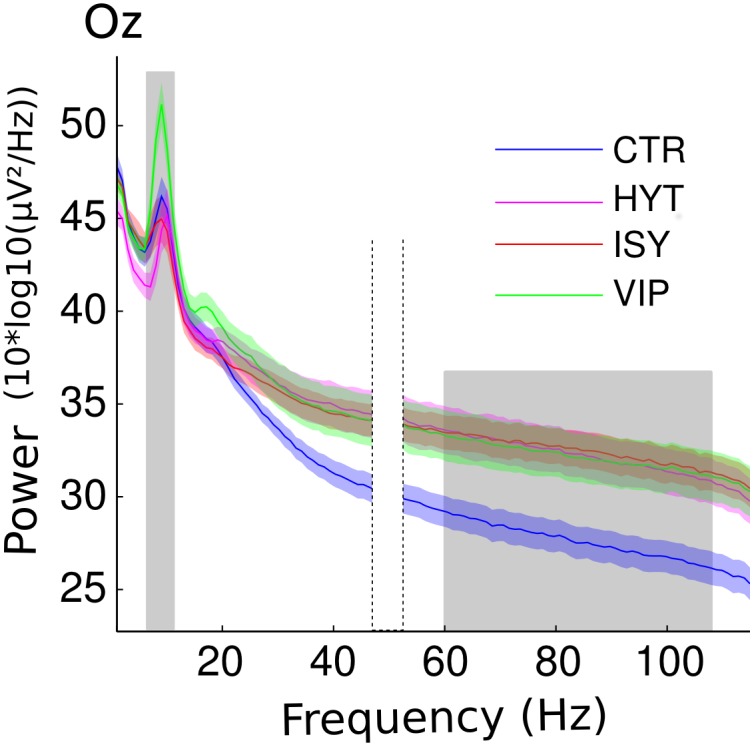
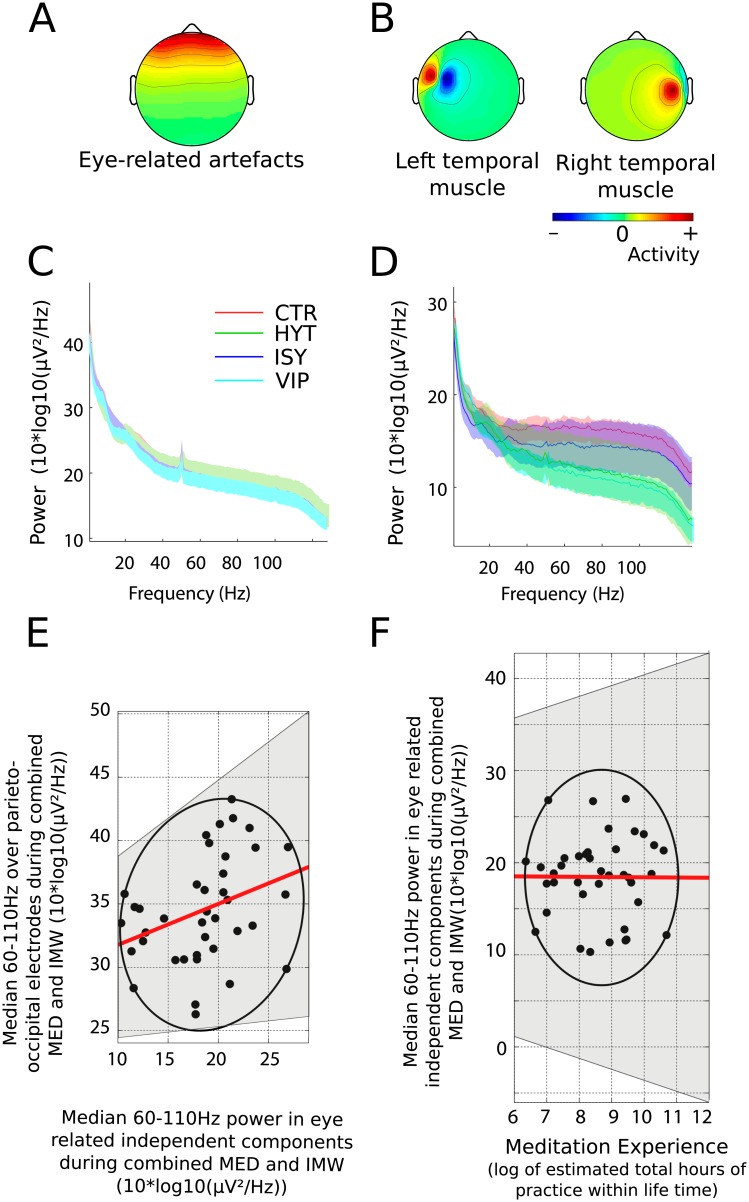
Despite decades of research, effects of different types of meditation on electroencephalographic (EEG) activity are still being defined. We compared practitioners of three different meditation traditions (Vipassana, Himalayan Yoga and Isha Shoonya) with a control group during a meditative and instructed mind-wandering (IMW) block. All meditators showed higher parieto-occipital 60-110 Hz gamma amplitude than control subjects as a trait effect observed during meditation and when considering meditation and IMW periods together. Moreover, this gamma power was positively correlated with participants meditation experience. Independent component analysis was used to show that gamma activity did not originate in eye or muscle artifacts. In addition, we observed higher 7-11 Hz alpha activity in the Vipassana group compared to all the other groups during both meditation and instructed mind wandering and lower 10-11 Hz activity in the Himalayan yoga group during meditation only. We showed that meditation practice is correlated to changes in the EEG gamma frequency range that are common to a variety of meditation practices.
Overview
CoChat Summary
TL;DR
This EEG study compared 20 Vipassana, 27 Himalayan Yoga, 20 Isha Shoonya practitioners, and 32 controls during meditation and instructed mind-wandering, and found higher high-gamma power in meditators as a trait effect. Vipassana practitioners also showed a specific alpha-band increase, while no clear meditation state effects were found.
Key findings
- When combining meditation and instructed mind-wandering, meditators from all 3 traditions showed higher 60–110 Hz gamma power over parieto-occipital electrodes than controls; the group effect was significant over parieto-occipital electrodes, with F(3,33) = 3, p = 0.03, effect size = 0.39.
- During meditation alone, meditators showed higher 60–110 Hz gamma power mainly over occipital sites, with additional frontal/midline effects reported less robustly; during instructed mind-wandering alone, the gamma difference was only a trend.
- Gamma power in the combined meditation + instructed mind-wandering conditions correlated positively with meditation experience (skipped Pearson’s r = 0.33, CI = [0.06, 0.53]); during instructed mind-wandering only the correlation was also positive (r = 0.31, CI = [0.01, 0.55]), but not during meditation only (r = 0.15, CI = [-0.12, 0.42]).
- Vipassana practitioners showed higher 7–11 Hz alpha power than all other groups; the alpha group effect was significant (F(3,60) = 3, p = 0.02), and the Vipassana vs. control comparison during meditation was p < 0.01.
Methods
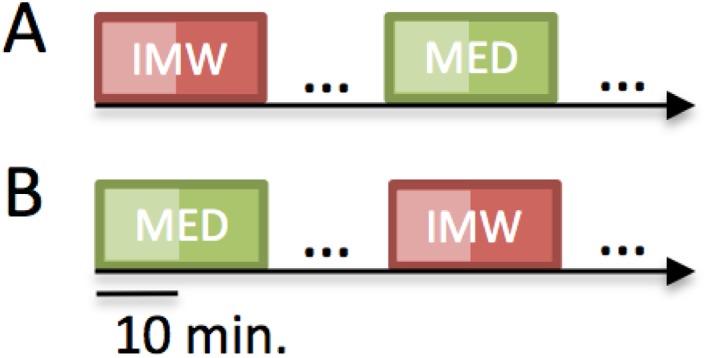
- Cross-sectional EEG comparison of expert meditators and meditation-naive controls, with 2 within-subject conditions: 20-minute Meditation (MED) and 20-minute Instructed Mind Wandering (IMW); the meditation block included 10 minutes breath focus followed by 10 minutes tradition-specific practice.
- Sample: 20 Vipassana, 27 Himalayan Yoga, 20 Isha Shoonya, and 32 controls initially; the analysis was later matched to 4 groups of 16 subjects each based on age and gender.
- EEG was recorded with a 64 + 8 channel Biosemi Active-Two system; analysis used EEGLAB/FieldTrip, including artifact rejection, ICA removal of eye/muscle components, permutation tests, ANOVA/mixed-effects ANOVA, and skipped Pearson correlations.
Limitations
- The paper states the study involved self-selection and was collected at one time point only, limiting causal interpretation; it says longitudinal, randomly selected training studies would be useful.
- The paper notes the control condition may still have recruited similar cognitive-control processes as meditation because it was instructed mind-wandering; it also says some meditators may have mind-wandered during meditation and vice versa.
- Evident from the text: the final analyzed groups were reduced to 16 per group by matching, which may limit power and generalizability.
Model-written summary. Check it against the paper before relying on it.
Integrity signals
Registry
Cites
Statistics
Figures



Verification
Claims the paper makes
6 Valid · 0 Not valid · 9 Not checked · 85 Own results and interpretations
Every source the paper cites for this claim was checked and supports it.
In the paper
“In line with previous findings [17], no significant differences were found between alpha amplitude during meditation and the control mind-wandering task in the Vipassana group.”
§ Increased Gamma Brainwave Amplitude Compared to Control in Three Different Meditation Traditions > Discussion > Alpha activity
What the sources say
- Supportedcites [17] Cahn BR, Delorme A, Polich J. Occipital gamma activation during Vipassana meditation. Cognitive Processing. 2009; 11(1): 39– 56. 10.1007/s10339-009-0352-1 20013298 PMC2812711 source
The Discussion (Meditation and neuroelectric measures; page not provided) says alpha power effects were absent when meditation and control states were compared in long-term Vipassana practitioners. It also notes an order effect, but not a meditation-versus-control state effect. (LLM, conf=0.92)
plain- Asserted: passes — The authors put it forward as true.
- Checkable: passes — It can be checked against evidence.
- Load-bearing: unclear — It is unclear whether the paper’s conclusions depend on it.
- Based: passes — The paper gives a reason why it holds.
- Supported
The sources with a verdict support this claim; the rest weren’t checked yet, have no full text we could read, or their verdicts aren’t rated yet.
In the paper
“As such, our study contrasts with other EEG studies finding state effects in the EEG power spectrum in various meditation practices [16–18, 72].”
§ Increased Gamma Brainwave Amplitude Compared to Control in Three Different Meditation Traditions > Discussion > Meditation state and trait effects No meditation state effects were found. As such, our study contrasts with other EEG studies finding state effects in the EEG power spectrum in various meditation practices [16–18, 72]. An explanation for this result might be important subject variability during the instructed mind-wandering task. Many other published studies used “rest” as a control state (see for example [16, 18, 36, 72, 73]). We attempted to use the instructed mind-wandering task as a control state in order to decrease variability during the control state but it is possible that this is not an effective method to do so. Our control task could have recruited similar brain mechanisms to monitor mental activity as did the meditation task. In fact, although spontaneous mind-wandering has been reported as linked to default-mode network (DMN) activation [74–77] while meditation is associated with DMN deactivation [78, 79], explicitely instructing participants to mind-wander through their autobiographical memory is likely to require conscious monitoring of one’s own mental activity, involving the same cognitive control networks as in meditation [78]. The difference might lie in the internal attitude subjects adopt towards thoughts: during meditation the participants are attempting to focus their awareness away from mind-wandering and autobiographical thoughts, towards the present moment awareness of the meditative object. During the instructed mind-wandering they are explicitly told to let their mind freely wander through their memories and autobiographical thoughts of the past. It is likely that during the instructed mind-wandering task some of our meditators kept a similar non judgmental attitude towards their experiences that they have when meditating. Another issue is that during meditation, even for experienced meditators, mind-wandering cannot be avoided. It is thus likely that some of our meditators had episodes of mind wandering during the meditation task and that some had episodes of meditation during the mind-wandering task. However, we are reporting a meditation trait effect in the high gamma 60–110 Hz frequency range over the parieto-occipital electrodes in all the three types of meditation we studied here. In addition, a trait effect in the alpha 7–11 Hz range is observed over all the scalp electrodes in the Vipassana group.
What the sources say
- Not checked — no full text of the sourcecites [16] Lutz A, Greischar LL, Rawlings NB, Ricard M, Davidson RJ. Long-term meditators self-induce high-amplitude gamma synchrony during mental practice. Proceedings of the National Academy of Sciences. 2004; 101(46): 16369– 16373. 10.1073/pnas.0407401101 15534199 PMC526201 source
- Supportedcites [17] Cahn BR, Delorme A, Polich J. Occipital gamma activation during Vipassana meditation. Cognitive Processing. 2009; 11(1): 39– 56. 10.1007/s10339-009-0352-1 20013298 PMC2812711 source
The Results > EEG passage reports significant meditation-state effects in spectral power during Vipassana meditation: frontal delta decreased and parieto-occipital gamma increased relative to the control state. This paper therefore serves as an example of the EEG studies cited in the sentence; it need not examine every meditation practice mentioned collectively. (LLM, conf=0.94)
- Not checked — no full text of the sourcecites [18] Berkovich-Ohana A, Glicksohn J, Goldstein A. Mindfulness-induced changes in gamma band activity—Implications for the default mode network, self-reference and attention. Clinical Neurophysiology. 2012; 123(4): 700– 710. 10.1016/j.clinph.2011.07.048 21940201 source
- Not checked — no full text of the sourcecites [72] Lagopoulos J, Xu J, Rasmussen I, Vik A, Malhi GS, Eliassen CF, et al Increased Theta and Alpha EEG Activity During Nondirective Meditation. The Journal of Alternative and Complementary Medicine. 2009; 15(11): 1187– 1192. 10.1089/acm.2009.0113 19922249 source
plain- Asserted: passes — The authors put it forward as true.
- Checkable: passes — It can be checked against evidence.
- Load-bearing: passes — The paper’s conclusions depend on it.
- Based: passes — The paper gives a reason why it holds.
A result the paper reports from its own data — it cites no other source for it, so there is none to check. The quote shows it is in the paper.
In the paper
“and lower 10–11 Hz activity in the Himalayan yoga group during meditation only.”
§ Increased Gamma Brainwave Amplitude Compared to Control in Three Different Meditation Traditions > Abstract
plain- Asserted: passes — The authors put it forward as true.
- Checkable: passes — It can be checked against evidence.
- Load-bearing: unclear — It is unclear whether the paper’s conclusions depend on it.
- Based: passes — The paper gives a reason why it holds.
A result the paper reports from its own data — it cites no other source for it, so there is none to check. The quote shows it is in the paper.
In the paper
“All meditators showed higher parieto-occipital 60–110 Hz gamma amplitude than control subjects as a trait effect observed during meditation and when considering meditation and IMW periods together.”
§ Increased Gamma Brainwave Amplitude Compared to Control in Three Different Meditation Traditions > Abstract
plainstates an association- Asserted: passes — The authors put it forward as true.
- Checkable: passes — It can be checked against evidence.
- Load-bearing: passes — The paper’s conclusions depend on it.
- Based: passes — The paper gives a reason why it holds.
A result the paper reports from its own data — it cites no other source for it, so there is none to check. The quote shows it is in the paper.
In the paper
“In addition, we observed higher 7–11 Hz alpha activity in the Vipassana group compared to all the other groups during both meditation and instructed mind wandering”
§ Increased Gamma Brainwave Amplitude Compared to Control in Three Different Meditation Traditions > Abstract
plain- Asserted: passes — The authors put it forward as true.
- Checkable: passes — It can be checked against evidence.
- Load-bearing: unclear — It is unclear whether the paper’s conclusions depend on it.
- Based: passes — The paper gives a reason why it holds.
59 more claims
Create a free account to see all 100 claims and to verify the 1 reference still open.
- Probably not a substantial claim. 20
- It may state two separate claims as one. 21
- The quote only partly states this claim. 1
Claims other papers make about this one
Each is checked against this paper’s own text: does it say what the citing paper says it does?
In the citing paper
“Other studies have reported higher baseline (trait) and state-related increases in gamma power in long-term Tibetan Buddhist practitioners,124 Vipassana meditators,146 as well as meditators in other traditions,150 which are indicative of a more highly alert and aware brain state.”
From Awakening is not a metaphor: the effects of Buddhist meditation practices on basic wakefulness (2014) · cites this paper as [150]
Statistics that don’t add up
Each reported p-value recomputed from its test statistic and degrees of freedom, each partial η² from its F, and each ratio, mean difference or B printed with a p checked against its own confidence interval.
Rated minor: it would not touch a result — a value no result rests on, a p-value that stays on the same side of the significance level, or a conflict that is clerical, resolved elsewhere in the paper, or outside its own findings.
In the paper
“F(3,60) = 1, p = 0.1”
§ Increased Gamma Brainwave Amplitude Compared to Control in Three Different Meditation Traditions > Results > Spectral analysis
Reported p = .1 · recomputed p = .399
Rated minor: it would not touch a result — a value no result rests on, a p-value that stays on the same side of the significance level, or a conflict that is clerical, resolved elsewhere in the paper, or outside its own findings.
In the paper
“F(1,60) = 0.6, p = 0.41”
§ Increased Gamma Brainwave Amplitude Compared to Control in Three Different Meditation Traditions > Results > Spectral analysis
Reported p = .41 · recomputed p = .442
Rated minor: it would not touch a result — a value no result rests on, a p-value that stays on the same side of the significance level, or a conflict that is clerical, resolved elsewhere in the paper, or outside its own findings.
In the paper
“F(3,60) = 0.7, p = 0.52”
§ Increased Gamma Brainwave Amplitude Compared to Control in Three Different Meditation Traditions > Results > Spectral analysis
Reported p = .52 · recomputed p = .556
Statistics recomputed
Every reported test result, recomputed from its test statistic and degrees of freedom. A result shows as not adding up only once an independent check has confirmed it.
- Doesn’t add upF(3, 60) = 1reported p = .1 · recomputed p = .399
“F(3,60) = 1, p = .1”
- Doesn’t add upF(1, 60) = 0.6reported p = .41 · recomputed p = .442
“F(1,60) = 0.6, p = .41”
- Doesn’t add upF(3, 60) = 0.7reported p = .52 · recomputed p = .556
“F(3,60) = 0.7, p = .52”
- ConsistentF(3, 33) = 3reported p = .03 · recomputed p = .044
“F(3,33) = 3, p = .03”
- ConsistentF(3, 33) = 1reported p = .36 · recomputed p = .405
“F(3,33) = 1, p = .36”
6 more recomputed tests
Create a free account to see every test the Stats check recomputed.
Self-check
Percentages, sums and reported differences re-computed from the paper’s own numbers.
Self-check results appear here once an independent check has confirmed them.
Citations
Cites
Delorme, A., & Makeig, S. (2004) · Journal of Neuroscience Methods · doi:10.1016/j.jneumeth.2003.10.009 · Cited by 24,371 · cited 2×
“We automatically removed portions of the signal presenting non-stereotyped artifacts using the pop_rejcont function of the EEGLAB software [44].”
Methodggplot2: Elegant Graphics for Data Analysis
Wickham, H. (2009) · doi:10.1007/978-0-387-98141-3 · Cited by 14,447
A default mode of brain function
Raichle, M. E., MacLeod, A. M., Snyder, A. Z., Powers, W. J., Gusnard, D. A., & Shulman, G. L. (2001) · Proceedings of the National Academy of Sciences · doi:10.1073/pnas.98.2.676 · Cited by 12,190
Oostenveld, R., Fries, P., Maris, E., & Schoffelen, J.-M. (2011) · Computational Intelligence and Neuroscience · doi:10.1155/2011/156869 · Cited by 10,323 · cited 1×
“Statistics for EEG data were performed on the log-transformed spectral power data across channels using the permutation tests implemented in the Fieldtrip toolbox [49].”
MethodNonparametric statistical testing of EEG- and MEG-data
Maris, E., & Oostenveld, R. (2007) · Journal of Neuroscience Methods · doi:10.1016/j.jneumeth.2007.03.024 · Cited by 8,496 · cited 3×
“Statistics for EEG data were performed on the log-transformed spectral power data across channels using the permutation tests implemented in the Fieldtrip toolbox [49].”
MethodInfluentialNeurophysiological investigation of the basis of the fMRI signal
Logothetis, N. K., Pauls, J., Augath, M., Trinath, T., & Oeltermann, A. (2001) · Nature · doi:10.1038/35084005 · Cited by 6,551
The brainweb: phase synchronization and large-scale integration
Varela, F., Lachaux, J.-P., Rodriguez, E., & Martinerie, J. (2001) · Nature Reviews Neuroscience · doi:10.1038/35067550 · Cited by 4,761 · cited 2×
“Interestingly, the EEG gamma frequency has been linked to diverse cognitive functioning, including a general neural correlate of the ongoing stream and contents of consciousness [21, 22], long-range neuronal communication underlying the “binding problem” [23, 24], visual”
BackgroundA mechanism for cognitive dynamics: neuronal communication through neuronal coherence.
Fries, P. (2005) · Trends in Cognitive Sciences · doi:10.1016/j.tics.2005.08.011 · Cited by 4,284 · cited 2×
“Interestingly, the EEG gamma frequency has been linked to diverse cognitive functioning, including a general neural correlate of the ongoing stream and contents of consciousness [21, 22], long-range neuronal communication underlying the “binding problem” [23, 24], visual”
BackgroundEEG alpha oscillations: The inhibition–timing hypothesis
Klimesch, W., Sauseng, P., & Hanslmayr, S. (2007) · Brain Research Reviews · doi:10.1016/j.brainresrev.2006.06.003 · Cited by 3,891 · cited 1×
“More recently, modulation of the alpha rhythm has been shown to play a part in selective attention processes by regulating thalamocortical sensory transmission [68] and thus participating in functional inhibition [69, 70].”
BackgroundShaping Functional Architecture by Oscillatory Alpha Activity: Gating by Inhibition
Jensen, O., & Mazaheri, A. (2010) · Frontiers in Human Neuroscience · doi:10.3389/fnhum.2010.00186 · Cited by 3,237 · cited 1×
“More recently, modulation of the alpha rhythm has been shown to play a part in selective attention processes by regulating thalamocortical sensory transmission [68] and thus participating in functional inhibition [69, 70].”
Background
Research works printed but not linked: 1
- Piron H. The meditation depth index (MEDI) and the meditation depth questionnaire (MEDEQ). Journal for Meditation and Meditation Research. 2001; 1(1): 69– 92.
Cited by
Items 101–200 of 226
Increased Entropy of Gamma Oscillations in the Frontal Region during Meditation
Kumar, G. P., Sharma, K., Ramakrishnan, A. G., & Adarsh, A. (2021) · Annual International Conference of the IEEE Engineering in Medicine and Biology Society (EMBC) · doi:10.1109/embc46164.2021.9629633 · Cited by 13
“Over the last decade, the volume of scientific publications on studies related to meditation has dramatically increased [1].”
BackgroundPandey, P., Gupta, P., Chaudhary, S., Miyapuram, K. P., & Lomas, D. (2022) · IEEE Region 10 Symposium (TENSYMP) · doi:10.1109/tensymp54529.2022.9864414 · Cited by 10
Jain, A., Raja, R., Kumar, M., & Verma, P. K. (2025) · Connection Science · doi:10.1080/09540091.2025.2467387 · Cited by 7
“However, the focus of Braboszcz et al. (2017) steers away from algorithms or models for classification.”
InfluentialRamirez, C., Alayine, G. A., Akafia, C. S. K., Adichie, K., Watts, D., Galdamez, Y., Harding, L., & Allsop, S. A. (2025) · Frontiers in Neuroscience · doi:10.3389/fnins.2025.1554156 · Cited by 13
“However, it is most consistently associated with elevated alpha and theta rhythms (Lomas et al., 2015; Chiesa and Serretti, 2010; Braboszcz et al., 2017; Cahn et al., 2013; Fell et al., 2010).”
Dhyana yoga, the path of meditative being: Psychotherapeutic insights from the east
Keshavan, M. S., & Bhargav, H. (2025) · Asian Journal of Psychiatry · doi:10.1016/j.ajp.2025.104483 · Cited by 11
Wahbeh, H., Cannard, C., Kriegsman, M., & Delorme, A. (2023) · Progress in brain research · doi:10.1016/bs.pbr.2022.12.011 · Cited by 8
Self-citationNeural Correlates of Transmitted Light Experience during Meditation: A Pilot Hyperscanning Study
Fenwick, P. B. C., Luft, C. D. B., Ioannides, A. A., & Bhattacharya, J. (2019) · NeuroQuantology · doi:10.14704/nq.2019.17.1.1318 · Cited by 11
Marasinghe, C., Tennakoon, V., & Mahawithanage, S. T. C. (2021) · Mindfulness · doi:10.1007/s12671-021-01762-x · Cited by 9
Neural correlates of pure presence
Boly, M., Smith, R., Borrego, G. V., Pozuelos, J. P., Alauddin, T., Malinowski, P., & Tononi, G. (2024) · doi:10.1101/2024.04.18.590081 · Cited by 7
“For example, previous studies have reported that a variety of other meditation states, such as OM or non-dual compassion states, can be accompanied by increased gamma activity (41, 42).”
BackgroundSingh, S., Pandey, P., Chaudhary, S., Miyapuram, K. P., & Lomas, D. (2022) · Indian Conference on Computer Vision, Graphics and Image Processing · doi:10.1145/3571600.3571656 · Cited by 6
Cummins, D. D., Schulman, Z., Maher, C., Tortolero, L., Saad, A. E., Martinez, L. N., Davidson, R. J., Marcuse, L. V., Sáez, I., & Panov, F. E. (2024) · Epilepsy & Behavior · doi:10.1016/j.yebeh.2024.110150 · Cited by 5
Analogy between classical Yoga/Zen breathing and modern clinical respiratory therapy
Tobe, M., & Saito, S. (2020) · Journal of Anesthesia · doi:10.1007/s00540-020-02840-5 · Cited by 8
“The sedative action of particular types of breathing has been evaluated by electroencephalography [8, 9], and functional magnetic resonance imaging [10–12], as well as other scientific techniques.”
MethodDziego, C. A., Bornkessel‐Schlesewsky, I., Schlesewsky, M., Sinha, R., Immink, M. A., & Cross, Z. R. (2024) · PLoS ONE · doi:10.1371/journal.pone.0292501 · Cited by 9
Duda, A. T., Clarke, A. R., & Barry, R. J. (2025) · Mindfulness · doi:10.1007/s12671-025-02660-2 · Cited by 6
“…currently no consensus on the functional role of gamma oscillations, they have been associated with increased attention, perception, and cognitive functioning, marking a heightened meditative state observed in experienced practitioners (Braboszcz et al., 2017; Cahn et al., 2010; Lee et al., 2018).”
Madl, T. (2024) · Scientific Reports · doi:10.1038/s41598-024-73789-8 · Cited by 9
“Additionally, this band range aligns with the findings from authors of dataset 2, who reported notable changes in high gamma activity during meditation 63 .”
BackgroundMeditative State Scale (MSS): Psychometric Validation and Exploration of Gamma-Band Correlates
López, E., Anchía, R. J., Halty, L., & Rodríguez‐Carvajal, R. (2022) · Mindfulness · doi:10.1007/s12671-022-01979-4 · Cited by 6
“These results are aligned with emergent neuroscientific evidence highlighting the important role of gamma activity in deep meditative states (Berkovich-Ohana et al., 2012; Braboszcz et al., 2017; Schoenberg et al., 2018).”
ResultLee, K. C., Gao, J., Leung, H. K., Wu, B. W. Y., Roberts, A. C., Thach, T., & Sik, H. H. (2024) · Brain Sciences · doi:10.3390/brainsci14010091 · Cited by 7
“Meditation may induce vastly different states of mind, and vipassana meditation, in particular, may require significant amounts of mental effort, thereby increasing gamma wave levels [8,47,48].”
BackgroundDagnino, P. C., Galadí, J. A., Càmara, E., Deco, G., & Escrichs, A. (2024) · Network Neuroscience · doi:10.1162/netn_a_00366 · Cited by 10
“…the amount of time needed for entering a stable meditative state, and the decision was based on past studies considering enough remainer recording needed for a high-quality analysis (Braboszcz, Cahn, Levy, Fernandez, & Delorme, 2017; Davanger, Ellingsen, Holen, & Hugdahl, 2010; Manna et al., 2010).”
BackgroundMethodMeditation as an Intervention for Health: A Framework for Understanding Meditation Research
Allbritton, M. M., & Heeter, C. (2018) · OBM Integrative and Complementary Medicine · doi:10.21926/obm.icm.1804025 · Cited by 9
Gizewski, E. R., Steiger, R., Waibel, M., Pereverzyev, S., Sommer, P., Siedentopf, C., Grams, A. E., Lenhart, L., & Singewald, N. (2020) · Brain and Behavior · doi:10.1002/brb3.1914 · Cited by 5
“Focused attention meditation (FAM) has been associated with increased gamma electroencephalography (EEG) power and coherence (Braboszcz et al., 2017), and open monitoring meditation (OMM) with increases in theta, alpha, and beta bands (Ahani et al., 2013).”
BackgroundNeural Prediction of Posttraumatic Growth in Healthy Adults With and Without Probable PTSD
Glazebrook, A. J., Shakespeare‐Finch, J., Johnston, P., & van der Meer, J. N. (2022) · Journal of Loss and Trauma · doi:10.1080/15325024.2022.2149877 · Cited by 6
“Gamma activity has been observed as a differentiating factor in learned cognitive practices of healthy individuals, such as longer-term meditators vs. controls (Braboszcz et al., 2017).”
BackgroundElectroencephalographic dynamics of rhythmic breath-based meditationPreprint
Tripathi, V., Bhasker, L., Kharya, C., Bhatia, M., & Kochupillai, V. (2022) · bioRxiv (Cold Spring Harbor Laboratory) · doi:10.1101/2022.03.09.483685 · Cited by 7
Implicit-explicit gradient of nondual awareness or consciousness as suchPreprint
Josipovic, Z. (2021) · doi:10.31231/osf.io/ngupr · Cited by 5
Kurek, M., Różycka‐Tran, J., Radoń, S., Kania, A., Orlińska, K., Tùng, T. T., & Suffczyński, P. (2025) · Biological Psychology · doi:10.1016/j.biopsycho.2025.109133 · Cited by 5
Mindfulness meditation alters alpha amplitude without affecting arousal
Duda, A. T., Clarke, A. R., Barry, R. J., & Blasio, F. M. D. (2025) · International Journal of Psychophysiology · doi:10.1016/j.ijpsycho.2025.113197 · Cited by 7
Unlocking deep relaxation: the power of rhythmic breathing on brain rhythms
Tripathi, V., Bhaskar, L., Kharya, C., Bhatia, M., & Kochupillai, V. (2025) · npj Mental Health Research · doi:10.1038/s44184-025-00156-4 · Cited by 6
“Variations in meditation styles likely contribute to differing impacts on alpha rhythms, as seen in focused attention or open monitoring meditations where there is a top down signal ascomparedtomorenon-actiontechniqueslikeSahajaYogameditation 25,70 – 72 .”
Meditation-type specific reduction in infra-slow activity of electroencephalogram
Sihn, D., Kim, J., & Kim, S.-P. (2024) · Biomedical Engineering Letters · doi:10.1007/s13534-024-00377-0 · Cited by 4
Meditation, Sleep, and Performance
Guerriero, L. E., & O’Hara, B. F. (2019) · OBM Integrative and Complementary Medicine · doi:10.21926/obm.icm.1902031 · Cited by 7
Predicting intentional and unintentional task unrelated thought with EEGPreprint
Martel, A., Arvaneh, M., Robertson, I. H., & Dockree, P. M. (2019) · bioRxiv (Cold Spring Harbor Laboratory) · doi:10.1101/764803 · Cited by 6
Decoding Depth of Meditation: EEG Insights from Expert Vipassana PractitionersPreprint
Reggente, N., Kothe, C. A., Brandmeyer, T., Hanada, G., Simonian, N., Mullen, S., & Mullen, T. R. (2024) · doi:10.31234/osf.io/7c3er · Cited by 3
The Balanced Mind and its Intrinsic Neural Timescales in Advanced MeditatorsPreprint
Malipeddi, S., Sasidharan, A., Venugopal, R., Ventura, B., Bauer, C. C. C., Ravindra, P. N., Mehrotra, S., John, J. P., Kutty, B. M., & Northoff, G. (2024) · bioRxiv (Cold Spring Harbor Laboratory) · doi:10.1101/2024.08.29.609126 · Cited by 4
Usgaonkar, S. S., Edla, D. R., Ramesh, D., & Ramachandran, M. (2025) · Biomedical Signal Processing and Control · doi:10.1016/j.bspc.2025.108456 · Cited by 4
Influence of High-frequency Yoga Breathing (Kapalabhati) on States Changes in Gamma Oscillation
Budhi, R. B., Singh, D., Goswami, J., Manjunath, N. K., & Vinchurkar, S. A. (2024) · International Journal of Yoga · doi:10.4103/ijoy.ijoy_5_24 · Cited by 5
“[32,33] Alpha power inhibits irrelevant sensory inputs.”
ISSUES, POSSIBILITIES AND THE ROLE OF NEURAL NOISE IN MEDITATION RESEARCH
Reddy, J. S. K., & Roy, S. (2018) · Simbio-Logias Revista Eletrônica de Educação Filosofia e Nutrição · doi:10.32905/19833253.2018.13.10p149 · Cited by 3
Chow, X. H., Ting, C., Hamizan, A. K. W., et al. (2023) · The Journal of Laryngology & Otology · doi:10.1017/s0022215123000919 · Cited by 3
Modesto', V., Rinaldi, A., Fontani, V., & Rinaldi, S. (2024) · Cureus · doi:10.7759/cureus.72819 · Cited by 3
Khor, E. Y., Lim, C. C., Chong, Y. F., & Lee, P. F. (2021) · Advances in intelligent systems and computing · doi:10.1007/978-981-16-2123-9_15 · Cited by 3
Neural correlates of the shamanic state of consciousnessPreprint
Huels, E. R., Kim, H., Lee, U., et al. (2020) · bioRxiv (Cold Spring Harbor Laboratory) · doi:10.1101/2020.07.20.212522 · Cited by 3
Alimardani, M., Kemmeren, L., Okumura, K., et al. (2020) · arXiv (Cornell University) · doi:10.48550/arxiv.2008.05305 · Cited by 3
Simultaneous enhancement of stimulus-induced and stimulus-free gamma in open-eye meditators
Biswas, A., Aggarwal, S., Sharma, K., & Ray, S. (2026) · Imaging Neuroscience · doi:10.1162/imag.a.1145 · Cited by 4
“In comparison, the broadband increase in power, which has been observed in many meditation studies ( Braboszcz et al., 2017; Cahn et al., 2010; Lutz et al., 2004), has been associated with increased spiking activity in microelectrode recordings ( Ray & Maunsell, 2011) and could reflect enhanced…”
Influentialursachi, A. (2026) · Frontiers in Human Neuroscience · doi:10.3389/fnhum.2026.1781338 · Cited by 6
Kaur, K., & Khandnor, P. (2023) · International Conference on Computer Applications in Electrical Engineering-Recent Advances (CERA) · doi:10.1109/cera59325.2023.10455199 · Cited by 3
“The data is obtained from an online repository [3] and includes recordings of meditation sessions and an instructed mind-wandering task.”
MethodReflections on Neuroethical Issues in Neuroimaging Research Advances from the Islamic Perspective
Aziz, N. A. A., Mustapha, M., & Hashim, S. (2024) · International Journal of Islamic Thought · doi:10.24035/ijit.25.2024.291 · Cited by 4
“…thickness structurally, improve the integrity of white matter (Posner, Tang & Lynch 2014) and increase the theta, alpha and gamma brainwaves (Braboszcz, Cahn, Levy, Fernandez, & Delorme 2017; Chiesa & Serretti 2009; Kerr et al. 2011; Lee, Kulubya, Goldin, Goodarzi & Girgis 2018) which are…”
BackgroundMunjal, R., & Varshney, T. (2025) · Annals of Neurosciences · doi:10.1177/09727531251351067 · Cited by 2
“21,37 The data were collected in Rishikesh, India, at Meditation Research Institute (MRI) using 64 channels Biosemi acquisition system.”
Karunanayake, A. L., Solomon-Moore, E., & Coghill, N. F. (2022) · Trials · doi:10.1186/s13063-022-06873-x · Cited by 3
“Patients have expressed the importance of having a meditation programme that is brief, is useful for everyday living and can be easily incorporated into their daily routine [16].”
BackgroundInvestigation of Brainwaves Changes in Dynamic Meditation
Puttason, S., & Sittiprapaporn, P. (2019) · International Conference on Electrical Engineering/Electronics, Computer, Telecommunications and Information Technology (ECTI-CON) · doi:10.1109/ecti-con47248.2019.8955151 · Cited by 2
An EEG Study on Students' Learning in Practical and Theory-Based Hospitality Courses
Hsu, L., & Chen, Y. (2021) · International Journal of Adult Education and Technology · doi:10.4018/ijaet.2021010103 · Cited by 2
An approach for assessing arousal characteristics of ASMR using electroencephalographic power
Koo, B., Kim, D., Ha, J., & Kim, L. (2021) · International Winter Conference on Brain-Computer Interface (BCI) · doi:10.1109/bci51272.2021.9385308 · Cited by 2
Yogic postures and brain wave activation: An experimental approach
De, A., Mondal, S., & Ghosh, S. N. (2021) · Yoga Mimamsa · doi:10.4103/ym.ym_34_21 · Cited by 4
Brain Activity Recognition using Deep Electroencephalography Representation
Johri, R., Pandey, P., Miyapuram, K. P., et al. (2023) · IEEE Applied Sensing Conference (APSCON) · doi:10.1109/apscon56343.2023.10100986 · Cited by 2
“Train Test NMED-T (Music) [4] 5448 1520 SEED (Movie) [5] [6] 8280 1990 VIP and HT (Meditation) [7] 3040 3024”
MethodMunjal, R., Varshney, T., Choudhary, A., & Dhiman, R. (2023) · International Conference on Computing, Communication, and Intelligent Systems (ICCCIS) · doi:10.1109/icccis60361.2023.10425262 · Cited by 2
“The open-access data consisting of 20 Isha Shoonya meditators and 31 controls were considered for this task [29], [2].”
BackgroundMethodKamaraj, A. (2020) · Indian Journal of Public Health Research & Development · doi:10.37506/ijphrd.v11i6.9738 · Cited by 2
Aviad, N., Moskovich, O., Orenstein, O., Benger, E., Arnaud Delorme, A., & Bernstein, A. (2022) · doi:10.31231/osf.io/r3bxj · Cited by 1
Self-citationTime-to-onset and temporal dynamics of EEG during breath-watching meditationPreprint
Malipeddi, S., Sasidharan, A., Venugopal, R., Tewarie, P. K. B., Ravindra, P. N., Northoff, G., Laureys, S., Subramaniam, B., & Kutty, B. M. (2025) · bioRxiv (Cold Spring Harbor Laboratory) · doi:10.1101/2025.02.11.637771 · Cited by 2
Malipeddi, S., Sasidharan, A., Ventura, B., Venugopal, R., Bauer, C. C. C., Tewarie, P. K. B., Ravindra, P. N., Mehrotra, S., John, J. P., Subramaniam, B., et al. (2025) · bioRxiv (Cold Spring Harbor Laboratory) · doi:10.1101/2025.04.21.649758 · Cited by 2
Impact Study of Traditional Meditation Practices Using PSD Assessment of EEG Signals
Mishra, M. K., & Mishra, A. (2024) · IEEE Delhi Section Conference (DELCON) · doi:10.1109/delcon64804.2024.10866344 · Cited by 2
“Braboszcz et al. [11] investigated the impact of several meditation techniques on electroencephalographic (EEG) activity.”
Usgaonkar, S. S., Edla, D. R., & Ramadevi, Y. (2025) · Procedia Computer Science · doi:10.1016/j.procs.2025.04.314 · Cited by 1
Usgaonkar, S. S., Edla, D. R., & Reddy, R. R. (2025) · SN Computer Science · doi:10.1007/s42979-025-04093-z · Cited by 1
“One study [8] compared practitioners of different meditation techniques to a control group during meditation and guided mind-wandering sessions.”
Usgaonkar, S. S., Edla, D. R., & Reddy, R. R. (2025) · Multimedia Tools and Applications · doi:10.1007/s11042-025-21065-w · Cited by 5
Neural Pattern of Chanting-Driven Intuitive Inquiry Meditation in Expert Chan Practitioners
Lee, K. C., Sik, H. H., Leung, H. K., Wu, B. W. Y., Sun, R., & Gao, J. (2025) · Behavioral Sciences · doi:10.3390/bs15091213 · Cited by 3
“This step is critical for preventing non‑ neural artifacts from contaminating the high‑frequency spectral analysis (Braboszcz et al., 2017).”
Stress reduction: a comparative analysis of watering indoor plants and computer work
Huang, Y. L., & Hassan, A. (2025) · International Journal of Occupational Safety and Ergonomics · doi:10.1080/10803548.2025.2550858 · Cited by 1
“Similarly, after the indoor plant watering activity, there was a significant increase in the overall mean power units of mid and low gamma waves, indicating that an increase in gamma brainwave activity was associated with higher meditation states [84].”
The Influence of Prior Sensory Context on Meditative Neural States
Qiu, S. (2025) · Journal of Behavioral and Brain Science · doi:10.4236/jbbs.2025.1512016 · Cited by 1
Bridging Consciousness and the Subconscious: EEG Across States of Awareness
Bandal, Y., Pawar, Y., Joshi, S., et al. (2026) · Lecture notes in networks and systems · doi:10.1007/978-3-032-13803-3_14 · Cited by 1
Wu, K. T. (2026) · Advances in Psychological Science · doi:10.3724/sp.j.1042.2026.0331 · Cited by 4
Usgaonkar, S. S., Edla, D. R., & Ramesh, D. (2026) · Neuroscience · doi:10.1016/j.neuroscience.2026.02.001 · Cited by 1
Malipeddi, S., Sasidharan, A., Venugopal, R., Tewarie, P. K. B., Nagendra, R. P., Northoff, G., Laureys, S., Subramaniam, B., & Kutty, B. M. (2026) · Mindfulness · doi:10.1007/s12671-026-02790-1 · Cited by 6
Bermúdez, J., Chang, L., Koubeissi, M. Z., Beaudoin, T., Trudeau, E., Ebadi, A., Djebbara, Z., Moore, M., Keagle, J., & Nakamura, Y. (2026) · Brain and Environment · doi:10.1016/j.braen.2026.100023 · Cited by 1
EEG oscillatory correlates of meditation practice: a systematic review and exploratory meta-analysis
Yan, T., Wei, Y., Geng, F., Chen, S., Zhou, H., & Hu, Y. (2026) · Neuroscience · doi:10.1016/j.neuroscience.2026.07.012 · Cited by 1
Spirituality and Happiness: A Neuroscientific Perspective
Arora, R., & Mandal, M. K. (2023) · Springer eBooks · doi:10.1007/978-981-99-3493-5_2 · Cited by 3
Burge, L., Ilie, G., MacDonald, C., Riel, H., & Rutledge, R. D. H. (2023) · Current Oncology · doi:10.3390/curroncol30090577 · Cited by 2
“Finally, gamma wave activity during meditation was found to be associated with diverse cognitive functioning and heightened perception [45].”
BackgroundAnanta, I. G. P., Gupta, K., & Sinha, G. R. (2023) · doi:10.1109/easct59475.2023.10393130 · Cited by 1
“In this research endeavour, we utilized an openly accessible EEG dataset provided by the Meditation Research Institute in Rishikesh, India [12].”
MethodKim, E., Joss, D., Marin, F., Anzolin, A., Gawande, R., Comeau, A., Ellis, S., Bumpus, C., Cahn, B. R., Kim, M. W. D., et al. (2024) · Global Advances in Integrative Medicine and Health · doi:10.1177/27536130241299389 · Cited by 1
“66 Evidence from a neurophenomenological study indicates that, in advanced meditators (but not in untrained novices), gamma power in the posterior cingulate cortex is related to the subjective experience of effortless awareness in meditation.”
BackgroundSelf-citationShort Paper: Revealing the Self: Brainwave-Based Human Trait Identification
Islam, M. M., Uddin, M. N., Hasana, M., Pandit, D., Rahman, N. M., Chellappan, S., Azam, S., & Islam, A. B. M. A. A. (2024) · International Conference on Networking, Systems and Security (NSysS) · doi:10.1145/3704522.3704555 · Cited by 1
USING MINDFULNESS, AS THE METHOD OF SELF-REGULATION FOR CREATIVITY DEVELOPMENT
Gevorgyan, A. (2021) · Modern Psychology · doi:10.46991/sbmp/2021.4.2.173 · Cited by 1
van Doorn, J., Xing, M., Cahn, B. R., Delorme, A., Ajilore, O., & Leow, A. (2020) · bioRxiv (Cold Spring Harbor Laboratory) · doi:10.1101/2020.06.19.162461 · Cited by 3
Self-citationThe role of equanimity in facilitating positive mental states and mental wellbeing
Weber, J. (2020) · UBIR (University of Greater Manchester) · Cited by 9
Distinct cortical correlation structures of fractal and oscillatory neuronal activityPreprint
Chaoul, A. I., & Siegel, M. (2020) · bioRxiv (Cold Spring Harbor Laboratory) · doi:10.1101/2020.12.10.415315 · Cited by 1
“Non-invasively, EEG and MEG studies have shown that the slope of the fractal component is modulated by sleep [24], drugs [25,26], ageing [27], anesthesia [28,29], and meditation [30].”
BackgroundEvolution of Human Intelligence: Psychological Science for a Better WorldPreprint
Dayathilake, K. L. S. (2021) · PsyArXiv (OSF Preprints) · doi:10.31234/osf.io/m3yrj · Cited by 1
Evolution of Human Intelligence; Psychological Science for a Better WorldPreprint
Dayathilake, K. L. S. (2023) · doi:10.33774/coe-2022-gq577-v2 · Cited by 1
Deviations in Sound Waves Associated with Physiological and Psychological StatesPreprint
Oomen, P., Geffen, R., Gentile, D., Farran, B. M., Atassi, N., Cuevas, V., Braun, C., Fellas, N., & Baker, A. V. (2023) · OSF Preprints (OSF Preprints) · doi:10.31219/osf.io/dt2wp · Cited by 1
Enhanced stimulus-induced and stimulus-free gamma in open-eye meditatorsPreprint
Biswas, A., Aggarwal, S., Sharma, K., & Ray, S. (2024) · bioRxiv (Cold Spring Harbor Laboratory) · doi:10.1101/2024.02.19.581028 · Cited by 1
“Interestingly, gamma power is shown to be elevated in long-term meditators ( 22 – 24 ).”
BackgroundVishnubhotla, R. V., Reed, P. U., & Subramaniam, B. (2024) · bioRxiv (Cold Spring Harbor Laboratory) · doi:10.1101/2024.12.30.630798 · Cited by 1
Distinct contemplative traditions share a common EEG complexity signaturePreprint
Shrimali, P., Sasidharan, A., Malipeddi, S., Ventura, B., Venugopal, R., Nair, A. K., Tewarie, P. K. B., Nagendra, R. P., Kutty, B. M., & Northoff, G. (2025) · bioRxiv (Cold Spring Harbor Laboratory) · doi:10.1101/2025.06.20.660652 · Cited by 1
Callara, A. L., Azarabad, M. H., Sebastiani, L., Sherab, N., Khechok, J., Tsering, J., Thakchoe, J., Soepa, J., Vanello, N., Scilingo, E. P., et al. (2025) · bioRxiv (Cold Spring Harbor Laboratory) · doi:10.64898/2025.12.08.692357 · Cited by 1
“However, the research conducted by Braboszcz and colleagues 43 , who examined the potential increases in parieto-occipital and frontal gamma-band power in three distinct meditation traditions (Vipassana, Himalayan Yoga and Isha Shoonya) compared to a control group - during both meditative state and…”
Bennett, P. W. (2020) · Elsevier eBooks · doi:10.1016/b978-0-323-43044-9.00006-6
Meditation as a Preventive Sleep Medicine
Reddy, J. S. K., & Roy, S. (2018) · NeuroQuantology · doi:10.14704/nq.2018.16.11.1457 · Cited by 1
“Besides, since we are not certain as to what neural patterns corresponds to the presence of internal awareness (Braboszcz et al., 2017; Reddy and Roy, 2018b,c); the comparative studies on different phases of sleep over progressive stages of meditation are needed.”
BackgroundDroscher, H., Hout, B. V. D., Hughes, L., Evans, H., Banerjee, R. A., & Hayward, M. (2021) · Pastoral Care in Education · doi:10.1080/02643944.2021.1901968
“A range of sources provide a discussion of the concept of effortless transcending (Braboszcz et al., 2017; Maharishi Mahesh Yogi, 2001; Roth, 2018; Travis & Parim, 2017).”
BackgroundMeditative Cognitive Therapies: A Literature ReviewPreprint
Bhik‐Ghanie, R. (2019) · SSRN Electronic Journal · doi:10.2139/ssrn.3434130
IMPACT OF SHORT MEDITATION ON ATTENTIONAL PERFORMANCE
Guerriero, L. E. (2021) · UKnowledge (University of Kentucky) · doi:10.13023/etd.2021.357 · Cited by 1
“FA, OM, and combined FA/OM meditations have higher mean gamma power both during meditation and an instructed mind-wandering task (Braboszcz et al., 2017).”
BackgroundKarunanayake, A. L., Coghill, N. F., & Solomon-Moore, E. (2022) · Research Square · doi:10.21203/rs.3.rs-1493621/v1
Fucci, E., Poublan‐Couzardot, A., Abdoun, O., et al. (2021) · doi:10.31234/osf.io/j6x8e
Novel EEG Quantification for Psychosis: Can We Analyze Vector Direction to Find A Pattern?Preprint
Aulia, A. (2022) · Research Square · doi:10.21203/rs.3.rs-1634357/v1
Continuous EEG of memories of Near-death and mystical experiences: Preliminary research
Machado, C., Newberg, A. B., Machado, Y., Chinchilla, M., Salas, R., Kleser, D., & Hesse, R. (2022) · World Journal of Advanced Research and Reviews · doi:10.30574/wjarr.2022.16.2.1167 · Cited by 1
بررسی فعالیت الکتریکی مغز حین ارتباط فرادرمانی در جمعیت فرادرمانگر
طاهری, م. ع., عاصم, ف. م., & سمسارها, ف. (2022) · ژورنال علمی کازمواینتل · doi:10.61450/joci.fa.v1i2.86
Taheri, M. A., Modarresi-Asem, F., & Semsarha, F. (2022) · The Scientific Journal of Cosmointel · doi:10.61450/joci.v1i2.19 · Cited by 6
Guerriero, L. E., Dundon, S. R., Joshi, S., Stromberg, A. J., Sunderam, S., & O’Hara, B. F. (2023) · doi:10.22541/au.169772763.32913548/v1
Zschocke, S., & Hansen, H.-C. (2023) · Springer eBooks · doi:10.1007/978-3-662-63267-3_4
Classification of Meditation Expertise from EEG Signals Using Shallow Neural Networks
Kaur, K., Khandnor, P., & Khosla, A. (2024) · Communications in computer and information science · doi:10.1007/978-3-031-54547-4_14
Enhanced Correlation between Arousal and Infra-Slow Brain Activity in Experienced Meditators
Sihn, D., & Kim, S.-P. (2024) · Brain Sciences · doi:10.3390/brainsci14100981 · Cited by 1
“We used a dataset on Himalayan yoga meditation [28], which is classified as a focused attention meditation practice [47].”
MethodCook, P. F., Aagaard, L. M., Avery, L. K., Long, N., Alford, A., & Sandella, D. (2025) · Frontiers in Psychology · doi:10.3389/fpsyg.2025.1539079
“Gamma waves, particularly in the frontal lobes, are a potential marker for meditative states (Braboszcz et al., 2017) or sudden insights (Benjaboonyazit, 2016).”
Metadata
- Authors
- Braboszcz, C., Cahn, B. R., Levy, J., Fernandez, M., & Delorme, A.
- Affiliations
- Centre National de la Recherche Scientifique (FR)
- University of Southern California (US)
- Corresponding author
- Braboszcz, Claire
- Venue
- PLoS ONE
- Publisher
- Public Library of Science (PLoS)
- Published
- 2017-01-24
- Volume
- 12
- Issue
- 1
- Pages
- e0170647
- ISSN
- 1932-6203 (ISSN-L)
- PMC
- PMC5261734
- OpenAlex
- W2582691757
- Cited by
- 225
- References
- 82
- Citations by year
- 2026: 28 · 2025: 35 · 2024: 31 · 2023: 22 · 2022: 29 · 2021: 27 · 2020: 23 · 2019: 15 · 2018: 11 · 2017: 3
- FWCI
- 17.60
- Type
- journal article
- Language
- en
- Open access
- gold
- doi.org
- Licence
- Locations
- PLoS ONE (publishedVersion, cc-by)
- Europe PMC (PubMed Central) (publishedVersion, cc-by)
- PubMed Central (publishedVersion, cc-by)
- PubMed (publishedVersion)
- PEARL (University of Plymouth) (submittedVersion)
- HAL (submittedVersion, cc-by)
- DOAJ (DOAJ: Directory of Open Access Journals) (submittedVersion, cc-by-sa)
- Funders
- Fundação Bial (162/08)
- Mind and Life Institute Varela grant
- Centre National de la Recherche Scientifique
- Fondation pour la Recherche Médicale
- Topics
- Social Sciences › Psychology › Clinical Psychology › Mindfulness and Compassion Interventions
- Life Sciences › Neuroscience › Cognitive Neuroscience › Neural dynamics and brain function
- Life Sciences › Neuroscience › Cognitive Neuroscience › Mind wandering and attention
- Keywords
- meditation, gamma oscillations, EEG, vipassana, alpha activity, meditation experience
- MeSH terms
- Adult, Alpha Rhythm, Attention, Awareness, Cerebral Cortex, Eye Movements, Female, Humans, India, Male, Middle Aged, Muscle Contraction, Psychometrics, Respiration, Sensation, Signal Processing, Computer-Assisted, Spectrum Analysis, Yoga, Artifacts, Meditation, Gamma Rhythm
About these checks
Registry, retraction, Cites and statistics results are computed, not judged, with one exception: a printed reference that no index lists is read once by a model before it counts as a citation error. Claims are extracted by a model and kept only when their quote appears verbatim in the text; each cited source is then checked, with a model’s help, for whether it says what the claim relies on. Those verdicts can be wrong — read the claim’s quote and the cited source before relying on one.
A language model drew the claims from the paper on 2026-10-10, under version 3 of the claim definition (model deepseek-v4.1-flash, prompt extract-v3).
A second model labelled each claim on 2026-10-10 (model jev-1.13-20260917, definition revision gold-guideline-v0.2).
Cited sources are checked with a language model’s help (gpt-6-sol).
Statistics and arithmetic are recomputed, not judged.
Confidence bands are shown only for fields calibrated on our annotated test set. None is calibrated yet, so no band is shown.
What counts as a claim ›How we measure confidence ›How we check this ›
Are you an author, or do you see a problem with this page? Request a review
Data sources
Bibliographic data: Semantic Scholar, OpenAlex, Crossref.
Contains information from the Semantic Scholar Academic Graph Datasets, made available under the ODC Attribution License (ODC-BY 1.0).
Semantic Scholar’s data is described in: Kinney, R., et al. (2023). The Semantic Scholar Open Data Platform. arXiv:2301.10140.
