

Optimal classifier for imbalanced data using Matthews Correlation Coefficient metric
Open accessThe DOI matches its Crossref record; 29 of the 29 references it cites were found in a registry or an index.
Abstract
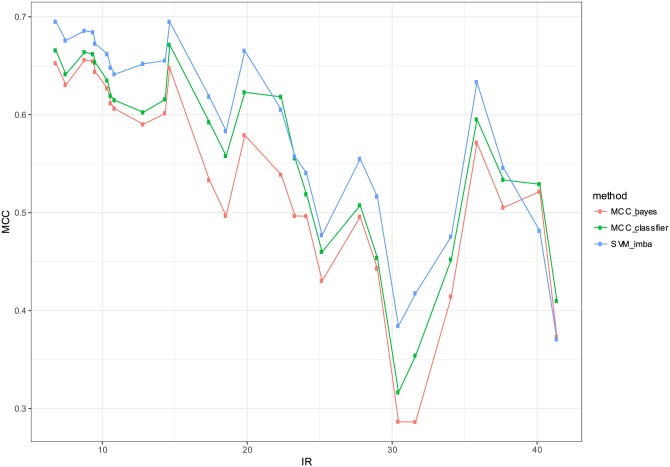
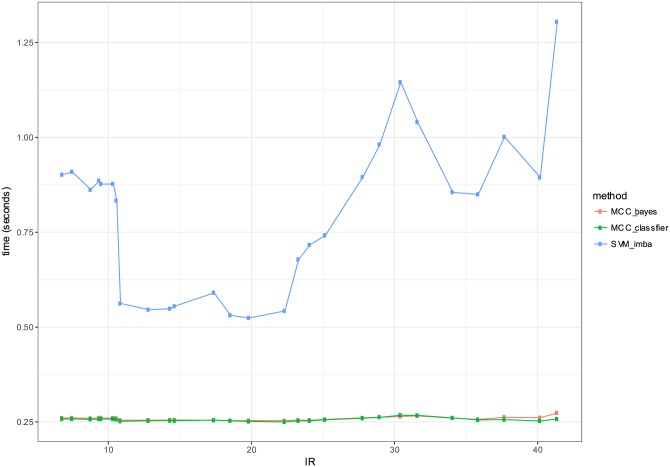
Data imbalance is frequently encountered in biomedical applications. Resampling techniques can be used in binary classification to tackle this issue. However such solutions are not desired when the number of samples in the small class is limited. Moreover the use of inadequate performance metrics, such as accuracy, lead to poor generalization results because the classifiers tend to predict the largest size class. One of the good approaches to deal with this issue is to optimize performance metrics that are designed to handle data imbalance. Matthews Correlation Coefficient (MCC) is widely used in Bioinformatics as a performance metric. We are interested in developing a new classifier based on the MCC metric to handle imbalanced data. We derive an optimal Bayes classifier for the MCC metric using an approach based on Frechet derivative. We show that the proposed algorithm has the nice theoretical property of consistency. Using simulated data, we verify the correctness of our optimality result by searching in the space of all possible binary classifiers. The proposed classifier is evaluated on 64 datasets from a wide range data imbalance. We compare both classification performance and CPU efficiency for three classifiers: 1) the proposed algorithm (MCC-classifier), the Bayes classifier with a default threshold (MCC-base) and imbalanced SVM (SVM-imba). The experimental evaluation shows that MCC-classifier has a close performance to SVM-imba while being simpler and more efficient.
Overview
The claims and statistics of this paper haven’t been checked yet.
Free: it reads the open-access text and checks the first 5 claims that cite a source we can check. Create a free account to check every claim.
Integrity signals
Registry
Cites
Statistics
Figures
Verification
Claims the paper makes
The claims and statistics of this paper haven’t been checked yet.
Free: it reads the open-access text and checks the first 5 claims that cite a source we can check. Create a free account to check every claim.
Claims other papers make about this one
Each is checked against this paper’s own text: does it say what the citing paper says it does?
The cited source says what the claim attributes to it.
In the citing paper
“since it has been shown to present a balanced score when dealing with imbalanced data [11, 6] as is our case with fewer manipulated images.”
From BioFors: A Large Biomedical Image Forensics Dataset (2021) · cites this paper as [6]
Self-check
Percentages, sums and reported differences re-computed from the paper’s own numbers.
The self-check needs the paper’s full text.
Citations
Cites
Advances in neural information processing systems 7
Cios, K., & Shields, M. (1997) · Neurocomputing · doi:10.1016/s0925-2312(97)90018-7 · Cited by 22,059
Comparison of the predicted and observed secondary structure of T4 phage lysozyme
Matthews, B. W. (1975) · Biochimica et Biophysica Acta (BBA) - Protein Structure · doi:10.1016/0005-2795(75)90109-9 · Cited by 5,399
A Probabilistic Theory of Pattern Recognition
Devroye, L., Györfi, L., & Lugosi, G. (1996) · Stochastic Modelling and Applied Probability · doi:10.1007/978-1-4612-0711-5 · Cited by 3,274
Assessing the accuracy of prediction algorithms for classification: an overview
Baldi, P., Brunak, S., Chauvin, Y., Andersen, C. A. F., & Nielsen, H. (2000) · Bioinformatics · doi:10.1093/bioinformatics/16.5.412 · Cited by 2,111
A sequential algorithm for training text classifiers
Lewis, D., & Gale, W. A. (1994) · arXiv (Cornell University) · doi:10.5555/188490.188495 · Cited by 1,731
A Sequential Algorithm for Training Text Classifiers
Lewis, D. D., & Gale, W. A. (1994) · SIGIR ’94 · doi:10.1007/978-1-4471-2099-5_1 · Cited by 1,208
Applying Support Vector Machines to Imbalanced Datasets
Akbani, R., Kwek, S., & Japkowicz, N. (2004) · Lecture Notes in Computer Science · doi:10.1007/978-3-540-30115-8_7 · Cited by 1,134
Yang, J., Roy, A., & Zhang, Y. (2013) · Bioinformatics · doi:10.1093/bioinformatics/btt447 · Cited by 1,035
MAQC Consortium (2010) · Nature Biotechnology · doi:10.1038/nbt.1665 · Cited by 889
Imbalanced Learning: Foundations, Algorithms, and Applications
(2013) · Wiley eBooks · doi:10.1002/9781118646106 · Cited by 831
Cited by
Items 901–1,000 of 1,000
Venko, K., & Novič, M. (2019) · Molecules · doi:10.3390/molecules24050837 · Cited by 2
“The criteria for selection of the best classification models, so called quality indicators, are listed in Table 5 [99,100].”
BackgroundQuality assessment and feedback of Smart Device Microphone Spirometry executed by children
Almeida, R., Pinho, B., Jácome, C. I. O., Teixeira, J. F., Amaral, R., Lopes, F., Jacinto, T., Guedes, R., Pereira, M. S. D. L., Gonçalves, I., et al. (2019) · IEEE Portuguese Meeting on Bioengineering · doi:10.1109/enbeng.2019.8692452 · Cited by 3
An Introduction to PAKDD CUP 2020 Dataset
Liu, Y., Han, S., He, C., Liu, J., Xu, F., Huang, T., & Lee, P. P. C. (2020) · Communications in computer and information science · doi:10.1007/978-981-15-7749-9_1 · Cited by 2
Heracles: A Context-Based Multisensor Sensor Data Fusion Algorithm for the Internet of Things
Delicato, F. C., Vandelli, T., Bonicea, M., & de Farias, C. M. (2020) · Information · doi:10.3390/info11110517 · Cited by 2
A Mixed Convolutional Neural Network for Pre-miRNA Classification
Aziz, A. Z. B., & Hasan, M. A. M. (2019) · International Conference on Electrical, Computer & Telecommunication Engineering (ICECTE) · doi:10.1109/icecte48615.2019.9303537 · Cited by 2
“We also calculated the Mathews Correlation Coefficient (MCC) for our model as it gives a good evaluation for imbalanced data [23].”
MethodAyat, M., Kim, B., & Kang, C. W. (2022) · International Journal of Construction Management · doi:10.1080/15623599.2022.2045862 · Cited by 3
“Geometric means combine specificity and sensitivity measures together (Boughorbel et al. 2017), which give accurate measure in the case of imbalanced classes.”
BackgroundPeriwal, N., Sharma, P., Arora, P., Pandey, S., Kaur, B., & Sood, V. (2022) · Biochimie · doi:10.1016/j.biochi.2022.04.012 · Cited by 2
Pitoglou, S., Filntisi, A., Αναστασίου, Α., Matsopoulos, G. K., & Koutsouris, D. (2022) · Applied Sciences · doi:10.3390/app12125942 · Cited by 5
Park, J.-H., Norman, G. J., Klasnja, P., Rivera, D. E., & Hekler, E. B. (2023) · JMIR mhealth and uhealth · doi:10.2196/44296 · Cited by 6
“MCC [39] was defined as follows: Where TP is true positive, TN is true negative, FP is false positive, and FN is false negative.”
Annaratone, B., Larson, C., Prater, C., Dowling, A. P. G., Magoulick, D. D., & Evans‐White, M. A. (2023) · Hydrobiology · doi:10.3390/hydrobiology2010013 · Cited by 2
“It scores proportionally both to the size of positive and negative elements in the dataset, making it a great metric for unbalanced data [60,61].”
BackgroundAssociating brain imaging phenotypes and genetic risk factors via a hypergraph based netNMF method
Zhuang, J., Tian, J., Xiong, X., Li, T., Chen, Z., Chen, R., Chen, J., & Li, X. (2023) · Frontiers in Aging Neuroscience · doi:10.3389/fnagi.2023.1052783 · Cited by 2
“The Matthews Correlation Coefficient metric (MCC) algorithm (Boughorbel et al., 2017) was widely used as a performance metric in bioinformatics.”
MethodExploration of Deep Neural Networks and Effect of Optimizer for Pulmonary Disease Diagnosis
Agrawal, R., Sarkar, H., Prasad, A. O., Sahoo, A. K., Vidyarthi, A., & Barik, R. K. (2023) · SN Computer Science · doi:10.1007/s42979-023-01940-9 · Cited by 3
Theory for High-Throughput Genetic Interaction Screening
McCarthy, M. E., Dodd, W. B., Lu, X., Pritko, D. J., Patel, N. D., Haskell, C. V., Sanabria, H., Blenner, M., & Birtwistle, M. R. (2023) · ACS Synthetic Biology · doi:10.1021/acssynbio.2c00627 · Cited by 2
Husejinovic, A., Kevrić, J., Durmić, N., & Jukić, S. (2023) · Lecture notes in networks and systems · doi:10.1007/978-3-031-43056-5_19 · Cited by 2
Sadurska, A., Piłka, T., Grzelak, B., Górecki, T., Dyczkowski, K., & Zaręba, M. (2023) · IEEE International Conference on Fuzzy Systems (FUZZ-IEEE) · doi:10.1109/fuzz52849.2023.10309726 · Cited by 2
“The coefficient is widely considered a balanced measure that can be utilized even in cases where the class sizes are vastly unequal [2].”
BackgroundA New Approach for Diagnosis of Melanoma from Dermoscopy Images
Deena, G., Bhanu prakash, M., Sreekar, S., & Rohith, S. (2023) · Journal of Survey in Fisheries Sciences · doi:10.53555/sfs.v10i1.920 · Cited by 2
Milli, M. E. F., Aras, S., & Kocakoç, İ. D. (2024) · İzmir Yönetim Dergisi · doi:10.56203/iyd.1436742 · Cited by 8
Bayesian bivariate subgroup analysis for risk–benefit evaluation
Henderson, N. C., & Varadhan, R. (2018) · Health Services and Outcomes Research Methodology · doi:10.1007/s10742-018-0188-1 · Cited by 2
Cellular frustration algorithms for anomaly detection applications
Faria, B. F., & de Abreu, F. V. (2019) · PLoS ONE · doi:10.1371/journal.pone.0218930 · Cited by 4
Monteiro, A., Scotti, L., Speck‐Planche, A., Barros, R. P. C., & Scotti, L. (2019) · Current Topics in Medicinal Chemistry · doi:10.2174/1568026619666191206111742 · Cited by 2
A Two-Stream Context-Aware ConvNet for Pavement Distress Detection
Lõuk, R., Tepljakov, A., & Riid, A. (2020) · International Conference on Telecommunications and Signal Processing (TSP) · doi:10.1109/tsp49548.2020.9163538 · Cited by 2
“As accuracy can be misleading for binary classification problems with imbalanced datasets, performance metrics provided over the test sets are precision, recall and Matthews correlation coefficient (MCC) [23], which is used in deciding which classifier is superior.”
BackgroundSomekh, J. (2020) · Scientific Reports · doi:10.1038/s41598-020-73214-w · Cited by 2
Phenotype Prediction of DNA Sequence Data: A Machine- and Statistical Learning Approach
Mapiye, D. S., Mokoatle, M., Makoro, D., Muller, S., Dlamini, G. S., Mashiyane, J., Joseph, L., Ismail, N. A., & Omar, S. V. (2020) · IEEE Conference on Computational Intelligence in Bioinformatics and Computational Biology (CIBCB) · doi:10.1109/cibcb48159.2020.9277703 · Cited by 3
“To assess the performance of the models, accuracy, recall, precision, specificity, and Matthews Correlation Coefficient (MCC) [62] scores were calculated.”
MethodTowards Balanced Defect Prediction with Better Information Propagation
Zheng, X., Li, Y.-F., Gao, H., Hua, Y., & Qi, G. (2021) · Proceedings of the AAAI Conference on Artificial Intelligence · doi:10.1609/aaai.v35i1.16157 · Cited by 2
Antimicrobial Studies of Copper (II) Sesame Urea and Thiourea Complex Against Staphylococus Aureus
Meena, A., & Adusumilli, U. K. (2021) · International Journal of Scientific Research in Science Engineering and Technology · doi:10.32628/ijsrset219416 · Cited by 2
Recognition and Classification of Aggressive Motion Using Smartwatches
Franck, T. (2018) · uO Research (University of Ottawa) · doi:10.20381/ruor-22336 · Cited by 5
“Evaluation metrics included accuracy, sensitivity, specificity, precision, F-score, and Matthews Correlation Coefficient (MCC) [85], [86].”
Machine Learning-based Anomaly Detection with Magnetic DataPreprint
Mitra, P., Akhiyarov, D., Araya‐Polo, M., & Byrd, D. (2020) · Preprints.org · doi:10.20944/preprints202012.0092.v1 · Cited by 2
“A score of +1 indicates perfect correlation, -1 indicates total disagreement, and 0 indicates no better than random predictions [20].”
BackgroundEffect of Image Classification Accuracy on Dasymetric Population Estimation
McKee, J. J., & Weber, E. M. (2021) · doi:10.1002/9781119625865.ch13 · Cited by 2
A Multi-criteria Approach to Evolve Sparse Neural Architectures for Stock Market ForecastingPreprint
Hafiz, F. M. F., Broekaert, J., Torre, D. L., & Swain, A. K. (2021) · RePEc: Research Papers in Economics · doi:10.48550/arxiv.2111.08060 · Cited by 4
“…interpretation, the Matthews correlation coefficient (MCC) has been proposed to give a more balanced performance measure in binary classification (Boughorbel et al., 2017; Chicco, 2017; Chicco & Jurman, 2020): The MCC metric is more sensitive to all entries of the confusion matrix and…”
Zonotic Diseases Detection Using Ensemble Machine Learning Algorithms
Bhargavi, K. (2022) · Wiley eBooks · doi:10.1002/9781119821908.ch2 · Cited by 3
Abrasaldo, P. M. B., Zarrouk, S. J., & Kempa-Liehr, A. W. (2022) · SSRN Electronic Journal · doi:10.2139/ssrn.4187507 · Cited by 2
The usage of transcriptomics datasets as sources of Real-World Data for clinical triallingPreprint
Matos‐Filipe, P., García‐Illarramendi, J. M., Jorba, G., Oliva, B., Farrés, J., & Mas, J. M. (2022) · bioRxiv (Cold Spring Harbor Laboratory) · doi:10.1101/2022.11.10.515995 · Cited by 4
Validation of the Enhanced Opioid Identification and Co-occurring Disorders Algorithms
Brown, A., White, D., Adams, N., Badwe, R., Shaikh, S., & Guluma, L. (2023) · doi:10.15620/cdc:134958 · Cited by 2
Testing a rich sample of cybercrimes dataset by using powerful classifiers’ competencesPreprint
Zayid, E. I. M., Humayed, A. A., & Adam, Y. A. (2024) · doi:10.36227/techrxiv.170491687.71856965/v1 · Cited by 2
Topic-Aware Causal Intervention for Counterfactual DetectionPreprint
Nguyen, T. T., & Nguyen, T.-M. (2023) · doi:10.36227/techrxiv.24225808.v1 · Cited by 2
Handoyo, S., Chen, Y.-P., Wibowo, R., & Widodo, A. W. (2024) · Preprints.org · doi:10.20944/preprints202408.1318.v1 · Cited by 1
de Diego, J. A., Nadolny, J., Bongiovanni, A. M., Cepa, J., Lara-López, M. A., Gallego, J., Cerviño, M., Sánchez-Portal, M., González-Serrano, J. I., Alfaro, E. J., et al. (2021) · Astronomy and Astrophysics · doi:10.1051/0004-6361/202141360 · Cited by 5
Valadares, J. A., Oliveira, V. C., Sousa, J. E. D. A., Bernardino, H. S., Villela, S. M., Vieira, A. B., & Gonçalves, G. D. (2021) · doi:10.5753/wblockchain.2021.17129 · Cited by 1
“TB Classificador Acurácia Precisão Revocação F1-score F2-score MCC TP TN AUC-ROC N en hu m a KNN 0,994066 0,629032 0,333333 0,435754 0,367925 0,455296 39 (33,3”
BackgroundInfluentialRetracted: Breast Cancer Detection Using Machine Learning Algorithms
Mounika, P., & Pitchai, R. (2023) · International Conference on Computational Intelligence and Communication Networks (CICN) · doi:10.1109/cicn59264.2023.10402232 · Cited by 1
RetractedPekin, S., & Şengül, A. (2024) · Borsa Istanbul Review · doi:10.1016/j.bir.2024.12.001 · Cited by 1
6G Scenario-Aware and DRL-Enabled Approach for Explainable Recommendation
Sha, Z., Li, C., Yue, W., Wang, L., Fu, Y., Cheng, N., & Sun, Z. (2024) · International Conference on Future Communications and Networks (FCN) · doi:10.1109/fcn64323.2024.10985514 · Cited by 1
“We compare and validate the accuracy and Matthews Correlation Coefficient (MCC) [19] for the five models.”
Trade-offs in Bayesian active learning for feasible region identification
Nikova, I., Gonzalez, S. R., Dhaene, T., & Couckuyt, I. (2025) · Journal of Intelligent Manufacturing · doi:10.1007/s10845-025-02632-2 · Cited by 1
Tantoh, D., Yu, J.-C., Chien, C.-H., Yeh, W.-Y., & Chu, Y.-W. (2025) · Computational and Structural Biotechnology Journal · doi:10.1016/j.csbj.2025.07.025 · Cited by 2
“Unlike other metrics that may be biased by class distribution, MCC provides a balanced evaluation of prediction performance across balanced and imbalanced data, indicating more reliable and consistent predictions [62, 63].”
Shi, X., Xu, M., Ye, S., Lin, S., Wang, G., & Li, W. (2025) · Computers in Biology and Medicine · doi:10.1016/j.compbiomed.2025.110869 · Cited by 1
Wang, M., Tian, Y., Li, Z., Wei, X., Jin, Y., Liu, C., & Zhao, L. (2025) · Engineering Applications of Artificial Intelligence · doi:10.1016/j.engappai.2025.111894 · Cited by 3
Exo-Tox: Identifying Exotoxins from secreted bacterial proteins
Krueger, T., Durmaz, D. A., & Soto, L. F. J. (2025) · BioData Mining · doi:10.1186/s13040-025-00469-2 · Cited by 1
“The labels from resulting matches were compared to the ground truth labels of the test sets.”
Dang, Q., Kucukosmanoglu, M., Anoruo, M., Kargosha, G., Conklin, S. M., & Brooks, J. (2025) · Scientific Reports · doi:10.1038/s41598-025-16165-4 · Cited by 1
Gulino, M.-S., Sortino, A., & Vangi, D. (2025) · European Transport Research Review · doi:10.1186/s12544-025-00736-7 · Cited by 5
“For instance, the accuracy metric suffers from an evident drawback in the presence of unbalanced data: a Naive classifier that always predicts the majority class label will have a high accuracy [58].”
Left-hemisphere glioma drives systematic patterns of contralesional functional connectivity
Strawderman, E., Garcea, F. E., Tivarus, M. E., Meyers, S. P., Hirad, A. A., Burns, W. M., Walter, K. A., Schmidt, T. J., Pilcher, W. H., & Mahon, B. Z. (2025) · Brain Communications · doi:10.1093/braincomms/fcaf349 · Cited by 1
“46,47 Unlike other metrics, it accounts the entire confusion matrix, is invariant to the labelling of the positive class, and generates a high score only if the classifier can correctly predict the majority of positive cases and the majority of negative cases.”
InfluentialOn the Use of Imbalanced Datasets for Learning-Based Vulnerability Detection
Foulefack, R. Z. L., & Marchetto, A. (2025) · Lecture notes in computer science · doi:10.1007/978-3-032-05188-2_20 · Cited by 1
Large Language Models Adaptation for Web Applications Attacks Detection
Nana, S. R., Bassolé, D., Guel, D., & Sié, O. (2025) · Conference on Information Communications Technology and Society (ICTAS) · doi:10.1109/ictas64866.2025.11155839 · Cited by 1
“These are: Balanced Accuracy (BA) [24], Geometric Mean (GM) [25], Matthews correlation coefficient (MCC) [26], Fowlkes-Mallows Index (FMI) [27].”
Anti-forgetting Test-Time Adaptation for Robust Medical Image Analysis Under Distribution Shift
Wu, Z., Chen, S., Li, Z., Huang, J., Chen, K., Qiao, Z., Li, M., Shi, T., & Wang, X. (2025) · Lecture notes in computer science · doi:10.1007/978-3-032-06004-4_19 · Cited by 1
Shahzad, A., Mehmood, T., & Akram, S. (2025) · BMC Genomic Data · doi:10.1186/s12863-025-01358-7 · Cited by 1
“A trade-off exists: aggressive filtering improves precision but reduces recall, as seen in our reciprocal best-hit analysis, where stringent thresholds risked missing weakly conserved genes [16, 17].”
3d electron cloud descriptors for enhanced QSAR modeling of anti-colorectal cancer compounds
Li, J., Gu, R., Du, S., & Xu, L. (2025) · Journal of Computer-Aided Molecular Design · doi:10.1007/s10822-025-00679-0 · Cited by 1
“…conditions, multi-dimensional feature integration can compensate for the limitations of individual descriptors, with well-constructed descriptor ensembles significantly enhancing QSAR model performance [152]. balance contributions from descriptors of differing dimen - sional nature [151].”
Archinuk, F., Greenyer, H. W., Stege, U., Bennett, S. A. L., Čuperlović‐Culf, M., & Jabbari, H. (2024) · Bioinformatics Advances · doi:10.1093/bioadv/vbaf286 · Cited by 3
“We found that while the edge-level evaluation measures often improved with additional samples (AUPR, AUROC, FDR), there were also algorithmic limitations (MCC; see Supplementary PCLRC Algorithmic Limit, available as supplementary data at Bioinformatics Advances online).”
InfluentialPopoff, B., Delange, B., Nicolas, J., Le Gall, A., Dahamna, B., Cuggia, M., Clavier, T., & Bouzillé, G. (2025) · Scientific Reports · doi:10.1038/s41598-025-26774-8 · Cited by 2
Research on Cancer Prediction Based on Feature Optimization and Multimodal Fusion
Xu, J., Bao, G., Chen, H., Zhao, Y., Yu, M., Shang, J., Luo, Y., Ge, H., Hu, W., Zhang, W., et al. (2025) · Health care science · doi:10.1002/hcs2.70040 · Cited by 1
“Matthews correlation coefficient (MCC) is a statistical measure used to evaluate the strength of a linear relationship between two variables, which is a special case of the PHI coefficient [30].”
Bhattacharjya, U., Sarma, K. K., Kakati, A., Medhi, J. P., Barman, G., Choudhury, B. K., Kaplun, D., & Voznesensky, A. S. (2025) · IEEE Access · doi:10.1109/access.2025.3646487 · Cited by 1
Optimized Extreme Learning Machine for Breast Tumor Classification Using Mammograms
Bharanidharan, N., Chakravarthy, S., Sr., & Kumar, V., V (2025) · IEEE Open Journal of the Computer Society · doi:10.1109/ojcs.2025.3618312 · Cited by 2
Electricity price spike forecasting via multivariate adaptive visibility graph neural networks
Bao, T., Mahdavi, N., McCarthy, C. D., & Rezazadegan, D. (2026) · Electric Power Systems Research · doi:10.1016/j.epsr.2025.112695 · Cited by 2
Palmer, K. J., Houweling, A., Laturnus, L., Pilkington, J. F., Riera, A., Wladichuk, J. L., & Joy, R. (2026) · Marine Mammal Science · doi:10.1111/mms.70126 · Cited by 3
“MCC is a correlation-based metric similar to ROC scores that incorporates all elements of the confusion matrix and ranges from − 1 (inverse prediction) to +1 (perfect prediction), with 0 indicating chance-level performance (Boughorbel et al. 2017; Chicco and Jurman 2020).”
Rayeed, S. M., East, A., Stevens, S., Record, S., & Stewart, C. V. (2025) · IEEE International Conference on Computer Vision Workshops · doi:10.1109/iccvw69036.2025.00536 · Cited by 5
Ünlü, A., Skrzypek, C., & Bradshaw, C. P. (2026) · Prevention Science · doi:10.1007/s11121-026-01887-2 · Cited by 1
“…a Kappa value above 0.40 indicates moderate agreement (Landis & Koch, 1977), while MCC values above 0.40 are often considered indicative of informative performance in imbalanced classification scenarios, despite the absence of universal thresholds (Boughorbel et al., 2017; Chicco & Jurman, 2020).”
InfluentialAmino acid metabolism-related model for prognosis and immunity in gastric cancer
Zhang, H., Ye, W., Zeng, L., Wang, L., & Gui, L. (2026) · Amino Acids · doi:10.1007/s00726-026-03507-3 · Cited by 2
“Using the cyto - Hubba tool in Cytoscape (Degree, DMNC, EPC, MCC, and MNC algorithms), we identified the top 10 AAMRGs with the highest scores (Fig.”
Crowder, C. J., Yik, B. J., Frost, S. J. H., de Arellano, D. C., Bliss-Roche, K., & Raker, J. R. (2026) · Journal of Science Education and Technology · doi:10.1007/s10956-026-10304-w · Cited by 3
“To address the imbalance of the data, MCC is computed as it is unaffected by imbalanced data (Boughorbel et al., 2017; Chicco & Jurman, 2020 ; Mat-thews, 1975).”
Wang, G., Tang, M., Zhou, L., Li, F., Hu, X., Yu, Y., Ying, H., Chew, I., Zhu, K., & Zhu, Y. (2026) · BMC Medicine · doi:10.1186/s12916-026-04769-0 · Cited by 3
XGBPred-ACSM: A Hybrid Descriptor-Driven XGBoost Framework for Anticancer Small Molecule Prediction
Balaji, P. D., Selvam, S., Thiagarajan, A., Sohn, H., & Madhavan, T. (2026) · Pharmaceuticals · doi:10.3390/ph19040635 · Cited by 1
“These metrics have been extensively discussed and annotated in previous studies. where TP represents correct positive predictions, TN represents correct negative predictions, FP represents false positive predictions (negative), and FN represents false negative predictions (positive) [40,41].”
Underwood, E. L., Brown, K. A., Rönnfeldt, A., Mulligan, M. P., Walford, N. S., & Allgayer, R. (2026) · Landscape Ecology · doi:10.1007/s10980-026-02360-9 · Cited by 1
Khan, S. I., Raju, A. B., Gondi, K., Alla, P. C. R., Bani, S. G., & Sakhamuri, S. (2026) · Biomedical Signal Processing and Control · doi:10.1016/j.bspc.2026.110935 · Cited by 1
Thrun, M. C., Hoffmann, J., Krause, S. W., Krawitz, P. M., Stier, Q., Neubauer, A., Brendel, C. A., & Ultsch, A. (2026) · PLoS Medicine · doi:10.1371/journal.pmed.1004889 · Cited by 1
“Given the pronounced class imbalance across lymphoma entities, diagnostic performance at levels L2 and L3 was primarily quantified using the Matthews correlation coefficient (MCC), which provides a robust measure under imbalanced conditions [34,35].”
Basancelebi, M., Arslan, R. U., & Yapıcı, İ. Ş. (2026) · Black Sea Journal of Engineering and Science · doi:10.34248/bsengineering.1945642 · Cited by 1
Olumoyin, K. D., Park, M., Davis, E. W., Permuth, J. B., & Rejniak, K. A. (2026) · npj Systems Biology and Applications · doi:10.1038/s41540-026-00791-3 · Cited by 1
Cantone, M., Zhang, T., Marrocco, C., Han, L., Portaluri, A., van Dijk, J., Sitges, C., Braga, M., Schmidt, N., Bria, A., et al. (2026) · Radiology Artificial Intelligence · doi:10.1148/ryai.250630 · Cited by 1
Belkhanchi, F. E., Mbarki, M., Chtita, S., Halder, A. K., & Cordeiro, M. N. D. S. (2026) · ACS Omega · doi:10.1021/acsomega.6c03768 · Cited by 1
Arms and Hands Segmentation for Egocentric Perspective Based on PSPNet and Deeplab
Sarah, H., Clua, E., & Vasconcelos, C. N. (2020) · Lecture notes in computer science · doi:10.1007/978-3-030-49695-1_11 · Cited by 2
Classifying jobs towards power-aware HPC system operation through long-term log analysis
Tsujita, Y., Uno, A., Sekizawa, R., Yamamoto, K., & Sueyasu, F. (2022) · Array · doi:10.1016/j.array.2022.100179 · Cited by 1
ELIMINATOR: essentiality analysis using multisystem networks and integer programming
Antoranz, A., Ortiz, M., & Pey, J. (2022) · BMC Bioinformatics · doi:10.1186/s12859-022-04855-z · Cited by 1
“Finally, we applied the gene essentiality method to Breast Cancer patient samples [27, 28] and looked for genes significantly predicted as essential in cancer patients using hypergeometric tests.”
BackgroundMethodMachine-learning-based analytics for risk forecasting of anaphylaxis during general anesthesia
Liu, S., Suzuki, Y., Yorozuya, T., & Mogi, M. (2022) · ImmunoInformatics · doi:10.1016/j.immuno.2022.100018 · Cited by 1
Classification of Leftovers from the Stock Cutting Process
Bressan, G. M., da Silva, E. B., Pimenta-Zanon, M. H., & Lizzi, E. A. D. S. (2022) · Communications in computer and information science · doi:10.1007/978-3-031-23236-7_23 · Cited by 1
Feature Generation Model for Imbalanced Classification Problems
Ye, H., Du, G., & Li, S. (2022) · International Conference on Information Technology in Medicine and Education · doi:10.1109/itme56794.2022.00083 · Cited by 1
Lu, L., Li, Y., & Huang, T. (2023) · Current Bioinformatics · doi:10.2174/1574893618666230526095702 · Cited by 1
Garcia-Arteaga, J., Zambrano-Zambrano, J., Álava, J. A. P., & Rodas‐Silva, J. (2023) · Communications in computer and information science · doi:10.1007/978-3-031-32213-6_4 · Cited by 1
Sharma, P., Pandey, S., Ray, S., Mazumder, M., Gupta, P., Sengupta, A., Chaurasia, A., & Sengupta, A. (2023) · International Conference on Computing, Communication and Networking Technologies (ICCCNT) · doi:10.1109/icccnt56998.2023.10307984 · Cited by 1
Deep Learning Approaches to Detecting Malicious Domains in DNS: Challenges and Opportunities
Zhu, L., & Nie, J. (2023) · IEEE International Conference on Information, Communication and Networks (ICICN) · doi:10.1109/icicn59530.2023.10393096 · Cited by 1
“The MCC[25] is the correlation coefficient between the actual and detected labels.”
BackgroundThe influence of semantics on long‐term visual memory capacity in children and adults
Gupta, P., Vogelsang, M., Vogelsang, L., Shah, P., Gilad‐Gutnick, S., & Sinha, P. (2024) · British Journal of Developmental Psychology · doi:10.1111/bjdp.12498 · Cited by 1
Using Phenocamera Imagery to Characterize Fog: An Analysis from a Costa Rican Rainforest
Yadav, A., & Miller, G. R. (2024) · Agricultural and Forest Meteorology · doi:10.1016/j.agrformet.2024.110255 · Cited by 1
BUENO, C. R., Sordan, J. E., Oprime, P. C., Vicentin, D. C., & Condé, G. C. P. (2024) · Benchmarking An International Journal · doi:10.1108/bij-02-2024-0171 · Cited by 1
Arminio, L., & Rossi, L. (2025) · Lecture notes in computer science · doi:10.1007/978-3-031-78548-1_14 · Cited by 2
Musiał, K., Stojanowski, J., Bargenda, A., & Gołębiowski, T. (2025) · International Journal of Molecular Sciences · doi:10.3390/ijms26052344 · Cited by 1
“Thus, even an inefficient classification model can achieve high accuracy by entering a larger group of labels [34,35].”
Class Dominancy Profiles in Multi-class and Multi-cluster Similarity Networks
Janča, O., Gharibian, A., Ochodková, E., Kriegová, E., & Kudělka, M. (2025) · Studies in computational intelligence · doi:10.1007/978-3-031-82439-5_2 · Cited by 1
Medeiros, V., Pearl, J., Carboni, M., Er, E., & Zafeiri, S. (2024) · JMIRx Bio · doi:10.2196/58899 · Cited by 2
“Following the Pearson correlation coefficient directly [64], this metric is commonplace in bioinformatics and has been benchmarked to a wide array of open source data sets within the literature.”
ChatGPT struggles to recognize reproducible science
Chang, J. R., & Nordling, T. E. M. (2025) · Knowledge and Information Systems · doi:10.1007/s10115-025-02428-z · Cited by 4
Ko, S. M., Shin, J.-I., Hong, Y., Kim, H., Sohn, I., Lee, J., Han, H., Jeong, D. S., Lee, Y., & Son, W. (2025) · Frontiers in Medicine · doi:10.3389/fmed.2025.1629036 · Cited by 5
“In comparison to accuracy, MCC offers a more informative evaluation in scenarios with class imbalance (27, 28).”
Analysis of single- and dual-dictionary strategies in pedestrian classification
Traver, V. J., & Serra-Toro, C. (2018) · Pattern Analysis and Applications · doi:10.1007/s10044-018-0704-5 · Cited by 1
“The ∈ [−1,+1] , with +1 being perfect classification, 0 random prediction, and −1 complete misclassification, is one good performance metric under class imbalance [2].”
Background3D Cloud Modeling using Data Fusion and Machine Learning Techniques
Huguenin, M., Achour, G., Commun, D., Pinon-Fischer, O. J., & Mavris, D. N. (2019) · AIAA SciTech Forum · doi:10.2514/6.2019-2266 · Cited by 1
Using Structured event to represent complaints of patients: a medical assistant for doctors
Song, H., Li, G., Liu, Z., & Bai, X. (2019) · IEEE International Conference on Computer and Communications (ICCC) · doi:10.1109/iccc47050.2019.9064234 · Cited by 1
“Thus, the Matthews Correlation Coefficient (MCC) [15] are employed to avoid bias, and four variables of the 2 × 2 confusion matrix are given and named TP (True positive) which means the true sample is predicted to the true sample, TN (True Negative) which means the true sample is predicted to the…”
MethodDarmawahyuni, A., Nurmaini, S., & Rachmatullah, M. N. (2020) · Journal of Physics Conference Series · doi:10.1088/1742-6596/1500/1/012134 · Cited by 1
“F-measure is a popular evaluation metric for imbalance problem and a kind of combination of recall and precision [11][13].”
BackgroundInfluentialMartel, F., Dupuy, T., Moly, A., Chabardès, S., & Aksenova, T. (2020) · International Joint Conference on Neural Networks (IJCNN) · doi:10.1109/ijcnn48605.2020.9207243 · Cited by 1
“MCC has been identified as the best null-biased metrics for binary classification [25,51] to best handle data imbalance, but multi-class imbalance has not been well studied yet.”
BackgroundPitch Processing Can Indicate Cognitive Alterations in Chronic Liver Disease: An fNIRS Study
Jo, G., Kim, Y.-M., Jun, D. W., & Jeong, E. (2020) · Frontiers in Human Neuroscience · doi:10.3389/fnhum.2020.535775 · Cited by 1
“MCC = TP · TN − FP · FN √(TP+ FP)(TP+ FN)(TN+ FP)(TN+ FN) (4) bACC = (Sensitivity+ Specificity)/2 (5) We assessed a modified classification performance measure using a MCC, which is used widely in biomedical research (Van’t Veer et al., 2002; Boughorbel et al., 2017).”
MethodA Self-Adaptive Hybrid Bat Algorithm for Training Feedforward Neural Networks
Bousmaha, R., Hamou, R. M., & Amine, A. (2021) · International Journal of Swarm Intelligence Research · doi:10.4018/ijsir.2021070107 · Cited by 1
Metadata
- Authors
- Boughorbel, S., Jarray, F., & El-Anbari, M.
- Affiliations
- Sidra Medical and Research Center (QA)
- Conservatoire National des Arts et Métiers (FR)
- Corresponding author
- Boughorbel, Sabri
- Venue
- PLOS ONE
- Publisher
- Public Library of Science (PLoS)
- Published
- 2017-06-02
- Volume
- 12
- Issue
- 6
- Pages
- e0177678
- ISSN
- 1932-6203 (ISSN-L)
- PMC
- PMC5456046
- OpenAlex
- W2620760558
- Cited by
- 1,222
- References
- 29
- Citations by year
- 2026: 90 · 2025: 104 · 2024: 111 · 2023: 163 · 2022: 179 · 2021: 224 · 2020: 165 · 2019: 120 · 2018: 64 · 2017: 2
- FWCI
- 57.24
- Type
- journal article
- Language
- en
- Open access
- gold
- doi.org
- Licence
- Locations
- PLoS ONE (publishedVersion, cc-by)
- Europe PMC (PubMed Central) (publishedVersion, cc-by)
- PubMed Central (publishedVersion, cc-by)
- PubMed (publishedVersion)
- RePEc: Research Papers in Economics (submittedVersion)
- DOAJ (DOAJ: Directory of Open Access Journals) (submittedVersion, cc-by-sa)
- Figshare (submittedVersion, cc-by)
- Funders
- Qatar Foundation
- Topics
- Physical Sciences › Computer Science › Artificial Intelligence › Imbalanced Data Classification Techniques
- Physical Sciences › Computer Science › Artificial Intelligence › Machine Learning and Data Classification
- Physical Sciences › Computer Science › Artificial Intelligence › Data Stream Mining Techniques
- Keywords
- class imbalance, Matthews correlation coefficient, Fréchet derivative, binary classification, biomedical classification
- MeSH terms
- Algorithms, Bayes Theorem, Models, Theoretical, Computational Biology, Support Vector Machine
About these checks
Registry, retraction, Cites and statistics results are computed, not judged, with one exception: a printed reference that no index lists is read once by a model before it counts as a citation error. Claims are extracted by a model and kept only when their quote appears verbatim in the text; each cited source is then checked, with a model’s help, for whether it says what the claim relies on. Those verdicts can be wrong — read the claim’s quote and the cited source before relying on one.
Statistics and arithmetic are recomputed, not judged.
Confidence bands are shown only for fields calibrated on our annotated test set. None is calibrated yet, so no band is shown.
What counts as a claim ›How we measure confidence ›How we check this ›
Are you an author, or do you see a problem with this page? Request a review
Data sources
Bibliographic data: Semantic Scholar, OpenAlex, Crossref.
Contains information from the Semantic Scholar Academic Graph Datasets, made available under the ODC Attribution License (ODC-BY 1.0).
Semantic Scholar’s data is described in: Kinney, R., et al. (2023). The Semantic Scholar Open Data Platform. arXiv:2301.10140.
