

Optimal classifier for imbalanced data using Matthews Correlation Coefficient metric
Open accessThe DOI matches its Crossref record; 29 of the 29 references it cites were found in a registry or an index.
Abstract
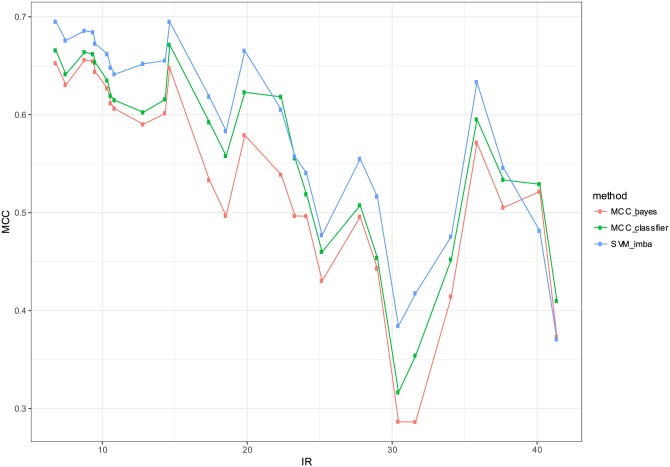
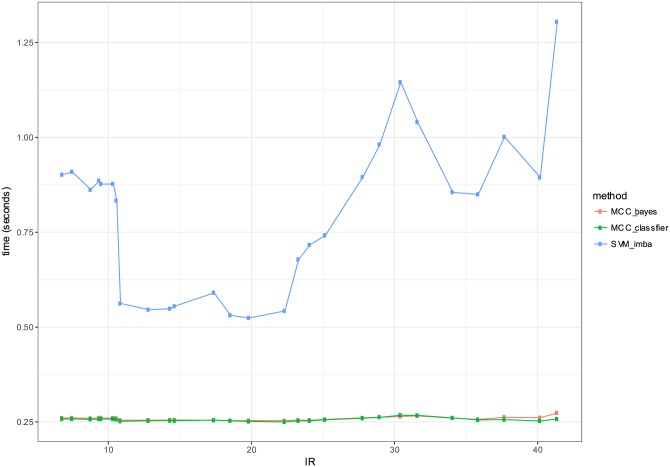
Data imbalance is frequently encountered in biomedical applications. Resampling techniques can be used in binary classification to tackle this issue. However such solutions are not desired when the number of samples in the small class is limited. Moreover the use of inadequate performance metrics, such as accuracy, lead to poor generalization results because the classifiers tend to predict the largest size class. One of the good approaches to deal with this issue is to optimize performance metrics that are designed to handle data imbalance. Matthews Correlation Coefficient (MCC) is widely used in Bioinformatics as a performance metric. We are interested in developing a new classifier based on the MCC metric to handle imbalanced data. We derive an optimal Bayes classifier for the MCC metric using an approach based on Frechet derivative. We show that the proposed algorithm has the nice theoretical property of consistency. Using simulated data, we verify the correctness of our optimality result by searching in the space of all possible binary classifiers. The proposed classifier is evaluated on 64 datasets from a wide range data imbalance. We compare both classification performance and CPU efficiency for three classifiers: 1) the proposed algorithm (MCC-classifier), the Bayes classifier with a default threshold (MCC-base) and imbalanced SVM (SVM-imba). The experimental evaluation shows that MCC-classifier has a close performance to SVM-imba while being simpler and more efficient.
Overview
The claims and statistics of this paper haven’t been checked yet.
Free: it reads the open-access text and checks the first 5 claims that cite a source we can check. Create a free account to check every claim.
Integrity signals
Registry
Cites
Statistics
Figures
Verification
Claims the paper makes
The claims and statistics of this paper haven’t been checked yet.
Free: it reads the open-access text and checks the first 5 claims that cite a source we can check. Create a free account to check every claim.
Claims other papers make about this one
Each is checked against this paper’s own text: does it say what the citing paper says it does?
The cited source says what the claim attributes to it.
In the citing paper
“since it has been shown to present a balanced score when dealing with imbalanced data [11, 6] as is our case with fewer manipulated images.”
From BioFors: A Large Biomedical Image Forensics Dataset (2021) · cites this paper as [6]
Self-check
Percentages, sums and reported differences re-computed from the paper’s own numbers.
The self-check needs the paper’s full text.
Citations
Cites
Advances in neural information processing systems 7
Cios, K., & Shields, M. (1997) · Neurocomputing · doi:10.1016/s0925-2312(97)90018-7 · Cited by 22,059
Comparison of the predicted and observed secondary structure of T4 phage lysozyme
Matthews, B. W. (1975) · Biochimica et Biophysica Acta (BBA) - Protein Structure · doi:10.1016/0005-2795(75)90109-9 · Cited by 5,399
A Probabilistic Theory of Pattern Recognition
Devroye, L., Györfi, L., & Lugosi, G. (1996) · Stochastic Modelling and Applied Probability · doi:10.1007/978-1-4612-0711-5 · Cited by 3,274
Assessing the accuracy of prediction algorithms for classification: an overview
Baldi, P., Brunak, S., Chauvin, Y., Andersen, C. A. F., & Nielsen, H. (2000) · Bioinformatics · doi:10.1093/bioinformatics/16.5.412 · Cited by 2,111
A sequential algorithm for training text classifiers
Lewis, D., & Gale, W. A. (1994) · arXiv (Cornell University) · doi:10.5555/188490.188495 · Cited by 1,731
A Sequential Algorithm for Training Text Classifiers
Lewis, D. D., & Gale, W. A. (1994) · SIGIR ’94 · doi:10.1007/978-1-4471-2099-5_1 · Cited by 1,208
Applying Support Vector Machines to Imbalanced Datasets
Akbani, R., Kwek, S., & Japkowicz, N. (2004) · Lecture Notes in Computer Science · doi:10.1007/978-3-540-30115-8_7 · Cited by 1,134
Yang, J., Roy, A., & Zhang, Y. (2013) · Bioinformatics · doi:10.1093/bioinformatics/btt447 · Cited by 1,035
MAQC Consortium (2010) · Nature Biotechnology · doi:10.1038/nbt.1665 · Cited by 889
Imbalanced Learning: Foundations, Algorithms, and Applications
(2013) · Wiley eBooks · doi:10.1002/9781118646106 · Cited by 831
Cited by
Items 501–600 of 1,000
Evans, L., Owda, M., Crockett, K. A., & Vilas, A. F. (2019) · Expert Systems with Applications · doi:10.1016/j.eswa.2019.03.019 · Cited by 16
Ågren, A. M., & Lidberg, W. (2019) · doi:10.5194/hess-2019-34 · Cited by 14
Grzesiak, W., Zaborski, D., Pilarczyk, R., Wójcik, J., & Adamczyk, K. (2023) · Animals · doi:10.3390/ani13121956 · Cited by 16
“Values around 0 suggest random classification [30,31].”
Anomaly Detectors for Self-Aware Edge and IoT Devices
Zoppi, T., Merlino, G., Ceccarelli, A., Puliafito, A., & Bondavalli, A. (2023) · IEEE International Conference on Software Quality, Reliability and Security (QRS) · doi:10.1109/qrs60937.2023.00013 · Cited by 13
Barbosa, H., Espinoza, G. Z., Amaral, M., Levatti, E. V. D. C., Abiuzi, M. B., Veríssimo, G. C., Fernandes, P. O., Maltarollo, V. G., Tempone, A. G., Honório, K. M., et al. (2023) · Journal of Chemical Information and Modeling · doi:10.1021/acs.jcim.3c01410 · Cited by 12
Ensembles of evolutionarily-constructed support vector machine cascades
Dudzik, W., Nalepa, J., & Kawulok, M. (2024) · Knowledge-Based Systems · doi:10.1016/j.knosys.2024.111490 · Cited by 17
Perceptron Connectives in Knowledge Representation
Galliani, P., Righetti, G., Kutz, O., Porello, D., & Troquard, N. (2020) · Lecture notes in computer science · doi:10.1007/978-3-030-61244-3_13 · Cited by 20
Reliable genomic strategies for species classification of plant genetic resources
Plaat, A. V. B. V. D., van Treuren, R., & van Hintum, T. J. L. (2021) · BMC Bioinformatics · doi:10.1186/s12859-021-04018-6 · Cited by 13
“Good alternatives to prediction accuracy in imbalanced datasets are Matthews correlation coefficient (for binary predictions) and the lesser known RK statistic (for multiclass predictions) [46, 47].”
BackgroundUsing an Ensemble to Identify and Classify Macroalgae Antimicrobial Peptides
Caprani, M., Healy, J., Slattery, O., & O’Keeffe, J. (2021) · Interdisciplinary Sciences Computational Life Sciences · doi:10.1007/s12539-021-00435-6 · Cited by 17
Ragno, A., Baldisserotto, A., Antonini, L., Sabatino, M., Sapienza, F. U., Baldini, E., Buzzi, R., Vertuani, S., & Manfredini, S. (2021) · Molecules · doi:10.3390/molecules26206279 · Cited by 12
“The models’ evaluation was performed by mean of the Matthew correlation coefficient (MCC) as it has been reported to be suited for unbalanced datasets [17].”
MethodIdentification of glomerulosclerosis using IBM Watson and shallow neural networks
Pesce, F., Albanese, F., Mallardi, D., Rossini, M., Pasculli, G., Suavo-Bulzis, P., Granata, A. R. M., Brunetti, A., Cascarano, G. D., Bevilacqua, V., et al. (2022) · Journal of Nephrology · doi:10.1007/s40620-021-01200-0 · Cited by 13
“In fact, the MCC value is a measure of the quality of binary (two-class) classifications which considers the number of false positives and false negatives; thus, it is generally regarded as a balanced measure that can be used even if the classes are of very different sizes [19].”
BackgroundPeerBERT: Automated Characterization of Peer Review Comments across Courses
Dood, A. J., Winograd, B. A., Finkenstaedt-Quinn, S. A., Gere, A. R., & Shultz, G. V. (2022) · International Conference on Learning Analytics and Knowledge (LAK) · doi:10.1145/3506860.3506892 · Cited by 16
“The model’s performance on downstream tasks was evaluated based on MCC score, which is interpreted similarly to Cohen’s kappa [4, 5].”
MethodDiagnosing Supercell Environments: A Machine Learning Approach
Shield, S. A., & Houston, A. L. (2022) · Weather and Forecasting · doi:10.1175/waf-d-21-0098.1 · Cited by 19
Classification of imbalanced medical data: An empirical study of machine learning approaches
Mundra, S., Vijay, S., Mundra, A., Gupta, P., Goyal, M. K., Kaur, M., Khaitan, S., & Rajpoot, A. K. (2022) · Journal of Intelligent & Fuzzy Systems · doi:10.3233/jifs-219294 · Cited by 13
Ai, H. (2022) · PLoS ONE · doi:10.1371/journal.pone.0263171 · Cited by 12
“In addition, MCC [24,25] and ROC_AUC_score [26,27] are shown to better handle numerically unbalanced data sets.”
BackgroundBecker, R. M., & Keefe, R. F. (2022) · PLoS ONE · doi:10.1371/journal.pone.0266568 · Cited by 17
Sorci, G., Hussein, H. A., Levêque, G., Jalme, M. S., Lacroix, F., Hingrat, Y., & Lesobre, L. (2023) · Communications Biology · doi:10.1038/s42003-023-04698-1 · Cited by 13
Automated Text Analysis of Organic Chemistry Students’ Written Hypotheses
Dood, A. J., Watts, F. M., Connor, M. C., & Shultz, G. V. (2024) · Journal of Chemical Education · doi:10.1021/acs.jchemed.3c00757 · Cited by 13
Evolutionary Algorithm for Bug Localization in the Reconfigurations of Models at Runtime
Arcega, L., Font, J., & Cetina, C. (2018) · ACM/IEEE International Conference on Model Driven Engineering Languages and Systems (MODELS) · doi:10.1145/3239372.3239392 · Cited by 12
“MCC is a balanced measure which can be used even if the search space and the predicted solution are of very different sizes [8].”
BackgroundLearning from Multi-annotator Data: A Noise-aware Classification Framework
Zhan, X., Wang, Y., Rao, Y., & Li, Q. (2019) · ACM Transactions on Information Systems · doi:10.1145/3309543 · Cited by 20
“To better perform the models, we use Matthews correlation coefficient (MCC) model, which takes the True and False Positives and Negatives as balanced measures into account even though they are imbalanced [3].”
MethodDeep Metric Learning for Identification of Mitotic Patterns of HEp-2 Cell Images
Gupta, K., Thapar, D., Bhavsar, A. V., & Sao, A. K. (2019) · IEEE/CVF Conference on Computer Vision and Pattern Recognition Workshops (CVPRW) · doi:10.1109/cvprw.2019.00141 · Cited by 14
“Here, one more evaluation measure is also defined, which is considered to be a good way to evaluate performance, in case of highly imbalanced classes [2], known as Matthews correlation coefficient (MCC), which considers all the four elements of a confusion matrix.”
BackgroundWang, J., Lu, C.-H., Liu, J., Dai, L.-Y., & Kong, X.-Z. (2019) · BMC Bioinformatics · doi:10.1186/s12859-019-3231-5 · Cited by 12
Driving With Hemianopia VII: Predicting Hazard Detection With Gaze and Head Scan Magnitude
Swan, G. S., Savage, S. W., Zhang, L., & Bowers, A. R. (2021) · Translational Vision Science & Technology · doi:10.1167/tvst.10.1.20 · Cited by 15
A New Epigenetic Model to Stratify Glioma Patients According to Their Immunosuppressive State
Polano, M., Fabbiani, E., Andreuzzi, E., Cintio, F. D., Bedon, L., Gentilini, D., Mongiat, M., Ius, T., Arcicasa, M., Škrap, M., et al. (2021) · Cells · doi:10.3390/cells10030576 · Cited by 12
“Matthews to assess the performance of the prediction of protein secondary structure [42], the MCC has become a widely used measure in biomedical research [43,44].”
MethodPredicting sun protection measures against skin diseases using machine learning approaches
Sultana, N. N. (2021) · Journal of Cosmetic Dermatology · doi:10.1111/jocd.14120 · Cited by 12
Wallace, L. O., Hally, B., Hillman, S. C., Jones, S., & Reinke, K. J. (2020) · Fire · doi:10.3390/fire3040059 · Cited by 11
“The MCC was chosen for this purpose, due to the overwhelming amount of empty space (true negatives) in the voxel space and the fact that MCC displays only high scores if the image based point clouds obtained good results in all of the four categories [23].”
BackgroundAUTOMATIC DETECTION OF COVID-19 AND VIRAL PNEUMONIA IN X-RAY IMAGES USING DEEP LEARNING APPROACH
Tripathi, S., & Sharma, N. (2023) · Biomedical Engineering Applications Basis and Communications · doi:10.4015/s1016237223500011 · Cited by 11
Comparative Study of Pre-trained Language Models for Text Classification in Smart Agriculture Domain
Yadav, S., & Kaushik, A. (2023) · Lecture notes in networks and systems · doi:10.1007/978-981-99-0981-0_21 · Cited by 12
Vrbanec, T., & Meštrović, A. (2023) · Expert Systems · doi:10.1111/exsy.13386 · Cited by 16
“MCC is commonly used in machine learning to evaluate the performance of binary classification models (Boughorbel et al., 2017).”
MethodTrusted multi-scale classification framework for whole slide image
Ming, F., Xu, K., Wu, N., Huang, W., Bai, Y., Wang, Y., Wang, C., & Wang, H. (2023) · Biomedical Signal Processing and Control · doi:10.1016/j.bspc.2023.105790 · Cited by 13
Yoo, J. W., Park, J., & Park, H. (2024) · International Journal of Injury Control and Safety Promotion · doi:10.1080/17457300.2023.2300424 · Cited by 12
“…measure of performance by considering all four possible outcomes of binary classification and is calculated as: MCC ranges from −1 to 1, where 1 indicates a perfect classifier, 0 indicates a random classifier, and −1 indicates a completely misclassified classifier (Boughorbel et al., 2017).”
BackgroundPrasath, S. T., & Navaneethan, C. (2024) · IEEE Access · doi:10.1109/access.2024.3430036 · Cited by 11
“The MCC value is one, indicating complete agreement, when the value is zero or near zero, meaning random guessing [47], [48].”
BackgroundTraffic accident severity prediction based on interpretable deep learning model
Pei, Y., Wen, Y., & Pan, S. (2024) · Transportation Letters · doi:10.1080/19427867.2024.2398336 · Cited by 16
“It is worth noting that while SDAE and DNN outperforms ConvLSTM in terms of F1-Score, the opposite result is obtained for MCC.”
InfluentialCamarrone, F., Branco, M. P., Ramsey, N. F., & Hulle, M. M. V. (2020) · IEEE Transactions on Biomedical Engineering · doi:10.1109/tbme.2020.3037934 · Cited by 14
“In addition, we will assess performance using the Matthews Correlation Coefficient (MCC) [5] as this metric is preferred in some scenarios with unbalanced data.”
MethodInfluentialMatayoshi, J., Cosyn, E., & Uzun, H. (2021) · International Journal of Artificial Intelligence in Education · doi:10.1007/s40593-021-00240-8 · Cited by 11
Soft computing in renewable energy system modeling
Adedeji, P. A., Olatunji, O. O., Madushele, N., & Ajayeoba, A. O. (2021) · Elsevier eBooks · doi:10.1016/b978-0-12-824555-2.00026-5 · Cited by 12
A non‐intrusive load state identification method considering non‐local spatiotemporal feature
Zhang, Z., Li, Y., Duan, J., Duan, Y., Guo, Y., Cao, Y., & Rehtanz, C. (2021) · IET Generation Transmission & Distribution · doi:10.1049/gtd2.12330 · Cited by 11
High-wearable EEG-based transducer for engagement detection in pediatric rehabilitation
Apicella, A., Arpaïa, P., Giugliano, S., Mastrati, G., & Moccaldi, N. (2021) · Brain-Computer Interfaces · doi:10.1080/2326263x.2021.2015149 · Cited by 12
EEG-Based Machine Learning: Theory and Applications
Shoorangiz, R., Weddell, S. J., & Jones, R. D. (2021) · Handbook of Neuroengineering · doi:10.1007/978-981-15-2848-4_70-1 · Cited by 17
Navarrete, M., Arthur, S., Treder, M. S., & Lewis, P. A. (2022) · NeuroImage · doi:10.1016/j.neuroimage.2022.119055 · Cited by 14
Buabeng, A., Simons, A. J., Frempong, N. K., & Ziggah, Y. Y. (2022) · Mathematical Problems in Engineering · doi:10.1155/2022/4372567 · Cited by 14
“MCC (79) measures the relationship between the observed and the predicted classification and is generally regarded as a balanced metric for evaluating the performance of classifiers even with varying class sizes [111, 112].”
BackgroundAttention-Based Graph Neural Network for Label Propagation in Single-Cell Omics
Bhadani, R. K., Chen, Z., & An, L. (2023) · Genes · doi:10.3390/genes14020506 · Cited by 17
Anaam, A., Al–antari, M. A., & Gofuku, A. (2023) · Biomedical Signal Processing and Control · doi:10.1016/j.bspc.2023.105191 · Cited by 13
Huschner, F., Głowacka‐Walas, J., Mills, J. D., Klonowska, K., Lasseter, K. D., Asara, J. M., Moavero, R., Hertzberg, C., Weschke, B., Riney, K., et al. (2023) · Nature Communications · doi:10.1038/s41467-023-42855-6 · Cited by 12
Rehrl, K., Gröchenig, S., & Kranzinger, S. (2020) · International Journal of Geographical Information Systems · doi:10.1080/13658816.2020.1740999 · Cited by 11
A Systematic Literature Review of Software Defect Prediction Using Deep Learning
Bahaa, A., Fathy, E. M., Eldin, A. S., Abd-Elmegid, L. A., Bahaa, A., & Eldin, A. S. (2021) · Journal of Computer Science · doi:10.3844/jcssp.2021.490.510 · Cited by 11
“SCAE achieved 13.25, 21.99 and 43.39% on average of F-measure, G-measure and MCC compared with the used feature extraction methods.”
MethodInfluentialDeep transfer learning for the classification of variable sources
Kim, D.-W., Yeo, D., Bailer‐Jones, C. A. L., & Lee, G. (2021) · Astronomy and Astrophysics · doi:10.1051/0004-6361/202140369 · Cited by 14
Prieto-Martínez, F. D., Gortari, E. F., Medina‐Franco, J. L., & Espinoza‐Fonseca, L. M. (2021) · Artificial Intelligence in the Life Sciences · doi:10.1016/j.ailsci.2021.100008 · Cited by 13
“Furthermore, MCC is robust enough to evaluate the predictive power of models even on “adverse” situations such as class imbalance [78].”
BackgroundSajid, M. R., Almehmadi, B. A., Sami, W., Alzahrani, M. K., Muhammad, N., Chesneau, C., Hanif, A., Khan, A. A., & Shahbaz, A. (2021) · International Journal of Environmental Research and Public Health · doi:10.3390/ijerph182312586 · Cited by 15
“Accuracy is a good choice in a balanced dataset as we had in this 1:1 matched case–control study [26].”
BackgroundJebril, H., Pleschberger, M., & Susto, G. A. (2022) · IEEE Transactions on Semiconductor Manufacturing · doi:10.1109/tsm.2022.3146988 · Cited by 11
Multiple machine learning methods aided virtual screening of NaV1 .5 inhibitors
Kong, W., Huang, W., Peng, C., Zhang, B., Duan, G., Ma, W., & Huang, Z. (2022) · Journal of Cellular and Molecular Medicine · doi:10.1111/jcmm.17652 · Cited by 10
“36 Among them, the MCC evaluation index is a common classifier in different models and the PR curves which described the Precision and TPR were also plotted.”
MethodBioFors: A Large Biomedical Image Forensics Dataset
Sabir, E., Nandi, S., AbdAlmageed, W., & Natarajan, P. (2021) · 2021 IEEE/CVF International Conference on Computer Vision (ICCV) · doi:10.1109/iccv48922.2021.01078 · Cited by 12
“We also compute Matthews correlation coefficient (MCC) [32] between the masks since it has been shown to present a balanced score when dealing with imbalanced data [11, 6] as is our case with fewer manipulated images.”
MethodEEG-Based Machine Learning: Theory and Applications
Shoorangiz, R., Weddell, S. J., & Jones, R. D. (2023) · Handbook of Neuroengineering · doi:10.1007/978-981-16-5540-1_70 · Cited by 11
Spectral Indices Survey for Oil Spill Detection in Coastal Areas
Pérez-García, Á., Rodríguez-Molina, A., Hernández, E., & Lopez, J. F. (2024) · IEEE Journal of Selected Topics in Applied Earth Observations and Remote Sensing · doi:10.1109/jstars.2024.3438123 · Cited by 10
A comprehensive guide to volatolomics data analysis
Skawinski, M., van Schooten, F., & Smolinska, A. (2024) · Journal of Breath Research · doi:10.1088/1752-7163/ad9b46 · Cited by 18
“( κ ) measures the agreement between predicted and real classes [154], while MCC asseses the correlation between these classes [155].”
Huang, L., Liu, P., & Xiao-jie, H. (2025) · Toxicology · doi:10.1016/j.tox.2025.154064 · Cited by 19
Gao, X. (2019) · Signal Image and Video Processing · doi:10.1007/s11760-019-01592-4 · Cited by 10
“…the quality of binary classifications, i.e., Matthews’ correlation coefficients (MCC) to interpret a correlation coefficient between prediction and observation, is formulated as [27, 28] Due to the absence of TN in detection outputs, each measure of MCC indicates negative score on each algorithm.”
BackgroundMethodVallejo, M., Winiwarter, L., Corral‐Pazos‐de‐Provens, E., Williams, J. G., Bubenzer, O., & Höfle, B. (2020) · IEEE Journal of Selected Topics in Applied Earth Observations and Remote Sensing · doi:10.1109/jstars.2020.3040284 · Cited by 11
“MCC ranges between−1 and+1, where+1 is a perfect prediction and−1 represents total disagreement between the estimation and the ground truth [75], [76].”
BackgroundEnsemble Learning Models for Classification and Selection of Web Services: A Review
Hasnain, M. A., Ghani, I., Jeong, S. R., & Ali, A. (2021) · Computer Systems Science and Engineering · doi:10.32604/csse.2022.018300 · Cited by 10
Seetharaman, A., & Christe, S. A. (2021) · Concurrency and Computation Practice and Experience · doi:10.1002/cpe.6718 · Cited by 11
Automated Code Review Comment Classification to Improve Modern Code Reviews
Ochodek, M., Staron, M., Meding, W., & Söder, O. (2022) · Lecture notes in business information processing · doi:10.1007/978-3-031-04115-0_3 · Cited by 16
Liu, H., Dai, J., Li, K., Sun, Y., Wei, H., Wang, H., Zhao, C., & Wang, D. W. (2022) · Briefings in Bioinformatics · doi:10.1093/bib/bbac334 · Cited by 11
Prediction of the Periglacial Debris Flow in Southeast Tibet Based on Imbalanced Small Sample Data
Du, J., Zhang, H., Hu, K., Wang, L., & Dong, L. (2023) · Water · doi:10.3390/w15020310 · Cited by 10
High-performance prediction models for prostate cancer radiomics
Isaksson, L. J., Repetto, M., Summers, P. E., Pepa, M., Zaffaroni, M., Vincini, M. G., Corrao, G., Mazzola, G. C., Rotondi, M., Bellerba, F., et al. (2023) · Informatics in Medicine Unlocked · doi:10.1016/j.imu.2023.101161 · Cited by 13
Detecting amyloid‐β positivity using regions of interest from structural magnetic resonance imaging
Hwang, J., Park, H. K., Yoon, H., Jeong, J. H., Lee, H., & Initiative, A. D. N. (2023) · European Journal of Neurology · doi:10.1111/ene.15775 · Cited by 10
“When the cases using sMRI and two SNPs as multimodalities were compared with the cases using sMRI as a single modality, average increases of 0.047, 0.050, 0.066, and 0.092 were noted for ACC, F1, AUC, and MCC, respectively, in the EW dataset, and 0.085, 0.076, 0.058, and 0.153, respectively, in the ADNI+EW dataset.”
MethodInfluentialLi, K., Quan, L., Jiang, Y., Wu, H., Wu, J., Li, Y., Zhou, Y., Wu, T., & Lyu, Q. (2023) · Journal of Chemical Information and Modeling · doi:10.1021/acs.jcim.3c00192 · Cited by 9
Using AraGPT and ensemble deep learning model for sentiment analysis on Arabic imbalanced dataset
Habbat, N., Hicham, N., Anoun, H., & Hassouni, L. (2023) · ITM Web of Conferences · doi:10.1051/itmconf/20235202008 · Cited by 10
Wang, Y. M., Ostendorf, B., & Pagay, V. (2024) · International Journal of Applied Earth Observation and Geoinformation · doi:10.1016/j.jag.2024.103876 · Cited by 10
Klempíř, O., Krupička, R., Bakštein, E., & Jech, R. (2019) · Measurement Science Review · doi:10.2478/msr-2019-0029 · Cited by 10
“The MCC returns value in the interval [(cid:7)1,1] , with 1 showing a complete agreement, -1 with a complete disagreement, and 0 showing that the prediction was uncorrelated with the ground truth [42].”
BackgroundA Statistical Model to Predict the Extratropical Transition of Tropical Cyclones
Bieli, M., Sobel, A. H., Camargo, S. J., & Tippett, M. K. (2019) · Weather and Forecasting · doi:10.1175/waf-d-19-0045.1 · Cited by 14
Xu, Y., Wilson, C., Leier, A., Marquez‐Lago, T. T., Whisstock, J. C., & Song, J. (2020) · Lecture notes in computer science · doi:10.1007/978-3-030-47436-2_29 · Cited by 10
TreeSAPP: the Tree-based Sensitive and Accurate Phylogenetic Profiler
Morgan‐Lang, C., McLaughlin, R. J., Armstrong, Z., Zhang, G., Chan, K. E., & Hallam, S. (2020) · Bioinformatics · doi:10.1093/bioinformatics/btaa588 · Cited by 10
Müller, E., Huber, C. E., Brack, W., Krauss, M. K. V., & Schulze, T. (2020) · Analytical Chemistry · doi:10.1021/acs.analchem.0c00899 · Cited by 14
Application 2D Descriptors and Artificial Neural Networks for Beta-Glucosidase Inhibitors Screening
Przybyłek, M. (2020) · Molecules · doi:10.3390/molecules25245942 · Cited by 12
“A detailed and comprehensive description of the model can be made by analyzing parameters such as the percentage of properly classified cases (%All), the Matthews correlation coefficient (MCC) [74,75], and area under the receiver operating characteristic (ROC) curve (AUCROC).”
BackgroundMethodAutomatic Facial Forgery Detection Using Deep Neural Networks
Chandani, K., & Arora, M. (2021) · Lecture notes in mechanical engineering · doi:10.1007/978-981-15-9956-9_21 · Cited by 12
Lee, J., Choi, W., & Kim, J. (2021) · Sensors · doi:10.3390/s21186229 · Cited by 12
“Among the compared ML models, the GMM shows the worst performance with an F-measure of 0.41 and an MCC of 0.41.”
BackgroundInfluentialTubbs, A. S., Ghani, S. B., Naps, M. S., Grandner, M. A., Stein, M. D., & Chakravorty, S. (2021) · Journal of Clinical Sleep Medicine · doi:10.5664/jcsm.9724 · Cited by 13
“28,29 The MCC measures the correlation between all observed and predicted outcomes, which is useful when outcomes are imbalanced and there is no need to maximize predicting one outcome over another.”
Bug Localization in Model-Based Systems in the Wild
Arcega, L., Font, J., Haugen, Ø., & Cetina, C. (2021) · ACM Transactions on Software Engineering and Methodology · doi:10.1145/3472616 · Cited by 14
Marateb, H. R., Nezhad, F. Z., Mohebian, M. R., Sami, R., Javanmard, S. H., Niri, F. D., Savari, M. A., Mansourian, M., Mañanas, M. Á., Wolkewitz, M., et al. (2021) · Frontiers in Medicine · doi:10.3389/fmed.2021.768467 · Cited by 13
Sarkar, S., Bhattacherjee, S., Bhattacharyya, P., Mitra, M., & Pal, S. (2022) · Biomedical Signal Processing and Control · doi:10.1016/j.bspc.2022.103716 · Cited by 11
Jia, J., Wu, G., & Qiu, W. (2022) · Frontiers in Cell and Developmental Biology · doi:10.3389/fcell.2022.894874 · Cited by 12
Du, Z., Xiao, X., & Uversky, V. N. (2020) · Journal of Biomolecular Structure and Dynamics · doi:10.1080/07391102.2020.1854861 · Cited by 11
“We use MCC and AUC to evaluate the performance of DeepA-RBPBS in predicting RBP binding sites of RNAs and compare it with iDeepS (Pan et al., 2018), which is one of the state-of-the-art methods.”
MethodInfluentialExploratory Analysis of Methods, Techniques, and Metrics to Handle Class Imbalance Problem
Sneha, H. R., & Annappa, B. (2024) · Procedia Computer Science · doi:10.1016/j.procs.2024.04.082 · Cited by 16
Gopi, V. P., Francis, B., & Thomas, A. (2024) · Elsevier eBooks · doi:10.1016/b978-0-443-19073-5.00018-5 · Cited by 10
Shah, S., Chaple, D., Masand, V. H., Jawarkar, R. D., Chaudhari, S., Abiramasundari, A., Zaki, M. E. A., & Al‐Hussain, S. A. (2024) · Scientific Reports · doi:10.1038/s41598-024-66230-7 · Cited by 18
Chongjun, Y., Nasr, A. M. S., Latif, M. A. M., Rahman, M. B. A., Marlisah, E., & Tejo, B. A. (2024) · SAR and QSAR in environmental research · doi:10.1080/1062936x.2024.2392677 · Cited by 9
“The MCC represents a robust metric for binary classification quality, encapsulating the correlation between observed and predicted classifications [40].”
Yang, K.-C., Xu, Y., Li, Q., Tang, L., Zhong, J.-W., An, H., Zeng, Y.-Q., Jia, K., Jin, Y., Yu, G., et al. (2025) · EClinicalMedicine · doi:10.1016/j.eclinm.2025.103128 · Cited by 15
Automated tick classification using deep learning and its associated challenges in citizen science
Omazic, A., Grandi, G., Widgrén, S., Rocklöv, J., Wallin, J., Semenza, J. C., & Abiri, N. (2025) · Scientific Reports · doi:10.1038/s41598-025-10265-x · Cited by 11
Alsenan, S. A., Al-Turaiki, I. M., & Hafez, A. M. (2020) · IEEE Access · doi:10.1109/access.2020.3047375 · Cited by 10
“, TP,FN ,TN , and FP), thereby making it a highly reliable measure for classification tasks [51], [52].”
BackgroundThwala, M. M., Afantitis, A., Papadiamantis, A. G., Tsoumanis, A., Melagraki, G., Dlamini, L. N., Ouma, C. N. M., Ramasami, P., Harris, R. A., Puzyn, T., et al. (2021) · Structural Chemistry · doi:10.1007/s11224-021-01869-w · Cited by 10
“1 3 in cases of unbalanced datasets [53], The MCC results range between − 1 and + 1.”
BackgroundDuhan, N., Norton, J. M., & Kaundal, R. (2022) · Briefings in Bioinformatics · doi:10.1093/bib/bbac071 · Cited by 8
Anteghini, M., dos Santos, V. A. P. M., & Saccenti, E. (2023) · Journal of Cellular Biochemistry · doi:10.1002/jcb.30490 · Cited by 10
“The MCC is appropriate also in presence of class unbalance [73].”
BackgroundPeng, X., Liu, Y., Tan, F., Chen, W., Liu, Z., Ma, T., Li, X., & Li, G. (2023) · IEEE Transactions on Neural Systems and Rehabilitation Engineering · doi:10.1109/tnsre.2023.3333008 · Cited by 12
“The formulas for these metrics are shown in (13), (14), (15), and (16), where TP is the true positive of motion classifications, FN is the false negative, FP is the false positive and TN is the true negative [31].”
BackgroundAn effective clinical decision support system using swarm intelligence
Ramaswamy, V., & Mukherjee, S. (2019) · The Journal of Supercomputing · doi:10.1007/s11227-019-02888-5 · Cited by 9
Generating Artificial Outliers in the Absence of Genuine Ones — A Survey
Steinbuss, G., & Böhm, K. (2021) · ACM Transactions on Knowledge Discovery from Data · doi:10.1145/3447822 · Cited by 16
“To evaluate a detection, we use the Matthews correlation coefficient (mcc), which is particularly suited if the classes can be imbalanced [6].”
MethodSarlabous, L., Aquino‐Esperanza, J., Magrans, R., de Haro, C., López‐Aguilar, J., Subirá, C., Batlle, M., Rué, M., Gomà, G., Ochagavía, A., et al. (2020) · Scientific Reports · doi:10.1038/s41598-020-70814-4 · Cited by 9
Audio Interval Retrieval Using Convolutional Neural Networks
Kuzminykh, I., Shevchuk, D., Shiaeles, S. N., & Ghita, B. (2020) · Lecture notes in computer science · doi:10.1007/978-3-030-65726-0_21 · Cited by 9
“The metric is generally regarded as a balanced measure that can be used even if the classes are of different sizes [29].”
BackgroundMethodA Model for Predicting Music Popularity on Streaming Platforms
Araújo, C. V. S., de Cristo, M. A. P., & Giusti, R. (2020) · Revista de Informática Teórica e Aplicada · doi:10.22456/2175-2745.107021 · Cited by 9
“It takes into account true and false positives and negatives and is generally regarded as a balanced measure which can be used even if the classes are of very different sizes [21].”
BackgroundPerformance Assessment of the Network Reconstruction Approaches on Various Interactomes
Arici, M. K., & Tunçbağ, N. (2021) · Frontiers in Molecular Biosciences · doi:10.3389/fmolb.2021.666705 · Cited by 10
DW-UNet: Loss Balance under Local-Patch for 3D Infection Segmentation from COVID-19 CT Images
Chen, C., Zhou, J., Zhou, K., Wang, Z., & Xiao, R. (2021) · Diagnostics · doi:10.3390/diagnostics11111942 · Cited by 10
Metadata
- Authors
- Boughorbel, S., Jarray, F., & El-Anbari, M.
- Affiliations
- Sidra Medical and Research Center (QA)
- Conservatoire National des Arts et Métiers (FR)
- Corresponding author
- Boughorbel, Sabri
- Venue
- PLOS ONE
- Publisher
- Public Library of Science (PLoS)
- Published
- 2017-06-02
- Volume
- 12
- Issue
- 6
- Pages
- e0177678
- ISSN
- 1932-6203 (ISSN-L)
- PMC
- PMC5456046
- OpenAlex
- W2620760558
- Cited by
- 1,222
- References
- 29
- Citations by year
- 2026: 90 · 2025: 104 · 2024: 111 · 2023: 163 · 2022: 179 · 2021: 224 · 2020: 165 · 2019: 120 · 2018: 64 · 2017: 2
- FWCI
- 57.24
- Type
- journal article
- Language
- en
- Open access
- gold
- doi.org
- Licence
- Locations
- PLoS ONE (publishedVersion, cc-by)
- Europe PMC (PubMed Central) (publishedVersion, cc-by)
- PubMed Central (publishedVersion, cc-by)
- PubMed (publishedVersion)
- RePEc: Research Papers in Economics (submittedVersion)
- DOAJ (DOAJ: Directory of Open Access Journals) (submittedVersion, cc-by-sa)
- Figshare (submittedVersion, cc-by)
- Funders
- Qatar Foundation
- Topics
- Physical Sciences › Computer Science › Artificial Intelligence › Imbalanced Data Classification Techniques
- Physical Sciences › Computer Science › Artificial Intelligence › Machine Learning and Data Classification
- Physical Sciences › Computer Science › Artificial Intelligence › Data Stream Mining Techniques
- Keywords
- class imbalance, Matthews correlation coefficient, Fréchet derivative, binary classification, biomedical classification
- MeSH terms
- Algorithms, Bayes Theorem, Models, Theoretical, Computational Biology, Support Vector Machine
About these checks
Registry, retraction, Cites and statistics results are computed, not judged, with one exception: a printed reference that no index lists is read once by a model before it counts as a citation error. Claims are extracted by a model and kept only when their quote appears verbatim in the text; each cited source is then checked, with a model’s help, for whether it says what the claim relies on. Those verdicts can be wrong — read the claim’s quote and the cited source before relying on one.
Statistics and arithmetic are recomputed, not judged.
Confidence bands are shown only for fields calibrated on our annotated test set. None is calibrated yet, so no band is shown.
What counts as a claim ›How we measure confidence ›How we check this ›
Are you an author, or do you see a problem with this page? Request a review
Data sources
Bibliographic data: Semantic Scholar, OpenAlex, Crossref.
Contains information from the Semantic Scholar Academic Graph Datasets, made available under the ODC Attribution License (ODC-BY 1.0).
Semantic Scholar’s data is described in: Kinney, R., et al. (2023). The Semantic Scholar Open Data Platform. arXiv:2301.10140.
