

Optimal classifier for imbalanced data using Matthews Correlation Coefficient metric
Open accessThe DOI matches its Crossref record; 29 of the 29 references it cites were found in a registry or an index.
Abstract
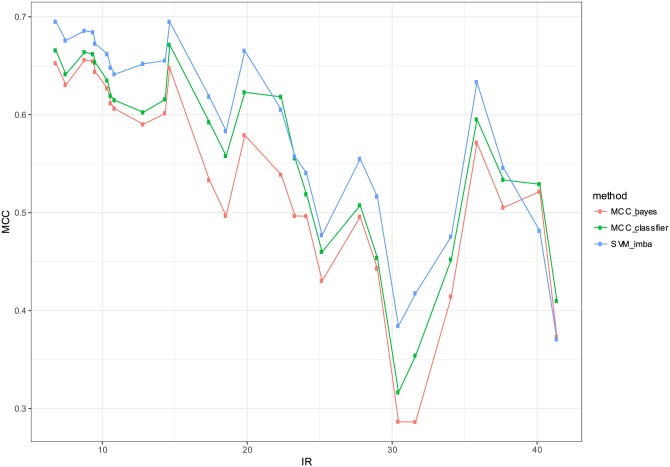
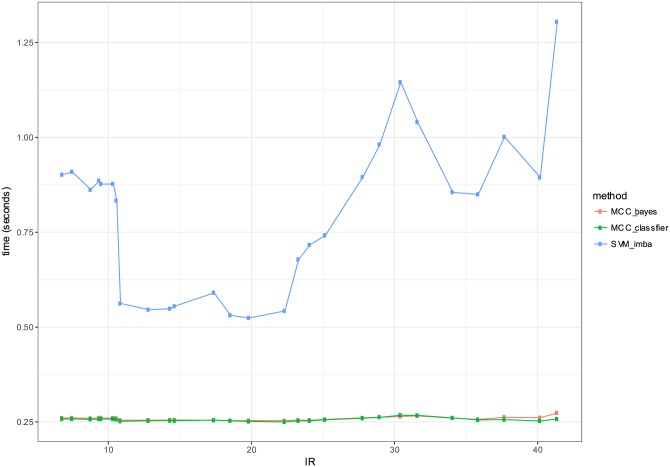
Data imbalance is frequently encountered in biomedical applications. Resampling techniques can be used in binary classification to tackle this issue. However such solutions are not desired when the number of samples in the small class is limited. Moreover the use of inadequate performance metrics, such as accuracy, lead to poor generalization results because the classifiers tend to predict the largest size class. One of the good approaches to deal with this issue is to optimize performance metrics that are designed to handle data imbalance. Matthews Correlation Coefficient (MCC) is widely used in Bioinformatics as a performance metric. We are interested in developing a new classifier based on the MCC metric to handle imbalanced data. We derive an optimal Bayes classifier for the MCC metric using an approach based on Frechet derivative. We show that the proposed algorithm has the nice theoretical property of consistency. Using simulated data, we verify the correctness of our optimality result by searching in the space of all possible binary classifiers. The proposed classifier is evaluated on 64 datasets from a wide range data imbalance. We compare both classification performance and CPU efficiency for three classifiers: 1) the proposed algorithm (MCC-classifier), the Bayes classifier with a default threshold (MCC-base) and imbalanced SVM (SVM-imba). The experimental evaluation shows that MCC-classifier has a close performance to SVM-imba while being simpler and more efficient.
Overview
The claims and statistics of this paper haven’t been checked yet.
Free: it reads the open-access text and checks the first 5 claims that cite a source we can check. Create a free account to check every claim.
Integrity signals
Registry
Cites
Statistics
Figures
Verification
Claims the paper makes
The claims and statistics of this paper haven’t been checked yet.
Free: it reads the open-access text and checks the first 5 claims that cite a source we can check. Create a free account to check every claim.
Claims other papers make about this one
Each is checked against this paper’s own text: does it say what the citing paper says it does?
The cited source says what the claim attributes to it.
In the citing paper
“since it has been shown to present a balanced score when dealing with imbalanced data [11, 6] as is our case with fewer manipulated images.”
From BioFors: A Large Biomedical Image Forensics Dataset (2021) · cites this paper as [6]
Self-check
Percentages, sums and reported differences re-computed from the paper’s own numbers.
The self-check needs the paper’s full text.
Citations
Cites
Advances in neural information processing systems 7
Cios, K., & Shields, M. (1997) · Neurocomputing · doi:10.1016/s0925-2312(97)90018-7 · Cited by 22,059
Comparison of the predicted and observed secondary structure of T4 phage lysozyme
Matthews, B. W. (1975) · Biochimica et Biophysica Acta (BBA) - Protein Structure · doi:10.1016/0005-2795(75)90109-9 · Cited by 5,399
A Probabilistic Theory of Pattern Recognition
Devroye, L., Györfi, L., & Lugosi, G. (1996) · Stochastic Modelling and Applied Probability · doi:10.1007/978-1-4612-0711-5 · Cited by 3,274
Assessing the accuracy of prediction algorithms for classification: an overview
Baldi, P., Brunak, S., Chauvin, Y., Andersen, C. A. F., & Nielsen, H. (2000) · Bioinformatics · doi:10.1093/bioinformatics/16.5.412 · Cited by 2,111
A sequential algorithm for training text classifiers
Lewis, D., & Gale, W. A. (1994) · arXiv (Cornell University) · doi:10.5555/188490.188495 · Cited by 1,731
A Sequential Algorithm for Training Text Classifiers
Lewis, D. D., & Gale, W. A. (1994) · SIGIR ’94 · doi:10.1007/978-1-4471-2099-5_1 · Cited by 1,208
Applying Support Vector Machines to Imbalanced Datasets
Akbani, R., Kwek, S., & Japkowicz, N. (2004) · Lecture Notes in Computer Science · doi:10.1007/978-3-540-30115-8_7 · Cited by 1,134
Yang, J., Roy, A., & Zhang, Y. (2013) · Bioinformatics · doi:10.1093/bioinformatics/btt447 · Cited by 1,035
MAQC Consortium (2010) · Nature Biotechnology · doi:10.1038/nbt.1665 · Cited by 889
Imbalanced Learning: Foundations, Algorithms, and Applications
(2013) · Wiley eBooks · doi:10.1002/9781118646106 · Cited by 831
Cited by
Items 801–900 of 1,000
O’Neill, J., Rozenshtein, P., Kiryo, R., Kubota, M., & Bollegala, D. (2021) · arXiv (Cornell University) · doi:10.48550/arxiv.2104.06893 · Cited by 4
“F1, Matthew’s Correlation Coefficient (MCC; Boughorbel et al., 2017), and accuracy are used as evaluation metrics.”
MethodNeurons throughout the brain embed robust signatures of their anatomical location into spike trains
Tolossa, G. B., Schneider, A. M., Dyer, E. L., & Hengen, K. B. (2025) · eLife · doi:10.1101/2024.07.11.603152 · Cited by 10
“It provides a balanced measure, useful even with imbalanced datasets, with a value ranging from -1 (total disagreement) to 1 (perfect prediction) [47, 48].”
BackgroundLovrić, M., Wang, T., Staffe, M. R., Šunić, I., Časni, K., Lasky-Su, J. A., Chawes, B., & Rasmussen, M. A. (2024) · Metabolites · doi:10.3390/metabo14050278 · Cited by 4
“The penalty in scoring during hyperparameter optimization was based on the Matthews Correlation Coefficient (MCC) [45,46] defined by Equation (1), where TP (True Positive), TN (True Negative), FN (False Negative), and FP (False Positive) are the elements of the confusion matrix…”
MethodReleasing the octoPus, an open-source digital tool to promote Integrated Pest Management
Bregaglio, S., Rossi, E., Ascari, L., Mongiano, G., Cavallo, E. D., Bajocco, S., Manici, L. M., Pepe, A. G., Bassi, C., Tiso, R., et al. (2025) · Smart Agricultural Technology · doi:10.1016/j.atech.2025.101015 · Cited by 3
Mutlu, N., Dengız, O., Kaya, N. S., Saygın, F., Pacci, S., Demirkaya, S., Abdurrahman, A. Y., Mutlu, A., Arslan, B., Kaya, Y., et al. (2025) · Expert Systems with Applications · doi:10.1016/j.eswa.2025.128862 · Cited by 6
Ackett, R., Hilafu, H., Gelfand, I., & Saha, D. (2025) · Journal of Geophysical Research Biogeosciences · doi:10.1029/2025jg008953 · Cited by 8
“…matrix (true positive, TP; true negative, TN; false positive, FP; and false negative, FN), gives a high score when all four confusion matrix outcomes are high, and is more informative and rigorous than other metrics for imbalanced data sets (Boughorbel et al., 2017; Chicco & Jurman, 2020, 2023).”
Chen, Z., Chen, X., Li, Z. B., Xue, J., & Gao, C. (2026) · Journal of Systems and Software · doi:10.1016/j.jss.2026.112855 · Cited by 6
L-measure evaluation metric for fake information detection models with binary class imbalance
Li, L., Wang, Y., Hsu, C.-Y., Li, Y., & Lin, K. (2020) · Enterprise Information Systems · doi:10.1080/17517575.2020.1825821 · Cited by 3
“Boughorbel, Jarray, and El-Anbari (2017) derived an optimal Bayes classifier for the MCC metric with an approach based on Frechet derivative.”
MethodOn the optimal binary classifier with an application
López-Díaz, M. C., López-Díaz, M., & Martínez-Fernández, S. (2022) · Computational Statistics & Data Analysis · doi:10.1016/j.csda.2022.107683 · Cited by 5
Barros, M. H. L. F. D. S., Neto, S. R. D. S., Rodrigues, M. G. A., Sampaio, V. D. S., & Endo, P. T. (2023) · Hawaii International Conference on System Sciences (HICSS) · doi:10.24251/hicss.2023.173 · Cited by 3
Kwao, J. K., Mingle, C. L., Addotey, J. N., Opuni, K. F. M., & Adutwum, L. A. (2024) · Microchemical Journal · doi:10.1016/j.microc.2024.112433 · Cited by 3
Baykalov, P., Bodner, G., Ostonen, I., & Rewald, B. (2025) · Plant and Soil · doi:10.1007/s11104-025-07306-9 · Cited by 4
“In contrast, MCC provides a superior measure for evaluating multi-class classification that is robust to unbalanced data (Boughorbel et al. 2017; Chicco et al. 2021).”
LWCM: A Lookahead-Window Constrained Model for Disk Failure Prediction in Large Data Centers
Zhang, X.-Y., Feng, D., Tan, Z., Xie, Y., Zhao, S., & Wei, Y.-Y. (2025) · Journal of Computer Science and Technology · doi:10.1007/s11390-025-3850-4 · Cited by 4
Wang, L., & Yang, G. (2025) · Sensors · doi:10.3390/s25206459 · Cited by 3
“…observed and predicted classifications, which performs well even in the presence of class imbalance, yielding a value between − 1 and +1, where +1 indicates perfect prediction, 0 corresponds to random performance, and − 1 represents complete disagreement between predictions and true labels [46].”
Development of an Intelligent Clinical Decision Support System for Spirometry Quality Control
López-Canay, J., Priegue-Carrera, A., Casado-Trigo, A., Represas‐Represas, C., Fernández-García, A., Comesaña-Campos, A., Casal-Guisande, M., & Fernández‐Villar, A. (2026) · Diagnostics · doi:10.3390/diagnostics16020213 · Cited by 3
“For this purpose, the Matthews Correlation Coefficient (MCC) method [33–35] was used, as employed by Casal-Guisande et al. in other studies [36].”
Zayid, E. I. M., Aldaleel, A. M., & Alshehri, O. (2026) · Entertainment Computing · doi:10.1016/j.entcom.2026.101102 · Cited by 5
Comparing Convex Region-of-Interest Selection Techniques for Surface Geometry
Jackson, B., Beckham, K., Cohen, A. K., & Heggeseth, B. (2019) · ACM Symposium on Virtual Reality Software and Technology (VRST) · doi:10.1145/3359996.3364258 · Cited by 3
“In addition to the true positive (TP), false positive (FP), and false negative (FN) selection areas, the MCC also takes into account true negatives (TN) [Boughorbel et al. 2017].”
BackgroundRizqullah, R., & Siregar, J. K. (2021) · Advances in Social Science, Education and Humanities Research/Advances in social science, education and humanities research · doi:10.2991/assehr.k.210312.017 · Cited by 3
“Correlation is the relationship and regression is influence [8]-[10].”
BackgroundAlleviating the independence assumptions of averaged one-dependence estimators by model weighting
Wang, L., Chen, P., Mammadov, M. A., Liu, Y., & Wu, S. (2021) · Intelligent Data Analysis · doi:10.3233/ida-205400 · Cited by 5
Mortality prediction of mitral valve replacement surgery by machine learning
Langarizadeh, M., HosseiniNezhad, M., & Hosseini, S. (2021) · Research in Cardiovascular Medicine · doi:10.4103/rcm.rcm_50_21 · Cited by 3
LPDA: A new classification method based on linear programming
Nueda, M. J., Gandía, C., & Vila, M. D. M. (2022) · PLoS ONE · doi:10.1371/journal.pone.0270403 · Cited by 4
“Specific techniques are emerging for dealing with this problem [22].”
BackgroundLee, J., & Ryu, S. (2022) · Frontiers in Materials · doi:10.3389/fmats.2022.874339 · Cited by 3
“Therefore, in most class-imbalance classification problems, various complementary metrics, such as precision, the f1-score, the Matthews correlation coefficient, and AP (average precision) as well as recall and AUC are used for performance evaluations of ML models (Davis and Goadrich, 2006; Boughorbel et al., 2017; Jo…”
MethodWang, Z., Li, Z., Xiao, Y., Liu, X., Hou, M., & Chen, S. (2022) · Multimedia Tools and Applications · doi:10.1007/s11042-022-13135-0 · Cited by 3
“In addition, the Matthews correlation coefficient (MCC) [35] is used to evaluate the dataset imbalance.”
MethodAbbaszadeh, B., Teixeira, C., & YAGOUB, M. C. E. (2022) · The Open Biomedical Engineering Journal · doi:10.2174/18741207-v16-e2208300 · Cited by 5
Reconstructing Sparse Multiplex Networks with Application to Covert Networks
Yu, J., Wu, M., Bichler, G., Aros‐Vera, F., & Gao, J. (2023) · Entropy · doi:10.3390/e25010142 · Cited by 6
“Because covert networks are sparse, the associated datasets are typically imbalanced toward negatives (no links between nodes), we employ the Matthews Correlation Coefficient (MCC) and G-mean to measure the prediction (classification) accuracy [47,48].”
MethodEnhancement of K nearest neighbour approach to solve the issue of pattern classification
Saxena, A. K., Bhardwaj, S., & Saxena, A. K. (2023) · AIP conference proceedings · doi:10.1063/5.0125071 · Cited by 3
Padilla, R., da Silva, A. F., da Silva, E. A. B., & Netto, S. L. (2023) · Signal Processing Image Communication · doi:10.1016/j.image.2023.116969 · Cited by 8
Liu, H., Wei, C., Sun, B., & Zeng, Y. (2023) · Journal of Systems and Software · doi:10.1016/j.jss.2023.111768 · Cited by 3
Alshehri, O., Zayid, E. I. M., & Sayaf, A. M. (2023) · International Journal of Information and Education Technology · doi:10.18178/ijiet.2023.13.10.1971 · Cited by 3
“Papers [42–45] explain the development and implementation of these classification algorithms.”
BackgroundJimenez, C., Sparrey, C. J., & Narimani, M. (2023) · Annual International Conference of the IEEE Engineering in Medicine and Biology Society (EMBC) · doi:10.1109/embc40787.2023.10340243 · Cited by 3
PESI: Paratope-Epitope Set Interaction for SARS-CoV-2 Neutralization Prediction
Wan, Z., Lin, Z., Rashid, S., Ng, S. Y.-H., Yin, R., Senthilnath, J., & Kwoh, C. K. (2023) · IEEE International Conference on Bioinformatics and Biomedicine (BIBM) · doi:10.1109/bibm58861.2023.10386059 · Cited by 3
“MCC produces a more informative and truthful score in evaluating binary classifications than the precision and F1 score [10], which has been widely used as an evaluation metric in bioinformatics [5].”
MethodMachine Learning Investigation of Downburst-Prone Environments in Canada
Hadavi, M., & Romanić, D. (2024) · Journal of Applied Meteorology and Climatology · doi:10.1175/jamc-d-23-0178.1 · Cited by 6
Segretier, W., Stattner, E., Couvin, D., & Rastogi, N. (2024) · IEEE Congress on Evolutionary Computation (CEC) · doi:10.1109/cec60901.2024.10612150 · Cited by 3
“This indicator present the main advantage to be quite insensitive to class imbalance and has been widely used in this context [9].”
MethodEvaluating Anomaly Detection Algorithms: A Multi-Metric Analysis Across Variable Class Imbalances
Hossain, M. S., Hossain, M. S., Klüttermann, S., & Müller, E. (2024) · International Joint Conference on Neural Networks (IJCNN) · doi:10.1109/ijcnn60899.2024.10650351 · Cited by 6
“Matthews Correlation Coefficient (MCC) and Cohen’s Kappa [7] have been proposed as more balanced alternatives, accounting for true negatives and offering a correction for chance agreement.”
BackgroundPulvera, E. V. J., & Lao, D. M. (2024) · International Conference on Intelligent Informatics and Biomedical Sciences (ICIIBMS) · doi:10.1109/iciibms62405.2024.10792816 · Cited by 3
“M APPING FOR T RANSFORMING D ISTANCE TO BWM R ATING A DOPTED FROM [24] Distance Linguistic Equivalent Equivalent BWM Rating Accuracy or F1-score, MCC provides reliable evaluation even with imbalanced datasets, with a range from -1 (total disagreement) to +1 (perfect agreement) [27, 28].”
IFE.PTML: advancing neurotherapeutic nanoparticle release-system design for enhanced brain delivery
Ruiz-Escudero, A., Belii, M., Nader, K., Insausti, M., Castellanos-Rubio, I., Arrasate, S., Montemore, M. M., & González‐Díaz, H. (2025) · Machine Learning Science and Technology · doi:10.1088/2632-2153/ae038a · Cited by 2
“The accuracy metric used for hyperparameter optimisation and feature selection was the Matthews correlation coefficient enhancement, which is also useful for imbalanced data [58].”
Kumar, N. S., Mohanalin, J., & Mahil, J. (2018) · Multimedia Tools and Applications · doi:10.1007/s11042-018-6290-0 · Cited by 3
RetractedDisease Inference on Medical Datasets Using Machine Learning and Deep Learning Algorithms
Chinnaswamy, A., Ramakrishnan, S., & Gaurang, D. P. (2020) · Advances in intelligent systems and computing · doi:10.1007/978-3-030-37218-7_96 · Cited by 3
A Novel Bio-inspired Hybrid Metaheuristic for Unsolicited Bulk Email Detection
Gangavarapu, T., & Jaidhar, C. D. (2020) · Lecture notes in computer science · doi:10.1007/978-3-030-50420-5_18 · Cited by 3
“MCC score facilitates a balanced score even in an imbalanced scenario by considering true and false positives and negatives [4].”
BackgroundA Deep Learning Model for Predicting DNA N6-Methyladenine (6mA) Sites in Eukaryotes
Roland, L. H., & Wannige, C. T. (2020) · IEEE Access · doi:10.1109/access.2020.3025990 · Cited by 3
“MCC is considered as a balanced measure that can be used with imbalanced data [61].”
BackgroundFair Outlier Detection Based on Adversarial Representation Learning
Li, S., Yu, J., Du, X., Lu, Y., & Qiu, R. (2022) · Symmetry · doi:10.3390/sym14020347 · Cited by 5
“FMCC measures the fairness of the LOF algorithm by comparing the accuracy of detection results among sensitive attribute subgroups.”
MethodInfluential1D-DCGAN for Oversampling Minority Mitotic Patterns in HEp-2 Cell Images
Anaam, A., Al‐masni, M. A., & Gofuku, A. (2022) · IEEE Global Conference on Life Sciences and Technologies (LifeTech) · doi:10.1109/lifetech53646.2022.9754940 · Cited by 3
Feature extraction and neural network-based fatigue damage detection and classification
Alqahtani, H., & Ray, A. (2022) · Neural Computing and Applications · doi:10.1007/s00521-022-07609-3 · Cited by 3
“The performance of the damage monitoring system is measured in terms of accuracy, sensitivity, specificity, and precision; and its efficacy is determined by the area under the curve (AUC) of receiver operating characteristics (ROC) [6], the Matthews correlation coefficient (MCC) [7], and the F-Measure [8].”
MethodIslam, S. M. S., & Hasan, M. (2018) · International Conference on Computer and Information Technology (ICCIT) · doi:10.1109/iccitechn.2018.8631921 · Cited by 3
Variance Ranking for Multi-Classed Imbalanced Datasets: A Case Study of One-Versus-All
Ebenuwa, S. H., Sharif, M. S., Al-Nemrat, A., Al-Bayatti, A. H., Alalwan, N., Alzahrani, A. I., & Alfarraj, O. (2019) · Symmetry · doi:10.3390/sym11121504 · Cited by 4
“In the support vector machine categories of algorithms, the work of [12,13] demonstrated the efforts that have been made to solve the class imbalance by applying Support Vectors in sample space of datasets to create the demarcations between classes.”
MethodSemantic Clone Detection via Probabilistic Software Modeling
Thaller, H., Linsbauer, L., & Egyed, A. F. (2022) · Lecture notes in computer science · doi:10.1007/978-3-030-99429-7_16 · Cited by 3
“The MCC will be the reference performance metric as it is the most robust metric in an imbalanced binary classification setting [3].”
Comparison of Meta-heuristic with Evolutionary and Local Search Methods for Feature Selection
Bansal, A., & Jain, A. (2020) · Studies in computational intelligence · doi:10.1007/978-981-15-7571-6_24 · Cited by 3
Al-Sabbagh, K. W., Hebig, R., & Staron, M. (2020) · Lecture notes in computer science · doi:10.1007/978-3-030-64148-1_18 · Cited by 3
“Experimenting on these ratios with a random forest model showed that a ratio of 95% cosine similarity between the baseline vector and the rest yield a 100% of Precision, Recall, f-score, and MCC.”
MethodInfluentialJohnsen, E. B., & Wimmer, M. (2022) · Lecture notes in computer science · doi:10.1007/978-3-030-99429-7 · Cited by 9
Differentiation of Occlusal Discolorations and Carious Lesions with Hyperspectral Imaging In Vitro
Vosahlo, R., Golde, J., Walther, J., Koch, E., Hannig, C., & Tetschke, F. (2022) · Applied Sciences · doi:10.3390/app12147312 · Cited by 4
“MCC is a more appropriate metric for measuring the performance of imbalanced, binary classification tasks compared to traditional other confusion matrix-based measures, such as accuracy or the F1-score [39].”
BackgroundDeep Learning Meets Radiomics For End-To-End Brain Tumor MRI Analysis
Ponikiewski, W., & Nalepa, J. (2022) · Proceedings - International Conference on Image Processing · doi:10.1109/icip46576.2022.9897847 · Cited by 3
“To assess the classification, we report accuracy ( Acc ), precision ( Pr ), Cohen’s kappa ( κ ), recall ( Re ), and the Matthews correlation coefficient ( MCC ), with MCC being a more reliable statistical rate for imbalanced classification [27,28].”
MethodSoftware Evaluation for De Novo Detection of TransposonsPreprint
Rodriguez, M., & Makałowski, W. (2021) · Research Square · doi:10.21203/rs.3.rs-179452/v1 · Cited by 3
A causality-inspired feature selection method for cancer imbalanced high-dimensional dataPreprint
Liu, Y., Huang, Q., Sun, H., & Chang, Y. (2021) · bioRxiv (Cold Spring Harbor Laboratory) · doi:10.1101/2021.10.04.462984 · Cited by 3
Brauer, D. D., Santiago, C. B., Merz, Z. N., McCarthy, E., Tullman‐Ercek, D., & Francis, M. B. (2021) · bioRxiv (Cold Spring Harbor Laboratory) · doi:10.1101/2021.12.21.473721 · Cited by 4
Sentiment Analysis Methods: Survey and EvaluationPreprint
Zhu, Y., Hoepner, A. G. F., Moore, T. K., & Urquhart, A. (2022) · SSRN Electronic Journal · doi:10.2139/ssrn.4191581 · Cited by 5
Canto-Encalada, G., Armstrong, J., Focil-Espinosa, C., Ademikanra, A. F., Peeler, I., Gebbie, W., Nunez-Garcia, J., Saldivar, A., Martinez, D., & Zúñiga, C. (2023) · Preprints.org · doi:10.20944/preprints202311.0461.v1 · Cited by 3
Pulmonary diffusing capacity and dyspnoea following COVID-19: Insights from multicentre datasets
Zavorsky, G. S., Barisione, G., Gille, T., Negro, R. W. D., Fernández, M. N., Seccombe, L. M., Imeri, G., Marco, F. D., Mortensen, J., Salvioni, E., et al. (2025) · Data in Brief · doi:10.1016/j.dib.2025.111925 · Cited by 3
Semi-supervised detection of natural selection with positive-unlabeled learningPreprint
Arnab, S. P., dos Santos, A. L. C., Fumagalli, M., & DeGiorgio, M. (2025) · bioRxiv (Cold Spring Harbor Laboratory) · doi:10.1101/2025.08.15.670602 · Cited by 4
“To complement AUPRC, we also evaluated the Matthews correlation coefficient (MCC), which is particularly robust for binary classification in imbalanced and partially labeled datasets [Boughorbel et al., 2017, Chicco and Jurman, 2020].”
Asogbon, M. G., Samuel, O. W., Nsugbe, E., Li, Y., Kulwa, F., Mzurikwao, D., Chen, S., & Li, G. (2023) · Frontiers in Neuroscience · doi:10.3389/fnins.2023.1018037 · Cited by 3
“…structure, high accuracy, and fast computation characteristics including the Linear Discriminant Analysis (LDA), K-Nearest Neighbor (KNN), and Random Forest classifiers (Boughorbel et al., 2017; Asogbon et al., 2021) were applied to classify the motion classes for the considered SRD groups.”
MethodData-driven neural network model for maximum speed profile based on driver risk
Graffione, S., Bozzi, A., Sacile, R., & Zero, E. (2024) · Control Engineering Practice · doi:10.1016/j.conengprac.2024.106033 · Cited by 2
Ma, L., Zhou, W., Bai, Y., Fang, M., Xiao, M., & Li, J. (2025) · IEEE Transactions on Computational Biology and Bioinformatics · doi:10.1109/tcbbio.2025.3559571 · Cited by 2
Machine learning framework coupled with CADD for predicting sphingosine kinase 1 inhibitors
Wani, M. A., Kumari, P., & Nargotra, A. (2025) · Computers in Biology and Medicine · doi:10.1016/j.compbiomed.2025.110448 · Cited by 4
A Forecast Model for COVID-19 Spread Trends Using Blog and GPS Data from Smartphones
Susuta, R., Yamada, K., Hideki Takayasu, C., & Takayasu, M. (2025) · Entropy · doi:10.3390/e27070686 · Cited by 2
“Boughorbel et al. [32] underscored MCC’s balance and robustness relative to AUC, accuracy, and F1-score through experiments using 10,000 randomly labelled class data.”
Alshagathrh, F. M., Zubaydi, H. D., Alzubaidi, M. S., Alosaimi, A., Saqer, R. M. A., Alzahrani, A. M., Alfaqiri, M. K. S., Elzahrani, M. R., Alswat, K., Aldhebaib, A., et al. (2025) · IEEE Access · doi:10.1109/access.2025.3617778 · Cited by 2
“The best-performing model was selected based on : Highest macro F1-score on the external EPIQ test set [55] Consistency across epochs based on validation plots Model components (encoder, transfer, camdis) were saved separately and used for final inference and benchmarking.”
Exploring Spiking Neural Networks for Binary Classification in Multivariate Time Series at the Edge
Ghawaly, J., Nicholson, A., Schuman, C. D., Diez, D., Young, A. R., & Witherspoon, B. (2025) · International Joint Conference on Neural Networks (IJCNN) · doi:10.1109/ijcnn64981.2025.11228041 · Cited by 5
“It is robust to unbalanced datasets and is regarded as one of the most informative measures of a binary classifier’s performance [24]– [26].”
Lathem, A., Medvedeva, A., Santos, A. L., Li, B., Si, T., Kolomeisky, A. B., & Tour, J. M. (2025) · Journal of Chemical Information and Modeling · doi:10.1021/acs.jcim.5c01321 · Cited by 2
Iglesias-Merchán, C., Sanchez-Torres, R., & Alonso, R. (2026) · Environments · doi:10.3390/environments13010031 · Cited by 2
Introduction to artificial intelligence in multi-omics analysis
Saha, A., Pal, R. K., & Saha, S. (2026) · Progress in molecular biology and translational science · doi:10.1016/bs.pmbts.2026.01.022 · Cited by 2
Rakhshaninejad, M., Fathian, M., Shirkoohi, R., Barzinpour, F., & Gandomi, A. H. (2026) · Neural Computing and Applications · doi:10.1007/s00521-026-11896-5 · Cited by 2
“Its suitability for imbalanced datasets has been well established in the literature [ 85, 86 ], making it a valuable addition to our evaluation framework.”
Hassan, M. M., Chamberlin, A. J., Tarpenning, M. S., Weber, W. C., Coombe, K. D., Leo, G. A. D., Junaid, M., Soma, A. S., Ansariadi, & Rosser, J. I. (2026) · Remote Sensing Applications Society and Environment · doi:10.1016/j.rsase.2026.102011 · Cited by 1
Li, W., & Bischel, H. N. (2026) · Environmental Science & Technology Letters · doi:10.1021/acs.estlett.6c00172 · Cited by 2
Person Re-Identification System at Semantic Level based on Pedestrian Attributes Ontology
Ly, N. Q., Hieu, N., & Thi, T. (2020) · International Journal of Advanced Computer Science and Applications · doi:10.14569/ijacsa.2020.0110264 · Cited by 2
“With Matthews correlation coefficient: As depicted in column ONTO and ONTO + MCC, average F1-score now increases 13% when using MCC.”
MethodInfluentialČeponis, D. (2021) · doi:10.20334/2021-008-m · Cited by 4
Машинное обучение на основе задач математического программирования
Чернавин, Н. П., Chernavin, F. P., Pankrashchenko, V. N., Гайнанов, Д. Н., & Чернавин, П. Ф. (2021) · Наука eBooks · doi:10.7868/9785020409088 · Cited by 2
Areti, M., & Hasnain, Z. (2022) · Journal of Computing in Civil Engineering · doi:10.1061/(asce)cp.1943-5487.0001036 · Cited by 2
Vilela, G. D. B., Lima, B. N., Ribeiro, H. F., Rodrigues, M. F., Pereira, A. D. A., de Oliveira, J. R. L., Silio, L. F., & Passos, R. P. (2022) · Revista CPAQV - Centro de Pesquisas Avançadas em Qualidade de Vida · doi:10.36692/v14n3-01 · Cited by 2
AI-Powered Drug Detection System Utilizing Bioactivity Prediction and Drug Release Tracking
Andi, H. K. (2022) · Journal of Artificial Intelligence and Capsule Networks · doi:10.36548/jaicn.2022.4.003 · Cited by 3
“Quantum physics, however, may be computationally expensive and demanding when using traditional computing approaches, which can impact its accuracy [23].”
BackgroundCost-Aware Active Learning for Feasible Region Identification
Nikova, I., Dhaene, T., & Couckuyt, I. (2023) · Genetic and Evolutionary Computation Conference Companion (GECCO Companion) · doi:10.1145/3583133.3596323 · Cited by 2
“The models are tested on 1000 samples using the Matthews Correlation Coefficient (MCC) [1], a balanced correlation coefficient.”
MethodPerforming Melanoma Diagnosis by an Effective Multi-view Convolutional Network Architecture
Pérez, E., & Reyes, Ó. (2023) · International Journal of Computer Vision · doi:10.1007/s11263-023-01848-0 · Cited by 3
“MCC is widely used in Bioinformatics as performance metric (Pérez et al., 2021; Boughorbel et al., 2017; Chicco & Jurman, 2020; Chicco et al., 2021), and it is specially designed to analyze the predictive performance on unbalanced data.”
MethodDual generative adversarial networks based on regression and neighbor characteristics
Jia, W., Lu, M., Shen, Q., Tian, C., & Zheng, X. (2024) · PLoS ONE · doi:10.1371/journal.pone.0291656 · Cited by 3
“Among them, sampling is the most basic method, including under-sampling, oversampling and mixed sampling [9].”
MethodRetractedOn Quantification of the Nonlinearity of PPV in Model Evaluation with Imbalanced Datasets
Zhu, Q. (2024) · International Journal of Pattern Recognition and Artificial Intelligence · doi:10.1142/s0218001424590110 · Cited by 2
Hu, J., Fu, J., Cai, Y., Chen, S., Qu, M., Zhang, L., Fan, W., Wang, Z., Zeng, Q., & Zou, J. (2024) · Experimental Biology and Medicine · doi:10.3389/ebm.2024.10129 · Cited by 2
Ulu, M., Türkan, Y. S., Mengüç, K., Namlı, E., & Küçükdeniz, T. (2024) · Computers, materials & continua/Computers, materials & continua (Print) · doi:10.32604/cmc.2024.052323 · Cited by 4
A Comparison of Thunderstorm Identification Methods
Shield, S. A., & Houston, A. L. (2024) · Journal of Atmospheric and Oceanic Technology · doi:10.1175/jtech-d-23-0084.1 · Cited by 2
Kumar, D., Bakariya, B., Verma, C., & Illés, Z. (2024) · Computer Methods and Programs in Biomedicine Update · doi:10.1016/j.cmpbup.2024.100165 · Cited by 2
Modeling High Energy Molecules and Screening to Find Novel High Energy Candidates
Rachamim, M., Domb, A. J., & Goldblum, A. (2024) · ACS Omega · doi:10.1021/acsomega.4c01070 · Cited by 2
“43,44 The MCC measure of success in classification is helpful for unbalanced sets, such as the learning set produced in this research, with a 100:1 ratio of decoys to actives.”
BackgroundEnhancing Bioimpedance Tissue Classification with Elastography Sensor Data via Multimodal Learning
Ege, M., Hellwich, E., Krauβ, F., Lovasz, Z., Schüle, J., Veil, C., Sawodny, O., & Tarín, C. (2024) · Proceedings of IEEE Sensors/Proceedings of IEEE Sensors ... · doi:10.1109/sensors60989.2024.10784632 · Cited by 2
“Since this can be misleading, especially if there is a class imbalance in a fold, normMCC is used for a more balanced evaluation [22].”
Benchmarking with a Language Model Initial Selection for Text Classification Tasks
Riyadi, A., Kovacs, M., Serdült, U., & Kryssanov, V. V. (2025) · Machine Learning and Knowledge Extraction · doi:10.3390/make7010003 · Cited by 3
Duhan, N., & Kaundal, R. (2025) · The Plant Genome · doi:10.1002/tpg2.20536 · Cited by 2
Examining discordance in spirometry reference equations: A retrospective study
Zavorsky, G. S., Elkinany, S., Alismail, A., Thapamagar, S. B., Terry, M. H., Anholm, J. D., & Giri, P. C. (2025) · Physiological Reports · doi:10.14814/phy2.70212 · Cited by 1
“The Matthews Correlation Coefficient (MCC), a measure akin to Pearson's Correlation Coefficient but tailored for binary outcomes, was employed to assess these binary categories (Boughorbel et al., 2017; Chicco et al., 2021; Chicco & Jurman, 2020, 2023; Powers, 2011).”
Cross-testing methodology for pattern learning and model transfer in rare fog events detection
Zazzaro, G. (2025) · Pattern Recognition · doi:10.1016/j.patcog.2025.111649 · Cited by 3
Optimal multimodal feature combination and classifier selection for music-based EEG signal analysis
Das, N., & Chakraborty, M. (2025) · Computers in Biology and Medicine · doi:10.1016/j.compbiomed.2025.110696 · Cited by 3
Guo, R., Xu, C., Yu, Y., Ma, M., Dong, X., Wu, J. T., Ouyang, C., Ling, J., & Huang, T. (2025) · Current Issues in Molecular Biology · doi:10.3390/cimb47080670 · Cited by 2
“Hub genes (top 10 scores) were mined from this network via five topological algorithms: Matthews correlation coefficient (MCC) [23], differential metabolic network construction (DMNC), maximal neighborhood coefficient (MNC), edge percolated component (EPC), and Degree [24,25].”
Deep Learning Algorithms to Analyze Medical Images for Early Detection of Cancer
Saini, C., Sakshi, Singh, O., Pandey, C., & Singh, S. (2025) · Springer eBooks · doi:10.1007/978-981-96-9346-7_16 · Cited by 2
Al-Dosari, M., Al-Marri, F., & Al-Sulaiti, A. (2024) · Asian journal of Current Research in Clinical Cancer · doi:10.51847/q2dsjjmlmm · Cited by 2
Liao, X., Gu, X., & Peng, D. (2022) · Current Bioinformatics · doi:10.2174/1574893617666220106112044 · Cited by 2
Ghulam, A., Sikander, R., Talpur, D. B., Saba, E., Talpur, M. S. H., Maher, Z. A., & Tunio, S. (2022) · Journal of Mountain Area Research · doi:10.53874/jmar.v8i0.166 · Cited by 2
Ensemble Learning-Based Mortality Prediction After Acute Myocardial Infarction
Yan, M., Miao, Y., Sheng, S., Gan, X., He, B., & Shen, L. (2023) · Journal of Shanghai Jiaotong University (Science) · doi:10.1007/s12204-023-2611-1 · Cited by 2
de Jong, G., & Aquarius, R. (2018) · European Radiology · doi:10.1007/s00330-018-5794-3 · Cited by 2
“We propose the use of other implementations to improve imbalanced data for use in ANNs, such as node drop-outs [4] and the use of Matthews correlation coefficient [5].”
Method
Metadata
- Authors
- Boughorbel, S., Jarray, F., & El-Anbari, M.
- Affiliations
- Sidra Medical and Research Center (QA)
- Conservatoire National des Arts et Métiers (FR)
- Corresponding author
- Boughorbel, Sabri
- Venue
- PLOS ONE
- Publisher
- Public Library of Science (PLoS)
- Published
- 2017-06-02
- Volume
- 12
- Issue
- 6
- Pages
- e0177678
- ISSN
- 1932-6203 (ISSN-L)
- PMC
- PMC5456046
- OpenAlex
- W2620760558
- Cited by
- 1,222
- References
- 29
- Citations by year
- 2026: 90 · 2025: 104 · 2024: 111 · 2023: 163 · 2022: 179 · 2021: 224 · 2020: 165 · 2019: 120 · 2018: 64 · 2017: 2
- FWCI
- 57.24
- Type
- journal article
- Language
- en
- Open access
- gold
- doi.org
- Licence
- Locations
- PLoS ONE (publishedVersion, cc-by)
- Europe PMC (PubMed Central) (publishedVersion, cc-by)
- PubMed Central (publishedVersion, cc-by)
- PubMed (publishedVersion)
- RePEc: Research Papers in Economics (submittedVersion)
- DOAJ (DOAJ: Directory of Open Access Journals) (submittedVersion, cc-by-sa)
- Figshare (submittedVersion, cc-by)
- Funders
- Qatar Foundation
- Topics
- Physical Sciences › Computer Science › Artificial Intelligence › Imbalanced Data Classification Techniques
- Physical Sciences › Computer Science › Artificial Intelligence › Machine Learning and Data Classification
- Physical Sciences › Computer Science › Artificial Intelligence › Data Stream Mining Techniques
- Keywords
- class imbalance, Matthews correlation coefficient, Fréchet derivative, binary classification, biomedical classification
- MeSH terms
- Algorithms, Bayes Theorem, Models, Theoretical, Computational Biology, Support Vector Machine
About these checks
Registry, retraction, Cites and statistics results are computed, not judged, with one exception: a printed reference that no index lists is read once by a model before it counts as a citation error. Claims are extracted by a model and kept only when their quote appears verbatim in the text; each cited source is then checked, with a model’s help, for whether it says what the claim relies on. Those verdicts can be wrong — read the claim’s quote and the cited source before relying on one.
Statistics and arithmetic are recomputed, not judged.
Confidence bands are shown only for fields calibrated on our annotated test set. None is calibrated yet, so no band is shown.
What counts as a claim ›How we measure confidence ›How we check this ›
Are you an author, or do you see a problem with this page? Request a review
Data sources
Bibliographic data: Semantic Scholar, OpenAlex, Crossref.
Contains information from the Semantic Scholar Academic Graph Datasets, made available under the ODC Attribution License (ODC-BY 1.0).
Semantic Scholar’s data is described in: Kinney, R., et al. (2023). The Semantic Scholar Open Data Platform. arXiv:2301.10140.
