

Optimal classifier for imbalanced data using Matthews Correlation Coefficient metric
Open accessThe DOI matches its Crossref record; 29 of the 29 references it cites were found in a registry or an index.
Abstract
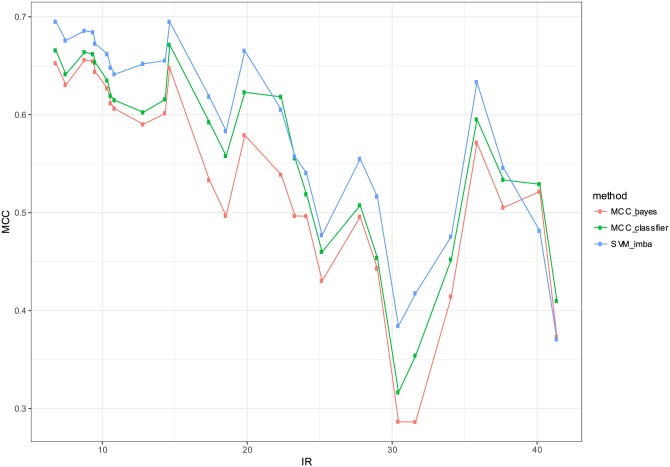
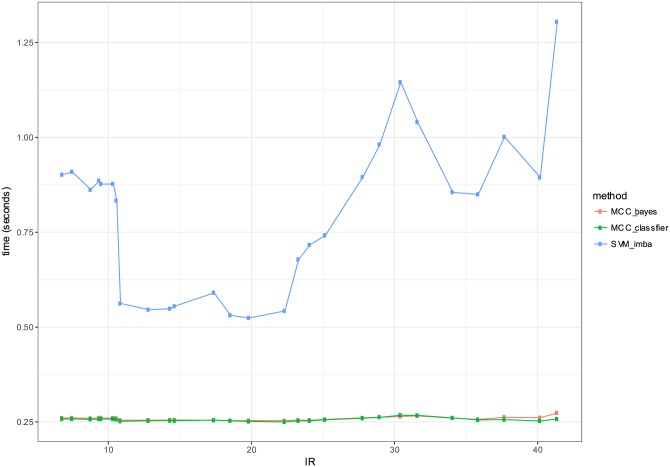
Data imbalance is frequently encountered in biomedical applications. Resampling techniques can be used in binary classification to tackle this issue. However such solutions are not desired when the number of samples in the small class is limited. Moreover the use of inadequate performance metrics, such as accuracy, lead to poor generalization results because the classifiers tend to predict the largest size class. One of the good approaches to deal with this issue is to optimize performance metrics that are designed to handle data imbalance. Matthews Correlation Coefficient (MCC) is widely used in Bioinformatics as a performance metric. We are interested in developing a new classifier based on the MCC metric to handle imbalanced data. We derive an optimal Bayes classifier for the MCC metric using an approach based on Frechet derivative. We show that the proposed algorithm has the nice theoretical property of consistency. Using simulated data, we verify the correctness of our optimality result by searching in the space of all possible binary classifiers. The proposed classifier is evaluated on 64 datasets from a wide range data imbalance. We compare both classification performance and CPU efficiency for three classifiers: 1) the proposed algorithm (MCC-classifier), the Bayes classifier with a default threshold (MCC-base) and imbalanced SVM (SVM-imba). The experimental evaluation shows that MCC-classifier has a close performance to SVM-imba while being simpler and more efficient.
Overview
The claims and statistics of this paper haven’t been checked yet.
Free: it reads the open-access text and checks the first 5 claims that cite a source we can check. Create a free account to check every claim.
Integrity signals
Registry
Cites
Statistics
Figures
Verification
Claims the paper makes
The claims and statistics of this paper haven’t been checked yet.
Free: it reads the open-access text and checks the first 5 claims that cite a source we can check. Create a free account to check every claim.
Claims other papers make about this one
Each is checked against this paper’s own text: does it say what the citing paper says it does?
The cited source says what the claim attributes to it.
In the citing paper
“since it has been shown to present a balanced score when dealing with imbalanced data [11, 6] as is our case with fewer manipulated images.”
From BioFors: A Large Biomedical Image Forensics Dataset (2021) · cites this paper as [6]
Self-check
Percentages, sums and reported differences re-computed from the paper’s own numbers.
The self-check needs the paper’s full text.
Citations
Cites
Advances in neural information processing systems 7
Cios, K., & Shields, M. (1997) · Neurocomputing · doi:10.1016/s0925-2312(97)90018-7 · Cited by 22,059
Comparison of the predicted and observed secondary structure of T4 phage lysozyme
Matthews, B. W. (1975) · Biochimica et Biophysica Acta (BBA) - Protein Structure · doi:10.1016/0005-2795(75)90109-9 · Cited by 5,399
A Probabilistic Theory of Pattern Recognition
Devroye, L., Györfi, L., & Lugosi, G. (1996) · Stochastic Modelling and Applied Probability · doi:10.1007/978-1-4612-0711-5 · Cited by 3,274
Assessing the accuracy of prediction algorithms for classification: an overview
Baldi, P., Brunak, S., Chauvin, Y., Andersen, C. A. F., & Nielsen, H. (2000) · Bioinformatics · doi:10.1093/bioinformatics/16.5.412 · Cited by 2,111
A sequential algorithm for training text classifiers
Lewis, D., & Gale, W. A. (1994) · arXiv (Cornell University) · doi:10.5555/188490.188495 · Cited by 1,731
A Sequential Algorithm for Training Text Classifiers
Lewis, D. D., & Gale, W. A. (1994) · SIGIR ’94 · doi:10.1007/978-1-4471-2099-5_1 · Cited by 1,208
Applying Support Vector Machines to Imbalanced Datasets
Akbani, R., Kwek, S., & Japkowicz, N. (2004) · Lecture Notes in Computer Science · doi:10.1007/978-3-540-30115-8_7 · Cited by 1,134
Yang, J., Roy, A., & Zhang, Y. (2013) · Bioinformatics · doi:10.1093/bioinformatics/btt447 · Cited by 1,035
MAQC Consortium (2010) · Nature Biotechnology · doi:10.1038/nbt.1665 · Cited by 889
Imbalanced Learning: Foundations, Algorithms, and Applications
(2013) · Wiley eBooks · doi:10.1002/9781118646106 · Cited by 831
Cited by
Items 601–700 of 1,000
Cross-Project Defect Prediction Based on Two-Phase Feature Importance Amplification
Xing, Y., Lin, W., Lin, X., Yang, B., & Tan, Z. (2022) · Computational Intelligence and Neuroscience · doi:10.1155/2022/2320447 · Cited by 9
“MCC takes into account true and false, positives and negatives, and is generally regarded as a balanced measure that can be used even if the classes are of very different sizes [44].”
BackgroundSNARER: new molecular descriptors for SNARE proteins classification
Citarella, A. A., Biasi, L. D., Risi, M., & Tortora, G. (2022) · BMC Bioinformatics · doi:10.1186/s12859-022-04677-z · Cited by 9
Kashyap, K., Panigrahi, L., Ahmed, S., & Siddiqi, M. I. (2023) · Molecular Informatics · doi:10.1002/minf.202200113 · Cited by 10
Envelope multi-type transformation ensemble algorithm of Parkinson speech samples
Li, Y., Liu, C., Wang, P., Zhang, H., Wei, A., & Zhang, Y. (2022) · Applied Intelligence · doi:10.1007/s10489-022-04345-y · Cited by 9
“This paper used accuracy, sensitivity, specificity, F-measure (F-M) [44], G-mean (G-M) [45] and Matthews correlation coefficient (Mcc) [46] to measure the performance of the proposed algorithm.”
MethodLarge-Scale Coarse-to-Fine Object Retrieval Ontology and Deep Local Multitask Learning
Ly, N. Q., Do, T., & Nguyen, B. X. (2019) · Computational Intelligence and Neuroscience · doi:10.1155/2019/1483294 · Cited by 9
“CFOR is an object retrieval system integrated by object ontology, a local MDNN (NASNet and ResNet), and an imbalanced data solver (MCC) to improve the performance of the large-scale object retrieval system from the Computational Intelligence and Neuroscience coarse-grained level (categories) to the fine-grained level (…”
BackgroundMethodInfluentialA review of silhouette extraction algorithms for use within visual hull pipelines
Ascenso, G., Yap, M. H., Allen, T., Choppin, S. B., & Payton, C. J. (2020) · Computer Methods in Biomechanics and Biomedical Engineering Imaging & Visualization · doi:10.1080/21681163.2020.1790040 · Cited by 14
Briñez-Ortega, E., de Almeida, V. L., Lopes, J. C. D., & Burgos, A. E. (2020) · Anais da Academia Brasileira de Ciências · doi:10.1590/0001-3765202020181323 · Cited by 9
An error detection method for real‐time EPID‐based treatment delivery quality assurance
Alves, V. G. L., Ahmed, M., Aliotta, E., Choi, W., & Siebers, J. V. (2020) · Medical Physics · doi:10.1002/mp.14633 · Cited by 9
SensiX: A System for Best-effort Inference of Machine Learning Models in Multi-device Environments
Min, C., Mathur, A., Montanari, A., & Kawsar, F. (2022) · IEEE Transactions on Mobile Computing · doi:10.1109/tmc.2022.3173914 · Cited by 11
“regarded as a balanced measure that can be used for imbalanced datasets [43].”
BackgroundDeep Fuzzy Envelope Sample Generation Mechanism for Imbalanced Ensemble Classification
Li, F., Li, Y., Shen, Y., Pedrycz, W., Zhang, X., Wang, P., Li, P., Zhou, C., & Cheng, H. (2023) · IEEE Transactions on Fuzzy Systems · doi:10.1109/tfuzz.2023.3321768 · Cited by 9
An attention approach to emoji focused sarcasm detection
Grover, V., & Banati, H. (2024) · Heliyon · doi:10.1016/j.heliyon.2024.e36398 · Cited by 13
Medvedeva, A., Vasnetsov, C., Vasnetsov, V., & Kolomeisky, A. B. (2024) · The Journal of Physical Chemistry Letters · doi:10.1021/acs.jpclett.4c03197 · Cited by 8
A machine learning approach for identifying anatomical biomarkers of early mild cognitive impairment
Ahmad, A. L., Sánchez‐Bornot, J. M., Sotero, R. C., Coyle, D., Idris, Z., & Faye, I. (2024) · PeerJ · doi:10.7717/peerj.18490 · Cited by 14
Markov, K., Elgendi, M., Birrer, V., & Menon, C. (2025) · npj Biosensing · doi:10.1038/s44328-025-00041-2 · Cited by 14
Płaczek, A., Płuciennik, A., Kotecka-Blicharz, A., Jarząb, M., & Mrozek, D. (2020) · IEEE Access · doi:10.1109/access.2020.3026315 · Cited by 8
“Having regard to the results of the experiments with imbalanced dataset reported in [46], [51], we decided to compare our classifiers using the MCC metric to handle data imbalance; the disproportion ratio was 1.”
ResultEvolved IoT Malware Detection using Opcode Category Sequence through Machine Learning
Moon, S., Kim, Y.-H., Lee, H., Kim, D., & Hwang, D. (2022) · International Conference on Computer Communications and Networks (ICCCN) · doi:10.1109/icccn54977.2022.9868876 · Cited by 8
“As performance indicators, accuracy (ACC), true positive rate (TPR), false positive rate (FPR), AUC-ROC (ROC), and F1-score (F1), and Matthews Correlation Coefficient (MCC, [21]) are utilized [22].”
MethodKarthikeyan, V., Priyadharsini, S. S., Balamurugan, K., & Ramasamy, M. (2022) · International Journal of Speech Technology · doi:10.1007/s10772-021-09902-3 · Cited by 8
“Since the three voice print datasets are imbalanced, M a t t h ews c o r r e l a t i o n c o e f f i c i e n t ( M C C ) (Boughorbel, Jarray, Elanbari 2017), and g-means metric value √ Specificity × Sensitivity (Kubat & Matwin, 1997) are employed in this paper to validate the performance of the ML…”
RetractedTong, X., & Zhou, F. (2023) · Frontiers in Immunology · doi:10.3389/fimmu.2023.1120670 · Cited by 8
“MCC (Matthews Correlation Coefficient metric) (49), MNC (the maximal neighbourhood coefficient), and Degree algorithms were used to identify the hub genes.”
MethodEnabling inter-organizational analytics in business networks through meta machine learning
Hirt, R., Kühl, N., Martin, D., & Satzger, G. (2023) · Information Technology and Management · doi:10.1007/s10799-023-00399-7 · Cited by 14
“To evaluate the technical performance of the prediction, we use the Matthews correlation coefficient (MCC) as a metric for evaluation, which is particularly robust to class imbalance (Boughorbel et al., 2017).”
Augmenting Reddit Posts to Determine Wellness Dimensions impacting Mental Health
Liyanage, C., Garg, M., Mago, V., & Sohn, S. (2023) · Workshop on Biomedical Language Processing (BioNLP) · doi:10.18653/v1/2023.bionlp-1.27 · Cited by 10
Fast Screening of Patients with Altered D-Dimer Values Using Infrared Spectroscopy
Brun, B. F., Nascimento, M. H. C., Dias, P. A. C., Marcarini, W. D., Singh, M. N., Filgueiras, P. R., Vassallo, P. F., Romão, W., Mill, J. G., Martin, F. L., et al. (2022) · Talanta · doi:10.1016/j.talanta.2023.125482 · Cited by 8
Uesawa, Y. (2024) · International Journal of Molecular Sciences · doi:10.3390/ijms25031373 · Cited by 12
“Despite this, the results mentioned above demonstrate the current technical capabilities of Ames prediction, underlining both the advances and potential limitations in this field.”
ResultAn Initial Investigation on Sliding Windows for Anomaly-Based Intrusion Detection
Zoppi, T., Ceccarelli, A., & Bondavalli, A. (2019) · IEEE World Congress on Services (SERVICES) · doi:10.1109/services.2019.00031 · Cited by 10
Development of Vehicle Speed Estimation Technique using Image Processing
Raikar, N. M. (2020) · International Journal of Engineering Research and · doi:10.17577/ijertv9is090187 · Cited by 8
“The MCC can be calculated directly from the confusion matrix using the formula [23]:”
MethodGeltser, B. I., Shakhgeldyan, K. I., Rublev, V. Y., Kotelnikov, V. N., Kriger, A. B., & Shirobokov, V. G. (2020) · Kardiologiia · doi:10.18087/cardio.2020.10.n1170 · Cited by 8
A method of credit evaluation modeling based on block-wise missing data
Lan, Q., & Jiang, S. (2021) · Applied Intelligence · doi:10.1007/s10489-021-02225-5 · Cited by 8
A comprehensive study of domain-specific emoji meanings in sentiment classification
Mahmoudi, N., Olech, Ł. P., & Docherty, P. (2021) · Computational Management Science · doi:10.1007/s10287-021-00407-7 · Cited by 13
“These measures are appropriate when comparing classifiers across unbalanced datasets (Boughorbel et al. 2017).”
BackgroundO’Neill, J., Rozenshtein, P., Kiryo, R., Kubota, M., & Bollegala, D. (2021) · Conference on Empirical Methods in Natural Language Processing (EMNLP) · doi:10.18653/v1/2021.emnlp-main.568 · Cited by 68
“F1, Matthew’s Correlation Coefficient (MCC; Boughorbel et al., 2017), and accuracy are used as evaluation metrics.”
MethodImproving Intrusion Detection Through Training Data Augmentation
Otokwala, U. J., Petrovski, A., & Kalutarage, H. (2021) · International Conference on Security of Information and Networks (SIN) · doi:10.1109/sin54109.2021.9699293 · Cited by 13
Şener, A., Ergen, B., & Toğaçar, M. (2022) · Turkish Journal of Science and Technology · doi:10.55525/tjst.1056283 · Cited by 8
Lawson, K. N., Tracy, B. M., Sharova, M., Muirhead, J. R., & Cawood, A. M. (2022) · Frontiers in Marine Science · doi:10.3389/fmars.2022.862430 · Cited by 8
Binyamin, H., & Senderowitz, H. (2022) · npj Computational Materials · doi:10.1038/s41524-022-00823-6 · Cited by 8
Zhang, J., Yang, X., Chen, J., Han, J., Chen, X., Fan, Y., & Zheng, H. (2022) · Journal of obstetrics and gynaecology research · doi:10.1111/jog.15458 · Cited by 10
LGFFN-GHI: A Local-Global Feature Fuse Network for Gastric Histopathological Image Classification
Li, S., & Liu, W. (2022) · Journal of Computer and Communications · doi:10.4236/jcc.2022.1011007 · Cited by 8
Detection of grey zones in inter-rater agreement studies
Demirhan, H., & Yılmaz, A. E. (2023) · BMC Medical Research Methodology · doi:10.1186/s12874-022-01759-7 · Cited by 8
“Then, sensitivity, specificity, and the Mathew’s correlation coefficient [33] are calculated as in Eqs.”
MethodMarquardt, A., Hartrampf, P. E., Kollmannsberger, P., Solimando, A. G., Meierjohann, S., Kübler, H. R., Bargou, R. C., Schilling, B., Serfling, S. E., Buck, A. K., et al. (2023) · Cancers · doi:10.3390/cancers15020392 · Cited by 9
“For FAP, the results were the following: TN = 8780, TP = 215, FN = 206, FP = 1, F1 = 0.68, MCC = 0.71.”
MethodInfluentialGAN-based Data Augmentation for Credit Card Fraud Detection
Strelcenia, E., & Prakoonwit, S. (2022) · IEEE International Conference on Big Data (BigData) · doi:10.1109/bigdata55660.2022.10020419 · Cited by 8
“By oversampling the minority class, under sampling the majority class, or occasionally combining the two, data-level approaches frequently provide a balanced dataset [16].”
BackgroundRanks of elliptic curves and deep neural networks
Kazalicki, M., & Vlah, D. (2023) · Research in Number Theory · doi:10.1007/s40993-023-00462-w · Cited by 8
“The neural networks have been selected to maximize the Matthews correlation coefficient (MCC) or phi coefficient, which is generally regarded as a balanced measure of the quality of the classification even if the classes are of very different sizes [4], and thus prevents the classifier ignoring the small classes.”
BackgroundMethodCo-expressed genes enhance precision of receptor status identification in breast cancer patients
Kenn, M., Castillo‐Tong, D. C., Singer, C. F., Cibena, M., KÖLBL, H., & Schreiner, W. (2018) · Breast Cancer Research and Treatment · doi:10.1007/s10549-018-4920-x · Cited by 8
On Algorithms Selection for Unsupervised Anomaly Detection
Zoppi, T., Ceccarelli, A., & Bondavalli, A. (2018) · IEEE Pacific Rim International Symposium on Dependable Computing (PRDC) · doi:10.1109/prdc.2018.00050 · Cited by 12
“Aggregate metrics based on the abovementioned indicators are Precision , Recall (or Coverage ), False Positive Rate , Accuracy , F-Score (β) [31] and Matthews Coefficient (MCC, [32]).”
BackgroundAutomated Classification of Class Role-Stereotypes via Machine Learning
Nurwidyantoro, A., Ho-Quang, T., & Chaudron, M. R. V. (2019) · International Conference on Evaluation and Assessment in Software Engineering (EASE) · doi:10.1145/3319008.3319016 · Cited by 8
“MCC [15], which is known for measuring the performance of imbalanced binary classification [4], supports this evidence by showing a lower score on those three role-stereotypes.”
Identification of HEp-2 specimen images with mitotic cell patterns
Gupta, K., Bhavsar, A. V., & Sao, A. K. (2020) · Journal of Applied Biomedicine · doi:10.1016/j.bbe.2020.07.003 · Cited by 9
Comparative Study of Event Prediction in Power Grids using Supervised Machine Learning Methods
Høiem, K. W., Santi, V., Torsæter, B. N., Helge Langseth, A., Andresen, C., & Rosenlund, G. H. (2020) · International Conference on Smart Energy Systems and Technologies (SEST) · doi:10.1109/sest48500.2020.9203025 · Cited by 8
“It takes into account the true positive rate, true negative rate, false positive rate and false negative rate, and is regarded as a robust measure for classification problems with an unbalanced dataset [17].”
BackgroundTask Balanced Multimodal Feature Selection to Predict the Progression of Alzheimer’s Disease
Brand, L., O'Callaghan, B., Sun, A., & Wang, H. (2020) · IEEE International Conference on Bioinformatics and Bioengineering (BIBE) · doi:10.1109/bibe50027.2020.00040 · Cited by 9
RR Lyrae Star Candidates from SDSS Databases by Cost-sensitive Random Forests
Zhang, J., Zhang, Y., & Zhao, Y. (2020) · The Astrophysical Journal Supplement Series · doi:10.3847/1538-4365/ab5a7c · Cited by 9
An empirical $G$-Wishart prior for sparse high-dimensional Gaussian graphical modelsPreprint
Liu, C., & Martin, R. (2019) · arXiv (Cornell University) · doi:10.48550/arxiv.1912.03807 · Cited by 18
“of the precision matrix Ω is 0 or, equivalently Ω ∈ PG, where PG is the cone of positive definite symmetric matrices having zero entries corresponding to each missing edge in G; see Dempster (1972), Lauritzen and Wermuth (1989), Lauritzen (1996), etc.”
BackgroundMethodInfluentialBayesian Meta-Analysis of Software Defect Prediction With Machine Learning
Mohammadi, M., Nucci, D. D., & Tamburri, D. A. (2023) · IEEE Transactions on Industrial Cyber-Physical Systems · doi:10.1109/ticps.2023.3306723 · Cited by 10
“It is generally regarded as a balanced measure that can be used even if the classes are of very different sizes [32].”
BackgroundEffects of Class Imbalance Countermeasures on Interpretability
Cemernek, D., Siddiqi, S., & Kern, R. (2024) · IEEE Access · doi:10.1109/access.2024.3381536 · Cited by 9
“From the equation of the MCC depicted in Equation 1 one can see that in case any of the expressions in the denominator are zero, then the MCC is not defined [19].”
MethodFinding Harmony in the Noise: Blending Security Alerts for Attack Detection
Roelofs, T., Bárbaro, E., Pekarskikh, S., Orzechowska, K., Kwapień, M., Tyrlik, J., Smadu, D., van Eeten, M. J. G., & Zhauniarovich, Y. (2024) · ACM Symposium on Applied Computing · doi:10.1145/3605098.3635981 · Cited by 7
Wong, A., Garcia, A. V., & Lim, Y.-W. (2025) · Decision Analytics Journal · doi:10.1016/j.dajour.2025.100601 · Cited by 24
EnsemPred-ACP: Combining machine and deep learning to improve anticancer peptide prediction
Kwon, M., Jang, Y. E., Hwang, J. S., Kim, S. G., George, N. P., Basith, S., & Lee, G. (2025) · Computers in Biology and Medicine · doi:10.1016/j.compbiomed.2025.110668 · Cited by 7
FIGS: A Realistic Intrusion-Detection Framework for Highly Imbalanced IoT Environments
Anbiaee, Z., Dadkhah, S., & Ghorbani, A. A. (2025) · Electronics · doi:10.3390/electronics14142917 · Cited by 11
“It is preferred to use MCC for IDS evaluation in IoT settings due to its performance not being affected by imbalanced class distributions because it produces a reliable assessment of IDS [43,44].”
Classification of microscopic images of rock thin sections based on TLCA-ResNet34
Zhao, Z., Tan, S., Chen, H., Wang, P., Zhang, Q., Wei, H., & Zhang, Z. (2025) · Applied Computing and Geosciences · doi:10.1016/j.acags.2025.100272 · Cited by 7
GOIO: Generative Oversampling Approach to Class Imbalance and Overlap of Tabular Data
Ren, S., Ding, J., Yang, C., & Cheung, Y. (2025) · IEEE Transactions on Knowledge and Data Engineering · doi:10.1109/tkde.2025.3608246 · Cited by 7
A multi-criteria approach to evolve sparse neural architectures for stock market forecasting
Hafiz, F. M. F., Broekaert, J., Torre, D. L., & Swain, A. K. (2023) · Annals of Operations Research · doi:10.1007/s10479-023-05715-6 · Cited by 10
“…interpretation, the Matthews correlation coefficient (MCC) has been proposed to give a more balanced performance measure in binary classification (Boughorbel et al., 2017; Chicco, 2017; Chicco & Jurman, 2020): The MCC metric is more sensitive to all entries of the confusion matrix and…”
Cost-Sensitive Learning based on Performance Metric for Imbalanced Data
Aurelio, Y. S., de Almeida, G. M., de Castro, C. L., & Braga, A. P. (2022) · Neural Processing Letters · doi:10.1007/s11063-022-10756-2 · Cited by 7
Two is better than one: the double diffusion technique in classifying heart failure
Zavorsky, G. S., & Agostoni, P. (2023) · ERJ Open Research · doi:10.1183/23120541.00644-2023 · Cited by 7
“Model efficacy was further gauged using the area under the ROC curve (AUC) and the MCC. Notably, the MCC is an especially reliable metric when evaluating binary categories in datasets where the number of disease cases does not match non-disease cases, as in our pooled dataset [16, 27, 28].”
MethodJeon, K. M., Jin-Woo, J., Lee, C., & Yoo, D. (2023) · Animals · doi:10.3390/ani13233728 · Cited by 8
Detection of abnormal operation in geothermal binary plant feed pumps using time-series analytics
Abrasaldo, P. M. B., Zarrouk, S. J., Mudie, A., Cen, J., Siega, C., & Kempa-Liehr, A. W. (2024) · Expert Systems with Applications · doi:10.1016/j.eswa.2024.123305 · Cited by 7
Tewari, S., Prasad, A., Patel, H. J., Uddin, M., Al‐Shehari, T., & Alsadhan, N. A. (2024) · IEEE Access · doi:10.1109/access.2024.3507569 · Cited by 7
Raveendrakumar, E., Gopichand, B., Bhosale, H., Melethadathil, N., & Valadi, J. K. (2024) · SAR and QSAR in environmental research · doi:10.1080/1062936x.2024.2446352 · Cited by 7
“We have also computed and tabulated other metrics for the trained models and test sets, which include Mathew correlation coefficient (MCC) scores for gauging datasets with imbalance with the best tuned hyperparameters [49–51].”
Monzón, A. M., Carraro, M., Chiricosta, L., Reggiani, F., Han, J., Öztürk, K., Wang, Y., Miller, M., Bromberg, Y., Capriotti, E., et al. (2019) · Human Mutation · doi:10.1002/humu.23856 · Cited by 7
“We should emphasize here that data imbalance frequently occurs in biomedical applications and the use of inadequate performance metrics could lead to misinterpretation of predictors performance (Boughorbel et al., 2017).”
BackgroundState of seahorse fisheries in India, nearly two decades after they were banned
Vaidyanathan, T., & Vincent, A. C. J. (2021) · Biodiversity and Conservation · doi:10.1007/s10531-021-02188-6 · Cited by 10
Accurate Prediction and Key Feature Recognition of Immunoglobulin
Gong, Y., Liao, B., Peng, D., & Zou, Q. (2021) · Applied Sciences · doi:10.3390/app11156894 · Cited by 8
“To further accurately predict whether the protein sequence is an immunoglobulin, this classification problem is regarded as a dichotomy problem [48,49].”
BackgroundGonzález-Ramírez, A., López, J., Torres-Román, D., & Vargas, J. I. Y. (2021) · Journal of Quantitative and Statistical Analysis · doi:10.35429/jqsa.2021.22.8.11.17 · Cited by 8
İNTERNETTEN ALIŞVERİŞ YAPAN HANELERİN RASTGELE ORMAN YÖNTEMİYLE TAHMİN EDİLMESİ
Ercan, U. (2021) · Kafkas Üniversitesi İktisadi ve İdari Bilimler Fakültesi Dergisi · doi:10.36543/kauiibfd.2021.030 · Cited by 6
Özkan, Y., YÜREKLİ, B. S., & Süner, A. (2021) · Gümüşhane Üniversitesi Fen Bilimleri Enstitüsü Dergisi · doi:10.17714/gumusfenbil.820882 · Cited by 9
Ülker, F., & Küçüker, A. (2022) · COMPEL The International Journal for Computation and Mathematics in Electrical and Electronic Engineering · doi:10.1108/compel-06-2021-0200 · Cited by 7
Local Road Area Extraction in CSAR Imagery Exploiting Improved Curvilinear Structure Detector
Luo, Y., An, D., Wang, W., Chen, L., & Huang, X. (2022) · IEEE Transactions on Geoscience and Remote Sensing · doi:10.1109/tgrs.2022.3172227 · Cited by 9
“In addition, MCC is an appropriate measurement of binary classification, and it has been widely utilized to evaluate image segmentation methods [63]–[65].”
MethodAn empirical study of issue-link algorithms: which issue-link algorithms should we use?
Kondo, M., Kashiwa, Y., Kamei, Y., & Mizuno, O. (2022) · Empirical Software Engineering · doi:10.1007/s10664-022-10120-x · Cited by 7
“We also used a threshold-dependent measure, MCC, because prior studies reported that MCC is durable to the skewness of defect data [19, 88].”
MethodAutomatic Assessment of Oral Reading Accuracy for Reading Diagnostics
Molenaar, B., Tejedor-Garcı́a, C., Catia Cucchiarini, A., & Strik, H. (2023) · Interspeech (USB) · doi:10.21437/interspeech.2023-1681 · Cited by 7
“These were then used to calculate precision, recall, specificity, F1 and Matthews correlation coefficient (MCC) [21, 22].”
MethodFarrag, A. N., Kamel, A. M., & El-Baraky, I. A. (2024) · Reviews in Medical Virology · doi:10.1002/rmv.2514 · Cited by 8
Ardakani, I., Hashimoto, K., & Yoda, K. (2018) · Lecture notes in computer science · doi:10.1007/978-3-319-91131-1_1 · Cited by 9
Mani‐Varnosfaderani, A., Neiband, M. S., & Benvidi, A. (2018) · Molecular Diversity · doi:10.1007/s11030-018-9856-x · Cited by 7
A step loss function based SVM classifier for binary classification
Jarray, F., Boughorbel, S., Mansour, M., & Tlig, G. (2018) · Procedia Computer Science · doi:10.1016/j.procs.2018.10.123 · Cited by 7
Self-citationDetection of focal epilepsy in brain maps through a novel pattern recognition technique
Dominguez, E. C., Subathra, M. S. P., Sairamya, N. J., & George, S. T. (2019) · Neural Computing and Applications · doi:10.1007/s00521-019-04544-8 · Cited by 8
Chown, H. (2019) · The EuroBiotech Journal · doi:10.2478/ebtj-2019-0020 · Cited by 8
“Due to its unbiased nature it is a common metric used by a US FDA initiative for predictive model consensus (41).”
MethodStrain Curve Classification Using Supervised Machine Learning Algorithm with Physiologic Constraints
Yahav, A., Zurakhov, G., Adler, O., & Adam, D. (2020) · Ultrasound in Medicine & Biology · doi:10.1016/j.ultrasmedbio.2020.03.002 · Cited by 8
Kaya, U., Akba, F., Medeni, İ. T., & Medeni, T. D. (2020) · Bilişim Teknolojileri Dergisi · doi:10.17671/gazibtd.648424 · Cited by 8
“MCC, makine öğreniminde ikili sınıflandırmaların kalitesini ölçmek üzere kullanılır [47].”
Discriminatively-Tuned Generative Classifiers for Robust Natural Language Inference
Ding, X., Liu, T., Chang, B., Sui, Z., & Gimpel, K. (2020) · Conference on Empirical Methods in Natural Language Processing (EMNLP) · doi:10.18653/v1/2020.emnlp-main.657 · Cited by 8
Real-Time Sentiment Analysis for Polish Dialog Systems Using MT as Pivot
Wołk, K. (2021) · Electronics · doi:10.3390/electronics10151813 · Cited by 7
Kamla, A. T., Gomes, D. G. E., Hoyer, M. V., Keith‐Diagne, L. W., Bonde, R. K., & Francis‐Floyd, R. (2021) · Ecology and Evolution · doi:10.1002/ece3.8202 · Cited by 7
Genome Functional Annotation across Species using Deep Convolutional Neural NetworksPreprint
Khodabandelou, G., Routhier, E., & Mozziconacci, J. (2018) · bioRxiv (Cold Spring Harbor Laboratory) · doi:10.1101/330308 · Cited by 11
“According to [20] 440 MCC is more reliable than the other measures for imbalanced data.”
BackgroundEmergent constraints for uncertainty reduction in climate projections
Varotsos, C. A., Varotsos, C., Efstathiou, M., & Sarlis, N. V. (2025) · Journal of Atmospheric and Solar-Terrestrial Physics · doi:10.1016/j.jastp.2025.106556 · Cited by 7
Performance metrics for machine learning solutions in laboratory medicine
Spies, N. C., & Ng, D. P. (2025) · Laboratory Medicine · doi:10.1093/labmed/lmaf013 · Cited by 7
Addison, S. M., Campion, E. D., Landsman, M. J., Rogalin, C. L., & Veeh, C. A. (2025) · Research on Social Work Practice · doi:10.1177/10497315251357190 · Cited by 7
“The last metric to consider is MCC, which should be interpreted like any other correlation coef fi cient where higher and positive estimates are indicative of better model performance (Boughorbel et al., 2017).”
Smart ensemble modeling for multiclass lateral‑spreading prediction
Raja, M. N. A., Abdoun, T. H., & El-Sekelly, W. (2026) · Applied Soft Computing · doi:10.1016/j.asoc.2026.115163 · Cited by 7
The effect of rebalancing on LDA in imbalanced classification
Kim, A. K. H., & Chung, H. (2021) · Stat · doi:10.1002/sta4.384 · Cited by 7
“By definition, we can represent the population MCC as Note that Then by a simple calculation (see e.g. supplementary materials in Boughorbel et al., 2017), Since u and v are a function of p and Δ using (2) and (3), we have M ¼ M ð p Þ¼ M ð p , q , Δ Þ .”
BackgroundMethodA Hawkes Model Approach to Modeling Price Spikes in the Japanese Electricity Market
Bikeri, A., & Ikeda, K. (2023) · Energies · doi:10.3390/en16041570 · Cited by 6
Handling Class Imbalance by Estimating Minority Class Statistics
Ansari, F., Das, S., & Shamsolmoali, P. (2023) · International Joint Conference on Neural Networks (IJCNN) · doi:10.1109/ijcnn54540.2023.10191975 · Cited by 6
“The first metric used is Matthews correlation coefficient (MCC) [20], also known as the phi coefficient, an evaluation metric primarily used for imbalanced datasets to generate a balanced measure using true and false positives and negatives.”
MethodSun, W., Wang, X., Li, G., Ding, C., Wang, Y., Su, Z., & Xue, M. (2023) · Discover Oncology · doi:10.1007/s12672-023-00772-6 · Cited by 6
“The maximal clique centrality (MCC) algorithm [33] has been widely utilized as a performance metric in bioinformatics.”
MethodAnnual extent of prescribed burning on moorland in Great Britain and overlap with ecosystem services
Shewring, M. P., Wilkinson, N. I., Teuten, E. L., Buchanan, G. M., THOMPSON, P. S., & Douglas, D. J. T. (2024) · Remote Sensing in Ecology and Conservation · doi:10.1002/rse2.389 · Cited by 8
Reliability Analysis of Psychological Concept Extraction and Classification in User-Penned Text
Garg, M., Sathvik, M., Raza, S., Chadha, A., & Sohn, S. (2024) · Proceedings of the International AAAI Conference on Web and Social Media · doi:10.1609/icwsm.v18i1.31324 · Cited by 6
Black, I. M., Yeter, B., Häckell, M. W., & Kolios, A. (2024) · Ocean Engineering · doi:10.1016/j.oceaneng.2024.118842 · Cited by 8
Classification of 3D Film Patterns with Deep Learning
Mlyahilu, J. N., Kim, Y., & Kim, J. (2019) · Journal of Computer and Communications · doi:10.4236/jcc.2019.712015 · Cited by 6
“The Machine learning thresholding metrics were applied and accuracy was 45% smaller than the criterion mentioned in [9] and [10].”
BackgroundMethodMarques, A., de Souza, E. M., Müller, M., Brum, D., Zanotta, D. C., Horota, R. K., Kupssinskü, L. S., Veronez, M. R., Gonzaga, L., & Cazarin, C. L. (2020) · Sensors · doi:10.3390/s20123559 · Cited by 6
“The MCC reached was 0.9716, very close to 1, higher than the MCC for Landsat 8 image classification.”
MethodInfluentialBhagwati, S., & Siddiqi, M. I. (2020) · Journal of Biomolecular Structure and Dynamics · doi:10.1080/07391102.2020.1860825 · Cited by 6
“Matthews Correlation Coefficient (MCC) was also calculated for the model, which measures the quality of binary classification and represents a correlation between the observed and predicted classification (Boughorbel et al., 2017).”
MethodAdenike Azeezat, A. D. A. M., Adebukola, O. S., Abayomi-Alli, A. A., & Olushola, O. B. (2021) · Communications in computer and information science · doi:10.1007/978-3-030-69143-1_14 · Cited by 6
Quality assessment of web-based information on type 2 diabetes
Ölçer, D., & Temizel, T. T. (2021) · Online Information Review · doi:10.1108/oir-02-2021-0089 · Cited by 6
An Effective, Robust and Fairness-aware Hate Speech Detection Framework
Mou, G., & Lee, K. (2021) · IEEE International Conference on Big Data (BigData) · doi:10.1109/bigdata52589.2021.9672022 · Cited by 6
“4) Measurements: We evaluated each model’s performance by precision (pre), recall (rec), accuracy (acc), macro F1 score (macF1), and Matthews correlation coefficient (MCC – a metric especially good for an imbalanced dataset [83]).”
Method
Metadata
- Authors
- Boughorbel, S., Jarray, F., & El-Anbari, M.
- Affiliations
- Sidra Medical and Research Center (QA)
- Conservatoire National des Arts et Métiers (FR)
- Corresponding author
- Boughorbel, Sabri
- Venue
- PLOS ONE
- Publisher
- Public Library of Science (PLoS)
- Published
- 2017-06-02
- Volume
- 12
- Issue
- 6
- Pages
- e0177678
- ISSN
- 1932-6203 (ISSN-L)
- PMC
- PMC5456046
- OpenAlex
- W2620760558
- Cited by
- 1,222
- References
- 29
- Citations by year
- 2026: 90 · 2025: 104 · 2024: 111 · 2023: 163 · 2022: 179 · 2021: 224 · 2020: 165 · 2019: 120 · 2018: 64 · 2017: 2
- FWCI
- 57.24
- Type
- journal article
- Language
- en
- Open access
- gold
- doi.org
- Licence
- Locations
- PLoS ONE (publishedVersion, cc-by)
- Europe PMC (PubMed Central) (publishedVersion, cc-by)
- PubMed Central (publishedVersion, cc-by)
- PubMed (publishedVersion)
- RePEc: Research Papers in Economics (submittedVersion)
- DOAJ (DOAJ: Directory of Open Access Journals) (submittedVersion, cc-by-sa)
- Figshare (submittedVersion, cc-by)
- Funders
- Qatar Foundation
- Topics
- Physical Sciences › Computer Science › Artificial Intelligence › Imbalanced Data Classification Techniques
- Physical Sciences › Computer Science › Artificial Intelligence › Machine Learning and Data Classification
- Physical Sciences › Computer Science › Artificial Intelligence › Data Stream Mining Techniques
- Keywords
- class imbalance, Matthews correlation coefficient, Fréchet derivative, binary classification, biomedical classification
- MeSH terms
- Algorithms, Bayes Theorem, Models, Theoretical, Computational Biology, Support Vector Machine
About these checks
Registry, retraction, Cites and statistics results are computed, not judged, with one exception: a printed reference that no index lists is read once by a model before it counts as a citation error. Claims are extracted by a model and kept only when their quote appears verbatim in the text; each cited source is then checked, with a model’s help, for whether it says what the claim relies on. Those verdicts can be wrong — read the claim’s quote and the cited source before relying on one.
Statistics and arithmetic are recomputed, not judged.
Confidence bands are shown only for fields calibrated on our annotated test set. None is calibrated yet, so no band is shown.
What counts as a claim ›How we measure confidence ›How we check this ›
Are you an author, or do you see a problem with this page? Request a review
Data sources
Bibliographic data: Semantic Scholar, OpenAlex, Crossref.
Contains information from the Semantic Scholar Academic Graph Datasets, made available under the ODC Attribution License (ODC-BY 1.0).
Semantic Scholar’s data is described in: Kinney, R., et al. (2023). The Semantic Scholar Open Data Platform. arXiv:2301.10140.
