

Prevalence of psychotic disorders and its association with methodological issues. A systematic review and meta-analyses
Open accessThe DOI matches its Crossref record; 102 of the 102 references it cites were found in a registry or an index.
Abstract
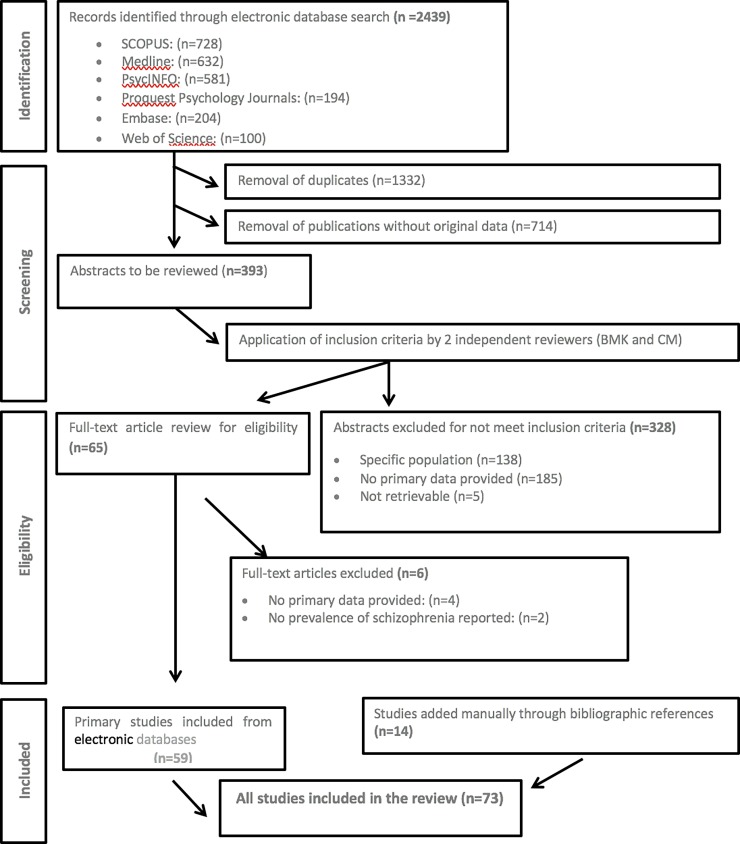
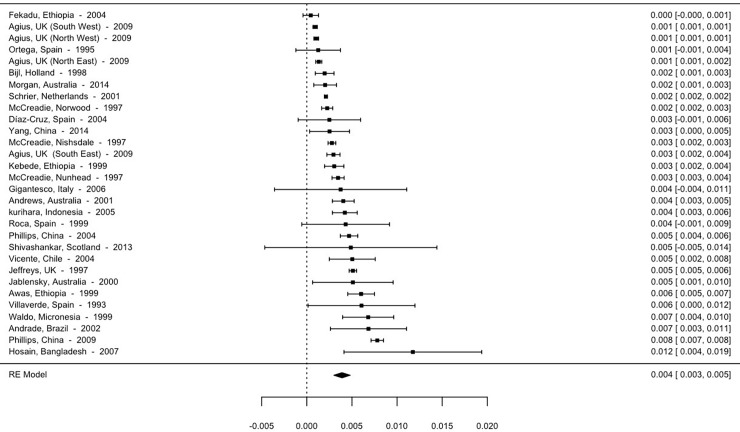
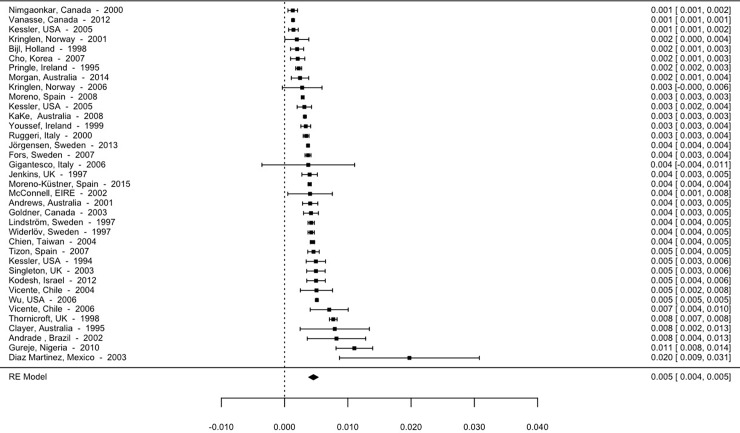
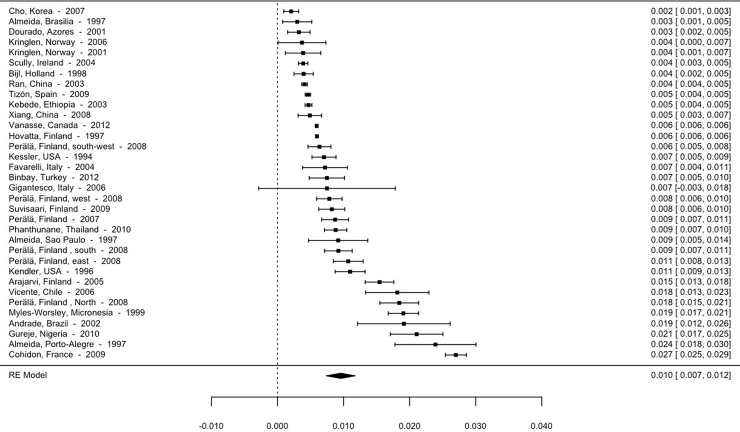
OBJECTIVES: The purpose of this study is to provide an updated systematic review to identify studies describing the prevalence of psychosis in order to explore methodological factors that could account for the variation in prevalence estimates. METHODS: Studies with original data related to the prevalence of psychosis (published between 1990 and 2015) were identified via searching electronic databases and reviewing manual citations. Prevalence estimates were sorted according to prevalence type (point, 12-months and lifetime). The independent association between key methodological variables and the mean effect of prevalence was examined (prevalence type, case-finding setting, method of confirming diagnosis, international classification of diseases, diagnosis category, and study quality) by meta-analytical techniques and random-effects meta-regression. RESULTS: Seventy-three primary studies were included, providing a total of 101 estimates of prevalence rates of psychosis. Across these studies, the pooled median point and 12-month prevalence for persons was 3.89 and 4.03 per 1000 respectively; and the median lifetime prevalence was 7.49 per 1000. The result of the random-effects meta-regression analysis revealed a significant effect for the prevalence type, with higher rates of lifetime prevalence than 12-month prevalence (p<0.001). Studies conducted in the general population presented higher prevalence rates than those carried out in populations attended in health/social services (p = 0.006). Compared to the diagnosis of schizophrenia only, prevalence rates were higher in the probable psychotic disorder (p = 0.022) and non-affective psychosis (p = 0.009). Finally, a higher study quality is associated with a lower estimated prevalence of psychotic disorders (p<0.001). CONCLUSIONS: This systematic review provides a comprehensive comparison of methodologies used in studies of the prevalence of psychosis, which can provide insightful information for future epidemiological studies in adopting the most relevant methodological approach.
Overview
The claims and statistics of this paper haven’t been checked yet.
Free: it reads the open-access text and checks the first 5 claims that cite a source we can check. Create a free account to check every claim.
Integrity signals
Registry
Cites
Statistics
Figures
Verification
Claims the paper makes
The claims and statistics of this paper haven’t been checked yet.
Free: it reads the open-access text and checks the first 5 claims that cite a source we can check. Create a free account to check every claim.
Claims other papers make about this one
Each is checked against this paper’s own text: does it say what the citing paper says it does?
The check wasn’t confident either way, so it gives no verdict — never disputed.
In the citing paper
“Although our search criteria included all DSM-5 schizophrenia-spectrum disorders, all of the SSD studies we located used samples diagnosed with schizophrenia and schizoaffective disorder, the two most common non-substance-related DSM-5 schizophrenia-spectrum disorders (American Psychiatric Association, 2013; Moreno-Küstner et al., 2018; Simeone et al., 2015).”
From Narrative identity in the psychosis spectrum: A systematic review and developmental model (2021) · cites this paper as Moreno-Küstner et al., 2018
Experimental — accuracy not yet measured
Self-check
Percentages, sums and reported differences re-computed from the paper’s own numbers.
The self-check needs the paper’s full text.
Citations
Cites
Preferred Reporting Items for Systematic Reviews and Meta-Analyses: the PRISMA statement
Moher, D., Liberati, A., Tetzlaff, J., Altman, D. G., & for the PRISMA Group (2009) · BMJ · doi:10.1136/bmj.b2535 · Cited by 83,823
Preferred Reporting Items for Systematic Reviews and Meta-Analyses: The PRISMA Statement
Moher, D., Liberati, A., Tetzlaff, J., Altman, D. G., & The PRISMA Group (2009) · PLoS Medicine · doi:10.1371/journal.pmed.1000097 · Cited by 64,042
Bias in meta-analysis detected by a simple, graphical test
Egger, M., Smith, G. D., Schneider, M., & Minder, C. (1997) · BMJ · doi:10.1136/bmj.315.7109.629 · Cited by 56,722
Preferred reporting items for systematic reviews and meta-analyses: The PRISMA statement
Moher, D., Liberati, A., Tetzlaff, J., Altman, D. G., & the PRISMA Group* (2009) · Annals of Internal Medicine · doi:10.7326/0003-4819-151-4-200908180-00135 · Cited by 37,554
Conducting Meta-Analyses in R with the metafor Package
Viechtbauer, W. (2010) · Journal of Statistical Software · doi:10.18637/jss.v036.i03 · Cited by 20,464
(1998) · The Journal of Clinical Psychiatry · Cited by 19,139
Wang, G., Ma, R., Qiao, G., Wada, K., Aizawa, Y., & Satoh, T. (2015) · Integrative Medicine International · doi:10.1159/000368408 · Cited by 18,657
James, S. L., Abate, D., Abate, K. H., Abay, S. M., Abbafati, C., Abbasi, N., Abbastabar, H., Abd-Allah, F., Abdela, J., Abdelalim, A., et al. (2018) · The Lancet · doi:10.1016/s0140-6736(18)32279-7 · Cited by 13,867
Vos, T., Abajobir, A. A., Abate, K. H., Abbafati, C., Abbas, K. M., Abd-Allah, F., Abdulkader, R. S., Abdulle, A. M., Abebo, T. A., Abera, S. F., et al. (2017) · The Lancet · doi:10.1016/s0140-6736(17)32154-2 · Cited by 13,220
Kessler, R. C. (1994) · Archives of General Psychiatry · doi:10.1001/archpsyc.1994.03950010008002 · Cited by 12,370
Research works printed but not linked: 4
- A Dourado, 2001, Reduced prevalence of psychoses in Santa Maria Island, Azores, Portugal, Am J Med Genet B, 96, 513
- I Hovatta, 1997, Schizophrenia in the genetic isolate of Finland, Am J Med Genet, 74, 353, 10.1002/(SICI)1096-8628(19970725)74:4<353::AID-AJMG3>3.0.CO;2-Q · doi:10.1002/(sici)1096-8628(19970725)74:4<353::aid-ajmg3>3.0.co;2-q
- MA Ortega, 1995, Morbilidad psíquica diagnóstica en la población general de La Rioja, Anales de Psiquiatría, 2, 320
- J Tizón, 2007, Schizophrenic disorders in primary care mental health, Atención Primaria, 39, 119
Cited by
Items 301–400 of 562
Factor structure and item response of psychosis symptoms among Kenyan adults
Jaguga, F., Ametaj, A., Kim, H. H., Stroud, R. E., Newton, C. R. J. C., Kariuki, S. M., Kwobah, E. K., Atwoli, L., Gelaye, B., & Korte, K. J. (2022) · Journal of Affective Disorders · doi:10.1016/j.jad.2022.08.038 · Cited by 3
Psychotic Disorders and Substance Abuse Comorbidity: Characteristics and Treatment
Catthoor, K., & Dom, G. (2022) · Springer eBooks · doi:10.1007/978-3-031-09058-5_3 · Cited by 3
Wu, W. (2023) · IntechOpen eBooks · doi:10.5772/intechopen.107645 · Cited by 4
Griffiths, C., da Silva, K. M., Jugon, S., Jiang, H., Rogers, R., Althorpe, T., Davis, J., Morris, A., Redding, N., Walker, K., et al. (2023) · Open Journal of Psychiatry · doi:10.4236/ojpsych.2023.134020 · Cited by 3
Time to put aside the false dichotomy between personality disorders and psychotic symptoms
Leclerc, P., Gamache, D., & Cailhol, L. (2024) · Journal of Clinical Psychology · doi:10.1002/jclp.23655 · Cited by 3
Majuri, T., Nerg, I., Huikari, S., Rissanen, I. L., Jääskeläinen, E., Miettunen, J., & Korhonen, M. (2024) · Social Psychiatry and Psychiatric Epidemiology · doi:10.1007/s00127-024-02652-y · Cited by 5
“We were able to assess productivity costs due to psychoses for the first time in Finland, a country with one of the highest prevalences of psychotic disorders worldwide [13, 43], using both the FCM and HCM.”
MethodCorbeil, O., Béchard, L., Anderson, É., Huot‐Lavoie, M., Desmeules, C., Bachand, L., Brodeur, S., Carmichael, P., Jacques, C. J., Solmi, M., et al. (2024) · European Psychiatry · doi:10.1192/j.eurpsy.2024.1777 · Cited by 5
“A recent meta-analysis estimated the global lifetime prevalence of schizophrenia spectrum and other psychotic disorders in the general population to be 1.0% (95% CI, 0.7 – 1.2%, 28 studies) [30], and nearly 24 million people worldwide were estimated to be affected by schizophrenia in 2019 [20].”
BackgroundInfluentialWang, W., Ye, M., Zhong, Y., Zhang, M., Wang, Y., Chen, C., Yao, Y., Feng, Z., Yuan, X., Shi, S., et al. (2025) · Heliyon · doi:10.1016/j.heliyon.2025.e42049 · Cited by 3
“A meta-analysis based on 73 trials reported that the median lifetime prevalence of schizophrenia was 7.49 per 1000 persons [1].”
InfluentialFerenczi, E., Erkkinen, M. G., Feany, M. Β., Fogel, B. S., & Daffner, K. R. (2020) · The Journal of Clinical Psychiatry · doi:10.4088/jcp.19r13027 · Cited by 5
Maietta, J. E., Paul, N. B., & Allen, D. N. (2020) · Springer eBooks · doi:10.1007/978-3-030-32229-8_26 · Cited by 4
Parenting interventions for people with schizophrenia or related serious mental illness
Radley, J., Grant, C., Barlow, J., & Johns, L. (2020) · Cochrane Database of Systematic Reviews · doi:10.1002/14651858.cd013536 · Cited by 4
“One in 150 people will be diagnosed with schizophrenia or a related disorder, such as schizoactive disorder, delusional disorder, or brief psychotic disorder, during their lifetime (Moreno-Küstner 2018).”
BackgroundConsenso argentino sobre diagnóstico y tratamiento de la esquizofrenia resistente al tratamiento
Corral, R. M. (2021) · Vertex Revista Argentina de Psiquiatría · doi:10.53680/vertex.v32i154.119 · Cited by 18
Hellman, K., Ohlsson, J., Malo, M., Olsson, R., & Ek, F. (2019) · ACS Chemical Neuroscience · doi:10.1021/acschemneuro.9b00524 · Cited by 4
Polymorphism of TPH2 gene rs120074175 is not associated with risk factors of schizophrenia
Barliana, M., Laksono, J., Sumirtanurdin, R., Dania, H., Ramadhani, F., Perwitasari, D., & Abdulah, R. (2019) · Journal of Pharmacy And Bioallied Sciences · doi:10.4103/jpbs.jpbs_216_19 · Cited by 3
“Although schizophrenia has a prevalence of only 1% in the entire population of the world,[2] this disease is included among the 10 diseases that cause disability.”
BackgroundMontazer, M., Ebrahimpour‐Koujan, S., Surkan, P. J., & Azadbakht, L. (2022) · Advances in Nutrition · doi:10.1093/advances/nmac083 · Cited by 2
Alami, K. M., Salihi, I., Attouche, N., Tsoumbou-Bakana, G., Nani, S., & Agoub, M. (2024) · Pan African Medical Journal · doi:10.11604/pamj.2024.48.123.39645 · Cited by 6
Cullen, A. E., Roberts, R. E., Fisher, H. L., & Laurens, K. R. (2024) · Schizophrenia · doi:10.1038/s41537-024-00507-8 · Cited by 4
“Psychotic disorders affect ~1% of the population during their lifetime 1 .”
BackgroundMindfulness improves negative psychotic symptoms through reducing emotional and social withdrawal
Borrás-Sansaloni, C., Ricco-Pérez, M., Mayol, A., Navarro, C., García‐Montes, J. M., & López-Navarro, E. (2025) · World Journal of Psychiatry · doi:10.5498/wjp.v15.i4.103362 · Cited by 3
Yadav, G., Ashraf, S., Saad, M., Mian, N., Naveed, M. A., Ali, A., Husain, K., Mansuri, Z., & Jain, S. B. (2025) · Asian Journal of Psychiatry · doi:10.1016/j.ajp.2025.104496 · Cited by 3
Foteinopoulou, N. M., & Patras, I. (2025) · Artificial Intelligence in Medicine · doi:10.1016/j.artmed.2025.103129 · Cited by 5
Pharmacotherapy of Psychotic Disorders in Türkiye: Insights From a National Prescription Database
Türkeş, S., Kahve, A. C., Çin, T., Yılmaz, E. Ş., Gürsöz, H., & Barun, S. (2025) · Brain and Behavior · doi:10.1002/brb3.70712 · Cited by 2
Abusalameh, A., Andonie, C. R., Ladadweh, M., Hodrob, T., Ismail, I., & Ayesh, H. (2025) · Schizophrenia Bulletin Open · doi:10.1093/schizbullopen/sgaf024 · Cited by 3
Hu, S., Deng, L., Cai, Z. P., Yuan, Q., Jiang, L., Luo, C., Wang, Y., & Huang, Y. (2025) · Behavioural Brain Research · doi:10.1016/j.bbr.2025.115917 · Cited by 2
Abouzed, M. A., Gabr, A. A. M., Elsheikh, M., Elag, K. A., Zeid, M. Y., Barakat, M., Elasaly, E., Elsaadouni, N., & Soliman, M. (2025) · Scientific Reports · doi:10.1038/s41598-025-24785-z · Cited by 4
Kronemeijer, U. E., Pijnenborg, G. H. M., Muthert, J. K., van Setten, E. R. H., & van der Meer, L. (2026) · Frontiers in Psychiatry · doi:10.3389/fpsyt.2026.1674898 · Cited by 2
Lamarca, M., Requejo, C. E., Aleksandrowicz, A., Goncalves, A., Krężołek, M., Gelner, H., Piwińska, J., Fischer, R., Schlechte, M., Álvaro Cavieres, F., et al. (2026) · Frontiers in Psychiatry · doi:10.3389/fpsyt.2026.1711659 · Cited by 3
Shao, W., Shao, K., & Bentall, R. P. (2026) · Bipolar Disorders · doi:10.1111/bdi.70093 · Cited by 2
Hermanto, E., Asih, S. R., & Jaya, E. S. (2020) · Konselor · doi:10.24036/0201983105924-0-00 · Cited by 3
The pharmacoeconomic efficacy of lurasidone in the treatment of schizophrenia
Zyryanov, S. K., Dyakov, I. N., Juperin, A. A., Egorova, D. A., & Mosolova, E. (2020) · S S Korsakov Journal of Neurology and Psychiatry · doi:10.17116/jnevro202012006282 · Cited by 3
Clinical Off-Label Use of Deep Transcranial Magnetic Stimulation in Psychiatric Conditions
Cornejo, B. J., McCready, H. D., Rabin, S., Boyce, S., & Dennis, L. E. (2020) · Current Treatment Options in Psychiatry · doi:10.1007/s40501-020-00230-y · Cited by 2
Leahy, E., Varney, M. A., & Brunner, D. (2020) · Royal Society of Chemistry eBooks · doi:10.1039/9781839160721-00175 · Cited by 3
CBT-I for patients with schizophrenia and other psychotic disorders
Tubbs, A. S., & Grandner, M. A. (2021) · Elsevier eBooks · doi:10.1016/b978-0-12-822872-2.00015-3 · Cited by 4
Rosa, D. C. J., de Lima, D. M., & Peres, R. S. (2021) · SMAD Revista Eletrônica Saúde Mental Álcool e Drogas (Edição em Português) · doi:10.11606/issn.1806-6976.smad.2021.176976 · Cited by 2
Fradkin, S. I., & Silverstein, S. M. (2022) · Biomarkers in Neuropsychiatry · doi:10.1016/j.bionps.2022.100050 · Cited by 3
Jewell, J., & Mitchell, D. (2023) · Australasian Psychiatry · doi:10.1177/10398562231156317 · Cited by 2
“749.(4) Aboriginal and Torres Strait persons are thought to have a relative rate of 2.”
BackgroundReasoning biases and delusional ideation in the general population: A longitudinal study
Kuhn, S. A. K., Andreou, C., Elbel, G., Lieb, R., & Zander-Schellenberg, T. (2023) · Schizophrenia Research · doi:10.1016/j.schres.2023.03.009 · Cited by 2
Xiang, Y., Lewis‐Fernández, R., Zhao, X., Bayardo, S. V., Li, W., & Zamora, R. L. (2023) · Springer eBooks · doi:10.1007/978-3-030-42825-9_78-1 · Cited by 2
Pharmacogenomics in Psychiatric Diseases
Kekić, A. (2023) · Springer eBooks · doi:10.1007/978-3-031-45903-0_9 · Cited by 3
Factor structure of psychosis screening questionnaire in Ugandan adults
Kwagala, C., Ametaj, A., Kim, H. H., Kyebuzibwa, J., Rogers, O., Stevenson, A., Gelaye, B., & Akena, D. H. (2024) · BMC Psychiatry · doi:10.1186/s12888-023-05485-2 · Cited by 4
“These findings are aligned with prior theory and research on the PSQ in high-income countries [7, 12].”
BackgroundResultCreative Minds: Altered Salience as a Bridge Between Creativity and Psychosis, a Case–Control Study
Patti, A., Merola, G. P., Benedetti, D., Bozza, B., Pitt, G., Pecoraro, V., D'Anna, G., Minotti, G., PerArt Study Group, Ballerini, A., et al. (2024) · The Journal of Creative Behavior · doi:10.1002/jocb.678 · Cited by 4
Optimization of self‐ or parent‐reported psychiatric phenotypes in longitudinal studies
Ivankovic, F., Johnson, S., Shen, J. Z., Scharf, J. M., & Mathews, C. A. (2024) · Journal of Child Psychology and Psychiatry · doi:10.1111/jcpp.14054 · Cited by 2
Vetrani, C., Simone, G. D., Saia, V. M., Barrea, L., Muscogiuri, G., Graziadio, C., de Bartolomeis, A., Macchia, P. E., & Colao, A. (2024) · Minerva Endocrinology · doi:10.23736/s2724-6507.24.04158-7 · Cited by 4
Yamada, Y., Mishima, K., Ohnishi, T., Suzuki, M., Nemoto, T., Mizuno, M., Kishimoto, T., Tomita, H., Ozone, M., Kitamura, S., et al. (2024) · Clinical Psychopharmacology and Neuroscience · doi:10.9758/cpn.24.1239 · Cited by 3
“Schizophrenia is one of the most severe mental disorders [1], affecting approximately 0.75% of the population worldwide [2].”
InfluentialAbramova, O. V., Zorkina, Y., Goncharov, D., Abbazova, E. V., Сергеевна, Б. М., Berdalin, A. B., Ushakova, V. M., Zakurazhnaya, V., Morozova, I., Ochneva, A., et al. (2025) · Parasitology Research · doi:10.1007/s00436-025-08498-w · Cited by 2
“Schizophrenia is a severe mental disorder affecting approximately 0.75% of the global population (Moreno-Küstner et al. 2018).”
InfluentialHsu, Y.-C., Chen, C.-T., Li, K.-P., & Chou, P. (2025) · Australian & New Zealand Journal of Psychiatry · doi:10.1177/00048674251349708 · Cited by 4
Fanshawe, J. B., Lawrence, R., Ghanem, D. A., Pauli, L., Whincup, R., Salter, E., Sargent, B., Evans, L. J., Jasani, I., Oliver, D., et al. (2025) · Schizophrenia Research · doi:10.1016/j.schres.2025.07.020 · Cited by 2
Anglin, D. M., Olfson, M., van der Ven, E., Oh, H. Y., Lewis‐Fernández, R., DeVylder, J., Oluwoye, O. A., Dixon, L. B., Stroup, T. S., Guyer, H., et al. (2025) · American Journal of Psychiatry · doi:10.1176/appi.ajp.20240906 · Cited by 3
Early Psychosis: Diagnosis and Treatment
Beck, N. S., Lean, M., Hardy, K. V., & Ballon, J. S. (2020) · Current Psychopharmacologye · doi:10.2174/2211556009999200723123322 · Cited by 2
Heme oxygenase-1 in blood and saliva during acute psychosis: A pilot study
Bertrand, T., Tavitian, A., Galindez, J. M., Kothari, V., Mohit, S., Galindez, C., Liberman, A., Glass, J., Velly, A. M., Gornitsky, M., et al. (2021) · Psychiatry Research · doi:10.1016/j.psychres.2021.113857 · Cited by 2
ACT for the Treatment of Psychosis and Schizophrenia-Spectrum Disorders
Gaudiano, B. A., & Ellenberg, S. (2022) · Oxford University Press eBooks · doi:10.1093/oxfordhb/9780197550076.013.24 · Cited by 2
Evolutionary psychology and social work
Silberberg, P. J., & Thyer, B. A. (2023) · Journal of Human Behavior in the Social Environment · doi:10.1080/10911359.2023.2168817 · Cited by 2
“…visual hallucinations, poor personal hygiene and self-care, as well as issues with interpersonal relationships in various respects which may affect friends, family, work, etc. (American Psychiatric Association, 2022; Calabrese & Al-Khalili, 2022; Keller & Miller, 2006; Moreno-Kustner et al., 2018).”
BackgroundInfluentialPsikozda Dijital Ruh Sağlığı Müdahalelerinin Kullanımı: Yararlar ve Riskler
Bora, S. T. (2023) · Akdeniz Hemşirelik Dergisi · doi:10.59398/ahd.1279686 · Cited by 2
Harvey, A., Moreau, C. A., Kumar, K., Huguet, G., Urchs, S. G. W., Sharmarke, H., Jizi, K., Martin, C.-O., Younis, N., Tamer, P., et al. (2024) · Imaging Neuroscience · doi:10.1162/imag_a_00222 · Cited by 3
“The estimated prevalence of ASD is 1% of children worldwide ( Zeidan et al., 2022), of ADHD is 2.5% of the general population ( Simon et al., 2009), of BIP is 1% worldwide ( Merikangas et al., 2011), and of SZ is 0.44% of the general population ( Moreno-K ü stner et al., 2018).”
BackgroundInfluentialMental Health: Morbidity and Impact
Oladeji, B. D., Oladele, O. O., & Gureje, O. (2024) · Elsevier eBooks · doi:10.1016/b978-0-323-99967-0.00188-5 · Cited by 2
Said, S., Maruli, M. F., & Diatri, H. (2020) · Proceedings of the 4th International Symposium on Health Research (ISHR 2019) · doi:10.2991/ahsr.k.200215.039 · Cited by 1
Soziotherapie bei Schizophrenie
Lambert, M., Wills, C., Gallinat, J., & Karow, A. (2021) · PSYCH up2date · doi:10.1055/a-1148-7502 · Cited by 1
“Schizophrenie wird bei Männern 1,4-mal häufiger diagnostiziert als bei Frauen [1, 2].”
BackgroundMental Health Problems and Mental Disorders among Adolescents
Veeraraghavan, V. (2022) · Springer eBooks · doi:10.1007/978-981-16-9881-1_13 · Cited by 3
Mental Health and Labor Market Outcomes
Knapp, M. R. J., & Wong, G. H. Y. (2022) · Springer eBooks · doi:10.1007/978-3-319-57365-6_295-1 · Cited by 1
Nonlinear Methods for the Investigation of Psychotic Disorders
Korda, A. I., Frisman, M., Andreou, C., & Borgwardt, S. (2023) · Neuromethods · doi:10.1007/978-1-0716-3230-7_9 · Cited by 3
First Episode of Psychosis: From Psychosis Continuum to Specialized Treatment
Soares, W. B., & Lima, A. M. D. O. (2024) · Advances in medical technologies and clinical practice book series · doi:10.4018/979-8-3693-0851-6.ch005 · Cited by 1
MacMillan-Wang, Y. W., Hensel, J. M., Leong, C., Jayas, R., Valencia, E., Yorski, A., & Liu, K. (2024) · Schizophrenia Research · doi:10.1016/j.schres.2024.07.049 · Cited by 2
Lopes, L. P. N., Santos, D., Silva, J. C., Bergamaschi, C. D. C., Moura, M. D. G., Okuyama, J. H. H., & Lopes, L. C. (2024) · BMJ Open · doi:10.1136/bmjopen-2024-084612 · Cited by 3
Ayurvedic management of Schizophrenia (Unmada) – A case report
Lekshmi, J. P. I., Madhavan, J., & Aradan, F. J. (2024) · Journal of Ayurveda Case Reports · doi:10.4103/jacr.jacr_50_23 · Cited by 1
Chen, J., Collins, J. C., Scanlan, J. N., McCloughen, A., Howard, R., Ashton-James, C. E., O’Reilly, C. L., Moles, R. J., Ung, T. X., Schneider, C. R., et al. (2025) · BMC Medical Education · doi:10.1186/s12909-024-06580-y · Cited by 3
“In consideration of this study’s methodological strengths, the use of NGT for idea generation allowed for equal opportunities for LEEs to speak and contribute [1] in a cost and time effective manner [61].”
Congdon, P. D. (2024) · Journal of the Royal Statistical Society Series A (Statistics in Society) · doi:10.1093/jrsssa/qnae156 · Cited by 1
Samara, M. T., Kottmaier, E., Helfer, B., Leucht, C., Christodoulou, G. N., Huhn, M., Rothe, P., Schneider‐Thoma, J., & Leucht, S. (2025) · Cochrane Database of Systematic Reviews · doi:10.1002/14651858.cd011885.pub2 · Cited by 8
Mogavero, M. C. (2025) · Springer eBooks · doi:10.1007/978-3-031-88816-8_3 · Cited by 1
Psychosis with Treatment-resistant Sexual Hallucinations in a Young Adult Female
Sarkar, L., Das, K., & Ray, S. (2025) · Annals of Indian Psychiatry · doi:10.4103/aip.aip_32_25 · Cited by 1
Genetic inference of on-target and off-target side-effects of antipsychotic medications
Elmore, A. R., Sadik, A., Paternoster, L., Khandaker, G. M., Gaunt, T. R., & Hemani, G. (2025) · PLoS Genetics · doi:10.1371/journal.pgen.1011793 · Cited by 1
Aydın, M., & Söylemez, H. (2025) · Genel Tıp Dergisi · doi:10.54005/geneltip.1645072 · Cited by 1
Rohde, J., Weber, S., de Bardeci, M., Ertuğrul, A., Amexi, G., Schultz, E., & Olbrich, S. (2025) · Schizophrenia Bulletin · doi:10.1093/schbul/sbaf191 · Cited by 1
Fu, X., Fang, X., Yang, L., Liu, Y., Jia, F., Ye, G., Yuan, L., Zhang, X., Liu, Y., Li, C., et al. (2025) · Scientific Reports · doi:10.1038/s41598-025-26284-7 · Cited by 1
Miles, M. R., Golm, D., & Palmer-Cooper, E. C. (2025) · British Journal of Clinical Psychology · doi:10.1111/bjc.70020 · Cited by 4
“Meta-analytic evidence suggests the international median lifetime prevalence of psychotic disorders to be approximately 0.749% (Moreno-Küstner et al., 2018), though some population estimates have this as high as 3.5% (Perälä et al., 2007).”
InfluentialTosato, S., Maggioni, L., Bastanzetti, V., Cristofalo, D., Faravelli, C., Ristić, B., Ruggeri, M., Lasalvia, A., & Bonetto, C. (2025) · Child Abuse & Neglect · doi:10.1016/j.chiabu.2025.107863 · Cited by 2
Chu, T.-Y., Wu, C.-C., Xu, Z.-X., Chiang, Y. H., Hsueh, S., Ou, J., & Chen, K.-Y. (2026) · Journal of Psychiatric Research · doi:10.1016/j.jpsychires.2026.03.005 · Cited by 1
Bano, S., Ahmad, A., Mohammed, A. H., Nurbekovna, I. R., `, S. S., Fatima, N., Akbar, M. B., Salahuddin, Z., Nabi, S., Ababneh, M. M., et al. (2026) · Psychiatry and Clinical Neurosciences Reports · doi:10.1002/pcn5.70332 · Cited by 1
Microstructural and diffusion tensor imaging of clozapine for treatment-resistant schizophrenia.
Raminfard, S., Overbey, T., Blazer, A., Snover, W., Pearcy, L., Pupi, M., Kahn, C. E., Chengappa, K. R. R., Coffman, B., Versace, A., et al. (2026) · Progress in Neuro-psychopharmacology and Biological Psychiatry · doi:10.1016/j.pnpbp.2026.111701 · Cited by 2
Özsoy, F., Tasci, G., Taşçı, B., Doğan, Ş., & Tuncer, T. (2026) · World Journal of Psychiatry · doi:10.5498/wjp.v16.i5.116452 · Cited by 1
Invisible harm after lethal violence: Victims of homicide by offenders with mental disorders
Tamarit, J. M., Arràez, L. A., & Gutiérrez, A. M. (2026) · Journal of Forensic and Legal Medicine · doi:10.1016/j.jflm.2026.103173 · Cited by 1
Announcing the Lancet Commission on schizophrenia and psychotic disorders
Leboyer, M., Pedraz-Petrozzi, B., Spangemacher, M., & Berk, M. (2026) · The Lancet · doi:10.1016/s0140-6736(26)00916-5 · Cited by 1
Plasma microRNA signatures in drug-naïve Romanian adolescents with first-episode psychosis
Grosu, Ș.-A., Milanesi, E., Pelisenco, I. A., Paun, R.-M., Dobre, M., & Hinescu, M. E. (2026) · Frontiers in Psychiatry · doi:10.3389/fpsyt.2026.1837719 · Cited by 1
“The estimated global incidence of psychotic disorders has been calculated to be around 26.6 per 100,000 person-years, with high variability across geographical regions (5, 6).”
InfluentialSeierstad, A., Schjøtt-Pedersen, O., Berentzen, L., Bull, H. C., Freeman, D. H., Gardsjord, E. S., Gjerstad, C. L., Lambe, S., Røssberg, J. I., & Lystad, J. U. (2026) · Nordic Journal of Psychiatry · doi:10.1080/08039488.2026.2693804 · Cited by 1
“Schizophrenia is a severe mental health disorder that affects approximately 1% of the global population [1,2].”
Efficacy of metacognitive therapies in first-episode psychosis: a systematic review
Requejo, C. E., Naides, N., Lamarca, M., Peniza‐Soriano, M., & Ochoa, S. (2026) · Neuropsychiatrie · doi:10.1007/s40211-026-00585-3 · Cited by 2
The global cost of schizophrenia: a health economic modelling study
Welter, L. S., Montes‐Martinez, M., Bohr, L., Arvandi, M., Mühlberger, N., Boon, P., Deuschl, G., Bassetti, C. L. A., Berger, T., Schulze, T. G., et al. (2026) · International Journal of Mental Health Systems · doi:10.1186/s13033-026-00740-x · Cited by 1
“Schizophrenia affects approximately 0.35 of the general population at any given point in time, with an estimated lifetime prevalence of 0.62% to 0.64% [5, 6].”
InfluentialHuneault, S.-M. (2019) · Psycause revue scientifique étudiante de l École de psychologie de l Université Laval · doi:10.51656/psycause.v9i1.20135 · Cited by 2
Hidayat, R., Wulandari, P., Marchira, C. R., & Pratiti, B. (2021) · Open Access Macedonian Journal of Medical Sciences · doi:10.3889/oamjms.2021.5977 · Cited by 3
“The prevalence of psychotic patients worldwide is estimated at almost 10% [2], [3].”
BackgroundWang, Q., Ren, H., Li, Z., Li, J., Dai, L., Dong, M., Zhou, J., He, J., Hé, Y., Gu, L., et al. (2022) · Journal of Psychiatry and Brain Science · doi:10.20900/jpbs.20220014 · Cited by 3
Psicose e drogas: estado mental de risco e primeiro episódio psicótico em usuários de maconha
Moreira, E. C. (2022) · EDUFBA eBooks · doi:10.7476/9786556305059 · Cited by 4
Talpur, M. A. R., Elsayed, O. H., & El‐Mallakh, R. S. (2023) · The University of Louisville Journal of Respiratory Infections · doi:10.55504/2473-2869.1268 · Cited by 1
“75% among non-institutionalized individuals worldwide [1, 2], it is one of the top 20 leading causes of disability across the globe.”
BackgroundTesli, M., Nesvåg, R., Haukvik, U. K., Gustavson, K., Tesli, N., Friestad, C., Skarðhamar, T., Næss, Ø., Czajkowski, N. O., Kendler, K. S., et al. (2023) · Acta Psychiatrica Scandinavica · doi:10.1111/acps.13596 · Cited by 3
Williams, T., & Rollings-Mazza, P. (2023) · Nursing · doi:10.1097/01.nurse.0000977564.10896.47 · Cited by 3
Roebroek, L. O., Bruins, J., Boonstra, A., Delespaul, P., & Castelein, S. (2024) · The European Journal of Psychiatry · doi:10.1016/j.ejpsy.2023.06.002 · Cited by 1
Vijayakumar, K. A., & Cho, G.-W. (2024) · Current Bioinformatics · doi:10.2174/0115748936293407240222113019 · Cited by 1
CTLA-4 expression and polymorphisms in Schizophrenia; a systematic review of literature
Fayedeh, F., Khorashadizadeh, S., Yousefi, M., Abbasifar, S., Erfanian, N., Rafiee, M., & Ghasemi, F. (2024) · Molecular Biology Reports · doi:10.1007/s11033-024-09299-7 · Cited by 2
Shafi, A., Woo, B. K. P., & Agustines, D. A. (2024) · Cureus · doi:10.7759/cureus.57123 · Cited by 1
“Schizophrenia is a severe mental illness with a disease burden that is a leading cause of disability worldwide [1,2].”
BackgroundAlemany-Navarro, M., Sánchez-Barbero, B., Reguera‐Pozuelo, P., Altea-Manzano, L., Gómez-Garrido, A., Rocha-González, I., Torres, N. G., Ruíz-Veguilla, M., García-Cerro, S., Rosso-Fernández, C. M., et al. (2024) · Frontiers in Psychiatry · doi:10.3389/fpsyt.2024.1400621 · Cited by 1
Sharma, M., & Lakhan, R. (2024) · Elsevier eBooks · doi:10.1016/b978-0-443-29098-5.00006-0 · Cited by 1
Aguey‐Zinsou, M., Scanlan, J. N., & Cusick, A. (2025) · Australian Occupational Therapy Journal · doi:10.1111/1440-1630.13015 · Cited by 2
Trends in schizophrenia-related mortality from 1999 to 2020: year, gender, and regional variations
Bhatti, H. F., Tahir, M., Faheem, M. S. B., Khabir, M., Tahir, A., Qureshi, M. A. A., Ashraf, D. A., Iqbal, M. S., & Samadi, S. (2025) · Annals of Medicine and Surgery · doi:10.1097/ms9.0000000000003449 · Cited by 1
“However, prevalence estimates vary based on diagnostic criteria, with studies placing the U.S. rate between 0.25% and 0.64% [ 2–4 ] and international estimates ranging from 0.33% to 0.75% among non-institutionalized populations [ 5 , 6 ] .”
InfluentialAutism spectrum disorders and psychosis
Kyriakopoulos, M. (2020) · Elsevier eBooks · doi:10.1016/b978-0-12-818466-0.00009-5 · Cited by 1
Metadata
- Authors
- Moreno-Küstner, B., Martín, C., & Pastor, L.
- Affiliations
- Andalusian Health Service (ES)
- Universidad de Málaga (ES)
- Venue
- PLOS ONE
- Publisher
- Public Library of Science (PLoS)
- Published
- 2018-04-12
- Volume
- 13
- Issue
- 4
- Pages
- e0195687
- ISSN
- 1932-6203 (ISSN-L)
- PMC
- PMC5896987
- OpenAlex
- W2797349527
- Cited by
- 562
- References
- 102
- Citations by year
- 2026: 61 · 2025: 72 · 2024: 78 · 2023: 92 · 2022: 78 · 2021: 72 · 2020: 73 · 2019: 28 · 2018: 8
- FWCI
- 6.92
- Type
- journal article
- Language
- en
- Open access
- gold
- doi.org
- Licence
- Locations
- PLoS ONE (publishedVersion, cc-by)
- Europe PMC (PubMed Central) (publishedVersion, cc-by)
- PubMed Central (publishedVersion, cc-by)
- PubMed (publishedVersion)
- RISalud Institutional Health Repository of Andalucía (submittedVersion, cc-by)
- RePEc: Research Papers in Economics (submittedVersion)
- DOAJ (DOAJ: Directory of Open Access Journals) (submittedVersion, cc-by-sa)
- Figshare (submittedVersion, cc-by)
- Repositorio Institucional de la Universidad de Málaga (University of Málaga) (submittedVersion, other-oa)
- Funders
- Consejería de Salud, Junta de Andalucía (PI-0338/08)
- Consejería de Economía, Innovación, Ciencia y Empleo, Junta de Andalucía (P10-CTS-5862)
- Ministerio de Economía y Competitividad (PI16/00647)
- Topics
- Health Sciences › Medicine › Psychiatry and Mental health › Schizophrenia research and treatment
- Health Sciences › Medicine › Psychiatry and Mental health › Mental Health Treatment and Access
- Social Sciences › Arts and Humanities › Philosophy › Mental Health and Psychiatry
- Keywords
- psychosis, prevalence, point prevalence, 12-month prevalence, lifetime prevalence, methodological bias, diagnostic confirmation, ICD classification, schizophrenia, non-affective psychosis, study quality
- MeSH terms
- Humans, Psychotic Disorders, Prevalence, Epidemiologic Studies
About these checks
Registry, retraction, Cites and statistics results are computed, not judged, with one exception: a printed reference that no index lists is read once by a model before it counts as a citation error. Claims are extracted by a model and kept only when their quote appears verbatim in the text; each cited source is then checked, with a model’s help, for whether it says what the claim relies on. Those verdicts can be wrong — read the claim’s quote and the cited source before relying on one.
Statistics and arithmetic are recomputed, not judged.
Confidence bands are shown only for fields calibrated on our annotated test set. None is calibrated yet, so no band is shown.
What counts as a claim ›How we measure confidence ›How we check this ›
Are you an author, or do you see a problem with this page? Request a review
Data sources
Bibliographic data: Semantic Scholar, OpenAlex, Crossref.
Contains information from the Semantic Scholar Academic Graph Datasets, made available under the ODC Attribution License (ODC-BY 1.0).
Semantic Scholar’s data is described in: Kinney, R., et al. (2023). The Semantic Scholar Open Data Platform. arXiv:2301.10140.
