

Prevalence of psychotic disorders and its association with methodological issues. A systematic review and meta-analyses
Open accessThe DOI matches its Crossref record; 102 of the 102 references it cites were found in a registry or an index.
Abstract
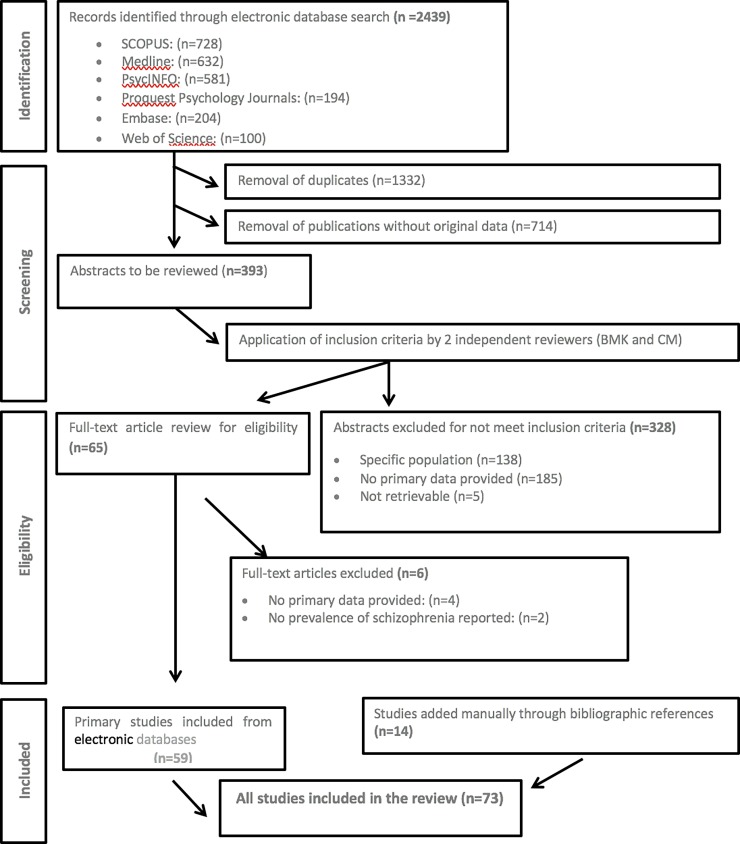
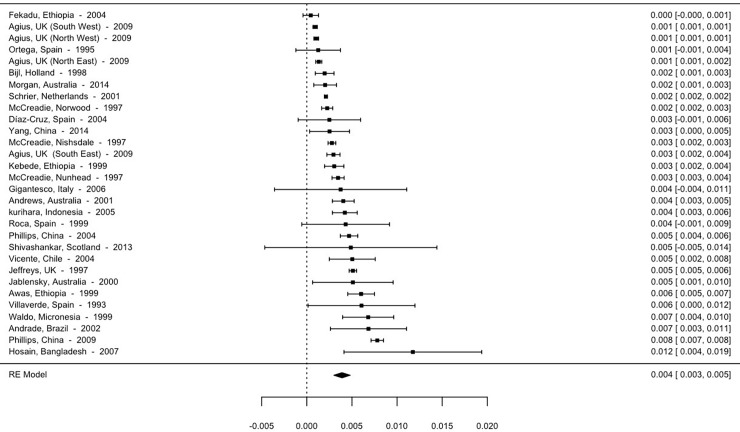
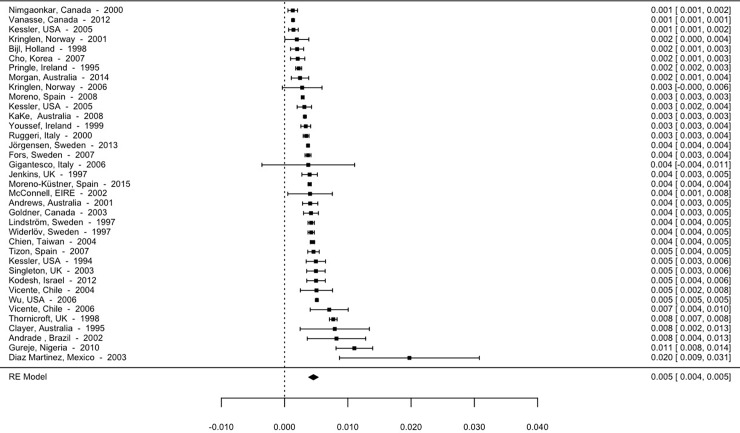
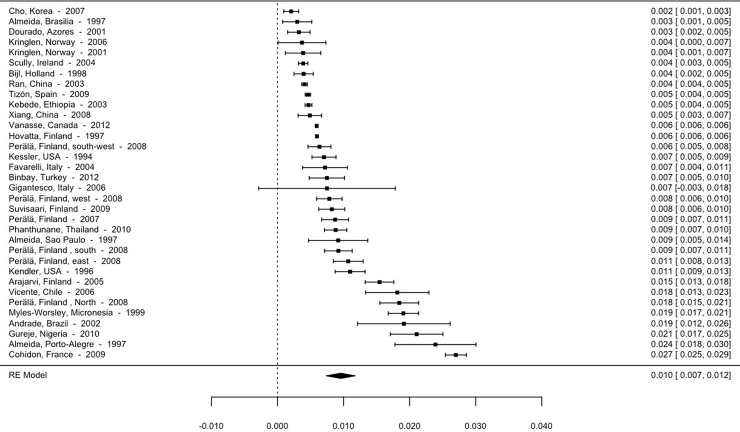
OBJECTIVES: The purpose of this study is to provide an updated systematic review to identify studies describing the prevalence of psychosis in order to explore methodological factors that could account for the variation in prevalence estimates. METHODS: Studies with original data related to the prevalence of psychosis (published between 1990 and 2015) were identified via searching electronic databases and reviewing manual citations. Prevalence estimates were sorted according to prevalence type (point, 12-months and lifetime). The independent association between key methodological variables and the mean effect of prevalence was examined (prevalence type, case-finding setting, method of confirming diagnosis, international classification of diseases, diagnosis category, and study quality) by meta-analytical techniques and random-effects meta-regression. RESULTS: Seventy-three primary studies were included, providing a total of 101 estimates of prevalence rates of psychosis. Across these studies, the pooled median point and 12-month prevalence for persons was 3.89 and 4.03 per 1000 respectively; and the median lifetime prevalence was 7.49 per 1000. The result of the random-effects meta-regression analysis revealed a significant effect for the prevalence type, with higher rates of lifetime prevalence than 12-month prevalence (p<0.001). Studies conducted in the general population presented higher prevalence rates than those carried out in populations attended in health/social services (p = 0.006). Compared to the diagnosis of schizophrenia only, prevalence rates were higher in the probable psychotic disorder (p = 0.022) and non-affective psychosis (p = 0.009). Finally, a higher study quality is associated with a lower estimated prevalence of psychotic disorders (p<0.001). CONCLUSIONS: This systematic review provides a comprehensive comparison of methodologies used in studies of the prevalence of psychosis, which can provide insightful information for future epidemiological studies in adopting the most relevant methodological approach.
Overview
The claims and statistics of this paper haven’t been checked yet.
Free: it reads the open-access text and checks the first 5 claims that cite a source we can check. Create a free account to check every claim.
Integrity signals
Registry
Cites
Statistics
Figures
Verification
Claims the paper makes
The claims and statistics of this paper haven’t been checked yet.
Free: it reads the open-access text and checks the first 5 claims that cite a source we can check. Create a free account to check every claim.
Claims other papers make about this one
Each is checked against this paper’s own text: does it say what the citing paper says it does?
The check wasn’t confident either way, so it gives no verdict — never disputed.
In the citing paper
“Although our search criteria included all DSM-5 schizophrenia-spectrum disorders, all of the SSD studies we located used samples diagnosed with schizophrenia and schizoaffective disorder, the two most common non-substance-related DSM-5 schizophrenia-spectrum disorders (American Psychiatric Association, 2013; Moreno-Küstner et al., 2018; Simeone et al., 2015).”
From Narrative identity in the psychosis spectrum: A systematic review and developmental model (2021) · cites this paper as Moreno-Küstner et al., 2018
Experimental — accuracy not yet measured
Self-check
Percentages, sums and reported differences re-computed from the paper’s own numbers.
The self-check needs the paper’s full text.
Citations
Cites
Preferred Reporting Items for Systematic Reviews and Meta-Analyses: the PRISMA statement
Moher, D., Liberati, A., Tetzlaff, J., Altman, D. G., & for the PRISMA Group (2009) · BMJ · doi:10.1136/bmj.b2535 · Cited by 83,823
Preferred Reporting Items for Systematic Reviews and Meta-Analyses: The PRISMA Statement
Moher, D., Liberati, A., Tetzlaff, J., Altman, D. G., & The PRISMA Group (2009) · PLoS Medicine · doi:10.1371/journal.pmed.1000097 · Cited by 64,042
Bias in meta-analysis detected by a simple, graphical test
Egger, M., Smith, G. D., Schneider, M., & Minder, C. (1997) · BMJ · doi:10.1136/bmj.315.7109.629 · Cited by 56,722
Preferred reporting items for systematic reviews and meta-analyses: The PRISMA statement
Moher, D., Liberati, A., Tetzlaff, J., Altman, D. G., & the PRISMA Group* (2009) · Annals of Internal Medicine · doi:10.7326/0003-4819-151-4-200908180-00135 · Cited by 37,554
Conducting Meta-Analyses in R with the metafor Package
Viechtbauer, W. (2010) · Journal of Statistical Software · doi:10.18637/jss.v036.i03 · Cited by 20,464
(1998) · The Journal of Clinical Psychiatry · Cited by 19,139
Wang, G., Ma, R., Qiao, G., Wada, K., Aizawa, Y., & Satoh, T. (2015) · Integrative Medicine International · doi:10.1159/000368408 · Cited by 18,657
James, S. L., Abate, D., Abate, K. H., Abay, S. M., Abbafati, C., Abbasi, N., Abbastabar, H., Abd-Allah, F., Abdela, J., Abdelalim, A., et al. (2018) · The Lancet · doi:10.1016/s0140-6736(18)32279-7 · Cited by 13,867
Vos, T., Abajobir, A. A., Abate, K. H., Abbafati, C., Abbas, K. M., Abd-Allah, F., Abdulkader, R. S., Abdulle, A. M., Abebo, T. A., Abera, S. F., et al. (2017) · The Lancet · doi:10.1016/s0140-6736(17)32154-2 · Cited by 13,220
Kessler, R. C. (1994) · Archives of General Psychiatry · doi:10.1001/archpsyc.1994.03950010008002 · Cited by 12,370
Research works printed but not linked: 4
- A Dourado, 2001, Reduced prevalence of psychoses in Santa Maria Island, Azores, Portugal, Am J Med Genet B, 96, 513
- I Hovatta, 1997, Schizophrenia in the genetic isolate of Finland, Am J Med Genet, 74, 353, 10.1002/(SICI)1096-8628(19970725)74:4<353::AID-AJMG3>3.0.CO;2-Q · doi:10.1002/(sici)1096-8628(19970725)74:4<353::aid-ajmg3>3.0.co;2-q
- MA Ortega, 1995, Morbilidad psíquica diagnóstica en la población general de La Rioja, Anales de Psiquiatría, 2, 320
- J Tizón, 2007, Schizophrenic disorders in primary care mental health, Atención Primaria, 39, 119
Cited by
Lai, M.-C., Kassee, C., Besney, R., Bonato, S., Hull, L., Mandy, W., Szatmari, P., & Ameis, S. H. (2019) · The Lancet Psychiatry · doi:10.1016/s2215-0366(19)30289-5 · Cited by 1,892
Keepers, G. A., Fochtmann, L. J., Anzia, J. M., Benjamin, S., Lyness, J. M., Mojtabai, R., Servis, M., Walaszek, A., Buckley, P., Lenzenweger, M. F., et al. (2020) · American Journal of Psychiatry · doi:10.1176/appi.ajp.2020.177901 · Cited by 912
A systematic review of ChatGPT use in K‐12 education
Zhang, P., & Tur, G. (2024) · European Journal of Education · doi:10.1111/ejed.12599 · Cited by 280
Cytokine Alterations in Schizophrenia: An Updated Review
Momtazmanesh, S., Zare-Shahabadi, A., & Rezaei, N. (2019) · Frontiers in Psychiatry · doi:10.3389/fpsyt.2019.00892 · Cited by 276
“Based on meta-analyses, we categorized cytokines according to their changes in schizophrenic patients into four groups: (1) increased cytokines, including interleukin (IL)-6, tumor necrosis factor (TNF)-a, IL-1b, IL-12, and transforming growth factor (TGF)-b, (2) nonaltered cytokines, including IL-2, IL-4, and IL-17,…”
BackgroundInfluentialFusar‐Poli, P., Estradé, A., Stanghellini, G., Venables, J., Onwumere, J., Messas, G., Gilardi, L., Nelson, B., Patel, V., Bonoldi, I., et al. (2022) · World Psychiatry · doi:10.1002/wps.20959 · Cited by 243
Sharma, E., Sharma, L. P., Balachander, S., Lin, B., Manohar, H., Khanna, P., Lu, C., Garg, K., Thomas, T. L., Au, A. C. L., et al. (2021) · Frontiers in Psychiatry · doi:10.3389/fpsyt.2021.703701 · Cited by 190
Santo, T., Campbell, G., Gisev, N., Martino-Burke, D., Wilson, J., Colledge-Frisby, S., Clark, B., Tran, L. T., & Degenhardt, L. (2022) · Drug and Alcohol Dependence · doi:10.1016/j.drugalcdep.2022.109551 · Cited by 189
Prevalence of mental disorders in refugees and asylum seekers: a systematic review and meta-analysis
Patanè, M., Ghane, S., Karyotaki, E., Cuijpers, P., Schoonmade, L., Tarsitani, L., & Sijbrandij, M. (2022) · Global Mental Health · doi:10.1017/gmh.2022.29 · Cited by 189
“Although BPD and psychosis are much rarer than MDD or PTSD, our study also indicated that externally displaced refugees and asylum seekers are two times more likely to be diagnosed with BPD and with psychosis than the general population (Carta and Angst, 2016; Moreno-Kustner et al., 2018).”
BackgroundInfluentialAyano, G., Tesfaw, G., & Shumet, S. (2019) · BMC Psychiatry · doi:10.1186/s12888-019-2361-7 · Cited by 176
Baranyi, G., Fazel, S., Langerfeldt, S. D., & Mundt, A. P. (2022) · The Lancet Public Health · doi:10.1016/s2468-2667(22)00093-7 · Cited by 163
Antipsychotic Polypharmacy for the Management of Schizophrenia: Evidence and Recommendations
Lähteenvuo, M., & Tiihonen, J. (2021) · Drugs · doi:10.1007/s40265-021-01556-4 · Cited by 217
“6%, with some population-specific variation [1].”
Oxidative Stress and the Pathophysiology and Symptom Profile of Schizophrenia Spectrum Disorders
Murray, A., Rogers, J. C., Katshu, M. Z. U. H., Liddle, P. F., & Upthegrove, R. (2021) · Frontiers in Psychiatry · doi:10.3389/fpsyt.2021.703452 · Cited by 168
Barry, R., Anderson, J., Tran, L., Bahji, A., Dimitropoulos, G., Ghosh, S. M., Kirkham, J. G., Messier, G. G., Patten, S. B., Rittenbach, K., et al. (2024) · JAMA Psychiatry · doi:10.1001/jamapsychiatry.2024.0426 · Cited by 192
A Call to Action. A Critical Review of Mental Health Related Anti-stigma Campaigns
Walsh, D., & Foster, J. (2021) · Frontiers in Public Health · doi:10.3389/fpubh.2020.569539 · Cited by 158
“Furthermore, whilst the public often legitimize fears of contact by contrasting the perceived unfamiliarity of schizophrenia with the perceived familiarity of depression (19, 104), population-level surveys suggest that up to three-quarters of the public have at some point experienced psychotic-like experiences (153, 1…”
BackgroundFerrarelli, F., & Phillips, M. L. (2021) · American Journal of Psychiatry · doi:10.1176/appi.ajp.2020.20071050 · Cited by 126
Disrupted sleep and circadian rhythms in schizophrenia and their interaction with dopamine signaling
Ashton, A., & Jagannath, A. (2020) · Frontiers in Neuroscience · doi:10.3389/fnins.2020.00636 · Cited by 106
Schizophrenia: The new etiological synthesis
Rantala, M. J., Luoto, S., Borráz-León, J. I., & Krams, I. A. (2022) · Neuroscience & Biobehavioral Reviews · doi:10.1016/j.neubiorev.2022.104894 · Cited by 126
“75% of the world’s population (Moreno-Kustner et al., 2018), imposing an annual economic burden of more than $150 billion in the United States alone (Cloutier et al.”
BackgroundThe connection between microbiome and schizophrenia
Golofast, B., & Vales, K. (2020) · Neuroscience & Biobehavioral Reviews · doi:10.1016/j.neubiorev.2019.12.011 · Cited by 92
Excess mortality in severe mental disorders: A systematic review and meta-regression
Ali, S., Santomauro, D. F., Ferrari, A. J., & Charlson, F. (2022) · Journal of Psychiatric Research · doi:10.1016/j.jpsychires.2022.02.036 · Cited by 116
van Rijn, S. (2019) · Current Opinion in Psychiatry · doi:10.1097/yco.0000000000000471 · Cited by 89
Schizophrenia: One Name, Many Different Manifestations
Faden, J., & Citrome, L. (2022) · Medical Clinics of North America · doi:10.1016/j.mcna.2022.05.005 · Cited by 143
The Cross-Talk Between the Dopaminergic and the Immune System Involved in Schizophrenia
Vidal, P. M., & Pacheco, R. (2020) · Frontiers in Pharmacology · doi:10.3389/fphar.2020.00394 · Cited by 86
Keepers, G. A., Fochtmann, L. J., Anzia, J. M., Benjamin, S., Lyness, J. M., Mojtabai, R., Servis, M., Walaszek, A., Buckley, P., Lenzenweger, M. F., et al. (2020) · Focus · doi:10.1176/appi.focus.18402 · Cited by 85
de Pablo, G. S., Woods, S. W., Drymonitou, G., de Diego, H., & Fusar‐Poli, P. (2021) · Brain Sciences · doi:10.3390/brainsci11111544 · Cited by 94
Narrative identity in the psychosis spectrum: A systematic review and developmental model
Cowan, H. R., Mittal, V. A., & McAdams, D. P. (2021) · Clinical Psychology Review · doi:10.1016/j.cpr.2021.102067 · Cited by 82
Gruzdev, S. K., Yakovlev, A. A., Druzhkova, T. A., Guekht, A. B., & Gulyaeva, N. V. (2019) · Cellular and Molecular Neurobiology · doi:10.1007/s10571-019-00684-6 · Cited by 75
Glycobiology and schizophrenia: a biological hypothesis emerging from genomic research
Mealer, R. G., Williams, S., Daly, M. J., Scolnick, E. M., Cummings, R. D., & Smoller, J. W. (2020) · Molecular Psychiatry · doi:10.1038/s41380-020-0753-1 · Cited by 77
“8% and disease onset primarily in adolescence and young adulthood [1].”
BackgroundSpark, D. L., Fornito, A., Langmead, C. J., & Stewart, G. D. (2022) · Translational Psychiatry · doi:10.1038/s41398-022-01904-2 · Cited by 75
“INTRODUCTION Schizophrenia is a syndrome commonly associated with symptoms that are classified into positive (psychosis involving hallucinations and/or delusions), negative (affective flattening, anhedonia, avolition), and cognitive (deficits in memory, attention, learning, executive function) domains [1].”
BackgroundPrevalence of Psychiatric Disorders in Iran: A Systematic Review and Meta-analysis
Mirghaed, M. T., Gorji, H. A., & Panahi, S. (2020) · International Journal of Preventive Medicine · doi:10.4103/ijpvm.ijpvm_510_18 · Cited by 74
“In this regard, various studies have been conducted in different countries on the prevalence of mental disorders.[15,16] To date, one systematic review has been conducted on the prevalence of psychiatric disorders in Iran in 2007.”
BackgroundVarcin, K. J., Herniman, S. E., Lin, A. P., Chen, Y., Perry, Y., Pugh, C., Chisholm, K., Whitehouse, A., & Wood, S. J. (2022) · Neuroscience & Biobehavioral Reviews · doi:10.1016/j.neubiorev.2022.104543 · Cited by 87
Burchill, E., Watson, C. J., Fanshawe, J. B., Badenoch, J., Rengasamy, E. R., Ghanem, D. A., Holle, C., Conti, I., Sadeq, M. A., Saini, A., et al. (2024) · The Lancet Regional Health - Europe · doi:10.1016/j.lanepe.2024.100870 · Cited by 79
“73,74 We found psychosis to be signi fi cantly associated with cognitive impairment (medium effect size) and disease progression (medium effect size).”
BackgroundToward recovery in schizophrenia: Current concepts, findings, and future research directions
Onitsuka, T., Hirano, Y., Nakazawa, T., Ichihashi, K., Miura, K., Inada, K., Mitoma, R., Yasui‐Furukori, N., & Hashimoto, R. (2022) · Psychiatry and Clinical Neurosciences · doi:10.1111/pcn.13342 · Cited by 83
Emerging phenotyping strategies will advance our understanding of psychiatric genetics
Sanchez‐Roige, S., & Palmer, A. A. (2020) · Nature Neuroscience · doi:10.1038/s41593-020-0609-7 · Cited by 77
Estradé, A., Onwumere, J., Venables, J., Gilardi, L., Cabrera, A., Rico, J., Hoque, A., Otaiku, J., Hunter, N., Kéri, P., et al. (2023) · Psychopathology · doi:10.1159/000528513 · Cited by 68
Treatment resistant schizophrenia – review and a call to action
Lally, J., & Gaughran, F. (2018) · Irish Journal of Psychological Medicine · doi:10.1017/ipm.2018.47 · Cited by 75
“2/100 000), and a lifetime prevalence of approximately 7/1000 (McGrath et al., 2008; Moreno-Kustner et al., 2018).”
BackgroundInfluentialBenton, M., Cleal, B., Prina, M., Baykoca, J., Willaing, I., Price, H., & Ismail, K. (2023) · General Hospital Psychiatry · doi:10.1016/j.genhosppsych.2022.11.004 · Cited by 58
Schultze‐Lutter, F., Nenadić, I., & Grant, P. S. (2019) · Frontiers in Psychiatry · doi:10.3389/fpsyt.2019.00476 · Cited by 61
Increased in-hospital mortality from COVID-19 in patients with schizophrenia
Fond, G. B., Pauly, V., Orléans, V., Antonini, F., Fabre, C., Sanz, M. B., Klay, S. M., Jimeno, M.-T., Léone, M., Lançon, C., et al. (2020) · L Encéphale · doi:10.1016/j.encep.2020.07.003 · Cited by 56
Dennis, J. A., Gittner, L. S., Payne, J. D., & NUGENT, K. M. (2020) · BMC Psychiatry · doi:10.1186/s12888-020-02895-4 · Cited by 53
Apolipoprotein serum levels related to metabolic syndrome in patients with schizophrenia
Boiko, A. S., Mednova, I. A., Kornetova, E. G., Semke, A. V., Bokhan, N. A., LOONEN, A. J. M., & Ivanova, S. А. (2019) · Heliyon · doi:10.1016/j.heliyon.2019.e02033 · Cited by 50
Kim, E. Y., & Jang, M. H. (2019) · Asian Nursing Research · doi:10.1016/j.anr.2019.09.004 · Cited by 48
Involvement of Gut Microbiota in Schizophrenia and Treatment Resistance to Antipsychotics
Manchia, M., Fontana, A., Panebianco, C., Paribello, P., Arzedi, C., Cossu, E., Garzilli, M., Montis, M. A., Mura, A., Pisanu, C., et al. (2021) · Biomedicines · doi:10.3390/biomedicines9080875 · Cited by 51
Adams, R., Ohlsen, S., & Wood, E. (2020) · European Journal of Psychotraumatology · doi:10.1080/20008198.2019.1711349 · Cited by 63
The EEG multiverse of schizophrenia
Gordillo, D., da Cruz, J. N., Chkonia, E. D., Lin, W.-H., Favrod, O., Brand, A., Figueiredo, P., Roinishvili, M., & Herzog, M. H. (2022) · Cerebral Cortex · doi:10.1093/cercor/bhac309 · Cited by 50
“Furthermore, about 0.25%–0.75% people of a population suffer from schizophrenia and related psychotic disorders (Kessler et al. 2005; Saha et al. 2005; Moreno-Küstner et al. 2018).”
BackgroundInfluentialthe Emory 3q29 Project, Pollak, R. M., Murphy, M. M., Epstein, M. P., Zwick, M. E., Klaiman, C., Saulnier, C. A., & Mullé, J. G. (2019) · Molecular Autism · doi:10.1186/s13229-019-0281-5 · Cited by 48
Deep phenotyping in 3q29 deletion syndrome: recommendations for clinical care
Russo, R. S., Gambello, M. J., Murphy, M. M., Aberizk, K., Black, E., Burrell, T. L., Carlock, G., Cubells, J. F., Epstein, M. T., España, R., et al. (2021) · Genetics in Medicine · doi:10.1038/s41436-020-01053-1 · Cited by 51
Fusar‐Poli, L., Ciancio, A., Gabbiadini, A., Meo, V., Patania, F., Rodolico, A., Saitta, G., Vozza, L., Petralia, A., Signorelli, M. S., et al. (2020) · Brain Sciences · doi:10.3390/brainsci10050291 · Cited by 45
“It has been estimated that approximately 1 in 150 individuals is diagnosed with a psychotic disorder at some point during their lifetime [9].”
BackgroundBenrimoh, D. A., Dlugunovych, V., Wright, A. C., Phalen, P. L., Funaro, M. C., Ferrara, M., Powers, A. R., Woods, S. W., Gülöksüz, S., Yung, A. R., et al. (2024) · Molecular Psychiatry · doi:10.1038/s41380-024-02415-w · Cited by 56
“Schizophrenia spectrum psychotic disorders affect close to 1% of the population globally and are signi fi cant drivers of disability and healthcare costs [1 – 6].”
The revised Psychosis Attachment Measure: Measuring disorganized attachment
Pollard, C., Bucci, S., MacBeth, A. M., & Berry, K. (2020) · British Journal of Clinical Psychology · doi:10.1111/bjc.12249 · Cited by 52
Anderson, K. K., Norman, R. M. G., MacDougall, A. G., Edwards, J., Palaniyappan, L. K., Lau, C., & Kurdyak, P. A. (2018) · Psychological Medicine · doi:10.1017/s0033291718002933 · Cited by 46
“Differences in methodology have also been highlighted as an explanation for discrepant incidence estimates across studies (van der Werf et al., 2014; Moreno-Küstner et al., 2018), and could explain the differences in estimates in the current study.”
ResultGenetic overlap and causal associations between smoking behaviours and mental health
Barkhuizen, W., Dudbridge, F., & Ronald, A. (2021) · Scientific Reports · doi:10.1038/s41598-021-93962-7 · Cited by 43
Kornetova, E. G., Корнетов, А. Н., Mednova, I. A., Dubrovskaya, V. V., Boiko, A. S., Bokhan, N. A., LOONEN, A. J. M., & Ivanova, S. А. (2019) · Frontiers in Psychiatry · doi:10.3389/fpsyt.2019.00803 · Cited by 42
Mackintosh, A., de Bock, R., Lim, Z., Trulley, V.-N., Schmidt, A., Borgwardt, S., & Andreou, C. (2020) · Neuroscience & Biobehavioral Reviews · doi:10.1016/j.neubiorev.2020.10.021 · Cited by 39
Exploring Patterns of Disturbed Eating in Psychosis: A Scoping Review
Stogios, N., Smith, E., Asgariroozbehani, R., Hamel, L., Gdanski, A., Selby, P. L., Sockalingam, S., Graff‐Guerrero, A., Taylor, V. H., Agarwal, S. M., et al. (2020) · Nutrients · doi:10.3390/nu12123883 · Cited by 37
He, Y., Tanaka, A., Kishi, T., Li, Y., Matsunaga, M., Tanihara, S., Iwata, N., & Ota, A. (2022) · Neuropsychopharmacology Reports · doi:10.1002/npr2.12286 · Cited by 36
Abu-Akel, A. M., Wood, S. J., Upthegrove, R., Chisholm, K., Lin, A. P., Hansen, P., Gillespie, S. M., Apperly, I. A., & Montag, C. (2022) · Molecular Psychiatry · doi:10.1038/s41380-022-01543-5 · Cited by 39
Clinical utility and prospective of TMS–EEG: Updated review from an international expert group
Ziemann, U., Bai, Y., Baumer, F. M., Beck, M. M., Belardinelli, P., Belvisi, D., Bender, S., Bergmann, T. O., Bortoletto, M., Casarotto, S., et al. (2026) · Clinical Neurophysiology · doi:10.1016/j.clinph.2025.2111487 · Cited by 51
Lifetime Prevalence and Correlates of Schizophrenia and Other Psychotic Disorders in Singapore
Subramaniam, M., Abdin, E., Vaingankar, J. A., Sambasivam, R., Zhang, Y. J., Shafie, S., Basu, S., Chan, C. T., Tan, C. S., Verma, S. K., et al. (2021) · Frontiers in Psychiatry · doi:10.3389/fpsyt.2021.650674 · Cited by 42
Collaborative care approaches for people with severe mental illness
Reilly, S., Hobson-Merrett, C., Gibbons, B., Jones, B., Richards, D., Plappert, H., Gibson, J., Green, M., Gask, L., Huxley, P. J., et al. (2024) · Cochrane Database of Systematic Reviews · doi:10.1002/14651858.cd009531.pub3 · Cited by 59
Barkhuizen, W., Pain, O., Dudbridge, F., & Ronald, A. (2020) · Translational Psychiatry · doi:10.1038/s41398-020-0765-2 · Cited by 28
Zhu, B., Liang, L., Chen, S., Li, H., Huang, Y., Wang, W., Zhang, H., Zhou, J., Xiong, D., Li, X., et al. (2025) · Translational Psychiatry · doi:10.1038/s41398-025-03449-6 · Cited by 35
Genomic perspectives on the circadian clock hypothesis of psychiatric disorders
von Schantz, M., Leocádio-Miguel, M. A., McCarthy, M. J., Papiol, S., & Landgraf, D. (2020) · Advances in genetics · doi:10.1016/bs.adgen.2020.11.005 · Cited by 29
The role of dopamine receptors in lymphocytes and their changes in schizophrenia
Penedo, M. A., Baltanás, T. R., Pérez-Rodríguez, D., Allen, J., Borrajo, A., Alonso-Crespo, D., Fernández-Pereira, C., Nieto-Araujo, M., Ramos-García, S., Barreiro-Villar, C., et al. (2021) · Brain Behavior & Immunity - Health · doi:10.1016/j.bbih.2021.100199 · Cited by 27
Mazza, M., Pino, M. C., Keller, R., Vagnetti, R., Attanasio, M., Filocamo, A., Donne, I. L., Masedu, F., & Valenti, M. (2021) · Journal of Autism and Developmental Disorders · doi:10.1007/s10803-021-05035-3 · Cited by 29
Prediction models in first-episode psychosis: systematic review and critical appraisal
Lee, R., Leighton, S., Thomas, L., Gkoutos, G. V., Wood, S. J., Fenton, S., Deligianni, F., Cavanagh, J., & Mallikarjun, P. K. (2022) · The British Journal of Psychiatry · doi:10.1192/bjp.2021.219 · Cited by 32
Ae-Ngibise, K. A., Sakyi, L., Adwan-Kamara, L., Lund, C., & Weobong, B. (2023) · BMC Psychiatry · doi:10.1186/s12888-023-04775-z · Cited by 32
Effects of Mind–Body Exercises on Schizophrenia: A Systematic Review With Meta-Analysis
Wei, G.-X., Yang, L., Imm, K., Loprinzi, P. D., Smith, L., Zhang, X., & Yu, Q. (2020) · Frontiers in Psychiatry · doi:10.3389/fpsyt.2020.00819 · Cited by 25
“Schizophrenia, as one of the chronic and severe mental illness, usually emerges between 16 and 30 years old, with its prevalence ranging from 0.33 to 0.75% globally (1).”
InfluentialImpact of neuroinflammation on brain glutamate and dopamine signalling in schizophrenia: an update
Nayak, U. Y., Manikkath, J., Arora, D. S., & Mudgal, J. (2025) · Metabolic Brain Disease · doi:10.1007/s11011-025-01548-3 · Cited by 34
“Although categorized as a low prevalence disorder, its economic burden is signifi - cant and it is ranked among the top 15 causes of disability worldwide (Moreno-Küstner et al. 2018).”
Antipsychotic dose reduction compared to dose continuation for people with schizophrenia
Rodolico, A., Siafis, S., Bighelli, I., Samara, M. T., Hansen, W., Salomone, S., Aguglia, E., Cutrufelli, P., Bauer, I. O. B., Bäckers, L., et al. (2022) · Cochrane Database of Systematic Reviews · doi:10.1002/14651858.cd014384.pub2 · Cited by 36
Cariprazine Safety in Adolescents and the Elderly: Analyses of Clinical Study Data
Szatmári, B., Barabássy, Á., Harsányi, J., Laszlovszky, I., Sebe, B., Gál, M., Shiragami, K., & Németh, G. (2020) · Frontiers in Psychiatry · doi:10.3389/fpsyt.2020.00061 · Cited by 43
Martins, P. L. B., Moura, I. A., Mendes, G., Ribeiro, V. C. A. F., Arnaud, A., Gama, C. S., Maes, M. H. J., Macêdo, D. S., & Pinto, J. P. (2023) · European Neuropsychopharmacology · doi:10.1016/j.euroneuro.2023.04.003 · Cited by 26
Tan, M., Barkus, E., & Favelle, S. K. (2021) · Cognitive Neuropsychiatry · doi:10.1080/13546805.2021.1960156 · Cited by 30
“Given that the prevalence of PLEs is substantially higher than that of psychotic disorders (Moreno-Kustner et al., 2018; Perälä et al., 2007), there is an urgent call for researchers to look beyond the role of PLEs simply as risk indicators for later conversion to psychosis and examine the…”
BackgroundShared and unique characteristics of metabolic syndrome in psychotic disorders: a review
Saccaro, L. F., Aimo, A., Panichella, G., & Sentissi, O. (2024) · Frontiers in Psychiatry · doi:10.3389/fpsyt.2024.1343427 · Cited by 32
Association of neurotransmitter pathway polygenic risk with specific symptom profiles in psychosis
Warren, T. L., Tubbs, J. D., Lesh, T. A., Corona, M. B., Pakzad, S., Albuquerque, M., Singh, P., Zarubin, V. C., Morse, S. J., Sham, P. C., et al. (2024) · Molecular Psychiatry · doi:10.1038/s41380-024-02457-0 · Cited by 26
“Psychosis-spectrum disorders, including schizophrenia (SZ), schizoaffective disorder (SA), and bipolar disorder (BP), affect 0.5 – 2.3% of people worldwide [1 – 5].”
InfluentialAl‐Hakeim, H. K., Al-Musawi, A. F., Almulla, A. F., Al-Dujaili, A. H., Debnath, M., & Maes, M. H. J. (2022) · PLoS ONE · doi:10.1371/journal.pone.0275839 · Cited by 27
Genetic insights into childhood-onset schizophrenia: The yield of clinical exome sequencing
Alkelai, A., Greenbaum, L., Shohat, S., Povysil, G., Malakar, A., Ren, Z., Motelow, J. E., Schechter, T., Draiman, B., Chitrit-Raveh, E., et al. (2023) · Schizophrenia Research · doi:10.1016/j.schres.2022.12.033 · Cited by 23
Role of Ayurveda in the management of psychotic disorders: A systematic review of clinical evidence
Kulamarva, K., Shivakumar, V., Chikkanna, U., Ramakrishna, K. K., Bhargav, H., & Varambally, S. S. (2023) · Journal of Ayurveda and Integrative Medicine · doi:10.1016/j.jaim.2023.100720 · Cited by 37
Mindfulness meditation for Chinese patients with psychosis: A systematic review and meta-analysis
Tao, T. J., Hui, C. L. M., Lam, B. S. T., Ho, E. C. N., Hui, P. W. M., Suen, Y. N., Lin, J. J., Tong, A. C. Y., Lee, E. H. M., Chan, S. K. W., et al. (2021) · Schizophrenia Research · doi:10.1016/j.schres.2021.08.033 · Cited by 21
Dopaminergic Perturbation in the Aetiology of Neurodevelopmental Disorders
Ijomone, O. K., Oria, R. S., Ijomone, O. M., Aschner, M., & Bornhorst, J. (2024) · Molecular Neurobiology · doi:10.1007/s12035-024-04418-8 · Cited by 22
“SCZ is a mental heterogenous disorder with characteristics of positive symptoms (hallucination and delusion), negative symptoms (perception, volition, and thought disorders), and cognitive symptoms that usually manifest in late adolescence or early childhood [109–111].”
EEG Microstate Differences in Medicated vs. Medication-Naïve First-Episode Psychosis Patients
Mackintosh, A., Borgwardt, S., Studerus, E., Riecher‐Rössler, A., de Bock, R., & Andreou, C. (2020) · Frontiers in Psychiatry · doi:10.3389/fpsyt.2020.600606 · Cited by 28
Lin, Y., Wu, C., Liu, C., Kuo, P., Chan, H., & Chen, W. J. (2022) · Schizophrenia Bulletin · doi:10.1093/schbul/sbac046 · Cited by 22
Ortega, M. A., Fraile‐Μartinez, O., Montero, C. G., Moñux, R. M. F., Rodriguez-Martín, S., Bravo, C., León-Luis, J. A. D., Saz, J. V., Sáez, M. A., Guijarro, L. G., et al. (2023) · Biomolecules · doi:10.3390/biom13010120 · Cited by 23
“[5] found that the prevalence of psychotic disorders was at a rate of 4.”
BackgroundPrevalence and Course of Idiopathic Hypersomnia in the Wisconsin Sleep Cohort Study
Plante, D. T., Hagen, E. W., Barnet, J. H., Mignot, E. J.-M., & Peppard, P. E. (2023) · Neurology · doi:10.1212/wnl.0000000000207994 · Cited by 25
Torsvik, A., Brattbakk, H.-R., Trentani, A., Holdhus, R., Stansberg, C., Bartz-Johannessen, C. A., Hughes, T., Steen, N. E., Melle, I., Djurovic, S., et al. (2023) · Translational Psychiatry · doi:10.1038/s41398-023-02442-1 · Cited by 21
Borgan, F., Jauhar, S., McCutcheon, R. A., Pepper, F., Rogdaki, M., Lythgoe, D. J., & Howes, O. D. (2019) · Scientific Reports · doi:10.1038/s41598-019-45018-0 · Cited by 25
Antipsychotic polypharmacy reduction versus polypharmacy continuation for people with schizophrenia
Bighelli, I., Rodolico, A., Siafis, S., Samara, M. T., Hansen, W., Salomone, S., Aguglia, E., Cutrufelli, P., Bauer, I. O. B., Bäckers, L., et al. (2022) · Cochrane Database of Systematic Reviews · doi:10.1002/14651858.cd014383.pub2 · Cited by 30
“[DOI: 10.1186/1471-244X-11-118] [PMID: 21791046] Moreno-Küstner 2018 Moreno-Küstner B, Martín C, Pastor L. Prevalence of psychotic disorders and its association with methodological issues.”
BackgroundInfluentialPlasma metabolomics of schizophrenia with cognitive impairment: A pilot study
Jiang, Y., Sun, X., Hu, M., Zhang, L., Zhao, N., Shen, Y., Yu, S., Huang, J., Li, H., & Yu, W. (2022) · Frontiers in Psychiatry · doi:10.3389/fpsyt.2022.950602 · Cited by 22
Reprioritising global mental health: psychoses in sub-Saharan Africa
Omigbodun, O. O., Ryan, G. K., Fasoranti, B., Chibanda, D., Esliker, R., Sefasi, A., Kakuma, R., Shakespeare, T., & Eaton, J. (2023) · International Journal of Mental Health Systems · doi:10.1186/s13033-023-00574-x · Cited by 25
A Perspective on the Potential Involvement of Impaired Proteostasis in Neuropsychiatric Disorders
Hui, K. K., Endo, R., Sawa, A., & Tanaka, M. (2021) · Biological Psychiatry · doi:10.1016/j.biopsych.2021.09.001 · Cited by 18
Swora, E., Boberska, M., Kuliś, E., Knoll, N., Keller, J., & Łuszczyńska, A. (2022) · Journal of Clinical Medicine · doi:10.3390/jcm11102719 · Cited by 25
Cui, K., Yu, Z., Xu, L., Jiang, W., Wang, L., Wang, X., Zou, D., Gu, J., Gao, F., Zhang, X., et al. (2022) · Frontiers in Neuroscience · doi:10.3389/fnins.2022.1001869 · Cited by 22
Shroitman, N. K., Yitzhaky, A., Ben‐Shachar, D., Gurwitz, D., & Hertzberg, L. (2023) · Journal of Psychiatric Research · doi:10.1016/j.jpsychires.2023.01.005 · Cited by 22
Cullen, A. E., Labad, J., Oliver, D., Al‐Diwani, A., Minichino, A., & Fusar‐Poli, P. (2023) · Current Neuropharmacology · doi:10.2174/1570159x21666230322145049 · Cited by 30
van der Zeijst, M. C. E., Veling, W., Chiliza, B., & Hoek, H. W. (2023) · Current Opinion in Psychiatry · doi:10.1097/yco.0000000000000872 · Cited by 19
“Although psychotic disorders have a relatively low worldwide prevalence of approximately 1% [1], schizophrenia has been identified as a globalmental health priority [2].”
BackgroundInequalities in the Incidence of Psychotic Disorders Among Racial and Ethnic Groups
Chung, W. W., Jiang, S., Milham, M. P., Merikangas, K. R., & Paksarian, D. (2023) · American Journal of Psychiatry · doi:10.1176/appi.ajp.20220917 · Cited by 23
Cortisol and DHEAS Related to Metabolic Syndrome in Patients with Schizophrenia
Boiko, A. S., Mednova, I. A., Kornetova, E. G., Bokhan, N. A., Semke, A. V., LOONEN, A. J. M., & Ivanova, S. А. (2020) · Neuropsychiatric Disease and Treatment · doi:10.2147/ndt.s247161 · Cited by 22
Zebrafish as a tool to study schizophrenia-associated copy number variants
Campbell, P. D., & Granato, M. (2020) · Disease Models & Mechanisms · doi:10.1242/dmm.043877 · Cited by 19
“Therefore, even though schizophrenia is relatively uncommon with an estimated point and lifetime prevalence of 0.4% and 0.75%, respectively (Moreno-Küstner et al., 2018), its early and lifelong course makes it profoundly debilitating, representing one of the top 15 causes of disability worldwide…”
InfluentialClark, S. D., Snellenberg, J. X. V., Lawson, J. M., & Abi‐Dargham, A. (2020) · Neuropsychopharmacology · doi:10.1038/s41386-020-0730-z · Cited by 19
“749% [1] and total annual cost upwards of $63 billion in the United States alone [2, 3].”
BackgroundKorann, V., Panganiban, K. J., Stogios, N., Remington, G., Graff‐Guerrero, A., Chintoh, A. F., Hahn, M., & Agarwal, S. M. (2024) · The Canadian Journal of Psychiatry · doi:10.1177/07067437241290193 · Cited by 20
Sagar, K. A., & Gruber, S. A. (2025) · CNS Drugs · doi:10.1007/s40263-024-01148-2 · Cited by 19
“Although the incidence of psychotic disorders, such as schizophrenia, is relatively low, with lifetime prevalence estimated to be ≤ 1% of the population [19], they are considered chronic and debilitating.”
Metadata
- Authors
- Moreno-Küstner, B., Martín, C., & Pastor, L.
- Affiliations
- Andalusian Health Service (ES)
- Universidad de Málaga (ES)
- Venue
- PLOS ONE
- Publisher
- Public Library of Science (PLoS)
- Published
- 2018-04-12
- Volume
- 13
- Issue
- 4
- Pages
- e0195687
- ISSN
- 1932-6203 (ISSN-L)
- PMC
- PMC5896987
- OpenAlex
- W2797349527
- Cited by
- 562
- References
- 102
- Citations by year
- 2026: 61 · 2025: 72 · 2024: 78 · 2023: 92 · 2022: 78 · 2021: 72 · 2020: 73 · 2019: 28 · 2018: 8
- FWCI
- 6.92
- Type
- journal article
- Language
- en
- Open access
- gold
- doi.org
- Licence
- Locations
- PLoS ONE (publishedVersion, cc-by)
- Europe PMC (PubMed Central) (publishedVersion, cc-by)
- PubMed Central (publishedVersion, cc-by)
- PubMed (publishedVersion)
- RISalud Institutional Health Repository of Andalucía (submittedVersion, cc-by)
- RePEc: Research Papers in Economics (submittedVersion)
- DOAJ (DOAJ: Directory of Open Access Journals) (submittedVersion, cc-by-sa)
- Figshare (submittedVersion, cc-by)
- Repositorio Institucional de la Universidad de Málaga (University of Málaga) (submittedVersion, other-oa)
- Funders
- Consejería de Salud, Junta de Andalucía (PI-0338/08)
- Consejería de Economía, Innovación, Ciencia y Empleo, Junta de Andalucía (P10-CTS-5862)
- Ministerio de Economía y Competitividad (PI16/00647)
- Topics
- Health Sciences › Medicine › Psychiatry and Mental health › Schizophrenia research and treatment
- Health Sciences › Medicine › Psychiatry and Mental health › Mental Health Treatment and Access
- Social Sciences › Arts and Humanities › Philosophy › Mental Health and Psychiatry
- Keywords
- psychosis, prevalence, point prevalence, 12-month prevalence, lifetime prevalence, methodological bias, diagnostic confirmation, ICD classification, schizophrenia, non-affective psychosis, study quality
- MeSH terms
- Humans, Psychotic Disorders, Prevalence, Epidemiologic Studies
About these checks
Registry, retraction, Cites and statistics results are computed, not judged, with one exception: a printed reference that no index lists is read once by a model before it counts as a citation error. Claims are extracted by a model and kept only when their quote appears verbatim in the text; each cited source is then checked, with a model’s help, for whether it says what the claim relies on. Those verdicts can be wrong — read the claim’s quote and the cited source before relying on one.
Statistics and arithmetic are recomputed, not judged.
Confidence bands are shown only for fields calibrated on our annotated test set. None is calibrated yet, so no band is shown.
What counts as a claim ›How we measure confidence ›How we check this ›
Are you an author, or do you see a problem with this page? Request a review
Data sources
Bibliographic data: Semantic Scholar, OpenAlex, Crossref.
Contains information from the Semantic Scholar Academic Graph Datasets, made available under the ODC Attribution License (ODC-BY 1.0).
Semantic Scholar’s data is described in: Kinney, R., et al. (2023). The Semantic Scholar Open Data Platform. arXiv:2301.10140.
