

Manipulating graded exercise test variables affects the validity of the lactate threshold and V˙O2peak
Open accessThe DOI matches its Crossref record; 60 of the 64 references it cites were found in a registry or an index, and 3 are not checked yet.
Abstract
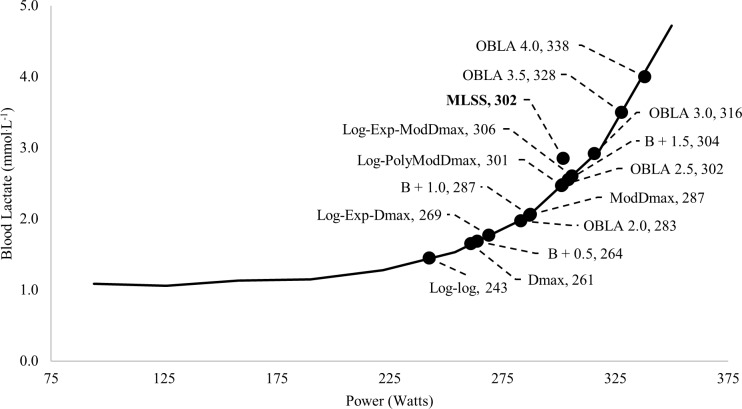
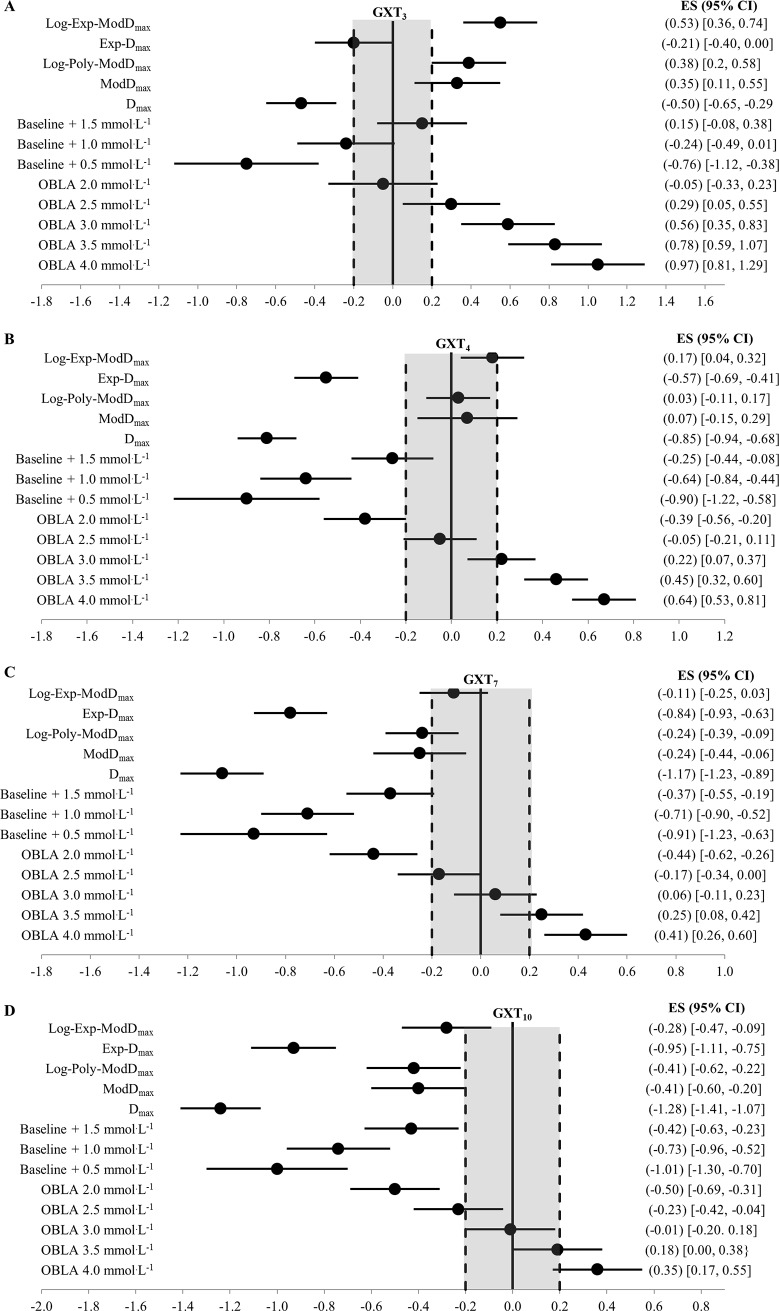
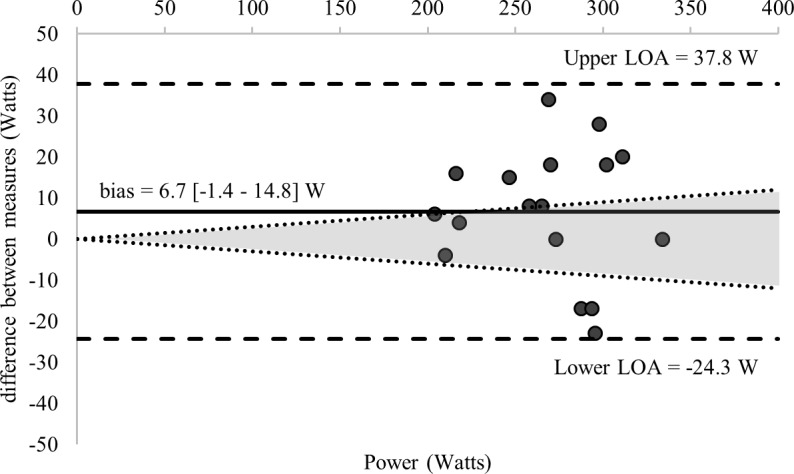
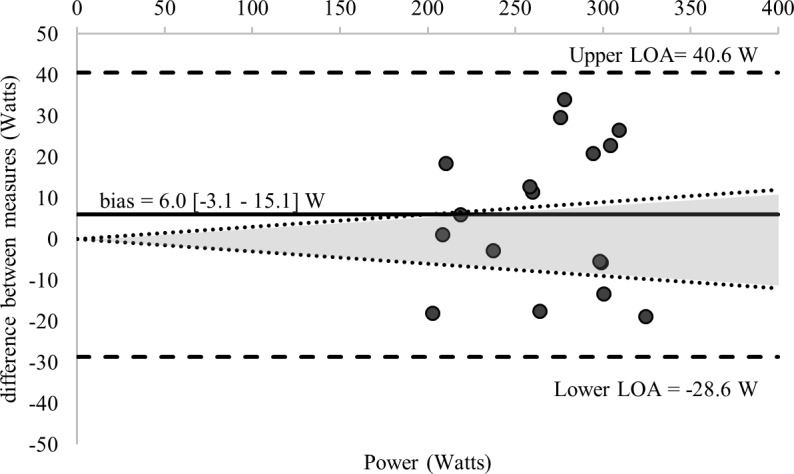
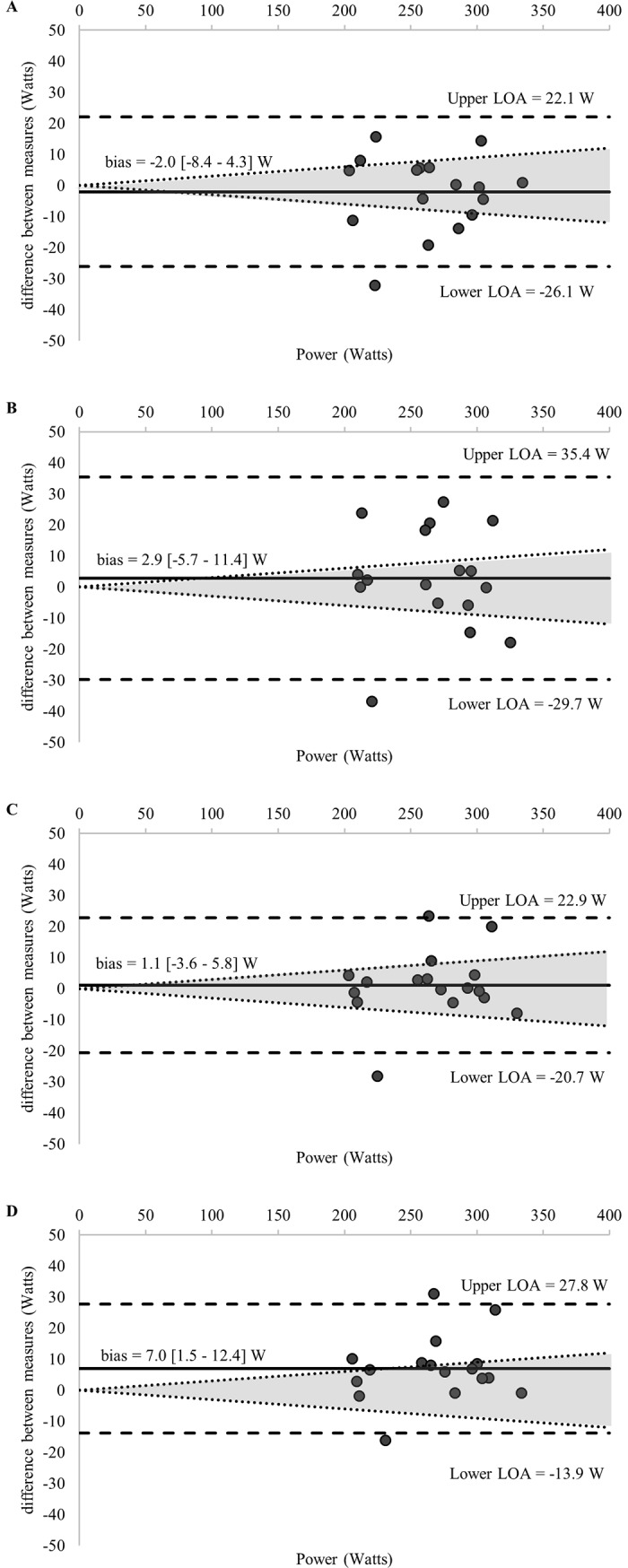
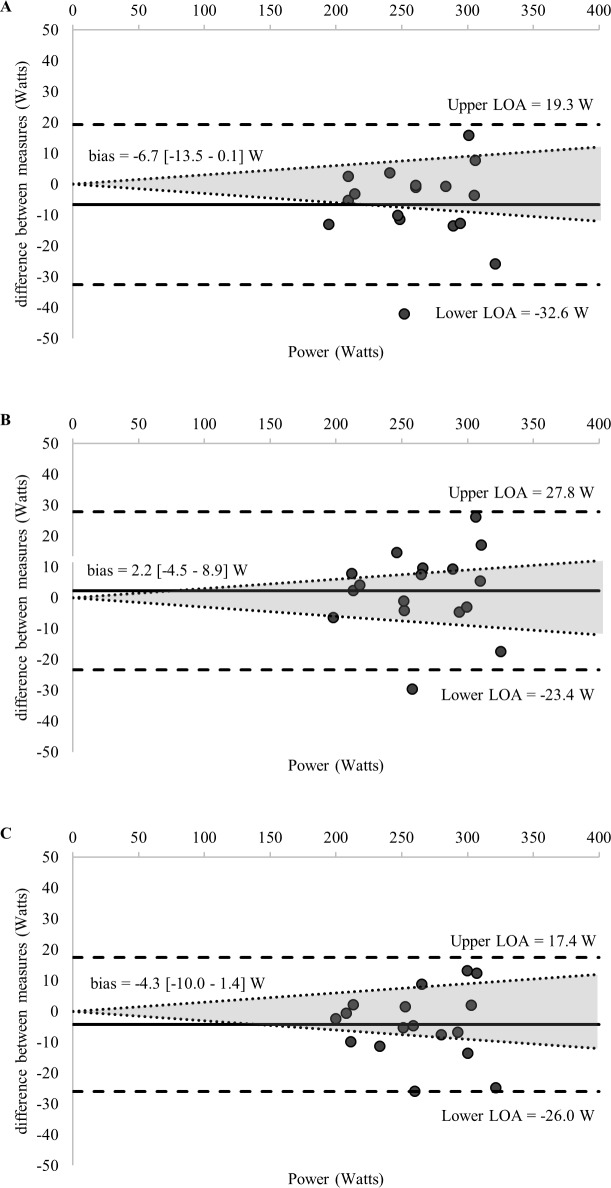
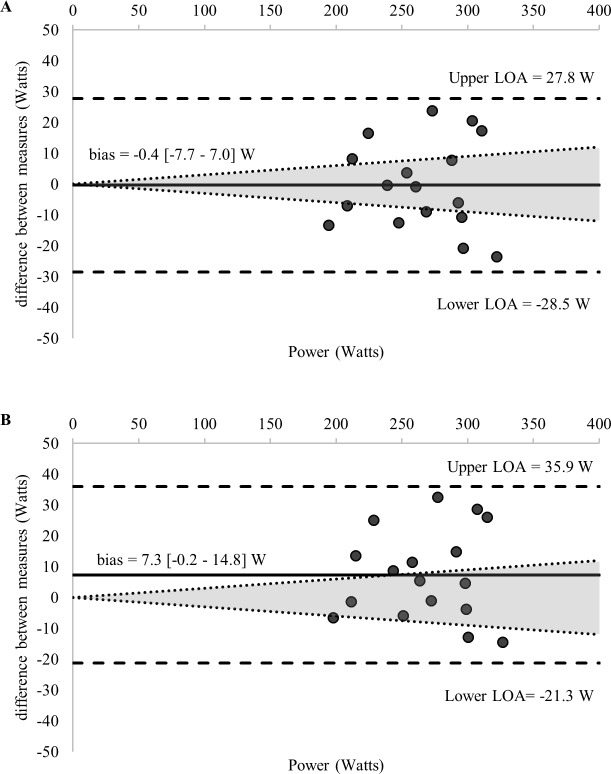
Background To determine the validity of the lactate threshold (LT) and maximal oxygen uptake ( _ VO 2max ) determined during graded exercise test (GXT) of different durations and using different LT calculations.Trained male cyclists (n = 17) completed five GXTs of varying stage length (1, 3, 4, 7 and 10 min) to establish the LT, and a series of 30-min constant power bouts to establish the maximal lactate steady state (MLSS)._ VO 2 was assessed during each GXT and a subsequent verification exhaustive bout (VEB), and 14 different LTs were calculated from four of the GXTs (3, 4, 7 and 10 min)-yielding a total 56 LTs.Agreement was assessed between the highest _ VO 2 measured during each GXT ( _ VO 2peak ) as well as between each LT and MLSS._ VO 2peak and LT data were analysed using mean difference (MD) and intraclass correlation (ICC). ResultsThe _ VO 2peak value from GXT 1 was 61.0 ± 5.3 mL .kg -1.min -1 and the peak power 420 ± 55 W (mean ± SD).The power at the MLSS was 264 ± 39 W. _ VO 2peak from GXT 3, 4, 7, 10 underestimated _ VO 2peak by ~1-5 mL .kg -1.min -1 .Many of the traditional LT methods were not valid and a newly developed Modified D max method derived from GXT 4 provided the most valid estimate of the MLSS (MD = 1.1 W; ICC = 0.96). ConclusionThe data highlight how GXT protocol design and data analysis influence the determination of both _ VO 2peak and LT.It is also apparent that _ VO 2max and LT cannot be determined in a single GXT, even with the inclusion of a VEB.
Overview
The claims and statistics of this paper haven’t been checked yet.
Free: it reads the open-access text and checks the first 5 claims that cite a source we can check. Create a free account to check every claim.
Integrity signals
Registry
Cites
Statistics
Figures
Verification
Claims the paper makes
The claims and statistics of this paper haven’t been checked yet.
Free: it reads the open-access text and checks the first 5 claims that cite a source we can check. Create a free account to check every claim.
Claims other papers make about this one
Each is checked against this paper’s own text: does it say what the citing paper says it does?
The source backs part of the claim, not all of it — or backs it for a different population, condition or comparison.
In the citing paper
“Furthermore, BLa threshold determinations are highly dependent on the structure of the GXT protocol used and the method chosen to calculate LT1 and LT2 (Jamnick et al., 2018).”
From Monitoring skeletal muscle oxygen saturation kinetics during graded exercise testing in NCAA division I female rowers (2025) · cites this paper as Jamnick et al., 2018
Experimental — accuracy not yet measuredThe source backs part of the claim, not all of it — or backs it for a different population, condition or comparison.
In the citing paper
“Work steps are ideally 3 min in duration or longer to permit physiological measures to reach a relative steady-state at each workload (25, 26).”
From Comparing the reliability of muscle oxygen saturation with common performance and physiological markers across cycling exercise intensity (2023) · cites this paper as [25]
Experimental — accuracy not yet measuredThe cited source says what the claim attributes to it.
In the citing paper
“But there is one main problem with maximal incremental tests to establish a lactate threshold, as there is a lack of consensus on the protocol to be used, i.e., in the variables of: total duration, duration of each stage, change in intensity of each stage, and total number of stages or incremental stages (Bentley et al., 2007; Jamnick et al., 2018).”
From The relationship of muscle oxygen saturation analyzer with other monitoring and quantification tools in a maximal incremental treadmill test (2023) · cites this paper as Jamnick et al., 2018
Self-check
Percentages, sums and reported differences re-computed from the paper’s own numbers.
The self-check needs the paper’s full text.
Citations
Cites
STATISTICAL METHODS FOR ASSESSING AGREEMENT BETWEEN TWO METHODS OF CLINICAL MEASUREMENT
Martin Bland, J., & Altman, D. (1986) · The Lancet · doi:10.1016/s0140-6736(86)90837-8 · Cited by 47,965
(2014) · Medical Entomology and Zoology · Cited by 9,400
Progressive Statistics for Studies in Sports Medicine and Exercise Science
HOPKINS, W. G., MARSHALL, S. W., BATTERHAM, A. M., & HANIN, J. (2009) · Medicine & Science in Sports & Exercise · doi:10.1249/mss.0b013e31818cb278 · Cited by 9,128 · cited 1×
“Agreement between the MLSS and the calculated LTs was evaluated using a two-way mixed intraclass correlation coefficient (ICC), standard error of the measurement (SEM), Lin’s concordance correlation coefficient (pc) [46], Bland-Altman plots [47], (r), CV% [48, 49] and a magnitude-based inference approach involving sta…”
MethodA concordance correlation coefficient to evaluate reproducibility.
Lin, L. I.-K. (1989) · Biometrics · doi:10.2307/2532051 · Cited by 8,785
Cohen, J. (1992) · Psychological Bulletin · doi:10.1037//0033-2909.112.1.155 · Cited by 8,771
Measures of Reliability in Sports Medicine and Science
Hopkins, W. G. (2000) · Sports Medicine · doi:10.2165/00007256-200030010-00001 · Cited by 4,635 · cited 6×
“Agreement between _ VO2 measured during each GXT and subsequent VEB was evaluated using intraclass calculation coefficient (ICC), SEM, and CV% [49].”
MethodInfluentialA new method for detecting anaerobic threshold by gas exchange
Beaver, W. L., Wasserman, K., & Whipp, B. J. (1986) · Journal of Applied Physiology · doi:10.1152/jappl.1986.60.6.2020 · Cited by 4,103
Thompson, P. D., Arena, R., Riebe, D., & Pescatello, L. S. (2013) · Current Sports Medicine Reports · doi:10.1249/jsr.0b013e31829a68cf · Cited by 1,823
Justification of the 4-mmol/l lactate threshold
Heck, H., Mader, A., Hess, G., Mücke, S., Müller, R., & Hollmann, W. (1985) · International Journal of Sports Medicine · doi:10.1055/s-2008-1025824 · Cited by 888 · cited 3×
“It is also worth noting that the original authors cautioned the use of this OBLA method, given the lack of a significant correlation when comparing OBLA methods from a GXT and the MLSS [24].”
BackgroundMethodLactate Threshold Concepts: How Valid are They?
Faude, O., Kindermann, W., & Meyer, T. (2009) · Sports Medicine · doi:10.2165/00007256-200939060-00003 · Cited by 882
Research works printed but not linked: 3
- Heck H, Mader A, Hess G, Mücke S, Müller R, Hollmann W. Justification of the 4-mmol/l lactate threshold. International Journal of Sports Medicine. 1985;(6): 117– 30. 4030186 · DOI · Paper page
- Kindermann W, Simon G, Keul J. The significance of the aerobic-anaerobic transition for the determination of work load intensities during endurance training. European Journal of Applied Physiology and Occupational Physiology. 1979; 42(1): 25– 34. 499194 · DOI · Paper page
- Hopkins W. Analysis of validity by linear regression (Excel spreadsheet). 2015; 19: 36– 44.
Cited by
Items 101–195 of 195
Brady, A. J., Roantree, M., & Egan, B. (2024) · International Journal of Sport Nutrition and Exercise Metabolism · doi:10.1123/ijsnem.2023-0272 · Cited by 9
Bourgois, G., Colosio, A. L., Caen, K., Bourgois, J., Mucci, P., & Boone, J. (2022) · European Journal of Applied Physiology · doi:10.1007/s00421-022-05106-y · Cited by 7
Rębiś, K., Klusiewicz, A., Długołęcka, B., Różański, P., Kowieski, K., & Kowalski, T. (2024) · Journal of Clinical Medicine · doi:10.3390/jcm13175340 · Cited by 7
Storoschuk, K. L., Moran-MacDonald, A., Gibala, M. J., & Gurd, B. J. (2025) · Sports Medicine · doi:10.1007/s40279-025-02261-y · Cited by 8
“It is important to note that there are many definitions of LT1 and methods for assessing the threshold [27].”
InfluentialEffects of a 2-km Swim on Markers of Cycling Performance in Elite Age-Group Triathletes
Rothschild, J. A., & Crocker, G. H. (2019) · Sports · doi:10.3390/sports7040082 · Cited by 11
“Due to the variations observed in lactate threshold among diff rent calculation ethods [16] and because the shape of the lactate cu ves were likely to be influenced by th levated lacta e levels after swimming, a fixed point of 4 mM was used for comparison across tests [17].”
MethodDudley-Rode, H., Zinn, C., Plews, D. J., Charoensap, T., & Maunder, E. (2025) · European Journal of Applied Physiology · doi:10.1007/s00421-024-05687-w · Cited by 6
“We previously found that VT 1 and the lactate threshold, calculated using the LoglogLT method (Jamnick et al. 2018) produced similar results and responded to prolonged exercise in the same fashion as VT 1 (Stevenson et al. 2022), which supports use of this approach for estimating the…”
Osmani, F., Lago-Fuentes, C., Alemany-Iturriaga, J., & Barcala-Furelos, M. (2023) · Frontiers in Physiology · doi:10.3389/fphys.2023.1155037 · Cited by 8
“, in the variables of: total duration, duration of each stage, change in intensity of each stage, and total number of stages or incremental stages (Bentley et al., 2007; Jamnick et al., 2018).”
BackgroundThe Method but Not the Protocol Affects Lactate-Threshold Determination in Competitive Swimmers
Arsoniadis, G. G., Nikitakis, I. S., Peyrebrune, M., Botonis, P. G., & Toubekis, A. G. (2024) · International Journal of Sports Physiology and Performance · doi:10.1123/ijspp.2023-0389 · Cited by 6
Critical Power Is More Strongly Associated With Rowing Performance Than the Second Lactate Threshold
Dwyer, D., Lester, K. D., Siegel, R., Rice, A. J., & Hoffmann, S. M. (2025) · International Journal of Sports Physiology and Performance · doi:10.1123/ijspp.2024-0416 · Cited by 7
Ji, S., Keller, S., Zwingmann, L., & Wahl, P. (2022) · European Journal of Applied Physiology · doi:10.1007/s00421-022-05084-1 · Cited by 9
Broatch, J. R., Zarekookandeh, N., Glarin, R. K., Strik, M., Johnston, L. A., Moffat, B. A., Bird, L., Gunningham, K., Churilov, L. P., Johns, H. T., et al. (2023) · BMJ Open · doi:10.1136/bmjopen-2022-069413 · Cited by 6
Self-citationMarinho, A. H., da Silva, J. M., Brandão, V. F. D. N., Jatobá, S. G., Júnior, P. B., Ataide‐Silva, T., Sousa, F. A. D. B., Bastos‐Silva, V. J., & de Araújo, G. G. (2024) · Research Quarterly for Exercise and Sport · doi:10.1080/02701367.2023.2293121 · Cited by 7
“Graded exercise tests promote higher challenges in cardiopulmonary responses (Jamnick et al., 2018), thereby increasing the probability of caffeine having a significant effect on those parameters.”
Borszcz, F. K., de Aguiar, R. A., Costa, V. P., Denadai, B. S., & de Lucas, R. D. (2024) · The Journal of Strength and Conditioning Research · doi:10.1519/jsc.0000000000004772 · Cited by 8
“%] and 33.5% [90% CrI, 25.0 – 40.9%], respectively.”
MethodResultInfluentialDutra, Y. M., Claus, G. M., Malta, E. D. S., Seda, D. M. D. F., Zago, A. S., Campos, E. Z., Ferraresi, C., & Zagatto, A. M. (2021) · Frontiers in Physiology · doi:10.3389/fphys.2020.607302 · Cited by 7
“Although a single graded-exercise test can be used to estimate both maximal and submaximal endurance performance indicators, the optimal stage and test duration for each measure seem to be different (Jamnick et al., 2018).”
Stefanov, L. G., & Neykov, S. (2021) · Pedagogy of Physical Culture and Sports · doi:10.15561/26649837.2021.0203 · Cited by 8
Granata, C., Caruana, N. J., Botella, J., Jamnick, N. A., Huynh, K., Kuang, J., Janssen, H. A., Reljić, B., Mellett, N. A., Laskowski, A., et al. (2021) · bioRxiv (Cold Spring Harbor Laboratory) · doi:10.1101/2021.02.19.431993 · Cited by 4
Self-citationSablain, M., Sperlich, B., Meixner, B. J., Caen, K., Vermeire, K., & Boone, J. (2025) · European Journal of Applied Physiology · doi:10.1007/s00421-025-05751-z · Cited by 5
“Moreover, the longer duration of the incremental protocol in this study (22.7 ± 2.3 min) when compared to the advised duration of 8–12 min could have slightly underestimated ̇ VO 2max (Jamnick et al. 2018; Yoon et al. 2007) resulting in a lower cP-MLSS.”
InfluentialMalinen, T., Nuuttila, O., Matomäki, P., Uusitalo, A. L. T., & Kyröläinen, H. (2026) · European Journal of Sport Science · doi:10.1002/ejsc.70178 · Cited by 6
“Different methods to assess the first metabolic threshold might yield different results (Pallarés et al. 2016; Jamnick et al. 2018) and therefore affect the relative intensity of the exercise, which also has implications to the sex differences in physiological resilience (Meixner et al. 2026).”
Sukan-Karaçağıl, B., Akbulut, G., Açar, Y., & Demirkoparan, M. (2023) · International Journal of Sport Nutrition and Exercise Metabolism · doi:10.1123/ijsnem.2023-0016 · Cited by 5
Hebisz, R. G., Cortis, C., Hebisz, P., Borkowski, J., & Jastrzębska, A. D. (2024) · Human Movement · doi:10.5114/hm/186688 · Cited by 6
Sheoran, S., Stavropoulos‐Kalinoglou, A., Simpson, C. S., Ashby, M., Webber, E., & Weaving, D. (2024) · Journal of Sports Sciences · doi:10.1080/02640414.2024.2421691 · Cited by 5
“In addition, various concepts exist for lactate profiling and threshold determination (Faude et al., 2009; Jamnick et al., 2018), which are also dependent on specific protocol designs and manipulating GXT variables, and therefore could affect the accuracy of the lactate threshold estimates with the…”
InfluentialAnaerobic Threshold Determination in Cycle Ergometer From Rating of Perceived Exertion
dos Santos, G. A., Numata-Filho, E. S., Rosa, T. D. S., Neves, R. V. P., Simões, H. G., & Moreira, S. R. (2020) · The Journal of Strength and Conditioning Research · doi:10.1519/jsc.0000000000003627 · Cited by 8
Speed and Grade Increment During Cardiopulmonary Treadmill Testing: Impact on Exercise Prescription
Belli, K. C., da Silva, P. F., Franzoni, L. T., MYERS, J. N., Stein, R., & Ribeir, J. P. (2019) · International Journal of Cardiovascular Sciences · doi:10.5935/2359-4802.20190058 · Cited by 6
Eserhaut, D. A., DeLeo, J. M., Provost, J. A., Ackerman, K. E., & Fry, A. C. (2025) · Frontiers in Physiology · doi:10.3389/fphys.2025.1538465 · Cited by 7
Bradshaw, L., Moreno‐Cabañas, A., Spellanzon, B., Hutchins, K., Collins, A. J., Buniam, J., der Stede, T. V., Mallinson, J. E., Tsintzas, K., Derave, W., et al. (2025) · The Journal of Physiology · doi:10.1113/jp289864 · Cited by 5
Meixner, B. J., Schaffarczyk, M., & Sperlich, B. (2026) · American Journal of Physiology-Regulatory, Integrative and Comparative Physiology · doi:10.1152/ajpregu.00266.2025 · Cited by 4
Borszcz, F. K., Tramontin, A. F., de Lucas, R. D., & Costa, V. P. (2024) · International Journal of Sports Physiology and Performance · doi:10.1123/ijspp.2023-0330 · Cited by 4
Training Characteristics Related to (the Changes in) Durability in Semiprofessional Cyclists
Voet, J. G., van Erp, T., Viribay, A., de Koning, J. J., & Lamberts, R. P. (2025) · International Journal of Sports Physiology and Performance · doi:10.1123/ijspp.2024-0321 · Cited by 4
Lu, C. T., Cui, W., Zhu, Z., Wu, Y., Xing, Q., Pan, B., & Shen, Y. (2025) · Frontiers in Physiology · doi:10.3389/fphys.2025.1621996 · Cited by 4
Newer Perspectives in Lactate Threshold Estimation for Endurance Sports – A Mini-Review
Krishnan, A., Guru, C. S., Sivaraman, A., Alwar, T., Sharma, D., & Angrish, P. (2021) · Central European Journal of Sport Sciences and Medicine · doi:10.18276/cej.2021.3-09 · Cited by 6
“There has been no clear consensus with respect to appropriate use of GXT for LT estimation in terms of all the protocol components (Jamnick et al., 2018).”
BackgroundMethodInfluentialTaylor, D. F., Reisman, E. G., GARNHAM, A. P., Barrès, R., Hoffman, N. J., Hawley, J. A., Caruana, N. J., & Bishop, D. J. (2025) · bioRxiv (Cold Spring Harbor Laboratory) · doi:10.1101/2025.08.17.667354 · Cited by 4
Self-citationTraining for Elite Team-Pursuit Track Cyclists—Part I: A Profile of General Training Characteristics
Stadnyk, A. M. J., Stanley, J., Decker, T., & Slattery, K. (2024) · International Journal of Sports Physiology and Performance · doi:10.1123/ijspp.2023-0496 · Cited by 3
Pacitti, L. J., Shikaze, K. E., Simpson-Stairs, N., Stringer, J., & Gurd, B. J. (2025) · European Journal of Applied Physiology · doi:10.1007/s00421-025-05711-7 · Cited by 3
“The methods of determining exercise intensity domain thresholds are often criticized for their accuracy (Jamnick et al. 2018), calling into question whether the performance of exercise is synonymous with the prescription.”
MacDougall, K. B., Aboodarda, S. J., Westergard, P. H., & MacIntosh, B. R. (2024) · Experimental Physiology · doi:10.1113/ep092116 · Cited by 4
Marzolini, S., Oh, P., Peterman, J. E., Wallace, P. J., Yadollahi, A., Rivera-Theurel, F., Carvalho, C., & Kaminsky, L. A. (2024) · Canadian Journal of Cardiology · doi:10.1016/j.cjca.2024.11.022 · Cited by 6
Llodio, I., Yanci, J., Usandizaga, M., Larrea, A., Iturricastillo, A., Cámara, J., & Granados, C. (2024) · Journal of Functional Morphology and Kinesiology · doi:10.3390/jfmk10010009 · Cited by 3
lactater: Tools for Analyzing Lactate Thresholds
Maturana, F. M. (2021) · doi:10.32614/cran.package.lactater · Cited by 4
Romarate, A., Jauregi, A. P., Feldmann, A., Viribay, A., & Santos‐Concejero, J. (2025) · European Journal of Sport Science · doi:10.1002/ejsc.70025 · Cited by 2
“It is well‐established that exercise test protocols play a crucial role in the detection of thresholds (Jamnick et al. 2018; Kou-wijzer et al. 2019).”
Zoladz, J. A., Zapart-Bukowska, J., Grandys, M., Majerczak, J., & Nieckarz, Z. (2025) · Scientific Reports · doi:10.1038/s41598-025-08353-z · Cited by 2
Bizas, G., Smilios, I., Thomakos, P., & Bogdanis, G. C. (2026) · Sports · doi:10.3390/sports14030097 · Cited by 2
“The first lactate threshold (LT1) was defined as the running speed corresponding to an increase in blood lactate concentration of 0.5 mmol · L − 1 above baseline, where baseline was calculated as the mean lactate concentration across the first 2–3 stages of the incremental test [34,35].”
InfluentialRunning Power at Lactate Threshold and Lactate Turnpoint Are Unaltered by Treadmill Incline
Adejuwon, D. C., Faricier, R., & Keir, D. A. (2026) · International Journal of Sports Physiology and Performance · doi:10.1123/ijspp.2025-0579 · Cited by 2
Faricier, R., Fleitas‐Paniagua, P. R., Iannetta, D., Millet, G. Y., Keir, D. A., & Murias, J. M. (2024) · The Journal of Strength and Conditioning Research · doi:10.1519/jsc.0000000000004986 · Cited by 2
Threshold estimation in running using dynamical correlations of RR intervals
Kanniainen, M., Laatikainen‐Raussi, V., Pukkila, T., Vohlakari, K., Hynynen, E., Ihalainen, J. K., & Räsänen, E. (2025) · Physiological Reports · doi:10.14814/phy2.70241 · Cited by 3
“However, the determination of the thresholds is subjective and ambiguous due to the different metabolic responses and initial lactate levels of the individuals, and there is no universal method to be referred as the golden standard (Jamnick et al., 2018; Newell et al., 2007).”
A Contemporary Variable-Power Cycling Protocol to Discriminate Race-Specific Performance Ability
Sharma, A. P., Bentley, D. J., Mejuto, G., & Etxebarria, N. (2020) · International Journal of Sports Physiology and Performance · doi:10.1123/ijspp.2019-0558 · Cited by 2
КЛАСТЕРИЗАЦІЯ ФУНКЦІОНАЛЬНИХ СТАНІВ ОРГАНІЗМУ. ПІЛОТНЕ ДОСЛІДЖЕННЯ
Mintser, O. P., Карленко, В. П., Шевченко, Я. О., & Суханова, О. О. (2021) · Medical Informatics and Engineering · doi:10.11603/mie.1996-1960.2021.2.12449 · Cited by 2
McGRATH, E., Mahony, N., Fleming, N., Benavoli, A., & Donne, B. (2022) · International journal of exercise science · doi:10.70252/djtu3106 · Cited by 3
Gonzalez, J. T., Lolli, L., Veasey, R. C., Rumbold, P. L. S., Betts, J. A., Stevenson, E., & Atkinson, G. (2024) · Research Square · doi:10.21203/rs.3.rs-4317405/v2 · Cited by 2
Ventura, T. P., Borszcz, F. K., Aguiar, R. A. D., de Lucas, R. D., & Turnes, T. (2026) · Applied Physiology, Nutrition, and Metabolism · doi:10.1139/apnm-2025-0240 · Cited by 3
Acute Nitrate Supplementation Affects Transition Points in Progressive Incremental Testing?
Leal, L. D. D. S., Abreu, C. W., Gonçalves, R., Domínguez, R., & da Silva, S. F. (2024) · MHSALUD Revista en Ciencias del Movimiento Humano y Salud · doi:10.15359/mhs.21-2.19264 · Cited by 1
de Carvalho, C. D., Rebelo, M. A., de Moraes, C., & Papoti, M. (2025) · Brazilian Journal of Medical and Biological Research · doi:10.1590/1414-431x2025e13517 · Cited by 2
Sheoran, S., Stavropoulos‐Kalinoglou, A., Darrall‐Jones, J., & Weaving, D. (2025) · European Journal of Applied Physiology · doi:10.1007/s00421-025-05841-y · Cited by 1
“LT 2 was determined as the speed at which BLa increased 1.5 mmol L −1 above participants’ baseline (lowest data point in all stages), as it is observed to be a valid estimate of maximal lactate steady state in a step incremental graded exercise test of 3-min stages (Jamnick et al. 2018).”
InfluentialHRV‐Based Thresholds in Rowing: Validity and Reliability Assessment
Held, S., Rappelt, L., Wiedenmann, T., Rommelmann, J., Gronwald, T., & Donath, L. (2025) · European Journal of Sport Science · doi:10.1002/ejsc.70054 · Cited by 4
Estimation of Runnersʼ Lactate Threshold Heart Rate and Speed by Heart Rate Variability
Pan, B., Shen, Y., Lu, C., Lu, S., Wu, Y., & Xing, Q. (2025) · International Journal of Sports Medicine · doi:10.1055/a-2721-9979 · Cited by 2
Olieslagers, A., Müller-Jabusch, Y., Margot, V., Emma, D., & de Beukelaar, T. T. (2026) · Physiological Reports · doi:10.14814/phy2.70777 · Cited by 1
Gómez-Cazorla, D., López-Grueso, R., & Vicens‐Bordas, J. (2026) · Retos · doi:10.47197/retos.v79.118526 · Cited by 1
“Finally, the incremental test aimed also to find the MFO; therefore, some tests exceeded 30 minutes which means that VO 2max , PPO and PPO·kg -1 may have been underestimated since the duration of tests that estimate this parameters should last between 8 to 12 minutes (Jamnick et al., 2018).”
Rainsberger, K., Subudhi, A. W., PEARSON, J. A., & Baranauskas, M. N. (2026) · Journal of science and medicine in sport · doi:10.1016/j.jsams.2026.04.020 · Cited by 2
Broatch, J. R., Zare, N., Glarin, R. K., Moffat, B. A., Syeda, W. T., Johnston, L. A., Johns, H. T., Churilov, L. P., Gunningham, K., O’Riordan, S. F., et al. (2026) · Neurology Open Access · doi:10.1212/wn9.0000000000000118 · Cited by 1
Self-citationReply from George A. Brooks, Harry B. Rossiter, David C. Poole and L. Bruce Gladden
Brooks, G. A., Rossiter, H. B., Poole, D. C., & Gladden, L. B. (2021) · The Journal of Physiology · doi:10.1113/jp281335 · Cited by 4
“In addition to CP, these include ‘anaerobic threshold’ (Svedahl & MacIntosh, 2003), the second anaerobic threshold (AT2), the individual anaerobic threshold (IAT), the respiratory (or ventilatory) compensation point/threshold (RCP/RCT), the La– turn point (Smith & Jones, 2001), the aerobic/anaerobic threshold, the max…”
BackgroundGonzalez, J. T., Lolli, L., Veasey, R. C., Rumbold, P. L. S., Betts, J. A., & Stevenson, E. (2024) · Research Square · doi:10.21203/rs.3.rs-4317405/v1 · Cited by 1
The Rise (and Fall) of Decision-Making During Increasing Physical ExercisePreprint
de Walle, M. V., Held, L. K., Colosio, A. L., & Notebaert, W. (2025) · doi:10.51224/srxiv.673 · Cited by 2
Reisman, E. G., Taylor, D. F., Yu, D., Huang, C., Bishop, D. J., Caruana, N. J., Hawley, J. A., & Hoffman, N. J. (2026) · bioRxiv (Cold Spring Harbor Laboratory) · doi:10.64898/2026.02.08.703653 · Cited by 1
Self-citationCalculating critical power and the finite work capacity from a single all-out cycling test
Wright, J. (2019) · Southampton Solent University Digital Library
Blood glucose threshold determination is stage length dependent
Esteves, G., Pereira, P. E., Motoyama, Y. L., Bouchnak, M. M., & de Azevedo, P. H. S. M. (2020) · Motriz Revista de Educação Física · doi:10.1590/s1980-65742020000110200218 · Cited by 1
ALPARSLAN, T., Arabacı, R., & Görgülü, R. (2023) · CBÜ Beden Eğitimi ve Spor Bilimleri Dergisi · doi:10.33459/cbubesbd.1253528
ALPARSLAN, T., Ata, N., Arabacı, R., Şımşek, D., Küçük, N., ŞENOL, L., & Türk, Y. (2024) · Kinesiology · doi:10.26582/k.56.1.17
“AT and RC points can also be determined during the VO 2max test (Jamnick, Botella, Pyne, & Bishop, 2018).”
BackgroundGranier, C. (2018) · theses.fr (ABES) · doi:10.70675/953e5e40ze48ez4677zb669z7d4621878350
Smith, P., BERGER, N. J. A., & Taylor, J. M. (2025) · International Journal of Sports Science & Coaching · doi:10.1177/17479541251362199
“43 Despite the difference in TTE at FTP across training levels, the justi fi cation for FTP testing and FTP-based zone determination remains strong, given that it is so widespread in cycling practice.”
Measuring muscle oxygenation in endurance sports with wearable nirs - from validation to application
Yogev, A. (2023) · cIRcle (University of British Columbia) · doi:10.14288/1.0431178 · Cited by 1
Hiltunen, I. (2023) · Jyväskylä University Digital Archive (University of Jyväskylä)
Study of the local oxygen saturation in cycling and differences between sexes
Sendra‐Pérez, C. (2025) · Repository of Digital Objects for Teaching Research and Culture (University of Valencia)
Arjona, Ó. A. M. (2024) · Repository of Digital Objects for Teaching Research and Culture (University of Valencia) · Cited by 1
The Effect of Intensity Prescription on Individual Responses to Exercise
Meyler, S. (2024) · University of Hertfordshire Research Archive (University of Hertfordshire)
Модифицированный графический метод определения метаболических порогов у бегунов-стайеров
Сергеевич, С. Т. (2024) · SibFU Digital Repository (Siberian Federal University)
Kogoj, T. (2024) · Repository of the University of Primorsk (University of Primorska)
Mentzoni, F., Skaugen, M., Roterud, S., JOHANSEN, E. S., & Losnegard, T. (2026) · Sport Sciences for Health · doi:10.1007/s11332-025-01594-5
Kripp, A. M., Feichter, A., & König, D. (2026) · Frontiers in Nutrition · doi:10.3389/fnut.2025.1750042
Maeseneer, J. D., Olieslagers, A., Gronwald, T., & de Beukelaar, T. T. (2026) · bioRxiv (Cold Spring Harbor Laboratory) · doi:10.64898/2026.02.02.703217
“LT1 was defined as the point at which blood lactate concentration increased by 0.5 mmol/L above baseline (Jamnick et al., 2018; Keir et al., 2022).”
InfluentialDynamic heart rate and power output modeling to predict lactate threshold in recreational cyclists
Stessens, L., Bot, I. D., Gielen, J., MEEUSEN, R. R., & Aerts, J. (2026) · Biomedical Physics & Engineering Express · doi:10.1088/2057-1976/ae451d
Li, J., Taylor, D. F., Kuang, J., Wang, Z., Zare, N., ATAKAN, M. M., Cui, K., Ouzhu, N., Bianba, B., GARNHAM, A. P., et al. (2026) · bioRxiv (Cold Spring Harbor Laboratory) · doi:10.64898/2026.04.22.720051
Self-citationMain, E., Yoon, S., James, S. L., Mellor, K. M., Brick, M. J., Leigh, W. B., & Maunder, E. (2026) · European Journal of Applied Physiology · doi:10.1007/s00421-026-06260-3 · Cited by 3
“To estimate lactate threshold, blood lactate concentrations during the five-step test were plotted against power output, and the breakpoint in the curve was identified using the LoglogLT method (Jamnick et al. 2018 ).”
Larsen, J. D. (2025) · ScholarsArchive (Brigham Young University)
Assessment of blood lactate measurement accuracy in athletes using three portable analyzers
Dikunets, M. A., Dudko, G. A., Arkhipkin, A. A., Kryuchkov, A. S., & Геньевич, А. А. (2026) · Sports medicine research and practice · doi:10.47529/2223-2524.2026.1.7
The Application of Field-Based Power-Duration Profiling to Elite Female International Hockey Players
GRIGGS, A. (2026) · Cronfa (Swansea University)
Richards, A. J., Jamal-Zadeh, P., Silva, A. R., Malekzadeh, R., Turner, L. V., Laham, R., Riddell, M. C., PHILLIPS, D. B., & Cheng, A. J. (2026) · European Journal of Applied Physiology · doi:10.1007/s00421-026-06384-6
Yksilöllisen ensimmäisen laktaattikynnyksen määrittely ravihevoselle
Hellevuo, J. (2026) · Jyväskylä University Digital Archive (University of Jyväskylä)
Röhrs, D., Wagner, C., Reer, R., & Keiner, M. (2026) · European Journal of Applied Physiology · doi:10.1007/s00421-026-06444-x
Shen, Y., Zou, X., Chen, X., & Wu, X. (2026) · Annals of Medicine · doi:10.1080/07853890.2026.2737006
Sempere-Ruiz, N., Manresa‐Rocamora, A., Sanz-Rocher, A., Baladzhaeva, S., Fuertes-Kenneally, L., Moya‐Ramón, M., Hoos, O., & Sarabia, J. M. (2026) · European Journal of Sport Science · doi:10.1002/ejsc.70271
Metadata
- Authors
- Jamnick, N. A., Botella, J., Pyne, D. B., & Bishop, D. J.
- Affiliations
- Victoria University (AU)
- University of Canberra (AU)
- Edith Cowan University (AU)
- Corresponding author
- Jamnick, Nicholas A.
- Venue
- PLOS ONE
- Publisher
- Public Library of Science (PLoS)
- Published
- 2018-07-30
- Volume
- 13
- Issue
- 7
- Pages
- e0199794
- ISSN
- 1932-6203 (ISSN-L)
- PMC
- PMC6066218
- OpenAlex
- W2887008427
- Semantic Scholar
- 05c107ceab351dbf1ad39e9bd3ddb8c75d93f399
- Cited by
- 178
- References
- 64
- Citations by year
- 2026: 17 · 2025: 29 · 2024: 34 · 2023: 15 · 2022: 20 · 2021: 27 · 2020: 17 · 2019: 14 · 2018: 5
- FWCI
- 21.96
- Type
- journal article
- Language
- en
- Open access
- gold
- doi.org
- Licence
- Locations
- PLoS ONE (publishedVersion, cc-by)
- Europe PMC (PubMed Central) (publishedVersion, cc-by)
- PubMed Central (publishedVersion, cc-by)
- PubMed (publishedVersion)
- Australasian Journal of Paramedicine (submittedVersion, cc-by)
- Victoria University Research Repository (Victoria University) (submittedVersion, cc-by)
- RePEc: Research Papers in Economics (submittedVersion)
- DOAJ (DOAJ: Directory of Open Access Journals) (submittedVersion, cc-by-sa)
- Deakin Research Online (Deakin University) (submittedVersion)
- Figshare (submittedVersion, cc-by)
- Griffith Research Online (submittedVersion, cc-by)
- OSF Preprints (OSF Preprints) (submittedVersion)
- Funders
- Victoria University
- Topics
- Health Sciences › Medicine › Physiology (medical) › Cardiovascular and exercise physiology
- Health Sciences › Medicine › Orthopedics and Sports Medicine › Sports Performance and Training
- Health Sciences › Nursing › Nutrition and Dietetics › Muscle metabolism and nutrition
- Keywords
- lactate threshold, VO2max, incremental exercise test, test length, maximal lactate steady state, test protocol design, cyclists
- MeSH terms
- Adult, Exercise Test, Humans, Male, Anaerobic Threshold, Lactic Acid
About these checks
Registry, retraction, Cites and statistics results are computed, not judged, with one exception: a printed reference that no index lists is read once by a model before it counts as a citation error. Claims are extracted by a model and kept only when their quote appears verbatim in the text; each cited source is then checked, with a model’s help, for whether it says what the claim relies on. Those verdicts can be wrong — read the claim’s quote and the cited source before relying on one.
Statistics and arithmetic are recomputed, not judged.
Confidence bands are shown only for fields calibrated on our annotated test set. None is calibrated yet, so no band is shown.
What counts as a claim ›How we measure confidence ›How we check this ›
Are you an author, or do you see a problem with this page? Request a review
Data sources
Bibliographic data: Semantic Scholar, OpenAlex, Crossref.
Contains information from the Semantic Scholar Academic Graph Datasets, made available under the ODC Attribution License (ODC-BY 1.0).
Semantic Scholar’s data is described in: Kinney, R., et al. (2023). The Semantic Scholar Open Data Platform. arXiv:2301.10140.
