

Safety of a novel feed ingredient, Algal Oil containing EPA and DHA, in a gestation-lactation-growth feeding study in Beagle dogs
Open accessThe DOI matches its Crossref record; 31 of the 31 references it cites were found in a registry or an index.
Abstract
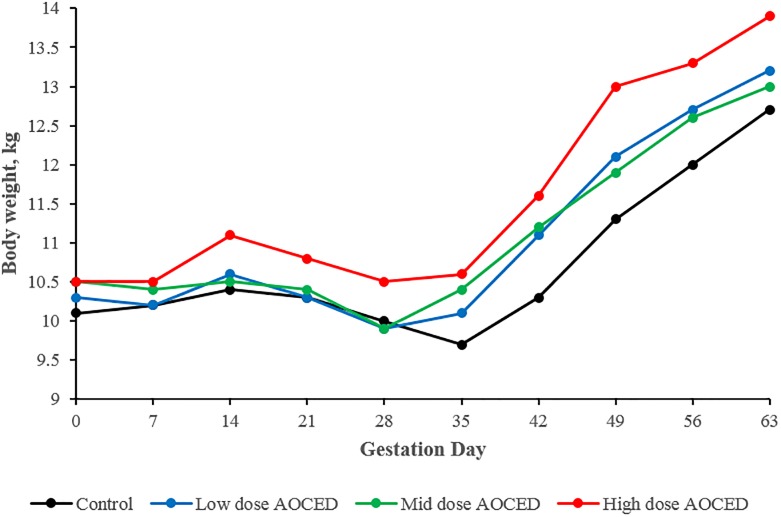
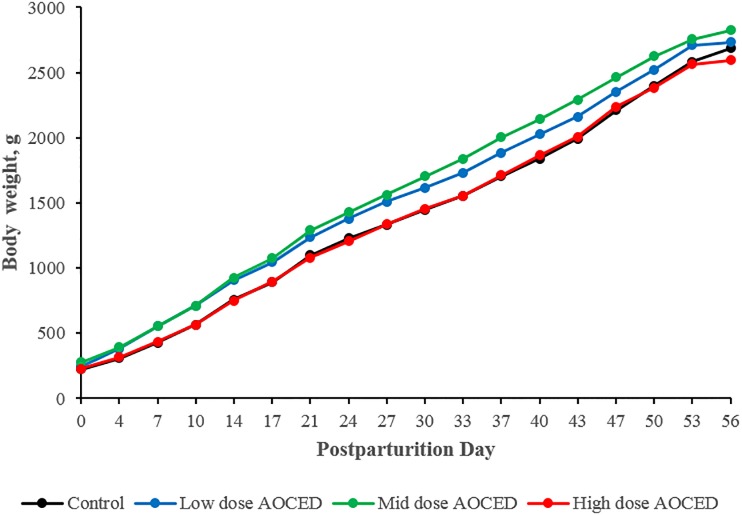
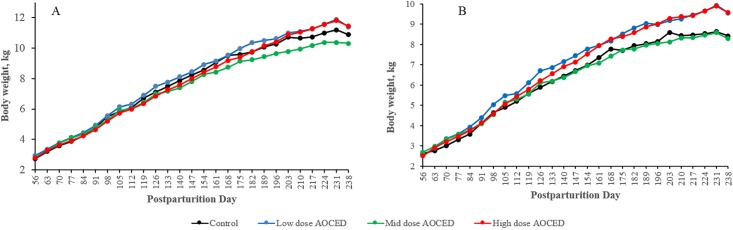
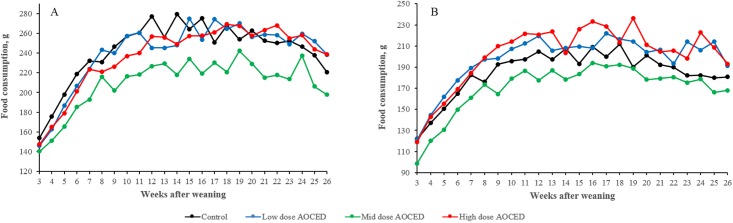
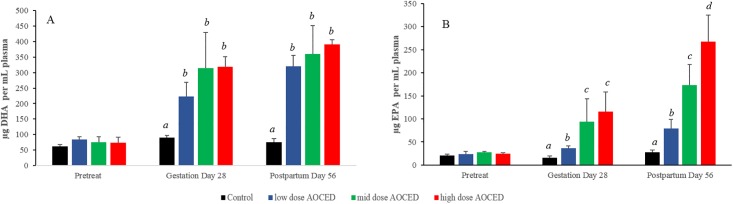
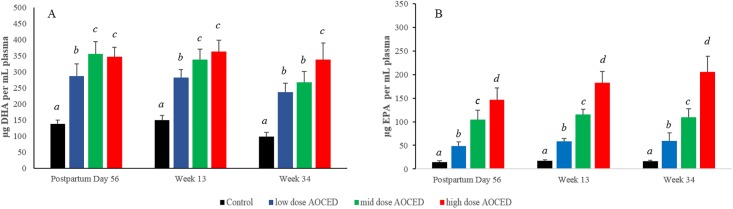
An Algal Oil Containing EPA and DHA (AOCED) at ~50% was developed as a sustainable source of omega-3 fatty acids. AOCED was incorporated into extruded dry foods for dogs at 0, 0.75%, 1.5% and 3.0% levels (equivalent to 0, 7.5, 15 and 30 g/kg diet) on dry matter basis at the expense of chicken fat and fed to healthy female Beagle dogs starting at mating and throughout gestation and lactation. The offspring were fed their maternal corresponding diets for 26 weeks after weaning. AOCED-enriched diets were well tolerated by dogs in both generations and did not affect their overall health, physiological parameters, food consumption, body weights and body weight gains. There were no changes in hematology, clinical chemistry, and coagulation parameters in both generations of dogs fed the AOCED diets when compared to those in the control group. Plasma levels of DHA and EPA increased significantly and generally dose-dependently in both generations. The study demonstrated the safety of AOCED in dogs during gestation, lactation, and growth periods at dietary levels up to 3.0wt%, equivalent to 30 g/kg diet. AOCED's bioavailability as a source of DHA and EPA in dogs was demonstrated by the increased plasma concentrations of these nutritional lipids.
Overview
The claims and statistics of this paper haven’t been checked yet.
Free: it reads the open-access text and checks the first 5 claims that cite a source we can check. Create a free account to check every claim.
Integrity signals
Registry
Cites
Statistics
Figures
Verification
Claims the paper makes
The claims and statistics of this paper haven’t been checked yet.
Free: it reads the open-access text and checks the first 5 claims that cite a source we can check. Create a free account to check every claim.
Claims other papers make about this one
Each is checked against this paper’s own text: does it say what the citing paper says it does?
The source backs part of the claim, not all of it — or backs it for a different population, condition or comparison.
In the citing paper
“The use of Algal Oil rich in EPA and DHA has been proven efficient in Beagle dogs during their reproduction, development, growth, and during the early life stages of their offspring [236].”
From Microalgae n-3 PUFAs Production and Use in Food and Feed Industries (2021) · cites this paper as [236]
Experimental — accuracy not yet measured
Self-check
Percentages, sums and reported differences re-computed from the paper’s own numbers.
The self-check needs the paper’s full text.
Citations
Cites
nlme : Linear and nonlinear mixed effects models
DebRoy, S. (2006) · Medical Entomology and Zoology · Cited by 10,009
nlme: Linear and Nonlinear Mixed Effects Models
Pinheiro, J., R Core Team, & Bates, D. (1999) · CRAN: Contributed Packages · doi:10.32614/cran.package.nlme · Cited by 6,849
Effect of aquaculture on world fish supplies.
Naylor, R. L., Goldburg, R. J., Primavera, J. H., Kautsky, N., Beveridge, M. C. M., Clay, J., Folke, C., Lubchenco, J., Mooney, H., & Troell, M. (2000) · Nature · doi:10.1038/35016500 · Cited by 3,063
Nutrient Requirements of Dogs and Cats
(2006) · National Academies Press eBooks · doi:10.17226/10668 · Cited by 1,216
Distribution, interconversion, and dose response of n-3 fatty acids in humans.
Arterburn, L. M., Hall, E. B., & Oken, H. (2006) · The American Journal of Clinical Nutrition · doi:10.1093/ajcn/83.6.1467s · Cited by 1,162
Fish oils and plasma lipid and lipoprotein metabolism in humans: a critical review
Harris, W. S. (1989) · Journal of Lipid Research · doi:10.1016/s0022-2275(20)38310-3 · Cited by 1,127
STRUCTURE, FUNCTION, AND DIETARY REGULATION OF Δ6, Δ5, AND Δ9 DESATURASES
Nakamura, M. T., & Nara, T. Y. (2004) · Annual Review of Nutrition · doi:10.1146/annurev.nutr.24.121803.063211 · Cited by 1,073
Polyunsaturated fatty acids and inflammation
Calder, P. C. (2006) · Prostaglandins, Leukotrienes and Essential Fatty Acids · doi:10.1016/j.plefa.2006.05.012 · Cited by 638
First year growth of preterm infants fed standard compared to marine oil n−3 supplemented formula
Carlson, S. E., Cooke, R. J., Werkman, S. H., & Tolley, E. A. (1992) · Lipids · doi:10.1007/bf02535870 · Cited by 337
Polyunsaturated fatty acids and inflammation
Calder, P. C. (2005) · Biochemical Society Transactions · doi:10.1042/bst0330423 · Cited by 327
Research works printed but not linked: 2
- Brown SA. Effects of dietary lipids on renal function in dogs and cats. Compend Contin Educ Pract Vet. 1999; 21(suppl K): 11– 14.
- Hall JA. Potential adverse effects of long-term consumption of (n-3) fatty acids. Compend Contin Educ Vet. 1996; 18: 879– 895.
Cited by
Microalgae n-3 PUFAs Production and Use in Food and Feed Industries
Remize, M., Brunel, Y., Silva, J. L., Berthon, J.-Y., & Filaire, E. (2021) · Marine Drugs · doi:10.3390/md19020113 · Cited by 214
“The use of Algal Oil rich in EPA and DHA has been proven efficient in Beagle dogs during their reproduction, development, growth, and during the early life stages of their offspring [236].”
Tibbetts, S. M., Scaife, M. A., & Armenta, R. E. (2020) · Aquaculture · doi:10.1016/j.aquaculture.2020.735003 · Cited by 63
Dodd, S. A. S., Shoveller, A. K. K., Fascetti, A. J., Yu, Z., David, W. L., & Verbrugghe, A. (2021) · Animals · doi:10.3390/ani11082348 · Cited by 43
Stoeckel, K., Hoejvang-Nielsen, L., Fuhrmann, H., & Bachmann, L. (2011) · Acta veterinaria Scandinavica · doi:10.1186/1751-0147-53-57 · Cited by 35
Huang, T., Wen, Y., Ho, Y.-C., Wang, J.-K., Lin, K., & Tsai, R. (2020) · Marine Drugs · doi:10.3390/md18020083 · Cited by 27
Enhanced omega‐3 index after long‐ versus short‐chain omega‐3 fatty acid supplementation in dogs
Dominguez, T. E., Kaur, K., & Burri, L. (2020) · Veterinary Medicine and Science · doi:10.1002/vms3.369 · Cited by 19
Safety of Algal Oil Containing EPA and DHA in cats during gestation, lactation and growth
Vuorinen, A., Bailey‐Hall, E., Karagiannis, A., Yu, S., Roos, F. F., Sylvester, E., Wilson, J., & Dahms, I. (2020) · Journal of Animal Physiology and Animal Nutrition · doi:10.1111/jpn.13324 · Cited by 18
Self-citationHan, P., Du, Z., Liu, X., You, J., Shi, X. ́., Sun, S., Yang, G., & Li, X. (2022) · British Journal Of Nutrition · doi:10.1017/s0007114522003981 · Cited by 12
Dillon, G. P., Keegan, J. D., & Moran, C. A. (2020) · Food and Chemical Toxicology · doi:10.1016/j.fct.2020.111397 · Cited by 12
Comparison of Key Nutrient Content of Commercial Puppy Foods with Canine Dietary Requirements
Jacuńska, W., Biel, W., Witkowicz, R., Maciejewska, D., & Piątkowska, E. (2023) · Applied Sciences · doi:10.3390/app132111791 · Cited by 12
Exploring the efficacy and optimal dosages of omega-3 supplementation for companion animals
Vendramini, T. H. A., Marchi, P. H., Olivindo, R. F. G., Pedrinelli, V., Amaral, A. R., Miranda, M., Príncipe, L. A., Cesar, C. G. L., Zafalon, R. V. A., Perini, M. P., et al. (2025) · Nutrition Research Reviews · doi:10.1017/s0954422425100115 · Cited by 10
Roles of Nutrients in the Brain Development, Cognitive Function, and Mood of Dogs and Cats
Wu, G. (2024) · Advances in experimental medicine and biology · doi:10.1007/978-3-031-54192-6_8 · Cited by 9
Geisshirt, H. A., Bonde, C. S., Marcussen, C., Mejer, H., & Williams, A. R. (2023) · Pathogens · doi:10.3390/pathogens12040536 · Cited by 6
Sustainable Algal Lipids: A Paradigm Shift Towards Nutritional Security and SDG‐2
Habib, M., Singh, S., Jan, S., Jan, K., Rao, E., & Bashir, K. (2025) · Comprehensive Reviews in Food Science and Food Safety · doi:10.1111/1541-4337.70309 · Cited by 5
A multimodal investigation into the suitability of plant-based diets for companion dogs and cats
Dodd, S. A. S. (2022) · The Atrium (University of Guelph) · doi:10.1186/s12917-021-02574-8 · Cited by 5
Motsinger, L. A., Kalmbach, C. R., Brejda, J. J., Mwakatage, N. R., Hancock, L., & Fritsch, D. A. (2025) · Journal of Animal Science · doi:10.1093/jas/skaf252 · Cited by 4
Rodrigues, R. B. A. (2021) · Digital Library of Theses and Dissertations (Universidade de São Paulo) · doi:10.11606/d.10.2021.tde-18052021-082140 · Cited by 2
Performance of microalgae-based food on pet health
Cabrita, A. R. J., Maia, M. R. G., & Fonseca, A. J. M. (2025) · Elsevier eBooks · doi:10.1016/b978-0-443-22080-7.00018-1 · Cited by 1
Tóth, Z. T., Tarpataki, N. K., Mátis, G., & Fébel, H. (2026) · Acta Veterinaria Hungarica · doi:10.1556/004.2026.01307 · Cited by 1
James, C. J. (2020) · Illinois Digital Environment for Access to Learning and Scholarship (University of Illinois at Urbana-Champaign)
Dahms, I., Bailey‐Hall, E., Sylvester, E., Parenteau, A., Yu, S., Karagiannis, A., Roos, F. F., & Wilson, J. (2021) · PLoS ONE · doi:10.1371/journal.pone.0246487
Self-citationMcFaddin, L. P. (2024) · Wiley eBooks · doi:10.1002/9781119879558.ch4
Metadata
- Authors
- Dahms, I., Bailey-Hall, E., Sylvester, E., Parenteau, A., Yu, S., Karagiannis, A., Roos, F., & Wilson, J.
- Affiliations
- DSM (Switzerland) (CH)
- Corresponding author
- Dahms, Irina
- Venue
- PLOS ONE
- Publisher
- Public Library of Science (PLoS)
- Published
- 2019-06-03
- Volume
- 14
- Issue
- 6
- Pages
- e0217794
- ISSN
- 1932-6203 (ISSN-L)
- PMC
- PMC6546231
- OpenAlex
- W2948333575
- Cited by
- 19
- References
- 29
- Citations by year
- 2026: 1 · 2025: 4 · 2024: 2 · 2023: 2 · 2022: 1 · 2021: 4 · 2020: 5
- FWCI
- 1.90
- Type
- journal article
- Language
- en
- Update notices
- correction (2021-01-28)
- Open access
- gold
- doi.org
- Licence
- Locations
- PLoS ONE (publishedVersion, cc-by)
- Europe PMC (PubMed Central) (publishedVersion, cc-by)
- PubMed Central (publishedVersion, cc-by)
- PubMed (publishedVersion)
- DOAJ (DOAJ: Directory of Open Access Journals) (submittedVersion, cc-by-sa)
- Figshare (submittedVersion, cc-by)
- Topics
- Health Sciences › Nursing › Nutrition and Dietetics › Fatty Acid Research and Health
- Life Sciences › Agricultural and Biological Sciences › Aquatic Science › Aquaculture Nutrition and Growth
- Life Sciences › Agricultural and Biological Sciences › Animal Science and Zoology › Animal Nutrition and Physiology
- Keywords
- algal oil, EPA, docosahexaenoic acid, omega-3 fatty acids, canine nutrition, gestation, lactation, growth, dietary safety, bioavailability, plasma fatty acids, beagle dogs, hematology, clinical chemistry, coagulation
- MeSH terms
- Animals, Animal Feed, Animals, Newborn, Body Weight, Diet, Docosahexaenoic Acids, Dogs, Feeding Behavior, Female, Lactation, Male, Oils, Pregnancy, Reproduction, Eicosapentaenoic Acid
About these checks
Registry, retraction, Cites and statistics results are computed, not judged, with one exception: a printed reference that no index lists is read once by a model before it counts as a citation error. Claims are extracted by a model and kept only when their quote appears verbatim in the text; each cited source is then checked, with a model’s help, for whether it says what the claim relies on. Those verdicts can be wrong — read the claim’s quote and the cited source before relying on one.
Statistics and arithmetic are recomputed, not judged.
Confidence bands are shown only for fields calibrated on our annotated test set. None is calibrated yet, so no band is shown.
What counts as a claim ›How we measure confidence ›How we check this ›
Are you an author, or do you see a problem with this page? Request a review
Data sources
Bibliographic data: Semantic Scholar, OpenAlex, Crossref.
Contains information from the Semantic Scholar Academic Graph Datasets, made available under the ODC Attribution License (ODC-BY 1.0).
Semantic Scholar’s data is described in: Kinney, R., et al. (2023). The Semantic Scholar Open Data Platform. arXiv:2301.10140.
