

A resilience group training program for people with multiple sclerosis: Results of a pilot single-blind randomized controlled trial and nested qualitative study
Open accessThe DOI matches its Crossref record; 83 of the 83 references it cites were found in a registry or an index.
Abstract
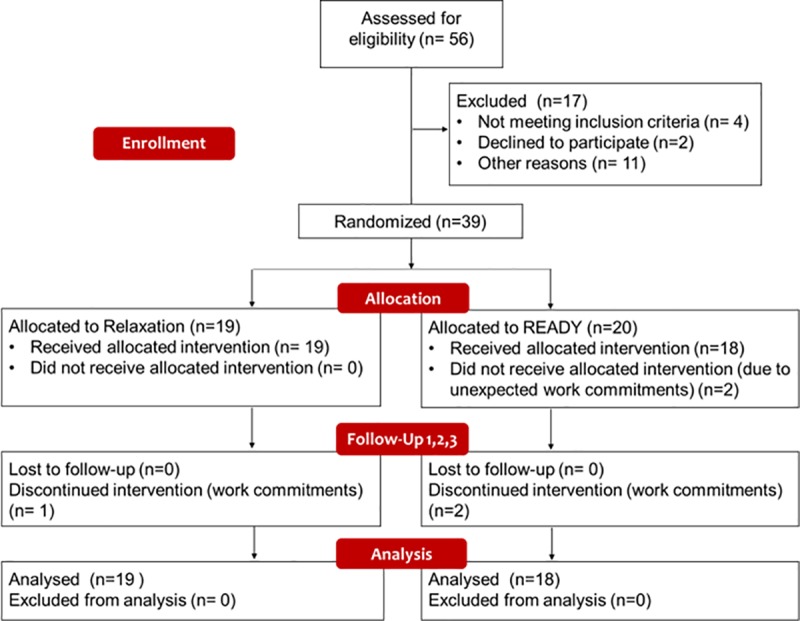
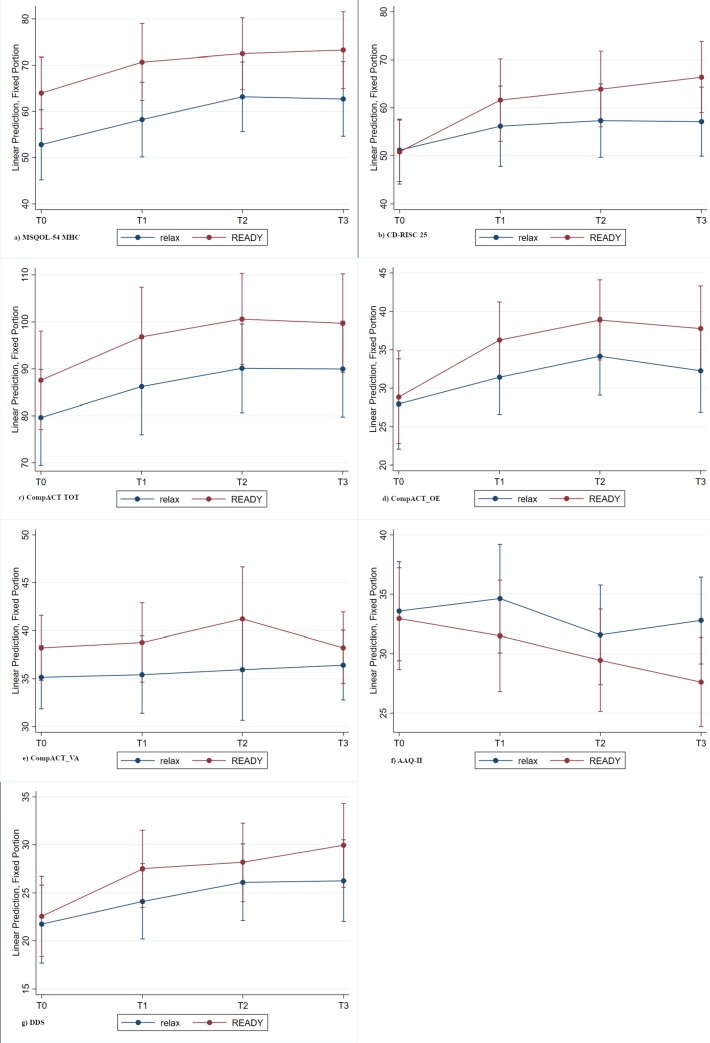
INTRODUCTION: An Australian case series study demonstrated the effectiveness of the REsilience and Activities for every DaY for people with multiple sclerosis (READY for MS), a resilience group training program based on Acceptance and Commitment Therapy, in improving quality of life in people with MS. This study aimed to evaluate the feasibility and acceptability of the Italian READY for MS program, and to preliminary assess its efficacy when compared to an active control intervention (group relaxation). METHODS: Single-blind phase II randomized controlled trial (RCT) and nested qualitative study (ISRCTN registration number: 38971970). Health-related quality of life (primary study outcome), mood, resilience, psychological flexibility and its protective factors were measured at baseline, after seven, 12 and 24 weeks. READY participants completed the purpose-built satisfaction questionnaire after 12 weeks. After trial completion, the control group also received READY. One-to-one participant interviews were conducted within three months of finishing the READY groups. RESULTS: Four intervention groups were conducted with 39 participants (20 READY, 19 relaxation). Two patients (READY) withdrew before beginning the intervention due to unexpected work commitments. Feasibility and acceptability of READY were good, with high participant engagement and satisfaction. No statistical effects of READY were detected vs relaxation. Thirty participants were interviewed (18 READY; 12 relaxation + READY). Content data analysis revealed seven overarching themes: "Attitudes towards participation"; "Perceptions of program composition"; "Program impacts on life domains"; "Program active elements"; "Program improvement trajectories"; "Program differences and similarities"; "Suggested READY improvements". CONCLUSION: READY was well accepted by MS patients with varied socio-demographic and clinical characteristics. Qualitative (but not quantitative) data provided evidence in favour of READY. Our findings will inform methodological and intervention refinements for the multi-centre RCT that will follow.
Overview
The claims and statistics of this paper haven’t been checked yet.
Free: it reads the open-access text and checks the first 5 claims that cite a source we can check. Create a free account to check every claim.
Integrity signals
Registry
Cites
Statistics
Figures
Verification
Claims the paper makes
The claims and statistics of this paper haven’t been checked yet.
Free: it reads the open-access text and checks the first 5 claims that cite a source we can check. Create a free account to check every claim.
Claims other papers make about this one
Each is checked against this paper’s own text: does it say what the citing paper says it does?
The source backs part of the claim, not all of it — or backs it for a different population, condition or comparison.
In the citing paper
“There is some preliminary evidence showing the need expressed by people with SPMS for psychological support and a personalised care plan (60), as well as some preliminary evidence of the effectiveness of a computer-based cognitive neurorehabilitation (61).”
From Key demographics and psychological skills associated with adjustment to progressive Multiple Sclerosis early in the diagnosis (2022) · cites this paper as [60]
Experimental — accuracy not yet measuredThe source backs part of the claim, not all of it — or backs it for a different population, condition or comparison.
In the citing paper
“The sample size calculation was based on the pilot study results [50], which showed a mean change in the CD-RISC 25 at 3-month follow-up in the READY arm equal to 15.61 (SD 13.63, n = 18) vs. a mean change in the relaxation arm equal to 5.95 (SD 14.11, n = 19).”
From A group resilience training program for people with multiple sclerosis: Study protocol of a multi-centre cluster-randomized controlled trial (multi-READY for MS) (2022) · cites this paper as [50]
Experimental — accuracy not yet measuredThe source backs part of the claim, not all of it — or backs it for a different population, condition or comparison.
In the citing paper
“developing interventions to support wellbeing is a global research priority.4,8”
From A scoping review to identify process and outcome measures used in acceptance and commitment therapy research, with adults with acquired neurological conditions. (2023) · cites this paper as [8]
Experimental — accuracy not yet measuredThe cited source says what the claim attributes to it.
In the citing paper
“there were no between-arm differences in any patient-reported outcomes.”
The cited source says what the claim attributes to it.
In the citing paper
“Consistent with the ACT psychological flexibility framework, participants viewed their improvements in resilience and health-related QoL as being due to the acquisition of skills related to the six core ACT processes [50].”
4 more claims about this paper
Create a free account to see every claim other papers make about this one.
Self-check
Percentages, sums and reported differences re-computed from the paper’s own numbers.
The self-check needs the paper’s full text.
Citations
Cites
Using thematic analysis in psychology
Braun, V., & Clarke, V. (2006) · Qualitative Research in Psychology · doi:10.1191/1478088706qp063oa · Cited by 194,414
The Hospital Anxiety and Depression Scale
Zigmond, A. S., & Snaith, R. P. (1983) · Acta Psychiatrica Scandinavica · doi:10.1111/j.1600-0447.1983.tb09716.x · Cited by 47,139
Tong, A., Sainsbury, P., & Craig, J. (2007) · International Journal for Quality in Health Care · doi:10.1093/intqhc/mzm042 · Cited by 42,509
A Global Measure of Perceived Stress
Cohen, S., Kamarck, T., & Mermelstein, R. (1983) · Journal of Health and Social Behavior · doi:10.2307/2136404 · Cited by 32,807
Rating neurologic impairment in multiple sclerosis: An expanded disability status scale (EDSS)
Kurtzke, J. F. (1983) · Neurology · doi:10.1212/wnl.33.11.1444 · Cited by 15,011
Depression and quality of life in older persons: A review
Sivertsen, H., Bjørkløf, G. H., Engedal, K., Selbæk, G., & Helvik, A.-S. (2015) · Dementia and Geriatric Cognitive Disorders · doi:10.1159/000437299 · Cited by 14,152
The benefits of being present: Mindfulness and its role in psychological well-being
Brown, K. W., & Ryan, R. M. (2003) · Journal of Personality and Social Psychology · doi:10.1037/0022-3514.84.4.822 · Cited by 13,448
Standards for Reporting Qualitative Research: A Synthesis of Recommendations
O’Brien, B. C., Harris, I. B., Beckman, T. J., Reed, D. A., & Cook, D. A. (2014) · Academic Medicine · doi:10.1097/acm.0000000000000388 · Cited by 12,211 · cited 19×
“In both READY and relaxation some participants were completely satisfied with the format (S7 Appendix, Table c.”
BackgroundInfluentialDevelopment of a new resilience scale: The Connor-Davidson Resilience Scale (CD-RISC)
Connor, K. M., & Davidson, J. R. T. (2003) · Depression and Anxiety · doi:10.1002/da.10113 · Cited by 11,793 · cited 2×
“[78] and based on the trend differences in the CD-RISC 25 [52] PLOS ONE Pilot randomized controlled trial of multiple sclerosis resilience training”
MethodDeveloping and evaluating complex interventions: the new Medical Research Council guidance
Craig, P., Dieppe, P., Macintyre, S., Michie, S., Nazareth, I., & Petticrew, M. (2008) · BMJ · doi:10.1136/bmj.a1655 · Cited by 10,995
Research works printed but not linked: 3
- 45. Rabitti E, Miselli G, Moderato P. Misurare la capacità di restare in contatto con il momento presente: la validazione italiana della “Mindful Attention Awareness Scale”. Psicoterapia Cognitiva e Comportamentale. 2013;3: 323–339.
- 46. Miselli G, Presti G, Rabitti E, Moderato P. Measuring difference: An in-progress program of validation of ACT oriented clinical tools in Italy. ABAI IV International Conference 7–9 August 2009. Oslo, Norway.
- 58. Siegrist J, Broer M, Junge A. [Profile of Quality of Life for the Chronically Ill: Manual.] Göttingen: Beltz Test; 1996
Cited by
Landi, G., Pakenham, K. I., Boccolini, G., Grandi, S., & Tossani, E. (2020) · Frontiers in Psychology · doi:10.3389/fpsyg.2020.02195 · Cited by 146
“…shown to cultivate skills that foster resilience in the context of health-related adversities, such as chronic disease (e.g., multiple sclerosis, Giovannetti et al., 2020; Frontiers in Psychology | www.frontiersin.org 10 August 2020 | Volume 11 | Article 2195 diabetes, Ryan et al., 2020), and…”
BackgroundSelf-citationFerreira, M. G., Mariano, L. I., Rezende, J. V. D., Caramelli, P., & Kishita, N. (2022) · Journal of Affective Disorders · doi:10.1016/j.jad.2022.04.134 · Cited by 94
Landi, G., Pakenham, K. I., Crocetti, E., Tossani, E., & Grandi, S. (2022) · Journal of Affective Disorders · doi:10.1016/j.jad.2022.03.067 · Cited by 74
Self-citationFerreira, M., Marques, A. J., & Gomes, P. V. (2021) · International Journal of Environmental Research and Public Health · doi:10.3390/ijerph18147564 · Cited by 71
“As for those that used attention control groups, three of them applied active comparators [46,51,63], while the other five used passive comparison groups [32,33,53,56,57].”
BackgroundMethodResultInfluentialLandi, G., Pakenham, K. I., Mattioli, E., Crocetti, E., Agostini, A., Grandi, S., & Tossani, E. (2022) · Journal of Contextual Behavioral Science · doi:10.1016/j.jcbs.2022.08.008 · Cited by 44
Self-citationGiovannetti, A. M., Solari, A., & Pakenham, K. I. (2022) · Disability and Rehabilitation · doi:10.1080/09638288.2021.1960441 · Cited by 38
Self-citationThird wave cognitive behavioural therapies for people with multiple sclerosis: a scoping review
Zarotti, N., Eccles, F., Broyd, A., Longinotti, C., Mobley, A., & Simpson, J. (2023) · Disability and Rehabilitation · doi:10.1080/09638288.2022.2069292 · Cited by 40
Davis, B. E., Lakin, L., Binns, C. C., Currie, K. M., & Rensel, M. R. (2021) · Neurology and Therapy · doi:10.1007/s40120-021-00240-9 · Cited by 46
Landi, G., Pakenham, K. I., Benassi, M., Giovagnoli, S., Tossani, E., & Grandi, S. (2021) · International Journal of Environmental Research and Public Health · doi:10.3390/ijerph18094902 · Cited by 35
Self-citationLandi, G., Pakenham, K. I., Grandi, S., & Tossani, E. (2022) · International Journal of Environmental Research and Public Health · doi:10.3390/ijerph19063391 · Cited by 36
“ACT has been flexibly delivered via group [59], online [56], and mobile app [60] modes.”
MethodSelf-citationPinto, C., Geraghty, A. W. A., McLoughlin, C., Pagnini, F., Yardley, L., & Dennison, L. (2022) · Health Psychology Review · doi:10.1080/17437199.2022.2073901 · Cited by 39
“…impacted their feelings and responses to situations (Berk et al., 2019; Bogosian et al., 2016; Dennison et al., 2013; Douglas et al., 2021; Eccles et al., 2020; Fitzpatrick et al., 2010; Giovannetti et al., 2020; Gottberg et al., 2016; Han et al., 2021; Swannell, 2017; Vandenberg et al., 2019).”
InfluentialHan, A. (2021) · Archives of Physical Medicine and Rehabilitation · doi:10.1016/j.apmr.2021.03.011 · Cited by 29
Han, A. (2022) · Psychology, Health & Medicine · doi:10.1080/13548506.2021.1894345 · Cited by 28
“ACT aims to foster greater psychological flexibility, defined as the ability to face challenging experiences in an open, conscious manner and change one’s behaviors to participate in valued activities (Hayes et al., 2012).”
BackgroundInfluentialThompson, B., Moghaddam, N., Evangelou, N., Baufeldt, A., & das Nair, R. (2022) · Multiple Sclerosis and Related Disorders · doi:10.1016/j.msard.2022.103862 · Cited by 25
“For example, Giovannetti et al. (2020) reported a “trend” of increasing difference between the ACT vs control group.”
BackgroundResultAng, W. H. D., Shorey, S., Zheng, Z. J., Ng, W. H. D., Chen, E. C., Shah, L., Chew, H. S. J., & Lau, Y. (2022) · International Journal of Environmental Research and Public Health · doi:10.3390/ijerph191912729 · Cited by 41
“This finding was also supported in two studies evaluating resilience programs [51,52], where the contextual relevance of the resilience programs supported participants’ learning.”
ResultSadeghi-Bahmani, D., Esmaeili, L., Mokhtari, F., Sadeghi Bahmani, L., Afsharzadeh, M., Shaygannejad, V., Mirmosayyeb, O., Goldstein-Piekarski, A. N., & Gross, J. J. (2022) · Multiple Sclerosis and Related Disorders · doi:10.1016/j.msard.2022.104029 · Cited by 22
Donisi, V., Gajofatto, A., Mazzi, M. A., Gobbin, F., Busch, I. M., Ghellere, A., Klonova, A., Rudi, D., Vitali, F., Schena, F. F., et al. (2021) · Frontiers in Psychology · doi:10.3389/fpsyg.2021.598726 · Cited by 24
“intervention for patients with MS (Giovannetti et al., 2020).”
Heo, J. M., & Kim, C. (2020) · Japan Journal of Nursing Science · doi:10.1111/jjns.12359 · Cited by 22
Janitra, F. E., Chen, R., Lin, H., Sung, C., Chu, H., Lee, C., Niu, S., Liu, H., Chang, L., Banda, K. J., et al. (2024) · International Journal of Mental Health Nursing · doi:10.1111/inm.13334 · Cited by 18
Giovannetti, A. M., Messmer Uccelli, M., Solari, A., & Pakenham, K. I. (2022) · Disability and Rehabilitation · doi:10.1080/09638288.2022.2025926 · Cited by 16
Self-citationPakenham, K. I., Landi, G., Grandi, S., & Tossani, E. (2023) · Journal of Health Psychology · doi:10.1177/13591053231182364 · Cited by 24
“…resilience intervention for PwMS (READY for MS), which have demonstrated that psychological flexibility mediates improvements in resilience in PwMS (Giovannetti et al., 2020, 2022a; Pakenham et al., 2018) and in MS healthcare professionals who are trained in delivering the intervention…”
BackgroundSelf-citationRelaxation and related therapies for people with multiple sclerosis (MS): A systematic review
Kneebone, I., Zanden, B. E. V., Dorstyn, D., Roberts, R. M., Lord, S. R., Querstret, D., Theadom, A., Kennedy, D. S., Raman, J., & das Nair, R. (2022) · Clinical Rehabilitation · doi:10.1177/02692155221091509 · Cited by 13
“In this study, relaxation was more efficacious than Acceptance and Commitment Therapy.(43) Pain Six studies measured pain intensity and painrelated disability using six established or modified pain measures (e.”
BackgroundMethodInfluentialFeng, G., Posa, S., Sureshkumar, A., Simpson, S., Bruno, T. R., Morrow, S. A., Donkers, S. J., Knox, K. B., Feinstein, A., Bayley, M. T., et al. (2024) · Journal of Neurology · doi:10.1007/s00415-023-12116-z · Cited by 17
“(Person with MS) [41] Additional aspects of CBT including homework, work-books, and interactions with facilitators were also discussed and generally accepted by participants [25, 27, 29, 31, 39–41].”
InfluentialGiovannetti, A. M., Pöttgen, J., Anglada, E., Menéndez, R., Hoyer, J., Giordano, A., Pakenham, K. I., Galán, I., & Solari, A. (2022) · International Journal of Environmental Research and Public Health · doi:10.3390/ijerph19063150 · Cited by 14
Self-citationRosengren, L., Forsberg, A., Brogårdh, C. B., & Lexell, J. E. (2021) · International Journal of Environmental Research and Public Health · doi:10.3390/ijerph18168653 · Cited by 14
“ACT has been used for persons with other chronic neurological conditions and has shown promising results in improving quality of life in people with multiple sclerosis [27].”
MethodPakenham, K. I., & Landi, G. (2023) · Sclerosis · doi:10.3390/sclerosis1010005 · Cited by 19
“The READY for MS program was later translated into Italian and evaluated in a pilot RCT (n = 39), which had a nested qualitative study and pre- and post-intervention and 12-week follow-up assessments [25].”
MethodSelf-citationGiovannetti, A. M., Pakenham, K. I., Presti, G., Quartuccio, M. E., Confalonieri, P., Bergamaschi, R., Grobberio, M., Di Filippo, M., Micheli, M., Brichetto, G., et al. (2022) · PLoS ONE · doi:10.1371/journal.pone.0267245 · Cited by 11
“We received input on the READY and relaxation interventions from participants in the pilot study via both questionnaires and personal interviews [50].”
BackgroundMethodInfluentialSelf-citationFeasibility trial of a telehealth support group intervention to reduce anxiety in multiple sclerosis
Kever, A., Aguerre, I. M., Vargas, W. S., Farber, R. S., Levine, L., Riley, C., Vasquez, M., & Leavitt, V. M. (2022) · Clinical Rehabilitation · doi:10.1177/02692155221107077 · Cited by 10
Han, A., Wilroy, J. D., & Yuen, H. K. (2023) · Clinical Psychologist · doi:10.1080/13284207.2022.2163158 · Cited by 12
Gromisch, E. S., Turner, A. P., Neto, L. O., DelMastro, H. M., & Foley, F. W. (2025) · International Journal of MS Care · doi:10.7224/1537-2073.2024-038 · Cited by 10
Steinberg, R. J., Posa, S., Pattni, N., Wasilewski, M. B., Robinson, L. R., Jankey, S., Simpson, R., Mayo, A. L., MacKay, C., Dilkas, S., et al. (2023) · Rehabilitation Psychology · doi:10.1037/rep0000491 · Cited by 12
Foote, H., Bowen, A., Cotterill, S., Hill, G., Pieri, M., & Patchwood, E. (2023) · Clinical Rehabilitation · doi:10.1177/02692155221144554 · Cited by 7
Han, A., Wilroy, J. D., Jenkins, J., & Yuen, H. K. (2023) · Disability and Rehabilitation · doi:10.1080/09638288.2022.2038283 · Cited by 10
Bogosian, A., Day, F., Norton, S., Silber, E., Sakel, M., Sharrack, B., & Moss-Morris, R. (2022) · Frontiers in Rehabilitation Sciences · doi:10.3389/fresc.2022.966133 · Cited by 5
“There is some preliminary evidence showing the need expressed by people with SPMS for psychological support and a personalised care plan (60), as well as some preliminary evidence of the effectiveness of a computer-based cognitive neurorehabilitation (61).”
BackgroundAng, W. H. D., Lim, Z. Q. G., Lau, S. T., Dong, J., & Lau, Y. (2024) · JMIR Medical Education · doi:10.2196/49551 · Cited by 5
Giovannetti, A. M., Rosato, R., Galán, I., Toscano, A., Anglada, E., Menéndez, R., Hoyer, J., Confalonieri, P. A., Giordano, A., Pakenham, K. I., et al. (2024) · Quality of Life Research · doi:10.1007/s11136-024-03609-z · Cited by 8
“The aim of this study was to validate the CompACT cross-culturally for its use with PwMS who face life-changing difficulties related to the progressive yet unpredictable nature [13, 14, 24, 25, 31, 32].”
Self-citationO'Keeffe, F., Cogley, C., McManus, C., Davenport, L., O'Connor, S., Tubridy, N., Gaughan, M., McGuigan, C., & Bramham, J. (2024) · Multiple Sclerosis and Related Disorders · doi:10.1016/j.msard.2024.105719 · Cited by 4
Rawlinson, C. V., Gould, R. L., McDermott, C. J., Thompson, B. T., Weeks, K., Gossage-Worrall, R., Serfaty, M. A., Graham, C. D., McCracken, L. M., White, D. A., et al. (2024) · The Cognitive Behaviour Therapist · doi:10.1017/s1754470x24000333 · Cited by 5
“These findings are consistent with previous reports of the acceptability of ACT for people with life-limiting illnesses and neurological conditions, including advanced cancer and multiple sclerosis (Giovannetti et al. , 2020; Hulbert-Williams et al ., 2021).”
Fragkiadaki, E., Cotterill, N., Rice, C. M., Smith, J. A., & Nizza, I. E. (2023) · PLoS ONE · doi:10.1371/journal.pone.0288295 · Cited by 5
Donisi, V., Poli, S., Berti, L., Gobbin, F., Giusto, G., Capurso, M., Gagliani, M., Campo, A., Presti, G., Deledda, G., et al. (2024) · Journal of Contextual Behavioral Science · doi:10.1016/j.jcbs.2024.100759 · Cited by 5
Wicks, C. R., Sloan, R., DiMauro, S., Thompson, E. L., Billington, S., Webb, M., & Pepper, G. (2021) · Multiple Sclerosis and Related Disorders · doi:10.1016/j.msard.2021.103259 · Cited by 3
Poli, S., Donisi, V., das Nair, R., Mazzi, M. A., Gajofatto, A., & Rimondini, M. (2025) · Healthcare · doi:10.3390/healthcare13182335 · Cited by 3
“CD-RISC 25 has been used in MS research [51] and also in Italy [52].”
Goliroshan, S., Babamohamadi, H., Mohammadi, E., Baghbanian, S. M., & Asgari, M. R. (2023) · Qualitative Health Research · doi:10.1177/10497323231196521 · Cited by 2
“Predictably, the appropriate use of these strategies will play a significant role in reducing the relapse rate (Abdekhodaie et al., 2018; Giovannetti et al., 2020).”
BackgroundInfluentialACT for Chronic Health Conditions
Dindo, L. N., Liew, J. R., & Arch, J. J. (2022) · Oxford University Press eBooks · doi:10.1093/oxfordhb/9780197550076.013.21 · Cited by 2
Using the ACT Matrix with an individual with severe brain injury
Coates, R. (2021) · The Neuropsychologist · doi:10.53841/bpsneur.2021.1.11.47 · Cited by 2
Fragkiadaki, E., Nizza, I. E., Starr, R. A., Smith, J. A., Rice, C. M., & Cotterill, N. (2025) · Disability and Rehabilitation · doi:10.1080/09638288.2025.2549528 · Cited by 2
“Participants in the studies highlighted their perceived areas of change, such as work, relationships, self-efficacy, the significance of the group as a reference point, the feeling of being cared for and the important role of the facilitator [20].”
Sauder, T., Keune, P. M., Schenk, T., & Hansen, S. (2024) · Zeitschrift für Neuropsychologie · doi:10.1024/1016-264x/a000398 · Cited by 1
Expanding the Connection Between Cognition and Illness Intrusiveness in Multiple Sclerosis
Gangi, A., Raskin, S. A., Turner, A. P., Foley, F. W., Neto, L. O., & Gromisch, E. S. (2024) · International Journal of MS Care · doi:10.7224/1537-2073.2023-099 · Cited by 1
Giovannetti, A. M., Pöttgen, J., & Pakenham, K. I. (2025) · Oxford University Press eBooks · doi:10.1093/oxfordhb/9780197525456.013.0015
Self-citationFragkiadaki, E., Nizza, I. E., Starr, R. A., Smith, J. A., Rice, C., & Cotterill, N. (2026) · Counselling and Psychotherapy Research · doi:10.1002/capr.70059
Björklund, M., Cornwall, N., Holden, M. A., & Jinks, C. (2026) · Qualitative Health Research · doi:10.1177/10497323261431142 · Cited by 1
Giovannetti, A. M., Pakenham, K. I., Copetti, M., Brichetto, G., Filippo, M. D., Quartuccio, M. E., Grobberio, M., Micheli, M., Tavazzi, E., Confalonieri, P., et al. (2026) · Multiple Sclerosis Journal · doi:10.1177/13524585261464886 · Cited by 1
Self-citationRelaxation interventions in neurological rehabilitation: a scoping review
Rings, P., Dziurla, J., Damme, T. V., Alaerts, K., Groll, C., & Zietz, D. (2026) · Journal of Rehabilitation Medicine · doi:10.2340/jrm.v58.45972
“The combined sample size was (91, 92), pilot mixed-methods trials ( n = 3) (84, 98, 108), case series ( n = 7) (66, 70, 97, 99, 109–111), one case report (77), one qualitative co-design study (101), and a qualitative programme evaluation following an RCT (82).”
Metadata
- Authors
- Giovannetti, A. M., Quintas, R., Tramacere, I., Giordano, A., Confalonieri, P., Messmer Uccelli, M., Solari, A., & Pakenham, K. I.
- Affiliations
- The University of Queensland (AU)
- Fondazione IRCCS Istituto Neurologico Carlo Besta (IT)
- Corresponding author
- Giovannetti, Ambra Mara
- ORCID
- Venue
- PLOS ONE
- Publisher
- Public Library of Science (PLoS)
- Published
- 2020-04-09
- Volume
- 15
- Issue
- 4
- Pages
- e0231380
- ISSN
- 1932-6203 (ISSN-L)
- PMC
- PMC7145197
- OpenAlex
- W3015750969
- Semantic Scholar
- 84d1cec85ede28ce6ad65070977e1a5fcda2f860
- Cited by
- 53
- References
- 82
- Citations by year
- 2026: 4 · 2025: 4 · 2024: 9 · 2023: 6 · 2022: 18 · 2021: 10 · 2020: 2
- FWCI
- 3.60
- Type
- journal article
- Language
- en
- Open access
- gold
- doi.org
- Licence
- Locations
- PLoS ONE (publishedVersion, cc-by)
- PubMed Central (publishedVersion, cc-by)
- PubMed (publishedVersion)
- RePEc: Research Papers in Economics (submittedVersion)
- DOAJ (DOAJ: Directory of Open Access Journals) (submittedVersion, cc-by-sa)
- Figshare (submittedVersion, cc-by)
- Funders
- Associazione Italiana Sclerosi Multipla (2016/B/3 and '5 per mille’ public funding)
- Topics
- Social Sciences › Psychology › Clinical Psychology › Mindfulness and Compassion Interventions
- Health Sciences › Medicine › Clinical Neurology › Multiple Sclerosis Research Studies
- Health Sciences › Medicine › Oncology › Cancer survivorship and care
- Keywords
- multiple sclerosis, resilience, group training program, acceptance and commitment therapy, health-related quality of life, mood, psychological flexibility, feasibility and acceptability, participant satisfaction, program evaluation
- MeSH terms
- Adult, Feasibility Studies, Female, Humans, Interviews as Topic, Male, Middle Aged, Multiple Sclerosis, Pilot Projects, Quality of Life, Surveys and Questionnaires, Program Evaluation, Single-Blind Method, Outcome Assessment, Health Care, Qualitative Research, Resilience, Psychological, Acceptance and Commitment Therapy
About these checks
Registry, retraction, Cites and statistics results are computed, not judged, with one exception: a printed reference that no index lists is read once by a model before it counts as a citation error. Claims are extracted by a model and kept only when their quote appears verbatim in the text; each cited source is then checked, with a model’s help, for whether it says what the claim relies on. Those verdicts can be wrong — read the claim’s quote and the cited source before relying on one.
Statistics and arithmetic are recomputed, not judged.
Confidence bands are shown only for fields calibrated on our annotated test set. None is calibrated yet, so no band is shown.
What counts as a claim ›How we measure confidence ›How we check this ›
Are you an author, or do you see a problem with this page? Request a review
Data sources
Bibliographic data: Semantic Scholar, OpenAlex, Crossref.
Contains information from the Semantic Scholar Academic Graph Datasets, made available under the ODC Attribution License (ODC-BY 1.0).
Semantic Scholar’s data is described in: Kinney, R., et al. (2023). The Semantic Scholar Open Data Platform. arXiv:2301.10140.
