

Treatment of stimulant use disorder: A systematic review of reviews
Open accessThe DOI matches its Crossref record; 76 of the 76 references it cites were found in a registry or an index.
Abstract
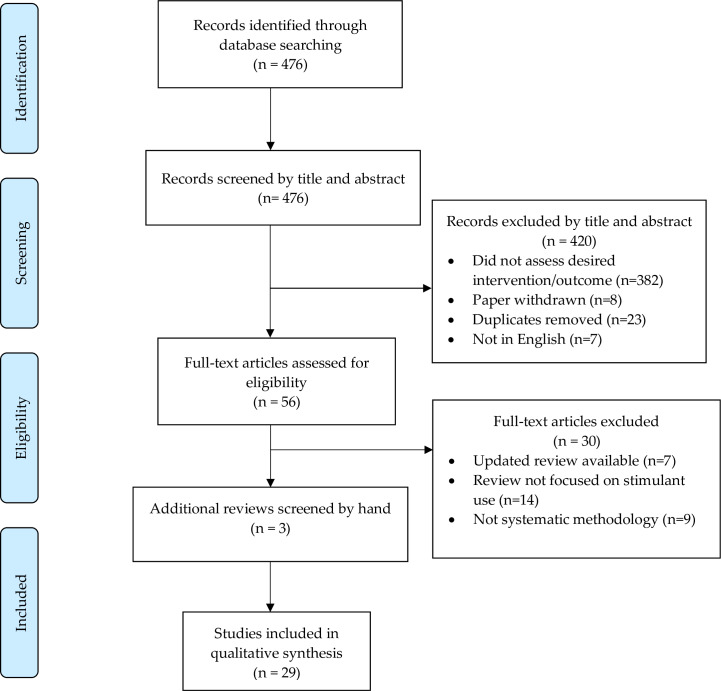
AIMS: Stimulant use disorder contributes to a substantial worldwide burden of disease, although evidence-based treatment options are limited. This systematic review of reviews aims to: (i) synthesize the available evidence on both psychosocial and pharmacological interventions for the treatment of stimulant use disorder; (ii) identify the most effective therapies to guide clinical practice, and (iii) highlight gaps for future study. METHODS: A systematic database search was conducted to identify systematic reviews and meta-analyses. Eligible studies were those that followed standard systematic review methodology and assessed randomized controlled trials focused on the efficacy of interventions for stimulant use disorder. Articles were critically appraised using an assessment tool adapted from Palmeteer et al. and categorized for quality as 'core' or 'supplementary' reviews. Evidence from the included reviews were further synthesized according to pharmacological or non-pharmacological management themes. RESULTS: Of 476 identified records, 29 systematic reviews examining eleven intervention modalities were included. The interventions identified include: contingency management, cognitive behavioural therapy, acupuncture, antidepressants, dopamine agonists, antipsychotics, anticonvulsants, disulfiram, opioid agonists, N-Acetylcysteine, and psychostimulants. There was sufficient evidence to support the efficacy of contingency management programs for treatment of stimulant use disorder. Psychostimulants, n-acetylcysteine, opioid agonist therapy, disulfiram and antidepressant pharmacological interventions were found to have insufficient evidence to support or discount their use. Results of this review do not support the use of all other treatment options. CONCLUSIONS: The results of this review supports the use of contingency management interventions for the treatment of stimulant use disorder. Although evidence to date is insufficient to support the clinical use of psychostimulants, our results demonstrate potential for future research in this area. Given the urgent need for effective pharmacological treatments for stimulant use disorder, high-quality primary research focused on the role of psychostimulant medications for the treatment of stimulant use disorder is needed.
Overview
The claims and statistics of this paper haven’t been checked yet.
Free: it reads the open-access text and checks the first 5 claims that cite a source we can check. Create a free account to check every claim.
Integrity signals
Registry
Cites
Statistics
Figures
Verification
Claims the paper makes
The claims and statistics of this paper haven’t been checked yet.
Free: it reads the open-access text and checks the first 5 claims that cite a source we can check. Create a free account to check every claim.
Claims other papers make about this one
Each is checked against this paper’s own text: does it say what the citing paper says it does?
The source backs part of the claim, not all of it — or backs it for a different population, condition or comparison.
In the citing paper
“Cochrane reviews have consistently highlighted the insufficiency of evidence to establish the effectiveness of certain psychotherapies for various SUDs, whether accompanied by comorbidity or not.”
From Navigating the Complex Intersection of Substance Use and Psychiatric Disorders: A Comprehensive Review (2024) · cites this paper as [48]
Experimental — accuracy not yet measuredThe source backs part of the claim, not all of it — or backs it for a different population, condition or comparison.
In the citing paper
“Evidence-based strategies, including contingency management (CM), cognitive-behavioral therapy (CBT), dialectical behavior therapy (DBT), motivational interviewing (MI), acceptance and commitment therapy (ACT), and family-based interventions, have demonstrated their effectiveness in reducing substance use and enhancing treatment outcomes”
From Navigating the Complex Intersection of Substance Use and Psychiatric Disorders: A Comprehensive Review (2024) · cites this paper as [48]
Experimental — accuracy not yet measuredThe cited source says what the claim attributes to it.
In the citing paper
“An example of this shortfall is the inadequacy of high-quality research regarding the effectiveness of CBT in the treatment of stimulant use disorders [47,48,58].”
From Navigating the Complex Intersection of Substance Use and Psychiatric Disorders: A Comprehensive Review (2024) · cites this paper as [48]
Self-check
Percentages, sums and reported differences re-computed from the paper’s own numbers.
The self-check needs the paper’s full text.
Citations
Cites
Diagnostic and Statistical Manual of Mental Disorders
American Psychiatric Association (2013) · doi:10.1176/appi.books.9780890425596 · Cited by 116,369
Diagnostic and Statistical Manual of Mental Disorders
Williams, J. B. W., & First, M. (2013) · Encyclopedia of Social Work · doi:10.1093/acrefore/9780199975839.013.104 · Cited by 109,519
Preferred Reporting Items for Systematic Reviews and Meta-Analyses: the PRISMA statement
Moher, D., Liberati, A., Tetzlaff, J., Altman, D. G., & for the PRISMA Group (2009) · BMJ · doi:10.1136/bmj.b2535 · Cited by 83,823
Preferred Reporting Items for Systematic Reviews and Meta-Analyses: The PRISMA Statement
Moher, D., Liberati, A., Tetzlaff, J., Altman, D. G., & The PRISMA Group (2009) · PLoS Medicine · doi:10.1371/journal.pmed.1000097 · Cited by 64,042
Preferred reporting items for systematic reviews and meta-analyses: the PRISMA Statement.
(2009) · PubMed Central · Cited by 44,859
Methadone maintenance therapy versus no opioid replacement therapy for opioid dependence
Mattick, R. P., Breen, C., Kimber, J., & Davoli, M. (2009) · Cochrane Database of Systematic Reviews · doi:10.1002/14651858.cd002209.pub2 · Cited by 1,654
Methodology in conducting a systematic review of systematic reviews of healthcare interventions
Smith, V., Devane, D., Begley, C. M., & Clarke, M. (2011) · BMC Medical Research Methodology · doi:10.1186/1471-2288-11-15 · Cited by 1,227
Polysubstance use: diagnostic challenges, patterns of use and health
Connor, J. P., Gullo, M. J., White, A., & Kelly, A. B. (2014) · Current Opinion in Psychiatry · doi:10.1097/yco.0000000000000069 · Cited by 461
Management of opioid use disorders: a national clinical practice guideline
Bruneau, J., Ahamad, K., Goyer, M.-È., Poulin, G., Selby, P., Fischer, B., Wild, T. C., & Wood, E. (2018) · Canadian Medical Association Journal · doi:10.1503/cmaj.170958 · Cited by 412
Self-citationPeirce, J. M., Petry, N. M., Stitzer, M. L., Blaine, J., Kellogg, S., Satterfield, F., Schwartz, M., Krasnansky, J., Pencer, E., Silva-Vazquez, L., et al. (2006) · Archives of General Psychiatry · doi:10.1001/archpsyc.63.2.201 · Cited by 304 · cited 2×
“In a trial by Peirce et al., the intervention was successful at just $1.46 per participant per day, rather than an average cost of $120 per day that has been previously reported [54].”
Influential
Research works printed but not linked: 3
- Kelly M, Swann C, Killoran A, Naidoo B, Barnett-Paige E, Morgan A. Methodological problems in constructing the evidence base in public health. Health Development Agency Public Health Evidence Steering Group Methodology Reference Group Starter Paper. 2002; 9.
- Ellis S, Barnett-Page E, Morgan A, Taylor L, Walters R, Goodrich J. HIV prevention: A review of reviews assessing the effectiveness of interventions to reduce the risk of sexual transmission: Evidence briefing 2003.
- Castells X, Kosten TR, Capella D, Vidal X, Colom J, Casas M. Efficacy of opiate maintenance therapy and adjunctive interventions for opioid dependence with comorbid cocaine use disorders: A systematic review and meta-analysis of controlled clinical trials. 20180662
Cited by
Items 101–200 of 222
Havard, A., Jones, N., Bharat, C., Gisev, N., Pearson, S., Shakeshaft, A. P., Farrell, M., & Degenhardt, L. J. (2023) · Drug and Alcohol Review · doi:10.1111/dar.13669 · Cited by 6
“…with problems with amphetamine-type stimulants or cannabinoids, probably due in part to the low overall mortality rate in these groups and limited statistical power to detect differences, but potentially also due to the limited effectiveness of existing treatments for stimulant use disorders [26].”
BackgroundPalamar, J. J. (2023) · Drug and Alcohol Review · doi:10.1111/dar.13673 · Cited by 5
Jakubowski, A. U., Patrick, B. M., DiClemente-Bosco, K., Salino, S., Scott, K., & Becker, S. J. (2025) · Implementation Science Communications · doi:10.1186/s43058-025-00708-x · Cited by 6
“Receipt of CM is associated with over twice the rate of abstinence compared to treat-ment as usual [2] and has large adjunctive effects with medications for opioid use disorder [3].”
Stimulant use among patients in opioid treatment settings: Provider perspectives
Breland, H., Larkins, S., Antonini, V. P., Freese, T. E., McGovern, M. P., Dunn, J. A., & Rawson, R. A. (2023) · Journal of Substance Use and Addiction Treatment · doi:10.1016/j.josat.2023.209012 · Cited by 5
Paola, A. D., Farabee, D. J., & Springer, S. A. (2023) · Psychiatric Research and Clinical Practice · doi:10.1176/appi.prcp.20230022 · Cited by 5
“The RSUDA was developed to identify those with moderate to severe stimulant use disorder in order to assist in referral to behavioral treatment programs, such as contingency management which is to date the most successful form of treatment for stimulant use disorder (25, 26).”
MethodApplications of TMS in individuals with methamphetamine use disorder: A review
Zhang, M., Chen, L., Ren, Z., Wang, Z., & Luo, W. (2024) · Heliyon · doi:10.1016/j.heliyon.2024.e25565 · Cited by 6
“Alternatively, several psychotherapy techniques are available for the treatment of MUD, such as motivational therapy, cognitive behavioral therapy, and contingency management [22].”
BackgroundOspina-Escobar, A., & Dávila-Cervantes, C. A. (2024) · International Journal of Drug Policy · doi:10.1016/j.drugpo.2024.104464 · Cited by 5
Ballester, J., Lindsay, D. L., Simon, K. M., Weinstein, L. C., Weiss, S. T., Denny, R., & Ciccarone, D. (2025) · Journal of Addiction Medicine · doi:10.1097/adm.0000000000001494 · Cited by 4
Cao, S., Yang, L., Wang, R., & Liu, J. (2025) · CNS Neuroscience & Therapeutics · doi:10.1002/cns.70719 · Cited by 4
Tilhou, A. S., Dague, L., Chachlani, P., & Burns, M. E. (2024) · PLoS ONE · doi:10.1371/journal.pone.0299397 · Cited by 4
Brooks, H. L., Salvalaggio, G., Pauly, B., Dong, K. A., Bubela, T. M., Taylor, M., & Hyshka, E. (2022) · Harm Reduction Journal · doi:10.1186/s12954-022-00637-1 · Cited by 5
“Additionally, there are currently no evidence-based pharmaceutical treatments for those with stimulant use disorders [48] and many acute care facilities still do not provide patients with”
BackgroundFleming, T., Ivsins, A., Barker, A., Mansoor, M., Mayer, S., Vakharia, S. P., & McNeil, R. (2024) · International Journal of Drug Policy · doi:10.1016/j.drugpo.2024.104336 · Cited by 4
Gárate-Pérez, M. F., Cáceres-Vergara, D., Tobar, F., Bahamondes, C., Bahamonde, T., Sanhueza, C., Guzmán, F., Sotomayor‐Zárate, R., & Renard, G. M. (2024) · Frontiers in Pharmacology · doi:10.3389/fphar.2024.1411927 · Cited by 3
“There is a great use and abuse of psychostimulants around the world, and amphetamines are the second most used psychostimulant (Ronsley et al., 2020).”
BackgroundKhezri, M., Kimball, S., Weng, C., McKnight, C., & Jarlais, D. C. D. (2025) · Drug and Alcohol Review · doi:10.1111/dar.14093 · Cited by 4
Cooke, A. C., Stack, E., Peng, L., Cook, R., Hartzler, B. J., Leichtling, G. J., Hildebran, C., Leahy, J. M., Payne, K. S., Kunkel, L. E., et al. (2025) · Addiction Science & Clinical Practice · doi:10.1186/s13722-025-00577-8 · Cited by 6
“Evidence has consistently supported the use of CM for the treatment of stimulant use disorder [9, 28].”
Jaffe, K., & Fisher, C. B. (2025) · Substance Abuse Treatment Prevention and Policy · doi:10.1186/s13011-025-00657-7 · Cited by 6
“Substance use trials play a critical role in addressing the ongoing overdose crisis and unmet treat-ment needs of people who use drugs (PWUD) [6, 7].”
Role of stimulant replacement therapy in treating stimulant use disorders
Mak, W., Webb, D., Sutherland, C., & Hirsh, A. (2022) · Canadian Family Physician Médecin de famille canadien · doi:10.46747/cfp.6802109 · Cited by 2
Novel Pharmacological Agents for the Treatment of Cocaine Use Disorder
Hadizadeh, H., Flores, J. M., Nunes, E. J., Mayerson, T. F., Potenza, M. N., & Angarita, G. A. (2022) · Current Behavioral Neuroscience Reports · doi:10.1007/s40473-022-00246-z · Cited by 4
Coughlin, L. N., Frost, M. C., Zhang, L., & Lin, L. A. (2023) · Drug and Alcohol Dependence · doi:10.1016/j.drugalcdep.2023.110965 · Cited by 3
Rafiee, M., Karamouzian, M., Sharifi, M., Mirzazadeh, A., Khezri, M., Haghdoost, A. A., Mehmandoost, S., & Sharifi, H. P. (2024) · Harm Reduction Journal · doi:10.1186/s12954-024-01072-0 · Cited by 3
“…a range of psychosocial (e.g., matrix model [29], cognitive-behavioral therapy, contingency management), and pharmacological treatments (e.g., monoamine agonists and dopamine agonists [30]) for stimulant use disorders should be introduced in the mental health care packages presented inside prisons.”
BackgroundMacKinnon, L., Choi, J., Kennedy, M. C., Brar, R., Milloy, M.-J., Hayashi, K., & Socías, M. E. (2022) · Journal of Addiction Medicine · doi:10.1097/adm.0000000000000984 · Cited by 4
Self-citationTuegel, C., Farris, S. D., Kantner, C. W., Leyde, S. E., DePhilippis, D., & Kennedy, A. J. (2023) · Journal of Addiction Medicine · doi:10.1097/adm.0000000000001186 · Cited by 2
Minoyan, N., Høj, S. B., Jutras‐Aswad, D., Larney, S., Martel‐Laferrière, V., Sylvestre, M., & Bruneau, J. (2023) · International Journal of Mental Health and Addiction · doi:10.1007/s11469-023-01207-7 · Cited by 9
“These occasional binges may nevertheless dispropor-tionally contribute to stimulant-related harms, highlighting the urgent need for novel pharmacological therapies for stimulant dependence (Ronsley et al., 2020).”
Mao, Y., Li, D., Wang, D., Tian, Y., Chen, J., Jia, L., Wang, X., & Zhang, X. (2025) · Substance Abuse Treatment Prevention and Policy · doi:10.1186/s13011-025-00643-z · Cited by 3
“Furthermore, there is currently a lack of pharmaceutical therapies that have comparable effectiveness for treating both cocaine and opioid addiction [13].”
Co-involvement of stimulants with opioids in North America: A 'silent epidemic'
Li, Y., Pierce, D. V., Vik, S., Dong, K. A., Patten, S. B., Zhang, Y., Hayward, J., Greenshaw, A. J., & Cao, B. (2025) · PLOS mental health. · doi:10.1371/journal.pmen.0000319 · Cited by 2
“In addition to the expanding pharmacologic treatment programs for people with opioid use disorder, more awareness and advocacy must be shed on other effective treatments such as contingency management as effective pharmacologic options for individuals with stimulant use disorder are limited [56–58].”
The diagnosis and treatment of stimulant-related emergencies
Fries, A., Christ, M., Nickl, H., Spreer, M., Pilhatsch, M., & Petzold, J. (2025) · Deutsches Ärzteblatt international · doi:10.3238/arztebl.m2025.0158 · Cited by 4
Bringing evidence-based stimulant treatment to permanent supportive housing
Peavy, K. M., Palmer, K., Leickly, E., Bains, A., Parent, S. C., & McDonell, M. G. (2025) · Journal of Prevention & Intervention in the Community · doi:10.1080/10852352.2025.2586385 · Cited by 2
Chang, Y. M., Ketron, A. C., Duncan, M. H., Iles-Shih, M., Saxon, A. J., & Hallgren, K. A. (2025) · JMIR Formative Research · doi:10.2196/80808 · Cited by 2
Ibragimov, U., Giordano, N. A., Amaresh, S., Getz, T., Matuszewski, T., Steck, A., Li, Y., Blum, E. H., Tuttle, J., Pipalia, H., et al. (2025) · Addiction Science & Clinical Practice · doi:10.1186/s13722-025-00624-4 · Cited by 3
“Linkage to community-based services, including behavioral therapy, is especially important for patients with stimulant use disorder in the absence of effective medica-tion-based treatments for this condition [23, 24].”
Sharpe, C., Busza, J. R., Vuckovic, C., Scott, J., Hope, V. D., Southwell, M., Wilkins, L., Platt, L., & Harris, M. (2026) · International Journal of Drug Policy · doi:10.1016/j.drugpo.2026.105165 · Cited by 3
Overdose risk in the context of chemsex among gay, bisexual, and other men who have sex with men
Duailibe, F. T., Hull, M., Montaner, J., Purdie, A., & Lima, V. D. (2026) · Harm Reduction Journal · doi:10.1186/s12954-026-01410-4 · Cited by 2
“In contrast to pharmacologic approaches, behavioral strategies, such as contingency management (CM), have shown more consistent effectiveness [41, 42].”
Urgent response is needed to address the stimulant-fentanyl related overdose crisis
Mills, R., Jegede, O. O., & Muvvala, S. B. (2026) · Frontiers in Psychiatry · doi:10.3389/fpsyt.2026.1769408 · Cited by 3
“Decades of evidence from randomized controlled trials have presented de fi nitive evidence of CM as the top choice for the management of StUD, either alone or in conjunction with pharmacotherapies (19, 24 – 30).”
Just the Facts: Substance induced psychosis
Barbic, D., Chakraborty, A. T., & Honer, W. G. (2020) · Canadian Journal of Emergency Medicine · doi:10.1007/s43678-020-00017-3 · Cited by 2
Steinmetz, F. P., & Stöver, H. (2021) · Drug Science Policy and Law · doi:10.1177/20503245211049310 · Cited by 2
Kreim, S., Marchand, K., Mallia, E., Dubras, R., McMaster, W. R., Tee, K. A., Mathias, S., & Barbic, S. P. (2023) · Journal of Substance Use and Addiction Treatment · doi:10.1016/j.josat.2023.209076 · Cited by 4
The effectiveness of oxytocin in the treatment of stimulant use disorders: a systematic review
Lee-Cheong, S., Ludgate, S. A., Epp, T., & Schütz, C. G. (2023) · Behavioural Pharmacology · doi:10.1097/fbp.0000000000000744 · Cited by 2
Yuen, A. W.-H., Sang, J. M., Wang, L., Barath, J., Lachowsky, N. J., Lal, A., Elefante, J., Hart, T. A., Skakoon‐Sparling, S., Grey, C., et al. (2023) · Substance Use & Misuse · doi:10.1080/10826084.2023.2269577 · Cited by 2
“…“gay-specific” cognitive behavioral therapy (Shoptaw et al., 2008). motivational interviewing (Parsons et al., 2014) contingency management (Ronsley et al., 2020; Shoptaw et al., 2005), behavioral activation (Mimiaga et al., 2012), social-cognitive theory group-based intervention (Lyons et…”
BackgroundRethinking Substance Use as Social History: Charting a Way Forward
Bozinoff, N., Kleinman, R. A., Sloan, M. E., Kennedy, M. C., Nolan, S., Selby, P. L., Kalocsai, C., & Wood, E. (2024) · Journal of General Internal Medicine · doi:10.1007/s11606-024-08642-9 · Cited by 2
“We now have effective pharmacological treatments for opioid use disorder 24,25 , alcohol use disorder, 26,27 tobacco use disorder 28 and efficacious behavioural treatments for most substance use disorders 29–32 , all of which deserve increased attention.”
Self-citationCL Case Conference: Managing Substance Use and Agitation in Pregnancy
Black, J. R., Hovis, E., Spada, M. L., & Li, L. (2025) · Journal of the Academy of Consultation-Liaison Psychiatry · doi:10.1016/j.jaclp.2025.02.002 · Cited by 2
Geographic Trends in Opioid and Polysubstance Overdose Deaths in the US, 2014–2023
Oles, W. C., Liu, M., Wakeman, S. E., & Larochelle, M. R. (2025) · Journal of General Internal Medicine · doi:10.1007/s11606-025-09589-1 · Cited by 2
Self-Reported Methamphetamine Use Versus Biological Testing Among Treatment-Seeking Patients
Gholami, J., Ardeshir, M., Abadi, Y. R., Baheshmat, S., Shadloo, B., & Rahimi‐Movaghar, A. (2024) · Iranian Journal of Psychiatry and Behavioral Sciences · doi:10.5812/ijpbs-148330 · Cited by 2
Shifting Focus to Evidence-Based Management of Substance Use Disorders
Wakeman, S. E. (2022) · Annals of Internal Medicine · doi:10.7326/m22-0150 · Cited by 2
“systematic review evaluating pharmacologic and nonpharmacologic interventions for stimulant use disorder found that only contingency management was supported by sufficient evidence (10).”
BackgroundThe Current State of Psychostimulants Use and Harms in Canada
O’Keefe-Markman, C., Vojtila, L., & Fischer, B. (2022) · The Canadian Journal of Addiction · doi:10.1097/cxa.0000000000000131 · Cited by 1
“8 available therapeutic interventions options do not sufficiently address the treatment needs of psychostimulant users.(1,33,39) Others note that interventions utilizing psychosocial approaches for psychostimulant users may be beneficial, but are often short-termand limited for retention and not very efficacious.”
BackgroundThe Intersection of Substance Use Disorders and Infectious Diseases in the Emergency Department
Anderson, E. S., & Frazee, B. W. (2024) · Emergency Medicine Clinics of North America · doi:10.1016/j.emc.2024.02.004 · Cited by 1
Ross, E. J., Jimenez, D. E., Ghanooni, D., Mendez, A. J., Hirshfield, S., Horvath, K. J., DeVries, B., Dilworth, S. E., Carrico, A. W., & Martinez, C. A. (2024) · International Journal of Behavioral Medicine · doi:10.1007/s12529-024-10288-0 · Cited by 3
“…limited to the use of interventions that include methods such as cognitive behavioral therapy (CBT) or contingency management (CM) techniques [57, 58], integrating these available evidence-based methods with group-based behavioral activation models [59] or Zoom-based evidence-based group…”
Stimulanzien: Aktuelle Erkenntnisse zu Grundlagen, Diagnostik und Therapie
Bach, P., Stenger, M., & Ersche, K. D. (2024) · Der Nervenarzt · doi:10.1007/s00115-024-01687-5 · Cited by 2
Aslan, R., Yazıcı, H. G., & Gökçen, O. (2025) · Issues in Mental Health Nursing · doi:10.1080/01612840.2025.2538714 · Cited by 1
“…that CBT, motivational interviewing, contingency management, and other evidence-based approaches show comparable efficacy, with the optimal choice depending on individual characteristics, treatment setting, and available resources (AshaRani et al., 2020; Minozzi et al., 2024; Ronsley et al., 2020).”
Edgar, N. E., Taha, H., Ly, V., & Hatcher, S. (2025) · Harm Reduction Journal · doi:10.1186/s12954-025-01311-y · Cited by 1
“The results of this scoping review highlight the limited effective treatment options for PEH who use substances, consistent with existing literature describing the lack of treatments [9, 16].”
Lai, E., Biello, K. B., Buxton, J. A., Hadland, S. E., Sherman, S. G., Goldman, J. A., Noguchi, J. E., Marshall, B. D. L., & Macmadu, A. (2026) · Substance Use & Misuse · doi:10.1080/10826084.2026.2624064 · Cited by 1
“Contingency management (CM) is widely regarded as the primary evidence-based treatment modality for stimulant use disorders (Minozzi et al., 2024; Ronsley et al., 2020).”
Jaffe, G. A., & Goodstein, D. (2026) · Journal of Addiction Medicine · doi:10.1097/adm.0000000000001690 · Cited by 1
Atomoxetine Versus Placebo for Cognitive Deficits in Stimulant Use Disorder: A Systematic Review
Barroso, D. C., Kotochinsky, M., Alessi, M. R., Amador, W. F. O., Godoi, D. C., Sabloak, R., Pereira, S. I. D. S., Ansari, Y.-Z., Amorim, K. G., Barbosa, G., et al. (2026) · Substance Use & Addiction Journal · doi:10.1177/29767342261443842 · Cited by 1
“48 Emerging evidence supports the integration of pharmacological agents with behavioral interventions, such as CM, to enhance treatment outcomes.”
Treating stimulant use disorders: still searching for signals
Price, L. H. (2023) · The Brown University Psychopharmacology Update · doi:10.1002/pu.30987 · Cited by 1
“One found that the behavioral approach of contingency management is supported by the literature (Ronsley et al., 2020); as for pharmacological treatments, including agonists, all three reviews engage in some hand-waving about “potential” and “positive signals,” while acknowledging that at this point the evidence is “i…”
BackgroundBailey, A., Taylor, B. G., Pollack, H. A., Schneider, J. A., & Evans, E. (2023) · Social Psychiatry and Psychiatric Epidemiology · doi:10.1007/s00127-023-02500-5 · Cited by 3
“Interventions such as contingency management show promise in the treatment of stimulant use disorders; however, there is no evidence-based medication to treat stimulant use disorder [8].”
Bupropion in Comorbid Post-Traumatic Stress Disorder and Methamphetamine Use Disorder
Kneebusch, J., & Farhadian, S. (2024) · Journal of Pharmacy Practice · doi:10.1177/08971900241276698 · Cited by 1
Blanchard, B. E., Austin, E. J., Chase, E., Rouvere, J., Sharma, V., Johnson, M., Sams, N., Williams, F., Frost, M. C., Leyde, S. E., et al. (2025) · Journal of General Internal Medicine · doi:10.1007/s11606-025-09418-5 · Cited by 1
Dir, A. L., Patrick, B. M., Salino, S., DiClemente-Bosco, K., & Becker, S. J. (2025) · Implementation Science Communications · doi:10.1186/s43058-025-00783-0 · Cited by 3
“CM is the gold standard treatment for stimulant use disorder and an effective adjunctive treatment for opioid use disorder (OUD) [2, 3].”
Determinants of the willingness to reduce or quit cocaine use among nightlife attendees
de Jonge, M. C., Bukman, A. J., Blankers, M., Onrust, S. A., Spronk, D. B., van Laar, M., & Kleinjan, M. (2025) · Archives of Public Health · doi:10.1186/s13690-025-01693-2 · Cited by 2
“Yet, most research has focused on those diagnosed with substance use disorder, leaving a gap in research among those who use drugs recreationally in nightlife settings [28, 31].”
Addictions and Substance Misuse
(2021) · Wiley eBooks · doi:10.1002/9781119870203.mpg004 · Cited by 1
Introduction to the Special Issue on Stimulants
McDonell, M. G., & Rawson, R. A. (2023) · Journal of Substance Use and Addiction Treatment · doi:10.1016/j.josat.2023.209102 · Cited by 1
Bahji, A., Danilewitz, M., George, T. P., Dhaliwal, A., & Crockford, D. N. (2023) · Canadian Medical Association Journal · doi:10.1503/cmaj.149222-l · Cited by 1
Cocaine taking and craving produce distinct transcriptional profiles in dopamine neuronsPreprint
Pollock, T. A., Margetts, A. V., Vilca, S. J., & Tuesta, L. M. (2024) · bioRxiv (Cold Spring Harbor Laboratory) · doi:10.1101/2024.10.11.617923 · Cited by 2
“Despite this, there is a shortage of FDA-approved therapeutics for treating cocaine use disorder (CUD) [3-5].”
BackgroundMedications against drugs: Development of medications to prevent and treat substance use disorders
Montoya, I. D. (2022) · Mètode: Revista de difusió de la investigació de la Universitat de Valencia · doi:10.7203/metode.12.18411
“This is an area where more collaboration among industry, academics, and government agencies is urgently needed (Montoya, 2012; Montoya & McCann, 2010; Ronsley et al., 2020).”
BackgroundBarba, R. J., Sión, A., Rodríguez, L. E., Martínez-Maldonado, A., & Rubio, G. (2022) · Mètode: Revista de difusió de la investigació de la Universitat de Valencia · doi:10.7203/metode.12.18427
Khangura, S. D., & Ryce, A. (2021) · Canadian Journal of Health Technologies · doi:10.51731/cjht.2021.85
Suspected Nonfatal Cocaine-Involved Overdoses Overall and With Co-involvement of Opioids
Scholl, L., Liu, S. V., & Pickens, C. M. G. (2023) · Journal of Public Health Management and Practice · doi:10.1097/phh.0000000000001719
Card, K. G., McGuire, M., Berlin, G. W., Wells, G. A., Fulcher, K., Nguyen, T., Hart, T. A., Skakoon‐Sparling, S., & Lachowsky, N. J. (2024) · doi:10.32920/25360222
Card, K. G., McGuire, M., Berlin, G. W., Wells, G. A., Fulcher, K., Nguyen, T., Hart, T. A., Skakoon‐Sparling, S., & Lachowsky, N. J. (2024) · doi:10.32920/25360222.v1
Stocks, C., Lander, L. R., Zullig, K. J., Davis, S. M., & Lemon, K. (2024) · Journal of Women s Health · doi:10.1089/jwh.2023.0888
“14,41 One implication for practice includes the need for workforce training in evidence-based treatments for stimulant and co-occurring SUDs.”
Mediational pathways among drug use initiation, use-related consequences, and quit attempts
Sogbesan, A., Lenz, D., Lister, J. J., Lundahl, L. H., Greenwald, M. K., & Woodcock, E. A. (2024) · Drug and Alcohol Dependence Reports · doi:10.1016/j.dadr.2024.100229 · Cited by 1
“Despite significant health risks associated with use, including overdose death, prior research suggests that 20% or fewer individuals experiencing opioid or cocaine use disorder receive treatment for their respective use disorder (Wu et al., 2016; Ronsley et al., 2020).”
BackgroundDuerden, M., Klugheit, M., & Erisman, M. (2024) · Springer eBooks · doi:10.1007/978-3-031-55711-8_18
Ghanooni, D., Flentje, A., Hirshfield, S., Horvath, K. J., Moreno, P. I., Harkness, A., Ross, E. J., Dilworth, S. E., Pahwa, S. G., Pallikkuth, S., et al. (2024) · Journal of Urban Health · doi:10.1007/s11524-024-00882-8 · Cited by 2
Powers, J., Weyer, G. W., Conrad, R. C., Simon, K. M., & Bukstein, O. (2024) · Springer eBooks · doi:10.1007/978-3-031-54281-7_19
Roux, P., Faye, A., Sagaon‐Teyssier, L., Donadille, C., Madrid, L. B., Carrieri, P., Maradan, G., Jauffret‐Roustide, M., Lalanne, L., Auriacombe, M., et al. (2024) · Drug and Alcohol Review · doi:10.1111/dar.13955
Gumprich, M., Zhang, W., Li, J., Salters, K., Barrios, R., Sereda, P., Stanley, C., Joe, R. S., Hall, D., Lima, V., et al. (2024) · International Journal for Equity in Health · doi:10.1186/s12939-024-02332-y
Psychotherapieforschung bei Suchterkrankungen
Dürsteler, K. M., Vogel, M., & Walter, M. (2024) · Elsevier eBooks · doi:10.1016/b978-3-437-21074-7.00007-1
Schepis, T. S. (2024) · Addiction · doi:10.1111/add.16725
Rafful, C. M., Jiménez-Rivagorza, L., Peralta, D., Medina‐Mora, M. E., & Mota, A. (2025) · Substance Use & Addiction Journal · doi:10.1177/29767342241311665
The Neuroscience of Addiction: Insights Into Treatment Strategies
Oyerinde, T. O., Asuku, A. O., Olajide, T. S., Afolabi, H. O., Kehinde, A., Saliu, S. B., & Arinde, E. S. (2025) · IGI Global eBooks · doi:10.4018/979-8-3693-5464-3.ch011 · Cited by 1
Addictions and Substance Misuse
(2025) · Wiley eBooks · doi:10.1002/9781119870203.mpg004.pub2
Bach, P., Foll, B. L., Davidson, S., de Kiewit, A., Bakouni, H., Poulin, G., Ghosh, M., & Jutras‐Aswad, D. (2025) · Contemporary Clinical Trials · doi:10.1016/j.cct.2025.107916
Lai, E., Biello, K. B., Buxton, J. A., Marshall, B. D. L., & Macmadu, A. (2025) · Drug and Alcohol Dependence · doi:10.1016/j.drugalcdep.2025.112686
Emerging Biopsychosocial Models of Care for Psychostimulant Disorder Prevention and Treatment
Blanton, R. (2025) · Premier Journal of Psychology · doi:10.70389/pjp.100003
“27 The com - munity reinforcement model (partner of a person with a StUD engaged in therapy, participation in mutual aid groups, etc.) has also been identified as an understudied but high-potential benefit interven - tion with the most benefit when combined with CM. 28 Avoidance of social situations, environments, and…”
Erath, T. G., LaCroix, R., O'Keefe, E., DeSarno, M., Higgins, S. T., & Rawson, R. A. (2025) · Journal of Substance Use and Addiction Treatment · doi:10.1016/j.josat.2025.209763 · Cited by 1
Muhamad, N. A., Maamor, N. H., Rasat, M. A. M., Shah, T. P. N. T. B., Rosli, I. A., Leman, F. N., Jamalluddin, N. H., Misnan, N. S., Chemi, N. B., Abdullah, N., et al. (2025) · JMIR Research Protocols · doi:10.2196/64101
“Other treatments for amphetamine use disorder include acupuncture and pharmaceutical interventions such as antidepressants, antipsychotics, and anticonvulsants [12].”
Yerton, M., McCabe, C. J., Iles-Shih, M., Tsui, J. I., & Hallgren, K. A. (2025) · Addiction Science & Clinical Practice · doi:10.1186/s13722-025-00593-8
“The guideline includes a strong recommendation for offering contingency management (alone or in combination with other psychosocial interventions) to treat AT-StUDs given its strong evidence base [9].”
Pharmacotherapy for Stimulant Use Disorders
Hankins, D. (2025) · Springer eBooks · doi:10.1007/978-3-031-57159-6_76-1
Gushken, F., Fidalgo, T. M., & Tardelli, V. S. (2025) · Journal of Addiction Medicine · doi:10.1097/adm.0000000000001580
Wiercigroch, D. (2025) · American Journal of Psychiatry Residents Journal · doi:10.1176/appi.ajp-rj.2025.210104
Graddy, R., & Rastegar, D. A. (2025) · Oxford University Press eBooks · doi:10.1093/med/9780197796207.003.0008
Harun, N., Yusof, S. R., & Suhaimi, F. W. (2025) · Elsevier eBooks · doi:10.1016/b978-0-443-27412-1.00006-7
Fischer, B., Corace, K., Hall, W., Jutras‐Aswad, D., & Foll, B. L. (2025) · Drugs Education Prevention and Policy · doi:10.1080/09687637.2025.2566011
“There are no approved medication-assisted treatments for psychostimulant use disorder and psycho-social treatments show only limited effectiveness, are relatively rarely offered and accessed (Farrell et al., 2019; Ronsley et al., 2020; Shearer, 2007).”
Bohler, R. M., Lofaro, R. J., Smith, K. D., Johnson, J. A., Shehaj, B., Kite, B., & Mase, W. A. (2025) · The Journal of Rural Health · doi:10.1111/jrh.70084
Leis, B. T., Mahee, C., Connors, W. J. A., Davierwala, P. M., Brothers, T. D., Morton, L. “., Lennox, R., Adams, C. A., Fairgrieve, C., Connelly, K. A., et al. (2025) · Canadian Journal of Cardiology · doi:10.1016/j.cjca.2025.11.009
Morgan, B., Lancaster, R., Boyagoda, B., Ananda, R., Attwood, L. O., Jacka, D., & Woolley, I. (2024) · Figshare · doi:10.6084/m9.figshare.25367298
Estadt, A. T., White, B. N., Ricks, J. M., Lancaster, K. E., Hepler, S. A., Miller, W. C., & Kline, D. (2024) · Figshare · doi:10.6084/m9.figshare.25017906
Chung, A. K. K., Tang, S. W., Leung, W., Tse, C. Y., Dong, Y. D., Chan, F., Lee, C. K., & Law, J. K. C. (2025) · SSRN Electronic Journal · doi:10.2139/ssrn.5164528
Estadt, A. T., White, B. N., Ricks, J. M., Lancaster, K. E., Hepler, S. A., Miller, W. C., & Kline, D. (2024) · Figshare · doi:10.6084/m9.figshare.25017918
Kuruvila, S., & Jones, J. (2025) · Current Addiction Reports · doi:10.1007/s40429-025-00710-2
“There are currently no FDA-approved pharmacotherapies specifically for stimulant use disorder, and results from psy - chosocial interventions such as contingency management, cognitive behavioral therapy, and motivational interviewing remain mixed [ 2, 3, 11].”
InfluentialKim, B., & Chen, Y. (2026) · Trauma Violence & Abuse · doi:10.1177/15248380251408395 · Cited by 2
Metadata
- Authors
- Ronsley, C., Nolan, S., Knight, R., Hayashi, K., Klimas, J., Walley, A., Wood, E., & Fairbairn, N.
- Affiliations
- University of British Columbia (CA)
- Simon Fraser University (CA)
- Boston University (US)
- Corresponding author
- Fairbairn, Nadia
- Venue
- PLOS ONE
- Publisher
- Public Library of Science (PLoS)
- Published
- 2020-06-18
- Volume
- 15
- Issue
- 6
- Pages
- e0234809
- ISSN
- 1932-6203 (ISSN-L)
- PMC
- PMC7302911
- OpenAlex
- W3036747176
- Cited by
- 222
- References
- 76
- Citations by year
- 2026: 29 · 2025: 46 · 2024: 48 · 2023: 40 · 2022: 27 · 2021: 26 · 2020: 6
- FWCI
- 3.61
- Type
- journal article
- Language
- en
- Open access
- gold
- doi.org
- Licence
- Locations
- PLoS ONE (publishedVersion, cc-by)
- PubMed Central (publishedVersion, cc-by)
- PubMed (publishedVersion)
- Lenus, The Irish Health Repository (Dr Steevens Hospital Library) (submittedVersion)
- Arrow@dit (Dublin Institute of Technology) (submittedVersion, cc-by-nc-nd)
- RePEc: Research Papers in Economics (submittedVersion)
- DOAJ (DOAJ: Directory of Open Access Journals) (submittedVersion, cc-by-sa)
- Research Repository UCD (University College Dublin) (submittedVersion, cc-by-nc-nd)
- Lenus, The Irish Health Repository (Dr Steevens Hospital Library) (submittedVersion, cc-by)
- Funders
- Michael Smith Foundation for Health Research
- St. Paul's Foundation
- Canada Research Chair in Addiction Medicine
- Canadian Institute of Health Research (MSH - 141971)
- University of British Columbia Steven Diamond Professorship in Addiction Care Innovation
- European Commission (701698)
- Collaboration for Leadership in Applied Health Research and Care - Greater Manchester (671 397968, 422332)
- Topics
- Health Sciences › Medicine › Epidemiology › Substance Abuse Treatment and Outcomes
- Health Sciences › Medicine › Public Health, Environmental and Occupational Health › Opioid Use Disorder Treatment
- Social Sciences › Psychology › Clinical Psychology › Gambling Behavior and Treatments
- Keywords
- stimulant use disorder, cocaine dependence, treatment efficacy, contingency management, psychostimulants, N-acetylcysteine, opioid substitution therapy, disulfiram, antidepressants, dopamine agonists, antipsychotic drugs, antiepileptic drugs, acupuncture, cognitive behavioral therapy, psychosocial interventions, pharmacological interventions
- MeSH terms
- Central Nervous System Stimulants, Anticonvulsants, Antidepressive Agents, Humans, Antipsychotic Agents, Cognitive Behavioral Therapy, Dopamine Agonists, Substance-Related Disorders, Acupuncture
About these checks
Registry, retraction, Cites and statistics results are computed, not judged, with one exception: a printed reference that no index lists is read once by a model before it counts as a citation error. Claims are extracted by a model and kept only when their quote appears verbatim in the text; each cited source is then checked, with a model’s help, for whether it says what the claim relies on. Those verdicts can be wrong — read the claim’s quote and the cited source before relying on one.
Statistics and arithmetic are recomputed, not judged.
Confidence bands are shown only for fields calibrated on our annotated test set. None is calibrated yet, so no band is shown.
What counts as a claim ›How we measure confidence ›How we check this ›
Are you an author, or do you see a problem with this page? Request a review
Data sources
Bibliographic data: Semantic Scholar, OpenAlex, Crossref.
Contains information from the Semantic Scholar Academic Graph Datasets, made available under the ODC Attribution License (ODC-BY 1.0).
Semantic Scholar’s data is described in: Kinney, R., et al. (2023). The Semantic Scholar Open Data Platform. arXiv:2301.10140.
