

Treatment of stimulant use disorder: A systematic review of reviews
Open accessThe DOI matches its Crossref record; 76 of the 76 references it cites were found in a registry or an index.
Abstract
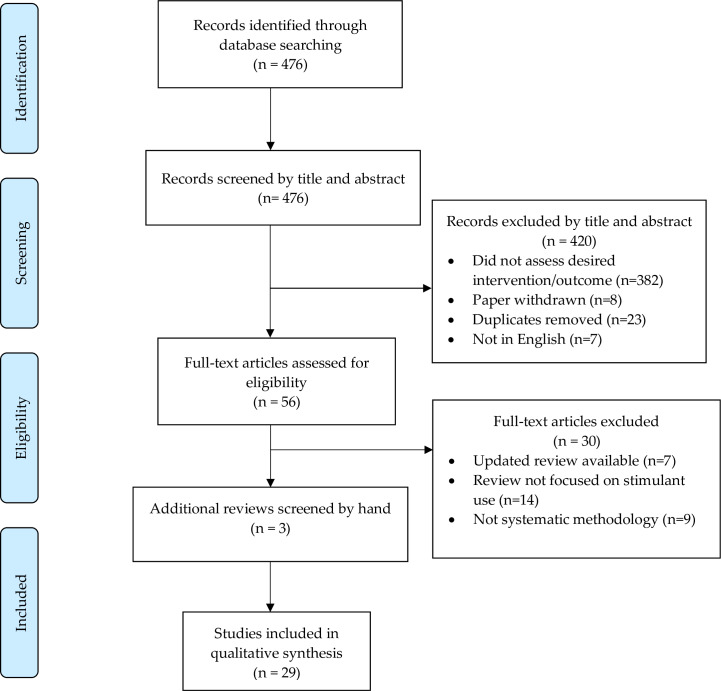
AIMS: Stimulant use disorder contributes to a substantial worldwide burden of disease, although evidence-based treatment options are limited. This systematic review of reviews aims to: (i) synthesize the available evidence on both psychosocial and pharmacological interventions for the treatment of stimulant use disorder; (ii) identify the most effective therapies to guide clinical practice, and (iii) highlight gaps for future study. METHODS: A systematic database search was conducted to identify systematic reviews and meta-analyses. Eligible studies were those that followed standard systematic review methodology and assessed randomized controlled trials focused on the efficacy of interventions for stimulant use disorder. Articles were critically appraised using an assessment tool adapted from Palmeteer et al. and categorized for quality as 'core' or 'supplementary' reviews. Evidence from the included reviews were further synthesized according to pharmacological or non-pharmacological management themes. RESULTS: Of 476 identified records, 29 systematic reviews examining eleven intervention modalities were included. The interventions identified include: contingency management, cognitive behavioural therapy, acupuncture, antidepressants, dopamine agonists, antipsychotics, anticonvulsants, disulfiram, opioid agonists, N-Acetylcysteine, and psychostimulants. There was sufficient evidence to support the efficacy of contingency management programs for treatment of stimulant use disorder. Psychostimulants, n-acetylcysteine, opioid agonist therapy, disulfiram and antidepressant pharmacological interventions were found to have insufficient evidence to support or discount their use. Results of this review do not support the use of all other treatment options. CONCLUSIONS: The results of this review supports the use of contingency management interventions for the treatment of stimulant use disorder. Although evidence to date is insufficient to support the clinical use of psychostimulants, our results demonstrate potential for future research in this area. Given the urgent need for effective pharmacological treatments for stimulant use disorder, high-quality primary research focused on the role of psychostimulant medications for the treatment of stimulant use disorder is needed.
Overview
The claims and statistics of this paper haven’t been checked yet.
Free: it reads the open-access text and checks the first 5 claims that cite a source we can check. Create a free account to check every claim.
Integrity signals
Registry
Cites
Statistics
Figures
Verification
Claims the paper makes
The claims and statistics of this paper haven’t been checked yet.
Free: it reads the open-access text and checks the first 5 claims that cite a source we can check. Create a free account to check every claim.
Claims other papers make about this one
Each is checked against this paper’s own text: does it say what the citing paper says it does?
The source backs part of the claim, not all of it — or backs it for a different population, condition or comparison.
In the citing paper
“Cochrane reviews have consistently highlighted the insufficiency of evidence to establish the effectiveness of certain psychotherapies for various SUDs, whether accompanied by comorbidity or not.”
From Navigating the Complex Intersection of Substance Use and Psychiatric Disorders: A Comprehensive Review (2024) · cites this paper as [48]
Experimental — accuracy not yet measuredThe source backs part of the claim, not all of it — or backs it for a different population, condition or comparison.
In the citing paper
“Evidence-based strategies, including contingency management (CM), cognitive-behavioral therapy (CBT), dialectical behavior therapy (DBT), motivational interviewing (MI), acceptance and commitment therapy (ACT), and family-based interventions, have demonstrated their effectiveness in reducing substance use and enhancing treatment outcomes”
From Navigating the Complex Intersection of Substance Use and Psychiatric Disorders: A Comprehensive Review (2024) · cites this paper as [48]
Experimental — accuracy not yet measuredThe cited source says what the claim attributes to it.
In the citing paper
“An example of this shortfall is the inadequacy of high-quality research regarding the effectiveness of CBT in the treatment of stimulant use disorders [47,48,58].”
From Navigating the Complex Intersection of Substance Use and Psychiatric Disorders: A Comprehensive Review (2024) · cites this paper as [48]
Self-check
Percentages, sums and reported differences re-computed from the paper’s own numbers.
The self-check needs the paper’s full text.
Citations
Cites
Diagnostic and Statistical Manual of Mental Disorders
American Psychiatric Association (2013) · doi:10.1176/appi.books.9780890425596 · Cited by 116,369
Diagnostic and Statistical Manual of Mental Disorders
Williams, J. B. W., & First, M. (2013) · Encyclopedia of Social Work · doi:10.1093/acrefore/9780199975839.013.104 · Cited by 109,519
Preferred Reporting Items for Systematic Reviews and Meta-Analyses: the PRISMA statement
Moher, D., Liberati, A., Tetzlaff, J., Altman, D. G., & for the PRISMA Group (2009) · BMJ · doi:10.1136/bmj.b2535 · Cited by 83,823
Preferred Reporting Items for Systematic Reviews and Meta-Analyses: The PRISMA Statement
Moher, D., Liberati, A., Tetzlaff, J., Altman, D. G., & The PRISMA Group (2009) · PLoS Medicine · doi:10.1371/journal.pmed.1000097 · Cited by 64,042
Preferred reporting items for systematic reviews and meta-analyses: the PRISMA Statement.
(2009) · PubMed Central · Cited by 44,859
Methadone maintenance therapy versus no opioid replacement therapy for opioid dependence
Mattick, R. P., Breen, C., Kimber, J., & Davoli, M. (2009) · Cochrane Database of Systematic Reviews · doi:10.1002/14651858.cd002209.pub2 · Cited by 1,654
Methodology in conducting a systematic review of systematic reviews of healthcare interventions
Smith, V., Devane, D., Begley, C. M., & Clarke, M. (2011) · BMC Medical Research Methodology · doi:10.1186/1471-2288-11-15 · Cited by 1,227
Polysubstance use: diagnostic challenges, patterns of use and health
Connor, J. P., Gullo, M. J., White, A., & Kelly, A. B. (2014) · Current Opinion in Psychiatry · doi:10.1097/yco.0000000000000069 · Cited by 461
Management of opioid use disorders: a national clinical practice guideline
Bruneau, J., Ahamad, K., Goyer, M.-È., Poulin, G., Selby, P., Fischer, B., Wild, T. C., & Wood, E. (2018) · Canadian Medical Association Journal · doi:10.1503/cmaj.170958 · Cited by 412
Self-citationPeirce, J. M., Petry, N. M., Stitzer, M. L., Blaine, J., Kellogg, S., Satterfield, F., Schwartz, M., Krasnansky, J., Pencer, E., Silva-Vazquez, L., et al. (2006) · Archives of General Psychiatry · doi:10.1001/archpsyc.63.2.201 · Cited by 304 · cited 2×
“In a trial by Peirce et al., the intervention was successful at just $1.46 per participant per day, rather than an average cost of $120 per day that has been previously reported [54].”
Influential
Research works printed but not linked: 3
- Kelly M, Swann C, Killoran A, Naidoo B, Barnett-Paige E, Morgan A. Methodological problems in constructing the evidence base in public health. Health Development Agency Public Health Evidence Steering Group Methodology Reference Group Starter Paper. 2002; 9.
- Ellis S, Barnett-Page E, Morgan A, Taylor L, Walters R, Goodrich J. HIV prevention: A review of reviews assessing the effectiveness of interventions to reduce the risk of sexual transmission: Evidence briefing 2003.
- Castells X, Kosten TR, Capella D, Vidal X, Colom J, Casas M. Efficacy of opiate maintenance therapy and adjunctive interventions for opioid dependence with comorbid cocaine use disorders: A systematic review and meta-analysis of controlled clinical trials. 20180662
Cited by
O’Donnell, J., Gladden, R. M., Mattson, C. L., Hunter, C. T., & Davis, N. L. (2020) · MMWR. Morbidity and Mortality Weekly Report · doi:10.15585/mmwr.mm6935a1 · Cited by 245
“Supporting increased access to medications for opioid use disorder¶¶¶¶¶ and evidence-based treatments for stimulant use disorders (17) can help mitigate risks.”
BackgroundJones, C. M., Houry, D., Han, B., Baldwin, G., Vivolo‐Kantor, A., & Compton, W. M. (2022) · Annals of the New York Academy of Sciences · doi:10.1111/nyas.14688 · Cited by 202
Drug Overdose Mortality Among People Experiencing Homelessness, 2003 to 2018
Fine, D. R., Dickins, K. A., Adams, L. D., Nueces, D. D. L., Weinstock, K., Wright, J. D., Gaeta, J. M., & Baggett, T. P. (2022) · JAMA Network Open · doi:10.1001/jamanetworkopen.2021.42676 · Cited by 158
Racial/Ethnic and Geographic Trends in Combined Stimulant/Opioid Overdoses, 2007–2019
Townsend, T., Kline, D., Rivera‐Aguirre, A., Bunting, A. M., Mauro, P. M., Marshall, B. D. L., Martins, S. S., & Cerdá, M. (2021) · American Journal of Epidemiology · doi:10.1093/aje/kwab290 · Cited by 126
Kariisa, M., Seth, P., Scholl, L., Wilson, N. O., & Davis, N. L. (2021) · Drug and Alcohol Dependence · doi:10.1016/j.drugalcdep.2021.109001 · Cited by 97
Pharmacotherapeutic strategies for treating cocaine use disorder—what do we have to offer?
Brandt, L., Chao, T. W.-C., Comer, S. D., & LEVIN, F. R. (2020) · Addiction · doi:10.1111/add.15242 · Cited by 95
“A recent systematic review of reviews was used to identify those published until November 2019 [62].”
BackgroundMethodDiagnosis and Management of Infective Endocarditis in People Who Inject Drugs
Yucel, E., Bearnot, B. I., Paras, M. L., Zern, E. K., Dudzinski, D. M., Soong, C.-P., Jassar, A. S., Rosenfield, K., Lira, J., Lambert, E., et al. (2022) · Journal of the American College of Cardiology · doi:10.1016/j.jacc.2022.03.349 · Cited by 105
Bahji, A. (2024) · Journal of Clinical Medicine · doi:10.3390/jcm13040999 · Cited by 83
“An example of this shortfall is the inadequacy of high-quality research regarding the effectiveness of CBT in the treatment of stimulant use disorders [47,48,58].”
BackgroundThe ASAM/AAAP Clinical Practice Guideline on the Management of Stimulant Use Disorder
(2024) · Journal of Addiction Medicine · doi:10.1097/adm.0000000000001299 · Cited by 78
Role of Cannabidiol in the Therapeutic Intervention for Substance Use Disorders
Navarrete, F., García‐Gutiérrez, M. S., Gasparyan, A., Austrich-Olivares, A., & Manzanares, J. (2021) · Frontiers in Pharmacology · doi:10.3389/fphar.2021.626010 · Cited by 89
“Although psychostimulants have shown some favorable results, high quality clinical trials and meta-analyses are needed to determine their clinical utility (Ronsley et al., 2020).”
Cocaine Use Disorder (CUD): Current Clinical Perspectives
Schwartz, E. K. C., Wolkowicz, N. R., Aquino, J. P. D., MacLean, R. R., & Sofuoglu, M. (2022) · Substance Abuse and Rehabilitation · doi:10.2147/sar.s337338 · Cited by 103
Fischer, B., O’Keefe-Markman, C., Lee, A., & Daldegan‐Bueno, D. (2021) · Substance Abuse Treatment Prevention and Policy · doi:10.1186/s13011-021-00350-5 · Cited by 73
“their effectiveness remain highly limited [47, 93, 96].”
High prevalence of co-occurring substance use in individuals with opioid use disorder
Mahoney, J. J., Winstanley, E. L., Lander, L. R., Berry, J. H., Marshalek, P. J., Haut, M. W., Marton, J. L., Kimble, W., Armistead, M. G., Wen, S., et al. (2020) · Addictive Behaviors · doi:10.1016/j.addbeh.2020.106752 · Cited by 66
“Contingency management has been shown to be an effective treatment for methamphetamine use disorder (Ronsley et al., 2020); however, there remains significant barriers to implementing this intervention into clinical practice.”
BackgroundWilson, J. D., Dunn, S. C. A., Roy, P. J., Joseph, E., Klipp, S., & Liebschutz, J. M. (2022) · Journal of General Internal Medicine · doi:10.1007/s11606-021-07362-8 · Cited by 59
Naji, L., Dennis, B. B., Rosic, T., Wiercioch, W., Paul, J., Worster, A., Thabane, L., & Samaan, Z. (2022) · Drug and Alcohol Dependence · doi:10.1016/j.drugalcdep.2022.109295 · Cited by 49
Amin‐Esmaeili, M., Farokhnia, M., Susukida, R., Leggio, L., Johnson, R. M., Crum, R. M., & Mojtabai, R. (2024) · Addiction · doi:10.1111/add.16409 · Cited by 43
“There are currently no evidence-based pharmacological treatments for stimulant use disorders [1 – 3].”
BackgroundShifting North American drug markets and challenges for the system of care
Krausz, M. R., Westenberg, J. N., Mathew, N., Budd, G., Wong, J. S. H., Tsang, V. W. L., Vogel, M., King, C., Seethapathy, V., Jang, K. L., et al. (2021) · International Journal of Mental Health Systems · doi:10.1186/s13033-021-00512-9 · Cited by 43
“Though stimulant use has been prevalent, treatment options have never truly been available and needs related to stimulant use never been appropriately addressed [56].”
BackgroundWakeman, S. E., McGovern, S., Kehoe, L., Kane, M. T., Powell, E. A., Casey, S. K., Yacorps, G., Irvin, J., Rodriguez, W., & Regan, S. (2022) · Journal of Substance Abuse Treatment · doi:10.1016/j.jsat.2022.108848 · Cited by 39
N-acetylcysteine (NAC) for methamphetamine dependence: A randomised controlled trial
McKetin, R., Dean, O. M., Turner, A., Kelly, P. J., Quinn, B., Lubman, D. I., Dietze, P., Carter, G. L., Higgs, P., Sinclair, B., et al. (2021) · EClinicalMedicine · doi:10.1016/j.eclinm.2021.101005 · Cited by 36
Psychosocial interventions for stimulant use disorder
Minozzi, S., Saulle, R., Amato, L., Traccis, F., & Agabio, R. (2024) · Cochrane Database of Systematic Reviews · doi:10.1002/14651858.cd011866.pub3 · Cited by 32
Fredericksen, R. J., Baker, R., Sibley, A. B., Estadt, A. T., Colston, D. C., Mixson, L. S., Walters, S. M., Bresett, J., Levander, X. A., Leichtling, G. J., et al. (2024) · Harm Reduction Journal · doi:10.1186/s12954-024-00986-z · Cited by 36
“An exception is the use of contingency management, for which there is strong evidence supporting its use in outpatient programs for treating both opioid and stimulant use disorders [43–45], particularly in the context of a supplemental community reinforcement approach [46].”
BackgroundLaBossier, N. J., & Hadland, S. E. (2022) · Current problems in pediatric and adolescent health care · doi:10.1016/j.cppeds.2022.101265 · Cited by 44
Tondo, L. P., Viola, T. W., Fries, G. R., Kluwe‐Schiavon, B., Rothmann, L. M., Cupertino, R. B., Ferreira, P., Franco, A. R., Lane, S. D., Stertz, L., et al. (2021) · Translational Psychiatry · doi:10.1038/s41398-021-01367-x · Cited by 29
Trends in substance use disorder diagnoses among Veterans, 2009–2019
Hoggatt, K. J., Chawla, N., Washington, D. L., & Yano, E. M. (2023) · American Journal on Addictions · doi:10.1111/ajad.13413 · Cited by 29
Matson, T. E., Hallgren, K. A., Lapham, G. T., Oliver, M. M., Wang, X., Williams, E. C., & Bradley, K. A. (2023) · JAMA Network Open · doi:10.1001/jamanetworkopen.2023.16283 · Cited by 29
Pharmacotherapy treatment of stimulant use disorder
Liu, M. T. (2021) · Mental Health Clinician · doi:10.9740/mhc.2021.11.347 · Cited by 26
“Antipsychotics, such as haloperidol, aripiprazole, olanzapine, quetiapine, and risperidone, may increase treatment retention but no benefit on improving abstinence or reducing cocaine use.(8,9,50) Bupropion, topiramate, and high-dose psychostimulants (ie, FDA maximum recommended doses or higher) have lowstrength evide…”
BackgroundInfluentialKhazanov, G. K., McKay, J. R., & Rawson, R. A. (2024) · Addiction · doi:10.1111/add.16497 · Cited by 33
Mackay, L., Bach, P., Milloy, M., Cui, Z., Kerr, T. H., & Hayashi, K. (2021) · Drug and Alcohol Dependence · doi:10.1016/j.drugalcdep.2021.108844 · Cited by 28
Self-citationDeFulio, A., Furgeson, J. R., Brown, H. D., & Ryan, S. A. (2021) · Frontiers in Psychiatry · doi:10.3389/fpsyt.2021.778992 · Cited by 24
Use of Cannabis as a Harm Reduction Strategy Among People Who Use Drugs: A Cohort Study
Mok, J., Milloy, M., Grant, C. C., Lake, S., DeBeck, K., Hayashi, K., Kerr, T. H., & Socias, M. E. (2023) · Cannabis and Cannabinoid Research · doi:10.1089/can.2021.0229 · Cited by 28
“11,32 The lack of treatment options may partially explain why high-intensity (i.e., at least daily) methamphet-amine users in our study are using cannabis as a harm reduction strategy, a phenomenon previously described in qualitative studies in our setting 33 and also in other groups of…”
Self-citationCoughlin, L. N., Zhang, L., Bohnert, A. S. B., Maust, D. T., Goldstick, J. E., & Lin, L. A. (2021) · Addiction · doi:10.1111/add.15714 · Cited by 26
Illicit Drug Use in Older Adults
Ghantous, Z., Ahmad, V., & Khoury, R. (2021) · Clinics in Geriatric Medicine · doi:10.1016/j.cger.2021.07.002 · Cited by 23
Targeting Neuroplasticity in Substance Use Disorders: Implications for Therapeutics
Wolf, M. E. (2024) · The Annual Review of Pharmacology and Toxicology · doi:10.1146/annurev-pharmtox-061724-080548 · Cited by 28
“The article focuses on therapeutic targets that are related to components of excitatory synapses and have been identified at least in part by studying synaptic transmission; for a more general review of therapeutic approaches, the reader is referred elsewhere (9–12).”
McKetin, R., Sutherland, R., Peacock, A., Farrell, M., & Degenhardt, L. J. (2021) · Drug and Alcohol Review · doi:10.1111/dar.13364 · Cited by 25
Parent, S. C., Peavy, K. M., Tyutyunnyk, D., Hirchak, K. A., Nauts, T., Dura, A., Weed, L., Barker, L., & McDonell, M. G. (2023) · Preventive Medicine · doi:10.1016/j.ypmed.2023.107614 · Cited by 20
Daldegan‐Bueno, D., Maia, L. O., Glass, M., Jutras‐Aswad, D., & Fischer, B. (2021) · Psychopharmacology · doi:10.1007/s00213-021-05960-2 · Cited by 19
Implementing an evidence-based prize contingency management protocol for stimulant use
Rash, C. J. (2023) · Journal of Substance Use and Addiction Treatment · doi:10.1016/j.josat.2023.209079 · Cited by 17
Leyde, S. E., Abbs, E., Suen, L. W., Martín, M., Mitchell, A., Davis, J. D., & Azari, S. (2022) · Journal of Addiction Medicine · doi:10.1097/adm.0000000000001110 · Cited by 17
Russell, C., Law, J., Imtiaz, S., Rehm, J. T., Foll, B. L., & Ali, F. (2023) · Addiction Science & Clinical Practice · doi:10.1186/s13722-023-00402-0 · Cited by 27
“Some treatment options studied previously that have shown partial positive results include psychosocial and pharmacological treatments such as contingency management, cognitive behavioral therapy, dopamine agonists, antipsychotics, and opioid agonists [58].”
BackgroundThakarar, K., Appa, A. A., Abdul‐Mutakabbir, J. C., Goff, A., Brown, J. A., Tuell, C., Fairfield, K. M., & Wurcel, A. G. (2023) · Clinical Infectious Diseases · doi:10.1093/cid/ciad664 · Cited by 22
Novel therapeutics in development for the treatment of stimulant-use disorder
Young, E. J., Radnai, L., Prikhodko, V., & Miller, C. A. (2024) · Current Opinion in Neurobiology · doi:10.1016/j.conb.2024.102898 · Cited by 16
“While treatment with CM and CBT have yielded short-term and moderate effects in reducing use relapse, the addition of medications, similar to treatment methods utilized for opioid use disorder, has the potential to yield even better outcomes [19,21–23].”
Choi, N. G., DiNitto, D. M., Marti, C. N., & Choi, B. Y. (2021) · Drug and Alcohol Dependence · doi:10.1016/j.drugalcdep.2021.109256 · Cited by 15
Methamphetamine dependence in Australia–why is ‘ice’ (crystal meth) so addictive?
Scott, R. J. (2023) · Psychiatry Psychology and Law · doi:10.1080/13218719.2023.2206870 · Cited by 17
“…considered 26 systematic reviews of two psychological interventions (contingency management and cognitive behavioural therapy) and eight pharmacological treatments concluded that none of five pharmacotherapies studied had sufficient evidence to support or discount their use (Ronsley et al., 2020).”
Li, M. J., Chau, B., Belin, T. R., Carmody, T. J., Jha, M. K., Marino, E. N., Trivedi, M. H., & SHOPTAW, S. J. (2024) · Addiction · doi:10.1111/add.16529 · Cited by 14
Data-Driven Contingency Management Incentive Magnitudes: A Review
Rash, C. J., Black, S. I., Parent, S. C., Erath, T. G., & McDonell, M. G. (2025) · JAMA Psychiatry · doi:10.1001/jamapsychiatry.2025.1341 · Cited by 16
Addressing Methamphetamine Use in Primary Care: Provider Perspectives
Dunn, J. A., Yuan, M., Ramírez, F., Garneau, H. C., Brown‐Johnson, C. G., Breland, H., Antonini, V. P., Larkins, S., Rawson, R. A., & McGovern, M. P. (2022) · Journal of Addiction Medicine · doi:10.1097/adm.0000000000001035 · Cited by 18
Philbin, M. M., Greene, E., LaBossier, N. J., Martins, S. S., McCrimmon, T., & Mauro, P. M. (2022) · Addictive Behaviors · doi:10.1016/j.addbeh.2022.107539 · Cited by 14
Can hepatitis C elimination targets be sustained among people who inject drugs post-2030?
Delaunay, C. L., Godin, A., Kronfli, N., Panagiotoglou, D., Cox, J., Alary, M., Klein, M. B., & Maheu‐Giroux, M. (2021) · International Journal of Drug Policy · doi:10.1016/j.drugpo.2021.103343 · Cited by 14
Arkell, T. R., Bradshaw, K., Downey, L. A., & Hayley, A. C. (2022) · Addiction Biology · doi:10.1111/adb.13128 · Cited by 13
Transcranial Stimulation for the Treatment of Stimulant Use Disorder
Edinoff, A. N., Sall, S., Roberts, T. D., Tomlinson, H., Soileau, L. G., Jackson, E. D., Murnane, K. S., Wenger, D. M., Cornett, E. M., Toms, J., et al. (2023) · Neurology International · doi:10.3390/neurolint15010021 · Cited by 16
Foot, C. A., Korthuis, P. T., Tsui, J. I., Luo, S. X., Chan, B. L., & Cook, R. (2023) · Addiction · doi:10.1111/add.16334 · Cited by 11
HIV and Substance Use Disorders
Lier, A., Tarfa, A., Shenoi, S., Kuo, I. C., & Springer, S. A. (2024) · Infectious Disease Clinics of North America · doi:10.1016/j.idc.2024.06.003 · Cited by 15
Khalili, M., Sadeghirad, B., Bach, P., Crabtree, A., Javadi, S., Sadeghi, E., Moradi, S., Fashami, F. M., Nakhaeizadeh, M., Salehi, S., et al. (2024) · International Journal of Mental Health and Addiction · doi:10.1007/s11469-024-01379-w · Cited by 20
“While psychosocial interventions aim to modify behaviour (De Giorgi et al., 2018; DeCrescenzo et al., 2018; Siefried et al., 2020), pharmacological interventions consider the stimulant mechanism of action and affect neurotransmitters (Chan et al., 2019; Ronsley et al., 2020; Siefried et al., 2020).”
Perioperative Considerations for Patients Exposed to Psychostimulants
Emerick, T. D., Martin, T. J., & Ririe, D. G. (2023) · Anesthesia & Analgesia · doi:10.1213/ane.0000000000006303 · Cited by 16
Davis, J. D., Bepo, L., Suen, L. W., Mclaughlin, M. M., Adamo, M., Abbs, E., Lemke, G., & Azari, S. (2023) · Journal of Cardiac Failure · doi:10.1016/j.cardfail.2023.10.481 · Cited by 15
Tardelli, V. S., Berro, L. F., Gerra, G., Tadonio, L., Bisaga, A. M., & Fidalgo, T. M. (2023) · Addiction Biology · doi:10.1111/adb.13271 · Cited by 17
Shadloo, B., Baheshmat, S., Abadi, Y. R., Shakeri, A., Gholami, J., & Rahimi‐Movaghar, A. (2021) · Journal of Substance Abuse Treatment · doi:10.1016/j.jsat.2021.108555 · Cited by 11
Pharmacological treatment for substance use disorder: A systematic review
Mateu-Mollá, J., Pérez-Gálvez, B., & Villanueva-Blasco, V. J. (2025) · Addictive Behaviors · doi:10.1016/j.addbeh.2024.108242 · Cited by 10
Kaufman, V., Tomlinson, D. C., Hellman, L., Lin, L. A., Fernandez, A. C., & Coughlin, L. N. (2025) · Substance Abuse Treatment Prevention and Policy · doi:10.1186/s13011-025-00666-6 · Cited by 12
Hendricks, B. M., Sokos, G. G., Kimble, W., Dai, Z., Adeniran, O., Osman, M., Smith, G. S., & Bianco, C. M. (2021) · Drug and Alcohol Dependence · doi:10.1016/j.drugalcdep.2021.109060 · Cited by 12
Estadt, A. T., White, B. N., Ricks, J. M., Lancaster, K. E., Hepler, S. A., Miller, W. C., & Kline, D. (2024) · Harm Reduction Journal · doi:10.1186/s12954-024-00936-9 · Cited by 10
“…of increased fentanyl exposure concentrated in Black populations, the structural and systemic racism manifest in the design and provision of health care services limits access to corresponding harm reduction and evidence-based treatment services in highly segregated communities of color [36, 37].”
BackgroundMethamphetamine and Cocaine Overdose Deaths in the United States, 1999–2023
Zhu, D. T., Bajaj, S. S., & Sen, A. (2025) · Substance Use & Misuse · doi:10.1080/10826084.2025.2516735 · Cited by 10
“This crisis has been difficult to address, given the lack of medications approved by the Food and Drug Administration for stimulant use disorder and long-standing racial disparities in access to addiction treatment (Rawson et al., 2023; Ronsley et al., 2020).”
Anderson, A. C., Robinson, A. H., Giddens, E., Hartshorn, B., Allan, E., Rowe, C., Lawrence, T., Chong, T. T. ‐., Lubman, D. I., & Verdejo‐García, A. (2023) · Drug and Alcohol Dependence · doi:10.1016/j.drugalcdep.2023.109846 · Cited by 14
Frank, A. A., Schwartz, A. C., Welsh, J. W., Ruble, A. E., Branch, R., DeMoss, D. S., & DeJong, S. M. (2022) · Academic Psychiatry · doi:10.1007/s40596-022-01634-z · Cited by 10
“The choice of psychotherapeutic modality depends on both patient factors and substance use disorder diagnosis; for example, psychotherapy is the mainstay of treatment for stimulant-use disorders but is more of an augmentation strategy for opioid use disorders [14, 15].”
BackgroundNavigating Evidence, Challenges, and Caution in the Treatment of Stimulant Use Disorders
Bahji, A., Danilewitz, M., & Crockford, D. (2023) · Brain Sciences · doi:10.3390/brainsci13101416 · Cited by 9
“CBT has been shown to effectively reduce stimulant use and improve treatment outcomes by addressing cognitive distortions, developing coping skills, and enhancing motivation for change [15,55,55–58].”
BackgroundHøj, S. B., Minoyan, N., Zang, G., Larney, S., & Bruneau, J. (2023) · Drug and Alcohol Dependence · doi:10.1016/j.drugalcdep.2023.110956 · Cited by 10
Appa, A. A., Baral, S., Stein, B., Knight, K. R., Gandhi, M., Coffin, P. O., & Martín, M. (2023) · Journal of Addiction Medicine · doi:10.1097/adm.0000000000001254 · Cited by 10
Morgan, B., Lancaster, R., Boyagoda, B., Ananda, R. A., Attwood, L. O., Jacka, D., & Woolley, I. J. (2024) · BMC Infectious Diseases · doi:10.1186/s12879-024-09143-0 · Cited by 9
Coughlin, L. N., Zhang, L., Frost, M. C., Khazanov, G. K., McKay, J. R., DePhilippis, D., & Lin, L. A. (2024) · Journal of Substance Use and Addiction Treatment · doi:10.1016/j.josat.2024.209400 · Cited by 12
Parker, S. J., Reichley, N., Biello, K. B., Goldman, J. A., Buxton, J. A., Hadland, S. E., Sherman, S. G., Marshall, B. D. L., & Macmadu, A. (2025) · Harm Reduction Journal · doi:10.1186/s12954-025-01191-2 · Cited by 11
“Overall, current findings underscore the need for increased investment in funding evidence-based treatments for stimulant use disorder, as well as a need to tailor harm reduction outreach efforts to the needs of PWUD who are engaged in stimulant and poly-substance use [18, 19].”
Rising Stimulant Overdoses Among Young People in the United States
Hadland, S. E., & Marshall, B. D. L. (2020) · PEDIATRICS · doi:10.1542/peds.2020-031526 · Cited by 9
Bray, B. C., Watson, D. P., Salisbury‐Afshar, E., Taylor, L., & McGuire, A. B. (2023) · Journal of Substance Use and Addiction Treatment · doi:10.1016/j.josat.2023.208979 · Cited by 8
Emerging medications and pharmacological treatment approaches for substance use disorders
Raymond, J. S., Athanasopoulos, A. G., Badolato, C. J., Doolan, T. M., Scicluna, R. L., Everett, N. A., Bowen, M. T., & James, M. H. (2024) · Pharmacology Biochemistry and Behavior · doi:10.1016/j.pbb.2024.173952 · Cited by 10
“While evidence was assessed as insufficient to support the use of psychostimulant-based treatments for StUDs, it was concluded that further high-quality trials of longer duration evaluating the efficacy of this potential treatment avenue were warranted (Ronsley et al., 2020).”
Leonard, A., Broussard, J., Jain, J. P., Kumar, S., Santos, G., & Dawson-Rose, C. S. (2022) · Journal of Nursing Scholarship · doi:10.1111/jnu.12856 · Cited by 12
“There are currently no FDA-approved MAT options for MUD and many behavioral interventions are ineffective (Ronsley et al., 2020).”
BackgroundA specific cognitive behavioral group therapy program for stimulant use disorder
Karsinti, E., Vorspan, F., Therribout, N., Icick, R., Bloch, V., Fortias, M., Piani, K., & Romo, L. (2022) · Frontiers in Psychiatry · doi:10.3389/fpsyt.2022.1031067 · Cited by 8
Perspectives and sentiments on contingency management from people who use methamphetamine
Clay, S., Wilkinson, Z., Ginley, M. K., Arunogiri, S., Christmass, M. A., Membrey, D., MacCartney, P., Sutherland, R., Colledge‐Frisby, S., Marshall, A. D., et al. (2023) · Drug and Alcohol Review · doi:10.1111/dar.13691 · Cited by 8
Gallassi, A. D., de Oliveira, A. W. C., Rodrigues, L. A., Nakano, E. Y., Ruas, P. A. S., Mata, J. A. I. D. L., Júnior, E. F., Gomes, J. D. A., Caroba, M. E. S., Silva, M., et al. (2024) · International Journal of Mental Health and Addiction · doi:10.1007/s11469-024-01287-z · Cited by 11
“The interest in pharmacological interventions for treating CUD has produced an increasing number of scientific studies in the last 10 years (Carvalho et al., 2016; Fischer, Kuganesan, et al., 2015; Ronsley et al., 2020).”
Fujita, A. W., Ramakrishnan, A., Mehta, C. C., Yusuf, O. B., Thompson, A. B., SHOPTAW, S. J., Carrico, A. W., Adimora, A. A., Eaton, E., Cohen, M. H., et al. (2024) · Journal of Primary Care & Community Health · doi:10.1177/21501319241285531 · Cited by 8
“This may be due in part to the lack of evidence-based medications for stimulant use disorders, 28 compared with medications for opioid use disorders.”
BackgroundCivil commitment for opioid misuse: do short-term benefits outweigh long-term harms?
Messinger, J. C., Ikeda, D. J., & Sarpatwari, A. (2021) · Journal of Medical Ethics · doi:10.1136/medethics-2020-107160 · Cited by 9
Card, K. G., McGuire, M., Berlin, G. W., Wells, G. A., Fulcher, K., Nguyen, T., Hart, T. A., Skakoon‐Sparling, S., & Lachowsky, N. J. (2022) · International Journal of Environmental Research and Public Health · doi:10.3390/ijerph19063458 · Cited by 10
COVID-19 Vaccination Status and Concerns Among People Who Use Drugs in Oregon
Stack, E., Shin, S. S., LaForge, K., Pope, J., Leichtling, G. J., Larsen, J. E., Byers, M., Leahy, J. M., Hoover, D. B., Chisholm, L., et al. (2022) · Journal of Addiction Medicine · doi:10.1097/adm.0000000000001002 · Cited by 10
Hirchak, K. A., Echo-Hawk, H., Parent, S. C., Peavy, K. M., Webb, K., Bajet, K., Richardson, M., Granbois, A., Herron, J. L., Catron, K., et al. (2023) · Preventive Medicine · doi:10.1016/j.ypmed.2023.107662 · Cited by 8
Elkrief, L., Sharafi, H., Bakouni, H., McAnulty, C., Bastien, G., Dubreucq, S., Garel, N., Trépanier, A., Ziegler, D., & Jutras‐Aswad, D. (2024) · The Canadian Journal of Psychiatry · doi:10.1177/07067437241262967 · Cited by 6
Animal models of cocaine use: importance of social context and co-use
Allen, M. I., & Nader, M. A. (2025) · Trends in Pharmacological Sciences · doi:10.1016/j.tips.2025.01.003 · Cited by 9
Brooks, O., Bach, P., Dong, H., Milloy, M., Fairbairn, N. S., Kerr, T. H., & Hayashi, K. (2022) · Drug and Alcohol Dependence · doi:10.1016/j.drugalcdep.2022.109274 · Cited by 10
Self-citationSanna, A., Bini, V., Badas, P., Corona, G., Sanna, G., Marcasciano, L., Vivo, M. C. D., & Diana, M. (2022) · Frontiers in Psychiatry · doi:10.3389/fpsyt.2022.1013569 · Cited by 7
Singh, D., Azuan, M. A., & Narayanan, S. (2023) · Journal of Ethnicity in Substance Abuse · doi:10.1080/15332640.2023.2293941 · Cited by 8
“At present, there is no approved pharmacological treatment for ATS use disorder (Ronsley et al., 2020).”
Caring for Hospitalized Adults with Methamphetamine Use Disorder: A Proposed Clinical Roadmap
Priest, K. C., Balasanova, A. A., Levander, X. A., Chan, B. L., Blazes, C. K., Mahan, J. D., Brown, J. A., Mahoney, S., Peng, L., Mahoney, S., et al. (2023) · The American Journal of Medicine · doi:10.1016/j.amjmed.2023.01.012 · Cited by 8
Gao, Z., Winhusen, T. M., Gorenflo, M. P., Dorney, I., Ghitza, U. E., Kaelber, D. C., & Xu, R. (2024) · Addiction · doi:10.1111/add.16715 · Cited by 8
Bian, Y., Ci, Q., Luo, X., & Zhang, C. (2025) · Pharmaceutics · doi:10.3390/pharmaceutics17091223 · Cited by 9
“Behavioral interventions such as contingency management, cognitive behavioral therapy, and motivational enhancement therapy offer additional benefit, but demand sustained engagement and intensive resources [27–32].”
Increasing Attendance in Addiction Treatment With Limited Resources: A Narrative Review
Rubenis, A. J., Nation, J. A., Katz, E. C., & Arunogiri, S. (2022) · Journal of Addiction Medicine · doi:10.1097/adm.0000000000001033 · Cited by 7
Sergeant, A., Bach, P., Lei, J., DeBeck, K., Milloy, M., & Hayashi, K. (2024) · Substance Abuse Treatment Prevention and Policy · doi:10.1186/s13011-024-00624-8 · Cited by 5
“The rise in stimulant use is especially concerning given the paucity of evidence-based treatments for stimulant dependence [20].”
BackgroundSelf-citationThe Importance of Learning Health Systems in Addressing the Opioid Crisis
Compton, W. M., Wiley, T., & Blanco, C. (2020) · Journal of General Internal Medicine · doi:10.1007/s11606-020-06267-2 · Cited by 7
Dealing With the Epidemic of Endocarditis in People Who Inject Drugs
Vervoort, D., An, K. R., Elbatarny, M., Tam, D. Y., Quastel, A., Verma, S., Connelly, K. A., Yanagawa, B., & Fremes, S. E. (2022) · Canadian Journal of Cardiology · doi:10.1016/j.cjca.2022.06.004 · Cited by 11
Green, B., Parent, S. C., Ware, J., Hasson, A. L., McDonell, M. G., Nauts, T., Collins, M., Kim, F. L., & Rawson, R. A. (2023) · Journal of Substance Use and Addiction Treatment · doi:10.1016/j.josat.2023.209032 · Cited by 7
Nestor, L. J., Luijten, M., Ziauddeen, H., Regenthal, R., Sahakian, B. J., Robbins, T. W., & Ersche, K. D. (2023) · Biological Psychiatry Cognitive Neuroscience and Neuroimaging · doi:10.1016/j.bpsc.2023.08.003 · Cited by 12
Stimulant Drugs and Stimulant Use Disorder
Song, W., Simona, A., Zhang, P., Bates, D. W., & Urman, R. D. (2023) · Anesthesiology Clinics · doi:10.1016/j.anclin.2023.09.003 · Cited by 8
Starting the Discussion: A Call to Enhance Care for People With Stimulant Use Disorder
Alves, J., Rust, V., Baldwin, M., Puleikis, L., Claude, A., Brett, M., LaBelle, C. T., & Ventura, A. S. (2023) · Substance Abuse · doi:10.1177/08897077231191005 · Cited by 6
A Narrative Review of the Pathophysiology and Treatment of Methamphetamine-Associated Psychosis
Stacy, P. D., Frantz, J., Miller, G., Merrill, B., & Gainer, D. M. (2024) · International Journal of Mental Health and Addiction · doi:10.1007/s11469-024-01323-y · Cited by 7
Barkus, A., Baltrūnienė, V., Barkienė, L., Baušienė, J., Baltrūnas, T., Brazys, M., Rauduvytė, K., Kazlauskaitė, P., & Baušys, A. (2025) · Journal of Neurochemistry · doi:10.1111/jnc.70165 · Cited by 8
Metadata
- Authors
- Ronsley, C., Nolan, S., Knight, R., Hayashi, K., Klimas, J., Walley, A., Wood, E., & Fairbairn, N.
- Affiliations
- University of British Columbia (CA)
- Simon Fraser University (CA)
- Boston University (US)
- Corresponding author
- Fairbairn, Nadia
- Venue
- PLOS ONE
- Publisher
- Public Library of Science (PLoS)
- Published
- 2020-06-18
- Volume
- 15
- Issue
- 6
- Pages
- e0234809
- ISSN
- 1932-6203 (ISSN-L)
- PMC
- PMC7302911
- OpenAlex
- W3036747176
- Cited by
- 222
- References
- 76
- Citations by year
- 2026: 29 · 2025: 46 · 2024: 48 · 2023: 40 · 2022: 27 · 2021: 26 · 2020: 6
- FWCI
- 3.61
- Type
- journal article
- Language
- en
- Open access
- gold
- doi.org
- Licence
- Locations
- PLoS ONE (publishedVersion, cc-by)
- PubMed Central (publishedVersion, cc-by)
- PubMed (publishedVersion)
- Lenus, The Irish Health Repository (Dr Steevens Hospital Library) (submittedVersion)
- Arrow@dit (Dublin Institute of Technology) (submittedVersion, cc-by-nc-nd)
- RePEc: Research Papers in Economics (submittedVersion)
- DOAJ (DOAJ: Directory of Open Access Journals) (submittedVersion, cc-by-sa)
- Research Repository UCD (University College Dublin) (submittedVersion, cc-by-nc-nd)
- Lenus, The Irish Health Repository (Dr Steevens Hospital Library) (submittedVersion, cc-by)
- Funders
- Michael Smith Foundation for Health Research
- St. Paul's Foundation
- Canada Research Chair in Addiction Medicine
- Canadian Institute of Health Research (MSH - 141971)
- University of British Columbia Steven Diamond Professorship in Addiction Care Innovation
- European Commission (701698)
- Collaboration for Leadership in Applied Health Research and Care - Greater Manchester (671 397968, 422332)
- Topics
- Health Sciences › Medicine › Epidemiology › Substance Abuse Treatment and Outcomes
- Health Sciences › Medicine › Public Health, Environmental and Occupational Health › Opioid Use Disorder Treatment
- Social Sciences › Psychology › Clinical Psychology › Gambling Behavior and Treatments
- Keywords
- stimulant use disorder, cocaine dependence, treatment efficacy, contingency management, psychostimulants, N-acetylcysteine, opioid substitution therapy, disulfiram, antidepressants, dopamine agonists, antipsychotic drugs, antiepileptic drugs, acupuncture, cognitive behavioral therapy, psychosocial interventions, pharmacological interventions
- MeSH terms
- Central Nervous System Stimulants, Anticonvulsants, Antidepressive Agents, Humans, Antipsychotic Agents, Cognitive Behavioral Therapy, Dopamine Agonists, Substance-Related Disorders, Acupuncture
About these checks
Registry, retraction, Cites and statistics results are computed, not judged, with one exception: a printed reference that no index lists is read once by a model before it counts as a citation error. Claims are extracted by a model and kept only when their quote appears verbatim in the text; each cited source is then checked, with a model’s help, for whether it says what the claim relies on. Those verdicts can be wrong — read the claim’s quote and the cited source before relying on one.
Statistics and arithmetic are recomputed, not judged.
Confidence bands are shown only for fields calibrated on our annotated test set. None is calibrated yet, so no band is shown.
What counts as a claim ›How we measure confidence ›How we check this ›
Are you an author, or do you see a problem with this page? Request a review
Data sources
Bibliographic data: Semantic Scholar, OpenAlex, Crossref.
Contains information from the Semantic Scholar Academic Graph Datasets, made available under the ODC Attribution License (ODC-BY 1.0).
Semantic Scholar’s data is described in: Kinney, R., et al. (2023). The Semantic Scholar Open Data Platform. arXiv:2301.10140.
