

A systematic review of intimate partner violence interventions focused on improving social support and/ mental health outcomes of survivors
Open accessThe DOI matches its Crossref record; 50 of the 53 references it cites were found in a registry or an index; 23 of the 96 sources its claims cite were checked for support.
Abstract
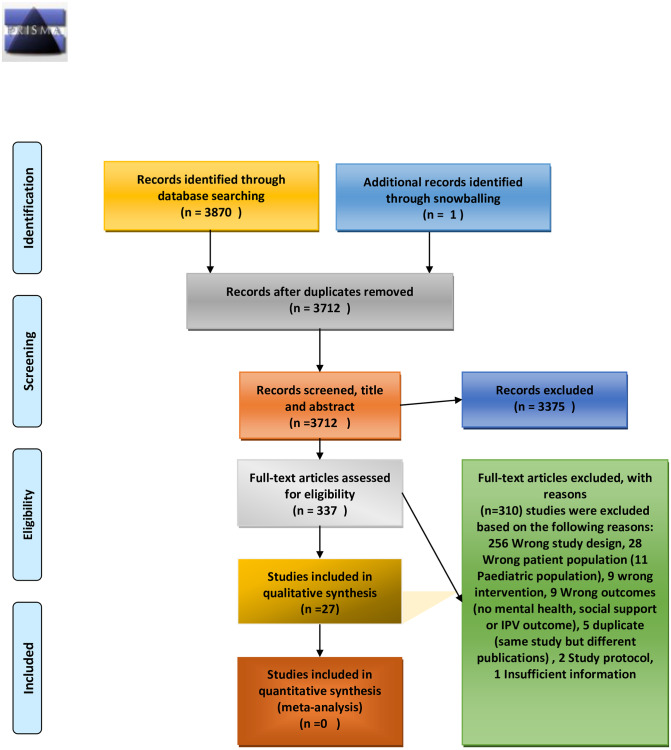
BACKGROUND: Intimate partner violence (IPV) is a key public health issue, with a myriad of physical, sexual and emotional consequences for the survivors of violence. Social support has been found to be an important factor in mitigating and moderating the consequences of IPV and improving health outcomes. This study's objective was to identify and assess network oriented and support mediated IPV interventions, focused on improving mental health outcomes among IPV survivors. METHODS: A systematic scoping review of the literature was done adhering to PRISMA guidelines. The search covered a period of 1980 to 2017 with no language restrictions across the following databases, Medline, Embase, Web of Science, PROQUEST, and Cochrane. Studies were included if they were primary studies of IPV interventions targeted at survivors focused on improving access to social support, mental health outcomes and access to resources for survivors. RESULTS: 337 articles were subjected to full text screening, of which 27 articles met screening criteria. The review included both quantitative and qualitative articles. As the focus of the review was on social support, we identified interventions that were i) focused on individual IPV survivors and improving their access to resources and coping strategies, and ii) interventions focused on both individual IPV survivors as well as their communities and networks. We categorized social support interventions identified by the review as Survivor focused, advocate/case management interventions (15 studies), survivor focused, advocate/case management interventions with a psychotherapy component (3 studies), community-focused, social support interventions (6 studies), community-focused, social support interventions with a psychotherapy component (3 studies). Most of the studies, resulted in improvements in social support and/or mental health outcomes of survivors, with little evidence of their effect on IPV reduction or increase in healthcare utilization. CONCLUSION: There is good evidence of the effect of IPV interventions focused on improving access to social support through the use of advocates with strong linkages with community based structures and networks, on better mental health outcomes of survivors, there is a need for more robust/ high quality research to assess in what contexts and for whom, these interventions work better compared to other forms of IPV interventions.
Overview
CoChat Summary
TL;DR
This systematic review identified 27 studies of intimate partner violence (IPV) interventions using social support or network-oriented approaches, most of which improved survivors’ social support and/or mental health outcomes. Advocacy/case management with strong community linkages showed the most consistent benefits, while evidence for reducing IPV or increasing healthcare utilization was limited.
Key findings
- Of 3,712 initially retrieved articles, 337 underwent full-text screening and 27 met inclusion criteria; the review categorized interventions as survivor-focused advocacy/case management (15 studies), survivor-focused advocacy/case management with psychotherapy (3 studies), community-focused social support (6 studies), and community-focused social support with psychotherapy (3 studies).
- Most included studies reported improvements in social support and/or mental health outcomes; there was little evidence of effect on IPV reduction or increased healthcare utilization.
- Examples of reported outcomes include Prosman et al., where depression decreased by 35% from baseline 53.3 (SD 13.7) to 34.8 (SD 11.5), 95% CI 14.4–22.6 (P ≤ 0.001), and social support scores increased by 15%; Kelly et al. reported PTSD symptoms decreased from 59.00 to 44.13 (n = 15; p = 0.003); Nicolaidis et al. reported depression scores fell from 18.8 to 7.4 (p = 0.002).
- The SASA! cluster randomized trial found a significant decrease in social acceptance of IPV among women (adjusted risk ratio 0.54, 95% CI 0.38 to 0.79), and DePrince et al. found moderate reductions in PTSD, depression, and fear, with the outreach condition showing greater reductions in fear than referral.
Methods
- Systematic scoping review adhering to PRISMA guidelines, searching Medline, Embase, Web of Science, PROQUEST, and Cochrane for studies published between 1980 and 2017, with no language restrictions; an update search was done in January 2019.
- Included primary studies of IPV interventions targeted at survivors, focused on improving access to social support, mental health outcomes, and access to resources; both quantitative and qualitative studies were eligible.
- Two reviewers independently screened titles/abstracts and full texts; quality/risk of bias was assessed separately for quantitative studies using the Effective Public Health Practice Project tool and for qualitative studies using the CASP checklist.
Limitations
- The paper states that although no language restrictions were used, most retrieved and reviewed studies were in English, which could have influenced conclusions.
- The paper also states that heterogeneity in outcome measures, study design, intervention processes, and duration made it difficult to conduct a meta-analysis.
- Evident from the text: most identified studies focused on female survivors of violence, and many included studies received moderate or weak quality ratings, limiting generalizability and strength of conclusions.
Model-written summary. Check it against the paper before relying on it.
Integrity signals
Registry
Cites
Statistics
Figures
Verification
Claims the paper makes
11 Valid · 0 Not valid · 55 Not checked · 59 Own results and interpretations
Every source the paper cites for this claim was checked and supports it.
In the paper
“Two of the studies, an in-clinic advocacy intervention by Coker et al [23] and a home-based advocate intervention by Sharps et al [20] resulted in a significant reduction in the experience of intimate partner violence by the survivors”
§ A systematic review of intimate partner violence interventions focused on improving social support and/ mental health outcomes of survivors > Results > Advocacy/ Case management interventions
What the sources say
- Supportedcites [23] Coker AL, Smith PH, Whitaker DJ, Le B, Crawford TN, Flerx VC. Effect of an in-clinic IPV advocate intervention to increase help seeking, reduce violence, and improve well-being. J Violence Against Women. 2012; 18(1): 118– 31. 22411302 source
The Discussion states that Coker et al.'s in-clinic advocate intervention was significantly more effective than usual care in reducing IPV scores, particularly among women currently experiencing IPV. This supports the part of the sentence attributed to Coker et al.; the separate Sharps et al. study is not assessed here. (LLM, conf=0.93)
- Supportedcites [20] Sharps PW, Bullock LF, Campbell JC, Alhusen JL, Ghazarian SR, Bhandari SS, et al Domestic violence enhanced perinatal home visits: The DOVE randomized clinical trial. Journal of Women's Health. 2016; 25(11): 1129– 38. 10.1089/jwh.2015.5547 27206047 PMC5116686 source
The Abstract describes DOVE as a home visitor-delivered intervention and reports a significant treatment effect: IPV scores declined more in the intervention group than in the usual-care group. The Discussion likewise states that the intervention group had a larger, statistically significant decrease. This supports the part of the sentence attributed to Sharps et al.; it does not assess the separate Coker et al. claim. (LLM, conf=0.92)
plainstates a cause- Asserted: passes — The authors put it forward as true.
- Checkable: passes — It can be checked against evidence.
- Load-bearing: unclear — It is unclear whether the paper’s conclusions depend on it.
- Based: passes — The paper gives a reason why it holds.
- Supported
The sources with a verdict support this claim; the rest weren’t checked yet, have no full text we could read, or their verdicts aren’t rated yet.
In the paper
“9 (3 RCTs, 3 pre-post evaluations, 3 qualitative research) of the studies we reviewed consisted of interventions described as being community-based [34–42].”
§ A systematic review of intimate partner violence interventions focused on improving social support and/ mental health outcomes of survivors > Results > Community-focused/ network social support interventions
What the sources say
- Supportedcites [34] Abramsky T, Devries K, Kiss L, Nakuti J, Kyegombe N, Starmann E, et al Findings from the SASA! Study: a cluster randomized controlled trial to assess the impact of a community mobilization intervention to prevent violence against women and reduce HIV risk in Kampala, Uganda. BMC medicine. 2014; 12(1): 122. 25248996 PMC4243194 source
The Methods (Evaluation design) describe randomization of communities to intervention and control groups, and the Discussion identifies SASA! as a community intervention evaluated in a cluster-randomized trial. The count of nine studies and their breakdown describe the citing authors’ review, not a finding attributed to this individual source. (LLM, conf=0.93)
- Not checked — no full text of the sourcecites [35] Frohmann L. The framing safety project: Photographs and narratives by battered women. Violence against women. 2005; 11(11): 1396– 419. 10.1177/1077801205280271 16204731 source
- Not checked — no full text of the sourcecites [36] Kelly UA, Pich K. Community-based PTSD treatment for ethnically diverse women who experienced intimate partner violence: A feasibility study. Issues in mental health nursing. 2014; 35(12): 906– 13. 10.3109/01612840.2014.931496 25426746 source
- Supportedcites [37] McWhirter PT. Differential therapeutic outcomes of community-based group interventions for women and children exposed to intimate partner violence. Journal of interpersonal violence. 2011; 26(12): 2457– 82. 10.1177/0886260510383026 20889533 source
The citation is one of nine used to identify studies the citing authors classified as community-based interventions; the nine-study count is their review tally, not a claim about this paper alone. The source's Abstract describes two community-based group therapies, and its Design and Procedure section reports random assignment to the two treatments, supporting its inclusion as a randomized trial. (LLM, conf=0.92)
- Supportedcites [38] Nicolaidis C, Mejia A, Perez M, Alvarado A, Celaya-Alston R, Quintero Y, et al Proyecto Interconexiones: pilot-test of a community-based depression care program for Latina violence survivors. Progress in community health partnerships: research, education. 2013; 7(4): 395. PMC4845956 24375180 source
The Discussion identifies this as a community-based intervention and describes its design as pre-post, without a control group. That supports citing it as one example among the reviewed community-based interventions; this individual paper is not evidence for the review's total of nine. (LLM, conf=0.90)
- Supportedcites [39] Kyegombe N, Starmann E, Devries KM, Michau L, Nakuti J, Musuya T, et al ‘SASA! is the medicine that treats violence’. Qualitative findings on how a community mobilisation intervention to prevent violence against women created change in Kampala, Uganda. Glob Health Action. 2014; 7(1): 25082. 25226421 PMC4165071 source
The Abstract (Methods) describes this paper as a qualitative study nested within a trial of SASA!, a community mobilisation intervention in Kampala. It therefore supports its inclusion as an example of qualitative research on a community-based intervention. The count and breakdown of nine studies describe the citing authors’ review, not a finding attributed to this individual source. (LLM, conf=0.92)
- Not checked — no full text of the sourcecites [40] Schuler SR, Trang QT, Ha VS, Anh HT. Qualitative study of an operations research project to engage abused women, health providers, and communities in responding to gender-based violence in Vietnam. Violence against women. 2011; 17(11): 1421– 41. 10.1177/1077801211433990 22240404 source
- Supportedcites [41] Wuest J, Merritt‐Gray M, Dubé N, Hodgins MJ, Malcolm J, Majerovich JA, et al The process, outcomes, and challenges of feasibility studies conducted in partnership with stakeholders: a health intervention for women survivors of intimate partner violence. Research in nursing. 2015; 38(1): 82– 96. PMC4305208 25594917 source
This paper supports its role as one of the cited community-based intervention studies, not the citing authors’ aggregate count of nine. Its Methods > Study Design describes a one-group pre-post intervention study, and Methods > Setting places the intervention in outreach programs across four communities (page numbers unavailable). (LLM, conf=0.90)
- Supportedcites [42] DePrince AP, Labus J, Belknap J, Buckingham S, Gover A. The impact of community-based outreach on psychological distress and victim safety in women exposed to intimate partner abuse. Journal of consulting clinical psychology 2012; 80(2): 211 10.1037/a0027224 22329822 source
The Discussion (p. 9) describes this study as a randomized controlled, longitudinal evaluation of community-based outreach. It therefore supports citing the paper as one of the review’s community-based RCTs; the count and breakdown of all nine studies are the citing authors’ own review findings. (LLM, conf=0.90)
plain- Asserted: passes — The authors put it forward as true.
- Checkable: passes — It can be checked against evidence.
- Load-bearing: unclear — It is unclear whether the paper’s conclusions depend on it.
- Based: passes — The paper gives a reason why it holds.
- Supported
The cited sources support only part of this claim — read each source’s verdict below.
In the paper
“At the end of the intervention, there were reported lower rates of IPV among the intervention community.”
§ A systematic review of intimate partner violence interventions focused on improving social support and/ mental health outcomes of survivors > Results > Community-focused/ network social support interventions
What the sources say
- Supportedcites [34] Abramsky T, Devries K, Kiss L, Nakuti J, Kyegombe N, Starmann E, et al Findings from the SASA! Study: a cluster randomized controlled trial to assess the impact of a community mobilization intervention to prevent violence against women and reduce HIV risk in Kampala, Uganda. BMC medicine. 2014; 12(1): 122. 25248996 PMC4243194 source
The Results (Impact on primary outcomes) report lower past-year physical and sexual IPV among women in intervention communities than in control communities at follow-up. Neither difference was statistically significant; the Discussion also clarifies that reported sexual IPV did not decline over time within intervention communities. (LLM, conf=0.90)
- Partly supportedcites [39] Kyegombe N, Starmann E, Devries KM, Michau L, Nakuti J, Musuya T, et al ‘SASA! is the medicine that treats violence’. Qualitative findings on how a community mobilisation intervention to prevent violence against women created change in Kampala, Uganda. Glob Health Action. 2014; 7(1): 25082. 25226421 PMC4165071 sourceExperimental — accuracy not yet measured
The Results (Impact at the community level; page unavailable) say participants believed they had observed reductions in violence in their community. But this qualitative paper does not report lower community-wide IPV rates at the end of the intervention; its Methods (Sampling and data collection; page unavailable) say interviewees were selected in part because they had reported reduced violence. (LLM, conf=0.84)
plainstates an association- Asserted: passes — The authors put it forward as true.
- Checkable: passes — It can be checked against evidence.
- Load-bearing: unclear — It is unclear whether the paper’s conclusions depend on it.
- Based: passes — The paper gives a reason why it holds.
- Supported
A result the paper reports from its own data — it cites no other source for it, so there is none to check. The quote shows it is in the paper.
In the paper
“Most of the studies identified involved the use of an ‘advocate/ case manager’ or ‘interventionist’”
§ A systematic review of intimate partner violence interventions focused on improving social support and/ mental health outcomes of survivors > Results > Results/Key findings from the systematic review
plain- Asserted: passes — The authors put it forward as true.
- Checkable: passes — It can be checked against evidence.
- Load-bearing: unclear — It is unclear whether the paper’s conclusions depend on it.
- Based: passes — The paper gives a reason why it holds.
In the paper
“Other interventions like the ‘Framing Safety project’ [35], which focused on promoting agency and self-empowerment among survivors of violence, found that by providing means through which survivors of violence could tell their own stories and take ownership of this process, there was a resulting feeling of empowerment among the women.”
§ A systematic review of intimate partner violence interventions focused on improving social support and/ mental health outcomes of survivors > Results > Community-focused/ network social support interventions
What the sources say
- Not checked — no full text of the sourcecites [35] Frohmann L. The framing safety project: Photographs and narratives by battered women. Violence against women. 2005; 11(11): 1396– 419. 10.1177/1077801205280271 16204731 source
plainstates a cause- Asserted: passes — The authors put it forward as true.
- Checkable: passes — It can be checked against evidence.
- Load-bearing: unclear — It is unclear whether the paper’s conclusions depend on it.
- Based: passes — The paper gives a reason why it holds.
40 more claims
Create a free account to see all 125 claims and to verify the 3 references still open.
- It may state two separate claims as one. 49
- Probably not a substantial claim. 45
Claims other papers make about this one
Each is checked against this paper’s own text: does it say what the citing paper says it does?
The cited source says what the claim attributes to it.
In the citing paper
“For individuals who have experienced IPV, the importance of formal (i.e., health care, mental health, legal counsel, housing, transportation, community-based organizations, child protection) and informal (i.e., friends, family, neighbours) supports for improved health outcomes is well documented in literature [16–18].”
Statistics recomputed
Every reported test result, recomputed from its test statistic and degrees of freedom. A result shows as not adding up only once an independent check has confirmed it.
- ConsistentF(9, 121) = 1.9reported p = .058 · recomputed p = .058
“F(9,121) = 1.90, p = .058”
- ConsistentF(2, 131) = 4.1reported p < .05 · recomputed p = .019
“F(2,131) = 4.10, p < .05”
- ConsistentF(2, 131) = 11.71reported p < .05 · recomputed p < .001
“F(2,131) = 11.71, p < .05”
- ConsistentF(1, 44) = 1.73reported p = .19 · recomputed p = .195
“F(1, 44) = 1.73, p = .19”
- ConsistentF(1, 44) = 1.51reported p = .23 · recomputed p = .226
“F(1, 44) = 1.51, p = .23”
2 more recomputed tests
Create a free account to see every test the Stats check recomputed.
Self-check
Percentages, sums and reported differences re-computed from the paper’s own numbers.
Each contradiction between two passages listed here was confirmed by an independent check.
Rated minor: it would not touch a result — a value no result rests on, a p-value that stays on the same side of the significance level, or a conflict that is clerical, resolved elsewhere in the paper, or outside its own findings.
In the paper
§ A systematic review of intimate partner violence interventions focused on improving social support and/ mental health outcomes of survivors > Methods > Eligibility criteria
“12 Adult IPV Spanish immigrant women with symptoms of PTSD”
§ A systematic review of intimate partner violence interventions focused on improving social support and/ mental health outcomes of survivors > Methods > Eligibility criteria
“Symptoms of PTSD decreased at 6 months post-intervention, from 59.00 to 44.13, respectively (n = 15; p = 0.003).”
Rated minor: it would not touch a result — a value no result rests on, a p-value that stays on the same side of the significance level, or a conflict that is clerical, resolved elsewhere in the paper, or outside its own findings.
In the paper
§ A systematic review of intimate partner violence interventions focused on improving social support and/ mental health outcomes of survivors > Methods > Eligibility criteria
“There was a significant decrease in social acceptance of IPV among women (adjusted risk ratio 0.54, 95% confidence interval (CI) 0.38 to 0.79), and men”
§ A systematic review of intimate partner violence interventions focused on improving social support and/ mental health outcomes of survivors > Methods > Eligibility criteria
“men (0.13, 95% CI 0.01 to 1.15)”
Rated minor: it would not touch a result — a value no result rests on, a p-value that stays on the same side of the significance level, or a conflict that is clerical, resolved elsewhere in the paper, or outside its own findings.
In the paper
§ A systematic review of intimate partner violence interventions focused on improving social support and/ mental health outcomes of survivors > Discussion
“community-based social support interventions (9 studies:4 out of these were community coordinated interventions with a psychotherapy component).”
§ A systematic review of intimate partner violence interventions focused on improving social support and/ mental health outcomes of survivors > Results > Community focused/ network interventions with a psychotherapy component
“Three of the nine studies (1 RCT and 2 pre-post study) by Kelly et al [36], McWhirter et al [37], and Nicolaidis et al [38] described group therapy interventions”
Rated minor: it would not touch a result — a value no result rests on, a p-value that stays on the same side of the significance level, or a conflict that is clerical, resolved elsewhere in the paper, or outside its own findings.
In the paper
§ A systematic review of intimate partner violence interventions focused on improving social support and/ mental health outcomes of survivors > Methods > Eligibility criteria
“There was a significant minimal reduction in depression, fear, anxiety, locus of control, self-efficacy, emotional attachment to assailant, physical and psychological abuse, social support and overall quality of life”
§ A systematic review of intimate partner violence interventions focused on improving social support and/ mental health outcomes of survivors > Methods > Eligibility criteria
“with a MANOVA test [F(9,121) = 1.90, p = .058]”
Rated minor: it would not touch a result — a value no result rests on, a p-value that stays on the same side of the significance level, or a conflict that is clerical, resolved elsewhere in the paper, or outside its own findings.
In the paper
§ A systematic review of intimate partner violence interventions focused on improving social support and/ mental health outcomes of survivors > Methods > Eligibility criteria
“The intervention reduced depression scores in the intervention arm compared to the control (2.66 (95% CI, 0.26 to 5.06; P = .03) vs the control)”
§ A systematic review of intimate partner violence interventions focused on improving social support and/ mental health outcomes of survivors > Methods > Eligibility criteria
“but it was not statistically significant”
1 more finding
Create a free account to see every finding of this check.
Citations
Cites
Physical and mental health effects of intimate partner violence for men and women
Coker, A. L., Davis, K. E., Arias, I., Desai, S., Sanderson, M., Brandt, H. M., & Smith, P. H. (2002) · American Journal of Preventive Medicine · doi:10.1016/s0749-3797(02)00514-7 · Cited by 2,258 · cited 1×
“IPV has been found to be associated with an increased risk of poor health, depressive symptoms, substance use, chronic disease, chronic mental illness and injury for both men and women [5].”
BackgroundIntimate partner violence: causes and prevention
Jewkes, R. (2002) · The Lancet · doi:10.1016/s0140-6736(02)08357-5 · Cited by 1,993
The Global Prevalence of Intimate Partner Violence Against Women
Devries, K. M., Mak, J. Y. T., García-Moreno, C., Petzold, M., Child, J. C., Falder, G., Lim, S., Bacchus, L. J., Engell, R. E., Rosenfeld, L., et al. (2013) · Science · doi:10.1126/science.1240937 · Cited by 1,460 · cited 1×
“Introduction The global prevalence of intimate partner violence (IPV) has been estimated at about 30% for women aged 15 and over [1].”
BackgroundToward a Theory of Social Support: Closing Conceptual Gaps
Shumaker, S. A., & Brownell, A. (1984) · Journal of Social Issues · doi:10.1111/j.1540-4560.1984.tb01105.x · Cited by 1,425
Liang, B., Goodman, L., Tummala-Narra, P., & Weintraub, S. (2005) · American Journal of Community Psychology · doi:10.1007/s10464-005-6233-6 · Cited by 808 · cited 3×
“IPV survivors who perceive the abuse to be a personal problem were more likely to use placating and avoidant strategies before seeking external support [6].”
BackgroundInfluentialProduct review: Covidence (systematic review software)
Babineau, J. (2014) · Journal of the Canadian Health Libraries Association / Journal de l'Association des bibliothèques de la santé du Canada · doi:10.5596/c14-016 · Cited by 721 · cited 1×
“Retrieved references were imported to Endnote and Mendeley and were then transferred to a systematic review software called Coevidence [11].”
MethodBreiding, M. J., Basile, K. C., Smith, S. G., Black, M. C., & Mahendra, R. R. (2015) · Cited by 541
Abramsky, T., Devries, K., Kiss, L., Nakuti, J., Kyegombe, N., Starmann, E., Cundill, B., Francisco, L., Kaye, D., Musuya, T., et al. (2014) · BMC Medicine · doi:10.1186/s12916-014-0122-5 · Cited by 507
Reducing violence using community-based advocacy for women with abusive partners
Sullivan, C. M., & Bybee, D. I. (1999) · Journal of Consulting and Clinical Psychology · doi:10.1037/0022-006x.67.1.43 · Cited by 500 · cited 1×
“Many of the advocacy/case management interventions described above have created these linkages by assisting IPV survivors identify sources of support within their existing networks and also engage in forming new social relationships [16, 18, 48].”
BackgroundSylaska, K. M., & Edwards, K. M. (2014) · Trauma, Violence, & Abuse · doi:10.1177/1524838013496335 · Cited by 456 · cited 1×
“Survivors of violence are likely to first disclose experiences of intimate partner violence and expect informal support from a friend, family member, neighbour or other members of their social network, prior to seeking support from formal sources like health institutions and legal officers, however, the extent of disc…”
Background
Research works printed but not linked: 2
- Thomas H. Quality assessment tool for quantitative studies. Toronto: Effective Public Health Practice Project McMaster University; 2003.
- Sullivan CM, Bybee DI JJoc, psychology c. Reducing violence using community-based advocacy for women with abusive partners. 1999; 67(1): 43. 10028208
Cited by
Knipe, D., Padmanathan, P., Newton-Howes, G., Chan, L. F., & Kapur, N. (2022) · The Lancet · doi:10.1016/s0140-6736(22)00173-8 · Cited by 331
Trauma- and Violence-Informed Care: Orienting Intimate Partner Violence Interventions to Equity
Wathen, C. N., & Mantler, T. (2022) · Current Epidemiology Reports · doi:10.1007/s40471-022-00307-7 · Cited by 111
Adverse childhood experiences and intimate partner violence: A meta-analysis
Zhu, J., Exner‐Cortens, D., Dobson, K. S., Wells, L., Noel, M. E., & Madigan, S. L. (2023) · Development and Psychopathology · doi:10.1017/s0954579423000196 · Cited by 131
Wessells, M., & Kostelny, K. (2022) · International Journal of Environmental Research and Public Health · doi:10.3390/ijerph192114488 · Cited by 146
“Such social support is key in addressing the psychosocial impacts of IPVAW in LMIC settings [22].”
BackgroundMicrofluidic devices for studying bacterial taxis, drug testing and biofilm formation
Pérez-Rodríguez, S., García‐Aznar, J. M., & Gonzalo‐Asensio, J. (2021) · Microbial Biotechnology · doi:10.1111/1751-7915.13775 · Cited by 78
Spangaro, J., Toole‐Anstey, C., MacPhail, C. L., Rambaldini‐Gooding, D., Keevers, L., & Garcia‐Moreno, C. (2021) · Conflict and Health · doi:10.1186/s13031-021-00417-x · Cited by 70
“Similar outcomes have been found from interventions in non-humanitarian crisis settings, with reduced abuse a harder goal to achieve [60, 61].”
ResultKitselaar, W. M., van der Vaart, R., Perschl, J., Numans, M. E., & Evers, A. W. M. (2023) · Psychosomatic Medicine · doi:10.1097/psy.0000000000001145 · Cited by 45
“Besides, our results indicate a relationship between a lack of social support and PSS onset, which is in line with studies proposing that social support mediate stress and health outcomes (31,32).”
ResultShawon, M. S. R., Hossain, F. B., Hasan, M., & Rahman, M. R. (2024) · Cambridge Prisms Global Mental Health · doi:10.1017/gmh.2024.37 · Cited by 68
Micklitz, H. M., Glass, C. M., Bengel, J., & Sander, L. (2023) · Trauma Violence & Abuse · doi:10.1177/15248380231169481 · Cited by 63
“…et al., 2020; El Morr & Layal, 2020; Hameed et al., 2020; Jonker et al., 2015; Karakurt et al., 2016, 2022; Kirk et al., 2017; Linde et al., 2020; Ogbe et al., 2020; Rempel et al., 2019; Rivas et al., 2015, 2019; Sprague et al., 2017; Stover et al., 2009; Trabold et al., 2020; Turner et al.,…”
Motivations and Barriers to Help-Seeking Among Female Victims of Intimate Partner Violence in Ghana
Rohn, E., & Tenkorang, E. Y. (2022) · Violence Against Women · doi:10.1177/10778012221137924 · Cited by 46
“While responses from informal contacts can be positive (Ogbe et al., 2020; Sylaska & Edwards, 2014), they can also be negative, as they may blame the victim for the abuse or encourage silence (McKinney et al., 2009).”
BackgroundSelf‐esteem in the context of intimate partner violence: A concept analysis
Güler, A., Bankston, K., & Smith, C. R. (2022) · Nursing Forum · doi:10.1111/nuf.12798 · Cited by 60
“positive mental outcomes that is associated with increased level of self‐efficacy in women who are survivors of IPV.(68) Likewise, the level of self‐determination can be used to assess the magnitude of self‐ respect and self‐worth among women experiencing IPV, to which women tend to perceive lower magnitudes of self‐r…”
BackgroundHu, C., Ding, L., & Peng, K. (2024) · Journal of Affective Disorders · doi:10.1016/j.jad.2024.07.098 · Cited by 29
Davies, R. L., Rice, K., & Rock, A. J. (2023) · PeerJ · doi:10.7717/peerj.15160 · Cited by 27
“approach (Ogbe et al., 2020), the current model can be utilised by both informal support-”
MethodDoyle, K. W., Knetig, J. A., & Iverson, K. M. (2022) · Current Treatment Options in Psychiatry · doi:10.1007/s40501-022-00270-6 · Cited by 29
Rony, M. K. K., Rahman, M. M., Saki, M. A. A., Parvin, M. R., & Alamgir, H. M. (2023) · Nursing Open · doi:10.1002/nop2.1614 · Cited by 24
“…to constructing a healthy work– life balance (Jack et al., 2019), positive feelings about one's job (Alvarez et al., 2018), higher- quality service (Ogbe et al., 2020) and psychological well- being (De Kock et al., 2021), all of which boost nurses to manage a stressful working condition (McLindon…”
BackgroundSelf‐efficacy and social support as mediators of mental health among abused women
Sapkota, D., Baird, K. M., Anderson, D. J., Saito, A., & Seib, C. A. (2022) · Nursing and Health Sciences · doi:10.1111/nhs.12943 · Cited by 28
“tims of DFV by improving their access to resources and coping strategies resulted in their better mental health outcomes (Ogbe et al., 2020).”
BackgroundIverson, K. M., Stolzmann, K. L., Brady, J. E., Adjognon, O. L., Dichter, M. E., Lew, R., Gerber, M. R., Portnoy, G. A., Iqbal, S., Haskell, S. G., et al. (2023) · American Journal of Preventive Medicine · doi:10.1016/j.amepre.2023.02.013 · Cited by 27
Zhang, X., Zhang, L., Xue, B., Li, Y., Yan, M., Luo, H., & Huang, X. (2024) · BMC Nursing · doi:10.1186/s12912-024-02301-4 · Cited by 30
“This includes providing psychological counseling and emotional support services, establishing support groups and in-house social platforms, and enhancing patient and family understanding and respect for nurses’ work [42].”
BackgroundTechnology-Based Mental Health Interventions for Domestic Violence Victims Amid COVID-19
Su, Z., Cheshmehzangi, A., McDonnell, D., Chen, H., Aḥmad, J., Šegalo, S., & da Veiga, C. P. (2022) · International Journal of Environmental Research and Public Health · doi:10.3390/ijerph19074286 · Cited by 23
The Impacts of Intimate Partner Violence on Postpartum Depression: An Updated Meta-Analysis
Wei, X., Wang, W., Law, Y. W., & Zhang, H. (2024) · Trauma, Violence, & Abuse · doi:10.1177/15248380231188068 · Cited by 19
“These interventions leverage survivors’ social networks and provide supportive resources, often involving community-based support groups, counseling services, and referrals to local resources (Ogbe et al., 2020).”
BackgroundLesbian Intimate Partner Violence and Perceived Social Support
Furukawa, L. Y. D. A., Pessoa, A. S. G., & Komatsu, A. V. (2022) · Paidéia (Ribeirão Preto) · doi:10.1590/1982-4327e3206 · Cited by 21
PTSD and Depression Symptoms Increase Women’s Risk for Experiencing Future Intimate Partner Violence
Iverson, K. M., Rossi, F. S., Nillni, Y. I., Fox, A. B., & Galovski, T. E. (2022) · International Journal of Environmental Research and Public Health · doi:10.3390/ijerph191912217 · Cited by 25
Heward-Belle, S. L., Ali, P. A., Marotta, J., Hager, D., Rogers, M. M., & Stevenson, L. (2024) · Trauma Violence & Abuse · doi:10.1177/15248380241244494 · Cited by 23
“…low self-esteem, stress-related headaches, obsessive-compulsive disorder, post-traumatic stress disorder (PTSD), disassociation, sleep disorders, shame, guilt, and self-mutilation, as well as related behaviors such as substance abuse and eating disorders (Chandan et al., 2020; Ogbe et al., 2020).”
BackgroundCastaner, M. M., Fowler, R., Landers, C., Cohen, L., & Orjuela, M. A. (2021) · PLoS ONE · doi:10.1371/journal.pone.0252606 · Cited by 21
“With this background in mind, results call for further research to delve into how trust is built and enabled by social structures after sex trafficking and how restorative relationships with caring adults can enhance survivors resilience and parenting [71, 72].”
James, L. E., Welton‐Mitchell, C., Michael, S., Santoadi, F., Shakirah, S., Hussin, H., Anwar, M., Kilzar, L., & James, A. S. (2021) · International Journal of Environmental Research and Public Health · doi:10.3390/ijerph182111674 · Cited by 23
“Furthermore, IPV interventions focused on enhancing help-seeking, including informal social support, have shown promise in terms of mental health impacts [51].”
BackgroundScheer, J. R., Lawlace, M., Cascalheira, C. J., Newcomb, M. E., & Whitton, S. W. (2022) · Journal of Interpersonal Violence · doi:10.1177/08862605221137711 · Cited by 29
“, a “network oriented” approach) can promote help-seeking behavior (Goodman & Smyth, 2011; Ogbe et al., 2020).”
BackgroundIntimate partner violence, suicide and self-harm in Sri Lanka: Analysis of national data
Bandara, P., Page, A., Rajapakse, T. N., & Knipe, D. W. (2024) · PLoS ONE · doi:10.1371/journal.pone.0298413 · Cited by 20
“Moreover, findings from other social norm interventions in South Africa [62] and Uganda [63] showed that a focus on community mobilisation and tackling harmful gender norms was effective in reducing IPV [63–65].”
BackgroundBrunton, R., & Dryer, R. (2021) · Social Science & Medicine · doi:10.1016/j.socscimed.2021.114334 · Cited by 22
Problem-Focused Coping Strategies Used by Victims of Gender Violence Across the Stages of Change
Puente-Martínez, A., Landa, S. U., & Páez, D. (2021) · Violence Against Women · doi:10.1177/10778012211054866 · Cited by 27
“In general, seeking formal and informal social support has been associated with positive outcomes and has positive psychological effects among victims of IPV (Larsen & Prizmic, 2008; Ogbe et al., 2020), particularly when accompanied by instrumental responses (Skinner et al., 2003).”
BackgroundLohmann, S., Felmingham, K., O’Donnell, M., & Cowlishaw, S. (2024) · Psychology of Women Quarterly · doi:10.1177/03616843241269941 · Cited by 14
“These fi ndings highlight that effective psychological treatments are available and that it is important that women have access to these treatments, in addition to access to broader social supports, such as housing, fi nancial, and legal assistance (Micklitz et al., 2023; Ogbe et al., 2020).”
Bird, K. S., Stokes, N., Rivas, C. A., Tomlinson, M., Delve, M., Gordon, L., Gregory, A. C., Lawrence, K., & O'Reilly, N. (2023) · Trauma Violence & Abuse · doi:10.1177/15248380231189191 · Cited by 35
“However, there are limited data on longer term effects on knowledge and attitudes (echoing the findings of other reviews such as Ogbe et al., 2020; Turner et al., 2017).”
BackgroundMethodResultInfluentialWhitton, S. W., Devlin, E. A., Lawlace, M., & Newcomb, M. E. (2023) · Journal of Interpersonal Violence · doi:10.1177/08862605231207618 · Cited by 22
“Overall, the clear tendency for SGM-AFAB to disclose to informal rather than formal sources provides support for “network oriented” efforts to improve IPV outcomes, which train informal network members to respond positively to disclosures (Goodman & Smyth, 2011; Ogbe et al., 2020).”
BackgroundExploring the efficacy of ChatGPT in understanding and identifying intimate partner violence
Zhang, Y., Fang, J., Luo, X., Lindsay, D., Madre, N., Paredes, J., Penna, A., Melley, E., & Garcia, T. (2025) · Family Relations · doi:10.1111/fare.13176 · Cited by 18
Teixeira, O., Lacerda, P. S., Froes, T. Q., Nonato, M. C., & Castilho, M. S. (2021) · Journal of Computer-Aided Molecular Design · doi:10.1007/s10822-021-00403-8 · Cited by 14
Cui, S., Cheng, F., Yuan, Q., Zhang, L., Wang, L., Zhang, K., & Zhou, X. (2021) · Frontiers in Psychiatry · doi:10.3389/fpsyt.2021.713210 · Cited by 12
Goodman‐Williams, R., Simmons, C., Chiaramonte, D. M., Ayeni, O. O., Guerrero, M., Sprecher, M., & Sullivan, C. M. (2023) · American Journal of Orthopsychiatry · doi:10.1037/ort0000686 · Cited by 16
Chiaramonte, D. M., Clements, K. A. V., López‐Zerón, G., Ayeni, O. O., Farero, A. M., Ma, W., & Sullivan, C. M. (2021) · Journal of Community Psychology · doi:10.1002/jcop.22637 · Cited by 13
“Some DV programs have intentionally created services and responses around improving survivors' social support, with some evidence that these actions lead to their improved well‐being (Ogbe et al., 2020).”
BackgroundChild Maltreatment and Intimate Partner Violence in Mental Health Settings
McTavish, J. R., Chandra, P. S., Stewart, D. E., Herrman, H., & MacMillan, H. L. (2022) · International Journal of Environmental Research and Public Health · doi:10.3390/ijerph192315672 · Cited by 19
Alquaiz, A. M., Kazi, A., Almeneessier, A. S., Alhalal, E., Almuneef, M. A., & AlHabib, Y. (2023) · Journal of Interpersonal Violence · doi:10.1177/08862605231197135 · Cited by 18
“The volunteers can provide information and guide victims usually by arranging in-person visits or phone calls in addition to increasing awareness about VAW and its consequences at the community level (Ogbe et al. 2020).”
BackgroundExposure to Intimate Partner Violence and Hypertension Outcomes among Young Women in South Africa
Wet, N. D., & Godongwana, M. (2021) · International Journal of Hypertension · doi:10.1155/2021/5519356 · Cited by 14
Ford‐Gilboe, M., Varcoe, C., Scott-Storey, K. A., Browne, A. J., Jack, S. M., Jackson, K. T., Mantler, T., O’Donnell, S., Patten-Lu, N., Smye, V. L., et al. (2024) · BMC Public Health · doi:10.1186/s12889-023-17578-4 · Cited by 17
“There is growing trial evidence supporting the short-term effectiveness of health and safety interventions in improving the mental health of women who have experienced IPV [24–27].”
BackgroundGhoshal, R., Patil, P., Sinha, I., Gadgil, A., Nathani, P., Jain, N., Ramasubramani, P., & Roy, N. (2024) · BMC Global and Public Health · doi:10.1186/s44263-024-00056-3 · Cited by 18
What will it take to achieve the sexual and reproductive health and rights of women living with HIV?
Dunaway, K., Brion, S., Hale, F., Alesi, J., Assan, H., Chung, C., Moroz, S., Namiba, A., Ouma, J., Owomugisha, I. B., et al. (2022) · Women s Health · doi:10.1177/17455057221080361 · Cited by 15
Alik, M., Malik, M., Ashrafi, R., & Wu, A. Y. (2023) · JAMA Ophthalmology · doi:10.1001/jamaophthalmol.2023.0578 · Cited by 12
The shame of sexual violence towards women in rural areas
Jones, R., Usher, K. J., Rice, K., Morley, L., & Durkin, J. (2023) · International Journal of Mental Health Nursing · doi:10.1111/inm.13269 · Cited by 20
Cao, J., Gallis, J. A., Ali, M., Lillie, M., Abubakr-Bibilazu, S., Adam, H., McEwan, E., Awoonor‐Williams, J. K., Hembling, J., & Baumgartner, J. N. (2021) · BMC Public Health · doi:10.1186/s12889-021-12121-9 · Cited by 13
Shayani, D. R., Danitz, S. B., Low, S. K., Hamilton, A. B., & Iverson, K. M. (2022) · International Journal of Environmental Research and Public Health · doi:10.3390/ijerph19052513 · Cited by 14
Bellot, A., Izal, M., & Montorio, I. (2022) · Frontiers in Psychology · doi:10.3389/fpsyg.2022.1014683 · Cited by 12
“Social or interpersonal resources, mainly assessed through the perceived social support of IPV victims, have also frequently been included among the predictors associated with revictimization in genderbased violence and in most studies they are given a mainly protective role (Goodman et al., 2005; Valentine et al., 20…”
BackgroundIdriss-Wheeler, D., Bancroft, X., Bouraleh, S., Buy, M., Yaya, S., & El-Khatib, Z. (2024) · PLOS ONE · doi:10.1371/journal.pone.0313613 · Cited by 9
Machorrinho, J., Marmeleira, J., Veiga, G., & Santos, G. (2023) · Frontiers in Psychology · doi:10.3389/fpsyg.2023.1154385 · Cited by 13
“Although some advocacy and psychoeducation interventions have shown positive effects, mostly on healthcare use and mental health symptoms, the broad and complex consequences of IPV on women’s health and identity require extensive research and consideration of body–mind interventions (Eckhardt et al., 2013; Arroyo et a…”
BackgroundDeuba, K., Shrestha, R., Koju, R., Jha, V. K., Lamichhane, A., Mehra, D., & Ekström, A. M. (2024) · Health Policy and Planning · doi:10.1093/heapol/czae003 · Cited by 16
“Psychosocial counselling has proven effective in preventing chronic mental trauma among women who experience violence, especially IPV (Ogbe et al ., 2020).”
BackgroundBandara, P., Page, A., Senarathna, L., Wijewardene, K., Silva, T., Gunnell, D., Knipe, D. W., & Rajapakse, T. N. (2022) · PLOS Global Public Health · doi:10.1371/journal.pgph.0000129 · Cited by 12
“This is consistent with a previous WHO multi-country (including Sri Lanka) study on women’s and men’s reports of past-year IPV [12].”
BackgroundInfluentialBird, K. S., Stokes, N., Rivas, C. A., & Tomlinson, M. (2022) · Campbell Systematic Reviews · doi:10.1002/cl2.1263 · Cited by 10
“A search string wa developed on the basis of terms used in similar reviews (Gregory et al., 2017; Ogbe et al., 2020).”
BackgroundMethodInfluentialJyothsna, K. A., Shetty, K. V., Kumar, S., Baruah, U., Jyothi, H. P., Amritha, K. S., & Sachetha, G. M. (2023) · Journal of Education and Health Promotion · doi:10.4103/jehp.jehp_163_23 · Cited by 11
“[17,18] Social isolation and a lack of social support, however, have been associated with poor health outcomes for victims of violence.[19] There is a direct relationship between the mental health and the overall well‐being of domestic violence survivors and families.”
BackgroundBird, K. L. S., Stokes, N., & Rivas, C. A. (2025) · Campbell Systematic Reviews · doi:10.1002/cl2.70026 · Cited by 13
Koly, K. N., Saba, J., Mallick, T., Rashid, F., Watson, J., & Neves, B. B. (2025) · PLOS Global Public Health · doi:10.1371/journal.pgph.0004568 · Cited by 11
“These interventions were reported to help reduce IPV cases and ensure time-sensitive psycho-social first aid, effective referrals, access to social support, improved mental health outcomes, and enhanced safety behaviours of victim-survivors [87].”
Trabold, N., King, P. R., Crasta, D. J., Iverson, K. M., Crane, C. A., Buckheit, K. A., Bosco, S. C., & Funderburk, J. S. (2023) · International Journal of Environmental Research and Public Health · doi:10.3390/ijerph20095701 · Cited by 13
“This is key because such interventions can reduce psychological distress and enhance safety among individuals experiencing IPV [34,83,84].”
BackgroundJiwatram-Negrón, T., Brooks, M. A., Ward, M. R., & Meinhart, M. (2023) · Aggression and Violent Behavior · doi:10.1016/j.avb.2023.101871 · Cited by 11
McLindon, E. V.-M., Fiolet, R., & Hegarty, K. L. (2021) · Springer eBooks · doi:10.1007/978-3-030-65006-3_2 · Cited by 8
Exposure to Domestic Abuse and the Subsequent Development of Atopic Disease in Women
Nash, K., Minhas, S., Metheny, N., Gokhale, K. M., Taylor, J. S., Bradbury‐Jones, C., Bandyopadhyay, S., Nirantharakumar, K., Adderley, N. J., & Chandan, J. S. (2023) · The Journal of Allergy and Clinical Immunology In Practice · doi:10.1016/j.jaip.2023.03.016 · Cited by 8
Cénat, J. M., Jacob, G., Guillaume, D., Amédée, L. M., Darius, W. P., Farahi, S. M. M. M., Clorméus, L. A., Guerrier, M., & Hébert, M. (2024) · Psychiatry Research · doi:10.1016/j.psychres.2024.115981 · Cited by 9
“In addition, working on developing social support mediated interventions is an avenue to explore given its negative association with PTSD and the positive results observed in places where this approach was implemented (Ogbe et al., 2020b).”
BackgroundResultKurvinen, M., Ekström, A. M., & Deuba, K. (2025) · Women s Health · doi:10.1177/17455057251326416 · Cited by 11
“54 One effective approach is to train IPV survivors as counselors and mentors for other survivors, enabling them to assist abused women in accessing services, guiding them through safety planning, and enhancing their physical and psychological health.”
Brown, L. J., Reddy, T., Mannell, J., Burgess, R. A., Shai, N., Washington, L., Jewkes, R. K., & Gibbs, A. (2023) · SSM - Mental Health · doi:10.1016/j.ssmmh.2023.100273 · Cited by 8
“Relatedly, strengthening social support networks and promoting community empowerment can enhance resilience and coping mechanisms among young women facing multiple health risks (Mannell and Dadswell, 2017; Ogbe et al., 2020).”
BackgroundVoith, L. A., Lee, H., Russell, K. N., & Korsch-Williams, A. E. (2021) · International Journal of Environmental Research and Public Health · doi:10.3390/ijerph18083890 · Cited by 7
“Most research on the relationship between childhood trauma, relational health, and IPV focuses on how social support and isolation affects victims of IPV in adulthood [9], with little research examining how it might affect IPV perpetration in adulthood.”
BackgroundChandran, A., Bhondoekhan, F., Wilson, T. E., Milam, J. E., Cohen, M. H., Adimora, A. A., Adedimeji, A., Cocohoba, J. M., Parish, C. L., Holstad, M. M., et al. (2021) · AIDS and Behavior · doi:10.1007/s10461-021-03377-8 · Cited by 8
Renner, L. M. (2021) · Child Maltreatment · doi:10.1177/10775595211034430 · Cited by 10
“…(see reviews and meta-analyses focused on child maltreatment: van der Put et al., 2018; IPV prevention: Whitaker et al., 2013; IPV among females: Ogbe et al., 2020; Trabold et al., 2020); IPV among males: Eckhardt et al., 2013; Murphy & Ting, 2010; Stephens-Lewis et al., 2019; Tarzia et al.,…”
BackgroundKim, J.-S., Yi, E.-H. G., Macy, R. J., Rizo, C. F., & Wretman, C. J. (2022) · Partner Abuse · doi:10.1891/pa-2021-0038 · Cited by 7
Micklitz, H. M., Glass, C. M., Bengel, J., & Sander, L. (2023) · BJPsych Open · doi:10.1192/bjo.2022.625 · Cited by 8
Usher, K. J., Jackson, D. W., Fatema, S. R., & Jones, R. (2023) · International Journal of Mental Health Nursing · doi:10.1111/inm.13200 · Cited by 12
the CHARISMA team, Wilson, E. K., Wagner, L. D., Palanee‐Phillips, T., Roberts, S. T., Tolley, E. E., Mathebula, F., Pascoe, L. A., Lanham, M., Wilcher, R., et al. (2021) · BMC Women s Health · doi:10.1186/s12905-021-01262-z · Cited by 6
“The value of having a longer intervention is further supported by the fact that most IPV interventions involve multiple sessions over a period of weeks or months [24].”
BackgroundMolina, J. E., & Aznar, M. P. M. (2024) · Behavioral Sciences · doi:10.3390/bs14100940 · Cited by 16
East, L., Terry, D. R., Viljoen, B., & Hutchinson, M. (2025) · Sexual & Reproductive Healthcare · doi:10.1016/j.srhc.2025.101100 · Cited by 10
Effectiveness of Trauma-Informed Care Programs: A Meta-Analysis
Guo, S., Chen, Q., & Chan, K. L. (2025) · Trauma Violence & Abuse · doi:10.1177/15248380251366271 · Cited by 10
“The growing understanding of mental health risks has emphasized the importance of TIC in providing services to individuals exposed to violence or threats of death (Ogbe et al., 2020).”
Dheensa, S., McLindon, E. V.-M., Spencer, C. M., Pereira, S., Shrestha, S., Emsley, E., & Gregory, A. C. (2022) · Trauma Violence & Abuse · doi:10.1177/15248380211061771 · Cited by 76
Temple, J. R., Baumler, E. R., Wood, L., Franco, K., Peskin, M. F., & Shumate, C. K. (2023) · Journal of Interpersonal Violence · doi:10.1177/08862605231200218 · Cited by 12
“…must address the impact of victimization and perpetration to prevent revictimization of DV. Secondary and tertiary prevention approaches, including advocacy, counseling, and economic support, are critical to preventing DV from reoccur-ring and mitigating negative health impacts (Ogbe et al., 2020).”
Davies, R. L., Rice, K., & Rock, A. J. (2025) · Journal of Family Violence · doi:10.1007/s10896-025-00824-1 · Cited by 9
PettyJohn, M. E., Baumler, E. R., Backes, B. L., Brashear, B., Temple, J. R., & Wood, L. (2023) · Journal of Family Violence · doi:10.1007/s10896-023-00657-w · Cited by 8
“Formal supports, such as criminal justice entities, school supports, and community-based IPV programs can improve survivor well-being, support, and safety (Ferrari et al., 2018; Ogbe et al., 2020; Sullivan & Goodman, 2019).”
Paleoceanography of the Gulf of California : a 350 - year diatom record
Matherne, A. M. (1981) · Cited by 7
Socio-economic determinants of intimate-partner physical violence among women in South Africa
Mabena, K. M. E., Tsabedze, W. F., & Mazibuko, X. (2025) · Frontiers in Psychology · doi:10.3389/fpsyg.2025.1499263 · Cited by 9
Hargrave, A. S., Escober, J., Talavera, G., Bernard-Pearl, D., Cohen, B. E., & Schillinger, D. (2025) · Patient Education and Counseling · doi:10.1016/j.pec.2025.109376 · Cited by 5
Innab, A., Shaqiqi, W., Alammar, K., Alshammari, A., & Shaqiqi, R. (2024) · BMC Public Health · doi:10.1186/s12889-024-20698-0 · Cited by 9
Goddard‐Eckrich, D., Henry, B. F., Sardana, S. M., Thomas, B. V., Richer, A., Hunt, T., Chang, M., Johnson, K. A., & Gilbert, L. (2022) · Women s Health Reports · doi:10.1089/whr.2022.0004 · Cited by 8
“Offering either version of WINGS in this way may facilitate provision of IPV prevention and social support tools to more women in the most vulnerable communities.(49) The shortage of culturally sensitive interventions and the lack of trusted relationships with police and service providers also pose challenges in acces…”
BackgroundBudak, M. İ., Zonp, Z., Köse, A. M., & Arnault, D. S. (2023) · Archives of Psychiatric Nursing · doi:10.1016/j.apnu.2023.06.005 · Cited by 6
Safety Planning Interventions for Adults Who Experience Interpersonal Violence: a Systematic Review
Sabuncu, B. C., Signorelli, M. C., Evans, D. P., Millender, E., Murgor, J. C., Lane, B., Okantey, B., & Hall, C. X. (2024) · Journal of Family Violence · doi:10.1007/s10896-024-00770-4 · Cited by 5
Tanriverdi, A. E., Iverson, G. L., & Valera, E. M. (2026) · Journal of Family Violence · doi:10.1007/s10896-025-01032-7 · Cited by 6
“…calls to increase IPV-related psychological abuse and brain injury awareness, screening, and interventions to improve cognitive functioning, resiliency, and well-being of women who experience IPV (Adhikari et al., 2024; Ogbe et al., 2020; Toccalino et al., 2024; Yastibas-Kaçar et al., 2024).”
Li, E. M., Willmott, D., & Trivedi‐Bateman, N. (2025) · Mental Health and Social Inclusion · doi:10.1108/mhsi-12-2024-0219 · Cited by 6
Idriss-Wheeler, D., El‐Khatib, Z., & Yaya, S. (2022) · PLoS ONE · doi:10.1371/journal.pone.0277903 · Cited by 5
“, resources, coping strategies) and mental health outcomes of IPV survivors [13].”
BackgroundInfluentialGoodman, L. A., Chronister, K. M., Gutowski, E. R., Mendoza, M., & Kumar, N. (2023) · Journal of Family Violence · doi:10.1007/s10896-023-00553-3 · Cited by 5
“Emotional and instrumental support from informal network members buffer the damaging effects of abuse on mental health (Ogbe et al., 2020) and protect against future abuse (Goodman et al., 2005).”
Chen, N., & Qiao, F. (2024) · Frontiers in Psychology · doi:10.3389/fpsyg.2024.1335886 · Cited by 11
“Supportive feedback, encouragement, and shared experiences contribute to higher self-efficacy (Ogbe et al., 2020).”
BackgroundMeinhart, M., Seff, I., Lukow, N., Tothezan, I., Poulton, C., & Stark, L. (2022) · Current Epidemiology Reports · doi:10.1007/s40471-022-00310-y · Cited by 8
Johnson, L., & Winter, S. C. (2023) · American Journal of Community Psychology · doi:10.1002/ajcp.12666 · Cited by 8
Amirroud, M. M., Ghaffari, M., Ramezankhani, A., & Soori, H. (2023) · Journal of Aggression Maltreatment & Trauma · doi:10.1080/10926771.2023.2240249 · Cited by 6
“On the other hand, several studies have demonstrated that women victims of domestic violence who had access to adequate social support had a higher level of empowerment (Yekekar et al., 2019, Ogbe et al., 2020).”
BackgroundMishra, A., Miller, J. G., & Wood, C. (2024) · BMC Women s Health · doi:10.1186/s12905-024-03502-4 · Cited by 5
Idriss-Wheeler, D., Surkan, P., Bainbridge, S., & El-Khatib, Z. (2025) · BMC Public Health · doi:10.1186/s12889-025-25124-7 · Cited by 3
“A systematic review by Ogbe et al. (2020) found that advocacy and case-management interventions with strong community linkages enhanced IPV survivors’ access to social supports (e.g., resources, coping strategies) and improved mental health outcomes for survivors [17].”
Social Support as Resilience Factor in the Aftermath of October 7th Attack
Sedoff, O., Feingold, D., & Bitan, D. T. (2024) · Journal of Loss and Trauma · doi:10.1080/15325024.2024.2441177 · Cited by 6
“Furthermore, since these moderators are potentially responsive to community and therapeutic interventions (Ogbe et al., 2020; Steinhardt & Dolbier, 2008), exploring their moderating effect can set the stage to consider future interventions to strengthen resilience.”
Moshi, F. V., Nakamura, K., Tashiro, Y., Miyashita, A., Sato, H., & Ohnishi, M. (2025) · Journal of Rural Medicine · doi:10.2185/jrm.2024-047 · Cited by 3
“Integrated support systems can provide comprehensive care that addresses the multifaceted needs of IPV victims 23) .”
Spousal Violence among Reproductive Age Group Women – A Community-Based Cross-Sectional Study
Katole, A., Saoji, A. V., & Mohan Kumar, M. (2023) · Indian Journal of Community Medicine · doi:10.4103/ijcm.ijcm_108_22 · Cited by 3
Intimate partner violence after childbirth: an explanatory sequential mixed-methods study protocol
Ghelichkhani, F., Moghadam, Z. B., Zareiyan, A., & Namazi, M. (2024) · Reproductive Health · doi:10.1186/s12978-024-01825-x · Cited by 4
“Access to social support can moderate the consequences of IPV and improve mental health outcomes [34].”
BackgroundMcGray, T. L., Upshaw, B. E., Dodge, B., & Koss, M. P. (2024) · Sexual and Gender Diversity in Social Services · doi:10.1080/29933021.2024.2428276 · Cited by 5
Kavanagh, M., & Fassbender, C. (2024) · Journal of Family Violence · doi:10.1007/s10896-024-00792-y · Cited by 6
“Furthermore, social supports serve as a preventative factor for returning to abusive relationships (Herman, 2019), as well as a moderating factor over the cumulative and chronic stressors faced by DV survivors during their recovery (Ogbe et al., 2020).”
Influential
Metadata
- Authors
- Ogbe, E., Harmon, S., Van den Bergh, R., & Degomme, O.
- Affiliations
- Ghent University (BE)
- Georgia State University (US)
- Corresponding author
- Ogbe, Emilomo
- Venue
- PLoS ONE
- Publisher
- Public Library of Science (PLoS)
- Published
- 2020-06-25
- Volume
- 15
- Issue
- 6
- Pages
- e0235177
- ISSN
- 1932-6203 (ISSN-L)
- PMC
- PMC7316294
- OpenAlex
- W3037379708
- Cited by
- 239
- References
- 53
- Citations by year
- 2026: 38 · 2025: 49 · 2024: 52 · 2023: 49 · 2022: 28 · 2021: 22
- FWCI
- 3.85
- Type
- journal article
- Language
- en
- Open access
- gold
- doi.org
- Licence
- Locations
- PLoS ONE (publishedVersion, cc-by)
- PubMed Central (publishedVersion, cc-by)
- PubMed (publishedVersion)
- Ghent University Academic Bibliography (Ghent University) (submittedVersion, cc-by)
- RePEc: Research Papers in Economics (submittedVersion)
- DOAJ (DOAJ: Directory of Open Access Journals) (submittedVersion, cc-by-sa)
- Funders
- Universiteit Gent (BOF.STA.2016.0031.0)
- Topics
- Social Sciences › Health › Intimate Partner and Family Violence
- Social Sciences › Sociology and Political Science › Stalking, Cyberstalking, and Harassment
- Health Sciences › Medicine › Geriatrics and Gerontology › Elder Abuse and Neglect
- Keywords
- intimate partner violence, IPV survivors, social support interventions, mental health outcomes, case management, advocacy, community-based intervention, psychotherapy, coping strategies, health care utilization
- MeSH terms
- Intimate Partner Violence, Female, Humans, Male, Social Support, Survivors, Social Networking
About these checks
Registry, retraction, Cites and statistics results are computed, not judged, with one exception: a printed reference that no index lists is read once by a model before it counts as a citation error. Claims are extracted by a model and kept only when their quote appears verbatim in the text; each cited source is then checked, with a model’s help, for whether it says what the claim relies on. Those verdicts can be wrong — read the claim’s quote and the cited source before relying on one.
The claim verdicts this report counts are experimental: their accuracy is not yet measured.
A language model drew the claims from the paper on 2026-10-10, under version 3 of the claim definition (model deepseek-v4.1-flash, prompt extract-v3).
A second model labelled each claim on 2026-10-10 (model jev-1.13-20260917, definition revision gold-guideline-v0.2).
Cited sources are checked with a language model’s help (gpt-6-sol).
Statistics and arithmetic are recomputed, not judged.
Confidence bands are shown only for fields calibrated on our annotated test set. None is calibrated yet, so no band is shown.
What counts as a claim ›How we measure confidence ›How we check this ›
Are you an author, or do you see a problem with this page? Request a review
Data sources
Bibliographic data: Semantic Scholar, OpenAlex, Crossref.
Contains information from the Semantic Scholar Academic Graph Datasets, made available under the ODC Attribution License (ODC-BY 1.0).
Semantic Scholar’s data is described in: Kinney, R., et al. (2023). The Semantic Scholar Open Data Platform. arXiv:2301.10140.
