

A systematic review of intimate partner violence interventions focused on improving social support and/ mental health outcomes of survivors
Open accessThe DOI matches its Crossref record; 50 of the 53 references it cites were found in a registry or an index; 23 of the 96 sources its claims cite were checked for support.
Abstract
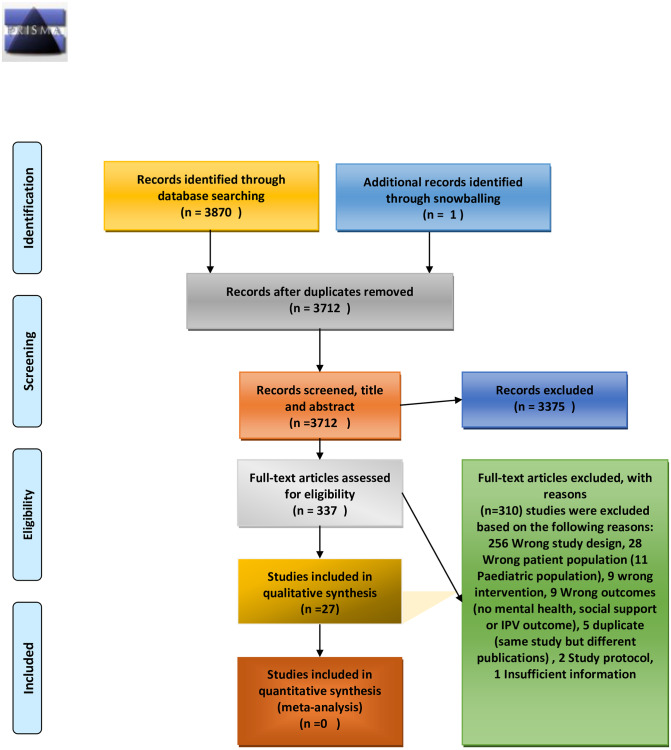
BACKGROUND: Intimate partner violence (IPV) is a key public health issue, with a myriad of physical, sexual and emotional consequences for the survivors of violence. Social support has been found to be an important factor in mitigating and moderating the consequences of IPV and improving health outcomes. This study's objective was to identify and assess network oriented and support mediated IPV interventions, focused on improving mental health outcomes among IPV survivors. METHODS: A systematic scoping review of the literature was done adhering to PRISMA guidelines. The search covered a period of 1980 to 2017 with no language restrictions across the following databases, Medline, Embase, Web of Science, PROQUEST, and Cochrane. Studies were included if they were primary studies of IPV interventions targeted at survivors focused on improving access to social support, mental health outcomes and access to resources for survivors. RESULTS: 337 articles were subjected to full text screening, of which 27 articles met screening criteria. The review included both quantitative and qualitative articles. As the focus of the review was on social support, we identified interventions that were i) focused on individual IPV survivors and improving their access to resources and coping strategies, and ii) interventions focused on both individual IPV survivors as well as their communities and networks. We categorized social support interventions identified by the review as Survivor focused, advocate/case management interventions (15 studies), survivor focused, advocate/case management interventions with a psychotherapy component (3 studies), community-focused, social support interventions (6 studies), community-focused, social support interventions with a psychotherapy component (3 studies). Most of the studies, resulted in improvements in social support and/or mental health outcomes of survivors, with little evidence of their effect on IPV reduction or increase in healthcare utilization. CONCLUSION: There is good evidence of the effect of IPV interventions focused on improving access to social support through the use of advocates with strong linkages with community based structures and networks, on better mental health outcomes of survivors, there is a need for more robust/ high quality research to assess in what contexts and for whom, these interventions work better compared to other forms of IPV interventions.
Overview
CoChat Summary
TL;DR
This systematic review identified 27 studies of intimate partner violence (IPV) interventions using social support or network-oriented approaches, most of which improved survivors’ social support and/or mental health outcomes. Advocacy/case management with strong community linkages showed the most consistent benefits, while evidence for reducing IPV or increasing healthcare utilization was limited.
Key findings
- Of 3,712 initially retrieved articles, 337 underwent full-text screening and 27 met inclusion criteria; the review categorized interventions as survivor-focused advocacy/case management (15 studies), survivor-focused advocacy/case management with psychotherapy (3 studies), community-focused social support (6 studies), and community-focused social support with psychotherapy (3 studies).
- Most included studies reported improvements in social support and/or mental health outcomes; there was little evidence of effect on IPV reduction or increased healthcare utilization.
- Examples of reported outcomes include Prosman et al., where depression decreased by 35% from baseline 53.3 (SD 13.7) to 34.8 (SD 11.5), 95% CI 14.4–22.6 (P ≤ 0.001), and social support scores increased by 15%; Kelly et al. reported PTSD symptoms decreased from 59.00 to 44.13 (n = 15; p = 0.003); Nicolaidis et al. reported depression scores fell from 18.8 to 7.4 (p = 0.002).
- The SASA! cluster randomized trial found a significant decrease in social acceptance of IPV among women (adjusted risk ratio 0.54, 95% CI 0.38 to 0.79), and DePrince et al. found moderate reductions in PTSD, depression, and fear, with the outreach condition showing greater reductions in fear than referral.
Methods
- Systematic scoping review adhering to PRISMA guidelines, searching Medline, Embase, Web of Science, PROQUEST, and Cochrane for studies published between 1980 and 2017, with no language restrictions; an update search was done in January 2019.
- Included primary studies of IPV interventions targeted at survivors, focused on improving access to social support, mental health outcomes, and access to resources; both quantitative and qualitative studies were eligible.
- Two reviewers independently screened titles/abstracts and full texts; quality/risk of bias was assessed separately for quantitative studies using the Effective Public Health Practice Project tool and for qualitative studies using the CASP checklist.
Limitations
- The paper states that although no language restrictions were used, most retrieved and reviewed studies were in English, which could have influenced conclusions.
- The paper also states that heterogeneity in outcome measures, study design, intervention processes, and duration made it difficult to conduct a meta-analysis.
- Evident from the text: most identified studies focused on female survivors of violence, and many included studies received moderate or weak quality ratings, limiting generalizability and strength of conclusions.
Model-written summary. Check it against the paper before relying on it.
Integrity signals
Registry
Cites
Statistics
Figures
Verification
Claims the paper makes
11 Valid · 0 Not valid · 55 Not checked · 59 Own results and interpretations
Every source the paper cites for this claim was checked and supports it.
In the paper
“Two of the studies, an in-clinic advocacy intervention by Coker et al [23] and a home-based advocate intervention by Sharps et al [20] resulted in a significant reduction in the experience of intimate partner violence by the survivors”
§ A systematic review of intimate partner violence interventions focused on improving social support and/ mental health outcomes of survivors > Results > Advocacy/ Case management interventions
What the sources say
- Supportedcites [23] Coker AL, Smith PH, Whitaker DJ, Le B, Crawford TN, Flerx VC. Effect of an in-clinic IPV advocate intervention to increase help seeking, reduce violence, and improve well-being. J Violence Against Women. 2012; 18(1): 118– 31. 22411302 source
The Discussion states that Coker et al.'s in-clinic advocate intervention was significantly more effective than usual care in reducing IPV scores, particularly among women currently experiencing IPV. This supports the part of the sentence attributed to Coker et al.; the separate Sharps et al. study is not assessed here. (LLM, conf=0.93)
- Supportedcites [20] Sharps PW, Bullock LF, Campbell JC, Alhusen JL, Ghazarian SR, Bhandari SS, et al Domestic violence enhanced perinatal home visits: The DOVE randomized clinical trial. Journal of Women's Health. 2016; 25(11): 1129– 38. 10.1089/jwh.2015.5547 27206047 PMC5116686 source
The Abstract describes DOVE as a home visitor-delivered intervention and reports a significant treatment effect: IPV scores declined more in the intervention group than in the usual-care group. The Discussion likewise states that the intervention group had a larger, statistically significant decrease. This supports the part of the sentence attributed to Sharps et al.; it does not assess the separate Coker et al. claim. (LLM, conf=0.92)
plainstates a cause- Asserted: passes — The authors put it forward as true.
- Checkable: passes — It can be checked against evidence.
- Load-bearing: unclear — It is unclear whether the paper’s conclusions depend on it.
- Based: passes — The paper gives a reason why it holds.
- Supported
The sources with a verdict support this claim; the rest weren’t checked yet, have no full text we could read, or their verdicts aren’t rated yet.
In the paper
“9 (3 RCTs, 3 pre-post evaluations, 3 qualitative research) of the studies we reviewed consisted of interventions described as being community-based [34–42].”
§ A systematic review of intimate partner violence interventions focused on improving social support and/ mental health outcomes of survivors > Results > Community-focused/ network social support interventions
What the sources say
- Supportedcites [34] Abramsky T, Devries K, Kiss L, Nakuti J, Kyegombe N, Starmann E, et al Findings from the SASA! Study: a cluster randomized controlled trial to assess the impact of a community mobilization intervention to prevent violence against women and reduce HIV risk in Kampala, Uganda. BMC medicine. 2014; 12(1): 122. 25248996 PMC4243194 source
The Methods (Evaluation design) describe randomization of communities to intervention and control groups, and the Discussion identifies SASA! as a community intervention evaluated in a cluster-randomized trial. The count of nine studies and their breakdown describe the citing authors’ review, not a finding attributed to this individual source. (LLM, conf=0.93)
- Not checked — no full text of the sourcecites [35] Frohmann L. The framing safety project: Photographs and narratives by battered women. Violence against women. 2005; 11(11): 1396– 419. 10.1177/1077801205280271 16204731 source
- Not checked — no full text of the sourcecites [36] Kelly UA, Pich K. Community-based PTSD treatment for ethnically diverse women who experienced intimate partner violence: A feasibility study. Issues in mental health nursing. 2014; 35(12): 906– 13. 10.3109/01612840.2014.931496 25426746 source
- Supportedcites [37] McWhirter PT. Differential therapeutic outcomes of community-based group interventions for women and children exposed to intimate partner violence. Journal of interpersonal violence. 2011; 26(12): 2457– 82. 10.1177/0886260510383026 20889533 source
The citation is one of nine used to identify studies the citing authors classified as community-based interventions; the nine-study count is their review tally, not a claim about this paper alone. The source's Abstract describes two community-based group therapies, and its Design and Procedure section reports random assignment to the two treatments, supporting its inclusion as a randomized trial. (LLM, conf=0.92)
- Supportedcites [38] Nicolaidis C, Mejia A, Perez M, Alvarado A, Celaya-Alston R, Quintero Y, et al Proyecto Interconexiones: pilot-test of a community-based depression care program for Latina violence survivors. Progress in community health partnerships: research, education. 2013; 7(4): 395. PMC4845956 24375180 source
The Discussion identifies this as a community-based intervention and describes its design as pre-post, without a control group. That supports citing it as one example among the reviewed community-based interventions; this individual paper is not evidence for the review's total of nine. (LLM, conf=0.90)
- Supportedcites [39] Kyegombe N, Starmann E, Devries KM, Michau L, Nakuti J, Musuya T, et al ‘SASA! is the medicine that treats violence’. Qualitative findings on how a community mobilisation intervention to prevent violence against women created change in Kampala, Uganda. Glob Health Action. 2014; 7(1): 25082. 25226421 PMC4165071 source
The Abstract (Methods) describes this paper as a qualitative study nested within a trial of SASA!, a community mobilisation intervention in Kampala. It therefore supports its inclusion as an example of qualitative research on a community-based intervention. The count and breakdown of nine studies describe the citing authors’ review, not a finding attributed to this individual source. (LLM, conf=0.92)
- Not checked — no full text of the sourcecites [40] Schuler SR, Trang QT, Ha VS, Anh HT. Qualitative study of an operations research project to engage abused women, health providers, and communities in responding to gender-based violence in Vietnam. Violence against women. 2011; 17(11): 1421– 41. 10.1177/1077801211433990 22240404 source
- Supportedcites [41] Wuest J, Merritt‐Gray M, Dubé N, Hodgins MJ, Malcolm J, Majerovich JA, et al The process, outcomes, and challenges of feasibility studies conducted in partnership with stakeholders: a health intervention for women survivors of intimate partner violence. Research in nursing. 2015; 38(1): 82– 96. PMC4305208 25594917 source
This paper supports its role as one of the cited community-based intervention studies, not the citing authors’ aggregate count of nine. Its Methods > Study Design describes a one-group pre-post intervention study, and Methods > Setting places the intervention in outreach programs across four communities (page numbers unavailable). (LLM, conf=0.90)
- Supportedcites [42] DePrince AP, Labus J, Belknap J, Buckingham S, Gover A. The impact of community-based outreach on psychological distress and victim safety in women exposed to intimate partner abuse. Journal of consulting clinical psychology 2012; 80(2): 211 10.1037/a0027224 22329822 source
The Discussion (p. 9) describes this study as a randomized controlled, longitudinal evaluation of community-based outreach. It therefore supports citing the paper as one of the review’s community-based RCTs; the count and breakdown of all nine studies are the citing authors’ own review findings. (LLM, conf=0.90)
plain- Asserted: passes — The authors put it forward as true.
- Checkable: passes — It can be checked against evidence.
- Load-bearing: unclear — It is unclear whether the paper’s conclusions depend on it.
- Based: passes — The paper gives a reason why it holds.
- Supported
The cited sources support only part of this claim — read each source’s verdict below.
In the paper
“At the end of the intervention, there were reported lower rates of IPV among the intervention community.”
§ A systematic review of intimate partner violence interventions focused on improving social support and/ mental health outcomes of survivors > Results > Community-focused/ network social support interventions
What the sources say
- Supportedcites [34] Abramsky T, Devries K, Kiss L, Nakuti J, Kyegombe N, Starmann E, et al Findings from the SASA! Study: a cluster randomized controlled trial to assess the impact of a community mobilization intervention to prevent violence against women and reduce HIV risk in Kampala, Uganda. BMC medicine. 2014; 12(1): 122. 25248996 PMC4243194 source
The Results (Impact on primary outcomes) report lower past-year physical and sexual IPV among women in intervention communities than in control communities at follow-up. Neither difference was statistically significant; the Discussion also clarifies that reported sexual IPV did not decline over time within intervention communities. (LLM, conf=0.90)
- Partly supportedcites [39] Kyegombe N, Starmann E, Devries KM, Michau L, Nakuti J, Musuya T, et al ‘SASA! is the medicine that treats violence’. Qualitative findings on how a community mobilisation intervention to prevent violence against women created change in Kampala, Uganda. Glob Health Action. 2014; 7(1): 25082. 25226421 PMC4165071 sourceExperimental — accuracy not yet measured
The Results (Impact at the community level; page unavailable) say participants believed they had observed reductions in violence in their community. But this qualitative paper does not report lower community-wide IPV rates at the end of the intervention; its Methods (Sampling and data collection; page unavailable) say interviewees were selected in part because they had reported reduced violence. (LLM, conf=0.84)
plainstates an association- Asserted: passes — The authors put it forward as true.
- Checkable: passes — It can be checked against evidence.
- Load-bearing: unclear — It is unclear whether the paper’s conclusions depend on it.
- Based: passes — The paper gives a reason why it holds.
- Supported
A result the paper reports from its own data — it cites no other source for it, so there is none to check. The quote shows it is in the paper.
In the paper
“Most of the studies identified involved the use of an ‘advocate/ case manager’ or ‘interventionist’”
§ A systematic review of intimate partner violence interventions focused on improving social support and/ mental health outcomes of survivors > Results > Results/Key findings from the systematic review
plain- Asserted: passes — The authors put it forward as true.
- Checkable: passes — It can be checked against evidence.
- Load-bearing: unclear — It is unclear whether the paper’s conclusions depend on it.
- Based: passes — The paper gives a reason why it holds.
In the paper
“Other interventions like the ‘Framing Safety project’ [35], which focused on promoting agency and self-empowerment among survivors of violence, found that by providing means through which survivors of violence could tell their own stories and take ownership of this process, there was a resulting feeling of empowerment among the women.”
§ A systematic review of intimate partner violence interventions focused on improving social support and/ mental health outcomes of survivors > Results > Community-focused/ network social support interventions
What the sources say
- Not checked — no full text of the sourcecites [35] Frohmann L. The framing safety project: Photographs and narratives by battered women. Violence against women. 2005; 11(11): 1396– 419. 10.1177/1077801205280271 16204731 source
plainstates a cause- Asserted: passes — The authors put it forward as true.
- Checkable: passes — It can be checked against evidence.
- Load-bearing: unclear — It is unclear whether the paper’s conclusions depend on it.
- Based: passes — The paper gives a reason why it holds.
40 more claims
Create a free account to see all 125 claims and to verify the 3 references still open.
- It may state two separate claims as one. 49
- Probably not a substantial claim. 45
Claims other papers make about this one
Each is checked against this paper’s own text: does it say what the citing paper says it does?
The cited source says what the claim attributes to it.
In the citing paper
“For individuals who have experienced IPV, the importance of formal (i.e., health care, mental health, legal counsel, housing, transportation, community-based organizations, child protection) and informal (i.e., friends, family, neighbours) supports for improved health outcomes is well documented in literature [16–18].”
Statistics recomputed
Every reported test result, recomputed from its test statistic and degrees of freedom. A result shows as not adding up only once an independent check has confirmed it.
- ConsistentF(9, 121) = 1.9reported p = .058 · recomputed p = .058
“F(9,121) = 1.90, p = .058”
- ConsistentF(2, 131) = 4.1reported p < .05 · recomputed p = .019
“F(2,131) = 4.10, p < .05”
- ConsistentF(2, 131) = 11.71reported p < .05 · recomputed p < .001
“F(2,131) = 11.71, p < .05”
- ConsistentF(1, 44) = 1.73reported p = .19 · recomputed p = .195
“F(1, 44) = 1.73, p = .19”
- ConsistentF(1, 44) = 1.51reported p = .23 · recomputed p = .226
“F(1, 44) = 1.51, p = .23”
2 more recomputed tests
Create a free account to see every test the Stats check recomputed.
Self-check
Percentages, sums and reported differences re-computed from the paper’s own numbers.
Each contradiction between two passages listed here was confirmed by an independent check.
Rated minor: it would not touch a result — a value no result rests on, a p-value that stays on the same side of the significance level, or a conflict that is clerical, resolved elsewhere in the paper, or outside its own findings.
In the paper
§ A systematic review of intimate partner violence interventions focused on improving social support and/ mental health outcomes of survivors > Methods > Eligibility criteria
“12 Adult IPV Spanish immigrant women with symptoms of PTSD”
§ A systematic review of intimate partner violence interventions focused on improving social support and/ mental health outcomes of survivors > Methods > Eligibility criteria
“Symptoms of PTSD decreased at 6 months post-intervention, from 59.00 to 44.13, respectively (n = 15; p = 0.003).”
Rated minor: it would not touch a result — a value no result rests on, a p-value that stays on the same side of the significance level, or a conflict that is clerical, resolved elsewhere in the paper, or outside its own findings.
In the paper
§ A systematic review of intimate partner violence interventions focused on improving social support and/ mental health outcomes of survivors > Methods > Eligibility criteria
“There was a significant decrease in social acceptance of IPV among women (adjusted risk ratio 0.54, 95% confidence interval (CI) 0.38 to 0.79), and men”
§ A systematic review of intimate partner violence interventions focused on improving social support and/ mental health outcomes of survivors > Methods > Eligibility criteria
“men (0.13, 95% CI 0.01 to 1.15)”
Rated minor: it would not touch a result — a value no result rests on, a p-value that stays on the same side of the significance level, or a conflict that is clerical, resolved elsewhere in the paper, or outside its own findings.
In the paper
§ A systematic review of intimate partner violence interventions focused on improving social support and/ mental health outcomes of survivors > Discussion
“community-based social support interventions (9 studies:4 out of these were community coordinated interventions with a psychotherapy component).”
§ A systematic review of intimate partner violence interventions focused on improving social support and/ mental health outcomes of survivors > Results > Community focused/ network interventions with a psychotherapy component
“Three of the nine studies (1 RCT and 2 pre-post study) by Kelly et al [36], McWhirter et al [37], and Nicolaidis et al [38] described group therapy interventions”
Rated minor: it would not touch a result — a value no result rests on, a p-value that stays on the same side of the significance level, or a conflict that is clerical, resolved elsewhere in the paper, or outside its own findings.
In the paper
§ A systematic review of intimate partner violence interventions focused on improving social support and/ mental health outcomes of survivors > Methods > Eligibility criteria
“There was a significant minimal reduction in depression, fear, anxiety, locus of control, self-efficacy, emotional attachment to assailant, physical and psychological abuse, social support and overall quality of life”
§ A systematic review of intimate partner violence interventions focused on improving social support and/ mental health outcomes of survivors > Methods > Eligibility criteria
“with a MANOVA test [F(9,121) = 1.90, p = .058]”
Rated minor: it would not touch a result — a value no result rests on, a p-value that stays on the same side of the significance level, or a conflict that is clerical, resolved elsewhere in the paper, or outside its own findings.
In the paper
§ A systematic review of intimate partner violence interventions focused on improving social support and/ mental health outcomes of survivors > Methods > Eligibility criteria
“The intervention reduced depression scores in the intervention arm compared to the control (2.66 (95% CI, 0.26 to 5.06; P = .03) vs the control)”
§ A systematic review of intimate partner violence interventions focused on improving social support and/ mental health outcomes of survivors > Methods > Eligibility criteria
“but it was not statistically significant”
1 more finding
Create a free account to see every finding of this check.
Citations
Cites
Physical and mental health effects of intimate partner violence for men and women
Coker, A. L., Davis, K. E., Arias, I., Desai, S., Sanderson, M., Brandt, H. M., & Smith, P. H. (2002) · American Journal of Preventive Medicine · doi:10.1016/s0749-3797(02)00514-7 · Cited by 2,258 · cited 1×
“IPV has been found to be associated with an increased risk of poor health, depressive symptoms, substance use, chronic disease, chronic mental illness and injury for both men and women [5].”
BackgroundIntimate partner violence: causes and prevention
Jewkes, R. (2002) · The Lancet · doi:10.1016/s0140-6736(02)08357-5 · Cited by 1,993
The Global Prevalence of Intimate Partner Violence Against Women
Devries, K. M., Mak, J. Y. T., García-Moreno, C., Petzold, M., Child, J. C., Falder, G., Lim, S., Bacchus, L. J., Engell, R. E., Rosenfeld, L., et al. (2013) · Science · doi:10.1126/science.1240937 · Cited by 1,460 · cited 1×
“Introduction The global prevalence of intimate partner violence (IPV) has been estimated at about 30% for women aged 15 and over [1].”
BackgroundToward a Theory of Social Support: Closing Conceptual Gaps
Shumaker, S. A., & Brownell, A. (1984) · Journal of Social Issues · doi:10.1111/j.1540-4560.1984.tb01105.x · Cited by 1,425
Liang, B., Goodman, L., Tummala-Narra, P., & Weintraub, S. (2005) · American Journal of Community Psychology · doi:10.1007/s10464-005-6233-6 · Cited by 808 · cited 3×
“IPV survivors who perceive the abuse to be a personal problem were more likely to use placating and avoidant strategies before seeking external support [6].”
BackgroundInfluentialProduct review: Covidence (systematic review software)
Babineau, J. (2014) · Journal of the Canadian Health Libraries Association / Journal de l'Association des bibliothèques de la santé du Canada · doi:10.5596/c14-016 · Cited by 721 · cited 1×
“Retrieved references were imported to Endnote and Mendeley and were then transferred to a systematic review software called Coevidence [11].”
MethodBreiding, M. J., Basile, K. C., Smith, S. G., Black, M. C., & Mahendra, R. R. (2015) · Cited by 541
Abramsky, T., Devries, K., Kiss, L., Nakuti, J., Kyegombe, N., Starmann, E., Cundill, B., Francisco, L., Kaye, D., Musuya, T., et al. (2014) · BMC Medicine · doi:10.1186/s12916-014-0122-5 · Cited by 507
Reducing violence using community-based advocacy for women with abusive partners
Sullivan, C. M., & Bybee, D. I. (1999) · Journal of Consulting and Clinical Psychology · doi:10.1037/0022-006x.67.1.43 · Cited by 500 · cited 1×
“Many of the advocacy/case management interventions described above have created these linkages by assisting IPV survivors identify sources of support within their existing networks and also engage in forming new social relationships [16, 18, 48].”
BackgroundSylaska, K. M., & Edwards, K. M. (2014) · Trauma, Violence, & Abuse · doi:10.1177/1524838013496335 · Cited by 456 · cited 1×
“Survivors of violence are likely to first disclose experiences of intimate partner violence and expect informal support from a friend, family member, neighbour or other members of their social network, prior to seeking support from formal sources like health institutions and legal officers, however, the extent of disc…”
Background
Research works printed but not linked: 2
- Thomas H. Quality assessment tool for quantitative studies. Toronto: Effective Public Health Practice Project McMaster University; 2003.
- Sullivan CM, Bybee DI JJoc, psychology c. Reducing violence using community-based advocacy for women with abusive partners. 1999; 67(1): 43. 10028208
Cited by
Items 101–200 of 232
Abad, M. S. N., Aemmi, S. Z., Turati, G., & Esmaily, H. (2025) · Archives of Psychiatric Nursing · doi:10.1016/j.apnu.2025.151938 · Cited by 3
de Píñar-Prats, A., Fernández‐Alcántara, M., & Pérez‐Marfil, M. N. (2021) · Journal of Interpersonal Violence · doi:10.1177/08862605211006367 · Cited by 6
Nam, E., Kim, C. L., & Canada, A. L. (2022) · Journal of Family Violence · doi:10.1007/s10896-022-00424-3 · Cited by 7
“Recently, there is also increasing evidence that IPV interventions should include both empowerment-based advocacy and trauma-informed clinical interventions such as cognitive trauma therapy (Ogbe et al., 2020; Trabold et al., 2018).”
BackgroundEdwards, K. M., & Siller, L. (2023) · Violence Against Women · doi:10.1177/10778012231159418 · Cited by 4
“Case managers are often integral to helping women navigate what can often be overwhelming networks of service providers (Edwards et al., 2021; Ogbe et al., 2020).”
BackgroundAttoh‐Okine, N., Corbeil, T., Poku, O. B., Kluisza, L., Liotta, L., Morrison, C. A., Dolezal, C. L., Robbins, R. N., Kreniske, P., Abrams, E. J., et al. (2024) · JAIDS Journal of Acquired Immune Deficiency Syndromes · doi:10.1097/qai.0000000000003331 · Cited by 4
Ravi, K. E., Cronley, C. C., Lawler, A., Conway, A., Kapur, I., & Jones, A. (2024) · Journal of Interpersonal Violence · doi:10.1177/08862605241245361 · Cited by 4
“Although it would need to be tested, it is possible that interventions designed to increase maternal social support may lead to increases in maternal–child bonding and parent involvement (for a review of social support interventions, see Ogbe et al., 2020).”
Kosia, A. L., Frumence, G., Nyamhanga, T. M., et al. (2021) · International Journal of Community Medicine and Public Health · doi:10.18203/2394-6040.ijcmph20211966 · Cited by 3
“Women in abusive relationships often try to leave their partners to protect themselves and their children, which puts them at greater risk of a multitude of negative outcomes.(36) Furthermore, literature shows that women LWHA experiencing IPV prefer someone who listens to them with respect and assists them with findin…”
BackgroundHegarty, K. L., Densley, K., Gilchrist, G., Elliott, P., & Gunn, J. M. (2022) · Journal of Gender-Based Violence · doi:10.1332/239868021x16481290114798 · Cited by 3
Violence and adversity among pregnant women and new mothers in central Vietnam
Do, H. P. (2021) · Queensland University of Technology · doi:10.5204/thesis.eprints.226819
Leppäkoski, T. H., Vuorenmaa, M., & Paavilainen, E. (2023) · Child Abuse Review · doi:10.1002/car.2847 · Cited by 6
Prevalence and risk factors for intimate partner violence among ICU nurses
Yan, H., Yang, X., Xu, Y., Zhao, X., Yang, C., & Cai, T. (2025) · BMC Nursing · doi:10.1186/s12912-025-03000-4 · Cited by 4
“Research has shown that strong social support can help mitigate the psychological effects of work-related stress, reducing the likelihood of IPV, while insufficient support can exacerbate emotional distress and increase the risk of IPV [27, 28].”
Agu, I. C., Das, M., King, R., Agwu, P., & Mbachu, C. O. (2025) · Conflict and Health · doi:10.1186/s13031-025-00712-x · Cited by 4
“However, studies indicate that underreporting and fear continue to hinder survivors from fully utilizing such facilities [70–72].”
Farrell, B. S., Garner, A. R., Romero, G. J., & Stuart, G. L. (2023) · Partner Abuse · doi:10.1891/pa-2022-0018 · Cited by 3
Cárdenas, M. L. B., Inostroza, C., Sáez-Delgado, F., & Araujo, L. E. I. (2023) · Salud Ciencia y Tecnología · doi:10.56294/saludcyt2023598 · Cited by 7
Coresident Households and IPV Risk: An Analysis of Prevalence and Correlates
Whitehead, E. M., Jonet, T. N., & Holtzman, M. (2024) · Journal of Family Violence · doi:10.1007/s10896-024-00680-5 · Cited by 3
“Specifically, when women are in relationships where intimate partner violence is present, family member have been found to provide important sources of social and emotional support (Chronister et al., 2021; Ogbe et al., 2020).”
Bird, K. S., Stokes, N., & Rivas, C. A. (2024) · Health & Social Care in the Community · doi:10.1155/2024/3965227 · Cited by 5
Letourneau, N. L., McManus, C., Novick, J., & Silverstone, A. (2024) · Canadian Journal of Nursing Research · doi:10.1177/08445621241272723 · Cited by 4
“Previous research has demonstrated the importance of professional, psychosocial interventions on improving support alliances (Ogbe et al., 2020), safety-related empowerment (Sabri et al., 2021), and coping (Lilly & Graham-Bermann, 2010) among victims of domestic violence.”
Treves-Kagan, S., Le, V. D., Berra, L., Ray, C. M., Ruvalcaba, Y., Wood, L., D’Angelo, D. V., Vera, T. M., & Estefan, L. F. (2024) · Public Health Reports · doi:10.1177/00333549241279101 · Cited by 4
“59,60 The current study reported an increased percentage of contacts reporting immigration status as a barrier to IPV services from 2019 to 2021.”
Bal, M. D., & Aşcı, Ö. (2024) · Preventive Care In Nursing and Midwifery Journal · doi:10.61186/pcnm.14.3.43 · Cited by 2
Changing Intimate Partner Violence Screening and Intervention: Focus Group Perspectives
Galambos, C. M., Jerofke‐Owen, T. A., Paquette, H., Piacentine, L. B., Schubert, E., Vang, M., Arrington, E., Lodh, N., & Gecsi, K. S. (2025) · Journal of Nursing Care Quality · doi:10.1097/ncq.0000000000000823 · Cited by 2
Cheng, S., Lin, H.-F., Jiwatram-Negrón, T., & Messing, J. T. (2025) · Violence Against Women · doi:10.1177/10778012251319316 · Cited by 4
“Social support, which refers to the tangible and intangible resources available to people through interpersonal networks, may also serve to mitigate the detrimental effects of traumatic exposures such as IPV (Kocot & Goodman, 2003; Ogbe et al., 2020; Wachter et al., 2021,, 2022).”
Intimate Partner Violence in Georgia: An Ecological Systems Analyses
Mestvirishvili, M., Mestvirishvili, N., Kvitsiani, M., & Tsomaia, T. (2025) · Gender Issues · doi:10.1007/s12147-025-09366-8 · Cited by 7
“Violence can lead to mental health issues such as anxiety, depression, hopelessness, and learned helplessness, where victims feel powerless to change their situation (Campbell, 2002; Coker et al., 2002; Ogbe et al., 2020; Roberts et al., 1998 ).”
Analysis of IPV success treatment from an AI approach
Wynhoven, I. M. B., & Córdova, C. (2025) · PLoS ONE · doi:10.1371/journal.pone.0323945 · Cited by 2
Inesia-Forde, A. (2023) · Asian Journal of Basic Science & Research · doi:10.38177/ajbsr.2023.5305 · Cited by 4
“…2002; Salter & Hall, 2022), and is associated with higher levels of family support (Gerino et al., 2018), intersectional trauma-informed practices (Ogbe et al., 2020; Salter & Hall, 2022), a social network orientation to support, community education (Ogbe et al., 2020; Salter & Hall, 2022),…”
BackgroundInfluentialLesbian Intimate Partner Violence and Perceived Social Support: A Confirmatory Latent Class Analysis
Furukawa, L. Y. D. A., Pessoa, A. S. G., Komatsu, A. V., & Liebenberg, L. (2024) · Trends in Psychology · doi:10.1007/s43076-024-00368-1 · Cited by 2
“PSS is assumed to be a significant protective factor for victims belonging to the LGBTQ community (Miller & Irvin, 2017) and can reduce the likelihood of symptomatic manifestation or intense psychological distress experienced by victims of IPV (Ogbe et al., 2020).”
Attitude Toward Lobola in Remarriage Following Divorce in African Communities
Kgadima, N. P., & Leburu, G. E. (2022) · Fudan Journal of the Humanities and Social Sciences · doi:10.1007/s40647-022-00360-y · Cited by 1
The Coping Strategies of Intimate Partner Violence Survivors
Damra, J. K. M., & Abujilban, S. K. (2023) · Partner Abuse · doi:10.1891/pa-2022-0003 · Cited by 1
Theodore, D., Heck, C. J., Huang, S., Huang, Y., Autry, A., Sovic, B., Yang, C. Y., Anderson-Burnett, S. A., Ray, C. A., Austin, E. D., et al. (2024) · Frontiers in Reproductive Health · doi:10.3389/frph.2024.1366262 · Cited by 1
Ravi, K. E., Leat, S. R., Rai, A., Obenauf, C., Masters-Henry, N., & Dunbar, D. (2024) · Families in Society The Journal of Contemporary Social Services · doi:10.1177/10443894241260072 · Cited by 1
“Survivors were not always able to participate in group therapy, which often provides an area of comfort and connection and is an important intervention for survivors (Kelly & Pich, 2014; Ogbe et al., 2020).”
Champion, A. R., Ryu, H., Oswald, F., Chai, A. M. M., Corrado, R. R., Frank, R. W., & Davies, G. J. (2024) · Journal of Family Violence · doi:10.1007/s10896-024-00787-9 · Cited by 1
“Social support has been found to be protective in mitigating mental health issues associated with IPV (Ogbe et al., 2020).”
Chen, L., Pan, H., Qian, H., Chen, K., Jian, W., Wang, M., & Zheng, F. (2024) · Journal of Interpersonal Violence · doi:10.1177/08862605241307628 · Cited by 1
“Previous studies have emphasized the importance of social support for individual mental health and family relationships, particularly in times of stress and adversity (Ogbe et al., 2020).”
Astatke, R. H., Woldegiorgis, T., Scott, J. A., Prata, N., Harley, K. G., Deyessa, N., Bennett, A., & Sharma, V. (2025) · Conflict and Health · doi:10.1186/s13031-024-00637-x · Cited by 1
Anyango, C., Goicolea, I., Lövgren, V., & Namatovu, F. (2025) · Journal of Gender-Based Violence · doi:10.1332/23986808y2025d000000074 · Cited by 5
Garnsey, C. L., Bain, J., Veira, O., & Orchowski, L. M. (2025) · Violence Against Women · doi:10.1177/10778012251321441 · Cited by 1
“This model is supported by research that suggests that social support following victimization improves survivors ’ well-being by protecting against some of the negative mental health impacts of IPV (Machisa et al., 2018; Ogbe et al., 2020).”
Stannah, J., Knight, J., Sandfort, T. G. M., Laurent, C., Otieno, F., Larmarange, J., Coulaud, P.-J., Mudhune, V., Hamilton, E. L., Cummings, V., et al. (2025) · AIDS and Behavior · doi:10.1007/s10461-025-04799-4 · Cited by 1
“Integrating tailored mental health and substance use support for SGM in HIV interventions or programmes is needed to address the syndemic of HIV and poor mental health affecting SGM [ 54, 55].”
Green, J. M., & Boskey, E. R. (2025) · Journal of Interpersonal Violence · doi:10.1177/08862605251360027 · Cited by 1
“Support and advocacy have been shown to have significant benefits for the emotional health of survivors of DV/SA (Ogbe et al., 2020; Sullivan et al., 2023; Valpied et al., 2020), but there is less known about how doing this work affects the well-being of providers—particularly with respect to their…”
Improving the Accessibility and Responsiveness of Domestic Abuse Services
Stanley, N., Barter, C., Bracewell, K., Chantler, K., Farrelly, N., Howarth, E., Martin, K., Foster, H. R., Edwards, R. T., & Winrow, E. (2025) · Violence Against Women · doi:10.1177/10778012251384632 · Cited by 2
“The fi ndings on mental health outcomes are consistent with Ogbe et al. ’ s (2020) review, which identi fi ed good to moderate evidence for survivor-focused advocacy ’ s positive impact on mental health.”
Daruwalla, N., Abas, M., Ahmad, A., Bentley, A., Bhatia, U., Datta, R., Devakumar, D., Gupta, D., Kiss, L., Lohia, P., et al. (2025) · Global Health Research · doi:10.3310/dhsu8843 · Cited by 1
Intimate partner sexual violence in young people: a qualitative study
Llano-Suárez, A., Lana, A., & Fernández‐Feito, A. (2026) · Journal of Youth Studies · doi:10.1080/13676261.2026.2618062 · Cited by 1
Setiyowati, A. J., Jaafar, W., Rachmawati, I., Atmoko, A., Indreswari, H., & Probowati, D. (2025) · Islamic Guidance and Counseling Journal · doi:10.25217/0020258661900 · Cited by 5
“As observed, its association with improved mental health and well-being is substantial, functioning as a buffer to optimize the resilience of individuals (Beeble et al., 2009; Benight & Bandura, 2004; Ernsting et al., 2015; Ogbe et al., 2020; Yu et al., 2020).”
Nalubuuka, A., Ekung, E., Nekesa, C., Atim, P. G., & Udho, S. (2026) · Discover Public Health · doi:10.1186/s12982-026-02037-3 · Cited by 1
“…care (ANC) services should routinely incorporate confidential, trauma-informed screening for IPV, as evidence indicates that screening within healthcare settings can improve identification of survivors and facilitate timely referral to counselling, medical, and social support services [39, 40].”
Nudin, N. S. M., & Mohamed, N. F. (2023) · International Journal of Academic Research in Business and Social Sciences · doi:10.6007/ijarbss/v13-i5/17156 · Cited by 1
Alhalal, E., Binomran, K., Al-Radwan, Z., & Albarqi, G. (2023) · Issues in Mental Health Nursing · doi:10.1080/01612840.2023.2258221 · Cited by 1
“Thus, community-based advocacy interventions that improve women’s mental health in the context of the IPV (Ogbe et al. 2020) should be implemented to reduce the risk of behavioral problems in children.”
BackgroundDavis, C., Kuhudzai, A. G., & Dalal, K. (2023) · BMC Women s Health · doi:10.1186/s12905-023-02704-6 · Cited by 4
“However, victims from poor socioeconomic status, low educational status, and ethnic minorities are more affected by severe social, economic, physical, and mental health consequences of GBV [10].”
BackgroundLiu, X., & Siegel, J. T. (2023) · The Journal of Positive Psychology · doi:10.1080/17439760.2023.2282770 · Cited by 1
“Thus, there are calls for a greater range of intervention approaches for increasing social support from loved ones to address mental health outcomes (Ogbe et al., 2020).”
Racism and violence in policing: Perspectives from a juvenile prison
Fix, R. L. (2024) · Journal of Community Psychology · doi:10.1002/jcop.23104 · Cited by 1
Shillington, K. J., Yates, J., Jackson, K. T., Tryphonopoulos, P. D., & Mantler, T. (2024) · SN Social Sciences · doi:10.1007/s43545-024-00891-z · Cited by 4
“This is particularly important as social support has been found to be a protective factor against IPV (Ogbe et al. 2020).”
Grimes, K. E. L., Ebasone, P. V., Dzudié, A., Nash, D., Pence, B. W., Wainberg, M. L., Yotebieng, M., Ajeh, R. A., & Parcesepe, A. M. (2024) · PLoS ONE · doi:10.1371/journal.pone.0304114 · Cited by 3
Wynhoven, I. B., & Alonso, C. Y. (2024) · Frontiers in Sociology · doi:10.3389/fsoc.2024.1419182 · Cited by 1
Xiao, J. (2024) · Leisure Sciences · doi:10.1080/01490400.2024.2407012 · Cited by 2
“Existing research highlights the importance of emotional and informational support networks in providing individuals with the resources they need to cope with trauma (Cacciatore et al., 2021; Ogbe et al., 2020).”
“Infertility frightened me”: Violence among infertile couples in Jordan
Hall‐Clifford, R., Al‐Hamdan, Z. M., Bergenfeld, I., Bawadi, H. A., Mowla, W., Hamdaneh, J., Alsalem, H., & Clark, C. J. (2025) · Women s Health · doi:10.1177/17455057251322815 · Cited by 2
Effectiveness of intimate partner violence programs: an umbrella review
Bellanti, D. M., Boyd, C. C., Shank, L. M., Parisi, K., Cowansage, K. K., Morgan, M. A., Evatt, D. P., & Kelber, M. S. (2026) · Current Psychology · doi:10.1007/s12144-025-08978-3 · Cited by 1
“…a summary of findings from the nine of 15 systematic reviews without meta-analyses (Anderson et al., 2021; Austin et al., 2019; El Morr & Layal, 2020; Nesset et al., 2019; Ogbe et al., 2020; Pinto et al., 2022; Stith et al., 2022; Tarzia et al., 2020; Trabold et al., 2020) in Online Resource 3.”
Identifying and Managing Gender Violence and Aggression
Benagiano, G., Fathalla, M. F., & Schenker, J. (2022) · Springer eBooks · doi:10.1007/978-3-030-98711-4_101-1 · Cited by 2
A Latent Class Analysis of Intimate Partner Violence (IPV) Experiences in Kosovo
Kelmendi, K., & Konjufca, J. (2023) · Journal of Family Violence · doi:10.1007/s10896-023-00540-8 · Cited by 4
“The empowerment therapy, trauma therapy, or multi-component therapy, which included psychotherapy and education about community resources were positively associated with better outcomes in mental health (Ogbe et al., 2020 ).”
Woerner, J. I., Chiaramonte, D. M., Clark, D. A., Tennen, H. A., & Sullivan, T. P. (2023) · Prevention Science · doi:10.1007/s11121-023-01546-w · Cited by 2
“…means to social connection, such as enhancing community and peer connectedness, particularly those that can counteract the social isolation the commonly occurs in abusive relationships (see Ogbe et al., 2020 for a review of effective social/peer/community support interventions for IPV survivors).”
BackgroundGhoshal, R., Patil, P., Sinha, I., Gadgil, A., Nathani, P., Jain, N., Ramasubramani, P., & Roy, N. (2023) · Research Square · doi:10.21203/rs.3.rs-3204058/v1 · Cited by 1
The ESG Determinants of Mental Health Index Across Italian Regions A Machine Learning ApproachPreprint
Resta, E., Logroscino, G., Tafuri, S., Peter, P., Noviello, C., Costantiello, A., & Leogrande, A. (2024) · Research Square · doi:10.20944/preprints202406.1093.v1 · Cited by 5
Akutu-Carter, P., Halstead, E. J., Park, G. S. H., Sandu, L., Kepa, A., & Dias, G. P. (2025) · Elsevier eBooks · doi:10.1016/b978-0-443-26629-4.00069-1 · Cited by 2
Shrestha, M., Heylen, E., Sigdel, K., Dhimal, M., Nepal, P., Pant, P. D., Jha, R. K., Rimal, R. N., Khatri, R., Joshi, S., et al. (2026) · Trials · doi:10.1186/s13063-026-09507-8 · Cited by 2
Burns, S. C. (2021) · uO Research (University of Ottawa) · doi:10.20381/ruor-27043
Identifying and Managing Gender Violence and Aggression
Benagiano, G., Fathalla, M. F., & Schenker, J. (2023) · Springer eBooks · doi:10.1007/978-3-031-31547-3_101
National Academies of Sciences, E., Geller, A. B., Baciu, A. B., National Academies of Sciences, E., Anderson, M., National Academies of Sciences, E., Abu-Hijlih, M., Authelet, K. J., Avelar, B., Baran, E., et al. (2023) · NAM Perspectives · doi:10.31478/202309a
“…DC Public Health Case Challenge: Protective Community Environments and Their Contribution to Intimate Partner Violence Prevention: The Role of Youth nam.edu/perspectives Page 3 studies regarding “network-oriented” approaches to domestic violence prevention (see, for example, Ogbe et al., 2020).”
BackgroundTeen Dating Violence: Examining Counseling Students' Responses to Gendered Vignettes
Emelianchik‐Key, K., Glass, B., & Labarta, A. C. (2023) · The Professional Counselor · doi:10.15241/kek.13.2.98 · Cited by 1
“Strengths-based and advocacy-informed trauma approaches have been influential in healing relationship trauma (Ogbe et al., 2020) by assisting teens in preventing pervasive patterns of violence in future relationships.”
InfluentialSupporting Immigrant Survivors of Domestic Violence
Mulholland, J., Santarossa, A., & Kotelnikova, Y. (2023) · Springer eBooks · doi:10.1007/978-3-030-85493-5_1618-1
Costa, E. C. V., Simões, J., Correia, P., McIntyre, T. M., & Pereira, M. (2024) · Journal of Sexual Aggression · doi:10.1080/13552600.2023.2300478
“Therefore, social support interventions that are effective at reducing psychological distress should be implemented in women who had been exposed to abuse (Ogbe et al., 2020).”
Bastos, C. R. B., Fadel, C. B., Bonamigo, V. G., Gomes, D. C., & Cubas, M. R. (2024) · Contribuciones a las Ciencias Sociales · doi:10.55905/revconv.17n.1-309 · Cited by 4
Hill, N., Graham, N., & Forrester, R. L. (2024) · Community Mental Health Journal · doi:10.1007/s10597-023-01220-z · Cited by 1
“This may be a missed opportunity to assist patients, given the positive impact social supports can have for the mental health of victims of interpersonal trauma (Ogbe et al., 2020).”
BackgroundDomestic Violence Childhood Experiences and Socialisation among Adults in South Africa
Alho, C. M. (2023) · Alternation Interdisciplinary Journal for the Study of the Arts and Humanities in Southern Africa · doi:10.29086/2519-5476/2023/sp41a09
Intimate Partner Violence During Lockdown: The Potent Influence of Stress and Authoritarian Beliefs
Bonneterre, S., Zerhouni, O., & Lepage, J. (2024) · Journal of Interpersonal Violence · doi:10.1177/08862605241243336
“…potential correlations between IPV and demographic factors (e.g., age, gender, socio-professional status), we hypothesize, consistent with previous research (Kokka et al., 2019; Ogbe et al., 2020; Yim & Kofman, 2019), that these factors are unlikely to predict IPV victimization or witnessing.”
Shawon, M. S. R. (2024) · Cambridge Prisms Global Mental Health · doi:10.1017/gmh.2024.37.pr4
Shawon, M. S. R., Hossain, F. B., Hasan, M., et al. (2024) · Cambridge Prisms Global Mental Health · doi:10.1017/gmh.2024.37.pr6
Shawon, M. S. R., Hossain, F. B., Hasan, M., et al. (2024) · Cambridge Prisms Global Mental Health · doi:10.1017/gmh.2024.37.pr5
Shawon, M. S. R., Hossain, F. B., Hasan, M., et al. (2024) · Cambridge Prisms Global Mental Health · doi:10.1017/gmh.2024.37.pr3
Shawon, M. S. R., Hossain, F. B., Hasan, M., et al. (2024) · Cambridge Prisms Global Mental Health · doi:10.1017/gmh.2024.37.pr2
Shawon, M. S. R. (2023) · Cambridge Prisms Global Mental Health · doi:10.1017/gmh.2024.37.pr1
Beyond Punishment: Unraveling the Integrative Empowerment Model for Youth Violence Prevention
Agyare, P. (2024) · Research in Educational Policy and Management · doi:10.46303/repam.2024.19
“While direct research on IEMYVP’s application to bullying is needed, empowerment interventions have proven effective in other contexts (Iswant et al., 2024; Ogbe et al., 2020).”
BackgroundRodriguez, C. M., Pu, D. F., Conchell, R., Gonzalez, S., & Modanesi, E. (2024) · Violence and Victims · doi:10.1891/vv-2024-0069
McCree, D. S. (2024) · Premier journal of public health. · doi:10.70389/pjph.100007
Different Deeds, Different Needs—Types of Violence Against Women and Social Support Sought Online
Mrevlje, T. P., & Erčulj, V. I. (2024) · Behavioral Sciences · doi:10.3390/bs14111066
Shukla, S., Mosha, N. R., Meyer, S. R., Harvey, S. E., Lees, S. S., Mshana, G. H., & Stöckl, H. (2024) · Social Science & Medicine · doi:10.1016/j.socscimed.2024.117513
Taylor, E. K., de Vet, E., Xu, H., Susanto, J., Thomas, D., Button, S., Froome, K., & Hendrickson, B. (2025) · Evaluation Journal of Australasia · doi:10.1177/1035719x251336477
“Therapeutic interventions, or mental health programs, have emerged from the recognition that victim-survivors require additional support to heal from the trauma of their experiences (Ogbe et al., 2020).”
Understanding the Experiences and Impact in Intimate Partners of Psychopathic Individuals
Lapsley, S. (2025) · Carleton University's Institutional Repository (MacOdrum Library, Carleton University) · doi:10.22215/etd/2025-16389
Housing for Women in Midlife and Older Who Have Experienced Domestic Violence
Weeks, L. E., Allen, K., Wang, Z., Stilwell, C. L., Adeyi, O., & Mojbafan, A. (2025) · Violence Against Women · doi:10.1177/10778012251351915 · Cited by 1
“Recent research has revealed the importance of integrating social support into IPV interventions for improving mental health outcomes and for meeting women ’ s age-related needs (Ogbe et al., 2020; Pathak et al., 2019; Safar et al., 2023).”
Family Health and Wellbeing in Domestic Violence Transitional Housing: Service Provider Perspectives
Schrag, R. V., O’Connor, J., Leibovits, I., Wood, L., & Backes, B. L. (2025) · Families in Society The Journal of Contemporary Social Services · doi:10.1177/10443894251339853
Jay, E., Lewer, K., Moxham, L. J., Patterson, C., Yousiph, T., Roberts, M., Robson, G., Makaza, M., & Fernandez, R. S. (2025) · Journal of Aggression Maltreatment & Trauma · doi:10.1080/10926771.2025.2526532
“Recent systematic reviews found the inclusion of peer support as an intervention improved mental health outcomes for those who had experienced DV (Ogbe et al., 2020; Yakubovich et al., 2022).”
Rege, S., & Bhate‐Deosthali, P. (2025) · Springer eBooks · doi:10.1007/978-981-96-6553-2_4
Why do some men commit domestic violence? Trauma and social isolation may play a role
Voith, L. A. (2023) · The Conversation · doi:10.64628/aai.xu5qemaaq
Conclusions and Policy Implications
Al-Naama, K. J. (2025) · Gulf Studies · doi:10.1007/978-981-96-7392-6_7
Beeble, M. L., Pacheco, M. B., & Leone, J. M. (2025) · Feminist Criminology · doi:10.1177/15570851251375471
East, L., Terry, D. R., Ryan, L., Larsen, B., Mullens, A. B., Brömdal, A., Hutchinson, M., & Jedwab, R. M. (2025) · International Journal of Environmental Research and Public Health · doi:10.3390/ijerph22091377 · Cited by 1
“Empirical evidence highlights the positive impact of interventions seeking to improve the social support and mental health of women survivors who are exposed to IPV, such as reduction in experience of IPV or reduction in partner aggression [53].”
Chansiri, K., & Wongphothiphan, T. (2025) · Journal of Interpersonal Violence · doi:10.1177/08862605251365652
“More research in this area is needed, particularly given that traditional IPVV intervention messages often emphasize relationship termination without addressing the psychological mechanisms associated with ACEs and insecure attachment (Ogbe et al., 2020; Sousa et al., 2024).”
Uysal, J., Johns, N. E., Undie, C., Liambila, W., Pearson, E., Reed, E., & Silverman, J. G. (2025) · PLOS Global Public Health · doi:10.1371/journal.pgph.0004087
“…are one existing community structure where women and girls have been shown to find social support [20], increase awareness about their rights to be in a safe and healthy relationship, become economically self-sufficient, and increase control over reproductive and family planning decisions [21–23].”
Alade, O. T., Farrokhyar, F., Sprague, S., Acai, A., & Bhandari, M. (2025) · PLoS ONE · doi:10.1371/journal.pone.0334905 · Cited by 2
“Previous community level interventions for IPV have focussed on men, women, couples or adults in a community without deliberate attempts to ensure the inclusion of the extended family members of women experiencing IPV [12,34–36].”
Suicidal Behavior and Self-Harm Among Women in Perinatal Period in South Asia
Ali, S. A., Saleem, T., & Arafat, S. M. Y. (2025) · Springer eBooks · doi:10.1007/978-981-96-9219-4_11
Wood, L., Baumler, E. R., Schrag, R. V., Jacobs, A. K., Temple, J. R., & Clark, E. (2025) · INQUIRY The Journal of Health Care Organization Provision and Financing · doi:10.1177/00469580251381991 · Cited by 1
“57,58 That we observed these changes after only 6 weeks is encouraging.”
Intimate Partner Violence and Hate-Motivated Violence Against Asian American Women
Cao, J., Wong, J. A., Song, Y., Choi, S., & Lim, S. (2025) · Journal of Racial and Ethnic Health Disparities · doi:10.1007/s40615-025-02633-0
Ogden, S. N., Dichter, M. E., Major, E., Harris, M. T. H., Haley, D. F., Shafer, P. R., & Clark, J. A. (2025) · Women s Health Issues · doi:10.1016/j.whi.2025.10.004 · Cited by 2
Gartland, D., Dashti, S. G., FitzPatrick, K. M., Carlin, J. B., Moreno‐Betancur, M., Fogarty, A., MacMillan, H. L., Hegarty, K. L., Herrman, H., & Brown, S. (2025) · Child Abuse & Neglect · doi:10.1016/j.chiabu.2025.107703 · Cited by 1
Liversage, A. (2025) · Nordic Social Work Research · doi:10.1080/2156857x.2025.2597792
Metadata
- Authors
- Ogbe, E., Harmon, S., Van den Bergh, R., & Degomme, O.
- Affiliations
- Ghent University (BE)
- Georgia State University (US)
- Corresponding author
- Ogbe, Emilomo
- Venue
- PLoS ONE
- Publisher
- Public Library of Science (PLoS)
- Published
- 2020-06-25
- Volume
- 15
- Issue
- 6
- Pages
- e0235177
- ISSN
- 1932-6203 (ISSN-L)
- PMC
- PMC7316294
- OpenAlex
- W3037379708
- Cited by
- 239
- References
- 53
- Citations by year
- 2026: 38 · 2025: 49 · 2024: 52 · 2023: 49 · 2022: 28 · 2021: 22
- FWCI
- 3.85
- Type
- journal article
- Language
- en
- Open access
- gold
- doi.org
- Licence
- Locations
- PLoS ONE (publishedVersion, cc-by)
- PubMed Central (publishedVersion, cc-by)
- PubMed (publishedVersion)
- Ghent University Academic Bibliography (Ghent University) (submittedVersion, cc-by)
- RePEc: Research Papers in Economics (submittedVersion)
- DOAJ (DOAJ: Directory of Open Access Journals) (submittedVersion, cc-by-sa)
- Funders
- Universiteit Gent (BOF.STA.2016.0031.0)
- Topics
- Social Sciences › Health › Intimate Partner and Family Violence
- Social Sciences › Sociology and Political Science › Stalking, Cyberstalking, and Harassment
- Health Sciences › Medicine › Geriatrics and Gerontology › Elder Abuse and Neglect
- Keywords
- intimate partner violence, IPV survivors, social support interventions, mental health outcomes, case management, advocacy, community-based intervention, psychotherapy, coping strategies, health care utilization
- MeSH terms
- Intimate Partner Violence, Female, Humans, Male, Social Support, Survivors, Social Networking
About these checks
Registry, retraction, Cites and statistics results are computed, not judged, with one exception: a printed reference that no index lists is read once by a model before it counts as a citation error. Claims are extracted by a model and kept only when their quote appears verbatim in the text; each cited source is then checked, with a model’s help, for whether it says what the claim relies on. Those verdicts can be wrong — read the claim’s quote and the cited source before relying on one.
The claim verdicts this report counts are experimental: their accuracy is not yet measured.
A language model drew the claims from the paper on 2026-10-10, under version 3 of the claim definition (model deepseek-v4.1-flash, prompt extract-v3).
A second model labelled each claim on 2026-10-10 (model jev-1.13-20260917, definition revision gold-guideline-v0.2).
Cited sources are checked with a language model’s help (gpt-6-sol).
Statistics and arithmetic are recomputed, not judged.
Confidence bands are shown only for fields calibrated on our annotated test set. None is calibrated yet, so no band is shown.
What counts as a claim ›How we measure confidence ›How we check this ›
Are you an author, or do you see a problem with this page? Request a review
Data sources
Bibliographic data: Semantic Scholar, OpenAlex, Crossref.
Contains information from the Semantic Scholar Academic Graph Datasets, made available under the ODC Attribution License (ODC-BY 1.0).
Semantic Scholar’s data is described in: Kinney, R., et al. (2023). The Semantic Scholar Open Data Platform. arXiv:2301.10140.
