

Effect of maternal depression on infant-directed speech to prelinguistic infants: Implications for language development
Open accessThe DOI matches its Crossref record; 55 of the 58 references it cites were found in a registry or an index; 30 of the 77 sources its claims cite were checked for support.
Abstract
The nature and timing of caregivers' speech provides an important foundation for infant attention and language development in the first year of life. Infant-directed speech is a key component of responsive parent-infant communication that is typically characterised by exaggerated intonation and positive affect. This study examines the effect of postnatal depression on the expression of positive vocal affect and pitch, the quantity of mothers' infant-directed speech input and the timing of vocal responses between mother and infant. Postnatal mothers currently experiencing symptoms of depression (n = 13) were matched to postnatal mothers who were not experiencing symptoms of depression (n = 13), and audio-recorded while playing with their 6-month-old infants. Compared with depressed mothers, non-depressed mothers used a higher mean pitch and pitch range, spoke more, gave faster verbal responses and were rated as expressing more positive valence in their voice. These preliminary findings indicate that mothers experiencing low mood use less infant-directed speech and less exaggerated pitch with prelinguistic infants. Postnatal depression is a major health issue that adversely impacts the parent and child. Early interventions for PND may benefit from identifying ways to support the timing of conversations and mothers' use of appropriate vocal pitch and infant-directed speech modifications. Further research is needed to confirm whether these strategies support early conversations.
Overview
CoChat Summary
## TL;DR
This preliminary matched study of 26 mother–infant dyads found that mothers with postnatal depression (PND) used less exaggerated infant-directed speech, spoke less, and responded more slowly to prelinguistic infants than non-PND mothers. Their infants also vocalized less, and naïve raters judged the PND group’s speech as less positive and less arousing.
## Key findings
- Mothers with PND had lower pitch measures in IDS than non-PND mothers: mean F0 (t = 2.22, df = 24, p = 0.036, Cohen’s d = 0.86), maximum F0 (t = 4.40, df = 24, p = 0.01, d = 1.73), and F0 range (t = 4.40, df = 24, p = 0.01, d = 1.73).
- Mothers with PND spoke significantly fewer words during free play (t = 7.04, df = 24, p < 0.001, d = 2.76), and their infants made fewer vocalisations (t = 2.45, df = 24, p = 0.022, d = 0.95).
- Non-PND mothers responded faster to infant vocalisations (t = -3.03, df = 24, p = 0.006, d = -1.19) and produced more speech overlaps with their infants (t = 2.07, df = 24, p = 0.049, d = 0.98).
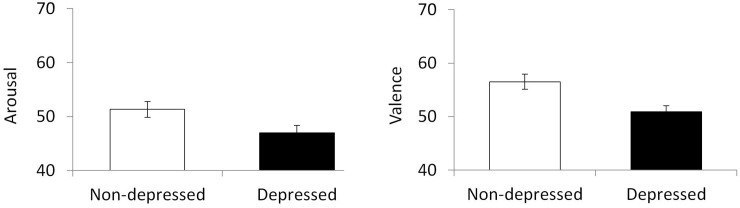
- Naïve adult raters judged non-PND mothers’ speech as higher in positive emotional valence (t = 4.067, df = 22, p = 0.001) and arousal (t = 3.785, df = 22, p = 0.001) than PND mothers’ speech.
## Methods
- Matched-group observational study: 26 mother–infant dyads total, with 13 PND and 13 non-PND mothers; infants were around 6 months old and groups were matched on infant age and sex, with similar maternal age, ethnicity, and relationship status.
- Data were collected from spontaneous 5-minute free-play sessions in a quiet room at either MARCS Institute BabyLab or Karitane; analyses used audio recordings from the middle 3 minutes, with acoustic pitch measured on 10 seconds of clear IDS and vocalisation counts/timing coded in Praat.
- Main analysis used a priori independent-samples two-tailed t-tests comparing groups on F0 measures, word counts, infant vocalisations, maternal response time, overlap, and affective ratings from 23 undergraduate raters using 2DES software.
## Limitations
- The paper states the sample was small and the recordings were done in a laboratory play room or parent-service playroom, so results should be interpreted with caution.
- The paper states the PND group may not represent the broader population of depressed mothers because most were attending a service for sleep and settling issues.
- Evident from the text: the study is cross-sectional, so it cannot test whether these IDS differences predict later language outcomes.
Model-written summary. Check it against the paper before relying on it.
Integrity signals
Registry
Cites
Statistics
Figures
Verification
Claims the paper makes
18 Valid · 0 Not valid · 22 Not checked · 29 Own results and interpretations
The cited sources support only part of this claim — read each source’s verdict below.
In the paper
“The importance of IDS has been demonstrated empirically in studies showing that infants who are not exposed to highly intonated IDS engage less in sustained social interactions; and that infants who experience less IDS input show poorer language development by the second year of life [8–10].”
§ Effect of maternal depression on infant-directed speech to prelinguistic infants: Implications for language development > Introduction Before infants utter their first words, they are learning the protocols of social interaction through the daily experiences they have with their caregivers [1]. Spontaneous social exchanges play an important role in scaffolding early speech. Infant-directed speech (IDS) is a key component of face-to-face interactions in early infancy and is produced (mostly unconsciously) by caregivers in the presence of an infant [see 2,3]. IDS is characterised by a sing-song pitch, generally carried by an exaggerated prosody (fundamental frequency) in IDS compared to the more monotone style used to talk to other adults [3,4]. The exaggerated pitch in IDS functions to communicate affect, promote social interaction [3,5,6], and engage and sustain infant attention [4,7]. The importance of IDS has been demonstrated empirically in studies showing that infants who are not exposed to highly intonated IDS engage less in sustained social interactions; and that infants who experience less IDS input show poorer language development by the second year of life [8–10]. Neurophysiological studies provide further evidence that exposure to prosodic exaggerations in IDS is positively associated with early communicative development. For example, one study showed that experience with responsive maternal interactions including IDS with heightened vocal emotion scaffolds general learning mechanisms in young infants [11]. Another showed that by 7-months of age, infants that are exposed to happy emotional prosody show increased neural responses in a voice-sensitive region in the right hemisphere of the brain [12]. Thus, experience with prototypical IDS prosody and vocal affect not only elicits greater responsiveness from the infant [13], but also fosters a positive interactive loop of social interaction between mother and child [2,6,14] which in turn scaffolds infant vocal communication [15–18], and supports healthy brain development. Postnatal depression (PND) is a mild to moderate non-psychotic depressive episode, with an estimated prevalence of 10–13% in high-income countries [19,20], and 20% in low- to middle-income countries [21,22]. PND is a global public health issue [21] and leading source of poor health in Australian women [23]. It is well known that PND places significant burden on sufferers, in addition to negatively impacting on parenting capacity [24] and on infants in physical, emotional and cognitive domains [25]. While genetic and epigenetic factors have been implicated as mechanisms linking PND with poor child outcomes, lowered maternal sensitivity due to maternal depression symptoms are thought to be key [25]. The quality of maternal vocalisations are known to be a key element of maternal sensitivity [26–28], however, only a few studies have specifically examined links between IDS and PND. To understand the extent to which acoustic characteristics of IDS are affected by the emotional state of the mother, Bettes and colleagues studied a sample of 36 postnatal mothers with self-reported depression symptoms and showed them to have a flatter pitch when speaking to their infants at 3–4 months postpartum [29]. Mothers with elevated depression symptoms also displayed slower responses to infant vocalisations [29]. In 2001 Kaplan and colleagues similarly observed a flattened vocal pitch among a sample of 50 mothers at 4–12 months postpartum when mothers were asked to encourage the infant to play with a soft toy using the phrase “pet the gorilla” [30]. Notably, mothers in remission from PND expressed a similar fundamental frequency (pitch) to non-depressed mothers [30], which indicates that the effects of PND on IDS can be reduced when depressive symptoms are reduced. Most recently, in a sample of 281 families with infants aged 3–14 months, Porritt and colleagues [31] showed that mothers with clinically diagnosed PND produced a smaller pitch range than mothers diagnosed with PND in partial remission, and that deficits in pitch range were not well predicted by elevated self-report scores alone, or by diagnosed anxiety disorders. Together, the studies by Bettes et al. [29], Kaplan et al. [30] and Porritt et al. [31] are important because they demonstrate links between PND and diminished pitch variation, particularly in IDS within structured play contexts when lexical content and the type of interaction are afforded greater control. There is also evidence of differences in the content of the IDS words spoken between mothers with, and mothers without, PND. Herrera and colleagues recorded maternal speech to 6- and 10-month-old infants and classified it into two categories: affect-salient (content words were expressive of feelings) or information-salient (content was object-oriented) [32]. In this study, mothers experiencing depression produced less affective and informative lexical content while speaking to their 6-month old infants, compared to control mothers. Furthermore, PND mothers’ affective speech content showed little change from 6 to 10 months [32], indicating that mothers were less likely to talk about feelings and adapt their speech to infant developmental needs compared to their non-depressed counterparts. Taken together, the evidence suggests that American and British mothers experiencing PND speak to their infants with less vocal pitch variation [29–31], poorer temporal responses to infant cues [29] and fewer affective or informative words in IDS [32]. There have been no studies, however, that have compared mothers with, and mothers without, PND in terms of the quality of affective intent of IDS, a distinguishing IDS feature known to support mother-infant social interaction and express communicative intent [33]. In normative samples, the affective quality of IDS has been studied. Mothers have been shown to adapt the expression of affect in IDS, with their speech judged by naïve raters as sounding predominately “comforting or soothing” at birth, “approving” at 6 months and “directive” around 9 months [5]. Notably, infant preferences for affective intent adapt across the first year of life, and infant responses have been shown to match the affective intent types that dominate mothers’ speech at 3, 6 and 9 months [6]. Given that mothers’ adaptive use of IDS prosody and affective intent appear to support infants’ predisposition to attend to IDS, it is vital that IDS of mothers with PND is empirically examined not only in terms of pitch modifications and affective content, but also with respect to the expression (and perception) of vocal affect. A final aspect of IDS that has not been well investigated in PND samples is that of vocal turn taking. ‘Synchrony’, a term often used to describe the interactive and attuned ‘dance’ between a mother and infant, expressed in coordinated exchanges of emotion, facial expression, bodily movements and vocal turn taking, is known to play a vital role in healthy infant development [34,35]. While there have been many studies examining vocal turn taking in mothers and young infants [36,37], little is known about vocal turn taking in the IDS of mothers with PND. In one study, mothers with elevated PND symptoms were shown to display less affective and behavioural synchrony with their infants than non-symptomatic mothers [38] but more work is required to better understand how the experience of PND influences the quality and timing of mother-infant vocalisations. Gaining better understanding the effects of PND on IDS pitch, vocal affect and mother-infant vocal turn-taking behaviours will provide new insight into components of the early social environment that would benefit from increased support to mitigate the effects of PND before infants develop poor outcomes. To this end, the current study compared acoustic, perceptual, temporal and quantitative measures of IDS (pitch, ratings of vocal affect, number of words, and vocal response timing), and the quantity of infant vocalisations in infants aged around 6-months. Infants aged 6 months were studied because the first 6 months is when infants typically spend most of their waking time with maternal caregivers who may be experiencing the negative symptoms associated with PND. The first 6 months are also a period when IDS pitch exaggerations are most pronounced [5], and the pattern of turn-taking cues that mothers provide shape the emergence of babble [39]. Critically, there is evidence that the timing of mothers vocal responses influences the complexity of infant babble before first words emerge [15,16] thus providing a foundation for later language development [40]. Given previous evidence of flatter pitch [29,31], and less affective content words [32] among mothers with PND, we hypothesised that compared to mothers without PND, mothers with PND would show reduced acoustic quality (pitch exaggeration), a reduced number of vocalisations and less positive vocal affect, and a difference in the timing of vocal responses following infant vocalisations. Since maternal speech input has been shown to influence infant babble [15,16,39], we hypothesised that the frequency of infant vocalisations would emerge later due to less exposure to IDS.
What the sources say
- Partly supportedcites [8] Ramírez-Esparza N, García-Sierra A, Kuhl PK. Look who’s talking NOW! Parentese speech, social context, and language development across time. Front Psychol. 2017; 8 10.3389/fpsyg.2017.01008 28676774 PMC5477750 sourceExperimental — accuracy not yet measured
The Introduction (page unavailable) says parentese speech in a one-on-one setting promotes contingent, bidirectional interaction. The Discussion (page unavailable) likewise suggests that parentese in this setting facilitates such interaction, but the paper does not show that infants with less exposure engage in fewer or less sustained social interactions. (LLM, conf=0.78)
- Not checked — no full text of the sourcecites [9] Ramírez-Esparza N, García-Sierra A, Kuhl PK. The Impact of Early Social Interactions on Later Language Development in Spanish-English Bilingual Infants. Child Dev. 2017; 88: 1216– 1234. 10.1111/cdev.12648 27759883 source
- Partly supportedcites [10] Ferjan Ramírez N, Lytle SR, Kuhl PK. Parent coaching increases conversational turns and advances infant language development. Proc Natl Acad Sci. 2020; 117: 3484– 3491. 10.1073/pnas.1921653117 32015127 PMC7035517 sourceExperimental — accuracy not yet measured
The Results (Trajectory of Change in Parent Language, Parent–Child Turn-Taking, and Child Vocalizations; page unavailable) report greater increases in both parentese and conversational turns in coached families than in controls. But the study did not compare infants exposed to IDS with infants unexposed to it, or measure whether social interactions were sustained, so the claim goes beyond its findings. (LLM, conf=0.85)
boostedstates a cause- Asserted: passes — The authors put it forward as true.
- Checkable: passes — It can be checked against evidence.
- Load-bearing: passes — The paper’s conclusions depend on it.
- Based: passes — The paper gives a reason why it holds.
- Partly supported
The cited sources support only part of this claim — read each source’s verdict below.
In the paper
“The importance of IDS has been demonstrated empirically in studies showing that infants who are not exposed to highly intonated IDS engage less in sustained social interactions; and that infants who experience less IDS input show poorer language development by the second year of life [8–10].”
§ Effect of maternal depression on infant-directed speech to prelinguistic infants: Implications for language development > Introduction Before infants utter their first words, they are learning the protocols of social interaction through the daily experiences they have with their caregivers [1]. Spontaneous social exchanges play an important role in scaffolding early speech. Infant-directed speech (IDS) is a key component of face-to-face interactions in early infancy and is produced (mostly unconsciously) by caregivers in the presence of an infant [see 2,3]. IDS is characterised by a sing-song pitch, generally carried by an exaggerated prosody (fundamental frequency) in IDS compared to the more monotone style used to talk to other adults [3,4]. The exaggerated pitch in IDS functions to communicate affect, promote social interaction [3,5,6], and engage and sustain infant attention [4,7]. The importance of IDS has been demonstrated empirically in studies showing that infants who are not exposed to highly intonated IDS engage less in sustained social interactions; and that infants who experience less IDS input show poorer language development by the second year of life [8–10]. Neurophysiological studies provide further evidence that exposure to prosodic exaggerations in IDS is positively associated with early communicative development. For example, one study showed that experience with responsive maternal interactions including IDS with heightened vocal emotion scaffolds general learning mechanisms in young infants [11]. Another showed that by 7-months of age, infants that are exposed to happy emotional prosody show increased neural responses in a voice-sensitive region in the right hemisphere of the brain [12]. Thus, experience with prototypical IDS prosody and vocal affect not only elicits greater responsiveness from the infant [13], but also fosters a positive interactive loop of social interaction between mother and child [2,6,14] which in turn scaffolds infant vocal communication [15–18], and supports healthy brain development. Postnatal depression (PND) is a mild to moderate non-psychotic depressive episode, with an estimated prevalence of 10–13% in high-income countries [19,20], and 20% in low- to middle-income countries [21,22]. PND is a global public health issue [21] and leading source of poor health in Australian women [23]. It is well known that PND places significant burden on sufferers, in addition to negatively impacting on parenting capacity [24] and on infants in physical, emotional and cognitive domains [25]. While genetic and epigenetic factors have been implicated as mechanisms linking PND with poor child outcomes, lowered maternal sensitivity due to maternal depression symptoms are thought to be key [25]. The quality of maternal vocalisations are known to be a key element of maternal sensitivity [26–28], however, only a few studies have specifically examined links between IDS and PND. To understand the extent to which acoustic characteristics of IDS are affected by the emotional state of the mother, Bettes and colleagues studied a sample of 36 postnatal mothers with self-reported depression symptoms and showed them to have a flatter pitch when speaking to their infants at 3–4 months postpartum [29]. Mothers with elevated depression symptoms also displayed slower responses to infant vocalisations [29]. In 2001 Kaplan and colleagues similarly observed a flattened vocal pitch among a sample of 50 mothers at 4–12 months postpartum when mothers were asked to encourage the infant to play with a soft toy using the phrase “pet the gorilla” [30]. Notably, mothers in remission from PND expressed a similar fundamental frequency (pitch) to non-depressed mothers [30], which indicates that the effects of PND on IDS can be reduced when depressive symptoms are reduced. Most recently, in a sample of 281 families with infants aged 3–14 months, Porritt and colleagues [31] showed that mothers with clinically diagnosed PND produced a smaller pitch range than mothers diagnosed with PND in partial remission, and that deficits in pitch range were not well predicted by elevated self-report scores alone, or by diagnosed anxiety disorders. Together, the studies by Bettes et al. [29], Kaplan et al. [30] and Porritt et al. [31] are important because they demonstrate links between PND and diminished pitch variation, particularly in IDS within structured play contexts when lexical content and the type of interaction are afforded greater control. There is also evidence of differences in the content of the IDS words spoken between mothers with, and mothers without, PND. Herrera and colleagues recorded maternal speech to 6- and 10-month-old infants and classified it into two categories: affect-salient (content words were expressive of feelings) or information-salient (content was object-oriented) [32]. In this study, mothers experiencing depression produced less affective and informative lexical content while speaking to their 6-month old infants, compared to control mothers. Furthermore, PND mothers’ affective speech content showed little change from 6 to 10 months [32], indicating that mothers were less likely to talk about feelings and adapt their speech to infant developmental needs compared to their non-depressed counterparts. Taken together, the evidence suggests that American and British mothers experiencing PND speak to their infants with less vocal pitch variation [29–31], poorer temporal responses to infant cues [29] and fewer affective or informative words in IDS [32]. There have been no studies, however, that have compared mothers with, and mothers without, PND in terms of the quality of affective intent of IDS, a distinguishing IDS feature known to support mother-infant social interaction and express communicative intent [33]. In normative samples, the affective quality of IDS has been studied. Mothers have been shown to adapt the expression of affect in IDS, with their speech judged by naïve raters as sounding predominately “comforting or soothing” at birth, “approving” at 6 months and “directive” around 9 months [5]. Notably, infant preferences for affective intent adapt across the first year of life, and infant responses have been shown to match the affective intent types that dominate mothers’ speech at 3, 6 and 9 months [6]. Given that mothers’ adaptive use of IDS prosody and affective intent appear to support infants’ predisposition to attend to IDS, it is vital that IDS of mothers with PND is empirically examined not only in terms of pitch modifications and affective content, but also with respect to the expression (and perception) of vocal affect. A final aspect of IDS that has not been well investigated in PND samples is that of vocal turn taking. ‘Synchrony’, a term often used to describe the interactive and attuned ‘dance’ between a mother and infant, expressed in coordinated exchanges of emotion, facial expression, bodily movements and vocal turn taking, is known to play a vital role in healthy infant development [34,35]. While there have been many studies examining vocal turn taking in mothers and young infants [36,37], little is known about vocal turn taking in the IDS of mothers with PND. In one study, mothers with elevated PND symptoms were shown to display less affective and behavioural synchrony with their infants than non-symptomatic mothers [38] but more work is required to better understand how the experience of PND influences the quality and timing of mother-infant vocalisations. Gaining better understanding the effects of PND on IDS pitch, vocal affect and mother-infant vocal turn-taking behaviours will provide new insight into components of the early social environment that would benefit from increased support to mitigate the effects of PND before infants develop poor outcomes. To this end, the current study compared acoustic, perceptual, temporal and quantitative measures of IDS (pitch, ratings of vocal affect, number of words, and vocal response timing), and the quantity of infant vocalisations in infants aged around 6-months. Infants aged 6 months were studied because the first 6 months is when infants typically spend most of their waking time with maternal caregivers who may be experiencing the negative symptoms associated with PND. The first 6 months are also a period when IDS pitch exaggerations are most pronounced [5], and the pattern of turn-taking cues that mothers provide shape the emergence of babble [39]. Critically, there is evidence that the timing of mothers vocal responses influences the complexity of infant babble before first words emerge [15,16] thus providing a foundation for later language development [40]. Given previous evidence of flatter pitch [29,31], and less affective content words [32] among mothers with PND, we hypothesised that compared to mothers without PND, mothers with PND would show reduced acoustic quality (pitch exaggeration), a reduced number of vocalisations and less positive vocal affect, and a difference in the timing of vocal responses following infant vocalisations. Since maternal speech input has been shown to influence infant babble [15,16,39], we hypothesised that the frequency of infant vocalisations would emerge later due to less exposure to IDS.
What the sources say
- Partly supportedcites [8] Ramírez-Esparza N, García-Sierra A, Kuhl PK. Look who’s talking NOW! Parentese speech, social context, and language development across time. Front Psychol. 2017; 8 10.3389/fpsyg.2017.01008 28676774 PMC5477750 sourceExperimental — accuracy not yet measured
The Introduction reports that greater exposure to parentese speech in one-on-one interactions during infancy was associated with greater productive vocabulary at 24 months. The Discussion says this paper’s own follow-up found a similar association at 33 months. The claim omits the one-on-one condition and generalizes the finding to IDS input overall; the paper does not establish that less IDS in any social context predicts poorer language development. (LLM, conf=0.86)
- Not checked — no full text of the sourcecites [9] Ramírez-Esparza N, García-Sierra A, Kuhl PK. The Impact of Early Social Interactions on Later Language Development in Spanish-English Bilingual Infants. Child Dev. 2017; 88: 1216– 1234. 10.1111/cdev.12648 27759883 source
- Supportedcites [10] Ferjan Ramírez N, Lytle SR, Kuhl PK. Parent coaching increases conversational turns and advances infant language development. Proc Natl Acad Sci. 2020; 117: 3484– 3491. 10.1073/pnas.1921653117 32015127 PMC7035517 source
The Results (Correlations Between Parent and Child Language; page unavailable) report that greater increases in parentese—an infant-directed speech style—from 6 to 18 months were associated with more child words at 18 months. The Discussion (page unavailable) also reports that children whose parents received coaching used more words at 18 months than controls, supporting the claim's comparison of less input with poorer second-year language outcomes. (LLM, conf=0.91)
boostedstates an association- Asserted: passes — The authors put it forward as true.
- Checkable: passes — It can be checked against evidence.
- Load-bearing: passes — The paper’s conclusions depend on it.
- Based: passes — The paper gives a reason why it holds.
- Partly supported
The cited sources support only part of this claim — read each source’s verdict below.
In the paper
“the pattern of turn-taking cues that mothers provide shape the emergence of babble [39].”
§ Effect of maternal depression on infant-directed speech to prelinguistic infants: Implications for language development > Introduction Before infants utter their first words, they are learning the protocols of social interaction through the daily experiences they have with their caregivers [1]. Spontaneous social exchanges play an important role in scaffolding early speech. Infant-directed speech (IDS) is a key component of face-to-face interactions in early infancy and is produced (mostly unconsciously) by caregivers in the presence of an infant [see 2,3]. IDS is characterised by a sing-song pitch, generally carried by an exaggerated prosody (fundamental frequency) in IDS compared to the more monotone style used to talk to other adults [3,4]. The exaggerated pitch in IDS functions to communicate affect, promote social interaction [3,5,6], and engage and sustain infant attention [4,7]. The importance of IDS has been demonstrated empirically in studies showing that infants who are not exposed to highly intonated IDS engage less in sustained social interactions; and that infants who experience less IDS input show poorer language development by the second year of life [8–10]. Neurophysiological studies provide further evidence that exposure to prosodic exaggerations in IDS is positively associated with early communicative development. For example, one study showed that experience with responsive maternal interactions including IDS with heightened vocal emotion scaffolds general learning mechanisms in young infants [11]. Another showed that by 7-months of age, infants that are exposed to happy emotional prosody show increased neural responses in a voice-sensitive region in the right hemisphere of the brain [12]. Thus, experience with prototypical IDS prosody and vocal affect not only elicits greater responsiveness from the infant [13], but also fosters a positive interactive loop of social interaction between mother and child [2,6,14] which in turn scaffolds infant vocal communication [15–18], and supports healthy brain development. Postnatal depression (PND) is a mild to moderate non-psychotic depressive episode, with an estimated prevalence of 10–13% in high-income countries [19,20], and 20% in low- to middle-income countries [21,22]. PND is a global public health issue [21] and leading source of poor health in Australian women [23]. It is well known that PND places significant burden on sufferers, in addition to negatively impacting on parenting capacity [24] and on infants in physical, emotional and cognitive domains [25]. While genetic and epigenetic factors have been implicated as mechanisms linking PND with poor child outcomes, lowered maternal sensitivity due to maternal depression symptoms are thought to be key [25]. The quality of maternal vocalisations are known to be a key element of maternal sensitivity [26–28], however, only a few studies have specifically examined links between IDS and PND. To understand the extent to which acoustic characteristics of IDS are affected by the emotional state of the mother, Bettes and colleagues studied a sample of 36 postnatal mothers with self-reported depression symptoms and showed them to have a flatter pitch when speaking to their infants at 3–4 months postpartum [29]. Mothers with elevated depression symptoms also displayed slower responses to infant vocalisations [29]. In 2001 Kaplan and colleagues similarly observed a flattened vocal pitch among a sample of 50 mothers at 4–12 months postpartum when mothers were asked to encourage the infant to play with a soft toy using the phrase “pet the gorilla” [30]. Notably, mothers in remission from PND expressed a similar fundamental frequency (pitch) to non-depressed mothers [30], which indicates that the effects of PND on IDS can be reduced when depressive symptoms are reduced. Most recently, in a sample of 281 families with infants aged 3–14 months, Porritt and colleagues [31] showed that mothers with clinically diagnosed PND produced a smaller pitch range than mothers diagnosed with PND in partial remission, and that deficits in pitch range were not well predicted by elevated self-report scores alone, or by diagnosed anxiety disorders. Together, the studies by Bettes et al. [29], Kaplan et al. [30] and Porritt et al. [31] are important because they demonstrate links between PND and diminished pitch variation, particularly in IDS within structured play contexts when lexical content and the type of interaction are afforded greater control. There is also evidence of differences in the content of the IDS words spoken between mothers with, and mothers without, PND. Herrera and colleagues recorded maternal speech to 6- and 10-month-old infants and classified it into two categories: affect-salient (content words were expressive of feelings) or information-salient (content was object-oriented) [32]. In this study, mothers experiencing depression produced less affective and informative lexical content while speaking to their 6-month old infants, compared to control mothers. Furthermore, PND mothers’ affective speech content showed little change from 6 to 10 months [32], indicating that mothers were less likely to talk about feelings and adapt their speech to infant developmental needs compared to their non-depressed counterparts. Taken together, the evidence suggests that American and British mothers experiencing PND speak to their infants with less vocal pitch variation [29–31], poorer temporal responses to infant cues [29] and fewer affective or informative words in IDS [32]. There have been no studies, however, that have compared mothers with, and mothers without, PND in terms of the quality of affective intent of IDS, a distinguishing IDS feature known to support mother-infant social interaction and express communicative intent [33]. In normative samples, the affective quality of IDS has been studied. Mothers have been shown to adapt the expression of affect in IDS, with their speech judged by naïve raters as sounding predominately “comforting or soothing” at birth, “approving” at 6 months and “directive” around 9 months [5]. Notably, infant preferences for affective intent adapt across the first year of life, and infant responses have been shown to match the affective intent types that dominate mothers’ speech at 3, 6 and 9 months [6]. Given that mothers’ adaptive use of IDS prosody and affective intent appear to support infants’ predisposition to attend to IDS, it is vital that IDS of mothers with PND is empirically examined not only in terms of pitch modifications and affective content, but also with respect to the expression (and perception) of vocal affect. A final aspect of IDS that has not been well investigated in PND samples is that of vocal turn taking. ‘Synchrony’, a term often used to describe the interactive and attuned ‘dance’ between a mother and infant, expressed in coordinated exchanges of emotion, facial expression, bodily movements and vocal turn taking, is known to play a vital role in healthy infant development [34,35]. While there have been many studies examining vocal turn taking in mothers and young infants [36,37], little is known about vocal turn taking in the IDS of mothers with PND. In one study, mothers with elevated PND symptoms were shown to display less affective and behavioural synchrony with their infants than non-symptomatic mothers [38] but more work is required to better understand how the experience of PND influences the quality and timing of mother-infant vocalisations. Gaining better understanding the effects of PND on IDS pitch, vocal affect and mother-infant vocal turn-taking behaviours will provide new insight into components of the early social environment that would benefit from increased support to mitigate the effects of PND before infants develop poor outcomes. To this end, the current study compared acoustic, perceptual, temporal and quantitative measures of IDS (pitch, ratings of vocal affect, number of words, and vocal response timing), and the quantity of infant vocalisations in infants aged around 6-months. Infants aged 6 months were studied because the first 6 months is when infants typically spend most of their waking time with maternal caregivers who may be experiencing the negative symptoms associated with PND. The first 6 months are also a period when IDS pitch exaggerations are most pronounced [5], and the pattern of turn-taking cues that mothers provide shape the emergence of babble [39]. Critically, there is evidence that the timing of mothers vocal responses influences the complexity of infant babble before first words emerge [15,16] thus providing a foundation for later language development [40]. Given previous evidence of flatter pitch [29,31], and less affective content words [32] among mothers with PND, we hypothesised that compared to mothers without PND, mothers with PND would show reduced acoustic quality (pitch exaggeration), a reduced number of vocalisations and less positive vocal affect, and a difference in the timing of vocal responses following infant vocalisations. Since maternal speech input has been shown to influence infant babble [15,16,39], we hypothesised that the frequency of infant vocalisations would emerge later due to less exposure to IDS.
What the sources say
- Partly supportedcites [39] Hilbrink EE, Gattis M, Levinson SC. Early developmental changes in the timing of turn-taking: a longitudinal study of mother–infant interaction. Front Psychol. 2015; 6 10.3389/fpsyg.2015.01492 26483741 PMC4586330 sourceExperimental — accuracy not yet measured
The Introduction (page unavailable) reports that contingent maternal responses can improve the quality of infant vocalizations and facilitate vocal turn-taking. It does not establish that mothers’ turn-taking cues shape the emergence of babble. The General Discussion, under Reciprocity (page unavailable), also finds that changes in maternal turn-timing did not explain changes in infant turn-timing. (LLM, conf=0.82)
plainstates a cause- Asserted: passes — The authors put it forward as true.
- Checkable: passes — It can be checked against evidence.
- Load-bearing: passes — The paper’s conclusions depend on it.
- Based: passes — The paper gives a reason why it holds.
- Partly supported
The sources with a verdict support this claim; the rest weren’t checked yet, have no full text we could read, or their verdicts aren’t rated yet.
In the paper
“Together, the studies by Bettes et al. [29], Kaplan et al. [30] and Porritt et al. [31] are important because they demonstrate links between PND and diminished pitch variation, particularly in IDS within structured play contexts when lexical content and the type of interaction are afforded greater control.”
§ Effect of maternal depression on infant-directed speech to prelinguistic infants: Implications for language development > Introduction Before infants utter their first words, they are learning the protocols of social interaction through the daily experiences they have with their caregivers [1]. Spontaneous social exchanges play an important role in scaffolding early speech. Infant-directed speech (IDS) is a key component of face-to-face interactions in early infancy and is produced (mostly unconsciously) by caregivers in the presence of an infant [see 2,3]. IDS is characterised by a sing-song pitch, generally carried by an exaggerated prosody (fundamental frequency) in IDS compared to the more monotone style used to talk to other adults [3,4]. The exaggerated pitch in IDS functions to communicate affect, promote social interaction [3,5,6], and engage and sustain infant attention [4,7]. The importance of IDS has been demonstrated empirically in studies showing that infants who are not exposed to highly intonated IDS engage less in sustained social interactions; and that infants who experience less IDS input show poorer language development by the second year of life [8–10]. Neurophysiological studies provide further evidence that exposure to prosodic exaggerations in IDS is positively associated with early communicative development. For example, one study showed that experience with responsive maternal interactions including IDS with heightened vocal emotion scaffolds general learning mechanisms in young infants [11]. Another showed that by 7-months of age, infants that are exposed to happy emotional prosody show increased neural responses in a voice-sensitive region in the right hemisphere of the brain [12]. Thus, experience with prototypical IDS prosody and vocal affect not only elicits greater responsiveness from the infant [13], but also fosters a positive interactive loop of social interaction between mother and child [2,6,14] which in turn scaffolds infant vocal communication [15–18], and supports healthy brain development. Postnatal depression (PND) is a mild to moderate non-psychotic depressive episode, with an estimated prevalence of 10–13% in high-income countries [19,20], and 20% in low- to middle-income countries [21,22]. PND is a global public health issue [21] and leading source of poor health in Australian women [23]. It is well known that PND places significant burden on sufferers, in addition to negatively impacting on parenting capacity [24] and on infants in physical, emotional and cognitive domains [25]. While genetic and epigenetic factors have been implicated as mechanisms linking PND with poor child outcomes, lowered maternal sensitivity due to maternal depression symptoms are thought to be key [25]. The quality of maternal vocalisations are known to be a key element of maternal sensitivity [26–28], however, only a few studies have specifically examined links between IDS and PND. To understand the extent to which acoustic characteristics of IDS are affected by the emotional state of the mother, Bettes and colleagues studied a sample of 36 postnatal mothers with self-reported depression symptoms and showed them to have a flatter pitch when speaking to their infants at 3–4 months postpartum [29]. Mothers with elevated depression symptoms also displayed slower responses to infant vocalisations [29]. In 2001 Kaplan and colleagues similarly observed a flattened vocal pitch among a sample of 50 mothers at 4–12 months postpartum when mothers were asked to encourage the infant to play with a soft toy using the phrase “pet the gorilla” [30]. Notably, mothers in remission from PND expressed a similar fundamental frequency (pitch) to non-depressed mothers [30], which indicates that the effects of PND on IDS can be reduced when depressive symptoms are reduced. Most recently, in a sample of 281 families with infants aged 3–14 months, Porritt and colleagues [31] showed that mothers with clinically diagnosed PND produced a smaller pitch range than mothers diagnosed with PND in partial remission, and that deficits in pitch range were not well predicted by elevated self-report scores alone, or by diagnosed anxiety disorders. Together, the studies by Bettes et al. [29], Kaplan et al. [30] and Porritt et al. [31] are important because they demonstrate links between PND and diminished pitch variation, particularly in IDS within structured play contexts when lexical content and the type of interaction are afforded greater control. There is also evidence of differences in the content of the IDS words spoken between mothers with, and mothers without, PND. Herrera and colleagues recorded maternal speech to 6- and 10-month-old infants and classified it into two categories: affect-salient (content words were expressive of feelings) or information-salient (content was object-oriented) [32]. In this study, mothers experiencing depression produced less affective and informative lexical content while speaking to their 6-month old infants, compared to control mothers. Furthermore, PND mothers’ affective speech content showed little change from 6 to 10 months [32], indicating that mothers were less likely to talk about feelings and adapt their speech to infant developmental needs compared to their non-depressed counterparts. Taken together, the evidence suggests that American and British mothers experiencing PND speak to their infants with less vocal pitch variation [29–31], poorer temporal responses to infant cues [29] and fewer affective or informative words in IDS [32]. There have been no studies, however, that have compared mothers with, and mothers without, PND in terms of the quality of affective intent of IDS, a distinguishing IDS feature known to support mother-infant social interaction and express communicative intent [33]. In normative samples, the affective quality of IDS has been studied. Mothers have been shown to adapt the expression of affect in IDS, with their speech judged by naïve raters as sounding predominately “comforting or soothing” at birth, “approving” at 6 months and “directive” around 9 months [5]. Notably, infant preferences for affective intent adapt across the first year of life, and infant responses have been shown to match the affective intent types that dominate mothers’ speech at 3, 6 and 9 months [6]. Given that mothers’ adaptive use of IDS prosody and affective intent appear to support infants’ predisposition to attend to IDS, it is vital that IDS of mothers with PND is empirically examined not only in terms of pitch modifications and affective content, but also with respect to the expression (and perception) of vocal affect. A final aspect of IDS that has not been well investigated in PND samples is that of vocal turn taking. ‘Synchrony’, a term often used to describe the interactive and attuned ‘dance’ between a mother and infant, expressed in coordinated exchanges of emotion, facial expression, bodily movements and vocal turn taking, is known to play a vital role in healthy infant development [34,35]. While there have been many studies examining vocal turn taking in mothers and young infants [36,37], little is known about vocal turn taking in the IDS of mothers with PND. In one study, mothers with elevated PND symptoms were shown to display less affective and behavioural synchrony with their infants than non-symptomatic mothers [38] but more work is required to better understand how the experience of PND influences the quality and timing of mother-infant vocalisations. Gaining better understanding the effects of PND on IDS pitch, vocal affect and mother-infant vocal turn-taking behaviours will provide new insight into components of the early social environment that would benefit from increased support to mitigate the effects of PND before infants develop poor outcomes. To this end, the current study compared acoustic, perceptual, temporal and quantitative measures of IDS (pitch, ratings of vocal affect, number of words, and vocal response timing), and the quantity of infant vocalisations in infants aged around 6-months. Infants aged 6 months were studied because the first 6 months is when infants typically spend most of their waking time with maternal caregivers who may be experiencing the negative symptoms associated with PND. The first 6 months are also a period when IDS pitch exaggerations are most pronounced [5], and the pattern of turn-taking cues that mothers provide shape the emergence of babble [39]. Critically, there is evidence that the timing of mothers vocal responses influences the complexity of infant babble before first words emerge [15,16] thus providing a foundation for later language development [40]. Given previous evidence of flatter pitch [29,31], and less affective content words [32] among mothers with PND, we hypothesised that compared to mothers without PND, mothers with PND would show reduced acoustic quality (pitch exaggeration), a reduced number of vocalisations and less positive vocal affect, and a difference in the timing of vocal responses following infant vocalisations. Since maternal speech input has been shown to influence infant babble [15,16,39], we hypothesised that the frequency of infant vocalisations would emerge later due to less exposure to IDS.
What the sources say
- Not checked — no full text of the sourcecites [29] Bettes BA. Maternal depression and motherese: Temporal and intonational features. Child Dev. 1988; 59: 1089– 1096. 10.1111/j.1467-8624.1988.tb03261.x 3168616 source
- Not checked — no full text of the sourcecites [30] Kaplan PS, Bachorowski J-A, Smoski MJ, Zinser M. Role of Clinical Diagnosis and Medication Use in Effects of Maternal Depression on Infant-Directed Speech. Infancy. 2001; 2: 537– 548. 10.1207/S15327078IN0204_08 33451190 source
- Supportedcites [31] Porritt LL, Zinser MC, Bachorowski J-A, Kaplan PS. Depression Diagnoses and Fundamental Frequency-Based Acoustic Cues in Maternal Infant-Directed Speech. Lang Learn Dev. 2014; 10: 51– 67. 10.1080/15475441.2013.802962 24489521 PMC3904677 source
The Discussion reports that, during structured play with their infants, clinically depressed mothers produced infant-directed speech with a significantly smaller vocal pitch range than non-depressed mothers. It also says mothers were given specific instructions about what to say, limiting variation in speech content. Page numbers are not available in the supplied passages. (LLM, conf=0.92)
boostedstates an association- Asserted: passes — The authors put it forward as true.
- Checkable: passes — It can be checked against evidence.
- Load-bearing: passes — The paper’s conclusions depend on it.
- Based: passes — The paper gives a reason why it holds.
The cited sources support only part of this claim — read each source’s verdict below.
In the paper
“Neurophysiological studies provide further evidence that exposure to prosodic exaggerations in IDS is positively associated with early communicative development.”
§ Effect of maternal depression on infant-directed speech to prelinguistic infants: Implications for language development > Introduction Before infants utter their first words, they are learning the protocols of social interaction through the daily experiences they have with their caregivers [1]. Spontaneous social exchanges play an important role in scaffolding early speech. Infant-directed speech (IDS) is a key component of face-to-face interactions in early infancy and is produced (mostly unconsciously) by caregivers in the presence of an infant [see 2,3]. IDS is characterised by a sing-song pitch, generally carried by an exaggerated prosody (fundamental frequency) in IDS compared to the more monotone style used to talk to other adults [3,4]. The exaggerated pitch in IDS functions to communicate affect, promote social interaction [3,5,6], and engage and sustain infant attention [4,7]. The importance of IDS has been demonstrated empirically in studies showing that infants who are not exposed to highly intonated IDS engage less in sustained social interactions; and that infants who experience less IDS input show poorer language development by the second year of life [8–10]. Neurophysiological studies provide further evidence that exposure to prosodic exaggerations in IDS is positively associated with early communicative development. For example, one study showed that experience with responsive maternal interactions including IDS with heightened vocal emotion scaffolds general learning mechanisms in young infants [11]. Another showed that by 7-months of age, infants that are exposed to happy emotional prosody show increased neural responses in a voice-sensitive region in the right hemisphere of the brain [12]. Thus, experience with prototypical IDS prosody and vocal affect not only elicits greater responsiveness from the infant [13], but also fosters a positive interactive loop of social interaction between mother and child [2,6,14] which in turn scaffolds infant vocal communication [15–18], and supports healthy brain development. Postnatal depression (PND) is a mild to moderate non-psychotic depressive episode, with an estimated prevalence of 10–13% in high-income countries [19,20], and 20% in low- to middle-income countries [21,22]. PND is a global public health issue [21] and leading source of poor health in Australian women [23]. It is well known that PND places significant burden on sufferers, in addition to negatively impacting on parenting capacity [24] and on infants in physical, emotional and cognitive domains [25]. While genetic and epigenetic factors have been implicated as mechanisms linking PND with poor child outcomes, lowered maternal sensitivity due to maternal depression symptoms are thought to be key [25]. The quality of maternal vocalisations are known to be a key element of maternal sensitivity [26–28], however, only a few studies have specifically examined links between IDS and PND. To understand the extent to which acoustic characteristics of IDS are affected by the emotional state of the mother, Bettes and colleagues studied a sample of 36 postnatal mothers with self-reported depression symptoms and showed them to have a flatter pitch when speaking to their infants at 3–4 months postpartum [29]. Mothers with elevated depression symptoms also displayed slower responses to infant vocalisations [29]. In 2001 Kaplan and colleagues similarly observed a flattened vocal pitch among a sample of 50 mothers at 4–12 months postpartum when mothers were asked to encourage the infant to play with a soft toy using the phrase “pet the gorilla” [30]. Notably, mothers in remission from PND expressed a similar fundamental frequency (pitch) to non-depressed mothers [30], which indicates that the effects of PND on IDS can be reduced when depressive symptoms are reduced. Most recently, in a sample of 281 families with infants aged 3–14 months, Porritt and colleagues [31] showed that mothers with clinically diagnosed PND produced a smaller pitch range than mothers diagnosed with PND in partial remission, and that deficits in pitch range were not well predicted by elevated self-report scores alone, or by diagnosed anxiety disorders. Together, the studies by Bettes et al. [29], Kaplan et al. [30] and Porritt et al. [31] are important because they demonstrate links between PND and diminished pitch variation, particularly in IDS within structured play contexts when lexical content and the type of interaction are afforded greater control. There is also evidence of differences in the content of the IDS words spoken between mothers with, and mothers without, PND. Herrera and colleagues recorded maternal speech to 6- and 10-month-old infants and classified it into two categories: affect-salient (content words were expressive of feelings) or information-salient (content was object-oriented) [32]. In this study, mothers experiencing depression produced less affective and informative lexical content while speaking to their 6-month old infants, compared to control mothers. Furthermore, PND mothers’ affective speech content showed little change from 6 to 10 months [32], indicating that mothers were less likely to talk about feelings and adapt their speech to infant developmental needs compared to their non-depressed counterparts. Taken together, the evidence suggests that American and British mothers experiencing PND speak to their infants with less vocal pitch variation [29–31], poorer temporal responses to infant cues [29] and fewer affective or informative words in IDS [32]. There have been no studies, however, that have compared mothers with, and mothers without, PND in terms of the quality of affective intent of IDS, a distinguishing IDS feature known to support mother-infant social interaction and express communicative intent [33]. In normative samples, the affective quality of IDS has been studied. Mothers have been shown to adapt the expression of affect in IDS, with their speech judged by naïve raters as sounding predominately “comforting or soothing” at birth, “approving” at 6 months and “directive” around 9 months [5]. Notably, infant preferences for affective intent adapt across the first year of life, and infant responses have been shown to match the affective intent types that dominate mothers’ speech at 3, 6 and 9 months [6]. Given that mothers’ adaptive use of IDS prosody and affective intent appear to support infants’ predisposition to attend to IDS, it is vital that IDS of mothers with PND is empirically examined not only in terms of pitch modifications and affective content, but also with respect to the expression (and perception) of vocal affect. A final aspect of IDS that has not been well investigated in PND samples is that of vocal turn taking. ‘Synchrony’, a term often used to describe the interactive and attuned ‘dance’ between a mother and infant, expressed in coordinated exchanges of emotion, facial expression, bodily movements and vocal turn taking, is known to play a vital role in healthy infant development [34,35]. While there have been many studies examining vocal turn taking in mothers and young infants [36,37], little is known about vocal turn taking in the IDS of mothers with PND. In one study, mothers with elevated PND symptoms were shown to display less affective and behavioural synchrony with their infants than non-symptomatic mothers [38] but more work is required to better understand how the experience of PND influences the quality and timing of mother-infant vocalisations. Gaining better understanding the effects of PND on IDS pitch, vocal affect and mother-infant vocal turn-taking behaviours will provide new insight into components of the early social environment that would benefit from increased support to mitigate the effects of PND before infants develop poor outcomes. To this end, the current study compared acoustic, perceptual, temporal and quantitative measures of IDS (pitch, ratings of vocal affect, number of words, and vocal response timing), and the quantity of infant vocalisations in infants aged around 6-months. Infants aged 6 months were studied because the first 6 months is when infants typically spend most of their waking time with maternal caregivers who may be experiencing the negative symptoms associated with PND. The first 6 months are also a period when IDS pitch exaggerations are most pronounced [5], and the pattern of turn-taking cues that mothers provide shape the emergence of babble [39]. Critically, there is evidence that the timing of mothers vocal responses influences the complexity of infant babble before first words emerge [15,16] thus providing a foundation for later language development [40]. Given previous evidence of flatter pitch [29,31], and less affective content words [32] among mothers with PND, we hypothesised that compared to mothers without PND, mothers with PND would show reduced acoustic quality (pitch exaggeration), a reduced number of vocalisations and less positive vocal affect, and a difference in the timing of vocal responses following infant vocalisations. Since maternal speech input has been shown to influence infant babble [15,16,39], we hypothesised that the frequency of infant vocalisations would emerge later due to less exposure to IDS.
What the sources say
- Partly supportedcites [11] Kaplan PS, Danko CM, Diaz A, Kalinka CJ. An associative learning deficit in 1-year-old infants of depressed mothers: Role of depression duration. Infant Behav Dev. 2011; 34: 35– 44. 10.1016/j.infbeh.2010.07.014 21071090 PMC3957177 sourceExperimental — accuracy not yet measured
The Abstract describes IDS as prosodically exaggerated and says it can facilitate infant learning; the Discussion says prosodic cues eventually aid linguistic processing (page numbers unavailable). But this paper uses a conditioned-attention measure of voice–face associative learning, not neurophysiological measures or an assessment of early communicative development. It therefore supports a related, narrower point rather than the claim as stated. (LLM, conf=0.84)
- Partly supportedcites [12] Grossmann T, Oberecker R, Koch SP, Friederici AD. The Developmental Origins of Voice Processing in the Human Brain. Neuron. 2010; 65: 852– 858. 10.1016/j.neuron.2010.03.001 20346760 PMC2852650 sourceExperimental — accuracy not yet measured
In the Discussion’s “Processing Emotional Prosody” section (page unavailable), the paper describes exaggerated pitch in infant-directed speech and reports that its happy prosody has been found to facilitate infant language and word learning. Its own neurophysiological result concerns infants’ brain responses to happy prosody; it does not establish an association between exposure to prosodic exaggeration and early communicative development. (LLM, conf=0.85)
boostedstates an association- Asserted: passes — The authors put it forward as true.
- Checkable: passes — It can be checked against evidence.
- Load-bearing: passes — The paper’s conclusions depend on it.
- Based: passes — The paper gives a reason why it holds.
- Partly supported
25 more claims · 1 with their cited sources checked
Create a free account to see all 69 claims and to verify the 3 references still open.
- It may state two separate claims as one. 24
- Probably not a substantial claim. 24
Claims other papers make about this one
Each is checked against this paper’s own text: does it say what the citing paper says it does?
The cited source says what the claim attributes to it.
In the citing paper
“For example, mothers exhibiting post-partum depression tend to speak less to their infants overall, and their infant-directed speech is reduced in both quantity and quality [31,32].”
Citations
Cites
Detection of Postnatal Depression: Development of the 10-item Edinburgh Postnatal Depression Scale
Cox, J. L., Holden, J. M., & Sagovsky, R. (1987) · British Journal of Psychiatry · doi:10.1192/bjp.150.6.782 · Cited by 14,183 · cited 3×
“Participants from the MARCS Institute BabyLab sample were selected for the current analysis as the non-PND control group (matched for infant age and sex) if the mother scored 8 on the EPDS.”
MethodInfluentialPraat: Doing Phonetics by Computer
(2011) · Ear & Hearing · doi:10.1097/aud.0b013e31821473f7 · Cited by 7,863 · cited 4×
“Speech was segmented from the 2nd, 3rd and 4th minute of the interaction (after reducing silences >500ms, segments that were sung, whispered, interrupted or overlapped with non-speech sounds e.g., clapping, or patting toys) until 10-seconds of vocalisations was extracted for each mother using Praat Acoustical Analysis…”
MethodInfluentialPerinatal Depression: A Systematic Review of Prevalence and Incidence
Gavin, N. I., Gaynes, B. N., Lohr, K. N., Meltzer-Brody, S., Gartlehner, G., & Swinson, T. (2005) · Obstetrics & Gynecology · doi:10.1097/01.aog.0000183597.31630.db · Cited by 3,282 · cited 1×
“Postnatal depression (PND) is a mild to moderate non-psychotic depressive episode, with an estimated prevalence of 10–13% in high-income countries [19,20], and 20% in low- to middle-income countries [21,22].”
BackgroundRates and risk of postpartum depression – a meta-analysis
O'hara, M. W., & Swain, A. M. (1996) · International Review of Psychiatry · doi:10.3109/09540269609037816 · Cited by 3,116 · cited 1×
“Postnatal depression (PND) is a mild to moderate non-psychotic depressive episode, with an estimated prevalence of 10–13% in high-income countries [19,20], and 20% in low- to middle-income countries [21,22].”
BackgroundEffects of perinatal mental disorders on the fetus and child
Stein, A., Pearson, R. M., Goodman, S. H., Rapa, E., Rahman, A., McCallum, M., Howard, L. M., & Pariante, C. M. (2014) · The Lancet · doi:10.1016/s0140-6736(14)61277-0 · Cited by 2,166 · cited 2×
“While genetic and epigenetic factors have been implicated as mechanisms linking PND with poor child outcomes, lowered maternal sensitivity due to maternal depression symptoms are thought to be key [25].”
BackgroundFisher, J., Cabral de Mello, M., Patel, V., Rahman, A., Tran, T., Holton, S., & Holmes, W. (2012) · Bulletin of the World Health Organization · doi:10.2471/blt.11.091850 · Cited by 1,798 · cited 2×
“PND is a global public health issue [21] and leading source of poor health in Australian women [23].”
BackgroundGelaye, B., Rondon, M. B., Araya, R., & Williams, M. A. (2016) · The Lancet Psychiatry · doi:10.1016/s2215-0366(16)30284-x · Cited by 1,155 · cited 1×
“Postnatal depression (PND) is a mild to moderate non-psychotic depressive episode, with an estimated prevalence of 10–13% in high-income countries [19,20], and 20% in low- to middle-income countries [21,22].”
BackgroundHow the Timing and Quality of Early Experiences Influence the Development of Brain Architecture
Fox, S. E., Levitt, P., & Nelson, C. A. (2010) · Child Development · doi:10.1111/j.1467-8624.2009.01380.x · Cited by 1,088 · cited 1×
“Thus, experience with prototypical IDS prosody and vocal affect not only elicits greater responsiveness from the infant [13], but also fosters a positive interactive loop of social interaction between mother and child [2,6,14] which in turn scaffolds infant vocal communication [15–18], and supports healthy brain devel…”
BackgroundThe First Relationship: Infant and Mother
Stern, D. N. (1977) · Cited by 785
Expanded intonation contours in mothers’ speech to newborns
Fernald, A., & Simon, T. (1984) · Developmental Psychology · doi:10.1037/0012-1649.20.1.104 · Cited by 773 · cited 2×
“Mothers with elevated PND symptoms spoke with a lower F0 and less F0 variation, two features that are exaggerated in prototypical IDS [3,4], and known to engage and maintain infant attention to speech [4,7].”
Background
Research works printed but not linked: 2
- Biringen Z. The universal language of love. Boulder, CO, USA: EA Press; 2009.
- Trevarthen C. The concept and foundations of infant intersubjectivity. Intersubjective Commun Emot Early Ontog. 1998; 15– 46.
Cited by
A systematic review and Bayesian meta-analysis of the acoustic features of infant-directed speech
Cox, C. M. M., Bergmann, C., Fowler, E., Keren‐Portnoy, T., Roepstorff, A., Bryant, G. A., & Fusaroli, R. (2022) · Nature Human Behaviour · doi:10.1038/s41562-022-01452-1 · Cited by 153
Du, M., Liu, S., Wang, T., Zhang, W., Ke, Y., Chen, L., & Ming, D. (2022) · Journal of Affective Disorders · doi:10.1016/j.jad.2022.11.060 · Cited by 88
Natural infant-directed speech facilitates neural tracking of prosody
Menn, K. H., Michel, C., Meyer, L., Hoehl, S., & Männel, C. (2022) · NeuroImage · doi:10.1016/j.neuroimage.2022.118991 · Cited by 81
Sperber, J. F., Hart, E. R., Troller‐Renfree, S. V., Watts, T. W., & Noble, K. G. (2022) · Infancy · doi:10.1111/infa.12511 · Cited by 47
“For example, depressed mothers tend to use less infant-directed speech and engage in fewer conversational turns with infants (Brookman et al., 2020; Lam-Cassettari & Kohlhoff, 2020), which in turn are associated with a smaller vocabulary size at 18 months (Brookman et al., 2020).”
BackgroundPsychiatric Risk Factors for Postpartum Depression: A Systematic Review
Tambelli, R., Tosto, S., & Favieri, F. (2025) · Behavioral Sciences · doi:10.3390/bs15020173 · Cited by 43
“…studies have shown that mothers suffering from PPD have great difficulty in correctly interpreting children’s signals to meet their primary physiological needs (Garset-Zamani et al., 2020) and that motherese, or baby speech, is also affected by maternal depression (Lam-Cassettari & Kohlhoff, 2020).”
Lam‐Cassettari, C., Peter, V., & Antoniou, M. (2021) · Developmental Cognitive Neuroscience · doi:10.1016/j.dcn.2021.100923 · Cited by 20
Self-citationKokkinaki, T., & Hatzidaki, E. (2022) · Frontiers in Pediatrics · doi:10.3389/fped.2022.846627 · Cited by 21
“, duration, timing exclusivity, satisfaction, confidence and weaning) [(22, 23, 123) for recent reviews].”
Infant-directed speech does not always involve exaggerated vowel distinctions: Evidence from Danish
Cox, C. M. M., Dideriksen, C., Keren‐Portnoy, T., Roepstorff, A., Christiansen, M. H., & Fusaroli, R. (2023) · Child Development · doi:10.1111/cdev.13950 · Cited by 41
Association of Postpartum Maternal Mood With Infant Speech Perception at 2 and 6.5 Months of Age
Schaadt, G., Zsido, R. G., Villringer, A., Obrig, H., Männel, C., & Sacher, J. (2022) · JAMA Network Open · doi:10.1001/jamanetworkopen.2022.32672 · Cited by 13
Maternal Depression Affects Infants’ Lexical Processing Abilities in the Second Year of Life
Brookman, R., Kalashnikova, M., Conti, J., Rattanasone, N. X., Grant, K., Demuth, K., & Burnham, D. K. (2020) · Brain Sciences · doi:10.3390/brainsci10120977 · Cited by 14
Woolard, A. J., Benders, T., Campbell, L., Whalen, O. M., Mallise, C. A., Karayanidis, F., Barker, D., Murphy, V. E., Tait, J., Gibson, P. G., et al. (2023) · Infant Behavior and Development · doi:10.1016/j.infbeh.2023.101860 · Cited by 9
Toddlers' prior social experience with speakers influences their word learning
Breitfeld, E., Compton, A. M., & Saffran, J. R. (2024) · Infancy · doi:10.1111/infa.12608 · Cited by 10
Child-directed speech in a large sample of U.S. mothers with low income
Egan-Dailey, S., Gennetian, L. A., Magnuson, K., Duncan, G. J., Yoshikawa, H., Fox, N. A., & Noble, K. G. (2024) · Child Development · doi:10.1111/cdev.14139 · Cited by 10
Clifford, B. N., Rainey, V. R., & Eggum, N. D. (2023) · Developmental Review · doi:10.1016/j.dr.2023.101105 · Cited by 8
Does Screen Time Do More Damage in Boys Than Girls?
Chakhunashvili, K., Kvirkvelia, E., & Chakhunashvili, D. G. (2024) · Cureus · doi:10.7759/cureus.72054 · Cited by 17
“Similarly, low parental education levels contribute to expressive language delays, as parents with lower educational backgrounds typically use fewer words and simpler sentences [28].”
Schwarz, I., Marklund, E., Marklund, U., Gustavsson, L., & Lam‐Cassettari, C. (2023) · Language Learning and Development · doi:10.1080/15475441.2023.2239801 · Cited by 11
Self-citationTuncali, I., Sorial, N., Torr, K., & Pereira, M. (2023) · Scientific Reports · doi:10.1038/s41598-023-33035-z · Cited by 6
Positive Valence Contributes to Hyperarticulation in Maternal Speech to Infants and Puppies
Panneton, R., Cristià, A., Taylor, C., & Moon, C. (2023) · Journal of Child Language · doi:10.1017/s0305000923000296 · Cited by 10
Home Musical Activities Boost Premature Infants’ Language Development
Franco, F., Chifa, M., & Politimou, N. (2024) · Children · doi:10.3390/children11050542 · Cited by 8
“For instance, Lam-Cassettari and Kohlhoff [34] found that depressed mothers used ID speech less frequently compared to non-depressed mothers, and D’Odorico and Jacob [35] showed an attenuated ID register in the speech of mothers of infants identified as ‘late talkers’.”
BackgroundFarah, R., Dudley, J. A., Hutton, J., Greenwood, P. B., Holland, S. K., & Horowitz‐Kraus, T. (2021) · Depression and Anxiety · doi:10.1002/da.23168 · Cited by 5
Noonan, C. F., Hunter, B. K., & Markant, J. C. (2021) · Infant Behavior and Development · doi:10.1016/j.infbeh.2021.101626 · Cited by 4
Hyysalo, N., Sorsa, M. A., Holmberg, E., Korja, R., Davis, E. P., Mykkänen, E., & Flykt, M. S. (2024) · Infant and Child Development · doi:10.1002/icd.2530 · Cited by 5
Batta, A., McGowan, E. C., Tucker, R., & Vohr, B. R. (2024) · Journal of Perinatology · doi:10.1038/s41372-024-02082-3 · Cited by 4
Investigation of mothers’ elicited infant-directed speech and singing for preterm infants
Kjeldsen, C. P., Neel, M. L., Jeanvoine, A., & Maitre, N. L. (2024) · Pediatric Research · doi:10.1038/s41390-024-03618-1 · Cited by 9
Building the bond: Exploring the social functions of infant-directed speech and songPreprint
Hennessy, V., & Zhao, T. C. (2023) · PsyArXiv (OSF Preprints) · doi:10.31234/osf.io/sm4ux · Cited by 5
de Oliveira, C. V. R., Bordignon, S. S., Martins, R. C., Blumenberg, C., Martins‐Silva, T., Costa, F. D. S., César, J. A., Springer, P. R., & de Mola, C. L. (2025) · Journal of Child and Adolescent Mental Health · doi:10.2989/17280583.2025.2452533 · Cited by 3
“Studies have also revealed that mothers experiencing depression exhibit reduced usage of infant-directed speech and withdrawn and intrusive parenting behaviours (Brookman et al., 2020; Diego et al., 2006; Lam-Cassettari & Kohlhoff, 2020).”
Alviar, C., JONES, W. R., & Lense, M. (2025) · Annals of the New York Academy of Sciences · doi:10.1111/nyas.70147 · Cited by 8
“This future line of inquiry can be particularly promising for populations who face additional difficulties creating or maintaining engaging ID signals, as a result of decreased mental health (e.g., depression [165–167]) or disrupted social feedback from their children (e.g., in autism [168]).”
Guivarch, J., Persia, M.-L., Treut, L. L., Grandgeorge, P., Solla, F., Pergeline, H., Dugnat, M., Askenazy-Gittard, F., Poinso, F., Varoquaux, A. D., et al. (2024) · Children · doi:10.3390/children12010011 · Cited by 7
Motherese Directed at Prelinguistic Infants at Risk for Neurological Disorders: An Exploratory Study
Räsänen, O. J., Airaksinen, M., Marchi, V., Chorna, O. D., Guzzetta, A., & Festante, F. (2025) · Journal of Child Language · doi:10.1017/s0305000924000217 · Cited by 2
“Mental health issues, such as depression, have been previously reported to affect properties of IDS (e.g., Lam-Cassettari & Kohlhoff, 2020, and references therein), and it is well established that mothers of infants at risk for neurological disorders, as those in our risk group, are potentially at…”
Bornstein, M. H., Manian, N., & Henry, L. M. (2024) · Infant Mental Health Journal · doi:10.1002/imhj.22110 · Cited by 1
Adina, J., Morawska, A., Mitchell, A. E., Haslam, D. M., & Ayuku, D. (2025) · Behaviour Research and Therapy · doi:10.1016/j.brat.2025.104886 · Cited by 2
Carvalho, M. E. S., Justo, J. M. R. D. M., Rincón, R., & Rodrigues, H. F. (2023) · Cultura Lenguaje y Representación · doi:10.6035/clr.6950 · Cited by 2
Wright, K. R., Bruce, M. D., Zhou, A. M., Maylott, S. E., Raby, K. L., Conradt, E. D., & Crowell, S. E. (2025) · Developmental Psychobiology · doi:10.1002/dev.70018 · Cited by 2
Goble, G., Hennessy, V., Cheng, T.-H. Z., Rodda, A., Taulu, S., Gordon, R. L., & Zhao, T. C. (2026) · PLOS One · doi:10.1371/journal.pone.0335596
Chaves, D. Y. (2021) · Digital Library of Theses and Dissertations (Universidade de São Paulo) · doi:10.11606/d.25.2021.tde-04022022-170149
Short, A. E., Cheung, G., Smit, E. A., & Milne, A. J. (2022) · The Arts in Psychotherapy · doi:10.1016/j.aip.2022.101937 · Cited by 1
Alsancak-Akbulut, C., Çelik, C., & Erden, G. (2023) · Current Psychology · doi:10.1007/s12144-023-04342-5 · Cited by 1
Campbell, A., Pearson, R. M., Lewis, G., Constantini, I., Cordero, M., Skinner, A., Dermott, E., Miller, T., Kennedy, M., & Culpin, I. (2023) · Frontiers in Child and Adolescent Psychiatry · doi:10.3389/frcha.2023.1122371 · Cited by 1
“Specifically, maternal vocalisations are one of the possible manifestations of impaired responsiveness that characterise motherinfant interactions in the context of depression (14), which have also been linked to adverse offspring outcomes (15).”
BackgroundThe impact of parental postnatal depression on the development of speech and language
Hill, K. (2023) · Journal of Health Visiting · doi:10.12968/johv.2023.11.4.152
Individual variability in maternal infant-directed speech
Mahajani, R. (2023) · MOspace Institutional Repository (University of Missouri) · doi:10.32469/10355/98302
Evaluation of early development of 6-month-old babies in the case of maternal post-partum depressionPreprint
Guivarch, J., Persia, M.-L., Grandgeorge, P., Pergeline, H., Dugnat, M., Treut, L. L., Poinso, F., Varoquaux, A. D., & Fernandez, A. (2024) · Research Square · doi:10.21203/rs.3.rs-4218592/v1
Impactul depresiei postnatale asupra sănătăţii şi dezvoltării nou-născutului
Adumitrăchioaiei, H., Mihăilă, P., Moişan, A., & Adumitrăchioaiei, D. (2024) · Pediatru ro · doi:10.26416/pedi.73.1.2024.9651
Tu, H., Forssman, L., Fransson, E., & Skalkidou, A. (2025) · JCPP Advances · doi:10.1002/jcv2.12299
Tang, P., Rattanasone, N. X., Yuen, I., Demuth, K., & Benders, T. (2025) · Journal of Child Language · doi:10.1017/s0305000925000133
“…in IDS, such as the pragmatic context (Katz, Cohn & Moore, 1996; Neer et al., 2024), infants ’ responses during interaction (Outters et al., 2020; Smith & Trainor, 2008), and parents ’ emotional state during speech productions (Benders, 2013; Kaplan et al., 2002; Lam-Cassettari & Kohlhoff, 2020).”
Nicodemus, M. M. (2025) · The Research Repository @ WVU (West Virginia University) · doi:10.33915/etd.12741
Edgar, E. V., Testa, K., Ramirez, B., Cannistraci, R. A., Todd, J. T., & Bahrick, L. E. (2025) · Infant Behavior and Development · doi:10.1016/j.infbeh.2025.102163 · Cited by 1
Silvestri, V., Polver, S., Morniroli, D., Giannì, M. L., Gervain, J., & Bulf, H. (2026) · Infancy · doi:10.1111/infa.70087 · Cited by 3
“…possible interpretation is that newborns whose mothers showed higher postnatal depressive traits may have been more frequently exposed in utero to prosodic patterns characterized by reduced emotional expressivity or negative tone (Bettes 1988; Kaplan et al. 2001; Lam‐Cassettari and Kohlhoff 2020).”
Reimann-Ayiköz, M., Preiß, J., Reisenberger, E., Florea, C., Angerer, M., Schabus, M., Roehm, D., Schaadt, G., & Männel, C. (2026) · Frontiers in Endocrinology · doi:10.3389/fendo.2026.1817292
“Depressed mothers not only talk less with their infants and show slower verbal responses (76), but their infant-directed speech is less pronounced as indicated by reduced pitch modulation (76 – 78), leading to weaker infant responses to maternal speech (79, 80).”
Gornik, M. E., Hadley, I. M., Pierce, S. K., Alsaidi, T. H., Roos, L. E., Giuliano, R. J., & Söderström, M. (2026) · Developmental Review · doi:10.1016/j.dr.2026.101281
Metadata
- Authors
- Lam-Cassettari, C., & Kohlhoff, J.
- Affiliations
- UNSW Sydney (AU)
- Venue
- PLoS ONE
- Publisher
- Public Library of Science (PLoS)
- Published
- 2020-07-30
- Volume
- 15
- Issue
- 7
- Pages
- e0236787
- ISSN
- 1932-6203 (ISSN-L)
- PMC
- PMC7392317
- OpenAlex
- W3046857015
- Cited by
- 49
- References
- 58
- Citations by year
- 2026: 4 · 2025: 10 · 2024: 11 · 2023: 12 · 2022: 7 · 2021: 4 · 2020: 1
- FWCI
- 4.49
- Type
- journal article
- Language
- en
- Open access
- gold
- doi.org
- Licence
- Locations
- PLoS ONE (publishedVersion, cc-by)
- PubMed Central (publishedVersion, cc-by)
- PubMed (publishedVersion)
- UNSWorks (University of New South Wales, Sydney, Australia) (submittedVersion, cc-by-nc-nd)
- DOAJ (DOAJ: Directory of Open Access Journals) (submittedVersion, cc-by-sa)
- Funders
- South West Sydney Research (2016-2017)
- Marcus and Amalia Wallenberg Foundation (2013.0056)
- Topics
- Health Sciences › Medicine › Public Health, Environmental and Occupational Health › Maternal Mental Health During Pregnancy and Postpartum
- Social Sciences › Psychology › Developmental and Educational Psychology › Language Development and Disorders
- Health Sciences › Medicine › Pediatrics, Perinatology and Child Health › Infant Health and Development
- Keywords
- maternal depression, postpartum depression, infant-directed speech, prelinguistic infants, voice pitch, vocal affect, parent-infant communication, language development, mother-infant interaction, early intervention
- MeSH terms
- Acoustics, Adolescent, Adult, Depression, Female, Humans, Infant, Language Development, Male, Maternal Behavior, Mother-Child Relations, Speech, Young Adult, Singing
About these checks
Registry, retraction, Cites and statistics results are computed, not judged, with one exception: a printed reference that no index lists is read once by a model before it counts as a citation error. Claims are extracted by a model and kept only when their quote appears verbatim in the text; each cited source is then checked, with a model’s help, for whether it says what the claim relies on. Those verdicts can be wrong — read the claim’s quote and the cited source before relying on one.
The claim verdicts this report counts are experimental: their accuracy is not yet measured.
A language model drew the claims from the paper on 2026-10-09, under version 3 of the claim definition (model deepseek-v4.1-flash, prompt extract-v3).
A second model labelled each claim on 2026-10-09 (model jev-1.13-20260917, definition revision gold-guideline-v0.2).
Cited sources are checked with a language model’s help (gpt-6-sol).
Statistics and arithmetic are recomputed, not judged.
Confidence bands are shown only for fields calibrated on our annotated test set. None is calibrated yet, so no band is shown.
What counts as a claim ›How we measure confidence ›How we check this ›
Are you an author, or do you see a problem with this page? Request a review
Data sources
Bibliographic data: Semantic Scholar, OpenAlex, Crossref.
Contains information from the Semantic Scholar Academic Graph Datasets, made available under the ODC Attribution License (ODC-BY 1.0).
Semantic Scholar’s data is described in: Kinney, R., et al. (2023). The Semantic Scholar Open Data Platform. arXiv:2301.10140.
