

The DOI matches its Crossref record; 56 of the 56 references it cites were found in a registry or an index.
Twitter reveals human mobility dynamics during the COVID-19 pandemic
Open accessAbstract
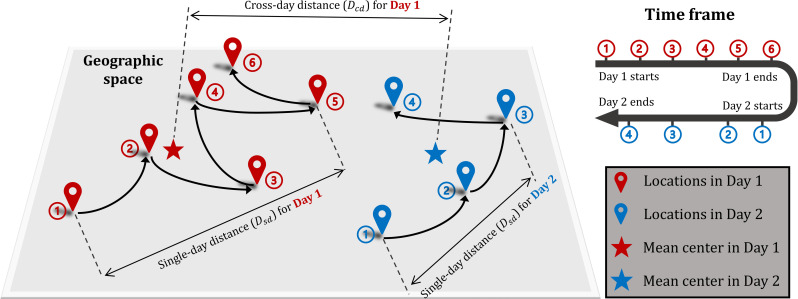
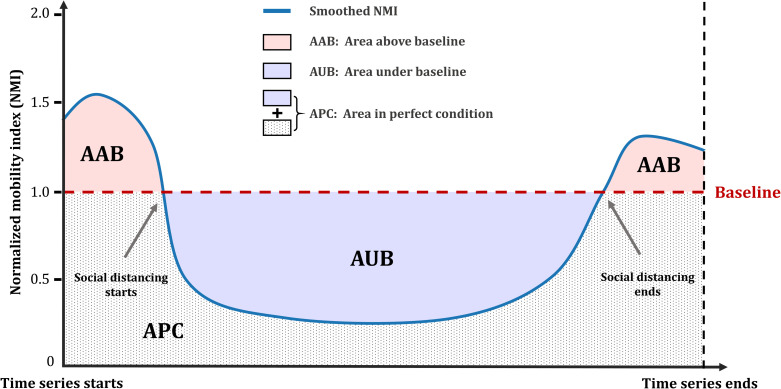
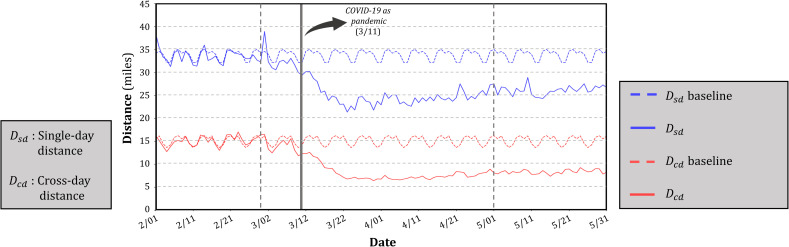
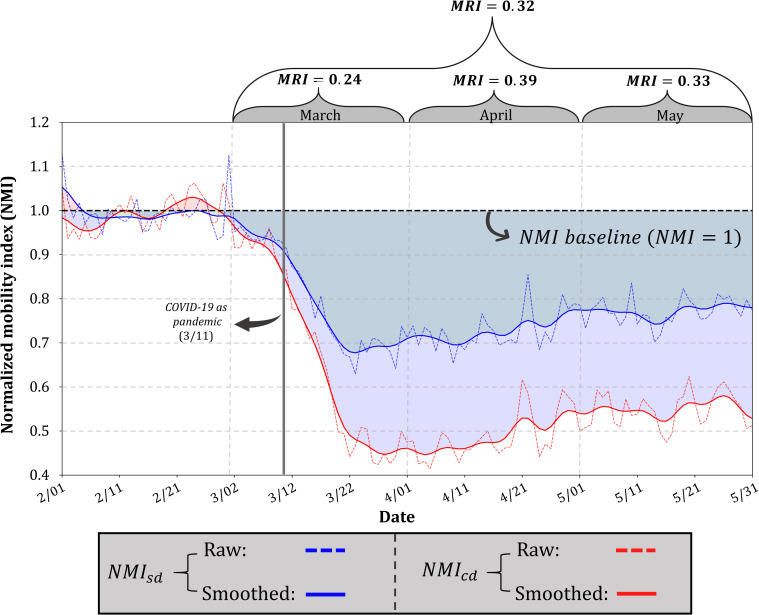
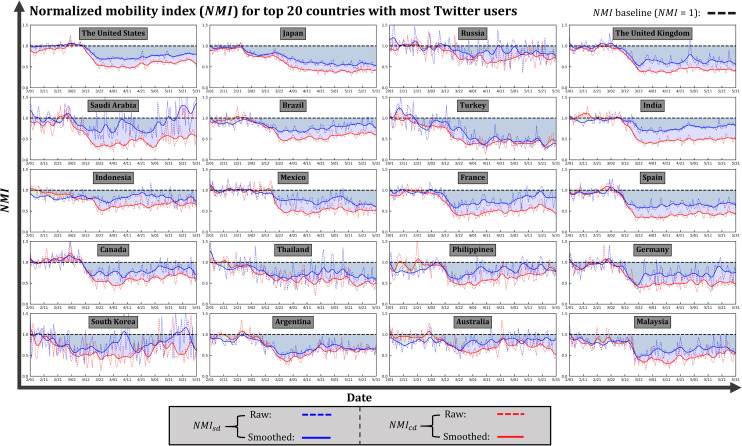
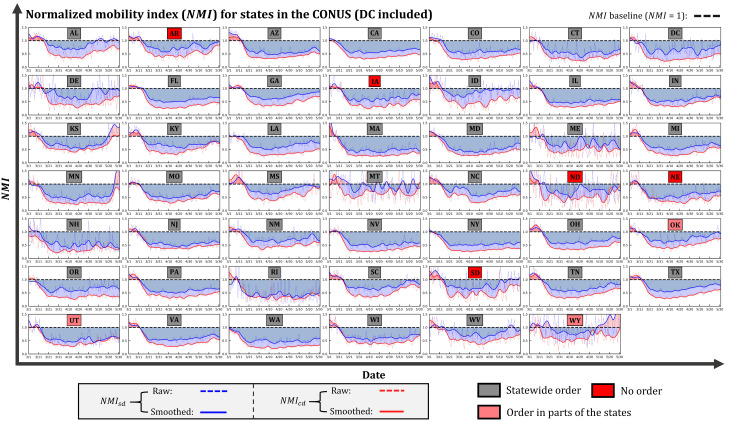
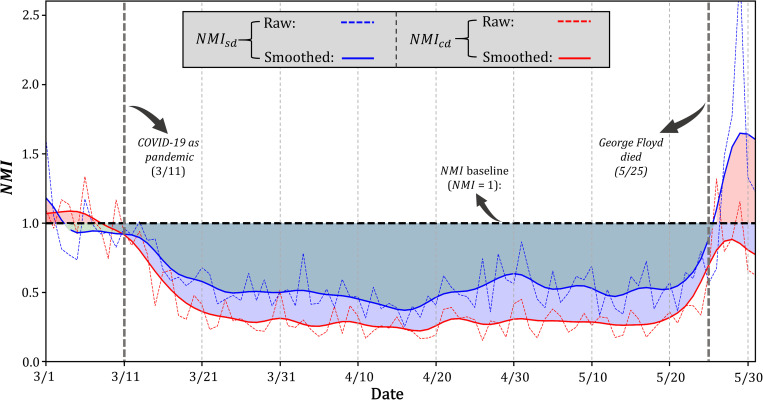
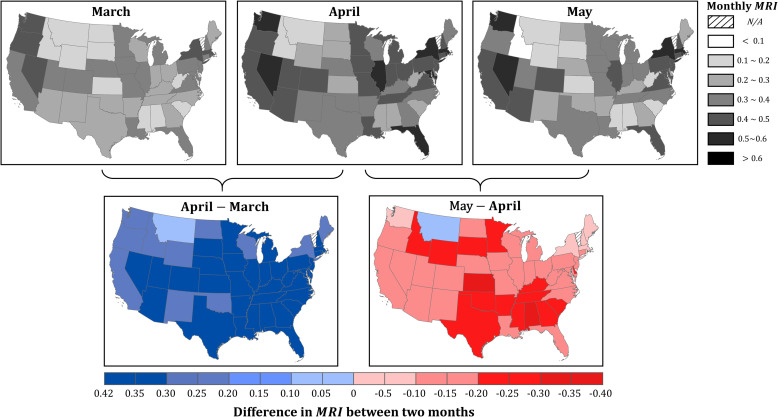
The current COVID-19 pandemic raises concerns worldwide, leading to serious health, economic, and social challenges. The rapid spread of the virus at a global scale highlights the need for a more harmonized, less privacy-concerning, easily accessible approach to monitoring the human mobility that has proven to be associated with viral transmission. In this study, we analyzed over 580 million tweets worldwide to see how global collaborative efforts in reducing human mobility are reflected from the user-generated information at the global, country, and U.S. state scale. Considering the multifaceted nature of mobility, we propose two types of distance: the single-day distance and the cross-day distance. To quantify the responsiveness in certain geographic regions, we further propose a mobility-based responsive index (MRI) that captures the overall degree of mobility changes within a time window. The results suggest that mobility patterns obtained from Twitter data are amenable to quantitatively reflect the mobility dynamics. Globally, the proposed two distances had greatly deviated from their baselines after March 11, 2020, when WHO declared COVID-19 as a pandemic. The considerably less periodicity after the declaration suggests that the protection measures have obviously affected people’s travel routines. The country scale comparisons reveal the discrepancies in responsiveness, evidenced by the contrasting mobility patterns in different epidemic phases. We find that the triggers of mobility changes correspond well with the national announcements of mitigation measures, proving that Twitter-based mobility implies the effectiveness of those measures. In the U.S., the influence of the COVID-19 pandemic on mobility is distinct. However, the impacts vary substantially among states.
Overview
The claims and statistics of this paper haven’t been checked yet.
Run the check — free, no account needed. It reads the open-access text and checks the sources it cites.
Integrity signals
Registry
Cites
Statistics
Figures
Verification
Claims the paper makes
The claims and statistics of this paper haven’t been checked yet.
Run the check — free, no account needed. It reads the open-access text and checks the sources it cites.
Self-check
Percentages, sums and reported differences re-computed from the paper’s own numbers.
The self-check needs the paper’s full text.
Citations
Cites
Understanding individual human mobility patterns
González, M. C., Hidalgo, C. A., & Barabási, A.-Ĺ. (2008) · Nature · doi:10.1038/nature06958 · Cited by 6,186 · cited 1×
“Studies have shown that mobility may vary regularly on a monthly basis [62, 63], and the variations differ geographically due to the different cultural and societal settings.”
Background4 What Is Web 2.0? Design Patterns and Business Models for the Next Generation of Software
O’Reilly, T. (2012) · New York University Press eBooks · doi:10.18574/nyu/9780814764077.003.0008 · Cited by 5,623
Citizens as sensors: the world of volunteered geography
Goodchild, M. F. (2007) · GeoJournal · doi:10.1007/s10708-007-9111-y · Cited by 4,611 · cited 2×
“Since the initial outbreak of COVID-19, numerous efforts have been made, by incorporating the emerging concept of “Web 2.0” [14], “Big Data” [15], and “Citizen as Sensors” [16], to obtain timely information regarding whether people are actively reducing their exposure to COVID-19 by reducing distances traveled, and by…”
BackgroundInfluentialQiu, J., Shen, B., Zhao, M., Wang, Z., Xie, B., & Xu, Y. (2020) · General Psychiatry · doi:10.1136/gpsych-2020-100213 · Cited by 4,307
The effect of travel restrictions on the spread of the 2019 novel coronavirus (COVID-19) outbreak
Chinazzi, M., Davis, J. T., Ajelli, M., Gioannini, C., Litvinova, M., Merler, S., Pastore y Piontti, A., Mu, K., Rossi, L., Sun, K., et al. (2020) · Science · doi:10.1126/science.aba9757 · Cited by 3,694
Big Data : The Management Revolution
マカフィー, ア., ブリニョルフソン, エ., & 有賀, 裕. (2013) · Harvard business review · Cited by 3,545
The effect of human mobility and control measures on the COVID-19 epidemic in China
Kraemer, M. U. G., Yang, C.-H., Gutiérrez, B., Wu, C., Klein, B., Pigott, D. M., open COVID-19 data working group, du Plessis, L., Faria, N. R., Li, R., et al. (2020) · Science · doi:10.1126/science.abb4218 · Cited by 2,987 · cited 2×
“An initial outbreak of COVID-19 was first declared in Wuhan, China in January 2020 [2], before cases were reported in European countries, most notably Italy, France, and the UK.”
Method(2012) · PubMed · Cited by 2,326
Gender Differences in Negative Campaigning: The Impact of Party Environments
Ennser‐Jedenastik, L., Dolezal, M., & Müller, W. C. (2016) · Politics & Gender · doi:10.1017/s1743923x16000532 · Cited by 1,661
Spread and dynamics of the COVID-19 epidemic in Italy: Effects of emergency containment measures
Gatto, M., Bertuzzo, E., Mari, L., Miccoli, S., Carraro, L., Casagrandi, R., & Rinaldo, A. (2020) · Proceedings of the National Academy of Sciences · doi:10.1073/pnas.2004978117 · Cited by 1,046 · cited 1×
“This mobility pattern coincides with strong early travel restrictions implemented in Europe and Asia at the beginning of March [6, 46].”
Background
Cited by
Sorted by citations
Items 201–242 of 242
Hu, T., Wang, S., Luo, W. P., Zhang, M., Huang, X., Yan, Y., Liu, R., Ly, K., Kacker, V., She, B., et al. (2021) · doi:10.2196/preprints.30854 · Cited by 1
Self-citationModelling the Propagation of Infectious Disease via Transportation NetworksPreprint
Graham, D. J., Anupriya, & Bansal, P. (2022) · Research Square · doi:10.21203/rs.3.rs-1260315/v1 · Cited by 1
Observing the Unobservable: Connecting Persistent Emotional State to Behavior in Risky ContextsPreprint
Bayham, J., Fan, Y., Fenichel, E. P., Palacios, J., & Zheng, S. (2023) · SSRN Electronic Journal · doi:10.2139/ssrn.4665623 · Cited by 1
Measuring Global Multi-Scale Place Connectivity using Geotagged Social Media DataPreprint
Li, Z., Huang, X., Ye, X., Jiang, Y., Martín, Y., Ning, H., Hodgson, M. E., & Li, X. (2021) · arXiv (Cornell University) · doi:10.48550/arxiv.2102.03991
Self-citationSocial Mobility Patterns in the World's Populated Cities Through COVID-19
Preciado, A. L. J., & Durón, N. G. (2021) · Revista Mexicana de Economía y Finanzas · doi:10.21919/remef.v16i3.675
“Additionally, Huang et al. (2020) analyze millions of tweets worldwide.”
BackgroundNugent, J. R., & Balzer, L. B. (2021) · arXiv (Cornell University)
A data fusion approach to the estimation of temporary populations: An application to Australia
Charles‐Edwards, E., Corcoran, J., Loginova, J., Panczak, R., White, G., & Whitehead, A. (2021) · PLoS ONE · doi:10.1371/journal.pone.0259377 · Cited by 2
“The distinction between direct and indirect approaches has become fuzzier over time with the emergence of new data sources such as mobile phone records [13,14] and social media data [15,16].”
BackgroundReading Urban Transformation Based on Geolocated Crowdsourced Data
Álvaro, B. B., Huskinson, M., Pablo, M., & Serrano-Estrada, L. (2022) · International Conference on Future Challenges in Sustainable Urban Planning & Territorial Management (SUPTM) · doi:10.31428/10317/10581
An Approach of Analyzing Movement Patterns Using Word Embeddings from Geo-tagged Tweets
Hirota, M., & Oda, T. (2022) · Proceedings of International Conference on Artificial Life and Robotics · doi:10.5954/icarob.2022.os1-2
Cohen, P. N. (2021) · medRxiv · doi:10.1101/2021.12.26.21268426
Predicting and Generating Urban Human Mobility Flows with Random Forests and Land Cover DataPreprint
Kent, J. (2022) · SSRN Electronic Journal · doi:10.2139/ssrn.4135090
Diniz, A. M. A., Alvim, A. M. M., Lopes, E. V. P., Diniz, G. L., Souto, G. R., Silva, G. D. S. A. E., Carvalho, P. F. B., & Guimarães, S. J. F. (2022) · Caderno de Geografia · doi:10.5752/p.2318-2962.2022v32n70p1031
Forghani, M. A., Claramunt, C., Karimipour, F., & Heiler, G. (2022) · IEEE ... International Conference on Data Mining workshops · doi:10.1109/icdmw58026.2022.00093
“Similar patterns emerge from a global perspective as daily mobility in 36 selected countries on several continents shows similar trends of reduction of mobilities, with some exceptions [21].”
BackgroundContent and sentiment surveillance (CSI): A critical component for modeling modern epidemics
Chen, S., Yin, S., Guo, Y., Ge, Y., Janies, D. A., Dulin, M., Brown, C., Robinson, P. A., & Zhang, D. (2023) · Frontiers in Public Health · doi:10.3389/fpubh.2023.1111661
Health-related social media use : A systematic review
Yusoff, H. A. M., Hamzah, M. R., Manaf, A. R. A., Ismail, A., Ahmad, Y., Hussin, H., & Huzili, A. I. (2023) · AIP conference proceedings · doi:10.1063/5.0132822
Vu, H. Q., Miah, S. J., Xia, H., Li, G., Muskat, B., & Law, R. (2023) · Information Technology & Tourism · doi:10.1007/s40558-023-00254-z
Patrones de movilidad en tiempos de COVID-19
Gómez-Campos, S., Chou-Chen, S. W., Cubero-Corella, M., & García, M. F. S. (2023) · Epi-SCIENCE · doi:10.15517/es.2023.55398
Morgan, M., & Kulkarni, A. (2023) · Lecture notes in computer science · doi:10.1007/978-3-031-35927-9_24
News Media Representation on 2019 Hong Kong Protestors
Yazid, A. A. A., Bazlan, A. S., Maznun, M. D., & Fuat, N. H. M. (2023) · Journal of Social Science and Humanities · doi:10.26666/rmp.jssh.2023.5.3
Using location history data from cell phones of infectious patients for disease surveillance
Giddaluru, J. (2023) · Digital Library of Theses and Dissertations (Universidade de São Paulo) · doi:10.11606/t.9.2023.tde-11032024-154311
GS, M. O. A., & Nurwulandari, A. (2024) · Journal of Economic Bussines and Accounting (COSTING) · doi:10.31539/costing.v7i4.9766
Co-Move: COVID-19 and Inter-Region Human Mobility Analysis and Prediction
Burnwal, S. K., Sinha, P., Bhumika, B., Vyas, J., & Das, D. (2024) · IEEE Transactions on Computational Social Systems · doi:10.1109/tcss.2024.3406512
“In [23], a comprehensive Twitter dataset from around the world is utilized to analyze shifts in human mobility behavior during the COVID-19 pandemic, employing a mobility index score.”
MethodDural‐Selcuk, G. (2024) · Journal of the Operational Research Society · doi:10.1080/01605682.2024.2406230
“In a similar manner, mobility trends (Ghiglione and Johnson, 2020; Horowitz and Bubola, 2020; Drake et al., 2020; Huang et al., 2020) and/or social mixing patterns also change under different policy interventions (Milne et al., 2008; Mossong et al., 2008; Eames et al., 2011; Viner et al., 2020;…”
Chen, J., Xu, C., Lu, F., Zhang, L., Hong, Y., Bian, P., Chen, C., Tung, T., & Hong, D. (2025) · doi:10.2196/preprints.73095
Cruz-Bonilla, E., Diop, I. M., Wolff, C. G., Cherifi, H., & Hernández-Rosales, M. (2025) · Studies in computational intelligence · doi:10.1007/978-3-031-82439-5_23
How Reliable Is Google And Facebook Mobility Data?
Bucsky, P. (2024) · Transport and Communications · doi:10.26552/tac.c.2024.2.1
Social Network Analysis in Human Geography
Gong, X., Lu, Y., & Lin, Y. (2025) · Springer geography · doi:10.1007/978-3-031-87421-5_7
Patwary, A. U. Z., Ciari, F., Lee, E., & Lo, H. K. (2025) · Lecture notes in civil engineering · doi:10.1007/978-3-031-95115-2_16
Geospatial Approaches of the Impacts of COVID-19 on Human Mobility
Huang, X. (2025) · Encyclopedia of GIS · doi:10.1007/978-3-319-23519-6_1669-1
Self-citationZou, L., Lin, B., Ramakrishnan, T., & Yang, M. (2026) · Transactions in Urban Data Science and Technology · doi:10.1177/27541231261418712
“Other sources, such as Baidu Maps in China (Yangtianzhen and Ying, 2024), Twitter/X’s geotagged data (Huang et al., 2020; Jiang et al., 2021; Osorio-Arjona and García-Palomares, 2019), Facebook (Bonaccorsi et al., 2020), and mobile device location data (Lee et al., 2020; Pan et al., 2020), were…”
Spatio-temporal characteristics of taxis in Bangkok, Thailand, across multiple pandemic waves
Tanaksaranond, G., & Jarumaneeroj, P. (2026) · Transportation Research Interdisciplinary Perspectives · doi:10.1016/j.trip.2026.101975
Tillayeva, N., Tamura, N., Urano, K., Yonezawa, T., Kawaguchi, N., & Okumura, T. (2026) · Infectious Disease Modelling · doi:10.1016/j.idm.2026.03.006
“Individual and Facility Level With spatially and temporally high resolution data, more detailed modeling of infectious diseases becomes feasible, enabling strategies to be devised to prevent disease spread from its initial stages (Fan et al., 2022; Huang et al., 2020; Li, Huang, Ye, et al., 2021).”
Eisenhauer, C. (2021) · theses.fr (ABES) · doi:10.70675/760b3df4z633cz420dza2bdz95dc31ce2fba
Revealing the impact of different ambient populations on theft during the COVID-19 pandemic in China
Long, D., Huang, X., Song, G., & Liu, H. (2026) · Habitat International · doi:10.1016/j.habitatint.2026.103817
Self-citationMeasuring human capital with social media data and machine learning
Jakob, M., & Heinrich, S. (2026) · Scientific Reports · doi:10.1038/s41598-026-53076-4
Zhang, G. (2026) · Elsevier eBooks · doi:10.1016/b978-0-443-31574-9.00032-2
Aotearoa on Twitter during COVID-19 lockdowns
Phillips, J. B. (2026) · Political Science · doi:10.1080/00323187.2026.2680880
Song, J. Z., Tsang, I., Mouratidis, P., Saeed, M., L, A. A. O., Islam, A., & Gabison, S. (2026) · JMIR Nursing · doi:10.2196/76682
“This is made possible through social media listening (SML) [21,22], a research method that involves performing a systematic search of public social media platforms.”
Mattes, M., Arifi, D., & Resch, B. (2026) · Computational Urban Science · doi:10.1007/s43762-026-00293-2
Gong, X., Liu, L., Lu, Y., Zhang, G., Huang, X., & Lin, Y. (2026) · PLoS ONE · doi:10.1371/journal.pone.0356547
“The average nighttime tweet ratio in late May 2020 in Minnesota was significantly higher than the 2017 baseline (24.7% vs. 16.3%, p 0.01), consistent with increased human mobility during this period [44].”
InfluentialSelf-citation
Metadata
- Authors
- Huang, X., Li, Z., Jiang, Y., Li, X., & Porter, D.
- Affiliations
- University of South Carolina (US)
- Corresponding author
- Li, Zhenlong
- Venue
- PLOS ONE
- Publisher
- Public Library of Science (PLoS)
- Published
- 2020-11-10
- Volume
- 15
- Issue
- 11
- Pages
- e0241957
- ISSN
- 1932-6203 (ISSN-L)
- PMC
- PMC7654838
- OpenAlex
- W3105667161
- Cited by
- 242
- References
- 56
- Citations by year
- 2026: 12 · 2025: 21 · 2024: 22 · 2023: 49 · 2022: 72 · 2021: 61 · 2020: 5
- FWCI
- 41.68
- Type
- journal article
- Language
- en
- Open access
- gold
- doi.org
- Licence
- Locations
- PLoS ONE (publishedVersion, cc-by)
- PubMed Central (publishedVersion, cc-by)
- PubMed (publishedVersion)
- DOAJ (DOAJ: Directory of Open Access Journals) (submittedVersion, cc-by-sa)
- Funders
- National Science Foundatio (2028791)
- University of South Carolina Office of the Vice President for Research (135400-20-54176)
- Topics
- Social Sciences › Transportation › Human Mobility and Location-Based Analysis
- Physical Sciences › Mathematics › Modeling and Simulation › COVID-19 epidemiological studies
- Health Sciences › Medicine › Epidemiology › Data-Driven Disease Surveillance
- Keywords
- COVID-19 pandemic, human mobility, Twitter, social media data, travel behavior, mitigation measures, epidemic phases
- MeSH terms
- Betacoronavirus, COVID-19, SARS-CoV-2, Humans, Movement, Pneumonia, Viral, Coronavirus Infections, Pandemics, Social Media
About these checks
Registry, retraction, Cites and statistics results are computed, not judged, with one exception: a printed reference that no index lists is read once by a model before it counts as a citation error. Claims are extracted by a model and kept only when their quote appears verbatim in the text; each cited source is then checked, with a model’s help, for whether it says what the claim relies on. Those verdicts can be wrong — read the claim’s quote and the cited source before relying on one.
Statistics and arithmetic are recomputed, not judged.
Confidence bands are shown only for fields calibrated on our annotated test set. None is calibrated yet, so no band is shown.
What counts as a claim ›How we measure confidence ›How we check this ›
Are you an author, or do you see a problem with this page? Request a review
