

The DOI matches its Crossref record; 166 of the 166 references it cites were found in a registry or an index; 74 of the 140 sources its claims cite were checked for support.
Fibromyalgia pathogenesis explained by a neuroendocrine multistable model
Open accessAbstract
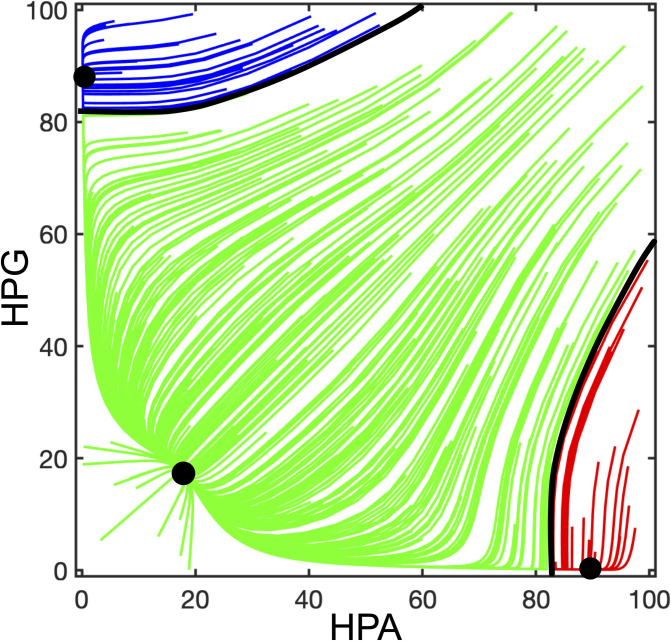
Fibromyalgia (FM) is a central disorder characterized by chronic pain, fatigue, insomnia, depression, and other minor symptoms. Knowledge about pathogenesis is lacking, diagnosis difficult, clinical approach puzzling, and patient management disappointing. We conducted a theoretical study based on literature data and computational analysis, aimed at developing a comprehensive model of FM pathogenesis and addressing suitable therapeutic targets. We started from the evidence that FM must involve a dysregulation of central pain processing, is female prevalent, suggesting a role for the hypothalamus-pituitary-gonadal (HPG) axis, and is stress-related, suggesting a role for the HP-adrenocortical (HPA) axis. Central pathogenesis was supposed to involve a pain processing loop system including the thalamic ventroposterolateral nucleus (VPL), the primary somatosensory cortex (SSC), and the thalamic reticular nucleus (TRN). For decreasing GABAergic and/or increasing glutamatergic transmission, the loop system crosses a bifurcation point, switching from monostable to bistable, and converging on a high-firing-rate steady state supposed to be the pathogenic condition. Thereafter, we showed that GABAergic transmission is positively correlated with gonadal-hormone-derived neurosteroids, notably allopregnanolone, whereas glutamatergic transmission is positively correlated with stress-induced glucocorticoids, notably cortisol. Finally, we built a dynamic model describing a multistable, double-inhibitory loop between HPG and HPA axes. This system has a high-HPA/low-HPG steady state, allegedly reached in females under combined premenstrual/postpartum brain allopregnanolone withdrawal and stress condition, driving the thalamocortical loop to the high-firing-rate steady state, and explaining the connection between endocrine and neural mechanisms in FM pathogenesis. Our model accounts for FM female prevalence and stress correlation, suggesting the use of neurosteroid drugs as a possible solution to currently unsolved problems in the clinical treatment of the disease.
Overview
CoChat Summary
TL;DR
The paper proposes a neuroendocrine multistable model in which combined HPG/HPA axis dynamics can weaken GABAergic and strengthen glutamatergic transmission, switching a thalamocortical pain loop to a high-firing-rate state that produces fibromyalgia. It predicts female prevalence and suggests GABAA-active neurosteroids as therapeutic candidates.
Key findings
- In the thalamocortical loop model, for maximal glutamatergic strength b = 1, the system is monostable for GABAergic strength a > 0.265; at a = 0.265 there is a bifurcation, and below this value the system becomes bistable, acquiring a high-firing-rate steady state assumed to represent FM chronic pain.
- Allopregnanolone withdrawal is estimated to reduce GABAergic strength to a ≈ 0.13; with physiological glutamatergic strength b = 0.5, the bifurcation point is close to but still below 0.13, whereas a 20% increase to b = 0.6 drives the bifurcation above 0.13, sufficient to induce the pathogenic state.
- The HPG-HPA double-inhibitory loop model has 3 stable equilibrium points; the high-HPA/low-HPG equilibrium is assumed to represent the functional state leading to FM onset and to drive the thalamocortical loop to its high-firing-rate state.
- The model predicts female prevalence: p_woman = 0.037 versus p_man = 0.005, yielding 87.2% women among FM patients, close to the reported 80–90% range; it suggests natural or synthetic GABAA-active neurosteroids as a possible new FM therapy.
Methods
- Theoretical study based on a PubMed literature search from inception through September 2023, using keywords for gonadal hormones, glucocorticoids, neurosteroids, and endocrine axes combined with “fibromyalgia,” “pain,” “glutamate,” “GABA,” and glutamate/GABA receptor names; combined with the authors’ previous thalamocortical loop model and FM-in-pregnancy review.
- Built a graphical and mathematical description of an endocrine loop representing HPG-HPA interaction and inferred its effects on the thalamocortical system; dynamics were analyzed using MATLAB version R2022a.
- Used systems of differential equations with increasing and decreasing Hill functions; parameters were derived from literature data and curve fitting, including median Hill parameters from allopregnanolone-GABAA and gonadal hormone/corticosteroid datasets.
Limitations
- The paper states the model is a hypothesis that must be tested in future research; numerical values were estimated from indirect data and are not expected to exactly measure real transition processes, and the model does not predict the frequency of such occurrences in the population.
- The paper states that existing symptomatic animal models (stress-based, acid saline, reserpine) disregard brain networks, the HPG axis, and HPA-HPG interaction, making them unsuitable as validating tests; lack of knowledge about FM pathogenesis hinders molecular and cellular models.
- Evident from the text: the study reports no new empirical or clinical data, relies on literature-derived representative values and assumptions (e.g., brain/plasma ratio estimates, finasteride-induced reduction), and does not clinically validate the proposed neurosteroid therapy in FM.
Model-written summary. Check it against the paper before relying on it.
Integrity signals
Registry
Cites
Statistics
Figures





Verification
Claims the paper makes
55 Valid · 3 Not valid · 32 Not checked · 48 Own results and interpretations
Some cited sources support this claim and some don’t — read each source’s verdict below.
In the paper
“For what concerns FM, both pharmacological and nonpharmacological therapies are generally disappointing, providing very limited benefit to FM patients [4,140,155,156].”
§ Fibromyalgia pathogenesis explained by a neuroendocrine multistable model > Discussion
What the sources say
- Disputedcites [4] I Demori, 2022, Online Questionnaire with Fibromyalgia Patients Reveals Correlations among Type of Pain, Psychological Alterations, and Effectiveness of Non-Pharmacological Therapies, Healthcare (Basel) sourceExperimental — accuracy not yet measured
The Discussion (§4.3) reports lower perceived effectiveness for pharmacological therapies, but it describes clear benefits from non-pharmacological interventions. The Conclusions (§5) report high self-perceived effectiveness for dietary interventions, relaxation techniques, and psychotherapy, contrary to the claim that both types of therapy provide very limited benefit. (LLM, conf=0.86)
Checked by a reasoning model — may be wrong.
- Partly supportedcites [140] R Tzadok, 2020, Current and Emerging Pharmacotherapy for Fibromyalgia, Pain Res Manag sourceExperimental — accuracy not yet measured
The Introduction says pharmacological treatment has had generally modest success, supporting that part of the claim. It recommends combining medication with nonpharmacological approaches, but does not say those approaches are generally disappointing or provide very limited benefit. Page numbers were not available in our copy. (LLM, conf=0.88)
- Disputedcites [155] AJ Busch, 2011, Exercise therapy for fibromyalgia, Curr Pain Headache Rep sourceExperimental — accuracy not yet measured
The Conclusions (page not supplied) say the benefits of exercise for people with fibromyalgia are well documented, including reduced pain and depression and improved physical function. The Benefits of Exercise section also says composite management programs have been shown effective. This contradicts the claim that nonpharmacological therapies generally provide very limited benefit; the paper does not establish a general verdict on pharmacological therapies. (LLM, conf=0.86)
Checked by a reasoning model — may be wrong.
- Partly supportedcites [156] FM Araujo, 2019, Physical therapy modalities for treating fibromyalgia, F1000Res sourceExperimental — accuracy not yet measured
The indexed text (labelled Abstract; no page given) says FM has no definitive cure, pharmacological therapy has side effects and a low recommendation level, and some physical therapies yield only small improvements. But it also says physical therapy seems to improve symptoms and reports benefits from several modalities. It does not support the blanket claim that both types of therapy generally provide very limited benefit. (LLM, conf=0.85)
plain- Asserted: passes — The authors put it forward as true.
- Checkable: passes — It can be checked against evidence.
- Load-bearing: passes — The paper’s conclusions depend on it.
- Based: passes — The paper gives a reason why it holds.
- Disputed
The cited sources support only part of this claim — read each source’s verdict below.
In the paper
“Repression of the HPA axis is due to inhibitory activities exerted by estrogens, androgens, progesterone, and their metabolites on neurons of the hypothalamic peri-paraventricular and paraventricular nuclei, and the anterior pituitary.”
§ Fibromyalgia pathogenesis explained by a neuroendocrine multistable model > Results > HPG and HPA axes as a loop system
What the sources say
- Partly supportedcites [72] MG Oyola, 2017, Hypothalamic-pituitary-adrenal and hypothalamic-pituitary-gonadal axes: sex differences in regulation of stress responsivity, Stress sourceExperimental — accuracy not yet measured
The sections on steroid metabolites and negative feedback describe inhibition of HPA activity by testosterone-derived metabolites and by estrogen-receptor-β activation near the PVN. But estrogen-receptor-α activation there increases HPA activity, and the pituitary-gland section says whether estrogen receptors regulate ACTH release at that level remains unknown. The copy does not establish that progesterone and all the listed hormones and metabolites inhibit the HPA axis through neurons at all three named sites; page numbers were not available. (LLM, conf=0.88)
plainstates a cause- Asserted: passes — The authors put it forward as true.
- Checkable: passes — It can be checked against evidence.
- Load-bearing: passes — The paper’s conclusions depend on it.
- Based: passes — The paper gives a reason why it holds.
- Partly supported
The cited sources support only part of this claim — read each source’s verdict below.
In the paper
“Accordingly, the first global effect of acute stress is a rapid decrease of GABAergic transmission together with an increase of glutamate transmission in brain areas involved in cognitive functions, such as prefrontal cortex and hippocampus [66,67].”
§ Fibromyalgia pathogenesis explained by a neuroendocrine multistable model > Results > New extended model: Involvement of endocrine axes in FM pathogenesis
What the sources say
- Not checked — no full text of the sourcecites [66] ML Barbaccia, 1996, Time-dependent changes in rat brain neuroactive steroid concentrations and GABAA receptor function after acute stress, Neuroendocrinology source
- Partly supportedcites [67] EY Yuen, 2009, Acute stress enhances glutamatergic transmission in prefrontal cortex and facilitates working memory, Proc Natl Acad Sci U S A sourceExperimental — accuracy not yet measured
The Results report that acute stress increased glutamatergic synaptic currents in rat prefrontal cortex. They do not establish a global effect or an increase in hippocampal glutamatergic transmission. Another Results passage reports no change in surface GABA-A receptor subunits, but does not measure the claimed rapid decrease in GABAergic transmission. Page numbers are unavailable in our copy. (LLM, conf=0.88)
plainstates a cause- Asserted: passes — The authors put it forward as true.
- Checkable: passes — It can be checked against evidence.
- Load-bearing: passes — The paper’s conclusions depend on it.
- Based: passes — The paper gives a reason why it holds.
The cited sources support only part of this claim — read each source’s verdict below.
In the paper
“Consistent with the correlation between FM and acute or chronic stress, the activation of the HPA axis is known to induce glutamatergic strengthening [59–61].”
§ Fibromyalgia pathogenesis explained by a neuroendocrine multistable model > Results > New extended model: Involvement of endocrine axes in FM pathogenesis
What the sources say
- Partly supportedcites [59] FL Groeneweg, 2011, Rapid non-genomic effects of corticosteroids and their role in the central stress response, J Endocrinol sourceExperimental — accuracy not yet measured
The Prefrontal cortex section reports that acute stress or corticosterone increased glutamatergic transmission, supporting the claim in that setting. But it also reports reduced plasticity under chronic stress, and the Regulation of the HPA-axis section describes corticosterone suppressing glutamatergic transmission in the hypothalamus. The unqualified claim that HPA-axis activation induces glutamatergic strengthening is therefore broader than the paper supports; page numbers were not available in our copy. (LLM, conf=0.86)
- Not checked — no full text of the sourcecites [60] B. Moghaddam, 1993, Stress preferentially increases extraneuronal levels of excitatory amino acids in the prefrontal cortex: comparison to hippocampus and basal ganglia, J Neurochem source
- Not checked — no full text of the sourcecites [61] C Venero, 1999, Rapid glucocorticoid effects on excitatory amino acid levels in the hippocampus: a microdialysis study in freely moving rats, Eur J Neurosci source
boostedstates a cause- Asserted: passes — The authors put it forward as true.
- Checkable: passes — It can be checked against evidence.
- Load-bearing: passes — The paper’s conclusions depend on it.
- Based: passes — The paper gives a reason why it holds.
- Partly supported
Every source the paper cites for this claim was checked and supports it.
In the paper
“Fifth, progesterone and testosterone, but not estradiol, seem to have a protective role in FM pain severity [33].”
§ Fibromyalgia pathogenesis explained by a neuroendocrine multistable model > Discussion
What the sources say
- Supportedcites [33] M Schertzinger, 2018, Daily Fluctuations of Progesterone and Testosterone Are Associated With Fibromyalgia Pain Severity, J Pain source
The Discussion reports that progesterone and testosterone were inversely associated with day-to-day fibromyalgia pain severity, while estradiol was not associated with it. The claim’s hedged wording is consistent with these findings; the paper does not establish that changing hormone levels would reduce pain. (LLM, conf=0.91)
hedgedstates a possible cause- Asserted: passes — The authors put it forward as true.
- Checkable: passes — It can be checked against evidence.
- Load-bearing: unclear — It is unclear whether the paper’s conclusions depend on it.
- Based: passes — The paper gives a reason why it holds.
- Supported
73 more claims · 25 with their cited sources checked
Create a free account to see all 138 claims and to verify the 1 reference still open.
- It may state two separate claims as one. 41
- Probably not a substantial claim. 23
- The quote only partly states this claim. 1
Self-check
Percentages, sums and reported differences re-computed from the paper’s own numbers.
Each contradiction between two passages listed here was confirmed by an independent check.
Rated minor: it would not touch a result — a value no result rests on, a p-value that stays on the same side of the significance level, or a conflict that is clerical, resolved elsewhere in the paper, or outside its own findings.
In the paper
§ Fibromyalgia pathogenesis explained by a neuroendocrine multistable model > Results > HPG and HPA axes as a loop system
“Note: Units ang/mL bdimensionless.”
§ Fibromyalgia pathogenesis explained by a neuroendocrine multistable model > Results > HPG and HPA axes as a loop system
“A decreasing Hill function was fitted to data, whose function parameters were derived after data normalization on a 0–100 scale. (Table 4).”
Rated minor: it would not touch a result — a value no result rests on, a p-value that stays on the same side of the significance level, or a conflict that is clerical, resolved elsewhere in the paper, or outside its own findings.
In the paper
§ Fibromyalgia pathogenesis explained by a neuroendocrine multistable model > Results > HPG and HPA axes as a loop system
“Allopregnanolone has induced the GABAergic inhibition of HPA axis activation in female rats [93,94] and pregnant women [95].”
§ Fibromyalgia pathogenesis explained by a neuroendocrine multistable model > References
“Central opioid inhibition of neuroendocrine stress responses in pregnancy in the rat is induced by the neurosteroid allopregnanolone.”
Rated minor: it would not touch a result — a value no result rests on, a p-value that stays on the same side of the significance level, or a conflict that is clerical, resolved elsewhere in the paper, or outside its own findings.
In the paper
§ Fibromyalgia pathogenesis explained by a neuroendocrine multistable model > Results > New extended model: Involvement of endocrine axes in FM pathogenesis
“The values of e and af are expressed as ng/mL”
§ Fibromyalgia pathogenesis explained by a neuroendocrine multistable model > Results > New extended model: Involvement of endocrine axes in FM pathogenesis
“Therefore, by considering an average maximum increase of 150%, the value of a at the follicular phase (af) was derived from the equation af+1.5af = 1, yielding af = 0.4.”
Citations
Cites
2016 revisions to the 2010/2011 fibromyalgia diagnostic criteria
Wolfe, F., Clauw, D. J., Fitzcharles, M.-A., Goldenberg, D. L., Häuser, W., Katz, R. L., Mease, P. J., Russell, A. S., Russell, I. J., & Walitt, B. (2016) · Seminars in Arthritis and Rheumatism · doi:10.1016/j.semarthrit.2016.08.012 · Cited by 2,232
Endocrinology of the stress response
Charmandari, E., Tsigos, C., & Chrousos, G. (2005) · Annual Review of Physiology · doi:10.1146/annurev.physiol.67.040403.120816 · Cited by 1,799
Sex differences in HPA axis responses to stress: a review
Kudielka, B. M., & Kirschbaum, C. (2005) · Biological Psychology · doi:10.1016/j.biopsycho.2004.11.009 · Cited by 1,624
Paul, S. M., & Purdy, R. H. (1992) · The FASEB Journal · doi:10.1096/fasebj.6.6.1347506 · Cited by 1,319
Nociplastic pain: towards an understanding of prevalent pain conditions
Fitzcharles, M.-A., Cohen, S. P., Clauw, D. J., Littlejohn, G., Usui, C., & Häuser, W. (2021) · The Lancet · doi:10.1016/s0140-6736(21)00392-5 · Cited by 1,253
Dynamics of gonadotropin-releasing hormone release during a pulse.
Moenter, S. M., Brand, R. M., Midgley, A. R., & Karsch, F. J. (1992) · Endocrinology · doi:10.1210/endo.130.1.1727719 · Cited by 1,244
The Hill equation revisited: uses and misuses
Weiss, J. N. (1997) · The FASEB Journal · doi:10.1096/fasebj.11.11.9285481 · Cited by 1,000
Worldwide epidemiology of fibromyalgia
Queiroz, L. P. (2013) · Current Pain and Headache Reports · doi:10.1007/s11916-013-0356-5 · Cited by 826
Meltzer-Brody, S., Colquhoun, H., Riesenberg, R., Epperson, C. N., Deligiannidis, K. M., Rubinow, D. R., Li, H., Sankoh, A. J., Clemson, C., Schacterle, A., et al. (2018) · The Lancet · doi:10.1016/s0140-6736(18)31551-4 · Cited by 795
Fibromyalgia: an update on clinical characteristics, aetiopathogenesis and treatment
Sarzi-Puttini, P., Giorgi, V., Marotto, D., & Atzeni, F. (2020) · Nature Reviews Rheumatology · doi:10.1038/s41584-020-00506-w · Cited by 793
Cited by
Amzolini, A. M., Neagoe, C. D., Avramescu, T. E., Mitrea, A., Trăistaru, R., Micu, E. S., Ianoși, S. L., & Matei, D. V. (2024) · Healthcare · doi:10.3390/healthcare12191956 · Cited by 8
Riquelme-Aguado, V., González-Álvarez, M. E., Di‐Bonaventura, S., Rodríguez‐Lagos, L., Campo, A. Z.-D., Gómez‐Esquer, F., Díaz‐Gil, G., & Crujera, A. G. (2025) · European Journal of Pain · doi:10.1002/ejp.70201 · Cited by 8
“Although its aetiology remains unclear, evidence supports a multifactorial origin involving central sensitisation (Or-Borichev et al. 2025), neuroendocrine dysfunction (Demori et al. 2024), and immune alterations (Nizzero et al. 2025).”
Stroman, P. W., Staud, R. M., & Pukall, C. F. (2025) · PLoS ONE · doi:10.1371/journal.pone.0316672 · Cited by 10
Psychosomatic Disorders, Epigenome, and Gut Microbiota
Abdolmaleky, H. M., Pirani, A., & Pettinato, G. (2025) · Cells · doi:10.3390/cells14241959 · Cited by 6
“…resulting from stress can be categorized under this umbrella owing to overlapping mechanisms, including disruptions in the hypothalamic–pituitary–adrenal (HPA) axis [5,6], autonomic balance [7], and immune function [8,9] accompanied with abnormal changes in the gut microbiota (GM) composition [10].”
Mantle, D., Domingo, J. C., Golomb, B. A., & Castro‐Marrero, J. (2025) · International Journal of Molecular Sciences · doi:10.3390/ijms26189044 · Cited by 5
“There is also some evidence of altered hormone levels in FM and long COVID, although this is less well established [108,109].”
Metadata
- Authors
- Demori, I., Losacco, S., Giordano, G., Mucci, V., Blanchini, F., & Burlando, B.
- Affiliations
- University of Genoa (IT)
- University of Trento (IT)
- Western Sydney University (AU)
- University of Udine (IT)
- Corresponding author
- Giordano, Giulia
- Venue
- PLOS ONE
- Publisher
- Public Library of Science (PLoS)
- Published
- 2024-07-11
- Volume
- 19
- Issue
- 7
- Pages
- e0303573
- ISSN
- 1932-6203 (ISSN-L)
- PMC
- PMC11238986
- OpenAlex
- W4400527963
- Semantic Scholar
- 7cbfba1b61835ded046575f4481ce8fbdb946b50
- Cited by
- 14
- References
- 166
- Citations by year
- 2026: 5 · 2025: 7 · 2024: 2
- FWCI
- 4.09
- Type
- journal article
- Language
- en
- Open access
- gold
- doi.org
- Licence
- Locations
- PLoS ONE (publishedVersion, cc-by)
- PubMed Central (publishedVersion, cc-by)
- PubMed (publishedVersion)
- Institutional Research Information System (Università degli Studi di Trento) (submittedVersion, cc-by)
- DOAJ (DOAJ: Directory of Open Access Journals) (submittedVersion, cc-by-sa)
- CINECA IRIS Institutial Research Information System (University of Genoa) (submittedVersion, other-oa)
- Funders
- HORIZON EUROPE European Research Council (101076926)
- Topics
- Health Sciences › Medicine › Psychiatry and Mental health › Fibromyalgia and Chronic Fatigue Syndrome Research
- Health Sciences › Medicine › Physiology (medical) › Pain Mechanisms and Treatments
- Life Sciences › Neuroscience › Behavioral Neuroscience › Stress Responses and Cortisol
- Keywords
- fibromyalgia, pathogenesis, multistability, bistability, bifurcation, hypothalamic-pituitary-gonadal axis, hypothalamic-pituitary-adrenal axis, allopregnanolone, neurosteroids, cortisol, thalamocortical loop, ventroposterolateral thalamic nucleus, thalamic reticular nucleus, primary somatosensory cortex, GABAergic neurotransmission, glutamatergic neurotransmission, stress, sex differences, chronic pain
- MeSH terms
- Female, Fibromyalgia, Humans, Hypothalamo-Hypophyseal System, Models, Biological, Neurosecretory Systems, Pituitary-Adrenal System
About these checks
Registry, retraction, Cites and statistics results are computed, not judged, with one exception: a printed reference that no index lists is read once by a model before it counts as a citation error. Claims are extracted by a model and kept only when their quote appears verbatim in the text; each cited source is then checked, with a model’s help, for whether it says what the claim relies on. Those verdicts can be wrong — read the claim’s quote and the cited source before relying on one.
The claim verdicts this report counts are experimental: their accuracy is not yet measured.
A language model drew the claims from the paper on 2026-10-10, under version 3 of the claim definition (model deepseek-v4.1-flash, prompt extract-v3).
A second model labelled each claim on 2026-10-10 (model jev-1.13-20260917, definition revision gold-guideline-v0.2).
Cited sources are checked with a language model’s help (gpt-6-sol).
Statistics and arithmetic are recomputed, not judged.
Confidence bands are shown only for fields calibrated on our annotated test set. None is calibrated yet, so no band is shown.
What counts as a claim ›How we measure confidence ›How we check this ›
Are you an author, or do you see a problem with this page? Request a review
How to cite
Cite CoChat for the checks on this page, and the paper for its own findings.
- This page
- CoChat. (2026). Citation check: Fibromyalgia pathogenesis explained by a neuroendocrine multistable model. https://app.cochat.ai/papers/10.1371/journal.pone.0303573
- The paper
- Demori, I., Losacco, S., Giordano, G., Mucci, V., Blanchini, F., & Burlando, B. (2024). Fibromyalgia pathogenesis explained by a neuroendocrine multistable model. PLOS ONE. https://doi.org/10.1371/journal.pone.0303573
Data sources
Bibliographic data: Semantic Scholar, OpenAlex, Crossref.
Contains information from the Semantic Scholar Academic Graph Datasets, made available under the ODC Attribution License (ODC-BY 1.0).
Semantic Scholar’s data is described in: Kinney, R., et al. (2023). The Semantic Scholar Open Data Platform. arXiv:2301.10140.
