

Control of the C. albicans Cell Wall Damage Response by Transcriptional Regulator Cas5
Open accessThe DOI matches its Crossref record; 43 of the 43 references it cites were found in a registry or an index.
Abstract
The fungal cell wall is vital for growth, development, and interaction of cells with their environment. The response to cell wall damage is well understood from studies in the budding yeast Saccharomyces cerevisiae, where numerous cell wall integrity (CWI) genes are activated by transcription factor ScRlm1. Prior evidence suggests the hypothesis that both response and regulation may be conserved in the major fungal pathogen Candida albicans. We have tested this hypothesis by using a new C. albicans genetic resource: we have screened mutants defective in putative transcription factor genes for sensitivity to the cell wall biosynthesis inhibitor caspofungin. We find that the zinc finger protein CaCas5, which lacks a unique ortholog in S. cerevisiae, governs expression of many CWI genes. CaRlm1 has a modest role in this response. The transcriptional coactivator CaAda2 is also required for expression of many CaCas5-dependent genes, as expected if CaCas5 recruits CaAda2 to activate target gene transcription. Many caspofungin-induced C. albicans genes specify endoplasmic reticulum and secretion functions. Such genes are not induced in S. cerevisiae, but promote its growth in caspofungin. We have used a new resource to identify a key C. albicans transcriptional regulator of CWI genes and antifungal sensitivity. Our gene expression findings indicate that both divergent and conserved response genes may have significant functional roles. Our strategy may be broadly useful for identification of pathogen-specific regulatory pathways and critical response genes.
Overview
The claims and statistics of this paper haven’t been checked yet.
Free: it reads the open-access text and checks the first 5 claims that cite a source we can check. Create a free account to check every claim.
Integrity signals
Registry
Cites
Statistics
Figures
Verification
Claims the paper makes
The claims and statistics of this paper haven’t been checked yet.
Free: it reads the open-access text and checks the first 5 claims that cite a source we can check. Create a free account to check every claim.
Claims other papers make about this one
Each is checked against this paper’s own text: does it say what the citing paper says it does?
The source backs part of the claim, not all of it — or backs it for a different population, condition or comparison.
In the citing paper
“Genes induced in this response include AGP2, KRE1, PGA13, RHR2, and CZF1; repressed genes include CHT2, PGA4 and SCW11, HAS1, CRZ1, and ENG1 (50–52).”
From Inhibition of Classical and Alternative Modes of Respiration in Candida albicans Leads to Cell Wall Remodeling and Increased Macrophage Recognition (2019) · cites this paper as [50]
Experimental — accuracy not yet measuredThe cited source says what the claim attributes to it.
In the citing paper
“A number of genes found to be differentially expressed upon SNP+SHAM treatment have been reported to be involved in the response to caspofungin.”
From Inhibition of Classical and Alternative Modes of Respiration in Candida albicans Leads to Cell Wall Remodeling and Increased Macrophage Recognition (2019) · cites this paper as [50]
The cited source says what the claim attributes to it.
In the citing paper
“In addition, PGA23, also a CS-induced gene [61], is persistently up-regulated in the phr1Δ mutant.”
From Genomic and functional analyses unveil the response to hyphal wall stress in Candida albicans cells lacking β(1,3)-glucan remodeling (2016) · cites this paper as [61]
The cited source says what the claim attributes to it.
In the citing paper
“In particular, a cell wall stress response mediated by Rlm1, Ada2, and Cas5 has been proposed to be required for cell wall integrity (Bruno et al., 2006; Sellam et al., 2009).”
From A Potential Antifungal Effect of Chitosan Against Candida albicans Is Mediated via the Inhibition of SAGA Complex Component Expression and the Subsequent Alteration of Cell Surface Integrity (2019) · cites this paper as Bruno et al., 2006
Self-check
Percentages, sums and reported differences re-computed from the paper’s own numbers.
The self-check needs the paper’s full text.
Citations
Cites
Bolstad, B. M., Irizarry, R. A., Åstrand, M., & Speed, T. P. (2003) · Bioinformatics · doi:10.1093/bioinformatics/19.2.185 · Cited by 8,266 · cited 2×
“loess R-function [39] implemented in an affy microarray analysis package [40].”
MethodFitting a mixture model by expectation maximization to discover motifs in biopolymers.
Bailey, T. L., & Elkan, C. (1994) · PubMed · Cited by 5,806
affy—analysis of Affymetrix GeneChip data at the probe level
Gautier, L., Cope, L., Bolstad, B. M., & Irizarry, R. A. (2004) · Bioinformatics · doi:10.1093/bioinformatics/btg405 · Cited by 5,218
Genomic Expression Programs in the Response of Yeast Cells to Environmental Changes
Gasch, A. P., Spellman, P. T., Kao, C. M., Carmel-Harel, O., Eisen, M. B., Storz, G., Botstein, D., & Brown, P. O. (2000) · Molecular Biology of the Cell · doi:10.1091/mbc.11.12.4241 · Cited by 4,815 · cited 1×
“ScHas1 is a putative helicase required for rRNA processing and ribosome biogenesis, and its expression is downregulated in response to numerous environmental stresses [28].”
Kaufman, R. J. (1999) · Genes & Development · doi:10.1101/gad.13.10.1211 · Cited by 2,248 · cited 1×
“Noteworthy also is up-regulation of CaHAC1 (Figure 4); its homolog ScHAC1 specifies the transcriptional activator of the unfolded protein response, an endoplasmic reticulum stressresponse pathway [26,27].”
Cell Wall Integrity Signaling in Saccharomyces cerevisiae
Levin, D. E. (2005) · Microbiology and Molecular Biology Reviews · doi:10.1128/mmbr.69.2.262-291.2005 · Cited by 1,136 · cited 1×
“phase cell cycle-regulated genes, but it has been implicated in the CWI pathway gene expression response though biochemical and functional analyses [9].”
Rapid Hypothesis Testing with Candida albicans through Gene Disruption with Short Homology Regions
Wilson, R. B., Davis, D., & Mitchell, A. P. (1999) · Journal of Bacteriology · doi:10.1128/jb.181.6.1868-1874.1999 · Cited by 762 · cited 1×
“All strains used in this study were derived from strain BWP17 (genotype: ura3D::kimm434/ ura3D::kimm434 his1::hisG/his1::hisG arg4::hisg/arg4::hisG [38]) through standard transformation methods [38].”
MethodSelf-citationRegulation of Cell-Surface Genes and Biofilm Formation by the C. albicans Transcription Factor Bcr1p
Nobile, C. J., & Mitchell, A. P. (2005) · Current Biology · doi:10.1016/j.cub.2005.05.047 · Cited by 464 · cited 3×
“RNA isolation, microarray analysis, and Northern analysis were performed as previously described [16].”
MethodInfluentialSelf-citationJung, U. S., & Levin, D. E. (1999) · Molecular Microbiology · doi:10.1046/j.1365-2958.1999.01667.x · Cited by 421 · cited 15×
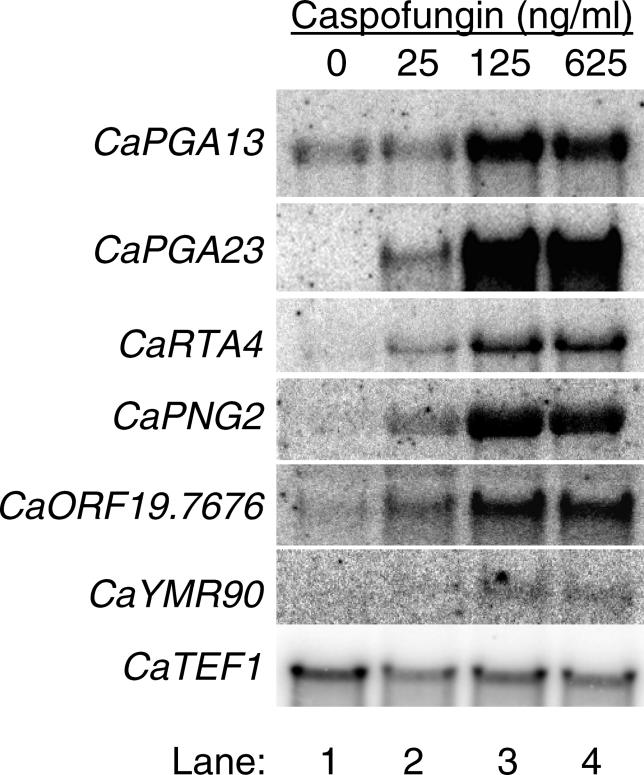
“Microarray studies show that caspofungin induces expression of several cell wall protein and cell wall maintenance genes [7], including two genes whose S. cerevisiae homologs are activated by ScRlm1.”
MethodInfluentialNiedenthal, R. K., Riles, L., Johnston, M., & Hegemann, J. H. (1996) · Yeast · doi:10.1002/(sici)1097-0061(19960630)12:8<723::aid-yea963>3.0.co;2-o · Cited by 383
Cited by
Items 101–162 of 162
Investigating the Function of Ddr48p in Candida albicans
Cleary, I. A., MacGregor, N. B., Saville, S. P., & Thomas, D. P. (2012) · Eukaryotic Cell · doi:10.1128/ec.00107-12 · Cited by 17
“, in response to antifungal drugs (3, 6, 16, 20, 25, 38, 46), during filamentation (30–32), and during biofilm formation (45).”
BackgroundLim, J.-Y., Park, Y., Pyon, Y.-H., Yang, J.-M., Yoon, J.-Y., Park, S. J., Lee, H., & Park, H. (2019) · Medical Mycology · doi:10.1093/mmy/myz049 · Cited by 16
Sun, Q., Xiong, K., Yuan, Y., Yu, J., Yang, L., Shen, C., Su, C., & Lü, Y. (2019) · Antimicrobial Agents and Chemotherapy · doi:10.1128/aac.02046-19 · Cited by 16
“Next, we compared the impact of GGTase I with that of Cas5, an important transcription factor that regulates cell wall stability during periods of cell wall stress (18, 19), on caspofungin sensitivity.”
BackgroundFiller, E. E., Liu, Y., Solis, N. V., Wang, L., Diaz, L. F., Edwards, J. E., Filler, S. G., & Yeaman, M. R. (2021) · Infection and Immunity · doi:10.1128/iai.00146-20 · Cited by 13
“The susceptibility of all the mutants to protamine and caspofungin was determined using an agar-dilution assay (37).”
MethodLi, J., Liang, X., Wei, Y., Liu, J., Lin, F., & Zhang, S. (2014) · European Journal of Plant Pathology · doi:10.1007/s10658-014-0572-9 · Cited by 14
“MAP1 is associated with cell wall integrity SDS and Congo Red are both typical inhibitors against cell wall synthesis (Woldringh and van Iterson 1972; Vannini et al. 1983; Roncero and Duran 1985; Pagé et al. 2003; Bruno et al. 2006).”
BackgroundNagayoshi, Y., Miyazaki, T., Minematsu, A., Yamauchi, S., Takazono, T., Nakamura, S., Imamura, Y., Izumikawa, K., Kakeya, H., Yanagihara, K., et al. (2014) · FEMS Yeast Research · doi:10.1111/1567-1364.12204 · Cited by 18
“cerevisiae (Bruno et al., 2006; Delgado-Silva et al., 2014).”
Detection of Protein–Protein Interactions Through Vesicle Targeting
Boysen, J. H., Fanning, S., Newberg, J. Y., Murphy, R. F., & Mitchell, A. P. (2009) · Genetics · doi:10.1534/genetics.109.101162 · Cited by 17
“Second, using primers”
BackgroundSelf-citationCek1 regulates ß(1,3)-glucan exposure through calcineurin effectors in Candida albicans
Wagner, A. S., Lumsdaine, S. W., Mangrum, M. M., King, A. E., Hancock, T. J., Sparer, T. E., & Reynolds, T. B. (2022) · PLOS Genetics · doi:10.1371/journal.pgen.1010405 · Cited by 12
Inhibition of Candida albicans growth by brominated furanones
Duo, M., Zhang, M., Luk, Y., & Ren, D. (2009) · Applied Microbiology and Biotechnology · doi:10.1007/s00253-009-2174-6 · Cited by 12
“Only two genes were induced by both BF1 and amphotericin B or caspofungin (Bruno et al. 2006; Liu et al. 2005).”
BackgroundBudding off: bringing functional genomics to Candida albicans
Anderson, M. Z., & Bennett, R. J. (2016) · Briefings in Functional Genomics · doi:10.1093/bfgp/elv035 · Cited by 11
Szabó, K., Jakab, Á., Póliska, S., Petrényi, K., Kovács, K. É., Issa, L. H. B., Emri, T., Pócsi, I., & Dombrádi, V. (2019) · BMC Genomics · doi:10.1186/s12864-019-6252-6 · Cited by 12
“To the best of our knowledge, this mechanism represents a novel stress response, because rRNA processing genes were typically downregulated under cell wall integrity stress [35] and cell membrane integrity stress [36].”
Associations of Rap1 with Cell Wall Integrity, Biofilm Formation, and Virulence in Candida albicans
Wang, W., Lai, T.-X., Wu, Y., Chen, Z.-T., Tseng, K., & Lan, C. (2022) · Microbiology Spectrum · doi:10.1128/spectrum.03285-22 · Cited by 12
Degani, G., Ragni, E., Botias, P., Ravasio, D., Calderon, J., Pianezzola, E., Rodriguez-Peña, J. M., Vanoni, M. A., Arroyo, J., Fonzi, W. A., et al. (2016) · BMC Genomics · doi:10.1186/s12864-016-2853-5 · Cited by 10
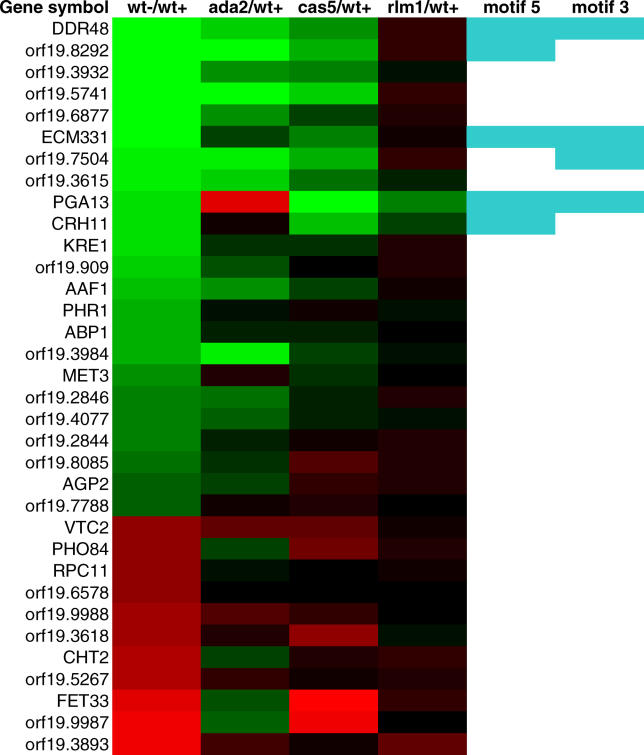
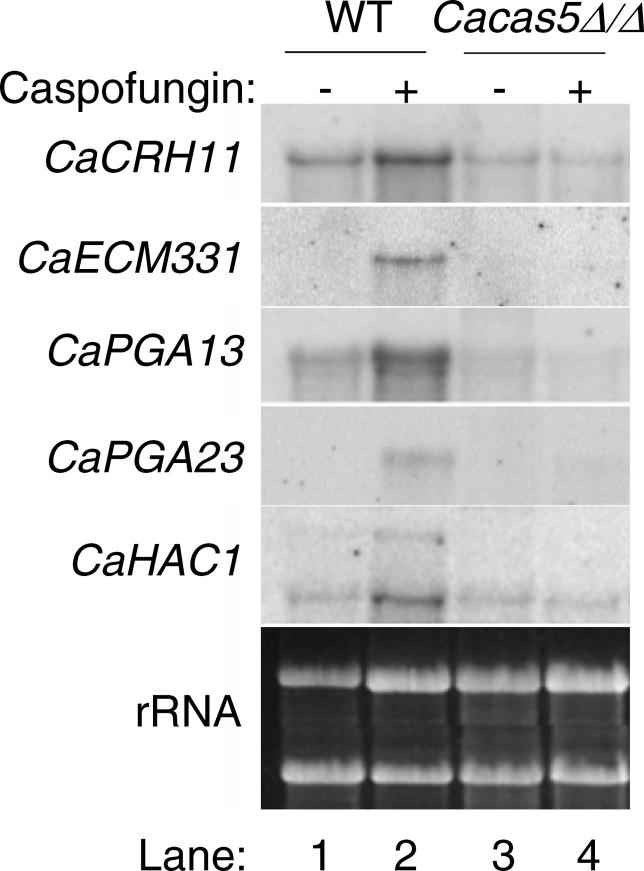
“Notably, the expression of CRH11, PGA13, PGA23, ECM331 is governed by CAS5, encoding a zinc-finger transcription factor that plays a major role in cell wall damage response [61].”
BackgroundResultInfluentialIchikawa, Y., Bruno, V. M., Woolford, C. A., Kim, H., Do, E., Brewer, G. C., & Mitchell, A. P. (2021) · Genetics · doi:10.1093/genetics/iyab075 · Cited by 9
Self-citationThe SAGA and NuA4 component Tra1 regulates Candida albicans drug resistance and pathogenesis
Razzaq, I., Berg, M. D., Jiang, Y., Genereaux, J. L., Uthayakumar, D., Kim, G. H., Agyare-Tabbi, M. R., Halder, V., Brandl, C. J., Lajoie, P., et al. (2021) · Genetics · doi:10.1093/genetics/iyab131 · Cited by 11
The Role of Sfp1 in Candida albicans Cell Wall Maintenance
Chang, C.-K., Yang, M.-C., Chen, H., Liao, Y.-L., & Lan, C. (2022) · Journal of Fungi · doi:10.3390/jof8111196 · Cited by 10
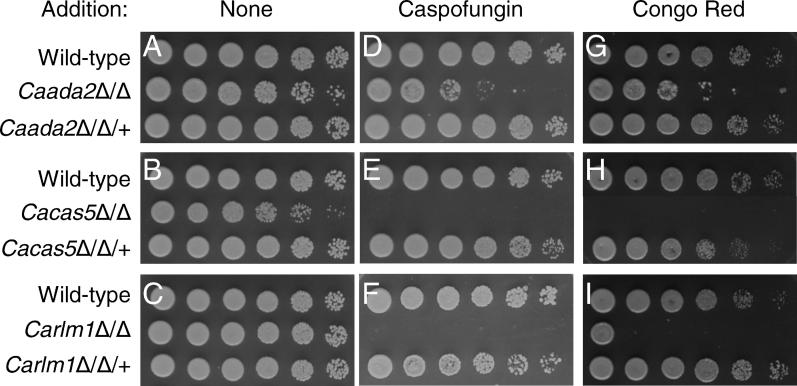
“Cas5 is a transcriptional regulator and deletion of CAS5 renders hypersensitivity to cell wall-disrupting agents and caspofungin [16].”
BackgroundInfluentialCosta, A. C. B. P., Omran, R. P., Correia‐Mesquita, T. O., Dumeaux, V., & Whiteway, M. S. (2019) · Scientific Reports · doi:10.1038/s41598-019-45624-y · Cited by 12
Localization of NPFxD motif-containing proteins in Aspergillus nidulans
Commer, B., Schultzhaus, Z. S., & Shaw, B. D. (2020) · Fungal Genetics and Biology · doi:10.1016/j.fgb.2020.103412 · Cited by 9
Godoy, P., Darlington, P. J., & Whiteway, M. S. (2022) · Frontiers in Microbiology · doi:10.3389/fmicb.2022.833655 · Cited by 9
“…UGP1, ALG13), transcription (HAP43/CAP2, RCP11), translation initiation (GCD7, GCD2), vesicle trafficking (VPS4), while many of the genes found with lower kinetics are linked to the plasma membrane and cell wall (Zaragoza et al., 1998; Lorenz et al., 2004; Bruno et al., 2006; Hall and Gow, 2013).”
BackgroundOwens, R. A., & Doyle, S. (2021) · Expert Review of Proteomics · doi:10.1080/14789450.2021.1912601 · Cited by 11
“albicans in response to caspofungin so this may represent a common effect across two different species [92].”
BackgroundGlobal transcriptional profiling of Candida albicans cwt1 null mutant
Moreno, I., Castillo, L., Sentandreu, R., & Valentín, E. (2007) · Yeast · doi:10.1002/yea.1444 · Cited by 10
“Nevertheless, misregulation of cell wall-related genes has also been found in response to the deletion of other transcription regulators, such as Efg1p, Tup1p, Nrg1p, Mig1p, Cas5p and Bcr1p (Doedt et al., 2004; Murad et al., 2001; Bruno et al., 2006; Nobile et al., 2005), among others.”
BackgroundAdejare, O., Oduyebo, O., Oladele, R. O., Nwaokorie, F. O., & Ogunsola, F. (2013) · African Journal of Clinical and Experimental Microbiology · doi:10.4314/ajcem.v14i3.4 · Cited by 8
Gutzmann, D. J., Kramer, J. J., Toomey, B. M., Boone, C. H. T., Atkin, A. L., & Nickerson, K. W. (2023) · G3 Genes Genomes Genetics · doi:10.1093/g3journal/jkad172 · Cited by 8
Yeast-derived glycolipids disrupt Candida biofilm and inhibit expression of genes in cell adhesion
Watchaputi, K., Songdech, P., Jayasekara, L. A. C. B., Puttarak, P., Lamping, E., Cannon, R. D., & Soontorngun, N. (2025) · Scientific Reports · doi:10.1038/s41598-025-08816-3 · Cited by 7
“The most significant downregulation in nocodazole synchronized cells was observed for RLM1 , a transcription factor essential for resistance to cell wall disruption 44,45 and involved in the maturation stage of biofilm formation.”
Secretion stress and antifungal resistance: An Achilles’ heel ofAspergillus fumigatus?
Richie, D. L., Feng, X., Krishnan, K., & Askew, D. S. (2010) · Medical Mycology · doi:10.3109/13693786.2010.497504 · Cited by 9
The Mechanisms of Resistance to Echinocandin Class of Antifungal Drugs
Niimi, K., & Niimi, M. (2009) · Nippon Ishinkin Gakkai Zasshi · doi:10.3314/jjmm.50.057 · Cited by 6
Li, Y., Zhu, H., Li, M., & Yu, Q. (2022) · Microbiology Spectrum · doi:10.1128/spectrum.02079-22 · Cited by 5
Yadav, A., Sah, S. K., Perlin, D. S., & Rustchenko, E. P. (2024) · Journal of Fungi · doi:10.3390/jof10030224 · Cited by 7
Jiang, Y., Zhuge, B., Qin, Y., Zong, H., & Lu, X. (2022) · Current Microbiology · doi:10.1007/s00284-022-02893-7 · Cited by 5
Pataki, E., Sipiczki, M., & Miklós, I. (2017) · Current Microbiology · doi:10.1007/s00284-017-1227-9 · Cited by 5
“Namely, cas5∆/∆ was also sensitive to low temperature, Congo red, and caspofungin [5, 14].”
BackgroundProteome analysis of Candida albicans cells undergoing chlamydosporulation
Ingle, S., Kazi, R. S., Patil, R., & Zore, G. B. (2019) · Journal of Proteins and Proteomics · doi:10.1007/s42485-019-00024-8 · Cited by 5
Yu, X., Mao, Y., Li, G., Wu, X., Xuan, Q., Yang, S., Chen, X., Cao, Q., Guo, J., Guo, J., et al. (2023) · The Journal of Microbiology · doi:10.1007/s12275-022-00006-4 · Cited by 5
“albicans when the cell wall is damaged (Bruno et al., 2006).”
BackgroundZhao, Y., Zou, W., Su, C., & Lu, Y. (2026) · iFungi · doi:10.26599/ifungi.2026.9670011 · Cited by 4
Carvalho-Pereira, J., Oliveira, M. M. E., Costa‐Barbosa, A., Vaz, C., Velegraki, A., Zancopé‐Oliveira, R. M., Pais, C., & Sampaio, P. (2017) · Medical Mycology · doi:10.1093/mmy/myx079 · Cited by 4
Kim, J.-M., Moon, H. Y., Lee, D. W., Kang, H. A., & Kim, J. (2021) · The Journal of Microbiology · doi:10.1007/s12275-021-1326-y · Cited by 4
Kim, H.-J., Heredia, M. Y., Chen, X., Ahmed, M., Qasim, M. N., Callender, T. L., Hernday, A. D., & Rauceo, J. M. (2024) · Microbiology Spectrum · doi:10.1128/spectrum.01733-24 · Cited by 4
Wang, S., Li, G., Wei, Y., Wang, G., Dang, Y., Zhang, P., & Zhang, S. (2021) · Frontiers in Microbiology · doi:10.3389/fmicb.2020.605738 · Cited by 3
“Both CR and SDS can interfere with fungal cell wall assembly (Woldringh and van Iterson, 1972; Roncero and Duran, 1985; Bruno et al., 2006).”
BackgroundZhang, Q., Li, G., Wang, Y., Yang, C., Bai, W., Li, Q., Zhang, J., & Zhang, P. (2025) · Microorganisms · doi:10.3390/microorganisms13030683 · Cited by 2
“Cas5 also contributes to C. albicans survival under cell wall disturbances induced by congo red, sodium dodecyl sulfate, calcofluor white (CFW), and low temperature [23,25,26].”
Fungal Morphogenesis: In Hot Pursuit
Xu, W., & Mitchell, A. P. (2012) · Current Biology · doi:10.1016/j.cub.2012.02.037 · Cited by 2
Self-citationTwo Infection Assays to Study Non-Lethal Virulence Phenotypes in C. Albicans using C. Elegans
Smith, A. C., Dinh, J., & Hickman, M. A. (2021) · Journal of Visualized Experiments · doi:10.3791/62170 · Cited by 2
Colombo, M., Bettinelli, P., García, J. F., Maddalena, G., Toffolatti, S. L., Hausmann, L., Vezzulli, S., Masiero, S., & Cantù, D. (2025) · G3 Genes Genomes Genetics · doi:10.1093/g3journal/jkaf186 · Cited by 1
“CAZymes that target the plant cell walls facilitate these interactions by degrading cellulose, hemicellulose, pectin, and other components, enabling host invasion and nutrient acquisition (Bruno et al. 2006; Ospina-Giraldo et al. 2010; Kubicek et al. 2014; Barrett et al. 2020).”
The Rise of Candida auris: A Global Health Threat
Warrier, A. R., & Moses, S. S. (2025) · Infectious diseases · doi:10.5772/intechopen.1012838 · Cited by 1
Essential Genes in Aspergillus fumigatus
Hu, W., Jiang, B., & Roemer, T. (2014) · ASM Press eBooks · doi:10.1128/9781555815523.ch5 · Cited by 1
Evolutionary diversity of the control of the azole response by Tra1 across yeast species
Marsiglio-Librais, G. N., Jiang, Y., Razzaq, I., Brandl, C. J., Shapiro, R. S., & Lajoie, P. (2023) · G3 Genes Genomes Genetics · doi:10.1093/g3journal/jkad250 · Cited by 1
“Interestingly, deleting other SAGA complex components such as SPT7 , SPT8 , and ADA2 sensitizes C. albicans to both caspofungin and fluconazole (Bruno et al. 2006; Sellam et al. 2009; Rashid et al. 2022), whereas deleting other components, such as NGG1 and UPB8 , has no effect on anti-fungal drug…”
BackgroundTranscriptional regulation of carbohydrate metabolism in «Candida albicans»
Askew, C. (2010) · eScholarship@McGill (McGill) · doi:10.82308/10368 · Cited by 1
Functional Genomic and Chemical Biology Analysis of Echinocandin Resistance in Candida albicans
Caplan, T. (2018) · TSpace (University of Toronto) · Cited by 2
The ESCRT machinery, required for endosomal trafficking, is a pH-signaling platform
Boysen, J. H. (2008) · ProQuest Demo Repository
The Fungal Pathogen Candida albicans
Fanning, S., & Mitchell, A. P. (2014) · ASM Press eBooks · doi:10.1128/9781555816636.ch46
Self-citationVasicek, E. M. (2013) · doi:10.21007/etd.cghs.2013.0335
“Upon sensing stress at the surface of the fungal plasma membrane, the linear MAPK cascade amplifies the initial signal for transmission to downstream transcriptional regulators such as Rlm1p.”
InfluentialNickerson, K. W., Atkin, A. L., Marta, E., Blankenship, J. R., Langford, M. L., & Hargarten, J. C. (2014)
Molecular Targets for Anticandidal Chemotherapy
Milewski, S. (2017) · Springer eBooks · doi:10.1007/978-3-319-50409-4_21
Xie, J. L. (2017) · TSpace (University of Toronto) · Cited by 2
Rodríguez-Leguizamón, G. (2016) · Repositorio Institucional E-DocUR (Universidad Del Rosario) · doi:10.48713/10336_13785
Lee, K. K., & Munro, C. A. (2014) · Springer eBooks · doi:10.1007/978-3-642-55013-3_7 · Cited by 1
Multidrug Resistance Transcriptional Regulatory Networks in Candida
Rogers, P. D., & Barker, K. S. (2014) · ASM Press eBooks · doi:10.1128/9781555817176.ch25 · Cited by 1
Samaka, H. M. A. (2024) · Acta Scientiarum Biological Sciences · doi:10.4025/actascibiolsci.v46i1.70809
“Several studies identify a link between caspofungin sensitivity in the fungal cell wall integrity and the mitogen-activated protein kinase (MAPK) pathway (Reinoso-Martín, Schüller, Schuetzer-Muehlbauer, & Kuchler, 2003; Bruno et al.,2006).”
Candida Auris Features and its Treatment: Global EmergencyPreprint
Durán, N., Fávaro, W. J., & Nakazato, G. (2025) · doi:10.21467/preprints.653
Investigation of a Fungus Specific Protein Phosphatase
Szabó, K. T. (2020) · University of Debrecen Electronic Archive (University of Debrecen)
Functional Genomic Analysis of Protein Kinases in the Human Fungal Pathogen Candida albicans
Lee, Y. (2023) · TSpace (University of Toronto)
King, A. E., Mangrum, M. M., Kauffman, S., Taylor, K. E., Arnold, D., Wagner, A. S., & Reynolds, T. B. (2026) · Infection and Immunity · doi:10.1128/iai.00523-25
Sfp1 Contributes to Fluconazole Responses and Virulence in Candida albicans
Huang, W.-L., Chen, H., Tseng, K., Le, D.-D., Lin, S., Chang, Y.-S., Wang, I., Lo, H., Lin, C.-J., & Lan, C. (2026) · International Journal of Molecular Sciences · doi:10.3390/ijms27209206
“Cas5 is involved in C. albicans cell wall stress response [22,23].”
Metadata
- Authors
- Bruno, V. M., Kalachikov, S., Subaran, R., Nobile, C. J., Kyratsous, C., & Mitchell, A. P.
- Affiliations
- Columbia University (US)
- Corresponding author
- Mitchell, Aaron P
- Venue
- PLoS Pathogens
- Publisher
- Public Library of Science (PLoS)
- Published
- 2006-03-17
- Volume
- 2
- Issue
- 3
- Pages
- e21
- ISSN
- 1553-7366 (ISSN-L)
- 1553-7374
- PMC
- PMC1401495
- OpenAlex
- W2079004458
- Cited by
- 157
- References
- 42
- Citations by year
- 2026: 3 · 2025: 5 · 2024: 4 · 2023: 4 · 2022: 11 · 2021: 14 · 2020: 12 · 2019: 11 · 2018: 7 · 2017: 7 · 2016: 5 · 2015: 3 · 2014: 10 · 2013: 7 · 2012: 11
- FWCI
- 3.39
- Type
- journal article
- Language
- en
- Open access
- gold
- doi.org
- Locations
- PLoS Pathogens (publishedVersion, cc-by)
- Europe PMC (PubMed Central) (publishedVersion, cc-by)
- PubMed Central (publishedVersion, cc-by)
- PubMed (publishedVersion)
- DOAJ (DOAJ: Directory of Open Access Journals) (submittedVersion, cc-by-sa)
- Figshare (submittedVersion, cc-by)
- Funders
- National Institutes of Health
- National Institute of Allergy and Infectious Diseases (T32AI07161, R01AI050931, T32AI007161, R21AI055823)
- Topics
- Life Sciences › Biochemistry, Genetics and Molecular Biology › Molecular Biology › Fungal and yeast genetics research
- Health Sciences › Medicine › Infectious Diseases › Antifungal resistance and susceptibility
- Health Sciences › Medicine › Infectious Diseases › Fungal Infections and Studies
- Keywords
- Candida albicans, cell wall integrity, Rlm1, antifungal resistance, transcriptional regulation, endoplasmic reticulum, secretion, Saccharomyces cerevisiae comparison, fungal pathogens
- MeSH terms
- Caspofungin, Antifungal Agents, Candida albicans, Cell Wall, Genes, Mutation, Peptides, Cyclic, Transcription Factors, Transcription, Genetic, Echinocandins, Lipopeptides
About these checks
Registry, retraction, Cites and statistics results are computed, not judged, with one exception: a printed reference that no index lists is read once by a model before it counts as a citation error. Claims are extracted by a model and kept only when their quote appears verbatim in the text; each cited source is then checked, with a model’s help, for whether it says what the claim relies on. Those verdicts can be wrong — read the claim’s quote and the cited source before relying on one.
Statistics and arithmetic are recomputed, not judged.
Confidence bands are shown only for fields calibrated on our annotated test set. None is calibrated yet, so no band is shown.
What counts as a claim ›How we measure confidence ›How we check this ›
Are you an author, or do you see a problem with this page? Request a review
Data sources
Bibliographic data: Semantic Scholar, OpenAlex, Crossref.
Contains information from the Semantic Scholar Academic Graph Datasets, made available under the ODC Attribution License (ODC-BY 1.0).
Semantic Scholar’s data is described in: Kinney, R., et al. (2023). The Semantic Scholar Open Data Platform. arXiv:2301.10140.
