

Control of the C. albicans Cell Wall Damage Response by Transcriptional Regulator Cas5
Open accessThe DOI matches its Crossref record; 43 of the 43 references it cites were found in a registry or an index.
Abstract
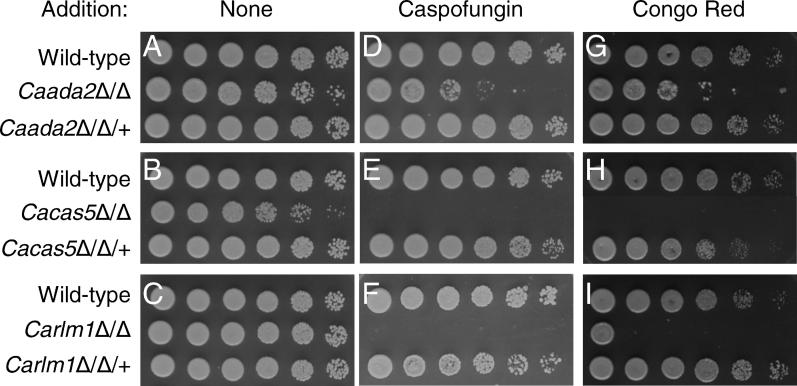
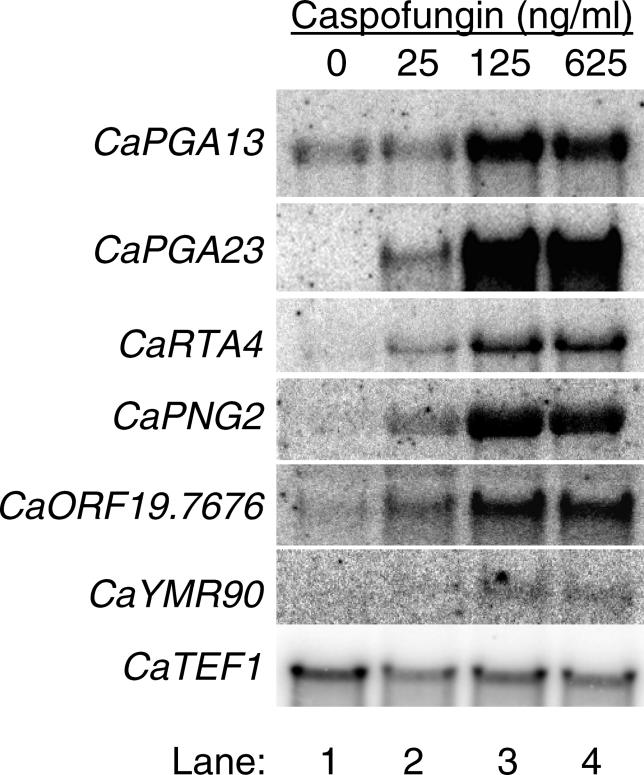
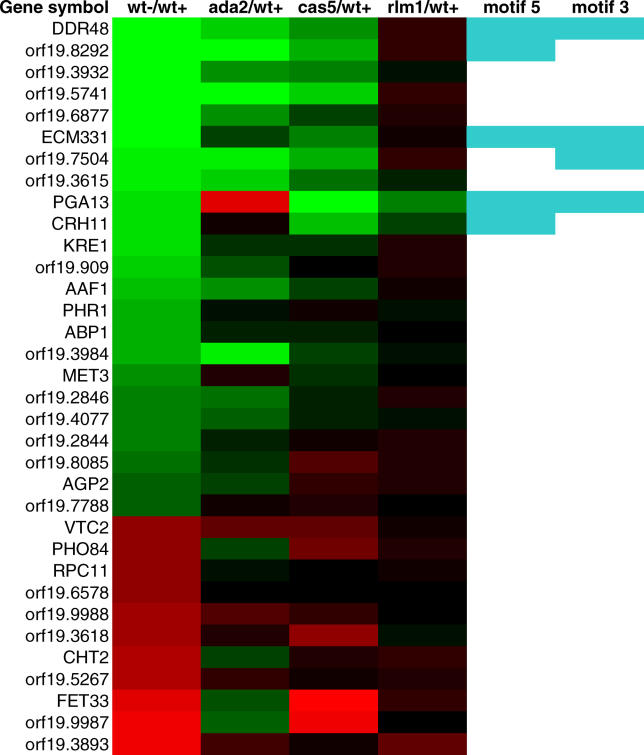
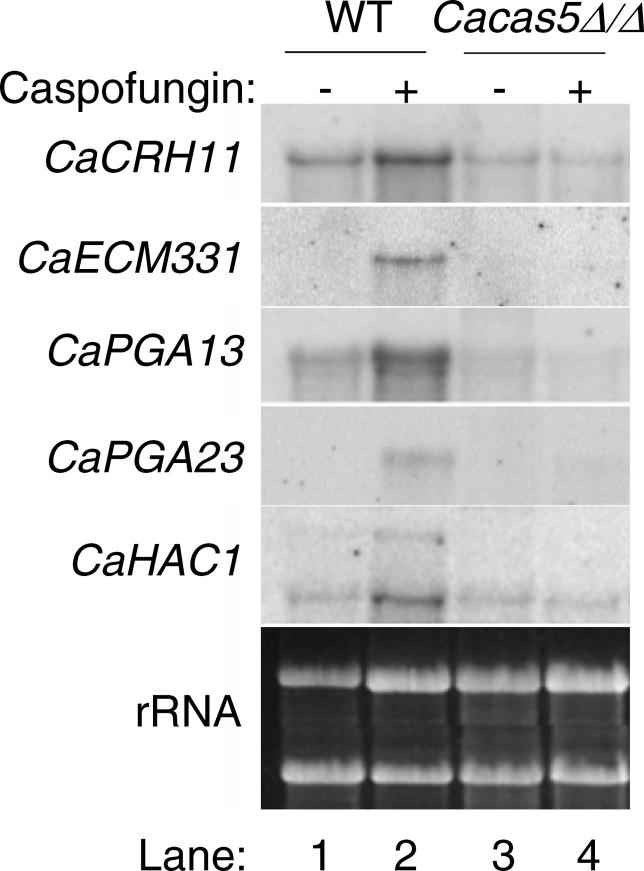
The fungal cell wall is vital for growth, development, and interaction of cells with their environment. The response to cell wall damage is well understood from studies in the budding yeast Saccharomyces cerevisiae, where numerous cell wall integrity (CWI) genes are activated by transcription factor ScRlm1. Prior evidence suggests the hypothesis that both response and regulation may be conserved in the major fungal pathogen Candida albicans. We have tested this hypothesis by using a new C. albicans genetic resource: we have screened mutants defective in putative transcription factor genes for sensitivity to the cell wall biosynthesis inhibitor caspofungin. We find that the zinc finger protein CaCas5, which lacks a unique ortholog in S. cerevisiae, governs expression of many CWI genes. CaRlm1 has a modest role in this response. The transcriptional coactivator CaAda2 is also required for expression of many CaCas5-dependent genes, as expected if CaCas5 recruits CaAda2 to activate target gene transcription. Many caspofungin-induced C. albicans genes specify endoplasmic reticulum and secretion functions. Such genes are not induced in S. cerevisiae, but promote its growth in caspofungin. We have used a new resource to identify a key C. albicans transcriptional regulator of CWI genes and antifungal sensitivity. Our gene expression findings indicate that both divergent and conserved response genes may have significant functional roles. Our strategy may be broadly useful for identification of pathogen-specific regulatory pathways and critical response genes.
Overview
The claims and statistics of this paper haven’t been checked yet.
Free: it reads the open-access text and checks the first 5 claims that cite a source we can check. Create a free account to check every claim.
Integrity signals
Registry
Cites
Statistics
Figures
Verification
Claims the paper makes
The claims and statistics of this paper haven’t been checked yet.
Free: it reads the open-access text and checks the first 5 claims that cite a source we can check. Create a free account to check every claim.
Claims other papers make about this one
Each is checked against this paper’s own text: does it say what the citing paper says it does?
The source backs part of the claim, not all of it — or backs it for a different population, condition or comparison.
In the citing paper
“Genes induced in this response include AGP2, KRE1, PGA13, RHR2, and CZF1; repressed genes include CHT2, PGA4 and SCW11, HAS1, CRZ1, and ENG1 (50–52).”
From Inhibition of Classical and Alternative Modes of Respiration in Candida albicans Leads to Cell Wall Remodeling and Increased Macrophage Recognition (2019) · cites this paper as [50]
Experimental — accuracy not yet measuredThe cited source says what the claim attributes to it.
In the citing paper
“A number of genes found to be differentially expressed upon SNP+SHAM treatment have been reported to be involved in the response to caspofungin.”
From Inhibition of Classical and Alternative Modes of Respiration in Candida albicans Leads to Cell Wall Remodeling and Increased Macrophage Recognition (2019) · cites this paper as [50]
The cited source says what the claim attributes to it.
In the citing paper
“In addition, PGA23, also a CS-induced gene [61], is persistently up-regulated in the phr1Δ mutant.”
From Genomic and functional analyses unveil the response to hyphal wall stress in Candida albicans cells lacking β(1,3)-glucan remodeling (2016) · cites this paper as [61]
The cited source says what the claim attributes to it.
In the citing paper
“In particular, a cell wall stress response mediated by Rlm1, Ada2, and Cas5 has been proposed to be required for cell wall integrity (Bruno et al., 2006; Sellam et al., 2009).”
From A Potential Antifungal Effect of Chitosan Against Candida albicans Is Mediated via the Inhibition of SAGA Complex Component Expression and the Subsequent Alteration of Cell Surface Integrity (2019) · cites this paper as Bruno et al., 2006
Self-check
Percentages, sums and reported differences re-computed from the paper’s own numbers.
The self-check needs the paper’s full text.
Citations
Cites
Bolstad, B. M., Irizarry, R. A., Åstrand, M., & Speed, T. P. (2003) · Bioinformatics · doi:10.1093/bioinformatics/19.2.185 · Cited by 8,266 · cited 2×
“loess R-function [39] implemented in an affy microarray analysis package [40].”
MethodFitting a mixture model by expectation maximization to discover motifs in biopolymers.
Bailey, T. L., & Elkan, C. (1994) · PubMed · Cited by 5,806
affy—analysis of Affymetrix GeneChip data at the probe level
Gautier, L., Cope, L., Bolstad, B. M., & Irizarry, R. A. (2004) · Bioinformatics · doi:10.1093/bioinformatics/btg405 · Cited by 5,218
Genomic Expression Programs in the Response of Yeast Cells to Environmental Changes
Gasch, A. P., Spellman, P. T., Kao, C. M., Carmel-Harel, O., Eisen, M. B., Storz, G., Botstein, D., & Brown, P. O. (2000) · Molecular Biology of the Cell · doi:10.1091/mbc.11.12.4241 · Cited by 4,815 · cited 1×
“ScHas1 is a putative helicase required for rRNA processing and ribosome biogenesis, and its expression is downregulated in response to numerous environmental stresses [28].”
Kaufman, R. J. (1999) · Genes & Development · doi:10.1101/gad.13.10.1211 · Cited by 2,248 · cited 1×
“Noteworthy also is up-regulation of CaHAC1 (Figure 4); its homolog ScHAC1 specifies the transcriptional activator of the unfolded protein response, an endoplasmic reticulum stressresponse pathway [26,27].”
Cell Wall Integrity Signaling in Saccharomyces cerevisiae
Levin, D. E. (2005) · Microbiology and Molecular Biology Reviews · doi:10.1128/mmbr.69.2.262-291.2005 · Cited by 1,136 · cited 1×
“phase cell cycle-regulated genes, but it has been implicated in the CWI pathway gene expression response though biochemical and functional analyses [9].”
Rapid Hypothesis Testing with Candida albicans through Gene Disruption with Short Homology Regions
Wilson, R. B., Davis, D., & Mitchell, A. P. (1999) · Journal of Bacteriology · doi:10.1128/jb.181.6.1868-1874.1999 · Cited by 762 · cited 1×
“All strains used in this study were derived from strain BWP17 (genotype: ura3D::kimm434/ ura3D::kimm434 his1::hisG/his1::hisG arg4::hisg/arg4::hisG [38]) through standard transformation methods [38].”
MethodSelf-citationRegulation of Cell-Surface Genes and Biofilm Formation by the C. albicans Transcription Factor Bcr1p
Nobile, C. J., & Mitchell, A. P. (2005) · Current Biology · doi:10.1016/j.cub.2005.05.047 · Cited by 464 · cited 3×
“RNA isolation, microarray analysis, and Northern analysis were performed as previously described [16].”
MethodInfluentialSelf-citationJung, U. S., & Levin, D. E. (1999) · Molecular Microbiology · doi:10.1046/j.1365-2958.1999.01667.x · Cited by 421 · cited 15×
“Microarray studies show that caspofungin induces expression of several cell wall protein and cell wall maintenance genes [7], including two genes whose S. cerevisiae homologs are activated by ScRlm1.”
MethodInfluentialNiedenthal, R. K., Riles, L., Johnston, M., & Hegemann, J. H. (1996) · Yeast · doi:10.1002/(sici)1097-0061(19960630)12:8<723::aid-yea963>3.0.co;2-o · Cited by 383
Cited by
The Fungal Cell Wall: Structure, Biosynthesis, and Function
Gow, N. A. R., Latge, J.-P., & Munro, C. A. (2017) · Microbiology Spectrum · doi:10.1128/microbiolspec.funk-0035-2016 · Cited by 1,423
Antifungal Drug Resistance: Molecular Mechanisms in Candida albicans and Beyond
Lee, Y., Puumala, E., Robbins, N., & Cowen, L. E. (2021) · Chemical Reviews · doi:10.1021/acs.chemrev.0c00199 · Cited by 801
Antifungal Resistance and New Strategies to Control Fungal Infections
Vandeputte, P., Ferrari, S., & Coste, A. T. (2012) · International Journal of Microbiology · doi:10.1155/2012/713687 · Cited by 505
“First of all, treating strains with already known antifungal drugs and analyzing for example, growth modification and later transcriptional rewiring, some authors try to better understand drugs mechanisms of action and/or to find synergistic effect between them [272, 274].”
BackgroundCandida albicans Cell Wall Proteins
Chaffin, W. L. (2008) · Microbiology and Molecular Biology Reviews · doi:10.1128/mmbr.00032-07 · Cited by 515
A Candida Biofilm-Induced Pathway for Matrix Glucan Delivery: Implications for Drug Resistance
Taff, H. T., Nett, J. E., Zarnowski, R., Ross, K. M., Sanchez, H., Cain, M. T., Hamaker, J., Mitchell, A. P., & Andes, D. R. (2012) · PLoS Pathogens · doi:10.1371/journal.ppat.1002848 · Cited by 291
“Agents with various mechanisms of action known to impact cell integrity were tested [37,59].”
BackgroundSelf-citationSanglard, D., Coste, A., & Ferrari, S. (2009) · FEMS Yeast Research · doi:10.1111/j.1567-1364.2009.00578.x · Cited by 285
Fungal echinocandin resistance
Walker, L. A., Gow, N. A. R., & Munro, C. A. (2010) · Fungal Genetics and Biology · doi:10.1016/j.fgb.2009.09.003 · Cited by 267
Transcriptional regulation of carbohydrate metabolism in the human pathogen Candida albicans
Askew, C., Sellam, A., Epp, E., Hogues, H., Mullick, A., Nantel, A., & Whiteway, M. (2009) · PLoS Pathogens · doi:10.1371/journal.ppat.1000612 · Cited by 260
“Serial spotting plate assays were carried out as described”
MethodPlaine, A., Walker, L., Da Costa, G., Mora-Montes, H. M., McKinnon, A., Gow, N. A. R., Gaillardin, C., Munro, C. A., & Richard, M. L. (2008) · Fungal Genetics and Biology · doi:10.1016/j.fgb.2008.08.003 · Cited by 238
Essential Gene Identification and Drug Target Prioritization in Aspergillus fumigatus
Hu, W., Sillaots, S., Lemieux, S., Davison, J., Kauffman, S., Breton, A., Linteau, A., Xin, C., Bowman, J., Becker, J., et al. (2007) · PLoS Pathogens · doi:10.1371/journal.ppat.0030024 · Cited by 237
“mutants [10], and a promoter replacement strategy to”
BackgroundPortrait of Candida albicans Adherence Regulators
Finkel, J. S., Xu, W., Huang, D., Hill, E. M., Desai, J. V., Woolford, C. A., Nett, J. E., Taff, H., Norice, C. T., Andes, D. R., et al. (2012) · PLoS Pathogens · doi:10.1371/journal.ppat.1002525 · Cited by 228
“Strains were tested for drug sensitivity as described previously [30].”
BackgroundMethodSelf-citationAn Extensive Circuitry for Cell Wall Regulation in Candida albicans
Blankenship, J. R., Fanning, S., Hamaker, J. J., & Mitchell, A. P. (2010) · PLoS Pathogens · doi:10.1371/journal.ppat.1000752 · Cited by 201
“be more specific for caspofungin response [16,23,24].”
BackgroundInfluentialSelf-citationPukkila-Worley, R., Peleg, A. Y., Tampakakis, E., & Mylonakis, E. (2009) · Eukaryotic Cell · doi:10.1128/ec.00163-09 · Cited by 192
“We identified two other genes in our screen (CAS5 and ADA2) without defined roles in hyphal formation but whose molecular function has been previously studied (9, 48).”
BackgroundInfluentialRichie, D. L., Hartl, L., Aimanianda, V., Winters, M. S., Fuller, K. K., Miley, M. D., White, S., McCarthy, J. W., Latgé, J.-P., Feldmesser, M., et al. (2009) · PLoS Pathogens · doi:10.1371/journal.ppat.1000258 · Cited by 185
“an idea that is supported by the upregulation of genes involved in ER and secretion functions, including Hac1, during caspofungin treatment of the dimporphic yeast Candida albicans [77].”
BackgroundNett, J. E., Sanchez, H., Cain, M. T., Ross, K. M., & Andes, D. R. (2011) · Eukaryotic Cell · doi:10.1128/ec.05126-11 · Cited by 168
“Their construction has been previously described (10, 36).”
BackgroundMethodCovalently linked cell wall proteins of Candida albicans and their role in fitness and virulence
Klis, F. M., Sosinska, G. J., de Groot, P. W. J., & Brul, S. (2009) · FEMS Yeast Research · doi:10.1111/j.1567-1364.2009.00541.x · Cited by 165
“…genes ALS1, ALS3, HWP1, IHD1, and RBT5 (Cao et al., 2006); the filament-specific transcription factor Ume6 (Banerjee et al., 2008; Carlisle et al., 2009); and Cas5 and Sko1, both of which control the expression of genes associated with cell wall integrity (Bruno et al., 2006; Rauceo et al., 2008).”
BackgroundMpkA-Dependent and -Independent Cell Wall Integrity Signaling in Aspergillus nidulans
Fujioka, T., Mizutani, O., Furukawa, K., Sato, N., Yoshimi, A., Yamagata, Y., Nakajima, T., & Abe, K. (2007) · Eukaryotic Cell · doi:10.1128/ec.00281-06 · Cited by 160
“(4) reported that Cas5 is a major transcription factor involved in the cell wall damage response in Candida albicans.”
BackgroundShih, P.-Y., Liao, Y.-T., Tseng, Y.-K., Deng, F.-S., & Lin, C.-H. (2019) · Frontiers in Microbiology · doi:10.3389/fmicb.2019.00602 · Cited by 156
“In particular, a cell wall stress response mediated by Rlm1, Ada2, and Cas5 has been proposed to be required for cell wall integrity (Bruno et al., 2006; Sellam et al., 2009).”
BackgroundResultInfluentialCell wall integrity signalling in human pathogenic fungi: CWI signalling in pathogenic fungi
Dichtl, K., Samantaray, S., & Wagener, J. (2016) · Cellular Microbiology · doi:10.1111/cmi.12612 · Cited by 144
“The ΔCacas5/ΔCacas5 mutant suffers from several CWIrelated phenotypes, including hypersensitivity to CR, caspofungin and fluconazole and also reduced virulence (Bruno et al., 2006; Chamilos et al., 2009; Vasicek et al., 2014).”
BackgroundLeach, M. D., Budge, S., Walker, L., Munro, C., Cowen, L. E., & Brown, A. J. P. (2012) · PLoS Pathogens · doi:10.1371/journal.ppat.1003069 · Cited by 131
“Hog1, Cek1 and Mkc1 phosphorylation [22,30,77,78].”
BackgroundDagley, M. J., Gentle, I. E., Beilharz, T. H., Pettolino, F. A., Djordjevic, J. T., Lo, T. L., Uwamahoro, N., Rupasinghe, T., Tull, D. L., McConville, M., et al. (2011) · Molecular Microbiology · doi:10.1111/j.1365-2958.2010.07503.x · Cited by 128
“albicans, as well as in the model yeast Saccharomyces cerevisiae, have focused on deciphering the roles of transcription factors in cell wall biogenesis (García et al., 2004; Bruno et al., 2006; Rauceo et al., 2008).”
BackgroundSelf-citationHeilmann, C. J., Sorgo, A. G., Mohammadi, S., Sosinska, G. J., de Koster, C. G., Brul, S., de Koning, L. J., & Klis, F. M. (2013) · Eukaryotic Cell · doi:10.1128/ec.00278-12 · Cited by 122
“Taking these results together and including the results of our previous work (14) and transcriptional data obtained for cells treated with a variety of antifungal agents (30, 76), we hypothesize that this set of proteins participates in a highly conserved response to wall and membrane stress.”
BackgroundResultRequirement for Candida albicans Sun41 in Biofilm Formation and Virulence
Norice, C. T., Smith, F. J., Solis, N., Filler, S. G., & Mitchell, A. P. (2007) · Eukaryotic Cell · doi:10.1128/ec.00314-07 · Cited by 121
“Caspofungin sensitivity was tested in a spot dilution assay on solid agar (5).”
BackgroundMethodSelf-citationSorgo, A. G., Heilmann, C. J., Dekker, H. L., Bekker, M., Brul, S., de Koster, C. G., de Koning, L. J., & Klis, F. M. (2011) · Eukaryotic Cell · doi:10.1128/ec.05011-11 · Cited by 120
“Intriguingly, and consistent with the trends predicted by previous transcriptional studies (12, 13, 38), levels of both proteins were increased when C.”
BackgroundResultDivergent Targets of Candida albicans Biofilm Regulator Bcr1 In Vitro and In Vivo
Fanning, S., Xu, W., Solis, N., Woolford, C. A., Filler, S. G., & Mitchell, A. P. (2012) · Eukaryotic Cell · doi:10.1128/ec.00103-12 · Cited by 106
“Specifically, we selected representative genes that are upregulated in response to conditions that included azole treatment (26), biofilm formation in vitro (16), biofilm formation in vivo (32), general stress (13), hyphal growth (4), hypoxia (46), iron limitation (43), kidney infection (49), oxidative stress (12), an…”
BackgroundSelf-citationActivation and Alliance of Regulatory Pathways in C. albicans during Mammalian Infection
Xu, W., Solis, N. V., Ehrlich, R. L., Woolford, C. A., Filler, S. G., & Mitchell, A. P. (2015) · PLOS Biology · doi:10.1371/journal.pbio.1002076 · Cited by 103
“The gene expression response to caspofungin treatment has been assayed during growth in vitro [28–30], but not under infection conditions.”
BackgroundSelf-citationTranscriptional control of hyphal morphogenesis in Candida albicans
Villa, S., Hamideh, M., Weinstock, A., Qasim, M. N., Hazbun, T. R., Sellam, A., Hernday, A. D., & Thangamani, S. (2020) · FEMS Yeast Research · doi:10.1093/femsyr/foaa005 · Cited by 117
The Fungal Cell Wall: Structure, Biosynthesis, and Function
Gow, N. A. R., Latge, J.-P., & Munro, C. A. (2017) · The Fungal Kingdom · doi:10.1128/9781555819583.ch12 · Cited by 86
Munro, C. A. (2013) · Advances in applied microbiology · doi:10.1016/b978-0-12-407678-5.00004-0 · Cited by 107
Rauceo, J. M., Blankenship, J. R., Fanning, S., Hamaker, J. J., Deneault, J.-S., Smith, F. J., Nantel, A., & Mitchell, A. P. (2008) · Molecular Biology of the Cell · doi:10.1091/mbc.e08-02-0191 · Cited by 89
“The S. cerevisiae response is controlled in part by the mitogenactivated protein kinase (MAPK) signaling cascade known as the protein kinase C (PKC) cell wall integrity pathway (Reinoso-Martin et al., 2003; Levin, 2005; Liu et al., 2005; Bruno et al., 2006).”
BackgroundSelf-citationAlvarez, F. J., Douglas, L. M., Rosebrock, A., & Konopka, J. B. (2008) · Molecular Biology of the Cell · doi:10.1091/mbc.e08-05-0479 · Cited by 88
“However, a core set of caspofungin-responsive genes was identified by comparing different data sets (Bruno et al., 2006).”
Candida auris: Epidemiology and Antifungal Strategy
Eix, E. F., & Nett, J. E. (2025) · Annual Review of Medicine · doi:10.1146/annurev-med-061523-021233 · Cited by 74
Aneuploid Chromosomes Are Highly Unstable during DNA Transformation of Candida albicans
Bouchonville, K., Forche, A., Tang, K. E. S., Selmecki, A., & Berman, J. (2009) · Eukaryotic Cell · doi:10.1128/ec.00209-09 · Cited by 85
“Higher levels of Chr3 DNA in the drug-sensitive isolate (2-79) indicate trisomy in this isolate, while the fluconazole-resistant isolates (2-80, 8-46, and 12-99) are disomic for Chr3.”
BackgroundThe role of Candida albicans stress response pathways in antifungal tolerance and resistance
Iyer, K. R., Robbins, N., & Cowen, L. E. (2022) · iScience · doi:10.1016/j.isci.2022.103953 · Cited by 88
Fungal Cell Wall Proteins and Signaling Pathways Form a Cytoprotective Network to Combat Stresses
Ibe, C., & Munro, C. A. (2021) · Journal of Fungi · doi:10.3390/jof7090739 · Cited by 85
Sellam, A., Askew, C., Epp, E., Lavoie, H., Whiteway, M., & Nantel, A. (2009) · Molecular Biology of the Cell · doi:10.1091/mbc.e08-11-1093 · Cited by 87
Participation of Candida albicans Transcription Factor RLM1 in Cell Wall Biogenesis and Virulence
Delgado-Silva, Y., Vaz, C., Carvalho-Pereira, J., Carneiro, C., Nogueira, E., Correia, A., Carreto, L., Silva, S., Faustino, A., Pais, C., et al. (2014) · PLoS ONE · doi:10.1371/journal.pone.0086270 · Cited by 78
“Members of the PGA family are frequently identified in studies inducing cell wall stress [14] or cell wall regeneration [40].”
BackgroundResultInfluentialYu, Q., Zhang, B., Lǐ, J., Zhang, B., Wang, H., & Li, M. (2016) · Free Radical Biology and Medicine · doi:10.1016/j.freeradbiomed.2016.09.014 · Cited by 78
Hypoxia and Temperature Regulated Morphogenesis in Candida albicans
Desai, P. R., van Wijlick, L., Kurtz, D., Juchimiuk, M., & Ernst, J. F. (2015) · PLOS Genetics · doi:10.1371/journal.pgen.1005447 · Cited by 61
“Collectively , the group of " Ace2 - only " genes appears to regulate metabolism and growth but also contains some genes for some relevant morphogenetic regulators including FLO8 [ 61 , 62 ] , CAS5 [ 63 ] , SFL1 [ 64 , 65 ] and WOR1 [ 58 ] .”
Linking Cellular Morphogenesis with Antifungal Treatment and Susceptibility in Candida Pathogens
Sharma, J., Rosiana, S., Razzaq, I., & Shapiro, R. S. (2019) · Journal of Fungi · doi:10.3390/jof5010017 · Cited by 65
“albicans hypersensitive to caspofungin, and both factors are required for expression of numerous caspofungin-responsive genes [201].”
BackgroundLeach, M. D., Stead, D. A., Argo, E., & Brown, A. J. P. (2011) · Molecular Biology of the Cell · doi:10.1091/mbc.e10-07-0632 · Cited by 65
“As expected, wild-type (BWP17) and MET3p-SMT3/ 696 | M. D. Leach et al. Molecular Biology of the Cell Bruno et al., 2006; Munro et al., 2007).”
BackgroundInfluentialDuvenage, L., Walker, L. A., Bojarczuk, A., Johnston, S. A., MacCallum, D. M., Munro, C. A., & Gourlay, C. W. (2019) · mBio · doi:10.1128/mbio.02535-18 · Cited by 61
“Genes induced in this response include AGP2 , KRE1 , PGA13 , RHR2 , and CZF1 ; repressed genes include CHT2 , PGA4 and SCW11 , HAS1 , CRZ1 , and ENG1 (50–52).”
Epp, E., Vanier, G., Harcus, D., Lee, A. Y., Jansen, G., Hallett, M., Sheppard, D. C., Thomas, D. Y., Munro, C. A., Mullick, A., et al. (2010) · PLoS Pathogens · doi:10.1371/journal.ppat.1000753 · Cited by 61
“For the caspofungin microarray experiment, logarithmically growing cells were treated with 125 ng/ml caspofungin for one hour, as previously described [52].”
MethodResultVandeputte, P., Ischer, F., Sanglard, D., & Coste, A. T. (2011) · PLoS ONE · doi:10.1371/journal.pone.0026962 · Cited by 56
Xie, J. L., Qin, L., Miao, Z., Grys, B. T., Diaz, J. D. L. C., Ting, K., Krieger, J. R., Tong, J., Tan, K., Leach, M. D., et al. (2017) · Nature Communications · doi:10.1038/s41467-017-00547-y · Cited by 60
Tunicamycin Potentiates Antifungal Drug Tolerance via Aneuploidy in Candida albicans
Yang, F., Gritsenko, V., Slor Futterman, Y., Gao, L., Zhen, C., Lu, H., Jiang, Y.-Y., & Berman, J. (2021) · mBio · doi:10.1128/mbio.02272-21 · Cited by 59
“Rlm1 is a transcriptional activator of many cell wall protein genes and is required for resistance to numerous cell wall-perturbing treatments (57).”
BackgroundEpp, E., Walther, A., Lépine, G., Leon, Z., Mullick, A., Raymond, M., Wendland, J., & Whiteway, M. (2010) · Molecular Microbiology · doi:10.1111/j.1365-2958.2009.07038.x · Cited by 53
Caplan, T., Polvi, E. J., Xie, J. L., Buckhalter, S., Leach, M. D., Robbins, N., & Cowen, L. E. (2018) · Cell Reports · doi:10.1016/j.celrep.2018.04.084 · Cited by 56
Transcriptional Circuits Regulating Developmental Processes in Candida albicans
Rodríguez, D. L., Quail, M. M., Hernday, A. D., & Nobile, C. J. (2020) · Frontiers in Cellular and Infection Microbiology · doi:10.3389/fcimb.2020.605711 · Cited by 59
“2331 Ada2 Adhesion, Filamentation, Drug Resistance/ Tolerance No (Bruno et al., 2006; Pukkila-Worley et al., 2009; Finkel et al., 2012) Orf19.”
BackgroundSelf-citationGenerating cell surface diversity in Candida albicans and other fungal pathogens
Nather, K., & Munro, C. A. (2008) · FEMS Microbiology Letters · doi:10.1111/j.1574-6968.2008.01263.x · Cited by 52
“highlighted as being induced in response to treatments with antifungal drugs; for example, PGA23, SAP9, PHR2, PGA52, PGA6, ECM331, KRE1, PGA13, ALS1 and CRH11 were all activated in response to caspofungin (Bruno et al., 2006).”
BackgroundLangford, M. L., Hargarten, J. C., Patefield, K. D., Marta, E., Blankenship, J. R., Fanning, S., Nickerson, K. W., & Atkin, A. L. (2013) · Eukaryotic Cell · doi:10.1128/ec.00311-12 · Cited by 61
Vandeputte, P., Pradervand, S., Ischer, F., Coste, A. T., Ferrari, S., Harshman, K., & Sanglard, D. (2012) · Eukaryotic Cell · doi:10.1128/ec.00134-12 · Cited by 51
“106 albicans to the class of echinocandins targeting cell wall biosynthesis (7), however no CAS 107 resistance mechanism has been yet associated with CAS5 mutations.”
BackgroundInfluentialChamilos, G., Nobile, C. J., Bruno, V. M., Lewis, R. E., Mitchell, A. P., & Kontoyiannis, D. P. (2009) · The Journal of Infectious Diseases · doi:10.1086/599363 · Cited by 47
“4670/CAS5) and its complemented derivative VIC1190 [22].”
InfluentialSelf-citationWang, H. X., Douglas, L. M., Aimanianda, V., Latgé, J.-P., & Konopka, J. B. (2011) · Eukaryotic Cell · doi:10.1128/ec.00167-10 · Cited by 46
Host-Pathogen Interactions Mediated by MDR Transporters in Fungi: As Pleiotropic as it Gets!
Cavalheiro, M., Pais, P., Galocha, M., & Teixeira, M. C. (2018) · Genes · doi:10.3390/genes9070332 · Cited by 47
“Among other stress-related transcription factors that were found to control MDR transporter genes are CaCta8, an essential transcription factor that mediates heat shock response [166]; CaRpn4 and CaHac1, key regulators of unfolded protein response (UPR), which is a crucial phenomenon for cellular protein homeostasis m…”
BackgroundDeletion of ADA2 Increases Antifungal Drug Susceptibility and Virulence in Candida glabrata
Yu, S.-J., Chang, Y.-L., & Chen, Y.-L. (2018) · Antimicrobial Agents and Chemotherapy · doi:10.1128/aac.01924-17 · Cited by 43
“albicans, the ada2/ada2 mutant is sensitive to Congo red, the endoplasmic reticulum (ER) stressor tunicamycin (TM), and antifungal drugs, such as caspofungin (CSF) and fluconazole (FLC) (26, 27).”
BackgroundInfluentialFeng, Y., Lu, H., Whiteway, M., & Jiang, Y. (2023) · Journal of Global Antimicrobial Resistance · doi:10.1016/j.jgar.2023.10.019 · Cited by 40
Cantero, P. D., & Ernst, J. F. (2011) · Molecular Microbiology · doi:10.1111/j.1365-2958.2011.07604.x · Cited by 40
“This finding suggests that transcription factors other than Ace2 involved in cell wall integrity including Cas5 (Bruno et al., 2006), Sko1 (Rauceo et al.”
BackgroundEfg1 Controls Caspofungin-Induced Cell Aggregation of Candida albicans through the Adhesin Als1
Gregori, C., Glaser, W., Frohner, I. E., Reinoso-Martín, C., Rupp, S., Schüller, C., & Kuchler, K. (2011) · Eukaryotic Cell · doi:10.1128/ec.05187-11 · Cited by 39
“The Cas5 zinc finger regulator, a transcription factor involved in the CASP response, has been identified, but the upstream regulatory elements remain undiscovered (5).”
BackgroundBadrane, H., Nguyen, M. H., Blankenship, J. R., Cheng, S., Hao, B., Mitchell, A. P., & Clancy, C. J. (2012) · Antimicrobial Agents and Chemotherapy · doi:10.1128/aac.00112-12 · Cited by 38
“albicans has increasingly revealed nonconservation of function (7, 19, 29, 32, 39, 51, 61), which has prompted analysis of cell wall-related genes and genetic relationships in C.”
BackgroundSelf-citationSignaling the glycoshield: Maintenance of the Candida albicans cell wall
Ernst, J. F., & Plá, J. (2011) · International Journal of Medical Microbiology · doi:10.1016/j.ijmm.2011.04.003 · Cited by 43
Witchley, J. N., Basso, P., Brimacombe, C. A., Abon, N. V., & Noble, S. M. (2021) · Cell Host & Microbe · doi:10.1016/j.chom.2021.03.019 · Cited by 37
Vasicek, E. M., Berkow, E. L., Bruno, V. M., Mitchell, A. P., Wiederhold, N. P., Barker, K. S., & Rogers, P. D. (2014) · Antimicrobial Agents and Chemotherapy · doi:10.1128/aac.00064-14 · Cited by 36
“downstream transcriptional regulator ScRlm1p (35).”
BackgroundSelf-citationFunctional control of the Candida albicans cell wall by catalytic protein kinase A subunit Tpk 1
Fanning, S., Xu, W., Beaurepaire, C., Suhan, J. P., Nantel, A., & Mitchell, A. P. (2012) · Molecular Microbiology · doi:10.1111/j.1365-2958.2012.08193.x · Cited by 36
“For example, cell wall perturbation induces ALS1 expression (Bruno et al., 2006; Blankenship et al., 2010; Gregori et al., 2011), and Als1 promotes adherence to silicone (Finkel et al., 2012).”
BackgroundSelf-citationJung, S., Rodriguez, N. S., Irrizary, J., Liboro, K., Bogarin, T., Macias, M., Eivers, E., Porter, E. M., Filler, S. G., & Park, H. (2017) · PLoS ONE · doi:10.1371/journal.pone.0187721 · Cited by 40
Suchodolski, J., Derkacz, D., Muraszko, J., Panek, J. J., Jezierska, A., Łukaszewicz, M., & Krasowska, A. (2020) · Pharmaceutics · doi:10.3390/pharmaceutics12040314 · Cited by 35
“Caspofungin (lipopeptide) induces expression of several genes encoding cell wall’s proteins [72,73] and triggers cell wall salvage mechanisms [74].”
BackgroundZhang, Y., Zeng, L., Huang, X., Wang, Y., Chen, G., Moses, M., Zou, Y., Xiong, S., Xue, W., Dong, Y., et al. (2025) · Nature Communications · doi:10.1038/s41467-025-59898-6 · Cited by 33
“Moreover, the transcription factor Cas5 acts as a regulator of resistance to the echi-nocandin caspofungin in C. albicans , with studies showing that genes regulated by Cas5 in response to cell wall stress are also linked to calcineurin 48,51,52 .”
The Role of Candida albicans Transcription Factor RLM1 in Response to Carbon Adaptation
Oliveira-Pacheco, J., Alves, R. M. A., Costa‐Barbosa, A., Cerqueira-Rodrigues, B., Pereira‐Silva, P., Paiva, S., Silva, S. M., Henriques, M., Pais, C., & Sampaio, P. (2018) · Frontiers in Microbiology · doi:10.3389/fmicb.2018.01127 · Cited by 33
Candida africana: Is It a Fungal Pathogen?
Romeo, O., Tietz, H.-J., & Criseo, G. (2013) · Current Fungal Infection Reports · doi:10.1007/s12281-013-0142-1 · Cited by 31
Childers, D. S., Avelar, G. M., Bain, J. M., Larcombe, D. E., Pradhan, A., Budge, S., Heaney, H., & Brown, A. J. P. (2019) · Current topics in microbiology and immunology · doi:10.1007/82_2019_182 · Cited by 36
Heredia, M. Y., Ikeh, M. A. C., Gunasekaran, D., Conrad, K. A., Filimonava, S., Marotta, D. H., Nobile, C. J., & Rauceo, J. M. (2020) · PLoS Genetics · doi:10.1371/journal.pgen.1008908 · Cited by 32
“To verify SKO1 overexpression, we monitored transcription of the Sko1 and Rlm1 caspofungin-dependent genes PGA13, PGA31, and CRH11 [6, 7] in the PTDH3SKO1-rlm1Δ/Δ overexpressing strain.”
BackgroundMethodResultSelf-citationda Silva Dantas, A., Nogueira, F., Lee, K. K., Walker, L. A., Edmondson, M., Brand, A. C., Lenardon, M. D., & Gow, N. A. R. (2021) · Journal of Cell Science · doi:10.1242/jcs.258889 · Cited by 31
“Caspofungin treatment leads to rapid phosphorylation of Mkc1 and activation of the CWI pathway in C. albicans to upregulate genes associated with cell wall biogenesis and repair (Bruno et al., 2006; Liu et al., 2005), including CHS genes (Munro et al., 2007; Walker et al., 2008).”
Sampaio, P., Nogueira, E., Loureiro, A., Delgado-Silva, Y., Correia, A., & Pais, C. (2009) · Antonie van Leeuwenhoek · doi:10.1007/s10482-009-9352-5 · Cited by 32
“A previous work reported that RLM1 is required for normal growth of C. albicans at least in the presence of caspofungin and CR, but surprisingly although the apparent conserved biological function, very few caspofungin-inducible RLM1 dependent genes were identified (Bruno et al. 2006).”
BackgroundHoke, S. M. T., Guzzo, J., Andrews, B., & Brandl, C. J. (2008) · BMC Genetics · doi:10.1186/1471-2156-9-46 · Cited by 34
“[25] have shown that deletion of the Ada2 homologue in C.”
BackgroundSellam, A., Tebbji, F., Whiteway, M. S., & Nantel, A. (2012) · PLoS ONE · doi:10.1371/journal.pone.0043956 · Cited by 30
“albicans we screened a compilation of mutants from various publicly available libraries [8–12], concentrating on mutants for genes encoding TFs”
MethodSuwunnakorn, S., Wakabayashi, H., & Rustchenko, E. (2016) · Antimicrobial Agents and Chemotherapy · doi:10.1128/aac.01888-16 · Cited by 28
“CHT2 is repressed in the core caspofungin response (9, 10).”
BackgroundAggregate Filamentous Growth Responses in Yeast
Chow, J. L., Dionne, H. M., Prabhakar, A., Mehrotra, A. P., Somboonthum, J., González, B., Edgerton, M., & Cullen, P. J. (2019) · mSphere · doi:10.1128/msphere.00702-18 · Cited by 29
Buu, L.-M., & Chen, Y.-C. (2013) · Journal of Biomedical Science · doi:10.1186/1423-0127-20-101 · Cited by 27
“changes in environmental conditions [7-9].”
Ennis, C. L., Hernday, A. D., & Nobile, C. J. (2021) · Microbiology Spectrum · doi:10.1128/spectrum.01820-21 · Cited by 23
Self-citationPhysiological adventures in Candida albicans : farnesol and ubiquinones
Nickerson, K. W., Gutzmann, D. J., Boone, C. H. T., Pathirana, R. U., & Atkin, A. L. (2024) · Microbiology and Molecular Biology Reviews · doi:10.1128/mmbr.00081-22 · Cited by 28
Global translational landscape of the Candida albicans morphological transition
Mundodi, V., Choudhary, S., Smith, A. D., & Kadosh, D. (2020) · G3 Genes Genomes Genetics · doi:10.1093/g3journal/jkaa043 · Cited by 24
Yu, Q., Ding, X., Zhang, B., Xu, N., Cheng, X., Qian, K., Zhang, B., Xing, L., & Li, M. (2013) · International Journal of Medical Microbiology · doi:10.1016/j.ijmm.2013.05.003 · Cited by 24
Yu, Q., Dong, Y., Xu, N., Qian, K., Chen, Y., Zhang, B., Xing, L., & Li, M. (2014) · FEMS Yeast Research · doi:10.1111/1567-1364.12194 · Cited by 27
“Abundant CWI genes, such as glucan synthaseencoding genes, GPI-cell wall protein-encoding genes, were then upregulated to maintain CWI (Bruno et al., 2006; Klis et al., 2006).”
BackgroundMethodInfluentialJia, C., Zhang, K., Zhang, D., Yu, Q., Zhao, Q., Xiao, C., Dong, Y., Chu, M., & Li, M. (2018) · Fungal Genetics and Biology · doi:10.1016/j.fgb.2018.03.001 · Cited by 22
Transcriptional regulation of the caspofungin-induced cell wall damage response in Candida albicans
Heredia, M. Y., Gunasekaran, D., Ikeh, M. A. C., Nobile, C. J., & Rauceo, J. M. (2020) · Current Genetics · doi:10.1007/s00294-020-01105-8 · Cited by 23
Self-citationA high-throughput assay of yeast cell lysis for drug discovery and genetic analysis
DiDone, L., Scrimale, T., Baxter, B. K., & Krysan, D. J. (2010) · Nature Protocols · doi:10.1038/nprot.2010.47 · Cited by 22
Badrane, H., Nguyen, M. H., & Clancy, C. J. (2016) · Antimicrobial Agents and Chemotherapy · doi:10.1128/aac.02711-15 · Cited by 22
Li, X., Du, W., Zhao, J., Zhang, L., Zhu, Z., & Jiang, L. (2010) · FEMS Yeast Research · doi:10.1111/j.1567-1364.2010.00626.x · Cited by 21
Perrine-Walker, F. M. (2022) · Brazilian Journal of Microbiology · doi:10.1007/s42770-022-00739-9 · Cited by 23
Promoter regulation inCandida albicansand related species
Eckert, S. E., & Mühlschlegel, F. A. (2008) · FEMS Yeast Research · doi:10.1111/j.1567-1364.2008.00455.x · Cited by 22
Efg1 and Cas5 Orchestrate Cell Wall Damage Response to Caspofungin in Candida albicans
Xiong, K., Su, C., Sun, Q., & Lü, Y. (2020) · Antimicrobial Agents and Chemotherapy · doi:10.1128/aac.01584-20 · Cited by 24
“Cas5 has been shown to be a key transcriptional regulator in this process (6, 7).”
BackgroundResultInfluentialToutounji, M., Tokajian, S. T., & Khalaf, R. A. (2019) · Fungal Genetics and Biology · doi:10.1016/j.fgb.2019.02.008 · Cited by 19
Qasim, M. N., Arevalo, A. V., Nobile, C. J., & Hernday, A. D. (2021) · Journal of Fungi · doi:10.3390/jof7010037 · Cited by 20
Self-citationMottola, A., Ramírez-Zavala, B., Hünniger, K., Kurzai, O., & Morschhäuser, J. (2021) · Molecular Microbiology · doi:10.1111/mmi.14727 · Cited by 17
“…protein kinases and transcription factors, regulate cell wall architecture and remodeling in response to environmental signals (Alonso- Monge et al., 1999, Ballou et al., 2016, Blankenship et al., 2010, Bruno et al., 2006, Eisman et al., 2006, Navarro- Garcia et al., 1998, Pradhan et al., 2018).”
Backgroundβ-Nitrostyrene derivatives as broad range potential antifungal agents targeting fungal cell wall
Ramzan, A., Padder, S. A., Masoodi, K. Z., Shafi, S., Tahir, I., Rehman, R. U., Prasad, R., & Shah, A. H. (2022) · European Journal of Medicinal Chemistry · doi:10.1016/j.ejmech.2022.114609 · Cited by 16
Application of the systematic “DAmP” approach to create a partially defective C. albicans mutant
Finkel, J. S., Yudanin, N. A., Nett, J. E., Andes, D. R., & Mitchell, A. P. (2011) · Fungal Genetics and Biology · doi:10.1016/j.fgb.2011.07.005 · Cited by 16
Self-citationLiu, S., Wei, Y., & Zhang, S. (2020) · BMC Microbiology · doi:10.1186/s12866-020-1711-4 · Cited by 19
Rashid, S., Correia-Mesquita, T. O., Godoy, P., Omran, R. P., & Whiteway, M. (2022) · Frontiers in Cellular and Infection Microbiology · doi:10.3389/fcimb.2022.764711 · Cited by 15
“Hwp1 was highly upregulated in spt7 and spt8mutants; this protein is important for adhesion to host cells, hyphal development, biofilm formation and virulence (Bruno et al., 2006; Sellam et al., 2009; Orsi et al., 2014), consistent with the filamentous phenotype of the spt7 and spt8 mutants.”
MethodResultLiu, P., Huang, Z., Luo, X., Hua, C. D., Bo-qi, W., Wang, Y., & Chen, L. (2020) · PLoS ONE · doi:10.1371/journal.pone.0239617 · Cited by 15
“Cell wall integrity transcriptional regulator CAS5 acts with transcriptional adapter 2 to enhance cell wall integrity [53].”
BackgroundOur pursuit for effective antifungal agents targeting fungal cell wall components: where are we?
Ibe, C., Oladele, R. O., & Alamir, O. (2021) · International Journal of Antimicrobial Agents · doi:10.1016/j.ijantimicag.2021.106477 · Cited by 17
Metadata
- Authors
- Bruno, V. M., Kalachikov, S., Subaran, R., Nobile, C. J., Kyratsous, C., & Mitchell, A. P.
- Affiliations
- Columbia University (US)
- Corresponding author
- Mitchell, Aaron P
- Venue
- PLoS Pathogens
- Publisher
- Public Library of Science (PLoS)
- Published
- 2006-03-17
- Volume
- 2
- Issue
- 3
- Pages
- e21
- ISSN
- 1553-7366 (ISSN-L)
- 1553-7374
- PMC
- PMC1401495
- OpenAlex
- W2079004458
- Cited by
- 157
- References
- 42
- Citations by year
- 2026: 3 · 2025: 5 · 2024: 4 · 2023: 4 · 2022: 11 · 2021: 14 · 2020: 12 · 2019: 11 · 2018: 7 · 2017: 7 · 2016: 5 · 2015: 3 · 2014: 10 · 2013: 7 · 2012: 11
- FWCI
- 3.39
- Type
- journal article
- Language
- en
- Open access
- gold
- doi.org
- Locations
- PLoS Pathogens (publishedVersion, cc-by)
- Europe PMC (PubMed Central) (publishedVersion, cc-by)
- PubMed Central (publishedVersion, cc-by)
- PubMed (publishedVersion)
- DOAJ (DOAJ: Directory of Open Access Journals) (submittedVersion, cc-by-sa)
- Figshare (submittedVersion, cc-by)
- Funders
- National Institutes of Health
- National Institute of Allergy and Infectious Diseases (T32AI07161, R01AI050931, T32AI007161, R21AI055823)
- Topics
- Life Sciences › Biochemistry, Genetics and Molecular Biology › Molecular Biology › Fungal and yeast genetics research
- Health Sciences › Medicine › Infectious Diseases › Antifungal resistance and susceptibility
- Health Sciences › Medicine › Infectious Diseases › Fungal Infections and Studies
- Keywords
- Candida albicans, cell wall integrity, Rlm1, antifungal resistance, transcriptional regulation, endoplasmic reticulum, secretion, Saccharomyces cerevisiae comparison, fungal pathogens
- MeSH terms
- Caspofungin, Antifungal Agents, Candida albicans, Cell Wall, Genes, Mutation, Peptides, Cyclic, Transcription Factors, Transcription, Genetic, Echinocandins, Lipopeptides
About these checks
Registry, retraction, Cites and statistics results are computed, not judged, with one exception: a printed reference that no index lists is read once by a model before it counts as a citation error. Claims are extracted by a model and kept only when their quote appears verbatim in the text; each cited source is then checked, with a model’s help, for whether it says what the claim relies on. Those verdicts can be wrong — read the claim’s quote and the cited source before relying on one.
Statistics and arithmetic are recomputed, not judged.
Confidence bands are shown only for fields calibrated on our annotated test set. None is calibrated yet, so no band is shown.
What counts as a claim ›How we measure confidence ›How we check this ›
Are you an author, or do you see a problem with this page? Request a review
Data sources
Bibliographic data: Semantic Scholar, OpenAlex, Crossref.
Contains information from the Semantic Scholar Academic Graph Datasets, made available under the ODC Attribution License (ODC-BY 1.0).
Semantic Scholar’s data is described in: Kinney, R., et al. (2023). The Semantic Scholar Open Data Platform. arXiv:2301.10140.
