

An Extensive Circuitry for Cell Wall Regulation in Candida albicans
Open accessThe DOI matches its Crossref record; 63 of the 63 references it cites were found in a registry or an index.
Abstract
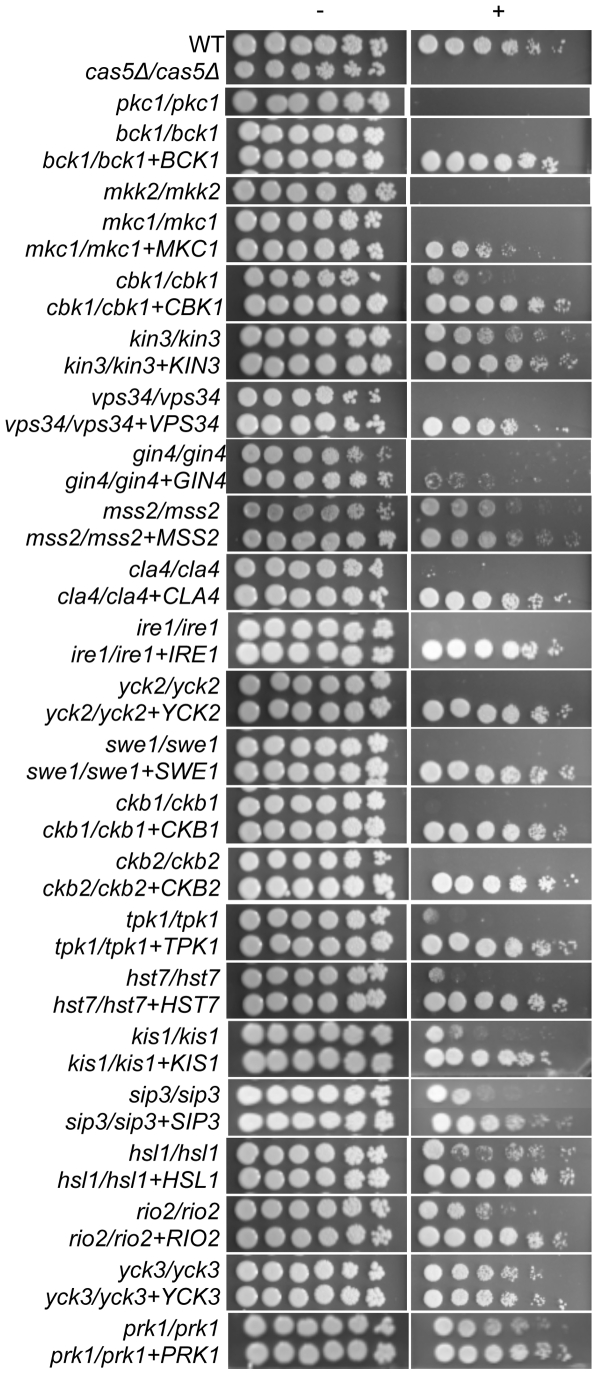
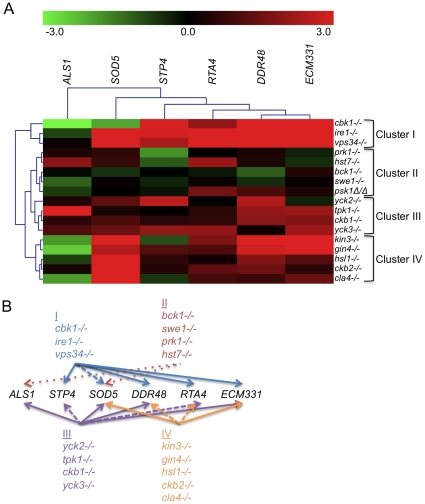
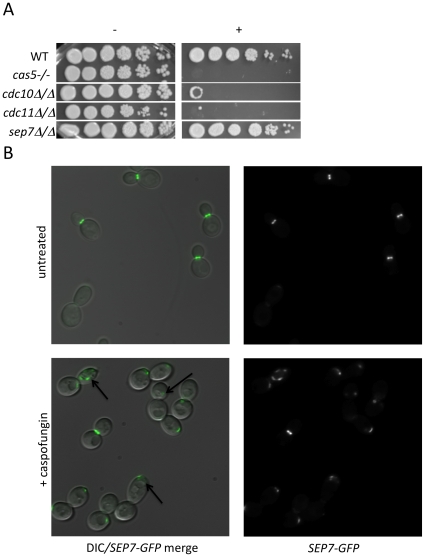
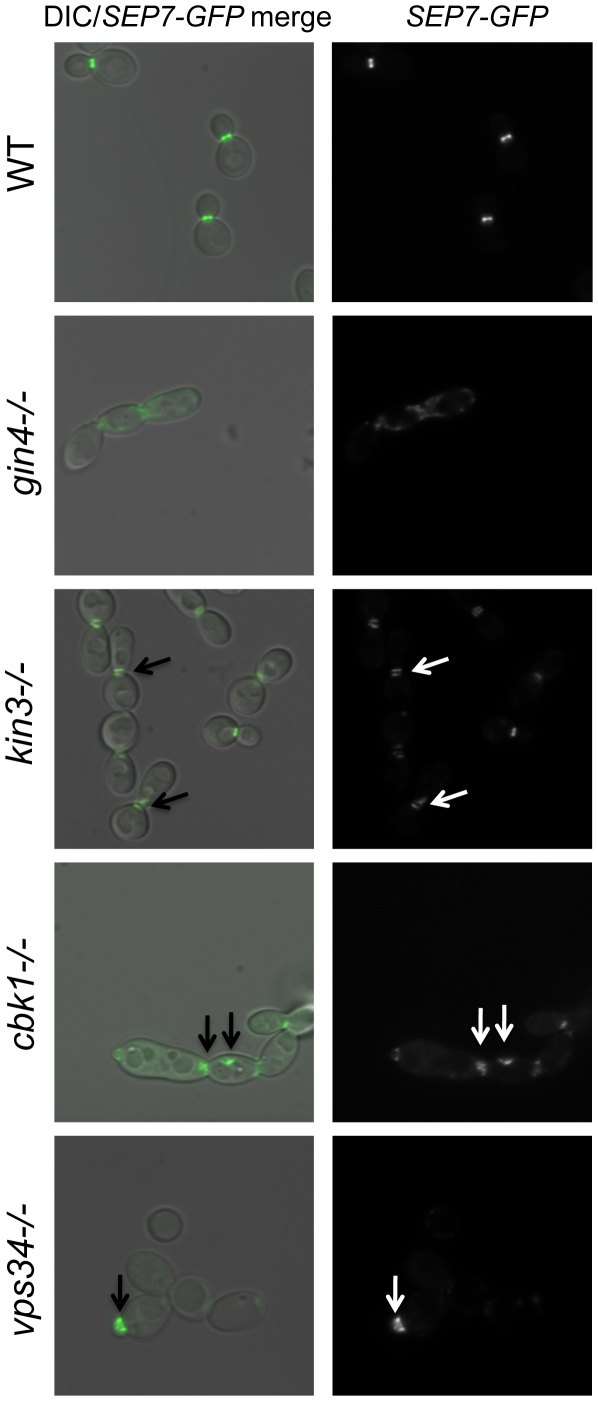
Protein kinases play key roles in signaling and response to changes in the external environment. The ability of Candida albicans to quickly sense and respond to changes in its environment is key to its survival in the human host. Our guiding hypothesis was that creating and screening a set of protein kinase mutant strains would reveal signaling pathways that mediate stress response in C. albicans. A library of protein kinase mutant strains was created and screened for sensitivity to a variety of stresses. For the majority of stresses tested, stress response was largely conserved between C. albicans, Saccharomyces cerevisiae, and Schizosaccharomyces pombe. However, we identified eight protein kinases whose roles in cell wall regulation (CWR) were not expected from functions of their orthologs in the model fungi Saccharomyces cerevisiae and Schizosaccharomyces pombe. Analysis of the conserved roles of these protein kinases indicates that establishment of cell polarity is critical for CWR. In addition, we found that septins, crucial to budding, are both important for surviving and are mislocalized by cell wall stress. Our study shows an expanded role for protein kinase signaling in C. albicans cell wall integrity. Our studies suggest that in some cases, this expansion represents a greater importance for certain pathways in cell wall biogenesis. In other cases, it appears that signaling pathways have been rewired for a cell wall integrity response.
Overview
The claims and statistics of this paper haven’t been checked yet.
Free: it reads the open-access text and checks the first 5 claims that cite a source we can check. Create a free account to check every claim.
Integrity signals
Registry
Cites
Statistics
Figures
Verification
Claims the paper makes
The claims and statistics of this paper haven’t been checked yet.
Free: it reads the open-access text and checks the first 5 claims that cite a source we can check. Create a free account to check every claim.
Self-check
Percentages, sums and reported differences re-computed from the paper’s own numbers.
The self-check needs the paper’s full text.
Citations
Cites
Functional profiling of the Saccharomyces cerevisiae genome
Giaever, G., Chu, A. M., Ni, L., Connelly, C., Riles, L., Véronneau, S., Dow, S., Lucau-Danila, A., Anderson, K., André, B., et al. (2002) · Nature · doi:10.1038/nature00935 · Cited by 4,316 · cited 1×
“cerevisiae mutant library [61] were also assayed for sensitivity in a similar manner.”
MethodSherman, F. (2002) · Methods in Enzymology · doi:10.1016/s0076-6879(02)50954-x · Cited by 4,121 · cited 1×
“Strains were grown on yeast extract-peptone-dextrose (YPD) rich medium, defined synthetic dextrose medium, prepared as previously described [55], spider medium (10 g D-mannitol (Sigma), 10 g nutrient broth (BD Difco), 2 g K2HPO4 (Sigma) in 1 l of H2O), and M199 cell culture medium (Roche) buffered with 150 mM Hepes (G…”
Method[1] Getting started with yeast
Sherman, F. (1991) · Methods in Enzymology · doi:10.1016/0076-6879(91)94004-v · Cited by 4,067
Global Mapping of the Yeast Genetic Interaction Network
Tong, A. H. Y., Lesage, G., Bader, G. D., Ding, H., Xu, H., Xin, X., Young, J., Berriz, G. F., Brost, R. L., Chang, M., et al. (2004) · Science · doi:10.1126/science.1091317 · Cited by 2,095 · cited 1×
“cerevisiae snf1 mutant shows synthetic lethality with the b-1,3-glucan synthase FKS1 [52] we propose that this PK has a more prominent role in CWR in C.”
Cell Wall Integrity Signaling in Saccharomyces cerevisiae
Levin, D. E. (2005) · Microbiology and Molecular Biology Reviews · doi:10.1128/mmbr.69.2.262-291.2005 · Cited by 1,136 · cited 1×
“Much of what we know about fungal cell wall integrity and cell wall biogenesis (herein collectively called cell wall regulation, CWR) comes from studies of the model yeast Saccharomyces cerevisiae, where the protein kinase C-MAPK (PKC-MAPK) pathway, largely responsible for the transcriptional response to cell wall dis…”
BackgroundCalderone, R. (2012) · ASM Press eBooks · Cited by 912
Patil, C., & Walter, P. (2001) · Current Opinion in Cell Biology · doi:10.1016/s0955-0674(00)00219-2 · Cited by 780 · cited 1×
“In all organisms where it has been studied, Ire1 is a component of the conserved unfolded protein response (UPR), which is activated by accumulation of unfolded proteins in the ER [38].”
BackgroundRapid Hypothesis Testing with Candida albicans through Gene Disruption with Short Homology Regions
Wilson, R. B., Davis, D., & Mitchell, A. P. (1999) · Journal of Bacteriology · doi:10.1128/jb.181.6.1868-1874.1999 · Cited by 762 · cited 1×
“All PK mutants tested were made in the BWP17 [56] background.”
BackgroundSelf-citationCell Wall and Secreted Proteins of Candida albicans: Identification, Function, and Expression
Chaffin, W. L., López-Ribot, J. L., Casanova, M., Gozalbo, D., & Martínez, J. P. (1998) · Microbiology and Molecular Biology Reviews · doi:10.1128/mmbr.62.1.130-180.1998 · Cited by 726 · cited 1×
“albicans biological process, including growth, morphogenesis, mating, and pathogenicity [7].”
Plasmid construction by homologous recombination in yeast
Ma, H., Kunes, S., Schatz, P. J., & Botstein, D. (1987) · Gene · doi:10.1016/0378-1119(87)90376-3 · Cited by 560 · cited 1×
“A 40mer sequence (upstream primer-TTCACACAGGAAACAGCTATGACCATGATTACGCCAAGCT, downstream primer TCGACCATATGGGAGAGCTCCCAACGCGTTGGATGCATAG) was tacked onto the 59 end of each primer sequence to guide in vivo recombination into the pDDB78 plasmid [58].”
Method
Cited by
Genetic control of Candida albicans biofilm development
Finkel, J. S., & Mitchell, A. P. (2011) · Nature Reviews Microbiology · doi:10.1038/nrmicro2475 · Cited by 612
“It is also noteworthy that the amounts of ALS1 RNA are reduced in the biofilm- and cell wall-defective protein kinase mutants gin4 −/− , ire1 −/− and cbk1 −/− , thus indicating that adhesin gene expression might be regulated through cell wall regulatory pathway”
Self-citationChitin synthesis and fungal pathogenesis
Lenardon, M. D., Munro, C. A., & Gow, N. A. (2010) · Current Opinion in Microbiology · doi:10.1016/j.mib.2010.05.002 · Cited by 502
“Recent work has shown that protein kinases and the establishment of cell polarity appear to be important for cell wall regulation in C. albicans [26].”
BackgroundThe Cryptococcus neoformans Capsule: a Sword and a Shield
O'Meara, T. R., & Alspaugh, J. A. (2012) · Clinical Microbiology Reviews · doi:10.1128/cmr.00001-12 · Cited by 364
LaFayette, S. L., Collins, C., Zaas, A. K., Schell, W. A., Betancourt-Quiroz, M., Gunatilaka, A. A. L., Perfect, J. R., & Cowen, L. E. (2010) · PLoS Pathogens · doi:10.1371/journal.ppat.1001069 · Cited by 329
“drugs targeting the cell wall [34,35,36,37], suggest that compromising Pkc1 could have therapeutic benefits by enhancing the efficacy of the two most widely deployed classes of antifungals, the”
BackgroundThe cellular basis of chitin synthesis in fungi and insects: Common principles and differences
Merzendorfer, H. (2011) · European Journal of Cell Biology · doi:10.1016/j.ejcb.2011.04.014 · Cited by 320
Metadata
- Authors
- Blankenship, J. R., Fanning, S., Hamaker, J. J., & Mitchell, A. P.
- Affiliations
- Carnegie Mellon University (US)
- University College Cork (IE)
- Columbia University (US)
- Corresponding author
- Mitchell, Aaron P.
- Venue
- PLoS Pathogens
- Publisher
- Public Library of Science (PLoS)
- Published
- 2010-02-05
- Volume
- 6
- Issue
- 2
- Pages
- e1000752
- ISSN
- 1553-7366 (ISSN-L)
- 1553-7374
- PMC
- PMC2816693
- OpenAlex
- W2006754735
- Cited by
- 201
- References
- 61
- Citations by year
- 2026: 6 · 2025: 8 · 2024: 9 · 2023: 4 · 2022: 12 · 2021: 16 · 2020: 12 · 2019: 8 · 2018: 9 · 2017: 12 · 2016: 16 · 2015: 11 · 2014: 14 · 2013: 14 · 2012: 23
- FWCI
- 8.33
- Type
- journal article
- Language
- en
- Open access
- gold
- doi.org
- Locations
- PLoS Pathogens (publishedVersion, cc-by)
- PubMed Central (publishedVersion, cc-by)
- PubMed (publishedVersion)
- DOAJ (DOAJ: Directory of Open Access Journals) (submittedVersion, cc-by-sa)
- Figshare (submittedVersion, cc-by)
- KiltHub Repository (cc-by)
- Funders
- National University of Ireland
- National Institutes of Health
- National Institute of Allergy and Infectious Diseases (R01AI067703, R01AI057804, F32AI071439)
- Topics
- Life Sciences › Biochemistry, Genetics and Molecular Biology › Molecular Biology › Fungal and yeast genetics research
- Health Sciences › Medicine › Infectious Diseases › Antifungal resistance and susceptibility
- Life Sciences › Biochemistry, Genetics and Molecular Biology › Genetics › Bacterial Genetics and Biotechnology
- Keywords
- Candida albicans, cell wall integrity, protein kinases, stress response, cell polarity, septins, cell wall biosynthesis, fungal pathogenesis
- MeSH terms
- Base Sequence, Candida albicans, Cell Wall, Fungal Proteins, Genes, Fungal, Molecular Sequence Data, Protein Kinases, Sequence Homology, Nucleic Acid, Stress, Physiological, Signal Transduction, Cell Polarity, Reverse Transcriptase Polymerase Chain Reaction
About these checks
Registry, retraction, Cites and statistics results are computed, not judged, with one exception: a printed reference that no index lists is read once by a model before it counts as a citation error. Claims are extracted by a model and kept only when their quote appears verbatim in the text; each cited source is then checked, with a model’s help, for whether it says what the claim relies on. Those verdicts can be wrong — read the claim’s quote and the cited source before relying on one.
Statistics and arithmetic are recomputed, not judged.
Confidence bands are shown only for fields calibrated on our annotated test set. None is calibrated yet, so no band is shown.
What counts as a claim ›How we measure confidence ›How we check this ›
Are you an author, or do you see a problem with this page? Request a review
Data sources
Bibliographic data: Semantic Scholar, OpenAlex, Crossref.
Contains information from the Semantic Scholar Academic Graph Datasets, made available under the ODC Attribution License (ODC-BY 1.0).
Semantic Scholar’s data is described in: Kinney, R., et al. (2023). The Semantic Scholar Open Data Platform. arXiv:2301.10140.
