

An Extensive Circuitry for Cell Wall Regulation in Candida albicans
Open accessThe DOI matches its Crossref record; 63 of the 63 references it cites were found in a registry or an index.
Abstract
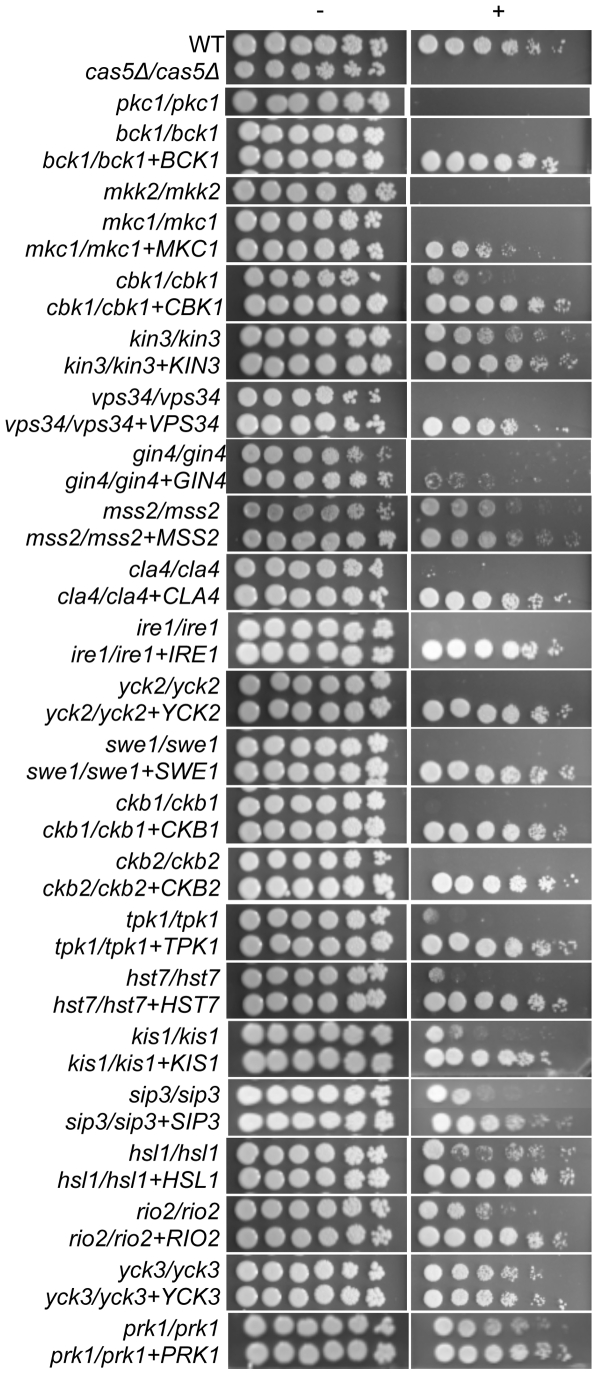
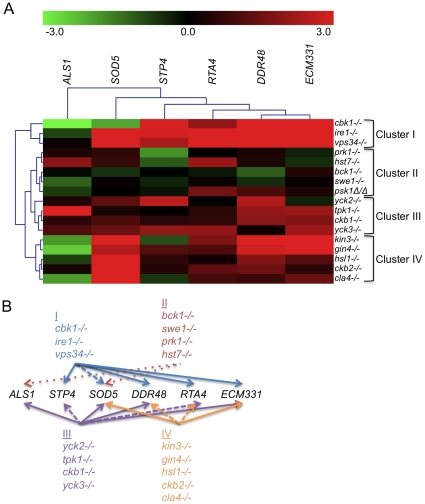
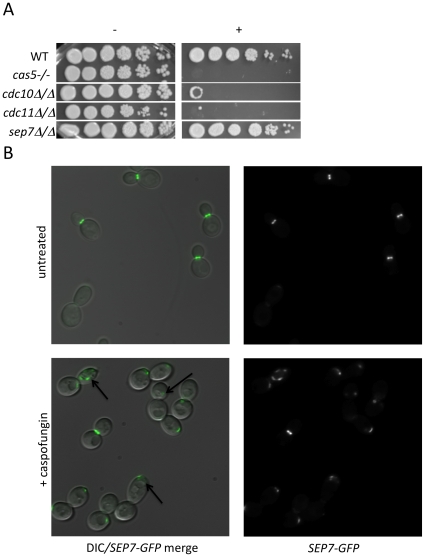
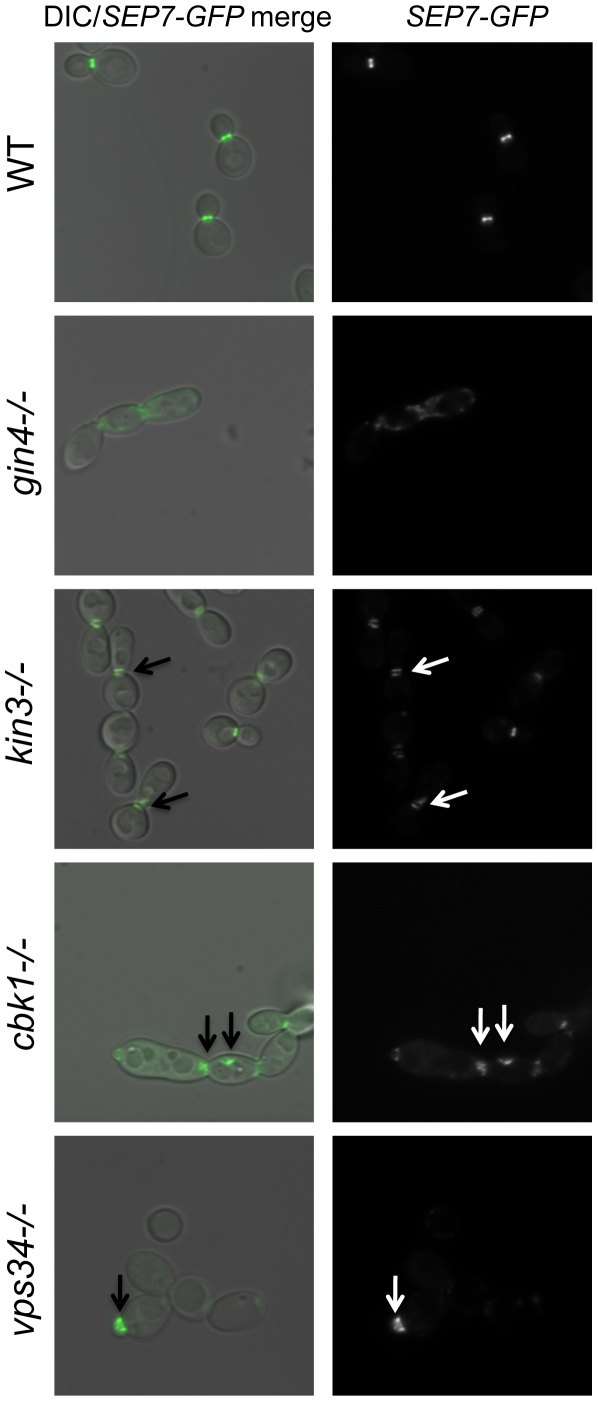
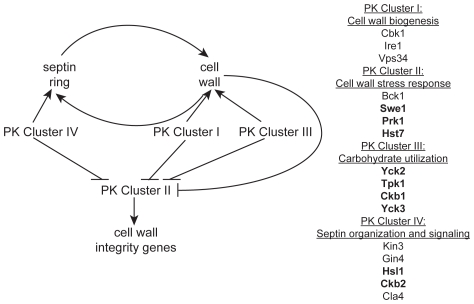
Protein kinases play key roles in signaling and response to changes in the external environment. The ability of Candida albicans to quickly sense and respond to changes in its environment is key to its survival in the human host. Our guiding hypothesis was that creating and screening a set of protein kinase mutant strains would reveal signaling pathways that mediate stress response in C. albicans. A library of protein kinase mutant strains was created and screened for sensitivity to a variety of stresses. For the majority of stresses tested, stress response was largely conserved between C. albicans, Saccharomyces cerevisiae, and Schizosaccharomyces pombe. However, we identified eight protein kinases whose roles in cell wall regulation (CWR) were not expected from functions of their orthologs in the model fungi Saccharomyces cerevisiae and Schizosaccharomyces pombe. Analysis of the conserved roles of these protein kinases indicates that establishment of cell polarity is critical for CWR. In addition, we found that septins, crucial to budding, are both important for surviving and are mislocalized by cell wall stress. Our study shows an expanded role for protein kinase signaling in C. albicans cell wall integrity. Our studies suggest that in some cases, this expansion represents a greater importance for certain pathways in cell wall biogenesis. In other cases, it appears that signaling pathways have been rewired for a cell wall integrity response.
Overview
The claims and statistics of this paper haven’t been checked yet.
Free: it reads the open-access text and checks the first 5 claims that cite a source we can check. Create a free account to check every claim.
Integrity signals
Registry
Cites
Statistics
Figures
Verification
Claims the paper makes
The claims and statistics of this paper haven’t been checked yet.
Free: it reads the open-access text and checks the first 5 claims that cite a source we can check. Create a free account to check every claim.
Self-check
Percentages, sums and reported differences re-computed from the paper’s own numbers.
The self-check needs the paper’s full text.
Citations
Cites
Functional profiling of the Saccharomyces cerevisiae genome
Giaever, G., Chu, A. M., Ni, L., Connelly, C., Riles, L., Véronneau, S., Dow, S., Lucau-Danila, A., Anderson, K., André, B., et al. (2002) · Nature · doi:10.1038/nature00935 · Cited by 4,316 · cited 1×
“cerevisiae mutant library [61] were also assayed for sensitivity in a similar manner.”
MethodSherman, F. (2002) · Methods in Enzymology · doi:10.1016/s0076-6879(02)50954-x · Cited by 4,121 · cited 1×
“Strains were grown on yeast extract-peptone-dextrose (YPD) rich medium, defined synthetic dextrose medium, prepared as previously described [55], spider medium (10 g D-mannitol (Sigma), 10 g nutrient broth (BD Difco), 2 g K2HPO4 (Sigma) in 1 l of H2O), and M199 cell culture medium (Roche) buffered with 150 mM Hepes (G…”
Method[1] Getting started with yeast
Sherman, F. (1991) · Methods in Enzymology · doi:10.1016/0076-6879(91)94004-v · Cited by 4,067
Global Mapping of the Yeast Genetic Interaction Network
Tong, A. H. Y., Lesage, G., Bader, G. D., Ding, H., Xu, H., Xin, X., Young, J., Berriz, G. F., Brost, R. L., Chang, M., et al. (2004) · Science · doi:10.1126/science.1091317 · Cited by 2,095 · cited 1×
“cerevisiae snf1 mutant shows synthetic lethality with the b-1,3-glucan synthase FKS1 [52] we propose that this PK has a more prominent role in CWR in C.”
Cell Wall Integrity Signaling in Saccharomyces cerevisiae
Levin, D. E. (2005) · Microbiology and Molecular Biology Reviews · doi:10.1128/mmbr.69.2.262-291.2005 · Cited by 1,136 · cited 1×
“Much of what we know about fungal cell wall integrity and cell wall biogenesis (herein collectively called cell wall regulation, CWR) comes from studies of the model yeast Saccharomyces cerevisiae, where the protein kinase C-MAPK (PKC-MAPK) pathway, largely responsible for the transcriptional response to cell wall dis…”
BackgroundCalderone, R. (2012) · ASM Press eBooks · Cited by 912
Patil, C., & Walter, P. (2001) · Current Opinion in Cell Biology · doi:10.1016/s0955-0674(00)00219-2 · Cited by 780 · cited 1×
“In all organisms where it has been studied, Ire1 is a component of the conserved unfolded protein response (UPR), which is activated by accumulation of unfolded proteins in the ER [38].”
BackgroundRapid Hypothesis Testing with Candida albicans through Gene Disruption with Short Homology Regions
Wilson, R. B., Davis, D., & Mitchell, A. P. (1999) · Journal of Bacteriology · doi:10.1128/jb.181.6.1868-1874.1999 · Cited by 762 · cited 1×
“All PK mutants tested were made in the BWP17 [56] background.”
BackgroundSelf-citationCell Wall and Secreted Proteins of Candida albicans: Identification, Function, and Expression
Chaffin, W. L., López-Ribot, J. L., Casanova, M., Gozalbo, D., & Martínez, J. P. (1998) · Microbiology and Molecular Biology Reviews · doi:10.1128/mmbr.62.1.130-180.1998 · Cited by 726 · cited 1×
“albicans biological process, including growth, morphogenesis, mating, and pathogenicity [7].”
Plasmid construction by homologous recombination in yeast
Ma, H., Kunes, S., Schatz, P. J., & Botstein, D. (1987) · Gene · doi:10.1016/0378-1119(87)90376-3 · Cited by 560 · cited 1×
“A 40mer sequence (upstream primer-TTCACACAGGAAACAGCTATGACCATGATTACGCCAAGCT, downstream primer TCGACCATATGGGAGAGCTCCCAACGCGTTGGATGCATAG) was tacked onto the 59 end of each primer sequence to guide in vivo recombination into the pDDB78 plasmid [58].”
Method
Cited by
Genetic control of Candida albicans biofilm development
Finkel, J. S., & Mitchell, A. P. (2011) · Nature Reviews Microbiology · doi:10.1038/nrmicro2475 · Cited by 612
“It is also noteworthy that the amounts of ALS1 RNA are reduced in the biofilm- and cell wall-defective protein kinase mutants gin4 −/− , ire1 −/− and cbk1 −/− , thus indicating that adhesin gene expression might be regulated through cell wall regulatory pathway”
Self-citationChitin synthesis and fungal pathogenesis
Lenardon, M. D., Munro, C. A., & Gow, N. A. (2010) · Current Opinion in Microbiology · doi:10.1016/j.mib.2010.05.002 · Cited by 502
“Recent work has shown that protein kinases and the establishment of cell polarity appear to be important for cell wall regulation in C. albicans [26].”
BackgroundThe Cryptococcus neoformans Capsule: a Sword and a Shield
O'Meara, T. R., & Alspaugh, J. A. (2012) · Clinical Microbiology Reviews · doi:10.1128/cmr.00001-12 · Cited by 364
LaFayette, S. L., Collins, C., Zaas, A. K., Schell, W. A., Betancourt-Quiroz, M., Gunatilaka, A. A. L., Perfect, J. R., & Cowen, L. E. (2010) · PLoS Pathogens · doi:10.1371/journal.ppat.1001069 · Cited by 329
“drugs targeting the cell wall [34,35,36,37], suggest that compromising Pkc1 could have therapeutic benefits by enhancing the efficacy of the two most widely deployed classes of antifungals, the”
BackgroundThe cellular basis of chitin synthesis in fungi and insects: Common principles and differences
Merzendorfer, H. (2011) · European Journal of Cell Biology · doi:10.1016/j.ejcb.2011.04.014 · Cited by 320
Ene, I. V., Adya, A. K., Wehmeier, S., Brand, A. C., MacCallum, D. M., Gow, N. A. R., & Brown, A. J. P. (2012) · Cellular Microbiology · doi:10.1111/j.1462-5822.2012.01813.x · Cited by 313
“Also, in response to certain stresses, the cell integrity pathway activates cell wall biogenesis (Navarro-Garcia et al., 1998; Eisman et al., 2006; Munro et al., 2007; Blankenship et al., 2010).”
BackgroundPortrait of Candida albicans Adherence Regulators
Finkel, J. S., Xu, W., Huang, D., Hill, E. M., Desai, J. V., Woolford, C. A., Nett, J. E., Taff, H., Norice, C. T., Andes, D. R., et al. (2012) · PLoS Pathogens · doi:10.1371/journal.ppat.1002525 · Cited by 228
Self-citationCandida parapsilosis Is a Significant Neonatal Pathogen: A Systematic Review and Meta-analysis
Pammi, M., Holland, L., Butler, G., Gacser, A., & Bliss, J. M. (2013) · Pediatric Infectious Disease Journal · doi:10.1097/inf.0b013e3182863a1c · Cited by 206
Global Analysis of the Evolution and Mechanism of Echinocandin Resistance in Candida glabrata
Singh-Babak, S. D., Babak, T., Diezmann, S., Hill, J. A., Xie, J. L., Chen, Y.-L., Poutanen, S. M., Rennie, R. P., Heitman, J., & Cowen, L. E. (2012) · PLoS Pathogens · doi:10.1371/journal.ppat.1002718 · Cited by 205
Mucosal biofilms of Candida albicans
Ganguly, S., & Mitchell, A. P. (2011) · Current Opinion in Microbiology · doi:10.1016/j.mib.2011.06.001 · Cited by 200
Self-citationFungi of the human gut microbiota: Roles and significance
Pérez, J. C. (2021) · International Journal of Medical Microbiology · doi:10.1016/j.ijmm.2021.151490 · Cited by 173
Nett, J. E., Sanchez, H., Cain, M. T., Ross, K. M., & Andes, D. R. (2011) · Eukaryotic Cell · doi:10.1128/ec.05126-11 · Cited by 168
Cell wall integrity signalling in human pathogenic fungi: CWI signalling in pathogenic fungi
Dichtl, K., Samantaray, S., & Wagener, J. (2016) · Cellular Microbiology · doi:10.1111/cmi.12612 · Cited by 144
“The CaPkc1 undoubtedly regulates crucial stress responses upon exposure to antifungal drugs such as echinocandins and azoles (Blankenship et al., 2010; LaFayette et al., 2010).”
BackgroundCheon, S. A., Jung, K.-W., Chen, Y.-L., Heitman, J., Bahn, Y.-S., & Kang, H. A. (2011) · PLoS Pathogens · doi:10.1371/journal.ppat.1002177 · Cited by 136
“albicans ire1 mutations enhance activity of antifungal drugs such as amphotericin B, caspofungin, and azoles [13,16].”
BackgroundLeach, M. D., Budge, S., Walker, L., Munro, C., Cowen, L. E., & Brown, A. J. P. (2012) · PLoS Pathogens · doi:10.1371/journal.ppat.1003069 · Cited by 131
“albicans transposon insertion kinase mutant collection which was kindly provided by Aaron Mitchell [58].”
BackgroundMethodInfluentialThevissen, K., Tavares, P. D. M., Xu, D., Blankenship, J. R., Vandenbosch, D., Idkowiak‐Baldys, J., Govaert, G., Bink, A., Rozental, S., de Groot, P. W. J., et al. (2012) · Molecular Microbiology · doi:10.1111/j.1365-2958.2012.08017.x · Cited by 146
“The RsAFP2-induced septin localization defects do not appear to be similar to the earlier reported ectopic septin localization caused by caspofungin (Blankenship et al., 2010).”
BackgroundMethodInfluentialSelf-citationDagley, M. J., Gentle, I. E., Beilharz, T. H., Pettolino, F. A., Djordjevic, J. T., Lo, T. L., Uwamahoro, N., Rupasinghe, T., Tull, D. L., McConville, M., et al. (2011) · Molecular Microbiology · doi:10.1111/j.1365-2958.2010.07503.x · Cited by 128
“Molecular Microbiology (2011) 79(4), 968–989 doi:10.1111/j.1365-2958.2010.07503.x First published online 30 December 2010 © 2010 Blackwell Publishing Ltd regulatory network may include several additional pathways (Blankenship et al., 2010).”
BackgroundInfluentialSelf-citationHayes, B. M. E., Bleackley, M. R., Wiltshire, J. L., Anderson, M. A., Traven, A., & van der Weerden, N. L. (2013) · Antimicrobial Agents and Chemotherapy · doi:10.1128/aac.00365-13 · Cited by 123
“(31) that we screened contains mutants in the Bck1 and Mkc1 kinases of the PKC CWI pathway, as well as kinases that are required for septin assembly (31).”
BackgroundDiezmann, S., Michaut, M., Shapiro, R. S., Bader, G. D., & Cowen, L. E. (2012) · PLoS Genetics · doi:10.1371/journal.pgen.1002562 · Cited by 112
“albicans have been hampered by its obligate diploid state and lack of a complete sexual cycle, recently homozygous mutant libraries have been developed to enable systematic screens and genomic analyses [23,24,25,26].”
BackgroundDwivedi, P., Thompson, A., Xie, Z., Kashleva, H., Ganguly, S., Mitchell, A. P., & Dongari-Bagtzoglou, A. (2011) · PLoS ONE · doi:10.1371/journal.pone.0016218 · Cited by 110
“[40] for measuring control TDH3 RNA levels: TDH3 FOR: 59-AAATCGGTGGAGACAACAGC39, and TDH3 REV: 59-TGCTAAAGCCGTTGGTAAGG-39.”
Self-citationAdvancements and challenges in antifungal therapeutic development
Puumala, E., Fallah, S., Robbins, N., & Cowen, L. E. (2024) · Clinical Microbiology Reviews · doi:10.1128/cmr.00142-23 · Cited by 142
“…pharmacological inhibition of the protein kinase Pkc1 attenuates C. albicans virulence and sensitizes C. albicans to the azoles and echinocandins (177–179), while inhibition of the TOR protein kinase with the natural product beauvericin sensitizes C. albicans to the azoles and prevents the…”
BackgroundLu, Y., Su, C., Unoje, O., & Liu, H. (2014) · Proceedings of the National Academy of Sciences · doi:10.1073/pnas.1318690111 · Cited by 105
“albicans (23) for mutants defective in hyphal initiation; 5 of 80 mutants showed defects to varying extents in hyphal initiation when cells were inoculated into fresh medium at 37 °C, but only tpk2 and sok1 mutants showed no decrease in levels of Nrg1.”
BackgroundChauvel, M., Nesseir, A., Cabral, V., Znaidi, S., Goyard, S., Bachellier-Bassi, S., Firon, A., Legrand, M., Diogo, D., Naulleau, C., et al. (2012) · PLoS ONE · doi:10.1371/journal.pone.0045912 · Cited by 102
Su, C., Lu, Y., & Liu, H. (2013) · Molecular Biology of the Cell · doi:10.1091/mbc.e12-06-0477 · Cited by 94
“…et al., 2002), the regulation of Ace2 and morphogenesis network (McNemar and Fonzi, 2002; Song et al., 2008), the target of rapamycin (Tor1) signaling pathway (Bastidas et al., 2009; Zacchi et al., 2010; Lu et al., 2011), and more (Uhl et al., 2003; Homann et al., 2009; Blankenship et al., 2010).”
Hayes, B. M. E., Anderson, M. A., Traven, A., van der Weerden, N. L., & Bleackley, M. R. (2014) · Cellular and Molecular Life Sciences · doi:10.1007/s00018-014-1573-8 · Cited by 93
“However, across fungal species, the MAPKs may have different or additional roles in stress tolerance [10, 21].”
BackgroundPalková, Z., & Váchová, L. (. (2012) · Springer eBooks · doi:10.1007/978-94-007-4264-2 · Cited by 94
Ianiri, G., Idnurm, A., Wright, S. A. I., Durán-Patrón, R., Mannina, L., Ferracane, R., Ritieni, A., & Castoria, R. (2013) · Applied and Environmental Microbiology · doi:10.1128/aem.03851-12 · Cited by 92
“(51) reported that Ypk2 may indirectly affect cell wall biogenesis in C.”
BackgroundBanerjee, M., Uppuluri, P., Zhao, X. R., Carlisle, P. L., Vipulanandan, G., Villar, C. C., López-Ribot, J. L., & Kadosh, D. (2013) · Eukaryotic Cell · doi:10.1128/ec.00163-12 · Cited by 88
Regulatory Role of Glycerol in Candida albicans Biofilm Formation
Desai, J. V., Bruno, V. M., Ganguly, S., Stamper, R. J., Mitchell, K. F., Solis, N., Hill, E. M., Xu, W., Filler, S. G., Andes, D. R., et al. (2013) · mBio · doi:10.1128/mbio.00637-12 · Cited by 87
“RNA was extracted using a RiboPure yeast kit (11, 49).”
MethodSelf-citationChaillot, J., Tebbji, F., Remmal, A., Boone, C., Brown, G. W., Bellaoui, M., & Sellam, A. (2015) · Antimicrobial Agents and Chemotherapy · doi:10.1128/aac.00551-15 · Cited by 82
“We are grateful to Aaron Mitchel (Carnegie Mellon University) and Christian Landry (IBIS, Université Laval) for providing mutants used in this work.”
InfluentialCandida albicans targets that potentially synergize with fluconazole
Lu, H., Shrivastava, M., Whiteway, M., & Jiang, Y. (2021) · Critical Reviews in Microbiology · doi:10.1080/1040841x.2021.1884641 · Cited by 81
“Deletion of C. albicans the SSK1 gene (Chauhan et al. 2007), the PBS2 gene (Blankenship et al. 2010), and the HOG1 gene (Blankenship et al. 2010) rendered normally fungistatic fluconazole fungicidal.”
BackgroundDissection of Ire1 Functions Reveals Stress Response Mechanisms Uniquely Evolved in Candida glabrata
Miyazaki, T., Nakayama, H., Nagayoshi, Y., Kakeya, H., & Kohno, S. (2013) · PLoS Pathogens · doi:10.1371/journal.ppat.1003160 · Cited by 78
“important for antifungal resistance and virulence [6,7,8,9,10,11].”
BackgroundInfluentialParticipation of Candida albicans Transcription Factor RLM1 in Cell Wall Biogenesis and Virulence
Delgado-Silva, Y., Vaz, C., Carvalho-Pereira, J., Carneiro, C., Nogueira, E., Correia, A., Carreto, L., Silva, S., Faustino, A., Pais, C., et al. (2014) · PLoS ONE · doi:10.1371/journal.pone.0086270 · Cited by 78
“response to several types of stress such as oxidative, osmotic, cell wall damage, calcium ions and temperature [12,14,15].”
BackgroundMethodResultYu, Q., Zhang, B., Lǐ, J., Zhang, B., Wang, H., & Li, M. (2016) · Free Radical Biology and Medicine · doi:10.1016/j.freeradbiomed.2016.09.014 · Cited by 78
Azadmanesh, J., Gowen, A. M., Creger, P. E., Schafer, N. D., & Blankenship, J. R. (2017) · G3 Genes|Genomes|Genetics · doi:10.1534/g3.117.300224 · Cited by 70
“Cells were harvested by fi ltration as previously described (Blankenship et al. 2010).”
Self-citationRomanowski, K., Zaborin, A., Valuckaite, V., Rolfes, R. J., Babrowski, T., Bethel, C., Olivas, A., Zaborina, O., & Alverdy, J. C. (2012) · PLoS ONE · doi:10.1371/journal.pone.0030119 · Cited by 69
“Expression of the PHO4 gene was normalized to that of the housekeeping gene TDH3.”
MethodInfluentialSandini, S., Stringaro, A., Arancia, S., Colone, M., Mondello, F., Murtas, S., Girolamo, A., Mastrangelo, N., & De Bernardis, F. (2011) · BMC Microbiology · doi:10.1186/1471-2180-11-106 · Cited by 67
“The mp65Δ mutant showed an activation of two MAPKs (Mkc1p and Cek1p), a high level of expression of two stress-related genes (DDR48 and SOD5), and a modulated expression of b-glucan epitopes, but no gross changes in cell wall polysaccharide composition.”
BackgroundMethodInfluentialZap1 Control of Cell-Cell Signaling in Candida albicans Biofilms
Ganguly, S., Bishop, A. C., Xu, W., Ghosh, S., Nickerson, K. W., Lanni, F., Patton-Vogt, J., & Mitchell, A. P. (2011) · Eukaryotic Cell · doi:10.1128/ec.05196-11 · Cited by 66
“ing to the protocol described previously (2).”
MethodSelf-citationSu, C., Lu, Y., & Liu, H. (2016) · Nature Communications · doi:10.1038/ncomms12916 · Cited by 64
“None of the 165 transcriptional factors 22 and none of the 80 kinases and kinase-related genes 23 is required for growth on GlcNAc.”
Sellam, A., van het Hoog, M., Tebbji, F., Beaurepaire, C., Whiteway, M., & Nantel, A. (2014) · Eukaryotic Cell · doi:10.1128/ec.00292-13 · Cited by 63
“functional rewiring between different fungal species (6, 7), and the”
BackgroundUwamahoro, N., Qu, Y., Jelicic, B., Lo, T. L., Beaurepaire, C., Bantun, F., Quenault, T., Boag, P. R., Ramm, G., Callaghan, J., et al. (2012) · PLoS Genetics · doi:10.1371/journal.pgen.1002613 · Cited by 59
“Our srb9/med13DD mutant shares the sensitivity to oxidative stress with cells inactivated for SRB10 or SRB11 (Table 3 and [35]), however the srb10 and srb11 mutants were reported to display wild type biofilm formation [35].”
BackgroundResultShivarathri, R., Tscherner, M., Zwolanek, F., Singh, N. K., Chauhan, N., & Kuchler, K. (2019) · Scientific Reports · doi:10.1038/s41598-019-45817-5 · Cited by 58
Lindsay, A. K., Morales, D. K., Liu, Z., Grahl, N., Zhang, A., Willger, S. D., Myers, L. C., & Hogan, D. A. (2014) · PLoS Genetics · doi:10.1371/journal.pgen.1004567 · Cited by 58
“[46] using the plasmids and primers shown in Tables S5 and S6.”
BackgroundMethodQu, Y., Jelicic, B., Pettolino, F., Perry, A., Lo, T. L., Hewitt, V. L., Bantun, F., Beilharz, T. H., Peleg, A. Y., Lithgow, T., et al. (2012) · Eukaryotic Cell · doi:10.1128/ec.05292-11 · Cited by 57
Overcoming Fungal Echinocandin Resistance through Inhibition of the Non-essential Stress Kinase Yck2
Caplan, T., Lorente-Macías, Á., Stogios, P. J., Evdokimova, E., Hyde, S., Wellington, M. A., Liston, S., Iyer, K. R., Puumala, E., Shekhar-Guturja, T., et al. (2020) · Cell Chemical Biology · doi:10.1016/j.chembiol.2019.12.008 · Cited by 57
“albicans morphology, we assessed whether GW would impact this key virulence trait (Blankenship et al., 2010).”
BackgroundMethodInfluentialCaplan, T., Polvi, E. J., Xie, J. L., Buckhalter, S., Leach, M. D., Robbins, N., & Cowen, L. E. (2018) · Cell Reports · doi:10.1016/j.celrep.2018.04.084 · Cited by 56
Herrero de Dios, C., Roman, E., Alonso Monge, R., & Pla, J. (2010) · Current Protein & Peptide Science · doi:10.2174/138920310794557655 · Cited by 55
“However, it has been reported MKK2 as a none essential protein involved in signal transduction and macrophagedownregulated gene which deletion confers susceptibility to caspofungin [84].”
BackgroundProtein kinase A and fungal virulence: A sinister side to a conserved nutrient sensing pathway
Fuller, K. K., & Rhodes, J. C. (2012) · Virulence · doi:10.4161/viru.19396 · Cited by 53
“albicans Tpk1 and Tpk2 isoforms appear to play opposite roles in cell wall homeostasis; tpk1 null mutants are hypersusceptible to the echinocandin caspofungin, and to osmotic stress, whereas tpk2 mutants display increased resistance to these stresses.(100,129) The composition of the fungal cell wall is greater than 90…”
BackgroundIdentification of the cell targets important for propolis-induced cell death in Candida albicans
de Castro, P. A., Bom, V. L. P., Brown, N. A., Almeida, R. S., Ramalho, L. N. Z., Savoldi, M., Goldman, M. H. S., Berretta, A. A., & Goldman, G. H. (2013) · Fungal Genetics and Biology · doi:10.1016/j.fgb.2013.07.001 · Cited by 67
“albicans to rapidly detect and respond to changes in the environment is critical to its survival in the human host (Blankenship et al., 2010).”
BackgroundLangford, M. L., Hargarten, J. C., Patefield, K. D., Marta, E., Blankenship, J. R., Fanning, S., Nickerson, K. W., & Atkin, A. L. (2013) · Eukaryotic Cell · doi:10.1128/ec.00311-12 · Cited by 60
“albicans by screening a library of 507 unique homozygous insertion or deletion mutants defective in only their morphological response to farnesol (31, 32).”
BackgroundSelf-citationXie, J. L., Grahl, N., Sless, T., Leach, M. D., Kim, S. H., Hogan, D. A., Robbins, N., & Cowen, L. E. (2016) · PLOS Genetics · doi:10.1371/journal.pgen.1006405 · Cited by 51
Lagree, K., Woolford, C. A., Huang, M. Y., May, G., McManus, C. J., Solis, N. V., Filler, S. G., & Mitchell, A. P. (2020) · PLOS Genetics · doi:10.1371/journal.pgen.1008582 · Cited by 51
Self-citationFeng, H., Li, G., Du, S., Song, Y., Li, X., de Figueiredo, P., & Qin, Q. (2017) · Environmental Microbiology · doi:10.1111/1462-2920.13613 · Cited by 52
Ramírez-Zavala, B., Mottola, A., Haubenreißer, J., Schneider, S., Allert, S., Brunke, S., Ohlsen, K., Hube, B., & Morschhäuser, J. (2017) · Molecular Microbiology · doi:10.1111/mmi.13674 · Cited by 61
“Thr208 phosphorylation of Snf1 is not essential for viability of C. albicans SNF1 appears to be an essential gene in C. albicans, because no homozygous mutants were obtained in previous attempts (Petter et al., 1997; Enloe et al., 2000; Blankenship et al., 2010).”
BackgroundResultInfluentialAnalysis of the Candida albicans Phosphoproteome
Willger, S. D., Liu, Z., Olarte, R. A., Adamo, M. E., Stajich, J. E., Myers, L. C., Kettenbach, A. N., & Hogan, D. A. (2015) · Eukaryotic Cell · doi:10.1128/ec.00011-15 · Cited by 48
“albicans has numerous serine/threonine kinases (14), only a single putative tyrosine kinase has been described (62).”
BackgroundWoolford, C. A., Lagree, K., Xu, W., Aleynikov, T., Adhikari, H., Sanchez, H., Cullen, P. J., Lanni, F., Andes, D. R., & Mitchell, A. P. (2016) · PLOS Genetics · doi:10.1371/journal.pgen.1006487 · Cited by 47
Self-citationEndoplasmic reticulum stress and fungal pathogenesis
Krishnan, K., & Askew, D. S. (2014) · Fungal Biology Reviews · doi:10.1016/j.fbr.2014.07.001 · Cited by 46
“…in a C. albicans ire1−/− mutant (Blankenship et al., 2010; Finkel and Mitchell, 2011), most likely due to Ire1’s ability to support filamentation (Blankenship et al., 2010; Wimalasena et al., 2008), adherence and attachment (Wimalasena et al., 2008), and the secretion of cell wall and matrix…”
BackgroundInfluentialArgimón, S., Fanning, S., Blankenship, J. R., & Mitchell, A. P. (2011) · Eukaryotic Cell · doi:10.1128/ec.00133-10 · Cited by 46
“We exploited insertion mutant libraries developed in our laboratory (8, 13, 14, 16, 3) to investigate the genetic mechanism underlying the action of hBD-2 on C.”
MethodSelf-citationMetabolic Respiration Induces AMPK- and Ire1p-Dependent Activation of the p38-Type HOG MAPK Pathway
Adhikari, H., & Cullen, P. J. (2014) · PLoS Genetics · doi:10.1371/journal.pgen.1004734 · Cited by 47
“PC6145 SF008P ura3D::limm434 arg4::hisG his1::hisG::pHIS1-IRE1 ire1::UAU1 ura3D::limm434 arg4::hisG his1::hisG ire1::URA3 [163]”
Wang, H. X., Douglas, L. M., Aimanianda, V., Latgé, J.-P., & Konopka, J. B. (2011) · Eukaryotic Cell · doi:10.1128/ec.00167-10 · Cited by 46
“In addition, septins were mislocalized in sur7∆ cells, analogous to the altered localization of 10 septins caused by treatment of cells with caspofungin (4).”
BackgroundLi, X., Robbins, N., O'Meara, T. R., & Cowen, L. E. (2017) · Molecular Microbiology · doi:10.1111/mmi.13578 · Cited by 43
“This resonates with the extensive rewiring of other regulatory networks between the two species, where orthologs of Hsp90 and other conserved regulators have evolved distinct connectivity over evolutionary time (Martchenko et al., 2007; Blankenship et al., 2010; Diezmann et al., 2012; VermaGaur et al., 2015; Childers…”
BackgroundHernández-Elvira, M., Torres‐Quiroz, F., Escamilla‐Ayala, A., Domínguez‐Martín, E., Escalante, R., Kawasaki, L., Ongay‐Larios, L., & Coria, R. (2018) · Cells · doi:10.3390/cells7080106 · Cited by 46
“It also appears that defective CaIre1 mutants display high sensitivity to cell wall stress inducers such as caspofungin [75] and show defective filamentation that alters their pathogenic capacity [76].”
BackgroundVargas-Muñiz, J. M., Renshaw, H., Richards, A. D., Lamoth, F., Soderblom, E. J., Moseley, M. A., Juvvadi, P. R., & Steinbach, W. J. (2015) · Fungal Genetics and Biology · doi:10.1016/j.fgb.2015.05.014 · Cited by 44
Sircaik, S., Román, E., Bapat, P., Lee, K. K., Andes, D. R., Gow, N. A. R., Nobile, C. J., Pla, J., & Panwar, S. L. (2021) · Cellular Microbiology · doi:10.1111/cmi.13307 · Cited by 41
Lara-Aguilar, V., Rueda, C., García-Barbazán, I., Varona, S., Monzón, S., Jiménez, P., Cuesta, I., Zaballos, Á., & Zaragoza, Ó. (2021) · Virulence · doi:10.1080/21505594.2021.1927609 · Cited by 40
Sharma, Y., Rastogi, S. K., Perwez, A., Rizvi, M. M. A., & Manzoor, N. (2019) · Medical Mycology · doi:10.1093/mmy/myz009 · Cited by 40
Badrane, H., Nguyen, M. H., Blankenship, J. R., Cheng, S., Hao, B., Mitchell, A. P., & Clancy, C. J. (2012) · Antimicrobial Agents and Chemotherapy · doi:10.1128/aac.00112-12 · Cited by 38
“These results suggested that septins may be involved in the natural response to caspofungin and other cell wall inhibitors (6).”
BackgroundMethodResultSelf-citationSignaling the glycoshield: Maintenance of the Candida albicans cell wall
Ernst, J. F., & Plá, J. (2011) · International Journal of Medical Microbiology · doi:10.1016/j.ijmm.2011.04.003 · Cited by 43
Lu, Y., Su, C., Ray, S., Yuan, Y., & Liu, H. (2019) · mBio · doi:10.1128/mbio.02320-18 · Cited by 38
“To identify the kinase that promotes Ume6 degradation, we screened a knockout library of 80 kinases and kinase-related genes (46)”
Recent advances on Candida albicans biology and virulence
Sellam, A., & Whiteway, M. S. (2016) · F1000Research · doi:10.12688/f1000research.9617.1 · Cited by 45
Functional control of the Candida albicans cell wall by catalytic protein kinase A subunit Tpk 1
Fanning, S., Xu, W., Beaurepaire, C., Suhan, J. P., Nantel, A., & Mitchell, A. P. (2012) · Molecular Microbiology · doi:10.1111/j.1365-2958.2012.08193.x · Cited by 36
“Relationship of Tpk1-repressed genes to cell wall integrity We reported previously that a tpk1::Tn/tpk1::Tn insertion mutant is hypersensitive to caspofungin (Blankenship et al., 2010).”
BackgroundMethodResultInfluentialSelf-citationGutiérrez-Escribano, P., Zeidler, U., Suárez, M. B., Bachellier-Bassi, S., Clemente-Blanco, A., Bonhomme, J., Vázquez de Aldana, C. R., d'Enfert, C., & Correa-Bordes, J. (2012) · PLoS Pathogens · doi:10.1371/journal.ppat.1002683 · Cited by 35
“In addition, the phenotypic analysis of a library of protein kinase mutant strains has shown that a cbk1D mutant is defective in biofilm formation although the function of Cbk1 in this process has not been further characterized [21].”
BackgroundInfluentialJenull, S., Shivarathri, R., Tsymala, I., Penninger, P., Trinh, P.-C., Nogueira, F., Chauhan, M., Singh, A., Petryshyn, A., Stoiber, A., et al. (2022) · mBio · doi:10.1128/mbio.00799-22 · Cited by 32
“controls septin function and regulation as well as cell wall integrity (84), was found to be upregulated in all ECN-R isolates.”
BackgroundThe Role of Candida albicans Transcription Factor RLM1 in Response to Carbon Adaptation
Oliveira-Pacheco, J., Alves, R. M. A., Costa‐Barbosa, A., Cerqueira-Rodrigues, B., Pereira‐Silva, P., Paiva, S., Silva, S. M., Henriques, M., Pais, C., & Sampaio, P. (2018) · Frontiers in Microbiology · doi:10.3389/fmicb.2018.01127 · Cited by 33
Mutations in SNF1 complex genes affect yeast cell wall strength
Backhaus, K., Rippert, D., Heilmann, C. J., Sorgo, A. G., de Koster, C. G., Klis, F. M., Rodicio, R., & Heinisch, J. J. (2013) · European Journal of Cell Biology · doi:10.1016/j.ejcb.2014.01.001 · Cited by 39
Chabrier-Roselló, Y., Gerik, K. J., Koselny, K., DiDone, L., Lodge, J. K., & Krysan, D. J. (2013) · Eukaryotic Cell · doi:10.1128/ec.00235-12 · Cited by 33
“PDK1/Pkh orthologs in both Candida albicans and Cryptococcus neoformans had been identified and deleted as part of large-scale genetic screening projects (30, 31).”
BackgroundRamírez-Zavala, B., Krüger, I., Dunker, C., Jacobsen, I. D., & Morschhäuser, J. (2022) · PLoS Pathogens · doi:10.1371/journal.ppat.1010283 · Cited by 37
“Fig 1C shows that the ssn3 Δ mutants displayed the previously reported hypersensitivity of an ssn3 transposon insertion mutant to hydrogen peroxide [19], and a slightly reduced growth was also observed on YPD plates containing 300 mM of the iron chelator bathophenanthroline dis-ulfonate (BPS),…”
The unfolded protein response (UPR) pathway inCryptococcus
Cheon, S. A., Jung, K., Bahn, Y., & Kang, H. A. (2013) · Virulence · doi:10.4161/viru.26774 · Cited by 37
The p38/HOG stress-activated protein kinase network couples growth to division in Candida albicans
Sellam, A., Chaillot, J., Mallick, J., Tebbji, F., Albert, J. R., Cook, M. A., & Tyers, M. (2019) · PLoS Genetics · doi:10.1371/journal.pgen.1008052 · Cited by 40
Structure-guided approaches to targeting stress responses in human fungal pathogens
LeBlanc, E. V., Polvi, E. J., Veri, A. O., Privé, G. G., & Cowen, L. E. (2020) · Journal of Biological Chemistry · doi:10.1074/jbc.rev120.013731 · Cited by 37
“Targeting kinases involved in cell wall integrity signaling and stress responses has been demonstrated to increase the efficacy of echinocandins and impair fungal virulence, making them great targets for single-agent and combinatorial antifungal treatments (23, 143).”
BackgroundChilders, D. S., Avelar, G. M., Bain, J. M., Larcombe, D. E., Pradhan, A., Budge, S., Heaney, H., & Brown, A. J. P. (2019) · Current topics in microbiology and immunology · doi:10.1007/82_2019_182 · Cited by 36
Signalling mucin Msb2 Regulates adaptation to thermal stress in C andida albicans
Saraswat, D., Kumar, R., Pande, T., Edgerton, M., & Cullen, P. J. (2016) · Molecular Microbiology · doi:10.1111/mmi.13326 · Cited by 36
“…Dr. Edgerton lab strain sln1D Dura3::imm434 Dsln1::FRT/Dura3::imm434Dsln1::FRT Dr. Edgerton lab strain wsc1D Aaron Mitchell kinase collection (Blankenship et al., 2010) wsc2D Aaron Mitchell kinase collection (Blankenship et al., 2010) wsc4D Aaron Mitchell kinase collection (Blankenship et…”
BackgroundInfluentialCoordination of hypoxia adaptation and iron homeostasis in human pathogenic fungi
Chung, D., Haas, H., & Cramer, R. A. (2012) · Frontiers in Microbiology · doi:10.3389/fmicb.2012.00381 · Cited by 29
“Transcriptional profiles from S. pombe, C. neoformans, and A. fumigatus provide a list of genes that are differentially expressed in hypoxia (“hypoxia-responsive genes”) in a SREBP-dependent manner (Todd et al., 2006; Chang et al., 2007; Chun et al., 2007; Blatzer et al., 2011).”
BackgroundInfluentialJung, S., Rodriguez, N. S., Irrizary, J., Liboro, K., Bogarin, T., Macias, M., Eivers, E., Porter, E. M., Filler, S. G., & Park, H. (2017) · PLoS ONE · doi:10.1371/journal.pone.0187721 · Cited by 40
Gervais, N. C., Bella, A. A. L., Wensing, L. F., Sharma, J., Acquaviva, V., Best, M. A., López, R. O. C., Fogal, M., Uthayakumar, D., Chavez, A., et al. (2022) · G3 Genes Genomes Genetics · doi:10.1093/g3journal/jkac301 · Cited by 31
“albicans could enable the development of larger overexpression libraries for functional genomic screens, to complement existing fungal gene deletion and depletion libraries (Roemer et al. 2003; Homann et al. 2009; Blankenship et al. 2010; Noble et al. 2010) that have”
BackgroundMonitoring neonatal fungal infection with metabolomics
Dessì, A., Liori, B., Caboni, P., Corsello, G., Giuffrè, M., Noto, A., Serraino, F., Stronati, M., Zaffanello, M., & Fanos, V. (2014) · The Journal of Maternal-Fetal & Neonatal Medicine · doi:10.3109/14767058.2014.954787 · Cited by 29
Chemogenomic Profiling of the Fungal Pathogen Candida albicans
Chen, Y., Mallick, J., Maqnas, A., Sun, Y., Choudhury, B. I., Côte, P., Yan, L., Ni, T.-J.-H., Li, Y., Zhang, D., et al. (2018) · Antimicrobial Agents and Chemotherapy · doi:10.1128/aac.02365-17 · Cited by 29
“However, CDC10, whose deletion specifically caused increased sensitivity to caspofungin (35), was not picked up in our screen, although the mutant is in the GRACE 1.”
Buu, L.-M., & Chen, Y.-C. (2013) · Journal of Biomedical Science · doi:10.1186/1423-0127-20-101 · Cited by 27
“changes in environmental conditions [7-9].”
Polarized growth in fungi: Symmetry breaking and hyphal formation
Arkowitz, R. A., & Bassilana, M. (2011) · Seminars in Cell and Developmental Biology · doi:10.1016/j.semcdb.2011.08.010 · Cited by 33
Juvvadi, P. R., Fortwendel, J. R., Rogg, L. E., & Steinbach, W. J. (2011) · Biochemical and Biophysical Research Communications · doi:10.1016/j.bbrc.2011.01.017 · Cited by 26
“Moreover, septins involved in budding have been shown to mislocalize under cell wall stress [13].”
ER stress response mechanisms in the pathogenic yeastCandida glabrataand their roles in virulence
Miyazaki, T., & Kohno, S. (2013) · Virulence · doi:10.4161/viru.27373 · Cited by 33
“albicans Δhac1 mutants.(6,7) There seems to be no role for IRE1 or HAC1 in susceptibility of C.”
BackgroundTripathi, S., Feng, Q. F., Liu, L., Levin, D. E., Roy, K. K., Doerksen, R. J., Baerson, S. R., Shi, X., Pan, X., Xu, W., et al. (2020) · mSphere · doi:10.1128/msphere.00818-19 · Cited by 29
“albicans, strains carrying deletions in PKC1, BCK1, MKK2, and MKC1 are highly susceptible to CAS (54).”
Mouse t-complex protein 11 is important for progressive motility in sperm†
Castaneda, J. M., Miyata, H., Archambeault, D. R., Satouh, Y., Yu, Z., Ikawa, M., & Matzuk, M. M. (2019) · Biology of Reproduction · doi:10.1093/biolre/ioz226 · Cited by 27
“In Candida albicans, Sok1 is involved in hyphal growth and functions independently of the PKA signaling pathway [43, 44]; however, like Sok1 in S.”
Weichert, M., Guirao-Abad, J. P., Aimanianda, V., Krishnan, K., Grisham, C., Snyder, P., Sheehan, A., Abbu, R., Liu, H., Filler, S. G., et al. (2020) · mBio · doi:10.1128/mbio.01060-20 · Cited by 27
One-step targeted gene deletion in Candida albicans haploids
Zeng, G., Wang, Y., Chan, F. Y., & Wang, Y. (2014) · Nature Protocols · doi:10.1038/nprot.2014.029 · Cited by 26
pH-Dependant Antifungal Activity of Valproic Acid against the Human Fungal Pathogen Candida albicans
Chaillot, J., Tebbji, F., García, C., Würtele, H., Pelletier, R., & Sellam, A. (2017) · Frontiers in Microbiology · doi:10.3389/fmicb.2017.01956 · Cited by 25
“…2371 mutants from the transcription factors (Homann et al., 2009) (365 strains), transcriptional regulators (Vandeputte et al., 2012) (509 strains), kinases (Blankenship et al., 2010) (165 strains), and generalist collections (Noble et al., 2010) (1,332 strains) were screened for VPA-sensitivity.”
BackgroundHacA Governs Virulence Traits and Adaptive Stress Responses in Trichophyton rubrum
Bitencourt, T. A., Lang, E. A. S., Sanches, P. R., Peres, N. T. A., de Oliveira, V. M., Fachin, A. L., Rossi, A., & Martinez-Rossi, N. M. (2020) · Frontiers in Microbiology · doi:10.3389/fmicb.2020.00193 · Cited by 24
Merlini, L., Bolognesi, A., Juanes, M. A., Vandermoere, F., Courtellemont, T., Pascolutti, R., Sevéno, M., Barral, Y., & Piatti, S. (2015) · Molecular Biology of the Cell · doi:10.1091/mbc.e15-06-0366 · Cited by 24
“Because 1,3-β-d-glucan synthase contributes to proper septin distribution in the pathogenic budding yeast Candida albicans (Blankenship et al., 2010; Badrane et al., 2012), the association between Syp1 and Fks1 suggests that these proteins might cooperate in controlling septin ring formation.”
BackgroundGenome-Wide Screen for Haploinsufficient Cell Size Genes in the Opportunistic Yeast Candida albicans
Chaillot, J., Cook, M. A., Corbeil, J., & Sellam, A. (2017) · G3 Genes Genomes Genetics · doi:10.1534/g3.116.037986 · Cited by 25
The endocytic adaptor proteins of pathogenic fungi: charting new and familiar pathways
Wang, P., & Shen, G. (2011) · Medical Mycology · doi:10.3109/13693786.2011.553246 · Cited by 27
Metadata
- Authors
- Blankenship, J. R., Fanning, S., Hamaker, J. J., & Mitchell, A. P.
- Affiliations
- Carnegie Mellon University (US)
- University College Cork (IE)
- Columbia University (US)
- Corresponding author
- Mitchell, Aaron P.
- Venue
- PLoS Pathogens
- Publisher
- Public Library of Science (PLoS)
- Published
- 2010-02-05
- Volume
- 6
- Issue
- 2
- Pages
- e1000752
- ISSN
- 1553-7366 (ISSN-L)
- 1553-7374
- PMC
- PMC2816693
- OpenAlex
- W2006754735
- Cited by
- 201
- References
- 61
- Citations by year
- 2026: 6 · 2025: 8 · 2024: 9 · 2023: 4 · 2022: 12 · 2021: 16 · 2020: 12 · 2019: 8 · 2018: 9 · 2017: 12 · 2016: 16 · 2015: 11 · 2014: 14 · 2013: 14 · 2012: 23
- FWCI
- 8.33
- Type
- journal article
- Language
- en
- Open access
- gold
- doi.org
- Locations
- PLoS Pathogens (publishedVersion, cc-by)
- PubMed Central (publishedVersion, cc-by)
- PubMed (publishedVersion)
- DOAJ (DOAJ: Directory of Open Access Journals) (submittedVersion, cc-by-sa)
- Figshare (submittedVersion, cc-by)
- KiltHub Repository (cc-by)
- Funders
- National University of Ireland
- National Institutes of Health
- National Institute of Allergy and Infectious Diseases (R01AI067703, R01AI057804, F32AI071439)
- Topics
- Life Sciences › Biochemistry, Genetics and Molecular Biology › Molecular Biology › Fungal and yeast genetics research
- Health Sciences › Medicine › Infectious Diseases › Antifungal resistance and susceptibility
- Life Sciences › Biochemistry, Genetics and Molecular Biology › Genetics › Bacterial Genetics and Biotechnology
- Keywords
- Candida albicans, cell wall integrity, protein kinases, stress response, cell polarity, septins, cell wall biosynthesis, fungal pathogenesis
- MeSH terms
- Base Sequence, Candida albicans, Cell Wall, Fungal Proteins, Genes, Fungal, Molecular Sequence Data, Protein Kinases, Sequence Homology, Nucleic Acid, Stress, Physiological, Signal Transduction, Cell Polarity, Reverse Transcriptase Polymerase Chain Reaction
About these checks
Registry, retraction, Cites and statistics results are computed, not judged, with one exception: a printed reference that no index lists is read once by a model before it counts as a citation error. Claims are extracted by a model and kept only when their quote appears verbatim in the text; each cited source is then checked, with a model’s help, for whether it says what the claim relies on. Those verdicts can be wrong — read the claim’s quote and the cited source before relying on one.
Statistics and arithmetic are recomputed, not judged.
Confidence bands are shown only for fields calibrated on our annotated test set. None is calibrated yet, so no band is shown.
What counts as a claim ›How we measure confidence ›How we check this ›
Are you an author, or do you see a problem with this page? Request a review
Data sources
Bibliographic data: Semantic Scholar, OpenAlex, Crossref.
Contains information from the Semantic Scholar Academic Graph Datasets, made available under the ODC Attribution License (ODC-BY 1.0).
Semantic Scholar’s data is described in: Kinney, R., et al. (2023). The Semantic Scholar Open Data Platform. arXiv:2301.10140.
