

HapX-Mediated Adaption to Iron Starvation Is Crucial for Virulence of Aspergillus fumigatus
Open accessThe DOI matches its Crossref record; 48 of the 48 references it cites were found in a registry or an index.
Abstract
Iron is essential for a wide range of cellular processes. Here we show that the bZIP-type regulator HapX is indispensable for the transcriptional remodeling required for adaption to iron starvation in the opportunistic fungal pathogen Aspergillus fumigatus. HapX represses iron-dependent and mitochondrial-localized activities including respiration, TCA cycle, amino acid metabolism, iron-sulfur-cluster and heme biosynthesis. In agreement with the impact on mitochondrial metabolism, HapX-deficiency decreases resistance to tetracycline and increases mitochondrial DNA content. Pathways positively affected by HapX include production of the ribotoxin AspF1 and siderophores, which are known virulence determinants. Iron starvation causes a massive remodeling of the amino acid pool and HapX is essential for the coordination of the production of siderophores and their precursor ornithine. Consistent with HapX-function being limited to iron depleted conditions and A. fumigatus facing iron starvation in the host, HapX-deficiency causes significant attenuation of virulence in a murine model of aspergillosis. Taken together, this study demonstrates that HapX-dependent adaption to conditions of iron starvation is crucial for virulence of A. fumigatus.
Overview
The claims and statistics of this paper haven’t been checked yet.
Free: it reads the open-access text and checks the first 5 claims that cite a source we can check. Create a free account to check every claim.
Integrity signals
Registry
Cites
Statistics
Figures
Verification
Claims the paper makes
The claims and statistics of this paper haven’t been checked yet.
Free: it reads the open-access text and checks the first 5 claims that cite a source we can check. Create a free account to check every claim.
Claims other papers make about this one
Each is checked against this paper’s own text: does it say what the citing paper says it does?
In the citing paper
“Sites of local tissue hypoxia are commonly observed in experimental models of A. fumigatus infection (356).”
From Aspergillus fumigatus and Aspergillosis in 2019 (2019) · cites this paper as [356]
In the citing paper
“In contrast, other pathogenic fungi such as Aspergillus fumigatus, Cryptococcus neoformans, and C. albicans generally rely on iron-dependent regulation via GATA factor orthologs and the CCAAT-binding complex (12, 48–51).”
From A novel hybrid iron regulation network combines features from pathogenic and nonpathogenic yeasts (2016) · cites this paper as [12]
Self-check
Percentages, sums and reported differences re-computed from the paper’s own numbers.
The self-check needs the paper’s full text.
Citations
Cites
Molecular Cloning: A Laboratory Manual
Sambrook, J., Fritsch, E., & Maniatis, T. (1989) · UCLA - Biblioteca de Ciencias de la Salud · Cited by 133,589
Molecular cloning: A laboratory manual
Deininger, P. (1990) · Analytical Biochemistry · doi:10.1016/0003-2697(90)90595-z · Cited by 84,682
Oxygen toxicity, oxygen radicals, transition metals and disease
Halliwell, B., & Gutteridge, J. M. C. (1984) · Biochemical Journal · doi:10.1042/bj2190001 · Cited by 5,330 · cited 1×
“However, excess iron has the ability to generate toxic reactive species that can damage cellular components [1].”
BackgroundChopra, I., & Roberts, M. (2001) · Microbiology and Molecular Biology Reviews · doi:10.1128/mmbr.65.2.232-260.2001 · Cited by 4,517 · cited 1×
“HapX-deficiency also decreased resistance to tetracycline, an inhibitor of bacterial and mitochondrial protein synthesis [31], during iron-depleted but not iron-replete conditions (Fig.”
BackgroundThe Genetics of Aspergillus nidulans
Pontecorvo, G., Roper, J. A., Chemmons, L. M., Macdonald, K. D., & Bufton, A. W. J. (1953) · Advances in Genetics · doi:10.1016/s0065-2660(08)60408-3 · Cited by 2,302
Genomic sequence of the pathogenic and allergenic filamentous fungus Aspergillus fumigatus
Nierman, W. C., Pain, A., Anderson, M. J., Wortman, J. R., Kim, H. S., Arroyo, J., Berriman, M., Abe, K., Archer, D. B., Bermejo, C., et al. (2005) · Nature · doi:10.1038/nature04332 · Cited by 1,391 · cited 1×
“fumigatus Af293 DNA amplicon microarray containing 9,516 genes [47] was used in this study.”
MethodSelf-citationSchrettl, M., Bignell, E., Kragl, C., Joechl, C., Rogers, T., Arst, H. N., Haynes, K., & Haas, H. (2004) · The Journal of Experimental Medicine · doi:10.1084/jem.20041242 · Cited by 493 · cited 6×
“DsreA and DsidA were described previously [5,22]; generation of DhapX and DhapX is described below.”
BackgroundResultInfluentialSelf-citationSiderophores in Fungal Physiology and Virulence
Haas, H., Eisendle, M., & Turgeon, B. G. (2008) · Annual Review of Phytopathology · doi:10.1146/annurev.phyto.45.062806.094338 · Cited by 449 · cited 5×
“Siderophores are low molecular mass, ferric iron-specific chelators [6].”
BackgroundInfluentialSelf-citationPhilippe, B., Ibrahim-Granet, O., Prévost, M. C., Gougerot-Pocidalo, M. A., Sanchez Perez, M., Van der Meeren, A., & Latgé, J. P. (2003) · Infection and Immunity · doi:10.1128/iai.71.6.3034-3042.2003 · Cited by 415 · cited 1×
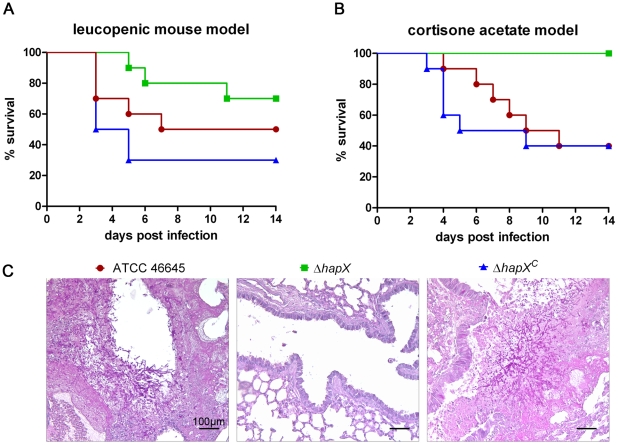
“fumigatus in the environment of the host, we compared the virulence of the DhapX strain with that of the complemented DhapX c strain and the wt strain in two different mouse models of pulmonary invasive aspergillosis: (i) a leucopenic mouse model using immunosuppression with both cortisone acetate and cyclophosphamide…”
MethodDistinct Roles for Intra- and Extracellular Siderophores during Aspergillus fumigatus Infection
Schrettl, M., Bignell, E., Kragl, C., Sabiha, Y., Loss, O., Eisendle, M., Wallner, A., Arst, H. N., Haynes, K., & Haas, H. (2007) · PLoS Pathogens · doi:10.1371/journal.ppat.0030128 · Cited by 405 · cited 7×
“fumigatus genes encoding respective enzyme activities have been identified [5,10]: sidA (N(5)-ornithine-monooxygenase), sidF (N(5)hydroxyornithine:cis-anhydromevalonyl coenzyme A-N(5)-transacylase), sidC (FC NRPS), sidD (fusarinine C NRPS) and sidG (fusarinine C:acetyl coenzyme A-N(2)-transacetylase).”
BackgroundResultInfluentialSelf-citation
Cited by
Items 201–289 of 289
Optimization of triacetylfusarinine C and ferricrocin productions in Aspergillus fumigatus
Szigeti, Z. M., Szaniszló, S., Fazekas, E., Gyémánt, G., Szabon, J., Antal, K., Emri, T., Balla, J., Balla, G., Csernoch, L. J., et al. (2014) · Acta Microbiologica et Immunologica Hungarica · doi:10.1556/amicr.61.2014.2.2 · Cited by 14
Dzikowska, A., Grzelak, A., Gawlik, J., Szewczyk, E., Mrozek, P., Borsuk, P., Koper, M., Empel, J., Szczęsny, P., Piłsyk, S., et al. (2015) · Gene · doi:10.1016/j.gene.2015.07.066 · Cited by 17
“…genes leads to a change in the cellular iron concentration and results in changes in several metabolic processes, including ribosomal biogenesis and translation, as was suggested by Schrettl et al. (2010). rcoA is among genes upregulated in the kaeAmutant; this result was confirmed by RT-qPCR (Fig.”
ResultDirect Visualization of Fungal Burden in Filamentous Fungus-Infected Silkworms
Yu, Y., Wolf, A., Thusek, S., Heinekamp, T., Bromley, M., Krappmann, S., Terpitz, U., Voigt, K., Brakhage, A. A., & Beilhack, A. (2021) · Journal of Fungi · doi:10.3390/jof7020136 · Cited by 13
Self-citationHuber, E. M., Hortschansky, P., Scheven, M. T., Misslinger, M., Haas, H., Brakhage, A. A., & Groll, M. (2022) · Structure · doi:10.1016/j.str.2022.04.001 · Cited by 11
Self-citationDing, J., Lu, M., Liu, X., Feng, M., & Ying, S. (2024) · Microbiological Research · doi:10.1016/j.micres.2024.127661 · Cited by 11
Bauer, I., Abt, B., Yap, A., Leuchtle, B., & Haas, H. (2022) · Journal of Fungi · doi:10.3390/jof8101013 · Cited by 12
“fumigatus strains were AfS77 (a Ku70-lacking derivative of the clinical isolate ATCC46645 [20]), the AfS77-derived ∆hapX and ∆srbA mutant strains [21,22], AfS35 (a Ku70-lacking derivative of the clinical isolate D141 [23]), A1160p+ (a Ku80-lacking derivative of the clinical isolate CEA10 [24]), and the clinical isolat…”
BackgroundMethodSelf-citationSeekles, S. J., van Dam, J. L., Arentshorst, M., & Ram, A. F. J. (2022) · Microorganisms · doi:10.3390/microorganisms10020221 · Cited by 10
“fumigatus, more than 30% of the target genes of HapX have a function in the mitochondria [45].”
BackgroundSrivastav, M. K., Agarwal, N., & Natarajan, K. (2018) · mSphere · doi:10.1128/msphere.00370-18 · Cited by 10
Palos-Fernández, R., Pontes, M. V. A., Puebla-Planas, G., Berger, H., Studt, L., Strauss, J., Pietro, A. D., & López‐Berges, M. S. (2024) · PLoS Pathogens · doi:10.1371/journal.ppat.1012671 · Cited by 10
“Similar to iron, copper exists in two relevant oxidation states, Cu + and Cu 2+ , acting as a cofactor for enzymes due to its potential to either accept or donate an electron while switching between the two states [9].”
Li, H., Dai, J., Shi, Y., Zhu, X., Jia, L., & Yang, Z. (2023) · Journal of Fungi · doi:10.3390/jof9020235 · Cited by 10
“When iron ions are sufficient in the environment, the expression of sreA is upregulated, which inhibits the transcription of hapX and the expression of genes related to iron ion assimilation, including the RIA and SIA pathways, and promotes the consumption of iron ions [32].”
BackgroundRidenour, J. B., Smith, J. E., & Bluhm, B. H. (2016) · Journal of Food Protection · doi:10.4315/0362-028x.jfp-15-596 · Cited by 9
Revealing Microbial Siderophores: From Genes to Applications
Cai, J., Fang, Y., Liu, X., Adjei, M. O., & Fan, B. (2026) · Microorganisms · doi:10.3390/microorganisms14020393 · Cited by 14
“During iron starvation, it represses iron-consuming processes while activating siderophore biosynthesis and iron uptake [78,79].”
Characterization of the Nuclear Import Mechanism of the CCAAT-Regulatory Subunit Php4
Khan, M. G. M., Jacques, J., Beaudoin, J., & Labbé, S. (2014) · PLoS ONE · doi:10.1371/journal.pone.0110721 · Cited by 13
Yap, A., Talasz, H., Lindner, H., Würzner, R., & Haas, H. (2022) · Frontiers in Cellular and Infection Microbiology · doi:10.3389/fcimb.2022.847846 · Cited by 8
“In line, inactivation of the Fe regulator HapX was shown to impact zinc homeostasis (Schrettl et al., 2010) and Fe”
BackgroundMethodSelf-citationA response to iron involving carbon metabolism in the opportunistic fungal pathogen Candida albicans
Garg, R., Zhu, Z., Hernandez, F. G., Wang, Y., David, M. S., Bruno, V. M., & Culotta, V. (2025) · mSphere · doi:10.1128/msphere.00040-25 · Cited by 8
“The TCA cycle consumes Fe based on Fe-S cluster requirements of aconitase and succinate dehydrogenase, and in Aspergillus fumigatus and S. cerevisiae, TCA cycle genes are repressed during Fe-starvation (20, 49).”
Peptide Mimics of the Cysteine‐Rich Regions of HapX and SreA Bind a [2Fe‐2S] Cluster In Vitro
Rossetto, D., Sebastianelli, L., Oberegger, S., Todorović, S., Haas, H., & Mansy, S. S. (2024) · Advanced Biology · doi:10.1002/adbi.202300545 · Cited by 9
Self-citationThe Regulatory Hub of Siderophore Biosynthesis in the Phytopathogenic Fungus Alternaria alternata
Wu, J.-J., Wu, P., Yago, J. I., & Chung, K.-R. (2023) · Journal of Fungi · doi:10.3390/jof9040427 · Cited by 9
“neoformans [22,27,30], as well as the plant pathogenic fungi Verticillium dahlia [24] and F.”
BackgroundMp1p homologues as virulence factors in Aspergillus fumigatus
Woo, P. C. Y., Lau, S. K. P., Lau, C. C. Y., Tung, E. T. K., Au-Yeung, R. K. H., Cai, J., Chong, K. T. K., Sze, K. H., Kao, R. Y. T., Hao, Q., et al. (2017) · Medical Mycology · doi:10.1093/mmy/myx052 · Cited by 8
Sun, J., Zhao, J., Liu, M., Li, J., Cheng, J., Li, W., Yuan, M., Xiao, S., & Xue, C. (2024) · Molecular Plant Pathology · doi:10.1111/mpp.13444 · Cited by 6
“Under iron-deficient conditions, the transcriptional inhibition of Sre is eliminated, so that phytopathogenic fungi can rapidly take up iron from the hosts (Schrettl et al., 2010; Zhang et al., 2013).”
2 Aspergillus fumigatus: Saprotroph to Pathogen
Bignell, E. (2013) · Springer eBooks · doi:10.1007/978-3-642-39432-4_2 · Cited by 9
Antsotegi-Uskola, M., Markina‐Iñarrairaegui, A., & Ugalde, U. (2020) · Frontiers in Microbiology · doi:10.3389/fmicb.2020.555306 · Cited by 6
“A TF that experienced notable lower expression under copper toxicity conditions was AnhapX and this, in turn, is consistent with the down-regulation of the siderophore biosynthesis cluster that it has been reported to regulate (Schrettl et al., 2010).”
BackgroundGupta, L., Hoda, S., Vermani, M., & Vijayaraghavan, P. (2021) · Mycological Progress · doi:10.1007/s11557-021-01677-w · Cited by 6
Pongpom, M., Amsri, A., Sukantamala, P., Suwannaphong, P., & Jeenkeawpieam, J. (2020) · Journal of Fungi · doi:10.3390/jof6030102 · Cited by 6
Jong, T., Stack, C. M., Moffitt, M. C., & Morton, C. O. (2025) · Pathogens · doi:10.3390/pathogens14040335 · Cited by 7
“HapX leads to the upregulation of siderophore biosynthesis, and its deletion can result in virulence attenuation [113].”
Yu, Y., Vogel, T., Hirsch, S., Gröll, J., Albrecht, K., & Beilhack, A. (2024) · Nanoscale · doi:10.1039/d4nr03225j · Cited by 5
Kim, J., Park, M., Do, E., & Jung, W. H. (2014) · Mycobiology · doi:10.5941/myco.2014.42.4.427 · Cited by 5
“However, recent studies have shown that Fe-S cluster biosynthesis is mainly regulated by the conserved Hap protein complex, and that deletion of the Hap protein homolog influences the virulence of fungal pathogens Candida albicans, Aspergillus fumigatus, and Cryptococcus neoformans [7-9].”
BackgroundHuang, J., Ma, Z., Zhong, G., Sheppard, D. C., Lü, L., & Zhang, S. (2019) · Virulence · doi:10.1080/21505594.2019.1596505 · Cited by 6
“Consistent with previous report, the hapX transcript level was up-regulated under low iron conditions [14].”
BackgroundMethodResultInfluentialSchäPe, P., Starke, S., Schuetze, T., Basenko, E. Y., Jung, S., Cairns, T. C., & Meyer, V. (2023) · bioRxiv (Cold Spring Harbor Laboratory) · doi:10.1101/2023.07.28.550800 · Cited by 6
“Notably, the sidD sub-network also contained genes outside its predicted BGC that are nevertheless required for TAFC synthesis or predicted plasma membrane transport (An06g01320 ( sidI ) and An07g06240 ( mirD ), respectively (31).”
BackgroundTint, K. M. M., Wei, X. L., Wang, P., Liu, G.-L., Zhang, M., Chi, Z., & Chi, Z. (2024) · Critical Reviews in Biotechnology · doi:10.1080/07388551.2024.2382954 · Cited by 4
“This information may also have biotechnological applications [56].”
Oberegger, S., Misslinger, M., Happacher, I., & Haas, H. (2025) · Nucleic Acids Research · doi:10.1093/nar/gkaf796 · Cited by 5
“In line with previously reported data [ 10 , 14 ], hapX transcript levels were strongly upregulated in − Fe compared to +Fe in WT (Fig.”
InfluentialSelf-citationThe Transcription Factors AcuK and AcuM Influence Siderophore Biosynthesis of Aspergillus fumigatus
Caballero, P., Yap, A., Bromley, M., & Haas, H. (2024) · Journal of Fungi · doi:10.3390/jof10050327 · Cited by 4
“During iron sufficiency, SreA represses SIA and RIA to avoid the toxicity caused by excessive iron uptake [23].”
BackgroundSelf-citationDing, J., Feng, M., & Ying, S. (2024) · Fungal Genetics and Biology · doi:10.1016/j.fgb.2024.103908 · Cited by 4
Peng, Y., Zhang, X., Wang, G., Liu, Q., Zhan, T., Xu, S., Xiao, G., Du, G., Wang, W., & Chen, B. (2025) · Pesticide Biochemistry and Physiology · doi:10.1016/j.pestbp.2025.106666 · Cited by 4
Peng, M., Müller, A., Kowalczyk, J. E., Kun, R. S., & de Vries, R. P. (2024) · Current Research in Biotechnology · doi:10.1016/j.crbiot.2024.100230 · Cited by 4
Oberegger, S., Misslinger, M., Faserl, K., Sarg, B., Farhan, H., & Haas, H. (2024) · Open Biology · doi:10.1098/rsob.240033 · Cited by 5
“HapX but not SreA, was found to be crucial for virulence of A. fumigatus [7,9].”
BackgroundInfluentialSelf-citationAn investigation into the transcription factors and regulatory mechanisms of Aspergillus
Qin, Y., Yu, H., & Tian, J. (2024) · Food Safety and Health · doi:10.1002/fsh3.12080 · Cited by 5
“A study by Markus found that HapX inhibits iron - dependent and mitochondria - localized activities in A. fumigatus including processes such as respiration, the tricarboxylic acid cycle, and amino acid metabolism (Schrettl et al., 2010).”
Campanella, J. E. M., Rosa, L. T., & Malavazi, I. (2025) · mBio · doi:10.1128/mbio.00803-24 · Cited by 3
“HapX was also extensively characterized as an important transcription factor involved in iron uptake and virulence in A. fumigatus (69, 70).”
Chakraborti, S., Mandal, P., & Tiru, Z. (2025) · Plant and Soil · doi:10.1007/s11104-025-08017-x · Cited by 7
Fonsecaea pedrosoi produces ferricrocin and can utilize different host iron sources
da Silva, K. L. P., Moraes, D., Lechner, B. E., Lindner, H., Haas, H., Soares, C. M. A., Bailão, M. G. S., & Bailão, A. M. (2023) · Fungal Biology · doi:10.1016/j.funbio.2023.07.002 · Cited by 4
Self-citationYang, Y., Liao, Q., Zhang, J., Liu, Y., Li, L., Chen, S., & Gao, M. (2025) · Food Physics · doi:10.1016/j.foodp.2025.100070 · Cited by 4
Adhikari, B. N., Callicott, K. A., & Cotty, P. J. (2021) · Microorganisms · doi:10.3390/microorganisms9010137 · Cited by 3
“Many prokaryotic and eukaryotic pathogens require iron for virulence [6,7] and employ multiple pathways for iron uptake, utilization, and storage [8].”
BackgroundZhai, P., Du, W., Long, N., & Lü, L. (2022) · Fungal Genetics and Biology · doi:10.1016/j.fgb.2022.103731 · Cited by 3
Virulence Attributes in Aspergillus fumigatus
León, M. G. F.-D., García-Salazar, E., & Acosta‐Altamirano, G. (2023) · Infectious diseases · doi:10.5772/intechopen.111778 · Cited by 6
Essential Metals in Cryptococcus neoformans: Acquisition and Regulation
Ding, C., Hu, G., Jung, W. H., & Kronstad, J. W. (2014) · Current Fungal Infection Reports · doi:10.1007/s12281-014-0180-3 · Cited by 3
Scott, J., & Amich, J. (2021) · Elsevier eBooks · doi:10.1016/b978-0-12-818731-9.00059-8 · Cited by 5
Amsri, A., Thammasit, P., Pruksaphon, K., Supato, J., Wei, H., Teng, Y. M., Nosanchuk, J. D., Pongpom, M., & Youngchim, S. (2026) · Current Research in Microbial Sciences · doi:10.1016/j.crmicr.2026.100597 · Cited by 1
“Thus, disruption of these iron acquisition pathways or their regulatory networks frequently leads to impaired growth and attenuated virulence, revealing iron homeostasis as a critical determinant of fungal pathogenicity (Lopez-Berges et al., 2012; Rocha et al., 2025; Schrettl et al., 2010).”
InfluentialThe “Little Iron Waltz”: The Ternary Response of Paracoccidioides spp. to Iron Deprivation
de Souza, A. F., de Paula, M. S., Lima, R. M., Silva, M. G., de Curcio, J. S., Pereira, M., & Soares, C. M. D. A. (2020) · Journal of Fungi · doi:10.3390/jof6040221 · Cited by 2
“The transcription factor SreA is reduced in iron deprivation, promoting the depression of HapX, an essential event for induction of the siderophore biosynthesis pathway [37].”
Bailão, A. M., da Silva, K. L. P., Moraes, D., Lechner, B. E., Lindner, H., Haas, H., Soares, C. M. A., & Bailão, M. G. S. (2023) · Journal of Fungi · doi:10.3390/jof9070727 · Cited by 3
“Additionally, siderophore biosynthesis genes harbor SreA and HapX consensus sequences in their promoter regions, confirming the role of these two transcription factors in the regulation of iron homeostasis in these black yeast-like strains [21,89].”
BackgroundInfluentialSelf-citationWong, S. S. W., Dellière, S., Lafont, E., & Aimanianda, V. (2021) · Elsevier eBooks · doi:10.1016/b978-0-12-818731-9.00045-8 · Cited by 2
Caballero, P., Yap, A., Oberegger, S., Happacher, I., Poonsiri, T., Benini, S., & Haas, H. (2024) · bioRxiv (Cold Spring Harbor Laboratory) · doi:10.1101/2024.08.20.608788 · Cited by 2
“Aspergillus fumigatus employs two high-affinity iron uptake systems: reductive iron assimilation (RIA) and siderophore-mediated iron acquisition (SIA) (3).”
BackgroundInfluentialSelf-citationDelaveau, T., Thiébaut, A., Benchouaia, M., Merhej, J., & Devaux, F. (2021) · Frontiers in Cellular and Infection Microbiology · doi:10.3389/fcimb.2021.731988 · Cited by 1
“Consistent with the key role of iron in microbial proliferation and nutritional immunity of the host, HapX orthologues have been shown to be important virulence factors in several humans, insect and plant fungal pathogens (Jung et al., 2010; Schrettl et al., 2010; Hsu et al., 2011; Lopez-Berges et al., 2012; Peng et a…”
BackgroundRocha, O. B., Bailão, A. M., Silva, L. O. S., Júnior, M. A. B. D. C., de Souza, E. C. L., Moreira, T. R., Saar, R., de Oliveira, M. A. P., Graziani, D., Gonçales, R. A., et al. (2025) · Current Research in Microbial Sciences · doi:10.1016/j.crmicr.2025.100513 · Cited by 2
“In iron-limiting conditions, the expression of HapX is observed to increase, as evidenced by studies in A. fumigatus, C. neoformans and P. brasiliensis (Schrettl et al., 2010; Jung et al., 2021; Parente et al., 2011).”
Zhu, Q., Fang, M., Yao, F., Lu, L., Ma, X., Cui, Y., Sun, X., & Wang, Z. (2026) · BMC Genomics · doi:10.1186/s12864-026-12654-6 · Cited by 1
“…previous studies have shown that fungal iron-responsive transcriptional regulation can occur rapidly following changes in iron availability; for example, HapX expression in A. fumigatus can be repressed within 30 min after a shift from iron-depleted to iron-replete conditions [47, 48].”
Alharthi, R., Sueiro-Olivares, M., Storer, I. S. R., Shuraym, H. B., Scott, J., Al-Shidhani, R., Fortune‐Grant, R., Bignell, E., Tabernero, L., Bromley, M., et al. (2025) · Virulence · doi:10.1080/21505594.2024.2449075 · Cited by 1
“…genes AFUA_2G07680, encoding L-ornithine-N 5 -monooxygenase (SidA), which cata-lyses the first committed step of siderophore biosynthesis, and AFUA_5G03920, encoding the master transcriptional regulator for adaptation to iron limitation (HapX), have been shown to be crucial for virulence [29,30].”
Ghods, N., Falahati, M., Roudbary, M., Farahyar, S., Shamaei, M., Porabdollah, M., & Seif, F. (2018) · Brazilian Journal of Microbiology · doi:10.1016/j.bjm.2017.10.003 · Cited by 1
Dalai, A. K. (2011) · Cited by 1
Investigating and exploiting fungal natural products in Aspergillus spp.
Miralles, L. M. (2015) · Arrow@dit (Dublin Institute of Technology) · Cited by 1
Mycotoxins and assessment of environmental risks in laboratory conditions in The Netherlands
Waalwijk, C., & de Nijs, W. C. M. (2013) · Socio-Environmental Systems Modeling · Cited by 1
Slesiona, S. (2012) · Universitätsbibliothek der FU Berlin Hochschulschriftenstelle u. Dokumentenserver · doi:10.17169/refubium-13189
Blosser, S. J. (2013) · Montana State University ScholarWorks (Montana State University)
Role of urease in pH modulation and virulence of Fusarium oxysporum
Schäfer, K. (2014) · LA Referencia (Red Federada de Repositorios Institucionales de Publicaciones Científicas) · Cited by 1
Molecular mechanisms of azole resistance in Aspergillus fumigatus
Camps, S. M. T. (2013) · Radboud Repository (Radboud University)
Herrmann, S. (2015) · eDiss (Georg-August-Universität Göttingen) · doi:10.53846/goediss-4884
Ironing Out the Host-Fungal Interaction in Airway Epithelial Cells
Lee, S. (2014) · VTechWorks (Virginia Tech)
Powers-Fletcher, M. M. (2013) · OhioLink ETD Center (Ohio Library and Information Network)
Az Aspergillus fumigatus humán patogén gombafaj stresszválaszainak vizsgálata
Kurucz, V. (2021) · University of Debrecen Electronic Archive (University of Debrecen)
PULMONARY ARTERIAL HYPERTENSION IN ADULT-ONSET STILL'S DISEASE: A CASE SERIES OF 13 PATIENTS
Mitrovic, S., Boucly, A., Lazaro, E., SCHLEINITZ, N., Bloch‐Queyrat, C., Christides, C., Pouchot, J., Humbert, M. J. C., Montani, D., Savale, L., et al. (2021) · Annals of the Rheumatic Diseases · doi:10.1136/annrheumdis-2021-eular.2668 · Cited by 1
El-Kamand, S., Ramirez, C., Halliday, C. L., Chen, S. C. ‐., & Morton, C. O. (2019) · Research Square · doi:10.21203/rs.2.10806/v1
Physiology and metabolism of fungal pathogens
Gow, N. A. R., & Brown, A. J. P. (2017) · Oxford University Press eBooks · doi:10.1093/med/9780198755388.003.0003
Iron Uptake in Host Defense Against Pneumonia
Michels, K. R. (2017) · doi:10.18130/v3465h
Aspergillus and Aspergillosis - Advances in Genomics, Drug Development, Diagnosis and Treatment
Razzaghi‐Abyaneh, M., Rai, M. K., & Shams‐Ghahfarokhi, M. (2023) · Infectious diseases · doi:10.5772/intechopen.107748
Govic, Y. L. (2020) · theses.fr (ABES) · doi:10.70675/afa6470azbbacz4142z9a7cz10cd78d6b034
Understanding Molecular Pathogenesis of Aspergillus fumigatus
Sen, P., Gupta, L., Singh, A. J. A. R., Kumar, L., Mishra, R. K., & Vijayaraghavan, P. (2024) · Springer eBooks · doi:10.1007/978-981-97-4909-6_19
Baldin, C., Binder, U., Scheler, J., Werner, E. R., Gsaller, F., Bromley, M., & Haas, H. (2025) · Frontiers in Microbiology · doi:10.3389/fmicb.2025.1646661 · Cited by 1
“…iron uptake during sufficiency (Oberegger et al., 2001; Oberegger et al., 2002; Schrettl et al., 2008), while the bZIP protein HapX activates iron uptake and represses iron-consuming processes during iron starvation (Hortschansky et al., 2007; Schrettl et al., 2010; Schrettl and Haas, 2011).”
InfluentialSelf-citationGerrits, R., Schumacher, J., & Gorbushina, A. A. (2026) · Applied and Environmental Microbiology · doi:10.1101/2025.11.18.689051
Epidemiology and mechanisms of antifungal resistance in Aspergillus : а review
Avtonomova, A. V., & Валерьевна, К. О. (2025) · Russian Medicine · doi:10.17816/medjrf685079
Exploring diversity in iron resistance to obtain yeasts of biotechnological interest
Sorribes-Dauden, R. (2023) · Repository of Digital Objects for Teaching Research and Culture (University of Valencia)
Papel de la homeostasis del cobre en la patogénesis fúngica
Palos-Fernández, R. (2023) · Universidad de Córdoba Insitutional Repository (Universidad de Córdoba)
Wang, R. (2025) · DiVA - University of Borås (Högskolan i Borås)
Transcriptional networks of the stress responses in the human pathogen Candida glabrata
Thiébaut, A. (2018) · theses.fr (ABES) · doi:10.70675/323c74a8z1ae4z4123za081zd0af3ecf65ae
Sun, T.-F., Zhang, H., Xu, H., Gao, B., Feng, M., & Ying, S. (2026) · Pesticide Biochemistry and Physiology · doi:10.1016/j.pestbp.2026.107155
Vellanki, S., DeMichaelis, N., Liao, C., Stajich, J., & Cramer, R. A. (2026) · mBio · doi:10.1128/mbio.00661-26
Cong, L., Lin, Z., Li, Q., Wang, W., & Zhang, S. (2026) · mBio · doi:10.1128/mbio.00896-26
“Iron starvation has previously been shown to transcriptionally reduce mitochondrial activity, including oxidative phosphor ylation, via the bZIP transcription factor HapX (54, 55).”
Parveen, A., Karak, P., Adhikari, A., & Das, S. K. (2026) · Frontiers in Molecular Biosciences · doi:10.3389/fmolb.2026.1829493
“…represents another host-imposed constraint, and HapX-mediated adaptation to iron starvation is crucial for virulence, coordinating repression of iron-consuming programs 10.3389/fmolb.2026.1829493 while promoting acquisition strategies such as siderophore-mediated uptake (Schrettl et al., 2010).”
InfluentialWang, X., Lin, H., Guo, H., Xu, W., Wu, S., Zhang, L., Zha, W., Yuan, J., & Wang, S. (2026) · Mycology: An International Journal on Fungal Biology · doi:10.1080/21501203.2026.2720999
Self-citation
Metadata
- Authors
- Schrettl, M., Beckmann, N., Varga, J., Heinekamp, T., Jacobsen, I. D., Jöchl, C., Moussa, T. A., Wang, S., Gsaller, F., Blatzer, M., Werner, E. R., Niermann, W. C., Brakhage, A. A., & Haas, H.
- Affiliations
- Innsbruck Medical University (AT)
- J. Craig Venter Institute (US)
- Leibniz-Institut für Naturstoff-Forschung und Infektionsbiologie e. V. - Hans-Knöll-Institut (HKI) (DE)
- Corresponding author
- Haas, Hubertus
- ORCID
- Venue
- PLoS Pathogens
- Publisher
- Public Library of Science (PLoS)
- Published
- 2010-09-30
- Volume
- 6
- Issue
- 9
- Pages
- e1001124
- ISSN
- 1553-7366 (ISSN-L)
- 1553-7374
- PMC
- PMC2947994
- OpenAlex
- W1997487743
- Cited by
- 284
- References
- 48
- Citations by year
- 2026: 9 · 2025: 14 · 2024: 19 · 2023: 15 · 2022: 14 · 2021: 15 · 2020: 18 · 2019: 16 · 2018: 19 · 2017: 18 · 2016: 25 · 2015: 17 · 2014: 21 · 2013: 22 · 2012: 21
- FWCI
- 8.34
- Type
- journal article
- Language
- en
- Open access
- gold
- doi.org
- Locations
- PLoS Pathogens (publishedVersion, cc-by)
- PubMed Central (publishedVersion, cc-by)
- PubMed (publishedVersion)
- Research Explorer (The University of Manchester) (submittedVersion)
- DOAJ (DOAJ: Directory of Open Access Journals) (submittedVersion, cc-by-sa)
- Figshare (submittedVersion, cc-by)
- Funders
- Austrian Science Fund
- Topics
- Life Sciences › Biochemistry, Genetics and Molecular Biology › Molecular Biology › Fungal and yeast genetics research
- Health Sciences › Medicine › Infectious Diseases › Antifungal resistance and susceptibility
- Health Sciences › Medicine › Infectious Diseases › Fungal Infections and Studies
- Keywords
- Aspergillus fumigatus, iron starvation, virulence, siderophores, ornithine, transcriptional regulation, mitochondrial metabolism, iron-sulfur clusters, heme biosynthesis, tetracycline resistance, aspergillosis, opportunistic fungal pathogens
- MeSH terms
- Iron Deficiencies, Adaptation, Psychological, Allergens, Amino Acids, Animals, Anti-Bacterial Agents, Aspergillosis, Aspergillus fumigatus, Disease Models, Animal, DNA, Mitochondrial, Fungal Proteins, Ornithine, Repressor Proteins, RNA, Messenger, Tetracycline, Virulence, Blotting, Northern, Biomarkers, Gene Expression Regulation, Fungal, Survival Rate, Siderophores, Reverse Transcriptase Polymerase Chain Reaction, Oligonucleotide Array Sequence Analysis, Gene Expression Profiling, Drug Resistance, Fungal, Basic-Leucine Zipper Transcription Factors, GATA Transcription Factors, Mice, Antigens, Plant
About these checks
Registry, retraction, Cites and statistics results are computed, not judged, with one exception: a printed reference that no index lists is read once by a model before it counts as a citation error. Claims are extracted by a model and kept only when their quote appears verbatim in the text; each cited source is then checked, with a model’s help, for whether it says what the claim relies on. Those verdicts can be wrong — read the claim’s quote and the cited source before relying on one.
Statistics and arithmetic are recomputed, not judged.
Confidence bands are shown only for fields calibrated on our annotated test set. None is calibrated yet, so no band is shown.
What counts as a claim ›How we measure confidence ›How we check this ›
Are you an author, or do you see a problem with this page? Request a review
Data sources
Bibliographic data: Semantic Scholar, OpenAlex, Crossref.
Contains information from the Semantic Scholar Academic Graph Datasets, made available under the ODC Attribution License (ODC-BY 1.0).
Semantic Scholar’s data is described in: Kinney, R., et al. (2023). The Semantic Scholar Open Data Platform. arXiv:2301.10140.
