

HapX-Mediated Adaption to Iron Starvation Is Crucial for Virulence of Aspergillus fumigatus
Open accessThe DOI matches its Crossref record; 48 of the 48 references it cites were found in a registry or an index.
Abstract
Iron is essential for a wide range of cellular processes. Here we show that the bZIP-type regulator HapX is indispensable for the transcriptional remodeling required for adaption to iron starvation in the opportunistic fungal pathogen Aspergillus fumigatus. HapX represses iron-dependent and mitochondrial-localized activities including respiration, TCA cycle, amino acid metabolism, iron-sulfur-cluster and heme biosynthesis. In agreement with the impact on mitochondrial metabolism, HapX-deficiency decreases resistance to tetracycline and increases mitochondrial DNA content. Pathways positively affected by HapX include production of the ribotoxin AspF1 and siderophores, which are known virulence determinants. Iron starvation causes a massive remodeling of the amino acid pool and HapX is essential for the coordination of the production of siderophores and their precursor ornithine. Consistent with HapX-function being limited to iron depleted conditions and A. fumigatus facing iron starvation in the host, HapX-deficiency causes significant attenuation of virulence in a murine model of aspergillosis. Taken together, this study demonstrates that HapX-dependent adaption to conditions of iron starvation is crucial for virulence of A. fumigatus.
Overview
The claims and statistics of this paper haven’t been checked yet.
Free: it reads the open-access text and checks the first 5 claims that cite a source we can check. Create a free account to check every claim.
Integrity signals
Registry
Cites
Statistics
Figures
Verification
Claims the paper makes
The claims and statistics of this paper haven’t been checked yet.
Free: it reads the open-access text and checks the first 5 claims that cite a source we can check. Create a free account to check every claim.
Claims other papers make about this one
Each is checked against this paper’s own text: does it say what the citing paper says it does?
In the citing paper
“Sites of local tissue hypoxia are commonly observed in experimental models of A. fumigatus infection (356).”
From Aspergillus fumigatus and Aspergillosis in 2019 (2019) · cites this paper as [356]
In the citing paper
“In contrast, other pathogenic fungi such as Aspergillus fumigatus, Cryptococcus neoformans, and C. albicans generally rely on iron-dependent regulation via GATA factor orthologs and the CCAAT-binding complex (12, 48–51).”
From A novel hybrid iron regulation network combines features from pathogenic and nonpathogenic yeasts (2016) · cites this paper as [12]
Self-check
Percentages, sums and reported differences re-computed from the paper’s own numbers.
The self-check needs the paper’s full text.
Citations
Cites
Molecular Cloning: A Laboratory Manual
Sambrook, J., Fritsch, E., & Maniatis, T. (1989) · UCLA - Biblioteca de Ciencias de la Salud · Cited by 133,589
Molecular cloning: A laboratory manual
Deininger, P. (1990) · Analytical Biochemistry · doi:10.1016/0003-2697(90)90595-z · Cited by 84,682
Oxygen toxicity, oxygen radicals, transition metals and disease
Halliwell, B., & Gutteridge, J. M. C. (1984) · Biochemical Journal · doi:10.1042/bj2190001 · Cited by 5,330 · cited 1×
“However, excess iron has the ability to generate toxic reactive species that can damage cellular components [1].”
BackgroundChopra, I., & Roberts, M. (2001) · Microbiology and Molecular Biology Reviews · doi:10.1128/mmbr.65.2.232-260.2001 · Cited by 4,517 · cited 1×
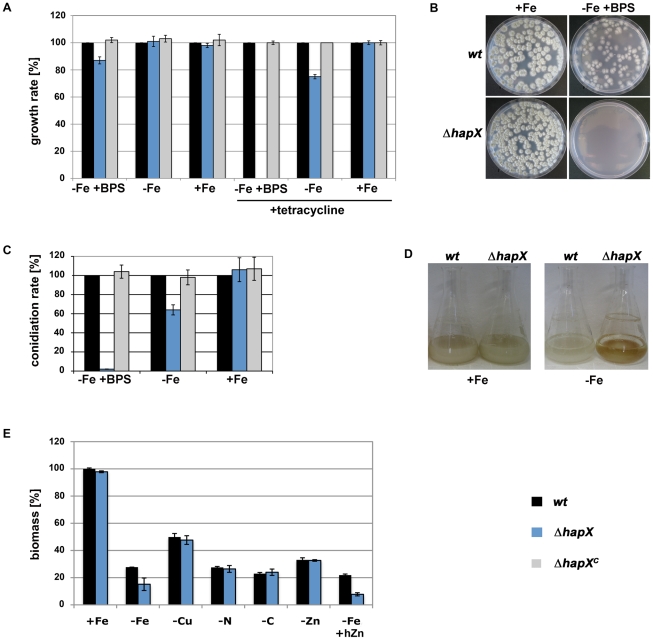
“HapX-deficiency also decreased resistance to tetracycline, an inhibitor of bacterial and mitochondrial protein synthesis [31], during iron-depleted but not iron-replete conditions (Fig.”
BackgroundThe Genetics of Aspergillus nidulans
Pontecorvo, G., Roper, J. A., Chemmons, L. M., Macdonald, K. D., & Bufton, A. W. J. (1953) · Advances in Genetics · doi:10.1016/s0065-2660(08)60408-3 · Cited by 2,302
Genomic sequence of the pathogenic and allergenic filamentous fungus Aspergillus fumigatus
Nierman, W. C., Pain, A., Anderson, M. J., Wortman, J. R., Kim, H. S., Arroyo, J., Berriman, M., Abe, K., Archer, D. B., Bermejo, C., et al. (2005) · Nature · doi:10.1038/nature04332 · Cited by 1,391 · cited 1×
“fumigatus Af293 DNA amplicon microarray containing 9,516 genes [47] was used in this study.”
MethodSelf-citationSchrettl, M., Bignell, E., Kragl, C., Joechl, C., Rogers, T., Arst, H. N., Haynes, K., & Haas, H. (2004) · The Journal of Experimental Medicine · doi:10.1084/jem.20041242 · Cited by 493 · cited 6×
“DsreA and DsidA were described previously [5,22]; generation of DhapX and DhapX is described below.”
BackgroundResultInfluentialSelf-citationSiderophores in Fungal Physiology and Virulence
Haas, H., Eisendle, M., & Turgeon, B. G. (2008) · Annual Review of Phytopathology · doi:10.1146/annurev.phyto.45.062806.094338 · Cited by 449 · cited 5×
“Siderophores are low molecular mass, ferric iron-specific chelators [6].”
BackgroundInfluentialSelf-citationPhilippe, B., Ibrahim-Granet, O., Prévost, M. C., Gougerot-Pocidalo, M. A., Sanchez Perez, M., Van der Meeren, A., & Latgé, J. P. (2003) · Infection and Immunity · doi:10.1128/iai.71.6.3034-3042.2003 · Cited by 415 · cited 1×
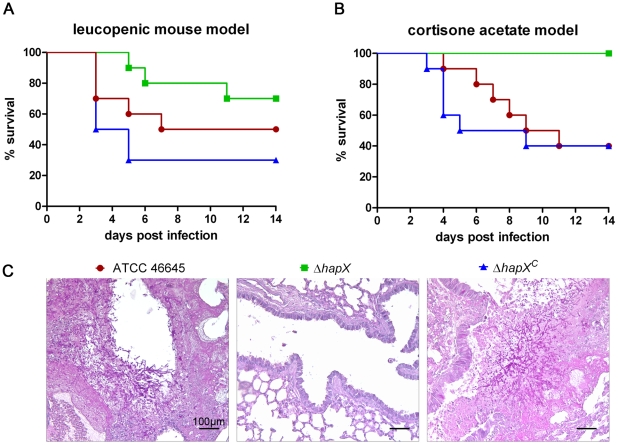
“fumigatus in the environment of the host, we compared the virulence of the DhapX strain with that of the complemented DhapX c strain and the wt strain in two different mouse models of pulmonary invasive aspergillosis: (i) a leucopenic mouse model using immunosuppression with both cortisone acetate and cyclophosphamide…”
MethodDistinct Roles for Intra- and Extracellular Siderophores during Aspergillus fumigatus Infection
Schrettl, M., Bignell, E., Kragl, C., Sabiha, Y., Loss, O., Eisendle, M., Wallner, A., Arst, H. N., Haynes, K., & Haas, H. (2007) · PLoS Pathogens · doi:10.1371/journal.ppat.0030128 · Cited by 405 · cited 7×
“fumigatus genes encoding respective enzyme activities have been identified [5,10]: sidA (N(5)-ornithine-monooxygenase), sidF (N(5)hydroxyornithine:cis-anhydromevalonyl coenzyme A-N(5)-transacylase), sidC (FC NRPS), sidD (fusarinine C NRPS) and sidG (fusarinine C:acetyl coenzyme A-N(2)-transacetylase).”
BackgroundResultInfluentialSelf-citation
Cited by
Items 101–200 of 289
Liu, H., Xu, W., Bruno, V. M., Phan, Q. T., Solis, N. V., Woolford, C. A., Ehrlich, R. L., Shetty, A. C., McCracken, C. L., Lin, J., et al. (2021) · PLoS Pathogens · doi:10.1371/journal.ppat.1009235 · Cited by 44
Vicentefranqueira, R., Amich, J., Marín, L., Sánchez, C. I., Leal, F., & Calera, J. A. (2018) · Genes · doi:10.3390/genes9070318 · Cited by 45
“However, it is known that the expression of hapX is reduced dramatically under iron-replete conditions [44], which indicates that the predicted action of HapX on the expression of the aforementioned genes must be exerted by the low basal amount of HapX that is synthesized under iron-replete conditions [45].”
BackgroundIron: an essential nutrient for Aspergillus fumigatus and a fulcrum for pathogenesis
Matthaiou, E. I., Sass, G., Stevens, D. A., & Hsu, J. L. (2018) · Current Opinion in Infectious Diseases · doi:10.1097/qco.0000000000000487 · Cited by 47
Molecular basis of the regulation of iron homeostasis in fission and filamentous yeasts
Brault, A., Mourer, T., & Labbé, S. (2015) · IUBMB Life · doi:10.1002/iub.1441 · Cited by 42
“fumigatus virulence in a murine model (12).”
BackgroundInfluentialFurukawa, T., Scheven, M. T., Misslinger, M., Zhao, C., Hoefgen, S., Gsaller, F., Lau, J., Jöchl, C., Donaldson, I. J., Valiante, V., et al. (2020) · Nucleic Acids Research · doi:10.1093/nar/gkaa109 · Cited by 42
“Previous microarray-based, genome-wide, transcriptional profiling has identified 131 genes that are repressed during iron starvation and shortterm activated by iron in a HapX dependent manner (4,48).”
BackgroundMethodInfluentialSelf-citationGarzia, A., Etxebeste, O., Rodríguez‐Romero, J., Fischer, R., Espeso, E. A., & Ugalde, U. (2012) · Eukaryotic Cell · doi:10.1128/ec.00274-12 · Cited by 40
Genome mining and functional genomics for siderophore production in Aspergillus niger
Franken, A. C. W., Lechner, B. E., Werner, E. R., Haas, H., Lokman, B. C., Ram, A. F. J., van den Hondel, C. A. M. J. J., de Weert, S., & Punt, P. J. (2014) · Briefings in Functional Genomics · doi:10.1093/bfgp/elu026 · Cited by 42
“Under high iron conditions, a reduced growth on solid media was observed for the sreA strain, and the colonies displayed an orange/reddish coloring likely caused by the accumulation of iron, heme and intracellular siderophores [2, 14, 34].”
BackgroundSelf-citationSorribes-Dauden, R., Peris, D., Martínez‐Pastor, M. T., & Puig, S. (2020) · Computational and Structural Biotechnology Journal · doi:10.1016/j.csbj.2020.10.044 · Cited by 41
“Remarkably, A. fumigatus CBC and its HapX regulatory factor, which contains a CBC-BD, a bZIP domain and four CRDs, function in response to both iron limitation and excess by activating or repressing iron metabolism genes depending on iron bioavailability [83-85].”
BackgroundHsu, J. L., Manouvakhova, O. V., Clemons, K. V., Inayathullah, M., Tu, A. B., Sobel, R. A., Tian, A., Nazik, H., Pothineni, V. R., Pasupneti, S., et al. (2018) · Science Translational Medicine · doi:10.1126/scitranslmed.aag2616 · Cited by 38
“These mutants included the following: hapX, which lacks hapX, a gene that is required for adaptation to iron starvation through repression of iron-dependent pathways (28); sreA, which lacks the sreA gene encoding a repressor of iron uptake during high-iron conditions (29); and the double-knockout iron-intolerant mut…”
BackgroundSelf-citationMavridou, E., Meletiadis, J., Jancura, P., Abbas, S., Arendrup, M. C., Melchers, W. J. G., Heskes, T., Mouton, J. W., & Verweij, P. E. (2013) · PLoS ONE · doi:10.1371/journal.pone.0072280 · Cited by 39
“Although the ergosterol biosynthesis pathway is critical for growth and proliferation of the fungus (and thus is an important drug target), it has previously been shown that SNPs in the cyp-gene of Candida occurred without major perturbation of the haem environment or activity, and as a consequence, allowed resistant…”
BackgroundHortschansky, P., Ando, E., Tuppatsch, K., Arikawa, H., Kobayashi, T., Kato, M., Haas, H., & Brakhage, A. A. (2015) · Journal of Biological Chemistry · doi:10.1074/jbc.m114.628677 · Cited by 39
“Additionally, for iron acquisition, HapX activates a subset of genes that are involved in the biosynthesis of fungus-specific ferric iron chelators (termed siderophores) and reductive iron assimilation (2, 5).”
BackgroundSelf-citationIron acquisition and oxidative stress response in aspergillus fumigatus
Brandon, M., Howard, B. A., Lawrence, C. B., & Laubenbacher, R. (2015) · BMC Systems Biology · doi:10.1186/s12918-015-0163-1 · Cited by 41
Aspergillus fumigatusvirulence through the lens of transcription factors: Table 1.
Bultman, K. M., Kowalski, C. H., & Cramer, R. A. (2016) · Medical Mycology · doi:10.1093/mmy/myw120 · Cited by 43
“…Unfolded protein response Richie et al. (2009) Richie et al. (2011) HapX Afu5g03920 Iron homeostasis (deplete conditions) Brandon et al. (2015) Schrettl et al. (2010) HasA Afu3g12890 hexadehydro-astechrome production Yin et al. (2013) MedA Afu2g13260 Biofilm formation, adherence Gravelat et…”
BackgroundChung, K.-R., Wu, P., Chen, Y.-K., & Yago, J. I. (2020) · Fungal Genetics and Biology · doi:10.1016/j.fgb.2020.103384 · Cited by 40
Beckmann, N., Schafferer, L., Schrettl, M., Binder, U., Talasz, H., Lindner, H., & Haas, H. (2013) · PLoS ONE · doi:10.1371/journal.pone.0067426 · Cited by 35
“In contrast, HapX-deficiency increased the spermidine content 5.9- fold during iron starvation.”
BackgroundMethodResultSelf-citationA network of paralogous stress response transcription factors in the human pathogen Candida glabrata
Merhej, J., Thiebaut, A., Blugeon, C., Pouch, J., Ali Chaouche, M. E. A., Camadro, J.-M., Le Crom, S., Lelandais, G., & Devaux, F. (2016) · Frontiers in Microbiology · doi:10.3389/fmicb.2016.00645 · Cited by 36
“HapX was initially identified as a key regulator of iron starvation response in filamentous ascomycetes (Hortschansky et al., 2007; Schrettl et al., 2010; Lopez-Berges et al., 2012), basidyomycetes (Jung et al., 2010), and hemiascomycetes of the C. albicans clade (where it is called Hap43; Hsu et…”
BackgroundOrasch, T., Dietl, A., Shadkchan, Y., Binder, U., Bauer, I., Lass‐Flörl, C., Osherov, N., & Haas, H. (2019) · Virulence · doi:10.1080/21505594.2019.1682760 · Cited by 36
“Moreover, HapX has been shown to transcriptionally repress LeuA and Ilv3A during iron starvation [10].”
BackgroundMethodSelf-citationLong, N., Xu, X., Qian, H., Zhang, S., & Lu, L. (2016) · Frontiers in Microbiology · doi:10.3389/fmicb.2016.00716 · Cited by 36
Macheleidt, J., Scherlach, K., Neuwirth, T., Schmidt‐Heck, W., Straßburger, M., Spraker, J. E., Baccile, J. A., Schroeder, F. C., Keller, N. P., Hertweck, C., et al. (2015) · Molecular Microbiology · doi:10.1111/mmi.12926 · Cited by 41
“For A. fumigatus, iron uptake via siderophores and the ability to grow under hypoxic conditions are important virulence determinants (Schrettl et al., 2004; 2010; Hissen et al., 2005; Willger et al., 2008) and their regulation by the PKA signaling cascade may represent another reason for the…”
BackgroundSelf-citationAspergillus fumigatus Transcription Factors Involved in the Caspofungin Paradoxical Effect
Valero, C., Colabardini, A. C., Chiaratto, J., Pardeshi, L. A., de Castro, P. A., Filho, J. A. F., Silva, L. P., Rocha, M. C., Malavazi, I., Costa, J. H., et al. (2020) · mBio · doi:10.1128/mbio.00816-20 · Cited by 40
“We selected genes involved in iron starvation, such as hapX (AFUB_052420), which encodes a bZIP transcription factor required for adaptation to both iron depletion and excess and for transcriptional activation of the siderophore system (33); sidA (AFUB_023720), encoding an L-ornithine N5-oxygenase, representing the fi…”
BackgroundWen, Z., Zhao, Y., Gong, Z., Tang, Y., Xiong, Y., Chen, J., Chen, C., Zhang, Y., Liu, S., Zheng, J., et al. (2022) · Microbiology Spectrum · doi:10.1128/spectrum.00991-21 · Cited by 36
Zhao, Q., Pei, H., Zhou, X., Zhao, K. X., Yu, M., Han, G., Fan, J., & Tao, F. (2022) · Journal of Fungi · doi:10.3390/jof8040356 · Cited by 36
“In addition, previous studies have revealed that the HapX transcription factor is a major regulator of iron homeostasis, enabling adaptation to both low and excessive amounts of iron [30,34,58].”
BackgroundLi, Y., Wang, Z., Liu, X., Song, Z., Li, R., Shao, C., & Yin, Y. (2016) · Frontiers in Microbiology · doi:10.3389/fmicb.2016.00931 · Cited by 43
Symeonidis, A. S., & Marangos, M. N. (2012) · InTech eBooks · doi:10.5772/34760 · Cited by 54
The bZIP Protein MeaB Mediates Virulence Attributes in Aspergillus flavus
Amaike, S., Affeldt, K. J., Yin, W., Franke, S., Choithani, A., & Keller, N. P. (2013) · PLoS ONE · doi:10.1371/journal.pone.0074030 · Cited by 34
“bZIP proteins are eukaryotic transcription factors well described in yeast and, increasingly, in filamentous fungi [18,19].”
BackgroundDo, E., Cho, Y., Kim, D., Kronstad, J. W., & Jung, W. H. (2020) · Genetics · doi:10.1534/genetics.120.303270 · Cited by 34
Pais, P., Costa, C., Cavalheiro, M., Romão, D., & Teixeira, M. C. (2016) · Frontiers in Cellular and Infection Microbiology · doi:10.3389/fcimb.2016.00131 · Cited by 37
“…a bZIP negative regulator of ironconsuming pathways (e.g., heme biosynthesis, respiration, TCA cycle and amino acid metabolism) that is required for adaptation to iron depletion, while acting as an activator of the siderophore iron uptake pathway, a known virulence factor (Schrettl et al., 2010).”
BackgroundAmphotericin B Resistance in Aspergillus terreus Is Overpowered by Coapplication of Pro-oxidants
Blatzer, M., Jukic, E., Posch, W., Schöpf, B., Binder, U., Steger, M., Blum, G., Hackl, H., Gnaiger, E., Lass‐Flörl, C., et al. (2015) · Antioxidants and Redox Signaling · doi:10.1089/ars.2014.6220 · Cited by 34
“Next, we quantified the mitochondrial DNA (mtDNA) content in ATS and ATR by real-time polymerase chain reaction (PCR) against a chromosomal DNA template (40).”
Self-citationTranscriptional and Proteomic Analysis of the Aspergillus fumigatus ΔprtT Protease-Deficient Mutant
Hagag, S., Kubitschek-Barreira, P. H., Neves, G. W. P., Amar, D., Nierman, W. C., Shalit, I., Shamir, R., Lopes-Bezerra, L. M., & Osherov, N. (2012) · PLoS ONE · doi:10.1371/journal.pone.0033604 · Cited by 40
“fumigatus to identify the putative downstream targets of several transcription factors, including CrzA, SrbA, LaeA, SreA, HapX, AcuM, BrlA and StuA [13,14,15,16,17,18,19].”
BackgroundEnvironmental responses and the control of iron homeostasis in fungal systems
Canessa, P., & Larrondo, L. F. (2012) · Applied Microbiology and Biotechnology · doi:10.1007/s00253-012-4615-x · Cited by 37
“…pathways such as amino acid metabolism, respiration, citric acid cycle, or heme biosynthesis in different fungal models such as A. fumigatus (Schrettl et al. 2010), C. albicans (Chen et al. 2011; Hsu et al. 2011), S. pombe (Mercier et al. 2006), C. neoformans (Jung et al. 2010), and F.…”
BackgroundInfluentialConnecting iron regulation and mitochondrial function in Cryptococcus neoformans
Horianopoulos, L. C., & Kronstad, J. W. (2019) · Current Opinion in Microbiology · doi:10.1016/j.mib.2019.04.002 · Cited by 32
Iron acquisition strategies in pathogenic fungi
Takemura, K., Kolasinski, V., Poeta, M. D., de Sa, N. F. V., Garg, A., Ojima, I., Poeta, M. D., & de Sá, N. P. (2025) · mBio · doi:10.1128/mbio.01211-25 · Cited by 40
“The effects of disrupting SreA and HapX are context dependent: SreA deficiency primarily impacts growth in iron-sufficient environments, while HapX deficiency hinders growth during iron starvation (71).”
Aguiar, M. M., Orasch, T., Shadkchan, Y., Caballero, P., Pfister, J., Sastré-Velásquez, L. E., Gsaller, F., Decristoforo, C., Osherov, N., & Haas, H. (2022) · mBio · doi:10.1128/mbio.02192-22 · Cited by 39
“remains elusive and previous studies indicated that its expression is not regulated by iron (37, 51).”
BackgroundSelf-citationHappacher, I., Aguiar, M. M., Yap, A., Decristoforo, C., & Haas, H. (2023) · Essays in Biochemistry · doi:10.1042/ebc20220252 · Cited by 36
Self-citationSiderophore Biosynthesis and Transport Systems in Model and Pathogenic Fungi
Choi, S., Kronstad, J. W., & Jung, W. H. (2024) · Journal of Microbiology and Biotechnology · doi:10.4014/jmb.2405.05020 · Cited by 38
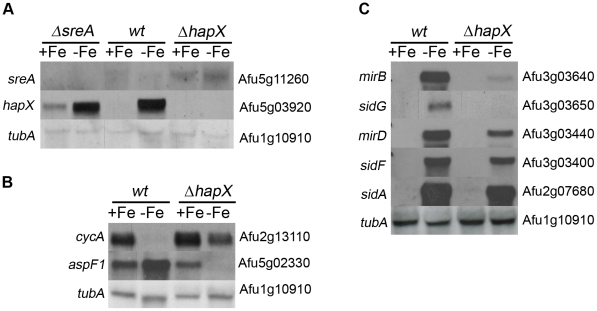
“Transcript levels of MirB, MirC, and Sit1 were reduced in the absence of SreA and the mutant lacking HapX showed decreased transcript levels of MirB suggesting positive regulatory roles of both iron regulatory transcription factors on siderophore transport in A. fumigatus [70, 78].”
BackgroundChi, Z., Wang, X., Geng, Q., & Chi, Z. (2013) · BioMetals · doi:10.1007/s10534-013-9672-9 · Cited by 32
“Schrettl et al. (2010) found that the bZIP transcription factor HapX is required for full siderophore biosynthesis, but it is not known if this HapX acts directly.”
BackgroundNitrogen, Iron, and Zinc Acquisition: Key Nutrients to Aspergillus fumigatus Virulence
Perez‐Cuesta, U., Guruceaga, X., Cendon‐Sanchez, S., Pelegri‐Martinez, E., Hernando, F. L., Ramirez‐Garcia, A., Abad, A., & Rementería, A. (2021) · Journal of Fungi · doi:10.3390/jof7070518 · Cited by 36
“Two main repressors for this purpose have been described: the GATA TF SreA, which downregulates acquisition [65], and the HapX to downregulate iron consumption [66].”
BackgroundInfluentialThe iron-responsive microsomal proteome of Aspergillus fumigatus
Moloney, N. M., Owens, R. A., Meleady, P., Henry, M. A., Dolan, S. K., Mulvihill, E., CLYNES, M. M., & Doyle, S. (2015) · Journal of Proteomics · doi:10.1016/j.jprot.2015.12.025 · Cited by 37
Identification of ferrichrome- and ferrioxamine B-mediated iron uptake by Aspergillus fumigatus
Park, Y. S., Kim, J.-Y., & Yun, C. (2016) · Biochemical Journal · doi:10.1042/bcj20160066 · Cited by 32
Coordination of hypoxia adaptation and iron homeostasis in human pathogenic fungi
Chung, D., Haas, H., & Cramer, R. A. (2012) · Frontiers in Microbiology · doi:10.3389/fmicb.2012.00381 · Cited by 29
“In this fungus, the expression of the two iron regulators is controlled by a negative regulatory feedback loop (Schrettl et al., 2010a).”
BackgroundInfluentialSelf-citationAspergillus fumigatus escape mechanisms from its harsh survival environments
Liu, F., Zeng, M., Zhou, X., Huang, F., & Song, Z. (2024) · Applied Microbiology and Biotechnology · doi:10.1007/s00253-023-12952-z · Cited by 33
“Under iron starvation, HapX interacts with the CCAAT-binding core complex to activate iron acquisition and siderophore transporters, repress iron-consuming processes, and the vacuolar iron transporter pathway (Schrettl et al. 2010).”
Thiébaut, A., Delaveau, T., Benchouaia, M., Boeri, J., Garcia, M., Lelandais, G., & Devaux, F. (2017) · Scientific Reports · doi:10.1038/s41598-017-03750-5 · Cited by 29
The regulation of iron homeostasis in the fungal human pathogen Candida glabrata
Devaux, F., & Thiébaut, A. (2019) · Microbiology · doi:10.1099/mic.0.000807 · Cited by 35
“ACO1, CCC1, GLT1, ISA1, HEM3, SDH2, RLI1) [161, 205].”
The Siderophore Ferricrocin Mediates Iron Acquisition in Aspergillus fumigatus
Happacher, I., Aguiar, M. M., Alilou, M., Abt, B., Baltussen, T. J. H., Decristoforo, C., Melchers, W. J. G., & Haas, H. (2023) · Microbiology Spectrum · doi:10.1128/spectrum.00496-23 · Cited by 32
Self-citationMarty, A. J., Broman, A. T., Żarnowski, R., Dwyer, T. G., Bond, L. M., Sahraoui, A. L., Fontaine, J., Ntambi, J. M., Keleş, S., Kendziorski, C. M., et al. (2015) · PLoS Pathogens · doi:10.1371/journal.ppat.1004959 · Cited by 33
“, it is in a negative regulatory circuit with SREA, a homolog of SREB [48,49].”
BackgroundBalhara, M., Chaudhary, R., Ruhil, S., Singh, B., Dahiya, N. R., Parmar, V. S., Jaiwal, P. K., & Chhillar, A. K. (2016) · Expert Opinion on Therapeutic Targets · doi:10.1080/14728222.2016.1254196 · Cited by 31
“ter [SIT]) unique to fungi, absent in prokaryotes and other eukaryotes [50,51].”
BackgroundThe tug-of-war on iron between plant and pathogen
Sun, J., Xiao, S., & Xue, C. (2023) · Phytopathology Research · doi:10.1186/s42483-023-00215-8 · Cited by 30
“…iron starvation conditions, HapX spares iron by repressing iron-consuming pathways involved in processes of respiration, amino acid metabolism, citric acid cycle, DNA replication, and DNA repair (Jung et al. 2010; Schrettl et al. 2010; Chen et al. 2011; Hsu et al. 2011; López-Berges et al. 2012).”
BackgroundRbdB, a Rhomboid Protease Critical for SREBP Activation and Virulence in Aspergillus fumigatus
Dhingra, S., Kowalski, C. H., Thammahong, A., Beattie, S. R., Bultman, K. M., & Cramer, R. A. (2016) · mSphere · doi:10.1128/msphere.00035-16 · Cited by 33
Php4 Is a Key Player for Iron Economy in Meiotic and Sporulating Cells
Brault, A., Rallis, C., Normant, V., Garant, J., Bähler, J., & Labbé, S. (2016) · G3 Genes Genomes Genetics · doi:10.1534/g3.116.031898 · Cited by 28
“fumigatus, inactivation of HapX (hapXD) decreases asexual reproduction under iron starvation conditions (Schrettl et al. 2010).”
BackgroundInfluentialStructural basis of HapEP88L-linked antifungal triazole resistance in Aspergillus fumigatus
Hortschansky, P., Misslinger, M., Mörl, J., Gsaller, F., Bromley, M., Brakhage, A. A., Groll, M., Haas, H., & Huber, E. M. (2020) · Life Science Alliance · doi:10.26508/lsa.202000729 · Cited by 28
“As the CBC – HapX complex controls fungal adaption to varying iron concentrations (Schrettl et al, 2010; Gsaller et al, 2014), iron depletion, suf fi ciency, and excess were tested.”
Self-citationLeal, S. M., Roy, S., Vareechon, C., Carrion, S. D. J., Clark, H., López‐Berges, M. S., Pietro, A. D., Schrettl, M., Beckmann, N., Redl, B., et al. (2013) · PLoS Pathogens · doi:10.1371/annotation/4f388450-90fe-4c65-9b9b-71a2b7935ac0 · Cited by 27
Self-citationThe novel globin protein fungoglobin is involved in low oxygen adaptation of Aspergillus fumigatus
Hillmann, F., Linde, J., Beckmann, N., Cyrulies, M., Strassburger, M., Heinekamp, T., Haas, H., Guthke, R., Kniemeyer, O., & Brakhage, A. A. (2014) · Molecular Microbiology · doi:10.1111/mmi.12679 · Cited by 26
“ATCC46645 Wild type American type culture collection CEA10 Wild type d’Enfert (1996) CEA17 ΔakuB ΔakuBKU80 [CEA10 background] da Silva Ferreira et al. (2006) ΔfglA ΔakuBKU80, ΔfglA, HygR This study fglAC ΔakuBKU80, ΔfglA-fglAC, HygR PTR This study ΔsreA ATCC46645, sreA:hph Schrettl et al. (2008) ΔhapX ATCC46645, hapX:…”
BackgroundMethodSelf-citationMisslinger, M., Gsaller, F., Hortschansky, P., Müller, C., Bracher, F., Bromley, M., & Haas, H. (2017) · Metallomics · doi:10.1039/c7mt00110j · Cited by 30
Self-citationPetřík, M., Vlckova, A., Nový, Z., Urbánek, L., Haas, H., & Decristoforo, C. (2014) · Biomedical Papers · doi:10.5507/bp.2014.052 · Cited by 29
Self-citationAspergillosis and stem cell transplantation: An overview of experimental pathogenesis studies
Al-Bader, N., & Sheppard, D. C. (2016) · Virulence · doi:10.1080/21505594.2016.1231278 · Cited by 29
Regulated O 2 Activation in Flavin-Dependent Monooxygenases
Frederick, R. E., Mayfield, J. A., & DuBois, J. L. (2011) · Journal of the American Chemical Society · doi:10.1021/ja203397s · Cited by 25
Chakravarti, A., Camp, K., McNabb, D. S., & Pinto, I. (2017) · PLOS ONE · doi:10.1371/journal.pone.0170649 · Cited by 24
Synergistic Antifungal Effect of a Combination of Iron Deficiency and Calcium Supplementation
Ye, J., Wang, Y., Li, X., Wan, Q., Zhang, Y., & Lü, L. (2022) · Microbiology Spectrum · doi:10.1128/spectrum.01121-22 · Cited by 24
“transporter mrsA (31, 55, 56), into liquid MM supplemented with calcium.”
BackgroundHow to invade a susceptible host: cellular aspects of aspergillosis
Krappmann, S. (2016) · Current Opinion in Microbiology · doi:10.1016/j.mib.2016.10.002 · Cited by 27
Chen, Y., Zhang, Z., Li, B., & Tian, S. (2021) · Environmental Microbiology · doi:10.1111/1462-2920.15704 · Cited by 24
Dietl, A., Binder, U., Bauer, I., Shadkchan, Y., Osherov, N., & Haas, H. (2020) · Genes · doi:10.3390/genes11040423 · Cited by 25
“For siderophore analysis, culture supernatants or lyophilized mycelia were saturated with FeSO4 and extracted as previously described [24].”
BackgroundMethodResultInfluentialSelf-citationCandida albicans Hap43 Domains Are Required under Iron Starvation but Not Excess
Skrahina, V., Brock, M., Hube, B., & Brunke, S. (2017) · Frontiers in Microbiology · doi:10.3389/fmicb.2017.02388 · Cited by 24
Vicentefranqueira, R., Leal, F., Marín, L., Sánchez, C. I., & Calera, J. A. (2019) · Environmental Microbiology · doi:10.1111/1462-2920.14618 · Cited by 22
Mulvihill, E., Moloney, N. M., Owens, R. A., Dolan, S. K., Russell, L., & Doyle, S. (2017) · Frontiers in Microbiology · doi:10.3389/fmicb.2017.00418 · Cited by 23
“HapX-mediated regulation of enzymes related to cellular detoxification processes has also been previously observed (Schrettl et al., 2010).”
BackgroundLópez‐Berges, M. S., Scheven, M. T., Hortschansky, P., Misslinger, M., Baldin, C., Gsaller, F., Werner, E. R., Krüger, T., Kniemeyer, O., Weber, J., et al. (2021) · International Journal of Molecular Sciences · doi:10.3390/ijms22147739 · Cited by 21
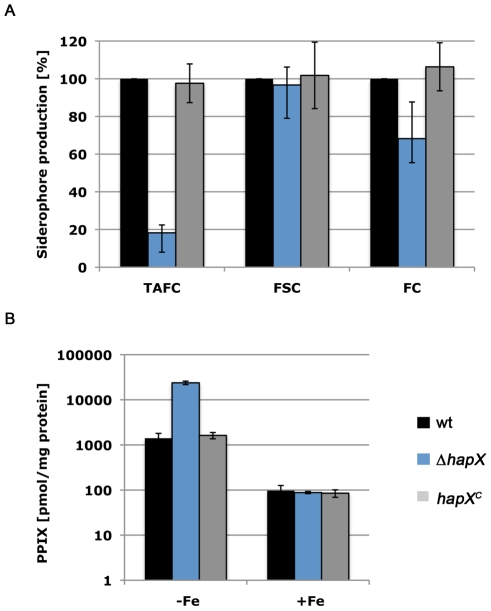
“In line, PpIX biosynthesis, known to be increased in hapX∆ [11,20], decreased both in fbx22∆ and sumO∆ (Figure 5D).”
BackgroundInfluentialSelf-citationGsaller, F., Blatzer, M., Abt, B., Schrettl, M., Lindner, H., & Haas, H. (2012) · Journal of Biotechnology · doi:10.1016/j.jbiotec.2012.10.008 · Cited by 22
Self-citationIdentification of Antifungal Targets Based on Computer Modeling
Bencúrová, E., Gupta, S. K., Sarukhanyan, E., & Dandekar, T. (2018) · Journal of Fungi · doi:10.3390/jof4030081 · Cited by 26
“fumigatus could be induced by conditions such as changes during invasion initiation [84], iron deficiency [85], and under hypoxia adaptation [86].”
BackgroundQuantitative Trait Locus (QTL) Mapping Reveals a Role for Unstudied Genes in Aspergillus Virulence
Christians, J. K., Cheema, M. S., Vergara, I. A., Watt, C. A., Pinto, L. J., Chen, N., & Moore, M. M. (2011) · PLoS ONE · doi:10.1371/journal.pone.0019325 · Cited by 24
“Because iron acquisition and tolerance of low iron conditions are thought to be important virulence factors [30,31], we measured growth on both low iron and iron-supplemented media.”
BackgroundKröber, A., Etzrodt, S., Bach, M., Monod, M., Kniemeyer, O., Staib, P., & Brakhage, A. A. (2016) · Current Genetics · doi:10.1007/s00294-016-0608-0 · Cited by 20
Self-citationGovic, Y. L., Papon, N., Gal, S. L., Lelièvre, B., Bouchara, J., & Vandeputte, P. (2018) · Frontiers in Microbiology · doi:10.3389/fmicb.2018.00827 · Cited by 21
“At least two types of SITs have been identified in the aspergilli, includingAspergillus SitT and MirA-D proteins, which belong to the ATP-binding cassette and major facilitator superfamilies, respectively (Haas et al., 2003; Schrettl et al., 2008, 2010).”
BackgroundSueiro-Olivares, M., Gorospe, E., Ramirez-Garcia, A., Rementeria, A., Hernando, F. L., Guruceaga, X., Garaizar, J., Abad-Diaz-de-Cerio, A., Margareto, J., Pascual, E., et al. (2015) · Microbiology · doi:10.1099/mic.0.000021 · Cited by 19
Amich, J., & Krappmann, S. (2012) · Frontiers in Microbiology · doi:10.3389/fmicb.2012.00414 · Cited by 19
“Reflecting elevated temperatures present in composting substrates, A. fumigatus is well adapted to temperature stress and displays an exquisite thermotolerance of up to 70◦C (Bhabhra and Askew, 2005).”
BackgroundAzole Resistance-Associated Regulatory Motifs within the Promoter of cyp51A in Aspergillus fumigatus
Kühbacher, A., Peiffer, M., Hortschansky, P., Merschak, P., Bromley, M., Haas, H., Brakhage, A. A., & Gsaller, F. (2022) · Microbiology Spectrum · doi:10.1128/spectrum.01209-22 · Cited by 19
“Moreover, despite the known -Fe specific repressing role of 173 HapX on iron consuming genes such as cyp51A (18, 19, 23), our results suggest the requirement of its 174”
Self-citationKröber, A., Scherlach, K., Hortschansky, P., Shelest, E., Staib, P., Kniemeyer, O., & Brakhage, A. A. (2016) · PLoS ONE · doi:10.1371/journal.pone.0150701 · Cited by 21
“On the other hand, it activates reductive iron assimilation, siderophore biosynthesis and siderophore uptake for iron acquisition [18, 19, 24].”
BackgroundInfluentialSelf-citationJung, W. H., Sánchez‐León, E., & Kronstad, J. W. (2021) · Current Genetics · doi:10.1007/s00294-021-01172-5 · Cited by 18
Michels, K. R., Solomon, A. L., Scindia, Y. M., Vieira, L. S., Goddard, Y., Whitten, S., Vaulont, S., Burdick, M. D., Atkinson, C., Laubenbacher, R., et al. (2022) · The Journal of Infectious Diseases · doi:10.1093/infdis/jiac079 · Cited by 20
Diverse Hap43-Independent Functions of the Candida albicans CCAAT-Binding Complex
Hsu, P., Chao, C., Yang, C., Ye, Y.-L., Liu, F., Chuang, Y., & Lan, C. (2013) · Eukaryotic Cell · doi:10.1128/ec.00014-13 · Cited by 18
“albicans Hap43, are required for virulence (14, 16, 17, 27).”
BackgroundPowers‐Fletcher, M. V., Jambunathan, K., Brewer, J. L., Krishnan, K., Feng, X., Galande, A. K., & Askew, D. S. (2011) · PLoS ONE · doi:10.1371/journal.pone.0028865 · Cited by 19
AmcA—a putative mitochondrial ornithine transporter supporting fungal siderophore biosynthesis
Schafferer, L., Beckmann, N., Binder, U., Brosch, G., & Haas, H. (2015) · Frontiers in Microbiology · doi:10.3389/fmicb.2015.00252 · Cited by 19
“Previously, expression of amcA (AFUA_8G02760) was found to be upregulated by iron starvation with glutamine as nitrogen source (Schrettl et al., 2010).”
BackgroundMethodResultSelf-citationNorton, T. S., Abdallah, Q. A., Hill, A. M., Lovingood, R. V., & Fortwendel, J. R. (2017) · Virulence · doi:10.1080/21505594.2017.1328343 · Cited by 22
Pathogenic Fungal Sensing and Responses to Stressful Host Environments
Rapala, J. R., Anderson, F. M., Larkin, A., & O’Meara, T. R. (2025) · Annual Review of Microbiology · doi:10.1146/annurev-micro-051024-033116 · Cited by 19
Exploring a novel genomic safe-haven site in the human pathogenic mould Aspergillus fumigatus
Furukawa, T., van Rhijn, N., Chown, H., Rhodes, J. L., Alfuraiji, N., Fortune‐Grant, R., Bignell, E., Fisher, M. C., & Bromley, M. (2022) · Fungal Genetics and Biology · doi:10.1016/j.fgb.2022.103702 · Cited by 17
“The venus-encoding gene was placed under the control of a promoter which regulates the expression of the transcription factor hapX in an iron dependent manner (Schrettl et al. 2010; Gsaller et al. 2014) (Supplementary Fig.”
Chelius, C. L., Ribeiro, L. F. C., Huso, W. D., Kumar, J., Lincoln, S., Tran, B. Q., Goo, Y. A., Srivastava, R., Harris, S. D., & Marten, M. R. (2019) · Fungal Genetics and Biology · doi:10.1016/j.fgb.2019.01.003 · Cited by 18
Xie, N., Ruprich‐Robert, G., Silar, P., Herbert, É., Ferrari, R., & Chapeland‐Leclerc, F. (2018) · Fungal Genetics and Biology · doi:10.1016/j.fgb.2018.04.007 · Cited by 17
Jain, S., Sekonyela, R., Knox, B. P., Palmer, J. M., Huttenlocher, A., Kabbage, M., & Keller, N. P. (2018) · Fungal Genetics and Biology · doi:10.1016/j.fgb.2018.05.001 · Cited by 19
“, 2013), virulence (Amich et al., 2013; Kong et al., 2015; Schrettl et al., 2010), and the oxidative stress response (Wee et al.”
BackgroundYap, A., Volz, R., Paul, S. K., Moye-Rowley, S., & Haas, H. (2023) · mBio · doi:10.1128/mbio.00757-23 · Cited by 17
“of the aqueous phase was measured photometrically at 440 nm using the molar extinction factor 2,996 M(21) cm(21) (14, 20).”
BackgroundMethodInfluentialSelf-citationIron competition in fungus-plant interactions
López‐Berges, M. S., Turrà, D., Capilla, J., Schafferer, L., Matthijs, S., Jöchl, C., Cornélis, P., Guarro, J., Haas, H., & Pietro, A. D. (2013) · Plant Signaling & Behavior · doi:10.4161/psb.23012 · Cited by 16
“HapX transcript levels are upregulated under iron-depleted conditions.(2,4,5,11) We found that deletion of hapX in F.”
BackgroundSelf-citationPasricha, S., Schafferer, L., Lindner, H., Boyce, K. J., Haas, H., & Andrianopoulos, A. (2016) · Molecular Microbiology · doi:10.1111/mmi.13489 · Cited by 18
“fumigatus and Aspergillus nidulans have shown that the GATA factor SreA regulates iron assimilation in conjunction with the CCAAT binding bZIP transcriptional regulator HapX, working together in a negative feedback loop (Hortschansky et al., 2007; Schrettl et al., 2010; Haas, 2012).”
BackgroundInfluentialSelf-citationHapX-mediated H2B deub1 and SreA-mediated H2A.Z deposition coordinate in fungal iron resistance
Sun, K., Li, Y., Gai, Y., Wang, J., Jian, Y., Liu, X., Wu, L., Shim, W., Lee, Y., Ma, Z., et al. (2023) · Nucleic Acids Research · doi:10.1093/nar/gkad708 · Cited by 17
“Iron acquisition has been found to be essential for virulence of the mammalian pa thogens Asper gillus fumigatus ( 8 ), Cryptococcus neoformans ( 9 ), and Candida albicans ( 10 ), as well as the plant pathogens Xanthomonas ( 11 ), Ustilago may-dis ( 12 ) and Fusarium oxysporum ( 13 ).”
BackgroundInfluentialSelf-citationLi, J., Jiang, F., Pi, C., Bao, T., Gao, L., & Wu, X. (2024) · International Journal of Biological Macromolecules · doi:10.1016/j.ijbiomac.2024.137134 · Cited by 17
Brantl, V., Boysen, J. M., Yap, A., Golubtsov, E., Ruf, D., Heinekamp, T., Straßburger, M., Dichtl, K., Haas, H., Hillmann, F., et al. (2021) · mBio · doi:10.1128/mbio.00976-21 · Cited by 16
“In agreement with previous reports (31, 32), mirB”
BackgroundResultSelf-citationd’Enfert, C., & Bougnoux, M. (2014) · Elsevier eBooks · doi:10.1016/b978-0-12-801238-3.00139-2 · Cited by 16
How metals fuel fungal virulence, yet promote anti-fungal immunity
Alselami, A., & Drummond, R. A. (2023) · Disease Models & Mechanisms · doi:10.1242/dmm.050393 · Cited by 18
“When siderophores are not needed, due to sufficient or excess environmental iron, AfSreA suppresses the expression of siderophores, whereas AfHapX drives their expression when iron is limited, in part by inhibiting AfSreA function (Schrettl et al., 2010).”
Metal Acquisition and Homeostasis in Fungi
Bailão, E. F. L. C., Parente, A. F. A., Parente, J. A., Bailão, M. G. S., de Castro, K. P., Kmetzsch, L., Staats, C. C., Schrank, A., Vainstein, M. H., Borges, C. L., et al. (2012) · Current Fungal Infection Reports · doi:10.1007/s12281-012-0108-8 · Cited by 22
How pH Modulates the Reactivity and Selectivity of a Siderophore-Associated Flavin Monooxygenase
Frederick, R. E., Ojha, S., Lamb, A. L., & DuBois, J. L. (2014) · Biochemistry · doi:10.1021/bi401256b · Cited by 16
Escobar, N., Valdes, I. D., Keizer, E., Ordoñez, S. R., Ohm, R. A., Wösten, H. A. B., & de Cock, H. (2018) · BMC Genomics · doi:10.1186/s12864-018-4895-3 · Cited by 17
Host-directed therapy for bacterial infections -Modulation of the phagolysosome pathway-
Taya, T., Teruyama, F., & Gojo, S. (2023) · Frontiers in Immunology · doi:10.3389/fimmu.2023.1227467 · Cited by 17
“Aspergillus fumigatus produces HapX in iron de fi ciency to suppress iron-consuming pathways such as host heme synthesis and respiration, including the TCA circuit, and to increase the production of iron-absorbing siderophores (196).”
BackgroundHost Sensing by Pathogenic Fungi
Sherrington, S. L., Kumwenda, P., Kousser, C., & Hall, R. A. (2017) · Advances in applied microbiology · doi:10.1016/bs.aambs.2017.10.004 · Cited by 14
Synthesis and Regulation of Fungal Secondary Metabolites
Kumar, A., & Kumar, A. (2019) · Microorganisms for sustainability · doi:10.1007/978-981-13-8844-6_2 · Cited by 12
Research progress on the basic helix-loop-helix transcription factors of Aspergillus species
Wang, B., Yu, X., Zhu, Y., Zhuang, M., Zhang, Z., Jin, L., & Jin, F. (2019) · Advances in applied microbiology · doi:10.1016/bs.aambs.2019.09.001 · Cited by 12
Metadata
- Authors
- Schrettl, M., Beckmann, N., Varga, J., Heinekamp, T., Jacobsen, I. D., Jöchl, C., Moussa, T. A., Wang, S., Gsaller, F., Blatzer, M., Werner, E. R., Niermann, W. C., Brakhage, A. A., & Haas, H.
- Affiliations
- Innsbruck Medical University (AT)
- J. Craig Venter Institute (US)
- Leibniz-Institut für Naturstoff-Forschung und Infektionsbiologie e. V. - Hans-Knöll-Institut (HKI) (DE)
- Corresponding author
- Haas, Hubertus
- ORCID
- Venue
- PLoS Pathogens
- Publisher
- Public Library of Science (PLoS)
- Published
- 2010-09-30
- Volume
- 6
- Issue
- 9
- Pages
- e1001124
- ISSN
- 1553-7366 (ISSN-L)
- 1553-7374
- PMC
- PMC2947994
- OpenAlex
- W1997487743
- Cited by
- 284
- References
- 48
- Citations by year
- 2026: 9 · 2025: 14 · 2024: 19 · 2023: 15 · 2022: 14 · 2021: 15 · 2020: 18 · 2019: 16 · 2018: 19 · 2017: 18 · 2016: 25 · 2015: 17 · 2014: 21 · 2013: 22 · 2012: 21
- FWCI
- 8.34
- Type
- journal article
- Language
- en
- Open access
- gold
- doi.org
- Locations
- PLoS Pathogens (publishedVersion, cc-by)
- PubMed Central (publishedVersion, cc-by)
- PubMed (publishedVersion)
- Research Explorer (The University of Manchester) (submittedVersion)
- DOAJ (DOAJ: Directory of Open Access Journals) (submittedVersion, cc-by-sa)
- Figshare (submittedVersion, cc-by)
- Funders
- Austrian Science Fund
- Topics
- Life Sciences › Biochemistry, Genetics and Molecular Biology › Molecular Biology › Fungal and yeast genetics research
- Health Sciences › Medicine › Infectious Diseases › Antifungal resistance and susceptibility
- Health Sciences › Medicine › Infectious Diseases › Fungal Infections and Studies
- Keywords
- Aspergillus fumigatus, iron starvation, virulence, siderophores, ornithine, transcriptional regulation, mitochondrial metabolism, iron-sulfur clusters, heme biosynthesis, tetracycline resistance, aspergillosis, opportunistic fungal pathogens
- MeSH terms
- Iron Deficiencies, Adaptation, Psychological, Allergens, Amino Acids, Animals, Anti-Bacterial Agents, Aspergillosis, Aspergillus fumigatus, Disease Models, Animal, DNA, Mitochondrial, Fungal Proteins, Ornithine, Repressor Proteins, RNA, Messenger, Tetracycline, Virulence, Blotting, Northern, Biomarkers, Gene Expression Regulation, Fungal, Survival Rate, Siderophores, Reverse Transcriptase Polymerase Chain Reaction, Oligonucleotide Array Sequence Analysis, Gene Expression Profiling, Drug Resistance, Fungal, Basic-Leucine Zipper Transcription Factors, GATA Transcription Factors, Mice, Antigens, Plant
About these checks
Registry, retraction, Cites and statistics results are computed, not judged, with one exception: a printed reference that no index lists is read once by a model before it counts as a citation error. Claims are extracted by a model and kept only when their quote appears verbatim in the text; each cited source is then checked, with a model’s help, for whether it says what the claim relies on. Those verdicts can be wrong — read the claim’s quote and the cited source before relying on one.
Statistics and arithmetic are recomputed, not judged.
Confidence bands are shown only for fields calibrated on our annotated test set. None is calibrated yet, so no band is shown.
What counts as a claim ›How we measure confidence ›How we check this ›
Are you an author, or do you see a problem with this page? Request a review
Data sources
Bibliographic data: Semantic Scholar, OpenAlex, Crossref.
Contains information from the Semantic Scholar Academic Graph Datasets, made available under the ODC Attribution License (ODC-BY 1.0).
Semantic Scholar’s data is described in: Kinney, R., et al. (2023). The Semantic Scholar Open Data Platform. arXiv:2301.10140.
