

HacA-Independent Functions of the ER Stress Sensor IreA Synergize with the Canonical UPR to Influence Virulence Traits in Aspergillus fumigatus
Open accessThe DOI matches its Crossref record; 63 of the 63 references it cites were found in a registry or an index.
Abstract
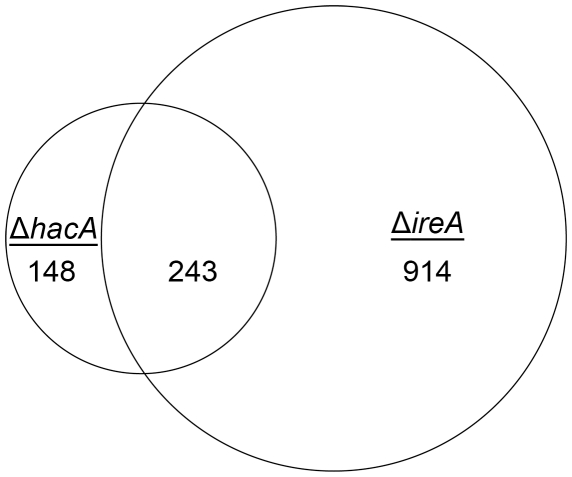
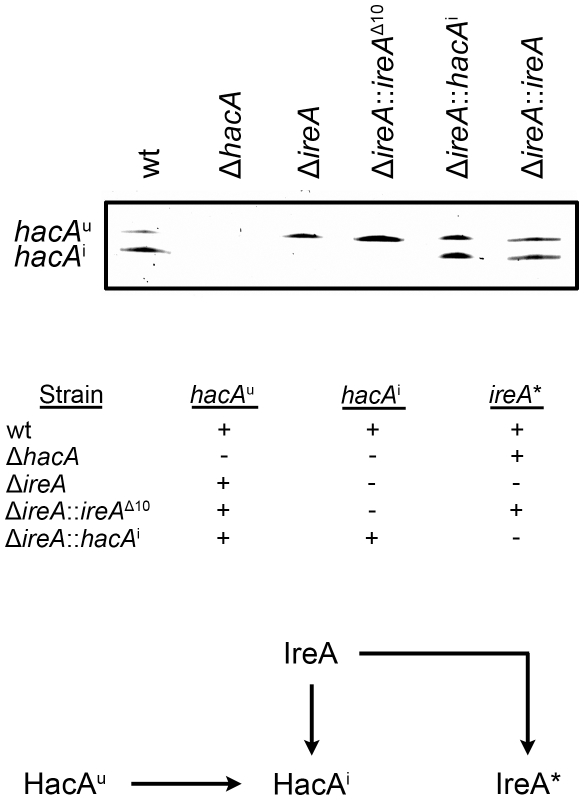
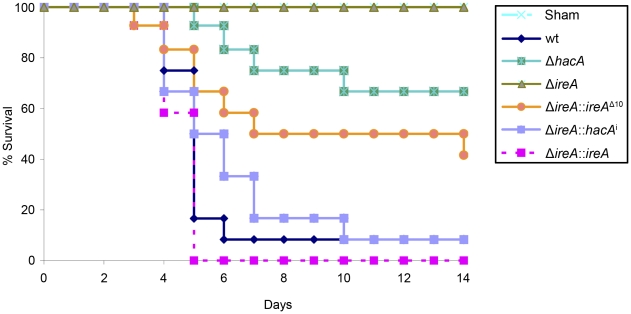
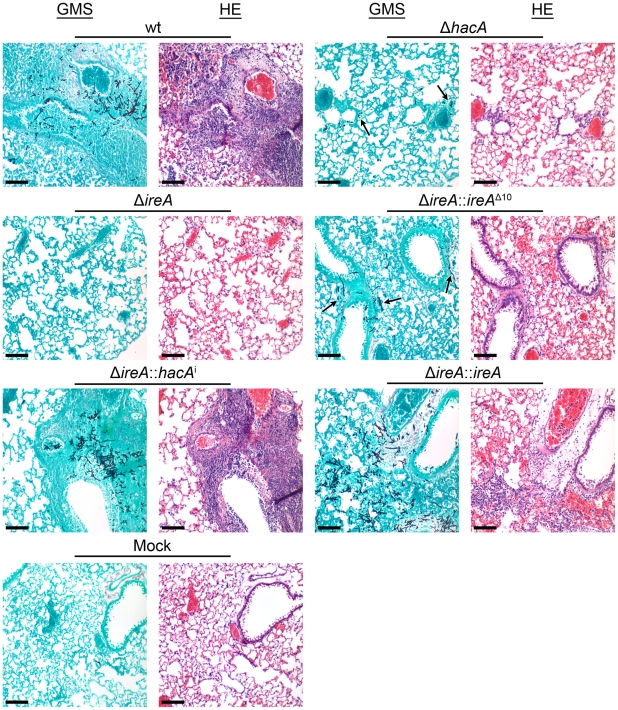
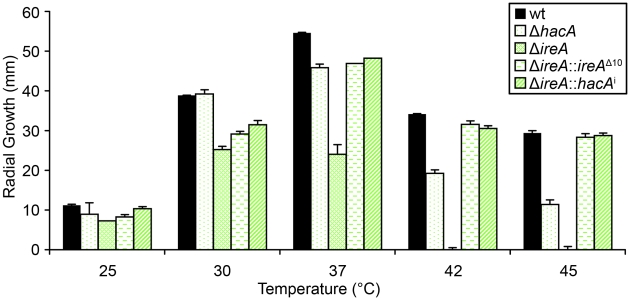
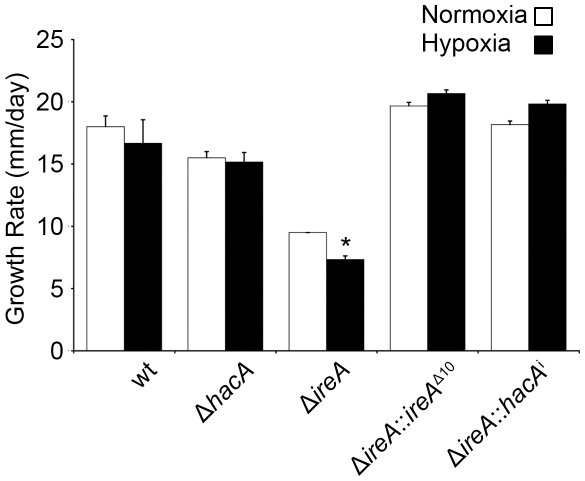
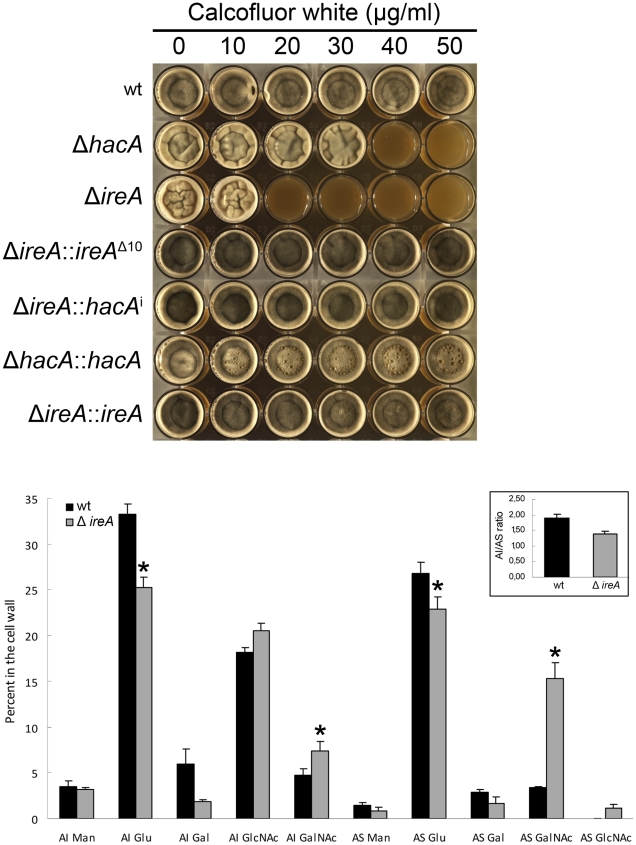
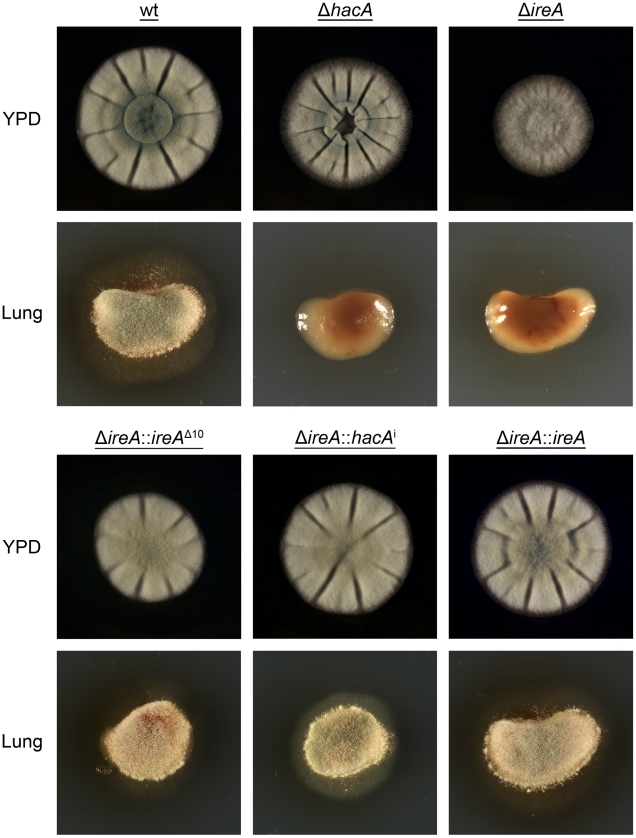
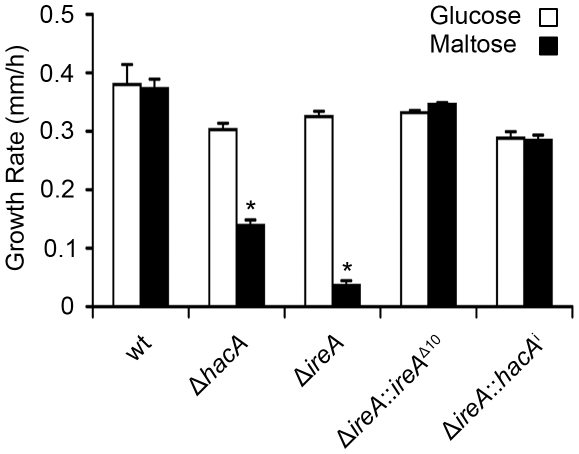
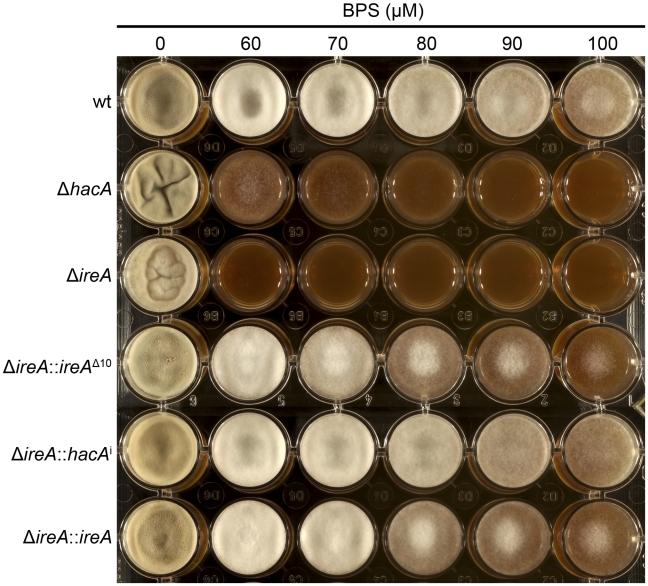
Endoplasmic reticulum (ER) stress is a condition in which the protein folding capacity of the ER becomes overwhelmed by an increased demand for secretion or by exposure to compounds that disrupt ER homeostasis. In yeast and other fungi, the accumulation of unfolded proteins is detected by the ER-transmembrane sensor IreA/Ire1, which responds by cleaving an intron from the downstream cytoplasmic mRNA HacA/Hac1, allowing for the translation of a transcription factor that coordinates a series of adaptive responses that are collectively known as the unfolded protein response (UPR). Here, we examined the contribution of IreA to growth and virulence in the human fungal pathogen Aspergillus fumigatus. Gene expression profiling revealed that A. fumigatus IreA signals predominantly through the canonical IreA-HacA pathway under conditions of severe ER stress. However, in the absence of ER stress IreA controls dual signaling circuits that are both HacA-dependent and HacA-independent. We found that a ΔireA mutant was avirulent in a mouse model of invasive aspergillosis, which contrasts the partial virulence of a ΔhacA mutant, suggesting that IreA contributes to pathogenesis independently of HacA. In support of this conclusion, we found that the ΔireA mutant had more severe defects in the expression of multiple virulence-related traits relative to ΔhacA, including reduced thermotolerance, decreased nutritional versatility, impaired growth under hypoxia, altered cell wall and membrane composition, and increased susceptibility to azole antifungals. In addition, full or partial virulence could be restored to the ΔireA mutant by complementation with either the induced form of the hacA mRNA, hacA(i), or an ireA deletion mutant that was incapable of processing the hacA mRNA, ireA(Δ10). Together, these findings demonstrate that IreA has both HacA-dependent and HacA-independent functions that contribute to the expression of traits that are essential for virulence in A. fumigatus.
Overview
The claims and statistics of this paper haven’t been checked yet.
Free: it reads the open-access text and checks the first 5 claims that cite a source we can check. Create a free account to check every claim.
Integrity signals
Registry
Cites
Statistics
Figures
Verification
Claims the paper makes
The claims and statistics of this paper haven’t been checked yet.
Free: it reads the open-access text and checks the first 5 claims that cite a source we can check. Create a free account to check every claim.
Claims other papers make about this one
Each is checked against this paper’s own text: does it say what the citing paper says it does?
The source backs part of the claim, not all of it — or backs it for a different population, condition or comparison.
In the citing paper
“Loss of HacA, the major transcription factor of the UPR, and of the stress sensor, IreA, impairs protein secretion, which results in attenuated virulence of these strains, which are then unable to extract sufficient nutrients from host tissues (605).”
From Aspergillus fumigatus and Aspergillosis in 2019 (2019) · cites this paper as [605]
Experimental — accuracy not yet measuredIn the citing paper
“iron assimilation is affected in these mutants, demonstrating again that nutritional versatility is a complex phenomenon resulting from interconnections of pathways not logically related (605).”
From Aspergillus fumigatus and Aspergillosis in 2019 (2019) · cites this paper as [605]
Self-check
Percentages, sums and reported differences re-computed from the paper’s own numbers.
The self-check needs the paper’s full text.
Citations
Cites
Cluster analysis and display of genome-wide expression patterns
Eisen, M. B., Spellman, P. T., Brown, P. O., & Botstein, D. (1998) · Proceedings of the National Academy of Sciences · doi:10.1073/pnas.95.25.14863 · Cited by 16,184 · cited 1×
“0 [60] and the cluster tree was visualized using JAVA Treeview [61].”
MethodThe KEGG resource for deciphering the genome
Kanehisa, M. (2004) · Nucleic Acids Research · doi:10.1093/nar/gkh063 · Cited by 5,104 · cited 1×
“KEGG pathways associated with Aspergillus fumigatus were downloaded from the KEGG database [59].”
MethodProtein folding and misfolding
Dobson, C. M. (2003) · Nature · doi:10.1038/nature02261 · Cited by 4,791 · cited 1×
“Misfolded proteins are prone to nonspecific interactions with other molecules in the crowded intracellular environment, resulting in nonfunctional protein aggregates that disrupt ER homeostasis [6].”
BackgroundJava Treeview—extensible visualization of microarray data
Saldanha, A. J. (2004) · Bioinformatics · doi:10.1093/bioinformatics/bth349 · Cited by 2,991 · cited 2×
“0 [60] and the cluster tree was visualized using JAVA Treeview [61].”
MethodInfluentialBoyle, E. I., Weng, S., Gollub, J., Jin, H., Botstein, D., Cherry, J. M., & Sherlock, G. (2004) · Bioinformatics · doi:10.1093/bioinformatics/bth456 · Cited by 2,067 · cited 1×
“Gene Ontology Term Enrichment was performed using AmiGO Term Enrichment [58].”
MethodRoles of N-Linked Glycans in the Endoplasmic Reticulum
Helenius, A., & Aebi, M. (2004) · Annual Review of Biochemistry · doi:10.1146/annurev.biochem.73.011303.073752 · Cited by 2,037 · cited 1×
“mRNAs with decreased abundance in DhacA, consistent with the prominent role of N-linked glycosylation in the maturation of secretory proteins [28].”
BackgroundTravers, K. J., Patil, C. K., Wodicka, L., Lockhart, D. J., Weissman, J. S., & Walter, P. (2000) · Cell · doi:10.1016/s0092-8674(00)80835-1 · Cited by 1,992
Genomic sequence of the pathogenic and allergenic filamentous fungus Aspergillus fumigatus
Nierman, W. C., Pain, A., Anderson, M. J., Wortman, J. R., Kim, H. S., Arroyo, J., Berriman, M., Abe, K., Archer, D. B., Bermejo, C., et al. (2005) · Nature · doi:10.1038/nature04332 · Cited by 1,391
Self-citationCox, J. S., Shamu, C. E., & Walter, P. (1993) · Cell · doi:10.1016/0092-8674(93)90648-a · Cited by 1,231 · cited 1×
“This is followed by high-order oligomerization of Ire1 in the ER membrane, which allows for trans-autophosphorylation and activation of the C-terminal endoribonuclease domain [11,12,13].”
BackgroundLee, K., Tirasophon, W., Shen, X., Michalak, M., Prywes, R., Okada, T., Yoshida, H., Mori, K., & Kaufman, R. J. (2002) · Genes & Development · doi:10.1101/gad.964702 · Cited by 1,054
The induction and repression of nitrate reductase in the fungus Aspergillus nidulans
Cove, D. J. (1966) · Biochimica et Biophysica Acta (BBA) - Enzymology and Biological Oxidation · doi:10.1016/s0926-6593(66)80120-0 · Cited by 1,038
Regulated Ire1-dependent decay of messenger RNAs in mammalian cells
Hollien, J., Lin, J. H., Li, H., Stevens, N., Walter, P., & Weissman, J. S. (2009) · Journal of Cell Biology · doi:10.1083/jcb.200903014 · Cited by 1,030
The cell wall: a carbohydrate armour for the fungal cell
Latgé, J. (2007) · Molecular Microbiology · doi:10.1111/j.1365-2958.2007.05872.x · Cited by 987 · cited 1×
“barrier that represents the major interface between the fungus and the host environment [35].”
BackgroundSelf-citationThe endoplasmic reticulum and the unfolded protein response
Malhotra, J. D., & Kaufman, R. J. (2007) · Seminars in Cell & Developmental Biology · doi:10.1016/j.semcdb.2007.09.003 · Cited by 986 · cited 1×
“The unfolded protein response (UPR) is an intracellular signaling pathway that buffers fluctuations in ER homeostasis by increasing ER folding capacity whenever abnormal proteins accumulate in the ER [7].”
BackgroundSidrauski, C., & Walter, P. (1997) · Cell · doi:10.1016/s0092-8674(00)80369-4 · Cited by 899 · cited 1×
“Upstream control of the yeast UPR is mediated by Ire1p, a type I membrane protein that has an ER lumenal sensing domain and a bifunctional cytosolic tail comprised of a protein kinase domain linked to an endoribonuclease domain [9].”
BackgroundMorl, K., Ma, W., Gething, M.-J., & Sambrook, J. (1993) · Cell · doi:10.1016/0092-8674(93)90521-q · Cited by 818
Bravo, R., Vicencio, J. M., Parra, V., Troncoso, R., Munoz, J. P., Bui, M., Quiroga, C., Rodriguez, A. E., Verdejo, H. E., Ferreira, J., et al. (2011) · Journal of Cell Science · doi:10.1242/jcs.080762 · Cited by 605 · cited 1×
“fumigatus, similar to the recently reported cross-talk between the ER and mitochondrial compartments during ER stress in mammalian cells [27].”
BackgroundHow proteins move lipids and lipids move proteins
Sprong, H., van der Sluijs, P., & van Meer, G. (2001) · Nature Reviews Molecular Cell Biology · doi:10.1038/35080071 · Cited by 587 · cited 1×
“Ergosterol is the major sterol in fungal membranes and, like its mammalian counterpart cholesterol, is responsible for decreasing membrane fluidity by restricting the flexibility of phospholipid acyl chains and limiting permeability to small molecules [37,48].”
BackgroundXBP1 Is Essential for Survival under Hypoxic Conditions and Is Required for Tumor Growth
Romero-Ramirez, L., Cao, H., Nelson, D., Hammond, E., Lee, A.-H., Yoshida, H., Mori, K., Glimcher, L. H., Denko, N. C., Giaccia, A. J., et al. (2004) · Cancer Research · doi:10.1158/0008-5472.can-04-1606 · Cited by 570
Schrettl, M., Bignell, E., Kragl, C., Joechl, C., Rogers, T., Arst, H. N., Haynes, K., & Haas, H. (2004) · The Journal of Experimental Medicine · doi:10.1084/jem.20041242 · Cited by 493 · cited 2×
“starvation is crucial for pathogenicity [41], the more severe iron starvation defect of DireA relative to DhacA correlates well with the avirulence of DireA and the partial virulence of DhacA.”
BackgroundNeofytos, D., Fishman, J. A., Horn, D., Anaissie, E., Chang, C.-H., Olyaei, A., Pfaller, M., Steinbach, W. J., Webster, K. M., & Marr, K. A. (2010) · Transplant Infectious Disease · doi:10.1111/j.1399-3062.2010.00492.x · Cited by 454
Molecular Organization of the Alkali-insoluble Fraction ofAspergillus fumigatus Cell Wall
Fontaine, T., Simenel, C., Dubreucq, G., Adam, O., Delepierre, M., Lemoine, J., Vorgias, C. E., Diaquin, M., & Latgé, J.-P. (2000) · Journal of Biological Chemistry · doi:10.1074/jbc.m909975199 · Cited by 436
Self-citationPincus, D., Chevalier, M. W., Aragón, T., van Anken, E., Vidal, S. E., El-Samad, H., & Walter, P. (2010) · PLoS Biology · doi:10.1371/journal.pbio.1000415 · Cited by 431 · cited 1×
“In the absence of ER stress, the lumenal domain is complexed with the ER-resident chaperone BiP, which helps to maintain Ire1 in an inactive state [10].”
BackgroundSignalling Pathways in the Unfolded Protein Response: Development from Yeast to Mammals
Mori, K. (2009) · Journal of Biochemistry · doi:10.1093/jb/mvp166 · Cited by 385 · cited 2×
“In fungi, most of what is known about UPR signaling comes from studies in Saccharomyces cerevisiae [8].”
BackgroundLee, K. P. K., Dey, M., Neculai, D., Cao, C., Dever, T. E., & Sicheri, F. (2008) · Cell · doi:10.1016/j.cell.2007.10.057 · Cited by 379 · cited 1×
“). The cytoplasmic region, which is the most conserved segment of the protein between genera, contains a predicted serine-threonine protein kinase linked to a kinase extension nuclease (KEN) domain”
BackgroundMammalian endoplasmic reticulum stress sensor IRE1 signals by dynamic clustering
Li, H., Korennykh, A. V., Behrman, S. L., & Walter, P. (2010) · Proceedings of the National Academy of Sciences · doi:10.1073/pnas.1010580107 · Cited by 357 · cited 1×
“This is followed by high-order oligomerization of Ire1 in the ER membrane, which allows for trans-autophosphorylation and activation of the C-terminal endoribonuclease domain [11,12,13].”
BackgroundEisosomes mark static sites of endocytosis
Walther, T. C., Brickner, J. H., Aguilar, P. S., Bernales, S., Pantoja, C., & Walter, P. (2006) · Nature · doi:10.1038/nature04472 · Cited by 350 · cited 1×
“One of these genes encodes Sur7, a multifunctional transmembrane protein implicated in plasma membrane organization, endocytosis and cell wall biogenesis [24,25].”
BackgroundWillger, S. D., Puttikamonkul, S., Kim, K.-H., Burritt, J. B., Grahl, N., Metzler, L. J., Barbuch, R., Bard, M., Lawrence, C. B., & Cramer, R. A. (2008) · PLoS Pathogens · doi:10.1371/journal.ppat.1000200 · Cited by 345 · cited 4×
“mammalian cells [34], we compared the growth of DhacA and DireA at levels of oxygen that are similar to those encountered in host tissues [33].”
BackgroundInfluentialSelf-citationHapX-Mediated Adaption to Iron Starvation Is Crucial for Virulence of Aspergillus fumigatus
Schrettl, M., Beckmann, N., Varga, J., Heinekamp, T., Jacobsen, I. D., Jöchl, C., Moussa, T. A., Wang, S., Gsaller, F., Blatzer, M., et al. (2010) · PLoS Pathogens · doi:10.1371/journal.ppat.1001124 · Cited by 284 · cited 1×
“acquisition pathways, which have been shown to be necessary for virulence [41,42].”
BackgroundShen, X., Ellis, R. E., Sakaki, K., & Kaufman, R. J. (2005) · PLoS Genetics · doi:10.1371/journal.pgen.0010037 · Cited by 250 · cited 1×
“. This represents an increased level of complexity relative to yeast that may have driven the need for greater flexibility in IreA function. Unique functions for Ire1 have been previously suggested in higher eukaryotes”
BackgroundSub-Telomere Directed Gene Expression during Initiation of Invasive Aspergillosis
McDonagh, A., Fedorova, N. D., Crabtree, J., Yu, Y., Kim, S., Chen, D., Loss, O., Cairns, T., Goldman, G., Armstrong-James, D., et al. (2008) · PLoS Pathogens · doi:10.1371/journal.ppat.1000154 · Cited by 235 · cited 1×
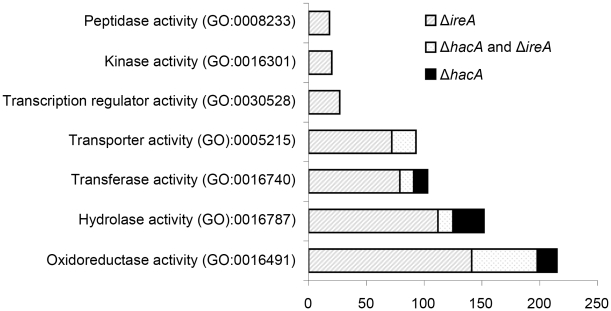
“is under nutrient stress in the host environment, requiring upregulation of pathways involved in iron transport and hydrolase secretion to maximize nutrient acquisition from the host”
BackgroundSelf-citationER stress signaling by regulated splicing: IRE1/HAC1/XBP1
Back, S. H., Schröder, M., Lee, K., Zhang, K., & Kaufman, R. J. (2005) · Methods · doi:10.1016/j.ymeth.2005.03.001 · Cited by 215 · cited 3×
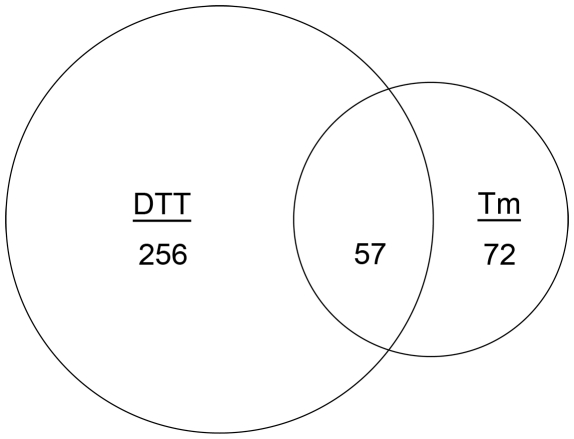
“Acute ER stress was accomplished by treating the fungus with dithiothreitol (DTT) or tunicamycin (Tm), each of which induces the UPR but through different mechanisms; DTT unfolds proteins by interfering with disulfide bond formation and tunicamycin inhibits the N-linked glycosylation that is necessary for proper prote…”
BackgroundMethodFlavonol Activation Defines an Unanticipated Ligand-Binding Site in the Kinase-RNase Domain of IRE1
Wiseman, R. L., Zhang, Y., Lee, K. P. K., Harding, H. P., Haynes, C. M., Price, J., Sicheri, F., & Ron, D. (2010) · Molecular Cell · doi:10.1016/j.molcel.2010.04.001 · Cited by 190 · cited 1×
“-independent functions of IreA, most notably for the expression of traits that are essential for virulence. The precise mechanism by which IreA controls gene expression independently of HacA is not yet known, but an intriguing possibility is that the kinase domain, and/or putative ligand-binding pockets recently ident…”
BackgroundRichie, D. L., Hartl, L., Aimanianda, V., Winters, M. S., Fuller, K. K., Miley, M. D., White, S., McCarthy, J. W., Latgé, J.-P., Feldmesser, M., et al. (2009) · PLoS Pathogens · doi:10.1371/journal.ppat.1000258 · Cited by 185 · cited 7×
“cerevisiae, hacA in filamentous fungi and XBP1 in humans [14,15].”
BackgroundMethodResultInfluentialSelf-citationAspergillus Fumigatus : Cell Wall Polysaccharides, their Biosynthesis and Organization
Gastebois, A., Clavaud, C., Aimanianda, V., & Latgé, J.-P. (2009) · Future Microbiology · doi:10.2217/fmb.09.29 · Cited by 179 · cited 1×
“fumigatus cell wall can be divided biochemically into an alkali insoluble fraction comprised of b(1–3)-glucan, chitin and galactomannan, and an alkali soluble fraction containing predominantly a(1–3)-glucan and galactomannan [36].”
BackgroundSelf-citationThe Effects of Drugs Inhibiting Protein Secretion in the Filamentous Fungus Trichoderma reesei
Pakula, T. M., Laxell, M., Huuskonen, A., Uusitalo, J., Saloheimo, M., & Penttilä, M. (2003) · Journal of Biological Chemistry · doi:10.1074/jbc.m302372200 · Cited by 171 · cited 1×
“ER stress in fungi has also been associated with reduced levels of a number of mRNAs encoding secreted proteins, mediated by a pathway known as repression under ER stress (RESS) [26].”
BackgroundErgosterol biosynthesis pathway in Aspergillus fumigatus
Alcazar-Fuoli, L., Mellado, E., Garcia-Effron, G., Lopez, J. F., Grimalt, J. O., Cuenca-Estrella, J. M., & Rodriguez-Tudela, J. L. (2008) · Steroids · doi:10.1016/j.steroids.2007.11.005 · Cited by 162 · cited 1×
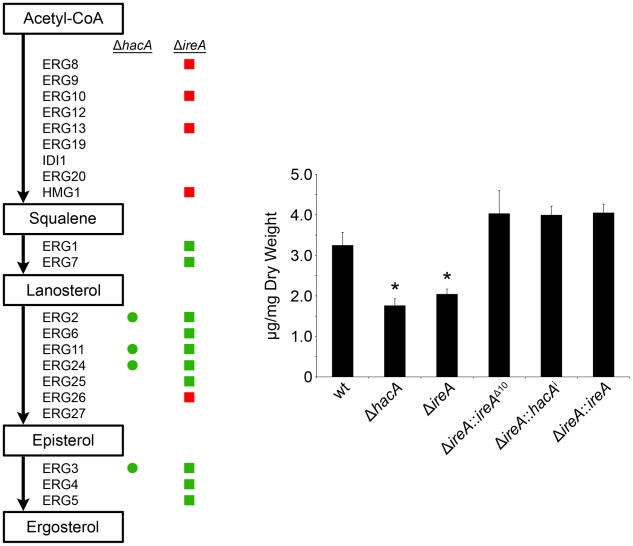
“Our microarray analysis revealed that a number of mRNAs involved in ergosterol biosynthesis [38] had decreased abundance in both DhacA and DireA relative to wt (summarized in Figure 10, full dataset is shown in Figure S11).”
BackgroundGuillemette, T., van Peij, N. N., Goosen, T., Lanthaler, K., Robson, G. D., van den Hondel, C. A., Stam, H., & Archer, D. B. (2007) · BMC Genomics · doi:10.1186/1471-2164-8-158 · Cited by 158 · cited 4×
“As expected from previous studies in other species, most of the genes in the i-UPR dataset affect the secretory pathway at multiple levels and are already known to be downstream of the UPR, such as BiP, Hsp70, protein disulfide isomerase, calnexin and mannosyloligosaccharide glucosidase [20,22,23].”
BackgroundMethodResultInfluentialBhabhra, R., Miley, M. D., Mylonakis, E., Boettner, D., Fortwendel, J., Panepinto, J. C., Postow, M., Rhodes, J. C., & Askew, D. S. (2004) · Infection and Immunity · doi:10.1128/iai.72.8.4731-4740.2004 · Cited by 133
Self-citationThe Role of Iron In Protozoan and Fungal Infectious Diseases
WEINBERG, E. D. (1999) · Journal of Eukaryotic Microbiology · doi:10.1111/j.1550-7408.1999.tb05119.x · Cited by 115 · cited 1×
“fumigatus faces iron starvation during infection because the host immune system uses iron-sequestration mechanisms to withhold this essential nutrient from invading microbes [40].”
BackgroundVariability of Germinative Potential among Pathogenic Species of Aspergillus
Araujo, R., & Rodrigues, A. G. (2004) · Journal of Clinical Microbiology · doi:10.1128/jcm.42.9.4335-4337.2004 · Cited by 114
Fleck, C. B., Schöbel, F., & Brock, M. (2011) · International Journal of Medical Microbiology · doi:10.1016/j.ijmm.2011.04.007 · Cited by 110 · cited 2×
“fumigatus encounters nutritional stress in the host environment, which requires metabolic reprogramming by the fungus to effectively use the host as a nutrient source [3,29].”
BackgroundMulder, H. J., Saloheimo, M., Penttilä, M. E., & Madrid, S. M. (2004) · Molecular Genetics and Genomics · doi:10.1007/s00438-003-0965-5 · Cited by 108
Mitochondria and Hypoxic Signaling: A New View
Poyton, R. O., Castello, P. R., Ball, K. A., Woo, D. K., & Pan, N. (2009) · Annals of the New York Academy of Sciences · doi:10.1111/j.1749-6632.2009.05046.x · Cited by 100
Arvas, M., Pakula, T., Lanthaler, K., Saloheimo, M., Valkonen, M., Suortti, T., Robson, G., & Penttilä, M. (2006) · BMC Genomics · doi:10.1186/1471-2164-7-32 · Cited by 98 · cited 1×
“Studies of differentially expressed genes during secretion stress have been previously performed in a number of filamentous fungal species [19,20,21].”
BackgroundDiscordance of UPR signaling by ATF6 and Ire1p-XBP1 with levels of target transcripts
Shang, J., & Lehrman, M. A. (2004) · Biochemical and Biophysical Research Communications · doi:10.1016/j.bbrc.2004.03.058 · Cited by 97 · cited 1×
“The PCR products were fractionated under denaturing conditions to remove hybrids between spliced and unspliced single-stranded DNA that can arise during PCR amplification (12% acrylamide/7M urea gel in 1X TBE) [56].”
MethodConservation of eukaryotic sterol homeostasis: new insights from studies in budding yeast
Sturley, S. L. (2000) · Biochimica et Biophysica Acta (BBA) - Molecular and Cell Biology of Lipids · doi:10.1016/s1388-1981(00)00145-1 · Cited by 95 · cited 2×
“Ergosterol is the major sterol in fungal membranes, responsible for controlling membrane fluidity and regulating the distribution of membrane proteins [37].”
BackgroundHyphal differentiation in the exploring mycelium of Aspergillus niger
Vinck, A., Terlou, M., Pestman, W. R., Martens, E. P., Ram, A. F., van den Hondel, C. A. M. J. J., & Wösten, H. A. B. (2005) · Molecular Microbiology · doi:10.1111/j.1365-2958.2005.04869.x · Cited by 89 · cited 1×
“A possible explanation for this difference is the spatial segregation of function in the interconnected hyphal compartments of a filamentous fungus [45].”
BackgroundSims, A. H., Gent, M. E., Lanthaler, K., Dunn-Coleman, N. S., Oliver, S. G., & Robson, G. D. (2005) · Applied and Environmental Microbiology · doi:10.1128/aem.71.5.2737-2747.2005 · Cited by 88 · cited 2×
“fumigatus induced changes in mRNA abundance that were higher in both magnitude and scope than treatment with Tm, similar to what has been reported elsewhere (Figure 1) [19,20].”
BackgroundResultJørgensen, T. R., Goosen, T., van den Hondel, C. A. M. J. J., Ram, A. F. J., & Iversen, J. J. L. (2009) · BMC Genomics · doi:10.1186/1471-2164-10-44 · Cited by 86 · cited 1×
“on the disaccharide maltose elicits a high rate of protein secretion that is accompanied by a transcriptional response resembling the UPR”
BackgroundA Cure for Traffic Jams: Small Molecule Chaperones in the Endoplasmic Reticulum
Römisch, K. (2004) · Traffic · doi:10.1111/j.1600-0854.2004.00231.x · Cited by 73
Joubert, A., Simoneau, P., Campion, C., Bataillé‐Simoneau, N., Iacomı, B., Poupard, P., François, J., Georgeault, S., Sellier, E., & Guillemette, T. (2011) · Molecular Microbiology · doi:10.1111/j.1365-2958.2010.07522.x · Cited by 71 · cited 1×
“Moreover, the recent discovery that HacA is required for virulence of the plant fungal pathogen Alternaria brassicicola [54] suggests that targeting the UPR could have broad implications for the control of”
BackgroundExocytosis and growth do not occur only at hyphal tips
Read, N. D. (2011) · Molecular Microbiology · doi:10.1111/j.1365-2958.2011.07702.x · Cited by 64 · cited 1×
“fumigatus requires subtle changes in UPR signaling to buffer dynamic fluctuations in ER stress caused by the constant cell wall remodeling that occurs during hyphal growth [44].”
BackgroundA novel role in cytokinesis reveals a housekeeping function for the unfolded protein response
Bicknell, A. A., Babour, A., Federovitch, C. M., & Niwa, M. (2007) · The Journal of Cell Biology · doi:10.1083/jcb.200702101 · Cited by 63 · cited 1×
“Since the UPR has been shown to facilitate budding yeast cytokinesis [43], we speculate that A.”
BackgroundMolecular organization of the alkali-insoluble fraction of Aspergillus fumigatus cell wall.
Fontaine, T., Simenel, C., Dubreucq, G., Adam, O., Delepierre, M., Lemoine, J., Vorgias, C. E., Diaquin, M., & Latgé, J.-P. (2000) · Journal of Biological Chemistry · doi:10.1016/s0021-9258(19)55694-0 · Cited by 63
Self-citationSecretion of Proteins into Host Cells by Apicomplexan Parasites
Ravindran, S., & Boothroyd, J. C. (2008) · Traffic · doi:10.1111/j.1600-0854.2008.00723.x · Cited by 56 · cited 1×
“Approximately one third of the eukaryotic proteome is dedicated to secreted and membrane proteins, making the secretory pathway one of the most active biosynthetic processes in the cell. Many intracellular eukaryotic pathogens use the secretory system for the expression of virulence factors that are crucial for pathog…”
BackgroundCorrelation between in vitro growth rate and in vivo virulence in Aspergillus fumigatus
Paisley, D., Robson, G. D., & Denning, D. W. (2005) · Medical Mycology · doi:10.1080/13693780400005866 · Cited by 54
Shaping the fungal adaptome – Stress responses of Aspergillus fumigatus
Hartmann, T., Sasse, C., Schedler, A., Hasenberg, M., Gunzer, M., & Krappmann, S. (2011) · International Journal of Medical Microbiology · doi:10.1016/j.ijmm.2011.04.008 · Cited by 52 · cited 2×
“fumigatus encounters nutritional stress in the host environment, which requires metabolic reprogramming by the fungus to effectively use the host as a nutrient source [3,29].”
BackgroundWang, H. X., Douglas, L. M., Aimanianda, V., Latgé, J.-P., & Konopka, J. B. (2011) · Eukaryotic Cell · doi:10.1128/ec.00167-10 · Cited by 46 · cited 1×
“One of these genes encodes Sur7, a multifunctional transmembrane protein implicated in plasma membrane organization, endocytosis and cell wall biogenesis [24,25].”
BackgroundSelf-citationThe role of the Maurer's clefts in protein transport in Plasmodium falciparum
Sam-Yellowe, T. Y. (2009) · Trends in Parasitology · doi:10.1016/j.pt.2009.03.009 · Cited by 37
Ergosterol regulates sterol regulatory element binding protein (SREBP) cleavage in fission yeast.
Porter, J. R., Burg, J. S., Espenshade, P. J., & Iglesias, P. A. (2010) · Journal of Biological Chemistry · doi:10.1074/jbc.m110.144337 · Cited by 36
Mulder, H. J., & Nikolaev, I. (2009) · Eukaryotic Cell · doi:10.1128/ec.00131-08 · Cited by 34 · cited 1×
“In contrast to Aspergillus niger, in which the ireA gene appears to be essential [18], we found that a DireA mutant of A.”
ResultSimonin, H., Beney, L., & Gervais, P. (2007) · The Journal of Membrane Biology · doi:10.1007/s00232-007-9027-y · Cited by 22 · cited 1×
“Since high temperatures also increase membrane fluidity and permeability [49], the combined effects of reduced ergosterol and thermal stress is likely to disrupt membrane stability and interfere with rapid growth.”
Background
Cited by
Aspergillus fumigatus and Aspergillosis in 2019
Latgé, J.-P., & Chamilos, G. (2019) · Clinical Microbiology Reviews · doi:10.1128/cmr.00140-18 · Cited by 1,400
Self-citationFungal siderophore metabolism with a focus on Aspergillus fumigatus
Haas, H. (2014) · Nat. Prod. Rep. · doi:10.1039/c4np00071d · Cited by 324
Aspergillus fumigatus and Related Species
Sugui, J. A., Kwon-Chung, K. J., Juvvadi, P. R., Latge, J.-P., & Steinbach, W. J. (2015) · Cold Spring Harbor Perspectives in Medicine · doi:10.1101/cshperspect.a019786 · Cited by 278
“…Hissen et al. 2005; Moreno et al. 2007; Liu et al. 2010), toxin genes (Bok et al. 2005; Sugui et al. 2007; Spikes et al. 2008), and response to stress (Paris et al. 2003; Tsitsigiannis et al. 2005; Reeves et al. 2006; Willger et al. 2008; Feng et al. 2011; Dinamarco et al. 2012; Grahl et al. 2012).”
BackgroundSelf-citationMoreno, A. A., Mukhtar, M. S., Blanco, F., Boatwright, J. L., Moreno, I., Jordan, M. R., Chen, Y., Brandizzi, F., Dong, X., Orellana, A., et al. (2012) · PLoS ONE · doi:10.1371/journal.pone.0031944 · Cited by 232
“demonstrated that in the absence of ER stress, Aspergillus fumigatus Ire1 controls dual signaling circuits that are both Hac1-dependent and Hac1-independent [51].”
BackgroundSeyedmousavi, S., Guillot, J., Arné, P., de Hoog, G. S., Mouton, J. W., Melchers, W. J. G., & Verweij, P. E. (2015) · Medical Mycology · doi:10.1093/mmy/myv067 · Cited by 231
“Aspergillus species as many other pathogenic fungi, may develop a coordinated regulatory system in response to hypoxia and iron starvation through expression of hypoxia and iron-responsive genes via crosslinked key regulators, and/or regulation of factors involved in ergosterol biosynthesis [80,81].”
Background
Metadata
- Authors
- Feng, X., Krishnan, K., Richie, D. L., Aimanianda, V., Hartl, L., Grahl, N., Powers-Fletcher, M. V., Zhang, M., Fuller, K. K., Nierman, W. C., Lu, L. J., Latgé, J.-P., Woollett, L., Newman, S. L., Cramer, R. A., Rhodes, J. C., & Askew, D. S.
- Affiliations
- University of Cincinnati (US)
- Institut Pasteur (FR)
- Montana State University (US)
- Cincinnati Children's Hospital Medical Center (US)
- J. Craig Venter Institute (US)
- Corresponding author
- Askew, David S.
- ORCID
- Venue
- PLoS Pathogens
- Publisher
- Public Library of Science (PLoS)
- Published
- 2011-10-20
- Volume
- 7
- Issue
- 10
- Pages
- e1002330
- ISSN
- 1553-7366 (ISSN-L)
- 1553-7374
- PMC
- PMC3197630
- OpenAlex
- W1985009919
- Cited by
- 112
- References
- 63
- Citations by year
- 2026: 4 · 2025: 4 · 2024: 5 · 2023: 12 · 2022: 4 · 2021: 6 · 2020: 8 · 2019: 7 · 2018: 7 · 2017: 6 · 2016: 6 · 2015: 6 · 2014: 9 · 2013: 24 · 2012: 3
- FWCI
- 5.68
- Type
- journal article
- Language
- en
- Open access
- gold
- doi.org
- Locations
- PLoS Pathogens (publishedVersion, cc-by)
- Europe PMC (PubMed Central) (publishedVersion, cc-by)
- PubMed Central (publishedVersion, cc-by)
- PubMed (publishedVersion)
- HAL (submittedVersion, other-oa)
- DOAJ (DOAJ: Directory of Open Access Journals) (submittedVersion, cc-by-sa)
- Figshare (submittedVersion, cc-by)
- Funders
- National Institutes of Health
- National Institute of Allergy and Infectious Diseases (F31AI064121, L40 AI084526, R01AI072297, AI064121, R01AI081838)
- National Center for Research Resources (P20RR020185)
- Topics
- Life Sciences › Biochemistry, Genetics and Molecular Biology › Cell Biology › Endoplasmic Reticulum Stress and Disease
- Life Sciences › Biochemistry, Genetics and Molecular Biology › Molecular Biology › Fungal and yeast genetics research
- Health Sciences › Medicine › Infectious Diseases › Antifungal resistance and susceptibility
- Keywords
- Aspergillus fumigatus, unfolded protein response, endoplasmic reticulum stress, fungal virulence, invasive aspergillosis, HAC1, IRE1, heat tolerance, hypoxia tolerance, cell wall composition, membrane composition, azole susceptibility, gene expression profiling, complementation
- MeSH terms
- Animals, Aspergillus fumigatus, Disease Models, Animal, Endoplasmic Reticulum, Female, Fungal Proteins, Gene Expression Regulation, Genes, Fungal, Humans, Lung, Membrane Glycoproteins, Mutation, Repressor Proteins, RNA, Messenger, Virulence, Gene Expression Profiling, Animals, Outbred Strains, Iron-Regulatory Proteins, Mice, Unfolded Protein Response
About these checks
Registry, retraction, Cites and statistics results are computed, not judged, with one exception: a printed reference that no index lists is read once by a model before it counts as a citation error. Claims are extracted by a model and kept only when their quote appears verbatim in the text; each cited source is then checked, with a model’s help, for whether it says what the claim relies on. Those verdicts can be wrong — read the claim’s quote and the cited source before relying on one.
Statistics and arithmetic are recomputed, not judged.
Confidence bands are shown only for fields calibrated on our annotated test set. None is calibrated yet, so no band is shown.
What counts as a claim ›How we measure confidence ›How we check this ›
Are you an author, or do you see a problem with this page? Request a review
Data sources
Bibliographic data: Semantic Scholar, OpenAlex, Crossref.
Contains information from the Semantic Scholar Academic Graph Datasets, made available under the ODC Attribution License (ODC-BY 1.0).
Semantic Scholar’s data is described in: Kinney, R., et al. (2023). The Semantic Scholar Open Data Platform. arXiv:2301.10140.
