

HacA-Independent Functions of the ER Stress Sensor IreA Synergize with the Canonical UPR to Influence Virulence Traits in Aspergillus fumigatus
Open accessThe DOI matches its Crossref record; 63 of the 63 references it cites were found in a registry or an index.
Abstract
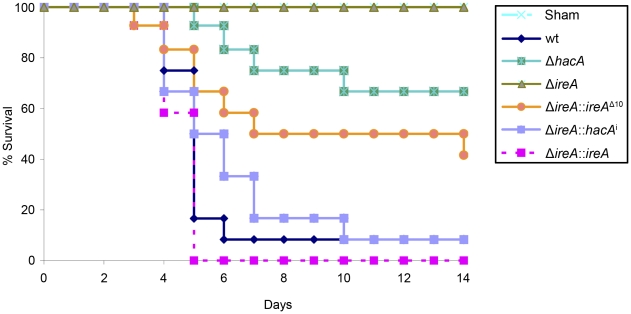
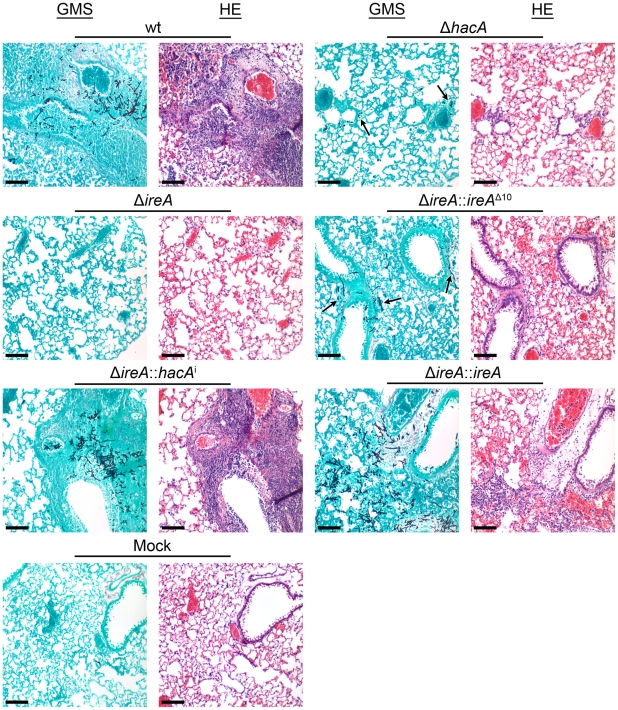
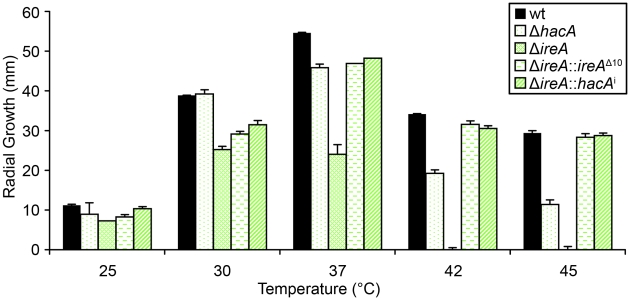
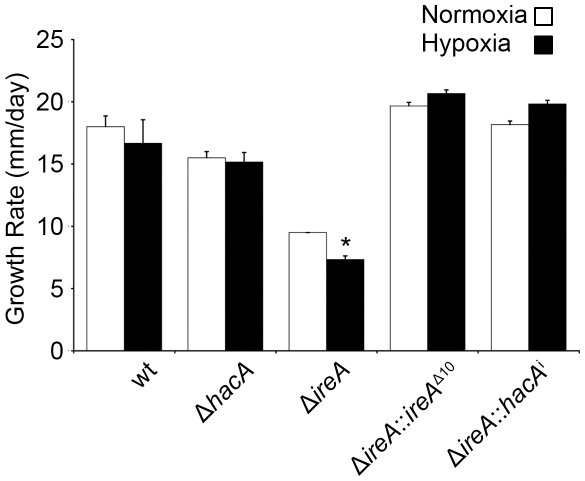
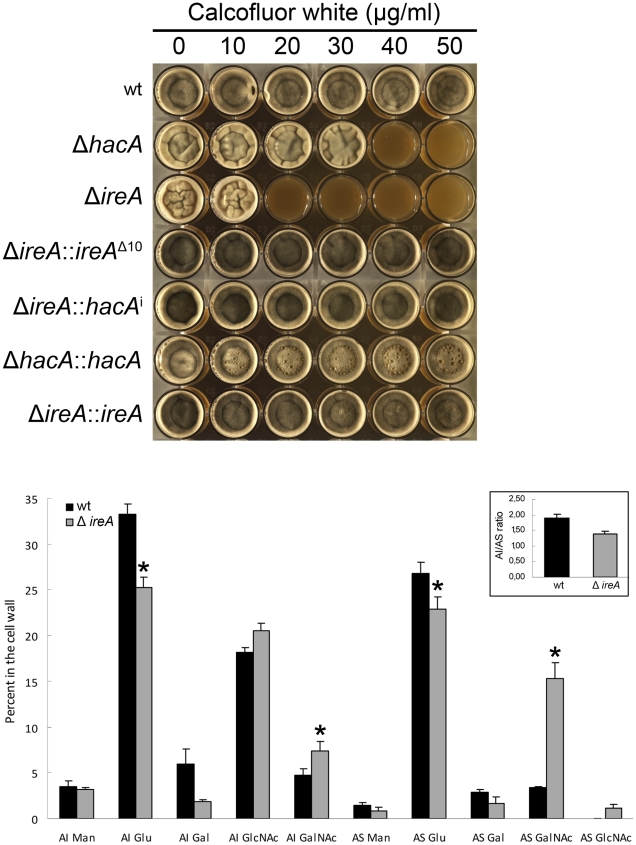
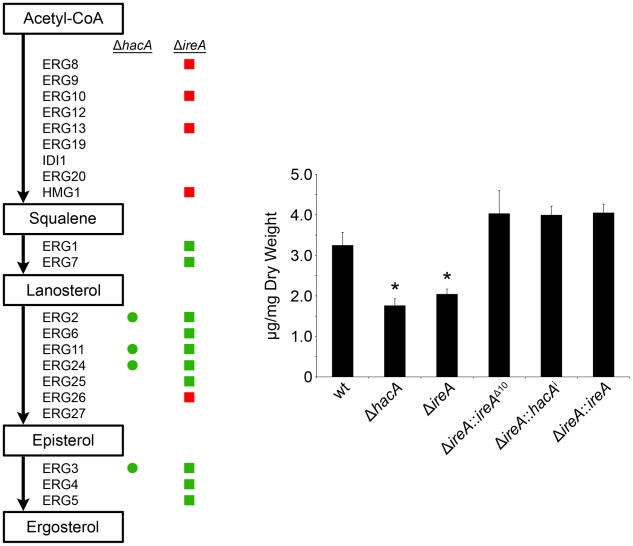
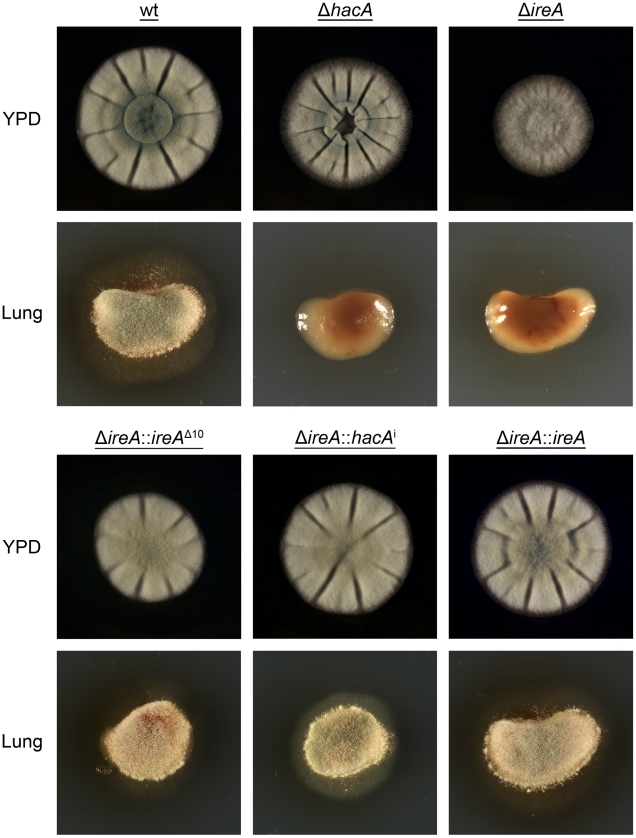
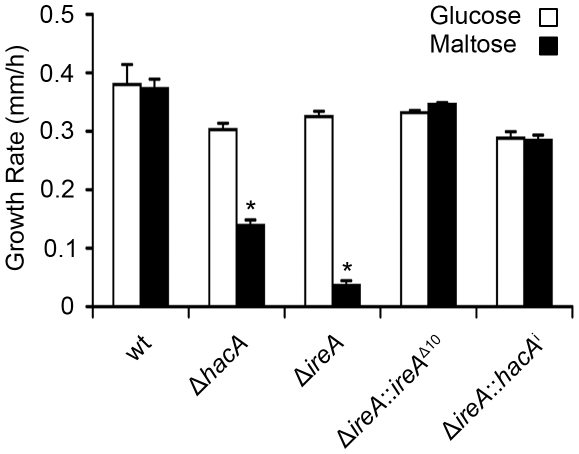
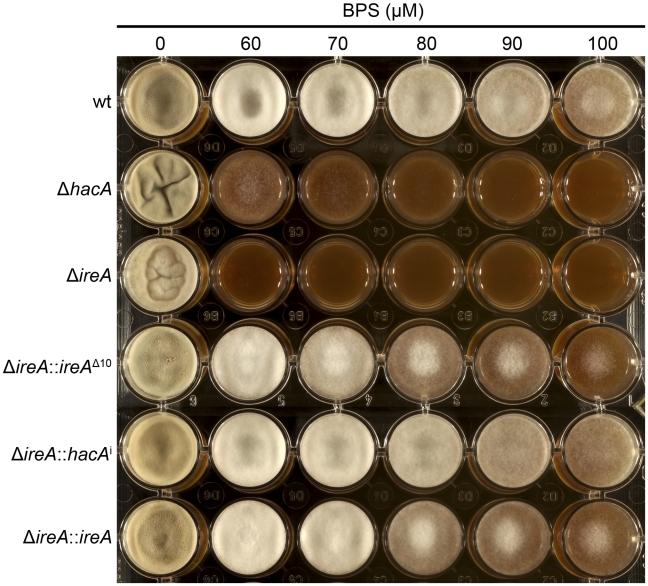
Endoplasmic reticulum (ER) stress is a condition in which the protein folding capacity of the ER becomes overwhelmed by an increased demand for secretion or by exposure to compounds that disrupt ER homeostasis. In yeast and other fungi, the accumulation of unfolded proteins is detected by the ER-transmembrane sensor IreA/Ire1, which responds by cleaving an intron from the downstream cytoplasmic mRNA HacA/Hac1, allowing for the translation of a transcription factor that coordinates a series of adaptive responses that are collectively known as the unfolded protein response (UPR). Here, we examined the contribution of IreA to growth and virulence in the human fungal pathogen Aspergillus fumigatus. Gene expression profiling revealed that A. fumigatus IreA signals predominantly through the canonical IreA-HacA pathway under conditions of severe ER stress. However, in the absence of ER stress IreA controls dual signaling circuits that are both HacA-dependent and HacA-independent. We found that a ΔireA mutant was avirulent in a mouse model of invasive aspergillosis, which contrasts the partial virulence of a ΔhacA mutant, suggesting that IreA contributes to pathogenesis independently of HacA. In support of this conclusion, we found that the ΔireA mutant had more severe defects in the expression of multiple virulence-related traits relative to ΔhacA, including reduced thermotolerance, decreased nutritional versatility, impaired growth under hypoxia, altered cell wall and membrane composition, and increased susceptibility to azole antifungals. In addition, full or partial virulence could be restored to the ΔireA mutant by complementation with either the induced form of the hacA mRNA, hacA(i), or an ireA deletion mutant that was incapable of processing the hacA mRNA, ireA(Δ10). Together, these findings demonstrate that IreA has both HacA-dependent and HacA-independent functions that contribute to the expression of traits that are essential for virulence in A. fumigatus.
Overview
The claims and statistics of this paper haven’t been checked yet.
Free: it reads the open-access text and checks the first 5 claims that cite a source we can check. Create a free account to check every claim.
Integrity signals
Registry
Cites
Statistics
Figures
Verification
Claims the paper makes
The claims and statistics of this paper haven’t been checked yet.
Free: it reads the open-access text and checks the first 5 claims that cite a source we can check. Create a free account to check every claim.
Claims other papers make about this one
Each is checked against this paper’s own text: does it say what the citing paper says it does?
The source backs part of the claim, not all of it — or backs it for a different population, condition or comparison.
In the citing paper
“Loss of HacA, the major transcription factor of the UPR, and of the stress sensor, IreA, impairs protein secretion, which results in attenuated virulence of these strains, which are then unable to extract sufficient nutrients from host tissues (605).”
From Aspergillus fumigatus and Aspergillosis in 2019 (2019) · cites this paper as [605]
Experimental — accuracy not yet measuredIn the citing paper
“iron assimilation is affected in these mutants, demonstrating again that nutritional versatility is a complex phenomenon resulting from interconnections of pathways not logically related (605).”
From Aspergillus fumigatus and Aspergillosis in 2019 (2019) · cites this paper as [605]
Self-check
Percentages, sums and reported differences re-computed from the paper’s own numbers.
The self-check needs the paper’s full text.
Citations
Cites
Cluster analysis and display of genome-wide expression patterns
Eisen, M. B., Spellman, P. T., Brown, P. O., & Botstein, D. (1998) · Proceedings of the National Academy of Sciences · doi:10.1073/pnas.95.25.14863 · Cited by 16,184 · cited 1×
“0 [60] and the cluster tree was visualized using JAVA Treeview [61].”
MethodThe KEGG resource for deciphering the genome
Kanehisa, M. (2004) · Nucleic Acids Research · doi:10.1093/nar/gkh063 · Cited by 5,104 · cited 1×
“KEGG pathways associated with Aspergillus fumigatus were downloaded from the KEGG database [59].”
MethodProtein folding and misfolding
Dobson, C. M. (2003) · Nature · doi:10.1038/nature02261 · Cited by 4,791 · cited 1×
“Misfolded proteins are prone to nonspecific interactions with other molecules in the crowded intracellular environment, resulting in nonfunctional protein aggregates that disrupt ER homeostasis [6].”
BackgroundJava Treeview—extensible visualization of microarray data
Saldanha, A. J. (2004) · Bioinformatics · doi:10.1093/bioinformatics/bth349 · Cited by 2,991 · cited 2×
“0 [60] and the cluster tree was visualized using JAVA Treeview [61].”
MethodInfluentialBoyle, E. I., Weng, S., Gollub, J., Jin, H., Botstein, D., Cherry, J. M., & Sherlock, G. (2004) · Bioinformatics · doi:10.1093/bioinformatics/bth456 · Cited by 2,067 · cited 1×
“Gene Ontology Term Enrichment was performed using AmiGO Term Enrichment [58].”
MethodRoles of N-Linked Glycans in the Endoplasmic Reticulum
Helenius, A., & Aebi, M. (2004) · Annual Review of Biochemistry · doi:10.1146/annurev.biochem.73.011303.073752 · Cited by 2,037 · cited 1×
“mRNAs with decreased abundance in DhacA, consistent with the prominent role of N-linked glycosylation in the maturation of secretory proteins [28].”
BackgroundTravers, K. J., Patil, C. K., Wodicka, L., Lockhart, D. J., Weissman, J. S., & Walter, P. (2000) · Cell · doi:10.1016/s0092-8674(00)80835-1 · Cited by 1,992
Genomic sequence of the pathogenic and allergenic filamentous fungus Aspergillus fumigatus
Nierman, W. C., Pain, A., Anderson, M. J., Wortman, J. R., Kim, H. S., Arroyo, J., Berriman, M., Abe, K., Archer, D. B., Bermejo, C., et al. (2005) · Nature · doi:10.1038/nature04332 · Cited by 1,391
Self-citationCox, J. S., Shamu, C. E., & Walter, P. (1993) · Cell · doi:10.1016/0092-8674(93)90648-a · Cited by 1,231 · cited 1×
“This is followed by high-order oligomerization of Ire1 in the ER membrane, which allows for trans-autophosphorylation and activation of the C-terminal endoribonuclease domain [11,12,13].”
BackgroundLee, K., Tirasophon, W., Shen, X., Michalak, M., Prywes, R., Okada, T., Yoshida, H., Mori, K., & Kaufman, R. J. (2002) · Genes & Development · doi:10.1101/gad.964702 · Cited by 1,054
Cited by
Aspergillus fumigatus and Aspergillosis in 2019
Latgé, J.-P., & Chamilos, G. (2019) · Clinical Microbiology Reviews · doi:10.1128/cmr.00140-18 · Cited by 1,400
Self-citationFungal siderophore metabolism with a focus on Aspergillus fumigatus
Haas, H. (2014) · Nat. Prod. Rep. · doi:10.1039/c4np00071d · Cited by 324
Aspergillus fumigatus and Related Species
Sugui, J. A., Kwon-Chung, K. J., Juvvadi, P. R., Latge, J.-P., & Steinbach, W. J. (2015) · Cold Spring Harbor Perspectives in Medicine · doi:10.1101/cshperspect.a019786 · Cited by 278
“…Hissen et al. 2005; Moreno et al. 2007; Liu et al. 2010), toxin genes (Bok et al. 2005; Sugui et al. 2007; Spikes et al. 2008), and response to stress (Paris et al. 2003; Tsitsigiannis et al. 2005; Reeves et al. 2006; Willger et al. 2008; Feng et al. 2011; Dinamarco et al. 2012; Grahl et al. 2012).”
BackgroundSelf-citationMoreno, A. A., Mukhtar, M. S., Blanco, F., Boatwright, J. L., Moreno, I., Jordan, M. R., Chen, Y., Brandizzi, F., Dong, X., Orellana, A., et al. (2012) · PLoS ONE · doi:10.1371/journal.pone.0031944 · Cited by 232
“demonstrated that in the absence of ER stress, Aspergillus fumigatus Ire1 controls dual signaling circuits that are both Hac1-dependent and Hac1-independent [51].”
BackgroundSeyedmousavi, S., Guillot, J., Arné, P., de Hoog, G. S., Mouton, J. W., Melchers, W. J. G., & Verweij, P. E. (2015) · Medical Mycology · doi:10.1093/mmy/myv067 · Cited by 231
“Aspergillus species as many other pathogenic fungi, may develop a coordinated regulatory system in response to hypoxia and iron starvation through expression of hypoxia and iron-responsive genes via crosslinked key regulators, and/or regulation of factors involved in ergosterol biosynthesis [80,81].”
BackgroundHypoxia and Fungal Pathogenesis: To Air or Not To Air?
Grahl, N., Shepardson, K. M., Chung, D., & Cramer, R. A. (2012) · Eukaryotic Cell · doi:10.1128/ec.00031-12 · Cited by 179
“An A. fumigatus endoplasmic reticulum stress sensor IreA null mutant was found to be moderately attenuated in hypoxic growth compared to normoxic growth and was essentially avirulent in a murine model of IPA (37).”
BackgroundInfluentialSelf-citationFungal iron homeostasis with a focus on Aspergillus fumigatus
Misslinger, M., Hortschansky, P., Brakhage, A. A., & Haas, H. (2020) · Biochimica et Biophysica Acta (BBA) - Molecular Cell Research · doi:10.1016/j.bbamcr.2020.118885 · Cited by 154
Functional Analysis of the Aspergillus nidulans Kinome
Souza, C. P. C. D., Hashmi, S. B., Osmani, A., Andrews, P., Ringelberg, C., Dunlap, J., & Osmani, S. (2013) · PLoS ONE · doi:10.1371/journal.pone.0058008 · Cited by 132
“In filamentous fungi, it has been suggested that protein secretion during polarized growth increases the demand for protein folding thereby triggering the unfolded protein response [115].”
BackgroundKowalski, C. H., Beattie, S. R., Fuller, K. K., McGurk, E. A., Tang, Y.-W., Hohl, T. M., Obar, J. J., & Cramer, R. A. (2016) · mBio · doi:10.1128/mbio.01515-16 · Cited by 123
“Last, the cellular response to reactive oxygen species and endoplasmic reticulum stress is altered in hypoxia as shown by increased alternative oxidase activity (AOX) (61) and a hypoxic growth defect in ireA (74).”
BackgroundSelf-citationDhingra, S., & Cramer, R. A. (2017) · Frontiers in Microbiology · doi:10.3389/fmicb.2017.00092 · Cited by 115
“A. fumigatus detects ER stress via the ER stress sensor IreA, which activates HacA – the major regulator of the UPR (Feng et al., 2011).”
BackgroundInfluentialSelf-citationPathogenicity and virulence of Aspergillus fumigatus
Earle, K., Valero, C., Conn, D. P., Vere, G., Cook, P. C., Bromley, M., Bowyer, P., & Gago, S. (2023) · Virulence · doi:10.1080/21505594.2023.2172264 · Cited by 132
“Feng et al. [148] reported that ireA deficient strains were avirulent in an IPA mouse model and showed reduced thermo-tolerance and increased susceptibility to azole antifungals.”
BackgroundPathogenesis of invasive fungal infections
Garcia-Vidal, C., Viasus, D., & Carratalà, J. (2013) · Current Opinion in Infectious Diseases · doi:10.1097/qco.0b013e32835fb920 · Cited by 99
Fungal Isocyanide Synthases and Xanthocillin Biosynthesis in Aspergillus fumigatus
Lim, F. Y., Won, T. H., Raffa, N., Baccile, J. A., Wisecaver, J. H., Rokas, A., Schroeder, F. C., & Keller, N. P. (2018) · mBio · doi:10.1128/mbio.00785-18 · Cited by 98
Stress Signaling Pathways for the Pathogenicity of Cryptococcus
Bahn, Y.-S., & Jung, K.-W. (2013) · Eukaryotic Cell · doi:10.1128/ec.00218-13 · Cited by 84
Dissection of Ire1 Functions Reveals Stress Response Mechanisms Uniquely Evolved in Candida glabrata
Miyazaki, T., Nakayama, H., Nagayoshi, Y., Kakeya, H., & Kohno, S. (2013) · PLoS Pathogens · doi:10.1371/journal.ppat.1003160 · Cited by 78
The contribution of Aspergillus fumigatus stress responses to virulence and antifungal resistance
Brown, N. A., & Goldman, G. H. (2016) · The Journal of Microbiology · doi:10.1007/s12275-016-5510-4 · Cited by 86
Fan, F., Ma, G., Li, J., Liu, Q., Benz, J. P., Tian, C., & Ma, Y. (2015) · Biotechnology for Biofuels · doi:10.1186/s13068-015-0248-5 · Cited by 84
“cerevisiae [18,26] and other model systems [11,25,27-29], the IRE-1/HAC-1 governed UPR regulon mainly functions to facilitate protein folding and to remodel the secretory pathway.”
BackgroundResultMalavazi, I., Goldman, G. H., & Brown, N. A. (2014) · Briefings in Functional Genomics · doi:10.1093/bfgp/elu027 · Cited by 81
“Other polysaccharides (b-1,3 glucan and chitin) are produced as linear chains by the enzymes that are delivered to locations of de novo synthesis such as the cell wall at the hyphal tip [represented by the Spitzenk ̨rper (S)] or septum (not represented in the figure) [46].”
BackgroundO'Dea, E. M., Amarsaikhan, N., Li, H., Downey, J., Steele, E., Van Dyken, S. J., Locksley, R. M., & Templeton, S. P. (2014) · Infection and Immunity · doi:10.1128/iai.01990-14 · Cited by 72
“rDNA content by quantitative PCR as previously described (32, 33) using”
MethodJiang, H., Shen, Y., Liu, W., & Lü, L. (2013) · Fungal Genetics and Biology · doi:10.1016/j.fgb.2013.11.003 · Cited by 63
Rocha, M. C., de Godoy, K. F., de Castro, P. A., Hori, J. I., Bom, V. L. P., Brown, N. A., da Cunha, A. F., Goldman, G. H., & Malavazi, I. (2015) · PLoS ONE · doi:10.1371/journal.pone.0135195 · Cited by 64
“fumigatus the canonical UPR is activated when misfolded proteins accumulate in the ER lumen leading to the oligomerization and activation of the cytosolic kinase and RNAse domains of the ER stress sensor IreA [46], which excises an unconventional intron (20 nucleotides) from the cytoplasmic mRNA of hacA (uninduced; ha…”
BackgroundMethodInfluentialThe Immune Interplay between the Host and the Pathogen inAspergillus fumigatusLung Infection
Sales‐Campos, H., Tonani, L., Cardoso, C. R. D. B., & Kress, M. R. V. Z. (2013) · BioMed Research International · doi:10.1155/2013/693023 · Cited by 80
“The ribosomal biogenesis proteins encoded by crgA [20], αmannosyltransferase (kre2/mnt1) [21], and the endoplasmic reticulum-transmembrane sensor encoded by ireA [22] are to date the proteins associated with thermotolerance growth and hypovirulence, when the respective genes were deleted from A.”
BackgroundUnfolded protein response in filamentous fungi—implications in biotechnology
Heimel, K. (2014) · Applied Microbiology and Biotechnology · doi:10.1007/s00253-014-6192-7 · Cited by 64
Heimel, K., Freitag, J., Hampel, M., Ast, J., Bölker, M., & Kämper, J. (2013) · The Plant Cell · doi:10.1105/tpc.113.115899 · Cited by 50
Qian, B., Su, X., Ye, Z., Liu, X., Liu, M., Shen, D., Chen, H., Zhang, H., Wang, P., & Zhang, Z. (2021) · New Phytologist · doi:10.1111/nph.17851 · Cited by 49
“In Aspergillus fumigatus , the ER transmembrane stress sensor IreA synergises with the canonical UPR, independent of the HacA transcription factor, to influence virulence traits (Feng et al ., 2011).”
Blatzer, M., & Latgé, J.-P. (2017) · Current Opinion in Microbiology · doi:10.1016/j.mib.2017.11.015 · Cited by 47
“The bZip-TF HacA, involved in the unfolded protein response, is activated by iron limitation [18], as well as mitogen activated protein kinase MpkA, impacting on iron homeostasis but also cell wall integrity (CWI) [19].”
BackgroundSelf-citationThe crucial role of iron uptake in Aspergillus fumigatus virulence
Moore, M. M. (2013) · Current Opinion in Microbiology · doi:10.1016/j.mib.2013.07.012 · Cited by 56
Endoplasmic reticulum stress and fungal pathogenesis
Krishnan, K., & Askew, D. S. (2014) · Fungal Biology Reviews · doi:10.1016/j.fbr.2014.07.001 · Cited by 46
“…Hac1 in several pathogenic fungi, including A. fumigatus, C. neoformans and Candida albicans, show a striking increase in susceptibility to antifungal drugs that target the cell wall or membrane (Blankenship et al., 2010; Cheon et al., 2011; Feng et al., 2011; Richie et al., 2009; Xu et al., 2007).”
BackgroundInfluentialSelf-citationDinamarco, T. M., Almeida, R. S., de Castro, P. A., Brown, N. A., dos Reis, T. F., Ramalho, L. N. Z., Savoldi, M., Goldman, M. H. S., & Goldman, G. H. (2012) · Eukaryotic Cell · doi:10.1128/ec.00016-12 · Cited by 49
Hypoxia and Gene Expression in Eukaryotic Microbes
Butler, G. (2013) · Annual Review of Microbiology · doi:10.1146/annurev-micro-092412-155658 · Cited by 44
Blosser, S. J., Merriman, B., Grahl, N., Chung, D., & Cramer, R. A. (2014) · Microbiology · doi:10.1099/mic.0.080440-0 · Cited by 47
“We examined the response of the SMO-null mutants to 1 mM DTT, which interferes with disulfide bond formation and ultimately causes protein unfolding (Feng et al., 2011).”
BackgroundSelf-citationSircaik, S., Román, E., Bapat, P., Lee, K. K., Andes, D. R., Gow, N. A. R., Nobile, C. J., Pla, J., & Panwar, S. L. (2021) · Cellular Microbiology · doi:10.1111/cmi.13307 · Cited by 41
“All of these virulence traits are supported by an intact Ire1-dependent secretory pathway (Cheon et al., 2011; Feng et al., 2011; Jung et al., 2013).”
BackgroundInfluentialHsu, C.-M., Liao, Y.-L., Chang, C.-K., & Lan, C. (2021) · International Journal of Molecular Sciences · doi:10.3390/ijms221910633 · Cited by 41
“Mutants lacking HacA in Aspergillus fumigatus and Hxl1 in Cryptococcus neoformans, the homologs of Hac1, attenuate virulence in mouse models of infection [71,72].”
BackgroundJung, K.-W., Kang, H. A., & Bahn, Y.-S. (2013) · PLoS ONE · doi:10.1371/journal.pone.0058956 · Cited by 39
“In fact, UPR signaling mutants are significantly susceptible to azole drugs [6,7,9].”
BackgroundInfluentialThe fungal UPR: A regulatory hub for virulence traits in the mold pathogen Aspergillus fumigatus
Krishnan, K., & Askew, D. S. (2014) · Virulence · doi:10.4161/viru.26571 · Cited by 35
“The mechanism for this thermosensitivity is likely to be due to a loss of cell integrity since both mutants exhibited hyphal tip lysis at non-permissive growth temperatures.(24,25) It is remarkable that the corresponding mutants in S.”
BackgroundSelf-citationZhao, Q., Pei, H., Zhou, X., Zhao, K. X., Yu, M., Han, G., Fan, J., & Tao, F. (2022) · Journal of Fungi · doi:10.3390/jof8040356 · Cited by 36
Protein secretion and associated stress in industrially employed filamentous fungi
Jadhav, R., Mach, R. L., & Mach-Aigner, A. R. (2024) · Applied Microbiology and Biotechnology · doi:10.1007/s00253-023-12985-4 · Cited by 37
“The removal of this intron by Ire1-mediated splicing releases the translation block, allowing the spliced mRNA to be translated.”
InfluentialRamírez-Zavala, B., Krüger, I., Dunker, C., Jacobsen, I. D., & Morschhäuser, J. (2022) · PLoS Pathogens · doi:10.1371/journal.ppat.1010283 · Cited by 37
Chen, Y., Dong, L., Alam, M. A., Pardeshi, L. A., Miao, Z., Wang, F., Tan, K., Hynes, M. J., Kelly, J. M., & Wong, K. H. (2022) · mBio · doi:10.1128/mbio.03734-21 · Cited by 37
Pochon, S., Simoneau, P., Pigné, S., Balidas, S., Bataillé‐Simoneau, N., Campion, C., Jaspard, E., Calmes, B., Hamon, B., Berruyer, R., et al. (2013) · PLoS ONE · doi:10.1371/journal.pone.0075143 · Cited by 34
The unfolded protein response (UPR) pathway inCryptococcus
Cheon, S. A., Jung, K., Bahn, Y., & Kang, H. A. (2013) · Virulence · doi:10.4161/viru.26774 · Cited by 37
“fumigatus strongly support the divergent regulation of Ire1 and Hac1 orthologs.(47,48) Moreover, in metazoans, the endoribonuclease activity of Ire1 was directly involved in controlling the expression of a subset of genes encoding ER proteins by degrading mRNA to reduce the unfolded protein load in the ER lumen.”
BackgroundYang, L., Liu, H., Huang, Y., Pu, L., Zhang, X. D., Jiang, C. C., & Jiang, Z. W. (2013) · International Journal of Molecular Medicine · doi:10.3892/ijmm.2013.1292 · Cited by 30
“If these objectives are not achieved within a certain period of time or the disruption is prolonged, the UPR tries to turn on the apoptotic pathway (32,33).”
RetractedSteinbach, W. J. (2013) · PLoS Pathogens · doi:10.1371/journal.ppat.1003642 · Cited by 30
Li, Y., Liu, H., Huang, Y., Pu, L., Zhang, X. D., Jiang, C. C., & Jiang, Z. W. (2021) · International Journal of Molecular Medicine · doi:10.3892/ijmm.2021.5021 · Cited by 29
RetractedExpression and function of an Hac1-regulated multi-copy xylanase gene in Saccharomyces cerevisiae
Bao, C., Li, J., Chen, H., Sun, Y., Wang, G., Chen, G., & Zhang, S. (2020) · Scientific Reports · doi:10.1038/s41598-020-68570-6 · Cited by 28
Krishnan, K., Feng, X., Powers‐Fletcher, M. V., Bick, G., Richie, D. L., Woollett, L. A., & Askew, D. S. (2013) · Eukaryotic Cell · doi:10.1128/ec.00319-12 · Cited by 29
“fumigatus UPR is regulated by IreA (Ire1 in yeast and higher eukaryotes), a molecular sensor embedded in the ER membrane that is comprised of a lumenal sensing domain and a cytosolic effector domain (6).”
BackgroundMethodInfluentialSelf-citationER stress response mechanisms in the pathogenic yeastCandida glabrataand their roles in virulence
Miyazaki, T., & Kohno, S. (2013) · Virulence · doi:10.4161/viru.27373 · Cited by 33
“fumigatus ΔireA mutant, was not sensitive to low-oxygen and low-iron conditions.(8,12) Together, these findings provide evidence for diversities in Ire1-dependent stress response mechanisms between C.”
BackgroundKrishnan, K., Ren, Z., Losada, L. C., Nierman, W. C., Lu, L. J., & Askew, D. S. (2014) · BMC Genomics · doi:10.1186/1471-2164-15-159 · Cited by 29
“We have previously shown that these mRNAs do not increase in unfractionated total RNA under these same conditions [6], suggesting that they are under translational control.”
BackgroundResultSelf-citationPowers‐Fletcher, M. V., Feng, X., Krishnan, K., & Askew, D. S. (2013) · PLoS ONE · doi:10.1371/journal.pone.0066741 · Cited by 27
Self-citationPinter, N., Hach, C. A., Hampel, M., Rekhter, D., Zienkiewicz, K., Feußner, I., Poehlein, A., Daniel, R., Finkernagel, F., & Heimel, K. (2019) · PLoS Pathogens · doi:10.1371/journal.ppat.1007734 · Cited by 31
“In line with previous transcriptome analysis of the UPR in budding yeast and other filamentous fungi, the predicted gene functions of most UPR core genes identified in this study involve ER associated process (Fig 1C) important for the adaptation of the secretory pathway during ER stress [25, 26, 64, 65].”
ResultWeichert, M., Guirao-Abad, J. P., Aimanianda, V., Krishnan, K., Grisham, C., Snyder, P., Sheehan, A., Abbu, R., Liu, H., Filler, S. G., et al. (2020) · mBio · doi:10.1128/mbio.01060-20 · Cited by 27
Self-citationInsights and Perspectives on the Role of Proteostasis and Heat Shock Proteins in Fungal Infections
Neves‐da‐Rocha, J., Santos-Saboya, M. J., Lopes, M. E. R., Rossi, A., & Martinez-Rossi, N. M. (2023) · Microorganisms · doi:10.3390/microorganisms11081878 · Cited by 32
“Under nitrogen-sufficient conditions, the endonuclease domain removes an inhibitory intron from the hac1 mRNA and promotes the efficient translation of the Hac1p bZIP transcription factor [75].”
BackgroundTanaka, M., Shintani, T., & Gomi, K. (2015) · Fungal Genetics and Biology · doi:10.1016/j.fgb.2015.10.003 · Cited by 25
Jung, K., Lee, K.-T., Averette, A. F., Hoy, M. J., Everitt, J. I., Heitman, J., & Bahn, Y. (2018) · Scientific Reports · doi:10.1038/s41598-018-26405-5 · Cited by 27
HacA Governs Virulence Traits and Adaptive Stress Responses in Trichophyton rubrum
Bitencourt, T. A., Lang, E. A. S., Sanches, P. R., Peres, N. T. A., de Oliveira, V. M., Fachin, A. L., Rossi, A., & Martinez-Rossi, N. M. (2020) · Frontiers in Microbiology · doi:10.3389/fmicb.2020.00193 · Cited by 24
“Previous works have shown that post-translation modification conducted in molecules from the cell wall had prompted recognition by different PRRs, and finally triggered differences in the immune response pattern via the keratinocyte surface (Figueiredo et al., 2011; Snarr et al., 2017).”
BackgroundZhou, B., Xie, J., Liu, X., Wang, B., & Pan, L. (2016) · Gene · doi:10.1016/j.gene.2016.08.018 · Cited by 23
“In filamentous fungi, hacA deletion mutants of Aspergillus fumigatus (Feng et al., 2011),Neurospora crassa (Fan et al., 2015), and Aspergillus niger (Carvalho et al., 2010) have been constructed successfully, and the hacA disruptions resulted in drastic growthdefects inA. niger and N. crassa, and…”
BackgroundInfluentialFundamental and Applicative Aspects of the Unfolded Protein Response in Yeasts
Ishiwata‐Kimata, Y., & Kimata, Y. (2023) · Journal of Fungi · doi:10.3390/jof9100989 · Cited by 24
“Nevertheless, studies on some yeast or fungal species have suggested that Ire1 also plays a role(s) other than the splicing of HAC1 or HXL1 mRNA [78,103,105,110].”
BackgroundImpact of the UPR on the virulence of the plant fungal pathogenA. brassicicola
Guillemette, T., Calmes, B., & Simoneau, P. (2013) · Virulence · doi:10.4161/viru.26772 · Cited by 35
“It was reported that a basal UPR exists in the absence of stress.(7,37) This process should allow the cells to make minor adjustments necessary to buffer dynamic fluctuations in ER stress during hyphal growth and maintain continuous ER homeostasis.”
BackgroundLee, Y., Hossain, S., MacAlpine, J., Robbins, N., & Cowen, L. E. (2023) · iScience · doi:10.1016/j.isci.2023.106145 · Cited by 20
Unique roles of the unfolded protein response pathway in fungal development and differentiation
Jung, K., So, Y.-S., & Bahn, Y. (2016) · Scientific Reports · doi:10.1038/srep33413 · Cited by 21
Lim, Y., & Lee, Y. (2020) · Fungal Genetics and Biology · doi:10.1016/j.fgb.2020.103473 · Cited by 19
The ERAD Pathway Participates in Fungal Growth and Cellulase Secretion in Trichoderma reesei
Cheng, Y., Yan, M., Li, K., Gao, W., Li, X., Zhang, J., Liu, H., & Zhong, Y. (2023) · Journal of Fungi · doi:10.3390/jof9010074 · Cited by 21
“The ER pressure has a great impact on maintaining cell wall integrity [39,40].”
BackgroundYu, M., Zhou, X., Chen, D., Yuan, J., Han, G., & Tao, F. (2024) · International Journal of Food Microbiology · doi:10.1016/j.ijfoodmicro.2024.110693 · Cited by 19
Powers‐Fletcher, M. V., Jambunathan, K., Brewer, J. L., Krishnan, K., Feng, X., Galande, A. K., & Askew, D. S. (2011) · PLoS ONE · doi:10.1371/journal.pone.0028865 · Cited by 19
Self-citationGlazier, V. E., & Panepinto, J. C. (2013) · Virulence · doi:10.4161/viru.27187 · Cited by 26
“neoformans, suggest that growth at elevated temperature and infection of a mammalian host are ER stress inducing events for pathogenic fungi.(21,22,27-34) In response to a shift from 30 °C to 37 °C, the core temperature of the human host, C.”
BackgroundHokken, M., Coolen, J. P. M., Steenbreker, H., Zoll, J., Baltussen, T. J. H., Verweij, P. E., & Melchers, W. J. G. (2023) · Journal of Fungi · doi:10.3390/jof9080807 · Cited by 19
“The inhibition of Cyp51A by azole compounds resulted in changes in gene expression in the ergosterol biosynthesis pathway, as shown in previous research [30,33].”
BackgroundResultAhmed, K., Carter, D. E., & Lajoie, P. (2019) · FEBS Letters · doi:10.1002/1873-3468.13463 · Cited by 19
Yokota, J.-I. P., Shiro, D., Tanaka, M., Onozaki, Y., Mizutani, O., Kakizono, D., Ichinose, S., Shintani, T., Gomi, K., & Shintani, T. (2017) · Applied Microbiology and Biotechnology · doi:10.1007/s00253-016-8086-3 · Cited by 17
“Further analysis is required to elucidate the complete mechanism underlying IreA activation by expression of α-amylase and the mutant MsdS. UPR induction requires unconventional splicing of hacA mRNA by IreA in A. fumigatus (Feng et al. 2011).”
Responses of the Necrotrophic Fungus Alternaria brassisicola to the Indolic Phytoalexin Brassinin
Nguyen, G. Q. H., Raulo, R., Porquier, A., Iacomı, B., Pelletier, S., Renou, J., Bataillé‐Simoneau, N., Campion, C., Hamon, B., Kwasiborski, A., et al. (2021) · Frontiers in Plant Science · doi:10.3389/fpls.2020.611643 · Cited by 17
Guirao-Abad, J. P., Weichert, M., Albee, A., Deck, K., & Askew, D. S. (2020) · mSphere · doi:10.1128/msphere.00879-20 · Cited by 18
“We conclude that 4 8C-induced hypersensitivity to hygromycin B is likely to be multifactorial but mediated in part by UPR signaling through the canonical HacAidirected pathway.”
BackgroundInfluentialSelf-citationFauzee, Y. N. B. M., Yoshida, Y., & Kimata, Y. (2023) · Frontiers in Microbiology · doi:10.3389/fmicb.2023.1157146 · Cited by 15
Schmitz, L., Schwier, M., & Heimel, K. (2019) · mBio · doi:10.1128/mbio.02756-19 · Cited by 14
Tanaka, Y., Sasaki, M., Ito, F., Aoyama, T., Okamoto, M., Takahashi‐Nakaguchi, A., Chibana, H., & Shibata, N. (2016) · PLoS ONE · doi:10.1371/journal.pone.0161371 · Cited by 16
“A recent study showed that endoplasmic reticulum (ER) homeostasis is required for maintaining proper cell wall structure and for inducing antifungal resistance in many fungal species such as Saccharomyces cerevisiae [21], Aspergillus fumigatus [22], and Cryptococcus neoformans [23].”
BackgroundEndoplasmic reticulum stress and fungal pathogenesis converge
Askew, D. S. (2014) · Virulence · doi:10.4161/viru.28051 · Cited by 16
“fumigatus UPR acts as a regulatory hub for the expression of multiple clinically relevant traits that act in concert to support fitness within the host.(13) Cryptococcus neoformans is an encapsulated yeast that is the causative agent of cryptococcosis, a life-threatening infection of immunocompromised patients.”
BackgroundSelf-citationTanaka, Y., Sasaki, M., Ito, F., Aoyama, T., Sato-Okamoto, M., Takahashi-Nakaguchi, A., Chibana, H., & Shibata, N. (2018) · Fungal Biology · doi:10.1016/j.funbio.2017.09.007 · Cited by 13
Fabri, J. H. T. M., Rocha, M. C., & Malavazi, I. (2019) · Current Protein and Peptide Science · doi:10.2174/1389203720666190705164203 · Cited by 13
Zhang, H., Li, Y., Dickman, M. B., & Wang, Z. (2019) · Frontiers in Microbiology · doi:10.3389/fmicb.2019.00685 · Cited by 13
Amarsaikhan, N., O’Dea, E. M., Tsoggerel, A., & Templeton, S. P. (2017) · Microbes and Infection · doi:10.1016/j.micinf.2017.05.001 · Cited by 12
“David Askew (University of Cincinnati) [10-12].”
BackgroundInfluentialKamath, M. M., Lightfoot, J. D., Adams, E. M., Kiser, R. M., Wells, B. L., & Fuller, K. K. (2023) · PLoS Pathogens · doi:10.1371/journal.ppat.1011435 · Cited by 10
Self-citationGuirao-Abad, J. P., Weichert, M., & Askew, D. S. (2022) · Current Research in Microbial Sciences · doi:10.1016/j.crmicr.2022.100119 · Cited by 12
Self-citationRaj, S., Krishnan, K., Askew, D. S., Helynck, O., Suzanne, P., Lesnard, A., Rault, S., Zeidler, U., d’Enfert, C., Latgé, J., et al. (2015) · Antimicrobial Agents and Chemotherapy · doi:10.1128/aac.02239-15 · Cited by 8
Self-citationThe unfolded protein response is a potential therapeutic target in pathogenic fungi
Zhou, H., Zhang, J., Wang, R., Huang, J., Xin, C., & Song, Z. (2025) · FEBS Journal · doi:10.1111/febs.70100 · Cited by 8
Guirao-Abad, J. P., Weichert, M., Luengo‐Gil, G., Wong, S. S. W., Aimanianda, V., Grisham, C., Malev, N., Reddy, S., Woollett, L. A., & Askew, D. S. (2021) · mBio · doi:10.1128/mbio.02735-21 · Cited by 8
“bar on the left highlights genes identified in the core UPR transcriptome (8), and the second vertical bar illustrates their functional classification.”
BackgroundMethodSelf-citationEukaryotic Endoplasmic Reticulum Stress-Sensing Mechanisms
Duffee, L. E., Boatwright, J. L., Pacha, F. H., Shockley, J. M., Pajerowska-Mukhtar, K. M., & Mukhtar, M. S. (2013) · Advances in Life Sciences · doi:10.5923/j.als.20120206.02 · Cited by 5
“fumigatus has been shown to play a role in mult iple adaptive roles, such as thermotolerance, growth under hypoxia, membrane composition and nutritional versatility[18].”
BackgroundDiseases Caused by Aspergillus fumigatus
Garcia‐Rubio, R., & Alcázar‐Fuoli, L. (2018) · Elsevier eBooks · doi:10.1016/b978-0-12-809633-8.12078-3 · Cited by 7
Gilbert, M. K., Mack, B. M., Lebar, M. D., Chang, P., Gross, S. R., Sweany, R. R., Cary, J. W., & Rajasekaran, K. (2023) · Journal of Fungi · doi:10.3390/jof9010118 · Cited by 5
Kamath, M. M., Adams, E. M., Lightfoot, J. D., Wells, B. L., & Fuller, K. K. (2024) · Frontiers in Cellular and Infection Microbiology · doi:10.3389/fcimb.2024.1477463 · Cited by 6
Self-citationTuo, L., Liu, Y., Zhu, H., Cao, L., Zhou, Y., Liu, D., & Shen, Q. (2024) · Biotechnology for Biofuels and Bioproducts · doi:10.1186/s13068-024-02502-8 · Cited by 4
“Given the well-established link between severe ER stress induced by heat stress and the role of IRE in orchestrating the UPR [27], the regulatory mechanism of Tgire assumes paramount importance.”
BackgroundGenetics of the Unfolded Protein Response in Fungi
Harting, R., & Heimel, K. (2020) · Springer eBooks · doi:10.1007/978-3-030-49924-2_3 · Cited by 6
Zhu, Y., Xu, Q., Zou, R., Liu, S., Tao, R., Liu, S., Li, X., Wen, L., Wu, J., & Wang, J. (2023) · Comparative Biochemistry and Physiology Part C Toxicology & Pharmacology · doi:10.1016/j.cbpc.2023.109804 · Cited by 3
Guirao-Abad, J. P., Kasprovic, D. A., Seo, D., Ozdemir, M., Shearer, S. M., Wen, B.-Y., Bowden, J. J., Grisham, C., Wang, Y., Tranter, M., et al. (2026) · Nature Communications · doi:10.1038/s41467-026-71027-5 · Cited by 4
Self-citationRuf, D., Striegler, K., Brazil, S., Elsaman, H., Singh, K., Lepas, M., Fernando, L. D. P., Brantl, V., Heß, P., Dichtl, K., et al. (2025) · Microbiological Research · doi:10.1016/j.micres.2025.128238 · Cited by 3
Self-citationLi, S., Guo, Y. L., Zhang, S., & Li, H. (2025) · Stress Biology · doi:10.1007/s44154-025-00237-6 · Cited by 2
“…of Aspergillus fumigatus ERAD component derA and UPR regulator hacA severely impacts hyphal growth, antifungal resistance, protease secretion, and virulence more than the loss of either gene alone, indicating DerA’s cooperation with the UPR in promoting A. fumigatus virulence (Richie et al. 2011).”
Rocha, M. C., Santos, C. A., & Malavazi, I. (2018) · Current Proteomics · doi:10.2174/1570164615666180820155807 · Cited by 2
Biologie et diagnostic des infections à Aspergillus
Gangneux, J., Bouchara, J. P., & Chabasse, D. (2013) · Cited by 3
Diseases Caused by Aspergillus fumigatus
Garcia‐Rubio, R., & Alcázar‐Fuoli, L. (2018) · Elsevier eBooks · doi:10.1016/b978-0-12-819990-9.12078-5 · Cited by 7
Response and Cytoprotective Mechanisms Against Proteotoxic Stress in Yeast and Fungi
Kimata, Y., Nguyen, T. M. P., & Kohno, K. (2018) · Springer eBooks · doi:10.1007/978-3-030-00683-9_5 · Cited by 1
In the Crossroad Between Drug Resistance and Virulence in Fungal Pathogens
Cavalheiro, M., & Teixeira, M. C. (2018) · Springer eBooks · doi:10.1007/978-3-030-00683-9_7 · Cited by 1
Starke, J. (2020) · eDiss (Georg-August-Universität Göttingen) · doi:10.53846/goediss-8101 · Cited by 1
Blosser, S. J. (2013) · Montana State University ScholarWorks (Montana State University)
Metadata
- Authors
- Feng, X., Krishnan, K., Richie, D. L., Aimanianda, V., Hartl, L., Grahl, N., Powers-Fletcher, M. V., Zhang, M., Fuller, K. K., Nierman, W. C., Lu, L. J., Latgé, J.-P., Woollett, L., Newman, S. L., Cramer, R. A., Rhodes, J. C., & Askew, D. S.
- Affiliations
- University of Cincinnati (US)
- Institut Pasteur (FR)
- Montana State University (US)
- Cincinnati Children's Hospital Medical Center (US)
- J. Craig Venter Institute (US)
- Corresponding author
- Askew, David S.
- ORCID
- Venue
- PLoS Pathogens
- Publisher
- Public Library of Science (PLoS)
- Published
- 2011-10-20
- Volume
- 7
- Issue
- 10
- Pages
- e1002330
- ISSN
- 1553-7366 (ISSN-L)
- 1553-7374
- PMC
- PMC3197630
- OpenAlex
- W1985009919
- Cited by
- 112
- References
- 63
- Citations by year
- 2026: 4 · 2025: 4 · 2024: 5 · 2023: 12 · 2022: 4 · 2021: 6 · 2020: 8 · 2019: 7 · 2018: 7 · 2017: 6 · 2016: 6 · 2015: 6 · 2014: 9 · 2013: 24 · 2012: 3
- FWCI
- 5.68
- Type
- journal article
- Language
- en
- Open access
- gold
- doi.org
- Locations
- PLoS Pathogens (publishedVersion, cc-by)
- Europe PMC (PubMed Central) (publishedVersion, cc-by)
- PubMed Central (publishedVersion, cc-by)
- PubMed (publishedVersion)
- HAL (submittedVersion, other-oa)
- DOAJ (DOAJ: Directory of Open Access Journals) (submittedVersion, cc-by-sa)
- Figshare (submittedVersion, cc-by)
- Funders
- National Institutes of Health
- National Institute of Allergy and Infectious Diseases (F31AI064121, L40 AI084526, R01AI072297, AI064121, R01AI081838)
- National Center for Research Resources (P20RR020185)
- Topics
- Life Sciences › Biochemistry, Genetics and Molecular Biology › Cell Biology › Endoplasmic Reticulum Stress and Disease
- Life Sciences › Biochemistry, Genetics and Molecular Biology › Molecular Biology › Fungal and yeast genetics research
- Health Sciences › Medicine › Infectious Diseases › Antifungal resistance and susceptibility
- Keywords
- Aspergillus fumigatus, unfolded protein response, endoplasmic reticulum stress, fungal virulence, invasive aspergillosis, HAC1, IRE1, heat tolerance, hypoxia tolerance, cell wall composition, membrane composition, azole susceptibility, gene expression profiling, complementation
- MeSH terms
- Animals, Aspergillus fumigatus, Disease Models, Animal, Endoplasmic Reticulum, Female, Fungal Proteins, Gene Expression Regulation, Genes, Fungal, Humans, Lung, Membrane Glycoproteins, Mutation, Repressor Proteins, RNA, Messenger, Virulence, Gene Expression Profiling, Animals, Outbred Strains, Iron-Regulatory Proteins, Mice, Unfolded Protein Response
About these checks
Registry, retraction, Cites and statistics results are computed, not judged, with one exception: a printed reference that no index lists is read once by a model before it counts as a citation error. Claims are extracted by a model and kept only when their quote appears verbatim in the text; each cited source is then checked, with a model’s help, for whether it says what the claim relies on. Those verdicts can be wrong — read the claim’s quote and the cited source before relying on one.
Statistics and arithmetic are recomputed, not judged.
Confidence bands are shown only for fields calibrated on our annotated test set. None is calibrated yet, so no band is shown.
What counts as a claim ›How we measure confidence ›How we check this ›
Are you an author, or do you see a problem with this page? Request a review
Data sources
Bibliographic data: Semantic Scholar, OpenAlex, Crossref.
Contains information from the Semantic Scholar Academic Graph Datasets, made available under the ODC Attribution License (ODC-BY 1.0).
Semantic Scholar’s data is described in: Kinney, R., et al. (2023). The Semantic Scholar Open Data Platform. arXiv:2301.10140.
