

Galactosaminogalactan, a New Immunosuppressive Polysaccharide of Aspergillus fumigatus
Open accessThe DOI matches its Crossref record; 62 of the 62 references it cites were found in a registry or an index.
Abstract
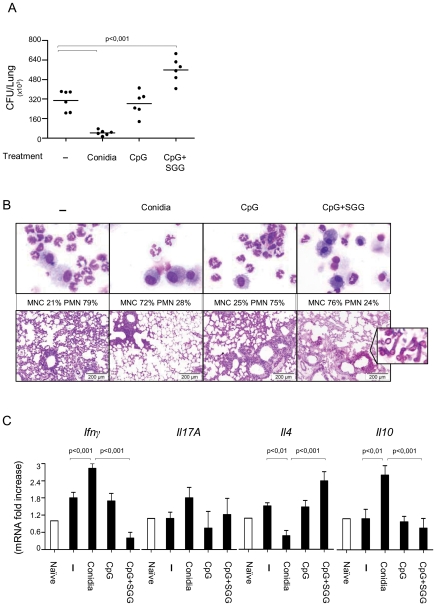
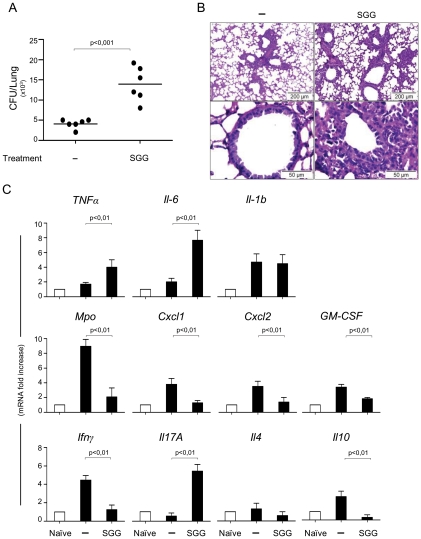
A new polysaccharide secreted by the human opportunistic fungal pathogen Aspergillus fumigatus has been characterized. Carbohydrate analysis using specific chemical degradations, mass spectrometry, ¹H and ¹³C nuclear magnetic resonance showed that this polysaccharide is a linear heterogeneous galactosaminogalactan composed of α1-4 linked galactose and α1-4 linked N-acetylgalactosamine residues where both monosacharides are randomly distributed and where the percentage of galactose per chain varied from 15 to 60%. This polysaccharide is antigenic and is recognized by a majority of the human population irrespectively of the occurrence of an Aspergillus infection. GalNAc oligosaccharides are an essential epitope of the galactosaminogalactan that explains the universal antibody reaction due to cross reactivity with other antigenic molecules containing GalNAc stretches such as the N-glycans of Campylobacter jejuni. The galactosaminogalactan has no protective effect during Aspergillus infections. Most importantly, the polysaccharide promotes fungal development in immunocompetent mice due to its immunosuppressive activity associated with disminished neutrophil infiltrates.
Overview
The claims and statistics of this paper haven’t been checked yet.
Free: it reads the open-access text and checks the first 5 claims that cite a source we can check. Create a free account to check every claim.
Integrity signals
Registry
Cites
Statistics
Figures
Verification
Claims the paper makes
The claims and statistics of this paper haven’t been checked yet.
Free: it reads the open-access text and checks the first 5 claims that cite a source we can check. Create a free account to check every claim.
Claims other papers make about this one
Each is checked against this paper’s own text: does it say what the citing paper says it does?
The source backs part of the claim, not all of it — or backs it for a different population, condition or comparison.
In the citing paper
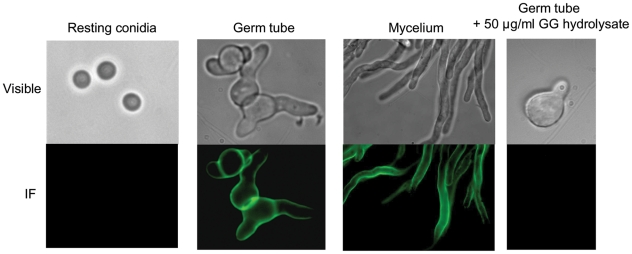
“The surface of the vegetative morphotype, the mycelium, is covered by a major polysaccharide, adhesin (absent from conidia) (Fig. 13).”
From Aspergillus fumigatus and Aspergillosis in 2019 (2019) · cites this paper as [479]
Experimental — accuracy not yet measuredThe check wasn’t confident either way, so it gives no verdict — never disputed.
In the citing paper
“The echinocandins caspofungin and micafungin have been used as primary therapy in noncomparative studies of IA, with response rates ranging from 33% to 57% for caspofungin (687–690) and 45% to 71% for micafungin (54, 479, 691).”
From Aspergillus fumigatus and Aspergillosis in 2019 (2019) · cites this paper as [479]
Experimental — accuracy not yet measuredIn the citing paper
“This polysaccharide is a galactosaminogalactan, which is a linear and water-insoluble heterogeneous polymer with an average size of 100 kDa, composed of galactose (in a pyranose form), galactosamine, and N-acetylgalactosamine (GalNAc) residues linked through α1,4 glycosidic linkage and in a random distribution along the polysaccharide chain (479).”
From Aspergillus fumigatus and Aspergillosis in 2019 (2019) · cites this paper as [479]
In the citing paper
“The matrix was found to contain mainly polysaccharides (galactomannan, α-1,3 glucan, and galactosaminogalactan), proteins, and small amounts of polyols, lipids, DNA, and melanin (452, 479, 486, 533).”
From Aspergillus fumigatus and Aspergillosis in 2019 (2019) · cites this paper as [479]
Self-check
Percentages, sums and reported differences re-computed from the paper’s own numbers.
The self-check needs the paper’s full text.
Citations
Cites
Colorimetric Method for Determination of Sugars and Related Substances
DuBois, M., Gilles, K. A., Hamilton, J. K., Rebers, P. A., & Smith, F. (1956) · Analytical Chemistry · doi:10.1021/ac60111a017 · Cited by 52,269
A simple and rapid method for the permethylation of carbohydrates
Ciucanu, I., & Kerek, F. (1984) · Carbohydrate Research · doi:10.1016/0008-6215(84)85242-8 · Cited by 3,580
Scheller, H. V., & Ulvskov, P. (2010) · Annual Review of Plant Biology · doi:10.1146/annurev-arplant-042809-112315 · Cited by 2,799
1H, 13C and 15N chemical shift referencing in biomolecular NMR
Wishart, D. S., Bigam, C. G., Yao, J., Abildgaard, F., Dyson, H. J., Oldfield, E., Markley, J. L., & Sykes, B. D. (1995) · Journal of Biomolecular NMR · doi:10.1007/bf00211777 · Cited by 2,359 · cited 1×
“251449530 was used [52].”
Sawardeker, J. S., Sloneker, J. H., & Jeanes, A. (1965) · Analytical Chemistry · doi:10.1021/ac60231a048 · Cited by 1,701 · cited 1×
“Monosaccharides were identified by GC as their alditol acetates after total acid hydrolysis (trifluoroacetic acid (TFA) 4N or HCl 4N, 100uC, 4 h) [49].”
MethodSignalling through C-type lectin receptors: shaping immune responses
Geijtenbeek, T. B. H., & Gringhuis, S. I. (2009) · Nature Reviews Immunology · doi:10.1038/nri2569 · Cited by 1,379 · cited 1×
“has been seen with all medically important fungi [6,35,36,37].”
BackgroundGradient selection in inverse heteronuclear correlation spectroscopy
Willker, W., Leibfritz, D., Kerssebaum, R., & Bermel, W. (1993) · Magnetic Resonance in Chemistry · doi:10.1002/mrc.1260310315 · Cited by 965 · cited 2×
“Finally, the interglycosidic linkages determination was achieved with (1)H-(1)H NOESY (Nuclear overhauser effect spectroscopy) experiments for the polysaccharides (mixing time of 15 and 50 ms) and with (1)H-(1)H ROESY experiments (mixing time of 250 ms) [55] and/or (1)H-(13)C gHMBC (Gradient selected heteronuclear mul…”
MethodAn integrated model of the recognition of Candida albicans by the innate immune system
Netea, M. G., Brown, G. D., Kullberg, B. J., & Gow, N. A. R. (2008) · Nature Reviews Microbiology · doi:10.1038/nrmicro1815 · Cited by 946 · cited 2×
“In other medically important fungi, capsular and cell wall polysaccharides and especially mannan and b-glucans also induce an immune response that either favours or inhibits fungal infection [6,7,8,9].”
BackgroundN-Linked Glycosylation in Campylobacter jejuni and Its Functional Transfer into E. coli
Wacker, M., Linton, D., Hitchen, P. G., Nita-Lazar, M., Haslam, S. M., North, S. J., Panico, M., Morris, H. R., Dell, A., Wren, B. W., et al. (2002) · Science · doi:10.1126/science.298.5599.1790 · Cited by 777
Self-citationTwo-dimensional chemical exchange and cross-relaxation spectroscopy of coupled nuclear spins
Macura, S., Huang, Y., Suter, D., & Ernst, R. R. (1981) · Journal of Magnetic Resonance (1969) · doi:10.1016/0022-2364(81)90037-8 · Cited by 748 · cited 1×
“Finally, the interglycosidic linkages determination was achieved with (1)H-(1)H NOESY (Nuclear overhauser effect spectroscopy) experiments for the polysaccharides (mixing time of 15 and 50 ms) and with (1)H-(1)H ROESY experiments (mixing time of 250 ms) [55] and/or (1)H-(13)C gHMBC (Gradient selected heteronuclear mul…”
Method
Research works printed but not linked: 1
- Letscher-Bru V Cavalier A Pernot-Marino E Koenig H Eyer D 1998 Aspergillus galactomannan antigen detection with Platelia-Aspergillus: multiple positive antigemia without Aspergillus infection. J Mycol Med 8 112 113
Cited by
Items 201–261 of 261
Tamimi, R. (2020) · WestminsterResearch (University of Westminster) · doi:10.34737/qzxy1 · Cited by 2
Wong, S. S. W., Dellière, S., Lafont, E., & Aimanianda, V. (2021) · Elsevier eBooks · doi:10.1016/b978-0-12-818731-9.00045-8 · Cited by 2
Structural characterization of fungal cell walls architecture by solid-state NMR
Lamon, G. (2020) · theses.fr (ABES) · doi:10.70675/c5c0354az3df6z4041zbbafz4d7be0c50c45 · Cited by 2
Guilloux, K., Hegde, P., Wong, S. S. W., Aimanianda, V., Bayry, J., & Latgé, J. (2024) · Mycopathologia · doi:10.1007/s11046-024-00894-7 · Cited by 1
“This could be due to at least tenfold increase in the galactosamine amount [representing GAG, an immunosuppressive polysaccharide; [29]].”
Self-citationAbe, K. (2025) · Bioscience Biotechnology and Biochemistry · doi:10.1093/bbb/zbaf020 · Cited by 1
Composition and Role of the Extracellular Matrix in Fungal Biofilm Drug Resistance
Kim, M.-J., Żarnowski, R., & Andes, D. R. (2025) · Springer series on biofilms · doi:10.1007/978-3-031-93315-8_8 · Cited by 1
Shen, W., Wang, M., Han, T., Yao, Y., Ying, X., Cui, Y., & Du, P. (2025) · Current Microbiology · doi:10.1007/s00284-025-04487-5 · Cited by 1
“Consequently, GAG production typically occurs during the germination of conidia into germ tubes and the subsequent formation of hyphae [5, 10–12].”
InfluentialCong, L., Zhang, Y., Chen, H., Lu, R., & Zhang, S. (2025) · Journal of Fungi · doi:10.3390/jof11100695 · Cited by 1
“Within the extracellular matrix of A. fumigatus biofilms, galactosaminogalactan (GAG), a specific glycan, is produced both in laboratory settings and within living organisms [21,22].”
Fungal extracellular vesicles: Advances and perspectives in treatments, therapies, and vaccination
Ferreira, K. S., Lima, S. F., Duarte, L. D. S., & Batista, W. L. (2025) · Current topics in membranes · doi:10.1016/bs.ctm.2025.07.008 · Cited by 1
Wu, D., Bino, L. D., Romagnoli, G., van der Marel, G. A., Adamo, R., Romano, M. R., & Codée, J. D. C. (2026) · JACS Au · doi:10.1021/jacsau.5c01338 · Cited by 1
Wang, C., Zhang, J., Yun, Y., Zhang, Q., Li, P., & Tang, X. Y. (2026) · Food Chemistry · doi:10.1016/j.foodchem.2026.150381 · Cited by 1
Trentin, G., Martins‐Santana, L., Taborda, C. P., & Almeida, F. (2026) · Frontiers in Immunology · doi:10.3389/fimmu.2026.1912476 · Cited by 1
“Initial biochemical analyses of GAG produced under de fi ned culture conditions indicated that the galactosamine residues in the material analyzed were N-acetylated, with no evidence of deacetylated galactosamine (66).”
Ghrenassia, E., Guihot, A., Dong, Y., Robinet, P., Fontaine, T., Lacombe, K., Lescot, T., Meyohas, M., & Elbim, C. (2017) · Frontiers in Microbiology · doi:10.3389/fmicb.2017.00203 · Cited by 1
“fumigatus germling conidia, and galactosaminogalactan (GG), a polysaccharide secreted by this fungus during early growth in vivo and reported to modulate immune response (Fontaine et al., 2011).”
BackgroundSelf-citationExtracellular Proteins and Their Roles in Aspergillus fumigatus Pathogenesis
Jia, L., & Brakhage, A. A. (2024) · The mycota · doi:10.1007/978-3-031-64853-3_4 · Cited by 1
An approach to understanding toxicity induction by filamentous fungi on human cell lines
Egbuta, M. A. (2015) · Boloka Institutional Repository (North-west University) · Cited by 1
Thieme, K. G. (2018) · eDiss (Georg-August-Universität Göttingen) · doi:10.53846/goediss-6917 · Cited by 1
Fungi In Asthma - Investigation Of The Lung Mycobiome And Characterisation Of Allergens
Rick, E. (2019) · Figshare · Cited by 1
Gupta, A. (2019) · Minerva Access (University of Melbourne) · Cited by 1
Blandenet, M. (2022) · theses.fr (ABES) · doi:10.70675/e0b5fe74z86f9z469dzb77bz0812df00267d · Cited by 1
Puttikamonkul, S. (2012) · Montana State University ScholarWorks (Montana State University)
The role of opsonins in Aspergillus fumigatus host defense
Braem, S. (2015) · Utrecht University Repository (Utrecht University)
Aspergillus nidulans and chronic granulomatous disease: a unique interaction
Henriet, S. (2015) · Radboud Repository (Radboud University)
Fontaine, T., Berghuis, M., Creuzenet, C., Liu, H., Kravtsov, I., Baptista, S. D., Lee, M. J., Gravelat, F. N., & Matrices, E. (2014)
Self-citationEl‐Kirat‐Chatel, S., & Beaussart, A. (2015) · NATO science for peace and security series. A, Chemistry and biology · doi:10.1007/978-94-017-7218-1_1
Clark, H. (2017) · OhioLink ETD Center (Ohio Library and Information Network)
Enhancement of Macrophage Response o N. gonorrhea Infection
Ghali, S. (2019) · Digital Commons - Longwood (Longwood University)
Alazawy, A. (2019) · Journal of World s Poultry Research · doi:10.36380/jwpr.2019.24
“Furthermore, Fontaine et al. (2011) found a new immunosuppressive metabolite of A. fumigatus composed of polysaccharide known as galactosaminogalactan.”
BackgroundManfiolli, A. O., dos Reis, T. F., de Assis, L. J., de Castro, P. A., Silva, L. P., Hori, J. I., Walker, L. A., Munro, C. A., Rajendran, R., Ramage, G., et al. (2020) · The Cell Surface · doi:10.1016/j.tcsw.2020.100035
Glycan-Mediated Interactions Between Fungal and Higher Animal Cells
Takegawa, K., & Oka, T. (2020) · Elsevier eBooks · doi:10.1016/b978-0-12-819475-1.00045-6
Interaction between the opportunistic pathogen Aspergillus fumigatus and its host
Keizer, E. (2021) · Utrecht University Repository (Utrecht University) · doi:10.33540/632
Brain Infections, Encephalitis, and Meningitis: Fungus
Generoso, J. S., Collodel, A., Hasbun, R., & Barichello, T. (2021) · Elsevier eBooks · doi:10.1016/b978-0-12-818731-9.00126-9
Ohno, N. (2020) · Elsevier eBooks · doi:10.1016/b978-0-12-819475-1.00010-9
Chakraborty, A. (2022) · Louisiana State University · doi:10.31390/gradschool_theses.5589
Exploration and Structural Biology of Novel Enzymes from the GH31 Family
Ikegaya, M., Park, E. Y., & Miyazaki, T. (2024) · Bulletin of Applied Glycoscience · doi:10.5458/bag.14.2_92
Natural Killer Cells in Microbial Host Defense: Overview with a Focus on Antifungal Activity
Polyak, M. J., Mok, A. C. H., & Mody, C. H. (2025) · Springer eBooks · doi:10.1007/978-3-662-68816-8_23-1
Role of humoral immunity against Aspergillus fumigatus
Dellière, S. (2023) · theses.fr (ABES) · doi:10.70675/5a5b267dz4b88z4ef4z9d96z9ea5b4ceaee7
Fugal exopolysaccharides, potential applications and future prospective
Ahmad, V. (2025) · Journal of Asian Natural Products Research · doi:10.1080/10286020.2025.2544138
吉見, 啓., 拳, 宮., 薄田, 隼., 岡, 拓., & 阿部, 敬. (2025) · Bulletin of Applied Glycoscience · doi:10.5458/bag.15.3_196
Heilig, L. (2025) · Online Publication Service of Würzburg University (Würzburg University) · doi:10.25972/opus-41344
Trinks, N. (2022) · Online Publication Service of Würzburg University (Würzburg University) · doi:10.25972/opus-26640
Schedler, A. (2017) · Online Publication Service of Würzburg University (Würzburg University)
Mechanisms of «Aspergillus fumigatus» chronic airway disease
Urb, M. (2012) · eScholarship@McGill (McGill) · doi:10.82308/11400
Relevance of platelets and complement for the pathogenesis of invasive fungal infections
Deshmukh, H. (2018) · Digital Library of the University of Innsbruck (University of Innsbruck)
The synthesis and functions of Galactosaminogalactan in «Aspergillus» species
Lee, M. (2015) · eScholarship@McGill (McGill) · doi:10.82308/55213
Deciphering the immune response to respiratory pathogens - Role of programmed death-ligand 1
Victor, E. S. (2016) · theses.fr (ABES) · doi:10.70675/42f25aeez159bz4bf3z8f30z05634e3e8152
Aspergillus fumigatus Cell Wall: Current Advances in Structural Elucidation Methods
Shetty, C. D., Elizabeth-Biju, M., & Aimanianda, V. (2026) · Methods in molecular biology · doi:10.1007/978-1-0716-5222-0_17
Structure and biosynthetic mechanisms of galactomannans in filamentous fungi
Oka, T., Kadooka, C., Tanaka, Y., & Hira, D. (2026) · Biochimica et Biophysica Acta (BBA) - General Subjects · doi:10.1016/j.bbagen.2026.130960
Kordana, N. E., Johnson, A., Puerner, C. T. S., Jones, J. T., Kowalski, C. H., Quinn, K. G., Liu, K.-W., Mauff, F. L., & Cramer, R. A. (2026) · bioRxiv (Cold Spring Harbor Laboratory) · doi:10.64898/2026.06.17.732805
Krylov, V. B., Kuznetsov, A. N., Dorokhova, V. S., Tsarapaev, P. V., Кушлинский, Н. Е., & Nifantiev, N. E. (2026) · Russian Journal for Personalized Medicine · doi:10.18705/2782-3806-2026-6-3-200-210
The Infection and Coinfection of Clinical Aspergillus fumigatus and SARS-CoV-2
Zeng, M., Zhou, X., Gou, X., Liu, W., Wang, J., Song, Z., & Ran, J. (2026) · Pathogens · doi:10.3390/pathogens15111103
Alharbi, T. H. (2023) · Nottingham ePrints (University of Nottingham)
Comparative and functional genomics of plant-endophytic fungi interaction
Τσιούρη, Ό. Μ. (2026) · University of Thessaly Institutional Repository (University of Thessaly) · doi:10.12681/eadd/62987
Lim, J.-Y., Kim, Y. J., Woo, S. A., Jeong, J. W., Lee, Y.-R., Kim, C.-H., & Park, H.-M. (2021) · doi:10.3389/fcimb.2021.756206.s002
Comprehension of the mechanisms of action of antimicrobial molecules using nanobiotechnologies
Formosa‐Dague, C. (2014) · HAL
Metadata
- Authors
- Fontaine, T., Delangle, A., Simenel, C., Coddeville, B., van Vliet, S. J., van Kooyk, Y., Bozza, S., Moretti, S., Schwarz, F., Trichot, C., Aebi, M., Delepierre, M., Elbim, C., Romani, L., & Latgé, J.-P.
- Affiliations
- Institut Pasteur (FR)
- Centre National de la Recherche Scientifique (FR)
- University of Perugia (IT)
- ETH Zurich (CH)
- Université Pierre-et-Marie-Curie (FR)
- Corresponding author
- Fontaine, Thierry
- ORCID
- Venue
- PLoS Pathogens
- Publisher
- Public Library of Science (PLoS)
- Published
- 2011-11-10
- Volume
- 7
- Issue
- 11
- Pages
- e1002372
- ISSN
- 1553-7366 (ISSN-L)
- 1553-7374
- PMC
- PMC3213105
- OpenAlex
- W2168733333
- Cited by
- 241
- References
- 62
- Citations by year
- 2026: 11 · 2025: 17 · 2024: 20 · 2023: 16 · 2022: 13 · 2021: 27 · 2020: 27 · 2019: 14 · 2018: 16 · 2017: 20 · 2016: 15 · 2015: 18 · 2014: 13 · 2013: 9 · 2012: 4
- FWCI
- 5.82
- Type
- journal article
- Language
- en
- Open access
- gold
- doi.org
- Locations
- PLoS Pathogens (publishedVersion, cc-by)
- Europe PMC (PubMed Central) (publishedVersion, cc-by)
- PubMed Central (publishedVersion, cc-by)
- PubMed (publishedVersion)
- Amsterdam UMC (VU Amsterdam) - Institutional Repository (acceptedVersion, other-oa)
- Pure Amsterdam UMC (submittedVersion, other-oa)
- Repository for Publications and Research Data (ETH Zurich) (submittedVersion, cc-by)
- HAL (submittedVersion, cc-by)
- Université Pierre et Marie CURIE (UPMC) (submittedVersion, cc-by)
- Digital Academic REpository of VU University Amsterdam (Vrije Universiteit Amsterdam) (submittedVersion)
- DOAJ (DOAJ: Directory of Open Access Journals) (submittedVersion, cc-by-sa)
- Figshare (submittedVersion, cc-by)
- Data Archiving and Networked Services (DANS) (submittedVersion, other-oa)
- ETH Zürich Research Collection (cc-by)
- Funders
- Agence Nationale de la Recherche (ANR-06-EMPB-0011)
- Topics
- Health Sciences › Medicine › Infectious Diseases › Antifungal resistance and susceptibility
- Life Sciences › Biochemistry, Genetics and Molecular Biology › Molecular Biology › Glycosylation and Glycoproteins Research
- Life Sciences › Biochemistry, Genetics and Molecular Biology › Molecular Biology › Fungal and yeast genetics research
- Keywords
- galactosaminogalactan, Aspergillus fumigatus, fungal polysaccharides, immunosuppression, cross-reactive antibodies, fungal virulence, neutrophil infiltration
- MeSH terms
- Animals, Antibodies, Fungal, Epitopes, Antigens, Fungal, Aspergillosis, Aspergillus fumigatus, Carbohydrate Conformation, Carbohydrate Sequence, Cell Wall, Cross Reactions, Female, Humans, Immunosuppressive Agents, Macrophages, Mice, Inbred C57BL, Neutrophils, Magnetic Resonance Spectroscopy, Polysaccharides, Apoptosis, Spectrometry, Mass, Matrix-Assisted Laser Desorption-Ionization, Neutrophil Infiltration, Mice, Host-Pathogen Interactions
About these checks
Registry, retraction, Cites and statistics results are computed, not judged, with one exception: a printed reference that no index lists is read once by a model before it counts as a citation error. Claims are extracted by a model and kept only when their quote appears verbatim in the text; each cited source is then checked, with a model’s help, for whether it says what the claim relies on. Those verdicts can be wrong — read the claim’s quote and the cited source before relying on one.
Statistics and arithmetic are recomputed, not judged.
Confidence bands are shown only for fields calibrated on our annotated test set. None is calibrated yet, so no band is shown.
What counts as a claim ›How we measure confidence ›How we check this ›
Are you an author, or do you see a problem with this page? Request a review
Data sources
Bibliographic data: Semantic Scholar, OpenAlex, Crossref.
Contains information from the Semantic Scholar Academic Graph Datasets, made available under the ODC Attribution License (ODC-BY 1.0).
Semantic Scholar’s data is described in: Kinney, R., et al. (2023). The Semantic Scholar Open Data Platform. arXiv:2301.10140.
