

Galactosaminogalactan, a New Immunosuppressive Polysaccharide of Aspergillus fumigatus
Open accessThe DOI matches its Crossref record; 62 of the 62 references it cites were found in a registry or an index.
Abstract
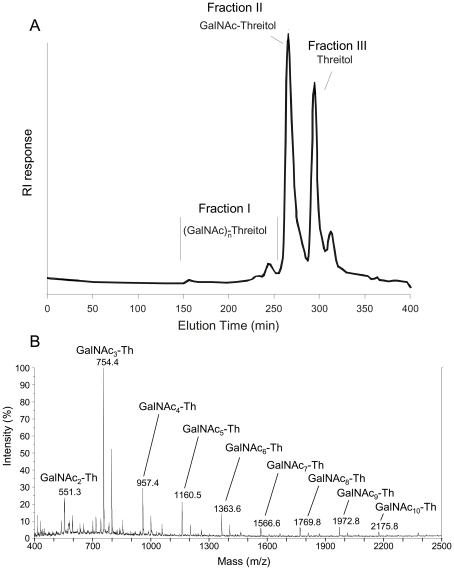
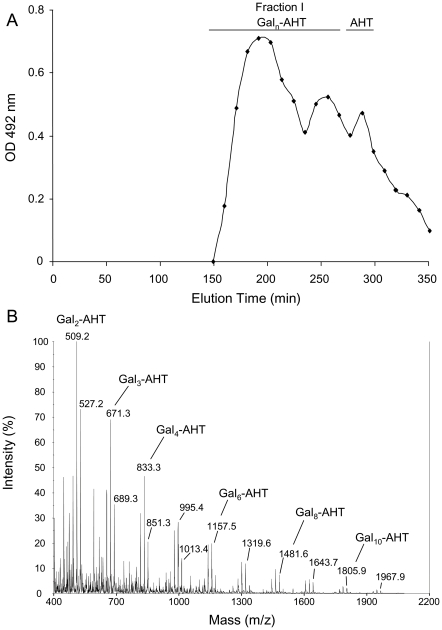
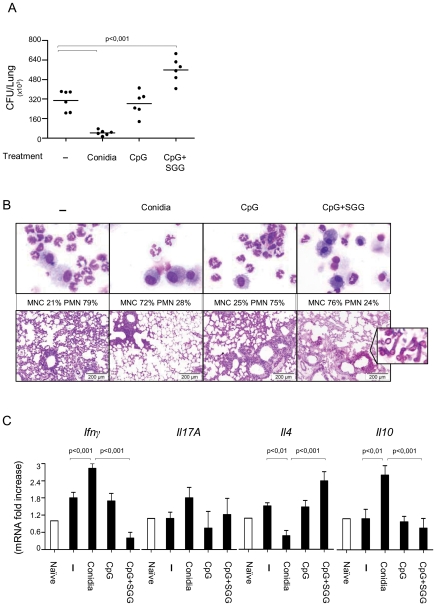
A new polysaccharide secreted by the human opportunistic fungal pathogen Aspergillus fumigatus has been characterized. Carbohydrate analysis using specific chemical degradations, mass spectrometry, ¹H and ¹³C nuclear magnetic resonance showed that this polysaccharide is a linear heterogeneous galactosaminogalactan composed of α1-4 linked galactose and α1-4 linked N-acetylgalactosamine residues where both monosacharides are randomly distributed and where the percentage of galactose per chain varied from 15 to 60%. This polysaccharide is antigenic and is recognized by a majority of the human population irrespectively of the occurrence of an Aspergillus infection. GalNAc oligosaccharides are an essential epitope of the galactosaminogalactan that explains the universal antibody reaction due to cross reactivity with other antigenic molecules containing GalNAc stretches such as the N-glycans of Campylobacter jejuni. The galactosaminogalactan has no protective effect during Aspergillus infections. Most importantly, the polysaccharide promotes fungal development in immunocompetent mice due to its immunosuppressive activity associated with disminished neutrophil infiltrates.
Overview
The claims and statistics of this paper haven’t been checked yet.
Free: it reads the open-access text and checks the first 5 claims that cite a source we can check. Create a free account to check every claim.
Integrity signals
Registry
Cites
Statistics
Figures
Verification
Claims the paper makes
The claims and statistics of this paper haven’t been checked yet.
Free: it reads the open-access text and checks the first 5 claims that cite a source we can check. Create a free account to check every claim.
Claims other papers make about this one
Each is checked against this paper’s own text: does it say what the citing paper says it does?
The source backs part of the claim, not all of it — or backs it for a different population, condition or comparison.
In the citing paper
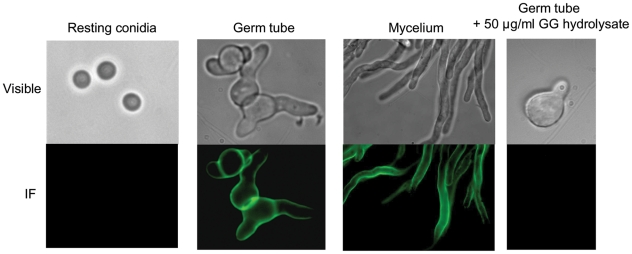
“The surface of the vegetative morphotype, the mycelium, is covered by a major polysaccharide, adhesin (absent from conidia) (Fig. 13).”
From Aspergillus fumigatus and Aspergillosis in 2019 (2019) · cites this paper as [479]
Experimental — accuracy not yet measuredThe check wasn’t confident either way, so it gives no verdict — never disputed.
In the citing paper
“The echinocandins caspofungin and micafungin have been used as primary therapy in noncomparative studies of IA, with response rates ranging from 33% to 57% for caspofungin (687–690) and 45% to 71% for micafungin (54, 479, 691).”
From Aspergillus fumigatus and Aspergillosis in 2019 (2019) · cites this paper as [479]
Experimental — accuracy not yet measuredIn the citing paper
“This polysaccharide is a galactosaminogalactan, which is a linear and water-insoluble heterogeneous polymer with an average size of 100 kDa, composed of galactose (in a pyranose form), galactosamine, and N-acetylgalactosamine (GalNAc) residues linked through α1,4 glycosidic linkage and in a random distribution along the polysaccharide chain (479).”
From Aspergillus fumigatus and Aspergillosis in 2019 (2019) · cites this paper as [479]
In the citing paper
“The matrix was found to contain mainly polysaccharides (galactomannan, α-1,3 glucan, and galactosaminogalactan), proteins, and small amounts of polyols, lipids, DNA, and melanin (452, 479, 486, 533).”
From Aspergillus fumigatus and Aspergillosis in 2019 (2019) · cites this paper as [479]
Self-check
Percentages, sums and reported differences re-computed from the paper’s own numbers.
The self-check needs the paper’s full text.
Citations
Cites
Colorimetric Method for Determination of Sugars and Related Substances
DuBois, M., Gilles, K. A., Hamilton, J. K., Rebers, P. A., & Smith, F. (1956) · Analytical Chemistry · doi:10.1021/ac60111a017 · Cited by 52,269
A simple and rapid method for the permethylation of carbohydrates
Ciucanu, I., & Kerek, F. (1984) · Carbohydrate Research · doi:10.1016/0008-6215(84)85242-8 · Cited by 3,580
Scheller, H. V., & Ulvskov, P. (2010) · Annual Review of Plant Biology · doi:10.1146/annurev-arplant-042809-112315 · Cited by 2,799
1H, 13C and 15N chemical shift referencing in biomolecular NMR
Wishart, D. S., Bigam, C. G., Yao, J., Abildgaard, F., Dyson, H. J., Oldfield, E., Markley, J. L., & Sykes, B. D. (1995) · Journal of Biomolecular NMR · doi:10.1007/bf00211777 · Cited by 2,359 · cited 1×
“251449530 was used [52].”
Sawardeker, J. S., Sloneker, J. H., & Jeanes, A. (1965) · Analytical Chemistry · doi:10.1021/ac60231a048 · Cited by 1,701 · cited 1×
“Monosaccharides were identified by GC as their alditol acetates after total acid hydrolysis (trifluoroacetic acid (TFA) 4N or HCl 4N, 100uC, 4 h) [49].”
MethodSignalling through C-type lectin receptors: shaping immune responses
Geijtenbeek, T. B. H., & Gringhuis, S. I. (2009) · Nature Reviews Immunology · doi:10.1038/nri2569 · Cited by 1,379 · cited 1×
“has been seen with all medically important fungi [6,35,36,37].”
BackgroundGradient selection in inverse heteronuclear correlation spectroscopy
Willker, W., Leibfritz, D., Kerssebaum, R., & Bermel, W. (1993) · Magnetic Resonance in Chemistry · doi:10.1002/mrc.1260310315 · Cited by 965 · cited 2×
“Finally, the interglycosidic linkages determination was achieved with (1)H-(1)H NOESY (Nuclear overhauser effect spectroscopy) experiments for the polysaccharides (mixing time of 15 and 50 ms) and with (1)H-(1)H ROESY experiments (mixing time of 250 ms) [55] and/or (1)H-(13)C gHMBC (Gradient selected heteronuclear mul…”
MethodAn integrated model of the recognition of Candida albicans by the innate immune system
Netea, M. G., Brown, G. D., Kullberg, B. J., & Gow, N. A. R. (2008) · Nature Reviews Microbiology · doi:10.1038/nrmicro1815 · Cited by 946 · cited 2×
“In other medically important fungi, capsular and cell wall polysaccharides and especially mannan and b-glucans also induce an immune response that either favours or inhibits fungal infection [6,7,8,9].”
BackgroundN-Linked Glycosylation in Campylobacter jejuni and Its Functional Transfer into E. coli
Wacker, M., Linton, D., Hitchen, P. G., Nita-Lazar, M., Haslam, S. M., North, S. J., Panico, M., Morris, H. R., Dell, A., Wren, B. W., et al. (2002) · Science · doi:10.1126/science.298.5599.1790 · Cited by 777
Self-citationTwo-dimensional chemical exchange and cross-relaxation spectroscopy of coupled nuclear spins
Macura, S., Huang, Y., Suter, D., & Ernst, R. R. (1981) · Journal of Magnetic Resonance (1969) · doi:10.1016/0022-2364(81)90037-8 · Cited by 748 · cited 1×
“Finally, the interglycosidic linkages determination was achieved with (1)H-(1)H NOESY (Nuclear overhauser effect spectroscopy) experiments for the polysaccharides (mixing time of 15 and 50 ms) and with (1)H-(1)H ROESY experiments (mixing time of 250 ms) [55] and/or (1)H-(13)C gHMBC (Gradient selected heteronuclear mul…”
Method
Research works printed but not linked: 1
- Letscher-Bru V Cavalier A Pernot-Marino E Koenig H Eyer D 1998 Aspergillus galactomannan antigen detection with Platelia-Aspergillus: multiple positive antigemia without Aspergillus infection. J Mycol Med 8 112 113
Cited by
Aspergillus fumigatus and Aspergillosis in 2019
Latgé, J.-P., & Chamilos, G. (2019) · Clinical Microbiology Reviews · doi:10.1128/cmr.00140-18 · Cited by 1,400
Self-citationThe Fungal Cell Wall: Candida, Cryptococcus, and Aspergillus Species
Garcia-Rubio, R., de Oliveira, H. C., Rivera, J., & Trevijano-Contador, N. (2020) · Frontiers in Microbiology · doi:10.3389/fmicb.2019.02993 · Cited by 917
Aspergillus fumigatus morphology and dynamic host interactions
van de Veerdonk, F. L., Gresnigt, M. S., Romani, L., Netea, M. G., & Latgé, J.-P. (2017) · Nature Reviews Microbiology · doi:10.1038/nrmicro.2017.90 · Cited by 490
Self-citationGravelat, F. N., Beauvais, A., Liu, H., Lee, M. J., Snarr, B. D., Chen, D., Xu, W., Kravtsov, I., Hoareau, C. M. Q., Vanier, G., et al. (2013) · PLoS Pathogens · doi:10.1371/journal.ppat.1003575 · Cited by 320
“fumigatus during infection [15,16], these results suggested that GAG is involved in the differential adhesive properties of these mutants.”
BackgroundMethodInfluentialSelf-citationStrategy to combat biofilms: a focus on biofilm dispersal enzymes
Wang, S., Zhao, Y., Breslawec, A. P., Liang, T., Deng, Z., Kuperman, L. L., & Yu, Q. (2023) · npj Biofilms and Microbiomes · doi:10.1038/s41522-023-00427-y · Cited by 240
“3G) 96 .”
Martinez, D. A., Oliver, B. G., Gräser, Y., Goldberg, J. M., Li, W., Martinez-Rossi, N. M., Monod, M., Shelest, E., Barton, R. C., Birch, E., et al. (2012) · mBio · doi:10.1128/mbio.00259-12 · Cited by 227
“fumigatus may utilize multiple mechanisms, as it both has a large set of seventeen LysM genes and has also been shown to use a galactosaminogalactan coat, which contains polysaccharides similar to chitin (46).”
BackgroundLatgé, J.-P., Beauvais, A., & Chamilos, G. (2017) · Annual Review of Microbiology · doi:10.1146/annurev-micro-030117-020406 · Cited by 207
Self-citationLee, M. J., Liu, H., Barker, B. M., Snarr, B. D., Gravelat, F. N., Al Abdallah, Q., Gavino, C., Baistrocchi, S. R., Ostapska, H., Xiao, T., et al. (2015) · PLOS Pathogens · doi:10.1371/journal.ppat.1005187 · Cited by 180
“Additionally, soluble GAG has been found to directly induce neutrophil apoptosis and the induction of IL-1RA production by macrophages [9,14].”
BackgroundMethodInfluentialSelf-citationThe Interface between Fungal Biofilms and Innate Immunity
Kernien, J. F., Snarr, B. D., Sheppard, D. C., & Nett, J. E. (2018) · Frontiers in Immunology · doi:10.3389/fimmu.2017.01968 · Cited by 142
“GAG is an α-1,4-linked linear heteroglycan composed of variable combinations of galactose and N-acetyl-galactosamine (GalNAc) (111, 112).”
BackgroundAspergillus Cell Wall and Biofilm
Beauvais, A., Fontaine, T., Aimanianda, V., & Latgé, J. (2014) · Mycopathologia · doi:10.1007/s11046-014-9766-0 · Cited by 171
“Murine experiments have shown that GAG favored fungal growth [15].”
BackgroundSelf-citationA molecular vision of fungal cell wall organization by functional genomics and solid-state NMR
Chakraborty, A., Fernando, L. D., Fang, W., Dickwella Widanage, M. C., Wei, P., Jin, C., Fontaine, T., Latgé, J.-P., & Wang, T. (2021) · Nature Communications · doi:10.1038/s41467-021-26749-z · Cited by 158
Self-citationLionakis, M. S., Iliev, I. D., & Hohl, T. M. (2017) · JCI Insight · doi:10.1172/jci.insight.93156 · Cited by 153
Biofilm Exopolysaccharides of Pathogenic Fungi: Lessons from Bacteria
Sheppard, D. C., & Howell, P. L. (2016) · Journal of Biological Chemistry · doi:10.1074/jbc.r116.720995 · Cited by 123
“fumigatus spores but is produced in abundance by growing hyphae (8, 11, 14).”
BackgroundHealth Risks Associated with Exposure to Filamentous Fungi
Egbuta, M. A., Mwanza, M., & Babalola, O. O. (2017) · International Journal of Environmental Research and Public Health · doi:10.3390/ijerph14070719 · Cited by 147
Functional duality of the cell wall
Latgé, J.-P., & Beauvais, A. (2014) · Current Opinion in Microbiology · doi:10.1016/j.mib.2014.05.009 · Cited by 144
Self-citationGresnigt, M. S., Bozza, S., Becker, K. L., Joosten, L. A. B., Abdollahi-Roodsaz, S., van der Berg, W. B., Dinarello, C. A., Netea, M. G., Fontaine, T., De Luca, A., et al. (2014) · PLoS Pathogens · doi:10.1371/journal.ppat.1003936 · Cited by 142
“In the original report describing GAG [7], it was shown that GAG has anti-inflammatory effects in mice.”
BackgroundMethodInfluentialSelf-citationGalactosaminogalactan activates the inflammasome to provide host protection
Briard, B., Fontaine, T., Samir, P., Place, D. E., Muszkieta, L., Malireddi, R. K. S., Karki, R., Christgen, S., Bomme, P., Vogel, P., et al. (2020) · Nature · doi:10.1038/s41586-020-2996-z · Cited by 127
Self-citationNeutrophil extracellular traps in fungal infection
Urban, C. F., & Nett, J. E. (2019) · Seminars in Cell & Developmental Biology · doi:10.1016/j.semcdb.2018.03.020 · Cited by 120
“One of the most abundant and well-described components is galactosaminogalactan (GAG), an α-1,4-linked linear heteroglycan composed of variable combinations of galactose and N-acetyl-galactosamine (GalNAc) (75, 90, 91).”
BackgroundPathophysiological aspects of Aspergillus colonization in disease
Gago, S., Denning, D. W., & Bowyer, P. (2018) · Medical Mycology · doi:10.1093/mmy/myy076 · Cited by 135
“92–95 GAG deacetylation is controlled by agd3.”
Engineering nanoparticles to overcome immunological barriers for enhanced drug delivery
Malachowski, T., & Hassel, A. (2020) · Engineered Regeneration · doi:10.1016/j.engreg.2020.06.001 · Cited by 129
Beauvais, A., Bozza, S., Kniemeyer, O., Formosa, C., Balloy, V., Henry, C., Roberson, R. W., Dague, E., Chignard, M., Brakhage, A. A., et al. (2013) · PLoS Pathogens · doi:10.1371/journal.ppat.1003716 · Cited by 127
“Galactosaminogalactan (GAG) was labeled with a monoclonal mouse antibody as described previously [53] (20 mg/ml) and a mock monoclonal antibody was used as a control.”
MethodSelf-citationFungal glycans and the innate immune recognition
Barreto‐Bergter, E., & Figueiredo, R. T. (2014) · Frontiers in Cellular and Infection Microbiology · doi:10.3389/fcimb.2014.00145 · Cited by 127
“A galactosaminogalactan secreted by the mycelium of A. fumigatus was identified and the carbohydrate structure analysis showed that it is a linear heterogeneous polymer of α-1-4 galactosyl and α1-4 N-acetylgalactosaminyl residues (Fontaine et al., 2011).”
BackgroundMethodInfluentialLee, M. J., Gravelat, F. N., Cerone, R. P., Baptista, S. D., Campoli, P. V., Choe, S.-I., Kravtsov, I., Vinogradov, E., Creuzenet, C., Liu, H., et al. (2014) · Journal of Biological Chemistry · doi:10.1074/jbc.m113.522516 · Cited by 113
“For growth in liquid medium, Brian medium (23), Aspergillus Minimum Medium (25), and RPMI 1640 medium (Wissent) were used as indicated.”
BackgroundMethodInfluentialSelf-citationDeacetylation of Fungal Exopolysaccharide Mediates Adhesion and Biofilm Formation
Lee, M. J., Geller, A. M., Bamford, N. C., Liu, H., Gravelat, F. N., Snarr, B. D., Le Mauff, F., Chabot, J., Ralph, B., Ostapska, H., et al. (2016) · mBio · doi:10.1128/mbio.00252-16 · Cited by 122
“For growth in liquid culture, Brian medium (3) or phenol-free RPMI 1640 (Wisent) was used as indicated in the figures at 37°C and 5% CO2 incubation, unless otherwise noted.”
BackgroundMethodInfluentialAspergillus Biofilm In Vitro and In Vivo
Beauvais, A., & Latgé, J.-P. (2015) · Microbiology Spectrum · doi:10.1128/microbiolspec.mb-0017-2015 · Cited by 93
“Murine experiments have shown that GAG favored fungal growth in vivo (20).”
BackgroundSelf-citationChitin: A “Hidden Figure” in the Fungal Cell Wall
Brown, H. E., Esher, S. K., & Alspaugh, J. A. (2019) · Current topics in microbiology and immunology · doi:10.1007/82_2019_184 · Cited by 108
α1,3 Glucans Are Dispensable in Aspergillus fumigatus
Henry, C., Latgé, J.-P., & Beauvais, A. (2012) · Eukaryotic Cell · doi:10.1128/ec.05270-11 · Cited by 107
Self-citationCharacterization of Alternaria infectoria extracellular vesicles
Silva, B. M. A., Prados‐Rosales, R., Espadas, J., van der Wolf, J. M., Luque-Garcia, J. L., Gonçalves, T., & Casadevall, A. (2013) · Medical Mycology · doi:10.1093/mmy/myt003 · Cited by 105
“compounds such as xylan or cellulose; the synthesis (elongation and/or ramification) of secreted polysaccharides that can be used as immunomodulators and/or as adhesion factors, as described for other fungi [17,21,36]; and hydrolysis of the cell wall during secretion of the vesicles from the hyphae.”
BackgroundImmune Recognition of Fungal Polysaccharides
Snarr, B., Qureshi, S., & Sheppard, D. (2017) · Journal of Fungi · doi:10.3390/jof3030047 · Cited by 98
“Anti-GAG antibodies are present in up to 40% of human sera samples, even in the absence of prior history of Aspergillus disease [147].”
BackgroundSpecial Issue: Fungal Cell Wall
Beauvais, A., & Latgé, J. (2018) · Journal of Fungi · doi:10.3390/jof4030091 · Cited by 104
“GAG is synthesized as soon as the conidia start germinating [22].”
Self-citationReichhardt, C., Jacobs, H. M., Matwichuk, M. L., Wong, C., Wozniak, D. J., & Parsek, M. R. (2020) · Journal of Bacteriology · doi:10.1128/jb.00216-20 · Cited by 106
Host Cell Invasion by Medically Important Fungi
Sheppard, D. C., & Filler, S. G. (2015) · Cold Spring Harbor Perspectives in Medicine · doi:10.1101/cshperspect.a019687 · Cited by 89
“Further, GAG can directly induce leukocyte apoptosis via an uncharacterized mechanism, and administration of GAG to mice worsens outcomes during experimental infection with A. fumigatus (Fontaine et al. 2011; Lee et al. 2013).”
BackgroundBamford, N. C., Snarr, B. D., Gravelat, F. N., Little, D. J., Lee, M. J., Zacharias, C. A., Chabot, J. C., Geller, A. M., Baptista, S. D., Baker, P., et al. (2015) · Journal of Biological Chemistry · doi:10.1074/jbc.m115.679050 · Cited by 102
“For growth in liquid medium, Brian’s medium (5), Aspergillus minimum medium (AspMM) (41), and Roswell Park Memorial Institute (RPMI) 1640 medium (Wisent, Inc.”
BackgroundInfluentialAspergillus fumigatus CalA binds to integrin α5β1 and mediates host cell invasion
Liu, H., Lee, M. J., Solis, N. V., Phan, Q. T., Swidergall, M., Ralph, B., Ibrahim, A. S., Sheppard, D. C., & Filler, S. G. (2016) · Nature Microbiology · doi:10.1038/nmicrobiol.2016.211 · Cited by 95
Natural Killer Cells in Antifungal Immunity
Schmidt, S., Tramsen, L., & Lehrnbecher, T. (2017) · Frontiers in Immunology · doi:10.3389/fimmu.2017.01623 · Cited by 99
“fumigatus galactosaminogalactan induces apoptosis of polymorphonuclear neutrophils (107).”
BackgroundGalactosaminogalactan (GAG) and its multiple roles in Aspergillus pathogenesis
Speth, C., Rambach, G., Lass-Flörl, C., Howell, P. L., & Sheppard, D. C. (2019) · Virulence · doi:10.1080/21505594.2019.1568174 · Cited by 89
“This hypothesis is confirmed by the fact that infection with Aspergillus was not associated with a change in anti-GAG serum titers [4].”
BackgroundResultInfluentialMicrobial glycoside hydrolases as antibiofilm agents with cross-kingdom activity
Snarr, B. D., Baker, P., Bamford, N. C., Sato, Y., Liu, H., Lehoux, M., Gravelat, F. N., Ostapska, H., Baistrocchi, S. R., Cerone, R. P., et al. (2017) · Proceedings of the National Academy of Sciences · doi:10.1073/pnas.1702798114 · Cited by 95
The Cell Biology of the Trichosporon-Host Interaction
Duarte‐Oliveira, C., Rodrigues, F. J. S., Gonçalves, S. M., Goldman, G. H., Carvalho, A., & Cunha, C. (2017) · Frontiers in Cellular and Infection Microbiology · doi:10.3389/fcimb.2017.00118 · Cited by 89
“, 2016), an immunosuppressive polysaccharide able to inhibit neutrophil infiltration and promote fungal development (Fontaine et al., 2011), in part by masking β-glucans from recognition by dectin-1 (Gravelat et al.”
BackgroundVictor, E. S., Karnam, A., Fontaine, T., Beauvais, A., Das, M., Hegde, P., Prakhar, P., Holla, S., Balaji, K. N., Kaveri, S. V., et al. (2017) · The Journal of Infectious Diseases · doi:10.1093/infdis/jix469 · Cited by 91
Self-citationRecent advances in the understanding of the Aspergillus fumigatus cell wall
Lee, M. J., & Sheppard, D. C. (2016) · Journal of Microbiology · doi:10.1007/s12275-016-6045-4 · Cited by 77
“, 2011) and reduced inflammation in murine models of dextran-sulfate induced colitis and allergic aspergillosis (Fontaine et al., 2011; Gresnigt et al., 2014).”
BackgroundLiu, S., Le Mauff, F., Sheppard, D. C., & Zhang, S. (2022) · npj Biofilms and Microbiomes · doi:10.1038/s41522-022-00347-3 · Cited by 72
Mukaremera, L., Lee, K. K., Wagener, J., Wiesner, D. L., Gow, N. A. R., & Nielsen, K. (2018) · The Cell Surface · doi:10.1016/j.tcsw.2017.12.001 · Cited by 79
“Studies in Aspergillus fumigatus found that galactosaminogalactan (GAG), a polysaccharide of galactose and N-acetylgalactosamine, impacts the immune response (Fontaine et al., 2011; Gravelat et al., 2013; Lee et al., 2015).”
Characterization of Extracellular Vesicles Produced by Aspergillus fumigatus Protoplasts
Rizzo, J., Chaze, T., Miranda, K., Roberson, R. W., Gorgette, O., Nimrichter, L., Matondo, M., Latgé, J.-P., Beauvais, A., & Rodrigues, M. L. (2020) · mSphere · doi:10.1128/msphere.00476-20 · Cited by 76
“Alternatively, the cells were stained with an anti-GAG monoclonal antibody 362 (20 μg/ml, 1h at 37°C) (44).”
BackgroundMethodInfluentialSelf-citationHypoxia enhances innate immune activation to Aspergillus fumigatus through cell wall modulation
Shepardson, K. M., Ngo, L. Y., Aimanianda, V., Latgé, J.-P., Barker, B. M., Blosser, S. J., Iwakura, Y., Hohl, T. M., & Cramer, R. A. (2013) · Microbes and Infection · doi:10.1016/j.micinf.2012.11.010 · Cited by 75
Self-citationLin, C.-J., Sasse, C., Gerke, J., Valerius, O., Irmer, H., Frauendorf, H., Heinekamp, T., Straßburger, M., Tran, V., Herzog, B., et al. (2015) · PLoS Pathogens · doi:10.1371/journal.ppat.1005205 · Cited by 77
“Galactosaminogalactan (GAG) assay The assay was performed as previous described with modification [30, 92].”
MethodRole of Exopolysaccharides in Biofilm Formation
Gupta, P., Pruthi, P. A., & Pruthi, V. (2019) · ACS symposium series · doi:10.1021/bk-2019-1323.ch002 · Cited by 76
Robinet, P., Baychelier, F., Fontaine, T., Picard, C., Debré, P., Vieillard, V., Latgé, J.-P., & Elbim, C. (2014) · The Journal of Immunology · doi:10.4049/jimmunol.1303180 · Cited by 75
Self-citationKomachi, Y., Hatakeyama, S., Motomatsu, H., Futagami, T., Kizjakina, K., Sobrado, P., Ekino, K., Takegawa, K., Goto, M., Nomura, Y., et al. (2013) · Molecular Microbiology · doi:10.1111/mmi.12416 · Cited by 73
“…contain many polysaccharides, including β1,3-, β1,6- and α1,3-linked glucans, chitin, galactosaminogalactan and galactomannan, as well as Oand N-glycans linked to proteins (Bernard and Latgé, 2001; Gastebois et al., 2009; de Groot et al., 2009; Latgé, 2009; 2010; Fontaine et al., 2011; Jin, 2012).”
BackgroundPlatelet immunology in fungal infections
Speth, C., Lass‐Flörl, C., & Rambach, G. (2014) · Thrombosis and Haemostasis · doi:10.1160/th14-01-0074 · Cited by 73
Recent Advances in Diagnosing Chronic Pulmonary Aspergillosis
Takazono, T., & Izumikawa, K. (2018) · Frontiers in Microbiology · doi:10.3389/fmicb.2018.01810 · Cited by 71
“It was observed only in hyphae form (Fontaine et al., 2011).”
BackgroundThe Multifaceted Role of T-Helper Responses in Host Defense against Aspergillus fumigatus
Dewi, I., Van de Veerdonk, F., & Gresnigt, M. (2017) · Journal of Fungi · doi:10.3390/jof3040055 · Cited by 69
“By diminishing the Th17 response, GAG was able to decrease neutrophil recruitment, thereby increasing susceptibility of WT mice to invasive aspergillosis [60,61].”
BackgroundMicrobe Profile: Aspergillus fumigatus: a saprotrophic and opportunistic fungal pathogen
Fang, W., & Latgé, J. (2018) · Microbiology · doi:10.1099/mic.0.000651 · Cited by 67
“These include: (1) its ability to disperse high concentrations of conidia into the environment; (2) its thermotolerance and rapid growth rate in adverse environments; (3) its small conidia size that effectively penetrates deep into the respiratory tract; (4) its capacity to acquire nutrients in the limited lung enviro…”
BackgroundSelf-citationAnti-Aspergillus Activities of the Respiratory Epithelium in Health and Disease
Bertuzzi, M., Hayes, G., Icheoku, U., Van Rhijn, N., Denning, D., Osherov, N., & Bignell, E. (2018) · Journal of Fungi · doi:10.3390/jof4010008 · Cited by 64
“GAG is a heteroglycan composed of galactose and N-acetyl-galactosamine (GalNAc), produced by hyphae but not conidia [52], via the activity of the fungal epimerase Uge3.”
BackgroundBamford, N. C., Mauff, F. L., Loon, J. C. V., Ostapska, H., Snarr, B. D., Zhang, Y., Kitova, E. N., Klassen, J. S., Codée, J. D. C., Sheppard, D. C., et al. (2020) · Nature Communications · doi:10.1038/s41467-020-16144-5 · Cited by 65
Tashiro, M., Takazono, T., & Izumikawa, K. (2024) · Therapeutic Advances in Infectious Disease · doi:10.1177/20499361241253751 · Cited by 65
Galactosaminogalactan of Aspergillus fumigatus, a bioactive fungal polymer
Briard, B., Muszkieta, L., Latgé, J.-P., & Fontaine, T. (2016) · Mycologia · doi:10.3852/15-312 · Cited by 61
“Surprisingly around 40% of serum from both healthy people and aspergillosis patients independently of their blood group possess high amounts of anti-GAG antibodies at a 1/5OO dilution of the serum (Fontaine et al. 2011).”
BackgroundSelf-citationMiyazawa, K., Yoshimi, A., Sano, M., Tabata, F., Sugahara, A., Kasahara, S., Koizumi, A., Yano, S., Nakajima, T., & Abe, K. (2019) · Frontiers in Microbiology · doi:10.3389/fmicb.2019.02090 · Cited by 61
Braem, S. G. E., Rooijakkers, S. H. M., van Kessel, K. P. M., de Cock, H., Wösten, H. A. B., van Strijp, J. A. G., & Haas, P.-J. A. (2015) · Journal of Innate Immunity · doi:10.1159/000369493 · Cited by 41
Rambach, G., Blum, G., Latgé, J.-P., Fontaine, T., Heinekamp, T., Hagleitner, M., Jeckström, H., Weigel, G., Würtinger, P., Pfaller, K., et al. (2015) · Journal of Infectious Diseases · doi:10.1093/infdis/jiv191 · Cited by 57
“fumigatus and also remains associated with the fungal cell wall [25].”
InfluentialSelf-citationNovel mouse monoclonal antibodies specifically recognize Aspergillus fumigatus galactomannan
Matveev, A. L., Krylov, V. B., Emelyanova, L. A., Solovev, A. S., Khlusevich, Y. A., Константинович, Б. И., Fontaine, T., Latgé, J., Викторовна, Т. Н., & Nifantiev, N. E. (2018) · PLoS ONE · doi:10.1371/journal.pone.0193938 · Cited by 57
Self-citationBamford, N. C., Mauff, F. L., Subramanian, A. S., Yip, P., Millán, C., Zhang, Y., Zacharias, C. A., Forman, A., Nitz, M., Codée, J. D. C., et al. (2019) · Journal of Biological Chemistry · doi:10.1074/jbc.ra119.009910 · Cited by 59
“GAG is a linear heteropolymer of -1,4 –linked galactose (Gal) and partially deacetylated N-acetylgalactosamine (GalNAc) (11).”
BackgroundKazakova, E. D., Yashunsky, D. V., Krylov, V. B., Bouchara, J., Cornet, M., Valsecchi, I., Fontaine, T., Latgé, J., & Nifantiev, N. E. (2020) · Journal of the American Chemical Society · doi:10.1021/jacs.9b11703 · Cited by 58
Self-citationWong, S. S. W., Rani, M., Dodagatta-Marri, E., Ibrahim-Granet, O., Kishore, U., Bayry, J., Latgé, J., Sahu, A., Madan, T., & Aimanianda, V. (2018) · Journal of Biological Chemistry · doi:10.1074/jbc.m117.815852 · Cited by 55
“fumigatus dormant conidial surface melanin pigment and two cell-wall polysaccharides, GM, which is masked by the surface melanin-rodlet layers in dormant conidia (28, 29), and GAG, which is only synthesized during germination (27).”
BackgroundSelf-citationBiofilm formation in clinically relevant filamentous fungi: a therapeutic challenge
Roudbary, M., Vahedi‐Shahandashti, R., dos Santos, A. L. S., Mohammadi, S. R., Aslani, P., Lass‐Flörl, C., & Rodrigues, C. F. (2021) · Critical Reviews in Microbiology · doi:10.1080/1040841x.2021.1950121 · Cited by 51
A Fragile Balance: Does Neutrophil Extracellular Trap Formation Drive Pulmonary Disease Progression?
Block, H., & Zarbock, A. (2021) · Cells · doi:10.3390/cells10081932 · Cited by 51
The emerging role of neutrophil extracellular traps in fungal infection
Liang, C.-T., Lian, N., & Li, M. (2022) · Frontiers in Cellular and Infection Microbiology · doi:10.3389/fcimb.2022.900895 · Cited by 51
“GAG is an extracellular polysaccharide that contains galactose and n-acetylgalactosamine (GalNAc) (Fontaine et al., 2011).”
BackgroundDeacetylated microbial biofilm exopolysaccharides: It pays to be positive
Ostapska, H., Howell, P. L., & Sheppard, D. C. (2018) · PLoS Pathogens · doi:10.1371/journal.ppat.1007411 · Cited by 49
Miyazawa, K., Yoshimi, A., & Abe, K. (2020) · Fungal Biology and Biotechnology · doi:10.1186/s40694-020-00101-4 · Cited by 50
Harvey, D. J. (2015) · Mass Spectrometry Reviews · doi:10.1002/mas.21471 · Cited by 48
Aspergillus Biofilm In Vitro and In Vivo
Beauvais, A., & Latgé, J.-P. (2015) · Microbial Biofilms · doi:10.1128/9781555817466.ch8 · Cited by 47
Self-citationNatural killer cell‐mediated damage of clinical isolates of mucormycetes
Schmidt, S., Schneider, A., Demir, A., Lass‐Flörl, C., & Lehrnbecher, T. (2016) · Mycoses · doi:10.1111/myc.12431 · Cited by 46
The puzzling construction of the conidial outer layer of Aspergillus fumigatus
Valsecchi, I., Dupres, V., Michel, J., Duchateau, M., Matondo, M., Chamilos, G., Saveanu, C., Guijarro, J. I., Aimanianda, V., Lafont, F., et al. (2019) · Cellular Microbiology · doi:10.1111/cmi.12994 · Cited by 46
Self-citationLagree, K., & Mitchell, A. P. (2017) · Microbiology Spectrum · doi:10.1128/microbiolspec.funk-0024-2016 · Cited by 46
“fumigatus germ tubes and mycelia (26), and it mediates a multitude of virulence phenotypes.”
BackgroundZhang, Y., Gómez‐Redondo, M., Jiménez‐Osés, G., Ardá, A., Overkleeft, H. S., van der Marel, G. A., Jiménez‐Barbero, J., & Codée, J. D. C. (2020) · Angewandte Chemie International Edition · doi:10.1002/anie.202003951 · Cited by 46
Liu, Z., Raj, S., van Rhijn, N., Fraczek, M. G., Michel, J., Sismeiro, O., Legendre, R., Varet, H., Fontaine, T., Bromley, M., et al. (2021) · mBio · doi:10.1128/mbio.00863-21 · Cited by 46
Self-citationMei, L., Wang, X., Yin, Y., Tang, G., & Wang, C. (2021) · PLoS Pathogens · doi:10.1371/journal.ppat.1009656 · Cited by 45
“fumigatus by mediating the adherence of hyphae to host cells [10–12], immunosuppression [8,13], and as a PAMP to elicit host immune responses [14,15].”
BackgroundMethodResultInfluentialBronchial Epithelial Cells on the Front Line to Fight Lung Infection-Causing Aspergillus fumigatus
Bigot, J., Guillot, L., Guitard, J., Ruffin, M., Corvol, H., Balloy, V., & Hennequin, C. (2020) · Frontiers in Immunology · doi:10.3389/fimmu.2020.01041 · Cited by 44
Conidial surface proteins at the interface of fungal infections
Blango, M. G., Kniemeyer, O., & Brakhage, A. A. (2019) · PLoS Pathogens · doi:10.1371/journal.ppat.1007939 · Cited by 43
Diversity of Cell Wall Related Proteins in Human Pathogenic Fungi
Muszewska, A., Piłsyk, S., Perlińska-Lenart, U., & Kruszewska, J. S. (2017) · Journal of Fungi · doi:10.3390/jof4010006 · Cited by 46
“The vegetative mycelium also contains galactosaminogalactan (GAG) composed of galactose, galactosamine, and N-acetylgalactosamine residues linked via α-1,4 linkage [71].”
BackgroundFungal cell wall components modulate our immune system
Briard, B., Fontaine, T., Kanneganti, T.-D., Gow, N. A. R., & Papon, N. (2021) · The Cell Surface · doi:10.1016/j.tcsw.2021.100067 · Cited by 42
Self-citationChen, Y., Mauff, F. L., Wang, Y., Lu, R., Sheppard, D. C., Lü, L., & Zhang, S. (2020) · mBio · doi:10.1128/mbio.02329-20 · Cited by 41
Thammahong, A., Caffrey-Card, A. K., Dhingra, S., Obar, J. J., & Cramer, R. A. (2017) · mBio · doi:10.1128/mbio.00056-17 · Cited by 40
“GAG is an adhesin that is essential for biofilm formation (59, 60).”
BackgroundManfiolli, A. O., dos Reis, T. F., de Assis, L. J., de Castro, P. A., Silva, L. P., Hori, J. I., Walker, L. A., Munro, C. A., Rajendran, R., Ramage, G., et al. (2018) · The Cell Surface · doi:10.1016/j.tcsw.2018.03.002 · Cited by 39
“Several studies have demonstrated that the presence of GAG in the A. fumigatus ECM is an important virulence factor that permits the fungus to avoid the host innate immune system (Fontaine et al., 2011; Gravelat et al., 2013; Gresnigt et al., 2014; Robinet et al., 2014).”
BackgroundThe postbiotic potential of Aspergillus oryzae – a narrative review
Seidler, Y., Rimbach, G. H., Lüersen, K., Vinderola, G., & Ipharraguerre, I. R. (2024) · Frontiers in Microbiology · doi:10.3389/fmicb.2024.1452725 · Cited by 38
Wong, S. S. W., Krylov, V. B., Argunov, D. A., Karelin, A. A., Bouchara, J.-P., Fontaine, T., Latgé, J., & Nifantiev, N. E. (2020) · mSphere · doi:10.1128/msphere.00688-19 · Cited by 38
“It is even more difficult in the case of long polysaccharides without repeating units, such as the galactosaminogalactan of this species (6).”
BackgroundSelf-citationSun, W., Yu, Y., Chen, J., Yu, B., Chen, T., Ying, H., Zhou, S., Ouyang, P., Liu, D., & Chen, Y. (2021) · mBio · doi:10.1128/mbio.03434-20 · Cited by 39
“can, mediate adhesion and are major factors affecting biofilm (9, 10).”
BackgroundAmarsaikhan, N., O’Dea, E. M., Tsoggerel, A., Owegi, H. O., Gillenwater, J. A., & Templeton, S. P. (2014) · PLoS ONE · doi:10.1371/journal.pone.0100430 · Cited by 38
Evolution of the Immune Response to Chronic Airway Colonization with Aspergillus fumigatus Hyphae
Urb, M., Snarr, B. D., Wojewodka, G., Lehoux, M., Lee, M. J., Ralph, B., Divangahi, M., King, I. L., McGovern, T. K., Martin, J. G., et al. (2015) · Infection and Immunity · doi:10.1128/iai.00359-15 · Cited by 39
“While the effects of exposure to live conidia have been previously examined in numerous animal models (23, 24), mature hyphae exhibit important differences in the expression and exposure of pathogenassociated molecular patterns, such as -glucan and galactosaminogalactan (25, 26, 27), as well as the expression of putat…”
BackgroundNeutrophil Responses to Aspergillosis: New Roles for Old Players
Cunha, C., Kurzai, O., Löffler, J., Aversa, F., Romani, L. R., & Carvalho, A. (2014) · Mycopathologia · doi:10.1007/s11046-014-9796-7 · Cited by 39
“In addition, galactosaminogalactan (GAG), an immunosuppressive polysaccharide of the fungal cell wall produced by glucose epimerases [17], inhibits neutrophil infiltration and promotes fungal development even in immunocompetent mice [18].”
BackgroundSelf-citationGalactofuranose Antigens, a Target for Diagnosis of Fungal Infections in Humans
Marino, C., Rinflerch, A., & de Lederkremer, R. M. (2017) · Future Science OA · doi:10.4155/fsoa-2017-0030 · Cited by 36
Beaussart, A., El-Kirat-Chatel, S., Fontaine, T., Latgé, J.-P., & Dufrêne, Y. F. (2015) · Nanoscale · doi:10.1039/c5nr04399a · Cited by 34
Self-citationdos Reis, T. F., Horta, M. A. C., Colabardini, A. C., Fernandes, C. M., Silva, L. P., Bastos, R. W., Fonseca, M. V. D. L., Wang, F., Martins, C., Rodrigues, M. L., et al. (2021) · mBio · doi:10.1128/mbio.01458-21 · Cited by 34
Neutrophil and Eosinophil DNA Extracellular Trap Formation: Lessons From Pathogenic Fungi
Silva, J. C., Thompson‐Souza, G. A., Barroso, M. V., Neves, J. S., & Figueiredo, R. T. (2021) · Frontiers in Microbiology · doi:10.3389/fmicb.2021.634043 · Cited by 33
Kin, N. W., Stefanov, E. K., Dizon, B. L. P., & Kearney, J. F. (2012) · The Journal of Immunology · doi:10.4049/jimmunol.1200702 · Cited by 33
The role of platelets in central hubs of inflammation: A literature review [RETRACTED]
Bo, Y., Lu, Q., Li, B., Sha, R., Yu, H., & Miao, C. (2024) · Medicine · doi:10.1097/md.0000000000038115 · Cited by 32
RetractedYugueros, S. I., Peláez, J., Stajich, J., Fuertes-Rabanal, M., Sánchez‐Vallet, A., Largo‐Gosens, A., & Mélida, H. (2024) · The Cell Surface · doi:10.1016/j.tcsw.2024.100127 · Cited by 32
“It should be noted that their interest arises in part from being the first polysaccharide described as a virulence factor in medical mycology (Fontaine et al., 2011).”
BackgroundPaving the way for predictive diagnostics and personalized treatment of invasive aspergillosis
Coelho, A., Rodrigues, F. J. S., Campos, A. N., de Lacerda, J. F., Carvalho, A., & Cunha, C. (2015) · Frontiers in Microbiology · doi:10.3389/fmicb.2015.00411 · Cited by 32
“Galactosaminogalactan (GAG), a polysaccharide of the fungal cell wall produced by glucose epimerases (Lee et al., 2014), also hampers neutrophil recruitment (Fontaine et al., 2011).”
BackgroundBeaussart, A., & El‐Kirat‐Chatel, S. (2019) · The Cell Surface · doi:10.1016/j.tcsw.2019.100031 · Cited by 31
“The authors were then able to determine the importance of the newly discovered polysaccharide galactosaminogalactan (GAG) (Fontaine et al., 2011; Gravelat et al., 2013) in the adherence of the pathogen to a variety of substrates, including its biological target: the mammalian cells pneumocytes (Beaussart et al., 2015).”
BackgroundPlatelets as central hubs of inflammation
Bo, Y., & Zhao, F. (2025) · Frontiers in Immunology · doi:10.3389/fimmu.2025.1683553 · Cited by 30
Gautam, I., Yarava, J. R., Xu, Y., Li, R., Scott, F. J., Mentink‐Vigier, F., Momany, M., Latgé, J., & Wang, T. (2024) · Carbohydrate Polymers · doi:10.1016/j.carbpol.2024.122907 · Cited by 29
Self-citation
Metadata
- Authors
- Fontaine, T., Delangle, A., Simenel, C., Coddeville, B., van Vliet, S. J., van Kooyk, Y., Bozza, S., Moretti, S., Schwarz, F., Trichot, C., Aebi, M., Delepierre, M., Elbim, C., Romani, L., & Latgé, J.-P.
- Affiliations
- Institut Pasteur (FR)
- Centre National de la Recherche Scientifique (FR)
- University of Perugia (IT)
- ETH Zurich (CH)
- Université Pierre-et-Marie-Curie (FR)
- Corresponding author
- Fontaine, Thierry
- ORCID
- Venue
- PLoS Pathogens
- Publisher
- Public Library of Science (PLoS)
- Published
- 2011-11-10
- Volume
- 7
- Issue
- 11
- Pages
- e1002372
- ISSN
- 1553-7366 (ISSN-L)
- 1553-7374
- PMC
- PMC3213105
- OpenAlex
- W2168733333
- Cited by
- 241
- References
- 62
- Citations by year
- 2026: 11 · 2025: 17 · 2024: 20 · 2023: 16 · 2022: 13 · 2021: 27 · 2020: 27 · 2019: 14 · 2018: 16 · 2017: 20 · 2016: 15 · 2015: 18 · 2014: 13 · 2013: 9 · 2012: 4
- FWCI
- 5.82
- Type
- journal article
- Language
- en
- Open access
- gold
- doi.org
- Locations
- PLoS Pathogens (publishedVersion, cc-by)
- Europe PMC (PubMed Central) (publishedVersion, cc-by)
- PubMed Central (publishedVersion, cc-by)
- PubMed (publishedVersion)
- Amsterdam UMC (VU Amsterdam) - Institutional Repository (acceptedVersion, other-oa)
- Pure Amsterdam UMC (submittedVersion, other-oa)
- Repository for Publications and Research Data (ETH Zurich) (submittedVersion, cc-by)
- HAL (submittedVersion, cc-by)
- Université Pierre et Marie CURIE (UPMC) (submittedVersion, cc-by)
- Digital Academic REpository of VU University Amsterdam (Vrije Universiteit Amsterdam) (submittedVersion)
- DOAJ (DOAJ: Directory of Open Access Journals) (submittedVersion, cc-by-sa)
- Figshare (submittedVersion, cc-by)
- Data Archiving and Networked Services (DANS) (submittedVersion, other-oa)
- ETH Zürich Research Collection (cc-by)
- Funders
- Agence Nationale de la Recherche (ANR-06-EMPB-0011)
- Topics
- Health Sciences › Medicine › Infectious Diseases › Antifungal resistance and susceptibility
- Life Sciences › Biochemistry, Genetics and Molecular Biology › Molecular Biology › Glycosylation and Glycoproteins Research
- Life Sciences › Biochemistry, Genetics and Molecular Biology › Molecular Biology › Fungal and yeast genetics research
- Keywords
- galactosaminogalactan, Aspergillus fumigatus, fungal polysaccharides, immunosuppression, cross-reactive antibodies, fungal virulence, neutrophil infiltration
- MeSH terms
- Animals, Antibodies, Fungal, Epitopes, Antigens, Fungal, Aspergillosis, Aspergillus fumigatus, Carbohydrate Conformation, Carbohydrate Sequence, Cell Wall, Cross Reactions, Female, Humans, Immunosuppressive Agents, Macrophages, Mice, Inbred C57BL, Neutrophils, Magnetic Resonance Spectroscopy, Polysaccharides, Apoptosis, Spectrometry, Mass, Matrix-Assisted Laser Desorption-Ionization, Neutrophil Infiltration, Mice, Host-Pathogen Interactions
About these checks
Registry, retraction, Cites and statistics results are computed, not judged, with one exception: a printed reference that no index lists is read once by a model before it counts as a citation error. Claims are extracted by a model and kept only when their quote appears verbatim in the text; each cited source is then checked, with a model’s help, for whether it says what the claim relies on. Those verdicts can be wrong — read the claim’s quote and the cited source before relying on one.
Statistics and arithmetic are recomputed, not judged.
Confidence bands are shown only for fields calibrated on our annotated test set. None is calibrated yet, so no band is shown.
What counts as a claim ›How we measure confidence ›How we check this ›
Are you an author, or do you see a problem with this page? Request a review
Data sources
Bibliographic data: Semantic Scholar, OpenAlex, Crossref.
Contains information from the Semantic Scholar Academic Graph Datasets, made available under the ODC Attribution License (ODC-BY 1.0).
Semantic Scholar’s data is described in: Kinney, R., et al. (2023). The Semantic Scholar Open Data Platform. arXiv:2301.10140.
