

The Fungal Exopolysaccharide Galactosaminogalactan Mediates Virulence by Enhancing Resistance to Neutrophil Extracellular Traps
Open accessThe DOI matches its Crossref record; 45 of the 45 references it cites were found in a registry or an index.
Abstract
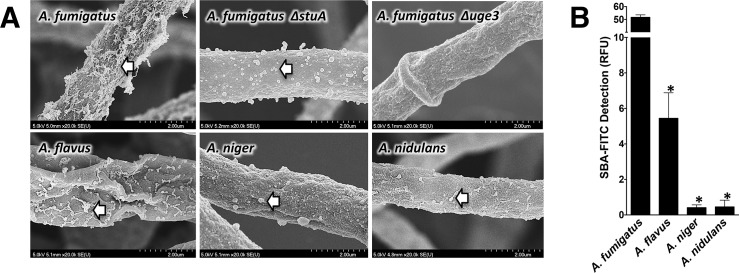
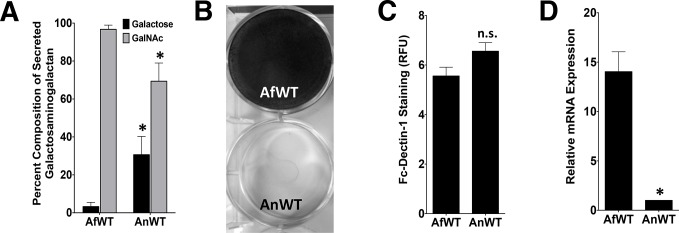
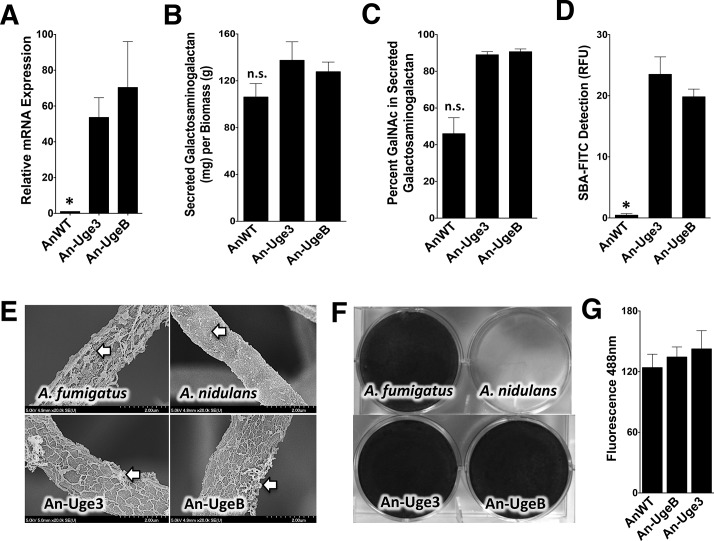
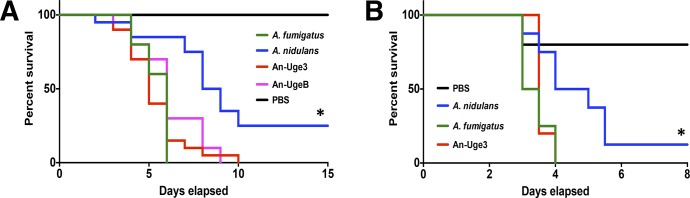
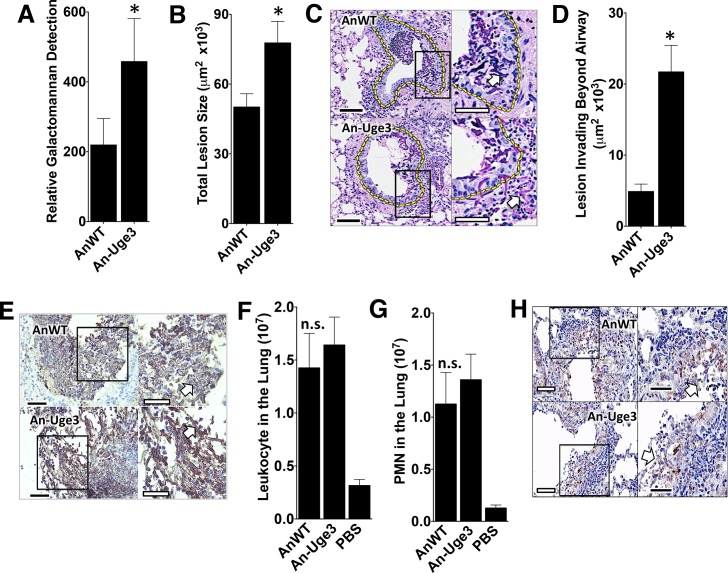
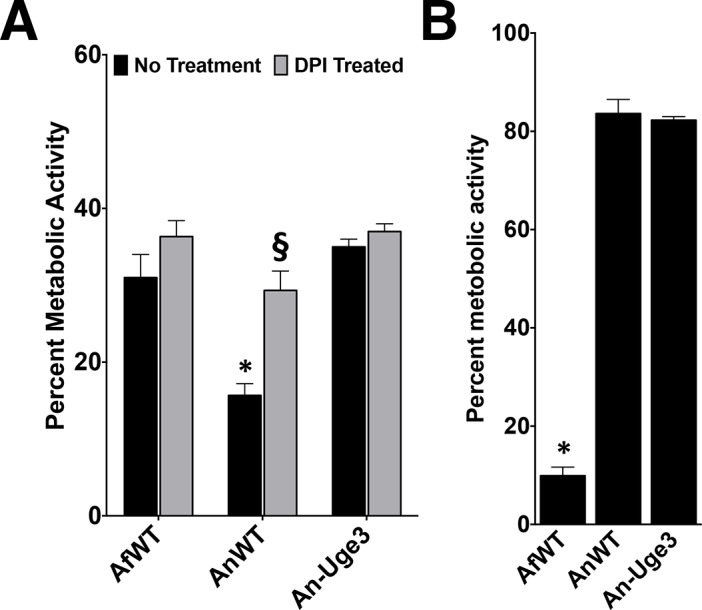
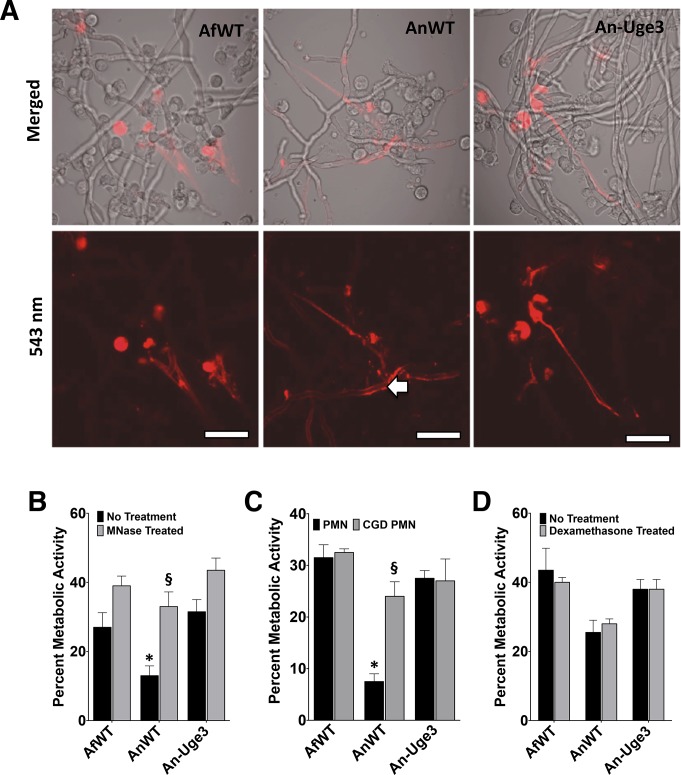
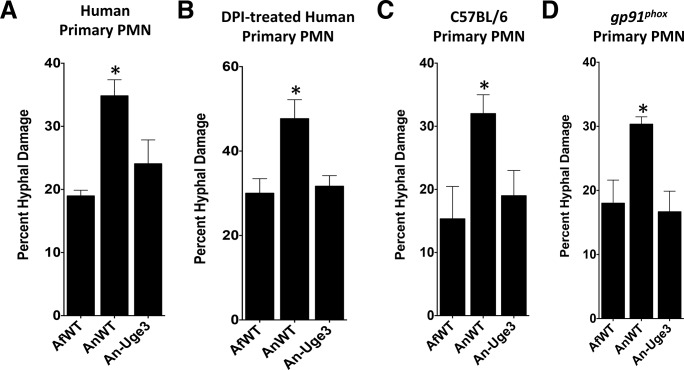
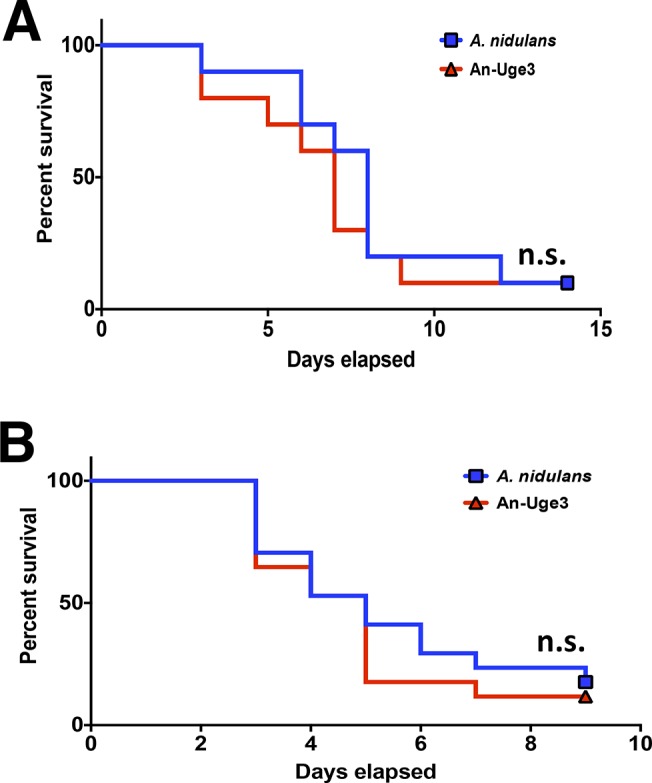
Of the over 250 Aspergillus species, Aspergillus fumigatus accounts for up to 80% of invasive human infections. A. fumigatus produces galactosaminogalactan (GAG), an exopolysaccharide composed of galactose and N-acetyl-galactosamine (GalNAc) that mediates adherence and is required for full virulence. Less pathogenic Aspergillus species were found to produce GAG with a lower GalNAc content than A. fumigatus and expressed minimal amounts of cell wall-bound GAG. Increasing the GalNAc content of GAG of the minimally pathogenic A. nidulans, either through overexpression of the A. nidulans epimerase UgeB or by heterologous expression of the A. fumigatus epimerase Uge3 increased the amount of cell wall bound GAG, augmented adherence in vitro and enhanced virulence in corticosteroid-treated mice to levels similar to A. fumigatus. The enhanced virulence of the overexpression strain of A. nidulans was associated with increased resistance to NADPH oxidase-dependent neutrophil extracellular traps (NETs) in vitro, and was not observed in neutropenic mice or mice deficient in NADPH-oxidase that are unable to form NETs. Collectively, these data suggest that cell wall-bound GAG enhances virulence through mediating resistance to NETs.
Overview
The claims and statistics of this paper haven’t been checked yet.
Free: it reads the open-access text and checks the first 5 claims that cite a source we can check. Create a free account to check every claim.
Integrity signals
Registry
Cites
Statistics
Figures
Verification
Claims the paper makes
The claims and statistics of this paper haven’t been checked yet.
Free: it reads the open-access text and checks the first 5 claims that cite a source we can check. Create a free account to check every claim.
Claims other papers make about this one
Each is checked against this paper’s own text: does it say what the citing paper says it does?
The check wasn’t confident either way, so it gives no verdict — never disputed.
In the citing paper
“It is present either as a galactomannan (GM) bound to cell wall glucans or is anchored to the membrane by glycosylphosphatidylinositol (GPI) (485) or as a single residue at the terminal, nonreducing end of a few proteins (120, 486, 487).”
From Aspergillus fumigatus and Aspergillosis in 2019 (2019) · cites this paper as [485]
Experimental — accuracy not yet measuredThe check wasn’t confident either way, so it gives no verdict — never disputed.
In the citing paper
“In addition, GAG has direct immunosuppressive properties: it triggers polymorphonuclear neutrophil (PMN) apoptosis via an NK cell-dependent mechanism (484) and inhibits PMN chemotaxis (485).”
From Aspergillus fumigatus and Aspergillosis in 2019 (2019) · cites this paper as [485]
Experimental — accuracy not yet measuredIn the citing paper
“In addition, cell wall-associated GAG mediates resistance to NADPH oxidase-dependent neutrophil killing and increased resistance to neutrophil extracellular traps (485).”
From Aspergillus fumigatus and Aspergillosis in 2019 (2019) · cites this paper as [485]
Self-check
Percentages, sums and reported differences re-computed from the paper’s own numbers.
The self-check needs the paper’s full text.
Citations
Cites
Segal, A. W. (2005) · Annual Review of Immunology · doi:10.1146/annurev.immunol.23.021704.115653 · Cited by 1,789
Urban, C. F., Ermert, D., Schmid, M., Abu-Abed, U., Goosmann, C., Nacken, W., Brinkmann, V., Jungblut, P. R., & Zychlinsky, A. (2009) · PLoS Pathogens · doi:10.1371/journal.ppat.1000639 · Cited by 1,673
Killing activity of neutrophils is mediated through activation of proteases by K+ flux
Reeves, E. P., Lu, H., Jacobs, H. L., Messina, C. G. M., Bolsover, S., Gabella, G., Potma, E. O., Warley, A., Roes, J., & Segal, A. W. (2002) · Nature · doi:10.1038/416291a · Cited by 1,153
Pierce, C. G., Uppuluri, P., Tristan, A. R., Wormley, F. L., Mowat, E., Ramage, G., & Lopez-Ribot, J. L. (2008) · Nature Protocols · doi:10.1038/nprot.2008.141 · Cited by 1,041 · cited 1×
“To assess non-oxidative hyphal killing, 6–9 h grown young hyphae of indicated strains were incubated with neutrophil lysates for 12 h, followed by XTT reduction assay, as previously described [48].”
MethodAspergillus flavus: human pathogen, allergen and mycotoxin producer
Hedayati, M. T., Pasqualotto, A. C., Warn, P. A., Bowyer, P., & Denning, D. W. (2007) · Microbiology · doi:10.1099/mic.0.2007/007641-0 · Cited by 964
Restoration of NET formation by gene therapy in CGD controls aspergillosis
Bianchi, M., Hakkim, A., Brinkmann, V., Siler, U., Seger, R. A., Zychlinsky, A., & Reichenbach, J. (2009) · Blood · doi:10.1182/blood-2009-05-221606 · Cited by 593
Vuong, C., Kocianova, S., Voyich, J. M., Yao, Y., Fischer, E. R., DeLeo, F. R., & Otto, M. (2004) · Journal of Biological Chemistry · doi:10.1074/jbc.m411374200 · Cited by 592
Capsule Polysaccharide Mediates Bacterial Resistance to Antimicrobial Peptides
Campos, M. A., Vargas, M. A., Regueiro, V., Llompart, C. M., Albertí, S., & Bengoechea, J. A. (2004) · Infection and Immunity · doi:10.1128/iai.72.12.7107-7114.2004 · Cited by 518
Aspergillus fumigatus—What Makes the Species a Ubiquitous Human Fungal Pathogen?
Kwon-Chung, K. J., & Sugui, J. A. (2013) · PLoS Pathogens · doi:10.1371/journal.ppat.1003743 · Cited by 432
Bruns, S., Kniemeyer, O., Hasenberg, M., Aimanianda, V., Nietzsche, S., Thywißen, A., Jeron, A., Latgé, J.-P., Brakhage, A. A., & Gunzer, M. (2010) · PLoS Pathogens · doi:10.1371/journal.ppat.1000873 · Cited by 421
Self-citation
Research works printed but not linked: 3
- Lamarre C, Beau R, Balloy V, Fontaine T, Wong Sak Hoi J, et al (2009) Galactofuranose attenuates cellular adhesion of Aspergillus fumigatus. Cellular microbiology 11: 1612– 1623. 10.1111/j.1462-5822.2009.01352.x 19563461 · DOI · Paper page
- Liu HZ M.; Zhu S. (2011) Persistence of Antibiotic Resistance and Capsule in E. coli B23 after Removal from Sublethal Kanamycin Treatment JEMI 15: 43– 46.
- Sheppard DC, Rieg G, Chiang LY, Filler SG, Edwards JE Jr., et al (2004) Novel inhalational murine model of invasive pulmonary aspergillosis. Antimicrob Agents Chemother 48: 1908– 1911. 15105158 PMC400587 · DOI · Paper page
Cited by
Aspergillus fumigatus and Aspergillosis in 2019
Latgé, J.-P., & Chamilos, G. (2019) · Clinical Microbiology Reviews · doi:10.1128/cmr.00140-18 · Cited by 1,400
Self-citationNeutrophil Extracellular Traps and Its Implications in Inflammation: An Overview
Delgado-Rizo, V., Martínez-Guzmán, M. A., Iñiguez-Gutierrez, L., García-Orozco, A., Alvarado-Navarro, A., & Fafutis-Morris, M. (2017) · Frontiers in Immunology · doi:10.3389/fimmu.2017.00081 · Cited by 686
Amino sugars as specific indices for fungal and bacterial residues in soil
Joergensen, R. G. (2018) · Biology and Fertility of Soils · doi:10.1007/s00374-018-1288-3 · Cited by 593
Aspergillus fumigatus morphology and dynamic host interactions
van de Veerdonk, F. L., Gresnigt, M. S., Romani, L., Netea, M. G., & Latgé, J.-P. (2017) · Nature Reviews Microbiology · doi:10.1038/nrmicro.2017.90 · Cited by 490
Self-citationLatgé, J.-P., Beauvais, A., & Chamilos, G. (2017) · Annual Review of Microbiology · doi:10.1146/annurev-micro-030117-020406 · Cited by 207
Self-citationLionakis, M. S., Iliev, I. D., & Hohl, T. M. (2017) · JCI Insight · doi:10.1172/jci.insight.93156 · Cited by 153
The Interface between Fungal Biofilms and Innate Immunity
Kernien, J. F., Snarr, B. D., Sheppard, D. C., & Nett, J. E. (2018) · Frontiers in Immunology · doi:10.3389/fimmu.2017.01968 · Cited by 142
Self-citationJohnson, C. J., Cabezas-Olcoz, J., Kernien, J. F., Wang, S. X., Beebe, D. J., Huttenlocher, A., Ansari, H., & Nett, J. E. (2016) · PLOS Pathogens · doi:10.1371/journal.ppat.1005884 · Cited by 133
Fungal Super Glue: The Biofilm Matrix and Its Composition, Assembly, and Functions
Mitchell, K. F., Zarnowski, R., & Andes, D. R. (2016) · PLOS Pathogens · doi:10.1371/journal.ppat.1005828 · Cited by 132
Microbial Biofilms in Pulmonary and Critical Care Diseases
Boisvert, A.-A., Cheng, M. P., Sheppard, D. C., & Nguyen, D. M. (2016) · Annals of the American Thoracic Society · doi:10.1513/annalsats.201603-194fr · Cited by 126
Self-citationBiofilm Exopolysaccharides of Pathogenic Fungi: Lessons from Bacteria
Sheppard, D. C., & Howell, P. L. (2016) · Journal of Biological Chemistry · doi:10.1074/jbc.r116.720995 · Cited by 123
Self-citationDeacetylation of Fungal Exopolysaccharide Mediates Adhesion and Biofilm Formation
Lee, M. J., Geller, A. M., Bamford, N. C., Liu, H., Gravelat, F. N., Snarr, B. D., Le Mauff, F., Chabot, J., Ralph, B., Ostapska, H., et al. (2016) · mBio · doi:10.1128/mbio.00252-16 · Cited by 122
“For pulmonary fungal burden determination, eight 5- to 6-week-old immunosuppressed male BALB/c mice were infected endotracheally with the fungal strains indicated in the figures as previously described (54).”
MethodSelf-citationNeutrophil extracellular traps in fungal infection
Urban, C. F., & Nett, J. E. (2019) · Seminars in Cell & Developmental Biology · doi:10.1016/j.semcdb.2018.03.020 · Cited by 120
Morelli, K. A., Kerkaert, J. D., & Cramer, R. A. (2021) · PLoS Pathogens · doi:10.1371/journal.ppat.1009794 · Cited by 106
Special Issue: Fungal Cell Wall
Beauvais, A., & Latgé, J. (2018) · Journal of Fungi · doi:10.3390/jof4030091 · Cited by 104
Self-citationIsmaila, A. A., Ahmad, K., Siddique, Y., Wahab, M. A. A., Kutawa, A. B., Adamu, A., Zobir, S. A. M., Abdu, A., & Abdullah, S. N. A. (2022) · Horticultural Plant Journal · doi:10.1016/j.hpj.2022.02.004 · Cited by 103
Bamford, N. C., Snarr, B. D., Gravelat, F. N., Little, D. J., Lee, M. J., Zacharias, C. A., Chabot, J. C., Geller, A. M., Baptista, S. D., Baker, P., et al. (2015) · Journal of Biological Chemistry · doi:10.1074/jbc.m115.679050 · Cited by 102
“GAG is required for biofilm formation and adherence to host cells, and it mediates resistance to killing by neutrophil extracellular traps (6, 10).”
BackgroundSelf-citationImmune Recognition of Fungal Polysaccharides
Snarr, B., Qureshi, S., & Sheppard, D. (2017) · Journal of Fungi · doi:10.3390/jof3030047 · Cited by 98
Self-citationMicrobial glycoside hydrolases as antibiofilm agents with cross-kingdom activity
Snarr, B. D., Baker, P., Bamford, N. C., Sato, Y., Liu, H., Lehoux, M., Gravelat, F. N., Ostapska, H., Baistrocchi, S. R., Cerone, R. P., et al. (2017) · Proceedings of the National Academy of Sciences · doi:10.1073/pnas.1702798114 · Cited by 95
“Biofilm formation provides a significant advantage to these organisms because the matrix mediates adherence to host cells (8, 9) and aids in the resistance to both antimicrobial agents (10, 11) and host–immune defenses (12, 13).”
BackgroundSelf-citationGalactosaminogalactan (GAG) and its multiple roles in Aspergillus pathogenesis
Speth, C., Rambach, G., Lass-Flörl, C., Howell, P. L., & Sheppard, D. C. (2019) · Virulence · doi:10.1080/21505594.2019.1568174 · Cited by 89
Self-citationClark, H., Abbondante, S., Minns, M., Greenberg, E. N., Sun, Y., & Pearlman, E. M. (2018) · Frontiers in Immunology · doi:10.3389/fimmu.2018.01182 · Cited by 82
Ortmann, W., & Kolaczkowska, E. (2018) · Cell and Tissue Research · doi:10.1007/s00441-017-2751-4 · Cited by 80
“Streptococcus pneumoniae and S.aureus are good examples of bacteria armed against NETs but fungi (Lee et al. 2015; Rocha et al. 2015; Johnson et al. 2016) and parasites (Guimarães-Costa et al. 2014) have also developed such mechanisms.”
BackgroundHeung, L. J., Wiesner, D. L., Wang, K., Rivera, A., & Hohl, T. M. (2023) · Seminars in Immunology · doi:10.1016/j.smim.2023.101728 · Cited by 80
Mukaremera, L., Lee, K. K., Wagener, J., Wiesner, D. L., Gow, N. A. R., & Nielsen, K. (2018) · The Cell Surface · doi:10.1016/j.tcsw.2017.12.001 · Cited by 79
Recent advances in the understanding of the Aspergillus fumigatus cell wall
Lee, M. J., & Sheppard, D. C. (2016) · Journal of Microbiology · doi:10.1007/s12275-016-6045-4 · Cited by 77
Self-citationRole of Exopolysaccharides in Biofilm Formation
Gupta, P., Pruthi, P. A., & Pruthi, V. (2019) · ACS symposium series · doi:10.1021/bk-2019-1323.ch002 · Cited by 76
Liu, S., Le Mauff, F., Sheppard, D. C., & Zhang, S. (2022) · npj Biofilms and Microbiomes · doi:10.1038/s41522-022-00347-3 · Cited by 72
Self-citationRecent Advances in Diagnosing Chronic Pulmonary Aspergillosis
Takazono, T., & Izumikawa, K. (2018) · Frontiers in Microbiology · doi:10.3389/fmicb.2018.01810 · Cited by 71
“fumigatus, which is the most pathogenic specie among hundreds of Aspergillus species (Lee et al., 2015).”
BackgroundMauff, F. L., Bamford, N. C., Alnabelseya, N., Zhang, Y., Baker, P., Robinson, H. H., Codée, J. D. C., Howell, P. L., & Sheppard, D. C. (2019) · Journal of Biological Chemistry · doi:10.1074/jbc.ra119.008511 · Cited by 71
Self-citationAspergillus fumigatus biology, immunopathogenicity and drug resistance
van de Veerdonk, F. L., Carvalho, A., Wauters, J., Chamilos, G., & Verweij, P. E. (2025) · Nature Reviews Microbiology · doi:10.1038/s41579-025-01180-z · Cited by 70
Combination Therapy to Treat Fungal Biofilm-Based Infections
Tits, J., Cammue, B. P. A., & Thevissen, K. (2020) · International Journal of Molecular Sciences · doi:10.3390/ijms21228873 · Cited by 69
How Environmental Fungi Cause a Range of Clinical Outcomes in Susceptible Hosts
Denham, S. T., Wambaugh, M. A., & Brown, J. C. S. (2019) · Journal of Molecular Biology · doi:10.1016/j.jmb.2019.05.003 · Cited by 68
Unraveling the sugar code: the role of microbial extracellular glycans in plant–microbe interactions
Wanke, A., Malisic, M., Wawra, S., & Zuccaro, A. (2021) · Journal of Experimental Botany · doi:10.1093/jxb/eraa414 · Cited by 68
Gruninger, R. J., Nguyen, T. T. M., Reid, I. D., Yanke, J., Wang, P., Abbott, D. W., Tsang, A., & McAllister, T. A. (2018) · Frontiers in Microbiology · doi:10.3389/fmicb.2018.01581 · Cited by 68
de Assis, L. J., Ulaş, M., Ries, L. N. A., Elramli, N., Bayram, Ö. S., Braus, G. H., Bayram, Ö., & Goldman, G. H. (2018) · mBio · doi:10.1128/mbio.00840-18 · Cited by 65
Tashiro, M., Takazono, T., & Izumikawa, K. (2024) · Therapeutic Advances in Infectious Disease · doi:10.1177/20499361241253751 · Cited by 65
Pathogenic Allodiploid Hybrids of Aspergillus Fungi
Steenwyk, J. L., Lind, A., Ries, L. N. A., dos Reis, T. F., Silva, L. P., Almeida, F. B. D. R., Bastos, R. W., Fraga‐Silva, T. F. D. C., Bonato, V. L. D., Pessoni, A. M., et al. (2020) · Current Biology · doi:10.1016/j.cub.2020.04.071 · Cited by 62
Galactosaminogalactan of Aspergillus fumigatus, a bioactive fungal polymer
Briard, B., Muszkieta, L., Latgé, J.-P., & Fontaine, T. (2016) · Mycologia · doi:10.3852/15-312 · Cited by 61
Self-citationMiyazawa, K., Yoshimi, A., Sano, M., Tabata, F., Sugahara, A., Kasahara, S., Koizumi, A., Yano, S., Nakajima, T., & Abe, K. (2019) · Frontiers in Microbiology · doi:10.3389/fmicb.2019.02090 · Cited by 61
Programmed Cell Death: Central Player in Fungal Infections
Camilli, G., Blagojevic, M., Naglik, J. R., & Richardson, J. P. (2020) · Trends in Cell Biology · doi:10.1016/j.tcb.2020.11.005 · Cited by 60
Bamford, N. C., Mauff, F. L., Subramanian, A. S., Yip, P., Millán, C., Zhang, Y., Zacharias, C. A., Forman, A., Nitz, M., Codée, J. D. C., et al. (2019) · Journal of Biological Chemistry · doi:10.1074/jbc.ra119.009910 · Cited by 59
Self-citationJohnson, C. J., Kernien, J. F., Hoyer, A. R., & Nett, J. E. (2017) · Scientific Reports · doi:10.1038/s41598-017-13588-6 · Cited by 58
Neutrophil extracellular traps in health and disease
Hasler, P., Giaglis, S., & Hahn, S. (2016) · Swiss Medical Weekly · doi:10.4414/smw.2016.14352 · Cited by 53
Biofilm formation in clinically relevant filamentous fungi: a therapeutic challenge
Roudbary, M., Vahedi‐Shahandashti, R., dos Santos, A. L. S., Mohammadi, S. R., Aslani, P., Lass‐Flörl, C., & Rodrigues, C. F. (2021) · Critical Reviews in Microbiology · doi:10.1080/1040841x.2021.1950121 · Cited by 51
A Fragile Balance: Does Neutrophil Extracellular Trap Formation Drive Pulmonary Disease Progression?
Block, H., & Zarbock, A. (2021) · Cells · doi:10.3390/cells10081932 · Cited by 51
The emerging role of neutrophil extracellular traps in fungal infection
Liang, C.-T., Lian, N., & Li, M. (2022) · Frontiers in Cellular and Infection Microbiology · doi:10.3389/fcimb.2022.900895 · Cited by 51
Miyazawa, K., Yoshimi, A., & Abe, K. (2020) · Fungal Biology and Biotechnology · doi:10.1186/s40694-020-00101-4 · Cited by 50
Streptococcus suis Serotype 2 Biofilms Inhibit the Formation of Neutrophil Extracellular Traps
Ma, F., Yi, L., NingWei, Y., Wang, G., Ma, Z., Lin, H., & Fan, H. (2017) · Frontiers in Cellular and Infection Microbiology · doi:10.3389/fcimb.2017.00086 · Cited by 50
Deacetylated microbial biofilm exopolysaccharides: It pays to be positive
Ostapska, H., Howell, P. L., & Sheppard, D. C. (2018) · PLoS Pathogens · doi:10.1371/journal.ppat.1007411 · Cited by 49
Self-citationLagree, K., & Mitchell, A. P. (2017) · Microbiology Spectrum · doi:10.1128/microbiolspec.funk-0024-2016 · Cited by 46
Mei, L., Wang, X., Yin, Y., Tang, G., & Wang, C. (2021) · PLoS Pathogens · doi:10.1371/journal.ppat.1009656 · Cited by 45
Emerging Aspergillus Species Almost Exclusively Associated With Primary Immunodeficiencies
Seyedmousavi, S., Lionakis, M. S., Parta, M., Peterson, S. W., & Kwon-Chung, K. J. (2018) · Open Forum Infectious Diseases · doi:10.1093/ofid/ofy213 · Cited by 43
Fungal cell wall components modulate our immune system
Briard, B., Fontaine, T., Kanneganti, T.-D., Gow, N. A. R., & Papon, N. (2021) · The Cell Surface · doi:10.1016/j.tcsw.2021.100067 · Cited by 42
Self-citationChen, Y., Mauff, F. L., Wang, Y., Lu, R., Sheppard, D. C., Lü, L., & Zhang, S. (2020) · mBio · doi:10.1128/mbio.02329-20 · Cited by 41
Self-citationThe postbiotic potential of Aspergillus oryzae – a narrative review
Seidler, Y., Rimbach, G. H., Lüersen, K., Vinderola, G., & Ipharraguerre, I. R. (2024) · Frontiers in Microbiology · doi:10.3389/fmicb.2024.1452725 · Cited by 38
Fungal Biofilm Composition and Opportunities in Drug Discovery
Reichhardt, C., Stevens, D. A., & Cegelski, L. (2016) · Future Medicinal Chemistry · doi:10.4155/fmc-2016-0049 · Cited by 36
Neutrophil extracellular traps in fungal infections: A seesaw battle in hosts
Zhong, H., Lu, R.-Y., & Wang, Y. (2022) · Frontiers in Immunology · doi:10.3389/fimmu.2022.977493 · Cited by 36
Immune responses to invasive aspergillosis: new understanding and therapeutic opportunities
Hohl, T. M. (2017) · Current Opinion in Infectious Diseases · doi:10.1097/qco.0000000000000381 · Cited by 35
Neutrophil and Eosinophil DNA Extracellular Trap Formation: Lessons From Pathogenic Fungi
Silva, J. C., Thompson‐Souza, G. A., Barroso, M. V., Neves, J. S., & Figueiredo, R. T. (2021) · Frontiers in Microbiology · doi:10.3389/fmicb.2021.634043 · Cited by 33
Mitochondrial Fragmentation in Aspergillus fumigatus as Early Marker of Granulocyte Killing Activity
Ruf, D., Brantl, V., & Wagener, J. (2018) · Frontiers in Cellular and Infection Microbiology · doi:10.3389/fcimb.2018.00128 · Cited by 32
Fungal-Induced Programmed Cell Death
Williams, T. J., Gonzales-Huerta, L. E., & Armstrong-James, D. P. H. (2021) · Journal of Fungi · doi:10.3390/jof7030231 · Cited by 31
Aspergillus-specific antibodies – Targets and applications
Schubert, M., Spiegel, H., Schillberg, S., & Nölke, G. (2018) · Biotechnology Advances · doi:10.1016/j.biotechadv.2018.03.016 · Cited by 30
Aspergillosis and stem cell transplantation: An overview of experimental pathogenesis studies
Al-Bader, N., & Sheppard, D. C. (2016) · Virulence · doi:10.1080/21505594.2016.1231278 · Cited by 29
Self-citationNeutrophil extracellular traps: Modulation mechanisms by pathogens
Gonzalez-Contreras, F. D. J., & Zárate, X. (2022) · Cellular Immunology · doi:10.1016/j.cellimm.2022.104640 · Cited by 29
Gautam, I., Yarava, J. R., Xu, Y., Li, R., Scott, F. J., Mentink‐Vigier, F., Momany, M., Latgé, J., & Wang, T. (2024) · Carbohydrate Polymers · doi:10.1016/j.carbpol.2024.122907 · Cited by 29
Self-citationIt takes a village: Phagocytes play a central role in fungal immunity
Feldman, M. B., Vyas, J. M., & Mansour, M. K. (2018) · Seminars in Cell and Developmental Biology · doi:10.1016/j.semcdb.2018.04.008 · Cited by 28
Reducing Aspergillus fumigatus Virulence through Targeted Dysregulation of the Conidiation Pathway
Stewart, J. I. P., Fava, V. M., Kerkaert, J. D., Subramanian, A. S., Gravelat, F. N., Lehoux, M., Howell, P. L., Cramer, R. A., & Sheppard, D. C. (2020) · mBio · doi:10.1128/mbio.03202-19 · Cited by 28
Self-citationGressler, M., Heddergott, C., N'Go, I. C., Renga, G., Oikonomou, V., Moretti, S., Coddeville, B., Gaifem, J., Silvestre, R., Romani, L., et al. (2019) · Frontiers in Cellular and Infection Microbiology · doi:10.3389/fcimb.2019.00365 · Cited by 27
“GAG mediates the adherence of mycelium to abiotic or host-cell surfaces within biofilm and protects the fungus against host-cell damages (Gravelat et al., 2013; Beaussart et al., 2015; Lee et al., 2015).”
BackgroundSelf-citationBioresources and their significance
Ingle, A. P., Philippini, R. R., Martiniano, S. E., Marcelino, P. R. F., Gupta, I. R., Prasad, S., & da Silva, S. S. (2020) · Elsevier eBooks · doi:10.1016/b978-0-444-64309-4.00001-5 · Cited by 27
How to invade a susceptible host: cellular aspects of aspergillosis
Krappmann, S. (2016) · Current Opinion in Microbiology · doi:10.1016/j.mib.2016.10.002 · Cited by 27
Monoclonal Antibodies and Invasive Aspergillosis: Diagnostic and Therapeutic Perspectives
Lian, X., Scott-Thomas, A., Lewis, J. G., Bhatia, M., MacPherson, S. A., Zeng, Y., & Chambers, S. T. (2022) · International Journal of Molecular Sciences · doi:10.3390/ijms23105563 · Cited by 27
Schoen, T. J., Calise, D. G., Bok, J. W., Giese, M. A., Nwagwu, C. D., Żarnowski, R., Andes, D. R., Huttenlocher, A., & Keller, N. P. (2023) · PLoS Pathogens · doi:10.1371/journal.ppat.1011152 · Cited by 27
Bornhöfft, K. F., & Galuska, S. P. (2019) · Frontiers in Immunology · doi:10.3389/fimmu.2019.00959 · Cited by 26
Kashyap, V. H., Mishra, A., Bordoloi, S., Varma, A. K., & Joshi, N. C. (2023) · Mycoses · doi:10.1111/myc.13619 · Cited by 24
Fermentative Production of Beta‐Glucan: Properties and Potential Applications
Philippini, R. R., Martiniano, S. E., Santos, J. C. F. S., da Silva, S. S., & Chandel, A. K. (2019) · Wiley eBooks · doi:10.1002/9781119434436.ch15 · Cited by 23
Dellière, S., Dannaoui, É., Fieux, M., Bonfils, P., Gricourt, G., Démontant, V., Podglajen, I., Woerther, P., Angebault, C., & Botterel, F. (2021) · Journal of Fungi · doi:10.3390/jof7070550 · Cited by 23
Aspergillus-Derived Galactosaminogalactan Triggers Complement Activation on Human Platelets
Deshmukh, H., Speth, C., Sheppard, D. C., Neurauter, M., Würzner, R., Lass‐Flörl, C., & Rambach, G. (2020) · Frontiers in Immunology · doi:10.3389/fimmu.2020.550827 · Cited by 22
Self-citationAlarmin(g) the innate immune system to invasive fungal infections
Caffrey, A. K., & Obar, J. J. (2016) · Current Opinion in Microbiology · doi:10.1016/j.mib.2016.06.002 · Cited by 22
Kerkaert, J. D., Mauff, F. L., Wucher, B. R., Beattie, S. R., Vesely, E. M., Sheppard, D. C., Nadell, C. D., & Cramer, R. A. (2022) · mBio · doi:10.1128/mbio.02933-21 · Cited by 22
Self-citationHenriet, S., van de Sande, W. W. J., Lee, M. J., Simonetti, E. R., Momany, M., Verweij, P. E., Rijs, A. J. M. M., Ferwerda, G., Sheppard, D. C., de Jonge, M. I., et al. (2016) · Journal of Interferon & Cytokine Research · doi:10.1089/jir.2015.0095 · Cited by 21
Self-citationThe role of Aspergillus fumigatus polysaccharides in host–pathogen interactions
Zacharias, C. A., & Sheppard, D. C. (2019) · Current Opinion in Microbiology · doi:10.1016/j.mib.2019.04.006 · Cited by 21
Self-citationDifferential Kinetics of Aspergillus nidulans and Aspergillus fumigatus Phagocytosis
Gresnigt, M. S., Becker, K. L., Leenders, F., Alonso, M. F., Wang, X., Meis, J. F. G. M., Bain, J. M., Erwig, L. P., & van de Veerdonk, F. L. (2017) · Journal of Innate Immunity · doi:10.1159/000484562 · Cited by 21
Recognition of Fungal Components by the Host Immune System
García-Carnero, L. C., Martínez-Álvarez, J. A., Salazar-García, L. M., Lozoya‐Pérez, N. E., González-Hernández, S. E., & Tamez-Castrellón, A. K. (2019) · Current Protein and Peptide Science · doi:10.2174/1389203721666191231105546 · Cited by 20
Obar, J. J., Hohl, T. M., & Cramer, R. A. (2016) · Cytokine · doi:10.1016/j.cyto.2016.05.015 · Cited by 18
Understanding Aspergillus fumigatus galactosaminogalactan biosynthesis: A few questions remain
Mauff, F. L., & Sheppard, D. C. (2023) · The Cell Surface · doi:10.1016/j.tcsw.2023.100095 · Cited by 18
Self-citationPhilippini, R. R., Martiniano, S. E., Marcelino, P. R. F., Chandel, A. K., Santos, J. C. F. S., & da Silva, S. S. (2021) · Applied Microbiology and Biotechnology · doi:10.1007/s00253-021-11173-6 · Cited by 18
Wong, S. S. W., Venugopalan, L. P., Beaussart, A., Karnam, A., Mohammed, M. R. S., Jayapal, J. M., Bretagne, S., Bayry, J., Lalitha, P., Dharmalingam, K., et al. (2021) · Frontiers in Cellular and Infection Microbiology · doi:10.3389/fcimb.2021.643312 · Cited by 17
Self-citationCell wall of Aspergillus fumigatus: Variability and response to stress
Latgé, J. (2023) · Fungal Biology · doi:10.1016/j.funbio.2023.05.001 · Cited by 17
Self-citationHe, X., Li, S., & Kaminskyj, S. G. W. (2017) · Medical Mycology · doi:10.1093/mmy/myx090 · Cited by 17
Self-citationOliva, R. L., Vogt, C., Bublitz, T. A., Camenzind, T., Dyckmans, J., & Joergensen, R. G. (2024) · ISME Communications · doi:10.1093/ismeco/ycae038 · Cited by 17
Fungi—A Component of the Oral Microbiome Involved in Periodontal Diseases
Karkowska‐Kuleta, J., Satała, D., Smolarz, M., Zawrotniak, M., & Rąpała‐Kozik, M. (2022) · Advances in experimental medicine and biology · doi:10.1007/978-3-030-96881-6_6 · Cited by 16
Brantl, V., Boysen, J. M., Yap, A., Golubtsov, E., Ruf, D., Heinekamp, T., Straßburger, M., Dichtl, K., Haas, H., Hillmann, F., et al. (2021) · mBio · doi:10.1128/mbio.00976-21 · Cited by 16
Lim, J.-Y., Kim, Y. J., Woo, S. A., Jeong, J. W., Lee, Y., Kim, C., & Park, H. (2021) · Frontiers in Cellular and Infection Microbiology · doi:10.3389/fcimb.2021.756206 · Cited by 16
Deshmukh, H., Rambach, G., Sheppard, D. C., Lee, M., Hagleitner, M., Hermann, M., Würzner, R., Lass‐Flörl, C., & Speth, C. (2020) · Microbes and Infection · doi:10.1016/j.micinf.2019.12.004 · Cited by 16
Self-citationHeilig, L., Natasha, F., Trinks, N., Aimanianda, V., Wong, S. S. W., Fontaine, T., Terpitz, U., Strobel, L., Mauff, F. L., Sheppard, D. C., et al. (2024) · PLoS Pathogens · doi:10.1371/journal.ppat.1012315 · Cited by 16
Self-citationUnweaving the NET: Microbial strategies for neutrophil extracellular trap evasion
Janssen, L., Muller, H. S., & Martins, V. D. P. (2022) · Microbial Pathogenesis · doi:10.1016/j.micpath.2022.105728 · Cited by 15
Exopolysaccharides and Biofilms
Mauff, F. L. (2020) · Current topics in microbiology and immunology · doi:10.1007/82_2020_199 · Cited by 15
Ostapska, H., Raju, D., Corsini, R., Lehoux, M., Lacdao, I., Gilbert, S., Sivarajah, P., Bamford, N. C., Baker, P., Gravelat, F. N., et al. (2022) · Antimicrobial Agents and Chemotherapy · doi:10.1128/aac.00052-22 · Cited by 15
Self-citationChen, Y., Stewart, J. I. P., Liu, S., Sheppard, D. C., Lu, L., & Zhang, S. (2022) · Applied and Environmental Microbiology · doi:10.1128/aem.01535-21 · Cited by 14
Self-citationInborn Errors of Immunity Causing Pediatric Susceptibility to Fungal Diseases
Olbrich, P., & Vinh, D. C. (2023) · Journal of Fungi · doi:10.3390/jof9020149 · Cited by 14
Self-citation
Metadata
- Authors
- Lee, M. J., Liu, H., Barker, B. M., Snarr, B. D., Gravelat, F. N., Al Abdallah, Q., Gavino, C., Baistrocchi, S. R., Ostapska, H., Xiao, T., Ralph, B., Solis, N. V., Lehoux, M., Baptista, S. D., Thammahong, A., Cerone, R. P., Kaminskyj, S. G. W., Guiot, M.-C., Latgé, J.-P., Fontaine, T., Vinh, D. C., Filler, S. G., & Sheppard, D. C.
- Affiliations
- McGill University (CA)
- University of California, Los Angeles (US)
- Montana State University (US)
- McGill University Health Centre (CA)
- Dartmouth College (US)
- University of Saskatchewan (CA)
- Montreal Neurological Institute and Hospital (CA)
- Institut Pasteur (FR)
- Corresponding author
- Sheppard, Donald C.
- ORCID
- Venue
- PLOS Pathogens
- Publisher
- Public Library of Science (PLoS)
- Published
- 2015-10-22
- Volume
- 11
- Issue
- 10
- Pages
- e1005187
- ISSN
- 1553-7366 (ISSN-L)
- 1553-7374
- PMC
- PMC4619649
- OpenAlex
- W2158923767
- Cited by
- 180
- References
- 45
- Citations by year
- 2026: 10 · 2025: 14 · 2024: 11 · 2023: 21 · 2022: 14 · 2021: 23 · 2020: 19 · 2019: 16 · 2018: 17 · 2017: 18 · 2016: 16 · 2015: 1
- FWCI
- 13.51
- Type
- journal article
- Language
- en
- Open access
- gold
- doi.org
- Licence
- Locations
- PLoS Pathogens (publishedVersion, cc-by)
- PubMed Central (publishedVersion, cc-by)
- PubMed (publishedVersion)
- HAL (submittedVersion, cc-by)
- eScholarship@McGill (McGill) (submittedVersion)
- DOAJ (DOAJ: Directory of Open Access Journals) (submittedVersion, cc-by-sa)
- eScholarship (California Digital Library) (submittedVersion)
- eScholarship (California Digital Library) (submittedVersion, cc-by)
- Figshare (submittedVersion, cc-by)
- eScholarship@McGill (McGill) (submittedVersion, cc-by)
- Funders
- Dartmouth College
- McGill University
- McGill University Health Centre
- University of Aberdeen
- Radboud Universiteit
- National Institutes of Health (1ul1rr033176-01, UL1TR000124)
- Canadian Institutes of Health Research
- National Institute of Allergy and Infectious Diseases (R56AI111836, R01AI073829)
- Topics
- Health Sciences › Medicine › Infectious Diseases › Antifungal resistance and susceptibility
- Life Sciences › Biochemistry, Genetics and Molecular Biology › Molecular Biology › Fungal and yeast genetics research
- Life Sciences › Immunology and Microbiology › Immunology › Neutrophil, Myeloperoxidase and Oxidative Mechanisms
- Keywords
- galactosaminogalactan, exopolysaccharides, Aspergillus fumigatus, Aspergillus nidulans, fungal virulence, N-acetylgalactosamine, fungal adhesion, neutrophil extracellular traps, NADPH oxidase, invasive aspergillosis
- MeSH terms
- Animals, Aspergillus, Mice, Inbred BALB C, Mice, Inbred C57BL, Neutrophils, Polysaccharides, Virulence, Biofilms, Mice, Extracellular Traps
About these checks
Registry, retraction, Cites and statistics results are computed, not judged, with one exception: a printed reference that no index lists is read once by a model before it counts as a citation error. Claims are extracted by a model and kept only when their quote appears verbatim in the text; each cited source is then checked, with a model’s help, for whether it says what the claim relies on. Those verdicts can be wrong — read the claim’s quote and the cited source before relying on one.
Statistics and arithmetic are recomputed, not judged.
Confidence bands are shown only for fields calibrated on our annotated test set. None is calibrated yet, so no band is shown.
What counts as a claim ›How we measure confidence ›How we check this ›
Are you an author, or do you see a problem with this page? Request a review
Data sources
Bibliographic data: Semantic Scholar, OpenAlex, Crossref.
Contains information from the Semantic Scholar Academic Graph Datasets, made available under the ODC Attribution License (ODC-BY 1.0).
Semantic Scholar’s data is described in: Kinney, R., et al. (2023). The Semantic Scholar Open Data Platform. arXiv:2301.10140.
