

FleA Expression in Aspergillus fumigatus Is Recognized by Fucosylated Structures on Mucins and Macrophages to Prevent Lung Infection
Open accessThe DOI matches its Crossref record; 45 of the 45 references it cites were found in a registry or an index.
Abstract
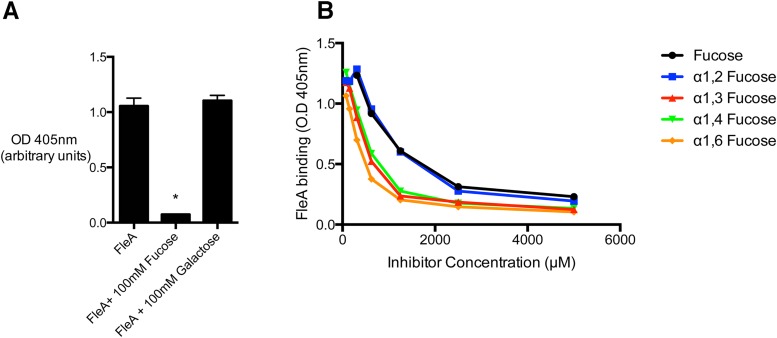
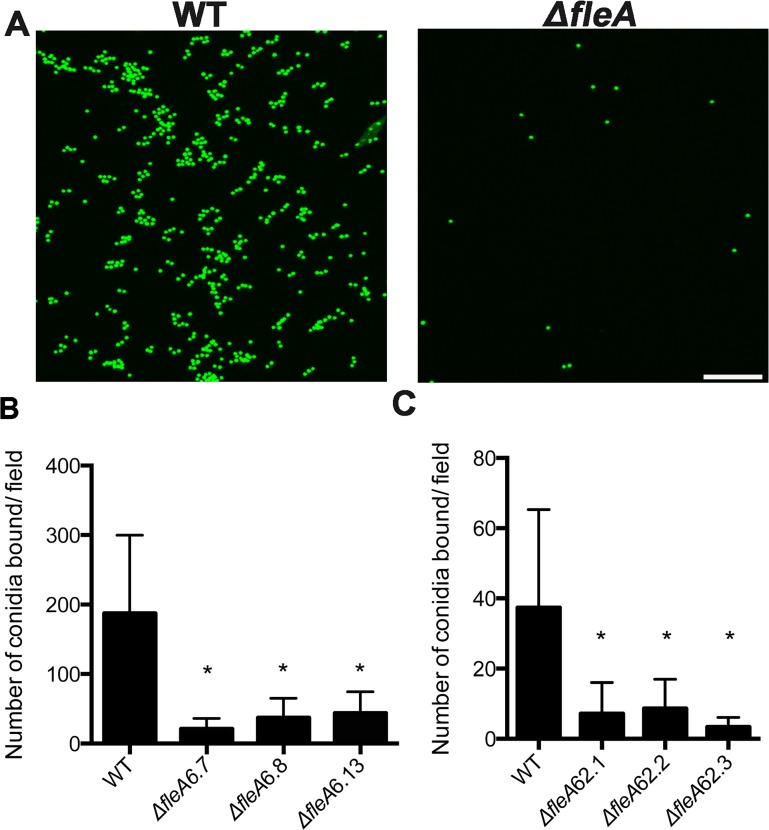
The immune mechanisms that recognize inhaled Aspergillus fumigatus conidia to promote their elimination from the lungs are incompletely understood. FleA is a lectin expressed by Aspergillus fumigatus that has twelve binding sites for fucosylated structures that are abundant in the glycan coats of multiple plant and animal proteins. The role of FleA is unknown: it could bind fucose in decomposed plant matter to allow Aspergillus fumigatus to thrive in soil, or it may be a virulence factor that binds fucose in lung glycoproteins to cause Aspergillus fumigatus pneumonia. Our studies show that FleA protein and Aspergillus fumigatus conidia bind avidly to purified lung mucin glycoproteins in a fucose-dependent manner. In addition, FleA binds strongly to macrophage cell surface proteins, and macrophages bind and phagocytose fleA-deficient (∆fleA) conidia much less efficiently than wild type (WT) conidia. Furthermore, a potent fucopyranoside glycomimetic inhibitor of FleA inhibits binding and phagocytosis of WT conidia by macrophages, confirming the specific role of fucose binding in macrophage recognition of WT conidia. Finally, mice infected with ΔfleA conidia had more severe pneumonia and invasive aspergillosis than mice infected with WT conidia. These findings demonstrate that FleA is not a virulence factor for Aspergillus fumigatus. Instead, host recognition of FleA is a critical step in mechanisms of mucin binding, mucociliary clearance, and macrophage killing that prevent Aspergillus fumigatus pneumonia.
Overview
The claims and statistics of this paper haven’t been checked yet.
Free: it reads the open-access text and checks the first 5 claims that cite a source we can check. Create a free account to check every claim.
Integrity signals
Registry
Cites
Statistics
Figures
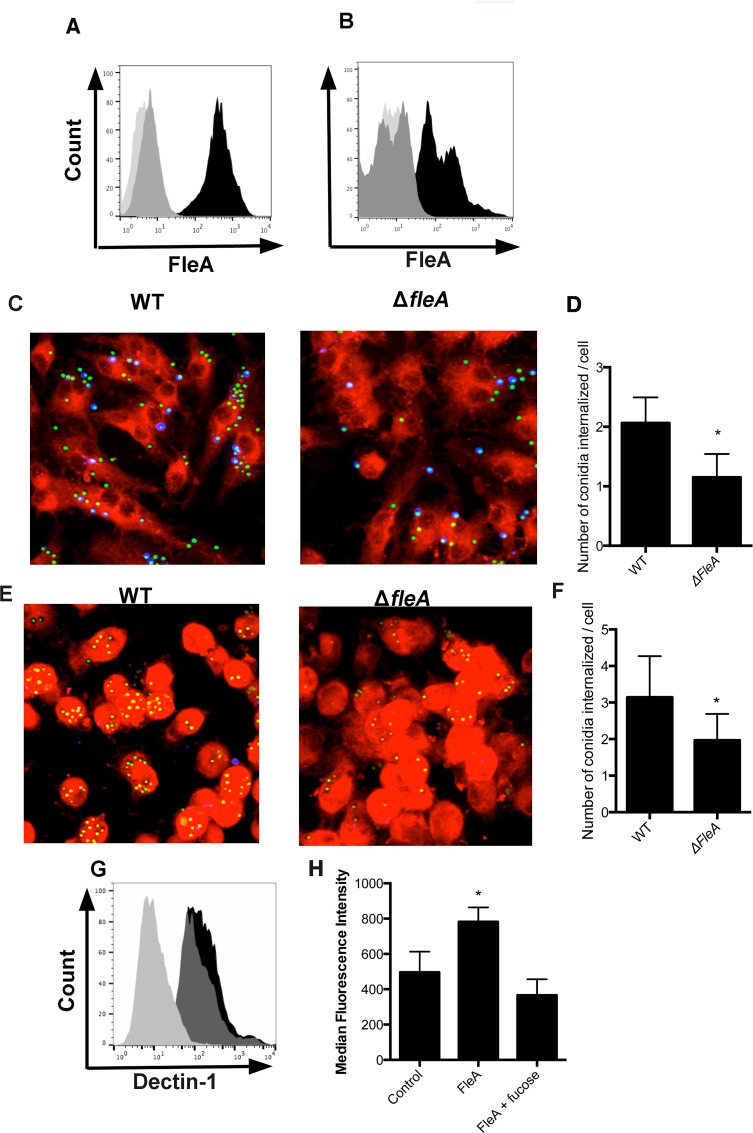
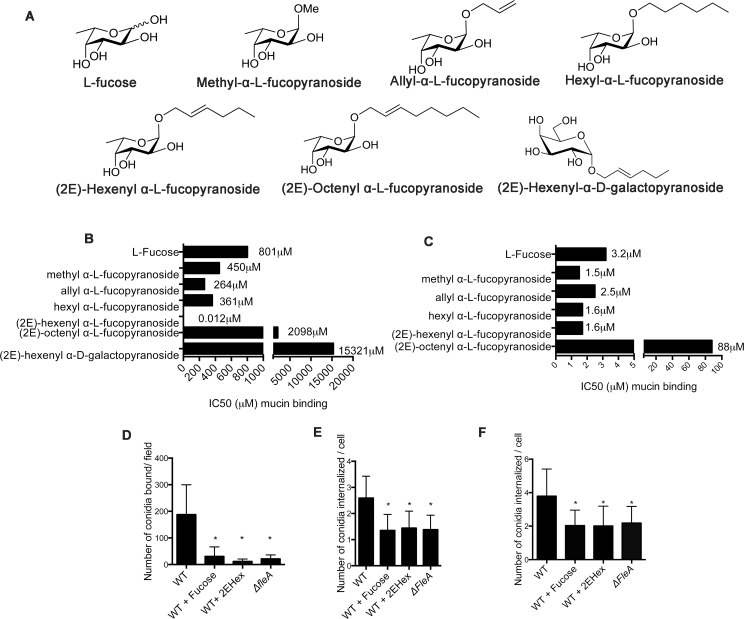
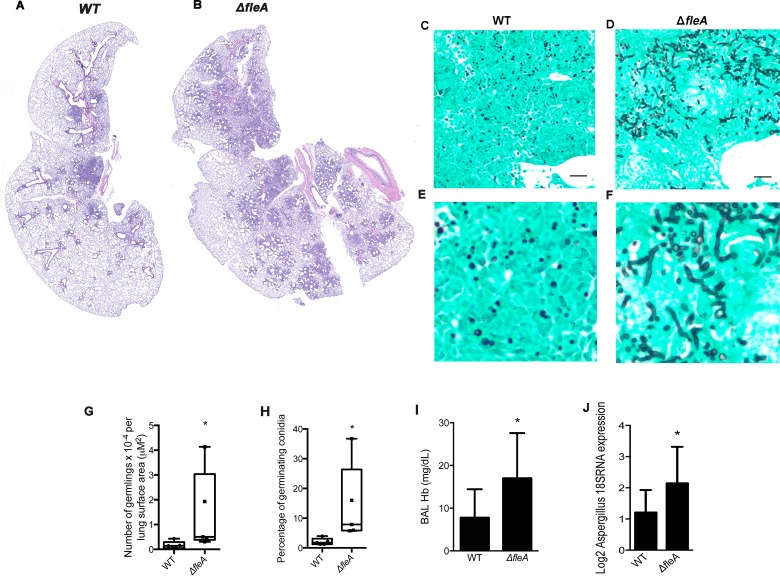
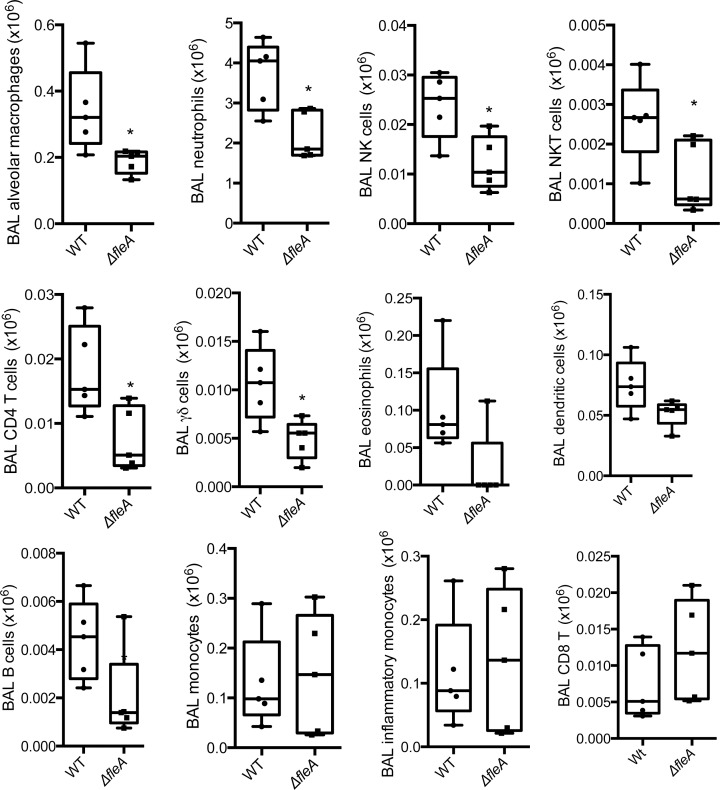
Verification
Claims the paper makes
The claims and statistics of this paper haven’t been checked yet.
Free: it reads the open-access text and checks the first 5 claims that cite a source we can check. Create a free account to check every claim.
Claims other papers make about this one
Each is checked against this paper’s own text: does it say what the citing paper says it does?
The source backs part of the claim, not all of it — or backs it for a different population, condition or comparison.
In the citing paper
“Despite the lack of specificity of the phagocytosis process, certain macrophage receptors have been shown to facilitate engulfment of resting and germinating conidia: the C-type lectin II receptor DC-SIGN (CD209) (235), Dectin-1 (236), an unidentified macrophage glycoprotein-scavenger receptor recognizing the Aspergillus FleA fucose-binding lectin (214), and soluble pattern recognition receptors (”
From Aspergillus fumigatus and Aspergillosis in 2019 (2019) · cites this paper as [214]
Experimental — accuracy not yet measuredIn the citing paper
“Due to their small size, some of the inhaled Aspergillus conidia can reach and interact with the lung alveolar epithelial cells (ECs) (214).”
From Aspergillus fumigatus and Aspergillosis in 2019 (2019) · cites this paper as [214]
In the citing paper
“Importantly, most inhaled conidia do not come in contact with the alveolar epithelium, as they are eliminated by mucociliary clearance (214).”
From Aspergillus fumigatus and Aspergillosis in 2019 (2019) · cites this paper as [214]
Self-check
Percentages, sums and reported differences re-computed from the paper’s own numbers.
The self-check needs the paper’s full text.
Citations
Cites
SignalP 4.0: discriminating signal peptides from transmembrane regions
Petersen, T. N., Brunak, S., von Heijne, G., & Nielsen, H. (2011) · Nature Methods · doi:10.1038/nmeth.1701 · Cited by 8,847
Dectin-1 is required for β-glucan recognition and control of fungal infection
Taylor, P. R., Tsoni, S. V., Willment, J. A., Dennehy, K. M., Rosas, M., Findon, H., Haynes, K., Steele, C., Botto, M., Gordon, S., et al. (2007) · Nature Immunology · doi:10.1038/ni1408 · Cited by 1,161 · cited 1×
“fumigatus does not cast any doubt on the validity of the well established role for β-glucan/Dectin-1 interactions [35].”
BackgroundPathogenesis of Aspergillus fumigatus in Invasive Aspergillosis
Dagenais, T. R. T., & Keller, N. P. (2009) · Clinical Microbiology Reviews · doi:10.1128/cmr.00055-08 · Cited by 993 · cited 1×
“fumigatus) is an ubiquitous opportunistic pathogen that causes invasive and often fatal lung infection, particularly in immunocompromised patients [1].”
BackgroundSelf-citationStructure and Function of the Polymeric Mucins in Airways Mucus
Thornton, D. J., Rousseau, K., & McGuckin, M. A. (2008) · Annual Review of Physiology · doi:10.1146/annurev.physiol.70.113006.100702 · Cited by 823 · cited 3×
“1 MUC5B, NM_002458.”
BackgroundMuc5b is required for airway defence
Roy, M. G., Livraghi-Butrico, A., Fletcher, A. A., McElwee, M. M., Evans, S. E., Boerner, R. M., Alexander, S. N., Bellinghausen, L. K., Song, A. S., Petrova, Y. M., et al. (2014) · Nature · doi:10.1038/nature12807 · Cited by 764
Halide ion catalyzed glycosidation reactions. Syntheses of .alpha.-linked disaccharides
Lemieux, R. U., Hendriks, K. B., Stick, R. V., & James, K. (1975) · Journal of the American Chemical Society · doi:10.1021/ja00847a032 · Cited by 716
Luther, K., Torosantucci, A., Brakhage, A. A., Heesemann, J., & Ebel, F. (2007) · Cellular Microbiology · doi:10.1111/j.1462-5822.2006.00796.x · Cited by 582
Bouckaert, J., Berglund, J., Schembri, M., De Genst, E., Cools, L., Wuhrer, M., Hung, C., Pinkner, J., Slättegård, R., Zavialov, A., et al. (2005) · Molecular Microbiology · doi:10.1111/j.1365-2958.2004.04415.x · Cited by 447
Self-citationShimizu, K., & Keller, N. P. (2001) · Genetics · doi:10.1093/genetics/157.2.591 · Cited by 445
Self-citationAspergillus fumigatus Triggers Inflammatory Responses by Stage-Specific β-Glucan Display
Hohl, T. M., Van Epps, H. L., Rivera, A., Morgan, L. A., Chen, P. L., Feldmesser, M., & Pamer, E. G. (2005) · PLoS Pathogens · doi:10.1371/journal.ppat.0010030 · Cited by 428 · cited 1×
“β-glucan is abundant on swollen conidia and hyphae, and Dectin-1 binds βglucan on swollen conidia to trigger a robust host defense response [36].”
Background
Cited by
Aspergillus fumigatus and Aspergillosis in 2019
Latgé, J.-P., & Chamilos, G. (2019) · Clinical Microbiology Reviews · doi:10.1128/cmr.00140-18 · Cited by 1,400
Latgé, J.-P., Beauvais, A., & Chamilos, G. (2017) · Annual Review of Microbiology · doi:10.1146/annurev-micro-030117-020406 · Cited by 207
Pathogenesis of Respiratory Viral and Fungal Coinfections
Salazar, F., Bignell, E., Brown, G. D., Cook, P. C., & Warris, A. (2021) · Clinical Microbiology Reviews · doi:10.1128/cmr.00094-21 · Cited by 178
Lionakis, M. S., Iliev, I. D., & Hohl, T. M. (2017) · JCI Insight · doi:10.1172/jci.insight.93156 · Cited by 153
Histo-blood group antigens as mediators of infections
Heggelund, J. E., Varrot, A., Imberty, A., & Krengel, U. (2017) · Current Opinion in Structural Biology · doi:10.1016/j.sbi.2017.04.001 · Cited by 101
Control of lung defence by mucins and macrophages: ancient defence mechanisms with modern functions
Janssen, W. J., Stefanski, A. L., Bochner, B. S., & Evans, C. M. (2016) · European Respiratory Journal · doi:10.1183/13993003.00120-2015 · Cited by 93
Anti-Aspergillus Activities of the Respiratory Epithelium in Health and Disease
Bertuzzi, M., Hayes, G., Icheoku, U., Van Rhijn, N., Denning, D., Osherov, N., & Bignell, E. (2018) · Journal of Fungi · doi:10.3390/jof4010008 · Cited by 64
“fumigatus to host cells, such as epithelial cells and macrophages, via membrane-tethered mucins [48].”
BackgroundMenacing Mold: Recent Advances in Aspergillus Pathogenesis and Host Defense
Tischler, B. Y., & Hohl, T. M. (2019) · Journal of Molecular Biology · doi:10.1016/j.jmb.2019.03.027 · Cited by 60
Desoubeaux, G., & Cray, C. (2017) · Frontiers in Microbiology · doi:10.3389/fmicb.2017.00841 · Cited by 55
“…Tsitsigiannis et al., 2005; Cramer et al., 2006; Romano et al., 2006; Dagenais et al., 2008; Ma et al., 2008; Qiao et al., 2008; Lee et al., 2009; Han et al., 2010; Leal et al., 2010, 2012, 2013; Jhingran et al., 2012; Sekonyela et al., 2013; Taylor et al., 2014b; Kerr et al., 2016) and Af293.”
BackgroundInfluentialCai, Z., Du, W., Zeng, Q., Long, N., Dai, C., & Lu, L. (2017) · Fungal Genetics and Biology · doi:10.1016/j.fgb.2017.08.003 · Cited by 49
A possible role for fumagillin in cellular damage during host infection by Aspergillus fumigatus
Guruceaga, X., Ezpeleta, G., Mayayo, E., Sueiro-Olivares, M., Abad-Diaz-De-Cerio, A., Aguirre Urízar, J. M., Liu, H. G., Wiemann, P., Bok, J. W., Filler, S. G., et al. (2018) · Virulence · doi:10.1080/21505594.2018.1526528 · Cited by 44
“mechanisms for conidia recognition and removal are incompletely understood [8].”
BackgroundSelf-citationRichard, N., Marti, L., Varrot, A., Guillot, L., Guitard, J., Hennequin, C., Imberty, A., Corvol, H., Chignard, M., & Balloy, V. (2018) · Scientific Reports · doi:10.1038/s41598-018-33902-0 · Cited by 44
Bronchial Epithelial Cells on the Front Line to Fight Lung Infection-Causing Aspergillus fumigatus
Bigot, J., Guillot, L., Guitard, J., Ruffin, M., Corvol, H., Balloy, V., & Hennequin, C. (2020) · Frontiers in Immunology · doi:10.3389/fimmu.2020.01041 · Cited by 44
Conidial surface proteins at the interface of fungal infections
Blango, M. G., Kniemeyer, O., & Brakhage, A. A. (2019) · PLoS Pathogens · doi:10.1371/journal.ppat.1007939 · Cited by 43
Steenwyk, J. L., Mead, M. E., de Castro, P. A., Valero, C., Damásio, A., Santos, R., LaBella, A. L., Li, Y., Knowles, S. L., Raja, H. A., et al. (2021) · Microbiology Spectrum · doi:10.1128/spectrum.00010-21 · Cited by 43
“FLEA null mutants cause more severe disease because FleA binds to macrophages and therefore is critical for host recognition, clearance, and macrophage killing (59).”
BackgroundArchitecture and Evolution of Blade Assembly in β-propeller Lectins
Bonnardel, F., Kumar, A., Wimmerová, M., Lahmann, M., Pérez, S., Varrot, A., Lisacek, F., & Imberty, A. (2019) · Structure · doi:10.1016/j.str.2019.02.002 · Cited by 40
Aspergillosis and the role of mucins in cystic fibrosis
Cowley, A. C., Thornton, D. J., Denning, D. W., & Horsley, A. R. (2016) · Pediatric Pulmonology · doi:10.1002/ppul.23618 · Cited by 40
“fumigatus infection.(51) Thus, binding of inhaled pathogens to mucins may normally act as a protective mechanism, ensuring they are trapped within the mucus layer and unable to reach the underlying epithelium, before being removed by mucociliary clearance (Fig.”
BackgroundGoyard, D., Baldoneschi, V., Varrot, A., Fiore, M., Imberty, A., Richichi, B., Renaudet, O., & Nativi, C. (2017) · Bioconjugate Chemistry · doi:10.1021/acs.bioconjchem.7b00616 · Cited by 38
Mucociliary Defense: Emerging Cellular, Molecular, and Animal Models
Benam, K. H., Vladar, E. K., Janssen, W. J., & Evans, C. M. (2018) · Annals of the American Thoracic Society · doi:10.1513/annalsats.201806-439aw · Cited by 34
Aspergillus fumigatus—Host Interactions Mediating Airway Wall Remodelling in Asthma
Namvar, S., Labram, B., Rowley, J. E., & Herrick, S. E. (2022) · Journal of Fungi · doi:10.3390/jof8020159 · Cited by 32
“fumigatus conidia, binds to purified mucin glycoproteins and so may facilitate this event [48].”
BackgroundSýkorová, P., Novotná, J., Demo, G., Pompidor, G., Dubská, E., Komárek, J., Fujdiarová, E., Houser, J., Hároníková, L., Varrot, A., et al. (2019) · International Journal of Biological Macromolecules · doi:10.1016/j.ijbiomac.2019.10.200 · Cited by 31
Antivirulence and avirulence genes in human pathogenic fungi
Siscar-Lewin, S., Hube, B., & Brunke, S. (2019) · Virulence · doi:10.1080/21505594.2019.1688753 · Cited by 30
“fumigatus and other pathogenic fungi have evolved to express such a protein, but it is thought that FleA can help to grow on carbohydrate-rich surfaces [64].”
BackgroundFungal-mediated lung allergic airway disease: The critical role of macrophages and dendritic cells
Furlong-Silva, J., & Cook, P. C. (2022) · PLoS Pathogens · doi:10.1371/journal.ppat.1010608 · Cited by 25
Lipoxygenase Activity Accelerates Programmed Spore Germination in Aspergillus fumigatus
Fischer, G. J., Bacon, W. C., Yang, J., Palmer, J. M., Dagenais, T. R. T., Hammock, B. D., & Keller, N. P. (2017) · Frontiers in Microbiology · doi:10.3389/fmicb.2017.00831 · Cited by 24
“, 2007), mannans (Willment and Brown, 2008), and lectins (Kerr et al., 2016).”
BackgroundSelf-citationLehot, V., Brissonnet, Y., Dussouy, C., Brument, S., Cabanettes, A., Gillon, É., Deniaud, D., Varrot, A., Pape, P. L., & Gouin, S. G. (2018) · Chemistry - A European Journal · doi:10.1002/chem.201803602 · Cited by 24
Nakanishi, T., Cerani, A., Forgetta, V., Zhou, S., Allen, R. J., Leavy, O. C., Koido, M., Assayag, D., Jenkins, G. R., Wain, L. V., et al. (2021) · European Respiratory Journal · doi:10.1183/13993003.03979-2020 · Cited by 22
“PTS domain fucosylation in mucins could influence both the affinity to bind microorganisms and mucociliary clearance, consequently affecting the innate immune response and susceptibility to infections [52 – 54].”
Respiratory Epithelial Cells: More Than Just a Physical Barrier to Fungal Infections
Barros, B. C. S. C., Almeida, B. R., Barros, D. T. L., Toledo, M. S., & Suzuki, É. (2022) · Journal of Fungi · doi:10.3390/jof8060548 · Cited by 21
“[23], for example, have indicated that A.”
Novel Treatment Approach for Aspergilloses by Targeting Germination
Verburg, K., van Neer, J., Duca, M., & de Cock, H. (2022) · Journal of Fungi · doi:10.3390/jof8080758 · Cited by 22
“FleA was also found to be upregulated during the transition into isotropic growth [182].”
BackgroundObar, J. J., Hohl, T. M., & Cramer, R. A. (2016) · Cytokine · doi:10.1016/j.cyto.2016.05.015 · Cited by 18
“fumigatus FleA contributes to fungal clearance and control in vivo [61].”
BackgroundBallal, S., & Inamdar, S. R. (2018) · Archives of Microbiology · doi:10.1007/s00203-018-1487-1 · Cited by 15
Zhang, X., Wang, C., Qing, H., Chen, X., Li, G., & Yu, G. (2021) · Glycoconjugate Journal · doi:10.1007/s10719-021-10014-y · Cited by 14
Proteomic analysis of Aspergillus fumigatus – clinical implications
Moloney, N. M., Owens, R. A., & Doyle, S. (2016) · Expert Review of Proteomics · doi:10.1080/14789450.2016.1203783 · Cited by 13
“Hence, FleA is in fact likely not a virulence factor but a PAMP important in early host recognition of inhaled conidia [56].”
BackgroundRequirement for Fucosyltransferase 2 in Allergic Airway Hyperreactivity and Mucus Obstruction
Hara, N., Raclawska, D. S., Morgan, L. E., Needell, J. C., Dao, L., Kato, A., Jaramillo, A. M., Hume, P. S., Holguín, F., Janssen, W. J., et al. (2024) · American Journal of Respiratory Cell and Molecular Biology · doi:10.1165/rcmb.2024-0216oc · Cited by 12
Martínez-Alarcón, D., Balloy, V., Bouchara, J., Pieters, R. J., & Varrot, A. (2021) · Scientific Reports · doi:10.1038/s41598-021-95008-4 · Cited by 11
Sakai, K., Hiemori, K., Tateno, H., Hirabayashi, J., & Gonoi, T. (2017) · Medical Mycology · doi:10.1093/mmy/myx163 · Cited by 11
CHARACTERISTICS AND FUNCTIONS OF HYDROPHOBINS AND THEIR USE IN MANIFOLD INDUSTRIES
Tymiński, Ł. P., Znajewska, Z., & Dąbrowska, G. B. (2018) · Postępy Mikrobiologii - Advancements of Microbiology · doi:10.21307/pm-2018.57.4.374 · Cited by 11
“Rodlet layers play the key role in masking the immunogenicity of spores [22, 32].”
BackgroundUsefulness of animal models of aspergillosis in studying immunity against Aspergillus infections
Mirkov, I. I., Aleksandrov, A. P., Lazovic, B., Glamočlija, J., & Kataranovski, M. V. (2019) · Journal de Mycologie Médicale · doi:10.1016/j.mycmed.2019.01.006 · Cited by 10
Sensing the threat posed by Aspergillus infection
Obar, J. J. (2020) · Current Opinion in Microbiology · doi:10.1016/j.mib.2020.08.004 · Cited by 10
Bioinformatics study of lectins : new classification and prediction in genomes
Bonnardel, F. (2021) · theses.fr (ABES) · doi:10.70675/f89ebb4cz27b2z4416z903azc528f76d3540 · Cited by 9
Rubeena, K. A., Abraham, A., & Aarif, K. M. (2021) · Springer eBooks · doi:10.1007/978-981-16-7462-4_7 · Cited by 7
Gholami‐Shabani, M., Zamani, S., Moosa, H., Shams‐Ghahfarokhi, M., Jamzivar, F., & Razzaghi‐Abyaneh, M. (2018) · Elsevier eBooks · doi:10.1016/b978-0-12-813806-9.00012-3 · Cited by 6
Dussouy, C., Lalys, P.-A., Cabanettes, A., Lehot, V., Deniaud, D., Gillon, É., Balloy, V., Varrot, A., & Gouin, S. G. (2021) · Organic & Biomolecular Chemistry · doi:10.1039/d1ob00152c · Cited by 5
Could the Lung Be a Gateway for Amphotericin B to Attack the Army of Fungi?
Patricio, B. F. D. C., Pereira, J. O. D. S. L., Sarcinelli, M. A., de Moraes, B. P. T., Rocha, H. V. A., & Gonçalves-de-Albuquerque, C. F. (2022) · Pharmaceutics · doi:10.3390/pharmaceutics14122707 · Cited by 5
“For instance, the fucose-specific lectin of Aspergillus fumigatus (FleA), together with mucins, favors mucociliary clearance [44], and the galactosaminogalactan (GAG) adhesin binds to the epithelium [45].”
BackgroundMorrin, S. T., Irwin, J. A., & Hickey, R. M. (2018) · Elsevier eBooks · doi:10.1016/b978-0-12-811440-7.00008-9 · Cited by 4
Fungal lectins in biomedical research
Singh, R. S., & Bhari, R. (2025) · Elsevier eBooks · doi:10.1016/b978-0-443-13263-6.00011-0 · Cited by 2
Dutta, O., Masso-Silva, J. A., Wang, K., & Rivera, A. (2017) · Current Pharmacology Reports · doi:10.1007/s40495-017-0111-4 · Cited by 2
“Recently, a fucose-binding lectin (FleA) on the surface of Aspergillus has been shown to strongly bind to surface receptors on macrophages [66].”
BackgroundSerum galactomannan detection for early diagnosis of invasive pulmonary aspergillosis in children
Chen, N., Gao, W., Zhou, Y., & Zhou, M. (2017) · Biomedical Research-tokyo · Cited by 1
Extracellular Proteins and Their Roles in Aspergillus fumigatus Pathogenesis
Jia, L., & Brakhage, A. A. (2024) · The mycota · doi:10.1007/978-3-031-64853-3_4 · Cited by 1
Caracterização molecular de um receptor acoplado a uma proteína G (GPCR) de Aspergillus fumigatus
Filho, A. P. D. C. (2021) · Digital Library of Theses and Dissertations (Universidade de São Paulo) · doi:10.11606/d.17.2021.tde-08092021-113412 · Cited by 1
Duca, M. (2023) · theses.fr (ABES) · doi:10.33540/1692 · Cited by 1
Rodrigues, I. P. D. S. (2024) · Digital Library of Theses and Dissertations (Universidade de São Paulo) · doi:10.11606/d.60.2024.tde-29042025-113618
Mohammed, R. J., Ali, S., & Ahmed, A. A. (2025) · International Journal of Medical Science and Dental Health · doi:10.55640/ijmsdh-11-09-12
Avramov, T. (2025) · Otolaryngology Open Access Journal · doi:10.23880/ooaj-16000306
Lalehpoor, M., Shokrpoor, S., Sasani, F., Sharifzadeh, A., & Masoudifard, M. (2026) · Majallah-i taḥqīqāt-i dāmpizishkī-i īrān · doi:10.32598/ijvm.20.3.1005734
Choudhury, S., Nawaar, N., Chowdhury, W. R., Roy, P., Khan, A. S., Ali, S., Zaki, R. M., Raihan, T., Mishra, M., Rabbee, M. F., et al. (2026) · Journal of Clinical Medicine · doi:10.3390/jcm15176896
“Many pathogens are removed from the airways by mucociliary clearance, a process in which conidia are entrapped in mucus by binding between conidial lectins and glycan moieties on gel-forming mucins [117].”
InfluentialVigato, C., Tucciarello, C., Vanzetti, G., Giordano, G., Pippione, A. C., Lolli, M. L., Pignochino, Y., Oliaro‐Bosso, S., & Boschi, D. (2026) · Institutional Research Information System University of Turin (University of Turin)
Metadata
- Authors
- Kerr, S. C., Fischer, G. J., Sinha, M., McCabe, O., Palmer, J. M., Choera, T., Yun Lim, F., Wimmerova, M., Carrington, S. D., Yuan, S., Lowell, C. A., Oscarson, S., Keller, N. P., & Fahy, J. V.
- Affiliations
- University of California, San Francisco (US)
- University of Wisconsin–Madison (US)
- University College Dublin (IE)
- Corresponding author
- Fahy, John V.
- ORCID
- Venue
- PLOS Pathogens
- Publisher
- Public Library of Science (PLoS)
- Published
- 2016-04-08
- Volume
- 12
- Issue
- 4
- Pages
- e1005555
- ISSN
- 1553-7366 (ISSN-L)
- 1553-7374
- PMC
- PMC4825926
- OpenAlex
- W2329040846
- Cited by
- 53
- References
- 45
- Citations by year
- 2026: 1 · 2025: 1 · 2024: 2 · 2023: 2 · 2022: 5 · 2021: 9 · 2020: 3 · 2019: 7 · 2018: 9 · 2017: 10 · 2016: 4
- FWCI
- 9.23
- Type
- journal article
- Language
- en
- Open access
- gold
- doi.org
- Licence
- Locations
- PLoS Pathogens (publishedVersion, cc-by)
- Europe PMC (PubMed Central) (publishedVersion, cc-by)
- PubMed Central (publishedVersion, cc-by)
- PubMed (publishedVersion)
- DOAJ (DOAJ: Directory of Open Access Journals) (submittedVersion, cc-by-sa)
- eScholarship (California Digital Library) (submittedVersion)
- Figshare (submittedVersion, cc-by)
- Funders
- U.S. Department of Agriculture (WIS01710)
- American Asthma Foundation
- Grantová Agentura České Republiky (GA13-25401S)
- National Institutes of Health
- U.S. Public Health Service (R01068150)
- National Heart, Lung, and Blood Institute (P01HL128191, HL080414, HL109146, P50HL107191, HL107191, U10HL109146, R01HL080414)
- National Institute of General Medical Sciences (T32GM007133)
- National Institute of Allergy and Infectious Diseases (R01AI113272, R01AI065728, HL080414, R01AI065495)
- Topics
- Health Sciences › Medicine › Infectious Diseases › Antifungal resistance and susceptibility
- Life Sciences › Biochemistry, Genetics and Molecular Biology › Molecular Biology › Glycosylation and Glycoproteins Research
- Life Sciences › Biochemistry, Genetics and Molecular Biology › Molecular Biology › Fungal and yeast genetics research
- Keywords
- Aspergillus fumigatus, fucose binding, macrophage phagocytosis, mucociliary clearance, invasive aspergillosis, host-pathogen interaction, virulence factors
- MeSH terms
- Adult, Animals, Aspergillus fumigatus, Disease Models, Animal, Female, Flow Cytometry, Fluorescent Antibody Technique, Fucose, Fungal Proteins, Humans, Macrophages, Male, Mice, Inbred C57BL, Middle Aged, Mucins, Spores, Fungal, Blotting, Western, Immunity, Mucosal, Lectins, Mice, Pulmonary Aspergillosis
About these checks
Registry, retraction, Cites and statistics results are computed, not judged, with one exception: a printed reference that no index lists is read once by a model before it counts as a citation error. Claims are extracted by a model and kept only when their quote appears verbatim in the text; each cited source is then checked, with a model’s help, for whether it says what the claim relies on. Those verdicts can be wrong — read the claim’s quote and the cited source before relying on one.
Statistics and arithmetic are recomputed, not judged.
Confidence bands are shown only for fields calibrated on our annotated test set. None is calibrated yet, so no band is shown.
What counts as a claim ›How we measure confidence ›How we check this ›
Are you an author, or do you see a problem with this page? Request a review
Data sources
Bibliographic data: Semantic Scholar, OpenAlex, Crossref.
Contains information from the Semantic Scholar Academic Graph Datasets, made available under the ODC Attribution License (ODC-BY 1.0).
Semantic Scholar’s data is described in: Kinney, R., et al. (2023). The Semantic Scholar Open Data Platform. arXiv:2301.10140.
