

FleA Expression in Aspergillus fumigatus Is Recognized by Fucosylated Structures on Mucins and Macrophages to Prevent Lung Infection
Open accessThe DOI matches its Crossref record; 45 of the 45 references it cites were found in a registry or an index.
Abstract
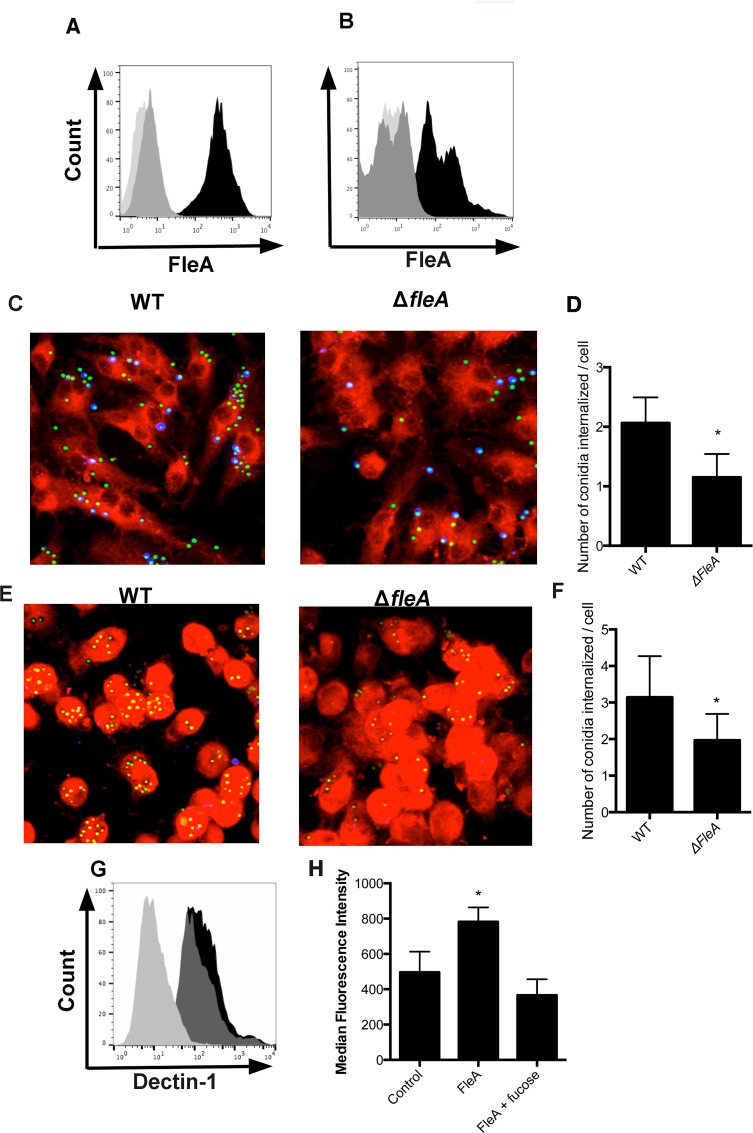
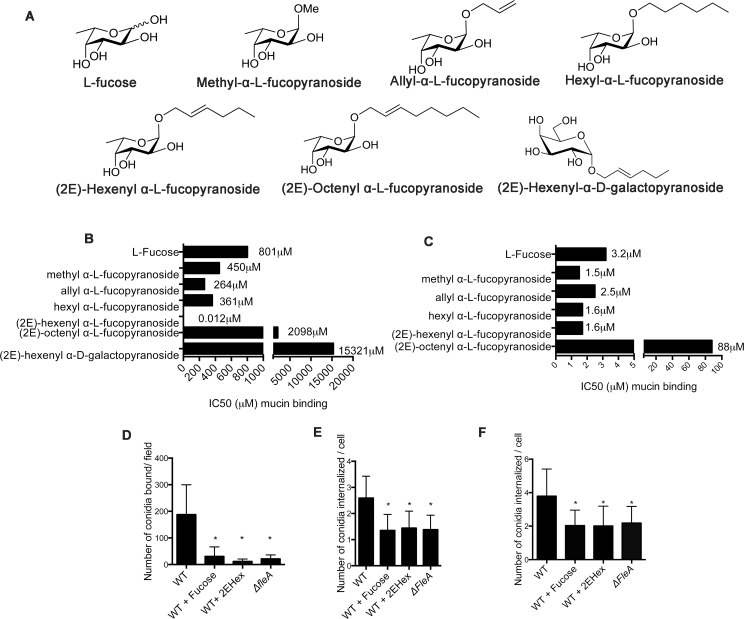
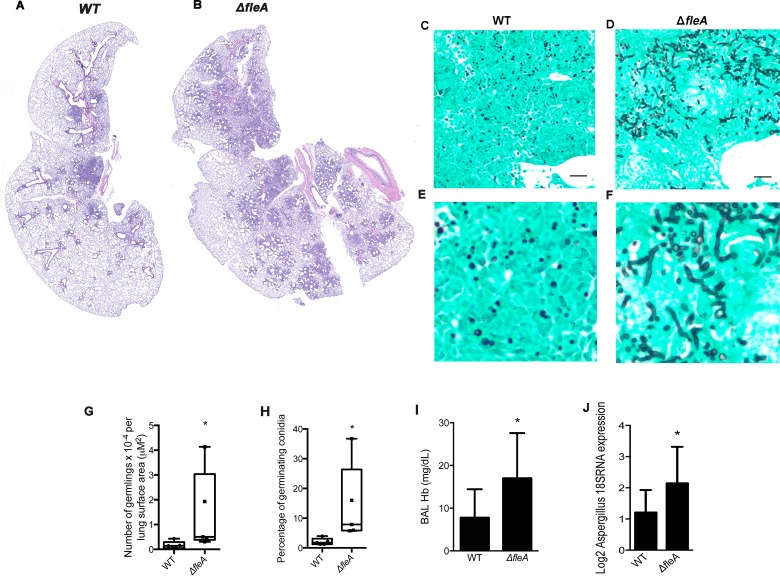
The immune mechanisms that recognize inhaled Aspergillus fumigatus conidia to promote their elimination from the lungs are incompletely understood. FleA is a lectin expressed by Aspergillus fumigatus that has twelve binding sites for fucosylated structures that are abundant in the glycan coats of multiple plant and animal proteins. The role of FleA is unknown: it could bind fucose in decomposed plant matter to allow Aspergillus fumigatus to thrive in soil, or it may be a virulence factor that binds fucose in lung glycoproteins to cause Aspergillus fumigatus pneumonia. Our studies show that FleA protein and Aspergillus fumigatus conidia bind avidly to purified lung mucin glycoproteins in a fucose-dependent manner. In addition, FleA binds strongly to macrophage cell surface proteins, and macrophages bind and phagocytose fleA-deficient (∆fleA) conidia much less efficiently than wild type (WT) conidia. Furthermore, a potent fucopyranoside glycomimetic inhibitor of FleA inhibits binding and phagocytosis of WT conidia by macrophages, confirming the specific role of fucose binding in macrophage recognition of WT conidia. Finally, mice infected with ΔfleA conidia had more severe pneumonia and invasive aspergillosis than mice infected with WT conidia. These findings demonstrate that FleA is not a virulence factor for Aspergillus fumigatus. Instead, host recognition of FleA is a critical step in mechanisms of mucin binding, mucociliary clearance, and macrophage killing that prevent Aspergillus fumigatus pneumonia.
Overview
The claims and statistics of this paper haven’t been checked yet.
Free: it reads the open-access text and checks the first 5 claims that cite a source we can check. Create a free account to check every claim.
Integrity signals
Registry
Cites
Statistics
Figures
Verification
Claims the paper makes
The claims and statistics of this paper haven’t been checked yet.
Free: it reads the open-access text and checks the first 5 claims that cite a source we can check. Create a free account to check every claim.
Claims other papers make about this one
Each is checked against this paper’s own text: does it say what the citing paper says it does?
The source backs part of the claim, not all of it — or backs it for a different population, condition or comparison.
In the citing paper
“Despite the lack of specificity of the phagocytosis process, certain macrophage receptors have been shown to facilitate engulfment of resting and germinating conidia: the C-type lectin II receptor DC-SIGN (CD209) (235), Dectin-1 (236), an unidentified macrophage glycoprotein-scavenger receptor recognizing the Aspergillus FleA fucose-binding lectin (214), and soluble pattern recognition receptors (”
From Aspergillus fumigatus and Aspergillosis in 2019 (2019) · cites this paper as [214]
Experimental — accuracy not yet measuredIn the citing paper
“Due to their small size, some of the inhaled Aspergillus conidia can reach and interact with the lung alveolar epithelial cells (ECs) (214).”
From Aspergillus fumigatus and Aspergillosis in 2019 (2019) · cites this paper as [214]
In the citing paper
“Importantly, most inhaled conidia do not come in contact with the alveolar epithelium, as they are eliminated by mucociliary clearance (214).”
From Aspergillus fumigatus and Aspergillosis in 2019 (2019) · cites this paper as [214]
Self-check
Percentages, sums and reported differences re-computed from the paper’s own numbers.
The self-check needs the paper’s full text.
Citations
Cites
SignalP 4.0: discriminating signal peptides from transmembrane regions
Petersen, T. N., Brunak, S., von Heijne, G., & Nielsen, H. (2011) · Nature Methods · doi:10.1038/nmeth.1701 · Cited by 8,847
Dectin-1 is required for β-glucan recognition and control of fungal infection
Taylor, P. R., Tsoni, S. V., Willment, J. A., Dennehy, K. M., Rosas, M., Findon, H., Haynes, K., Steele, C., Botto, M., Gordon, S., et al. (2007) · Nature Immunology · doi:10.1038/ni1408 · Cited by 1,161 · cited 1×
“fumigatus does not cast any doubt on the validity of the well established role for β-glucan/Dectin-1 interactions [35].”
BackgroundPathogenesis of Aspergillus fumigatus in Invasive Aspergillosis
Dagenais, T. R. T., & Keller, N. P. (2009) · Clinical Microbiology Reviews · doi:10.1128/cmr.00055-08 · Cited by 993 · cited 1×
“fumigatus) is an ubiquitous opportunistic pathogen that causes invasive and often fatal lung infection, particularly in immunocompromised patients [1].”
BackgroundSelf-citationStructure and Function of the Polymeric Mucins in Airways Mucus
Thornton, D. J., Rousseau, K., & McGuckin, M. A. (2008) · Annual Review of Physiology · doi:10.1146/annurev.physiol.70.113006.100702 · Cited by 823 · cited 3×
“1 MUC5B, NM_002458.”
BackgroundMuc5b is required for airway defence
Roy, M. G., Livraghi-Butrico, A., Fletcher, A. A., McElwee, M. M., Evans, S. E., Boerner, R. M., Alexander, S. N., Bellinghausen, L. K., Song, A. S., Petrova, Y. M., et al. (2014) · Nature · doi:10.1038/nature12807 · Cited by 764
Halide ion catalyzed glycosidation reactions. Syntheses of .alpha.-linked disaccharides
Lemieux, R. U., Hendriks, K. B., Stick, R. V., & James, K. (1975) · Journal of the American Chemical Society · doi:10.1021/ja00847a032 · Cited by 716
Luther, K., Torosantucci, A., Brakhage, A. A., Heesemann, J., & Ebel, F. (2007) · Cellular Microbiology · doi:10.1111/j.1462-5822.2006.00796.x · Cited by 582
Bouckaert, J., Berglund, J., Schembri, M., De Genst, E., Cools, L., Wuhrer, M., Hung, C., Pinkner, J., Slättegård, R., Zavialov, A., et al. (2005) · Molecular Microbiology · doi:10.1111/j.1365-2958.2004.04415.x · Cited by 447
Self-citationShimizu, K., & Keller, N. P. (2001) · Genetics · doi:10.1093/genetics/157.2.591 · Cited by 445
Self-citationAspergillus fumigatus Triggers Inflammatory Responses by Stage-Specific β-Glucan Display
Hohl, T. M., Van Epps, H. L., Rivera, A., Morgan, L. A., Chen, P. L., Feldmesser, M., & Pamer, E. G. (2005) · PLoS Pathogens · doi:10.1371/journal.ppat.0010030 · Cited by 428 · cited 1×
“β-glucan is abundant on swollen conidia and hyphae, and Dectin-1 binds βglucan on swollen conidia to trigger a robust host defense response [36].”
BackgroundPhilippe, B., Ibrahim-Granet, O., Prévost, M. C., Gougerot-Pocidalo, M. A., Sanchez Perez, M., Van der Meeren, A., & Latgé, J. P. (2003) · Infection and Immunity · doi:10.1128/iai.71.6.3034-3042.2003 · Cited by 415
Measures of gene expression in sputum cells can identify TH2-high and TH2-low subtypes of asthma
Peters, M. C., Mekonnen, Z. K., Yuan, S., Bhakta, N. R., Woodruff, P. G., & Fahy, J. V. (2014) · Journal of Allergy and Clinical Immunology · doi:10.1016/j.jaci.2013.07.036 · Cited by 342 · cited 1×
“Induced sputum was collected from 5 healthy nonsmoking, non-allergic subjects aged between 24–55 years (4 male) as described [39].”
MethodSelf-citationGersuk, G. M., Underhill, D. M., Zhu, L., & Marr, K. A. (2006) · The Journal of Immunology · doi:10.4049/jimmunol.176.6.3717 · Cited by 334 · cited 1×
“But Dectin-1 does not bind to resting conidia, because these conidia have masked exposure of β-glucans due to the action of hydrophobin proteins [37, 38] and the mechanism of clearance of resting conidia from the lung is not completely understood.”
BackgroundC-type lectin receptors in antifungal immunity
Willment, J. A., & Brown, G. D. (2008) · Trends in Microbiology · doi:10.1016/j.tim.2007.10.012 · Cited by 269 · cited 1×
“fumigatus conidia, and other macrophage receptors, such as the mannose receptor and toll-like receptors (TLR) -2 and -4, cooperate in this killing effect [7, 8].”
BackgroundDectin-1 and Dectin-2 in innate immunity against fungi
Saijo, S., & Iwakura, Y. (2011) · International Immunology · doi:10.1093/intimm/dxr046 · Cited by 226
[32] Pseudomonas aeruginosa lectins
Gilboa-Garber, N. (1982) · Methods in Enzymology · doi:10.1016/0076-6879(82)83034-6 · Cited by 223
Mucins: structure, function, and role in pulmonary diseases
Rose, M. C. (1992) · American Journal of Physiology-Lung Cellular and Molecular Physiology · doi:10.1152/ajplung.1992.263.4.l413 · Cited by 207 · cited 2×
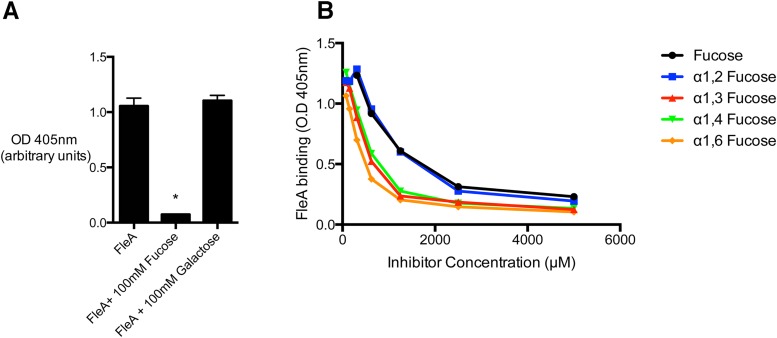
“Mucin glycans include multiple fucosylated structures [22], and we report avid binding of FleA to human airway mucins that is inhibited by a wide range of fucose structures, including fucose in α1,2, α1,3, α1,4, or α1,6 linkages.”
BackgroundCarrion, S. D. J., Leal, S. M., Ghannoum, M. A., Aimanianda, V., Latgé, J.-P., & Pearlman, E. (2013) · The Journal of Immunology · doi:10.4049/jimmunol.1300748 · Cited by 187 · cited 1×
“But Dectin-1 does not bind to resting conidia, because these conidia have masked exposure of β-glucans due to the action of hydrophobin proteins [37, 38] and the mechanism of clearance of resting conidia from the lung is not completely understood.”
BackgroundThe Fucose-binding Lectin from Ralstonia solanacearum
Kostlánová, N., Mitchell, E. P., Lortat-Jacob, H., Oscarson, S., Lahmann, M., Gilboa-Garber, N., Chambat, G., Wimmerová, M., & Imberty, A. (2005) · Journal of Biological Chemistry · doi:10.1074/jbc.m505184200 · Cited by 185 · cited 2×
“fumigatus all express fucophilic lectins [15–18] with multiple fucose binding sites [11, 19].”
BackgroundSelf-citationCrystal Structure of Fungal Lectin
Wimmerova, M., Mitchell, E., Sanchez, J.-F., Gautier, C., & Imberty, A. (2003) · Journal of Biological Chemistry · doi:10.1074/jbc.m302642200 · Cited by 183 · cited 1×
“fumigatus all express fucophilic lectins [15–18] with multiple fucose binding sites [11, 19].”
BackgroundBonnett, C. R., Cornish, E. J., Harmsen, A. G., & Burritt, J. B. (2006) · Infection and Immunity · doi:10.1128/iai.00909-06 · Cited by 174 · cited 1×
“Neutrophils are also important in cellular immunity against Aspergillus [33, 34], but we did not study whether neutrophils have defective uptake of fleA-deficient conidia, and it remains unknown whether fucosylated receptors on neutrophils have a role in host defense against Aspergillus.”
BackgroundDevelopment and refinement of a high-efficiency gene-targeting system for Aspergillus flavus
Chang, P., Scharfenstein, L. L., Wei, Q., & Bhatnagar, D. (2010) · Journal of Microbiological Methods · doi:10.1016/j.mimet.2010.03.010 · Cited by 130 · cited 2×
“flavus ΔfleA deletion mutants were created by transforming the deletion construct into parental strain CA14Δku70ΔpyrG [44] to create strains TFYL62.”
MethodAudfray, A., Claudinon, J., Abounit, S., Ruvoën‐Clouet, N., Larson, G., Smith, D. F., Wimmerová, M., LePendu, J., Römer, W., Varrot, A., et al. (2011) · Journal of Biological Chemistry · doi:10.1074/jbc.m111.314831 · Cited by 127 · cited 1×
“Fucosylated glycans are abundant in plants and animals, and FleA expression by fungi may help them bind plant or animal tissues, as has been found for fucose binding lectins in bacteria [11, 21].”
BackgroundBhatia, S., Fei, M., Yarlagadda, M., Qi, Z., Akira, S., Saijo, S., Iwakura, Y., van Rooijen, N., Gibson, G. A., St. Croix, C. M., et al. (2011) · PLoS ONE · doi:10.1371/journal.pone.0015943 · Cited by 119
Glycan structures of ocular surface mucins in man, rabbit and dog display species differences
Royle, L., Matthews, E., Corfield, A. P., Berry, M., Rudd, P. M., Dwek, R. A., & Carrington, S. D. (2008) · Glycoconjugate Journal · doi:10.1007/s10719-008-9136-6 · Cited by 115 · cited 1×
“Mucins were then purified from the sputum as described previously [40, 41] with additional details in S1 Text.”
MethodSelf-citationDubourdeau, M., Athman, R., Balloy, V., Huerre, M., Chignard, M., Philpott, D. J., Latgé, J.-P., & Ibrahim-Granet, O. (2006) · The Journal of Immunology · doi:10.4049/jimmunol.177.6.3994 · Cited by 111
Houser, J., Komarek, J., Kostlanova, N., Cioci, G., Varrot, A., Kerr, S. C., Lahmann, M., Balloy, V., Fahy, J. V., Chignard, M., et al. (2013) · PLoS ONE · doi:10.1371/journal.pone.0083077 · Cited by 108 · cited 4×
“fumigatus lectin (AFL, also known as FleA) exists as a dimer with 12 fucose-binding sites available for strong multivalent interactions with fucosylated structures [18].”
BackgroundMethodSelf-citationŠulák, O., Cioci, G., Delia, M., Lahmann, M., Varrot, A., Imberty, A., & Wimmerová, M. (2010) · Structure · doi:10.1016/j.str.2009.10.021 · Cited by 105
Wasylnka, J. A., & Moore, M. M. (2000) · Infection and Immunity · doi:10.1128/iai.68.6.3377-3384.2000 · Cited by 100
Slesiona, S., Gressler, M., Mihlan, M., Zaehle, C., Schaller, M., Barz, D., Hube, B., Jacobsen, I. D., & Brock, M. (2012) · PLoS ONE · doi:10.1371/journal.pone.0031223 · Cited by 97 · cited 4×
“Conidia that escape this initial response and mature (swell and germinate), possibly through the shedding of FleA, would be cleared by Dectin-1 mediated phagocytosis [9].”
BackgroundInfluentialRole of epithelial mucins during airway infection
Kim, K. C. (2012) · Pulmonary Pharmacology & Therapeutics · doi:10.1016/j.pupt.2011.12.003 · Cited by 94 · cited 1×
“In addition, membrane-tethered mucins (such as MUC1 and MUC4) function as receptors in epithelial cells [26] and macrophages [24] and it is possible that they may function as adhesins for A.”
BackgroundPrimary Structure of a Fucose-Specific Lectin Obtained from a Mushroom, Aleuria aurantia
Fukumori, F., Takeuchi, N., Hagiwara, T., Ohbayashi, H., Endo, T., Kochibe, N., Nagata, Y., & Kobata, A. (1990) · The Journal of Biochemistry · doi:10.1093/oxfordjournals.jbchem.a123024 · Cited by 86
Sialic acid-dependent recognition of laminin and fibrinogen by Aspergillus fumigatus conidia
Bouchara, J. P., Sanchez, M., Chevailler, A., Marot-Leblond, A., Lissitzky, J. C., Tronchin, G., & Chabasse, D. (1997) · Infection and Immunity · doi:10.1128/iai.65.7.2717-2724.1997 · Cited by 79
Bromley, I. M., & Donaldson, K. (1996) · Thorax · doi:10.1136/thx.51.12.1203 · Cited by 78
Toll-like receptors and microbes take aim at each other
Underhill, D. M. (2004) · Current Opinion in Immunology · doi:10.1016/j.coi.2004.05.012 · Cited by 73 · cited 1×
“fumigatus conidia, and other macrophage receptors, such as the mannose receptor and toll-like receptors (TLR) -2 and -4, cooperate in this killing effect [7, 8].”
BackgroundRecognition of mucin components by Pseudomonas aeruginosa
Ramphal, R., & Arora, S. K. (2001) · Glycoconjugate Journal · doi:10.1023/a:1020823406840 · Cited by 60
Tronchin, G., Bouchara, J., Larcher, G., Lissitzky, J., & Chabasse, D. (1993) · Biology of the Cell · doi:10.1016/s0248-4900(05)80189-3 · Cited by 57
Matsumura, K., Higashida, K., Hata, Y., Kominami, J., Nakamura‐Tsuruta, S., & Hirabayashi, J. (2008) · Analytical Biochemistry · doi:10.1016/j.ab.2008.11.044 · Cited by 56
Kerr, S. C., Carrington, S. D., Oscarson, S., Gallagher, M. E., Solon, M., Yuan, S., Ahn, J. N., Dougherty, R. H., Finkbeiner, W. E., Peters, M. C., et al. (2014) · American Journal of Respiratory and Critical Care Medicine · doi:10.1164/rccm.201312-2220le · Cited by 45 · cited 1×
“Mucins were then purified from the sputum as described previously [40, 41] with additional details in S1 Text.”
MethodSelf-citationIshida, H., MORITANI, T., Hata, Y., Kawato, A., Suginami, K., Yasuhisa, A. B. E., & Imayasu, S. (2002) · Bioscience Biotechnology and Biochemistry · doi:10.1271/bbb.66.1002 · Cited by 42
Neutrophil Responses to Aspergillosis: New Roles for Old Players
Cunha, C., Kurzai, O., Löffler, J., Aversa, F., Romani, L. R., & Carvalho, A. (2014) · Mycopathologia · doi:10.1007/s11046-014-9796-7 · Cited by 39
Zinger-Yosovich, K. D., Sudakevitz, D., Imberty, A., Garber, N. C., & Gilboa‐Garber, N. (2006) · Microbiology · doi:10.1099/mic.0.28500-0 · Cited by 37
Houser, J., Komárek, J., Cioci, G., Varrot, A., Imberty, A., & Wimmerová, M. (2015) · Acta Crystallographica Section D Biological Crystallography · doi:10.1107/s1399004714026595 · Cited by 35 · cited 1×
“As a result, FleA has unusually high binding affinity for fucosylated structures [18, 20], but its role in fungal biology is unknown.”
BackgroundFukumori, F., Takeuchi, N., Hagiwara, T., Ito, K., Kochibe, N., Kobata, A., & Nagata, Y. (1989) · FEBS Letters · doi:10.1016/0014-5793(89)80709-4 · Cited by 33
MUC1 in Macrophage: Contributions to Cigarette Smoke–Induced Lung Cancer
Xu, X., Padilla, M. T., Li, B., Wells, A. C., Kato, K., Tellez, C. S., Belinsky, S. A., Kim, K. C., & Lin, Y. (2013) · Cancer Research · doi:10.1158/0008-5472.can-13-1713 · Cited by 33 · cited 3×
“In addition, membrane-tethered mucins (such as MUC1 and MUC4) function as receptors in epithelial cells [26] and macrophages [24] and it is possible that they may function as adhesins for A.”
Background
Cited by
Aspergillus fumigatus and Aspergillosis in 2019
Latgé, J.-P., & Chamilos, G. (2019) · Clinical Microbiology Reviews · doi:10.1128/cmr.00140-18 · Cited by 1,400
Latgé, J.-P., Beauvais, A., & Chamilos, G. (2017) · Annual Review of Microbiology · doi:10.1146/annurev-micro-030117-020406 · Cited by 207
Pathogenesis of Respiratory Viral and Fungal Coinfections
Salazar, F., Bignell, E., Brown, G. D., Cook, P. C., & Warris, A. (2021) · Clinical Microbiology Reviews · doi:10.1128/cmr.00094-21 · Cited by 178
Lionakis, M. S., Iliev, I. D., & Hohl, T. M. (2017) · JCI Insight · doi:10.1172/jci.insight.93156 · Cited by 153
Histo-blood group antigens as mediators of infections
Heggelund, J. E., Varrot, A., Imberty, A., & Krengel, U. (2017) · Current Opinion in Structural Biology · doi:10.1016/j.sbi.2017.04.001 · Cited by 101
Metadata
- Authors
- Kerr, S. C., Fischer, G. J., Sinha, M., McCabe, O., Palmer, J. M., Choera, T., Yun Lim, F., Wimmerova, M., Carrington, S. D., Yuan, S., Lowell, C. A., Oscarson, S., Keller, N. P., & Fahy, J. V.
- Affiliations
- University of California, San Francisco (US)
- University of Wisconsin–Madison (US)
- University College Dublin (IE)
- Corresponding author
- Fahy, John V.
- ORCID
- Venue
- PLOS Pathogens
- Publisher
- Public Library of Science (PLoS)
- Published
- 2016-04-08
- Volume
- 12
- Issue
- 4
- Pages
- e1005555
- ISSN
- 1553-7366 (ISSN-L)
- 1553-7374
- PMC
- PMC4825926
- OpenAlex
- W2329040846
- Cited by
- 53
- References
- 45
- Citations by year
- 2026: 1 · 2025: 1 · 2024: 2 · 2023: 2 · 2022: 5 · 2021: 9 · 2020: 3 · 2019: 7 · 2018: 9 · 2017: 10 · 2016: 4
- FWCI
- 9.23
- Type
- journal article
- Language
- en
- Open access
- gold
- doi.org
- Licence
- Locations
- PLoS Pathogens (publishedVersion, cc-by)
- Europe PMC (PubMed Central) (publishedVersion, cc-by)
- PubMed Central (publishedVersion, cc-by)
- PubMed (publishedVersion)
- DOAJ (DOAJ: Directory of Open Access Journals) (submittedVersion, cc-by-sa)
- eScholarship (California Digital Library) (submittedVersion)
- Figshare (submittedVersion, cc-by)
- Funders
- U.S. Department of Agriculture (WIS01710)
- American Asthma Foundation
- Grantová Agentura České Republiky (GA13-25401S)
- National Institutes of Health
- U.S. Public Health Service (R01068150)
- National Heart, Lung, and Blood Institute (P01HL128191, HL080414, HL109146, P50HL107191, HL107191, U10HL109146, R01HL080414)
- National Institute of General Medical Sciences (T32GM007133)
- National Institute of Allergy and Infectious Diseases (R01AI113272, R01AI065728, HL080414, R01AI065495)
- Topics
- Health Sciences › Medicine › Infectious Diseases › Antifungal resistance and susceptibility
- Life Sciences › Biochemistry, Genetics and Molecular Biology › Molecular Biology › Glycosylation and Glycoproteins Research
- Life Sciences › Biochemistry, Genetics and Molecular Biology › Molecular Biology › Fungal and yeast genetics research
- Keywords
- Aspergillus fumigatus, fucose binding, macrophage phagocytosis, mucociliary clearance, invasive aspergillosis, host-pathogen interaction, virulence factors
- MeSH terms
- Adult, Animals, Aspergillus fumigatus, Disease Models, Animal, Female, Flow Cytometry, Fluorescent Antibody Technique, Fucose, Fungal Proteins, Humans, Macrophages, Male, Mice, Inbred C57BL, Middle Aged, Mucins, Spores, Fungal, Blotting, Western, Immunity, Mucosal, Lectins, Mice, Pulmonary Aspergillosis
About these checks
Registry, retraction, Cites and statistics results are computed, not judged, with one exception: a printed reference that no index lists is read once by a model before it counts as a citation error. Claims are extracted by a model and kept only when their quote appears verbatim in the text; each cited source is then checked, with a model’s help, for whether it says what the claim relies on. Those verdicts can be wrong — read the claim’s quote and the cited source before relying on one.
Statistics and arithmetic are recomputed, not judged.
Confidence bands are shown only for fields calibrated on our annotated test set. None is calibrated yet, so no band is shown.
What counts as a claim ›How we measure confidence ›How we check this ›
Are you an author, or do you see a problem with this page? Request a review
Data sources
Bibliographic data: Semantic Scholar, OpenAlex, Crossref.
Contains information from the Semantic Scholar Academic Graph Datasets, made available under the ODC Attribution License (ODC-BY 1.0).
Semantic Scholar’s data is described in: Kinney, R., et al. (2023). The Semantic Scholar Open Data Platform. arXiv:2301.10140.
