

Altered Microbiota Diversity and Bile Acid Signaling in Cirrhotic and Noncirrhotic NASH-HCC
Open accessThe DOI matches its Crossref record; 53 of the 53 references it cites were found in a registry or an index.
Abstract
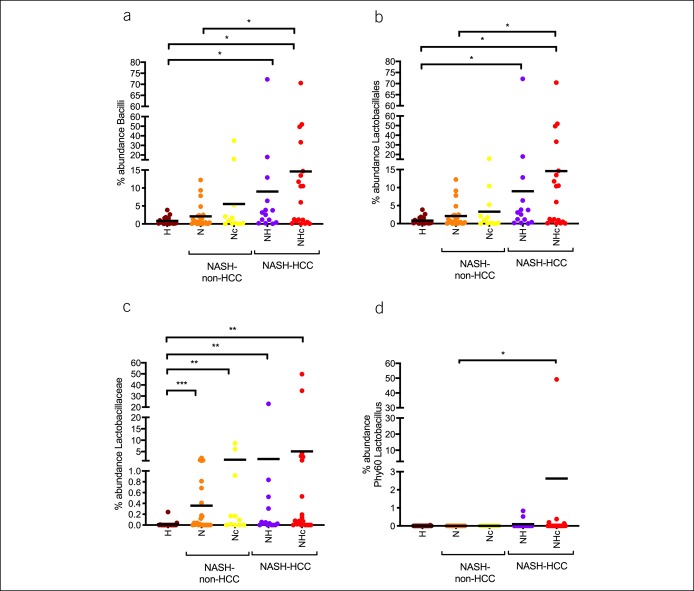
OBJECTIVES: The precipitous increase in nonalcoholic steatohepatitis (NASH) is accompanied by a dramatic increase in the incidence of NASH-related hepatocellular carcinoma (HCC). HCC in NASH has a higher propensity to arise without pre-existing cirrhosis compared with other chronic liver diseases. METHODS: To identify the potential links between liver and gut in NASH-related hepatocarcinogenesis, we compared the gut microbiota and mediators of bile acid (BA) signaling in the absence or presence of cirrhosis through the analysis of stool and serum samples from patients with NASH non-HCC and NASH-HCC and healthy volunteers. RESULTS: Serum levels of total and individual BA were higher in NASH compared with healthy controls. Furthermore, serum levels of the primary conjugated BAs glycine-conjugated cholic acid, taurine-conjugated cholic acid, glycine-conjugated chenodeoxycholic acid, and taurine-conjugated chenodeoxycholic acid were significantly increased in cirrhotic vs noncirrhotic patients, independent of the occurrence of HCC. By contrast, serum FGF19 levels were higher in patients with NASH-HCC and associated with tumor markers as well as an attenuation of BA synthesis. Specific alterations in the gut microbiome were found for several bacteria involved in the BA metabolism including Bacteroides and Lactobacilli. Specifically, the abundance of Lactobacilli was associated with progressive disease, serum BA levels, and liver injury in NASH and NASH-HCC. DISCUSSION: Here, we demonstrate a clear association of the altered gut microbiota and primary conjugated BA composition in cirrhotic and noncirrhotic patients with NASH-HCC. Microbiota-associated alterations in BA homeostasis and farnesoid X receptor signaling, via FGF19, might thus contribute to fibrogenesis, liver injury, and tumorigenesis in NASH-HCC.
Overview
The claims and statistics of this paper haven’t been checked yet.
Free: it reads the open-access text and checks the first 5 claims that cite a source we can check. Create a free account to check every claim.
Integrity signals
Registry
Cites
Statistics
Figures
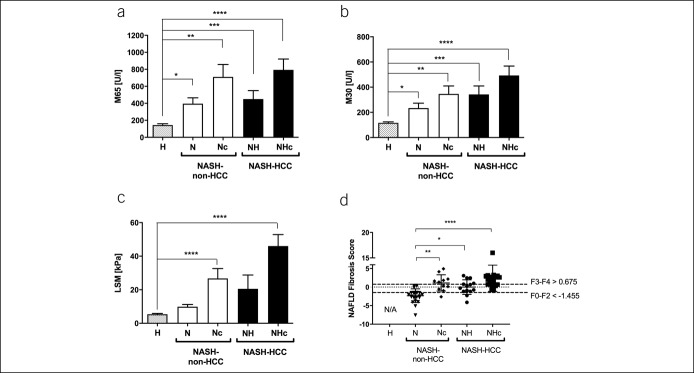
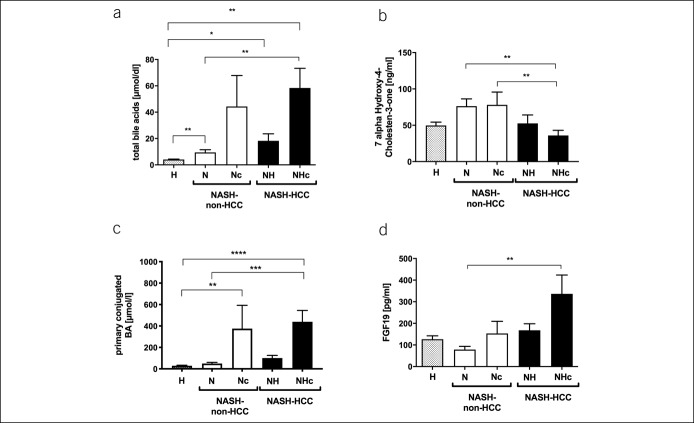
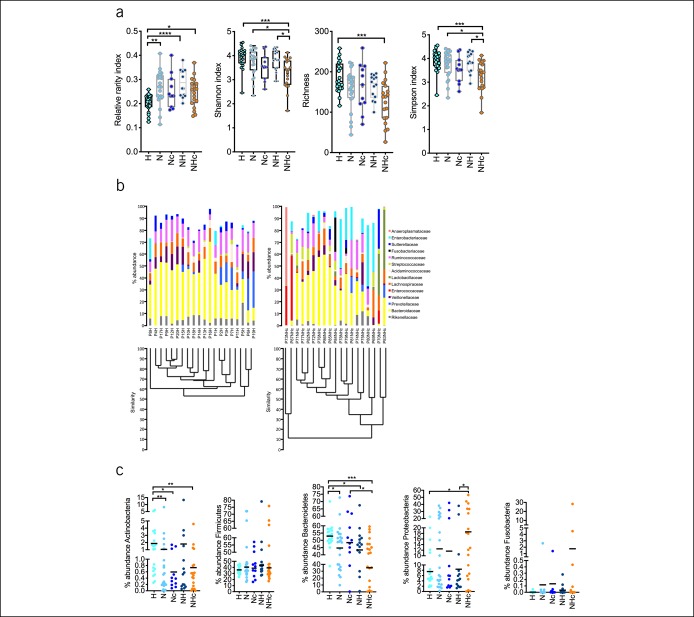
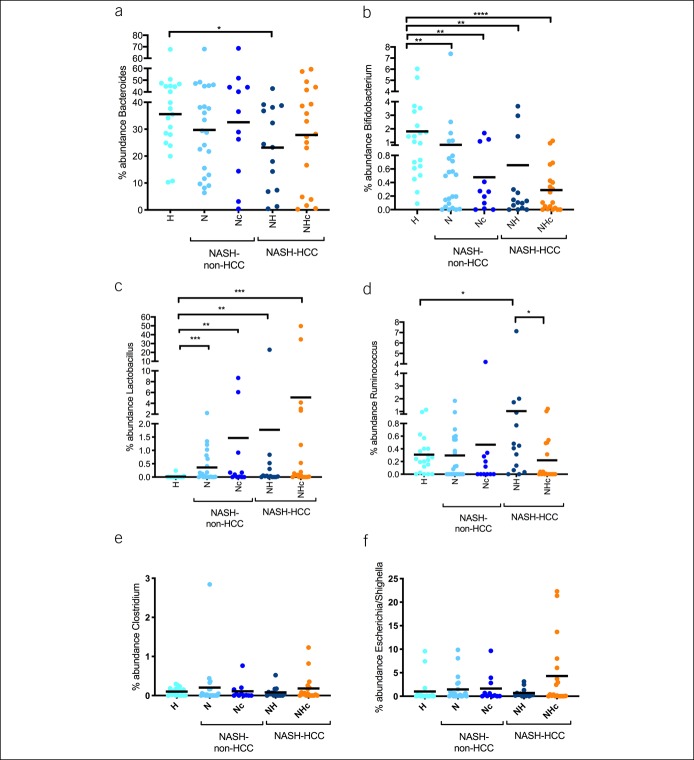
Verification
Claims the paper makes
The claims and statistics of this paper haven’t been checked yet.
Free: it reads the open-access text and checks the first 5 claims that cite a source we can check. Create a free account to check every claim.
Claims other papers make about this one
Each is checked against this paper’s own text: does it say what the citing paper says it does?
The source backs part of the claim, not all of it — or backs it for a different population, condition or comparison.
In the citing paper
“the impact of changes to the composition and function of the microbiome in NASH include altered bile acid metabolism and loss of integrity of the gut-vascular barrier, precipitating leakage of LPS and bacteria into the liver via the portal circulation (14–16).”
From Hepatic Stellate Cell-Immune Interactions in NASH (2022) · cites this paper as [15]
Experimental — accuracy not yet measured
Self-check
Percentages, sums and reported differences re-computed from the paper’s own numbers.
The self-check needs the paper’s full text.
Citations
Cites
EASL Clinical Practice Guidelines: Management of hepatocellular carcinoma
Galle, P. R., Forner, A., Llovet, J. M., Mazzaferro, V., Piscaglia, F., Raoul, J.-L., Schirmacher, P., & Vilgrain, V. (2018) · Journal of Hepatology · doi:10.1016/j.jhep.2018.03.019 · Cited by 11,406
EASL–EORTC Clinical Practice Guidelines: Management of hepatocellular carcinoma
European Association for the Study of the Liver, & European Organisation for Research and Treatment of Cancer (2012) · Journal of Hepatology · doi:10.1016/j.jhep.2011.12.001 · Cited by 5,218
El-Serag, H. B. (2011) · New England Journal of Medicine · doi:10.1056/nejmra1001683 · Cited by 3,529
Angulo, P., Hui, J. M., Marchesini, G., Bugianesi, E., George, J., Farrell, G. C., Enders, F., Saksena, S., Burt, A. D., Bida, J. P., et al. (2007) · Hepatology · doi:10.1002/hep.21496 · Cited by 3,203 · cited 2×
“Because assessment of LSM by FibroScan might be compromised in HCC because of tumor stiffness, we also calculated the NAFLD fibrosis score (21).”
MethodNeuschwander-Tetri, B. A., Loomba, R., Sanyal, A. J., Lavine, J. E., Van Natta, M. L., Abdelmalek, M. F., Chalasani, N., Dasarathy, S., Diehl, A. M., Hameed, B., et al. (2015) · The Lancet · doi:10.1016/s0140-6736(14)61933-4 · Cited by 2,237 · cited 2×
“Although UDCA reduced FGF19 levels (47), OCA and other FXR agonists tested in the treatment for NASH, induced FGF19 levels (48).”
BackgroundObesity-induced gut microbial metabolite promotes liver cancer through senescence secretome
Yoshimoto, S., Loo, T. M., Atarashi, K., Kanda, H., Sato, S., Oyadomari, S., Iwakura, Y., Oshima, K., Morita, H., Hattori, M., et al. (2013) · Nature · doi:10.1038/nature12347 · Cited by 2,219 · cited 12×
“Furthermore, levels of hydrophobic BA such as TCDCA and TLCA are altered in high fat diet mouse models and may contribute to carcinogenesis inNASHby promoting cell proliferation and inflammation (38).”
BackgroundInfluentialThe Microbiome in Inflammatory Bowel Disease: Current Status and the Future Ahead
Kostic, A. D., Xavier, R. J., & Gevers, D. (2014) · Gastroenterology · doi:10.1053/j.gastro.2014.02.009 · Cited by 1,789
Boursier, J., Mueller, O., Barret, M., Machado, M., Fizanne, L., Araujo‐Perez, F., Guy, C. D., Seed, P. C., Rawls, J. F., David, L. A., et al. (2016) · Hepatology · doi:10.1002/hep.28356 · Cited by 1,483 · cited 1×
“Microbiome alterations may promote the progression of NAFLD (19).”
BackgroundPleiotropic Roles of Bile Acids in Metabolism
de Aguiar Vallim, T. Q., Tarling, E. J., & Edwards, P. A. (2013) · Cell Metabolism · doi:10.1016/j.cmet.2013.03.013 · Cited by 1,209
The interaction of hepatic lipid and glucose metabolism in liver diseases
Bechmann, L. P., Hannivoort, R. A., Gerken, G., Hotamisligil, G. S., Trauner, M., & Canbay, A. (2012) · Journal of Hepatology · doi:10.1016/j.jhep.2011.08.025 · Cited by 994
Self-citation
Cited by
Items 101–130 of 130
Li, Y., He, H., Chen, L., Chen, J., Gu, M., Hu, Y., Guo, L., Long, S., Hu, J., Zhou, Z. P., et al. (2026) · Biomedicines · doi:10.3390/biomedicines14051042 · Cited by 1
“MASLD seldom occurs in isolation but rather clusters with metabolic perturbations within an interconnected pathophysiological network encompassing insulin resistance, dyslipidemia, obesity, metabolic syndrome, and CAD [34,35].”
Wang, J., & Jiang, R. (2026) · Hepatoma Research · doi:10.20517/2394-5079.2026.03 · Cited by 1
Nasser‐Ghodsi, N., Mara, K. C., Allen, A. M., & Watt, K. D. S. (2022) · Clinical Transplantation · doi:10.1111/ctr.14714 · Cited by 1
Liver Cancer - Genesis, Progression and Metastasis
Feitelson, M. A., & Arzumanyan, A. L. (2022) · IntechOpen eBooks · doi:10.5772/intechopen.100845 · Cited by 1
He, X., Zhang, X., Li, Z., Niu, X., Li, L., Li, L., Ren, H., & Zhang, D. (2024) · Cirugía Española (English Edition) · doi:10.1016/j.cireng.2024.09.007 · Cited by 1
Wang, G., Guan, J., Yang, Q., Wu, F., Shao, J., Zhou, Q., Guo, Z., Ren, Y., Zhu, H., & Chen, Z. (2021) · Research Square · doi:10.21203/rs.3.rs-215296/v1 · Cited by 1
“For example, decreased CA and increased CDCA are associated with nonalcoholic steatohepatitis, which may result in altered gut microbiota in patients [47].”
BackgroundCharacterization of the oral and intestinal microbiota in hepatocellular carcinomaPreprint
Wei, W., Wang, Y., Chen, P., Kuai, W., Zhu, Y. Y., & Xu, L. (2024) · Research Square · doi:10.21203/rs.3.rs-4081745/v1 · Cited by 1
Chang, H., Zúñiga, A., Conejero, I., Voyvodic, P. L., Gracy, J., Fajardo-Ruiz, E., Cohen‐Gonsaud, M., Cambray, G., Pageaux, G., Meszaros, M., et al. (2021) · bioRxiv (Cold Spring Harbor Laboratory) · doi:10.1101/2021.03.24.436753
Wyss, J., Raselli, T., Wyss, A., Telzerow, A., Rogler, G., Krupka, N., Yılmaz, B., Schmidt, T., & Misselwitz, B. (2022) · bioRxiv (Cold Spring Harbor Laboratory) · doi:10.1101/2022.12.02.518833
“To note, NASH shows some shared dysbiotic patterns similar to other metabolic diseases like obesity or type 2 diabetes mellitus (63) with decreased Clostridium levels (55,57,59,60) and increases in Lactobacillaceae including Lactobacillus (54,57,59,60,62) which in turn are shared with the profile detected in the curre…”
BackgroundInfluentialNon-alcoholic Fatty Liver Disease Associated Hepatocellular Carcinoma
Sun, K., Hodges, A. W., & Abdelrahim, M. (2023) · IntechOpen eBooks · doi:10.5772/intechopen.106816
Influência entre o microbioma gastrointestinal e o Câncer Hepático: uma revisão integrativa
Nolasco, G. M., Cruz, A. L. A., Vasconcelos, J. C. S., Teixeira, Y. P., Vasconcelos, S. D. S., & Cansanção, I. F. (2023) · Brazilian Journal of Health Review · doi:10.34119/bjhrv6n6-124
He, X., Zhang, X., Li, Z., Niu, X., Li, L., Li, L., Ren, H., & Zhang, D. (2024) · Cirugía Española · doi:10.1016/j.ciresp.2024.09.002
Aras, Ş. Y. (2024) · Journal of Advances in VetBio Science and Techniques · doi:10.31797/vetbio.1428195
MASLD and Hepatic/Extrahepatic Cancers: Understanding the Complex Relationship
Best, J., Schnabl, B., & Canbay, A. E. (2024) · Springer eBooks · doi:10.1007/978-981-97-9519-2_8
Self-citationJoseph, S., de Buyl, S., Leclercq, I. A., & Clerbaux, L. (2025) · medRxiv · doi:10.1101/2025.01.12.25320430
Research Progress of Gut Microbiota on Liver Cirrhosis
张, 佳. (2025) · Advances in Clinical Medicine · doi:10.12677/acm.2025.1582373
Li, J., Jiang, J., Zhu, Y., Zhang, Y., Zhu, J., & Ming, Y. (2024) · Figshare · doi:10.6084/m9.figshare.26798784
Li, J., Jiang, J., Zhu, Y., Zhang, Y., Zhu, J., & Ming, Y. (2024) · Figshare · doi:10.6084/m9.figshare.26798772
Li, J., Jiang, J., Zhu, Y., Zhang, Y., Zhu, J., & Ming, Y. (2024) · Figshare · doi:10.6084/m9.figshare.26798778
Mohieldeen, K., Hamoda, S. A. F., Ahmed, S. M., Najeeb, A., & Ellakany, W. I. (2021) · Figshare · doi:10.6084/m9.figshare.16696579
Li, J., Jiang, J., Zhu, Y., Zhang, Y., Zhu, J., & Ming, Y. (2024) · Figshare · doi:10.6084/m9.figshare.26798775
Li, J., Jiang, J., Zhu, Y., Zhang, Y., Zhu, J., & Ming, Y. (2024) · Figshare · doi:10.6084/m9.figshare.26793738
Li, J., Jiang, J., Zhu, Y., Zhang, Y., Zhu, J., & Ming, Y. (2024) · Figshare · doi:10.6084/m9.figshare.26798781
Li, J., Jiang, J., Zhu, Y., Zhang, Y., Zhu, J., & Ming, Y. (2024) · Figshare · doi:10.6084/m9.figshare.26793799
Clinical and biological significance of the relationship between gut microbiota and liver disease
Kotlyarov, S. N. (2025) · World Journal of Hepatology · doi:10.4254/wjh.v17.i12.110303
Zhang, X., Zheng, L., Zheng, W., Shi, J., Yu, S., Liu, H., Feng, H., & Yu, Z. (2026) · Journal of Hepatocellular Carcinoma · doi:10.2147/jhc.s559937 · Cited by 1
“41 Regarding the indistinct BA trend between LC and HCC, as well as the decreased ROC performance of TCA in distinguishing these two diseases, the core reasons are as follows: ① Pathophysiological overlap between advanced LC and early-to-mid stage HCC, where cirrhosis-driven cholestasis and metabolic disorders mask HC…”
Huang, Y.-C., Tsai, K.-H., Tsai, J.-C., Peng, W.-H., Lai, C.-Y., Kao, Y.-C., & Wu, L.-L. (2026) · IntechOpen eBooks · doi:10.5772/intechopen.1013767
Zhang, X., Xia, Y., & Ji, F. (2026) · Probiotics and Antimicrobial Proteins · doi:10.1007/s12602-026-11071-1
Fan, W.-J., Wu, Y.-M., Liu, X.-Y., Zhang, C.-A., Hu, C., Wang, B.-B., & Ding, H. (2026) · Hepatobiliary & pancreatic diseases international · doi:10.1016/j.hbpd.2026.08.008
Microbiota in liver carcinogenesis: Illuminating the complex relationship
Chuaypen, N., Dissayabutra, T., & Bajaj, J. S. (2026) · Best Practice & Research Clinical Gastroenterology · doi:10.1016/j.bpg.2026.102144
Metadata
- Authors
- Sydor, S., Best, J., Messerschmidt, I., Manka, P., Vilchez-Vargas, R., Brodesser, S., Lucas, C., Wegehaupt, A., Wenning, C., Aßmuth, S., Hohenester, S., Link, A., Faber, K. N., Moshage, H., Cubero, F. J., Friedman, S. L., Gerken, G., Trauner, M., Canbay, A., & Bechmann, L. P.
- Affiliations
- University Hospital Magdeburg (DE)
- Essen University Hospital (DE)
- Department of Gastroenterology, Hepatology, and Infectious Diseases, Otto von Guericke University Hospital Magdeburg, Magdeburg, Germany;
- University of Cologne (DE)
- LMU Klinikum (DE)
- University Medical Center Groningen (NL)
- Universidad Complutense de Madrid (ES)
- Icahn School of Medicine at Mount Sinai (US)
- Medical University of Vienna (AT)
- Universitätsklinikum Knappschaftskrankenhaus Bochum (DE)
- Corresponding author
- Bechmann, Lars P.
- ORCID
- Venue
- Clinical and Translational Gastroenterology
- Published
- 2020-03
- Volume
- 11
- Issue
- 3
- Pages
- e00131
- ISSN
- 2155-384X (ISSN-L)
- PMC
- PMC7145043
- OpenAlex
- W3009620456
- Semantic Scholar
- 726f877c0593484be3ca94f224938296a68819b4
- Cited by
- 127
- References
- 52
- Citations by year
- 2026: 8 · 2025: 20 · 2024: 29 · 2023: 15 · 2022: 28 · 2021: 23 · 2020: 4
- FWCI
- 5.68
- Type
- journal article
- Language
- en
- Open access
- gold
- doi.org
- Locations
- Clinical and Translational Gastroenterology (publishedVersion, cc-by)
- PubMed Central (publishedVersion, cc-by)
- PubMed (publishedVersion)
- Kölner Universitäts PublikationsServer (Universität zu Köln) (publishedVersion)
- University of Groningen research database (University of Groningen / Centre for Information Technology) (submittedVersion, cc-by)
- University of Groningen research database (University of Groningen / Centre for Information Technology) (submittedVersion, other-oa)
- Digitalen Hochschulbibliothek Sachsen-Anhalt (Universitäts- und Landesbibliothek Sachsen-Anhalt) (cc-by)
- Funders
- National Cancer Institute (P30CA196521)
- Topics
- Life Sciences › Biochemistry, Genetics and Molecular Biology › Molecular Biology › Gut microbiota and health
- Health Sciences › Medicine › Hepatology › Liver Disease Diagnosis and Treatment
- Health Sciences › Medicine › Hepatology › Liver Diseases and Immunity
- Keywords
- nonalcoholic steatohepatitis, hepatocellular carcinoma, liver cirrhosis, gut microbiota, bile acid signaling, FGF19, farnesoid X receptor, bile acid conjugates, lactobacilli, Bacteroides, liver injury, hepatocarcinogenesis, gut-liver axis
- MeSH terms
- Gastrointestinal Microbiome, Receptor, Farnesoid X-Activated, Adult, Aged, Bacteroides, Bile Acids and Salts, Feces, Female, Fibroblast Growth Factors, Carcinoma, Hepatocellular, Humans, Lactobacillus, Liver, Liver Cirrhosis, Liver Neoplasms, Male, Middle Aged, Signal Transduction, Case-Control Studies, Receptors, Cytoplasmic and Nuclear, Young Adult, Carcinogenesis, Healthy Volunteers, Non-alcoholic Fatty Liver Disease
About these checks
Registry, retraction, Cites and statistics results are computed, not judged, with one exception: a printed reference that no index lists is read once by a model before it counts as a citation error. Claims are extracted by a model and kept only when their quote appears verbatim in the text; each cited source is then checked, with a model’s help, for whether it says what the claim relies on. Those verdicts can be wrong — read the claim’s quote and the cited source before relying on one.
Statistics and arithmetic are recomputed, not judged.
Confidence bands are shown only for fields calibrated on our annotated test set. None is calibrated yet, so no band is shown.
What counts as a claim ›How we measure confidence ›How we check this ›
Are you an author, or do you see a problem with this page? Request a review
Data sources
Bibliographic data: Semantic Scholar, OpenAlex, Crossref.
Contains information from the Semantic Scholar Academic Graph Datasets, made available under the ODC Attribution License (ODC-BY 1.0).
Semantic Scholar’s data is described in: Kinney, R., et al. (2023). The Semantic Scholar Open Data Platform. arXiv:2301.10140.
