

Altered Microbiota Diversity and Bile Acid Signaling in Cirrhotic and Noncirrhotic NASH-HCC
Open accessThe DOI matches its Crossref record; 53 of the 53 references it cites were found in a registry or an index.
Abstract
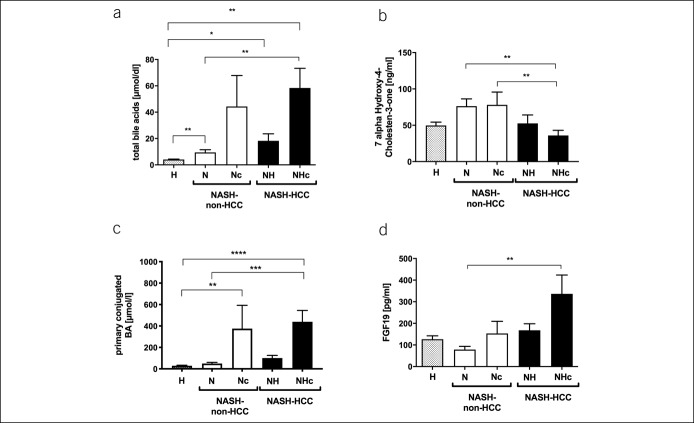
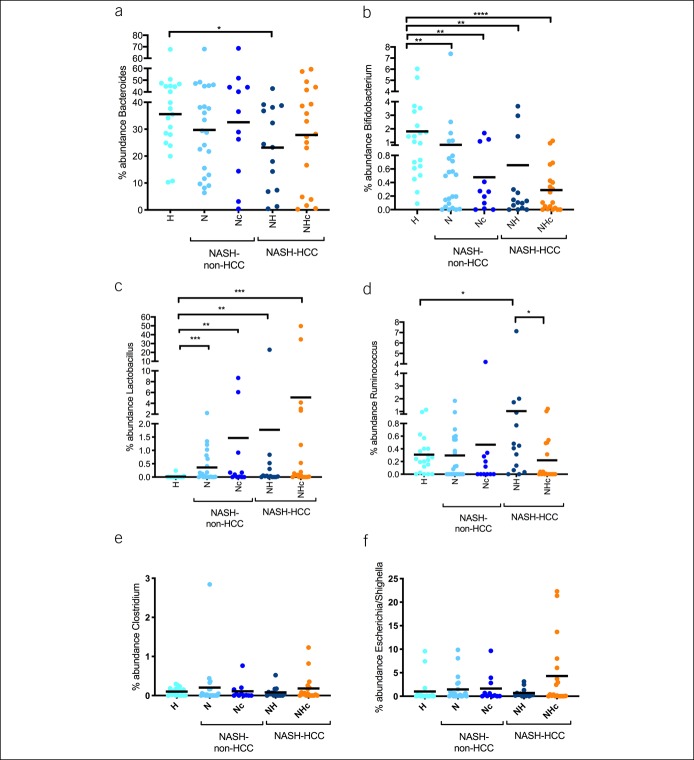
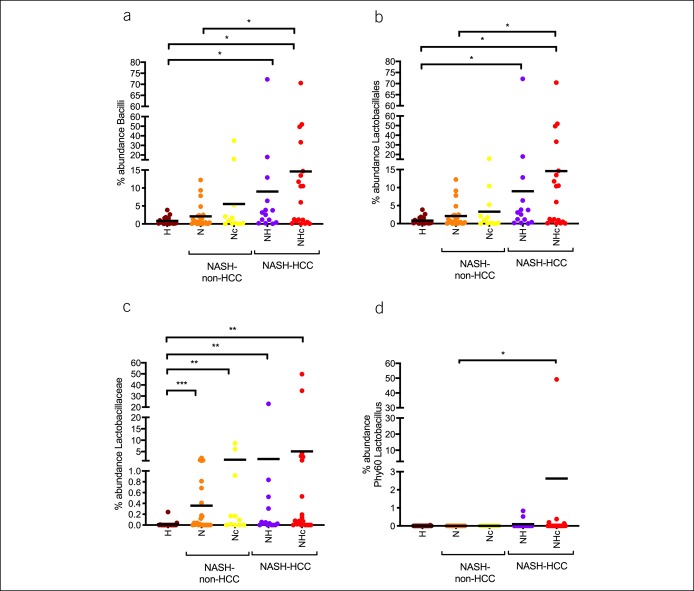
OBJECTIVES: The precipitous increase in nonalcoholic steatohepatitis (NASH) is accompanied by a dramatic increase in the incidence of NASH-related hepatocellular carcinoma (HCC). HCC in NASH has a higher propensity to arise without pre-existing cirrhosis compared with other chronic liver diseases. METHODS: To identify the potential links between liver and gut in NASH-related hepatocarcinogenesis, we compared the gut microbiota and mediators of bile acid (BA) signaling in the absence or presence of cirrhosis through the analysis of stool and serum samples from patients with NASH non-HCC and NASH-HCC and healthy volunteers. RESULTS: Serum levels of total and individual BA were higher in NASH compared with healthy controls. Furthermore, serum levels of the primary conjugated BAs glycine-conjugated cholic acid, taurine-conjugated cholic acid, glycine-conjugated chenodeoxycholic acid, and taurine-conjugated chenodeoxycholic acid were significantly increased in cirrhotic vs noncirrhotic patients, independent of the occurrence of HCC. By contrast, serum FGF19 levels were higher in patients with NASH-HCC and associated with tumor markers as well as an attenuation of BA synthesis. Specific alterations in the gut microbiome were found for several bacteria involved in the BA metabolism including Bacteroides and Lactobacilli. Specifically, the abundance of Lactobacilli was associated with progressive disease, serum BA levels, and liver injury in NASH and NASH-HCC. DISCUSSION: Here, we demonstrate a clear association of the altered gut microbiota and primary conjugated BA composition in cirrhotic and noncirrhotic patients with NASH-HCC. Microbiota-associated alterations in BA homeostasis and farnesoid X receptor signaling, via FGF19, might thus contribute to fibrogenesis, liver injury, and tumorigenesis in NASH-HCC.
Overview
The claims and statistics of this paper haven’t been checked yet.
Free: it reads the open-access text and checks the first 5 claims that cite a source we can check. Create a free account to check every claim.
Integrity signals
Registry
Cites
Statistics
Figures
Verification
Claims the paper makes
The claims and statistics of this paper haven’t been checked yet.
Free: it reads the open-access text and checks the first 5 claims that cite a source we can check. Create a free account to check every claim.
Claims other papers make about this one
Each is checked against this paper’s own text: does it say what the citing paper says it does?
The source backs part of the claim, not all of it — or backs it for a different population, condition or comparison.
In the citing paper
“the impact of changes to the composition and function of the microbiome in NASH include altered bile acid metabolism and loss of integrity of the gut-vascular barrier, precipitating leakage of LPS and bacteria into the liver via the portal circulation (14–16).”
From Hepatic Stellate Cell-Immune Interactions in NASH (2022) · cites this paper as [15]
Experimental — accuracy not yet measured
Self-check
Percentages, sums and reported differences re-computed from the paper’s own numbers.
The self-check needs the paper’s full text.
Citations
Cites
EASL Clinical Practice Guidelines: Management of hepatocellular carcinoma
Galle, P. R., Forner, A., Llovet, J. M., Mazzaferro, V., Piscaglia, F., Raoul, J.-L., Schirmacher, P., & Vilgrain, V. (2018) · Journal of Hepatology · doi:10.1016/j.jhep.2018.03.019 · Cited by 11,406
EASL–EORTC Clinical Practice Guidelines: Management of hepatocellular carcinoma
European Association for the Study of the Liver, & European Organisation for Research and Treatment of Cancer (2012) · Journal of Hepatology · doi:10.1016/j.jhep.2011.12.001 · Cited by 5,218
El-Serag, H. B. (2011) · New England Journal of Medicine · doi:10.1056/nejmra1001683 · Cited by 3,529
Angulo, P., Hui, J. M., Marchesini, G., Bugianesi, E., George, J., Farrell, G. C., Enders, F., Saksena, S., Burt, A. D., Bida, J. P., et al. (2007) · Hepatology · doi:10.1002/hep.21496 · Cited by 3,203 · cited 2×
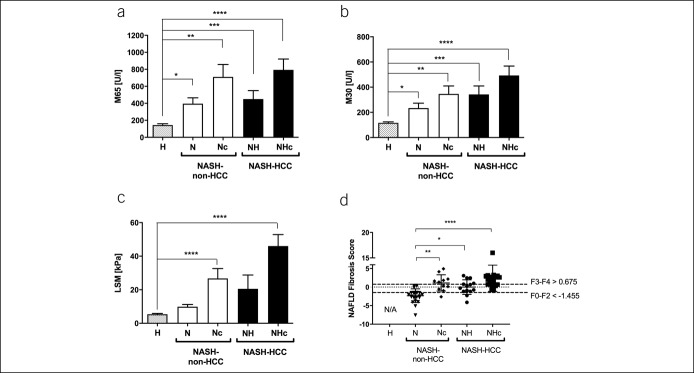
“Because assessment of LSM by FibroScan might be compromised in HCC because of tumor stiffness, we also calculated the NAFLD fibrosis score (21).”
MethodNeuschwander-Tetri, B. A., Loomba, R., Sanyal, A. J., Lavine, J. E., Van Natta, M. L., Abdelmalek, M. F., Chalasani, N., Dasarathy, S., Diehl, A. M., Hameed, B., et al. (2015) · The Lancet · doi:10.1016/s0140-6736(14)61933-4 · Cited by 2,237 · cited 2×
“Although UDCA reduced FGF19 levels (47), OCA and other FXR agonists tested in the treatment for NASH, induced FGF19 levels (48).”
BackgroundObesity-induced gut microbial metabolite promotes liver cancer through senescence secretome
Yoshimoto, S., Loo, T. M., Atarashi, K., Kanda, H., Sato, S., Oyadomari, S., Iwakura, Y., Oshima, K., Morita, H., Hattori, M., et al. (2013) · Nature · doi:10.1038/nature12347 · Cited by 2,219 · cited 12×
“Furthermore, levels of hydrophobic BA such as TCDCA and TLCA are altered in high fat diet mouse models and may contribute to carcinogenesis inNASHby promoting cell proliferation and inflammation (38).”
BackgroundInfluentialThe Microbiome in Inflammatory Bowel Disease: Current Status and the Future Ahead
Kostic, A. D., Xavier, R. J., & Gevers, D. (2014) · Gastroenterology · doi:10.1053/j.gastro.2014.02.009 · Cited by 1,789
Boursier, J., Mueller, O., Barret, M., Machado, M., Fizanne, L., Araujo‐Perez, F., Guy, C. D., Seed, P. C., Rawls, J. F., David, L. A., et al. (2016) · Hepatology · doi:10.1002/hep.28356 · Cited by 1,483 · cited 1×
“Microbiome alterations may promote the progression of NAFLD (19).”
BackgroundPleiotropic Roles of Bile Acids in Metabolism
de Aguiar Vallim, T. Q., Tarling, E. J., & Edwards, P. A. (2013) · Cell Metabolism · doi:10.1016/j.cmet.2013.03.013 · Cited by 1,209
The interaction of hepatic lipid and glucose metabolism in liver diseases
Bechmann, L. P., Hannivoort, R. A., Gerken, G., Hotamisligil, G. S., Trauner, M., & Canbay, A. (2012) · Journal of Hepatology · doi:10.1016/j.jhep.2011.08.025 · Cited by 994
Self-citationWhite, D. L., Kanwal, F., & El–Serag, H. B. (2012) · Clinical Gastroenterology and Hepatology · doi:10.1016/j.cgh.2012.10.001 · Cited by 766 · cited 1×
“NASHcirrhosis is recognized as risk factor for HCC (4).”
BackgroundJiao, N., Baker, S. S., Chapa-Rodriguez, A., Liu, W., Nugent, C. A., Tsompana, M., Mastrandrea, L., Buck, M. J., Baker, R. D., Genco, R. J., et al. (2018) · Gut · doi:10.1136/gutjnl-2017-314307 · Cited by 737 · cited 1×
“Here, an increase in BA levels and an altered composition of the BA pool with an increase in secondary conjugated BA was observed (24).”
BackgroundBile-acid-induced cell injury and protection
Perez, M. J., & Briz, O. (2009) · World Journal of Gastroenterology · doi:10.3748/wjg.15.1677 · Cited by 717 · cited 1×
“The cytotoxic effect of BA is dependent of the composition of the BA pool, where hydrophobic BA exhibit more toxicity (37).”
BackgroundPonziani, F. R., Bhoori, S., Castelli, C., Putignani, L., Rivoltini, L., Del Chierico, F., Sanguinetti, M., Morelli, D., Paroni Sterbini, F., Petito, V., et al. (2019) · Hepatology · doi:10.1002/hep.30036 · Cited by 654 · cited 1×
“In fact, the metabolism of distinct bacterial groups affects the mucosal barrier, hepatic inflammation, fibrogenesis, and tumorigenesis (30,31).”
BackgroundMetabolism of Cholesterol and Bile Acids by the Gut Microbiota
Gérard, P. (2013) · Pathogens · doi:10.3390/pathogens3010014 · Cited by 580 · cited 3×
“There are specific groups of BA-modifying bacterial strains that are involved in converting primary BA to different secondary BA finally forming the complex BA pool (22).”
BackgroundInfluentialErtle, J., Dechêne, A., Sowa, J., Penndorf, V., Herzer, K., Kaiser, G., Schlaak, J. F., Gerken, G., Syn, W., & Canbay, A. (2011) · International Journal of Cancer · doi:10.1002/ijc.25797 · Cited by 518 · cited 1×
“the absence of cirrhosis, which (5,6) is ascribed in part to the pathophysiological changes related to lipotoxicity, bile acid (BA) signaling, and inflammation (7–9).”
BackgroundSelf-citationBeyond intestinal soap—bile acids in metabolic control
Kuipers, F., Bloks, V. W., & Groen, A. K. (2014) · Nature Reviews Endocrinology · doi:10.1038/nrendo.2014.60 · Cited by 454
Puri, P., Daita, K., Joyce, A., Mirshahi, F., Santhekadur, P. K., Cazanave, S., Luketic, V. A., Siddiqui, M. S., Boyett, S., Min, H., et al. (2018) · Hepatology · doi:10.1002/hep.29359 · Cited by 426 · cited 3×
“In line with our previous observations and data derived from recent publications, we assume an induction of BA synthesis in advanced NASH, which might be attributed to alterations in death receptor expression and adipokine signaling, affecting the FGF19/FGFR4 pathway (10,12).”
BackgroundMethodBile Acids as Hormones: The FXR-FGF15/19 Pathway
Kliewer, S. A., & Mangelsdorf, D. J. (2015) · Digestive Diseases · doi:10.1159/000371670 · Cited by 424 · cited 1×
“FXR and its hepatic and intestinal target genes NR0B2 encoding the small heterodimer partner and fibroblast growth factor 19 (FGF19), transcriptionally regulate BA de novo synthesis, secretion, and reabsorption in the enterohepatic circulation (18).”
BackgroundBile Acids and Dysbiosis in Non-Alcoholic Fatty Liver Disease
Mouzaki, M., Wang, A. Y., Bandsma, R., Comelli, E. M., Arendt, B. M., Zhang, L., Fung, S., Fischer, S. E., McGilvray, I. G., & Allard, J. P. (2016) · PLOS ONE · doi:10.1371/journal.pone.0151829 · Cited by 385
An Intestinal Microbiota–Farnesoid X Receptor Axis Modulates Metabolic Disease
Gonzalez, F. J., Jiang, C., & Patterson, A. D. (2016) · Gastroenterology · doi:10.1053/j.gastro.2016.08.057 · Cited by 372
Serum and Urine Metabolite Profiling Reveals Potential Biomarkers of Human Hepatocellular Carcinoma
Chen, T., Xie, G., Wang, X., Fan, J., Qiu, Y., Zheng, X., Qi, X., Cao, Y., Su, M., Wang, X., et al. (2011) · Molecular & Cellular Proteomics · doi:10.1074/mcp.m110.004945 · Cited by 357
Degirolamo, C., Rainaldi, S., Bovenga, F., Murzilli, S., & Moschetta, A. (2014) · Cell Reports · doi:10.1016/j.celrep.2014.02.032 · Cited by 356 · cited 1×
“Probiotic treatment may reduce BA levels via the FGF19 axis (50,51).”
BackgroundAltered Bile Acid Metabolome in Patients with Nonalcoholic Steatohepatitis
Ferslew, B. C., Xie, G., Johnston, C. K., Su, M., Stewart, P. W., Jia, W., Brouwer, K. L. R., & Sidney Barritt, A. (2015) · Digestive Diseases and Sciences · doi:10.1007/s10620-015-3776-8 · Cited by 335
Microbiota-liver axis in hepatic disease
Chassaing, B., Etienne-Mesmin, L., & Gewirtz, A. T. (2014) · Hepatology · doi:10.1002/hep.26494 · Cited by 326 · cited 2×
“Here, among other strains, abundance of Bacteroideswas also increased inHCC (29).”
BackgroundMueller, M., Thorell, A., Claudel, T., Jha, P., Koefeler, H., Lackner, C., Hoesel, B., Fauler, G., Stojakovic, T., Einarsson, C., et al. (2015) · Journal of Hepatology · doi:10.1016/j.jhep.2014.12.034 · Cited by 312
Self-citationA Model of Insulin Resistance and Nonalcoholic Steatohepatitis in Rats
Svegliati-Baroni, G., Candelaresi, C., Saccomanno, S., Ferretti, G., Bachetti, T., Marzioni, M., De Minicis, S., Nobili, L., Salzano, R., Omenetti, A., et al. (2006) · The American Journal of Pathology · doi:10.2353/ajpath.2006.050953 · Cited by 256
Dysregulated hepatic bile acids collaboratively promote liver carcinogenesis
Xie, G., Wang, X., Huang, F., Zhao, A., Chen, W., Yan, J., Zhang, Y., Lei, S., Ge, K., Zheng, X., et al. (2016) · International Journal of Cancer · doi:10.1002/ijc.30219 · Cited by 252 · cited 1×
“Furthermore, levels of hydrophobic BA such as TCDCA and TLCA are altered in high fat diet mouse models and may contribute to carcinogenesis inNASHby promoting cell proliferation and inflammation (38).”
BackgroundNon-alcoholic Steatohepatitis and Cancer
Bugianesi, E. (2007) · Clinics in Liver Disease · doi:10.1016/j.cld.2007.02.006 · Cited by 245 · cited 1×
“Nonalcoholic fatty liver disease (NAFLD)may progress to nonalcoholic steatohepatitis (NASH), which is characterized by inflammation and hepatocellular ballooning (2,3).”
BackgroundBechmann, L. P., Kocabayoglu, P., Sowa, J.-P., Sydor, S., Best, J., Schlattjan, M., Beilfuss, A., Schmitt, J., Hannivoort, R. A., Kilicarslan, A., et al. (2013) · Hepatology · doi:10.1002/hep.26225 · Cited by 233
Self-citationDiehl, A. (1999) · Seminars in Liver Disease · doi:10.1055/s-2007-1007111 · Cited by 212
Nowak, A., Paliwoda, A., & Błasiak, J. (2019) · Critical Reviews in Food Science and Nutrition · doi:10.1080/10408398.2018.1494539 · Cited by 199 · cited 1×
“In colon cancer, increased Lactobacillus abundance was related to antitumor effects (34,35).”
BackgroundMiura, S., Mitsuhashi, N., Shimizu, H., Kimura, F., Yoshidome, H., Otsuka, M., Kato, A., Shida, T., Okamura, D., & Miyazaki, M. (2012) · BMC Cancer · doi:10.1186/1471-2407-12-56 · Cited by 193 · cited 1×
“This finding is of particular interest because FGF19 expression is known to correlate with tumor progression and poorer prognosis in HCC and is associated with wnt/b-catenin signaling (25,26).”
BackgroundFarrell, G. C., Haczeyni, F., & Chitturi, S. (2018) · Advances in Experimental Medicine and Biology · doi:10.1007/978-981-10-8684-7_3 · Cited by 178
New Aspects of Lipotoxicity in Nonalcoholic Steatohepatitis
Mendez-Sanchez, N., Cruz-Ramon, V. C., Ramirez-Perez, O. L., Hwang, J. P., Barranco-Fragoso, B., & Cordova-Gallardo, J. (2018) · International Journal of Molecular Sciences · doi:10.3390/ijms19072034 · Cited by 172 · cited 1×
“BA accumulation induces parenchymal liver injury and contributes to the progression of NAFLD (13,14).”
BackgroundGut–Liver Axis: How Do Gut Bacteria Influence the Liver?
Konturek, P. C., Harsch, I. A., Konturek, K., Schink, M., Konturek, T., Neurath, M. F., & Zopf, Y. (2018) · Medical Sciences · doi:10.3390/medsci6030079 · Cited by 168
Tukenmez, U., Aktas, B., Aslim, B., & Yavuz, S. (2019) · Scientific Reports · doi:10.1038/s41598-019-44753-8 · Cited by 167 · cited 1×
“In colon cancer, increased Lactobacillus abundance was related to antitumor effects (34,35).”
BackgroundFang, Y., Han, S. I., Mitchell, C., Gupta, S., Studer, E., Grant, S., Hylemon, P. B., & Dent, P. (2004) · Hepatology · doi:10.1002/hep.1840400427 · Cited by 139 · cited 1×
“Hepatocellular BA accumulation causes cytotoxicity and leads to mitochondrial stress, triggers cell death, inflammation, and hepatocarcinogenesis (17,36).”
BackgroundYamada, S., Takashina, Y., Watanabe, M., Nagamine, R., Saito, Y., Kamada, N., & Saito, H. (2018) · Oncotarget · doi:10.18632/oncotarget.24066 · Cited by 129 · cited 1×
“In a rodent model of NASH, BA and cholesterol levels were increased and manipulation of the microbiome by antibiotic treatment reduced the accumulation of secondary BA (39).”
BackgroundCaussy, C., Hsu, C., Singh, S., Bassirian, S., Kolar, J., Faulkner, C., Sinha, N., Bettencourt, R., Gara, N., Valasek, M. A., et al. (2019) · Alimentary Pharmacology & Therapeutics · doi:10.1111/apt.15035 · Cited by 129
Nobili, V., Putignani, L., Mosca, A., CHIERICO, F. D., Vernocchi, P., Alisi, A., Stronati, L., Cucchiara, S., Toscano, M., & Drago, L. (2016) · Archives of Medical Science · doi:10.5114/aoms.2016.62150 · Cited by 119 · cited 2×
“In obese children, an increased abundance of Lactobacillus strains was associated with NAFLD and NASH (33).”
BackgroundSerum Bile Acids Are Associated with Pathological Progression of Hepatitis B-Induced Cirrhosis
Wang, X., Xie, G., Zhao, A., Zheng, X., Huang, F., Wang, Y., Yao, C., Jia, W., & Liu, P. (2016) · Journal of Proteome Research · doi:10.1021/acs.jproteome.5b00217 · Cited by 117 · cited 1×
“Other studies demonstrated that levels of TCA, TCDCA,GCA, andGCDCAwere significantly increased in patients with cirrhosis and NASH-HCC (40,41).”
ResultGut microbial dysbiosis associates hepatocellular carcinoma via the gut-liver axis
Jiang, J., Chen, X., Ren, Z., & Zheng, S. (2018) · Hepatobiliary & pancreatic diseases international · doi:10.1016/j.hbpd.2018.11.002 · Cited by 107 · cited 1×
“In fact, the metabolism of distinct bacterial groups affects the mucosal barrier, hepatic inflammation, fibrogenesis, and tumorigenesis (30,31).”
BackgroundObeticholic Acid: A New Era in the Treatment of Nonalcoholic Fatty Liver Disease
Abenavoli, L., Falalyeyeva, T. M., Boccuto, L., Tsyryuk, O., & Kobyliak, N. M. (2018) · Pharmaceuticals · doi:10.3390/ph11040104 · Cited by 96 · cited 1×
“BA and synthetic FXR agonists are used to prevent BA overload and cholestatic hepatocellular injury in NAFLD (46).”
Targeting FGF19/FGFR4 Pathway: A Novel Therapeutic Strategy for Hepatocellular Carcinoma
Repana, D., & Ross, P. J. (2015) · Diseases · doi:10.3390/diseases3040294 · Cited by 81
New insights in the multiple roles of bile acids and their signaling pathways in metabolic control
de Boer, J. F., Bloks, V. W., Verkade, E., Heiner-Fokkema, M. R., & Kuipers, F. (2018) · Current Opinion in Lipidology · doi:10.1097/mol.0000000000000508 · Cited by 77
Cui, G., Martin, R. C. G., Jin, H., Liu, X., Pandit, H., Zhao, H., Cai, L., Zhang, P., Li, W., & Li, Y. (2018) · Journal of Experimental & Clinical Cancer Research · doi:10.1186/s13046-018-0781-8 · Cited by 61 · cited 1×
“FGF19 is increased in HCC and associated with a poor prognosis (43).”
BackgroundBile salts in control of lipid metabolism
Schonewille, M., de Boer, J. F., & Groen, A. K. (2016) · Current Opinion in Lipidology · doi:10.1097/mol.0000000000000303 · Cited by 56 · cited 1×
“Gut microbiota have an impact on energy balance, altering the uptake of calories derived from food or alcohol (32).”
BackgroundFang, Y., Han, S. I., Mitchell, C., et al. (2004) · Hepatology · doi:10.1002/hep.20385 · Cited by 56
Li, Y., Zhang, W., Doughtie, A., Cui, G., Li, X., Pandit, H., Yang, Y., Li, S., & Martin, R. C. G. (2016) · Oncotarget · doi:10.18632/oncotarget.10750 · Cited by 49 · cited 1×
“This finding is of particular interest because FGF19 expression is known to correlate with tumor progression and poorer prognosis in HCC and is associated with wnt/b-catenin signaling (25,26).”
BackgroundMellor, H. R. (2014) · Liver International · doi:10.1111/liv.12462 · Cited by 45 · cited 1×
“As a consequence, FGF19 is considered as a promising target in HCC therapy (44,45).”
Phan, J., Ng, V., Sheinbaum, A. J., French, S., Choi, G., El-Kabany, M. M., Durazo, F. A., Saab, S., Tong, M. J., Busuttil, R. W., et al. (2018) · Journal of Clinical Gastroenterology · doi:10.1097/mcg.0000000000001062 · Cited by 27 · cited 1×
“the absence of cirrhosis, which (5,6) is ascribed in part to the pathophysiological changes related to lipotoxicity, bile acid (BA) signaling, and inflammation (7–9).”
BackgroundChan, S. L., Yen, C., Schüler, M., Lin, C., Choo, S. P., Weiss, K.-H., Geier, A., Okusaka, T., Lim, H. Y., Macarulla, T. M., et al. (2017) · Cancer Research · doi:10.1158/1538-7445.am2017-ct106 · Cited by 26 · cited 3×
“FGF401 is a highly selective FGFR4 antagonist and preliminary data of a recent clinical trial showed promising clinical effects in patients with HCC (49).”
Background
Cited by
Mechanisms and disease consequences of nonalcoholic fatty liver disease
Loomba, R., Friedman, S. L., & Shulman, G. I. (2021) · Cell · doi:10.1016/j.cell.2021.04.015 · Cited by 2,002
“As discussed above, the gut microbiome is increasingly implicated in NASH pathogenesis, and more recent observations extend its role to the pathogenesis of HCC (Chu et al., 2018a; Henao-Mejia et al., 2012; Kanda et al., 2020; Sydor et al., 2020).”
BackgroundSelf-citationLipid alterations in chronic liver disease and liver cancer
Paul, B., Lewinska, M., & Andersen, J. B. (2022) · JHEP Reports · doi:10.1016/j.jhepr.2022.100479 · Cited by 308
“First, overexpression of FASN alone or in combination with either N-Ras, c-Met, or SCD1 is not sufficient to promote HCC.222 However, FASN expression is essential in the development of HCC in both the AKT222 and AKT/Ras203 models and FASN inhibition delays Pten/c-Met-driven HCC.216 As such, stabilisation of FASN by gl…”
BackgroundInfluentialA researcher’s guide to preclinical mouse NASH models
Gallage, S., Avila, J. E. B., Ramadori, P., Focaccia, E., Rahbari, M., Ali, A., Malek, N. P., Anstee, Q. M., & Heikenwalder, M. (2022) · Nature Metabolism · doi:10.1038/s42255-022-00700-y · Cited by 203
Molecular mechanisms in MASLD/MASH-related HCC
Wang, X., Zhang, L., & Dong, B. (2025) · Hepatology · doi:10.1097/hep.0000000000000786 · Cited by 169
Bile Acids and Microbiota: Multifaceted and Versatile Regulators of the Liver–Gut Axis
Grüner, N., & Mattner, J. (2021) · International Journal of Molecular Sciences · doi:10.3390/ijms22031397 · Cited by 152
“Sci. 2021, 22, 1397 10 of 17 Accordingly, alterations in the composition of intestinal microbiota involved in bile acid metabolism have been linked to the progression of hepatocellular carcinoma in mice and in patients with nonalcoholic steatohepatitis (NASH) [132,133].”
Background
Metadata
- Authors
- Sydor, S., Best, J., Messerschmidt, I., Manka, P., Vilchez-Vargas, R., Brodesser, S., Lucas, C., Wegehaupt, A., Wenning, C., Aßmuth, S., Hohenester, S., Link, A., Faber, K. N., Moshage, H., Cubero, F. J., Friedman, S. L., Gerken, G., Trauner, M., Canbay, A., & Bechmann, L. P.
- Affiliations
- University Hospital Magdeburg (DE)
- Essen University Hospital (DE)
- Department of Gastroenterology, Hepatology, and Infectious Diseases, Otto von Guericke University Hospital Magdeburg, Magdeburg, Germany;
- University of Cologne (DE)
- LMU Klinikum (DE)
- University Medical Center Groningen (NL)
- Universidad Complutense de Madrid (ES)
- Icahn School of Medicine at Mount Sinai (US)
- Medical University of Vienna (AT)
- Universitätsklinikum Knappschaftskrankenhaus Bochum (DE)
- Corresponding author
- Bechmann, Lars P.
- ORCID
- Venue
- Clinical and Translational Gastroenterology
- Published
- 2020-03
- Volume
- 11
- Issue
- 3
- Pages
- e00131
- ISSN
- 2155-384X (ISSN-L)
- PMC
- PMC7145043
- OpenAlex
- W3009620456
- Cited by
- 127
- References
- 52
- Citations by year
- 2026: 8 · 2025: 20 · 2024: 29 · 2023: 15 · 2022: 28 · 2021: 23 · 2020: 4
- FWCI
- 5.68
- Type
- journal article
- Language
- en
- Open access
- gold
- doi.org
- Locations
- Clinical and Translational Gastroenterology (publishedVersion, cc-by)
- PubMed Central (publishedVersion, cc-by)
- PubMed (publishedVersion)
- Kölner Universitäts PublikationsServer (Universität zu Köln) (publishedVersion)
- University of Groningen research database (University of Groningen / Centre for Information Technology) (submittedVersion, cc-by)
- University of Groningen research database (University of Groningen / Centre for Information Technology) (submittedVersion, other-oa)
- Digitalen Hochschulbibliothek Sachsen-Anhalt (Universitäts- und Landesbibliothek Sachsen-Anhalt) (cc-by)
- Funders
- National Cancer Institute (P30CA196521)
- Topics
- Life Sciences › Biochemistry, Genetics and Molecular Biology › Molecular Biology › Gut microbiota and health
- Health Sciences › Medicine › Hepatology › Liver Disease Diagnosis and Treatment
- Health Sciences › Medicine › Hepatology › Liver Diseases and Immunity
- Keywords
- nonalcoholic steatohepatitis, hepatocellular carcinoma, liver cirrhosis, gut microbiota, bile acid signaling, FGF19, farnesoid X receptor, bile acid conjugates, lactobacilli, Bacteroides, liver injury, hepatocarcinogenesis, gut-liver axis
- MeSH terms
- Gastrointestinal Microbiome, Receptor, Farnesoid X-Activated, Adult, Aged, Bacteroides, Bile Acids and Salts, Feces, Female, Fibroblast Growth Factors, Carcinoma, Hepatocellular, Humans, Lactobacillus, Liver, Liver Cirrhosis, Liver Neoplasms, Male, Middle Aged, Signal Transduction, Case-Control Studies, Receptors, Cytoplasmic and Nuclear, Young Adult, Carcinogenesis, Healthy Volunteers, Non-alcoholic Fatty Liver Disease
About these checks
Registry, retraction, Cites and statistics results are computed, not judged, with one exception: a printed reference that no index lists is read once by a model before it counts as a citation error. Claims are extracted by a model and kept only when their quote appears verbatim in the text; each cited source is then checked, with a model’s help, for whether it says what the claim relies on. Those verdicts can be wrong — read the claim’s quote and the cited source before relying on one.
Statistics and arithmetic are recomputed, not judged.
Confidence bands are shown only for fields calibrated on our annotated test set. None is calibrated yet, so no band is shown.
What counts as a claim ›How we measure confidence ›How we check this ›
Are you an author, or do you see a problem with this page? Request a review
Data sources
Bibliographic data: Semantic Scholar, OpenAlex, Crossref.
Contains information from the Semantic Scholar Academic Graph Datasets, made available under the ODC Attribution License (ODC-BY 1.0).
Semantic Scholar’s data is described in: Kinney, R., et al. (2023). The Semantic Scholar Open Data Platform. arXiv:2301.10140.
