

Acute-phase protein synthesis: a key feature of innate immune functions of the liver
Open accessThe DOI matches its Crossref record; 147 of the 147 references it cites were found in a registry or an index.
Abstract
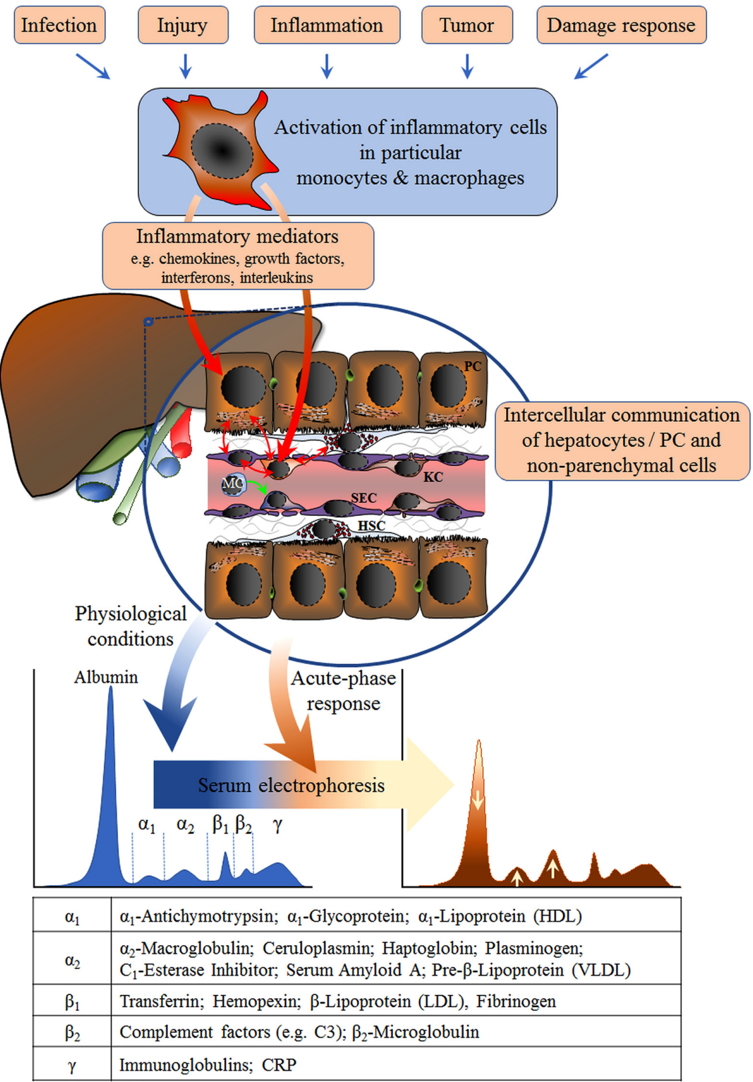
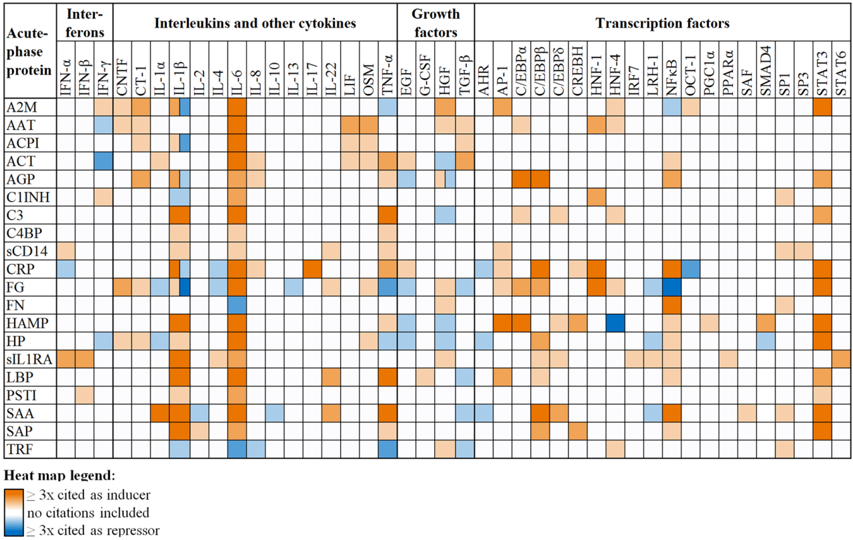
The expression of acute-phase proteins (APP’s) maintains homeostasis and tissue repair, but also represents a central component of the organism’s defense strategy, especially in the context of innate immunity. Accordingly, an inflammatory response is accompanied by significant changes in the serum protein composition, an aspect that is also used diagnostically. As the main site of APP synthesis the liver is constantly exposed to antigens or pathogens via blood flow, but also to systemic inflammatory signals originating either from the splanchnic area or from the circulation. Under both homeostatic and acute-phase response (APR) conditions the composition of APP’s is determined by the pattern of regulatory mediators derived from the systemic circulation or from local cell populations, especially liver macrophages. The key regulators mentioned here most frequently are IL-1β, IL-6 and TNF-α. In addition to a variety of molecular mediators described mainly on the basis of in vitro studies, recent data emphasize the in vivo relevance of cellular key effectors as well as molecular key mediators and protein modifications for the regulation and function of APP’s. These are aspects, on which the present review is primarily focused.
Overview
The claims and statistics of this paper haven’t been checked yet.
Free: it reads the open-access text and checks the first 5 claims that cite a source we can check. Create a free account to check every claim.
Integrity signals
Registry
Cites
Statistics
Figures
Verification
Claims the paper makes
The claims and statistics of this paper haven’t been checked yet.
Free: it reads the open-access text and checks the first 5 claims that cite a source we can check. Create a free account to check every claim.
Claims other papers make about this one
Each is checked against this paper’s own text: does it say what the citing paper says it does?
In the citing paper
“Consistent with their function as the primary synthetic cell type in the liver, hepatocytes are the predominant producers of major APPs, including C-reactive protein (CRP), serum amyloid A (SAA), serum amyloid P, complement factors, ferritin, and lipopolysaccharide binding protein [28, 32].”
From Inflammation and immunity in liver homeostasis and disease: a nexus of hepatocytes, nonparenchymal cells and immune cells (2025) · doi:10.1038/s41423-025-01313-7 · cites this paper as [32]
Self-check
Percentages, sums and reported differences re-computed from the paper’s own numbers.
The self-check needs the paper’s full text.
Citations
Cites
1 retracted
Serum amyloid a induces M2b-like macrophage polarization during liver inflammation
Wang, Y., Huang, H., Sun, R.-H., Chen, B., Fang, H., Li, Q., Yin, N., Li, X., Liu, J., Mou, X., et al. (2017) · Oncotarget · doi:10.18632/oncotarget.22652 · Cited by 24
RetractedAcute-Phase Proteins and Other Systemic Responses to Inflammation
Gabay, C., & Kushner, I. (1999) · New England Journal of Medicine · doi:10.1056/nejm199902113400607 · Cited by 6,734
Murray, P. J. (2017) · Annual Review of Physiology · doi:10.1146/annurev-physiol-022516-034339 · Cited by 2,981
Tissue-Resident Macrophage Enhancer Landscapes Are Shaped by the Local Microenvironment
Lavin, Y., Winter, D., Blecher-Gonen, R., David, E., Keren-Shaul, H., Merad, M., Jung, S., & Amit, I. (2014) · Cell · doi:10.1016/j.cell.2014.11.018 · Cited by 2,167
Davies, L. C., Jenkins, S. J., Allen, J. E., & Taylor, P. R. (2013) · Nature Immunology · doi:10.1038/ni.2705 · Cited by 2,096
F4/80, a monoclonal antibody directed specifically against the mouse macrophage
Austyn, J. M., & Gordon, S. (1981) · European Journal of Immunology · doi:10.1002/eji.1830111013 · Cited by 1,579
Liver Macrophages in Tissue Homeostasis and Disease
Krenkel, O., & Tacke, F. (2017) · Nature Reviews Immunology · doi:10.1038/nri.2017.11 · Cited by 1,424
Pepys, M. B., & Baltz, M. L. (1983) · Advances in Immunology · doi:10.1016/s0065-2776(08)60379-x · Cited by 1,272
Takeda, K., Clausen, B. E., Kaisho, T., Tsujimura, T., Terada, N., Förster, I., & Akira, S. (1999) · Immunity · doi:10.1016/s1074-7613(00)80005-9 · Cited by 1,220
Serum amyloid A, the major vertebrate acute‐phase reactant
Uhlar, C. M., & Whitehead, A. S. (1999) · European Journal of Biochemistry · doi:10.1046/j.1432-1327.1999.00657.x · Cited by 1,106
Cited by
Humoral Innate Immunity and Acute-Phase Proteins
Mantovani, A., & Garlanda, C. (2023) · New England Journal of Medicine · doi:10.1056/nejmra2206346 · Cited by 310
Beyer, D., Hoff, J., Sommerfeld, O., Zipprich, A., Gaßler, N., & Press, A. T. (2022) · Molecular Medicine · doi:10.1186/s10020-022-00510-8 · Cited by 142
“Consequently, hepatocyte housekeeping proteins, such as serum albumin synthesis and bile formation, are significantly reduced (Gulhar et al. 2018; Ehlting et al. 2021).”
Background(2025) · doi:10.1038/s41423-025-01313-7 · Cited by 97
“Consistent with their function as the primary synthetic cell type in the liver, hepatocytes are the predominant producers of major APPs, including C-reactive protein (CRP), serum amyloid A (SAA), serum amyloid P, complement factors, ferritin, and lipopolysaccharide binding protein [28, 32].”
den Hartigh, L. J., May, K. S., Zhang, X., Chait, A., & Blaser, M. J. (2023) · Frontiers in Cardiovascular Medicine · doi:10.3389/fcvm.2023.1197432 · Cited by 95
“Similar to CRP, hepatic SAA is regulated by the above inflammatory cytokines (IL-1β, IL-6, and TNFα 89, 90), although CRP can be induced by pathways related to interleukin17 (IL-17) and hepatocyte nuclear factor (HNF), in contrast to SAA (91).”
BackgroundResultRecent advances in electrochemical nanobiosensors for cardiac biomarkers
Negahdary, M., Sharma, A., Anthopoulos, T. D., & Angnes, L. (2023) · TrAC Trends in Analytical Chemistry · doi:10.1016/j.trac.2023.117104 · Cited by 44
Li, L., Sun, H., Chen, J., Ding, C., Yang, X., Han, H., & Sun, Q. (2023) · Cell Reports · doi:10.1016/j.celrep.2023.112697 · Cited by 42
Stress-responsive regulation of extracellular proteostasis
Mesgarzadeh, J. S., Buxbaum, J. N., & Wiseman, R. L. (2022) · The Journal of Cell Biology · doi:10.1083/jcb.202112104 · Cited by 38
Downregulation of HNF4A enables transcriptomic reprogramming during the hepatic acute-phase response
Ehle, C., Iyer-Bierhoff, A., Wu, Y., Xing, S., Kiehntopf, M., Mosig, A. S., Godmann, M., & Heinzel, T. (2024) · Communications Biology · doi:10.1038/s42003-024-06288-1 · Cited by 33
“The role of LETFs within transcriptomic reprogramming during the APR is however less well investigated 25 – 27 .”
BackgroundDisrupting circadian rhythms promotes cancer-induced inflammation in mice
Lawther, A. J., Phillips, A. J. K., Chung, N.-C., Chang, A., Ziegler, A. I., Debs, S. R., Sloan, E. K., & Walker, A. K. (2022) · Brain Behavior & Immunity - Health · doi:10.1016/j.bbih.2022.100428 · Cited by 36
“Meanwhile, hepatic Il-6 is an important regulator of the acute phase response (Ehlting et al., 2021) and is involved in metastatic spread in some types of breast cancer (Ara and Declerck, 2010; Asgeirsson et al.”
BackgroundSenousy, S. R., Ahmed, A. F., Abdelhafeez, D. A., Khalifa, M. M. A., Abourehab, M. A. S., & El‐Daly, M. (2022) · Drug Design Development and Therapy · doi:10.2147/dddt.s370460 · Cited by 36
“In sepsis, hepatocytes are hypothesized to play a crucial role through the release of acute-phase proteins into the systemic circulation, thus, playing a regulatory role in excessive inflammation or immunosuppression.(8) Liver injury associated with sepsis is due to two main complications: hypoxic hepatitis and choles…”
BackgroundLuo, J., Li, L., Chang, B. Y., Zhu, Z., Deng, F., Hu, M., Yu, Y., Lu, X., Chen, Z., Zuo, D., et al. (2022) · Cellular and Molecular Gastroenterology and Hepatology · doi:10.1016/j.jcmgh.2022.03.011 · Cited by 31
“Local inflammation or injuries in the liver during hepatic fibrosis could induce the acute-phase protein expression to maintain homeostasis and tissue repair.(37,38) Therefore, it is not surprising that our current study found that plasma MBL levels were higher in cirrhosis patients than in healthy controls.”
BackgroundAmer, H., Flanagan, K. L., Kampan, N. C., Itsiopoulos, C., Scott, C. L., Kartikasari, A. E. R., & Plebanski, M. (2025) · Cancers · doi:10.3390/cancers17101691 · Cited by 31
“APRs promote the synthesis of proteins such as C-reactive protein (CRP), haptoglobins, serum amyloid-A (SAA), and α 1-antichymotrypsin, while decreasing the production of albumin, transferrin, and fibronectin [69].”
Noreen, S., Shehzadi, S., Egbuna, C., & Aja, P. M. (2025) · Food Science & Nutrition · doi:10.1002/fsn3.70549 · Cited by 22
“Interleukin-6 (IL-6) controls the acute phase response by making the liver generate molecules like C-reactive protein (CRP) (Ansar et al. 2016; Ehlting et al. 2021).”
Monsalve, Y., Cruz‐Pacheco, A. F., & Orozco, J. (2025) · ACS Sensors · doi:10.1021/acssensors.4c03652 · Cited by 18
Pierneef, L., van Hooij, A., de Jong, D., Fat, E. M. T. K., van Meijgaarden, K. E., Petruccioli, E., Vanini, V., Roukens, A. H. E., Goletti, D., Corstjens, P. L. A. M., et al. (2022) · iScience · doi:10.1016/j.isci.2022.105873 · Cited by 18
“IL-6 is a proinflammatory cytokine produced by macrophages.(53,65) In line with previous literature, these five markers were also elevated in COVID-19 patients compared to healthy controls.”
Nuclear receptors: pathophysiological mechanisms and drug targets in liver disease
Dubois, V., Lefèbvre, P., Staels, B., & Eeckhoute, J. (2024) · Gut · doi:10.1136/gutjnl-2023-331741 · Cited by 18
Malekpour, K., Hazrati, A., Soudi, S., Roshangar, L., Pourfathollah, A. A., & Ahmadi, M. (2023) · Heliyon · doi:10.1016/j.heliyon.2023.e15489 · Cited by 17
“The liver plays an essential role in inflammation through the production of inflammatory cytokines and acute phase proteins (APP) [24,28].”
BackgroundToxicodynamic of combined mycotoxins: MicroRNAs and acute‐phase proteins as diagnostic biomarkers
Murtaza, B., Li, X., Nawaz, M. Y., Saleemi, M. K., Li, G., Jin, B., Wang, L., & Xu, Y. (2024) · Comprehensive Reviews in Food Science and Food Safety · doi:10.1111/1541-4337.13338 · Cited by 16
Organ support in sepsis: A panoramic view from infection to death
Srivastava, V., & Singh, S. (2023) · Medical Journal Armed Forces India · doi:10.1016/j.mjafi.2023.10.010 · Cited by 15
Wolf, S. D., Ehlting, C., Müller‐Dott, S., Poschmann, G., Petzsch, P., Lautwein, T., Wang, S., Helm, B., Schilling, M., Sáez-Rodríguez, J., et al. (2023) · Hepatology Communications · doi:10.1097/hc9.0000000000000208 · Cited by 15
Self-citationHamar, P. (2024) · International Journal of Molecular Sciences · doi:10.3390/ijms25063435 · Cited by 14
“…definition is based Unlike APPs produced in the liver, which circulate throughout the bloodstream, local APPs are primarily synthesized at the site of injury or in fl ammation. on the electrophoretic separation of plasma proteins, which demonstrates elevation of the alpha1 and alpha2 fractions [21].”
BackgroundMethodBădoiu, S. C., Enescu, D. M., Tătar, R., Stănescu-Spînu, I.-I., Miricescu, D., Greabu, M., Ionel, I. P., & Jinga, V. (2024) · Journal of Clinical Medicine · doi:10.3390/jcm13102794 · Cited by 13
“Some of the acute-phase proteins have been used as diagnostic tools and prognostic markers in different types of trauma and infections [7].”
Murray, G., Thomas, S., Dunlea, T., Jimenez, A. L. N., Eiferman, D. S., Nahikian-Nelms, M. L., & Roberts, K. M. (2023) · Nutrition in Clinical Practice · doi:10.1002/ncp.11017 · Cited by 13
Hashmi, F., Aqeel, S., Zuberi, U. F., & Khan, W. (2023) · Cytokine · doi:10.1016/j.cyto.2023.156305 · Cited by 12
Serna-Duque, J. A., Cuesta, A., Sánchez‐Ferrer, Á., & Esteban, M. Á. (2022) · Fish & Shellfish Immunology · doi:10.1016/j.fsi.2022.07.013 · Cited by 13
Acute-phase proteins as indicators of disease severity and mortality in COVID-19 patients
Chrostek, L., Gan, K., Kazberuk, M., Kralisz, M., Gruszewska, E., Panasiuk, A., & Cylwik, B. (2024) · Scientific Reports · doi:10.1038/s41598-024-71325-2 · Cited by 11
“Infection by SARS-CoV-2 coronavirus induces human immune system to inflammatory response which in turn stimulates the liver to synthesis acute-proteins (APPs) 1,2 .”
BackgroundAdipokines—A Cohort Prospective Study in Children with Severe Burns
Bădoiu, S. C., Enescu, D. M., Tătar, R., Miricescu, D., Stănescu-Spînu, I.-I., Greabu, M., Coricovac, A. M., Badoiu, S. E., & Jinga, V. (2024) · International Journal of Molecular Sciences · doi:10.3390/ijms25147630 · Cited by 11
“The adipose tissue is one of the main organs involved in the systemic response to major trauma (including severe burns, extensive surgical procedures), sepsis, and malignancies [5,6].”
BackgroundPereiro, P., Tur, R., García, M., Figueras, A. J., & Novoa, B. (2024) · Frontiers in Immunology · doi:10.3389/fimmu.2024.1522666 · Cited by 10
Floreste, F. R., Titon, B., Titon, S. C. M., Muxel, S. M., de Figueiredo, A. C., Gomes, F. R., & Assis, V. R. (2022) · Comparative Biochemistry and Physiology Part B Biochemistry and Molecular Biology · doi:10.1016/j.cbpb.2022.110784 · Cited by 10
da Silva, G. P., Pereira, T. H. D. S., de Melo, J. T., Imbeloni, A. A., de Andrade, R. D. S., Monteiro, M. V. B., Monteiro, F. O. B., & Takeshita, R. S. C. (2023) · Journal of Medical Primatology · doi:10.1111/jmp.12644 · Cited by 11
McCarthy, W. C., Sherlock, L. G., Grayck, M. R., Zheng, L., Lacayo, O. A., Solar, M., Orlicky, D. J., Dobrinskikh, E., & Wright, C. J. (2023) · The Journal of Immunology · doi:10.4049/jimmunol.2200900 · Cited by 9
Dervishi, E., Hailemariam, D., Goldansaz, S. A., & Ametaj, B. N. (2023) · Veterinary Sciences · doi:10.3390/vetsci10070445 · Cited by 7
Garcinuño, S., Lalueza, A., Gil‐Etayo, F. J., Díaz‐Simón, R., Lizasoaín, I., Moraga, A., Díaz-Benito, B., Naranjo, L., Cabrera-Marante, Ó., Pleguezuelo, D. E., et al. (2024) · Frontiers in Immunology · doi:10.3389/fimmu.2024.1443096 · Cited by 8
Cho, H. Y., Park, K. H., Oh, E., Lee, M. J., Choi, B. Y., & Im, E. M. (2024) · Innate Immunity · doi:10.1177/17534259241306237 · Cited by 7
“36 They are mainly produced by the liver in response to pro-in fl ammatory cytokines and include C-reactive protein (CRP), hepcidin, mannose-binding lectin (MBL), pentraxin-2, retinol-binding protein 4 (RBP4), serum amyloid A1 (SAA1), complement proteins, and serpin A1.”
InfluentialChen, X., Lin, Q., Hong, Y., Jiang, S., Sun, Q., Huang, J., Zhang, H., Wang, Y., Wang, X., Li, C., et al. (2025) · Sensors and Actuators B Chemical · doi:10.1016/j.snb.2025.138343 · Cited by 7
Lipid nanoparticles from L. meyenii Walp mitigate sepsis through multimodal protein corona formation
Sung, J. J., Shaw, J. R., Rezende, J. D., Dharmaraj, S., Cottingham, A. L., Weldemariam, M. M., Jones, J. W., Kane, M. A., & Pearson, R. M. (2025) · Molecular Therapy — Methods & Clinical Development · doi:10.1016/j.omtm.2025.101491 · Cited by 7
Fryk, E., Wilsson, Å., Tompa, A., Jansson, P., & Faresjö, M. (2023) · Clinical & Experimental Immunology · doi:10.1093/cei/uxad131 · Cited by 7
“Acute-phase proteins (APP), such as procalcitonin (PCT), ferritin, tissue protein activator (tPA), fibrinogen, and serum amyloid A (SAA), may have both pro-and anti-inflammatory effects on different immune cells [7].”
BackgroundMice develop obesity and lose myocardial metabolic flexibility months after exertional heat stroke
Alzahrani, J. M., Smuder, A. J., Gambino, B. J., Delgado, C., Rua, M. T., Montalvo, R. N., Fitton, F. P., Morse, D. A., & Clanton, T. L. (2025) · Communications Biology · doi:10.1038/s42003-025-07484-3 · Cited by 5
“Sincealbuminisa ‘ negative ’ acute phase protein, its expected response would be to reduce plasma albumin concentrations 43 .”
Chen, W., Liu, W., & Miao, C. (2025) · Scientific Reports · doi:10.1038/s41598-025-17128-5 · Cited by 5
“The liver plays a central role in regulating inflammatory responses through the production of acute-phase proteins, cytokine metabolism, and immune cell activation 41 .”
Irfan, B., Ghafarian, A. M., Salahie, A., Shihabi, K., Ewidat, O., Riyad, N., Kamel, M., Khan, I., & Tesfaye, B. (2025) · Journal of Craniofacial Surgery · doi:10.1097/scs.0000000000012226 · Cited by 5
Burn-Induced Apoptosis in the Livers of Aged Mice Is Associated With Caspase Cleavage of Bcl-xL
Muro, I., Qualman, A. C., Kovacs, E. J., & Idrovo, J. (2023) · Journal of Surgical Research · doi:10.1016/j.jss.2023.04.020 · Cited by 5
Identification of a Novel β-Defensin Gene in Gilthead Seabream (Sparus aurata)
Ferez-Puche, M., Serna-Duque, J. A., Cuesta, A., Sánchez‐Ferrer, Á., & Esteban, M. Á. (2024) · Marine Biotechnology · doi:10.1007/s10126-024-10367-z · Cited by 5
Muro, I., Qualman, A. C., Monge, K. M., Pratap, A., Kovacs, E. J., & Idrovo, J. (2025) · PLoS ONE · doi:10.1371/journal.pone.0316813 · Cited by 5
McGill, S., Burchmore, R., Pomeroy, P. P., & Kennedy, M. W. (2022) · Frontiers in Ecology and Evolution · doi:10.3389/fevo.2021.802510 · Cited by 5
Cancer cachexia – adopting a systems wide approach
Sayers, J., Skipworth, R. J. E., & Laird, B. J. A. (2023) · Current Opinion in Clinical Nutrition & Metabolic Care · doi:10.1097/mco.0000000000000951 · Cited by 6
“The hepatic acute phase response is a well recognized feature of cachexia and, while the precise functions of acutephase proteins are unclear, they have roles in activation of the complement system, phagocytosis, and regulation of proteolysis [13,14].”
BackgroundTate, B. N., Deys, M. M., Gutierrez-Oviedo, F. A., Ferguson, A. D., Zang, Y., Bradford, B. J., Deme, P., Haughey, N. J., & McFadden, J. W. (2023) · Journal of Dairy Science · doi:10.3168/jds.2023-23688 · Cited by 5
“These changes could be indicative of a concerted inflammatory response in the liver in response to LPC treatment, during which the organ switches protein synthesis toward the production of acute phase proteins (Ehlting et al., 2021).”
BackgroundAsemani, S., Jourabchi‐Ghadim, N., Arefhosseini, S., & Ebrahimi‐Mameghani, M. (2025) · Science Progress · doi:10.1177/00368504251333218 · Cited by 5
“54 In contrast, the systemic in fl ammatory indices we utilized are derived from blood cell counts and their ratios (e.g. neutrophils, lymphocytes, platelets), which re fl ect the equilibrium of various immune cell populations rather than the acute in fl ammatory state.”
Dugrenot, E., Guernec, A., Orsat, J., & Guerrero, F. (2024) · Communications Biology · doi:10.1038/s42003-024-06963-3 · Cited by 5
Ortín-Bustillo, A., Goyena, E., Martínez-Martínez, A., Cerón, J. M. C., Martínez-Subiela, S., López-Martínez, M. J., Manzanilla, E. G., Tvarijonaviciute, A., Gonzalez‐Bulnes, A., & Muñoz-Prieto, A. (2025) · The Veterinary Journal · doi:10.1016/j.tvjl.2025.106458 · Cited by 4
Shang, Y., Duan, Y., Liu, J., Guo, R., Fang, Z., Ma, F., & Guo, B. (2025) · Medicine · doi:10.1097/md.0000000000046482 · Cited by 4
“[31] Increased inflammation and decreased albumin may exacerbate BC risk by reducing anti-inflammatory capacity, weakening the antioxidant effect and increasing oxidative stress.”
Roles of zinc in the gut-liver axis
Grüngreiff, K., Reinhold, D., & Maret, W. (2026) · Annals of Hepatology · doi:10.1016/j.aohep.2026.102188 · Cited by 6
Systemic inflammation in recessive dystrophic epidermolysis bullosa: a 5-year longitudinal study
Karakioulaki, M., Yang, H., Hess, M., Binder, H., Eyerich, K., & Has, C. (2026) · British Journal of Dermatology · doi:10.1093/bjd/ljag082 · Cited by 5
Orsat, J., Gouin, E., Guernec, A., Balestra, C., Théron, M., Leman, G., & Guerrero, F. (2026) · Physiological Genomics · doi:10.1152/physiolgenomics.00082.2026 · Cited by 4
Júnior, W. F. D. S., Lopes, M. A. F., Antunes, M. M., Costa, K. M. D. O., Diniz, A. B., Nakagaki, B. N., de Miranda, C. D. M., Oliveira, H. M. D. C., Reis, A. C., Libreros, S., et al. (2024) · Journal of Leukocyte Biology · doi:10.1093/jleuko/qiae082 · Cited by 5
Kale, P. P., Mani, A., Anarthe, R., & Mustilwar, R. G. (2021) · Journal of Cellular Biotechnology · doi:10.3233/jcb-210049 · Cited by 4
“E.g.: Albumin, Transferrin, Transthyretin, Alpha – Fetoprotein, ILGF-1 [2, 3].”
The Role of Uremic Retention Solutes in the MIA Syndrome in Hemodialysis Subjects
Ciceri, P., Artioli, L., Magagnoli, L., Barassi, A., Alvarez, J., Massy, Z. A., Galassi, A., & Cozzolino, M. G. (2022) · Blood Purification · doi:10.1159/000524335 · Cited by 4
Jones, T. B., Chu, P., Wilkey, B., Lynch, L. M., & Jentarra, G. M. (2024) · Brain Sciences · doi:10.3390/brainsci14070677 · Cited by 4
“Liver levels of LBP, which is produced by the liver, adipose tissue, and cells of the intestine [81] in response to Gram-negative bacterial infections, were not significantly different between any subject groups (Figure 11B).”
BackgroundDavidson, J. A., Iguidbashian, J., Khailova, L. S., Lehmann, T., Suarez‐Pierre, A., Thomson, L. M., Zakrzewski, J., Ali, E. A., Lee, S., Frank, B. S., et al. (2025) · Translational research · doi:10.1016/j.trsl.2025.01.002 · Cited by 3
Zhou, J., He, X., Xiang, Z., Wang, M., Xu, W., Wang, Y., Chen, Y., Zhang, T., Wang, L., & 毛岸荣 (2026) · Molecular Cancer · doi:10.1186/s12943-026-02616-7 · Cited by 4
“ORM is a secreted and acute-phase reactive glycoprotein that is synthesized mainly in hepatocytes [29].”
Chaouki, G., Parry, L., Vituret, C., Jousse, C., Leremboure, M., Bourgne, C., Mosoni, L., Delorme, Y., Djelloul-Mazouz, M., Hermet, J., et al. (2025) · iScience · doi:10.1016/j.isci.2025.112030 · Cited by 3
“66 In liver, we observed that expression of Saa1 , Saa2 , and Apcs , encoding three major positive APPs (two SAA isoforms and the serum amyloid P component, respectively) was strongly induced at the pre-Cx stage, and further increased at the Cx stage (Figure 5B).”
Nhau, P. T., Gamede, M. W., Khathi, A., & Sibiya, N. H. (2025) · Pathophysiology · doi:10.3390/pathophysiology32030039 · Cited by 3
Gupta, S., Rishi, V., & Aggarwal, A. (2025) · The Journal of Nutritional Biochemistry · doi:10.1016/j.jnutbio.2025.110050 · Cited by 3
Ansari, S., Zia, M. K., Ahsan, H., Hashmi, M. A., & Khan, F. H. (2023) · Journal of Biomolecular Structure and Dynamics · doi:10.1080/07391102.2023.2240420 · Cited by 3
“Apart from binding and transportation, a 2M has been linked to Alzehimer’s disease, since it mediates the elimination and breakdown of amyloid-beta peptide (A b ), the main constituent of b -amyloid plaque (Ehlting et al., 2021; Braun, 2023).”
Bosgana, P., Ampazis, D., Vlachakos, V., Tzouvelekis, A., & Sampsonas, F. (2025) · Diagnostics · doi:10.3390/diagnostics15020145 · Cited by 3
“Bacteria and viruses stimulate monocytes and macrophages, which synthesize cytokines IL-1, IL-6, and TNFa [58,59].”
Doğanay, B., & Çelebi, Ö. Ö. (2023) · Journal of Medicine and Palliative Care · doi:10.47582/jompac.1256573 · Cited by 3
A review on the role of IL-6 in the onset and progression of nasopharyngeal carcinoma
Tao, Y., He, L., Wang, B., Jiang, M., Tang, L. M., Luo, J., Lin, T., & He, Y. (2025) · Medical Oncology · doi:10.1007/s12032-025-03109-1 · Cited by 2
“Any tissue stimu - lus that disrupts the body’s homeostasis may mediate the reaction due to changes in the concentration of acute phase response protein [21].”
Li, M., Jiang, Z., & Zhang, D. (2025) · Frontiers in Medicine · doi:10.3389/fmed.2025.1637536 · Cited by 2
Detection of C-Reactive Protein in Serum with Near-Infrared Fluorescent Sensors
Derichsweiler, C., Stegemann, J., Ackermann, J., Herbertz, S., & Kruss, S. (2026) · ACS Sensors · doi:10.1021/acssensors.5c02955 · Cited by 2
Borca, C.-I., Ivan, C.-S., Fira-Mlădinescu, C., Margan, R., Margan, M.-M., Cîndrea, A. C., Balasa-Virzob, C.-R., Vlaicu, B., & David, V.-L. (2026) · Children · doi:10.3390/children13030326 · Cited by 3
“During advanced infection, the liver undergoes a metabolic shift, redirecting protein synthesis away from constitutive proteins like albumin and toward acute-phase reactants necessary for immune defense [74–76].”
Cuproptosis in spinal cord injury: emerging mechanisms and immunological relevance
Li, L.-H., Zhang, J.-Q., Ying, X.-H., Huang, Y., Xu, C.-C., Wang, X., He, K.-L., & Ma, R. (2026) · Annals of Medicine · doi:10.1080/07853890.2026.2641867 · Cited by 3
Nwofor, O. V., Leipold, A. M., Chen, Q., Geffers, R., Saliba, A., Goldmann, O., & Medina, E. (2026) · Frontiers in Immunology · doi:10.3389/fimmu.2026.1776887 · Cited by 2
Small and Mighty: Micronutrients at the Intersection of Neonatal Immunity and Infection
Sherlock, L. G., & Krebs, N. F. (2023) · NeoReviews · doi:10.1542/neo.24-3-e158 · Cited by 2
Acute phase response in experiments with simulated weightless environment
Larina, O. N., Bekker, A., & Tyurin-Kuz’min, A. Y. (2023) · Integrative Physiology · doi:10.33910/2687-1270-2023-4-2-187-197 · Cited by 2
Sayed, M. A., Abdel-Ghaffar, A.-R. B., Baky, S. M. M. A. E., AbuBakr, H. O., Moselhy, S. S., & Abdel‐Hameed, R. (2025) · Scientific Reports · doi:10.1038/s41598-025-19665-5 · Cited by 2
Characterisation of the hepatocyte response to long-term Listeria monocytogenes infection
Descoeudres, N. (2021) · theses.fr (ABES) · doi:10.70675/718fdf9bzc6bcz428bz94b5zf474b268f5b9 · Cited by 3
Serum transthyretin levels and disease activity in patients with primary Sjögren’s syndrome
Peng, Y., Lu, F.-Y., & Deng, Y.-B. (2024) · Therapeutic Advances in Musculoskeletal Disease · doi:10.1177/1759720x241283528 · Cited by 1
Wunderlich, F. T., Daniela Gerovska, D., Delić, D., & Araúzo-Bravo, M. J. (2025) · International Journal of Molecular Sciences · doi:10.3390/ijms26073173 · Cited by 1
“APPs exert manifold functions, and a given APP can even exert opposing functions [18].”
InfluentialParklak, W., Chuljerm, H., Kawichai, S., Fakfum, P., Jiraya, P., Kijkuokool, P., Khiaolaongam, W., Somnuk, S., & Kulprachakarn, K. (2025) · Nutrients · doi:10.3390/nu17172867 · Cited by 1
“IL-6 is a key pro-inflammatory cytokine that plays a central role in the progression of atherosclerosis by promoting hepatic synthesis of acute-phase reactants, activating endothelial cells, and facilitating leukocyte recruitment into vascular tissue [5,6].”
Chenxin, Z., Liu, H., Yang, B., Zefeng, Z., ZHANG, M., Zhang, S., ZhiHua, F., & Zhang, D. (2025) · Microorganisms · doi:10.3390/microorganisms14010018 · Cited by 1
“Pathogen invasion activates the innate immune system in the host, stimulating hepatic synthesis of acute-phase proteins such as SAA and CRP, whose elevated concentrations indicate the severity of infection-induced inflammation [41,42].”
Mi, L., Lakhani, I., Lee, S., Wong, W. T., Tse, G., & Fang, F. (2025) · BMC Cardiovascular Disorders · doi:10.1186/s12872-025-05464-3 · Cited by 1
“Cytokine-induced acute-phase responses increase CRP while suppressing albumin synthesis, highlighting the importance of composite indices that reflect inflammatory burden and systemic reserve [12, 15].”
Hepatic Smad4 mediates antibacterial defense via macrophage recruitment
Chen, L., Zhao, W., Wu, Q., Lin, C., Wang, R., Song, Z., Luo, H., Yu, Y., Weiß, G., Min, J., et al. (2026) · Element · doi:10.20517/element.2026.05 · Cited by 1
From glycosylation to inflammation: insights from NMR-Derived GlycA and GlycB
Ahmed, D., Silva, K. C. S., Wium, M., Zerbini, L. F., & Cacciatore, S. (2026) · Journal of Circulating Biomarkers · doi:10.33393/jcb.2026.3772 · Cited by 1
“While classical mediators like CRP or cytokines provide a snapshot of acute signaling, they often contribute negligibly to the NMR spectrum due to their lower molar concentrations and limited glycosylation density (21).”
Xia, Y., Li, Z., Li, Z., Yan, D., 肖德梅, Xia, Y., Li, J., & Liu, Y. (2026) · International Immunopharmacology · doi:10.1016/j.intimp.2026.117486 · Cited by 1
Cyclin D1 regulates the hepatic response to feeding: Evidence for non-cell cycle roles in the liverPreprint
Wu, H., Hauser, J. I., Yang, N., Timchenko, N., Klaers, M., Salekeen, R., Manivel, J. C., Abrahante, J. E., Laux, L., Yousefzadeh, M. J., et al. (2026) · bioRxiv (Cold Spring Harbor Laboratory) · doi:10.64898/2026.05.25.727739 · Cited by 1
Retinol rescues immune cells from inflammation in bacterial infection
Nichita, A., Anoor, P. K., & Burgula, S. (2022) · International Journal of Health Sciences · doi:10.53730/ijhs.v6ns1.5328
“During bacterial infection, most of the Gram-negative bacteria trigger inflammation due to lipopolysaccharide LPS binding to TLR4 receptor [6], a sequence of cascade begins which initiates the production of different cytokines IL6, TNFα, IL10 [7] inflammatory peptides SAA, PNOC, NGAL, and other transcription factors N…”
BackgroundNakamura, T. (2023) · Biomedical Journal of Scientific & Technical Research · doi:10.26717/bjstr.2023.49.007861
Nakamura, T. (2023) · Biomedical Journal of Scientific & Technical Research · doi:10.26717/bjstr.2023.50.008024
Hidayati, M. D., Iswanti, F. C., Djauzi, S., Koesnoe, S., & Sadikin, M. (2023) · Asia Pacific Allergy · doi:10.5415/apallergy.0000000000000124
“Under inflammatory conditions, macrophages and monocytes release inflammatory mediators such as IL-1, TNF-α , and the IL-6 cytokine family, stimulating hepatocytes to produce more positive acute-phase proteins [38].”
BackgroundThe Association of Serum Profile of Transferrin Isoforms with COVID-19 Disease Severity
Chrostek, L., Gan, K., Kazberuk, M., Kralisz, M., Janicka, K., Gruszewska, E., Panasiuk, A., & Cylwik, B. (2024) · Journal of Clinical Medicine · doi:10.3390/jcm13082446
“Many of these are positive proteins of the acute-phase, but among these are also transferrin and albumin, which are negative acute-phase proteins [22].”
BackgroundBizieff, A., Cheng, M., Chang, K., Mohammed, H., Ziari, N., Nyangau, E., Fitch, M. D., & Hellerstein, M. K. (2024) · The Journal of Physiology · doi:10.1113/jp286307
“Nor does systemic inflammation explain the observed changes, in that we did not find any changes in protein fluxes in liver, which is the classic tissue to respond to systemic inflammation with changes in acute-phase protein synthesis (Ehlting et al., 2021).”
Pulsatile Right Ventricle to Pulmonary Artery Extracorporeal Membrane Oxygenation in a Pigs
Itoh, H., Shingo, I., Hideaki, O., Midori, F., Okahara, S., Teruyuki, K., Nguyen, T. B., & Le, N. T. (2024) · Tạp chí Phẫu thuật và Tim mạch và Lồng ngực Việt Nam · doi:10.47972/vjcts.v47i.1152
Atata, J. A., Alabi, O. A., Ajadi, A. A., Adam, M., Abd-Ul-Salam, H. A. H., Ikwe-Agada, L. C., & Ghali, M. F. (2024) · Sahel Journal of Veterinary Sciences · doi:10.54058/5944px51
“Acute phase response (APR) is a broad term used to describe a range of systemic and metabolic changes in an animal that act together to neutralize the negative effects of inflammation, infection, trauma, ischemic necrosis, or malignant growth (Kushner and Mackiewicz, 2020; Ehlting et al ., 2021).”
BackgroundAlubaidy, Z. F., & Hasan, H. R. (2024) · Journal of the Faculty of Medicine Baghdad · doi:10.32007/jfacmedbaghdad.6632276
Wei, X., Shangguan, H., Wu, L., Gao, L., Pan, Y., Cheng, Y., Cheng, H., & Wang, Y. (2025) · International Dental Journal · doi:10.1016/j.identj.2025.103958
“These changes may represent adaptive physiological responses (eg, acute-phase protein synthesis 38 ) rather than toxicity.”
Gupta, S., Rishi, V., & Aggarwal, A. (2025) · Free Radical Biology and Medicine · doi:10.1016/j.freeradbiomed.2025.11.049
Soares, S. D. S. (2023) · LA Referencia (Red Federada de Repositorios Institucionales de Publicaciones Científicas) · Cited by 1
Targeting SAA expression via siRNA mitigates preterm birth induced by maternal inflammation
Lei, J., Liu, Y., Liu, J., Liu, A., Jones‐Beatty, K., Enninga, E. A. L., Townsel, C., & Burd, I. (2026) · Frontiers in Pharmacology · doi:10.3389/fphar.2026.1749966
Zhang, J., Liu, H., Wang, Y., & Zhao, Y. (2026) · Journal of Fish Diseases · doi:10.1111/jfd.70135
Rasul, R. A., & Hasan, H. R. (2026) · Journal of the Faculty of Medicine Baghdad · doi:10.32007/jfacmedbaghdad3258
Impact de l'obésité sur la toxicologie des contaminants alimentaires : l'exemple de la Fumonisine B1
Dopavogui, L. (2022) · theses.fr (ABES) · doi:10.70675/8fcfcad7z134cz4df2zade9z155636aa8994 · Cited by 1
Metadata
- Authors
- Ehlting, C., Wolf, S. D., & Bode, J. G.
- Affiliations
- Düsseldorf University Hospital (DE)
- Corresponding author
- Ehlting, Christian
- Bode, Johannes G.
- Venue
- Biological Chemistry
- Publisher
- Walter de Gruyter GmbH
- Published
- 2021-07-29
- Volume
- 402
- Issue
- 9
- Pages
- 1129-1145
- ISSN
- 1431-6730 (ISSN-L)
- 1437-4315
- OpenAlex
- W3184437098
- Cited by
- 115
- References
- 145
- Citations by year
- 2026: 32 · 2025: 27 · 2024: 18 · 2023: 23 · 2022: 13 · 2021: 2
- FWCI
- 1.43
- Type
- journal article
- Language
- en
- Open access
- hybrid
- doi.org
- Locations
- Biological Chemistry (publishedVersion, cc-by)
- PubMed (publishedVersion)
- Funders
- Deutsche Forschungsgemeinschaft (190586431)
- Topics
- Life Sciences › Immunology and Microbiology › Immunology › Biomarkers in Disease Mechanisms
- Life Sciences › Agricultural and Biological Sciences › Animal Science and Zoology › Animal health and immunology
- Life Sciences › Immunology and Microbiology › Immunology › Immune Response and Inflammation
- Keywords
- acute phase proteins, acute phase response, innate immunity, liver, hepatic macrophages, Kupffer cells, systemic inflammation, IL-1β, interleukin-6, TNF-α, serum protein composition, inflammatory mediators, protein modification, tissue repair
- MeSH terms
- Acute-Phase Proteins, Animals, Humans, Immunity, Innate, Liver, Tumor Necrosis Factor-alpha
About these checks
Registry, retraction, Cites and statistics results are computed, not judged, with one exception: a printed reference that no index lists is read once by a model before it counts as a citation error. Claims are extracted by a model and kept only when their quote appears verbatim in the text; each cited source is then checked, with a model’s help, for whether it says what the claim relies on. Those verdicts can be wrong — read the claim’s quote and the cited source before relying on one.
Statistics and arithmetic are recomputed, not judged.
Confidence bands are shown only for fields calibrated on our annotated test set. None is calibrated yet, so no band is shown.
What counts as a claim ›How we measure confidence ›How we check this ›
Are you an author, or do you see a problem with this page? Request a review
Data sources
Bibliographic data: Semantic Scholar, OpenAlex, Crossref.
Contains information from the Semantic Scholar Academic Graph Datasets, made available under the ODC Attribution License (ODC-BY 1.0).
Semantic Scholar’s data is described in: Kinney, R., et al. (2023). The Semantic Scholar Open Data Platform. arXiv:2301.10140.
