

Acute-phase protein synthesis: a key feature of innate immune functions of the liver
Open accessThe DOI matches its Crossref record; 147 of the 147 references it cites were found in a registry or an index.
Abstract
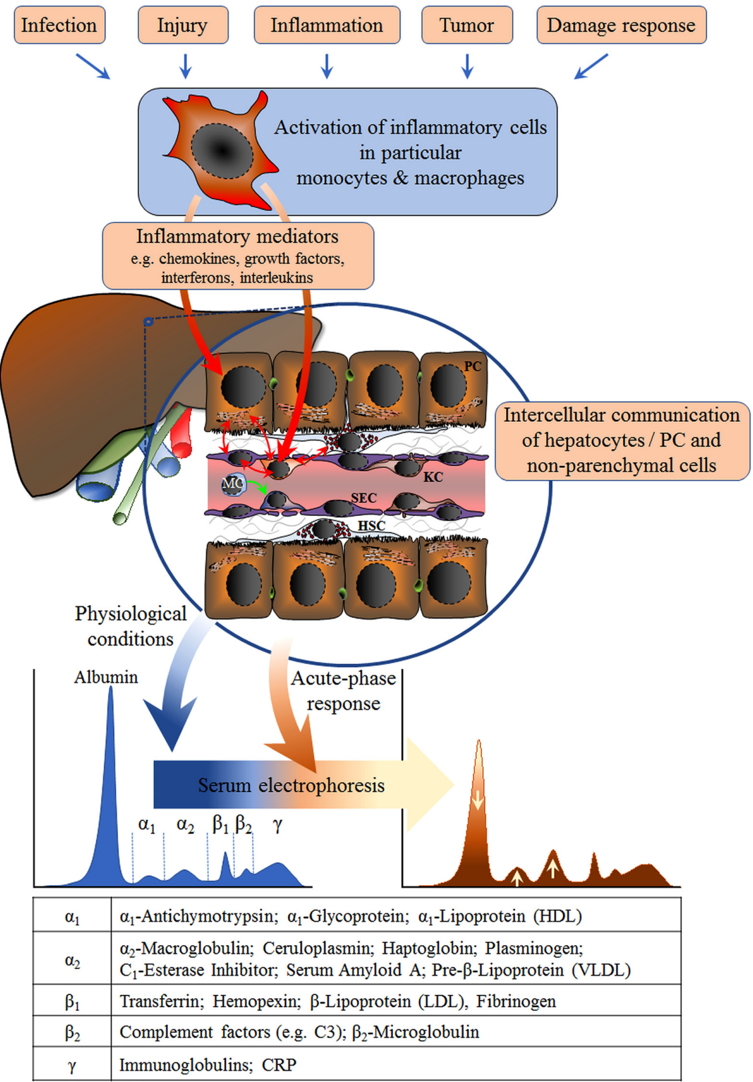
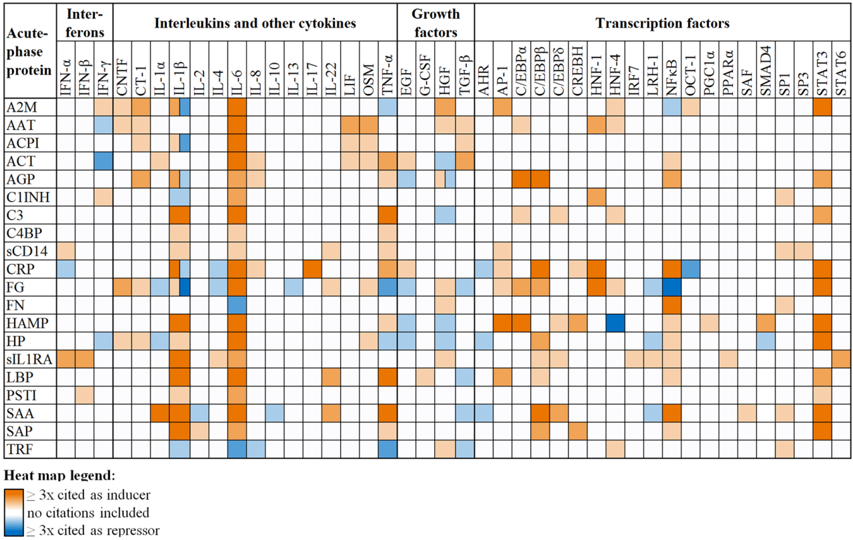
The expression of acute-phase proteins (APP’s) maintains homeostasis and tissue repair, but also represents a central component of the organism’s defense strategy, especially in the context of innate immunity. Accordingly, an inflammatory response is accompanied by significant changes in the serum protein composition, an aspect that is also used diagnostically. As the main site of APP synthesis the liver is constantly exposed to antigens or pathogens via blood flow, but also to systemic inflammatory signals originating either from the splanchnic area or from the circulation. Under both homeostatic and acute-phase response (APR) conditions the composition of APP’s is determined by the pattern of regulatory mediators derived from the systemic circulation or from local cell populations, especially liver macrophages. The key regulators mentioned here most frequently are IL-1β, IL-6 and TNF-α. In addition to a variety of molecular mediators described mainly on the basis of in vitro studies, recent data emphasize the in vivo relevance of cellular key effectors as well as molecular key mediators and protein modifications for the regulation and function of APP’s. These are aspects, on which the present review is primarily focused.
Overview
The claims and statistics of this paper haven’t been checked yet.
Free: it reads the open-access text and checks the first 5 claims that cite a source we can check. Create a free account to check every claim.
Integrity signals
Registry
Cites
Statistics
Figures
Verification
Claims the paper makes
The claims and statistics of this paper haven’t been checked yet.
Free: it reads the open-access text and checks the first 5 claims that cite a source we can check. Create a free account to check every claim.
Claims other papers make about this one
Each is checked against this paper’s own text: does it say what the citing paper says it does?
In the citing paper
“Consistent with their function as the primary synthetic cell type in the liver, hepatocytes are the predominant producers of major APPs, including C-reactive protein (CRP), serum amyloid A (SAA), serum amyloid P, complement factors, ferritin, and lipopolysaccharide binding protein [28, 32].”
From Inflammation and immunity in liver homeostasis and disease: a nexus of hepatocytes, nonparenchymal cells and immune cells (2025) · doi:10.1038/s41423-025-01313-7 · cites this paper as [32]
Self-check
Percentages, sums and reported differences re-computed from the paper’s own numbers.
The self-check needs the paper’s full text.
Citations
Cites
1 retracted
Serum amyloid a induces M2b-like macrophage polarization during liver inflammation
Wang, Y., Huang, H., Sun, R.-H., Chen, B., Fang, H., Li, Q., Yin, N., Li, X., Liu, J., Mou, X., et al. (2017) · Oncotarget · doi:10.18632/oncotarget.22652 · Cited by 24
RetractedAcute-Phase Proteins and Other Systemic Responses to Inflammation
Gabay, C., & Kushner, I. (1999) · New England Journal of Medicine · doi:10.1056/nejm199902113400607 · Cited by 6,734
Murray, P. J. (2017) · Annual Review of Physiology · doi:10.1146/annurev-physiol-022516-034339 · Cited by 2,981
Tissue-Resident Macrophage Enhancer Landscapes Are Shaped by the Local Microenvironment
Lavin, Y., Winter, D., Blecher-Gonen, R., David, E., Keren-Shaul, H., Merad, M., Jung, S., & Amit, I. (2014) · Cell · doi:10.1016/j.cell.2014.11.018 · Cited by 2,167
Davies, L. C., Jenkins, S. J., Allen, J. E., & Taylor, P. R. (2013) · Nature Immunology · doi:10.1038/ni.2705 · Cited by 2,096
F4/80, a monoclonal antibody directed specifically against the mouse macrophage
Austyn, J. M., & Gordon, S. (1981) · European Journal of Immunology · doi:10.1002/eji.1830111013 · Cited by 1,579
Liver Macrophages in Tissue Homeostasis and Disease
Krenkel, O., & Tacke, F. (2017) · Nature Reviews Immunology · doi:10.1038/nri.2017.11 · Cited by 1,424
Pepys, M. B., & Baltz, M. L. (1983) · Advances in Immunology · doi:10.1016/s0065-2776(08)60379-x · Cited by 1,272
Takeda, K., Clausen, B. E., Kaisho, T., Tsujimura, T., Terada, N., Förster, I., & Akira, S. (1999) · Immunity · doi:10.1016/s1074-7613(00)80005-9 · Cited by 1,220
Serum amyloid A, the major vertebrate acute‐phase reactant
Uhlar, C. M., & Whitehead, A. S. (1999) · European Journal of Biochemistry · doi:10.1046/j.1432-1327.1999.00657.x · Cited by 1,106
Chua, R. L., Lukassen, S., Trump, S., Hennig, B. P., Wendisch, D., Pott, F., Debnath, O., Thürmann, L., Kurth, F., Völker, M. T., et al. (2020) · Nature Biotechnology · doi:10.1038/s41587-020-0602-4 · Cited by 1,035
Crispe, I. N. (2009) · Annual Review of Immunology · doi:10.1146/annurev.immunol.021908.132629 · Cited by 986
Developmental and Functional Heterogeneity of Monocytes
Guilliams, M., Mildner, A., & Yona, S. (2018) · Immunity · doi:10.1016/j.immuni.2018.10.005 · Cited by 973
Liver: An organ with predominant innate immunity
Gao, B., Jeong, W.-I., & Tian, Z. (2008) · Hepatology · doi:10.1002/hep.22034 · Cited by 952
CD45: A Critical Regulator of Signaling Thresholds in Immune Cells
Hermiston, M. L., Xu, Z., & Weiss, A. (2003) · Annual Review of Immunology · doi:10.1146/annurev.immunol.21.120601.140946 · Cited by 946
Bone marrow-derived monocytes give rise to self-renewing and fully differentiated Kupffer cells
Scott, C. L., Zheng, F., De Baetselier, P., Martens, L., Saeys, Y., De Prijck, S., Lippens, S., Abels, C., Schoonooghe, S., Raes, G., et al. (2016) · Nature Communications · doi:10.1038/ncomms10321 · Cited by 860
Acute phase proteins: Biomarkers of infection and inflammation in veterinary medicine
Eckersall, P. D., & Bell, R. (2010) · The Veterinary Journal · doi:10.1016/j.tvjl.2010.04.009 · Cited by 835
CD68/macrosialin: not just a histochemical marker
Chistiakov, D. A., Killingsworth, M. C., Myasoedova, V. A., Orekhov, A. N., & Bobryshev, Y. V. (2017) · Laboratory Investigation · doi:10.1038/labinvest.2016.116 · Cited by 724
Bonnardel, J., T’Jonck, W., Gaublomme, D., Browaeys, R., Scott, C. L., Martens, L., Vanneste, B., De Prijck, S., Nedospasov, S. A., Kremer, A., et al. (2019) · Immunity · doi:10.1016/j.immuni.2019.08.017 · Cited by 631
Metabolic zonation of the liver: Regulation and implications for liver function
Gebhardt, R. (1992) · Pharmacology & Therapeutics · doi:10.1016/0163-7258(92)90055-5 · Cited by 607
Huang, I., Pranata, R., Lim, M. A., Oehadian, A., & Alisjahbana, B. (2020) · Therapeutic Advances in Respiratory Disease · doi:10.1177/1753466620937175 · Cited by 604
CD14: Cell surface receptor and differentiation marker
Ziegler-Heitbrock, H. W. L., & Ulevitch, R. J. (1993) · Immunology Today · doi:10.1016/0167-5699(93)90212-4 · Cited by 584
Wegenka, U. M., Buschmann, J., Lütticken, C., Heinrich, P. C., & Horn, F. (1993) · Molecular and Cellular Biology · doi:10.1128/mcb.13.1.276 · Cited by 552
Badolato, R., Wang, J. M., Murphy, W. J., Lloyd, A. R., Michiel, D. F., Bausserman, L. L., Kelvin, D. J., & Oppenheim, J. J. (1994) · The Journal of experimental medicine · doi:10.1084/jem.180.1.203 · Cited by 500
Spatial heterogeneity in the mammalian liver
Ben-Moshe, S., & Itzkovitz, S. (2019) · Nature Reviews Gastroenterology & Hepatology · doi:10.1038/s41575-019-0134-x · Cited by 485
Deciphering human macrophage development at single-cell resolution
Bian, Z., Gong, Y., Huang, T., Lee, C. Z. W., Bian, L., Bai, Z., Shi, H., Zeng, Y., Liu, C., He, J., et al. (2020) · Nature · doi:10.1038/s41586-020-2316-7 · Cited by 467
α1-Acid glycoprotein: an acute phase protein with inflammatory and immunomodulating properties
Hochepied, T., Berger, F. G., Baumann, H., & Libert, C. (2003) · Cytokine & Growth Factor Reviews · doi:10.1016/s1359-6101(02)00054-0 · Cited by 457
The macrophage scavenger receptor CD163
Fabriek, B. O., Dijkstra, C. D., & van den Berg, T. K. (2005) · Immunobiology · doi:10.1016/j.imbio.2005.05.010 · Cited by 454
Flick, M. J., Du, X., Witte, D. P., Jiroušková, M., Soloviev, D. A., Busuttil, S. J., Plow, E. F., & Degen, J. L. (2004) · Journal of Clinical Investigation · doi:10.1172/jci20741 · Cited by 450
Inflammatory Pathways in Liver Homeostasis and Liver Injury
Tacke, F., Luedde, T., & Trautwein, C. (2009) · Clinical Reviews in Allergy & Immunology · doi:10.1007/s12016-008-8091-0 · Cited by 393
The macrophage response towards LPS and its control through the p38MAPK–STAT3 axis
Bode, J. G., Ehlting, C., & Häussinger, D. (2012) · Cellular Signalling · doi:10.1016/j.cellsig.2012.01.018 · Cited by 393
Self-citationNeininger, A., Kontoyiannis, D., Kotlyarov, A., Winzen, R., Eckert, R., Volk, H.-D., Holtmann, H., Kollias, G., & Gaestel, M. (2002) · Journal of Biological Chemistry · doi:10.1074/jbc.c100685200 · Cited by 393
Williams, L., Bradley, L., Smith, A., & Foxwell, B. (2004) · The Journal of Immunology · doi:10.4049/jimmunol.172.1.567 · Cited by 393
Yang, F., Tang, E., Guan, K., & Wang, C.-Y. (2003) · The Journal of Immunology · doi:10.4049/jimmunol.170.11.5630 · Cited by 392
Hitti, E., Iakovleva, T., Brook, M., Deppenmeier, S., Gruber, A. D., Radzioch, D., Clark, A. R., Blackshear, P. J., Kotlyarov, A., & Gaestel, M. (2006) · Molecular and Cellular Biology · doi:10.1128/mcb.26.6.2399-2407.2006 · Cited by 389
Darlington, G. J., Wilson, D. R., & Lachman, L. B. (1986) · The Journal of cell biology · doi:10.1083/jcb.103.3.787 · Cited by 383
Bode, J. G., Albrecht, U., Häussinger, D., Heinrich, P. C., & Schaper, F. (2012) · European Journal of Cell Biology · doi:10.1016/j.ejcb.2011.09.008 · Cited by 379
Self-citationHuman serum amyloid A (SAA) protein: a prominent acute‐phase reactant for clinical practice
MALLE, E., & DE BEER, F. C. (1996) · European Journal of Clinical Investigation · doi:10.1046/j.1365-2362.1996.159291.x · Cited by 346
Sander, L. E., Sackett, S. D., Dierssen, U., Beraza, N., Linke, R. P., Müller, M., Blander, J. M., Tacke, F., & Trautwein, C. (2010) · Journal of Experimental Medicine · doi:10.1084/jem.20091474 · Cited by 335
Recent advances in IL-22 biology
Zenewicz, L. A., & Flavell, R. A. (2011) · International Immunology · doi:10.1093/intimm/dxr001 · Cited by 333
Cell Biology of T Cell Receptor Expression and Regulation
Alcover, A., Alarcón, B., & Di Bartolo, V. (2018) · Annual Review of Immunology · doi:10.1146/annurev-immunol-042617-053429 · Cited by 274
Understanding and interpreting serum protein electrophoresis.
O'Connell, T. X., Horita, T. J., & Kasravi, B. (2005) · PubMed · Cited by 268
Tilg, H., Vannier, E., Vachino, G., Dinarello, C. A., & Mier, J. W. (1993) · The Journal of experimental medicine · doi:10.1084/jem.178.5.1629 · Cited by 256
Role of Stat3 in Lipopolysaccharide-Induced IL-10 Gene Expression
Benkhart, E. M., Siedlar, M., Wedel, A., Werner, T., & Ziegler-Heitbrock, H. W. L. (2000) · The Journal of Immunology · doi:10.4049/jimmunol.165.3.1612 · Cited by 249
Chang, E. Y., Guo, B., Doyle, S. E., & Cheng, G. (2007) · The Journal of Immunology · doi:10.4049/jimmunol.178.11.6705 · Cited by 230
Huang, L.-R., Wohlleber, D., Reisinger, F., Jenne, C. N., Cheng, R.-L., Abdullah, Z., Schildberg, F. A., Odenthal, M., Dienes, H.-P., van Rooijen, N., et al. (2013) · Nature Immunology · doi:10.1038/ni.2573 · Cited by 216
Orosomucoid, an acute response protein with multiple modulating activities
Luo, Z., Lei, H., Sun, Y., Liu, X., & Su, D.-F. (2015) · Journal of Physiology and Biochemistry · doi:10.1007/s13105-015-0389-9 · Cited by 208
Serum Amyloid A in Uremic HDL Promotes Inflammation
Weichhart, T., Kopecky, C., Kubicek, M., Haidinger, M., Döller, D., Katholnig, K., Suarna, C., Eller, P., Tölle, M., Gerner, C., et al. (2012) · Journal of the American Society of Nephrology · doi:10.1681/asn.2011070668 · Cited by 201
LPS and TNFα induce SOCS3 mRNA and inhibit IL‐6‐induced activation of STAT3 in macrophages
Bode, J. G., Nimmesgern, A., Schmitz, J., Schaper, F., Schmitt, M., Frisch, W., Häussinger, D., Heinrich, P. C., & Graeve, L. (1999) · FEBS Letters · doi:10.1016/s0014-5793(99)01662-2 · Cited by 196
Self-citationBaranova, I. N., Vishnyakova, T. G., Bocharov, A. V., Kurlander, R., Chen, Z., Kimelman, M. L., Remaley, A. T., Csako, G., Thomas, F., Eggerman, T. L., et al. (2005) · Journal of Biological Chemistry · doi:10.1074/jbc.m405009200 · Cited by 184
Cai, L., de Beer, M. C., de Beer, F. C., & van der Westhuyzen, D. R. (2005) · Journal of Biological Chemistry · doi:10.1074/jbc.m411555200 · Cited by 173
Predictors of COVID-19 severity: a systematic review and meta-analysis
Mudatsir, M., Fajar, J. K., Wulandari, L., Soegiarto, G., Ilmawan, M., Purnamasari, Y., Mahdi, B. A., Jayanto, G. D., Suhendra, S., Setianingsih, Y. A., et al. (2021) · F1000Research · doi:10.12688/f1000research.26186.2 · Cited by 172
IL-22 Induces an Acute-Phase Response
Liang, S. C., Nickerson-Nutter, C., Pittman, D. D., Carrier, Y., Goodwin, D. G., Shields, K. M., Lambert, A.-J., Schelling, S. H., Medley, Q. G., Ma, H.-L., et al. (2010) · The Journal of Immunology · doi:10.4049/jimmunol.0904091 · Cited by 171
Evolution of effectors and receptors of innate immunity
Magor, B. G., & Magor, K. E. (2001) · Developmental & Comparative Immunology · doi:10.1016/s0145-305x(01)00029-5 · Cited by 168
Polfliet, M. M. J., Fabriek, B. O., Daniëls, W. P., Dijkstra, C. D., & van den Berg, T. K. (2006) · Immunobiology · doi:10.1016/j.imbio.2006.05.015 · Cited by 165
Flick, M. J., LaJeunesse, C. M., Talmage, K. E., Witte, D. P., Palumbo, J. S., Pinkerton, M. D., Thornton, S., & Degen, J. L. (2007) · Journal of Clinical Investigation · doi:10.1172/jci30134 · Cited by 164
Predictors of COVID-19 severity: a systematic review and meta-analysis
Mudatsir, M., Fajar, J. K., Wulandari, L., Soegiarto, G., Ilmawan, M., Purnamasari, Y., Mahdi, B. A., Jayanto, G. D., Suhendra, S., Setianingsih, Y. A., et al. (2020) · F1000Research · doi:10.12688/f1000research.26186.1 · Cited by 161
The supportive care needs of newly diagnosed cancer patients attending a regional cancer center
Whelan, T. J., Mohide, E. A., Willan, A. R., Arnold, A., Tew, M., Sellick, S., Gafni, A., & Levine, M. N. (1997) · Cancer · doi:10.1002/(sici)1097-0142(19971015)80:8<1518::aid-cncr21>3.0.co;2-7 · Cited by 160
Pentraxins in innate immunity: lessons from PTX3
Deban, L., Jaillon, S., Garlanda, C., Bottazzi, B., & Mantovani, A. (2011) · Cell and Tissue Research · doi:10.1007/s00441-010-1018-0 · Cited by 158
Identification of a Novel Recognition Sequence for Integrin αMβ2 within the γ-chain of Fibrinogen
Ugarova, T. P., Solovjov, D. A., Zhang, L., Loukinov, D. I., Yee, V. C., Medved, L. V., & Plow, E. F. (1998) · Journal of Biological Chemistry · doi:10.1074/jbc.273.35.22519 · Cited by 148
The Human FcγRII (CD32) Family of Leukocyte FcR in Health and Disease
Anania, J. C., Chenoweth, A. M., Wines, B. D., & Hogarth, P. M. (2019) · Frontiers in Immunology · doi:10.3389/fimmu.2019.00464 · Cited by 142
serum protein changes during the acute phase reaction
Werner, M. (1969) · Clinica Chimica Acta · doi:10.1016/0009-8981(69)90272-1 · Cited by 141
Negative regulation of NF-κB p65 activity by serine 536 phosphorylation
Pradère, J.-P., Hernandez, C., Koppe, C., Friedman, R. A., Luedde, T., & Schwabe, R. F. (2016) · Science Signaling · doi:10.1126/scisignal.aab2820 · Cited by 141
Tölle, M., Huang, T., Schuchardt, M., Jankowski, V., Prüfer, N., Jankowski, J., Tietge, U. J. F., Zidek, W., & van der Giet, M. (2012) · Cardiovascular Research · doi:10.1093/cvr/cvs089 · Cited by 139
Serum amyloid A promotes LPS clearance and suppresses LPS‐induced inflammation and tissue injury
Cheng, N., Liang, Y., Du, X., & Ye, R. D. (2018) · EMBO Reports · doi:10.15252/embr.201745517 · Cited by 138
Long pentraxin 3 in pulmonary infection and acute lung injury
He, X., Han, B., & Liu, M. (2007) · American Journal of Physiology-Lung Cellular and Molecular Physiology · doi:10.1152/ajplung.00490.2006 · Cited by 122
Serum Amyloid A Induces Monocyte Tissue Factor
Cai, H., Song, C., Endoh, I., Goyette, J., Jessup, W., Freedman, S. B., McNeil, H. P., & Geczy, C. L. (2007) · The Journal of Immunology · doi:10.4049/jimmunol.178.3.1852 · Cited by 114
Molle, W. V., Libert, C., Fiers, W., & Brouckaert, P. (1997) · The Journal of Immunology · doi:10.4049/jimmunol.159.7.3555 · Cited by 112
α 1 ‐Acid glycoprotein fucosylation as a marker of carcinoma progression and prognosis
Hashimoto, S., Asao, T., Takahashi, J., Yagihashi, Y., Nishimura, T., Saniabadi, A. R., Poland, D. C. W., van Dijk, W., Kuwano, H., Kochibe, N., et al. (2004) · Cancer · doi:10.1002/cncr.20713 · Cited by 112
Serum amyloid A in equine health and disease
Witkowska‐Piłaszewicz, O., Żmigrodzka, M., Winnicka, A., Miśkiewicz, A., Strzelec, K., & Cywińska, A. (2018) · Equine Veterinary Journal · doi:10.1111/evj.13062 · Cited by 106
Mouse Cell Surface Antigens: Nomenclature and Immunophenotyping
Lai, L., Alaverdi, N., Maltais, L., & Morse, H. C. (1998) · The Journal of Immunology · doi:10.4049/jimmunol.160.8.3861 · Cited by 104
Liu, Y.-W., Chen, C.-C., Tseng, H.-P., & Chang, W.-C. (2006) · Cellular Signalling · doi:10.1016/j.cellsig.2005.12.001 · Cited by 104
Connolly, M., Mullan, R. H., Mccormick, J., Matthews, C. H., Sullivan, O., Kennedy, A., FitzGerald, O., Poole, A. R., Bresnihan, B., Veale, D. J., et al. (2011) · Arthritis & Rheumatism · doi:10.1002/art.33455 · Cited by 103
Spiller, F., Carlos, D., Souto, F. O., de Freitas, A., Soares, F. S., Vieira, S. M., de Paula, F. J. A., Alves-Filho, J. C., & Cunha, F. Q. (2012) · Diabetes · doi:10.2337/db11-0825 · Cited by 102
Alonzi, T., Newton, I. P., Bryce, P. J., Carlo, E. D., Lattanzio, G., Tripodi, M., Musiani, P., & Poli, V. (2004) · Cytokine · doi:10.1016/j.cyto.2003.12.002 · Cited by 100
Lavie, M., Voisset, C., Vu‐Dac, N., Zurawski, V., Duverlie, G., Wychowski, C., & Dubuisson, J. (2006) · Hepatology · doi:10.1002/hep.21406 · Cited by 98
The Immune Functions of α1Acid Glycoprotein
Ceciliani, F., & Lecchi, C. (2019) · Current Protein & Peptide Science · doi:10.2174/1389203720666190405101138 · Cited by 98
de Boer, J. P., Creasey, A. A., Chang, A. C. K., Abbink, J. J., Roem, D., Eerenberg, A. J. M., Hack, C. E., & Taylor, F. B. (1993) · Infection and Immunity · doi:10.1128/iai.61.12.5035-5043.1993 · Cited by 97
Goldstein, I., Paakinaho, V., Baek, S., Sung, M.-H., & Hager, G. L. (2017) · Nature Communications · doi:10.1038/s41467-017-02055-5 · Cited by 97
Liang, T. S., Wang, J.-M., Murphy, P. M., & Gao, J.-L. (2000) · Biochemical and Biophysical Research Communications · doi:10.1006/bbrc.2000.2416 · Cited by 95
Guttman, O., Baranovski, B. M., Schuster, R., Kaner, Z., Freixo-Lima, G. S., Bahar, N., Kalay, N., Mizrahi, M. I., Brami, I., Ochayon, D. E., et al. (2014) · Clinical & Experimental Immunology · doi:10.1111/cei.12476 · Cited by 94
Plasma Protein Measurements as a Diagnostic Aid
Alper, C. A. (1974) · New England Journal of Medicine · doi:10.1056/nejm197408082910606 · Cited by 94
Hepatocyte-specific mutation of both NF-κB RelA and STAT3 abrogates the acute phase response in mice
Quinton, L. J., Blahna, M. T., Jones, M. R., Allen, E., Ferrari, J. D., Hilliard, K. L., Zhang, X., Sabharwal, V., Algül, H., Akira, S., et al. (2012) · Journal of Clinical Investigation · doi:10.1172/jci59408 · Cited by 84
Clinical Significance of SERPINA1 Gene and Its Encoded Alpha1-antitrypsin Protein in NSCLC
Ercetin, E., Richtmann, S., Martínez–Delgado, B., Gómez‐Mariano, G., Wrenger, S., Korenbaum, E., Liu, B., DeLuca, D. S., Kühnel, M., Jonigk, D. D., et al. (2019) · Cancers · doi:10.3390/cancers11091306 · Cited by 84
Kupffer cell receptor CLEC4F is important for the destruction of desialylated platelets in mice
Jiang, Y., Tang, Y., Hoover, C., Kondo, Y., Huang, D., Restagno, D., Shao, B., Gao, L., Michael McDaniel, J., Zhou, M., et al. (2021) · Cell Death & Differentiation · doi:10.1038/s41418-021-00797-w · Cited by 83
Wyatt, A. R., Kumita, J. R., Mifsud, R. W., Gooden, C. A., Wilson, M. R., & Dobson, C. M. (2014) · Proceedings of the National Academy of Sciences · doi:10.1073/pnas.1403379111 · Cited by 82
Fiore, M., Forli, S., & Manetti, F. (2015) · Journal of Medicinal Chemistry · doi:10.1021/acs.jmedchem.5b01457 · Cited by 82
Bauer, J., Birmelin, M., Northoff, G.-H., Northemann, W., Tran-Thi, T.-A., Ueberberg, H., Decker, K., & Heinrich, P. C. (1984) · FEBS Letters · doi:10.1016/0014-5793(84)80987-4 · Cited by 77
Mestriner, F. L. A. C., Spiller, F., Laure, H. J., Souto, F. O., Tavares-Murta, B. M., Rosa, J. C., Basile-Filho, A., Ferreira, S. H., Greene, L. J., & Cunha, F. Q. (2007) · Proceedings of the National Academy of Sciences · doi:10.1073/pnas.0709681104 · Cited by 75
Bode, J. G., Ludwig, S., Freitas, C. A. C., Schaper, F., Ruhl, M., Melmed, S. K., Heinrich, P. C., & Häussinger, D. (2001) · Biological Chemistry · doi:10.1515/bc.2001.178 · Cited by 75
Self-citationSakamori, R., Takehara, T., Ohnishi, C., Tatsumi, T., Ohkawa, K., Takeda, K., Akira, S., & Hayashi, N. (2007) · Hepatology · doi:10.1002/hep.21837 · Cited by 70
Ehlting, C., Ronkina, N., Böhmer, O., Albrecht, U., Bode, K. A., Lang, K. S., Kotlyarov, A., Radzioch, D., Gaestel, M., Häussinger, D., et al. (2011) · Journal of Biological Chemistry · doi:10.1074/jbc.m111.235275 · Cited by 70
Self-citationRenckens, R., Roelofs, J. J. T. H., Knapp, S., de Vos, A. F., Florquin, S., & van der Poll, T. (2006) · The Journal of Infectious Diseases · doi:10.1086/498876 · Cited by 70
Wu, S. M., Patel, D. D., & Pizzo, S. V. (1998) · PubMed · Cited by 70
Modulation of human polymorphonuclear neutrophil functions by ?1acid glycoprotein
Lain, E., Couderc, R., Roch-Arveiller, M., Vasson, M., Giroud, J., & Raichvarg, D. (1990) · Inflammation · doi:10.1007/bf00914025 · Cited by 69
Mechanisms of the Hepatic Acute-Phase Response during Bacterial Pneumonia
Quinton, L. J., Jones, M. R., Robson, B. E., & Mizgerd, J. P. (2009) · Infection and Immunity · doi:10.1128/iai.01300-08 · Cited by 68
Albrecht, U., Yang, X., Asselta, R., Keitel, V., Tenchini, M. L., Ludwig, S., Heinrich, P. C., Häussinger, D., Schaper, F., & Bode, J. G. (2007) · Cellular Signalling · doi:10.1016/j.cellsig.2007.04.007 · Cited by 64
Self-citationThe Competitive Binding of STAT3 and NF-κB on an Overlapping DNA Binding Site
Zhang, Z., & Fuller, G. M. (1997) · Biochemical and Biophysical Research Communications · doi:10.1006/bbrc.1997.7082 · Cited by 63
Thirunavukkarasu, C., Uemura, T., Wang, L. F., Watkins, S. C., & Gandhi, C. R. (2005) · Journal of Cellular Physiology · doi:10.1002/jcp.20366 · Cited by 62
Wu, S. M., Patel, D. D., & Pizzo, S. V. (1998) · The Journal of Immunology · doi:10.4049/jimmunol.161.8.4356 · Cited by 60
Serum Amyloid A Induces NLRP-3-Mediated IL-1β Secretion in Neutrophils
Migita, K., Izumi, Y., Jiuchi, Y., Kozuru, H., Kawahara, C., Nakamura, M., Nakamura, T., Agematsu, K., Masumoto, J., Yasunami, M., et al. (2014) · PLoS ONE · doi:10.1371/journal.pone.0096703 · Cited by 57
Serum Amyloid A1 (SAA1) Revisited: Restricted Leukocyte-Activating Properties of Homogeneous SAA1
Salama, S. A., Bondt, M. D., Buck, M. D., Berghmans, N., Proost, P., de Oliveira, V. L. S., Amaral, F. A., Gouwy, M., Damme, J. V., & Struyf, S. (2020) · Frontiers in Immunology · doi:10.3389/fimmu.2020.00843 · Cited by 57
Moore, A. R., & Avery, P. R. (2019) · Veterinary Clinical Pathology · doi:10.1111/vcp.12760 · Cited by 55
Nieto, N., Dominguez-Rosales, J. A., Fontana, L., Salazar, A., Armendariz-Borunda, J., Greenwel, P., & Rojkind, M. (2001) · Hepatology · doi:10.1053/jhep.2001.22520 · Cited by 52
Bode, J. G., Fischer, R., Häussinger, D., Graeve, L., Heinrich, P. C., & Schaper, F. (2001) · The Journal of Immunology · doi:10.4049/jimmunol.167.3.1469 · Cited by 51
Self-citationMcPeak, M. B., Youssef, D. A., Williams, D. A., Pritchett, C. L., Yao, Z. Q., McCall, C. E., & Gazzar, M. E. (2017) · Journal of Leukocyte Biology · doi:10.1189/jlb.4hi1216-537r · Cited by 51
Bode, J. G., Schweigart, J., Kehrmann, J., Ehlting, C., Schaper, F., Heinrich, P. C., & Häussinger, D. (2003) · The Journal of Immunology · doi:10.4049/jimmunol.171.1.257 · Cited by 49
Self-citationLiver proteins as sensor of human malignancies and inflammation
Peracaula, R., Sarrats, A., & Rudd, P. M. (2010) · PROTEOMICS - CLINICAL APPLICATIONS · doi:10.1002/prca.200900170 · Cited by 49
Xie, J., Wang, Q., Xu, Y., Zhang, T., Chen, L., Zuo, X., Liu, J., Huang, L., Zhan, P., Lv, T., et al. (2021) · Annals of Palliative Medicine · doi:10.21037/apm-20-1863 · Cited by 49
Olteanu, S., Kandel-Kfir, M., Shaish, A., Almog, T., Shemesh, S. S., Barshack, I., Apte, R. N., Harats, D., & Kamari, Y. (2014) · Digestive and Liver Disease · doi:10.1016/j.dld.2014.01.156 · Cited by 48
Newling, M., Sritharan, L., van der Ham, A. J., Hoepel, W., Fiechter, R. H., de Boer, L., Zaat, S. A. J., Bisoendial, R. J., Baeten, D. L. P., Everts, B., et al. (2019) · The Journal of Immunology · doi:10.4049/jimmunol.1900172 · Cited by 47
α‐1 acid glycoprotein is an immunosuppressive factor found in ascites from ovarian carcinoma
Elg, S. A., Mayer, A. R., Carson, L. F., Twiggs, L. B., Hill, R. B., & Ramakrishnan, S. (1997) · Cancer · Cited by 43
IL-17 and TNF-α co-operation contributes to the proinflammatory response of hepatic stellate cells
Beringer, A., & Miossec, P. (2019) · Clinical & Experimental Immunology · doi:10.1111/cei.13316 · Cited by 41
Serifova, X., Ugarte-Berzal, E., Opdenakker, G., & Vandooren, J. (2019) · Cellular and Molecular Life Sciences · doi:10.1007/s00018-019-03338-4 · Cited by 41
Alpha-1 acid glycoprotein is an immunosuppressive factor found in ascites from ovaria carcinoma.
Elg, S. A., Mayer, A. R., Carson, L. F., et al. (1997) · PubMed · Cited by 40
The Orosomucoid 1 protein is involved in the vitamin D – mediated macrophage de-activation process
Gemelli, C., Martello, A., Montanari, M., Zanocco‐Marani, T., Salsi, V., Zappavigna, V., Parenti, S., Vignudelli, T., Selmi, T., Ferrari, S., et al. (2013) · Experimental Cell Research · doi:10.1016/j.yexcr.2013.08.017 · Cited by 40
The Acute Phase Response Is a Prominent Renal Proteome Change in Sepsis in Mice
Bukosza, É. N., Kaucsár, T., Godó, M., Lajtár, E., Tod, P., Koncsos, G., Varga, V. Z., Baranyai, T., Nguyen, M. T., Schachner, H., et al. (2019) · International Journal of Molecular Sciences · doi:10.3390/ijms21010200 · Cited by 40
Jiang, S. L., Samols, D., Rzewnicki, D., Macintyre, S. S., Greber, I., Sipe, J., & Kushner, I. (1995) · Journal of Clinical Investigation · doi:10.1172/jci117775 · Cited by 37
?-1 acid glycoprotein is an immunosuppressive factor found in ascites from ovarian carcinoma
Elg, S. A., Mayer, A. R., Carson, L. F., Twiggs, L. B., Hill, R. B., & Ramakrishnan, S. (1997) · Cancer · doi:10.1002/(sici)1097-0142(19971015)80:8<1448::aid-cncr12>3.0.co;2-5 · Cited by 37
Activation of Hepatic STAT3 Maintains Pulmonary Defense during Endotoxemia
Hilliard, K. L., Allen, E., Traber, K. E., Kim, Y. K., Wasserman, G. A., Jones, M. R., Mizgerd, J. P., & Quinton, L. J. (2015) · Infection and Immunity · doi:10.1128/iai.00464-15 · Cited by 35
Human Liver Macrophage Subsets Defined by CD32
Wu, X., Hollingshead, N., Roberto, J., Knupp, A., Kenerson, H., Chen, A., Strickland, I., Horton, H., Yeung, R., Soysa, R., et al. (2020) · Frontiers in Immunology · doi:10.3389/fimmu.2020.02108 · Cited by 35
Barrail‐Tran, A., Mentré, F., Cosson, C., Piketty, C., Chazallon, C., Gérard, L., Girard, P., & Taburet, A. M. (2009) · Antimicrobial Agents and Chemotherapy · doi:10.1128/aac.00797-09 · Cited by 34
Roles of STAT3 in Protein Secretion Pathways during the Acute-Phase Response
Ahyi, A.-N. N., Quinton, L. J., Jones, M. R., Ferrari, J. D., Pepper-Cunningham, Z. A., Mella, J. R., Remick, D. G., & Mizgerd, J. P. (2013) · Infection and Immunity · doi:10.1128/iai.01332-12 · Cited by 32
Wu, S. M., Boyer, C. M., & Pizzo, S. V. (1997) · Journal of Biological Chemistry · doi:10.1074/jbc.272.33.20627 · Cited by 31
Oka, Y., Murata, A., Nishijima, J., Ogawa, M., & Mori, T. (1993) · Journal of Surgical Research · doi:10.1006/jsre.1993.1100 · Cited by 30
Expressions of SAA, CRP, and FERR in different severities of COVID-19.
Liu, S.-L., Sy, W., Sun, Y., Jia, Q.-Y., Yang, C.-L., Cai, P.-J., Li, J.-Y., Wang, L., & Chen, Y. (2020) · PubMed · doi:10.26355/eurrev_202011_23631 · Cited by 29
Ren, F., Chen, Y., Wang, Y., Yan, Y., Zhao, J., Ding, M., Zhang, J., Jiang, Y., Zhai, Y., & Duan, Z. (2009) · Journal of Viral Hepatitis · doi:10.1111/j.1365-2893.2009.01242.x · Cited by 28
Anti-CD163-dexamethasone conjugate inhibits the acute phase response to lipopolysaccharide in rats
Thomsen, K. L., Møller, H. J., Graversen, J. H., Magnusson, N. E., Moestrup, S. K., Vilstrup, H., & Grønbæk, H. (2016) · World Journal of Hepatology · doi:10.4254/wjh.v8.i17.726 · Cited by 28
Ofotokun, I., Lennox, J. L., Eaton, M. E., Ritchie, J., Easley, K. A., Masalovich, S. E., Long, M. C., & Acosta, E. P. (2011) · The Journal of Clinical Pharmacology · doi:10.1177/0091270010385118 · Cited by 27
Kulawik, A., Engesser, R., Ehlting, C., Raue, A., Albrecht, U., Hahn, B., Lehmann, W., Gaestel, M., Klingmüller, U., Häussinger, D., et al. (2017) · Journal of Biological Chemistry · doi:10.1074/jbc.m117.775023 · Cited by 27
Self-citationEhlting, C., Trilling, M., Tiedje, C., Le‐Trilling, V. T. K., Albrecht, U., Kluge, S., Zimmermann, A., Graf, D., Gaestel, M., Hengel, H., et al. (2015) · Journal of Hepatology · doi:10.1016/j.jhep.2015.08.012 · Cited by 26
Self-citationBereta, J., Kurdowska, A., Koj, A., Hirano, T., Kishimoto, T., Content, J., Fiers, W., Damme, J. V., & Gauldie, J. (1989) · International Journal of Biochemistry · doi:10.1016/0020-711x(89)90359-5 · Cited by 26
Nguyen, K. D., Macaubas, C., Nadeau, K. C., Truong, P., Yoon, T., Lee, T. C., Park, J. L., & Mellins, E. (2011) · Blood · doi:10.1182/blood-2010-11-318832 · Cited by 25
KUPFFER CELL???DEPLETED RATS HAVE A DIMINISHED ACUTE-PHASE RESPONSE FOLLOWING MAJOR LIVER RESECTION
Prins, H. A., Meijer, C., Boelens, P. G., Diks, J., Holtz, R., Masson, S., Daveau, M., Meijer, S., Scott??, M., & van Leeuwen, P. A. M. (2004) · Shock · doi:10.1097/01.shk.0000126649.96850.36 · Cited by 23
Baranova, I. N., Souza, A. C. P., Bocharov, A. V., Vishnyakova, T. G., Hu, X., Vaisman, B. L., Amar, M. J., Chen, Z., Remaley, A. T., Patterson, A. P., et al. (2017) · PLoS ONE · doi:10.1371/journal.pone.0175824 · Cited by 23
Cray, C., Besselsen, D. G., Hart, J. L., Yoon, D., Rodriguez, M., Zaias, J., & Altman, N. H. (2010) · Europe PMC (PubMed Central) · Cited by 22
Thromboinflammation in COVID‐19: Can α2‐macroglobulin help to control the fire?
Seitz, R., Gürtler, L. G., & Schramm, W. (2020) · Journal of Thrombosis and Haemostasis · doi:10.1111/jth.15190 · Cited by 21
Host-directed therapies for antimicrobial resistant respiratory tract infections
Maeurer, M. J., Rao, M., & Zumla, A. I. (2016) · Current Opinion in Pulmonary Medicine · doi:10.1097/mcp.0000000000000271 · Cited by 19
Garber, T. R., Gonias, S. L., & Webb, D. J. (2000) · Journal of Interferon & Cytokine Research · doi:10.1089/107999000312522 · Cited by 18
Grehan, S., Uhlar, C., Sim, R. B., Herbert, J., & Whitehead, A. S. (1997) · The Journal of Immunology · doi:10.4049/jimmunol.159.1.369 · Cited by 17
Vanoni, S., Tsai, Y.-T., Waddell, A., Waggoner, L., Klarquist, J. S., Divanovic, S., Hoebe, K. H. N., Steinbrecher, K. A., & Hogan, S. P. (2016) · Innate Immunity · doi:10.1177/1753425916681444 · Cited by 17
NF-κB RelA Is Required for Hepatoprotection during Pneumonia and Sepsis
Kim, Y. K., Allen, E., Baird, L. A., Symer, E. M., Korkmaz, F. T., Na, E., Odom, C. V., Jones, M. R., Mizgerd, J. P., Traber, K. E., et al. (2019) · Infection and Immunity · doi:10.1128/iai.00132-19 · Cited by 14
Antifungal Activity of Mammalian Serum Amyloid A1 against Candida albicans
Gong, J., Wu, J., Ikeh, M. A. C., Li, T., Zhang, Y., Bing, J., Nobile, C. J., & Huang, G. (2019) · Antimicrobial Agents and Chemotherapy · doi:10.1128/aac.01975-19 · Cited by 13
Schramm, W., Seitz, R., & Gürtler, L. G. (2020) · Journal of Thrombosis and Haemostasis · doi:10.1111/jth.15013 · Cited by 13
Ehlting, C., Rex, J., Albrecht, U., Deenen, R., Tiedje, C., Köhrer, K., Sawodny, O., Gaestel, M., Häussinger, D., & Bode, J. G. (2019) · Scientific Reports · doi:10.1038/s41598-019-46791-8 · Cited by 12
Self-citationNaseraldeen, N., Michelis, R., Barhoum, M., Chezar, J., Tadmor, T., Aviv, A., Shvidel, L., Litmanovich, A., Shehadeh, M., Stemer, G., et al. (2021) · Frontiers in Immunology · doi:10.3389/fimmu.2020.603569 · Cited by 12
Serum amyloid A protects murine macrophages from lethal toxin-mediated death
Rose, K., Long, P., Shankar, M., Ballard, J. D., & Webb, C. F. (2011) · Cellular Immunology · doi:10.1016/j.cellimm.2011.10.014 · Cited by 2
Cited by
Humoral Innate Immunity and Acute-Phase Proteins
Mantovani, A., & Garlanda, C. (2023) · New England Journal of Medicine · doi:10.1056/nejmra2206346 · Cited by 310
Beyer, D., Hoff, J., Sommerfeld, O., Zipprich, A., Gaßler, N., & Press, A. T. (2022) · Molecular Medicine · doi:10.1186/s10020-022-00510-8 · Cited by 142
“Consequently, hepatocyte housekeeping proteins, such as serum albumin synthesis and bile formation, are significantly reduced (Gulhar et al. 2018; Ehlting et al. 2021).”
Background(2025) · doi:10.1038/s41423-025-01313-7 · Cited by 97
“Consistent with their function as the primary synthetic cell type in the liver, hepatocytes are the predominant producers of major APPs, including C-reactive protein (CRP), serum amyloid A (SAA), serum amyloid P, complement factors, ferritin, and lipopolysaccharide binding protein [28, 32].”
den Hartigh, L. J., May, K. S., Zhang, X., Chait, A., & Blaser, M. J. (2023) · Frontiers in Cardiovascular Medicine · doi:10.3389/fcvm.2023.1197432 · Cited by 95
“Similar to CRP, hepatic SAA is regulated by the above inflammatory cytokines (IL-1β, IL-6, and TNFα 89, 90), although CRP can be induced by pathways related to interleukin17 (IL-17) and hepatocyte nuclear factor (HNF), in contrast to SAA (91).”
BackgroundResultRecent advances in electrochemical nanobiosensors for cardiac biomarkers
Negahdary, M., Sharma, A., Anthopoulos, T. D., & Angnes, L. (2023) · TrAC Trends in Analytical Chemistry · doi:10.1016/j.trac.2023.117104 · Cited by 44
Metadata
- Authors
- Ehlting, C., Wolf, S. D., & Bode, J. G.
- Affiliations
- Düsseldorf University Hospital (DE)
- Corresponding author
- Ehlting, Christian
- Bode, Johannes G.
- Venue
- Biological Chemistry
- Publisher
- Walter de Gruyter GmbH
- Published
- 2021-07-29
- Volume
- 402
- Issue
- 9
- Pages
- 1129-1145
- ISSN
- 1431-6730 (ISSN-L)
- 1437-4315
- OpenAlex
- W3184437098
- Cited by
- 115
- References
- 145
- Citations by year
- 2026: 32 · 2025: 27 · 2024: 18 · 2023: 23 · 2022: 13 · 2021: 2
- FWCI
- 1.43
- Type
- journal article
- Language
- en
- Open access
- hybrid
- doi.org
- Locations
- Biological Chemistry (publishedVersion, cc-by)
- PubMed (publishedVersion)
- Funders
- Deutsche Forschungsgemeinschaft (190586431)
- Topics
- Life Sciences › Immunology and Microbiology › Immunology › Biomarkers in Disease Mechanisms
- Life Sciences › Agricultural and Biological Sciences › Animal Science and Zoology › Animal health and immunology
- Life Sciences › Immunology and Microbiology › Immunology › Immune Response and Inflammation
- Keywords
- acute phase proteins, acute phase response, innate immunity, liver, hepatic macrophages, Kupffer cells, systemic inflammation, IL-1β, interleukin-6, TNF-α, serum protein composition, inflammatory mediators, protein modification, tissue repair
- MeSH terms
- Acute-Phase Proteins, Animals, Humans, Immunity, Innate, Liver, Tumor Necrosis Factor-alpha
About these checks
Registry, retraction, Cites and statistics results are computed, not judged, with one exception: a printed reference that no index lists is read once by a model before it counts as a citation error. Claims are extracted by a model and kept only when their quote appears verbatim in the text; each cited source is then checked, with a model’s help, for whether it says what the claim relies on. Those verdicts can be wrong — read the claim’s quote and the cited source before relying on one.
Statistics and arithmetic are recomputed, not judged.
Confidence bands are shown only for fields calibrated on our annotated test set. None is calibrated yet, so no band is shown.
What counts as a claim ›How we measure confidence ›How we check this ›
Are you an author, or do you see a problem with this page? Request a review
Data sources
Bibliographic data: Semantic Scholar, OpenAlex, Crossref.
Contains information from the Semantic Scholar Academic Graph Datasets, made available under the ODC Attribution License (ODC-BY 1.0).
Semantic Scholar’s data is described in: Kinney, R., et al. (2023). The Semantic Scholar Open Data Platform. arXiv:2301.10140.
