

Acute-phase protein synthesis: a key feature of innate immune functions of the liver
Open accessThe DOI matches its Crossref record; 147 of the 147 references it cites were found in a registry or an index.
Abstract
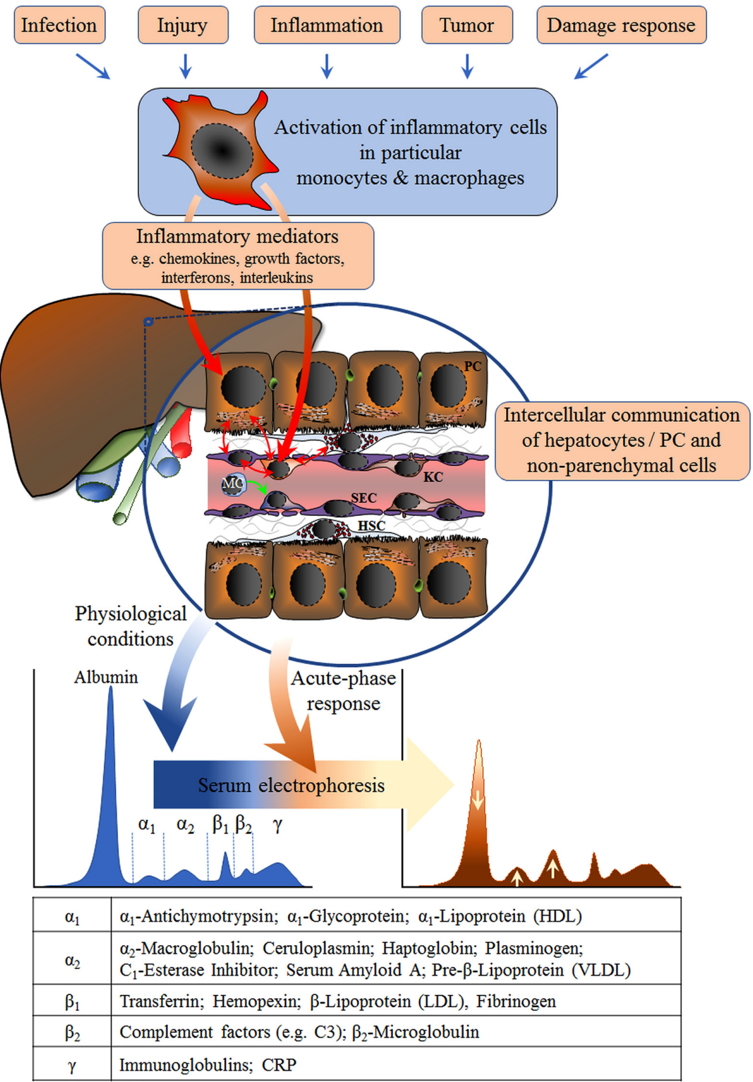
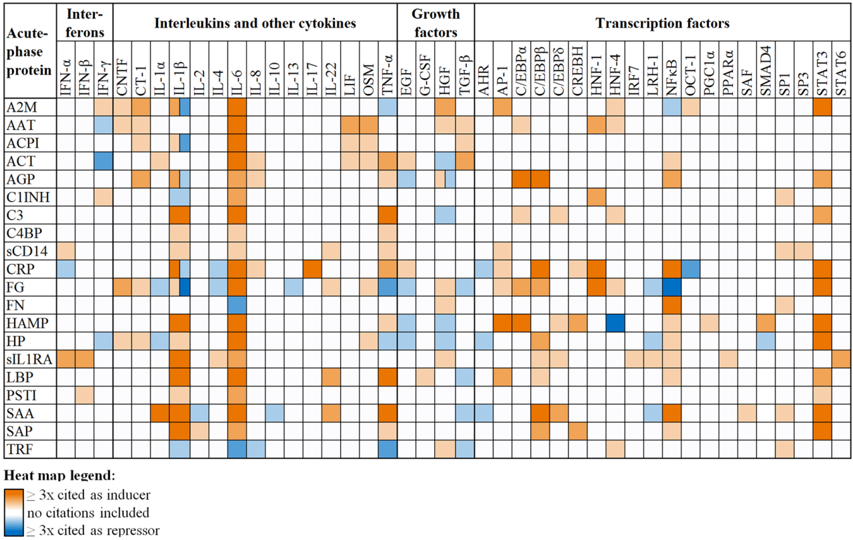
The expression of acute-phase proteins (APP’s) maintains homeostasis and tissue repair, but also represents a central component of the organism’s defense strategy, especially in the context of innate immunity. Accordingly, an inflammatory response is accompanied by significant changes in the serum protein composition, an aspect that is also used diagnostically. As the main site of APP synthesis the liver is constantly exposed to antigens or pathogens via blood flow, but also to systemic inflammatory signals originating either from the splanchnic area or from the circulation. Under both homeostatic and acute-phase response (APR) conditions the composition of APP’s is determined by the pattern of regulatory mediators derived from the systemic circulation or from local cell populations, especially liver macrophages. The key regulators mentioned here most frequently are IL-1β, IL-6 and TNF-α. In addition to a variety of molecular mediators described mainly on the basis of in vitro studies, recent data emphasize the in vivo relevance of cellular key effectors as well as molecular key mediators and protein modifications for the regulation and function of APP’s. These are aspects, on which the present review is primarily focused.
Overview
The claims and statistics of this paper haven’t been checked yet.
Free: it reads the open-access text and checks the first 5 claims that cite a source we can check. Create a free account to check every claim.
Integrity signals
Registry
Cites
Statistics
Figures
Verification
Claims the paper makes
The claims and statistics of this paper haven’t been checked yet.
Free: it reads the open-access text and checks the first 5 claims that cite a source we can check. Create a free account to check every claim.
Claims other papers make about this one
Each is checked against this paper’s own text: does it say what the citing paper says it does?
In the citing paper
“Consistent with their function as the primary synthetic cell type in the liver, hepatocytes are the predominant producers of major APPs, including C-reactive protein (CRP), serum amyloid A (SAA), serum amyloid P, complement factors, ferritin, and lipopolysaccharide binding protein [28, 32].”
From Inflammation and immunity in liver homeostasis and disease: a nexus of hepatocytes, nonparenchymal cells and immune cells (2025) · doi:10.1038/s41423-025-01313-7 · cites this paper as [32]
Self-check
Percentages, sums and reported differences re-computed from the paper’s own numbers.
The self-check needs the paper’s full text.
Citations
Cites
1 retracted
Serum amyloid a induces M2b-like macrophage polarization during liver inflammation
Wang, Y., Huang, H., Sun, R.-H., Chen, B., Fang, H., Li, Q., Yin, N., Li, X., Liu, J., Mou, X., et al. (2017) · Oncotarget · doi:10.18632/oncotarget.22652 · Cited by 24
RetractedAcute-Phase Proteins and Other Systemic Responses to Inflammation
Gabay, C., & Kushner, I. (1999) · New England Journal of Medicine · doi:10.1056/nejm199902113400607 · Cited by 6,734
Murray, P. J. (2017) · Annual Review of Physiology · doi:10.1146/annurev-physiol-022516-034339 · Cited by 2,981
Tissue-Resident Macrophage Enhancer Landscapes Are Shaped by the Local Microenvironment
Lavin, Y., Winter, D., Blecher-Gonen, R., David, E., Keren-Shaul, H., Merad, M., Jung, S., & Amit, I. (2014) · Cell · doi:10.1016/j.cell.2014.11.018 · Cited by 2,167
Davies, L. C., Jenkins, S. J., Allen, J. E., & Taylor, P. R. (2013) · Nature Immunology · doi:10.1038/ni.2705 · Cited by 2,096
F4/80, a monoclonal antibody directed specifically against the mouse macrophage
Austyn, J. M., & Gordon, S. (1981) · European Journal of Immunology · doi:10.1002/eji.1830111013 · Cited by 1,579
Liver Macrophages in Tissue Homeostasis and Disease
Krenkel, O., & Tacke, F. (2017) · Nature Reviews Immunology · doi:10.1038/nri.2017.11 · Cited by 1,424
Pepys, M. B., & Baltz, M. L. (1983) · Advances in Immunology · doi:10.1016/s0065-2776(08)60379-x · Cited by 1,272
Takeda, K., Clausen, B. E., Kaisho, T., Tsujimura, T., Terada, N., Förster, I., & Akira, S. (1999) · Immunity · doi:10.1016/s1074-7613(00)80005-9 · Cited by 1,220
Serum amyloid A, the major vertebrate acute‐phase reactant
Uhlar, C. M., & Whitehead, A. S. (1999) · European Journal of Biochemistry · doi:10.1046/j.1432-1327.1999.00657.x · Cited by 1,106
Cited by
Items 101–124 of 124
Behavioral endocrinology: Immune systems and sickness behaviors
Weil, J., McCain, K. M., Assis, V. R., Martin, L. B., & Adelman, J. S. (2026) · Elsevier eBooks · doi:10.1016/b978-0-443-29068-8.00227-0
The AGO2–ATOX1 axis exacerbates inflammation in a mouse sepsis model
Huang, P., He, M., Mo, X., & 邓立普 (2026) · Central European Journal of Immunology · doi:10.5114/ceji/209136
“During the early stages of sepsis, the massive release of pro-inflammatory cytokines triggers a “cyto - kine storm” [21], leading to damage in vital organs such as the lungs and liver [22, 23].”
Karaciğerin Hücresel Yapısı ve Fonksiyonel Dinamikleri
Vuran, N. E. (2026) · JOURNAL OF BIOTECHNOLOGY AND STRATEGIC HEALTH RESEARCH · doi:10.34084/bshr.1778625
Advances in porcine salivaomics: A review of biomarkers, diagnostics, and research approaches
Jeong, G.-H., & Lim, K.-S. (2026) · Research in Veterinary Science · doi:10.1016/j.rvsc.2026.106231
Zenga-Carrenho, M., Braz, T., Titon, S. C. M., Assis, V. R., Gomes, F. R., & Floreste, F. R. (2026) · Developmental & Comparative Immunology · doi:10.1016/j.dci.2026.105623 · Cited by 2
Razmdideh, A., Moeini, E. R., Sohrabi, M., Kajouri, M. M., Safa, T., Zargani, M., Gholami, M., & Arabzadeh, E. (2026) · Sport Sciences for Health · doi:10.1007/s11332-026-01756-z
“Orosomucoid (ORM) is a secreted glycoprotein that contributes to the acute-phase response and is basically produced by liver cells [28].”
Between the shells: a review of acute-phase proteins in turtles
Chong, S. M., Cray, C., Rossi, G., Xie, S., & Howarth, G. S. (2026) · Journal of Veterinary Diagnostic Investigation · doi:10.1177/10406387261445937
“36 APPs are highly conserved and a complex component of the innate immunity and inflammatory response in vertebrates.”
Almeida, M. R., van Hooij, A., Pierneef, L., Wassenaar, G. N., Corrêa, R. D. S., Ribeiro, R. S. D. A., dos Santos, L. K. C., de Oliveira, A. L., Santos, A. P., Mafort, T. T., et al. (2026) · Tuberculosis · doi:10.1016/j.tube.2026.102794
Im, B., Muntian, V. T., & Voloshchuk, K. G. (2026) · Scientific Herald of Chernivtsy University Biology (Biological Systems) · doi:10.31861/biosystems2026.01.049
Guo, L., Yao, Y., Wu, Q., Wang, H., Niu, C., Wang, G.-L., & Chen, F. (2026) · Frontiers in Immunology · doi:10.3389/fimmu.2026.1867606
Elkoshi, Z. (2026) · Frontiers in Immunology · doi:10.3389/fimmu.2026.1864104 · Cited by 1
Hasegawa, Y., Osaki, A., Suzuki, M., Yan, T., Campbell, I. W., & Waldor, M. K. (2026) · PLoS Pathogens · doi:10.1371/journal.ppat.1014152
“Particularly noteworthy was the transient elevation of transcript levels and serum abundance of IL-6 and TNF α at 3 dpi; these cytokines control the expression of acute-phase response proteins [25,40].”
Hu, D., Wang, Z., Xue, Y., Li, X., Li, Y., Liu, S., Gao, L., Liu, H., & Yan, H. (2026) · Precision Clinical Medicine · doi:10.1093/pcmedi/pbag021
“Meanwhile, IL-6 and IL-1 β stimulate hepatocytes to produce acute phase proteins (APPs), which enhance local and distant inflammation and activate the complement system to clear pathogens [ 71 , 72 ].”
The Oral‐Hepatic Axis: Epidemiological and Mechanistic Links Between Periodontal and Liver Diseases
Sahingur, S. E., Grzech‐Leśniak, K., Suslavich, S. F., & Deeb, J. G. (2026) · Journal of Periodontal Research · doi:10.1111/jre.70159
Jia, J., Dong, Y., Zhao, Y. M., Li, S., & Mou, T. (2026) · Journal of Immunology Research · doi:10.1155/jimr/5421823
“…uncontrolled complement activation and exacerbation of liver injury and systemic in fl ammation [34]; impaired hepatic acute-phase protein synthesis [35], loss of SORL1-mediated protective signals [36], and dysregulation of the MIF/CD74 signaling axis, which has been implicated in in fl ammatory…”
Cincović, M., Milosevic, N., Majkić, M., Hodnik, J. J., Kramberger, B., & Starič, J. (2026) · Frontiers in Veterinary Science · doi:10.3389/fvets.2026.1923985
Impact of Selenium Supplementation on Ovine Colostrum Bioactives and Postnatal Health
Moran, N. P. (2026) · The Atrium (University of Guelph)
Gao, J., Tuo, Y., An, J., Abudukaiyoumu, K., Yi, Y., Yang, Y., & Guo, T. (2026) · Antioxidants · doi:10.3390/antiox15091201
“…liver, serving as the primary site for endotoxin clearance and acute-phase protein synthesis, may respond more rapidly to nutritional interventions [19]; in contrast, the activation and proliferation of immune cells in the spleen may require a longer duration of intervention or recovery to…”
Wang, Y., Huang, Y., Hu, M., & Zhen, P. (2026) · Infection and Drug Resistance · doi:10.2147/idr.s628552
“6,19 During severe infection, systemic inflammation, endotoxemia, and microcirculatory dysfunction can impair hepatic perfusion and function, leading to hypoalbuminemia, hyperbilirubinemia, and dysregulated inflammatory responses.”
Mohammed, H. E., Abdulwahed, A. M. H., & Alkanaani, M. I. M. (2026) · Al-Turath Journal for Biology · doi:10.63964/atjb.2026.2.3.5
袁英, Wang, J., Ning, F., Wu, F., Dong, X., Xu, Y., Zhao, S., & Tan, T. (2026) · Frontiers in Medicine · doi:10.3389/fmed.2026.1890644
“Elevated ALT and AST indicated liver injury, while decreased ALB suggested hypoalbuminemia and impaired hepatic synthetic function, which further inhibited protein synthesis (21).”
Rahmati, S., Imani, D., Alizadeh, Z., Hassani, L., Dashti, N., Nikseresht, A., & Aslani, S. (2026) · Inflammopharmacology · doi:10.1007/s10787-026-02424-x
Сапарбаева, Г., & Машарипов, О. (2026) · Eurasian Journal of Medical and Natural Sciences · doi:10.70413/ejmns-v06-i10-s60236
Abd, S. F. (2026) · Medical Immunology (Russia) · doi:10.15789/1563-0625-ccr-3416
Metadata
- Authors
- Ehlting, C., Wolf, S. D., & Bode, J. G.
- Affiliations
- Düsseldorf University Hospital (DE)
- Corresponding author
- Ehlting, Christian
- Bode, Johannes G.
- Venue
- Biological Chemistry
- Publisher
- Walter de Gruyter GmbH
- Published
- 2021-07-29
- Volume
- 402
- Issue
- 9
- Pages
- 1129-1145
- ISSN
- 1431-6730 (ISSN-L)
- 1437-4315
- OpenAlex
- W3184437098
- Cited by
- 115
- References
- 145
- Citations by year
- 2026: 32 · 2025: 27 · 2024: 18 · 2023: 23 · 2022: 13 · 2021: 2
- FWCI
- 1.43
- Type
- journal article
- Language
- en
- Open access
- hybrid
- doi.org
- Locations
- Biological Chemistry (publishedVersion, cc-by)
- PubMed (publishedVersion)
- Funders
- Deutsche Forschungsgemeinschaft (190586431)
- Topics
- Life Sciences › Immunology and Microbiology › Immunology › Biomarkers in Disease Mechanisms
- Life Sciences › Agricultural and Biological Sciences › Animal Science and Zoology › Animal health and immunology
- Life Sciences › Immunology and Microbiology › Immunology › Immune Response and Inflammation
- Keywords
- acute phase proteins, acute phase response, innate immunity, liver, hepatic macrophages, Kupffer cells, systemic inflammation, IL-1β, interleukin-6, TNF-α, serum protein composition, inflammatory mediators, protein modification, tissue repair
- MeSH terms
- Acute-Phase Proteins, Animals, Humans, Immunity, Innate, Liver, Tumor Necrosis Factor-alpha
About these checks
Registry, retraction, Cites and statistics results are computed, not judged, with one exception: a printed reference that no index lists is read once by a model before it counts as a citation error. Claims are extracted by a model and kept only when their quote appears verbatim in the text; each cited source is then checked, with a model’s help, for whether it says what the claim relies on. Those verdicts can be wrong — read the claim’s quote and the cited source before relying on one.
Statistics and arithmetic are recomputed, not judged.
Confidence bands are shown only for fields calibrated on our annotated test set. None is calibrated yet, so no band is shown.
What counts as a claim ›How we measure confidence ›How we check this ›
Are you an author, or do you see a problem with this page? Request a review
Data sources
Bibliographic data: Semantic Scholar, OpenAlex, Crossref.
Contains information from the Semantic Scholar Academic Graph Datasets, made available under the ODC Attribution License (ODC-BY 1.0).
Semantic Scholar’s data is described in: Kinney, R., et al. (2023). The Semantic Scholar Open Data Platform. arXiv:2301.10140.
