

The DOI matches its Crossref record; 58 of the 58 references it cites were found in a registry or an index.
Updating Beliefs under Perceived Threat
Open accessAbstract
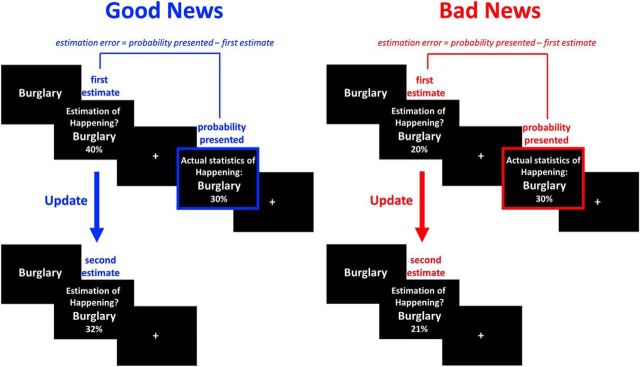
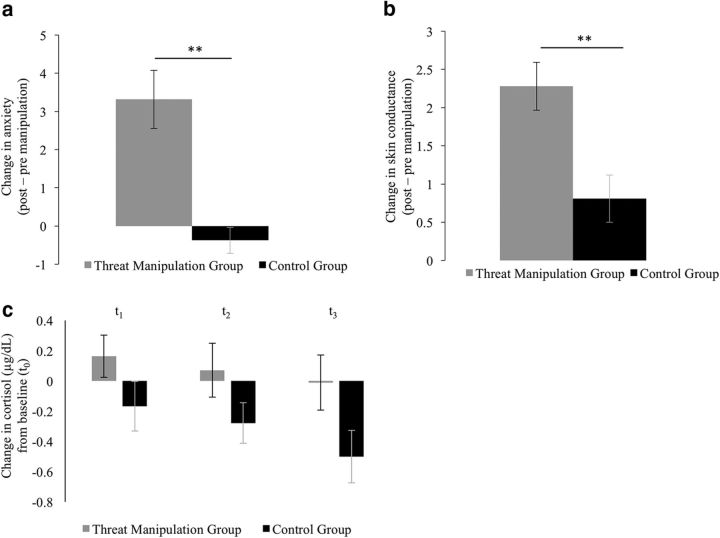
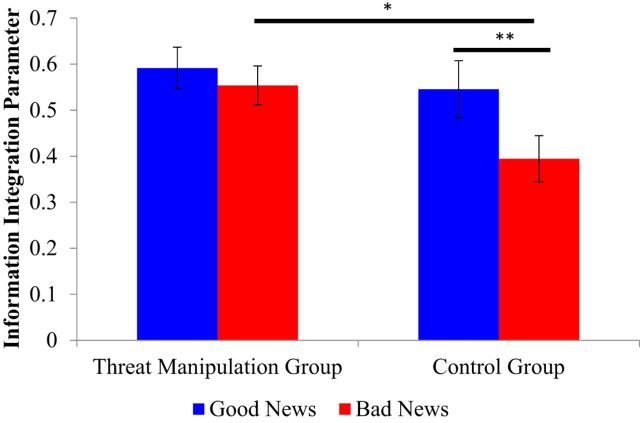
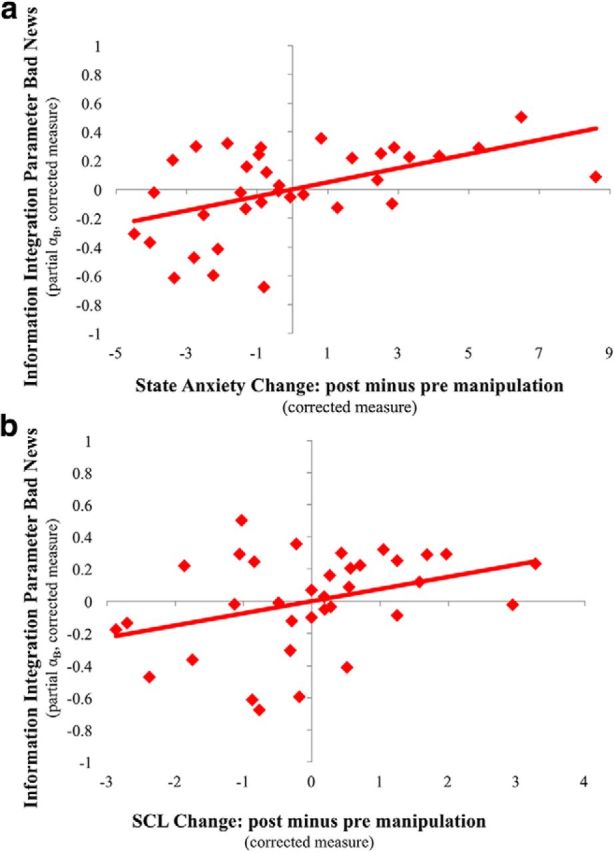
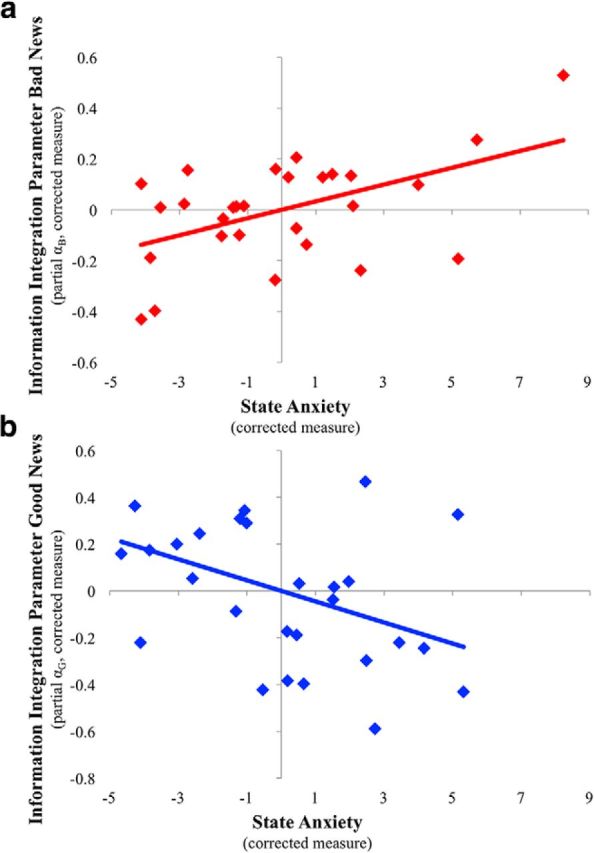
Humans are better at integrating desirable information into their beliefs than undesirable information. This asymmetry poses an evolutionary puzzle, as it can lead to an underestimation of risk and thus failure to take precautionary action. Here, we suggest a mechanism that can speak to this conundrum. In particular, we show that the bias vanishes in response to perceived threat in the environment. We report that an improvement in participants9 tendency to incorporate bad news into their beliefs is associated with physiological arousal in response to threat indexed by galvanic skin response and self-reported anxiety. This pattern of results was observed in a controlled laboratory setting (Experiment I), where perceived threat was manipulated, and in firefighters on duty (Experiment II), where it naturally varied. Such flexibility in how individuals integrate information may enhance the likelihood of responding to warnings with caution in environments rife with threat, while maintaining a positivity bias otherwise, a strategy that can increase well-being. SIGNIFICANCE STATEMENT The human tendency to be overly optimistic has mystified scholars and lay people for decades: How could biased beliefs have been selected over unbiased beliefs? Scholars have suggested that although the optimism bias can lead to negative outcomes, including financial collapse and war, it can also facilitate health and productivity. Here, we demonstrate that a mechanism generating the optimism bias, namely asymmetric information integration, evaporates under threat. Such flexibility could result in enhanced caution in dangerous environments while supporting an optimism bias otherwise, potentially increasing well-being.
Overview
The claims and statistics of this paper haven’t been checked yet.
Run the check — free, no account needed. It reads the open-access text and checks the sources it cites.
Integrity signals
Registry
Cites
Statistics
Figures
Verification
Claims the paper makes
The claims and statistics of this paper haven’t been checked yet.
Run the check — free, no account needed. It reads the open-access text and checks the sources it cites.
Claims other papers make about this one
Each is checked against this paper’s own text: does it say what the citing paper says it does?
The cited source says what the claim attributes to it.
In the citing paper
“This mech anism, also known as optimism bias, disappears when subjects perceive a threatening environment (Garrett et al., 2018).”
From Predictive coding in neuropsychiatric disorders: a systematic transdiagnostic review. (2025) · cites this paper as Garrett et al., 2018
Self-check
Percentages, sums and reported differences re-computed from the paper’s own numbers.
The self-check needs the paper’s full text.
Citations
Cites
Reinforcement Learning: An Introduction
Sutton, R. S., & Barto, A. G. (1998) · IEEE Transactions on Neural Networks · doi:10.1109/tnn.1998.712192 · Cited by 27,225
Reinforcement Learning: An Introduction
Sutton, R. S., & Barto, A. (2005) · IEEE Transactions on Neural Networks · doi:10.1109/tnn.2004.842673 · Cited by 25,268
A neural substrate of prediction and reward
Schultz, W., Dayan, P., & Montague, P. R. (1997) · Science · doi:10.1126/science.275.5306.1593 · Cited by 9,388
Human agency in social cognitive theory.
Bandura, A. (1989) · American Psychologist · doi:10.1037/0003-066x.44.9.1175 · Cited by 8,263
Influence of life stress on depression: moderation by a polymorphism in the 5-HTT gene
Caspi, A., Sugden, K., Moffitt, T. E., Taylor, A., Craig, I. W., Harrington, H., McClay, J., Mill, J., Martin, J., Braithwaite, A., et al. (2003) · Science · doi:10.1126/science.1083968 · Cited by 8,120
Illusion and well‐being: A social psychological perspective on mental health
Taylor, S. E., & Brown, J. D. (1988) · Psychological Bulletin · doi:10.1037/0033-2909.103.2.193 · Cited by 7,814
Marteau, T. M., & Bekker, H. (1992) · British Journal of Clinical Psychology · doi:10.1111/j.2044-8260.1992.tb00997.x · Cited by 3,238
The neurobiology of stress and development.
Gunnar, M., & Quevedo, K. (2007) · Annual Review of Psychology · doi:10.1146/annurev.psych.58.110405.085605 · Cited by 2,011 · cited 2×
“Change in cortisol, which is suggested to reflect the HPA axis component of the stress response (Gunnar and Quevedo, 2007), did not relate to information integration for bad news (F(1,16) 0.”
BackgroundInfluentialBy Carrot or by Stick: Cognitive Reinforcement Learning in Parkinsonism
Frank, M. J., Seeberger, L. C., & O'Reilly, R. C. (2004) · Science · doi:10.1126/science.1102941 · Cited by 1,964
Bechara, A., Tranel, D., Damasio, H., & Damasio, A. R. (1996) · Cerebral Cortex · doi:10.1093/cercor/6.2.215 · Cited by 1,179
Cited by
Sorted by citations
When Beliefs Face Reality: An Integrative Review of Belief Updating in Mental Health and Illness
Κube, T., & Rozenkrantz, L. (2020) · Perspectives on Psychological Science · doi:10.1177/1745691620931496 · Cited by 165
Fatalism, Beliefs, and Behaviors During the COVID-19 Pandemic
Akesson, J., Ashworth-Hayes, S., Hahn, R. W., Metcalfe, R., & Rasooly, I. (2020) · National Bureau of Economic Research · doi:10.3386/w27245 · Cited by 103
Inattentive responding can induce spurious associations between task behaviour and symptom measures
Zorowitz, S., Solis, J., Niv, Y., & Bennett, D. (2023) · Nature Human Behaviour · doi:10.1038/s41562-023-01640-7 · Cited by 107
Fatalism, beliefs, and behaviors during the COVID-19 pandemic
Akesson, J., Ashworth-Hayes, S., Hahn, R. W., Metcalfe, R., & Rasooly, I. (2022) · Journal of Risk and Uncertainty · doi:10.1007/s11166-022-09375-y · Cited by 94
Rethinking post-traumatic stress disorder – A predictive processing perspective
Κube, T., Berg, M., Kleim, B., & Herzog, P. (2020) · Neuroscience & Biobehavioral Reviews · doi:10.1016/j.neubiorev.2020.04.014 · Cited by 107
Kube, T., Rozenkrantz, L., Rief, W., & Barsky, A. (2020) · Clinical Psychology Review · doi:10.1016/j.cpr.2020.101829 · Cited by 91
Sharot, T., Rollwage, M., Sunstein, C. R., & Fleming, S. M. (2022) · Perspectives on Psychological Science · doi:10.1177/17456916221082967 · Cited by 99
Bromberg-Martin, E. S., & Sharot, T. (2020) · Neuron · doi:10.1016/j.neuron.2020.05.001 · Cited by 85
Enhanced rationality in autism spectrum disorder
Rozenkrantz, L., D’Mello, A. M., & Gabrieli, J. D. E. (2021) · Trends in Cognitive Sciences · doi:10.1016/j.tics.2021.05.004 · Cited by 88
Anxiety increases information-seeking in response to large changes
Charpentier, C. J., Dezza, I. C., Vellani, V., Globig, L. K., Gädeke, M., & Sharot, T. (2022) · Scientific Reports · doi:10.1038/s41598-022-10813-9 · Cited by 88
Trudel, N., Scholl, J., Klein-Flügge, M. C., Fouragnan, E., Tankelevitch, L., Wittmann, M. K., & Rushworth, M. F. S. (2020) · Nature Human Behaviour · doi:10.1038/s41562-020-0929-3 · Cited by 74
Socially Optimal Mistakes? Debiasing COVID-19 Mortality Risk Perceptions and Prosocial Behavior
Abel, M., Byker, T., & Carpenter, J. P. (2020) · Journal of Economic Behavior & Organization · doi:10.1016/j.jebo.2021.01.007 · Cited by 70
Bottemanne, H., Morlaàs, O., Claret, A., Sharot, T., Fossati, P., & Schmidt, L. (2022) · JAMA Psychiatry · doi:10.1001/jamapsychiatry.2022.2996 · Cited by 61
Everything is connected: Inference and attractors in delusions
Adams, R. A., Vincent, P., Benrimoh, D. A., Friston, K. J., & Parr, T. (2021) · Schizophrenia Research · doi:10.1016/j.schres.2021.07.032 · Cited by 60
Biased belief updating and suboptimal choice in foraging decisions
Garrett, N., & Daw, N. (2019) · bioRxiv · doi:10.1038/s41467-020-16964-5 · Cited by 55
Does the Coronavirus Epidemic Take Advantage of Human Optimism Bias?
Bottemanne, H., Morlaàs, O., Fossati, P., & Schmidt, L. (2020) · Frontiers in Psychology · doi:10.3389/fpsyg.2020.02001 · Cited by 59
Threat Prediction from Schemas as a Source of Bias in Pain Perception
Lim, M., O'Grady, C. B., Cane, D. B., Goyal, A., Lynch, M. E., Beyea, S., & Hashmi, J. A. (2020) · Journal of Neuroscience · doi:10.1523/jneurosci.2104-19.2019 · Cited by 52
Κube, T., Kirchner, L., Rief, W., Gärtner, T., & Glombiewski, J. A. (2019) · Behaviour Research and Therapy · doi:10.1016/j.brat.2019.103509 · Cited by 44
Motivated Beliefs and Anticipation of Uncertainty Resolution
Drobner, C. (2022) · American Economic Review Insights · doi:10.1257/aeri.20200829 · Cited by 37
Rahardjo, W., Qomariyah, N. U., Mulyani, I., & Andriani, I. (2020) · Jurnal Psikologi Sosial · doi:10.7454/jps.2021.16 · Cited by 38
Evidence accumulation is biased by motivation: A computational account
Gęsiarz, F., Cahill, D., & Sharot, T. (2019) · PLoS Computational Biology · doi:10.1371/journal.pcbi.1007089 · Cited by 34
Is depression associated with reduced optimistic belief updating?
Hobbs, C., Vozarova, P., Sabharwal, A., Shah, P., & Button, K. S. (2022) · Royal Society Open Science · doi:10.1098/rsos.190814 · Cited by 34
The (un)learning of social functions and its significance for mental health
Flechsenhar, A., Kanske, P., Krach, S., Korn, C. W., & Bertsch, K. (2022) · Clinical Psychology Review · doi:10.1016/j.cpr.2022.102204 · Cited by 30
Predictive coding in neuropsychiatric disorders: a systematic transdiagnostic review.
Qela, B., Damiani, S., De Santis, S., Groppi, F., Pichiecchio, A., Asteggiano, C., Brondino, N., Monteleone, A. M., Grassi, L., Politi, P., et al. (2025) · Neuroscience & Biobehavioral Reviews · doi:10.1016/j.neubiorev.2025.106020 · Cited by 26
Belief updating in bipolar disorder predicts time of recurrence
Ossola, P., Garrett, N., Sharot, T., & Marchesi, C. (2020) · eLife · doi:10.7554/elife.58891 · Cited by 24
Neurocomputational mechanisms of affected beliefs
Müller‐Pinzler, L., Czekalla, N., Mayer, A. V., Schröder, A., Stolz, D. S., Paulus, F. M., & Krach, S. (2022) · Communications Biology · doi:10.1038/s42003-022-04165-3 · Cited by 26
Corridors of Clarity: Four Principles to Overcome Uncertainty Paralysis in the Anthropocene
Polasky, S., Crépin, A., Biggs, R., Carpenter, S. R., Folke, C., Peterson, G., Scheffer, M., Barrett, S. A., Daily, G. C., Ehrlich, P. R., et al. (2020) · BioScience · doi:10.1093/biosci/biaa115 · Cited by 24
Self-beneficial belief updating as a coping mechanism for stress-induced negative affect
Czekalla, N., Stierand, J., Stolz, D. S., Mayer, A. V., Voges, J. F., Rademacher, L., Paulus, F. M., Krach, S., & Müller‐Pinzler, L. (2021) · Scientific Reports · doi:10.1038/s41598-021-96264-0 · Cited by 27
Optimism where there is none: Asymmetric belief updating observed with valence-neutral life events
Burton, J. W., Harris, A. J. L., Shah, P., & Hahn, U. (2021) · Cognition · doi:10.1016/j.cognition.2021.104939 · Cited by 25
A guideline and cautionary Note: How to use the belief update task correctly
Sharot, T., & Garrett, N. (2022) · Methods in Psychology · doi:10.1016/j.metip.2022.100091 · Cited by 21
Gagne, C., Agai, S., Ramiro, C., Dayan, P., & Bishop, S. J. (2022) · PLoS Computational Biology · doi:10.1371/journal.pcbi.1010176 · Cited by 23
Sympathetic involvement in time-constrained sequential foraging
Dundon, N. M., Garrett, N., Babenko, V., Cieslak, M., Daw, N. D., & Grafton, S. T. (2020) · Cognitive Affective & Behavioral Neuroscience · doi:10.3758/s13415-020-00799-0 · Cited by 15
Shared social identity and media transmission of trauma
Relihan, D. P., Jones, N. M., Holman, E. A., & Silver, R. C. (2023) · Scientific Reports · doi:10.1038/s41598-023-33898-2 · Cited by 19
Coronavirus : cerveau prédictif et gestion de la terreur
Bottemanne, H., Morlaàs, O., Schmidt, L., & Fossati, P. (2020) · L Encéphale · doi:10.1016/j.encep.2020.05.012 · Cited by 16
Food safety in the aging population: Qualitative findings on what to communicate and how
Berger, N., Koch, S., Jungnickel, K., & Böl, G. (2022) · Risk Analysis · doi:10.1111/risa.14069 · Cited by 12
Κube, T., Wullenkord, M. C., Rozenkrantz, L., Krämer, P., Lieb, S., & Menzel, C. (2023) · Political Psychology · doi:10.1111/pops.12920 · Cited by 15
Under Threat, Weaker Evidence Is Required to Reach Undesirable Conclusions
Globig, L. K., Witte, K., Feng, G., & Sharot, T. (2021) · Journal of Neuroscience · doi:10.1523/jneurosci.3194-20.2021 · Cited by 11
Negative mood and optimism bias: An experimental investigation of sadness and belief updating
Karnick, A. T., Bauer, B. W., & Capron, D. W. (2023) · Journal of Behavior Therapy and Experimental Psychiatry · doi:10.1016/j.jbtep.2023.101910 · Cited by 10
Maftei, A., & Petroi, C. E. (2022) · Frontiers in Public Health · doi:10.3389/fpubh.2022.1019298 · Cited by 11
Brookes, O., Brown, C., Tarrant, C., Archer, J. C., Buckley, D., Buckley, L. M., Clement', I., Evison, F., Smith, F. G., Gibbins, C., et al. (2019) · BMJ Open · doi:10.1136/bmjopen-2019-030679 · Cited by 11
Luo, Y., Nian, J., Wei, B. A. O., ZHANG, J., Shouying, Z. H. A. O., Yun, P. A. N., Shuang, X. U., & ZHANG, Y. (2019) · Acta Psychologica Sinica · doi:10.3724/sp.j.1041.2020.00026 · Cited by 9
A corticostriatal pathway mediating self-efficacy enhancement
Shany, O., Gurevitch, G., Gilam, G., Dunsky, N., Balter, S. R., Greental, A., Nutkevitch, N., Eldar, E., & Hendler, T. (2022) · npj Mental Health Research · doi:10.1038/s44184-022-00006-7 · Cited by 10
Molins, F., Paz, M., Rozman, L., Hassen, N. B., & Serrano, M. Á. (2022) · Physiology & Behavior · doi:10.1016/j.physbeh.2022.113953 · Cited by 8
Kirchner, L., Κube, T., D’Astolfo, L., Strahler, J., Herbstreit, R., & Rief, W. (2023) · Journal of Behavior Therapy and Experimental Psychiatry · doi:10.1016/j.jbtep.2023.101859 · Cited by 9
Bion, J., Brookes, O., Brown, C., Tarrant, C., Archer, J., Buckley, D., Buckley, L.-M., Clement, I., Evison, F., Smith, F., et al. (2020) · Health Services and Delivery Research · doi:10.3310/hsdr08320 · Cited by 8
Beyond Belief Updating: A Framework for Self-Belief FormationPreprint
Krach, S., Müller‐Pinzler, L., Czekalla, N., Schröder, A., Wilhelm, I., Luebber, F., Rademacher, L., Stolz, D. S., Paulus, F. M., & Mayer, A. V. (2024) · PsyArXiv (OSF Preprints) · doi:10.31234/osf.io/2y5tv · Cited by 7
Beuthin, O., Bhui, K. S., Yu, L., Shahid, S., Almidani, L., Bilalaga, M. M., Hussein, R., Harba, A., & Nasser, Y. (2023) · JMIR Research Protocols · doi:10.2196/47627 · Cited by 9
Κube, T., Huhn, J., & Menzel, C. (2025) · British Journal of Social Psychology · doi:10.1111/bjso.12905 · Cited by 6
Looking on the (B)right Side of Life: Cognitive Ability and Miscalibrated Financial Expectations
Dawson, C. (2023) · Personality and Social Psychology Bulletin · doi:10.1177/01461672231209400 · Cited by 7
Mise à jour des croyances et congruence à l'humeur dans le trouble dépressif
Bottemanne, H., Frileux, S., Guesdon, A., & Fossati, P. (2021) · L Encéphale · doi:10.1016/j.encep.2021.06.015 · Cited by 7
Henss, L., & Pinquart, M. (2023) · Frontiers in Psychology · doi:10.3389/fpsyg.2023.1127328 · Cited by 5
Horowitz, J. B. (2021) · Journal of Institutional Economics · doi:10.1017/s1744137421000102 · Cited by 6
Peng, X.-R., Bundil, I., Schulreich, S., & Li, S. (2023) · NeuroImage · doi:10.1016/j.neuroimage.2023.120327 · Cited by 7
Elucidating the role of the posterior medial frontal cortex in social conflict processing
Wake, S., Aoki, R., Nakahara, K., & Izuma, K. (2019) · Neuropsychologia · doi:10.1016/j.neuropsychologia.2019.107124 · Cited by 5
Dundon, N. M., Stuber, A., Bullock, T., Garcia, J. O., Babenko, V., Rizor, E. J., Yang, D., Giesbrecht, B., & Grafton, S. T. (2024) · Journal of Neuroscience · doi:10.1523/jneurosci.2008-23.2024 · Cited by 4
Herzog, P., Willems, H., Wirkner, J., Κube, T., Nazarenus, E., Glombiewski, J. A., Brakemeier, E., McNally, R. J., & Richter, J. H. (2025) · Behaviour Research and Therapy · doi:10.1016/j.brat.2025.104690 · Cited by 4
Bottemanne, H., Morlaàs, O., Claret, A., Fossati, P., & Schmidt, L. (2021) · doi:10.31234/osf.io/zx5vr · Cited by 4
Beyond Pigou: Disclosure and the green transition of marketsPreprint
Manili, J. (2023) · SSRN Electronic Journal · doi:10.2139/ssrn.4529222 · Cited by 4
Laurin, A., Bottemanne, H., Bulteau, S., Haj, M. E., Sauvaget, A., & Deschamps, T. (2026) · Neuroscience & Biobehavioral Reviews · doi:10.1016/j.neubiorev.2026.106546 · Cited by 8
Karnick, A. T., & Brick, L. A. D. (2024) · Current Opinion in Psychology · doi:10.1016/j.copsyc.2024.101937 · Cited by 3
Zigdon, A., Lavenda, O., & Lewin, E. (2025) · Journal of Safety Science and Resilience · doi:10.1016/j.jnlssr.2025.100228 · Cited by 3
Islam, M., & Drobner, C. (2026) · The Economic Journal · doi:10.1093/ej/ueag026 · Cited by 3
Talking the talk, not walking the walk: The coevolution of overconfidence and loss aversion
Dawson, C., & de Meza, D. (2026) · Psychological Review · doi:10.1037/rev0000644 · Cited by 2
Expected exponential discounting in inter-temporal decision making
Rosenström, T. H., & Houston, A. I. (2025) · Journal of Mathematical Psychology · doi:10.1016/j.jmp.2025.102927 · Cited by 3
Large environmental changes reduce valence-dependent belief updating
Berón, J. C., Solovey, G., Ferrelli, I. A., Pedreira, M. E., & Fernández, R. S. (2024) · Scientific Reports · doi:10.1038/s41598-024-61207-y · Cited by 3
Financial scarcity and financial avoidance: an eye-tracking and behavioral experiment
Hilbert, L. P., Noordewier, M., Seck, L., & van Dijk, W. V. (2024) · Psychological Research · doi:10.1007/s00426-024-02019-7 · Cited by 3
Computational Mechanisms of Information-Seeking in Anxiety
Chou, K.-P., & Smith, R. S. (2024) · Current topics in behavioral neurosciences · doi:10.1007/7854_2024_552 · Cited by 3
On bias and balance: Updating agentic and communal self-beliefs in social anxiety and depression
Klein, Z., Zabag, R., Hay, D. E., Levy‐Gigi, E., & Gilboa‐Schechtman, E. (2025) · Behaviour Research and Therapy · doi:10.1016/j.brat.2025.104905 · Cited by 2
Kushnirovich, N., & Lissitsa, S. (2024) · Behavioral Sciences · doi:10.3390/bs14030232 · Cited by 3
Anxiety selectively increases information-seeking in response to large changesPreprint
Charpentier, C. J., Dezza, I. C., Vellani, V., Globig, L. K., Gädeke, M., & Sharot, T. (2021) · doi:10.31234/osf.io/n2puk · Cited by 2
Effects of experiencing the COVID-19 pandemic on optimistically biased belief updatingPreprint
Khalid, I., Morlaàs, O., Bottemanne, H., Thonon, L., Costa, T. D., Fossati, P., & Schmidt, L. (2025) · eLife · doi:10.7554/elife.101157 · Cited by 2
Lhardy, S., Guillet‐Descas, E., & Martinent, G. (2025) · Fire · doi:10.3390/fire8040147 · Cited by 1
Birkeland, M. S., Ormhaug, S. M., Hayes, A. M., & Jensen, T. K. (2025) · Behaviour Research and Therapy · doi:10.1016/j.brat.2025.104910 · Cited by 1
Ho, S. S., Jin, J., Ou, M., & Huang, N. M. (2026) · Online Information Review · doi:10.1108/oir-03-2025-0183 · Cited by 1
Marciano, H., Kimhi, S., Eshel, Y., & Adini, B. B. (2026) · International Journal of Clinical and Health Psychology · doi:10.1016/j.ijchp.2026.100679 · Cited by 1
Effects of cognitive load during lying and personal characteristics on attention
Goto, R., & Hakoda, Y. (2020) · Journal of Human Environmental Studies · doi:10.4189/shes.18.99 · Cited by 1
Forecasting Honesty: An Investigation of the Middle Eastern Bicultural Mind
Pilotti, M., & Alaoui, K. E. (2023) · Knowledge · doi:10.3390/knowledge3010009 · Cited by 1
Dricu, M., Bührer, S., Moser, D. A., & Aue, T. (2023) · International Review of Social Psychology · doi:10.5334/irsp.647 · Cited by 2
Right Frontal Gamma Transcranial Alternating Current Stimulation Modulates Optimism Biases
Yao, Z.-Q., Wei, J., Huang, G., Li, L.-L., Liang, Z., Zhang, L., Wu, H.-Y., Yuan, T.-F., Zhang, Z.-G., & Hu, X.-Q. (2024) · Neuroscience Bulletin · doi:10.1007/s12264-024-01307-x · Cited by 1
Garrett, N., & Sharot, T. (2021) · PsyArXiv (OSF Preprints) · doi:10.31234/osf.io/hj9p2 · Cited by 1
Solovey, G., Usaj, A. R., Picco, S., Sued, M., Noste, M. E. S., Bavassi, L., Pedreira, M. E., & Fernández, R. S. (2023) · doi:10.31234/osf.io/at4r2 · Cited by 1
Effects of experiencing the COVID-19 pandemic on optimistically biased belief updatingPreprint
Khalid, I., Morlaàs, O., Bottemanne, H., Thonon, L., Costa, T. D., Fossati, P., & Schmidt, L. (2024) · eLife · doi:10.7554/elife.101157.1 · Cited by 1
Sympathetic and parasympathetic involvement in time constrained sequential foragingPreprint
Dundon, N. M., Garrett, N., Babenko, V., Cieslak, M., Daw, N. D., & Grafton, S. T. (2019) · bioRxiv (Cold Spring Harbor Laboratory) · doi:10.1101/752493
Impact de la pandémie COVID-19 sur le raisonnement clinique des médecins
Du, T., Hanoul, C., Kemdem, A., Lemaitre, F., & Diawara, L. (2021) · Médecine Intensive Réanimation · doi:10.37051/mir-00066
Model sharing in the human medial temporal lobePreprint
Glitz, L., Juechems, K., Summerfield, C., & Garrett, N. (2021) · bioRxiv (Cold Spring Harbor Laboratory) · doi:10.1101/2021.06.23.449588
News Exposure and Psychological Adjustment
Glavač, T., Polhl, N., & Musil, B. (2022) · Psihologijske teme · doi:10.31820/pt.31.1.5
van Haeringen, E. S., Liistro, G., & Gerritsen, C. (2022) · Lecture notes in computer science · doi:10.1007/978-3-031-18192-4_33
Julianti, M. (2022) · Journal of Indonesian Psychological Science (JIPS) · doi:10.18860/jips.v3i2.18065
Effects of experiencing the COVID-19 pandemic on optimistically biased belief updating
Khalid, I., Morlaàs, O., Bottemanne, H., Thonon, L., DaCosta, T., Fossati, P., & Schmidt, L. (2025) · eLife · doi:10.7554/elife.101157.3
Unraveling of Clean Technology: The Information Economics of Green TransitionsPreprint
Manili, J. (2024) · SSRN Electronic Journal · doi:10.2139/ssrn.5035202
Trait-anxiety and belief updating: Exploring the role of negativity bias and contrast avoidance
Solovey, G., Usaj, A. R., Picco, S., Berón, J. C., Sued, M., Noste, M. E. S., Bavassi, L., Pedreira, M. E., & Fernández, R. S. (2025) · Cognitive Affective & Behavioral Neuroscience · doi:10.3758/s13415-025-01282-4 · Cited by 1
Selektive Integration überzeugungskongruenter Informationen
Κube, T. (2025) · Psychologische Rundschau · doi:10.1026/0033-3042/a000714
Healing or Concealing: Educational Anxiety, Reflexivity, and Alternative Parenting Strategies
Jun, Z. (2024) · Chinese Education & Society · doi:10.1080/10611932.2025.2451990
Effects of experiencing the COVID-19 pandemic on optimistically biased belief updatingPreprint
Khalid, I., Morlaàs, O., Bottemanne, H., Thonon, L., Costa, T. D., Fossati, P., & Schmidt, L. (2025) · eLife · doi:10.7554/elife.101157.2
Beliefs to Behavior or Behavior to Beliefs? On What Makes Intentions Reality
Moè, A. (2025) · Psychological Inquiry · doi:10.1080/1047840x.2025.2482358
Morstead, T., Loo, N., Sin, N. L., & DeLongis, A. (2025) · Vaccine · doi:10.1016/j.vaccine.2025.127630
Huang, S., Mai, Y., Wu, X., Yang, R., Li, H., Zhong, H., Huang, W., & Zhao, J. (2025) · Journal of Affective Disorders · doi:10.1016/j.jad.2025.120608
Karnick, A. T., Fergerson, A. K., Buerke, M. L., Bauer, B. W., Howd, C., Iyer, R. K., Hughes, C. D., Brick, L. A. D., & Capron, D. W. (2025) · Journal of Affective Disorders · doi:10.1016/j.jad.2025.120857
Vrinzen, S., Everaert, J., & Salemink, E. (2026) · Behavior Therapy · doi:10.1016/j.beth.2026.01.004
Schreiber, R. A., Grichnik, D., Shepherd, D. A., Wincent, J., Tobler, P. N., & Gvozdanovic, G. (2026) · SSRN Electronic Journal · doi:10.2139/ssrn.6210581
Metadata
- Authors
- Garrett, N., González-Garzón, A. M., Foulkes, L., Levita, L., & Sharot, T.
- Affiliations
- Princeton University (US)
- University College London (GB)
- University of Sheffield (GB)
- Corresponding author
- Garrett, Neil
- Sharot, Tali
- Venue
- The Journal of Neuroscience
- Publisher
- Society for Neuroscience
- Published
- 2018-08-06
- Volume
- 38
- Issue
- 36
- Pages
- 7901-7911
- ISSN
- 0270-6474 (ISSN-L)
- 1529-2401
- PMC
- PMC6125815
- OpenAlex
- W2885599406
- Cited by
- 109
- References
- 58
- Citations by year
- 2026: 14 · 2025: 16 · 2024: 13 · 2023: 14 · 2022: 17 · 2021: 12 · 2020: 17 · 2019: 6
- FWCI
- 7.31
- Type
- journal article
- Language
- en
- Open access
- hybrid
- doi.org
- Licence
- cc-by
- Locations
- Journal of Neuroscience (publishedVersion, cc-by)
- SSRN Electronic Journal (publishedVersion)
- Europe PMC (PubMed Central) (publishedVersion, cc-by)
- PubMed Central (publishedVersion, cc-by)
- PubMed (publishedVersion)
- White Rose Research Online (University of Leeds, The University of Sheffield, University of York) (acceptedVersion)
- UEA Digital Repository (University of East Anglia) (submittedVersion)
- UCL Discovery (University College London) (submittedVersion)
- Funders
- Wellcome Trust
- Topics
- Social Sciences › Decision Sciences › General Decision Sciences › Decision-Making and Behavioral Economics
- Life Sciences › Neuroscience › Cognitive Neuroscience › Neural and Behavioral Psychology Studies
- Social Sciences › Psychology › Applied Psychology › Optimism, Hope, and Well-being
- Keywords
- optimism bias, positivity bias, threat perception, risk underestimation, skin conductance, physiological arousal, anxiety, firefighters, belief updating, precautionary behavior
- MeSH terms
- Optimism, Adult, Anxiety, Arousal, Female, Galvanic Skin Response, Humans, Male, Stress, Psychological, Young Adult
About these checks
Registry, retraction, Cites and statistics results are computed, not judged, with one exception: a printed reference that no index lists is read once by a model before it counts as a citation error. Claims are extracted by a model and kept only when their quote appears verbatim in the text; each cited source is then checked, with a model’s help, for whether it says what the claim relies on. Those verdicts can be wrong — read the claim’s quote and the cited source before relying on one.
Statistics and arithmetic are recomputed, not judged.
Confidence bands are shown only for fields calibrated on our annotated test set. None is calibrated yet, so no band is shown.
What counts as a claim ›How we measure confidence ›How we check this ›
Are you an author, or do you see a problem with this page? Request a review
