

The DOI matches its Crossref record; 63 of the 64 references it cites were found in a registry or an index.
Stressed Memories: How Acute Stress Affects Memory Formation in Humans
Open accessAbstract
Stressful, aversive events are extremely well remembered. Such a declarative memory enhancement is evidently beneficial for survival, but the same mechanism may become maladaptive and culminate in mental diseases such as posttraumatic stress disorder (PTSD). Stress hormones are known to enhance postlearning consolidation of aversive memories but are also thought to have immediate effects on attentional, sensory, and mnemonic processes at memory formation. Despite their significance for our understanding of the etiology of stress-related mental disorders, effects of acute stress at memory formation, and their brain correlates at the system scale, remain elusive. Using an integrated experimental approach, we probed the neural correlates of memory formation while participants underwent a controlled stress induction procedure in a crossover design. Physiological (cortisol level, heart rate, and pupil dilation) and subjective measures confirmed acute stress. Remarkably, reduced hippocampal activation during encoding predicted stress-enhanced memory performance, both within and between participants. Stress, moreover, amplified early visual and inferior temporal responses, suggesting that hypervigilant processing goes along with enhanced inferior temporal information reduction to relay a higher proportion of task-relevant information to the hippocampus. Thus, acute stress affects neural correlates of memory formation in an unexpected manner, the understanding of which may elucidate mechanisms underlying psychological trauma etiology.
Overview
The claims and statistics of this paper haven’t been checked yet.
Run the check — free, no account needed. It reads the open-access text and checks the sources it cites.
Integrity signals
Registry
Cites
Statistics
Figures
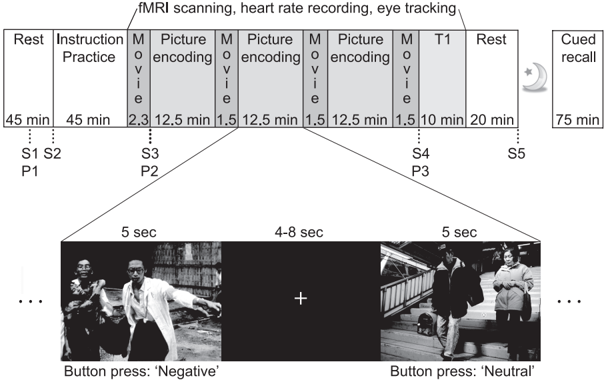
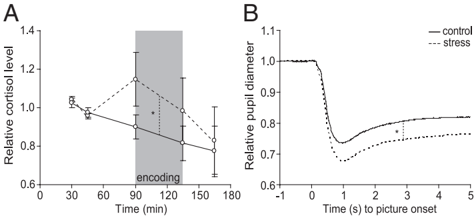
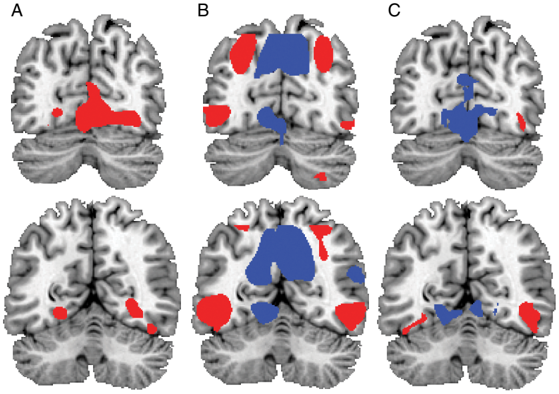
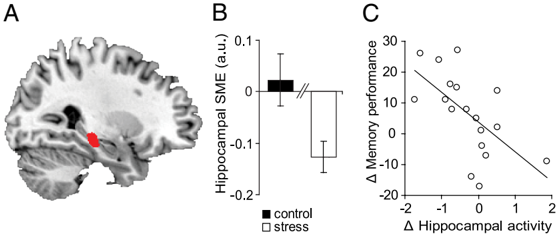
Verification
Claims the paper makes
The claims and statistics of this paper haven’t been checked yet.
Run the check — free, no account needed. It reads the open-access text and checks the sources it cites.
Claims other papers make about this one
Each is checked against this paper’s own text: does it say what the citing paper says it does?
In the citing paper
“Fundamental memory researchers tend to use less complex stimuli, such as words, static pictures, or slideshows (e.g., Domes et al., 2002; Henckens et al., 2009; Payne et al., 2006; Schwabe et al., 2008).”
From The effects of acute stress on eyewitness memory: An integrative review for eyewitness researchers (2021) · cites this paper as Henckens et al., 2009
Self-check
Percentages, sums and reported differences re-computed from the paper’s own numbers.
The self-check needs the paper’s full text.
Citations
Cites
Development and validation of brief measures of positive and negative affect: The PANAS scales.
Watson, D., Clark, L. A., & Tellegen, A. (1988) · Journal of Personality and Social Psychology · doi:10.1037/0022-3514.54.6.1063 · Cited by 32,433
Tzourio-Mazoyer, N., Landeau, B., Papathanassiou, D., Crivello, F., Etard, O., Delcroix, N., Mazoyer, B., & Joliot, M. (2002) · NeuroImage · doi:10.1006/nimg.2001.0978 · Cited by 16,319
Measuring emotion: The self-assessment manikin and the semantic differential
Bradley, M. M., & Lang, P. J. (1994) · Journal of Behavior Therapy and Experimental Psychiatry · doi:10.1016/0005-7916(94)90063-9 · Cited by 9,538
Physiology and neurobiology of stress and adaptation: central role of the brain
McEwen, B. S. (2007) · Physiological Reviews · doi:10.1152/physrev.00041.2006 · Cited by 5,429 · cited 1×
“On a slightly longer timescale, the HPA axis increases the release of glucocorticoids, which also modulate MTL plasticity (Lupien and Lepage, 2001; de Kloet et al., 2005; Roozendaal et al., 2006; McEwen, 2007).”
BackgroundGeneralized autocalibrating partially parallel acquisitions (GRAPPA)
Griswold, M. A., Jakob, P. M., Heidemann, R. M., Nittka, M., Jellús̆, V., Wang, J., Kiefer, B., & Haase, A. (2002) · Magnetic Resonance in Medicine · doi:10.1002/mrm.10171 · Cited by 5,311
Stress and the brain: from adaptation to disease
de Kloet, E. R., Joëls, M., & Holsboer, F. (2005) · Nature Reviews Neuroscience · doi:10.1038/nrn1683 · Cited by 4,621
Self-citationAston-Jones, G., & Cohen, J. D. (2005) · Annual Review of Neuroscience · doi:10.1146/annurev.neuro.28.061604.135709 · Cited by 4,472
The reorienting system of the human brain: from environment to theory of mind
Corbetta, M., Patel, G., & Shulman, G. L. (2008) · Neuron · doi:10.1016/j.neuron.2008.04.017 · Cited by 3,889
Functional neuroanatomy of emotion: A meta-analysis of emotion activation studies in PET and fMRI
Phan, K. L., Wager, T., Taylor, S. F., & Liberzon, I. (2002) · NeuroImage · doi:10.1006/nimg.2002.1087 · Cited by 3,502
The Medial Temporal Lobe Memory System
Squire, L. R., & Zola-Morgan, S. (1991) · Science · doi:10.1126/science.1896849 · Cited by 3,282
Research works printed but not linked: 1
- 10.1017/S0048577298001991 · DOI
Cited by
Sorted by citations
Toward a second-person neuroscience
Schilbach, L., Timmermans, B., Reddy, V., Costall, A., Bente, G., Schlicht, T., & Vogeley, K. (2013) · Behavioral and Brain Sciences · doi:10.1017/s0140525x12000660 · Cited by 1,510
Arousal-Biased Competition in Perception and Memory
Mather, M., & Sutherland, M. R. (2011) · Perspectives on Psychological Science · doi:10.1177/1745691611400234 · Cited by 1,013
Stress effects on memory: An update and integration
Schwabe, L., Joëls, M., Roozendaal, B., Wolf, O. T., & Oitzl, M. S. (2012) · Neuroscience & Biobehavioral Reviews · doi:10.1016/j.neubiorev.2011.07.002 · Cited by 714
Self-citationLearning and memory under stress: implications for the classroom
Vogel, S., & Schwabe, L. (2016) · npj Science of Learning · doi:10.1038/npjscilearn.2016.11 · Cited by 543
The effects of acute stress on episodic memory: A meta-analysis and integrative review.
Shields, G. S., Sazma, M. A., McCullough, A. M., & Yonelinas, A. P. (2017) · Psychological Bulletin · doi:10.1037/bul0000100 · Cited by 450
Computations of uncertainty mediate acute stress responses in humans
de Berker, A. O., Rutledge, R. B., Mathys, C., Marshall, L., Cross, G. F., Dolan, R. J., & Bestmann, S. (2016) · Nature Communications · doi:10.1038/ncomms10996 · Cited by 330
Making lasting memories: Remembering the significant
McGaugh, J. L. (2013) · Proceedings of the National Academy of Sciences · doi:10.1073/pnas.1301209110 · Cited by 311
van Marle, H. J. F., Hermans, E. J., Qin, S., & Fernández, G. (2010) · NeuroImage · doi:10.1016/j.neuroimage.2010.05.070 · Cited by 251
Self-citationHow the brain connects in response to acute stress: A review at the human brain systems level
van Oort, J., Tendolkar, I., Hermans, E. J., Mulders, P. C. R., Beckmann, C. F., Schene, A. H., Fernández, G., & van Eijndhoven, P. (2017) · Neuroscience & Biobehavioral Reviews · doi:10.1016/j.neubiorev.2017.10.015 · Cited by 266
Self-citationTraumatic Brain Injury in Intimate Partner Violence: A Critical Review of Outcomes and Mechanisms
Kwako, L. E., Glass, N. E., Campbell, J. C., Melvin, K. C., Barr, T. L., & Gill, J. (2011) · Trauma Violence & Abuse · doi:10.1177/1524838011404251 · Cited by 278
Acute stress and episodic memory retrieval: neurobiological mechanisms and behavioral consequences
Gagnon, S. A., & Wagner, A. D. (2016) · Annals of the New York Academy of Sciences · doi:10.1111/nyas.12996 · Cited by 255
Dolcos, F., Katsumi, Y., Moore, M., Berggren, N., de Gelder, B., Derakshan, N., Hamm, A. O., Koster, E. H. W., Ladouceur, C. D., Okon‐Singer, H., et al. (2019) · Neuroscience & Biobehavioral Reviews · doi:10.1016/j.neubiorev.2019.08.017 · Cited by 247
Cognitive Adaptation under Stress: A Case for the Mineralocorticoid Receptor
Vogel, S., Fernández, G., Joëls, M., & Schwabe, L. (2016) · Trends in Cognitive Sciences · doi:10.1016/j.tics.2015.12.003 · Cited by 215
Self-citationNeural mechanisms underlying changes in stress-sensitivity across the menstrual cycle
Ossewaarde, L., Hermans, E. J., van Wingen, G. A., Kooijman, S. C., Johansson, I.-M., Bäckström, T., & Fernández, G. (2010) · Psychoneuroendocrinology · doi:10.1016/j.psyneuen.2009.08.011 · Cited by 185
Self-citationStress-induced reduction in reward-related prefrontal cortex function
Ossewaarde, L., Qin, S., van Marle, H. J. F., van Wingen, G. A., Fernández, G., & Hermans, E. J. (2010) · NeuroImage · doi:10.1016/j.neuroimage.2010.11.068 · Cited by 179
Self-citationMartens, M., Antley, A., Freeman, D. H., Slater, M., Harrison, P. J., & Tunbridge, E. M. (2019) · Journal of Psychopharmacology · doi:10.1177/0269881119860156 · Cited by 189
How the amygdala affects emotional memory by altering brain network properties
Hermans, E. J., Battaglia, F. P., Atsak, P., de Voogd, L. D., Fernández, G., & Roozendaal, B. (2014) · Neurobiology of Learning and Memory · doi:10.1016/j.nlm.2014.02.005 · Cited by 173
Self-citationTime-dependent changes in altruistic punishment following stress
Vinkers, C. H., Zorn, J. V., Cornelisse, S., Koot, S., Houtepen, L. C., Olivier, B., Verster, J. C., Kahn, R. S., Boks, M. P., Kalenscher, T., et al. (2013) · Psychoneuroendocrinology · doi:10.1016/j.psyneuen.2012.12.012 · Cited by 159
Self-citationTime-dependent corticosteroid modulation of prefrontal working memory processing
Henckens, M. J. A. G., van Wingen, G. A., Joëls, M., & Fernández, G. (2011) · Proceedings of the National Academy of Sciences · doi:10.1073/pnas.1019128108 · Cited by 155
Self-citationGoldfarb, E. V., Seo, D., & Sinha, R. (2019) · Neurobiology of Stress · doi:10.1016/j.ynstr.2019.100177 · Cited by 167
Schmidt‐Kassow, M., Deusser, M., Thiel, C., Otterbein, S., Montag, C., Reuter, M., Banzer, W. E., & Kaiser, J. (2013) · PLoS ONE · doi:10.1371/journal.pone.0064172 · Cited by 157
Fear bradycardia and activation of the human periaqueductal grey
Hermans, E. J., Henckens, M. J. A. G., Roelofs, K., & Fernández, G. (2013) · NeuroImage · doi:10.1016/j.neuroimage.2012.10.063 · Cited by 151
Self-citationEmotional brain states carry over and enhance future memory formation
Tambini, A., Rimmele, U., Phelps, E. A., & Davachi, L. (2016) · Nature Neuroscience · doi:10.1038/nn.4468 · Cited by 155
Glucocorticoid receptor protein expression in human hippocampus; stability with age
Wang, Q., Van Heerikhuize, J., Aronica, E., Kawata, M., Seress, L., Joels, M., Swaab, D. F., & Lucassen, P. J. (2013) · Neurobiology of Aging · doi:10.1016/j.neurobiolaging.2012.11.019 · Cited by 144
Self-citationNegative affect impairs associative memory but not item memoryPreprint
Bisby, J. A., & Burgess, N. (2013) · Learning & Memory · doi:10.1101/lm.032409.113 · Cited by 149
Neural correlates of tinnitus duration and Distress: A positron emission tomography study
Schecklmann, M., Landgrebe, M., Poeppl, T., Kreuzer, P., Männer, P., Marienhagen, J., Wack, D., Kleinjung, T., Hajak, G., & Langguth, B. (2013) · Human Brain Mapping · doi:10.1002/hbm.21426 · Cited by 152
Henckens, M. J. A. G., van Wingen, G. A., Joëls, M., & Fernández, G. (2012) · Frontiers in Integrative Neuroscience · doi:10.3389/fnint.2012.00066 · Cited by 133
Self-citationEmerging Directions in Emotional Episodic Memory
Dolcos, F., Katsumi, Y., Weymar, M., Moore, M., Tsukiura, T., & Dolcos, S. M. (2017) · Frontiers in Psychology · doi:10.3389/fpsyg.2017.01867 · Cited by 133
Time-Dependent Effects of Cortisol on the Contextualization of Emotional Memories
van Ast, V. A., Cornelisse, S., Meeter, M., Joëls, M., & Kindt, M. (2013) · Biological Psychiatry · doi:10.1016/j.biopsych.2013.06.022 · Cited by 116
Self-citationBisby, J. A., & Burgess, N. (2017) · Current Opinion in Behavioral Sciences · doi:10.1016/j.cobeha.2017.07.012 · Cited by 123
Acute stress modulates genotype effects on amygdala processing in humans
Cousijn, H., Rijpkema, M., Qin, S., van Marle, H. J. F., Franke, B., Hermans, E. J., van Wingen, G., & Fernández, G. (2010) · Proceedings of the National Academy of Sciences · doi:10.1073/pnas.1003514107 · Cited by 115
Self-citationMemory under stress: from single systems to network changes
Schwabe, L. (2016) · European Journal of Neuroscience · doi:10.1111/ejn.13478 · Cited by 121
The role of stress in drug addiction. An integrative review
Ruisoto, P., & Contador, I. (2019) · Physiology & Behavior · doi:10.1016/j.physbeh.2019.01.022 · Cited by 132
Stress-induced alterations in large-scale functional networks of the rodent brain
Henckens, M. J. A. G., van der Marel, K., van der Toorn, A., Pillai, A. G., Fernández, G., Dijkhuizen, R. M., & Joëls, M. (2014) · NeuroImage · doi:10.1016/j.neuroimage.2014.10.037 · Cited by 119
Self-citationQuaedflieg, C. W. E. M., van de Ven, V. G., Meyer, T., Siep, N., Merckelbach, H. L. G. J., & Smeets, T. (2015) · PLoS ONE · doi:10.1371/journal.pone.0124141 · Cited by 118
Effects of acute psychosocial stress on working memory related brain activity in men
Weerda, R., Muehlhan, M., Wolf, O. T., & Thiel, C. M. (2010) · Human Brain Mapping · doi:10.1002/hbm.20945 · Cited by 116
Distribution of the glucocorticoid receptor in the human amygdala; changes in mood disorder patients
Wang, Q., Verweij, E. W. E., Krugers, H. J., Joëls, M., Swaab, D. F., & Lucassen, P. J. (2013) · Brain Structure and Function · doi:10.1007/s00429-013-0589-4 · Cited by 109
Self-citationEffect of Meditation on Stress-Induced Changes in Cognitive Functions
Mohan, A., Sharma, R., & Bijlani, R. L. (2011) · The Journal of Alternative and Complementary Medicine · doi:10.1089/acm.2010.0142 · Cited by 110
Henckens, M. J. A. G., Klumpers, F., Everaerd, D., Kooijman, S. C., van Wingen, G. A., & Fernández, G. (2015) · Social Cognitive and Affective Neuroscience · doi:10.1093/scan/nsv149 · Cited by 110
Self-citationBerretz, G., Packheiser, J., Kumsta, R., Wolf, O. T., & Ocklenburg, S. (2021) · Neuroscience & Biobehavioral Reviews · doi:10.1016/j.neubiorev.2021.01.001 · Cited by 115
Individual Differences in Delay Discounting Under Acute Stress: The Role of Trait Perceived Stress
Lempert, K. M., Porcelli, A. J., Delgado, M. R., & Tricomi, E. M. (2012) · Frontiers in Psychology · doi:10.3389/fpsyg.2012.00251 · Cited by 112
Relating Pupil Dilation and Metacognitive Confidence during Auditory Decision-Making
Lempert, K. M., Chen, Y. L., & Fleming, S. M. (2015) · PLoS ONE · doi:10.1371/journal.pone.0126588 · Cited by 94
Stress in the zoo: Tracking the impact of stress on memory formation over time
Vogel, S., & Schwabe, L. (2016) · Psychoneuroendocrinology · doi:10.1016/j.psyneuen.2016.04.027 · Cited by 92
Human freezing in response to affective films.
Hagenaars, M. A., Roelofs, K., & Stins, J. F. (2014) · Anxiety, Stress, & Coping · doi:10.1080/10615806.2013.809420 · Cited by 91
Imaging stress: an overview of stress induction methods in the MR scanner
Noack, H., Nolte, L., Nieratschker, V., Habel, U., & Derntl, B. (2019) · Journal of Neural Transmission · doi:10.1007/s00702-018-01965-y · Cited by 96
Ossewaarde, L., van Wingen, G. A., Rijpkema, M., Bäckström, T. C., Hermans, E. J., & Fernández, G. (2011) · Human Brain Mapping · doi:10.1002/hbm.21502 · Cited by 92
Self-citationQin, S., Hermans, E. J., van Marle, H. J. F., & Fernández, G. (2012) · Journal of Neuroscience · doi:10.1523/jneurosci.3101-11.2012 · Cited by 91
Self-citationMultilevel Interactions of Stress and Circadian System: Implications for Traumatic Stress
Agorastos, A., Nicolaides, N. C., Bozikas, V. P., Chrousos, G. P., & Pervanidou, P. (2020) · Frontiers in Psychiatry · doi:10.3389/fpsyt.2019.01003 · Cited by 89
Tu, J., Yeom, J., Ulloa, J. C., Solomon, S. A., Min, J., Heng, W., Kim, G., Dao, J., Vemu, R., Pang, M., et al. (2025) · Science Advances · doi:10.1126/sciadv.adx6491 · Cited by 88
Murty, V. P., LaBar, K. S., & Adcock, R. A. (2012) · Journal of Neuroscience · doi:10.1523/jneurosci.0094-12.2012 · Cited by 88
Barsegyan, A., McGaugh, J. L., & Roozendaal, B. (2014) · Frontiers in Behavioral Neuroscience · doi:10.3389/fnbeh.2014.00160 · Cited by 84
Qin, S., Cousijn, H., Rijpkema, M., Luo, J., Franke, B., Hermans, E. J., & Fernández, G. (2012) · Frontiers in Integrative Neuroscience · doi:10.3389/fnint.2012.00016 · Cited by 83
“…procedure in which participants saw strongly aversive (vs. neutral control) movie material combined with a self-referencing instruction, which has been shown previously to elicit physiological and psychological stress responses (Henckens et al., 2009; Qin et al., 2009; Hermans et al., 2011).”
BackgroundMethodResultInfluentialSelf-citationCorticosteroid Induced Decoupling of the Amygdala in Men
Henckens, M. J. A. G., van Wingen, G. A., Joëls, M., & Fernández, G. (2011) · Cerebral Cortex · doi:10.1093/cercor/bhr313 · Cited by 83
Self-citationDynamically changing effects of corticosteroids on human hippocampal and prefrontal processing
Henckens, M. J. A. G., Pu, Z., Hermans, E. J., van Wingen, G. A., Joëls, M., & Fernández, G. (2012) · Human Brain Mapping · doi:10.1002/hbm.21409 · Cited by 80
Self-citationWhat we remember from a stressful episode
Wiemers, U. S., Sauvage, M. M., Schoofs, D., Hamacher‐Dang, T. C., & Wolf, O. T. (2013) · Psychoneuroendocrinology · doi:10.1016/j.psyneuen.2013.04.015 · Cited by 82
Zoladz, P. R., Park, C. R., Halonen, J. D., Salim, S., Alzoubi, K. H., Srivareerat, M., Fleshner, M., Alkadhi, K. A., & Diamond, D. M. (2011) · Hippocampus · doi:10.1002/hipo.20922 · Cited by 83
Acevedo, B. P., Santander, T., Marhenke, R., Aron, A. P., & Aron, E. N. (2021) · Neuropsychobiology · doi:10.1159/000513527 · Cited by 95
Krugers, H. J., Karst, H., & Joëls, M. (2012) · Frontiers in Cellular Neuroscience · doi:10.3389/fncel.2012.00015 · Cited by 84
Self-citationFan, Y., Pestke, K., Feeser, M., Aust, S., Pruessner, J. C., Böker, H., Bajbouj, M., & Grimm, S. (2015) · Neuropsychopharmacology · doi:10.1038/npp.2015.123 · Cited by 75
Weymar, M., Schwabe, L., Löw, A., & Hamm, A. O. (2011) · Journal of Cognitive Neuroscience · doi:10.1162/jocn_a_00174 · Cited by 78
Treadmill walking during vocabulary encoding improves verbal long-term memory
Schmidt‐Kassow, M., Zink, N., Mock, J., Thiel, C., Vogt, L., Abel, C., & Kaiser, J. (2014) · Behavioral and Brain Functions · doi:10.1186/1744-9081-10-24 · Cited by 83
Music Performance As an Experimental Approach to Hyperscanning Studies
Acquadro, M., Congedo, M., & Riddeer, D. D. (2016) · Frontiers in Human Neuroscience · doi:10.3389/fnhum.2016.00242 · Cited by 76
Lights … action: Comparison of trauma films for use in the trauma film paradigm
Arnaudova, I., & Hagenaars, M. A. (2017) · Behaviour Research and Therapy · doi:10.1016/j.brat.2017.02.007 · Cited by 69
Meeuwissen, E., Takashima, A., Fernández, G., & Jensen, O. B. (2010) · Human Brain Mapping · doi:10.1002/hbm.21167 · Cited by 79
Self-citationUmukoro, S., Kalejaye, H. A., Ben‐Azu, B., & Ajayi, A. M. (2018) · Biomedicine & Pharmacotherapy · doi:10.1016/j.biopha.2018.06.016 · Cited by 67
Sleep, circadian system and traumatic stress
Agorastos, A., & Olff, M. (2021) · European Journal of Psychotraumatology · doi:10.1080/20008198.2021.1956746 · Cited by 73
van Wingen, G. A., van Eijndhoven, P., Cremers, H. R., Tendolkar, I., Verkes, R. J., Buitelaar, J. K., & Fernández, G. (2010) · Journal of Psychiatric Research · doi:10.1016/j.jpsychires.2009.11.009 · Cited by 63
Self-citationHoscheidt, S. M., LaBar, K. S., Ryan, L., Jacobs, W. J., & Nadel, L. (2014) · Neurobiology of Learning and Memory · doi:10.1016/j.nlm.2013.09.008 · Cited by 62
The role of eye fixation in memory enhancement under stress – An eye tracking study
Herten, N., Otto, T., & Wolf, O. T. (2017) · Neurobiology of Learning and Memory · doi:10.1016/j.nlm.2017.02.016 · Cited by 65
McCullough, A. M., Ritchey, M., Ranganath, C., & Yonelinas, A. P. (2015) · Neurobiology of Learning and Memory · doi:10.1016/j.nlm.2015.04.007 · Cited by 57
Opposite effects of cortisol on consolidation of temporal sequence memory during waking and sleep
Wilhelm, I., Wagner, U., & Born, J. (2011) · Journal of Cognitive Neuroscience · doi:10.1162/jocn_a_00093 · Cited by 54
de Voogd, L. D., Klumpers, F., Fernández, G., & Hermans, E. J. (2016) · Psychoneuroendocrinology · doi:10.1016/j.psyneuen.2016.11.002 · Cited by 56
Self-citationAgorastos, A., & Olff, M. (2020) · European Journal of Psychotraumatology · doi:10.1080/20008198.2020.1833644 · Cited by 56
Modulatory mechanisms of cortisol effects on emotional learning and memory: Novel perspectives
van Ast, V. A., Cornelisse, S., Marin, M., Ackermann, S., Garfinkel, S. N., & Abercrombie, H. C. (2013) · Psychoneuroendocrinology · doi:10.1016/j.psyneuen.2013.06.012 · Cited by 53
Becker, L., & Rohleder, N. (2019) · PLoS ONE · doi:10.1371/journal.pone.0213883 · Cited by 53
Hillerer, K. M., Slattery, D. A., & Pletzer, B. A. (2019) · Frontiers in Neuroendocrinology · doi:10.1016/j.yfrne.2019.100796 · Cited by 49
A national longitudinal study of marital quality and cognitive decline among older men and women
Liu, H., Zhang, Z., & Zhang, Y. (2021) · Social Science & Medicine · doi:10.1016/j.socscimed.2021.114151 · Cited by 49
Umukoro, S., Aluko, O. M., Eduviere, A. T., & Owoeye, O. (2015) · Brain Research Bulletin · doi:10.1016/j.brainresbull.2015.11.016 · Cited by 44
Enhancing memory with stress: Progress, challenges, and opportunities
Goldfarb, E. V. (2018) · Brain and Cognition · doi:10.1016/j.bandc.2018.11.009 · Cited by 53
van Marle, H. J. F., Hermans, E. J., Qin, S., Overeem, S., & Fernández, G. (2013) · Psychoneuroendocrinology · doi:10.1016/j.psyneuen.2013.01.009 · Cited by 44
Self-citationAgorastos, A., & Linthorst, A. C. E. (2016) · Journal of Pineal Research · doi:10.1111/jpi.12330 · Cited by 41
Stauble, M. R., Thompson, L. A., & Morgan, G. (2013) · Stress · doi:10.3109/10253890.2013.780236 · Cited by 41
Same-Sex Couples and Cognitive Impairment: Evidence From the Health and Retirement Study
Liu, H., Hsieh, N., Zhang, Z., Zhang, Y., & Langa, K. M. (2021) · The Journals of Gerontology: Series B · doi:10.1093/geronb/gbaa202 · Cited by 40
Moses, T. E. H., Gray, E., Mischel, N., & Greenwald, M. K. (2023) · Neurobiology of Stress · doi:10.1016/j.ynstr.2023.100515 · Cited by 45
Stress within a Restricted Time Window Selectively Affects the Persistence of Long-Term Memory
Yang, C., Liu, J., Chai, B.-S., Fang, Q., Chai, N., Zhao, L., Xue, Y.-X., Luo, Y., Jian, M., Han, Y., et al. (2013) · PLoS ONE · doi:10.1371/journal.pone.0059075 · Cited by 41
Stress, associative learning, and decision-making
Giovanniello, J. R., Bravo-Rivera, C., Rosenkranz, J. A., & Lattal, K. M. (2023) · Neurobiology of Learning and Memory · doi:10.1016/j.nlm.2023.107812 · Cited by 39
Sannino, G., Pasqualini, L., Ricciardelli, E., Montilla, P., Soverchia, L., Ruggeri, B., Falcinelli, S., Renzi, A., Ludka, C., Kirchner, T., et al. (2016) · Oncotarget · doi:10.18632/oncotarget.7225 · Cited by 40
Martínez-Soto, J., Suárez, L. A. D. L. F., Gonzáles-Santos, L., & Barrios, F. A. (2019) · IBRO Reports · doi:10.1016/j.ibror.2019.07.1722 · Cited by 37
Emotional arousal and discount rate in intertemporal choice are reference dependent.
Lempert, K. M., Glimcher, P. W., & Phelps, E. A. (2015) · Journal of Experimental Psychology General · doi:10.1037/xge0000047 · Cited by 37
Situational and personal characteristics associated with adverse weather encounters by pilots
Hunter, D. R., Martinussen, M., Wiggins, M. W., & O’Hare, D. (2010) · Accident Analysis & Prevention · doi:10.1016/j.aap.2010.08.007 · Cited by 37
Quaedflieg, C. W. E. M., Meyer, T., & Smeets, T. (2013) · Psychophysiology · doi:10.1111/psyp.12058 · Cited by 39
Chung, K. C., Springer, I., Kogler, L., Turetsky, B. I., Freiherr, J., & Derntl, B. (2016) · Psychoneuroendocrinology · doi:10.1016/j.psyneuen.2016.02.026 · Cited by 34
Stress enhances model-free reinforcement learning only after negative outcome
Park, H., Lee, D., & Chey, J. (2017) · PLoS ONE · doi:10.1371/journal.pone.0180588 · Cited by 40
Agorastos, A., Kellner, M., Baker, D. G., & Otte, C. (2014) · Current Opinion in Psychiatry · doi:10.1097/yco.0000000000000079 · Cited by 33
Emotional arousal predicts intertemporal choice.
Lempert, K. M., Johnson, E., & Phelps, E. A. (2016) · Emotion · doi:10.1037/emo0000168 · Cited by 43
Rose or black-coloured glasses?
Arnold, J., Fitzgerald, D. A., Fernández, G., Rijpkema, M., Rinck, M., Eling, P., Becker, E. S., Speckens, A. E. M., & Tendolkar, I. (2011) · Journal of Affective Disorders · doi:10.1016/j.jad.2010.12.011 · Cited by 33
Self-citationNatural Memory Beyond the Storage Model: Repression, Trauma, and the Construction of a Personal Past
Axmacher, N., Lam, A. T. A. D., Kessler, H., & Fell, J. (2010) · Frontiers in Human Neuroscience · doi:10.3389/fnhum.2010.00211 · Cited by 37
Ballard, M. E., Gallo, D. A., & de Wit, H. (2013) · Psychopharmacology · doi:10.1007/s00213-012-2924-5 · Cited by 32
The effects of acute stress on eyewitness memory: An integrative review for eyewitness researchers
Marr, C., Sauerland, M., Otgaar, H., Quaedflieg, C. W. E. M., & Hope, L. (2021) · Memory · doi:10.1080/09658211.2021.1955935 · Cited by 30
“Fundamental memory researchers tend to use less complex stimuli, such as words, static pictures, or slideshows (e.g., Domes et al., 2002; Henckens et al., 2009; Payne et al., 2006; Schwabe et al., 2008).”
BackgroundThe effects of stress on eyewitness memory: A survey of memory experts and laypeople
Marr, C., Otgaar, H., Sauerland, M., Quaedflieg, C. W. E. M., & Hope, L. (2021) · Memory & Cognition · doi:10.3758/s13421-020-01115-4 · Cited by 30
Metadata
- Authors
- Henckens, M. J. A. G., Hermans, E. J., Pu, Z., Joëls, M., & Fernández, G.
- Affiliations
- Radboud University Nijmegen (NL)
- University of Amsterdam (NL)
- Corresponding author
- Henckens, Marloes J. A. G.
- Venue
- The Journal of Neuroscience
- Publisher
- Society for Neuroscience
- Published
- 2009-08-12
- Volume
- 29
- Issue
- 32
- Pages
- 10111-10119
- ISSN
- 0270-6474 (ISSN-L)
- 1529-2401
- PMC
- PMC6664979
- OpenAlex
- W2158213171
- Cited by
- 295
- References
- 64
- Citations by year
- 2026: 8 · 2025: 12 · 2024: 21 · 2023: 16 · 2022: 9 · 2021: 21 · 2020: 17 · 2019: 27 · 2018: 17 · 2017: 23 · 2016: 23 · 2015: 12 · 2014: 16 · 2013: 24 · 2012: 14
- FWCI
- 7.90
- Type
- journal article
- Language
- en
- Open access
- hybrid
- doi.org
- Licence
- Locations
- Journal of Neuroscience (publishedVersion, cc-by-nc-sa)
- Europe PMC (PubMed Central) (publishedVersion)
- PubMed Central (publishedVersion)
- PubMed (publishedVersion)
- UvA-DARE (University of Amsterdam) (publishedVersion, other-oa)
- Radboud Repository (Radboud University) (submittedVersion)
- Radboud Repository (Radboud University) (submittedVersion, other-oa)
- Data Archiving and Networked Services (DANS) (submittedVersion, other-oa)
- Funders
- Nederlandse Organisatie voor Wetenschappelijk Onderzoek (918.66.613)
- Topics
- Life Sciences › Neuroscience › Cognitive Neuroscience › Memory and Neural Mechanisms
- Life Sciences › Neuroscience › Cognitive Neuroscience › Memory Processes and Influences
- Life Sciences › Neuroscience › Behavioral Neuroscience › Stress Responses and Cortisol
- Keywords
- acute stress, memory formation, post-traumatic stress disorder, hippocampal activation, memory encoding, stress hormones, cortisol, stress induction, visual cortex, inferior temporal cortex, hypervigilance, neural correlates of memory, psychological trauma
- MeSH terms
- Adult, Brain Mapping, Heart Rate, Hippocampus, Humans, Hydrocortisone, Magnetic Resonance Imaging, Male, Pattern Recognition, Visual, Photic Stimulation, Pupil, Surveys and Questionnaires, Mental Recall, Saliva, Stress, Psychological, Temporal Lobe, Cross-Over Studies, Young Adult
About these checks
Registry, retraction, Cites and statistics results are computed, not judged, with one exception: a printed reference that no index lists is read once by a model before it counts as a citation error. Claims are extracted by a model and kept only when their quote appears verbatim in the text; each cited source is then checked, with a model’s help, for whether it says what the claim relies on. Those verdicts can be wrong — read the claim’s quote and the cited source before relying on one.
Statistics and arithmetic are recomputed, not judged.
Confidence bands are shown only for fields calibrated on our annotated test set. None is calibrated yet, so no band is shown.
What counts as a claim ›How we measure confidence ›How we check this ›
Are you an author, or do you see a problem with this page? Request a review
