

The DOI matches its Crossref record; 63 of the 64 references it cites were found in a registry or an index.
Stressed Memories: How Acute Stress Affects Memory Formation in Humans
Open accessAbstract
Stressful, aversive events are extremely well remembered. Such a declarative memory enhancement is evidently beneficial for survival, but the same mechanism may become maladaptive and culminate in mental diseases such as posttraumatic stress disorder (PTSD). Stress hormones are known to enhance postlearning consolidation of aversive memories but are also thought to have immediate effects on attentional, sensory, and mnemonic processes at memory formation. Despite their significance for our understanding of the etiology of stress-related mental disorders, effects of acute stress at memory formation, and their brain correlates at the system scale, remain elusive. Using an integrated experimental approach, we probed the neural correlates of memory formation while participants underwent a controlled stress induction procedure in a crossover design. Physiological (cortisol level, heart rate, and pupil dilation) and subjective measures confirmed acute stress. Remarkably, reduced hippocampal activation during encoding predicted stress-enhanced memory performance, both within and between participants. Stress, moreover, amplified early visual and inferior temporal responses, suggesting that hypervigilant processing goes along with enhanced inferior temporal information reduction to relay a higher proportion of task-relevant information to the hippocampus. Thus, acute stress affects neural correlates of memory formation in an unexpected manner, the understanding of which may elucidate mechanisms underlying psychological trauma etiology.
Overview
The claims and statistics of this paper haven’t been checked yet.
Run the check — free, no account needed. It reads the open-access text and checks the sources it cites.
Integrity signals
Registry
Cites
Statistics
Figures
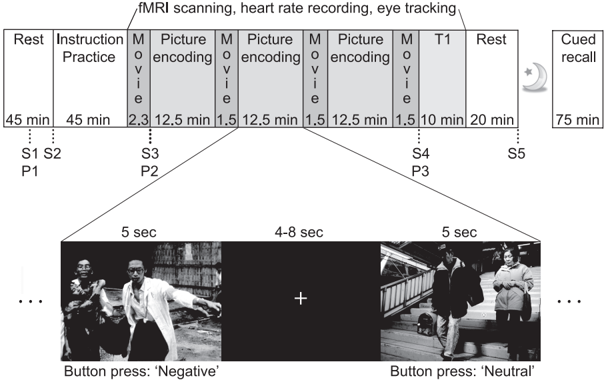
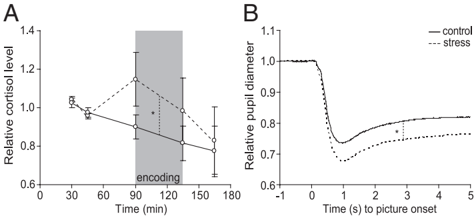
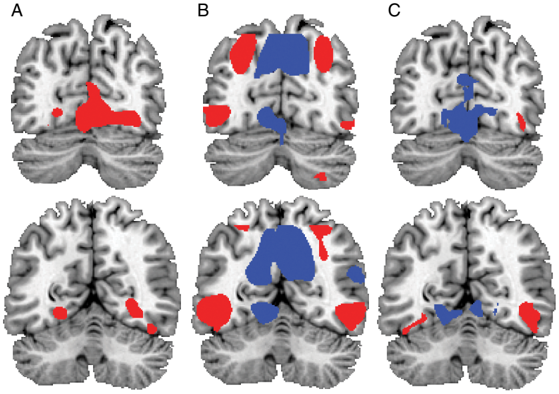
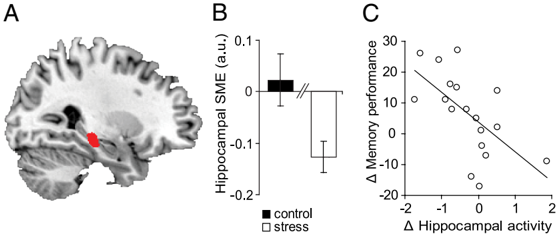
Verification
Claims the paper makes
The claims and statistics of this paper haven’t been checked yet.
Run the check — free, no account needed. It reads the open-access text and checks the sources it cites.
Claims other papers make about this one
Each is checked against this paper’s own text: does it say what the citing paper says it does?
In the citing paper
“Fundamental memory researchers tend to use less complex stimuli, such as words, static pictures, or slideshows (e.g., Domes et al., 2002; Henckens et al., 2009; Payne et al., 2006; Schwabe et al., 2008).”
From The effects of acute stress on eyewitness memory: An integrative review for eyewitness researchers (2021) · cites this paper as Henckens et al., 2009
Self-check
Percentages, sums and reported differences re-computed from the paper’s own numbers.
The self-check needs the paper’s full text.
Citations
Cites
Development and validation of brief measures of positive and negative affect: The PANAS scales.
Watson, D., Clark, L. A., & Tellegen, A. (1988) · Journal of Personality and Social Psychology · doi:10.1037/0022-3514.54.6.1063 · Cited by 32,433
Tzourio-Mazoyer, N., Landeau, B., Papathanassiou, D., Crivello, F., Etard, O., Delcroix, N., Mazoyer, B., & Joliot, M. (2002) · NeuroImage · doi:10.1006/nimg.2001.0978 · Cited by 16,319
Measuring emotion: The self-assessment manikin and the semantic differential
Bradley, M. M., & Lang, P. J. (1994) · Journal of Behavior Therapy and Experimental Psychiatry · doi:10.1016/0005-7916(94)90063-9 · Cited by 9,538
Physiology and neurobiology of stress and adaptation: central role of the brain
McEwen, B. S. (2007) · Physiological Reviews · doi:10.1152/physrev.00041.2006 · Cited by 5,429 · cited 1×
“On a slightly longer timescale, the HPA axis increases the release of glucocorticoids, which also modulate MTL plasticity (Lupien and Lepage, 2001; de Kloet et al., 2005; Roozendaal et al., 2006; McEwen, 2007).”
BackgroundGeneralized autocalibrating partially parallel acquisitions (GRAPPA)
Griswold, M. A., Jakob, P. M., Heidemann, R. M., Nittka, M., Jellús̆, V., Wang, J., Kiefer, B., & Haase, A. (2002) · Magnetic Resonance in Medicine · doi:10.1002/mrm.10171 · Cited by 5,311
Stress and the brain: from adaptation to disease
de Kloet, E. R., Joëls, M., & Holsboer, F. (2005) · Nature Reviews Neuroscience · doi:10.1038/nrn1683 · Cited by 4,621
Self-citationAston-Jones, G., & Cohen, J. D. (2005) · Annual Review of Neuroscience · doi:10.1146/annurev.neuro.28.061604.135709 · Cited by 4,472
The reorienting system of the human brain: from environment to theory of mind
Corbetta, M., Patel, G., & Shulman, G. L. (2008) · Neuron · doi:10.1016/j.neuron.2008.04.017 · Cited by 3,889
Functional neuroanatomy of emotion: A meta-analysis of emotion activation studies in PET and fMRI
Phan, K. L., Wager, T., Taylor, S. F., & Liberzon, I. (2002) · NeuroImage · doi:10.1006/nimg.2002.1087 · Cited by 3,502
The Medial Temporal Lobe Memory System
Squire, L. R., & Zola-Morgan, S. (1991) · Science · doi:10.1126/science.1896849 · Cited by 3,282
International Affective Picture System (IAPS) : Technical Manual and Affective Ratings
Lang, P. J. (1995) · Medical Entomology and Zoology · Cited by 2,870
Selective Attention Gates Visual Processing in the Extrastriate Cortex
Moran, J., & Desimone, R. (1985) · Science · doi:10.1126/science.4023713 · Cited by 2,433
Selective Attention Gates Visual Processing in the Extrastriate Cortex
Moran, J., & Desimone, R. (2003) · The MIT Press eBooks · doi:10.7551/mitpress/2834.003.0024 · Cited by 2,164
Aston-Jones, G., & Bloom, F. (1981) · The Journal of Neuroscience · doi:10.1523/jneurosci.01-08-00876.1981 · Cited by 1,960
The pupil as a measure of emotional arousal and autonomic activation
Bradley, M. M., Miccoli, L., Escrig, M. A., & Lang, P. J. (2008) · Psychophysiology · doi:10.1111/j.1469-8986.2008.00654.x · Cited by 1,919
Kirschbaum, C., Kudielka, B. M., Gaab, J., Schommer, N. C., & Hellhammer, D. H. (1999) · Psychosomatic Medicine · doi:10.1097/00006842-199903000-00006 · Cited by 1,890
Valid conjunction inference with the minimum statistic
Nichols, T. E., Brett, M., Andersson, J., Wager, T. D., & Poline, J. (2005) · NeuroImage · doi:10.1016/j.neuroimage.2004.12.005 · Cited by 1,854
The locus coeruleus and noradrenergic modulation of cognition
Sara, S. J. (2009) · Nature Reviews Neuroscience · doi:10.1038/nrn2573 · Cited by 1,848
Building Memories: Remembering and Forgetting of Verbal Experiences as Predicted by Brain Activity
Wagner, A. D., Schacter, D. L., Rotte, M., Koutstaal, W., Maril, A., Dale, A. M., Rosen, B. R., & Buckner, R. L. (1998) · Science · doi:10.1126/science.281.5380.1188 · Cited by 1,644
MCEWEN, B. S. (2004) · Annals of the New York Academy of Sciences · doi:10.1196/annals.1314.001 · Cited by 1,638
The stressed hippocampus, synaptic plasticity and lost memories
Kim, J. J., & Diamond, D. M. (2002) · Nature Reviews Neuroscience · doi:10.1038/nrn849 · Cited by 1,543
Stress and glucocorticoids impair retrieval of long-term spatial memory
de Quervain, D. J.-F., Roozendaal, B., & McGaugh, J. L. (1998) · Nature · doi:10.1038/29542 · Cited by 1,182 · cited 1×
“Our memory test was deliberately delayed, precluding effects on memory retrieval (de Quervain et al., 1998; Roozendaal et al., 2006), thus creating a time window during which consolidation may have been affected.”
MethodMaking Memories: Brain Activity that Predicts How Well Visual Experience Will Be Remembered
Brewer, J. B., Zhao, Z., Desmond, J. E., Glover, G. H., & Gabrieli, J. D. E. (1998) · Science · doi:10.1126/science.281.5380.1185 · Cited by 1,108
The effects of sex and hormonal status on the physiological response to acute psychosocial stress
Kajantie, E., & Phillips, D. I. W. (2006) · Psychoneuroendocrinology · doi:10.1016/j.psyneuen.2005.07.002 · Cited by 1,035
Mechanisms of Directed Attention in the Human Extrastriate Cortex as Revealed by Functional MRI
Kästner, S., Weerd, P. D., Desimone, R., & Ungerleider, L. G. (1998) · Science · doi:10.1126/science.282.5386.108 · Cited by 976
Learning under stress: how does it work?
Joëls, M., Pu, Z., Wiegert, O., Oitzl, M. S., & Krugers, H. J. (2006) · Trends in Cognitive Sciences · doi:10.1016/j.tics.2006.02.002 · Cited by 947
Self-citationCombined spatial and temporal imaging of brain activity during visual selective attention in humans
Heinze, H. –., Mangun, G. R., Burchert, W., Hinrichs, H., Scholz, M., Münte, T. F., Gös, A., Scherg, M., Johannes, S., Hundeshagen, H., et al. (1994) · Nature · doi:10.1038/372543a0 · Cited by 915
Emotional arousal and activation of the visual cortex: An fMRI analysis
Lang, P. J., Bradley, M. M., Fitzsimmons, J. R., Cuthbert, B. N., Scott, J. D., Moulder, B., & Nangia, V. (1998) · Psychophysiology · doi:10.1111/1469-8986.3520199 · Cited by 802
Enhanced memory for emotional material following stress-level cortisol treatment in humans
Buchanan, T. W., & Lovallo, W. R. (2001) · Psychoneuroendocrinology · doi:10.1016/s0306-4530(00)00058-5 · Cited by 762
Dolcos, F., LaBar, K. S., & Cabeza, R. (2004) · Neuron · doi:10.1016/s0896-6273(04)00289-2 · Cited by 714 · cited 8×
“However, a picture cued recall test appears quite optimal for probing emotional memory formation (Buchanan and Lovallo, 2001; Dolcos et al., 2004; Payne et al., 2006, 2007); it shows robustly the typical emotional bias effect and provides a cleaner measure of episodic memory retrieval than for…”
BackgroundMethodResultInfluentialQin, S., Hermans, E. J., van Marle, H. J. F., Luo, J., & Fernández, G. (2009) · Biological Psychiatry · doi:10.1016/j.biopsych.2009.03.006 · Cited by 675
Self-citationCahill, L., Gorski, L., & Le, K. (2003) · Learning & Memory · doi:10.1101/lm.62403 · Cited by 660
Adrenergic pharmacology and cognition: Focus on the prefrontal cortex
Ramos, B. P., & Arnsten, A. F. T. (2007) · Pharmacology & Therapeutics · doi:10.1016/j.pharmthera.2006.11.006 · Cited by 641
Stress and Memory: Behavioral Effects and Neurobiological Mechanisms
Sandi, C., & Pinelo-Nava, M. T. (2007) · Neural Plasticity · doi:10.1155/2007/78970 · Cited by 611
Friston, K. J., Penny, W. D., & Glaser, D. E. (2005) · NeuroImage · doi:10.1016/j.neuroimage.2005.01.013 · Cited by 578
Convergent regulation of locus coeruleus activity as an adaptive response to stress
Valentino, R. J., & Van Bockstaele, E. (2008) · European Journal of Pharmacology · doi:10.1016/j.ejphar.2007.11.062 · Cited by 569
Stress, memory, and the hippocampus: can't live with it, can't live without it
LUPIEN, S. J., & Lepage, M. (2001) · Behavioural Brain Research · doi:10.1016/s0166-4328(01)00361-8 · Cited by 522
Berridge, C. W., & Foote, S. L. (1991) · Journal of Neuroscience · doi:10.1523/jneurosci.11-10-03135.1991 · Cited by 434
Defares, P. B., van der Ploeg, H. M., & Spielberger, C. D. (1980) · Socio-Environmental Systems Modeling · Cited by 415
Vuilleumier, P., & Driver, J. (2007) · Philosophical Transactions of the Royal Society B Biological Sciences · doi:10.1098/rstb.2007.2092 · Cited by 397
Roozendaal, B., Okuda, S., de Quervain, D. J.-F., & McGaugh, J. L. (2006) · Neuroscience · doi:10.1016/j.neuroscience.2005.07.049 · Cited by 382
Role of Reticular Activation in the Modulation of Intracortical Synchronization
Munk, M. H. J., Roelfsema, P. R., König, P., Engel, A. K., & Singer, W. (1996) · Science · doi:10.1126/science.272.5259.271 · Cited by 374
Jin, C., & Reed, J. C. (2002) · Nature Reviews Molecular Cell Biology · doi:10.1038/nrm832 · Cited by 340
Effects of Chronic Stress on Structure and Cell Function in Rat Hippocampus and Hypothalamus
Joëls, M., Karst, H., Alfarez, D., Heine, V. M., Qin, Y., Riel, E. V., Verkuyl, M., Lucassen, P. J., & Krugers, H. J. (2004) · Stress · doi:10.1080/10253890500070005 · Cited by 330
Self-citationvan Marle, H. J. F., Hermans, E. J., Qin, S., & Fernández, G. (2009) · Biological Psychiatry · doi:10.1016/j.biopsych.2009.05.014 · Cited by 317
Self-citationPoint mutation in the mouse glucocorticoid receptor preventing DNA binding impairs spatial memory
Oitzl, M. S., Reichardt, H. M., Joëls, M., & de Kloet, E. R. (2001) · Proceedings of the National Academy of Sciences · doi:10.1073/pnas.231313998 · Cited by 286
Self-citationThe stress hormone corticosterone conditions AMPAR surface trafficking and synaptic potentiation
Groc, L., Choquet, D., & Chaouloff, F. (2008) · Nature Neuroscience · doi:10.1038/nn.2150 · Cited by 280
Glucocorticoid Release and Memory Consolidation in Men and Women
Andreano, J. M., & Cahill, L. (2006) · Psychological Science · doi:10.1111/j.1467-9280.2006.01729.x · Cited by 270
Visual attention as a multilevel selection process
Kästner, S., & Pinsk, M. A. (2004) · Cognitive Affective & Behavioral Neuroscience · doi:10.3758/cabn.4.4.483 · Cited by 269
Bouma, E., Riese, H., Ormel, J., Verhulst, F. C., & Oldehinkel, A. J. (2009) · Psychoneuroendocrinology · doi:10.1016/j.psyneuen.2009.01.003 · Cited by 266
Amygdala damage impairs emotional memory for gist but not details of complex stimuli
Adolphs, R., Tranel, D., & Buchanan, T. W. (2005) · Nature Neuroscience · doi:10.1038/nn1413 · Cited by 250
Payne, J. D., Jackson, E. D., Hoscheidt, S., Ryan, L., Jacobs, W. J., & Nadel, L. (2007) · Learning & Memory · doi:10.1101/lm.743507 · Cited by 248
When encodong yields remembering: insights from event-related neuroimaging
Wagner, A. D., Koutstaal, W., & Schacter, D. L. (1999) · Philosophical Transactions of the Royal Society B Biological Sciences · doi:10.1098/rstb.1999.0481 · Cited by 237
Use of concurrent pupil dilation assessment to inform interpretation and analysis of fMRI data
Siegle, G. J., Steinhauer, S. R., Stenger, V. A., Konecky, R. O., & Carter, C. S. (2003) · NeuroImage · doi:10.1016/s1053-8119(03)00298-2 · Cited by 228
The impact of stress on neutral and emotional aspects of episodic memory
Payne, J., Jackson, E., Ryan, L., Hoscheidt, S., Jacobs, J., & Nadel, L. (2006) · Memory · doi:10.1080/09658210500139176 · Cited by 214
Loss of attentional stimulus selection after extrastriate cortical lesions in macaques
Weerd, P. D., Peralta, M. R., Desimone, R., & Ungerleider, L. G. (1999) · Nature Neuroscience · doi:10.1038/11234 · Cited by 175
Abercrombie, H. C., Speck, N. S., & Monticelli, R. M. (2005) · Psychoneuroendocrinology · doi:10.1016/j.psyneuen.2005.06.008 · Cited by 158
Pupillary dilation as an index of central nervous system α2-adrenoceptor activation
Koss, M. C. (1986) · Journal of Pharmacological Methods · doi:10.1016/0160-5402(86)90002-1 · Cited by 152
Richardson, M. P., Strange, B. A., Duncan, J. S., & Dolan, R. J. (2003) · NeuroImage · doi:10.1016/j.neuroimage.2003.09.008 · Cited by 127
Stress selectively and lastingly promotes learning of context-related high arousing information
Smeets, T., Wolf, O. T., Giesbrecht, T., Sijstermans, K., Telgen, S., & Joëls, M. (2009) · Psychoneuroendocrinology · doi:10.1016/j.psyneuen.2009.03.001 · Cited by 104
Self-citationMood Alters Amygdala Activation to Sad Distractors During an Attentional Task
Wang, L., LaBar, K. S., & McCarthy, G. (2006) · Biological Psychiatry · doi:10.1016/j.biopsych.2006.01.021 · Cited by 75
The role of medial temporal lobe in item recognition and source recollection of emotional stimuli
Dougal, S., Phelps, E. A., & Davachi, L. (2007) · Cognitive Affective & Behavioral Neuroscience · doi:10.3758/cabn.7.3.233 · Cited by 75
Similar neural mechanisms for emotion-induced memory impairment and enhancement
Cahill, L. F. (2003) · Proceedings of the National Academy of Sciences · doi:10.1073/pnas.2335833100 · Cited by 32
Research works printed but not linked: 1
- 10.1017/S0048577298001991 · DOI
Cited by
Sorted by citations
Toward a second-person neuroscience
Schilbach, L., Timmermans, B., Reddy, V., Costall, A., Bente, G., Schlicht, T., & Vogeley, K. (2013) · Behavioral and Brain Sciences · doi:10.1017/s0140525x12000660 · Cited by 1,510
Arousal-Biased Competition in Perception and Memory
Mather, M., & Sutherland, M. R. (2011) · Perspectives on Psychological Science · doi:10.1177/1745691611400234 · Cited by 1,013
Stress effects on memory: An update and integration
Schwabe, L., Joëls, M., Roozendaal, B., Wolf, O. T., & Oitzl, M. S. (2012) · Neuroscience & Biobehavioral Reviews · doi:10.1016/j.neubiorev.2011.07.002 · Cited by 714
Self-citationLearning and memory under stress: implications for the classroom
Vogel, S., & Schwabe, L. (2016) · npj Science of Learning · doi:10.1038/npjscilearn.2016.11 · Cited by 543
The effects of acute stress on episodic memory: A meta-analysis and integrative review.
Shields, G. S., Sazma, M. A., McCullough, A. M., & Yonelinas, A. P. (2017) · Psychological Bulletin · doi:10.1037/bul0000100 · Cited by 450
Metadata
- Authors
- Henckens, M. J. A. G., Hermans, E. J., Pu, Z., Joëls, M., & Fernández, G.
- Affiliations
- Radboud University Nijmegen (NL)
- University of Amsterdam (NL)
- Corresponding author
- Henckens, Marloes J. A. G.
- Venue
- The Journal of Neuroscience
- Publisher
- Society for Neuroscience
- Published
- 2009-08-12
- Volume
- 29
- Issue
- 32
- Pages
- 10111-10119
- ISSN
- 0270-6474 (ISSN-L)
- 1529-2401
- PMC
- PMC6664979
- OpenAlex
- W2158213171
- Cited by
- 295
- References
- 64
- Citations by year
- 2026: 8 · 2025: 12 · 2024: 21 · 2023: 16 · 2022: 9 · 2021: 21 · 2020: 17 · 2019: 27 · 2018: 17 · 2017: 23 · 2016: 23 · 2015: 12 · 2014: 16 · 2013: 24 · 2012: 14
- FWCI
- 7.90
- Type
- journal article
- Language
- en
- Open access
- hybrid
- doi.org
- Licence
- Locations
- Journal of Neuroscience (publishedVersion, cc-by-nc-sa)
- Europe PMC (PubMed Central) (publishedVersion)
- PubMed Central (publishedVersion)
- PubMed (publishedVersion)
- UvA-DARE (University of Amsterdam) (publishedVersion, other-oa)
- Radboud Repository (Radboud University) (submittedVersion)
- Radboud Repository (Radboud University) (submittedVersion, other-oa)
- Data Archiving and Networked Services (DANS) (submittedVersion, other-oa)
- Funders
- Nederlandse Organisatie voor Wetenschappelijk Onderzoek (918.66.613)
- Topics
- Life Sciences › Neuroscience › Cognitive Neuroscience › Memory and Neural Mechanisms
- Life Sciences › Neuroscience › Cognitive Neuroscience › Memory Processes and Influences
- Life Sciences › Neuroscience › Behavioral Neuroscience › Stress Responses and Cortisol
- Keywords
- acute stress, memory formation, post-traumatic stress disorder, hippocampal activation, memory encoding, stress hormones, cortisol, stress induction, visual cortex, inferior temporal cortex, hypervigilance, neural correlates of memory, psychological trauma
- MeSH terms
- Adult, Brain Mapping, Heart Rate, Hippocampus, Humans, Hydrocortisone, Magnetic Resonance Imaging, Male, Pattern Recognition, Visual, Photic Stimulation, Pupil, Surveys and Questionnaires, Mental Recall, Saliva, Stress, Psychological, Temporal Lobe, Cross-Over Studies, Young Adult
About these checks
Registry, retraction, Cites and statistics results are computed, not judged, with one exception: a printed reference that no index lists is read once by a model before it counts as a citation error. Claims are extracted by a model and kept only when their quote appears verbatim in the text; each cited source is then checked, with a model’s help, for whether it says what the claim relies on. Those verdicts can be wrong — read the claim’s quote and the cited source before relying on one.
Statistics and arithmetic are recomputed, not judged.
Confidence bands are shown only for fields calibrated on our annotated test set. None is calibrated yet, so no band is shown.
What counts as a claim ›How we measure confidence ›How we check this ›
Are you an author, or do you see a problem with this page? Request a review
