

The DOI matches its Crossref record; 32 of the 33 references it cites were found in a registry or an index.
β-Amyloid Monomers Are Neuroprotective
Open accessAbstract
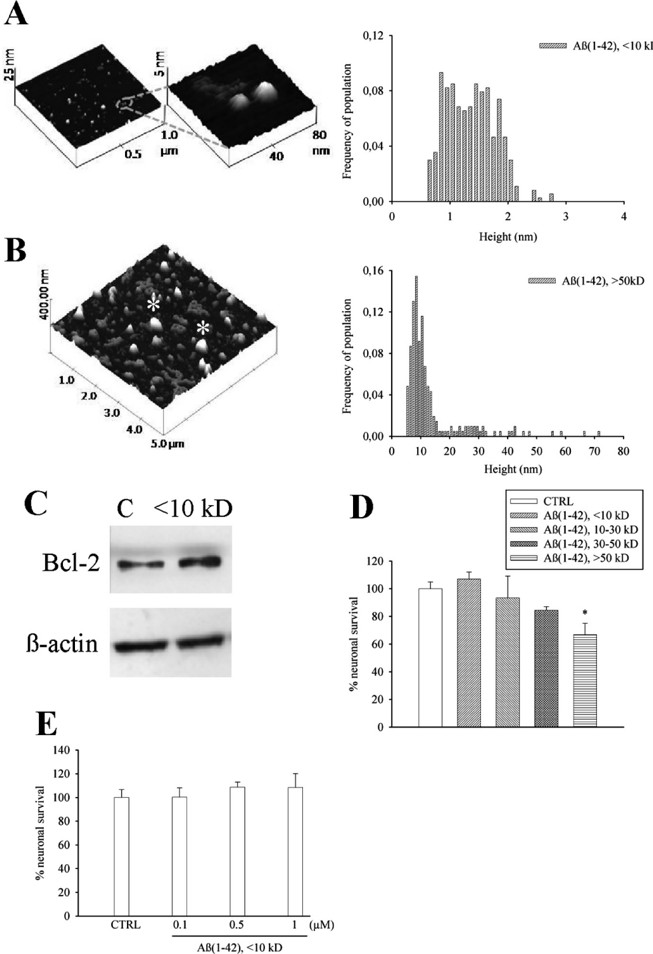
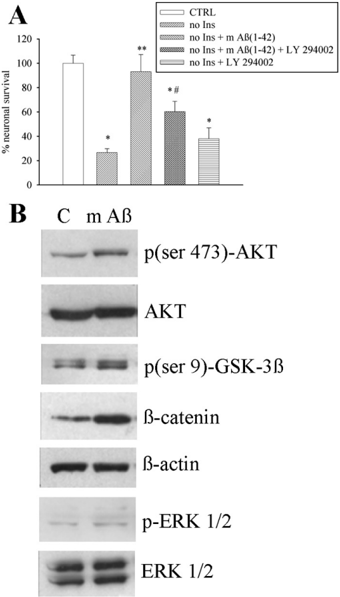
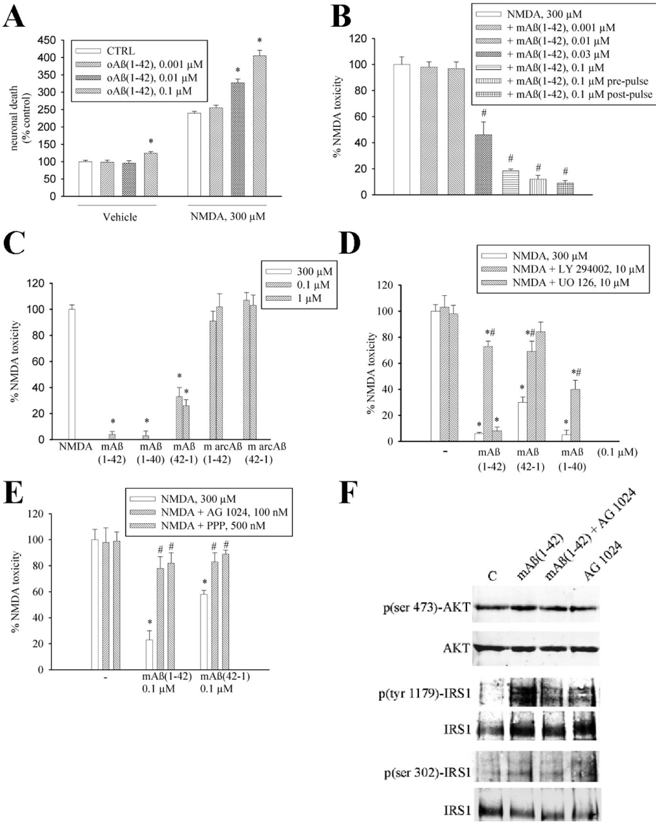
The 42-aa-long beta-amyloid protein--Abeta(1-42)--is thought to play a central role in the pathogenesis of Alzheimer's disease (AD) (Walsh and Selkoe, 2007). Data from AD brain (Shankar et al., 2008), transgenic APP (amyloid precursor protein)-overexpressing mice (Lesné et al., 2006), and neuronal cultures treated with synthetic Abeta peptides (Lambert et al., 1998) indicate that self-association of Abeta(1-42) monomers into soluble oligomers is required for neurotoxicity. The function of monomeric Abeta(1-42) is unknown. The evidence that Abeta(1-42) is present in the brain and CSF of normal individuals suggests that the peptide is physiologically active (Shoji, 2002). Here we show that synthetic Abeta(1-42) monomers support the survival of developing neurons under conditions of trophic deprivation and protect mature neurons against excitotoxic death, a process that contributes to the overall neurodegeneration associated with AD. The neuroprotective action of Abeta(1-42) monomers was mediated by the activation of the PI-3-K (phosphatidylinositol-3-kinase) pathway, and involved the stimulation of IGF-1 (insulin-like growth factor-1) receptors and/or other receptors of the insulin superfamily. Interestingly, monomers of Abeta(1-42) carrying the Arctic mutation (E22G) associated with familiar AD (Nilsberth et al., 2001) were not neuroprotective. We suggest that pathological aggregation of Abeta(1-42) may also cause neurodegeneration by depriving neurons of the protective activity of Abeta(1-42) monomers. This "loss-of-function" hypothesis of neuronal death should be taken into consideration when designing therapies aimed at reducing Abeta burden.
Overview
The claims and statistics of this paper haven’t been checked yet.
Run the check — free, no account needed. It reads the open-access text and checks the sources it cites.
Integrity signals
Registry
Cites
Statistics
Figures
Verification
Claims the paper makes
The claims and statistics of this paper haven’t been checked yet.
Run the check — free, no account needed. It reads the open-access text and checks the sources it cites.
Claims other papers make about this one
Each is checked against this paper’s own text: does it say what the citing paper says it does?
In the citing paper
“Relative levels of Aβ42 to Aβ40 appear to influence the mechanism of oligomerization, with higher levels of Aβ40 in normal individuals likely impeding formation of stable toxic oligomers (Giuffrida et al., 2009).”
From The Aβ oligomer hypothesis for synapse failure and memory loss in Alzheimer’s disease (2011) · cites this paper as Giuffrida et al., 2009
Self-check
Percentages, sums and reported differences re-computed from the paper’s own numbers.
The self-check needs the paper’s full text.
Citations
Cites
1 retracted
RETRACTED ARTICLE: A specific amyloid-β protein assembly in the brain impairs memory
Lesné, S., Koh, M. T., Kotilinek, L., Kayed, R., Glabe, C. G., Yang, A., Gallagher, M., & Ashe, K. H. (2006) · Nature · doi:10.1038/nature04533 · Cited by 2,769 · cited 2×
“In Tg2576 mice expressing a human APP (amyloid precursor protein) variant linked to AD, a 56 kDa soluble A assembly (A *56) disrupts memory (Lesné et al., 2006).”
BackgroundRetractedThe Bcl-2 Protein Family: Arbiters of Cell Survival
Adams, J. M., & Cory, S. (1998) · Science · doi:10.1126/science.281.5381.1322 · Cited by 5,334
Walsh, D. M., Klyubin, I., Fadeeva, J. V., Cullen, W. K., Anwyl, R., Wolfe, M. S., Rowan, M. J., & Selkoe, D. J. (2002) · Nature · doi:10.1038/416535a · Cited by 4,291
Shankar, G. M., Li, S., Mehta, T. H., Garcia-Munoz, A., Shepardson, N. E., Smith, I., Brett, F. M., Farrell, M. A., Rowan, M. J., Lemere, C. A., et al. (2008) · Nature Medicine · doi:10.1038/nm1782 · Cited by 3,685
Diffusible, nonfibrillar ligands derived from Aβ 1–42 are potent central nervous system neurotoxins
Lambert, M. P., Barlow, A. K., Chromy, B. A., Edwards, C., Freed, R., Liosatos, M., Morgan, T. E., Rozovsky, I., Trommer, B., Viola, K. L., et al. (1998) · Proceedings of the National Academy of Sciences · doi:10.1073/pnas.95.11.6448 · Cited by 3,506
Vlahos, C. J., Matter, W. F., Hui, K. Y., & Brown, R. F. (1994) · Journal of Biological Chemistry · doi:10.1016/s0021-9258(17)37680-9 · Cited by 3,248
Identification of a Novel Inhibitor of Mitogen-activated Protein Kinase Kinase
Favata, M. F., Horiuchi, K. Y., Manos, E. J., Daulerio, A. J., Stradley, D. A., Feeser, W. S., Dyk, D. E. V., Pitts, W. J., Earl, R. A., Hobbs, F. W., et al. (1998) · Journal of Biological Chemistry · doi:10.1074/jbc.273.29.18623 · Cited by 3,016
Aβ Oligomers – a decade of discovery
Walsh, D. M., & Selkoe, D. J. (2007) · Journal of Neurochemistry · doi:10.1111/j.1471-4159.2006.04426.x · Cited by 1,938
PI3K: Downstream AKTion Blocks Apoptosis
Franke, T. F., Kaplan, D. R., & Cantley, L. C. (1997) · Cell · doi:10.1016/s0092-8674(00)81883-8 · Cited by 1,665
APP Processing and Synaptic Function
Kamenetz, F., Tomita, T., Hsieh, H., Seabrook, G., Borchelt, D., Iwatsubo, T., Sisodia, S., & Malinow, R. (2003) · Neuron · doi:10.1016/s0896-6273(03)00124-7 · Cited by 1,644
Cited by
Sorted by citations
Items 201–300 of 423
McNay, E. C., & Recknagel, A. K. (2011) · Neurobiology of Learning and Memory · doi:10.1016/j.nlm.2011.11.001 · Cited by 26
Szegő, É. M., Csorba, A., Janáky, T., Kékesi, K. A., Ábrahám, I. M., Mórotz, G. M., Penke, B., Palkovits, M., Murvai, Ü., Kellermayer, M. S. Z., et al. (2011) · Neuroendocrinology · doi:10.1159/000321119 · Cited by 24
Thomaier, M., Gremer, L., Dammers, C., Fabig, J., Neudecker, P., & Willbold, D. (2016) · Biochemistry · doi:10.1021/acs.biochem.6b00829 · Cited by 24
Comparison of Synthetic Neuronal Model Membrane Mimics in Amyloid Aggregation at Atomic Resolution
Bera, S., Gayen, N., Mohid, S. A., Bhattacharyya, D., Krishnamoorthy, J., Sarkar, D., Choi, J., Sahoo, N., Mandal, A. K., Lee, D., et al. (2020) · ACS Chemical Neuroscience · doi:10.1021/acschemneuro.0c00166 · Cited by 23
Zhao, J. J., Shi, Q., Zheng, Y., Liu, Q., He, Z., Gao, Z., & Liu, Q. (2021) · Frontiers in Molecular Neuroscience · doi:10.3389/fnmol.2021.619836 · Cited by 22
The role of A$$\beta $$ and Tau proteins in Alzheimer’s disease: a mathematical model on graphs
Bertsch, M., Franchi, B., Tesi, M. C., & Tora, V. (2023) · Journal of Mathematical Biology · doi:10.1007/s00285-023-01985-7 · Cited by 25
5‐Methoxyindole‐2‐carboxylic acid (MICA) suppresses A&bgr;‐mediated pathology in C. elegans
Ahmad, W., & Ebert, P. (2018) · Experimental Gerontology · doi:10.1016/j.exger.2018.04.021 · Cited by 19
Duncan, R. S., Song, B., & Koulen, P. (2018) · International Journal of Molecular Sciences · doi:10.3390/ijms19061621 · Cited by 22
Inhibition of Amyloid β-Induced Lipid Membrane Permeation and Amyloid β Aggregation by K162
Mrđenović, D., Zarzycki, P., Majewska, M., Pieta, I. S., Nowakowski, R., Kutner, W., Lipkowski, J., & Pięta, P. (2021) · ACS Chemical Neuroscience · doi:10.1021/acschemneuro.0c00754 · Cited by 22
Rashid, U., & Ansari, F. L. (2014) · Elsevier eBooks · doi:10.1016/b978-0-12-803959-5.50002-7 · Cited by 23
Alzheimer’s Amyloid-β Sequesters Caspase-3 in Vitro via Its C-Terminal Tail
Chang, Y., Nguyen, H. L., Shih, Y., Yu, H., Li, M. S., & Chen, Y. (2016) · ACS Chemical Neuroscience · doi:10.1021/acschemneuro.6b00049 · Cited by 22
Fessel, J. (2017) · International Journal of Geriatric Psychiatry · doi:10.1002/gps.4730 · Cited by 24
Drugs and drug delivery systems targeting amyloid-β in Alzheimer's disease
Robinson, M. J., Lee, B. Y., & Leonenko, Z. (2015) · AIMS molecular science · doi:10.3934/molsci.2015.3.332 · Cited by 24
β-amyloid monomers drive up neuronal aerobic glycolysis in response to energy stressors
Santangelo, R., Giuffrida, M. L., Satriano, C., Tomasello, M. F., Zimbone, S., & Copani, A. (2021) · Aging · doi:10.18632/aging.203330 · Cited by 21
Self-citationJou, I., Wu, T.-C., Hsu, C., Yang, C., Huang, J., Tu, Y., Lee, J., Su, F., & Kuo, Y. (2020) · Journal of Biomedical Materials Research Part B Applied Biomaterials · doi:10.1002/jbm.b.34731 · Cited by 20
Wisniewski, M. L., Hwang, J., & Bahr, B. A. (2011) · Biochimica et Biophysica Acta (BBA) - Molecular Basis of Disease · doi:10.1016/j.bbadis.2011.09.011 · Cited by 20
Williams, T. L., Choi, J.-K., Surewicz, K. A., & Surewicz, W. K. (2015) · ACS Chemical Neuroscience · doi:10.1021/acschemneuro.5b00229 · Cited by 20
Aβ42 Peptide Promotes Proliferation and Gliogenesis in Human Neural Stem Cells
Bernabeu-Zornoza, A., Coronel, R., Palmer, C., Calero, M., Martı́nez-Serrano, A., Cano, E., Zambrano, A., & Liste, I. (2018) · Molecular Neurobiology · doi:10.1007/s12035-018-1355-7 · Cited by 22
Phosphodiesterase Inhibition to Target the Synaptic Dysfunction in Alzheimer’s Disease
Bales, K. R., Plath, N., Svenstrup, N., & Menniti, F. S. (2010) · Topics in medicinal chemistry · doi:10.1007/7355_2010_8 · Cited by 22
Beneficial effect of amyloid beta after controlled cortical impact
Mannix, R. C., Zhang, J., Berglass, J., Qui, J., & Whalen, M. J. (2013) · Brain Injury · doi:10.3109/02699052.2013.771797 · Cited by 19
Fantini, J., Azzaz, F., Scala, C. D., Aulas, A., Chahinian, H., & Yahi, N. (2025) · Pharmacology & Therapeutics · doi:10.1016/j.pharmthera.2025.108797 · Cited by 20
Copper(ii) and zinc(ii) dependent effects on Aβ42 aggregation: a CD, Th-T and SFM study
Attanasio, F., Bona, P. D., Cataldo, S., Sciacca, M. F. M., Milardi, D., Pignataro, B., & Pappalardo, G. (2013) · New Journal of Chemistry · doi:10.1039/c3nj40999f · Cited by 20
Self-citationKim, H. J., Park, D., Baek, S. Y., Yang, S.-H., Kim, Y. S., Lim, S. M., Kim, J., & Hwang, K. S. (2019) · Biosensors and Bioelectronics · doi:10.1016/j.bios.2018.12.046 · Cited by 19
Structural polymorphism and cytotoxicity of brain‐derived β‐amyloid extracts
Adem, K. A., & Lee, S.-M. (2023) · Protein Science · doi:10.1002/pro.4639 · Cited by 14
Evidence that Alzheimer’s Disease Is a Disease of Competitive Synaptic Plasticity Gone Awry
Huang, Z. (2024) · Journal of Alzheimer s Disease · doi:10.3233/jad-240042 · Cited by 20
Ngo, V. T. H., Hoang, V.-H., Tran, P., Ann, J., Cui, M., Park, G., Choi, S., Lee, J., Kim, H. Y., Ha, H.-J., et al. (2018) · Bioorganic & Medicinal Chemistry · doi:10.1016/j.bmc.2018.01.015 · Cited by 19
Assessing Neuroprotective Agents for Aβ-Induced Neurotoxicity
Forest, K. H., & Nichols, R. A. (2019) · Trends in Molecular Medicine · doi:10.1016/j.molmed.2019.05.013 · Cited by 19
wahab, M. M. A. E., Saad, S., Sheribah, Z. A., & El-Enany, N. M. (2025) · BMC Chemistry · doi:10.1186/s13065-024-01377-y · Cited by 20
Triaca, V., Ruberti, F., & Canu, N. (2021) · Advances in experimental medicine and biology · doi:10.1007/978-3-030-74046-7_10 · Cited by 18
Luo, J. J., Wallace, W., & Kusiak, J. W. (2022) · Journal of the Neurological Sciences · doi:10.1016/j.jns.2022.120294 · Cited by 17
Zimbone, S., Rosa, M. C. D., Chiechio, S., & Giuffrida, M. L. (2023) · International Journal of Molecular Sciences · doi:10.3390/ijms241512456 · Cited by 18
Self-citationAcerra, N., Kad, N. M., Griffith, D. A., Ott, S., Crowther, D. C., & Mason, J. M. (2014) · Biochemistry · doi:10.1021/bi5001257 · Cited by 18
An inorganic overview of natural Aβ fragments: Copper(II) and zinc(II)-mediated pathways
Lanza, V., Bellia, F., & Rizzarelli, E. (2018) · Coordination Chemistry Reviews · doi:10.1016/j.ccr.2018.04.004 · Cited by 18
Self-citationPhysiological and Pathological Functions of Beta-Amyloid in the Brain and Alzheimer'S Disease
Volicer, L. (2020) · The Chinese Journal of Physiology · doi:10.4103/cjp.cjp_10_20 · Cited by 18
Lennol, M. P., Canelles, S., Guerra-Cantera, S., Argente, J., García‐Segura, L. M., CEBALLOS, M. L. D., Chowen, J. A., & Frago, L. M. (2021) · Mechanisms of Ageing and Development · doi:10.1016/j.mad.2021.111462 · Cited by 18
The oxidatively damaged DNA and amyloid-β oligomer hypothesis of Alzheimer's disease
Sanders, O. D., Rajagopal, L., & Rajagopal, J. A. (2021) · Free Radical Biology and Medicine · doi:10.1016/j.freeradbiomed.2021.08.019 · Cited by 18
Zhan, X., Yao, J., Liu, D., Ma, Q., & Mei, Y. (2013) · Journal of Neurochemistry · doi:10.1111/jnc.12471 · Cited by 18
Haptoglobin Modulates Beta-Amyloid Uptake by U-87 MG Astrocyte Cell Line
Maresca, B., Spagnuolo, M. S., & Cigliano, L. (2015) · Journal of Molecular Neuroscience · doi:10.1007/s12031-014-0465-6 · Cited by 20
Sciacca, M. F. M., Николаевна, Н. И., Giuffrida, M. L., & Attanasio, F. (2022) · ACS Chemical Neuroscience · doi:10.1021/acschemneuro.1c00707 · Cited by 18
Self-citationHoushiheisan compound prescription protects neurovascular units after cerebral ischemia
Zhao, H., Zhang, Q., Wang, H., Wang, L., Zhang, N., & Zhang, Q. (2014) · Neural Regeneration Research · doi:10.4103/1673-5374.131580 · Cited by 17
Li, W., Xu, Z. C., Xu, B., Chan, C. Y., Lin, X., Wang, Y., Chen, G., Wang, Z., Yuan, Q., Zhu, G., et al. (2017) · Advanced Healthcare Materials · doi:10.1002/adhm.201600895 · Cited by 17
Grigoletti-Lima, G. B., Lopes, M. G., Franco, A. T. B., Damico, A. M., Boer, P. A., & Gontijo, J. A. R. (2021) · Journal of Alzheimer s Disease Reports · doi:10.3233/adr-210297 · Cited by 16
Lazzaro, S., Ogrinc, N., Lamont, L., Vecchio, G., Pappalardo, G., & Heeren, R. M. A. (2019) · Analytical and Bioanalytical Chemistry · doi:10.1007/s00216-019-02030-7 · Cited by 16
Self-citationBelo, R. F., Martins, M. L. F., Shvachiy, L., Costa-Coelho, T., de Almeida-Borlido, C., Fonseca‐Gomes, J., Neves, V., Miranda, H. V., Outeiro, T. F., Coelho, J. E., et al. (2020) · Frontiers in Pharmacology · doi:10.3389/fphar.2020.00985 · Cited by 17
Cavallaro, F., Nibali, S. C., Cubisino, S. A. M., Caruso, P., Zimbone, S., Infantino, I. R., Reina, S., Pinto, V. D., Messina, A. A., Giuffrida, M. L., et al. (2025) · Aging Cell · doi:10.1111/acel.70069 · Cited by 15
Self-citationBocharov, E. V., Gremer, L., Urban, A. S., Okhrimenko, I. S., Volynsky, P. E., Nadezhdin, K. D., Bocharova, O. V., Kornilov, D. A., Zagryadskaya, Y. A., Kamynina, A. V., et al. (2021) · Journal of Medicinal Chemistry · doi:10.1021/acs.jmedchem.1c00632 · Cited by 14
Immobilized Amyloid Hexamer Fragments to Map Active Sites of Amyloid-Targeting Chemicals
Cho, I., Yoon, S., Park, S., Hong, S. W., Cho, E., Kim, E., Kim, H. Y., & Kim, Y. S. (2022) · ACS Chemical Neuroscience · doi:10.1021/acschemneuro.2c00449 · Cited by 15
Varshavskaya, K. B., Mitkevich, V. A., Makarov, A. А., & Barykin, E. P. (2022) · International Journal of Molecular Sciences · doi:10.3390/ijms232315036 · Cited by 18
Zimbone, S., Giuffrida, M. L., Sabatino, G., Natale, G. D., Tosto, R., Consoli, G. M. L., Milardi, D., Pappalardo, G., & Sciacca, M. F. M. (2023) · ACS Chemical Neuroscience · doi:10.1021/acschemneuro.2c00720 · Cited by 15
Self-citationPassive Anti-amyloid Beta Monoclonal Antibodies: Lessons Learned over Past 20 Years
Wicker, A., Shriram, J., Decourt, B., & Sabbagh, M. N. (2024) · Neurology and Therapy · doi:10.1007/s40120-024-00664-z · Cited by 15
Li, C., Wang, Y., Wu, Y., Yu, Y. H., Liu, Y., & Liu, Q. (2025) · TrAC Trends in Analytical Chemistry · doi:10.1016/j.trac.2025.118173 · Cited by 16
Downey, M. A., Giammona, M. J., Lang, C. A., Buratto, S. K., Singh, A. K., & Bowers, M. T. (2018) · Journal of the American Society for Mass Spectrometry · doi:10.1007/s13361-018-1975-1 · Cited by 15
Amyloid-β (25–35) regulates neuronal damage and memory loss via SIRT1/Nrf2 in the cortex of mice
Zhu, L., Lu, F., Jia, X., Yan, Q., Zhang, X., & Mu, P. (2021) · Journal of Chemical Neuroanatomy · doi:10.1016/j.jchemneu.2021.101945 · Cited by 16
Aβ monomers protect lens epithelial cells against oxidative stress by upregulating CDC25B
Xu, J., Li, D., Lü, Y., & Zheng, T. (2021) · Free Radical Biology and Medicine · doi:10.1016/j.freeradbiomed.2021.08.242 · Cited by 14
Reichenstein, M., Borovok, N., Sheinin, A., Brider, T., & Michaelevski, I. (2020) · Cellular and Molecular Neurobiology · doi:10.1007/s10571-020-00858-7 · Cited by 13
Monsalvo-Maraver, L. Á., Maya-López, M., Rangel‐López, E., Túnez, I., Tinkov, A. A., Skalny, A. V., Ferrer, B., Aschner, M., & Santamaría, A. (2022) · CNS & Neurological Disorders - Drug Targets · doi:10.2174/1871527321666220616094036 · Cited by 14
Na,K-ATPase Acts as a Beta-Amyloid Receptor Triggering Src Kinase Activation
Petrushanko, I. Y., Tverskoi, A. M., Barykin, E. P., Petrovskaya, A. V., Strelkova, M. A., Leonova, O. G., Anashkina, A. A., Tolstova, A. P., Adzhubei, A. A., Bogdanova, A. Y., et al. (2022) · Cells · doi:10.3390/cells11172753 · Cited by 13
Ranganathan, R., Sapozhnikov, G., Wang, N., Li, S., & Song, Y. (2023) · Translational Medicine of Aging · doi:10.1016/j.tma.2023.06.004 · Cited by 14
Calafiore, M., Copani, A., & Deng, W. (2011) · Journal of Neuroscience Research · doi:10.1002/jnr.22780 · Cited by 13
Self-citationPryor, N. E., Moss, M. A., & Hestekin, C. N. (2014) · Electrophoresis · doi:10.1002/elps.201400012 · Cited by 13
The cholesterol ester cycle regulates signalling complexes and synapse damage caused by amyloid-β
West, E., Osborne, C., & Bate, C. (2017) · Journal of Cell Science · doi:10.1242/jcs.205484 · Cited by 13
Protein Self-Assembly at the Liquid–Surface Interface. Surface-Mediated Aggregation Catalysis
Lyubchenko, Y. L. (2023) · The Journal of Physical Chemistry B · doi:10.1021/acs.jpcb.2c09029 · Cited by 11
Randhawa, S., Dar, A. I., Saini, T. C., Bathla, M., & Acharya, A. (2024) · Nano Today · doi:10.1016/j.nantod.2024.102243 · Cited by 12
Clinical Pharmacology of Novel Anti-Alzheimer Disease Modifying Medications
Caraci, F., Bosco, P., Leggio, G. M., Malaguarnera, M., Drago, F., Bucolo, C., & Salomone, S. (2013) · Current Topics in Medicinal Chemistry · doi:10.2174/15680266113139990141 · Cited by 12
Self-citationAulston, B. D., Schapansky, J., Huang, Y.-W., Odero, G. L., & Glazner, G. W. (2018) · Experimental Neurology · doi:10.1016/j.expneurol.2018.01.013 · Cited by 12
Natale, G. D., Zimbone, S., Bellia, F., Tomasello, M. F., Giuffrida, M. L., Pappalardo, G., & Rizzarelli, E. (2018) · Peptide Science · doi:10.1002/pep2.24083 · Cited by 13
Self-citationCastillo, C. A., Ballesteros‐Yáñez, I., León, D., Albasanz, J. L., & Martı́n, M. (2021) · International Journal of Molecular Sciences · doi:10.3390/ijms22126577 · Cited by 12
Lockhart, C., Smith, A. K., & Klimov, D. K. (2020) · Journal of Chemical Information and Modeling · doi:10.1021/acs.jcim.0c00096 · Cited by 12
Huang, Z. (2023) · Journal of Alzheimer s Disease · doi:10.3233/jad-221042 · Cited by 12
The Challenge of Antidepressant Therapeutics in Alzheimer’s Disease
Lozupone, M., Montagna, M. L., D’Urso, F., Piccininni, C., Rinaldi, A., Beghi, M., Cornaggia, C., Sardone, R., Solfrizzi, V., Daniele, A., et al. (2020) · Advances in experimental medicine and biology · doi:10.1007/978-3-030-42667-5_10 · Cited by 10
Understanding familial Alzheimer's disease: The fit‐stay‐trim mechanism of γ‐secretase
Mehra, R., & Kepp, K. P. (2021) · Wiley Interdisciplinary Reviews Computational Molecular Science · doi:10.1002/wcms.1556 · Cited by 11
Combes, M., Poindron, P., & Callizot, N. (2014) · Journal of Neuroscience Research · doi:10.1002/jnr.23524 · Cited by 11
Antidepressants Modulate Intracellular Amyloid Peptide Species in N2a Neuroblastoma Cells
Aboukhatwa, M. A., & Luo, Y. (2011) · Journal of Alzheimer s Disease · doi:10.3233/jad-2011-101113 · Cited by 12
Xu, J., Li, D., Zheng, T., & Lu, Y. (2017) · PubMed Central · Cited by 11
Min, J.-H., Sarlus, H., & Harris, R. A. (2024) · Frontiers in Neuroscience · doi:10.3389/fnins.2024.1467333 · Cited by 11
Chiang, Y., Nguyen, N. T. K., Hsia, S., Chen, H.-Y., Lin, S., & Lin, C.-I. (2023) · Biomedicines · doi:10.3390/biomedicines11030698 · Cited by 10
Neurogenesis Is Increased in Human Neural Stem Cells by Aβ40 Peptide
Bernabeu-Zornoza, A., Coronel, R., Palmer, C., Martín, A., López-Alonso, V., & Liste, I. (2022) · International Journal of Molecular Sciences · doi:10.3390/ijms23105820 · Cited by 11
Williams, R. S. B., & Bate, C. (2017) · Neuropharmacology · doi:10.1016/j.neuropharm.2017.09.031 · Cited by 10
Beta-amyloid oligomers: recent developments
Borutaite, V., Morkuniene, R., & Valincius, G. (2011) · bmc · doi:10.1515/bmc.2011.019 · Cited by 9
Basile, S., Parisi, C., Bellia, F., Zimbone, S., Arrabito, G., Gulli, D., Pignataro, B., Giuffrida, M. L., Sortino, S., & Copani, A. (2024) · ACS Chemical Neuroscience · doi:10.1021/acschemneuro.4c00284 · Cited by 9
Self-citationREELIN ameliorates Alzheimer's disease, but how?
Katsuyama, Y., & Hattori, M. (2024) · Neuroscience Research · doi:10.1016/j.neures.2024.07.004 · Cited by 9
Amyloid-Directed Antibodies: Past, Present, and Future
Noorda, K., Noorda, K. J., Sabbagh, M. N., Bertelson, J. A., Singer, J., & Decourt, B. (2024) · Journal of Alzheimer s Disease · doi:10.3233/jad-240189 · Cited by 9
Complexing Aβ Prevents the Cellular Anomalies Induced by the Peptide Alone
Henriques, A. G., Oliveira, J. M., Gomes, B., Ruivo, R., Silva, E. F. D. C. E., & Silva, O. A. B. D. C. E. (2014) · Journal of Molecular Neuroscience · doi:10.1007/s12031-014-0233-7 · Cited by 9
Oberman, K., Gouweleeuw, L., Hoogerhout, P., Eisel, U. L. M., van Riet, E., & Schoemaker, R. G. (2020) · Journal of Alzheimer s Disease Reports · doi:10.3233/adr-200213 · Cited by 9
Physics of Protein Aggregation in Normal and Accelerated Brain Aging
Espay, A. J., Sturchio, A., Imarisio, A., Hill, E. J., Williamson, B. J., Montemagno, K. T., Hoffmann, C., Roy, H. L., Milovanović, D., & Manfredsson, F. P. (2025) · BioEssays · doi:10.1002/bies.70030 · Cited by 9
Restoring amyloid-β42 and γ-secretase function in Alzheimer’s disease
Espay, A. J., Ezzat, K., Kepp, K. P., Daly, T. P., Robakis, N. K. R. K., Meijer, L., & Imbimbo, B. P. (2025) · Brain · doi:10.1093/brain/awaf294 · Cited by 9
Bukanova, J. V., Sharonova, I. N., & Skrebitsky, V. G. (2016) · Brain Research · doi:10.1016/j.brainres.2016.09.016 · Cited by 8
Klose, D., Vemulapalli, S. P. B., Richman, M., Rudnick‐Glick, S., Aisha, V., Abayev, M., Chemerovski‐Glikman, M., Shviro, M., Zitoun, D. O., Majer, K., et al. (2022) · Physical Chemistry Chemical Physics · doi:10.1039/d1cp05415e · Cited by 8
Molecular Connections between DNA Replication and Cell Death in β-Amyloid-Treated Neurons
Caraci, F., Fidilio, A., Santangelo, R., Caruso, G., Giuffrida, M. L., Tomasello, M. F., Nicoletti, F., & Copani, A. (2023) · Current Neuropharmacology · doi:10.2174/1570159x21666230404121903 · Cited by 8
Self-citationPowell, L. R., Dukes, K. D., & Lammi, R. K. (2011) · Biophysical Chemistry · doi:10.1016/j.bpc.2011.08.006 · Cited by 8
Sengupta, P., Sen, S., & Mukhopadhyay, D. (2024) · Gene · doi:10.1016/j.gene.2024.148503 · Cited by 7
Chiarini, A., Armato, U., Gui, L., Yin, M., Chang, S., & Prà, I. D. (2024) · Brain Research · doi:10.1016/j.brainres.2024.149283 · Cited by 7
Alzheimer’s disease and clinical trials
Paul, D., Agrawal, R., & Singh, S. (2024) · Journal of Basic and Clinical Physiology and Pharmacology · doi:10.1515/jbcpp-2023-0264 · Cited by 7
Tosto, R., Zimbone, S., Sabatino, G., Natale, G. D., Giuffrida, M. L., Tomasello, M. F., Lanzanò, L. L., Campagna, T., Covaceuszach, S., Vecchio, G., et al. (2024) · ChemBioChem · doi:10.1002/cbic.202400431 · Cited by 7
Self-citationCholesterol ester hydrolase inhibitors reduce the production of synaptotoxic amyloid-β oligomers
McHale-Owen, H., & Bate, C. (2017) · Biochimica et Biophysica Acta (BBA) - Molecular Basis of Disease · doi:10.1016/j.bbadis.2017.12.017 · Cited by 7
Bali, P., Bammidi, S., Banik, A., Nehru, B., & Anand, A. (2018) · Frontiers in Behavioral Neuroscience · doi:10.3389/fnbeh.2018.00222 · Cited by 7
Rondelli, V., Salmona, M., Colombo, L., Fragneto, G., Fadda, G. C., Cantú, L., & Favero, E. D. (2020) · International Journal of Molecular Sciences · doi:10.3390/ijms21218295 · Cited by 7
Dutta, M. S. (2022) · Medicinal Chemistry Research · doi:10.1007/s00044-022-02990-z · Cited by 7
Attanasio, F., Bonaccorso, C., Bellia, F., Cataldo, S., Fortuna, C. G., Musumarra, G., Pignataro, B., & Rizzarelli, E. (2013) · European Journal of Organic Chemistry · doi:10.1002/ejoc.201300241 · Cited by 7
Self-citationWeidner, A. M., Smith, M. H., Murphy, M. P., & LeVine, H. (2011) · Neuroscience Letters · doi:10.1016/j.neulet.2011.03.082 · Cited by 7
Metadata
- Authors
- Giuffrida, M. L., Caraci, F., Pignataro, B., Cataldo, S., De Bona, P., Bruno, V., Molinaro, G., Pappalardo, G., Messina, A., Palmigiano, A., Garozzo, D., Nicoletti, F., Rizzarelli, E., & Copani, A.
- Affiliations
- University of Catania (IT)
- University of Palermo (IT)
- Istituto Neurologico Mediterraneo (IT)
- Institute of Biostructure and Bioimaging (IT)
- National Research Council (IT)
- ORCID
- Venue
- The Journal of Neuroscience
- Publisher
- Society for Neuroscience
- Published
- 2009-08-26
- Volume
- 29
- Issue
- 34
- Pages
- 10582-10587
- ISSN
- 0270-6474 (ISSN-L)
- 1529-2401
- PMC
- PMC6665714
- OpenAlex
- W1991988242
- Cited by
- 421
- References
- 33
- Citations by year
- 2026: 10 · 2025: 19 · 2024: 30 · 2023: 27 · 2022: 21 · 2021: 34 · 2020: 23 · 2019: 21 · 2018: 27 · 2017: 30 · 2016: 22 · 2015: 23 · 2014: 31 · 2013: 23 · 2012: 18
- FWCI
- 17.73
- Type
- journal article
- Language
- en
- Open access
- hybrid
- doi.org
- Licence
- Locations
- Journal of Neuroscience (publishedVersion, cc-by-nc-sa)
- Europe PMC (PubMed Central) (publishedVersion)
- PubMed Central (publishedVersion)
- PubMed (publishedVersion)
- Nova Science Publishers (Nova Science Publishers, Inc.) (submittedVersion, other-oa)
- IRIS Research product catalog (Sapienza University of Rome) (submittedVersion)
- Funders
- Università di Catania
- Topics
- Life Sciences › Neuroscience › Cellular and Molecular Neuroscience › Alzheimer's disease research and treatments
- Life Sciences › Neuroscience › Neurology › Neuroinflammation and Neurodegeneration Mechanisms
- Health Sciences › Medicine › Psychiatry and Mental health › Dementia and Cognitive Impairment Research
- Keywords
- amyloid-beta 42, neuroprotection, Alzheimer's disease, excitotoxicity, IGF-1 receptor, Arctic mutation, amyloid fibril formation, neurodegeneration
- MeSH terms
- Analysis of Variance, Animals, Butadienes, Cells, Cultured, Cerebral Cortex, Dose-Response Relationship, Drug, Embryo, Mammalian, Enzyme Inhibitors, Neurons, Nitriles, Peptide Fragments, Podophyllotoxin, N-Methylaspartate, Amyloid beta-Peptides, Cell Death, Excitatory Amino Acid Agonists, Neuroprotective Agents, Tyrphostins, Rats
About these checks
Registry, retraction, Cites and statistics results are computed, not judged, with one exception: a printed reference that no index lists is read once by a model before it counts as a citation error. Claims are extracted by a model and kept only when their quote appears verbatim in the text; each cited source is then checked, with a model’s help, for whether it says what the claim relies on. Those verdicts can be wrong — read the claim’s quote and the cited source before relying on one.
Statistics and arithmetic are recomputed, not judged.
Confidence bands are shown only for fields calibrated on our annotated test set. None is calibrated yet, so no band is shown.
What counts as a claim ›How we measure confidence ›How we check this ›
Are you an author, or do you see a problem with this page? Request a review
