

The DOI matches its Crossref record; 32 of the 33 references it cites were found in a registry or an index.
β-Amyloid Monomers Are Neuroprotective
Open accessAbstract
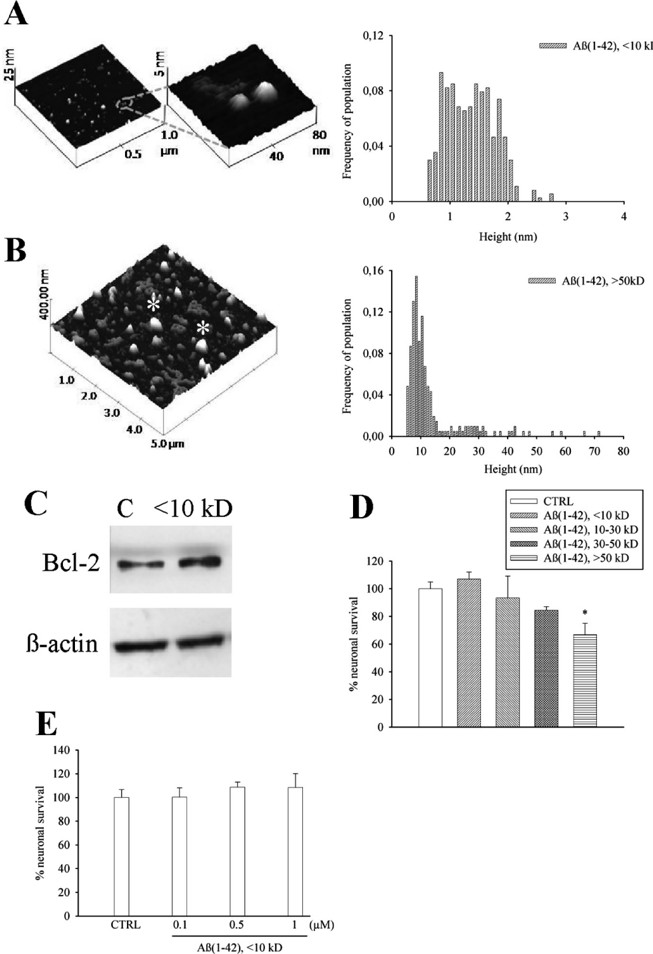
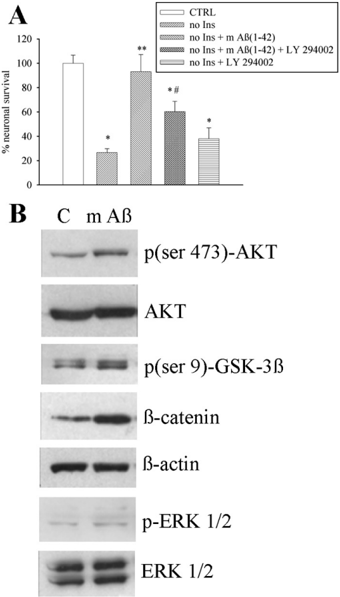
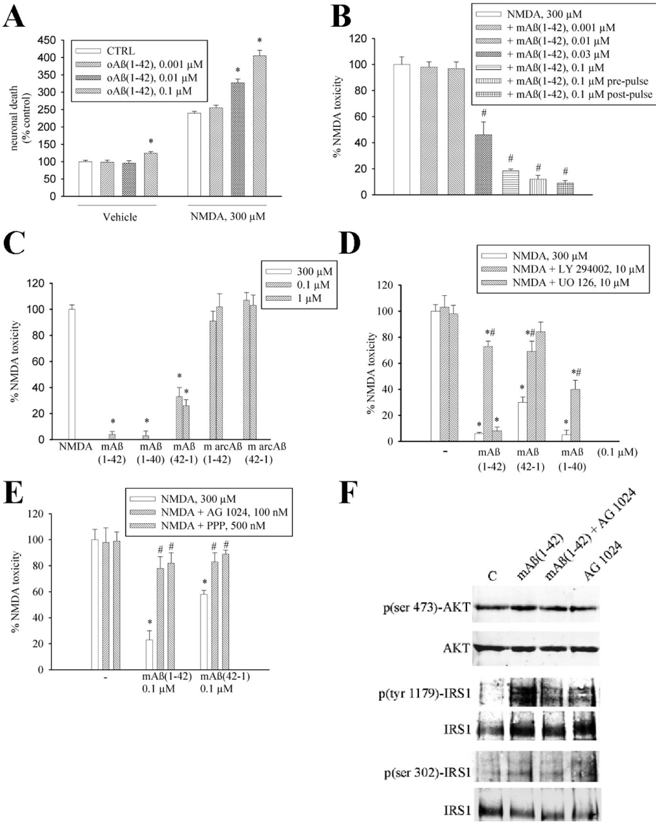
The 42-aa-long beta-amyloid protein--Abeta(1-42)--is thought to play a central role in the pathogenesis of Alzheimer's disease (AD) (Walsh and Selkoe, 2007). Data from AD brain (Shankar et al., 2008), transgenic APP (amyloid precursor protein)-overexpressing mice (Lesné et al., 2006), and neuronal cultures treated with synthetic Abeta peptides (Lambert et al., 1998) indicate that self-association of Abeta(1-42) monomers into soluble oligomers is required for neurotoxicity. The function of monomeric Abeta(1-42) is unknown. The evidence that Abeta(1-42) is present in the brain and CSF of normal individuals suggests that the peptide is physiologically active (Shoji, 2002). Here we show that synthetic Abeta(1-42) monomers support the survival of developing neurons under conditions of trophic deprivation and protect mature neurons against excitotoxic death, a process that contributes to the overall neurodegeneration associated with AD. The neuroprotective action of Abeta(1-42) monomers was mediated by the activation of the PI-3-K (phosphatidylinositol-3-kinase) pathway, and involved the stimulation of IGF-1 (insulin-like growth factor-1) receptors and/or other receptors of the insulin superfamily. Interestingly, monomers of Abeta(1-42) carrying the Arctic mutation (E22G) associated with familiar AD (Nilsberth et al., 2001) were not neuroprotective. We suggest that pathological aggregation of Abeta(1-42) may also cause neurodegeneration by depriving neurons of the protective activity of Abeta(1-42) monomers. This "loss-of-function" hypothesis of neuronal death should be taken into consideration when designing therapies aimed at reducing Abeta burden.
Overview
The claims and statistics of this paper haven’t been checked yet.
Run the check — free, no account needed. It reads the open-access text and checks the sources it cites.
Integrity signals
Registry
Cites
Statistics
Figures
Verification
Claims the paper makes
The claims and statistics of this paper haven’t been checked yet.
Run the check — free, no account needed. It reads the open-access text and checks the sources it cites.
Claims other papers make about this one
Each is checked against this paper’s own text: does it say what the citing paper says it does?
In the citing paper
“Relative levels of Aβ42 to Aβ40 appear to influence the mechanism of oligomerization, with higher levels of Aβ40 in normal individuals likely impeding formation of stable toxic oligomers (Giuffrida et al., 2009).”
From The Aβ oligomer hypothesis for synapse failure and memory loss in Alzheimer’s disease (2011) · cites this paper as Giuffrida et al., 2009
Self-check
Percentages, sums and reported differences re-computed from the paper’s own numbers.
The self-check needs the paper’s full text.
Citations
Cites
1 retracted
RETRACTED ARTICLE: A specific amyloid-β protein assembly in the brain impairs memory
Lesné, S., Koh, M. T., Kotilinek, L., Kayed, R., Glabe, C. G., Yang, A., Gallagher, M., & Ashe, K. H. (2006) · Nature · doi:10.1038/nature04533 · Cited by 2,769 · cited 2×
“In Tg2576 mice expressing a human APP (amyloid precursor protein) variant linked to AD, a 56 kDa soluble A assembly (A *56) disrupts memory (Lesné et al., 2006).”
BackgroundRetractedThe Bcl-2 Protein Family: Arbiters of Cell Survival
Adams, J. M., & Cory, S. (1998) · Science · doi:10.1126/science.281.5381.1322 · Cited by 5,334
Walsh, D. M., Klyubin, I., Fadeeva, J. V., Cullen, W. K., Anwyl, R., Wolfe, M. S., Rowan, M. J., & Selkoe, D. J. (2002) · Nature · doi:10.1038/416535a · Cited by 4,291
Shankar, G. M., Li, S., Mehta, T. H., Garcia-Munoz, A., Shepardson, N. E., Smith, I., Brett, F. M., Farrell, M. A., Rowan, M. J., Lemere, C. A., et al. (2008) · Nature Medicine · doi:10.1038/nm1782 · Cited by 3,685
Diffusible, nonfibrillar ligands derived from Aβ 1–42 are potent central nervous system neurotoxins
Lambert, M. P., Barlow, A. K., Chromy, B. A., Edwards, C., Freed, R., Liosatos, M., Morgan, T. E., Rozovsky, I., Trommer, B., Viola, K. L., et al. (1998) · Proceedings of the National Academy of Sciences · doi:10.1073/pnas.95.11.6448 · Cited by 3,506
Vlahos, C. J., Matter, W. F., Hui, K. Y., & Brown, R. F. (1994) · Journal of Biological Chemistry · doi:10.1016/s0021-9258(17)37680-9 · Cited by 3,248
Identification of a Novel Inhibitor of Mitogen-activated Protein Kinase Kinase
Favata, M. F., Horiuchi, K. Y., Manos, E. J., Daulerio, A. J., Stradley, D. A., Feeser, W. S., Dyk, D. E. V., Pitts, W. J., Earl, R. A., Hobbs, F. W., et al. (1998) · Journal of Biological Chemistry · doi:10.1074/jbc.273.29.18623 · Cited by 3,016
Aβ Oligomers – a decade of discovery
Walsh, D. M., & Selkoe, D. J. (2007) · Journal of Neurochemistry · doi:10.1111/j.1471-4159.2006.04426.x · Cited by 1,938
PI3K: Downstream AKTion Blocks Apoptosis
Franke, T. F., Kaplan, D. R., & Cantley, L. C. (1997) · Cell · doi:10.1016/s0092-8674(00)81883-8 · Cited by 1,665
APP Processing and Synaptic Function
Kamenetz, F., Tomita, T., Hsieh, H., Seabrook, G., Borchelt, D., Iwatsubo, T., Sisodia, S., & Malinow, R. (2003) · Neuron · doi:10.1016/s0896-6273(03)00124-7 · Cited by 1,644
Cited by
Sorted by citations
Items 301–400 of 423
Diao, S., Zhao, H., Wang, W.-M., & Wu, C. (2012) · Science China Chemistry · doi:10.1007/s11426-011-4446-0 · Cited by 7
A zinc–porphyrin–peptide conjugate via “click-chemistry”: synthesis and amyloid-β interaction
Tosto, R., Zimbone, S., Natale, G. D., Giuffrida, M. L., Campagna, T., Pappalardo, G., & Sabatino, G. (2024) · New Journal of Chemistry · doi:10.1039/d4nj02162b · Cited by 6
Self-citationDamage of the Phospholipid Bilayer by Aβ42 at Physiologically Relevant Peptide Concentrations
van Deventer, R., & Lyubchenko, Y. L. (2024) · ACS Chemical Neuroscience · doi:10.1021/acschemneuro.4c00647 · Cited by 6
Bocchieri, E., Zimbone, S., Giuffrida, M. L., Natale, G. D., Sabatino, G., Vecchio, G., Pappalardo, G., & Chiechio, S. (2025) · European Journal of Pharmacology · doi:10.1016/j.ejphar.2025.177274 · Cited by 6
Self-citationThe Arctic/Swedish APP mutation alters the impact of chronic stress on cognition in mice
Cortese, A., Delgado‐Morales, R., Almeida, O. F. X., & Romberg, C. (2019) · European Journal of Neuroscience · doi:10.1111/ejn.14500 · Cited by 7
Pepperberg, D. R. (2019) · Journal of Alzheimer s Disease · doi:10.3233/jad-190476 · Cited by 6
Lyubchenko, Y. L. (2020) · Alzheimer s Research & Therapy Open Access · doi:10.23880/artoa-16000114 · Cited by 5
Harpaz, K. A., & Miller, Y. (2022) · Biomolecules · doi:10.3390/biom12121886 · Cited by 6
Mei, J., Xu, W., Gao, W., Wang, C., Guan, Y., Ahmad, S., & Ai, H. (2023) · Physical Chemistry Chemical Physics · doi:10.1039/d3cp02746e · Cited by 7
Shabestari, M. H., Plug, T., Motazacker, M. M., Meeuwenoord, N. J., Filippov, D. V., Meijers, J. C. M., & Huber, M. (2013) · Applied Magnetic Resonance · doi:10.1007/s00723-013-0469-3 · Cited by 5
Zhao, L., Jiang, W., Zhu, Z., Pan, F., Xing, X., Zhou, F. L., & Zhao, L. (2024) · Foods · doi:10.3390/foods13244170 · Cited by 5
Evaluating the role of hnRNP‐C and FMRP in the cAMP‐induced APP metabolism
Rivera, D., Fedele, E., Marinari, U. M., Pronzato, M. A., & Ricciarelli, R. (2015) · BioFactors · doi:10.1002/biof.1207 · Cited by 5
Sialylated glycosylphosphatidylinositols suppress the production of toxic amyloid-β oligomers
Nolan, W., McHale-Owen, H., & Bate, C. (2017) · Biochemical Journal · doi:10.1042/bcj20170239 · Cited by 5
Efficacy of Gene Therapy to Restore Cognition in Alzheimer’s Disease: A Systematic Review
Tedeschi, D. V., da Cunha, A. F., Cominetti, M. R., & Pedroso, R. V. (2021) · Current Gene Therapy · doi:10.2174/1566523221666210120091146 · Cited by 5
Mukhin, V. N., Borovets, I. R., Sizov, V. V., Pavlov, K. I., & Клименко, В. М. (2021) · Neuroscience and Behavioral Physiology · doi:10.1007/s11055-021-01058-6 · Cited by 5
Novel immunological approaches for the treatment of Alzheimer's disease.
Sabharwal, P., & Wısnıewskı, T. (2014) · PubMed · doi:10.3969/j.issn.1672-6731.2014.03.001 · Cited by 5
Duan, F., Chen, S., Chen, X., Niu, J., Li, P., Liu, Y., & Xu, L. (2014) · Journal of Assisted Reproduction and Genetics · doi:10.1007/s10815-014-0345-6 · Cited by 5
Breaking the Cycle, Cholesterol Cycling, and Synapse Damage in Response to Amyloid-β
Bate, C. (2017) · Journal of Experimental Neuroscience · doi:10.1177/1179069517733096 · Cited by 5
Drugs and Drug Delivery Systems Targeting Amyloid-\b{eta} in Alzheimers DiseasePreprint
Robinson, M. J., Lee, B. Y., & Leonenko, Z. (2017) · arXiv (Cornell University) · doi:10.48550/arxiv.1704.08313 · Cited by 5
Hou, Z., Song, Y., Liu, A., Sun, L., Gao, C., Cai, X., Xie, Y., Chen, T., Wu, A., & Lin, J. (2026) · Thermochimica Acta · doi:10.1016/j.tca.2026.180223 · Cited by 4
APP-C31 pathology as a target in neurodegenerative diseases
Yip, K. C., Ho, W. F., Liu, Y., & Dawe, G. S. (2026) · Journal of Biomedical Science · doi:10.1186/s12929-026-01216-3 · Cited by 4
Li, H., Zheng, C., Wang, Z., Wen, K., & Zhang, Y. (2025) · Molecular Neurobiology · doi:10.1007/s12035-025-04870-0 · Cited by 5
Mei, J., Yang, H., Ahmad, S., Ma, X., Xu, W. W., Gao, W., Li, Y., Wang, C., & Ai, H. (2022) · ACS Chemical Neuroscience · doi:10.1021/acschemneuro.2c00311 · Cited by 4
Decoding Solubility Signatures from Amyloid Monomer Energy Landscapes
Wesołowski, P. A., Yang, B., Davolio, A. J., Woods, E. J., Pracht, P., Bojarski, K. K., Wierbiłowicz, K., Payne, M. C., & Wales, D. J. (2025) · Journal of Chemical Theory and Computation · doi:10.1021/acs.jctc.4c01623 · Cited by 4
Olive fruit and olive oil bioactive polyphenols in the promotion of health
Ray, N. B., Hilsabeck, K. D., Pitsillou, E., Mann, A., Karagiannis, T. C., & McCord, D. E. (2021) · Elsevier eBooks · doi:10.1016/b978-0-12-819815-5.00014-8 · Cited by 4
Patta, P. C., de Oliveira, E. M. N., Goulart, A. C. F., Zaluski, A. B., Papaléo, R. M., & Vianna, M. R. M. R. (2022) · Neuroscience · doi:10.1016/j.neuroscience.2022.02.031 · Cited by 4
Castelletto, V., Hamley, I. W., Lim, T. H., de Tullio, M. B., & Castaño, E. M. (2010) · Journal of Peptide Science · doi:10.1002/psc.1271 · Cited by 4
Genetic Association between Akt1 Polymorphisms and Alzheimer′s Disease in a Japanese Population
Shibata, N., Ohnuma, T., Kuerban, B., Komatsu, M., Baba, H., & Arai, H. (2011) · International Journal of Alzheimer s Disease · doi:10.4061/2011/762471 · Cited by 4
Tomasello, M. F., Di Rosa, M. C., Naletova, I., Sciacca, M. F. M., Giuffrida, A., Maccarrone, G., & Attanasio, F. (2025) · Bioinorganic Chemistry and Applications · doi:10.1155/bca/4226220 · Cited by 3
“Tese results are consistent with the observation that a β monomer is nontoxic to cells as reported in the literature [94, 95].”
Latina, V., Introna, M. D., Malerba, F., Florio, R., Balzamino, B. O., Natale, G. D., Sciacca, M. F. M., Pappalardo, G., Micera, A., Pignataro, A., et al. (2025) · Acta Neuropathologica Communications · doi:10.1186/s40478-025-02022-y · Cited by 3
Self-citationApplications of Turmeric Starch and Curcumin
Kırboğa, K. K., Tekin, B., & DEMİR, M. (2023) · Bayburt Üniversitesi Fen Bilimleri Dergisi · doi:10.55117/bufbd.1161709 · Cited by 3
Reducing β-Amyloid by Inhibition of BACE1: How Low Should You Go?
Killick, R., Hardy, J., & Simons, J. P. (2015) · Biological Psychiatry · doi:10.1016/j.biopsych.2015.03.001 · Cited by 3
Melatoninergic Pathways in Alzheimer's Disease
Maes, G. (2015) · BENTHAM SCIENCE PUBLISHERS eBooks · doi:10.2174/9781681081472115040003 · Cited by 3
Hasegawa, T., & Ukai, W. (2016) · Aging · doi:10.18632/aging.101046 · Cited by 3
Galati, C., Spinella, N., Renna, L., Milardi, D., Attanasio, F., Sciacca, M. F. M., & Bongiorno, C. (2017) · Beilstein Journal of Nanotechnology · doi:10.3762/bjnano.8.243 · Cited by 4
Jasmin, S. B. (2011) · eScholarship@McGill (McGill) · doi:10.82308/52384 · Cited by 3
Editorial: Beta-Amyloid oligomer specific treatments for Alzheimer's disease
Hillen, H. (2023) · Frontiers in Neuroscience · doi:10.3389/fnins.2023.1034158 · Cited by 3
Zlobina, V. V., Mitkevich, V. A., Bershatsky, Y. V., Volynsky, P. E., Pavlov, K. V., Karbyshev, M. S., Okhrimenko, I. S., Kozin, S. A., Efremov, R. G., Makarov, A. А., et al. (2025) · Biophysical Reviews · doi:10.1007/s12551-025-01358-y · Cited by 2
Abbate, C., & Gallucci, A. (2025) · Journal of Alzheimer s Disease · doi:10.1177/13872877251374319 · Cited by 2
Decoding the mechanisms of amyloid-β in synaptic toxicity
Toruński, P., Pizzirusso, G., Winblad, B. G., & Arroyo‐García, L. E. (2026) · Journal of Alzheimer s Disease · doi:10.1177/13872877261424292 · Cited by 2
Amyloid-β clearance: an astrocytic perspective
Li, J., Lv, Z., Chen, X. P., Fu, F., Yang, K., Lai, G., Wu, H., & Xie, G. (2026) · Frontiers in Neuroscience · doi:10.3389/fnins.2026.1812081 · Cited by 3
Mukhin, V. N., Borovets, I. R., Sizov, V. V., & Клименко, В. М. (2024) · Journal of Evolutionary Biochemistry and Physiology · doi:10.1134/s0022093024010125 · Cited by 2
Okechukwu, N. G., Klein, C., Jamann, H., Maître, M., Patte‐Mensah, C., & Mensah‐Nyagan, A. G. (2024) · Neurotoxicity Research · doi:10.1007/s12640-024-00715-1 · Cited by 2
Aziz, N., Wal, P., Singh, Y. K., Kumar, P., & Singh, B. (2024) · Current Drug Therapy · doi:10.2174/0115748855299317241014051505 · Cited by 2
Immunotherapy in Alzheimer’s Disease
Gupta, J., & Hoque, M. (2019) · Springer eBooks · doi:10.1007/978-981-13-9636-6_14 · Cited by 2
Silva‐Lucero, M., Gomez‐Virgilio, L., Ortíz‐López, L., Ramírez-Rodríguez, G. B., & Meraz‐Ríos, M. A. (2020) · Neurotoxicity Research · doi:10.1007/s12640-020-00253-6 · Cited by 3
Emerging Stem Cell Therapy and Tissue Engineering-Based Approaches in Neurodegenerative Diseases
Khaboushan, A. S., Sadeghmousavi, S., & Kajbafzadeh, A. M. (2023) · Springer eBooks · doi:10.1007/978-981-99-0846-2_5-1 · Cited by 2
Proteomic Analysis Reveals Physiological Activities of Aβ Peptide for Alzheimer’s Disease
Ai, X. Z., Cao, Z., Ma, Z., Liu, Q., Huang, W. G., Sun, T., Li, J., & Yang, C. (2024) · International Journal of Molecular Sciences · doi:10.3390/ijms25158336 · Cited by 2
Robust Biomarkers: Methodologically Tracking Causal Processes in Alzheimer’s Measurement
Keyser, V., & Sarry, L. (2020) · Boston studies in the philosophy of science · doi:10.1007/978-3-030-29179-2_13 · Cited by 2
Mitochondria in Alzheimer disease : regulatory mechanisms and cell death
Hedskog, L. (2012) · Figshare · Cited by 2
Ahmad, W. (2017) · bioRxiv (Cold Spring Harbor Laboratory) · doi:10.1101/228429 · Cited by 2
Kwon, H. J., Santhosh, D., & Huang, Z. (2024) · eLife · doi:10.7554/elife.100446 · Cited by 2
Pinheiro, N. R., Carneiro, C. F. D., Cancelliero, G. S., Nogueira, G. O., de Almeida, G. M., Fernandes, N. R. D. S., Wasilewska‐Sampaio, A. P., Martins, S. M., Filho, A. F. D. S., Amaral, O. B., et al. (2025) · bioRxiv (Cold Spring Harbor Laboratory) · doi:10.1101/2025.10.20.683497 · Cited by 2
Nagahama, T., Nakajima, H., Wakuta, M., Kasahara, Y., Narita, K., & Nagahama, S. (2023) · Neuroscience Research · doi:10.1016/j.neures.2023.06.004 · Cited by 1
A Network-Based Study of the Dynamics of Aβ and τ Proteins in Alzheimer’s Disease
Bianchi, S., Landi, G., Marella, C., Tesi, M. C., Testa, C. M., & Initiative, A. D. N. (2024) · Mathematical and Computational Applications · doi:10.3390/mca29060113 · Cited by 2
Wang, C., Mei, J., Jia, M., Ahmad, S., Liu, Z., & Ai, H. (2025) · ChemPhysMater · doi:10.1016/j.chphma.2025.07.001 · Cited by 1
Is amyloid beta peptide a driver of inflammaging?
Kechko, O. I., Moskalev, A. A., Franceschi, C., Mitkevich, V. A., & Makarov, A. А. (2026) · Ageing Research Reviews · doi:10.1016/j.arr.2026.103280 · Cited by 1
Biological Targeting and Activity of Pre-fibrillar Aβ Assemblies
Wilcox, K. C., Pitt, J. E., Sebollela, A. S., Martirosova, H., Lacor, P. N., & Klein, W. L. (2011) · Springer eBooks · doi:10.1007/978-94-007-2774-8_4 · Cited by 1
Molecular Mechanism Underlying Aβ Immunotherapy: Implications for the Toxic Action of Aβ Oligomers
Matsubara, E. (2013) · Journal of Gerontology & Geriatric Research · doi:10.4172/2167-7182.s2-001 · Cited by 1
Bate, C. (2017) · Neural Regeneration Research · doi:10.4103/1673-5374.215252 · Cited by 1
Synthesis and biological evaluation of novel β-cyclodextrin-fluvastatin conjugates
Nicolosi, M., Bellia, F., Giuffrida, M. L., Zimbone, S., Oliveri, V., & Vecchio, G. (2021) · Results in Chemistry · doi:10.1016/j.rechem.2021.100230 · Cited by 1
Self-citationAmyloid-β Effects on Peripheral Nerve: A New Model System
Stecker, M. M., Srivastava, A., & Reiss, A. B. (2023) · International Journal of Molecular Sciences · doi:10.3390/ijms241914488 · Cited by 2
Kwon, H. J., Santhosh, D., & Huang, Z. (2024) · eLife · doi:10.1101/2024.06.13.598890 · Cited by 1
Chang, L. Y., Li, F., Chen, X., Xu, S., Wang, C., Chen, H., & Wang, Q. (2014) · Metabolic Brain Disease · doi:10.1007/s11011-014-9521-8 · Cited by 1
Copper and Alzheimer Disease: The Good, the Bad and the Ugly
Hung, Y. H., Bush, A. I., & Cherny, R. A. (2012) · Springer eBooks · doi:10.1007/978-1-4419-9663-3_30 · Cited by 1
Natural Intracellular Consequences of Amyloid
D’Andrea, M. R. (2016) · Elsevier eBooks · doi:10.1016/b978-0-12-804256-4.00003-6 · Cited by 1
Paliwal, A., Nigam, A. K., Gour, J. K., Singh, D., Pandey, P., & Singh, M. K. (2020) · Elsevier eBooks · doi:10.1016/b978-0-12-819212-2.00018-9 · Cited by 1
Proteolytic processing of the Alzheimer APP protein family during neuronal differentiation
Holback, S. (2009) · KTH Publication Database DiVA (KTH Royal Institute of Technology) · Cited by 1
Gendron, W. A. C. (2015) · DalSpace (Dalhousie University) · Cited by 1
Entrada de calcio inducida por los oligómeros del péptido amiloide en la Enfermedad de Alzheimer
Ortega, E. C. (2013) · UVaDOC UVaDOC University of Valladolid Documentary Repository (University of Valladolid) · doi:10.35376/10324/3786 · Cited by 1
Kwon, H. J., Santhosh, D., & Huang, Z. (2024) · eLife · doi:10.7554/elife.100446.1 · Cited by 1
A network based study of the dynamics of Aβ and τ proteins in Alzheimer’s diseasePreprint
Bianchi, S., Landi, G., Marella, C., Tesi, M. C., Testa, C. M., & Initiative, A. D. N. (2024) · bioRxiv (Cold Spring Harbor Laboratory) · doi:10.1101/2024.10.17.618808 · Cited by 1
Stimulating Neuroprotective and Regenerative Mechanisms in Alzheimer Disease
Lilja, A. M. (2013) · Zenodo (CERN European Organization for Nuclear Research) · doi:10.5281/zenodo.8515
Regulation of expression and cellular release of acetylcholinesterase
Hicks, D. A. (2013) · White Rose eTheses Online (University of Leeds, The University of Sheffield, University of York)
Flavonoids as regulators of amyloid precursor protein processing
Cox, C. J. (2014) · The University of Bath Online Publications Store (The University of Bath)
Mastrangelo, R. (2015) · OpenstarTs (Univeristy of Trieste https://www.units.it/)
Alzheimer’s Disease and white matter
Filley, C. M. (2016) · Cambridge University Press eBooks · doi:10.1017/cbo9781139548878.016
Antyborzec, I. (2016) · Dublin City University Open Access Institutional Repository (Dublin City University)
How does neuroprotective sAPPα initiate its signalling cascade
Prendergast, J. R. (2016) · Otago University Research Archive (University of Otago)
Berry, B. J. (2015) · Journal of International Crisis and Risk Communication Research
In Vitro Characterization of Unmodified and Pyroglutamylated Alzheimer's Amyloid beta peptide
Matos, J. O. (2014) · Journal of International Crisis and Risk Communication Research
Neurochemical Aspects of β-Amyloid Cascade Hypothesis for Alzheimer’s Disease
Farooqui, A. A. (2017) · Elsevier eBooks · doi:10.1016/b978-0-12-809937-7.00001-x · Cited by 1
Investigating a putative neuroprotective pathway in Alzheimer’s disease.
Attwood, C. M. (2019) · Otago University Research Archive (University of Otago)
Grigoletti-Lima, G. B., Lopes, M. G., Franco, A. T. B., Damico, A. M., Boer, P. A., & Gontijo, J. A. R. (2021) · bioRxiv (Cold Spring Harbor Laboratory) · doi:10.1101/2021.04.07.438796
Molecular basis of amyloid-β chaperone activity of lipocalin-type prostaglandin D synthase (L-PGDS)
Kannaian, B. (2019) · DR-NTU (Nanyang Technological University) · doi:10.32657/10356/137482
Targeting Brain-Derived Neurotrophic Factor (BDNF) - An Important Strategy to Alzheimer's Disease
Hemant, S. K., Pallavi, C. B., Monica, J. H. R., & Sawan, K. R. (2021) · Journal of Pharmaceutical and Medicinal Research · doi:10.30799/jpmr.055.21060103
Studies on the use of glycosaminoglycans for the treatment of Alzheimer's Disease
Cui, H. (2012) · UTAS Research Repository · doi:10.25959/23206211
Alzheimer’s disease as a syndrome of overloaded amyloidic synaptic tagging in memory networksPreprint
Murphy, N. (2021) · OSF Preprints (OSF Preprints) · doi:10.31219/osf.io/7gsaz
Duffin, J. (2019) · Faculty Opinions – Post-Publication Peer Review of the Biomedical Literature · doi:10.3410/f.736901473.793567387
Meet Our Editorial Board Member
Caraci, F. (2021) · CNS & Neurological Disorders - Drug Targets · doi:10.2174/187152731910201231144818
Self-citationRole of neurogenesis in regenerative medicine
Shingare, D. W., Moravkar, K. K., Pawar, J. N., & Pardeshi, C. V. (2023) · Elsevier eBooks · doi:10.1016/b978-0-323-90471-1.00018-9
Kwon, H. J., Santhosh, D., & Huang, Z. (2023) · bioRxiv (Cold Spring Harbor Laboratory) · doi:10.1101/2023.07.24.550398
Grigoletti-Lima, G. B. (2020) · doi:10.47749/t/unicamp.2020.1167784
Bubeníková, A., Máčová, L., Skalický, P., Mládek, A., & Bradáč, O. (2023) · Springer eBooks · doi:10.1007/978-3-031-36522-5_15
Emerging Stem Cell Therapy and Tissue Engineering-Based Approaches in Neurodegenerative Diseases
Khaboushan, A. S., Sadeghmousavi, S., & Kajbafzadeh, A. M. (2024) · Springer eBooks · doi:10.1007/978-981-99-7119-0_5
Kwon, H. J., Santhosh, D., & Huang, Z. (2024) · eLife · doi:10.7554/elife.100446.2
Sex related differences in cognitive deficits: Disrupted Arc/Arg3.1 signaling in an HIV model
Hahn, Y.-K., Nass, S. R., Marks, W. D., Paris, J. J., Hauser, K. F., & Knapp, P. E. (2024) · Neuroscience Letters · doi:10.1016/j.neulet.2024.138071
Yung, M., & Zhu, W. M. (2025) · bioRxiv (Cold Spring Harbor Laboratory) · doi:10.1101/2025.07.24.666703
Gries, M., Puhl, H. R., Schulte, S., Christmann, A., Rommel, S., Baller, M. K., Martin, M., Hartmann, T., Grimm, M. O. W., & Schäfer, K. (2025) · bioRxiv (Cold Spring Harbor Laboratory) · doi:10.1101/2025.09.26.678722
Cyanidin-3-O-galactoside attenuates Aβ aggregation and disintegrates preformed amyloid fibril
Xie, B., Xu, R. P., Fu, J., Zhang, P., Liang, Z., Zheng, J., Wang, M., Wen, H., & Yang, D. J. (2025) · Phytomedicine Plus · doi:10.1016/j.phyplu.2025.100888
Metadata
- Authors
- Giuffrida, M. L., Caraci, F., Pignataro, B., Cataldo, S., De Bona, P., Bruno, V., Molinaro, G., Pappalardo, G., Messina, A., Palmigiano, A., Garozzo, D., Nicoletti, F., Rizzarelli, E., & Copani, A.
- Affiliations
- University of Catania (IT)
- University of Palermo (IT)
- Istituto Neurologico Mediterraneo (IT)
- Institute of Biostructure and Bioimaging (IT)
- National Research Council (IT)
- ORCID
- Venue
- The Journal of Neuroscience
- Publisher
- Society for Neuroscience
- Published
- 2009-08-26
- Volume
- 29
- Issue
- 34
- Pages
- 10582-10587
- ISSN
- 0270-6474 (ISSN-L)
- 1529-2401
- PMC
- PMC6665714
- OpenAlex
- W1991988242
- Cited by
- 421
- References
- 33
- Citations by year
- 2026: 10 · 2025: 19 · 2024: 30 · 2023: 27 · 2022: 21 · 2021: 34 · 2020: 23 · 2019: 21 · 2018: 27 · 2017: 30 · 2016: 22 · 2015: 23 · 2014: 31 · 2013: 23 · 2012: 18
- FWCI
- 17.73
- Type
- journal article
- Language
- en
- Open access
- hybrid
- doi.org
- Licence
- Locations
- Journal of Neuroscience (publishedVersion, cc-by-nc-sa)
- Europe PMC (PubMed Central) (publishedVersion)
- PubMed Central (publishedVersion)
- PubMed (publishedVersion)
- Nova Science Publishers (Nova Science Publishers, Inc.) (submittedVersion, other-oa)
- IRIS Research product catalog (Sapienza University of Rome) (submittedVersion)
- Funders
- Università di Catania
- Topics
- Life Sciences › Neuroscience › Cellular and Molecular Neuroscience › Alzheimer's disease research and treatments
- Life Sciences › Neuroscience › Neurology › Neuroinflammation and Neurodegeneration Mechanisms
- Health Sciences › Medicine › Psychiatry and Mental health › Dementia and Cognitive Impairment Research
- Keywords
- amyloid-beta 42, neuroprotection, Alzheimer's disease, excitotoxicity, IGF-1 receptor, Arctic mutation, amyloid fibril formation, neurodegeneration
- MeSH terms
- Analysis of Variance, Animals, Butadienes, Cells, Cultured, Cerebral Cortex, Dose-Response Relationship, Drug, Embryo, Mammalian, Enzyme Inhibitors, Neurons, Nitriles, Peptide Fragments, Podophyllotoxin, N-Methylaspartate, Amyloid beta-Peptides, Cell Death, Excitatory Amino Acid Agonists, Neuroprotective Agents, Tyrphostins, Rats
About these checks
Registry, retraction, Cites and statistics results are computed, not judged, with one exception: a printed reference that no index lists is read once by a model before it counts as a citation error. Claims are extracted by a model and kept only when their quote appears verbatim in the text; each cited source is then checked, with a model’s help, for whether it says what the claim relies on. Those verdicts can be wrong — read the claim’s quote and the cited source before relying on one.
Statistics and arithmetic are recomputed, not judged.
Confidence bands are shown only for fields calibrated on our annotated test set. None is calibrated yet, so no band is shown.
What counts as a claim ›How we measure confidence ›How we check this ›
Are you an author, or do you see a problem with this page? Request a review
