

The DOI matches its Crossref record; 41 of the 41 references it cites were found in a registry or an index.
Induction of Cyclin-Dependent Kinase 5 in the Hippocampus by Chronic Electroconvulsive Seizures: Role of ΔFosB
Open accessAbstract
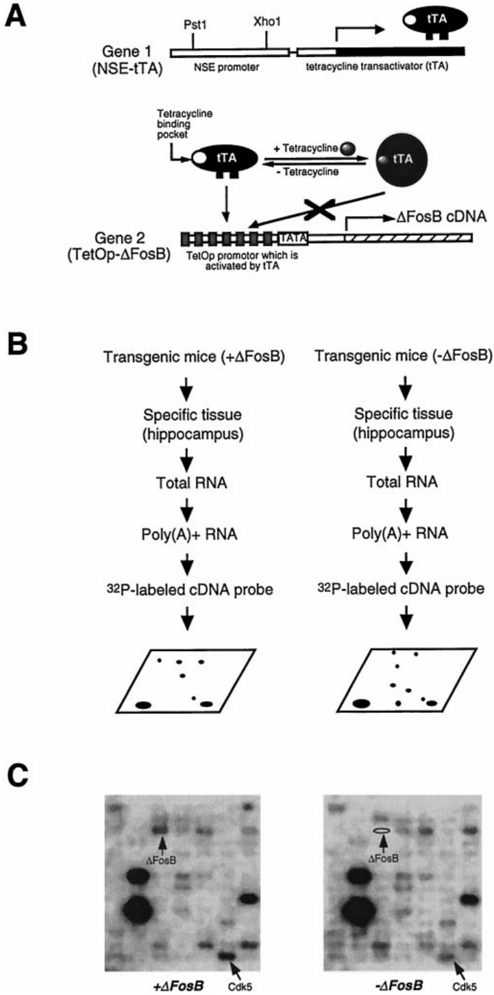
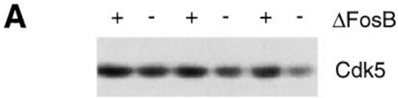
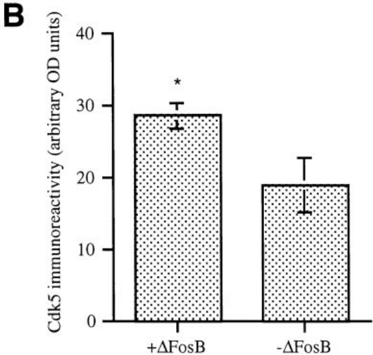
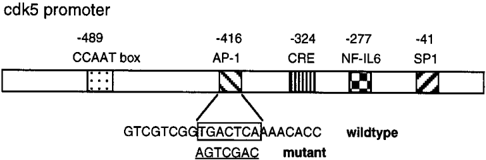
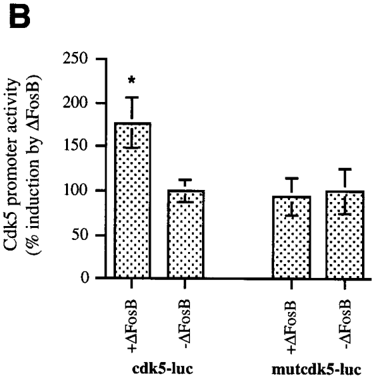
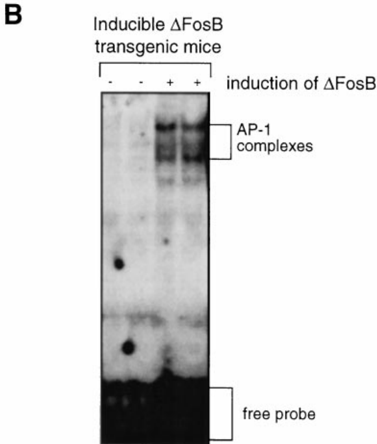
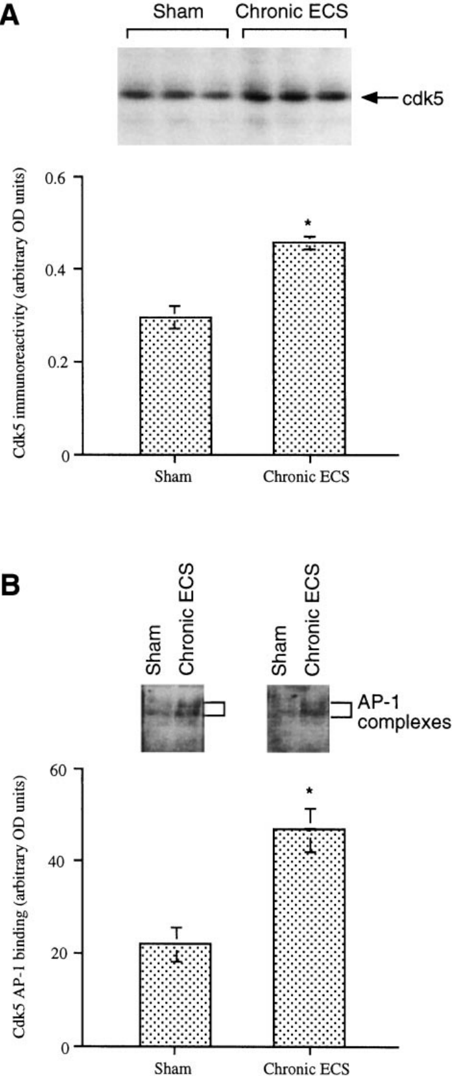
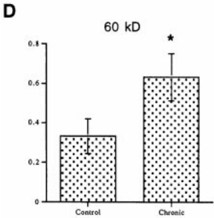
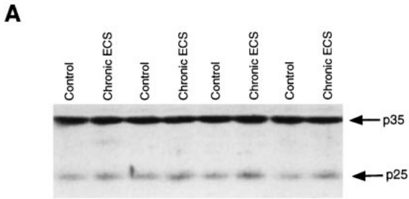
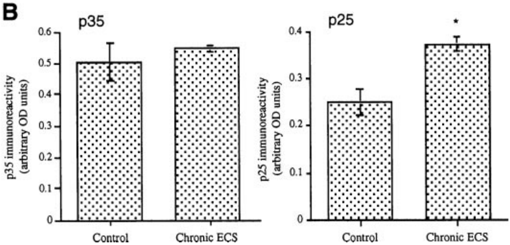
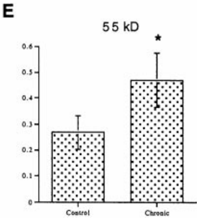
The transcription factor ΔFosB is induced in the hippocampus and other brain regions by repeated electroconvulsive seizures (ECS), an effective antidepressant treatment. The unusually high stability of this protein makes it an attractive candidate to mediate some of the long-lasting changes in the brain caused by ECS treatment. To understand how ΔFosB might alter brain function, we examined the gene expression profiles in the hippocampus of inducible transgenic mice that express ΔFosB in this brain region by the use of cDNA expression arrays that contain 588 genes. Of the 430 genes detected, 20 genes were consistently upregulated, and 14 genes were downregulated, by >50%. One of the upregulated genes is cyclin-dependent kinase 5 (cdk5). On the basis of its purported role in regulating neuronal structure, we studied directly whether cdk5 is a true target for ΔFosB. Upregulation of cdk5 immunoreactivity in the hippocampus was confirmed by Western blotting in the ΔFosB-expressing transgenic mice as well as in rats treated chronically with ECS. Chronic ECS treatment also increased, in the hippocampus, the phosphorylation state of tau, a microtubule-associated protein that is a known substrate for cdk5. A 1.6 kb fragment of the cdk5 promoter was cloned, and activity of the promoter was found to be increased after overexpression of ΔFosB in cell culture. Moreover, mutation of the single consensus activator protein-1 site contained within the cdk5 promoter fragment completely abolished activation of the promoter by ΔFosB. Together, these results suggest that cdk5 is one target by which ΔFosB produces some of its physiological effects in the hippocampus and thereby mediates certain long-term consequences of chronic ECS treatment.
Overview
The claims and statistics of this paper haven’t been checked yet.
Run the check — free, no account needed. It reads the open-access text and checks the sources it cites.
Integrity signals
Registry
Cites
Statistics
Figures

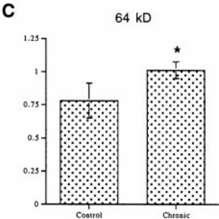
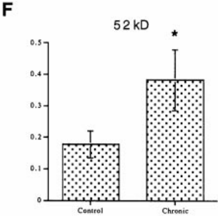
Verification
Claims the paper makes
The claims and statistics of this paper haven’t been checked yet.
Run the check — free, no account needed. It reads the open-access text and checks the sources it cites.
Claims other papers make about this one
Each is checked against this paper’s own text: does it say what the citing paper says it does?
The source backs part of the claim, not all of it — or backs it for a different population, condition or comparison.
In the citing paper
“Furthermore, progressive activation of CDK5 co-occurs with increasing tau phosphorylation in rodent seizure models (Chen et al., 2000; Liang et al., 2009), indicating significant mediation of seizure-associated tau hyperphosphorylation by CDK5.”
From Tauopathy and Epilepsy Comorbidities and Underlying Mechanisms (2022) · cites this paper as Chen et al., 2000
Experimental — accuracy not yet measured
Self-check
Percentages, sums and reported differences re-computed from the paper’s own numbers.
The self-check needs the paper’s full text.
Citations
Cites
Tight control of gene expression in mammalian cells by tetracycline-responsive promoters.
Gossen, M., & Bujard, H. (1992) · Proceedings of the National Academy of Sciences · doi:10.1073/pnas.89.12.5547 · Cited by 4,943 · cited 2×
“In previous studies, we used the tetracycline gene regulation system (Gossen and Bujard, 1992) to develop bitransgenic mice that support the inducible expression of DFosB in specific brain regions, including the hippocampus (Chen et al.”
A molecular and cellular theory of depression
Duman, R. S. (1997) · Archives of General Psychiatry · doi:10.1001/archpsyc.1997.01830190015002 · Cited by 2,129
Nibuya, M., Morinobu, S., & Duman, R. (1995) · The Journal of Neuroscience · doi:10.1523/jneurosci.15-11-07539.1995 · Cited by 2,109
Hippocampal atrophy in recurrent major depression
Sheline, Y. I., Wang, P. W., Gado, M. H., Csernansky, J. G., & Vannier, M. W. (1996) · Proceedings of the National Academy of Sciences · doi:10.1073/pnas.93.9.3908 · Cited by 1,932
Hippocampal Volume Reduction in Major Depression
Bremner, J. D., Narayan, M., Anderson, E. R., Staib, L. H., Miller, H. L., & Charney, D. S. (2000) · American Journal of Psychiatry · doi:10.1176/ajp.157.1.115 · Cited by 1,670
Cortisol levels during human aging predict hippocampal atrophy and memory deficits
Lupien, S. J., de Leon, M., de Santi, S., Convit, A., Tarshish, C., Nair, N. P. V., Thakur, M., McEwen, B. S., Hauger, R. L., & Meaney, M. J. (1998) · Nature Neuroscience · doi:10.1038/271 · Cited by 1,653
Conversion of p35 to p25 deregulates Cdk5 activity and promotes neurodegeneration
Patrick, G. N., Zukerberg, L. R., Nikolić, M., de la Monte, S. M., Dikkes, P., & Tsai, L. (1999) · Nature · doi:10.1038/45159 · Cited by 1,541
Smith, M., Makino, S., Květňanský, R., & Post, R. M. (1995) · Journal of Neuroscience · doi:10.1523/jneurosci.15-03-01768.1995 · Cited by 1,449
Why stress is bad for your brain
Sapolsky, R. M. (1996) · Science · doi:10.1126/science.273.5276.749 · Cited by 1,306 · cited 1×
“Conversely, stress exerts the opposite effects in rodent models; it decreases BDNF expression, the sprouting of several neuronal cell types, and neurogenesis in the hippocampus (Smith et al., 1995; Sapolsky, 1996; Brown et al., 1999; Gould and Tanapat, 1999).”
BackgroundNibuya, M., Nestler, E., & Duman, R. (1996) · The Journal of Neuroscience · doi:10.1523/jneurosci.16-07-02365.1996 · Cited by 1,206
Self-citation
Cited by
Sorted by citations
Molecular basis of long-term plasticity underlying addiction
Nestler, E. J. (2001) · Nature reviews. Neuroscience · doi:10.1038/35053570 · Cited by 1,893
Self-citationMolecular mechanisms of drug addiction
Nestler, E. J. (2004) · Neuropharmacology · doi:10.1016/j.neuropharm.2004.06.031 · Cited by 1,108
Self-citationDhavan, R., & Tsai, L. (2001) · Nature Reviews Molecular Cell Biology · doi:10.1038/35096019 · Cited by 1,052
Chromatin Remodeling Is a Key Mechanism Underlying Cocaine-Induced Plasticity in Striatum
Kumar, A., Choi, K.-H., Renthal, W., Tsankova, N. M., Theobald, D. E. H., Truong, H.-T., Russo, S. J., LaPlant, Q., Sasaki, T. S., Whistler, K. N., et al. (2005) · Neuron · doi:10.1016/j.neuron.2005.09.023 · Cited by 764
Self-citationΔFosB: A sustained molecular switch for addiction
Nestler, E. J., Barrot, M., & Self, D. W. (2001) · Proceedings of the National Academy of Sciences · doi:10.1073/pnas.191352698 · Cited by 640
Self-citationRegulation of gene expression and cocaine reward by CREB and ΔFosB
McClung, C. A., & Nestler, E. J. (2003) · Nature Neuroscience · doi:10.1038/nn1143 · Cited by 625
Self-citationTsankova, N. M., Kumar, A., & Nestler, E. J. (2004) · The Journal of Neuroscience · doi:10.1523/jneurosci.0589-04.2004 · Cited by 447
Self-citationMolecular Neurobiology of Addiction
Nestler, E. J. (2001) · American Journal on Addictions · doi:10.1080/105504901750532094 · Cited by 416
Self-citationΔFosB: a molecular switch for long-term adaptation in the brain
McClung, C. A., Ulery, P. G., Perrotti, L. I., Zachariou, V., Berton, O., & Nestler, E. J. (2004) · Molecular Brain Research · doi:10.1016/j.molbrainres.2004.05.014 · Cited by 409
Self-citationTranscriptional mechanisms of addiction: role of ΔFosB
Nestler, E. J. (2008) · Philosophical Transactions of the Royal Society B Biological Sciences · doi:10.1098/rstb.2008.0067 · Cited by 411
Self-citationMolecular Neurobiology of Drug Addiction
Chao, J. R., & Nestler, E. J. (2004) · Annual Review of Medicine · doi:10.1146/annurev.med.55.091902.103730 · Cited by 353
Self-citationSeizures induce proliferation and dispersion of doublecortin-positive hippocampal progenitor cells
Jessberger, S., Römer, B., Babu, H., & Kempermann, G. (2005) · Experimental Neurology · doi:10.1016/j.expneurol.2005.08.010 · Cited by 305
Cyclin-Dependent Kinases (CDK) and Their Role in Diseases Development–Review
Łukasik, P., Załuski, M., & Gutowska, I. (2021) · International Journal of Molecular Sciences · doi:10.3390/ijms22062935 · Cited by 262
Bowers, M. S., Chen, B. T., & Bonci, A. (2010) · Neuron · doi:10.1016/j.neuron.2010.06.004 · Cited by 222
Nestler, E. J. (2000) · Nature Genetics · doi:10.1038/81570 · Cited by 215
Self-citationCdk5 activity in the brain – multiple paths of regulation
Shah, K., & Lahiri, D. K. (2014) · Journal of Cell Science · doi:10.1242/jcs.147553 · Cited by 205
An Unusual Member of the Cdk Family: Cdk5
Dhariwala, F. A., & Rajadhyaksha, M. S. (2008) · Cellular and Molecular Neurobiology · doi:10.1007/s10571-007-9242-1 · Cited by 173
Induction of nuclear factor‐κB in nucleus accumbens by chronic cocaine administration
Ang, E. S. B. C., Chen, J., Zagouras, P., Magna, H. A., Holland, J., Schaeffer, E., & Nestler, E. J. (2001) · Journal of Neurochemistry · doi:10.1046/j.1471-4159.2001.00563.x · Cited by 146
Self-citationCyclin‐dependent kinase‐5 in neurodegeneration
Shelton, S. B., & Johnson, G. V. W. (2004) · Journal of Neurochemistry · doi:10.1111/j.1471-4159.2003.02328.x · Cited by 146
Cdk5, a therapeutic target for Alzheimer's disease?
Tsai, L., Lee, M.-S., & Cruz, J. C. (2003) · Biochimica et Biophysica Acta (BBA) - Proteins and Proteomics · doi:10.1016/j.bbapap.2003.11.019 · Cited by 122
Cyclin-dependent kinase 5 activity regulates pain signaling
Pareek, T. K., Keller, J., Kesavapany, S., Pant, H. C., Iadarola, M. J., Brady, R. O., & Kulkarni, A. B. (2006) · Proceedings of the National Academy of Sciences · doi:10.1073/pnas.0510405103 · Cited by 116
Biological functions of CDK5 and potential CDK5 targeted clinical treatments
Shupp, A. B., Casimiro, M. C., & Pestell, R. G. (2017) · Oncotarget · doi:10.18632/oncotarget.14538 · Cited by 120
The "Ups and Downs" of Signaling Cascades in Addiction
Dorit Ron, A., & Jurd, R. (2005) · Science s STKE · doi:10.1126/stke.3092005re14 · Cited by 107
Merkl, A., Schubert, F., Quante, A., Luborzewski, A., Brakemeier, E., Grimm, S., Heuser, I., & Bajbouj, M. (2010) · Biological Psychiatry · doi:10.1016/j.biopsych.2010.08.009 · Cited by 110
Iwamoto, Y., Morinobu, S., Takahashi, T., & Yamawaki, S. (2006) · Progress in Neuro-Psychopharmacology and Biological Psychiatry · doi:10.1016/j.pnpbp.2006.12.010 · Cited by 106
Peakman, M., Colby, C. R., Perrotti, L. I., Tekumalla, P. K., Carle, T. L., Ulery, P. G., Chao, J. R., Duman, C. H., Steffen, C., Monteggia, L. M., et al. (2003) · Brain Research · doi:10.1016/s0006-8993(03)02230-3 · Cited by 101
Self-citationGenetic susceptibility to substance dependence
Hiroi, N., & Agatsuma, S. (2004) · Molecular Psychiatry · doi:10.1038/sj.mp.4001622 · Cited by 107
Lee, A. M., & Messing, R. O. (2008) · Annals of the New York Academy of Sciences · doi:10.1196/annals.1441.022 · Cited by 103
Experience-Dependent Induction of Hippocampal ΔFosB Controls Learning
Eagle, A. L., Gajewski, P. A., Yang, M., Kechner, M., Klump, B. M., Kennedy, P., Wang, H., Mazei‐Robison, M. S., & Robison, A. J. (2015) · Journal of Neuroscience · doi:10.1523/jneurosci.2083-15.2015 · Cited by 96
Molecular neurobiology of addiction: what’s all the (Δ)FosB about?
Ruffle, J. K. (2014) · The American Journal of Drug and Alcohol Abuse · doi:10.3109/00952990.2014.933840 · Cited by 91
Lee, J., & Kim, K. (2004) · Journal of Neurochemistry · doi:10.1111/j.1471-4159.2004.02770.x · Cited by 88
Takahashi, S., Ohshima, T., Cho, A., Sreenath, T., Iadarola, M. J., Pant, H. C., Kim, Y. D., Nairn, A. C., Brady, R. O., Greengard, P., et al. (2005) · Proceedings of the National Academy of Sciences · doi:10.1073/pnas.0409456102 · Cited by 79
Cocaine-responsive gene expression changes in rat hippocampus
Freeman, W. M., Brebner, K., Lynch, W. J., Robertson, D. J., Roberts, D. C. S., & Vrana, K. E. (2001) · Neuroscience · doi:10.1016/s0306-4522(01)00432-8 · Cited by 73
Nomaru, H., Sakumi, K., Katogi, A., Ohnishi, Y. N., Kajitani, K., Tsuchimoto, D., Nestler, E. J., & Nakabeppu, Y. (2014) · Glia · doi:10.1002/glia.22680 · Cited by 68
Self-citationEtiévant, A., Manta, S., Latapy, C., Magno, L. A. V., Fecteau, S., & Beaulieu, J. (2015) · Scientific Reports · doi:10.1038/srep16873 · Cited by 56
Chandra, R., & Lobo, M. K. (2017) · Frontiers in Behavioral Neuroscience · doi:10.3389/fnbeh.2017.00112 · Cited by 53
Busceti, C. L., Biagioni, F., Riozzi, B., Battaglia, G., Storto, M., Cinque, C., Molinaro, G., Gradini, R., Caricasole, A., Canudas, A. M., et al. (2008) · Journal of Neuroscience · doi:10.1523/jneurosci.0159-08.2008 · Cited by 51
Potts, L. F., Park, E. S., Woo, J., Shetty, B. L. D., Singh, A. P., Braithwaite, S. P., Voronkov, M. V., Papa, S. M., & Mouradian, M. M. (2015) · Annals of Neurology · doi:10.1002/ana.24375 · Cited by 51
Increased Cdk5/p35 activity in the dentate gyrus mediates depressive-like behaviour in rats
Zhu, W., Shi, H., Wang, S., Xu, C., Jiang, W., Wang, X., Wu, P., Li, Q., Ding, Z., & Lü, L. (2011) · The International Journal of Neuropsychopharmacology · doi:10.1017/s1461145711000915 · Cited by 52
Rukhsana Sultana, A., & Butterfield, D. A. (2006) · Neurochemical Research · doi:10.1007/s11064-006-9123-x · Cited by 49
ΔFOSB: A Potentially Druggable Master Orchestrator of Activity-Dependent Gene Expression
Robison, A. J., & Nestler, E. J. (2022) · ACS Chemical Neuroscience · doi:10.1021/acschemneuro.1c00723 · Cited by 44
Self-citationGajewski, P. A., Turecki, G., & Robison, A. J. (2016) · PLoS ONE · doi:10.1371/journal.pone.0160355 · Cited by 43
Role of striatal ΔFosB in l -Dopa–induced dyskinesias of parkinsonian nonhuman primates
Beck, G., Singh, A. P., Zhang, J., Potts, L. F., Woo, J.-M., Park, E. S., Mochizuki, H., Mouradian, M. M., & Papa, S. M. (2019) · Proceedings of the National Academy of Sciences · doi:10.1073/pnas.1907810116 · Cited by 40
Yeh, S.-Y., Estill, M. S., Lardner, C. K., Browne, C. J., Minier-Toribio, A. M., Futamura, R., Beach, K., McManus, C. A., Xu, S., Zhang, S., et al. (2022) · Biological Psychiatry · doi:10.1016/j.biopsych.2022.12.021 · Cited by 35
Self-citationBathina, C. S., Rajulapati, A., Franzke, M., Yamamoto, K., Cunningham, J. T., & Mifflin, S. (2013) · American Journal of Physiology-Regulatory, Integrative and Comparative Physiology · doi:10.1152/ajpregu.00260.2013 · Cited by 39
Epigenetic Regulation of HippocampalFosbExpression Controls Behavioral Responses to Cocaine
Gajewski, P. A., Eagle, A. L., WILLIAMS, E. S., Manning, C., Lynch, H. M., McCornack, C. R., Maze, I. S., Heller, E. A., & Robison, A. J. (2019) · Journal of Neuroscience · doi:10.1523/jneurosci.0800-19.2019 · Cited by 41
Zhu, H., Lee, M.-S., Agatsuma, S., & Hiroi, N. (2007) · Human Molecular Genetics · doi:10.1093/hmg/ddm027 · Cited by 39
Nishijima, T., Kawakami, M., & Kita, I. (2013) · PLoS ONE · doi:10.1371/journal.pone.0081245 · Cited by 36
Kurushima, H., Ohno, M., Miura, T., Nakamura, T. Y., Horie, H., Kadoya, T., Ooboshi, H., Kitazono, T., Ibayashi, S., Iida, M., et al. (2005) · Cell Death and Differentiation · doi:10.1038/sj.cdd.4401648 · Cited by 36
Sun, W., Park, K. W., Choe, J., Rhyu, I. J., Kim, I. H., Park, S. K., Choi, B., Choi, S.-H., Park, S. H., & Kim, H. (2004) · Biochemical and Biophysical Research Communications · doi:10.1016/j.bbrc.2004.12.050 · Cited by 36
Tauopathy and Epilepsy Comorbidities and Underlying Mechanisms
Hwang, K., Vaknalli, R. N., Addo-Osafo, K., Vicente, M., & Vossel, K. (2022) · Frontiers in Aging Neuroscience · doi:10.3389/fnagi.2022.903973 · Cited by 35
Activation of cyclin-dependent kinase 5 is involved in axonal regeneration
Namgung, U., Choi, B., Park, S.-H., Lee, J.-U., Seo, H.-S., Suh, B., & Kim, K. (2004) · Molecular and Cellular Neuroscience · doi:10.1016/j.mcn.2003.11.005 · Cited by 35
Zhu, W., Mao, Z., Zhu, C., Li, M. Y., Cao, C., Guan, Y., Yuan, J., Xie, G., & Guan, X. (2015) · Neuroscience · doi:10.1016/j.neuroscience.2015.11.041 · Cited by 35
Czapski, G. A., Gąssowska-Dobrowolska, M., Songin, M., Radecka, U. D., & Strosznajder, J. B. (2011) · FEBS Letters · doi:10.1016/j.febslet.2011.03.058 · Cited by 33
Li, W., Allen, M., Rui, Y., Ku, L., Liu, G., Bankston, A. N., Zheng, J. Q., & Feng, Y. (2016) · Journal of Neuroscience · doi:10.1523/jneurosci.1155-16.2016 · Cited by 33
The transcription factor ΔFosB is recruited by inflammatory pain
Luis‐Delgado, O. E., Barrot, M., Rodeau, J., Ulery, P. G., Freund‐Mercier, M. J., & Lasbennes, F. (2006) · Journal of Neurochemistry · doi:10.1111/j.1471-4159.2006.03970.x · Cited by 34
Ohnishi, Y. N., Ohnishi, Y. H., Hokama, M., Nomaru, H., Yamazaki, K., Tominaga, Y., Sakumi, K., Nestler, E. J., & Nakabeppu, Y. (2011) · Biological Psychiatry · doi:10.1016/j.biopsych.2011.04.021 · Cited by 32
Self-citationRole of hippocampal activity-induced transcription in memory consolidation
Eagle, A. L., Gajewski, P. A., & Robison, A. J. (2016) · Reviews in the Neurosciences · doi:10.1515/revneuro-2016-0010 · Cited by 33
Expression of Cdk5 and its activators in NT2 cells during neuronal differentiation
Fu, W., Wang, J. H.-C., & Ip, N. Y. (2002) · Journal of Neurochemistry · doi:10.1046/j.1471-4159.2002.00856.x · Cited by 26
Regulation of ΔFosB transcriptional activity by Ser27 phosphorylation
Ulery, P. G., & Nestler, E. J. (2007) · European Journal of Neuroscience · doi:10.1111/j.1460-9568.2006.05262.x · Cited by 27
Self-citationYou, J. C., Stephens, G. S., Fu, C.-H., Zhang, X., Liu, Y., & Chin, J. (2018) · PLoS ONE · doi:10.1371/journal.pone.0192508 · Cited by 21
Abnormal expression of cdk5 in focal cortical dysplasia in humans.
Sisodiya, S. M., Thom, M., Lin, W.-R., Bajaj, N. P. S., Cross, J. H., & Harding, B. N. (2002) · Neuroscience Letters · doi:10.1016/s0304-3940(02)00520-7 · Cited by 22
Is intractable epilepsy a tauopathy?
Xi, Z., Wang, X., Shu, X.-F., Chen, G., Xiao, F., Sun, J., & Zhu, X. (2011) · Medical Hypotheses · doi:10.1016/j.mehy.2011.03.003 · Cited by 19
Jeon, S., Kim, Y., Chung, I., & Kim, Y. S. (2014) · Progress in Neuro-Psychopharmacology and Biological Psychiatry · doi:10.1016/j.pnpbp.2014.09.002 · Cited by 18
Rowe, G. C., Vialou, V., Sato, K., Saito, H., Yin, M., Green, T. A., Lotinun, S., Kveiborg, M., Horne, W. C., Nestler, E. J., et al. (2012) · Journal of Bone and Mineral Research · doi:10.1002/jbmr.1618 · Cited by 18
Self-citationNeuroscience of Drugs and Addiction
Robbins, T. W., Cardinal, R. N., Ciano, P. D., Halligan, P. W., Hellemans, K., Lee, J. L. C., & Everitt, B. J. (2007) · Elsevier eBooks · doi:10.1016/b978-012370624-9/50006-2 · Cited by 16
Chen, J., Newton, S. S., Zeng, L., Adams, D. H., Dow, A. L., Madsen, T. M., Nestler, E. J., & Duman, R. S. (2003) · Neuropsychopharmacology · doi:10.1038/sj.npp.1300289 · Cited by 17
Self-citationBeck, G., Zhang, J., Fong, K., Mochizuki, H., Mouradian, M. M., & Papa, S. M. (2021) · Gene Therapy · doi:10.1038/s41434-021-00249-7 · Cited by 14
Stephens, G. S., Park, J. K., Eagle, A. L., You, J. C., Silva‐Pérez, M., Fu, C.-H., Choi, S., Romain, C. P. S., Sugimoto, C., Buffington, S. A., et al. (2024) · Progress in Neurobiology · doi:10.1016/j.pneurobio.2024.102612 · Cited by 16
Jeon, S., Kim, Y., Park, J., & Bae, C. (2005) · Journal of Neurochemistry · doi:10.1111/j.1471-4159.2005.03505.x · Cited by 15
Chronic Stress Is Associated with Pain Precipitation and Elevation in DeltaFosb Expression
Wang, H., Tao, X., Huang, S., Wu, L., Tang, H., Song, Y., Zhang, G., & Zhang, Y. (2016) · Frontiers in Pharmacology · doi:10.3389/fphar.2016.00138 · Cited by 15
Self-citationCantrup, R., Sathanantham, K., Rushlow, W. J., & Rajakumar, N. (2012) · Neuroscience · doi:10.1016/j.neuroscience.2012.07.027 · Cited by 18
Synaptic roles of cyclin-dependent kinase 5 & its implications in epilepsy
Dixit, A. B., Banerjee, J., Tripathi, M., Sarkar, C., & Chandra, P. S. (2017) · The Indian Journal of Medical Research · doi:10.4103/ijmr.ijmr_1249_14 · Cited by 14
A Kinase to Dampen the Effects of Cocaine?
Gupta, A., & Tsai, L. (2001) · Science · doi:10.1126/science.292.5515.236 · Cited by 17
Kedmi, M., & Orr‐Urtreger, A. (2007) · Physiological Genomics · doi:10.1152/physiolgenomics.00288.2006 · Cited by 12
Feyissa, A. M., Carrano, A., Wang, X., Allen, M., Ertekin‐Taner, N., Dickson, D. W., Jentoft, M. E., Rosenfeld, S. S., Tatum, W. O., Ritaccio, A. L., et al. (2021) · Epilepsy Research · doi:10.1016/j.eplepsyres.2021.106618 · Cited by 13
Yu, F., Wang, Y., Xu, H., Dong, J., Wei, W., Wang, Y., Shan, Z., Teng, W., Xi, Q., & Chen, J. (2012) · Environmental Toxicology · doi:10.1002/tox.21811 · Cited by 8
Self-citationLaLumiere, R. T., & Kalivas, P. W. (2007) · Elsevier eBooks · doi:10.1016/b978-012372540-0/50015-7 · Cited by 8
Zhang, K., Zhu, Y. W., Fenik, P., Fleysh, D., Ly, C., THOMAS, S. A., & Veasey, S. C. (2024) · Journal of Neuroscience · doi:10.1523/jneurosci.1929-23.2024 · Cited by 8
Vasileiou, I., Giaginis, C., Klonaris, C. N., & Theocharis, S. E. (2010) · Fundamental and Clinical Pharmacology · doi:10.1111/j.1472-8206.2009.00809.x · Cited by 7
Zhan, A., Xu, X. Y., Chen, L., Wang, X., Yanfeng, X., Dān, W., Zhan, Y., & Shi, Q. (2013) · Synapse · doi:10.1002/syn.21725 · Cited by 7
de Oliveira, P. E. C., Leão, R. M., Bianchi, P., Marin, M. T., Planeta, C. S., & Cruz, F. C. (2016) · Frontiers in Behavioral Neuroscience · doi:10.3389/fnbeh.2016.00173 · Cited by 7
HuR mRNA Ligands Expressed After Seizure
Westmark, C. J., Gourronc, F. A., Bartleson, V. B., Sayın, Ü., Bhattacharya, S., Sutula, T. P., & Malter, J. S. (2005) · Journal of Neuropathology & Experimental Neurology · doi:10.1097/01.jnen.0000189835.71574.e1 · Cited by 7
Voluntary Running and Estrous Cycle Modulate ΔFOSB in the Suprachiasmatic Nucleus of the Wistar Rat
Shiba, A., Hardonk, M. H., Foppen, E., Kool, T., la Fleur, S. E., Lucassen, P. J., Yi, C., Stenvers, D. J., Mul, J. D., & Kalsbeek, A. (2025) · Journal of Circadian Rhythms · doi:10.5334/jcr.257 · Cited by 6
McHugh, P., Rogers, G. R., Glubb, D. M., Allington, M. D. E., Hughes, M., Joyce, P. R., & Kennedy, M. A. (2008) · Acta Neuropsychiatrica · doi:10.1111/j.1601-5215.2008.00334.x · Cited by 6
ΔFosB indirectly regulates Cck promoter activity
Enwright, J. F., Wald, M., Paddock, M., Hoffman, E., Arey, R. N., Edwards, S., Spencer, S. M., Nestler, E. J., & McClung, C. A. (2010) · Brain Research · doi:10.1016/j.brainres.2010.02.081 · Cited by 5
Self-citationLazenka, M. F., Kang, M., De, D. D., Selley, D. E., & Sim‐Selley, L. J. (2017) · Cannabis and Cannabinoid Research · doi:10.1089/can.2017.0022 · Cited by 5
Activity‐Dependent Regulation of Transcription During Development of Synapses
Sanyal, S., & Ramaswami, M. (2006) · International review of neurobiology · doi:10.1016/s0074-7742(06)75013-9 · Cited by 4
Criscuolo, C., Chartampila, E., Ginsberg, S. D., & Scharfman, H. E. (2023) · eNeuro · doi:10.1523/eneuro.0192-23.2023 · Cited by 6
Transcriptional and Epigenetic Regulation of Reward Circuitry in Drug Addiction
Eagle, A. L., Klump, B. M., & Robison, A. J. (2018) · Elsevier eBooks · doi:10.1016/b978-0-12-812202-0.00003-8 · Cited by 4
Beckinghausen, J., Ortiz‐Guzman, J., Lin, T., Bachman, B., Liu, Y., Heck, D. H., Arenkiel, B. R., & Sillitoe, R. V. (2021) · bioRxiv (Cold Spring Harbor Laboratory) · doi:10.1101/2021.10.03.462953 · Cited by 2
Arjmand, S., Ilaghi, M., Shafie’ei, M., Gobira, P. H., Grassi‐Oliveira, R., & Wegener, G. (2024) · Acta Neuropsychiatrica · doi:10.1017/neu.2024.38 · Cited by 1
Effect of chronic sleep restriction on ethanol preference and cortical structural plasticity
Bravo-González, F., Acosta-Hernández, M. E., Tendilla‐Beltrán, H., Flores, G., & García‐García, F. (2025) · Neurobiology of Sleep and Circadian Rhythms · doi:10.1016/j.nbscr.2025.100126 · Cited by 1
Criscuolo, C., Chartampila, E., Ginsberg, S. D., & Scharfman, H. E. (2023) · bioRxiv (Cold Spring Harbor Laboratory) · doi:10.1101/2023.05.07.539742 · Cited by 1
Customizing microarrays for neuroscience drug discovery
Girgenti, M. J., & Newton, S. S. (2007) · Expert Opinion on Drug Discovery · doi:10.1517/17460441.2.8.1139
Eitan, R., Landshut, G., & Lerer, B. (2009) · Cambridge University Press eBooks · doi:10.1017/cbo9780511576393.004
Cognition in Epilepsy: ΔFosB Takes Center Stage (and May Star in the Prologue)
Groß, C. (2018) · Epiliepsy currents/Epilepsy currents · doi:10.5698/1535-7597.18.5.323
Mukherjee, U., & Abel, T. G. (2024) · Springer eBooks · doi:10.1007/978-3-031-68550-7_14
Molecular mechanisms of l-DOPA-induced dyskinesia
Cenci, M. A., & Ferrario, J. E. (2025) · Handbook of behavioral neuroscience · doi:10.1016/b978-0-443-21992-4.00023-3
Vulnérabilité à l'éthanol chez le rat adolescent et adulte
Waes, V. V. (2008) · theses.fr (ABES) · doi:10.70675/329a9ea9zb2a0z4fb9zbefbz941bb5da2cdd
Metadata
- Authors
- Chen, J., Zhang, Y., Kelz, M. B., Steffen, C., Ang, E. S., Zeng, L., & Nestler, E. J.
- Affiliations
- Yale University (US)
- Venue
- The Journal of Neuroscience
- Publisher
- Society for Neuroscience
- Published
- 2000-12-15
- Volume
- 20
- Issue
- 24
- Pages
- 8965-8971
- ISSN
- 0270-6474 (ISSN-L)
- 1529-2401
- OpenAlex
- W4322703188
- Cited by
- 101
- References
- 38
- Citations by year
- 2025: 3 · 2024: 4 · 2023: 2 · 2022: 3 · 2021: 4 · 2019: 3 · 2018: 3 · 2017: 4 · 2016: 5 · 2015: 4 · 2014: 4 · 2013: 3 · 2012: 3
- FWCI
- 3.29
- Type
- journal article
- Language
- en
- Open access
- hybrid
- doi.org
- Licence
- Locations
- Journal of Neuroscience (publishedVersion, cc-by-nc-sa)
- Funders
- National Institute of Mental Health
- National Institute on Drug Abuse
- Topics
- Health Sciences › Medicine › Psychiatry and Mental health › Electroconvulsive Therapy Studies
- Health Sciences › Medicine › Pharmacology (medical) › Treatment of Major Depression
- Life Sciences › Neuroscience › Cognitive Neuroscience › Memory and Neural Mechanisms
- Keywords
- ΔFosB, cyclin-dependent kinase 5, electroconvulsive seizures, hippocampus, gene expression profiling, AP-1 transcription factor, tau phosphorylation, transgenic mice, antidepressant treatment, long-term synaptic plasticity
About these checks
Registry, retraction, Cites and statistics results are computed, not judged, with one exception: a printed reference that no index lists is read once by a model before it counts as a citation error. Claims are extracted by a model and kept only when their quote appears verbatim in the text; each cited source is then checked, with a model’s help, for whether it says what the claim relies on. Those verdicts can be wrong — read the claim’s quote and the cited source before relying on one.
Statistics and arithmetic are recomputed, not judged.
Confidence bands are shown only for fields calibrated on our annotated test set. None is calibrated yet, so no band is shown.
What counts as a claim ›How we measure confidence ›How we check this ›
Are you an author, or do you see a problem with this page? Request a review
