

The DOI matches its Crossref record; 71 of the 71 references it cites were found in a registry or an index.
Circuitry for Associative Plasticity in the Amygdala Involves Endocannabinoid Signaling
Open accessAbstract
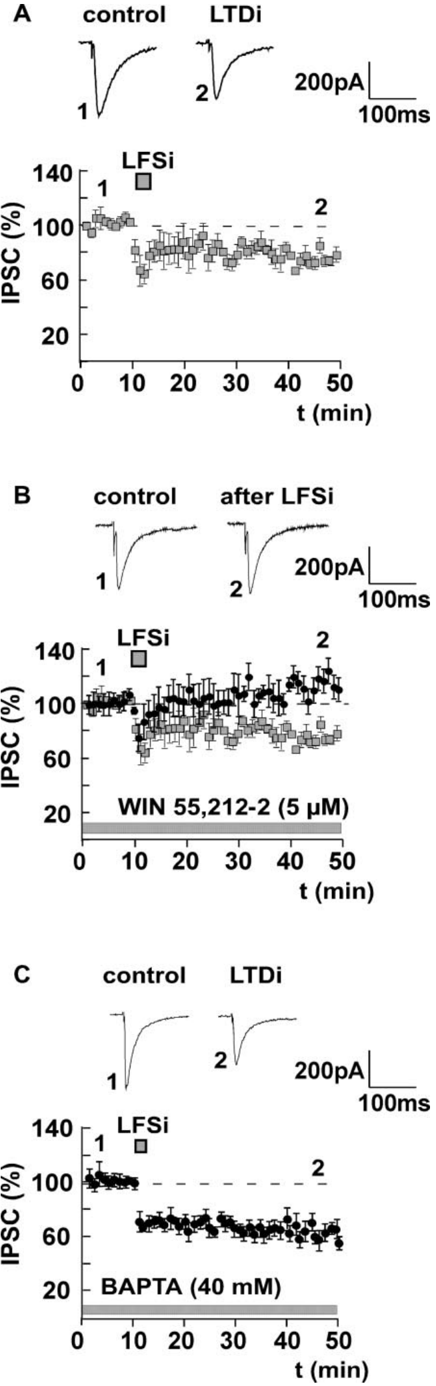
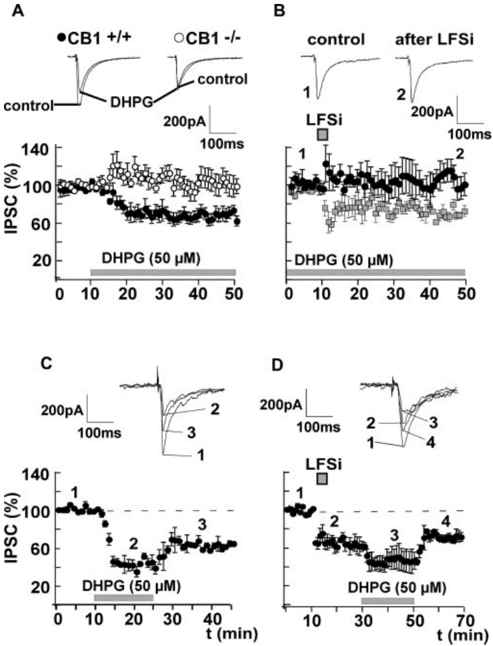
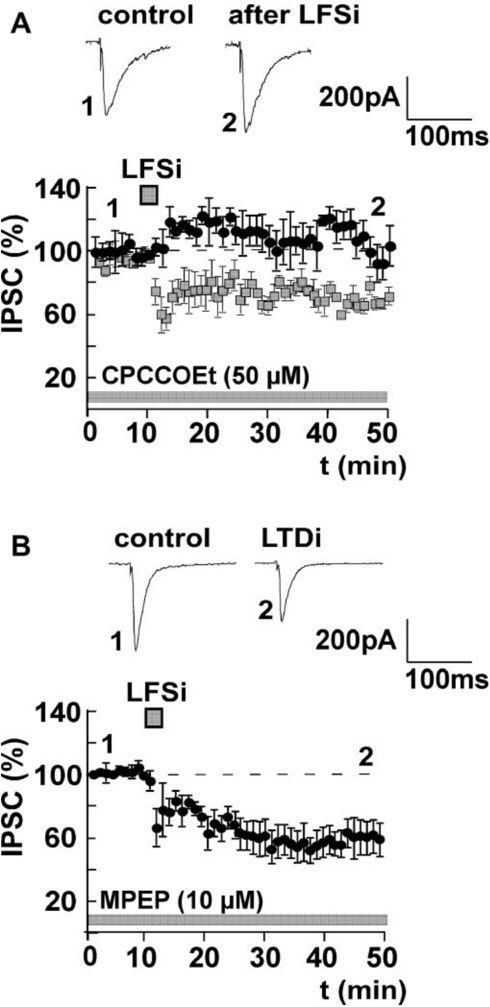
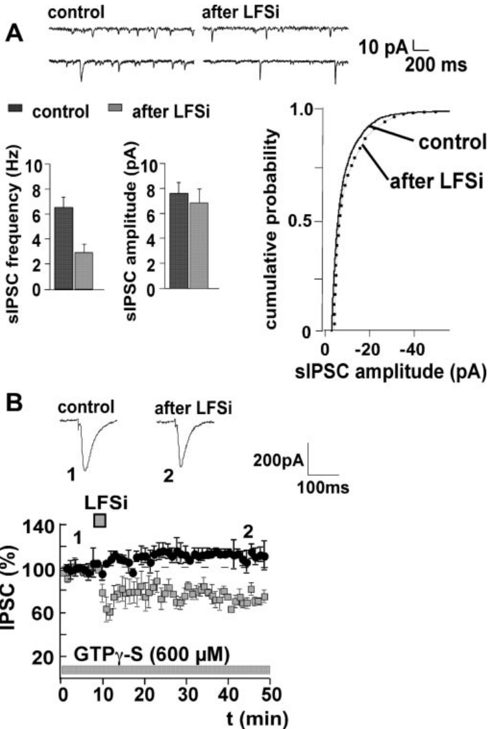
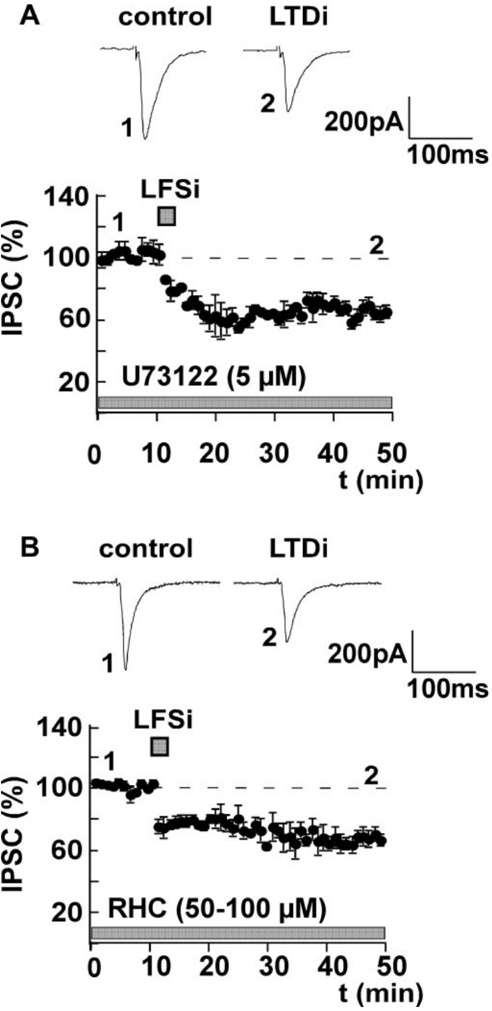
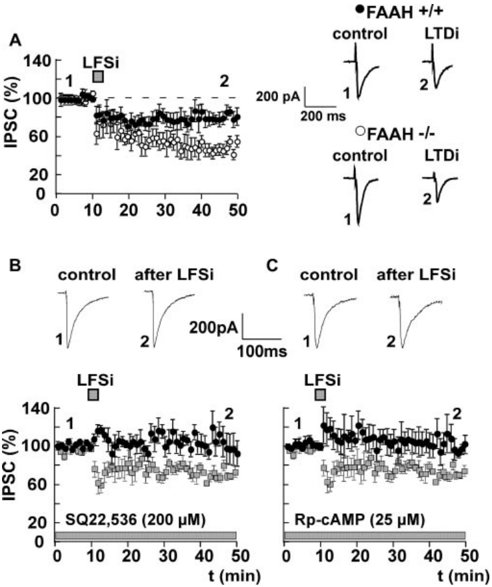
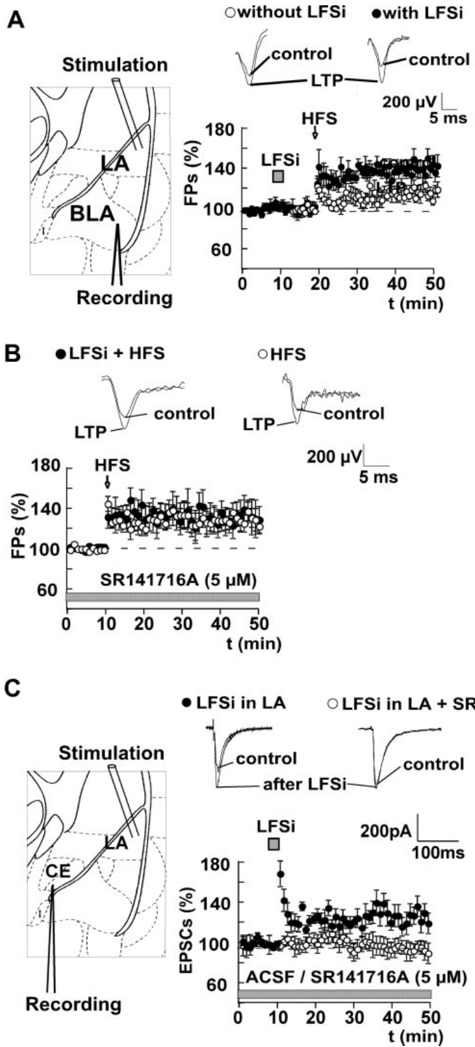
Endocannabinoids are crucial for the extinction of aversive memories, a process that considerably involves the amygdala. Here, we show that low-frequency stimulation of afferents in the lateral amygdala with 100 pulses at 1 Hz releases endocannabinoids postsynaptically from neurons of the basolateral amygdala of mice in vitro and thereby induces a long-term depression of inhibitory GABAergic synaptic transmission (LTDi) via a presynaptic mechanism. Lowering inhibitory synaptic transmission significantly increases the amplitude of excitatory synaptic currents in principal neurons of the central nucleus, which is the main output site of the amygdala. LTDi involves a selective mGluR1 (metabotropic glutamate receptor 1)-mediated calcium-independent mechanism and the activation of the adenylyl cyclase-protein kinase A pathway. LTDi is abolished by the cannabinoid type 1 (CB1) receptor antagonist SR141716A and cannot be evoked in CB1 receptor-deficient animals. LTDi is significantly enhanced in mice lacking the anandamide-degrading enzyme fatty acid amide hydrolase. The present findings show for the first time that mGluR activation induces a retrograde endocannabinoid signaling via activation of the adenylyl cyclase-protein kinase A pathway and the release of anandamide. Furthermore, the results indicate that anandamide decreases the activity of inhibitory interneurons in the amygdala. This disinhibition increases the activity of common output neurons and could provide a prerequisite for extinction by formation of new memory.
Overview
The claims and statistics of this paper haven’t been checked yet.
Run the check — free, no account needed. It reads the open-access text and checks the sources it cites.
Integrity signals
Registry
Cites
Statistics
Figures
Verification
Claims the paper makes
The claims and statistics of this paper haven’t been checked yet.
Run the check — free, no account needed. It reads the open-access text and checks the sources it cites.
Claims other papers make about this one
Each is checked against this paper’s own text: does it say what the citing paper says it does?
In the citing paper
“Additionally, inhibition of FAAH facilitates long-term fear extinction and rescues deficient fear extinction in rodent models by enhancing AEA–CB1 (cannabinoid type 1) receptor signaling and synaptic plasticity in the BLA.”
From Amygdala FAAH and anandamide: mediating protection and recovery from stress (2013) · cites this paper as [51]
In the citing paper
“By contrast, CB1R signaling generated by increased AEA can also produce long-term depression of inhibitory transmission in the BLA, a change in synaptic plasticity which can serve to promote excitability [50,51].”
From Amygdala FAAH and anandamide: mediating protection and recovery from stress (2013) · cites this paper as [51]
In the citing paper
“One notable finding is that a CB1R-dependent form of synaptic plasticity in BLA [51,86], long-term depression of inhibitory GABAergic transmission (LTDi), is enhanced by FAAH KO [51] and by the FAAH inhibitor AM3506 at doses that promote extinction [50].”
From Amygdala FAAH and anandamide: mediating protection and recovery from stress (2013) · cites this paper as [51]
In the citing paper
“This suggests a scheme in which AEA released during extinction relieves a tonic inhibitory brake on BLA output neurons [50,51,86] necessary for the encoding of extinction memories [102] (Figure 2).”
From Amygdala FAAH and anandamide: mediating protection and recovery from stress (2013) · cites this paper as [51]
Self-check
Percentages, sums and reported differences re-computed from the paper’s own numbers.
The self-check needs the paper’s full text.
Citations
Cites
LeDoux, J. E. (2000) · Annual Review of Neuroscience · doi:10.1146/annurev.neuro.23.1.155 · Cited by 8,444
The molecular logic of endocannabinoid signalling
Piomelli, D. (2003) · Nature Reviews Neuroscience · doi:10.1038/nrn1247 · Cited by 1,957
Neurons in medial prefrontal cortex signal memory for fear extinction
Milad, M. R., & Quirk, G. J. (2002) · Nature · doi:10.1038/nature01138 · Cited by 1,836
The endogenous cannabinoid system controls extinction of aversive memories
Marsicano, G., Wotjak, C. T., Azad, S. C., Bisogno, T., Rammes, G., Cascio, M. G., Hermann, H., Tang, J., Hofmann, C., Zieglgänsberger, W., et al. (2002) · Nature · doi:10.1038/nature00839 · Cited by 1,728
Self-citationRole of Endogenous Cannabinoids in Synaptic Signaling
Freund, T. F., Katona, I., & Piomelli, D. (2003) · Physiological Reviews · doi:10.1152/physrev.00004.2003 · Cited by 1,616
Endogenous cannabinoids mediate retrograde signalling at hippocampal synapses
Wilson, R. I., & Nicoll, R. A. (2001) · Nature · doi:10.1038/35069076 · Cited by 1,607
Formation and inactivation of endogenous cannabinoid anandamide in central neurons
Marzo, V. D., Fontana, A., Cadas, H., Schinelli, S., Cimino, G., Schwartz, J.-C., & Piomelli, D. (1994) · Nature · doi:10.1038/372686a0 · Cited by 1,585
A second endogenous cannabinoid that modulates long-term potentiation
Stella, N., Schweitzer, P., & Piomelli, D. (1997) · Nature · doi:10.1038/42015 · Cited by 1,496
Cravatt, B. F., Demarest, K., Patricelli, M. P., Bracey, M. H., Giang, D. K., Martin, B. R., & Lichtman, A. H. (2001) · Proceedings of the National Academy of Sciences · doi:10.1073/pnas.161191698 · Cited by 1,310
Endocannabinoid Signaling in the Brain
Wilson, R. I., & Nicoll, R. A. (2002) · Science · doi:10.1126/science.1063545 · Cited by 1,280
Cited by
Sorted by citations
Items 201–263 of 263
Endocannabinoids at the Synapse: Retrograde Signaling and Presynaptic Plasticity in the Brain
Gerdeman, G. L. (2007) · Springer eBooks · doi:10.1007/978-0-387-74349-3_11 · Cited by 11
Hofelmann, D., Benedetto, B. D., Azad, S. C., Micale, V., Wotjak, C., & Rammes, G. (2013) · Brain Research · doi:10.1016/j.brainres.2013.06.011 · Cited by 10
“Stimulation of afferents in the LA with 1 Hz induces an endocannabinoid-dependent long-term depression of inhibitory GABAergic synaptic transmission (LTDi) in neurons of the BLA (Azad et al., 2004).”
BackgroundInfluentialKim, H. J. J., Zagzoog, A., Black, T., Baccetto, S. L., & Laprairie, R. B. (2022) · Progress in molecular biology and translational science · doi:10.1016/bs.pmbts.2022.06.010 · Cited by 10
Nahir, B., Lindsly, C., & Frazier, C. J. (2010) · Neuropharmacology · doi:10.1016/j.neuropharm.2009.12.022 · Cited by 10
“…excitatory synapses in the striatum and nucleus accumbens (Gerdeman et al., 2002; Robbe et al., 2002), and for inhibitory synapses in the hippocampus, basolateral amygdala, and dorsal striatum (Adermark and Lovinger, 2009; Azad et al., 2004; Chevaleyre and Castillo, 2003; Marsicano et al., 2002).”
BackgroundMethodInfluentialBáldi, R., Ghosh, D., Grueter, B. A., & Patel, S. (2016) · Current Protocols in Neuroscience · doi:10.1002/cpns.8 · Cited by 10
Schmidt, K., Krishnan, B., Xia, Y., Sun, A., Orozco-Cabal, L. F., Pollandt, S., Centeno, M., Genzer, K. M., Gallagher, J. P., Shinnick‐Gallagher, P., et al. (2011) · European Journal of Neuroscience · doi:10.1111/j.1460-9568.2011.07769.x · Cited by 9
“, 2001), and decreasing GABAergic transmission in the LA increases excitatory transmission in the CeA (Azad et al., 2004).”
BackgroundInfluentialEndocannabinoid Signaling in Neural Circuits of the Olfactory and Limbic System
Heinbockel, T., Wang, Z., Brown, E. A., & Austin, P. T. (2016) · InTech eBooks · doi:10.5772/63214 · Cited by 9
“[114] Azad SC, Monory K, Marsicano G, et al.”
BackgroundGuo, Z., Tse, Y. C., Zhang, Y., Sun, Q., Vecchiarelli, H. A., Aukema, R. J., Hill, M. N., Wong, T. P., & Boksa, P. (2018) · European Neuropsychopharmacology · doi:10.1016/j.euroneuro.2018.09.003 · Cited by 9
Sharifi, K. A., Rezayof, A., Alijanpour, S., & Zarrindast, M. (2020) · Brain Research Bulletin · doi:10.1016/j.brainresbull.2020.01.012 · Cited by 8
The ins and outs of endocannabinoid signaling in healthy and diseased brain
Horne, E. A., & Stella, N. (2008) · Future Lipidology · doi:10.2217/17460875.3.4.435 · Cited by 8
“These increases are thought to induce LTD at GABAergic synapses and could constitute a prerequisite for the induction of memory extinction [96].”
BackgroundSoni, N., Prabhala, B. K., Mehta, V., Mirza, O., & Kohlmeier, K. A. (2017) · Brain Research · doi:10.1016/j.brainres.2017.04.003 · Cited by 8
“It is thought to underlie phasic activity directed to neurons, which is substantiated by several functional studies (Azad et al., 2004; Cachope, 2012; Castillo et al., 2012; Kim and Alger, 2010).”
BackgroundEndocannabinoids as Modulators of Synaptic Signaling
Patel, S., & Hillard, C. J. (2008) · Humana Press eBooks · doi:10.1007/978-1-59745-503-9_10 · Cited by 7
“What are the functional implications of cannabinoid regulation of afferent neurotransmission within the BLA? One hypothesis [73, 78 ] is that when BLA”
BackgroundMethodInfluentialEndocannabinoid Regulation of Matrix Metalloproteinases: Implications in Ischemic Stroke
Mukhopadhyay, S., & Tulis, D. A. (2007) · Cardiovascular & Hematological Agents in Medicinal Chemistry · doi:10.2174/187152507782109917 · Cited by 7
Liang, S., Alger, B. E., & McCarthy, M. M. (2014) · Journal of Neurophysiology · doi:10.1152/jn.00111.2014 · Cited by 7
WIN 55,212-2 decreases the spatial spread of neocortical excitation in vitro
Becker, K., Eder, M., nsberger, W. Z., & Dodt, H. (2005) · Neuroreport · doi:10.1097/00001756-200506210-00022 · Cited by 6
Cannabis for posttraumatic stress disorder
Krumm, B. A. (2015) · The Nurse Practitioner · doi:10.1097/01.npr.0000434091.34348.3c · Cited by 6
Imaging and Genetic Tools for the Investigation of the Endocannabinoid System in the CNS
Kouchaeknejad, A., van der Walt, G., de Donato, M. H., & Puighermanal, E. (2023) · International Journal of Molecular Sciences · doi:10.3390/ijms242115829 · Cited by 6
“Increased GABAergic inhibition of synaptic transmission [294] Decreased AEA transport; diffusion-and transporter-mediated systems [295] CB1R-mediated hypoalgesia [296] Increased neurogenesis (AEA-dependent) [297] Decreased post-mortem AEA/EA accumulation [298] Increased astrogliogenesis…”
BackgroundSynthesis and SAR evaluation of coumarin derivatives as potent cannabinoid receptor agonists
Mohr, F., Hurrle, T., Burggraaff, L., Langer, L. S., Bemelmans, M. P., Knab, M., Nieger, M., van Westen, G. J. P., Heitman, L. H., & Bräse, S. (2021) · European Journal of Medicinal Chemistry · doi:10.1016/j.ejmech.2021.113354 · Cited by 4
Alijanpour, S., Ghasemzadeh, Z., Ebrahimi-Ghiri, M., & Zarrindast, M. (2022) · Physiology & Behavior · doi:10.1016/j.physbeh.2022.113886 · Cited by 5
Endocannabinoids and Dopamine Balance Basal Ganglia Output
Gorodetski, L., Loewenstern, Y., Faynveitz, A., Bar‐Gad, I., Blackwell, K. T., & Korngreen, A. (2021) · Frontiers in Cellular Neuroscience · doi:10.3389/fncel.2021.639082 · Cited by 3
“, 2007), amygdala (Marsicano et al., 2002; Azad et al., 2004), and the hippocampus (Chevaleyre and Castillo, 2003, 2004; Chevaleyre et al.”
BackgroundBombardi, C., Salamanca, G., Tagliavia, C., Grandis, A., Cunha, R. Z., Gramenzi, A., Silva, M. D., Zannoni, A., & Chiocchetti, R. (2025) · International Journal of Molecular Sciences · doi:10.3390/ijms26157613 · Cited by 4
“In addition, endocannabinoids appear to be crucial for the extinction of aversive memories and this process is likely to be mediated by the amygdala [55].”
Kratzer, S., Haseneder, R., Goldstein, P. A., Kochs, E. F., & Rammes, G. (2017) · Anesthesiology · doi:10.1097/aln.0000000000001830 · Cited by 3
Regulation of Synaptic Function by Endocannabinoids
Lovinger, D. M. (2008) · Elsevier eBooks · doi:10.1016/b978-012370509-9.00028-0 · Cited by 3
Presynaptic Mechanisms in Plasticity and Memory
Powell, C. M., & Castillo, P. E. (2008) · Elsevier eBooks · doi:10.1016/b978-012370509-9.00038-3 · Cited by 4
Cannabinoids and Brain Development
Narouze, S. (2021) · Springer eBooks · doi:10.1007/978-3-030-69186-8_32 · Cited by 2
Tzavara, E. T., & Witkin, J. J. M. (2007) · Springer eBooks · doi:10.1007/978-0-387-74349-3_23 · Cited by 2
VTA GABAergic Plasticity: An Inhibitory Synaptic Model of Drug Addiction
Nugent, F. S. (2010) · Springer eBooks · doi:10.1007/978-1-4419-6978-1_5 · Cited by 1
Piomelli, D. (2014) · Biological Psychiatry · doi:10.1016/j.biopsych.2014.01.010 · Cited by 1
“In neurons of the BLA, for example, anandamide mediates longterm depression of gamma-aminobutyric acidergic inhibitory transmission (4), while in the Acb, 2-AG is responsible for a distinct type of long-term depression at glutamatergic excitatory synapses (5).”
BackgroundRasekhi, K., Oryan, S., Nasehi, M., & Zarrindast, M. (2015) · Nova Biologica Reperta · doi:10.21859/acadpub.nbr.2.2.113 · Cited by 1
Die Wirkungsweise der TRPV1-Kanäle auf die synaptische Plastizität im lateralen Kern der Amygdala
Kulisch, C. (2014) · Universitätsbibliothek der FU Berlin Hochschulschriftenstelle u. Dokumentenserver · doi:10.17169/refubium-5194 · Cited by 1
Manwell, L. A. (2013) · The Atrium (University of Guelph) · Cited by 1
Neuromodulation via endocannabinoids and nitric oxide in the lamprey spinal cord
Kyriakatos, A. (2009) · Figshare
Fourcaudot, E. (2008) · edoc (University of Basel) · doi:10.5451/unibas-004662818
What Can Fear Conditioning Tell Us About Posttraumatic Stress Disorder?
Dębiec, J., & LeDoux, J. E. (2011) · Wiley eBooks · doi:10.1002/9781118083222.ch20
Roloff, A. M. (2009) · University of Minnesota Digital Conservancy (University of Minnesota)
Endocannabinoid Mediated Long-Term Depression at Inhibitory Synapses
Chiu, C. Q., & Castillo, P. E. (2010) · Springer eBooks · doi:10.1007/978-1-4419-6978-1_11
“The presynaptic locus of I-LTD expression was later supported by observations that spontaneous IPSC frequency but not amplitude was reduced following I-LTD ( Azad et al. 2004 ).”
BackgroundInfluentialde Bitencourt, R. M. (2008)
Chakrabarti, B., Kent, L., John Suckling, A., Bullmore, E. T., & Baron‐Cohen, S. (2015)
Role of the Cannabinoid Receptor Type 1 (CB1) in Synaptic Plasticity, Memory and Emotionality
Jacob, W. (2007) · Electronic Theses of LMU Munich (Ludwig-Maximilians-Universität München) · doi:10.5282/edoc.7230
The Role of LMO4 in the Regulation of Hippocampal and Amygdalar Synaptic Function
Qin, Z. (2013) · uO Research (University of Ottawa) · doi:10.20381/ruor-2709
NEUROFUNCTIONAL DEFICITS DURING DECISION-MAKING AND AFFECTIVE PROCESSING IN CHRONIC MARIJUANA USERS
Wesley, M. J. (2010) · WakeSpace Scholarship (Wake Forest University)
The role of endocannabinoids in classical eyelid conditioning
Araújo, S. O. (2014) · Portuguese National Funding Agency for Science, Research and Technology (RCAAP Project by FCT)
Koss, W. A. (2013) · Illinois Digital Environment for Access to Learning and Scholarship (University of Illinois at Urbana-Champaign)
Kupferschmidt, D. A. (2012) · TSpace (University of Toronto)
Fusse, E. J. (2019) · Digital Library of Theses and Dissertations (Universidade de São Paulo) · doi:10.11606/d.17.2019.tde-23102019-162952 · Cited by 1
Ahmed, M. (2020) · TSpace (University of Toronto)
Investigation of the endocannabinoid system using in vivo and in vitro models
Ternes, S. (2013) · bonndoc (University of Bonn)
(2019) · Elsevier eBooks · doi:10.1016/b978-3-437-21882-8.00017-7
Parker, L. A. (2019) · Faculty Opinions – Post-Publication Peer Review of the Biomedical Literature · doi:10.3410/f.734674759.793560175
Pharmacotherapeutic effects of cannabidiol in autism spectrum disorders
Parkhill, M. (2023) · Carleton University's Institutional Repository (MacOdrum Library, Carleton University) · doi:10.22215/etd/2023-15479
Neurological Effects of Cannabis
Ross, I. A. (2023) · Springer eBooks · doi:10.1007/978-3-031-35155-6_5
Anandamide: The good and bad in epilepsy
Gom, R. C., Wickramarachchi, P., Colangeli, R., & Teskey, G. C. (2024) · Elsevier eBooks · doi:10.1016/b978-0-443-19081-0.00018-4
Fitzgerald, J. M., & Hillard, C. J. (2024) · Elsevier eBooks · doi:10.1016/b978-0-443-19081-0.00008-1
The Endocannabinoid System and Postnatal Neurodevelopment
Sisk, L. M., Meyer, H. C., Martinez-Garcia, A., & Gee, D. G. (2025) · Springer eBooks · doi:10.1007/978-3-031-87990-6_5
(2022) · Elsevier eBooks · doi:10.1016/b978-3-437-21884-2.00033-7
Zhang, Y.-D., Xu, Y.-H., Sun, M.-Z., Liu, Y., Yuan, Y.-X., Zhang, X.-D., Chen, C.-Y., Gao, J.-T., Weng, W.-C., Chu, C.-P., et al. (2025) · European Journal of Neuroscience · doi:10.1111/ejn.70290
Pigeat, R. (2014) · theses.fr (ABES) · doi:10.70675/d7dd6085z4dffz4cb2za36bzf5b56c9c6de7
“66 Ce phénomène de iLTD dépendant des eCB est observé dans de nombreuses structures du SNC, comme l’hippocampe (Chevaleyre and Castillo, 2003; Wilson and Nicoll, 2001), l’amygdale (Azad et al., 2004; Marsicano et al., 2002), le cortex (Chiu et al.”
BackgroundInfluentialRoles of astroglial cannabinoid type 1 receptors (CB1) in memory and synaptic plasticity
Robin, L. M. (2018) · theses.fr (ABES) · doi:10.70675/1fd1dda8z3f4bz404azbdf6z5b648e4c4053
Role of the endocannabinoid system in exercise motivation
Redon, B. (2021) · theses.fr (ABES) · doi:10.70675/844c9d99zd3c6z4550z97a6zebab239b226c
The endogenous cannabinoid system gates plasticity of tonic GABA inhibition
Colangeli, R., & Conti, F. (2026) · The Journal of Physiology · doi:10.1113/jp289183
“Indeed, endogenous AEA tone is known to gate inhibitory plasticity across several brain regions, including the amygdala (Azad et al., 2004; Colangeli et al., 2020), striatum (Ade & Lovinger, 2007; Robbe et al., 2002), hippocampus (Colangeli et al., 2017; Kim & Alger, 2010) and neocortex (De–”
Metadata
- Authors
- Azad, S. C., Monory, K., Marsicano, G., Cravatt, B. F., Lutz, B., Zieglgänsberger, W., & Rammes, G.
- Affiliations
- Max Planck Institute of Psychiatry (DE)
- Scripps Research Institute (US)
- TUM Klinikum (DE)
- Corresponding author
- Azad, Shahnaz C.
- Venue
- The Journal of Neuroscience
- Publisher
- Society for Neuroscience
- Published
- 2004-11-03
- Volume
- 24
- Issue
- 44
- Pages
- 9953-9961
- ISSN
- 0270-6474 (ISSN-L)
- 1529-2401
- PMC
- PMC6730232
- OpenAlex
- W2158593571
- Cited by
- 263
- References
- 71
- Citations by year
- 2026: 1 · 2025: 3 · 2024: 5 · 2023: 5 · 2022: 11 · 2021: 11 · 2020: 11 · 2019: 8 · 2018: 8 · 2017: 9 · 2016: 12 · 2015: 15 · 2014: 17 · 2013: 13 · 2012: 15
- FWCI
- 10.45
- Type
- journal article
- Language
- en
- Open access
- hybrid
- doi.org
- Licence
- Locations
- Journal of Neuroscience (publishedVersion, cc-by-nc-sa)
- PubMed Central (publishedVersion)
- PubMed (publishedVersion)
- Max Planck Institute for Plasma Physics (submittedVersion)
- mediaTUM (Technical University of Munich) (submittedVersion)
- Funders
- Deutsche Forschungsgemeinschaft (SFB 391)
- Topics
- Health Sciences › Medicine › Pharmacology (medical) › Cannabis and Cannabinoid Research
- Life Sciences › Neuroscience › Cognitive Neuroscience › Memory and Neural Mechanisms
- Life Sciences › Neuroscience › Cellular and Molecular Neuroscience › Neuroscience and Neuropharmacology Research
- Keywords
- endocannabinoid signaling, amygdala, associative plasticity, fear extinction, anandamide, CB1 receptor, mGluR1, long-term depression, synaptic inhibition, fatty acid amide hydrolase, basolateral amygdala, central amygdala, inhibitory interneurons, disinhibition, aversive memory
- MeSH terms
- Fatty Acid Amide Hydrolases, Adenylyl Cyclases, Amidohydrolases, Amygdala, Animals, Calcium, gamma-Aminobutyric Acid, Lipoprotein Lipase, Male, Mice, Inbred C57BL, Nerve Tissue Proteins, Neural Inhibition, Neuronal Plasticity, Type C Phospholipases, Synapses, Cyclic AMP-Dependent Protein Kinases, Receptors, Metabotropic Glutamate, Mice, Knockout, GTP-Binding Proteins, Receptor, Cannabinoid, CB1, Mice, Cannabinoid Receptor Modulators, Endocannabinoids, In Vitro Techniques
About these checks
Registry, retraction, Cites and statistics results are computed, not judged, with one exception: a printed reference that no index lists is read once by a model before it counts as a citation error. Claims are extracted by a model and kept only when their quote appears verbatim in the text; each cited source is then checked, with a model’s help, for whether it says what the claim relies on. Those verdicts can be wrong — read the claim’s quote and the cited source before relying on one.
Statistics and arithmetic are recomputed, not judged.
Confidence bands are shown only for fields calibrated on our annotated test set. None is calibrated yet, so no band is shown.
What counts as a claim ›How we measure confidence ›How we check this ›
Are you an author, or do you see a problem with this page? Request a review
