

The DOI matches its Crossref record; 71 of the 71 references it cites were found in a registry or an index.
Circuitry for Associative Plasticity in the Amygdala Involves Endocannabinoid Signaling
Open accessAbstract
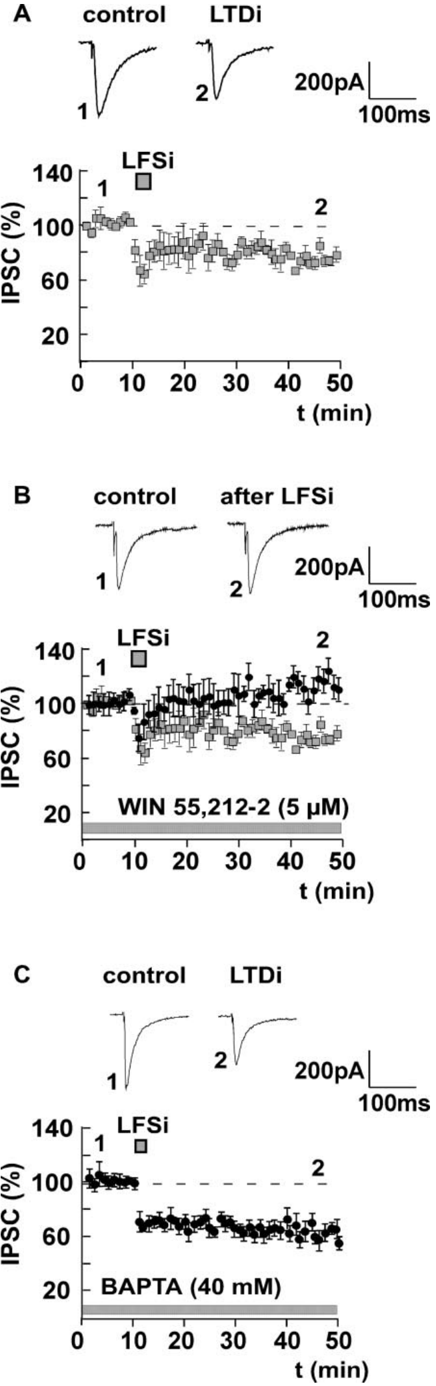
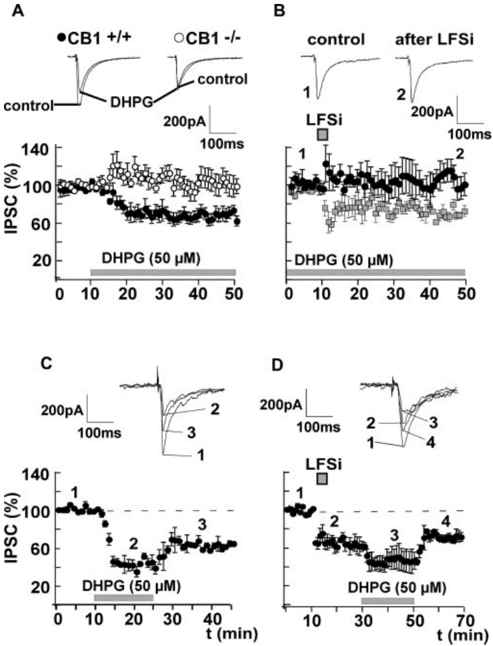
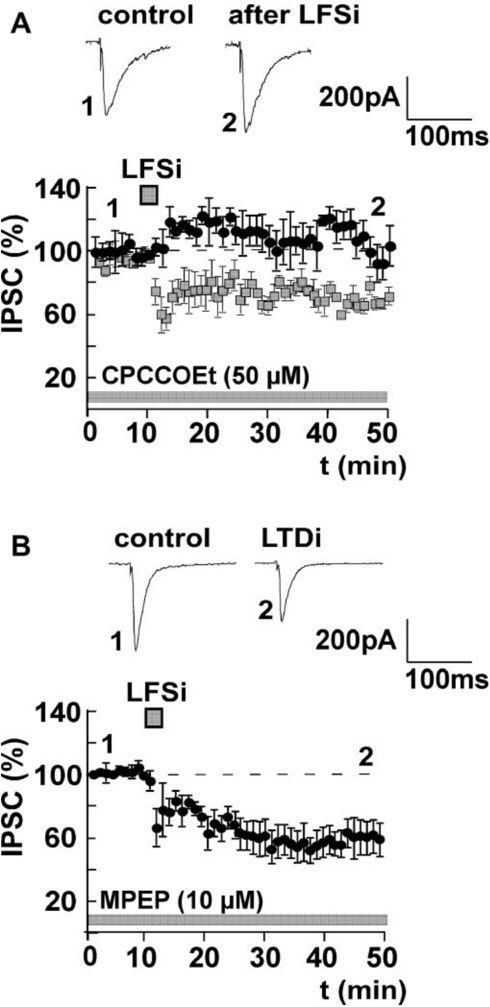
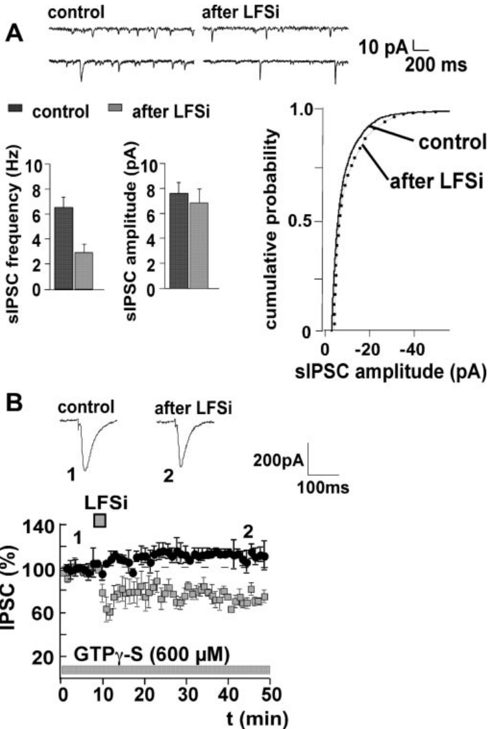
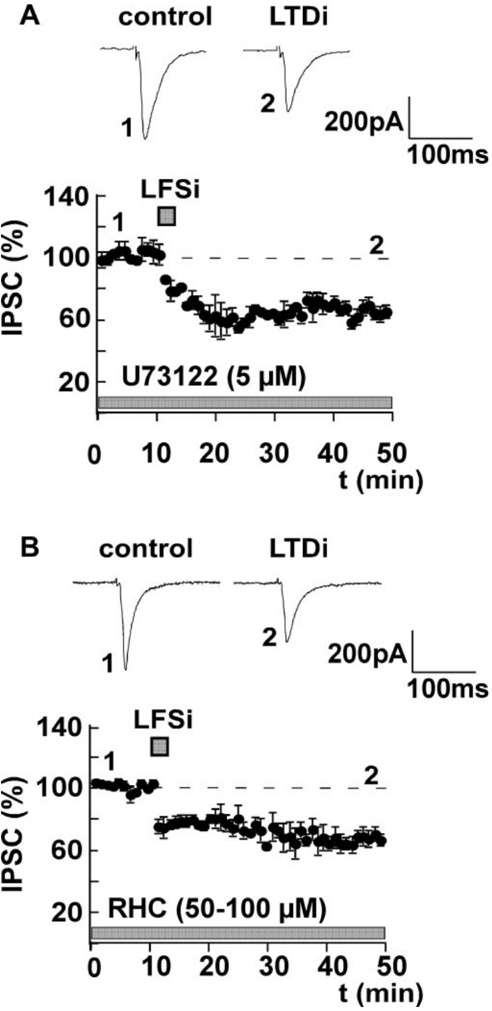
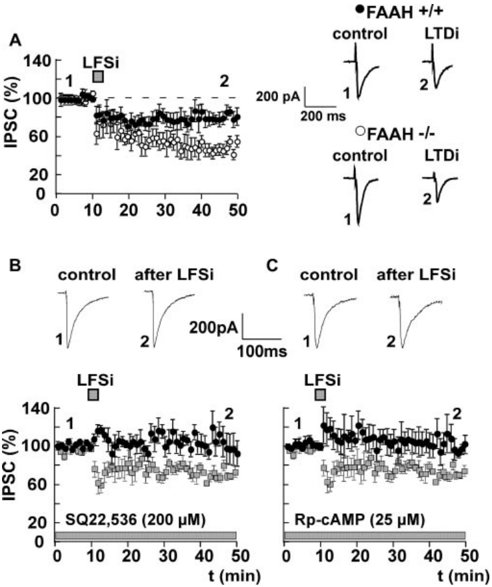
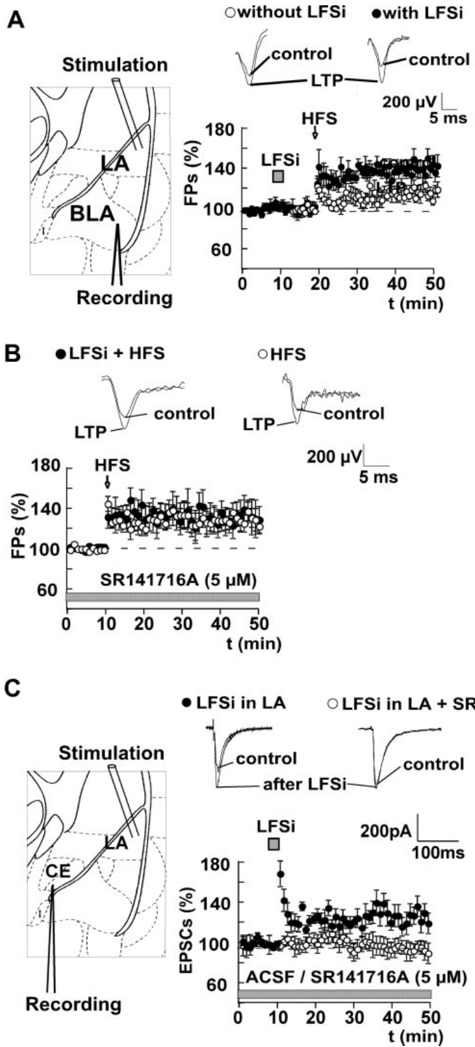
Endocannabinoids are crucial for the extinction of aversive memories, a process that considerably involves the amygdala. Here, we show that low-frequency stimulation of afferents in the lateral amygdala with 100 pulses at 1 Hz releases endocannabinoids postsynaptically from neurons of the basolateral amygdala of mice in vitro and thereby induces a long-term depression of inhibitory GABAergic synaptic transmission (LTDi) via a presynaptic mechanism. Lowering inhibitory synaptic transmission significantly increases the amplitude of excitatory synaptic currents in principal neurons of the central nucleus, which is the main output site of the amygdala. LTDi involves a selective mGluR1 (metabotropic glutamate receptor 1)-mediated calcium-independent mechanism and the activation of the adenylyl cyclase-protein kinase A pathway. LTDi is abolished by the cannabinoid type 1 (CB1) receptor antagonist SR141716A and cannot be evoked in CB1 receptor-deficient animals. LTDi is significantly enhanced in mice lacking the anandamide-degrading enzyme fatty acid amide hydrolase. The present findings show for the first time that mGluR activation induces a retrograde endocannabinoid signaling via activation of the adenylyl cyclase-protein kinase A pathway and the release of anandamide. Furthermore, the results indicate that anandamide decreases the activity of inhibitory interneurons in the amygdala. This disinhibition increases the activity of common output neurons and could provide a prerequisite for extinction by formation of new memory.
Overview
The claims and statistics of this paper haven’t been checked yet.
Run the check — free, no account needed. It reads the open-access text and checks the sources it cites.
Integrity signals
Registry
Cites
Statistics
Figures
Verification
Claims the paper makes
The claims and statistics of this paper haven’t been checked yet.
Run the check — free, no account needed. It reads the open-access text and checks the sources it cites.
Claims other papers make about this one
Each is checked against this paper’s own text: does it say what the citing paper says it does?
In the citing paper
“Additionally, inhibition of FAAH facilitates long-term fear extinction and rescues deficient fear extinction in rodent models by enhancing AEA–CB1 (cannabinoid type 1) receptor signaling and synaptic plasticity in the BLA.”
From Amygdala FAAH and anandamide: mediating protection and recovery from stress (2013) · cites this paper as [51]
In the citing paper
“By contrast, CB1R signaling generated by increased AEA can also produce long-term depression of inhibitory transmission in the BLA, a change in synaptic plasticity which can serve to promote excitability [50,51].”
From Amygdala FAAH and anandamide: mediating protection and recovery from stress (2013) · cites this paper as [51]
In the citing paper
“One notable finding is that a CB1R-dependent form of synaptic plasticity in BLA [51,86], long-term depression of inhibitory GABAergic transmission (LTDi), is enhanced by FAAH KO [51] and by the FAAH inhibitor AM3506 at doses that promote extinction [50].”
From Amygdala FAAH and anandamide: mediating protection and recovery from stress (2013) · cites this paper as [51]
In the citing paper
“This suggests a scheme in which AEA released during extinction relieves a tonic inhibitory brake on BLA output neurons [50,51,86] necessary for the encoding of extinction memories [102] (Figure 2).”
From Amygdala FAAH and anandamide: mediating protection and recovery from stress (2013) · cites this paper as [51]
Self-check
Percentages, sums and reported differences re-computed from the paper’s own numbers.
The self-check needs the paper’s full text.
Citations
Cites
LeDoux, J. E. (2000) · Annual Review of Neuroscience · doi:10.1146/annurev.neuro.23.1.155 · Cited by 8,444
The molecular logic of endocannabinoid signalling
Piomelli, D. (2003) · Nature Reviews Neuroscience · doi:10.1038/nrn1247 · Cited by 1,957
Neurons in medial prefrontal cortex signal memory for fear extinction
Milad, M. R., & Quirk, G. J. (2002) · Nature · doi:10.1038/nature01138 · Cited by 1,836
The endogenous cannabinoid system controls extinction of aversive memories
Marsicano, G., Wotjak, C. T., Azad, S. C., Bisogno, T., Rammes, G., Cascio, M. G., Hermann, H., Tang, J., Hofmann, C., Zieglgänsberger, W., et al. (2002) · Nature · doi:10.1038/nature00839 · Cited by 1,728
Self-citationRole of Endogenous Cannabinoids in Synaptic Signaling
Freund, T. F., Katona, I., & Piomelli, D. (2003) · Physiological Reviews · doi:10.1152/physrev.00004.2003 · Cited by 1,616
Endogenous cannabinoids mediate retrograde signalling at hippocampal synapses
Wilson, R. I., & Nicoll, R. A. (2001) · Nature · doi:10.1038/35069076 · Cited by 1,607
Formation and inactivation of endogenous cannabinoid anandamide in central neurons
Marzo, V. D., Fontana, A., Cadas, H., Schinelli, S., Cimino, G., Schwartz, J.-C., & Piomelli, D. (1994) · Nature · doi:10.1038/372686a0 · Cited by 1,585
A second endogenous cannabinoid that modulates long-term potentiation
Stella, N., Schweitzer, P., & Piomelli, D. (1997) · Nature · doi:10.1038/42015 · Cited by 1,496
Cravatt, B. F., Demarest, K., Patricelli, M. P., Bracey, M. H., Giang, D. K., Martin, B. R., & Lichtman, A. H. (2001) · Proceedings of the National Academy of Sciences · doi:10.1073/pnas.161191698 · Cited by 1,310
Endocannabinoid Signaling in the Brain
Wilson, R. I., & Nicoll, R. A. (2002) · Science · doi:10.1126/science.1063545 · Cited by 1,280
Cited by
Sorted by citations
Items 101–200 of 263
Zhu, P., & Lovinger, D. M. (2007) · Journal of Neurophysiology · doi:10.1152/jn.01228.2006 · Cited by 69
“Activation of mGluR5 is needed for DSI up-regulation, and this receptor has been suggested to enhance endocannabinoid production in CA1 pyramidal neurons (Chevaleyre and Castillo 2004), but not in amygdala (Azad et al. 2004).”
BackgroundAzad, S. C., Kurz, J., Marsicano, G., Lutz, B., Zieglgänsberger, W., & Rammes, G. (2008) · Learning & Memory · doi:10.1101/lm.741908 · Cited by 68
“In a previous investigation, we found that LFS of afferents in the LA with 100 pulses at 1 Hz activates the endogenous cannabinoid system and, thereby, induces a LTD of inhibitory GABAergic synaptic transmission (LTDi) in the BLA (Marsicano et al. 2002; Azad et al. 2004).”
BackgroundShin, R.-M., Tully, K., Li, Y., Cho, J.-H., Higuchi, M., Suhara, T., & Bolshakov, V. Y. (2010) · Proceedings of the National Academy of Sciences · doi:10.1073/pnas.1009803107 · Cited by 67
Kuhnert, S., Meyer, C., & Koch, M. (2013) · Behavioural Brain Research · doi:10.1016/j.bbr.2013.05.002 · Cited by 67
Lange, M. D., Daldrup, T., Remmers, F., Szkudlarek, H. J., Lesting, J., Guggenhuber, S., Ruehle, S., Jüngling, K., Seidenbecher, T., Lutz, B., et al. (2016) · Molecular Psychiatry · doi:10.1038/mp.2016.156 · Cited by 66
Regulation of excitability and plasticity by endocannabinoids and PKA in developing hippocampus
Yasuda, H., Huang, Y. Y., & Tsumoto, T. (2008) · Proceedings of the National Academy of Sciences · doi:10.1073/pnas.0708349105 · Cited by 68
“We also tested whether PKA at postsynaptic sites is involved in heterosynaptic LTD, because activation of PKA at postsynaptic sites is involved in the release of anandamide in the amygdala (11).”
BackgroundCannabinoid Modulation of the Stressed Hippocampus
Scarante, F. F., Vila-Verde, C., Lopes, V. D., Ferreira‐Junior, N. C., Guimarães, F. S., & Campos, A. C. (2017) · Frontiers in Molecular Neuroscience · doi:10.3389/fnmol.2017.00411 · Cited by 66
“…(Mackie et al., 1995; Kreitzer et al., 2001). eCBs are involved in short- and long-term plasticity in several brain structures such as the amygdala (Azad et al., 2004), nucleus accumbens (Robbe et al., 2002), striatum (Gerdeman et al., 2002) and hippocampus (Ohno-Shosaku et al., 2007; Zhu and…”
BackgroundMechanisms of endocannabinoid control of synaptic plasticity
Winters, B. L., & Vaughan, C. W. (2021) · Neuropharmacology · doi:10.1016/j.neuropharm.2021.108736 · Cited by 70
Ramikie, T. S., & Patel, S. (2012) · Neuroscience · doi:10.1016/j.neuroscience.2011.08.037 · Cited by 62
“In addition, LFS reduced sIPSC frequency but not amplitude, further suggesting a presynaptic mechanism of action (Azad et al., 2004).”
InfluentialThe Many Forms and Functions of Long Term Plasticity at GABAergic Synapses
Maffei, A. (2011) · Neural Plasticity · doi:10.1155/2011/254724 · Cited by 67
“In the VTA, I-LTD is expressed presynaptically and involves a protein-kinase-A-(PKA) dependent modulation of GABA release [22, 30].”
BackgroundZhao, Y., Rubio, M. E., & Tzounopoulos, T. (2009) · Journal of Neurophysiology · doi:10.1152/jn.00047.2009 · Cited by 61
Morena, M., Aukema, R. J., Leitl, K. D., Rashid, A. J., Vecchiarelli, H. A., Josselyn, S. A., & Hill, M. N. (2018) · Journal of Neuroscience · doi:10.1523/jneurosci.2251-18.2018 · Cited by 68
“…on conditioned fear expression and fear memory retrieval Because AEA signaling at CB1R in the BLA modulates the release of GABA and glutamate (Azad et al., 2004; Shin et al., 2010; Gunduz-Cinar et al., 2016), to rule out the possibility that AEA depletion in the condition of FAAH…”
BackgroundMethodInfluentialCannabinoid use and self-injurious behaviours: A systematic review and meta-analysis
Escelsior, A., Murri, M. B., Corsini, G. P., Serafini, G., Aguglia, A., Zampogna, D., Cattedra, S., Nebbia, J., Trabucco, A., Prestía, D., et al. (2020) · Journal of Affective Disorders · doi:10.1016/j.jad.2020.09.020 · Cited by 64
Cannabidiol and brain function: current knowledge and future perspectives
Schouten, M., Dalle, S., Mantini, D., & Koppo, K. (2024) · Frontiers in Pharmacology · doi:10.3389/fphar.2023.1328885 · Cited by 64
“This provides evidence for the functional role of endocannabinoid release-based synaptic plasticity (Marsicano et al., 2002; Azad et al., 2004).”
BackgroundThe cyclic AMP phenotype of fragile X and autism
Kelley, D. J., Bhattacharyya, A., Lahvis, G. P., YIN, J., Malter, J. S., & Davidson, R. J. (2008) · Neuroscience & Biobehavioral Reviews · doi:10.1016/j.neubiorev.2008.06.005 · Cited by 60
Bowers, M. E., & Ressler, K. J. (2014) · Neuropsychopharmacology · doi:10.1038/npp.2014.225 · Cited by 54
“…has focused on GABA and GABAergic plasticity as the mechanism by which Cnr1 mediates fear inhibition (Katona et al, 2001; Marsicano et al, 2002; Azad et al, 2003, 2004; Kamprath et al, 2011; Lin et al, 2011; Uriguen et al, 2011), we hypothesize that the anatomical colocalization of CCK and…”
Silva, L., Zhao, N., Popp, S., & Dow-Edwards, D. (2011) · Neurotoxicology and Teratology · doi:10.1016/j.ntt.2011.10.006 · Cited by 47
“N IH -PA Author M anuscript N IH -PA Author M anuscript N IH -PA Author M anuscript amygdala (Marsicano et al., 2002); (Azad et al., 2004); (Chevaleyre et al., 2007) and hippocampus (Chevaleyre et al., 2007); (Jutras-Aswad et al., 2009); (Lin et al., 2009); (Belue et al., 1994).”
BackgroundThe Endocannabinoid System: Current Pharmacological Research and Therapeutic Possibilities
Jonsson, K., Holt, S., & Fowler, C. J. (2006) · Basic & Clinical Pharmacology & Toxicology · doi:10.1111/j.1742-7843.2006.pto_376.x · Cited by 50
Almada, R. C., Roncon, C. M., Elias-Filho, D. H., & Coimbra, N. C. (2015) · Neuroscience · doi:10.1016/j.neuroscience.2015.06.048 · Cited by 50
Chegini, H., Nasehi, M., & Zarrindast, M. (2013) · Behavioural Brain Research · doi:10.1016/j.bbr.2013.12.007 · Cited by 52
Ratano, P., Everitt, B. J., & Milton, A. L. (2014) · Neuropsychopharmacology · doi:10.1038/npp.2014.103 · Cited by 53
“As endocannabinoids are hypothesized to regulate GABAergic signaling within the BLA (Azad et al , 2004), particularly at the GABA A -subtype of receptor (Katona et al , 2001), we also investigated whether antagonism at GABAergic receptors could rescue any memory deficit induced by CB1R blockade.”
Prefrontal endocannabinoids, stress controllability and resilience: A hypothesis
Worley, N. B., Hill, M. N., & Christianson, J. P. (2017) · Progress in Neuro-Psychopharmacology and Biological Psychiatry · doi:10.1016/j.pnpbp.2017.04.004 · Cited by 51
“Over time, rising levels of AEA will lead to further disinhibition, possibly through eCB mediated LTD of inhibition (Azad et al., 2004).”
Ruhl, T., Zeymer, M., & von der Emde, G. (2016) · Pharmacology Biochemistry and Behavior · doi:10.1016/j.pbb.2016.12.005 · Cited by 48
The role of the endocannabinoid system in eating disorders
Marco, E. M., Romero‐Zerbo, S., Viveros, M., & Bermúdez‐Silva, F. J. (2012) · Behavioural Pharmacology · doi:10.1097/fbp.0b013e328356c3c9 · Cited by 46
Molecular Mechanisms of Threat Learning in the Lateral Nucleus of the Amygdala
Sears, R. M., Schiff, H. C., & LeDoux, J. E. (2014) · Progress in molecular biology and translational science · doi:10.1016/b978-0-12-420170-5.00010-6 · Cited by 44
Rueda‐Orozco, P. E., Montes-Rodríguez, C. J., Gómez, E. S., Méndez‐Díaz, M., & Prospero-Garcia, O. E. (2008) · Neuropharmacology · doi:10.1016/j.neuropharm.2008.04.013 · Cited by 46
“, 2006), amygdala (Katona et al., 2001; Marsicano et al., 2002; Azad et al., 2005; Zhu and Lovinger, 2005), and striatal activity (Gerdeman et al.”
BackgroundKodas, E., Cohen, C., Louis, C., & Griebel, G. (2007) · Psychopharmacology · doi:10.1007/s00213-007-0813-0 · Cited by 45
“Recently, it was demonstrated that endocannabinoids, via activation of CB1 receptors, reduced the tonic GABAergic inhibitory control over excitatory glutamatergic neurons in the BLA (Katona et al. 2001; Azad et al. 2004).”
Viveros, M., Marco, E. M., Llorente, R., & Lamota, L. (2007) · Behavioural Pharmacology · doi:10.1097/fbp.0b013e3282d28fb4 · Cited by 44
“by rimonabant, abolished in CB1 – / – animals and significantly enhanced in mice lacking FAAH, the AEAdegrading enzyme (Azad et al., 2004).”
BackgroundInfluentialExcitatory Amino Acid Neurotransmission
Zieglgänsberger, W., Parsons, C. G., & Danysz, W. (2005) · Springer eBooks · doi:10.1007/3-540-28082-0_10 · Cited by 47
“Two prominent examples are long-term potentiation (LTP) and long-term depression (LTD), whose mechanisms have been the subject of considerable scrutiny over the past few decades.”
InfluentialColangeli, R., Morena, M., Pittman, Q. J., Hill, M. N., & Teskey, G. C. (2020) · Journal of Neuroscience · doi:10.1523/jneurosci.0068-20.2020 · Cited by 44
“LA-BA pathway has been shown to be an important site of plasticity (Rammes et al., 2000; Azad et al., 2004), particularly in modulating fear memory consolidation (Anglada-Figueroa and Quirk, 2005; Amano et al., 2011).”
BackgroundInfluentialKaufmann, I., Hauer, D., Huge, V., Vogeser, M., Campolongo, P., Choukèr, A., Thiel, M., & Schelling, G. (2009) · European Surgical Research · doi:10.1159/000235870 · Cited by 43
Omiya, Y., Uchigashima, M., Konno, K., Yamasaki, M., Miyazaki, T., Yoshida, T., Kusumi, I., & Watanabe, M. (2015) · Journal of Neuroscience · doi:10.1523/jneurosci.4681-14.2015 · Cited by 42
“, 2011), and that inhibitory synapses on BLA pyramidal cells undergo CB1-mediated short-term depolarization-induced suppression of inhibition (DSI) and long-term depression (Katona et al., 2001; Marsicano et al., 2002; Azad et al., 2004; Zhu and Lovinger, 2005; Yoshida et al., 2011).”
BackgroundAkirav, I. (2006) · Neuropsychopharmacology · doi:10.1038/sj.npp.1301050 · Cited by 41
“Recently, Azad et al (2004) have shown that cannabinoid type 1 receptors reduce GABAergic synaptic transmission in the amygdala and by that facilitate extinction of aversive memories.”
BackgroundJohn, C. S., & Currie, P. J. (2012) · Behavioural Brain Research · doi:10.1016/j.bbr.2012.05.025 · Cited by 43
Capogna, M., Castillo, P. E., & Maffei, A. (2020) · European Journal of Neuroscience · doi:10.1111/ejn.14907 · Cited by 45
Lights on Endocannabinoid-Mediated Synaptic Potentiation
Piette, C., Cui, Y., Gervasi, N., & Venance, L. (2020) · Frontiers in Molecular Neuroscience · doi:10.3389/fnmol.2020.00132 · Cited by 48
Zabik, N. L., Iadipaolo, A. S., Marusak, H. A., Peters, C., Burghardt, K. J., & Rabinak, C. A. (2021) · Journal of Neuroscience Research · doi:10.1002/jnr.24860 · Cited by 44
Zhao, L., Yeh, M. L., & Levine, E. S. (2015) · eNeuro · doi:10.1523/eneuro.0029-14.2015 · Cited by 40
Peñasco, S., Rico‐Barrio, I., Puente, N., Gómez‐Urquijo, S., Fontaine, C. J., Huguet, J. E., Achicallende, S., Ramos, A., Reguero, L., Elezgarai, I., et al. (2019) · Neuropharmacology · doi:10.1016/j.neuropharm.2019.04.020 · Cited by 39
The endocannabinoid system in the amygdala and modulation of fear
Gunduz‐Cinar, O. (2020) · Progress in Neuro-Psychopharmacology and Biological Psychiatry · doi:10.1016/j.pnpbp.2020.110116 · Cited by 40
“inhibition of adenylyl cyclase activity and downregulation of cyclic AMP/protein kinase A signaling (Azad et al., 2004; Howlett et al., 1986), 2.”
Scheyer, A. F., Yasmin, F., Naskar, S., & Patel, S. (2022) · Neuropsychopharmacology · doi:10.1038/s41386-022-01438-7 · Cited by 37
“CB1Rs depress both glutamatergic and GABAergic transmission in the basolateral amygdala (BLA) and central amygdala [182–184].”
MethodInfluentialSynaptic changes induced by cannabinoid drugs and cannabis use disorder
Augustin, S. M., & Lovinger, D. M. (2022) · Neurobiology of Disease · doi:10.1016/j.nbd.2022.105670 · Cited by 38
“Similar mechanisms occur in the basolateral amygdala, once again likely involving CB1 receptor activation on GABAergic basket cells (Azad et al., 2004).”
Cellular Signal Mechanisms of Reward-Related Plasticity in the Hippocampus
Isokawa, M. (2012) · Neural Plasticity · doi:10.1155/2012/945373 · Cited by 35
“Indeed, in the amygdala, activation of adenylyl cyclase, cAMP, and PKA induced a release of anandamide [102].”
BackgroundCannabinoids: Revealing their complexity and role in central networks of fear and anxiety
Murkar, A., Koninck, J. D., & Merali, Z. (2021) · Neuroscience & Biobehavioral Reviews · doi:10.1016/j.neubiorev.2021.09.002 · Cited by 35
Morphological and physiological properties of CCK/CB1R-expressing interneurons in the basal amygdala
Rovira-Esteban, L., Péterfi, Z., Vikór, A., Máté, Z., Szabó, G., & Hájos, N. (2017) · Brain Structure and Function · doi:10.1007/s00429-017-1417-z · Cited by 34
“2001), receptors that profoundly control amygdala functions (Marsicano et al. 2002; Azad et al. 2004).”
BackgroundGrundlagenforschung trifft Manualmedizin
von Heymann, W., Böhni, U. W., & Locher, H. A. (2005) · Manuelle Medizin · doi:10.1007/s00337-005-0400-6 · Cited by 33
Ahmad, T., Sun, N., Lyons, D. C. A., & Laviolette, S. R. (2016) · Addiction Biology · doi:10.1111/adb.12406 · Cited by 32
“Modulation of intra-BLA CB1R transmission strongly modulates rewarding or aversive associative memory formation and associated plasticity mechanisms (McGaugh 2000; Azad et al. 2004; Tan et al. 2010).”
BackgroundRovira-Esteban, L., Gunduz‐Cinar, O., Bukalo, O., Limoges, A., Brockway, E. T., Müller, K., Fenno, L. E., Kim, Y. S., Ramakrishnan, C., Andrási, T., et al. (2019) · eNeuro · doi:10.1523/eneuro.0220-19.2019 · Cited by 34
“Taken together, this is strong evidence that a significant portion of the cells targeted by INTRSECT strategy are CCK-expressing basket cells, given prior studies have shown that CCK-expressing basket cells express CB1R on their boutons that, when activated, markedly suppress inhibitory transmission (Katona et al., 20…”
BackgroundResultInhibitory Plasticity: From Molecules to Computation and Beyond
Gandolfi, D., Bigiani, A., Porro, C. A., & Mapelli, J. (2020) · International Journal of Molecular Sciences · doi:10.3390/ijms21051805 · Cited by 36
“Interestingly, this form of plasticity does not necessarily involve calcium influx in the postsynaptic terminals, as demonstrated for the mGluR-dependent inhibitory LTD (i-LTD) in the amygdala [72].”
BackgroundCannabinoids for fibromyalgia pain: a critical review of recent studies (2015–2019)
Cameron, E. C., & Hemingway, S. L. (2020) · Journal of Cannabis Research · doi:10.1186/s42238-020-00024-2 · Cited by 36
“Studies have indicated that cannabinoids play a role in the following physiological processes in human: neuronal plasticity (Azad 2004; Viveros et al. 2007), pain (Guindon and Hohmann 2009; Khasabova et al. 2008), anxiety (Gray et al. 2015), inflammation (Guindon and Hohmann 2009; Nakajima et al.…”
BackgroundFerrara, N. C., Trask, S., & Rosenkranz, J. A. (2021) · Neuroscience & Biobehavioral Reviews · doi:10.1016/j.neubiorev.2021.01.021 · Cited by 33
Centonze, D., Rossi, S., Prosperetti, C., Gasperi, V., Chiara, V. D., Bari, M., Tscherter, A., Febbraro, F., Bernardi, G., & Maccarrone, M. (2007) · Molecular and Cellular Neuroscience · doi:10.1016/j.mcn.2007.03.005 · Cited by 32
Endocannabinoid-serotonin systems interaction in health and disease
Colangeli, R., Teskey, G. C., & Giovanni, G. D. (2021) · Progress in brain research · doi:10.1016/bs.pbr.2021.01.003 · Cited by 31
Melis, M., Greco, B., & Tonini, R. (2014) · European Journal of Neuroscience · doi:10.1111/ejn.12501 · Cited by 31
“…eCB-LTD of GABAergic (Marsicano et al., 2002) and glutamatergic (Huang et al., 2003; Chevaleyre et al., 2007; Shin et al., 2010) afferents. eCB release appears to be Ca2+-independent, and occurs downstream from mGluR1 activation, suggesting a role for AEA in this phenomenon (Azad et al., 2004).”
BackgroundVarodayan, F. P., Bajo, M., Soni, N., Luu, G., Madamba, S. G., Schweitzer, P., & Roberto, M. (2016) · Addiction Biology · doi:10.1111/adb.12369 · Cited by 33
“Previous work has demonstrated that CB1 activity decreases BLA GABAergic transmission (Katona et al. 2001; Marsicano et al. 2002; Azad et al. 2004; Zhu & Lovinger 2005), which can affect emotional processing (Hill et al. 2010; Tan et al. 2014).”
BackgroundInfluentialInput-specific long-term potentiation in the rat lateral amygdala of horizontal slices
Drephal, C., Schubert, M., & ALBRECHT, D. (2006) · Neurobiology of Learning and Memory · doi:10.1016/j.nlm.2005.11.004 · Cited by 31
“Although the intrinsic connectivity within the amygdala is poorly understood, it has been shown that the stimulation of LA eVectively induces LTP in the basolateral amygdala in coronal slices (Azad et al., 2004; DeBock et al., 2003).”
BackgroundBrain is modulated by neuronal plasticity during postnatal development
Kourosh‐Arami, M., Hosseini, N., & Komaki, A. (2021) · The Journal of Physiological Sciences · doi:10.1186/s12576-021-00819-9 · Cited by 36
“However, the presynaptic expression of low-frequency LTDi in the VTA occurs by GABA release in response to protein kinase A (PKA)-dependent modulations [60, 70].”
BackgroundKang-Park, M.-H., Wilson, W. A., Kuhn, C. M., Moore, S. D., & Swartzwelder, H. S. (2007) · Journal of Neurophysiology · doi:10.1152/jn.00091.2007 · Cited by 30
“Endocannabinoids are also responsible for the induction of long-term synaptic depression of GABAergic and glutamatergic transmission (Azad et al. 2004; Chevaleyre and Castillo 2003; Gerdeman et al. 2002; Hoffman et al. 2003; Marsicano et al. 2002; Robbe et al. 2002; Sjostrom et al. 2003; Soler-…”
The neuroendocrine impact of acute stress on synaptic plasticity
dos-Santos, R. C., Sweeten, B. L. W., Stelly, C. E., & Tasker, J. G. (2023) · Endocrinology · doi:10.1210/endocr/bqad149 · Cited by 29
Kupferschmidt, D., Klas, P., & Erb, S. M. (2012) · British Journal of Pharmacology · doi:10.1111/j.1476-5381.2012.01983.x · Cited by 29
“…(CeA), BNST, NAc and PFC] (Dong et al., 2001; Sah et al., 2003), are activated by CRF (Bittencourt and Sawchenko, 2000; Ugolini et al., 2008; Giesbrecht et al., 2010) and indirectly regulated by local CB1 receptor transmission (Katona et al., 2001; Azad et al., 2004; Zhu and Lovinger, 2005).”
BackgroundSugaya, Y., & Kano, M. (2018) · Cellular and Molecular Life Sciences · doi:10.1007/s00018-018-2834-8 · Cited by 28
Endocannabinoid-Mediated Control of Neural Circuit Excitability and Epileptic Seizures
Sugaya, Y., & Kano, M. (2022) · Frontiers in Neural Circuits · doi:10.3389/fncir.2021.781113 · Cited by 31
Roche, M., Johnston, P., Mhuircheartaigh, O. N., Olango, W. M., Mackie, K., & Finn, D. P. (2009) · European Journal of Pain · doi:10.1016/j.ejpain.2009.08.009 · Cited by 29
“GABAergic transmission, disinhibiting principle neurons innervating the central nucleus of the amygdala (CeA) thereby modulating its output (Katona et al., 2001; Azad et al., 2004).”
BackgroundPigeat, R., Chausson, P., Dreyfus, F. M., Leresche, N., & Lambert, R. C. (2015) · Journal of Neuroscience · doi:10.1523/jneurosci.2748-14.2015 · Cited by 34
“Involvement of postsynaptic mGluRs in GABAergic synaptic depression has been previously shown in a number of structures (Chevaleyre and Castillo, 2003; Azad et al., 2004; Henneberger et al., 2007; Heifets et al., 2008; Pan et al., 2008; Adermark and Lovinger, 2009; Jiang et al., 2010).”
BackgroundSugiyama, Y., Kawaguchi, S., & Hirano, T. (2008) · European Journal of Neuroscience · doi:10.1111/j.1460-9568.2008.06063.x · Cited by 29
“It was reported that mGluR1 induces inhibitory synaptic plasticity through AC and the PKA pathway in the amygdala (Azad et al., 2004).”
BackgroundEndocannabinoid signaling and memory dynamics: A synaptic perspective
Drumond, A., Madeira, N., & Fonseca, R. (2016) · Neurobiology of Learning and Memory · doi:10.1016/j.nlm.2016.07.031 · Cited by 29
Endocannabinoid Signaling in Neural Plasticity
Alger, B. E. (2009) · Current topics in behavioral neurosciences · doi:10.1007/978-3-540-88955-7_6 · Cited by 28
Malcher‐Lopes, R. (2014) · Revista da Biologia · doi:10.7594/revbio.13.01.07 · Cited by 29
Harris, C., Weiss, G. L., Di, S., & Tasker, J. G. (2019) · Neurobiology of Stress · doi:10.1016/j.ynstr.2019.100158 · Cited by 26
“…in the milk ejection reflex (Rossoni et al., 2008), in fluid and electrolyte homeostasis (Kuzmiski et al., 2009), and in the negative feedback regulation of the hypothalamic pituitary adrenal (HPA) axis (Barna et al., 2004; Cota, 2007; Di et al., 2003; Evanson et al., 2010; Hill et al., 2010).”
Rice, L. J., Cannon, L., Dadlani, N., Cheung, M. M. Y., Einfeld, S., Efron, D., Dossetor, D. R., & Elliott, E. J. (2023) · European Child & Adolescent Psychiatry · doi:10.1007/s00787-023-02169-w · Cited by 33
“Anandamide decreases the activity of inhibitory interneurons in the amygdala, which increases the activity of output neurons, which play a role in memory extinction [84].”
BackgroundGenetic Manipulation of the Endocannabinoid System
Zimmer, A. (2015) · Handbook of experimental pharmacology · doi:10.1007/978-3-319-20825-1_5 · Cited by 26
The endocannabinoid system and associative learning and memory in zebrafish
Ruhl, T., Moesbauer, K., Oellers, N., & von der Emde, G. (2015) · Behavioural Brain Research · doi:10.1016/j.bbr.2015.04.046 · Cited by 26
Zuo, Y., Iemolo, A., Montilla-Perez, P., Li, H.-R., Yang, X., & Telese, F. (2022) · Neuropsychopharmacology · doi:10.1038/s41386-022-01413-2 · Cited by 25
“Consistent with these observations, animal studies also reported perturbation of synaptic transmission in the Amy and NAc following administration of exogenous cannabinoids [64, 65], which is in line with our observation that eCB genes (Cnr1 and Dagla) are upregulated in the female Amy.”
ResultAsymmetrical Synaptic Cooperation between Cortical and Thalamic Inputs to the Amygdale
Fonseca, R. (2013) · Neuropsychopharmacology · doi:10.1038/npp.2013.178 · Cited by 22
Effects of single swim stress on changes in TRPV1-mediated plasticity in the amygdala
Kulisch, C., & Albrecht, D. (2012) · Behavioural Brain Research · doi:10.1016/j.bbr.2012.09.003 · Cited by 24
The Amygdala and the Neural Pathways of Fear
Dbiec, J., & LeDoux, J. E. (2009) · Humana Press eBooks · doi:10.1007/978-1-60327-329-9_2 · Cited by 27
Neurobiologia da Cannabis: do sistema endocanabinoide aos transtornos por uso de Cannabis
Costa, J., Maia, L. O., Orlandi-Mattos, P., Villares, J., & Esteves, M. A. F. (2011) · Jornal Brasileiro de Psiquiatria · doi:10.1590/s0047-20852011000200006 · Cited by 6
Chronic Pain and the Endocannabinoid System: Smart Lipids – A Novel Therapeutic Option?
Zieglgänsberger, W., Brenneisen, R., Berthele, A., Wotjak, C. T., Bandelow, B., Tölle, T. R., & Lutz, B. (2022) · Medical Cannabis and Cannabinoids · doi:10.1159/000522432 · Cited by 25
Gupta, S., Bharatha, A., Cohall, D., Rahman, S., Haque, M., & Majumder, M. A. A. (2024) · Cureus · doi:10.7759/cureus.55468 · Cited by 26
“This expedited eCB synthesis is evoked fleetingly through robust post-synaptic depolarization and the entry of Ca 2+ ions via voltage-gated Ca 2+ channels [73,74], triggered by synaptic activity [75-77] and G protein-coupled receptor stimulation linked to phospholipase C (PLC) signaling [73,78].”
Backgroundp21-activated kinase 1 restricts tonic endocannabinoid signaling in the hippocampus
Xia, S., Zhou, Z., Leung, C., Zhu, Y., Pan, X., Qi, J., Morena, M., Hill, M. N., Xie, W., & Jia, Z. (2016) · eLife · doi:10.7554/elife.14653 · Cited by 21
The Synaptic Interactions of Alcohol and the Endogenous Cannabinoid System
Wolfe, S. A. (2022) · Alcohol research · doi:10.35946/arcr.v42.1.03 · Cited by 22
How do stupendous cannabinoids modulate memory processing via affecting neurotransmitter systems?
Vaseghi, S., Nasehi, M., & Zarrindast, M. (2020) · Neuroscience & Biobehavioral Reviews · doi:10.1016/j.neubiorev.2020.10.018 · Cited by 21
Kim, H.-H., Park, J. M., Lee, S., & Ho, W. (2018) · Journal of Neuroscience · doi:10.1523/jneurosci.2935-17.2018 · Cited by 21
“, 2000) and the endocannabinoid (eCB)-mediated inhibition of presynaptic GABA release (Chevaleyre and Castillo, 2003; Azad et al., 2004; Jiang et al., 2010) were shown to be involved in the inhibition of GABAergic synapses (i-LTD) to mediate increased excitability associated with LTP in CA1 pyramidal neurons.”
BackgroundResultRole of lipids and lipid signaling in the development of cannabinoid tolerance
Martin, B. R. (2005) · Life Sciences · doi:10.1016/j.lfs.2005.05.005 · Cited by 21
Use of cannabinoids for the treatment of patients with post-traumatic stress disorder
Forsythe, M. L., & Boileau, A. J. (2021) · Journal of Basic and Clinical Physiology and Pharmacology · doi:10.1515/jbcpp-2020-0279 · Cited by 20
Cannabinoids in Health and Disease
Meccariello, R., & Chianese, R. (2016) · InTech eBooks · doi:10.5772/61595 · Cited by 22
CB1 and LPA1 Receptors Relationship in the Mouse Central Nervous System
Román, E. G. D. S., Manuel, I., Ledent, C. A., Chun, J. J. M., de Fonseca, F. R., Estivill‐Torrús, G., Santín, L. J., & Rodríguez‐Puertas, R. (2019) · Frontiers in Molecular Neuroscience · doi:10.3389/fnmol.2019.00223 · Cited by 20
“The CB1 receptor plays an important role in processes mediated by the amygdala, such as emotional responses (Azad et al., 2004; Laviolette and Grace, 2006; Roche et al., 2007; Tan et al., 2010).”
BackgroundSkelly, M. J., Chappell, A. M., Ariwodola, O. J., & Weiner, J. L. (2015) · Neurobiology of Learning and Memory · doi:10.1016/j.nlm.2015.11.006 · Cited by 22
“In support of this, plasticity at local inhibitory synapses has been implicated in the expression and extinction of learned fear (Azad et al., 2004; Marsicano et al., 2002; Szinyei, Narayanan, & Pape, 2007).”
BackgroundImpairment of Synaptic Plasticity by Cannabis, Δ9-THC, and Synthetic CannabinoidsPreprint
Hoffman, A. F., Hwang, E.-K., & Lupica, C. R. (2020) · Cold Spring Harbor Perspectives in Medicine · doi:10.1101/cshperspect.a039743 · Cited by 21
Caiati, M. D., Sivakumaran, S., Lanore, F., Mulle, C., Richard, É., Verrier, D., Marsicano, G., Miles, R., & Cherubini, E. (2012) · Scientific Reports · doi:10.1038/srep00285 · Cited by 16
2-AG-Mediated Control of GABAergic Signaling Is Impaired in a Model of Epilepsy
Colangeli, R., Morena, M., Werner, A. C., Thompson, R. J., van der Stelt, M., Pittman, Q. J., Hill, M. N., & Teskey, G. C. (2022) · Journal of Neuroscience · doi:10.1523/jneurosci.0541-22.2022 · Cited by 17
“All experiments were performed at room temperature (22– 25°C; Azad et al., 2004; Chevaleyre et al., 2007).”
InfluentialAnastasio, T. J. (2013) · Frontiers in Computational Neuroscience · doi:10.3389/fncom.2013.00074 · Cited by 15
“…CB1 in LA and BA is to cause LTD of the GABAergic synapses of interneurons onto projection neurons, because this LTD does not occur in CB1-deficient mice but it is enhanced in normal mice in which endocannabinoid degradation is blocked pharmacologically (Marsicano et al., 2002; Azad et al., 2004).”
BackgroundInfluentialHaghighi, K. K., Oryan, S., Nasehi, M., & Zarrindast, M. (2015) · EXCLI journal · doi:10.17179/excli2015-201 · Cited by 14
“Moreover, the contribution of amygdale endocannabinoids in the extinction of aversive memories has been also proposed (Azad et al., 2004).”
BackgroundInteractive effects of AM251 and baclofen on synaptic plasticity in the rat dentate gyrus
Nazari, M., Komaki, A., Salehi, I., Sarihi, A., Shahidi, ., Komaki, H., & Ganji, A. (2016) · Brain Research · doi:10.1016/j.brainres.2016.09.029 · Cited by 14
Huda, R., Chang, Z., Do, J., McCrimmon, D. R., & Martina, M. (2017) · The Journal of Physiology · doi:10.1113/jp275127 · Cited by 15
“through metabotropic glutamate receptors (mGluRs) leads to endocannabinoid synthesis independently of increases in intracellular calcium (Maejima et al. 2001; Varma et al. 2001; Chevaleyre & Castillo, 2003; Azad et al. 2004; Hashimotodani et al. 2007; Kano et al. 2009).”
BackgroundCannabinoids: Role in Neurological Diseases and Psychiatric Disorders
Kumar, U. (2024) · International Journal of Molecular Sciences · doi:10.3390/ijms26010152 · Cited by 15
Best, A. R., & Regehr, W. G. (2010) · Neuron · doi:10.1016/j.neuron.2010.01.030 · Cited by 13
“This LTD is thought to be dependent on release of anandamide following activation of protein kinase A (Azad et al., 2004).”
BackgroundAmygdala depotentiation ex vivo requires mitogen-activated protein kinases and protein synthesis
Kim, J., Park, S., Lee, S., & Choi, S. (2009) · Neuroreport · doi:10.1097/wnr.0b013e328329412d · Cited by 11
Role of Cannabinoid Receptors in Anxiety Disorders
Degroot, A. (2007) · Springer eBooks · doi:10.1007/978-0-387-74349-3_24 · Cited by 12
“Endocannabinoids are crucial for the extinction of aversive memories and this process is likely mediated through the amygdala ( Azad et al., 2004 ).”
BackgroundPhysiology of the Amygdala: Implications for PTSD
Rainnie, D. G., & Ressler, K. J. (2009) · Humana Press eBooks · doi:10.1007/978-1-60327-329-9_3 · Cited by 14
Metadata
- Authors
- Azad, S. C., Monory, K., Marsicano, G., Cravatt, B. F., Lutz, B., Zieglgänsberger, W., & Rammes, G.
- Affiliations
- Max Planck Institute of Psychiatry (DE)
- Scripps Research Institute (US)
- TUM Klinikum (DE)
- Corresponding author
- Azad, Shahnaz C.
- Venue
- The Journal of Neuroscience
- Publisher
- Society for Neuroscience
- Published
- 2004-11-03
- Volume
- 24
- Issue
- 44
- Pages
- 9953-9961
- ISSN
- 0270-6474 (ISSN-L)
- 1529-2401
- PMC
- PMC6730232
- OpenAlex
- W2158593571
- Cited by
- 263
- References
- 71
- Citations by year
- 2026: 1 · 2025: 3 · 2024: 5 · 2023: 5 · 2022: 11 · 2021: 11 · 2020: 11 · 2019: 8 · 2018: 8 · 2017: 9 · 2016: 12 · 2015: 15 · 2014: 17 · 2013: 13 · 2012: 15
- FWCI
- 10.45
- Type
- journal article
- Language
- en
- Open access
- hybrid
- doi.org
- Licence
- Locations
- Journal of Neuroscience (publishedVersion, cc-by-nc-sa)
- PubMed Central (publishedVersion)
- PubMed (publishedVersion)
- Max Planck Institute for Plasma Physics (submittedVersion)
- mediaTUM (Technical University of Munich) (submittedVersion)
- Funders
- Deutsche Forschungsgemeinschaft (SFB 391)
- Topics
- Health Sciences › Medicine › Pharmacology (medical) › Cannabis and Cannabinoid Research
- Life Sciences › Neuroscience › Cognitive Neuroscience › Memory and Neural Mechanisms
- Life Sciences › Neuroscience › Cellular and Molecular Neuroscience › Neuroscience and Neuropharmacology Research
- Keywords
- endocannabinoid signaling, amygdala, associative plasticity, fear extinction, anandamide, CB1 receptor, mGluR1, long-term depression, synaptic inhibition, fatty acid amide hydrolase, basolateral amygdala, central amygdala, inhibitory interneurons, disinhibition, aversive memory
- MeSH terms
- Fatty Acid Amide Hydrolases, Adenylyl Cyclases, Amidohydrolases, Amygdala, Animals, Calcium, gamma-Aminobutyric Acid, Lipoprotein Lipase, Male, Mice, Inbred C57BL, Nerve Tissue Proteins, Neural Inhibition, Neuronal Plasticity, Type C Phospholipases, Synapses, Cyclic AMP-Dependent Protein Kinases, Receptors, Metabotropic Glutamate, Mice, Knockout, GTP-Binding Proteins, Receptor, Cannabinoid, CB1, Mice, Cannabinoid Receptor Modulators, Endocannabinoids, In Vitro Techniques
About these checks
Registry, retraction, Cites and statistics results are computed, not judged, with one exception: a printed reference that no index lists is read once by a model before it counts as a citation error. Claims are extracted by a model and kept only when their quote appears verbatim in the text; each cited source is then checked, with a model’s help, for whether it says what the claim relies on. Those verdicts can be wrong — read the claim’s quote and the cited source before relying on one.
Statistics and arithmetic are recomputed, not judged.
Confidence bands are shown only for fields calibrated on our annotated test set. None is calibrated yet, so no band is shown.
What counts as a claim ›How we measure confidence ›How we check this ›
Are you an author, or do you see a problem with this page? Request a review
