

The DOI matches its Crossref record; 49 of the 49 references it cites were found in a registry or an index.
Opposing activities of the Ras and Hippo pathways converge on regulation of YAP protein turnover
Open accessAbstract
Cancer genomes accumulate numerous genetic and epigenetic modifications. Yet, human cellular transformation can be accomplished by a few genetically defined elements. These elements activate key pathways required to support replicative immortality and anchorage independent growth, a predictor of tumorigenesis in vivo. Here, we provide evidence that the Hippo tumor suppressor pathway is a key barrier to Ras-mediated cellular transformation. The Hippo pathway targets YAP1 for degradation via the βTrCP-SCF ubiquitin ligase complex. In contrast, the Ras pathway acts oppositely, to promote YAP1 stability through downregulation of the ubiquitin ligase complex substrate recognition factors SOCS5/6. Depletion of SOCS5/6 or upregulation of YAP1 can bypass the requirement for oncogenic Ras in anchorage independent growth in vitro and tumor formation in vivo. Through the YAP1 target, Amphiregulin, Ras activates the endogenous EGFR pathway, which is required for transformation. Thus, the oncogenic activity of Ras(V12) depends on its ability to counteract Hippo pathway activity, creating a positive feedback loop, which depends on stabilization of YAP1.
Overview
The claims and statistics of this paper haven’t been checked yet.
Run the check — free, no account needed. It reads the open-access text and checks the sources it cites.
Integrity signals
Registry
Cites
Statistics
Figures
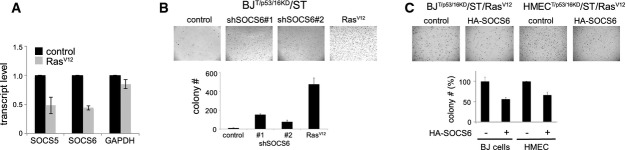
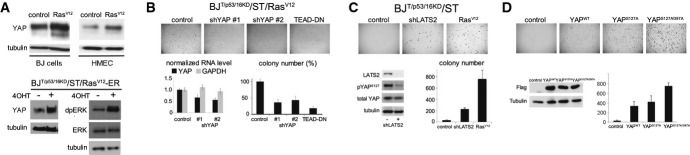
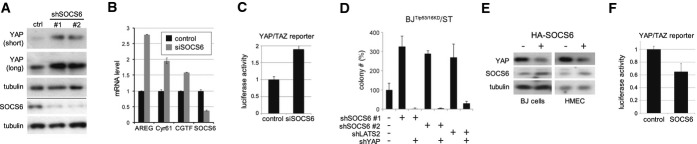
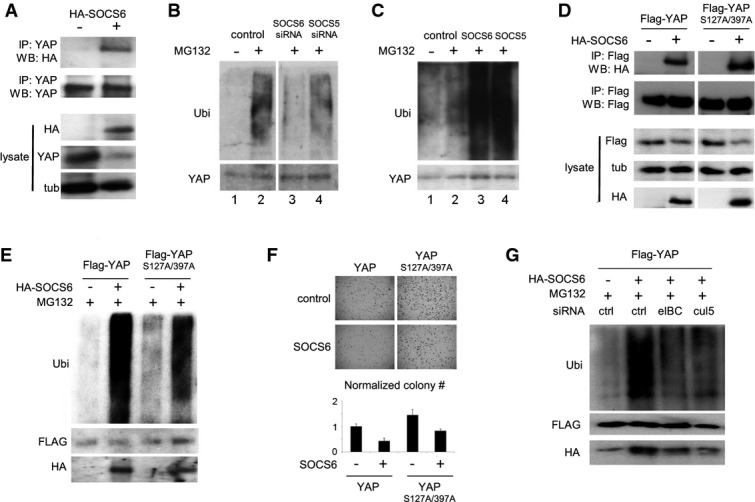
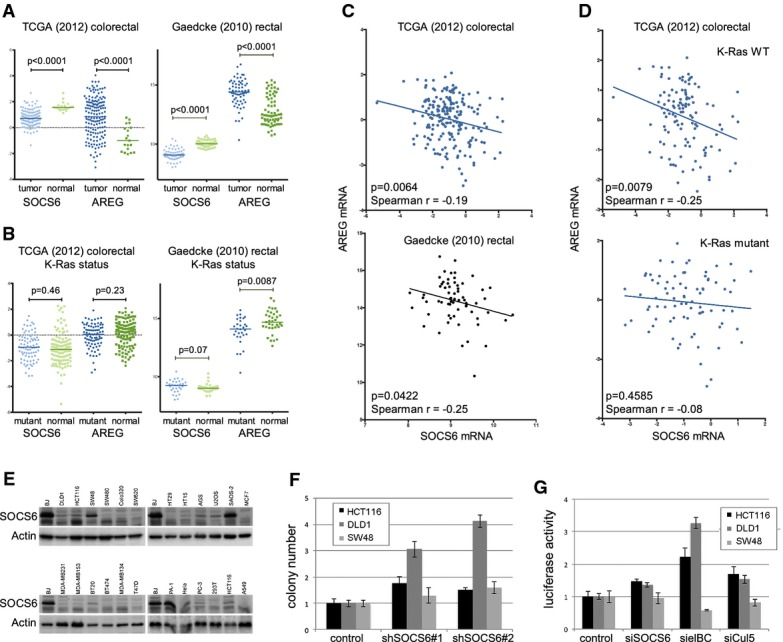
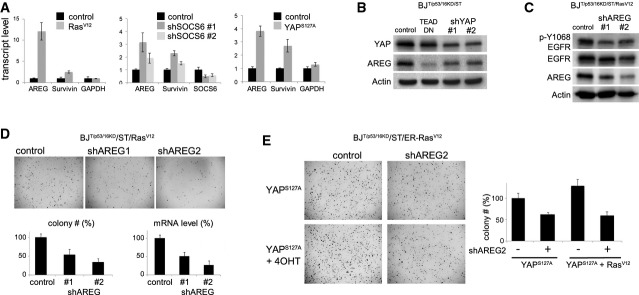
Verification
Claims the paper makes
The claims and statistics of this paper haven’t been checked yet.
Run the check — free, no account needed. It reads the open-access text and checks the sources it cites.
Claims other papers make about this one
Each is checked against this paper’s own text: does it say what the citing paper says it does?
The cited source says what the claim attributes to it.
In the citing paper
“The biological significance of our findings is validated by other studies that show formation of context-dependent Yki/YAP-mediated signalling loops as a bona fide mechanism for tumour growth (68,69).”
From A Tumour-Specific Molecular Network Promotes Tumour Growth in Drosophila by Enforcing a JNK-YKI Feedforward Loop (2023) · cites this paper as [69]
Self-check
Percentages, sums and reported differences re-computed from the paper’s own numbers.
The self-check needs the paper’s full text.
Citations
Cites
1 retracted
Wang, L., Shi, S., Guo, Z., Zhang, X., Han, S., Yang, A., Wen, W., & Zhu, Q. (2013) · PLoS ONE · doi:10.1371/journal.pone.0065539 · Cited by 272
RetractedComprehensive molecular characterization of human colon and rectal cancer
The Cancer Genome Atlas Network (2012) · Nature · doi:10.1038/nature11252 · Cited by 8,499
Role of YAP/TAZ in mechanotransduction
Dupont, S., Morsut, L., Aragona, M., Enzo, E., Giulitti, S., Cordenonsi, M., Zanconato, F., Le Digabel, J., Forcato, M., Bicciato, S., et al. (2011) · Nature · doi:10.1038/nature10137 · Cited by 5,979
Zhao, B., Wei, X., Li, W., Udan, R. S., Yang, Q., Kim, J., Xie, J., Ikenoue, T., Yu, J., Li, L., et al. (2007) · Genes & Development · doi:10.1101/gad.1602907 · Cited by 3,092
TEAD mediates YAP-dependent gene induction and growth control
Zhao, B., Ye, X., Yu, J., Li, L., Li, W., Li, S., Yu, J., Lin, J. D., Wang, C.-Y., Chinnaiyan, A. M., et al. (2008) · Genes & Development · doi:10.1101/gad.1664408 · Cited by 2,498
Elucidation of a universal size-control mechanism in Drosophila and mammals
Dong, J., Feldmann, G., Huang, J., Wu, S., Zhang, N., Comerford, S. A., Gayyed, M. F., Anders, R. A., Maitra, A., & Pan, D. (2007) · Cell · doi:10.1016/j.cell.2007.07.019 · Cited by 2,370
Creation of human tumour cells with defined genetic elements
Hahn, W. C., Counter, C. M., Lundberg, A. S., Beijersbergen, R. L., Brooks, M. W., & Weinberg, R. A. (1999) · Nature · doi:10.1038/22780 · Cited by 2,345
The Hippo Signaling Pathway in Development and Cancer
Pan, D. (2010) · Developmental Cell · doi:10.1016/j.devcel.2010.09.011 · Cited by 2,317
Unresponsiveness of colon cancer to BRAF(V600E) inhibition through feedback activation of EGFR
Prahallad, A., Sun, C., Huang, S., Di Nicolantonio, F., Salazar, R., Zecchin, D., Beijersbergen, R. L., Bardelli, A., & Bernards, R. (2012) · Nature · doi:10.1038/nature10868 · Cited by 2,051
The Hippo pathway and human cancer
Harvey, K. F., Zhang, X., & Thomas, D. M. (2013) · Nature reviews. Cancer · doi:10.1038/nrc3458 · Cited by 1,867
Cited by
Sorted by citations
The Hippo Signaling Network and Its Biological Functions
Misra, J. R., & Irvine, K. D. (2018) · Annual Review of Genetics · doi:10.1146/annurev-genet-120417-031621 · Cited by 514
Glycogen accumulation and phase separation drives liver tumor initiation
Liu, Q., Li, J., Zhang, W., Xiao, C., Zhang, S., Nian, C., Li, J., Su, D., Chen, L., Zhao, Q. C., et al. (2021) · Cell · doi:10.1016/j.cell.2021.10.001 · Cited by 313
Self-citationHe, C., Mao, D., Hua, G., Lv, X., Chen, X., Angeletti, P. C., Dong, J., Remmenga, S. W., Rodabaugh, K. J., Zhou, J. R., et al. (2015) · EMBO Molecular Medicine · doi:10.15252/emmm.201404976 · Cited by 290
Song, S., Honjo, S., Jin, J., Chang, S.-S., Scott, A. W., Chen, Q., Kalhor, N., Correa, A. M., Hofstetter, W. L., Albarracin, C. T., et al. (2015) · Clinical Cancer Research · doi:10.1158/1078-0432.ccr-14-2191 · Cited by 278
Self-citationYAP-Induced PD-L1 Expression Drives Immune Evasion in BRAFi-Resistant Melanoma
Kim, M. H., Kim, C. G., Kim, S.-K., Shin, S. J., Choe, E. A., Park, S.-H., Shin, E.-C., & Kim, J. (2018) · Cancer Immunology Research · doi:10.1158/2326-6066.cir-17-0320 · Cited by 241
Gruber, R., Panayiotou, R., Nye, E. L., Spencer‐Dene, B., Stamp, G., & Behrens, A. (2016) · Gastroenterology · doi:10.1053/j.gastro.2016.05.006 · Cited by 214
Differential growth triggers mechanical feedback that elevates Hippo signaling
Pan, Y., Heemskerk, I., Ibar, C., Shraiman, B. I., & Irvine, K. D. (2016) · Proceedings of the National Academy of Sciences · doi:10.1073/pnas.1615012113 · Cited by 145
Rozengurt, E., Sinnett‐Smith, J. W., & Eibl, G. (2018) · Signal Transduction and Targeted Therapy · doi:10.1038/s41392-017-0005-2 · Cited by 137
Kaan, H. Y. K., Chan, S. W., Tan, S. K. J., Guo, F., Lim, C. J., Hong, W., & Song, H. (2017) · Scientific Reports · doi:10.1038/s41598-017-02219-9 · Cited by 118
Edwards, D. N., Ngwa, V. M., Wang, S., Shiuan, E. F., Brantley‐Sieders, D. M., Kim, L. C., Reynolds, A. B., & Chen, J. (2017) · Science Signaling · doi:10.1126/scisignal.aan4667 · Cited by 109
Role of YAP/TAZ transcriptional regulators in resistance to anti-cancer therapies
Kim, M. H., & Kim, J. (2016) · Cellular and Molecular Life Sciences · doi:10.1007/s00018-016-2412-x · Cited by 102
The Hippo Tumor Suppressor Pathway (YAP/TAZ/TEAD/MST/LATS) and EGFR-RAS-RAF-MEK in cancer metastasis
Zinatizadeh, M. R., Miri, S. R., Zarandi, P. K., Chalbatani, G. M., Rapôso, C., Mirzaei, H. R., Akbari, M. E., & Mahmoodzadeh, H. (2019) · Genes & Diseases · doi:10.1016/j.gendis.2019.11.003 · Cited by 98
Analysis of chromatin accessibility uncovers TEAD1 as a regulator of migration in human glioblastoma
Tomé-García, J., Erfani, P., Nudelman, G., Tsankov, A. M., Katsyv, I., Tejero, R., Zhang, B., Walsh, M. J., Friedel, R. H., Zaslavsky, E., et al. (2018) · Nature Communications · doi:10.1038/s41467-018-06258-2 · Cited by 91
YAP and TAZ Take Center Stage in Cancer
Zhang, K., Qi, H.-X., Hu, Z., Chang, Y., Shi, Z., Han, X., Han, Y., Zhang, R., Zhang, Z., Chen, T., et al. (2015) · Biochemistry · doi:10.1021/acs.biochem.5b01014 · Cited by 94
Self-citationTargeting the Hippo Pathway for Breast Cancer Therapy
Wu, L., & Yang, X. (2018) · Cancers · doi:10.3390/cancers10110422 · Cited by 92
The MST/Hippo Pathway and Cell Death: A Non-Canonical Affair
Fallahi, E., O’Driscoll, N. A., & Matallanas, D. (2016) · Genes · doi:10.3390/genes7060028 · Cited by 88
KRAS, YAP, and obesity in pancreatic cancer: A signaling network with multiple loops
Eibl, G., & Rozengurt, E. (2017) · Seminars in Cancer Biology · doi:10.1016/j.semcancer.2017.10.007 · Cited by 88
The Hippo pathway in colorectal cancer
Wierzbicki, P., & Rybarczyk, A. (2015) · Folia Histochemica et Cytobiologica · doi:10.5603/fhc.a2015.0015 · Cited by 85
Concerted localization-resets precede YAP-dependent transcription
Franklin, J. M., Ghosh, R. P., Shi, Q., Reddick, M. P., & Liphardt, J. (2020) · Nature Communications · doi:10.1038/s41467-020-18368-x · Cited by 79
YAP modulates TGF-β1-induced simultaneous apoptosis and EMT through upregulation of the EGF receptor
Liu, Y., He, K., Hu, Y., Guo, X., Wang, D., Shi, W., Li, J., & Song, J. (2017) · Scientific Reports · doi:10.1038/srep45523 · Cited by 77
A Review: Molecular Aberrations within Hippo Signaling in Bone and Soft-Tissue Sarcomas
Deel, M. D., Li, J., Crose, L. E. S., & Linardic, C. M. (2015) · Frontiers in Oncology · doi:10.3389/fonc.2015.00190 · Cited by 73
Recent Therapeutic Approaches to Modulate the Hippo Pathway in Oncology and Regenerative Medicine
Barry, E., Simov, V., Valtingojer, I., & Venier, O. (2021) · Cells · doi:10.3390/cells10102715 · Cited by 73
The Hippo pathway as a drug target in gastric cancer
Qiao, Y., Li, T., Zheng, S., & Wang, H. (2018) · Cancer Letters · doi:10.1016/j.canlet.2018.01.062 · Cited by 68
YAP1 Mediates Resistance to MEK1/2 Inhibition in Neuroblastomas with Hyperactivated RAS Signaling
Coggins, G. E., Farrel, A., Rathi, K. S., Hayes, C. M., Scolaro, L., Rokita, J. L., & Maris, J. M. (2019) · Cancer Research · doi:10.1158/0008-5472.can-19-1415 · Cited by 66
Muranen, T. E., Selfors, L. M., Hwang, J., Gallegos, L. L., Coloff, J. L., Thoreen, C. C., Kang, S. A. W., Sabatini, D. M., Mills, G. B., & Brugge, J. S. (2016) · Cancer Research · doi:10.1158/0008-5472.can-16-0155 · Cited by 66
Pham, T. H., Hagenbeek, T. J., Lee, H.-J., Li, J., Rose, C. M., Lin, E., Yu, M., Martin, S. E., Piskol, R., Lacap, J. A., et al. (2021) · Cancer Discovery · doi:10.1158/2159-8290.cd-20-0706 · Cited by 64
Mayrhofer, M., Gourain, V., Reischl, M., Affaticati, P., Jenett, A., Joly, J., Benelli, M., Demichelis, F., Poliani, P. L., Sieger, D., et al. (2016) · Disease Models & Mechanisms · doi:10.1242/dmm.026500 · Cited by 68
Kandasamy, P., Zlobec, I., Nydegger, D. T., Pujol‐Giménez, J., Bhardwaj, R., Shirasawa, S., Tsunoda, T., & Hediger, M. A. (2021) · Molecular Oncology · doi:10.1002/1878-0261.12999 · Cited by 60
The NDR/LATS protein kinases in immunology and cancer biology
Sharif, A. A. D., & Hergovich, A. (2017) · Seminars in Cancer Biology · doi:10.1016/j.semcancer.2017.04.010 · Cited by 60
New Insights into YAP/TAZ-TEAD-Mediated Gene Regulation and Biological Processes in Cancer
Zhao, Y., Sheldon, M., Sun, Y., & Ma, L. (2023) · Cancers · doi:10.3390/cancers15235497 · Cited by 63
Sero, J., & Bakal, C. (2017) · Cell Systems · doi:10.1016/j.cels.2016.11.015 · Cited by 54
Competition for Space Is Controlled by Apoptosis-Induced Change of Local Epithelial Topology
Tsuboi, A., Ohsawa, S., Umetsu, D., Sando, Y., Kuranaga, E., Igaki, T., & Fujimoto, K. (2018) · Current Biology · doi:10.1016/j.cub.2018.05.029 · Cited by 55
STRIPAK directs PP2A activity toward MAP4K4 to promote oncogenic transformation of human cells
Kim, J. W., Berrios, C. J., Kim, M., Schade, A. E., Adelmant, G., Yeerna, H., Damato, E., Iniguez, A. B., Swanson, S. K., Florens, L. A., et al. (2020) · eLife · doi:10.7554/elife.53003 · Cited by 54
Herranz, H., Eichenlaub, T., & Cohen, S. M. (2016) · Current topics in developmental biology/Current Topics in Developmental Biology · doi:10.1016/bs.ctdb.2015.11.037 · Cited by 52
Self-citationGNA13 expression promotes drug resistance and tumor-initiating phenotypes in squamous cell cancers
Rasheed, S. A. K., Leong, H. S., Lakshmanan, M., Raju, A., Dadlani, D., Chong, F.-T., Shannon, N. B., Rajarethinam, R., Skanthakumar, T., Tan, E. Y., et al. (2017) · Oncogene · doi:10.1038/s41388-017-0038-6 · Cited by 51
Kahlhofer, J., & Teis, D. (2022) · Basic & Clinical Pharmacology & Toxicology · doi:10.1111/bcpt.13821 · Cited by 51
The roles of ubiquitin modifying enzymes in neoplastic disease
Kumari, N., Jaynes, P. W., Saei, A., Iyengar, P. V., Richard, J. L. C., & Eichhorn, P. J. A. (2017) · Biochimica et Biophysica Acta (BBA) - Reviews on Cancer · doi:10.1016/j.bbcan.2017.09.002 · Cited by 51
Hippo‐Yap/Taz signaling: Complex network interactions and impact in epithelial cell behavior
van Soldt, B. J., & Cardoso, W. V. (2019) · Wiley Interdisciplinary Reviews Developmental Biology · doi:10.1002/wdev.371 · Cited by 50
Targeting ubiquitination in disease and therapy
Yang, X., Lan, T., Zhang, B., Tao, X., Qi, W., Xie, K., Cai, Y., Liu, C., Han, J., & Wu, H. M. (2025) · Signal Transduction and Targeted Therapy · doi:10.1038/s41392-025-02392-8 · Cited by 55
Troilo, A., Benson, E. K., Esposito, D., Garibsingh, R. A., Reddy, E. P., Mungamuri, S. K., & Aaronson, S. A. (2016) · Oncotarget · doi:10.18632/oncotarget.9117 · Cited by 46
Gopal, U., Mowery, Y. M., Young, K. H., & Pizzo, S. V. (2019) · Journal of Biological Chemistry · doi:10.1074/jbc.ra119.009091 · Cited by 48
Qian, F., Xiao, J., Gai, L., & Zhu, J. (2018) · Molecular Carcinogenesis · doi:10.1002/mc.22944 · Cited by 46
Hippo Reprograms the Transcriptional Response to Ras Signaling
Pascual, J., Jacobs, J., Sansores-García, L., Natarajan, M., Zeitlinger, J., Aerts, S., Halder, G. A., & Hamaratoǧlu, F. (2017) · Developmental Cell · doi:10.1016/j.devcel.2017.08.013 · Cited by 43
Seviour, E. G., Sehgal, V., Mishra, D. K., Rupaimoole, R., Rodriguez‐Aguayo, C., Lopez‐Berestein, G., Lee, J. S., Sood, A. K., Kim, M. P., Mills, G. B., et al. (2016) · Oncogene · doi:10.1038/onc.2016.308 · Cited by 42
Nguyen, T., Andrējeva, D., Gupta, R., Choudhary, C., Hong, X., Eichhorn, P. J. A., Loya, A. C., & Cohen, S. M. (2016) · Cell Discovery · doi:10.1038/celldisc.2016.1 · Cited by 41
Self-citationLi, Z., Liu, X., Yu, H., Wang, S., Zhao, S., & Jiang, G. (2021) · Human Cell · doi:10.1007/s13577-021-00650-9 · Cited by 40
Novoplansky, O., Shnerb, A. B., Marripati, D., Jagadeeshan, S., Shareb, R. A., Conde‐López, C., Zorea, J., Prasad, M., Lulu, T. B., Yegodayev, K. M., et al. (2023) · Molecular Oncology · doi:10.1002/1878-0261.13500 · Cited by 37
A cell-autonomous tumour suppressor role of RAF1 in hepatocarcinogenesis
Jerić, I., Maurer, G., Cavallo, A. L., Raguz, J., Desideri, E., Tarkowski, B., Parrini, M., Fischer, I., Zatloukal, K., & Baccarini, M. (2016) · Nature Communications · doi:10.1038/ncomms13781 · Cited by 35
YAP ping about and not forgetting TAZ
Callus, B. A., Finch‐Edmondson, M., Fletcher, S., & Wilton, S. D. (2018) · FEBS Letters · doi:10.1002/1873-3468.13318 · Cited by 37
Keewan, E. F., & Matlawska‐Wasowska, K. (2021) · Cancers · doi:10.3390/cancers13164000 · Cited by 36
Kaan, H. Y. K., Sim, A. Y. L., Tan, S. K. J., Verma, C. S., & Song, H. (2017) · PLoS ONE · doi:10.1371/journal.pone.0178381 · Cited by 38
Barzegari, A., Gueguen, V., Omidi, Y., Ostadrahimi, A., Nouri, M., & Pavon‐Djavid, G. (2020) · Journal of Cellular Physiology · doi:10.1002/jcp.29455 · Cited by 34
Zou, Q., Liu, M., Liu, K., Zhang, Y., North, B. J., & Wang, B. (2023) · Cellular Oncology · doi:10.1007/s13402-023-00777-x · Cited by 31
Cell Density Regulates Cancer Metastasis Via the Hippo Pathway
Sharif, G. M., & Wellstein, A. (2015) · Future Oncology · doi:10.2217/fon.15.268 · Cited by 31
Thanasaksiri, K., Hırono, I., & Kondo, H. (2016) · Fish & Shellfish Immunology · doi:10.1016/j.fsi.2016.09.018 · Cited by 31
The Hippo–YAP Signaling as Guardian in the Pool of Intestinal Stem Cells
Seo, Y., Park, S., Kim, H., & Nam, J. (2020) · Biomedicines · doi:10.3390/biomedicines8120560 · Cited by 33
Nguyen, T., Kugler, J., & Cohen, S. M. (2017) · PLoS ONE · doi:10.1371/journal.pone.0169587 · Cited by 30
Self-citationLü, T., Sun, L., & Zhu, X. (2018) · Biomedicine & Pharmacotherapy · doi:10.1016/j.biopha.2018.06.031 · Cited by 29
Targeting Hippo signaling pathway by phytochemicals in cancer therapy
Moloudizargari, M., Asghari, M. H., Nabavi, S. F., Gulei, D., Berindan‐Neagoe, I., Bishayee, A., & Nabavi, S. M. (2020) · Seminars in Cancer Biology · doi:10.1016/j.semcancer.2020.05.005 · Cited by 29
Han, Y., Yu, C.-C., Fine, S. A., Youssof, A. L., Yang, Y., Yan, J., Karg, D. C., Cheung, E. C., Friedman, R. A., Ying, H., et al. (2021) · Oncogene · doi:10.1038/s41388-021-02040-9 · Cited by 28
Mutated HRAS Activates YAP1–AXL Signaling to Drive Metastasis of Head and Neck Cancer
Jagadeeshan, S., Prasad, M., Badarni, M., Lulu, T. B., Liju, V. B., Mathukkada, S., Saunders, C. J., Shnerb, A. B., Zorea, J., Yegodayev, K. M., et al. (2023) · Cancer Research · doi:10.1158/0008-5472.can-22-2586 · Cited by 26
USP21 regulates Hippo pathway activity by mediating MARK protein turnover
Nguyen, T., Kugler, J., Loya, A. C., & Cohen, S. M. (2017) · Oncotarget · doi:10.18632/oncotarget.19322 · Cited by 25
Self-citationSun, X., Sun, Y., Li, J., Zhao, X., Shi, X., Gong, T., Pan, S., Zheng, Z., & Zhang, X. (2021) · Cancer Cell International · doi:10.1186/s12935-021-01859-2 · Cited by 23
Rozengurt, E., & Eibl, G. (2019) · World Journal of Gastroenterology · doi:10.3748/wjg.v25.i15.1797 · Cited by 22
Trentin, L., Bresolin, S., Giarin, E., Bardini, M., Serafin, V., Accordi, B., Fais, F., Tenca, C., Lorenzo, P. D., Valsecchi, M. G., et al. (2016) · Scientific Reports · doi:10.1038/srep34449 · Cited by 20
Chai, T. F., Manu, K. A., Casey, P. J., & Wang, M. (2020) · Oncogene · doi:10.1038/s41388-020-1364-7 · Cited by 20
The emerging roles of F-box proteins in pancreatic tumorigenesis
Wang, H., Maitra, A., & Wang, H. (2015) · Seminars in Cancer Biology · doi:10.1016/j.semcancer.2015.09.004 · Cited by 20
Breast Cancer: A Molecular and Redox Snapshot
Raman, D., Foo, C. H. J., Clement, M., & Pervaiz, S. (2016) · Antioxidants and Redox Signaling · doi:10.1089/ars.2015.6546 · Cited by 20
Independent and core pathways in oncogenic KRAS signaling
Nussinov, R., Tsai, C., & Jang, H. (2016) · Expert Review of Proteomics · doi:10.1080/14789450.2016.1209417 · Cited by 21
Molecular evidence of field cancerization initiated by diabetes in colon cancer patients
del Puerto‐Nevado, L., Mínguez, P., Cortón, M., Casado, S. S., Prieto, I., Mas, S., Sanz, A. B., Gónzález-Alonso, P., Villaverde, C., Portal‐Núñez, S., et al. (2019) · Molecular Oncology · doi:10.1002/1878-0261.12438 · Cited by 22
TEAD Inhibitors Sensitize KRASG12C Inhibitors via Dual Cell Cycle Arrest in KRASG12C-Mutant NSCLC
Tammaccaro, S. L., Prigent, P., Le Bail, J.-C., Dos-Santos, O., Dassencourt, L., Eskandar, M., Buzy, A., Venier, O., Guillemot, J.-C., Veeranagouda, Y., et al. (2023) · Pharmaceuticals · doi:10.3390/ph16040553 · Cited by 18
The miRNAbantamregulates growth and tumorigenesis by repressing the cell cycle regulatortribbles
Gerlach, S. U., Sander, M., Song, S., & Herranz, H. (2019) · Life Science Alliance · doi:10.26508/lsa.201900381 · Cited by 18
The E3 ubiquitin ligase Slimb/β-TrCP is required for normal copper homeostasis in Drosophila
Zhang, B., Binks, T., & Burke, R. (2020) · Biochimica et Biophysica Acta (BBA) - Molecular Cell Research · doi:10.1016/j.bbamcr.2020.118768 · Cited by 16
Pharmacological strategies to target oncogenic KRAS signaling in pancreatic cancer
Chuang, H.-C., Huang, P.-H., Kulp, S. K., & Chen, C. (2017) · Pharmacological Research · doi:10.1016/j.phrs.2017.01.006 · Cited by 16
Role and regulation of Yap in KrasG12D-induced lung cancer
Mao, Y., Sun, S., & Irvine, K. D. (2017) · Oncotarget · doi:10.18632/oncotarget.22865 · Cited by 17
Wang, Y., Wang, K., Fu, J., Zhang, Y., Mao, Y., Wang, X., Wang, X., Yu, R., & Zhou, X. (2022) · Neuro-Oncology · doi:10.1093/neuonc/noac156 · Cited by 15
Mu‐KRAS attenuates Hippo signaling pathway through PKCι to sustain the growth of pancreatic cancer
Wang, P., Zhang, H., Yang, J., Li, Z., Wang, Y., Leng, X., Ganapathy, S., Isakson, P., Chen, C., & Zhu, T. (2019) · Journal of Cellular Physiology · doi:10.1002/jcp.28981 · Cited by 15
Yang, Z. P., Huang, S., & Zhao, L. (2022) · Cytokine & Growth Factor Reviews · doi:10.1016/j.cytogfr.2022.02.001 · Cited by 15
The LINC01119-SOCS5 axis as a critical theranostic in triple-negative breast cancer
Tu, Z., Schmoellerl, J., Mariani, O., Zheng, Y., Hu, Y. P., Vincent‐Salomon, A., & Karnoub, A. E. (2021) · npj Breast Cancer · doi:10.1038/s41523-021-00259-z · Cited by 13
USP40 promotes hepatocellular carcinoma progression through a YAP/USP40 positive feedback loop
Mo, H., Li, R., Yang, N., Han, J., Xiao, X., Zhang, Y., Xiao, Z., Jiao, L., Xu, Q., & Tu, K. (2024) · Cancer Letters · doi:10.1016/j.canlet.2024.216832 · Cited by 15
PKCι and YAP1 are crucial in promoting pancreatic tumorigenesis
Wang, P., Wei, D., Zhang, H., Chen, J., Zhang, D., Ganapathy, S., Isakson, P., Chen, C., & Zhu, T. (2018) · Oncotarget · doi:10.18632/oncotarget.25127 · Cited by 12
Yorkie-Cactus (IκBα)-JNK axis promotes tumor growth and progression in Drosophila
Snigdha, K., Singh, A., & Kango-Singh, M. (2021) · Oncogene · doi:10.1038/s41388-021-01831-4 · Cited by 11
A Novel PHD2/VHL-mediated Regulation of YAP1 Contributes to VEGF Expression and Angiogenesis
Bora-Singhal, N., Saha, B., Mohankumar, D., Padmanabhan, J., Coppola, D., & Chellappan, S. (2022) · Cancer Research Communications · doi:10.1158/2767-9764.crc-21-0084 · Cited by 11
New insights in Hippo signalling alteration in human papillomavirus-related cancers
Olmedo‐Nieva, L., Muñoz-Bello, J. O., Manzo-Merino, J., & Lizano, M. (2020) · Cellular Signalling · doi:10.1016/j.cellsig.2020.109815 · Cited by 12
Mohamed, A. D., Shah, N., Hettmer, S., Vargesson, N., & Wackerhage, H. (2018) · Scientific Reports · doi:10.1038/s41598-018-33852-7 · Cited by 10
A New Player in Neuroblastoma: YAP and Its Role in the Neuroblastoma Microenvironment
Shim, J., & Goldsmith, K. C. (2021) · Cancers · doi:10.3390/cancers13184650 · Cited by 10
MicroRNAs in Drosophila Cancer Models
Sander, M., & Herranz, H. (2019) · Advances in experimental medicine and biology · doi:10.1007/978-3-030-23629-8_9 · Cited by 9
Groth, C., Vaid, P. M., Khatpe, A. S., Prashali, N., Ahiya, A., Andrējeva, D., Chakladar, M., Nagarkar, S., Paul, R., Kelkar, D. A., et al. (2020) · G3 Genes Genomes Genetics · doi:10.1534/g3.120.401545 · Cited by 8
Self-citationWang, S., Diao, S., Kim, H., Zou, J. Y., Li, K., & Koromilas, A. E. (2025) · Communications Biology · doi:10.1038/s42003-025-08740-2 · Cited by 8
RhoBTB Proteins Regulate the Hippo Pathway by Antagonizing Ubiquitination of LKB1
Nguyen, T., Ralbovska, A., & Kugler, J. (2020) · G3 Genes Genomes Genetics · doi:10.1534/g3.120.401038 · Cited by 7
SOCSs: important regulators of host cell susceptibility or resistance to viral infection
Zhang, X., Xia, H., Wang, Q., Cui, M., Zhang, C., Wang, Q., Liu, X., & Chen, K. (2023) · Zeitschrift für Naturforschung C · doi:10.1515/znc-2023-0024 · Cited by 7
Evidence of Cooperation between Hippo Pathway and RAS Mutation in Thyroid Carcinomas
Carneiro, T. N. R., Bim, L. V., Buzatto, V. C., Galdeno, V., Asprino, P. F., Lee, E. A., Galante, P. A. F., & Cerutti, J. M. (2021) · Cancers · doi:10.3390/cancers13102306 · Cited by 7
Concerted localization-resets precede YAP-dependent transcriptionPreprint
Ghosh, R. P., Franklin, J. M., Shi, Q., Reddick, M. P., & Liphardt, J. (2019) · bioRxiv (Cold Spring Harbor Laboratory) · doi:10.1101/539049 · Cited by 8
Acinar Ductal Metaplasia: Yap Fills a Gap
Means, A. L., & Logsdon, C. D. (2016) · Gastroenterology · doi:10.1053/j.gastro.2016.07.022 · Cited by 6
Baghaei, K., Hosseinkhan, N., Aghdaei, H. A., & Zali, M. R. (2017) · Molecular BioSystems · doi:10.1039/c7mb00450h · Cited by 5
Yang, H., Li, Y., Li, X., Yan, Q.-M., Han, X.-Z., Cao, J., Sang, H.-P., & Li, J. (2023) · EXPERIMENTAL ANIMALS · doi:10.1538/expanim.23-0041 · Cited by 5
The RAS and YAP1 dance, who is leading?
Corbo, V., Ponz‐Sarvisé, M., & Tuveson, D. A. (2014) · The EMBO Journal · doi:10.15252/embj.201490014 · Cited by 5
Recent advances on Hippo-YAP pathway in skin diseases
Cai, X., Chen, K., Li, X., Zhang, K., Gu, J., Shen, C., Yu, B., & Huang, C. (2026) · Frontiers in Immunology · doi:10.3389/fimmu.2025.1728064 · Cited by 4
Apollonio, M., Bellazzo, A., Franco, N., Lombardi, S., Senigagliesi, B., Casalis, L., Parisse, P., Thalhammer, A., Baj, G., Fania, R. D. F., et al. (2023) · Cancers · doi:10.3390/cancers15133379 · Cited by 4
Olatunde, D., & Benedetti, A. D. (2024) · Cancers · doi:10.3390/cancers16162918 · Cited by 4
Metadata
- Authors
- Hong, X., Nguyen, H. T., Chen, Q., Zhang, R., Hagman, Z., Voorhoeve, P. M., & Cohen, S. M.
- Affiliations
- National University of Singapore (SG)
- Singapore-MIT Alliance for Research and Technology (SG)
- Stanford University (US)
- University of Copenhagen (DK)
- Corresponding author
- Cohen, Stephen M
- Venue
- The EMBO Journal
- Published
- 2014-09-01
- Volume
- 33
- Issue
- 21
- Pages
- 2447-2457
- ISSN
- 0261-4189 (ISSN-L)
- 1460-2075
- PMC
- PMC4283404
- OpenAlex
- W2153517086
- Cited by
- 121
- References
- 49
- Citations by year
- 2026: 2 · 2025: 4 · 2024: 7 · 2023: 12 · 2022: 4 · 2021: 15 · 2020: 12 · 2019: 10 · 2018: 13 · 2017: 15 · 2016: 18 · 2015: 8 · 2014: 1
- FWCI
- 6.97
- Type
- journal article
- Language
- en
- Open access
- hybrid
- doi.org
- Locations
- The EMBO Journal (publishedVersion, other-oa)
- Europe PMC (PubMed Central) (publishedVersion, cc-by)
- PubMed Central (publishedVersion, cc-by)
- PubMed (publishedVersion)
- Research at the University of Copenhagen (University of Copenhagen) (submittedVersion, cc-by)
- Funders
- NMRC (CBRG12nov010)
- Duke‐NUS Signature Research Program
- Ministry of Health (MOE2010‐T2‐2‐006)
- IMCB
- NovoNordisk Foundation Laureate Award
- Topics
- Life Sciences › Biochemistry, Genetics and Molecular Biology › Cell Biology › Hippo pathway signaling and YAP/TAZ
- Life Sciences › Biochemistry, Genetics and Molecular Biology › Molecular Biology › Protein Kinase Regulation and GTPase Signaling
- Life Sciences › Biochemistry, Genetics and Molecular Biology › Cell Biology › Microtubule and mitosis dynamics
- Keywords
- Ras signaling, Hippo signaling pathway, YAP, protein turnover, ubiquitin ligase, anchorage-independent growth, cell transformation, tumor suppressor, EGFR signaling, amphiregulin, positive feedback loop, oncogenic Ras
- MeSH terms
- Hippo Signaling Pathway, YAP-Signaling Proteins, Cell Transformation, Neoplastic, Humans, Phosphoproteins, Transcription Factors, Signal Transduction, Up-Regulation, Protein Serine-Threonine Kinases, ras Proteins, SKP Cullin F-Box Protein Ligases, beta-Transducin Repeat-Containing Proteins, Adaptor Proteins, Signal Transducing, Suppressor of Cytokine Signaling Proteins, Protein Stability, HEK293 Cells, ErbB Receptors
About these checks
Registry, retraction, Cites and statistics results are computed, not judged, with one exception: a printed reference that no index lists is read once by a model before it counts as a citation error. Claims are extracted by a model and kept only when their quote appears verbatim in the text; each cited source is then checked, with a model’s help, for whether it says what the claim relies on. Those verdicts can be wrong — read the claim’s quote and the cited source before relying on one.
Statistics and arithmetic are recomputed, not judged.
Confidence bands are shown only for fields calibrated on our annotated test set. None is calibrated yet, so no band is shown.
What counts as a claim ›How we measure confidence ›How we check this ›
Are you an author, or do you see a problem with this page? Request a review
